Tag: China

  • Nokia 7 Plus Announced In China With 4GB And 6GB Of RAM

    Nokia 7 Plus Announced In China With 4GB And 6GB Of RAM

    The Nokia 7 Plus has been announced in China, and HMD actually decided to announce both 4GB and 6GB RAM variants in China, while only a 4GB RAM variant got announced in Europe. HMD had introduced the Nokia 7 Plus a couple of days ago at the Mobile World Congress (MWC) in Barcelona, along with four other Nokia-branded smartphones. This is one of the company’s Android One phones, and it comes with 4GB of RAM, as already mentioned. A 4GB RAM variant of the Nokia 7 Plus which was announced in China is completely identical to the European model, while the 6GB RAM model comes with more RAM, that’s it.

    Now, as the Nokia 7 Plus is an Android One handset, it comes with stock Android out of the box. Android 8.0 Oreo comes pre-installed on the Nokia 7 Plus, but HMD did say that Android 8.1 Oreo will hit the device in the near future. The Nokia 7 Plus is made out of metal, while its display sports rounded corners. All the physical keys sit on the right-hand side of this smartphone, while Nokia’s logo can be found both on its front and back sides. A fingerprint scanner is included on the back of the device, while above it you’ll notice a dual camera setup. This handset also sports somewhat thin bezels, and its spec sheet is nothing to scoff at. The device is fueled by the Snapdragon 660 64-bit octa-core SoC, while it sports a 6-inch fullHD+ display. In addition to 4GB or 6GB of RAM, you’re also getting 64GB of expandable storage.

    A 3,800mAh non-removable battery is included here, and you’re also getting fast charging. Two 12-megapixel snappers are included on the back of the Nokia 7 Plus, while a single 16-megapixel shooter sits on the phone’s front side. The device also offers two SIM card slots, and Bluetooth 5.0. If you’d like to expand this phone’s storage, you will have to utilize its second SIM card slot, which means that you can either use two nano SIMs here, or a nano SIM and a microSD card at the same time. The 4GB RAM variant of the Nokia 7 Plus is priced at 2,299 Yuan ($363) in China, while the 6GB RAM model costs 2,499 Yuan ($395). Both variants of the phone are already available for pre-order, while they will go on sale on March 7 via Tmall, Suning and JingDong Mall (JD.com). The two devices will also be available via a number of retail stores across China.

  • Beijing maintained steady economic growth in 2017

    Beijing maintained steady economic growth in 2017

    The Beijing Municipal Bureau of Statistics and the Survey Office of the National Bureau of Statistics in Beijing released the “2017 Statistical Communique on the Economy and Social Development of Beijing” on Feb. 27. According to the report, Beijing last year kept at a steady momentum of economic development and maintained social harmony and stability. The report lists new achievements made by the capital city in economic development, social progress, urban construction and improvements in people’s livelihood over the past year.

    The city’s annual GDP totaled 2.8 trillion yuan (US$443.6 billion); the per capita GDP of its registered residents reached 129,000 yuan. It added 422,000 more jobs across the urban regions, and registered urban unemployment rate stayed at 1.5 percent. The consumer price index rose modestly, by 2 percent year on year.

    Upgrading economic structure 

    At the end of 2017, Beijing formulated guidelines on accelerating scientific and technological innovation to build a series of industries with high-grade, precision and advanced economic structures. The guidelines emphasized on constructing a national center for scientific discovery and technology innovation with worldwide influence and brought forward accelerating the development of 10 high-grade, precision and advanced industries. One of these emerging industries of strategic importance is driverless vehicles, for which Beijing boasts resources, competitive advantages and development potentials. Earlier this February, the city began field testing driverless cars, developed by companies including Baidu, BAIC BJEV and FOTON, in Haidian district.

    Beijing’s industrial structure continuously improved to be more high-grade, precise and advanced, with the development mode changing from accumulation of resources to phasing-out of non-capital functions. According to the new report, the value added of the high-tech industry accounted for 22.8 percent of the city’s GDP, a 0.1 percentage point increase over the previous year; the value added of the strategic emerging industry contributed to 16.2 percent of the city’s GDP, with a rise of 0.2 percentage points over the previous year. The service sector accounted for over 80 percent of the city’s economy, to which finance, information services, and science and technology services contributed over 50 percent.

    Meanwhile, the city continued to upgrade the makeup of its consumer spending. Spending on services accounted for 51.3 percent of total consumer spending, and contributed to 70 percent of the growth in total spending. Infrastructure investment saw rapid growth, which continued to prioritize on public transportation and people’s living standard. Investment in commercial services and information services as key sectors increased by 120 percent and 42.8 percent respectively. Foreign investment in information services, commercial services, and science and technology services accounted for 54.2 percent, 9.4 percent, and 8.3 percent respectively.

    Improving development quality

    In 2017, Beijing saw more blue skies than previous years as its air quality continued to improve. The annual average concentration of fine particles (PM2.5) reached 58 micrograms per cubic meter, a drop of 20.5 percent over the previous year. Annual average concentration of nitrogen dioxide and sulfur dioxide in Beijing reached 46 micrograms per cubic meter and 8 micrograms per cubic meter respectively, down by 4.2 percent and 20 percent over the previous year.

    Better efficiency and more effectiveness from businesses had also led to improvement in residents’ sense of gain. In 2017, the per capita disposable income of Beijing residents was 57,230 yuan, up by 8.9 percent year on year, or 6.9 percent after adjustment to inflation, outperforming economic growth by 0.2 percentage points. Social security also improved, with minimum wage standard for employees and minimum standard for unemployment insurance benefits up by 110 yuan and 80 yuan respectively over the previous year. Basic pension and welfare payment standard for urban and rural residents increased twice in 2017.

    In addition, Beijing maintained effort in accelerating the construction of a livable city with convenient life, bountiful services and beautiful environment. Its subway routes extended 35 kilometers in 2017, reaching a total of 609 kilometers at the end of the year. About 5 percent more households began using natural gas for heating, bringing the total to 9.45 million households. Moreover, the city increased its 100,000-square meter central heating locations to cover 630 million square meters.

    The city built 34 more kindergartens in 2017, bringing the total to 1,604. It added 349 health institutions, totaling 10,986. The book collection of its public libraries grew by 2.9 percent, and it opened one more museum to the public free of charge. The treatment rate of municipal sewage reached 92 percent, up by 2 percentage points, and the per capita green park area reached 16.2 square meters, up by 0.1 percent.

    Seeking innovation

    The value added of the new economy in 2017 accounted for 32.4 percent of Beijing’s GDP with an increase of 0.2 percentage points over the previous year. The added value of the high-tech industry and the strategic emerging industry among industries above a designated scale were both up by double digits, each contributing to over 50 percent of the city’s industrial growth.

    The online retail volume of wholesale and retail enterprises above the designated scale accounted for 20.5 percent of the total retail sales of consumer goods, up by 1.9 percentage points over the previous year. The business income of the financial information services and non-financial institutions payment services in the internet financial services sector increased by 35.1 percent and 62.7 percent respectively.

    “Beijing has yielded fruitful results in scientific and technological innovation, laying a foundation for the establishment of a science and technology innovation center with international influence,” said an official from the Beijing Municipal Bureau of Statistics. The R&D expenditure in the city amounted for 5.7 percent of its GDP, staying atop the country.

    According to the report, the enthusiasm for innovation and entrepreneurship was strong owing to Beijing’s favorable policies. The number of various innovative and entrepreneurial service institutions such as shared workspaces, incubators, accelerators and university science parks reached 400 in the city in 2017, with a total area of 6 million square meters, offering services to over 30,000 enterprises and teams.

  • Alibaba Cloud Expands Europe Offering With Eight New Products

    Alibaba Cloud Expands Europe Offering With Eight New Products

    Alibaba Cloud on Tuesday launched eight of its products in Europe, covering areas from big data and artificial intelligence to infrastructure and security, as it targets new business in an important market for cloud services.

    Announced during the Mobile World Congress, underway in Barcelona, Spain, the products aim to deliver efficiencies in online-offline retail integration, smart manufacturing and smart-city development for European businesses.

    “Alibaba Cloud wants to be an enabler for technology innovation in Europe helping enterprises do business,” said Wang Yeming, general manager of Alibaba Cloud Europe, in a statement. “These advanced solutions will enable organizations in a wide range of sectors and will bring them true connectivity, both locally and globally.”

    Previously, these products were available only to Alibaba Cloud clients in China. The company pointed to three that may prove popular among enterprises, including Image Search, a chatbot called Intelligent Services Robot and Dataphin, a smart data engine used to link businesses working together from different sectors.

    According to Alibaba Cloud, Image Search, which allows for research both online and offline using pictures, is used widely in China, including in sectors such as New Retail. The chatbot for businesses served more than 40 million customers in a single day during last year’s 11.11 Global Shopping Festival, the company said. Dataphin is now managing 95% of Alibaba Group’s data and being used to drive improvements and new applications in retail, finance, logistics, transportation and health.

    In addition, Alibaba Cloud launched the ECS Baremetal Instance; the Super Computer Cluster; its next-generation Cloud Enterprise Network; the Vulnerability Discovery security service; and the Apsara Stack, a cloud-services platform adopted by 120 clients so far in China. These infrastructure and security products are typically used by enterprises undertaking important tasks, such as migrating data and applications to the cloud.

    Alibaba Cloud said the product launches were a sign of continued commitment to the European market that build on other initiatives already underway there. The company opened its first availability zone in Frankfurt Germany in November 2016 and recently began operating a second one in the same region. It has partnered with Vodafone in Germany, as well as the U.K.’s Met Office and Station F, an innovation hub in France.

    “The Mobile World Congress in Barcelona is a great opportunity for us refresh our European strategy and consider how we can make an increasing contribution to the digital transformation of enterprises in this market from different sectors with our offerings and expertise,” Wang said.

    Alibaba Cloud, the leading cloud provider in China, services both Alibaba Group’s operations and other enterprise clients. The company has expanded overseas in recent years to Singapore and Malaysia in Southeast Asia, Frankfurt, London and Paris in Europe, New York and San Mateo in the U.S., Dubai in the Middle East, as well as Seoul, Tokyo and Sydney. It currently has over 2.3 million customers worldwide.

  • Geely makes US$9b Daimler bet against tech ‘invaders’

    Geely makes US$9b Daimler bet against tech ‘invaders’

    Chinese carmaker Geely has built up an almost 10% stake in Daimler in a US$9 billion (RM35 billion) bet by its chairman that he can access the Mercedes-Benz owner’s technology in the growing battle for the future of automotives.

    The purchase by Li Shufu, Geely’s founder and main owner, means China’s largest privately owned automaker is now the biggest shareholder in Germany’s Daimler.

    Geely said on Saturday there were no plans “for the time being” to raise the stake further. Instead, it will seek to forge an alliance with Daimler, which is developing electric and self-driving vehicles, to respond to the challenge from new competitors such as Tesla, Google and Uber.
    “No current car industry player is likely to win this battle against the invaders from outside without friends. To achieve and assert technological leadership, one has to adapt a new way of thinking in terms of sharing and combining strength. My investment in Daimler reflects this vision,” Li said.

    “Daimler is pleased to announce that with Li Shufu it could win another long-term orientated shareholder, which is convinced by Daimler’s innovation strength, strategy and future potential,” the German company said in a statement.

    Geely officials plan to travel to Stuttgart to meet Daimler executives early this week and also hope to meet top German government officials in Berlin, two sources familiar with the matter told Reuters.

    The Chinese firm plans to use the meetings to underline that it intends to be a supportive long-term investor, they said.

    Daimler had no immediate comment on any meetings. Geely and the German economy ministry declined to comment.

    Chinese investors in German technology companies have tended to take a consensual approach, buying incremental stakes in companies such as robotics firms Kuka and Kion, typically after long consultation with management and other stakeholders.

    In November, Geely asked Daimler to issue new shares so it could buy a stake, as a way to access Mercedes-Benz technology for electric cars and trucks, including battery technology, to help Geely comply with a Chinese crackdown on pollution.

    But the German company turned down the offer saying it did not want to dilute existing shareholders, sources at the time told Reuters.

    Li changed tactics, and quietly amassed a stake of 9.69% worth US$9 billion at Daimler’s current share price.

    The sources said former Morgan Stanley Germany CEO Dirk Notheis was the architect of amassing the Daimler stake, working with former Morgan Stanley China executive Yi Bao.
    Notheis declined to comment, while Bao was not reachable.

    German state secretary at the economy ministry, Matthias Machnig, said separately that EU trade ministers meeting this week in Sofia would discuss how better to protect strategically important European companies from unwanted investors.

    “It is important that Europe keeps a close eye on which key European technologies foreign strategic investors are setting their sights on,” he said.

    Machnig did not comment specifically on Daimler.

    Only two or three auto manufacturers will likely survive, a source familiar with Li’s thinking told Reuters, prompting Geely to seek access to carmakers with a technological edge.

    Daimler is also the only one of Germany’s three carmakers not to be controlled by a family. Volkswagen is majority-owned by the Porsche-Piech clan, while BMW is 47% owned by Susanne Klatten, Germany’s richest woman, and her brother Stefan Quandt.

    Geely’s move poses a challenge to the German carmaker, since Mercedes-Benz already has an industrial alliance to develop cars and trucks with Renault-Nissan, which owns a 3.1% stake in Daimler, and has announced plans to build electric cars with existing Chinese joint-venture partner BAIC Motor Corporation.

    Bernstein Research analyst Max Warburton said: “It’s not clear what Geely wants and how it’s going to work, but we view this move as part of a broader Chinese move to gain involvement in the European automotive industry.”

    “China wants a payback after spending a decade gifting the European auto industry super-normal growth and profits. Now it wants more direct access to technology, brands and profits,” he wrote in a note shortly after the stake was disclosed.

    Zhejiang Geely Holding owns Volvo Cars, LEVC, the maker of London’s black cabs, and last year took a majority stake in sports car maker Lotus, a 49.9% stake in Malaysian automaker Proton, a US$3.3 billion stake in Volvo Trucks and control of flying car start-up Terrafugia.

    Geely sees potential in Daimler because it is developing high-speed connectivity for autonomous cars at a time when Li believes satellite-based internet connections could become more important, the source familiar with his thinking said.

    The source said Daimler and Geely had not held concrete talks about how to structure a potential joint venture, adding: “You know we have to become a stakeholder in order to engage.”

    Swedish truck maker AB Volvo, one of Geely’s other investments, has objected to the Chinese firm’s stake-building in Daimler, citing anti-trust concerns, the source added.
    “We will protect interests of both companies by abiding laws in the country and the company’s governance structure. We are not seeking to have a controlling power in Daimler,” the source added

  • Singapore’s Orchard Road gets its own Korean-style store opened

    Singapore’s Orchard Road gets its own Korean-style store opened

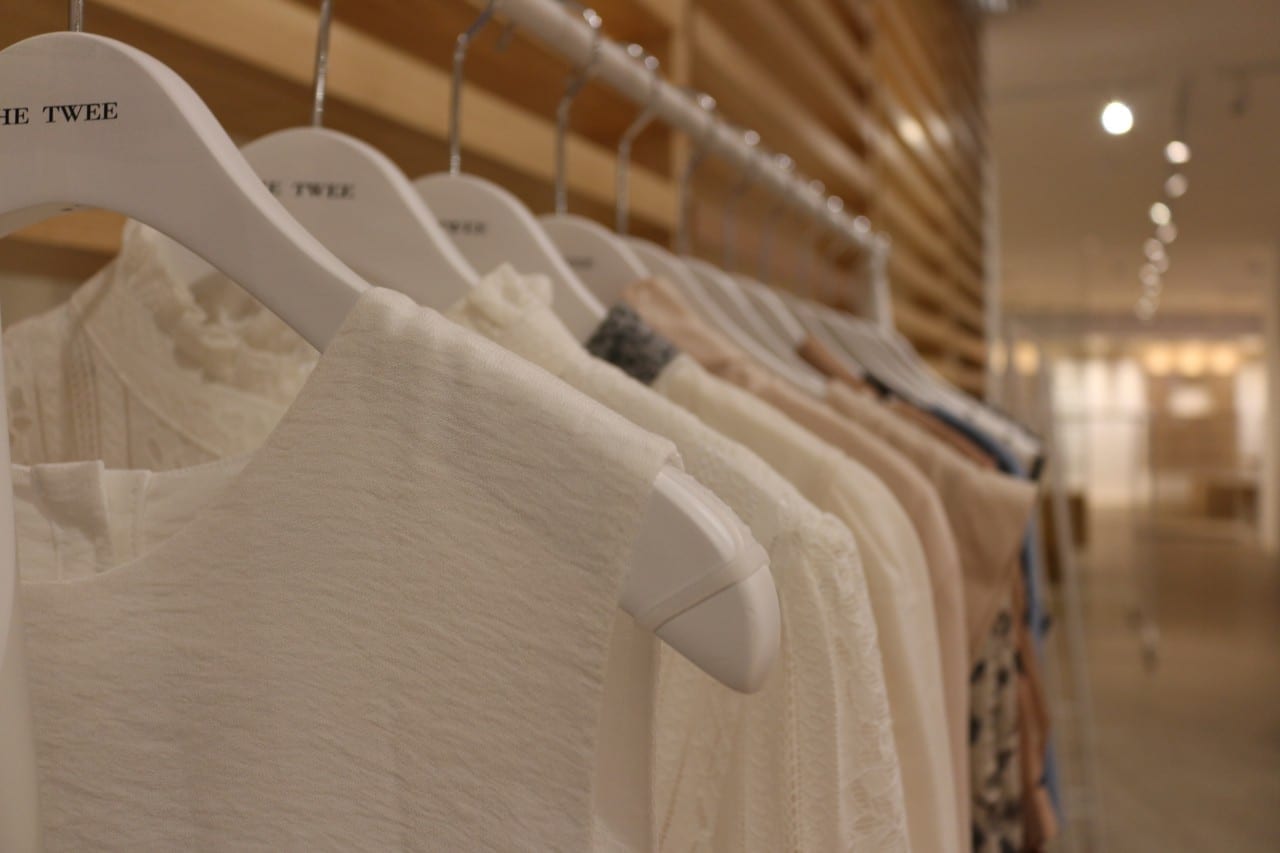
    South Korean fashion brand Twee has opened a flagship store at 313@Somerset on Orchard Road.

    The  4030sqft (374sqm) Twee Singapore store offers an exclusive collection of party dresses as well as Superface beauty products. The store promises to bring in more than 400 new styles for women and men every month.

    Twee has more than 40 stores in South Korea and 11 overseas, including nine in China and one in Malaysia. The brand plans to launch stores in Tokyo and Shanghai this year.

  • Sapinda takes over La Perla

    Sapinda takes over La Perla

    After negotiations with Chinese conglomerate Fosun International faltered, Italian luxury lingerie label La Perla has a new owner, Amsterdam-based investment company Sapinda Holding.

    Two months ago, La Perla announced it had entered into exclusive negotiations with Fosun, which this month took control of Parisian fashion label Lanvin.

    La Perla has been owned since 2013 by Italian businessman Silvio Scaglia via Pacific Global Management holding company. He restructured the brand’s organisation before seeking a buyer.

    Founded in the1950s, La Perla diversified under Scaglia to focus on women’s and men’s ready-to-wear and become a fully fledged lifestyle label. It has been under the creative leadership of Julia Haart for nearly two years, and has 150 monobrand stores worldwide, mainly through retail expansion in Asia in the past few years. “We are delighted Sapinda has bought La Perla,” says Scaglia. “I have known Sapinda and its CEO Lars Windhorst for many years, and have worked with him several times. I know Sapinda has the resources necessary to bring La Perla to the next level and continue my vision of creating a worldwide luxury brand while keeping its production in Europe.”

    Windhorst says Sapinda is ready to invest more into the brand. “We have been trying to invest in the luxury industry for some time, and after assessing opportunities over the past few months we are happy to have been able to strike a deal with La Perla.”

    Sapinda Holding is a Dutch investment company with offices in Amsterdam, Berlin and London.

    Meanwhile, La Perla is facing eviction from its Causeway Bay flagship in Hong Kong following a claim of HK$9.2 million in outstanding rent.

  • Tencent and JD.com each take minority stakes in Chinese retail group Better Life

    Tencent Holdings and JD.com are buying minority stakes in Chinese retailer Better Life Commercial Chain Share.

    A Tencent subsidiary is paying RMB886.9 million (US$140 million) for a 6 per cent shareholding, while a JD.com subsidiary is paying RMB739.1 million for a 5 per cent stake, according to a Better Life filing with the Shenzhen stock exchange.

    Also known as Bubugao, Hunan-based Better Life announced a strategic collaboration agreement with Tencent at the beginning of this month, Reuters reports. The three companies and shareholders agreed to the transactions on February 14, according to the filing.

  • Mr. Ruffini’s Moncler Genius Building unveiled

    Mr. Ruffini’s Moncler Genius Building unveiled

    Moncler Genius Building is finally unveiled.

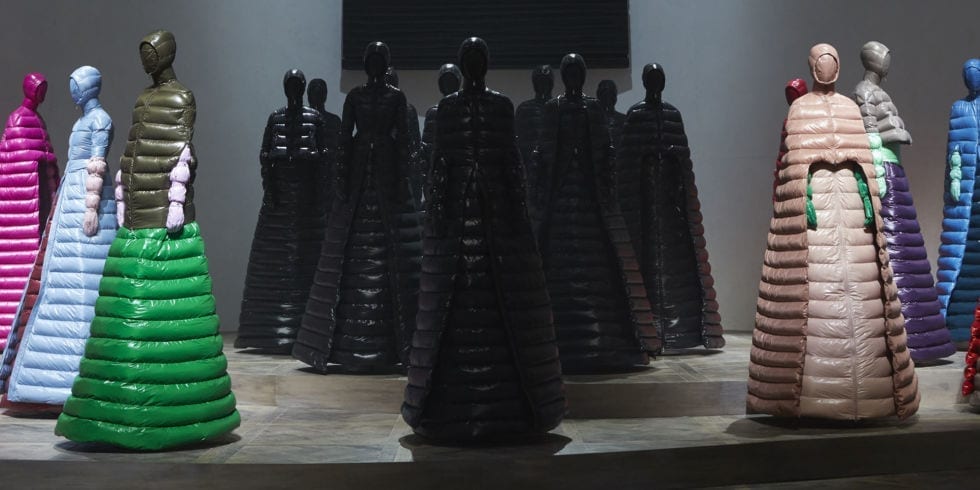
    During the opening of Milan Fashion Week, Moncler finally revealed the highly anticipated Moncler Genius Building—a conceptual space that housing the Moncler Genius collections designed in collaboration with Hiroshi Fujiwara, Francesco Ragazzi of Palm Angels, Craig Green, and other well-known names.

    Moncler packed out the Palazzo Delle Scintille—a 15,500 square meter exhibition space—with an international crowd excited to finally discover what Moncler had been hiding and shrouding with mystery for weeks.

    Upon entering the Palazzo Delle Scintille, the mystery continued. The space was filled with large tent-like shapes of all sizes shrouded with silver fabric, surrounded by smoke and glittering under bright spotlights.

    It looked like the silver shrouds would at once fall away for a big reveal but instead, following a long wait and a sudden countdown, curtains within the silver fabric opened and guests were invited inside the designers’ minds one at a time.

    None of the spaces featured a traditional runway presentation. Instead, the capsule collections were displayed on mannequins in a humid jungle; in an eerily dark room; hung from the ceiling; and on models performing a snow angel dance routine reflect in an enormous mirror.

    Francesco Ragazzi of Palm Angels took the most unorthodox approach, hosting two booths advertised by the slogans “Make It Rain” and “I’m So High.” Ragazzi and his team simply handed out free t-shirts periodically to keen attendees throughout the two-hour event.

    In the build-up, Moncler explained that with this new project it would “let creativity run wild,” and it certainly backed up its claim. Pierpaolo Piccioli of Valentino put together a monastic collection disturbingly reminiscent of the women’s uniforms in The Handmaid’s Tale and surrounded by the work of artist and monk Sidival Fila.

    Craig Greens’ collection was typically conceptual and utilitarian, denoting inflatable life jackets. Hiroshi Fujiwara of Fragment brought preppy, and in places grungy, vibes to the table with a sense Americana and mountaineering.

    Moncler did not stop at human clothes either. Happy pooches clad in tiny Moncler outfits ran joyfully around a doggy obstacle course as the brand showcased its animal jackets.

    The Moncler Genius Building acts as the project’s central hub. Within the space, each designer’s individualized cell represents a different facet of the brand’s identity and alludes to its unique vision for the future of fashion and design. The result is a grand composite of extraordinary minds united by the desire to innovate and create the new.

    Moncler’s President and Creative Director Remo Ruffini hopes these monthly capsule collections will disrupt the traditional, biannual fashion schedule. They will release in a similar fashion to the routine “drops” employed by some streetwear brand and provide consumers with newness far more regularly.

    Moncler will launch a collection once a month starting June. Clothes and accessories from its collaborative lines will be available in cities around the world at boutiques, selected stores and pop-ups.

  • Hong Kong luxury watch imports reached its peak

    Hong Kong luxury watch imports reached its peak

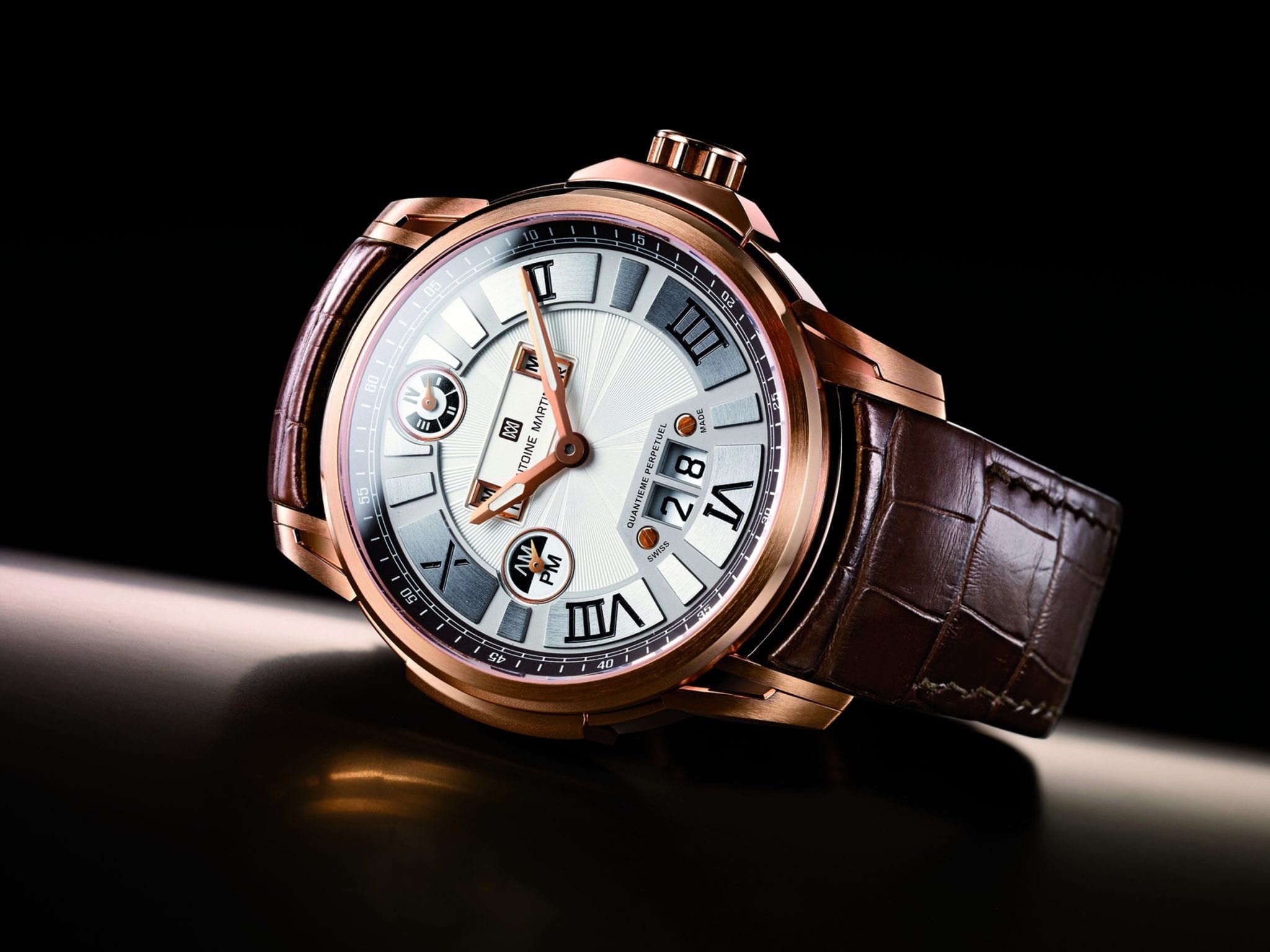
    Hong Kong luxury watch imports posted their highest monthly increase for more than five years in January.

    According to the Federation of the Swiss Watch Industry, exports to Hong Kong rose by 21.3 per cent in January, leading a broader Asian rebound which saw China overtake Japan into second place as a destination with 44.3 per cent growth. Exports to the US fell 1.9 per cent, dropping that market into third. Japan was also strong, up 12.9 per cent.

    January’s improvement followed the dynamic performance of previous months and a favourable base effect, the federation reported.

    Swiss watch exports for the month were worth CHF1.6 billion (US$1.7 billion), equivalent to 12.6 per cent growth.

    The value of all the main groups of materials increased. Steel and bimetal watches made the biggest contribution. Total volumes were 2.5 per cent higher, boosted by timepieces in steel and the other metals category.

    Against the trend, the ‘other materials’ category reported another substantial fall.

    After declining for more than two years, watches costing less than CHF200 (export price) continued to lose ground last month. All the other segments had sustained growth, especially in the CHF500 to CHF3000 price range which improved by about 20 per cent.

    Many markets saw strong growth for the month.

  • FAO Schwarz Sets Its Sights on China

    FAO Schwarz Sets Its Sights on China

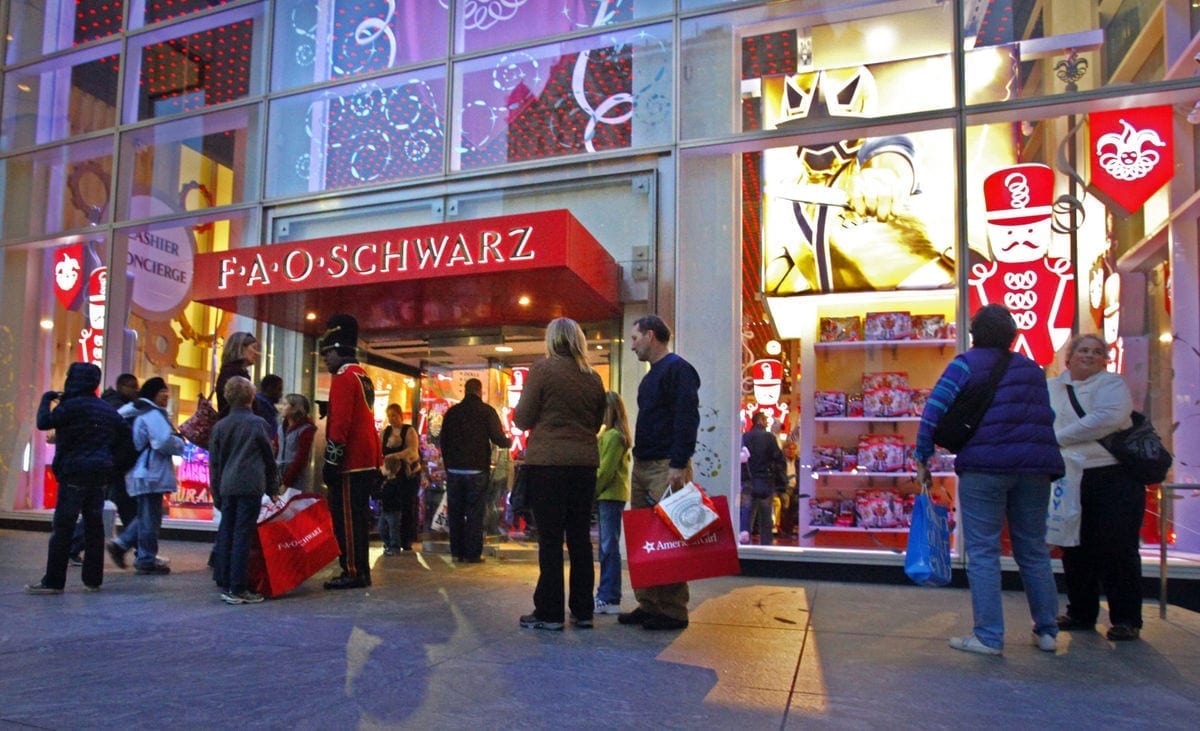
    As it continues its revival, US retail toy giant FAO Schwarz has set its sights on China.

    It plans to open stores in Beijing and Shanghai this year through a collaboration with China toy distributor Kidsland.

    Kidsland will also open 30 FAO Schwarz shops in 200 department stores across China over the next five years.

    “With customers looking for authentic brands and memorable encounters, we believe the brand will become a game changer in China’s toy industry,” says Kidsland International chairman/CEO Lee Ching Yiu.

    Founded in 1862, FAO Schwarz was the oldest toy store in the US when its sole remaining outlet, a flagship on Manhattan’s Fifth Avenue, closed in 2015. But its branded products continued to live on at Toys R Us, which bought the brand in 2009. In October 2016, Toys R Us sold FAO Schwarz to ThreeSixty Group, which designs, makes and distributes toys and other consumer products under a portfolio of owned and licensed brands.

    Meanwhile, FAO Schwarz has signed a licence agreement with Wild and Wolf, which designs and makes wooden toys, puzzles and games.

  • Arabesque eyes pension funds as it looks to expand in Asia

    Arabesque eyes pension funds as it looks to expand in Asia

    Arabesque Asset Management (Arabesque), a London-based boutique money manager, is looking to expand its presence in Asia, and is setting its sights on pension funds in the region.

    The company, which specialises in environmental, social and governance (ESG) investments, had assets under management (AUM) of US$150 million as at end-2017. Most of its customers are family offices.

    Arabesque Chairman Georg Kell says the company is looking at “securing mandates from Asian pension funds”.

    “As an asset management firm that is very focused on ESG, we are in good position to capture the growth and demand for ESG investment by institutional investors and pension funds,” Mr. Kell said on the sidelines of a recent capital market conference in Kuala Lumpur.

    He declined to disclose which Asian pension funds Arabesque is in discussions with.

    A growing number of pension funds in Asia have begun to take ESG investments more seriously in recent years.

    Japan’s Government Pension Investment Fund, which had AUM of $1.5 trillion at the end of 2017, said last year it plans to allocate 1 trillion yen ($9 billion) or 3% of its equities portfolio into companies that practice ESG.

    In Malaysia, Kumpulan Wang Persaraan, the country’s second largest pension fund, hopes to have 70% of its AUM be ESG-compliant by an undisclosed timeline, up from the current 50%. The fund had AUM of over 137 billion ringgit ($35.22 billion) as at end-September 2017.

    Mr. Kell says Arabesque, which was founded in 2013, needed a few years to build its track record before moving to expand aggressively.

    “In this industry, you are pretty much non-existent until the third or fourth year onwards,” he says.

    According to Mr. Kell, Arabesque will also be looking to grow its retail investor business. This will be done via partnerships with local players because it can be costly to set up a distribution network to reach out to retail investors.

    “In Malaysia, we have a partnership with BIMB Investment Management. We are looking for similar partnerships in the region,” he says.

    But he believes it’s important to educate retail investors about ESG products in order to boost demand.

    “In Asia, their (retail investors) mindset is not open enough… Of course, we know that building something new is never easy. It takes time,” Mr. Kell says. “Nevertheless, I am confident that sustainable investing is here to stay and will become a new normal.”

  • Blackmores stumbles on China costs and fish oil shortages

    Blackmores stumbles on China costs and fish oil shortages

    Blackmores CEO Richard Henfrey is wrestling with supply constraints for some ingredients and a more competitive market in China.

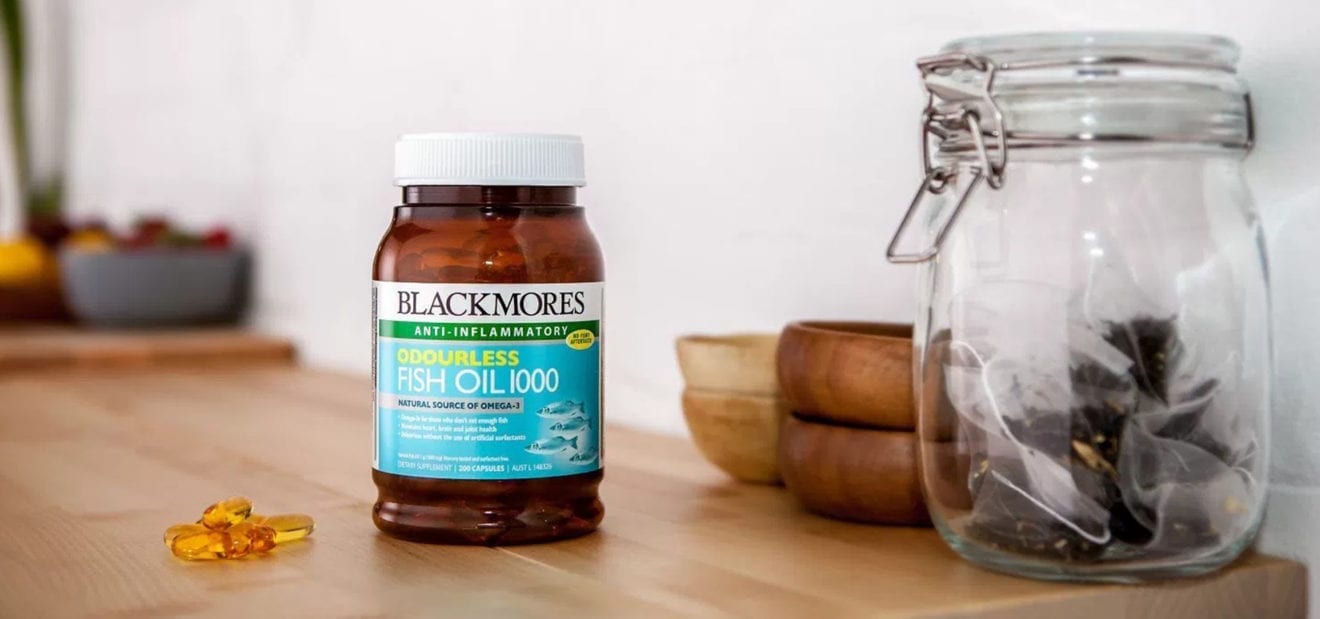
    Blackmores is grappling with shortages of ingredients such as whey protein and fish oil, and competition in China is becoming more fierce but chief executive Richard Henfrey says the long-term growth projections for the vitamins maker are robust.

    Blackmores shares tumbled more than 15 per cent in early trading on Thursday to $135 as the company said it was working with ingredients suppliers to shorten lead times in its supply chain and that profits from its China business had grown by 4 per cent as it bumped up investment and spent more on expanding its in-country presence in China.

    Mr Henfrey said Blackmores still expects solid growth in the second half of 2017-18, after generating a 20 per cent per cent rise in net profit after tax to $34.2 million.

    He said on Thursday that Blackmores was a more consistent business now after going through extreme volatility in the past couple of years and it would be some time before it was able to repeat the stellar full-year profit of $100 million notched in 2015-16. “That was the gift year,” he said, when booming demand from China fuelled extraordinary profit growth.

    Cost-cutting inside the business and a reduction in discounts to customers enabled Blackmores to generate a 20 per cent rise in bottomline profits, with revenues up 9.3 per cent to $287.4 million. The company lifted its first half dividend by 15 per cent to $1.50 per share, to be paid on March 22.

    But the soft Australian retail market is expected to crimp growth in the second half, while Blackmores is also wrestling with some supply constraints. “We’re working with our suppliers to shorten lead times,” Mr Henfrey said. Whey protein and fish oil were two specific areas where there had been constraints.

    The China market is becoming a tougher market in which to compete, as different players step up their efforts to gain a bigger share of the market as Chinese consumers flock to “clean and green” products from countries like Australia.

    “It’s becoming a more competitive space,” Mr Henfrey said. China sales were up 27 per cent. But Mr Henfrey said profits from China grew 4 per cent as more investment was made in bolstering the in-country presence. Blackmores was also hit by an increase in doubtful debts provisions in China of $2.8 million.

    Blackmores has a new distribution centre at Bungarribee in western Sydney which went into full overdrive in December after a staged ramp-up. “We’ve finished building out the technology in there,” he said. But it was at the start of the supply chain where headaches emerged. “It’s at the other end of the chain,” he said.

    Mr Henfrey, who took over from long-serving chief executive Christine Holgate in August 2017, said sales revenue in Australian and New Zealand slipped marginally to $121 million as more sales which had previously been emanating in Australia from entrepreneurs buying up in local retail stores and then selling them online in China, shifted across to direct sales online in China by Blackmores itself. But EBIT from Australia and New Zealand was up 19 per cent to $26 million.

    Blackmores shares had almost doubled in the past six months from $87 in late August 2017 to $160 on Wednesday before the fall on Thursday.

    This was on renewed optimism returned about Mr Henfrey’s strategy of ensuring a more consistent and reliable Blackmores with a focus on lifting investment returns with tighter management.

    Lofty gains

    Blackmores shares reached the lofty heights of $220 in early January 2016 on the strength of enormous appetite from Chinese buyers for “clean and green” vitamins brands.

    It was largely driven by the Chinese entrepreneurs buying up large volumes of vitamins from Australian supermarkets and big box outlets such as Chemist Warehouse, and then selling them online on e-commerce sites in China.

    But then regulatory uncertainty resulted in a pull-back. Chinese tourists and exporters changed their buying patterns and the Australian market became much more competitive, with high levels of stock left in warehouses, which blunted the speed of replacement orders.

    Rival Swisse was acquired in two tranches for a total of $1.7 billion in 2015 and 2016 by a company now called Health & Happiness, which changed its name from Biostime International.

  • Coca-Cola Amatil-owned fruit brand SPC to enter China market in 4500 stores

    Coca-Cola Amatil-owned fruit brand SPC to enter China market in 4500 stores

    Managing director Reg Weine said that its premium Goulburn Valley 700g fruit range, SPC snack cups and pouch ranges, and IXL jam would be the first products to enter stores.

    SPC’s snack cups are already available on online retailer JD.com and Weine said the full range of SPC, Goulburn Valley and IXL products will progressively be available across major online and offline retailers in China.

    In end-January, SPC finalised an agreement with China State Farm Agribusiness (CSFA) Shanghai to export SPC, Goulburn Valley and IXL lines of processed fruit products to China.

    CSFA Shanghai, a wholly-owned subsidiary of China National Agriculture Development Group Corporation — one of China’s largest agribusiness conglomerates — will be “master distributor” of SPC’s brands and product lines in China.

    “It takes significant time and resources to build brands in overseas markets, which is why we are partnering with China’s leading agricultural firm. Their enviable track record of successfully bringing premium foreign brands to China is very attractive to us,”​ said Weine

    Marketing to middle class

    He added that CSFA Shanghai had the dedicated personnel and sales and marketing support that SPC needed to build its brands, as well as the distribution capability to reach China’s burgeoning middle class.

    At the signing ceremony, he said, “It’s about taking our market-leading brands into markets where provenance plays a part and there is a large enough consumer segment that is affluent and willing to pay a premium for Australian produce.”​

    To this end, they have engaged Chinese singer and actress Ye Yiqian, who as a “deep connection with aspirational Chinese consumers”​ to be brand ambassador.

    Extensive distribution 

    Weine confirmed that the exported fruit products will be available in over 4,500 premium retail and mother and baby stores, which he said will provide a considerable market for the company’s products.

    “We will have a strong presence in bricks-and-mortar retailing ​— including Alibaba’s HEMA retail outlets, Ole supermarkets and mother and baby chain Kidswant,”​ he said.

    Initially, they will be in China’s tier one cities including Beijing, Shanghai, Guangzhou and Tianjin, and later will include Shenzhen and Chongqing.

    The products will also be carried by leading e-commerce platforms such as such as JD.com, Kaola, and Alibaba’s T-Mall.

    Asian expansion

    Said Weine, “This hopefully will only be the beginning of our relationship with Chinese consumers.”​

    He emphasised that China represents a significant business opportunity for SPC in the years ahead, with its processed fruit market five times that of Australia.

    Among further plans for expansion, Weine said SPC’s ProVital, functional and fortified fruit products in accessible packaging, will also appeal to China’s ageing population.

    In the vast Asia Pacific region, aside from China, SPC already exports to Hong Kong, Japan, Singapore, Malaysia, Pacific islands and the Middle East.

    In February, SPC will also be launching its Perfect Fruit frozen fruit whip dessert in India and, shortly after, to Japan as well.

    Coca-Cola Amatil-owned SPC is the largest producer of premium packaged fruit and vegetables in Australia, processing about 150,000 tonnes of fruit a year. Its products include processed and packed fruit, vegetables, spreads and jams, prepared meals, snack foods, sauces and condiments.

    CSFA Shanghai already has established business relationships with several Australian companies including A2 Milk and Stanbroke Premium Beef. The company will organise staff and carry out sales and marketing to build SPC’s product brands in China.

  • Bossini reports Bossini $12m interim loss

    Bossini reports Bossini $12m interim loss

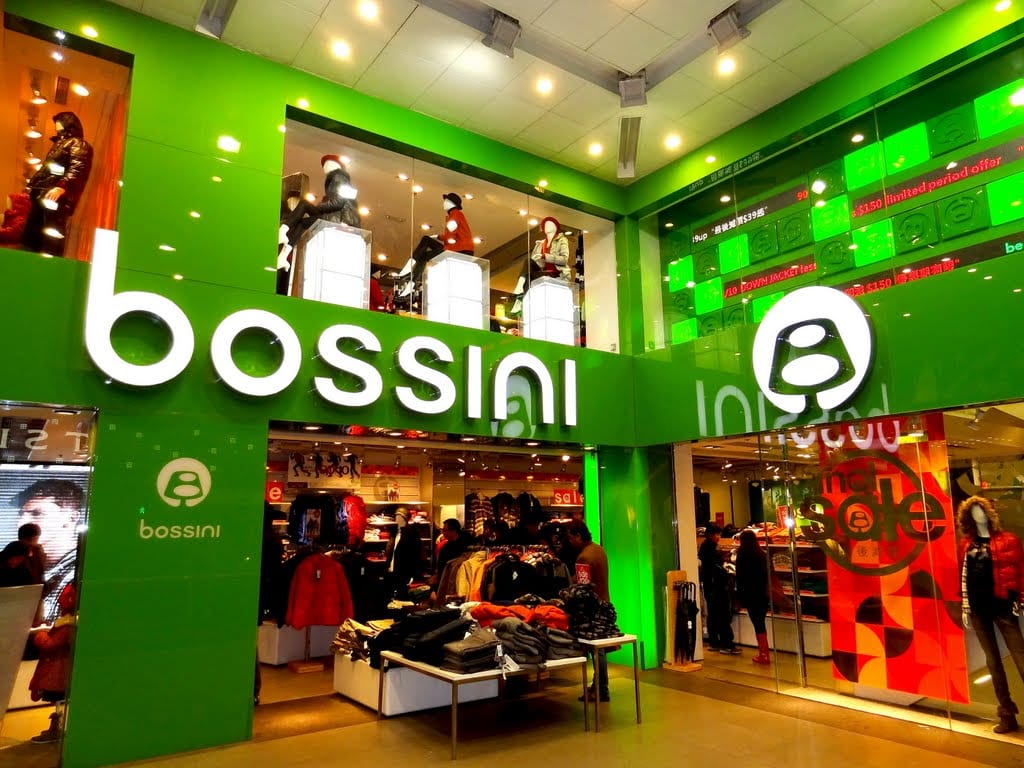
    Apparel brand Bossini International Holdings remains optimistic despite a slip in revenue and profit turning to loss for its six months to the end of December.

    It says growth is projected to continue rising in emerging markets and developing economies, supported by a favourable global financial environment and a concomitant recovery in advanced economies.

    “The regional picture is particularly encouraging as expansion in Mainland China and other parts of Asia remains solid, reflecting the strength of a broad-based upturn that saw global growth reaching its strongest rate since 2011. Mainland China is spearheading this long-overdue regional expansion, its economy having grown following two years of decline.

    “Hong Kong’s apparel retailing industry seems to have bottomed out after shrinking for consecutive years. Nonetheless, various downside risks remain evident, including geopolitical tensions, sudden capital outflows, policy indecisiveness and a sharp adjustment in Mainland China.”

    Bossini’s revenue for the six months fell by 5 per cent to HK$974 million (US$124 million), with gross profit slipping 1 per cent to $512 million.

    The group’s operating loss was $10 million with a -1 per cent operating margin, down from a positive 2 per cent a year earlier. Loss for the period attributable to the owners was $12 million, a switch-around from a $17 million profit 12 months earlier.

    Economic backlash

    Bossini says it weathered economic backlash from the China government’s “one trip per week” policy, more in-depth travel instead of retail shopping, and changes in tourist buying patterns. These factors hit retail sales in Hong Kong and Macau, which accounted for more than half of the group’s consolidated revenue.

    The drop in profit attributable to the owners was mainly because of the decrease in the profit derived from the retail and export franchising business in the Hong Kong and Macau segment. There was a 5 per cent drop in overall revenue and a 2 per cent decline in same-store sales for the period. However, same-store sales rebounded in the second quarter, particularly in China and Taiwan.

    Gross margin improved by two points to 53 per cent.

    Same-store sales in Hong Kong and Macau and Singapore declined by 4 per cent, an improvement over a 6 per cent decline the previous year, and 8 per cent (no change) respectively. Same-store sales in Mainland China and Taiwan grew 9 and 5 per cent (both had 2 per cent declines previously).

    Overall, same-store sales slipped by 2 per cent, an improvement on the previous period’s 6 per cent decline.

    At the end of the six months, the group had a presence in 29 countries and regions with  total 940 stores, the same as at June 30. The number of directly managed stores dropped by two to 282, while the number of franchised stores was 658, up two.

    Hong Kong/Macau remained the group’s core market and major contributor to the total revenue. A new outlet lifted the overall total number of stores to 41 while the export franchising business added five stores to the global network, taking the total to 656 across 25 countries.

    Mainland China had 166 stores (down two) comprising 164 directly managed stores and two franchises. Two non-performing stores in both Taiwan and Singapore were closed, giving both markets 16 outlets.

    During the six months, the group continued to launch its “on-the-go” collection to ride on the athleisure trend.

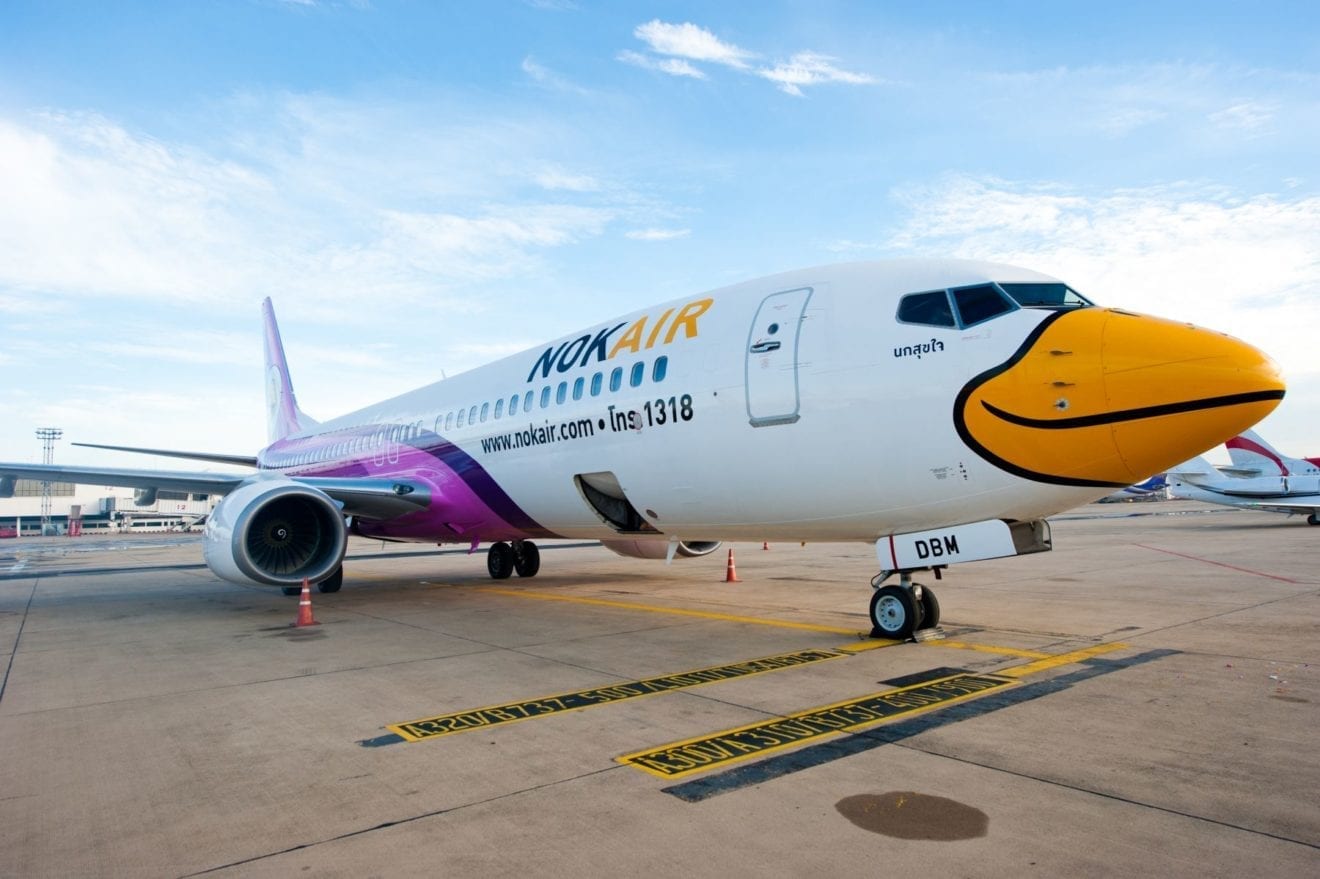
  • Thai low-cost carrier Nok Air pins turnaround on more China, India flights

    Thai low-cost carrier Nok Air pins turnaround on more China, India flights

    Nok Airlines Pcl, the struggling low-cost subsidiary of Thai Airway International Pcl, aims to turn around operations by growing international revenue with more flights to China and India, a top executive said on Monday.

    The carrier, which posted a loss of 1.85 billion baht ($58.95 million) last year, aims to increase revenue by 3 billion baht this year from 20.4 billion baht in 2017, by carrying 9 million passengers, 4 percent more than a year prior, Chief Executive Piya Yodmani said.

    He also said the carrier aims to increase revenue from international operations to 40 percent of its total from 20 percent a year earlier.

    Piya, who took over as CEO in September after the resignation of Patee Sarasin, said Nok targets aircraft utilization of 12 hours, up from 10.4 hours in 2017, with more red-eye flights and routes in China to boost earnings as Chinese tourist arrivals surge in Thailand.

    “We are waiting for approval to fly into three cities in India with the possibility of increasing routes there,” Piya said.

    Hotel and retail groups are among the main beneficiaries of a Thai tourism boom, while Thai airlines struggle with competition and fuel costs.

    Nok is deferring delivery of 8 Boeing Co 737-MAXs to next year through 2021 due to a “red ocean of competition,” Vice President Surachart Angkasuwan said.

    Tourism accounts for about 12 percent of Southeast Asia’s second-largest economy, with the country expecting 37.55 million arrivals this year, up 6.1 percent from 2017.