Tag: China

  • Carrefour Asia comes back strong

    Carrefour Asia comes back strong

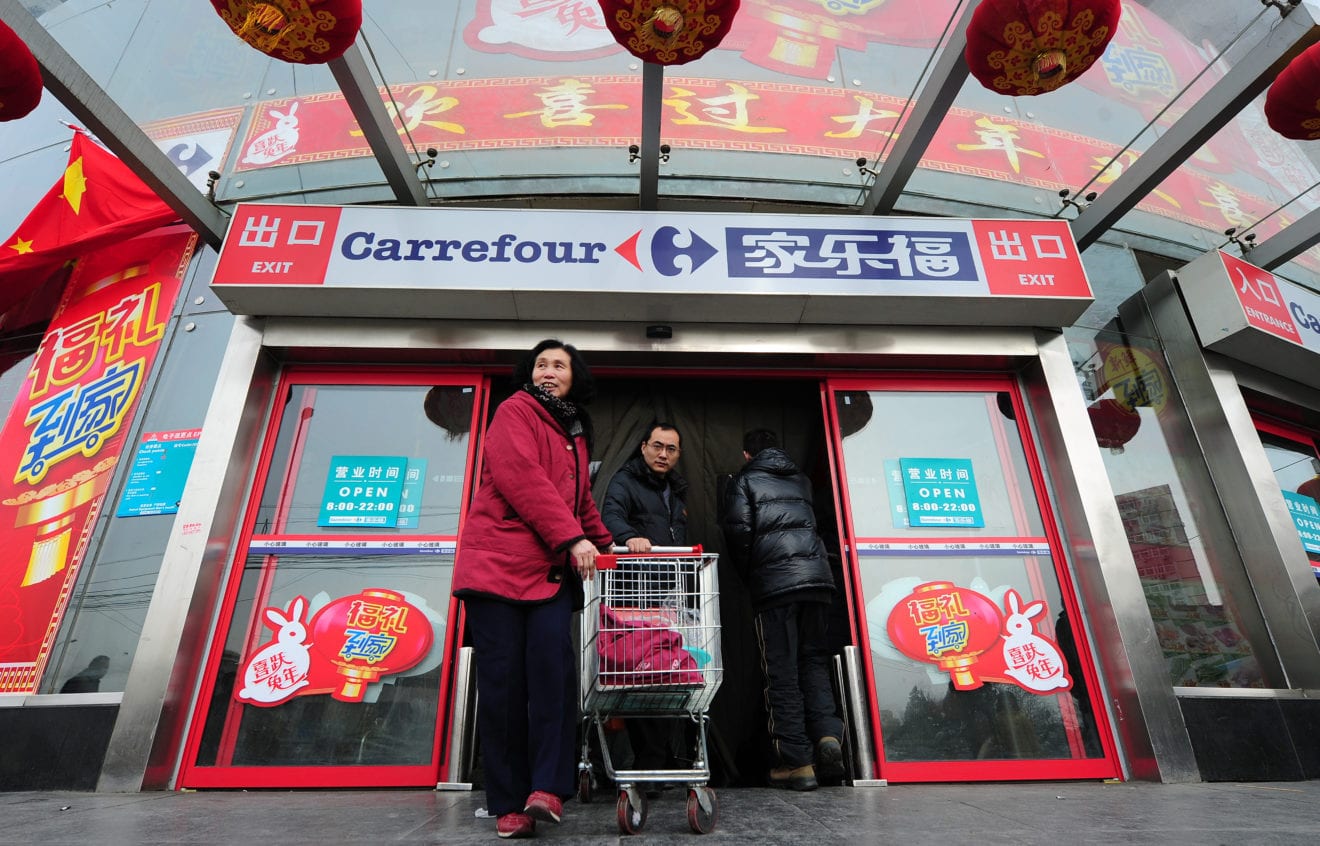
    French hypermarket retailer Carrefour is reaping the rewards of restructuring its Asian operations.

    The Carrefour Asia business has converted an operating loss of €58 million in 2016 to a return on investment of €4 million US$4.4 million) last year, according to the company’s annual results released overnight.

    “Carrefour is back on the offensive and investing to resume growth,” says chairman/CEO Alexandre Bompard.

    Carrefour says the group reaped the fruits of action plans implemented in China, in particular in cost reductions, in a market that remains highly competitive and marked by rapidly changing consumption habits.

    In Taiwan, sales growth remained strong and operating margin continued to improve.

    Globally, Carrefour experienced a slowdown in like-for-like sales at 1.6 per cent, but that is down from 3 per cent in 2016. Net sales totalled €78.8 billion.

    Group EBITDA stood at €3.6 billion, down 6.4 per cent at current exchange rates, with margin slipping to 4.6 per cent.

    This reflected strong competitive pressure, a rise in distribution costs in the group’s main markets, and an increase in depreciation after a period of significant investments.

    Gross margin stood at €18.2 billion, or 23.1 per cent of sales, down 38 points.

  • Here’s how BigBasket is riding on Alibaba’s offline retail strategy

    Here’s how BigBasket is riding on Alibaba’s offline retail strategy

    After raising $300 million last month, Indian online grocery startup BigBasket is entering the offline sector. The company is looking to transform its core online business to offline centres that will store daily moving consumer goods, groceries, fruits and vegetables. These offline stores will be placed in apartments and various office complexes. The Bengaluru based firm has already rolled out a new app called BB Instant. To increase offline purchases it is also planning to start subscription based services on FMCG goods.

    Founded by Abhinay Choudhari, Hari Menon, Vipul Parekh and VS Sudhakar in 2011, BigBasket is an online grocery company, which now is looking to exploit the brick-and-mortar space. The company recently raised $300 million in a round led by Chinese giant Alibaba, which contributed $146 million. The company has raised close to $885.7 million in total disclosed investments.

    BigBasket claims to have an average of 3 orders per user every month with the average ticket size ranging from Rs 1,400-1,500. Further the company claims to have monthly sales of over Rs 200 crore.

    This investment comes in at a time when Indian and foreign behemoths are heavily investing in the sector. Recently, Flipkart restarted its grocery business, with the like of Amazon planning to enter the offline stores in India.

    This is not the first time Alibaba has invested in an offline strategic move. The Chinese giant has been looking into physical stores for years, now, in an effort to engage customers to its ecommerce platforms by helping to digitize traditional merchants. It has pumped billions into investments including its own grocery chain, a shopping mall group, Walmart-like chains, among others.

    With the move, BigBasket may be following the footsteps of Hema, the first digital supermarket incubated in China by Alibaba. Consumers shopped using an app, either in person or remotely. Shopping options included buying food to carry out, purchasing in store and buying online with a 30-minute delivery. Similarly, BigBasket has launched a 60-120 minute express delivery through its stores.  

  • How China is growing its economic influence in the Middle East

    How China is growing its economic influence in the Middle East

    China is becoming a major player in Middle Eastern real estate, with activity driven by tourism and the Belt & Road Initiative.

    Both the overland Silk Road Economic Belt and the Maritime Silk Road, which aim to boost trade links between China and Europe and China and Africa, run through the Middle East.

    The UAE, particularly the trading centre of Dubai, is expected to be a key beneficiary of Chinese investment interest in the next few years. Large state-owned construction companies such as China State Construction Engineering Corporation (CSCEC) and China National Aero-Technology International Engineering Corporation already have a number of projects underway.

    For example, CSCEC has committed to 16 projects in Dubai, mostly in the residential sector, but also in retail and hospitality. The firm is also active in other Emirates; in January CSCEC signed an agreement with Ajman Holdings to build a US$136 million shopping centre in Ajman, one of the UAE’s emirates.

    Chinese construction companies are mostly involved in hospitality and residential projects although JLL is “also seeing more activity in the retail and commercial sectors.”

    Dubai is home to Dragon Mart, a shopping mall said to be the largest trading hub for Chinese products outside of Mainland China, with more than 3,500 retailers. Developer Nakeel Malls plans to expand the mall into Dragon City, a mixed use development which will capitalise on Chinese influence in Dubai.

    At the new masterplanned city of Dubai South, the China Business Hub is intended to become home to hundreds of new Chinese businesses. “China Business Hub will allow Chinese companies to smoothly set up and quickly develop their business in the region and to facilitate all processes such as visa applications,” says Andrew Williamson, Head of Retail at JLL MENA.

    A new destination

    It’s not just business attracting Chinese visitors to the UAE, tourism is increasingly important.

    According to the Dubai Statistics Centre, the number of visitors from China to Dubai rose 49 percent to 573,000 in the third quarter of 2017 compared with the same period the previous year.

    China is also now the biggest source of tourists for Abu Dhabi, with 242,000 visiting in the first nine months of last year, up 68 percent on 2016.

    CSCEC and other Chinese construction firms are working on five hotels in Dubai, with others expected to follow as more Chinese tourists and business travellers arrive in the Emirate, said Amr El Nady, Head of Hotels & Hospitality MENA at JLL.

    r

  • China’s Sun Art Retail to go digital with Alibaba

    China’s Sun Art Retail to go digital with Alibaba

    China’s largest offline hypermarket chain Sun Art Retail Group is going full speed on digital retailing, with plans to transform more than 400 outlets within this year to become a member of Alibaba Group Holding’s ecosystem.

    The nationwide store revamp plan came after the e-commerce conglomerate acquired a 36.16% stake in the chain from Taiwanese shareholder Ruentex Group for about $2.86 billion last November, effectively making Alibaba’s control equal to Sun Art’s French owner, Auchan Retail.

    Under the “digital transformation” initiative, all Sun Art’s brick-and-mortar stores, under the RT-Mart brand, will be equipped with point-of-sale machines and automation facilities developed by Alibaba, as well as big data systems that track and analyze customer behavior, according to Peter Huang Ming-Tuan, chairman of RT-Mart China.

    Huang said the adoption of Alibaba’s technologies would cost about 5 million yuan ($790,000) for each store, but business would not be affected as it would not be necessary to close shops during the renovations. With the help of Alibaba’s digital and customer resources, Huang expects the share of online sales to increase from less than 3% of the group’s total at present to between 10% and 20% in the next few years.

    The wider adoption of products offered by Alibaba, however, means the largest player in China’s hypermarket industry — which, as of the end of December, owned 461 complexes in more than 200 Chinese cities — will significantly reduce collaborations with the e-commerce conglomerate’s key rivals, especially Tencent Holdings.

    Huang admitted that it was not clear whether WeChat Pay, the digital wallet developed by Tencent, would be available after the Alibaba-style makeover.

    “Now we are part of Alibaba’s ecosystem, we will have more and more cooperation with Alibaba, and less and less with others,” said Ludovic Holinier, CEO at Sun Art Retail, adding that the group would gradually reduce the use of other companies’ services and products.

    Like Sun Art Retail, many traditional merchants have teamed up with internet companies to retain Chinese customers who are increasingly accustomed to the digital world. And the dominance of big players like Alibaba and JD.com have made it difficult for retail chains to start their own digital services.

    The online-offline alliances come at a time when Tencent and Alibaba are locked in a fierce competition to gain the bigger share of China’s lucrative online payments market, with transactions reaching $5.5 trillion in 2016, according to iResearch. The pair are also trying to recruit traditional retailers with a large number of brick-and-mortar stores as a way to expand their last-mile delivery capacities, and those in the fresh food sectors — which have been the most difficult segment to convert to e-commerce.

    Last December, Tencent purchased a 5% stake in one of China’s largest supermarket chains, Yonghui Superstores, following the announcement of the Alibaba-Auchan-Ruentex alliance. The social media company announced a deal to take a stake in French department chain Carrefour’s China unit. Most recently it teamed up with JD.com, an e-commerce platform rival to Alibaba, to take minority stakes in Chinese retail chain Better Life. Tencent and JD.com agreed to pay $140 million and $117 million respectively for stakes in the chain, which operates about 600 stores in China.

    Besides adopting Taobao Dao Jia, a system that enables customers to buy RT-Mart products on Alibaba’s flagship online marketplace Taobao, Sun Art Retail is also exploring other areas for collaborations with Alibaba, such as offering consumer loans.

    Holinier said the company had been looking into a potential collaboration with Tmall, a business-to-customer e-commerce platform under Alibaba, since December. Taobao and Tmall together had 580 million actively monthly users by the end of December and controlled over 70% market share of online transactions in China.

    Other areas they are currently looking into include co-operations with Hema Xiansheng, Alibaba’s own fresh food grocery unit, and the possibility to jointly roll out customer loans with Alibaba’s financial unit.

    “We have plenty of projects. We have to examine them,” Holinier said.

    However, Sun Art’s latest result seems to be a disappointment for the market. Its Hong Kong-listed shares dropped by 9.7% to close at 9.72 Hong Kong dollars, its steepest drop in more than a year, and outpacing the fall in the benchmark Hang Seng index which lost 2.3% to close at 29,886.29 points on Monday. The drop came in spite of the hypermarket operator announcing an 8.6% increase in net profit for the full year in 2017 to 2.79 billion yuan. Revenue was 102.32 billion yuan, a mere 1.9% increase on the year.

  • The luxury mobile shopper emerges in Asia, says Worldpay

    The luxury mobile shopper emerges in Asia, says Worldpay

    Shoppers in emerging economies such as China and India are seeking a more luxury, personalised shopping service on their mobile, and many Asia Pacific shoppers are even willing to pay more for a product or service if the mobile shopping experience is better. This is according to new research from Worldpay, a global leader in payments.

    Worldpay’s research examined the viewpoints of 16,000 consumers across 10 global markets, including China, India, Japan and Australia in Asia Pacific. Questioning consumers about their last mobile shopping experience and what makes them hit the “pay” button, the research found that mobile payment apps are on track to become the luxury shopping experience of the future.

    Key findings in Asia Pacific include:

     62% of Chinese consumers and 64% of Indian consumers are happy to pay more for an item, trip or service if the mobile user experience is better; far ahead of the global average of 41%

     56% of consumers in India and 54% in China are more likely to shop on a mobile phone if sent a personalised push notification from a nearby store; far outweighing the global average of 35%

     As the mobile shopping experience improves, more Australians are purchasing higher-end goods on their smartphones, with 36% spending over $85 AUD (US$67) on their last purchase

     In Japan, 38% of mobile shoppers spent over ¥7410 (US$69) on their last purchase

     India and China prefer purchasing via apps over mobile browsers more than any other markets in the world, at 82% vs. 18% and 80% vs. 20% respectively. This is compared to the global average of 71% vs. 29%.

    Phil Pomford, General Manager for Asia Pacific, Global Enterprise eCommerce at Worldpay, said: “Shoppers in Asia’s emerging economies are active mobile users who have leapfrogged past traditional modes of online shopping and now demand a personalised, luxury, on-the-go experience in the palm of their hand. Online merchants that can deliver the right experience have much to gain, as Asian shoppers are making bigger, more valuable purchases via their smartphones and are even happy to spend more with merchants that deliver a better experience. At the same time, to capitalise on the mobile shopping opportunity, merchants must consider how to help smartphone shoppers feel secure.”

    Indeed, despite exciting growth in mobile shopping in Asia Pacific, security concerns continue to hinder the full potential of mobile commerce. Australia is behind Asia in terms of mobile app adoption, with significant issues remaining around security and usability – 73% of Australian consumers say they only download apps from brands they trust. The number one reason for smartphone basket abandonment in Australia is concerns that the website wasn’t secure. In Japan, meanwhile, security is also a concern, with just 37% of consumers saying they would be happy for apps to store their payment details, against a global average of 57%.

    Pomford added: “Merchants can help to mitigate shoppers’ security fears by providing a mobile payment experience that’s quick, seamless and familiar. This might mean storing consumers’ payment details so they don’t need to enter them every time, or simply providing a range of payment options so that consumers can always use their preferred method. In China, for example, lack of preferred payment options is the top reason for smartphone basket abandonment – an important reminder that capturing this emerging class of luxury mobile shoppers depends upon providing a comfortable and convenient mobile payment journey.”


  • Mobile payments preferred, says survey

    Mobile payments preferred, says survey

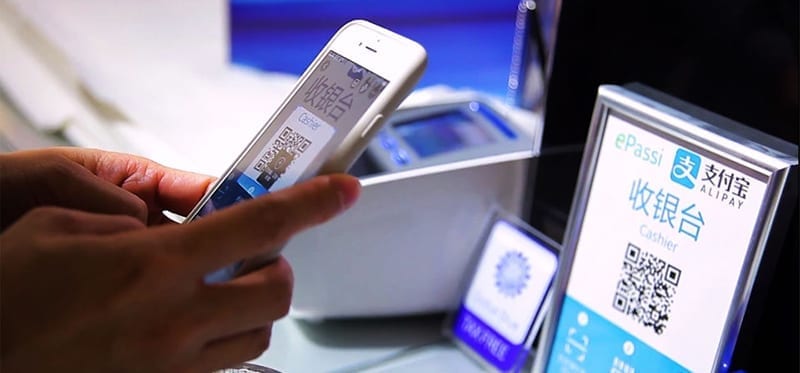
    Chinese tourists are taking their cashless lifestyle overseas, preferring mobile payments for shopping, says a new Nielsen/Alipay survey.

    Their joint Outbound Chinese Tourism and Consumption Trends: 2017 Survey provides analysis and insights into consumption and payment behaviours as well as assessing trends. Unlike similar studies, the report focuses on the use of mobile payment platforms by Chinese tourists travelling overseas.

    A growing number of Chinese tourists expect they will use mobile payments when travelling, says the survey, which includes a case study on mobile payment and lifestyle platform Alipay.

    China National Tourism Administration statistics show that Chinese tourists made 131 million trips overseas last year, an increase of 7 per cent from 2016. Data from the International Association of Tour Managers shows that overseas travel spending by Chinese tourists reached US$261 billion in 2016, up 4.5 per cent year-on-year, and ranking first worldwide.

    Key findings of the survey include:

    ● On average, Chinese tourists who took part in the survey visited 2.1 countries or regions in 2016-17, and expect to visit an average of 2.7 countries or regions this year. Chinese tourists spend an average of $762 a head on shopping while non-Chinese tourists spend an average of $486.

    ● Mobile payment is gaining momentum, with 65 per cent of Chinese tourists using mobile platforms while abroad, nearly six times that of non-Chinese tourists (11 per cent). They primarily use mobile payments for shopping, dining and visits to tourist attractions.

    ● More than 90 per cent of Chinese tourists surveyed say they would use mobile payments if more overseas merchants accept it.

    ● The habit of using mobile payments in China, convenience and extra discounts are key factors for Chinese travellers to use mobile payment overseas, while limited merchant coverage overseas is cited as the biggest obstacle.

  • Suning.com Sees 500% Rise in Net Profits for 2017

    Suning.com Sees 500% Rise in Net Profits for 2017

    Chinese smart retailer Suning.com has turned in its best performance since embarking on its O2O business model in 2009.

    Its omni-channel sales of RMB243.2 billion (about US$38.4 billion) last year rose nearly 30 per cent year-on-year, while the net profit attributable to equity shareholders of the company was RMB4.21 billion – an increase of 497.66 per cent.

    The retail subsidiary of Suning Holdings Group, Suning.com focuses on traffic management, merchandising and affiliate marketing, optimising customer experience and improving omni-channel capabilities.

    During the reporting period, total online physical trading volume for the company was RMB126.6 billion (tax inclusive), up 57 per cent, while the number of monthly active Suning.com app users has grown by 106 per cent since the start of the year. In December, the number of orders generated by the app reached more than 89 per cent of the total online.

    At the end of December 2017, Suning had 3867 physical stores with a total area of 5.09 million square metres.

    Still improving

    Through internet technology application, data-oriented management and strong quality control, the business performance of Suning stores continues to improve, says the company. Sales revenue grew 4.17 per cent in the firm’s Mainland China stores with the efficiency of direct-sale stores jumping 34.9 per cent.

    By the end of this year, with a strategic partnership with 300 real-estate developers domestic and abroad such as Evergrande, Sunac and Wanda, Suning plans to add a further 5000 physical stores to its portfolio, all connected to its online presence and covering diversified consumption scenarios including Suning cloud stores, direct-sale stores, fresh-food supermarkets and convenience stores, Redbaby (maternal and child supplies stores), Suning Sports and Suning Cinemas. It says 15,000 internet-connected stores will open within three years for a total of 20,000 by 2020.

    As well as the substantial growth of its retail subsidiary, the logistics and financial services arms of Suning also continued rapid growth. Suning Logistics revenue (excluding Tian Tian Express) grew 135.76 per cent last year. It now has a total area of 686 million square metres of warehousing, with 20,871 express outlets. Suning Financial Services (payment business, supply-chain finance) saw transactions increase by 130 per cent in size overall.

    Founded in 1990, Suning has two public companies, in China and Japan respectively.

  • JD.com launches new accelerator to develop AI and blockchain technologies

    JD.com launches new accelerator to develop AI and blockchain technologies

    JD.com, one of China’s largest e-commerce companies, has launched a new accelerator program called AI Catapult that focuses on blockchain and artificial intelligence startups.

    Based in Beijing, AI Catapult will start with an inaugural roster of companies that include Bluzelle, a blockchain startup based in Singapore providing database services, Bankorus, a leading Chinese robo-advisory provider, CanYa, an Australian cryptocurrency startup, Nuggets, a London-based e-commerce payments and ID platform built on blockchain technology, Republic Protocol, an open source decentralized dark pool exchange, and Devery, a blockchain-powered product verification protocol.

    JD.com said the purpose of the program is to partner with innovation startups to build new businesses and create real-world applications of their technologies at scale.

    Uri Ferruccio, the director of strategy and investment for JD.com’s AI Platform and Research Division, said AI Catapult “will support JD.com as it explores how AI can improve the scalability, security, privacy and efficiency of blockchain, and enable novel and improved applications in areas such as distributed AI.”

    Bowen Zhou, vice president of JD.com’s AI Platform and Research Division, added, “We are excited to work with some of the world’s most innovative startups to explore ways we can scale these cutting edge technologies for the future of retail and other industries, as well.”

    The program will begin in March and will provide selected startups with the opportunity to cooperate with business units throughout JD.com’s retail business and implement their technologies.

    The firm also plans to invest in the growth of the AI and blockchain ecosystem through future commercial, strategic and research partnerships.

    JD.com already uses blockchain technology in its supply chain to track products and AI to control its logistics drones and automated package sorting centers. The firm joined the Blockchain in Transport Alliance earlier this month to explore the use of blockchain for global freight and logistics. It is also working with Walmart, IBM and Tsinghua University National Engineering Laboratory for E-Commerce Technologies on blockchain applications for food tracking, traceability and safety in China.

    JD.com has over 266 million customers and recorded 658.2 billion RMB, or about US$100 billion, in gross merchandise value in 2016.

  • More challenging situation for Esprit Holdings

    More challenging situation for Esprit Holdings

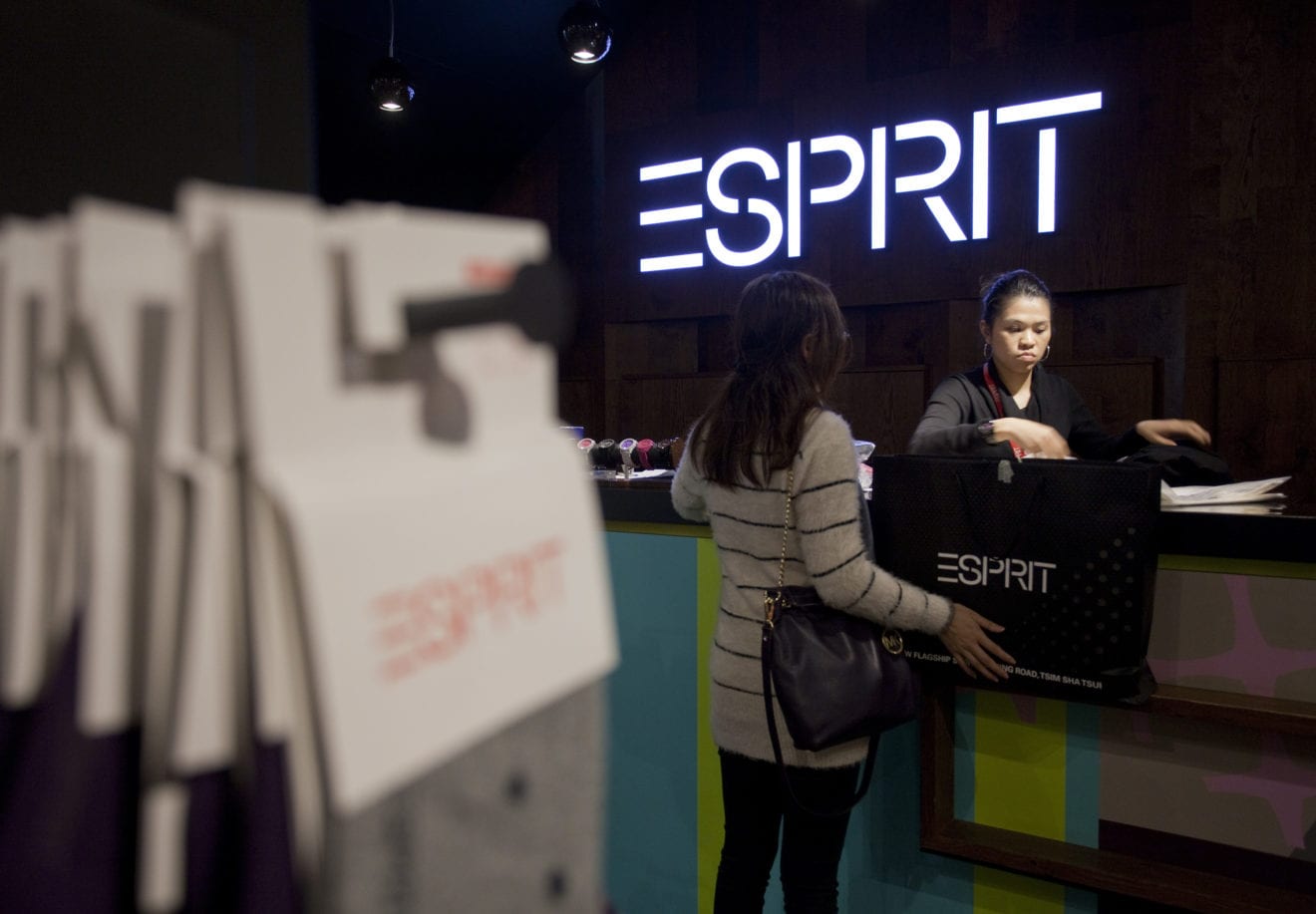
    Trading conditions have continued to be challenging for clothing company Esprit Holdings.

    With the industry changing rapidly, the company says it has had fewer customers in its brick-and-mortar retail stores as well as increased competition in the e-commerce channel. As a result, the group’s first-half performance to the end of December was below management expectations.

    Esprit says it has experienced a significant decline in its China business in recent years.

    While gross profit margin improved by 0.4 points, the group had a net loss of HK$954 million (US$121.8 million) for the half-year, following a net profit of $61 million for the same period a year earlier.

    First-half revenue was $8 billion, a year-on-year decline of 9.6 per cent.

    Esprit says rationalising its distribution footprint by closing unprofitable stores and non-performing wholesale spaces continues to be paramount. During the six months to the end of December, the group reduced total controlled space by 21,766sqm. This, with the 24,122sqm reduction in the previous six months, added up to a year-on-year reduction of 7.4 per cent.

    Revenue for the first quarter fell 7.4 per cent in local currency, while in the second quarter the decrease was 11.7 per cent, larger than expected primarily because of weak sales in its brick-and-mortar stores.

    Representing 12 per cent of total group revenue, Asia Pacific (mainly China, Australia and New Zealand, Singapore, Hong Kong, Taiwan, Malaysia and Macau) saw revenue fall 17 per cent to $966 million.

    In terms of distribution channels, retail contributed 82.4 per cent of the region’s revenue with the e-shop contributing 11 per cent.

    Asia Pacific represented 9.9 per cent of total group revenue, down by 18.4 per cent year on year, and down 20.3 per cent in the first quarter and 17.1 per cent in the second quarter.

    There was a 10.2 per cent reduction in net sales area under the company’s restructure of its store network. “Sales performance was visibly dragged by the underperformance of concession counters in department stores in China.”

    E-commerce accounted for 26 per cent of total group revenue, up from 24 per cent. The channel generated $2 billion in revenue, a 2.5 per cent dip.

    This is Esprit’s 50th-anniversary year, and it has been listed for half that time.

  • JD.COM signs delivery deal with FamilyMart China

    JD.COM signs delivery deal with FamilyMart China

    JD.com has signed a deal with Japanese convenience-store chain FamilyMart.

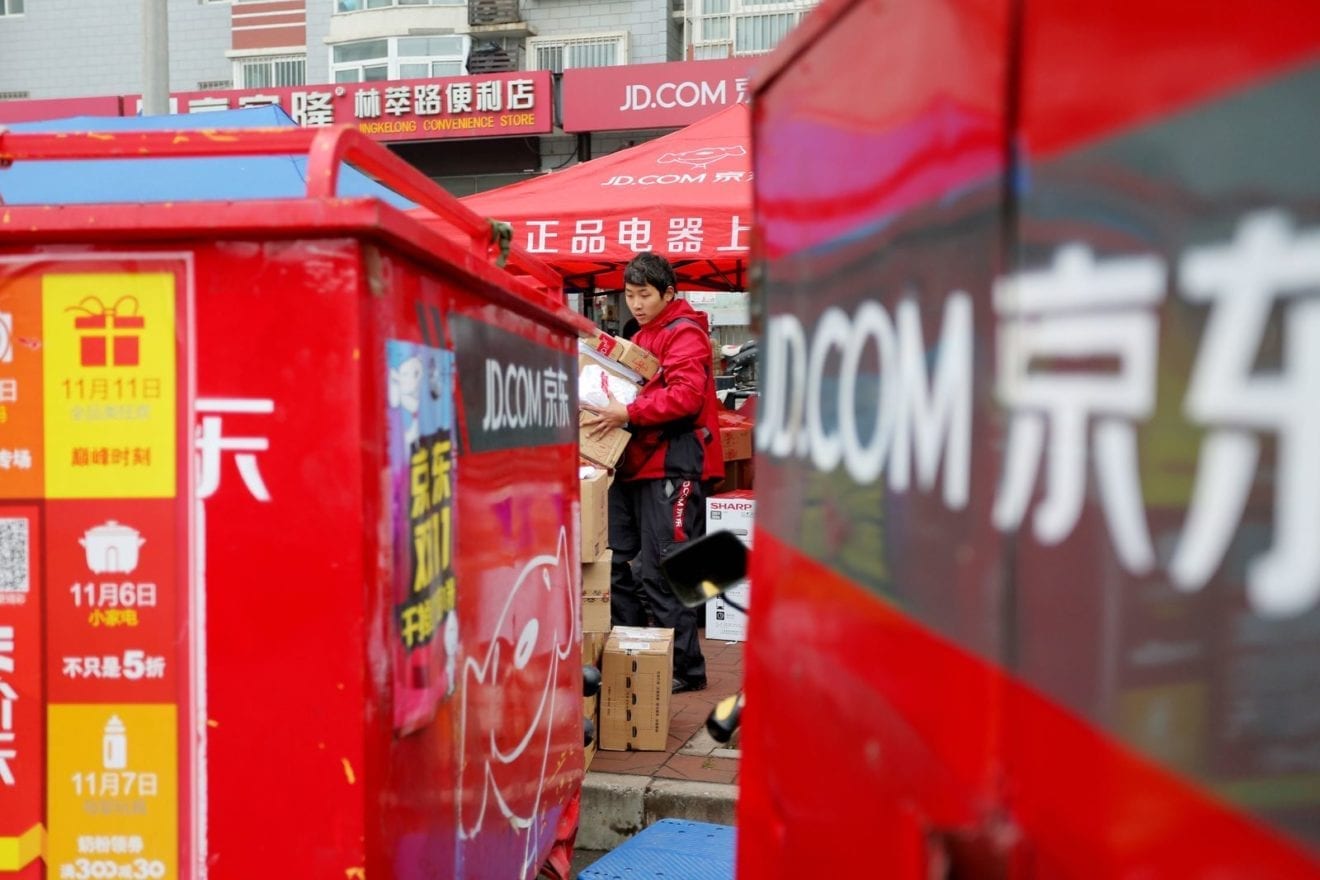
    This will enable users to order goods through JD.com’s 24-hour O2O service Jing Dong Dao Jia (“Door-to-Door JD”) and have them delivered from FamilyMart’s 212 core locations in Beijing, Shanghai, Shenzhen and Chengdu within 30 minutes.

    Early this year JD.com launched 7Fresh, its offline fresh-food supermarket, in Beijing. Before that, it invested in Yonghui supermarkets and formed a strategic partnership with Walmart through Jing Dong Daojia. JD.com has also invested in fresh-food delivery app Fruit Day and created a business unit dedicated to fresh food, JD Fresh.

    The e-commerce company has also established co-operations with two other Japanese convenience store chains, 7-Eleven and Lawson, as well as international brands. The company now covers nearly 1000 convenience stores.

    JD.com says that during January, all convenience stores working with it recorded three times higher sales volume than at the same time last year. For 7-Eleven stores, which joined Jing Dong Dao Jia in 2016, there was a 400 per cent increase in sales.

  • Gome Electric issues profit warning

    Gome Electric issues profit warning

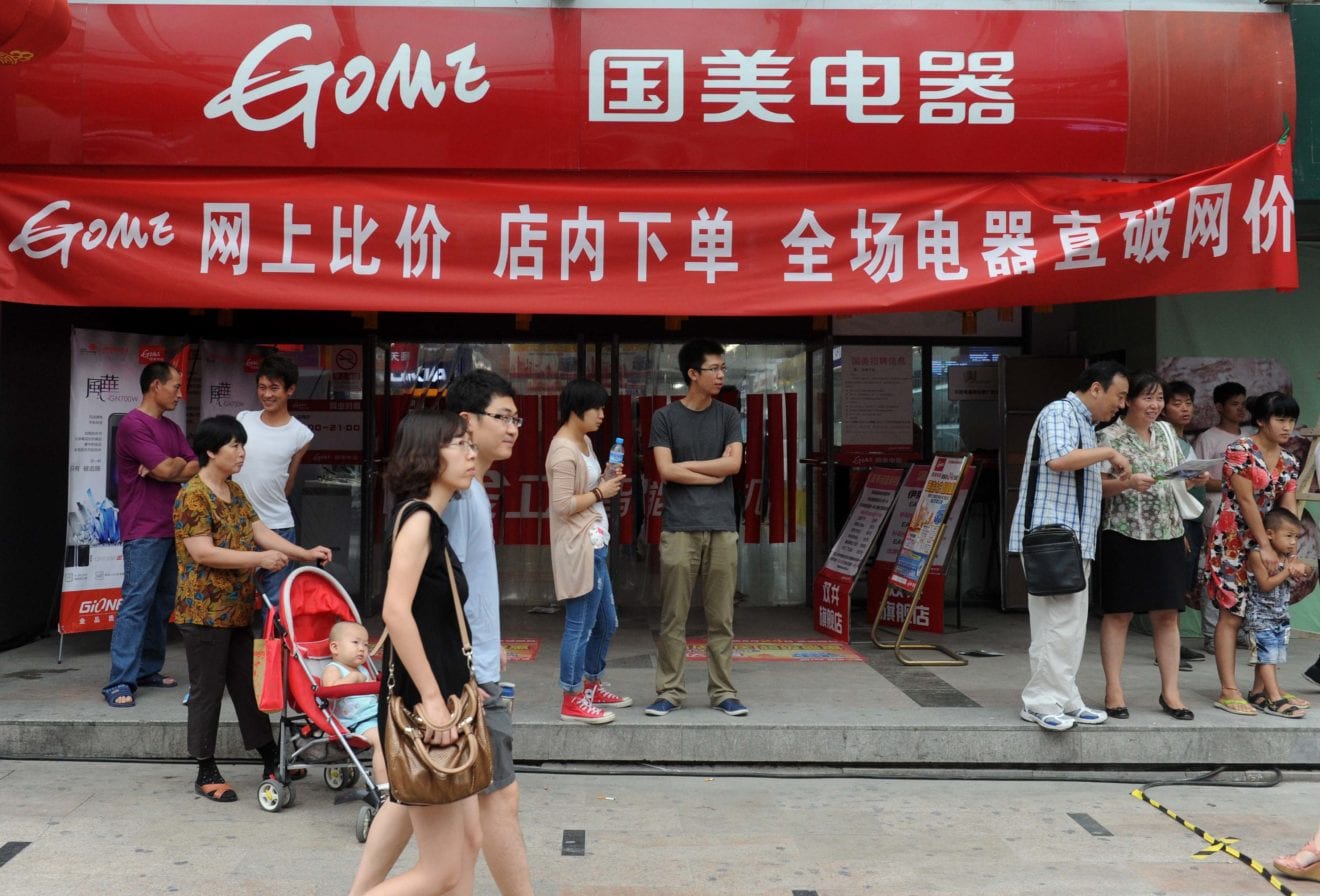
    Electrical appliance retailer Gome Retail has issued a profit warning despite a strong year, the result of impairments and financial costs.

    During the 12 months to the end of December the group launched its “Home Living” strategy, a blueprint aimed at helping it evolve into a one-stop provider, going beyond the traditional home-appliance retailer.

    Based on a preliminary review of the latest management accounts, the group’s total gross merchandise volume (GMV) both online and offline is expected to grow by more than 20 per cent year on year. Sales from the comparable stores of the group are expected to increase by more than 2 per cent with the consolidated gross profit margin expected to exceed 18 per cent.

    With the e-commerce business entering the online/offline integration stage, its direct sales revenue decreased by about 7 per cent. However, the GMV from the e-commerce business is expected to more than double.

    With more than 200 million members in its loyalty program, the group is speeding up expansion of its services while expanding into China’s fourth- and fifth-tier cities.

    Despite the strong trading, Gome impaired the goodwill for some of its under-performing business units and long-term assets related to the e-commerce business. That, together with rising financial costs related to the increased debts, is likely to produce a loss attributable to the owners of the company during the year of between RMB300 million (US$47.2 million) and RMB500 million, compared to a net profit 12 months earlier.

    The financial data also covers Artway Development and its subsidiaries from April 1, following its acquisition on March 31.

  • Alibaba said to buy out Baidu

    Alibaba said to buy out Baidu

    Alibaba Group Holding Ltd. plans to buy out Baidu Inc. and other investors in Chinese startup Ele.me to shore up its delivery network, a person familiar with the matter said, placing its biggest bet yet in online food and local services.

    An acquisition would hand Alibaba the biggest chunk of Chinese online food delivery and pit it directly against Meituan Dianping, backed by Tencent Holdings Ltd. Ele.me – which means “hungry yet?”. Meituan runs an army of delivery people on motorbikes across the country that could enhance Alibaba’s last-mile ability to get parcels to customers’ doorsteps and complement its Koubei neighbourhood services business.

    Alibaba, which owned 23 per cent of Ele.me as of May, plans to buy the stock from existing investors including Baidu, the person said, requesting not to be named because the matter is private.

    It is unclear how much Alibaba agreed to pay, but Ele.me was said to have been valued at between US$5.5 billion (S$7.23 billion) to US$6 billion in a May fundraising last year.

    The startup then bought Baidu’s delivery business at a US$500 million valuation in August 2017, a person familiar said at the time. The current talks are ongoing and it’s possible terms may change or the deal may not be completed.

    Alibaba, Ele.me and Baidu declined to comment.

    Alibaba shares rose 0.47 per cent to US$194.19 Monday in New York, the highest in four weeks. Baidu rose 2.2 per cent to US$256.25, the highest in more than a month.

    If the deal goes through, Alibaba and Meituan will dominate a Chinese food delivery market that Analysys estimates reached 67.7 billion yuan (S$14.1 billion) in 2017’s final quarter, up 16.2 per cent from the previous three months.

    For Baidu, it is another exit from a business considered peripheral to its core operations in search and artificial intelligence.

    “With its online traffic and Koubei business, Alibaba could create a lot of synergy with this acquisition,” said Steven Zhu, a Shanghai-based analyst with Pacific Epoch.

    “This would be a drag on the margin, because Alibaba now owns more delivery men and inventory, but it has no choice because long-term wise most consumption still takes place offline.”

    Alibaba has taken steps to shore up its logistics in recent months, taking over longtime delivery affiliate Cainiao and drawing up plans to invest in warehouses.

    Unlike e-commerce rival JD.com Inc. however, which builds and runs its own fleet of delivery people, Alibaba’s last-mile capabilities have been confined mainly to third-party partners. Its investments in so-called “new retail,” such as brick-and-mortar stores and grocery chain Hema, also help shore up the network, by providing delivery points and warehousing for parcels.

  • POLESTAR Appoints August Wu As President Of Polestar China

    POLESTAR Appoints August Wu As President Of Polestar China

    Polestar, the new electric performance brand, has appointed August Wu as its new President of Polestar China, reporting to Polestar CEO, Thomas Ingenlath.

    August joins Polestar on 1 March 2018 from Volvo Cars in Shanghai where he held the position of Head of Product and Offer for the APAC region. In this role, he was responsible for local product, specification, pricing and vehicle line management of all Volvo products in the APAC region. Prior to this, he worked for Volvo in Sweden as Business Program Leader for the Volvo 60 cluster of cars and before that, held a number of automotive industry-focussed roles within McKinsey and Company.

    As President of Polestar China, August Wu’s responsibilities will include Polestar’s commercial offer in China, the development of the network of Spaces – the Polestar retail environment, as well as increasing Polestar’s brand awareness and consideration in the important Chinese market.

    “The appointment of August Wu as the new President of Polestar China is an important step in the development of our team in China. With China being one of the world’s fastest developing markets for electrified cars, it’s clear that having somebody with a very deep understanding of the market was vitally important. In August Wu, we have found that person,” said Thomas Ingenlath, Chief Executive Officer of Polestar.

  • Moncler Sales Climb 14% in Nine Months

    Moncler Sales Climb 14% in Nine Months

    Clothing retailer Moncler international had double-digit growth in all key financial indicators last year, with soaring Asian sales playing their part.

    Its revenues for the year reached €1.1 billion (US$1.3 billion), an increase of 17 per cent at constant exchange and 15 per cent at current exchange rates. In the fourth quarter, revenues rose 17 per cent at constant exchange and 14 per cent at current exchange rates.

    Moncler chairman/CEO Remo Ruffini says the growth plus a net sales growth of about €200 million confirm the group’s strength and validated its strategy.

    In Asia, revenues grew 20 per cent at constant exchange rates with double-digit sales growth for Japan in the fourth quarter.

    Robust performances continued in China, says Moncler, driven by a double-digit organic growth in the fourth quarter, and in Hong Kong, where it opened a flagship store in Canton Road.

    Revenues from the retail distribution channel last year reached €892.4 million, up 19 per cent at constant exchange rates. The group also achieved comparable store sales growth of 14 per cent.

    At the end of December, Moncler’s mono-brand distribution network comprised 201 directly run retail stores, 11 more than the previous year, and 59 wholesale shop-in-shops, up 17. In the fourth quarter, Moncler opened six retail outlets and 11 shop-in-shops.

    For the full year, the consolidated gross margin was €917.5 million, 76.9 per cent of revenues compared to 75.7 per cent the previous year. This is attributed to retail channel growth and higher production efficiency.

    Adjusted EBITDA rose to €411.6 million from €355.1 million, resulting in an EBITDA margin of 34.5 per cent compared to 34.1 per cent.

    Net income was €133.3 million, up 63 per cent.

  • Tesla made over $2 billion in China in 2017

    Tesla made over $2 billion in China in 2017

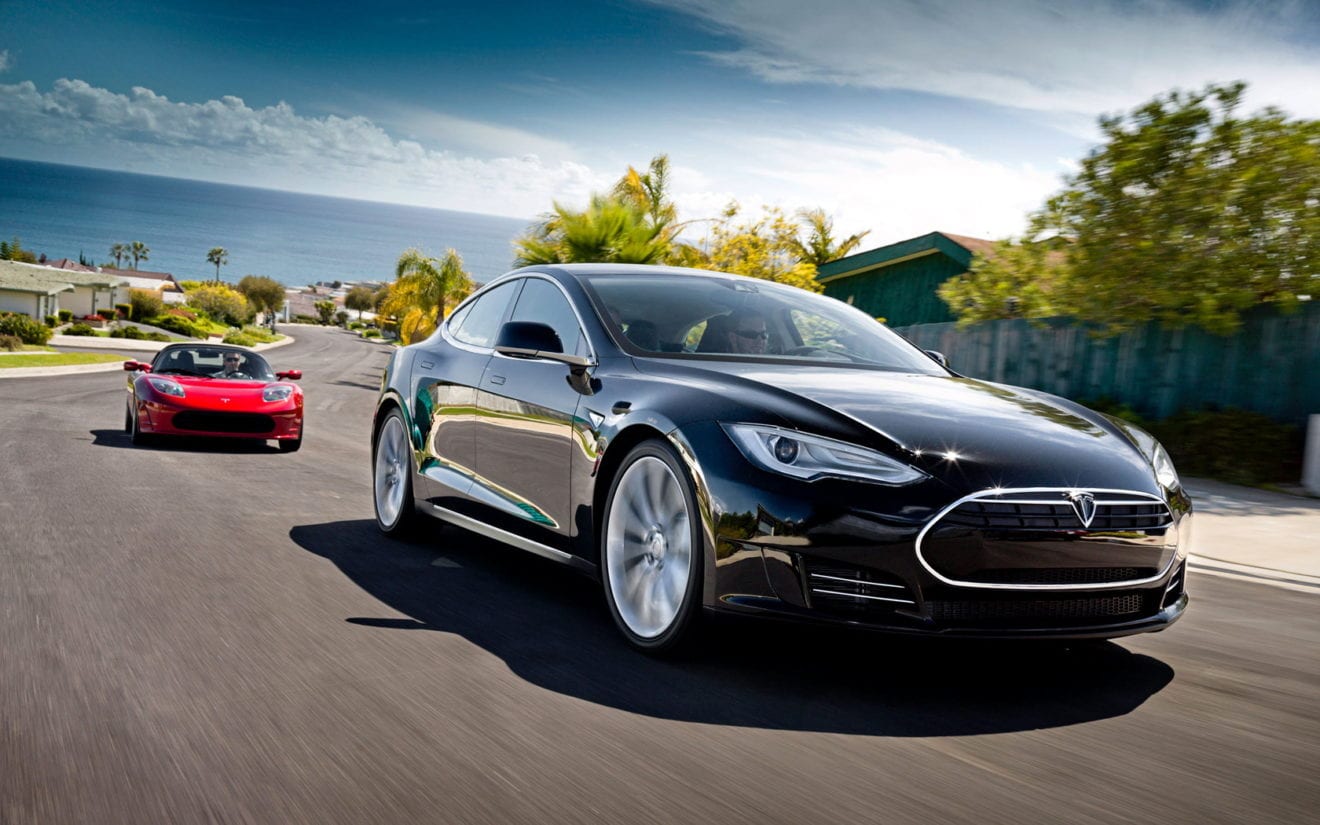
    Unlike most foreign automakers in China, Tesla has yet to establish local production and still solely relies on exporting its vehicles from California to the largest auto market in the world.

    Nonetheless, Tesla managed to double its sales in China last year as it is significantly expanding its presence in the country.

    Tesla was off to a tough start in China in 2014 and 2015, but things started to improve for them in the country in 2016 when they managed to triple their sales to over $1 billion during the year.

    The automaker wasn’t able to maintain the insane growth rate in 2017, but the company confirmed today that it still managed to double sales in China to over $2 billion in 2017.

    They don’t confirm the number of cars sold per market, but it has to represent over 20,000 vehicles based on their average sale price.

    Sales were helped in 2017 by China’s surprising demand for Tesla’s Model X. The vehicle has been extremely popular in the country. For example, look at the number of Model X SUVs at this Tesla owners meet-up in Shenzhen, China last month.