Alibaba’s Tmall and shopping centre operator Intime have partnered to create a New Retail-driven model for restrooms.
Last week, the two unveiled the first “Smart Ladies’ Room” at the West Lake Intime Shopping Mall in Hangzhou City. It’s the latest extension of New Retail by Tmall and Intime, after they last month showed off a smart nursing room for mothers shopping at malls.
Consumers waiting in line can make use of technologies like a pair of ‘magic mirrors’, an augmented-reality-powered digital screen that lets shoppers virtually try on and purchase cosmetics, including a wide array of lipstick, blush, eyeliners and eyeshadow, and a vending machine offering beauty and feminine products from nearly 10 brands, including Shu Uemera, Lancome, Elizabeth Arden and Benefit, to lighten the load for ladies out shopping. All products can be purchased for RMB 0.01 each through the Alipay mobile wallet.
The Smart Ladies’ Room at West Lake Intime Shopping Mall is already open to the public, while one at Hangzhou’s Wulin Intime is under construction. The company said its next steps involves reworking more restrooms at tourism sites, shopping malls and hotels.
Alibaba’s plans to expand the model to more public restrooms coincides with China’s continued push for a “toilet revolution,” a national drive to improve sanitation and build more clean restrooms across the country.
China intends to build or renovate 64,000 toilets at tourist sites between 2018 and 2020, by the end of which the country aims to raise tourism revenue to RMB 7 trillion – up from RMB 3.9 trillion in 2016, according to the Xinhua News Agency.
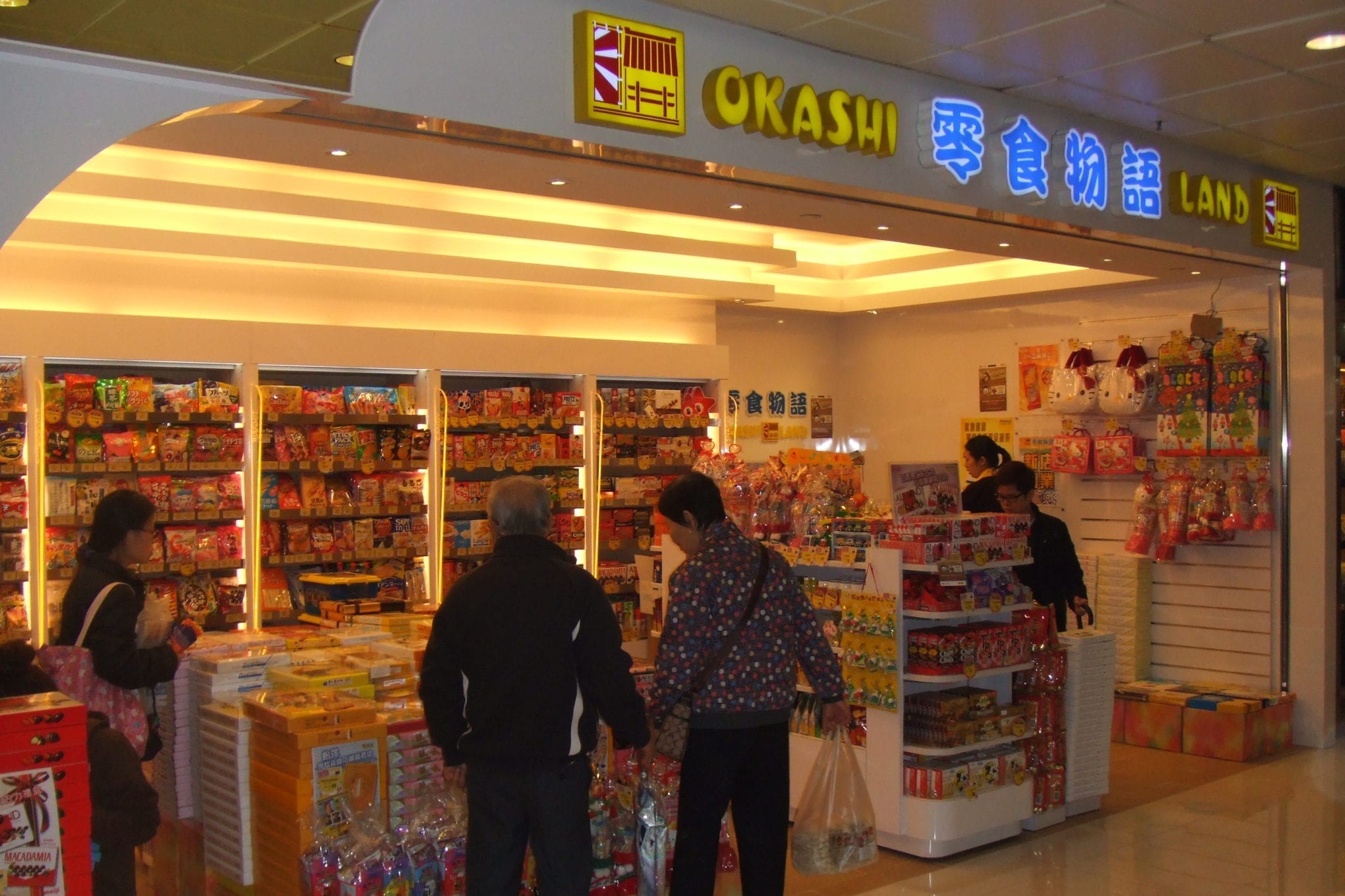
Hong Kong-listed Four Seas Group, which runs Okashi Land confectionery outlets, plans to open unmanned stores in China.
Its Guangzhou-based partner EasyGo, a start-up that runs unmanned convenience stores on the mainland, is finalising a location for a flagship Okashi Land store there with an unmanned section, says EasyGo co-founder Fele Wang.
She says the start-up wants to take advantage of its base in southern China to seek co-operation from brands based in Hong Kong, Macau and Taiwan, and might expand the branded store model once it takes off.
EasyGo also sells Four Seas products through its unmanned convenience stores in the Pearl River Delta in the southern mainland. It has about 100 outlets in 10 cities in China, but Four Seas products are mainly available at its stores in seven cities in southern China.
To enter the company’s unmanned stores, customers need to scan a QR code using Tencent Holdings’ messaging app WeChat on their mobile phones. They then pick out the items they want, and scan a QR code again at the exit point where the system automatically detects the items and tallies up the purchases.
As well as expansion in southern China, EasyGo is trying to make inroads into eastern China in cities such as Shanghai and Hangzhou.
In Shanghai, EasyGo has been supporting Tencent in running a cashierless pop-up shop, We Life.
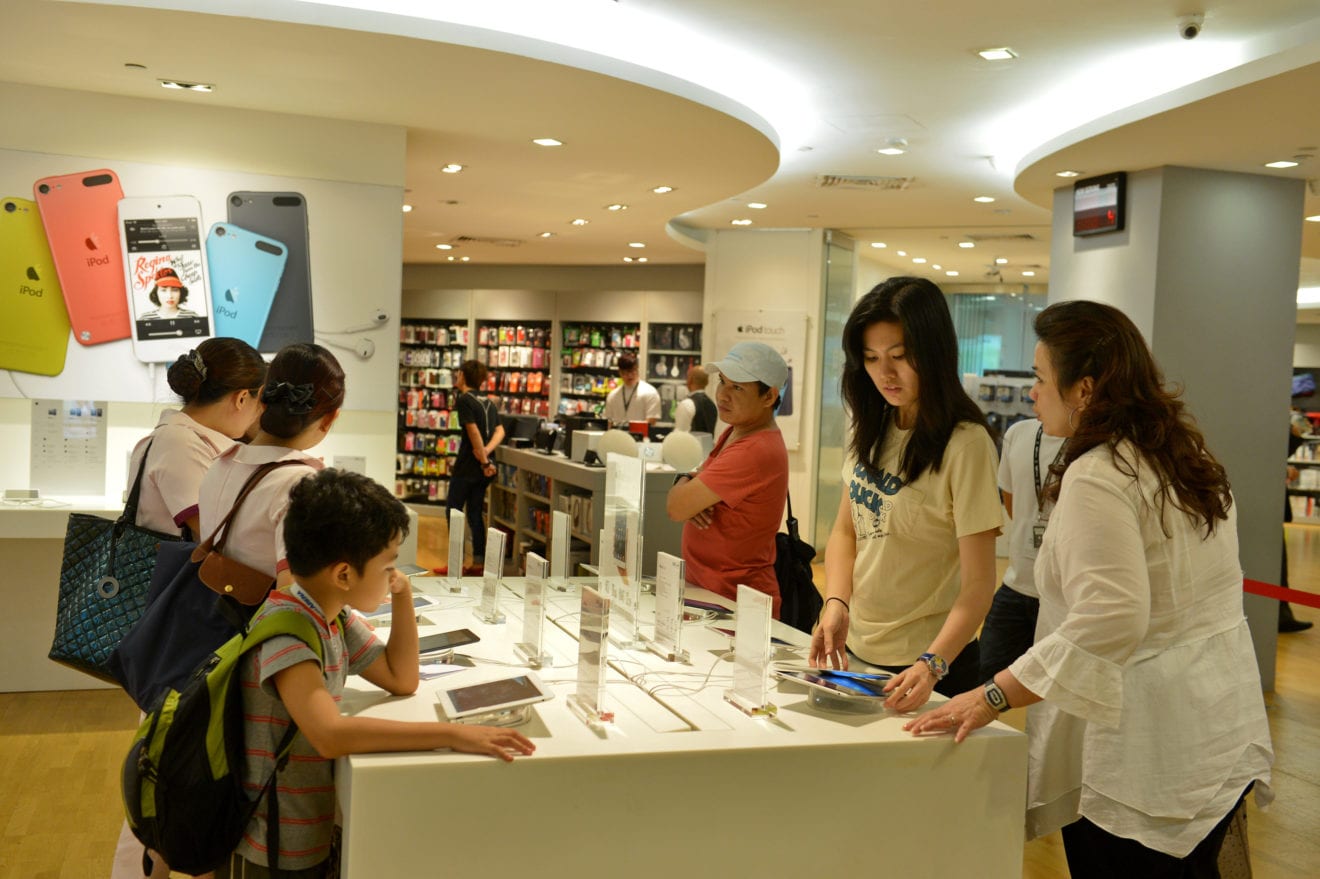
Apple China will accept Alipay in its stores – the first third-party mobile payment system to be accepted at any Apple store worldwide.
This follows lukewarm reception in China for Apple’s own payment system, says Reuters.
The IT giant will accept Alipay payments across its 41 brick-and-mortar retail stores in China, says Ant Financial, which runs the system for Alibaba.
Meanwhile, Apple China’s website, iTunes store and App Store have been accepting Alipay for more than a year.
Apple is shifting user data to China-based servers this month to meet local rules, and last year removed dozens of local and foreign VPN apps from its Chinese app store.
China’s official Xinhua news agency says Apple will build its second data centre in China, in the Inner Mongolia Autonomous Region, after setting up a data centre in Guizhou.
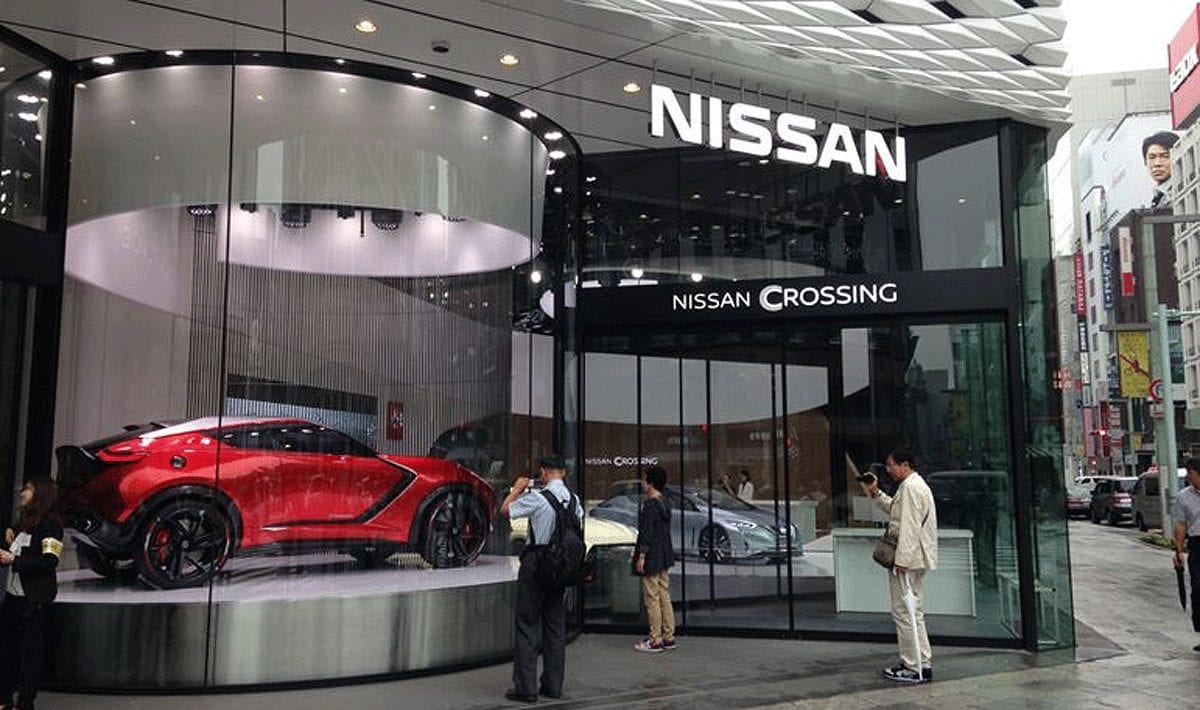
Nissan Motor Co plans to invest 60 billion yuan ($9.5 billion) in China over the next five years with its joint-venture partner as it seeks to become a top three automaker in the world’s biggest market.
Long stuck as a second-tier player in China, Nissan and Dongfeng Group said on Monday they plan to boost their volume to 2.6 million vehicles a year by 2022, up from 1.5 million vehicles last year.
Nissan plans to achieve the objective, dubbed its “Triple One” strategy, by focusing on electric cars and Venucia, a no-frills local brand Nissan operates in China – two market segments expected to see a surge in demand. It also aims to boost sales of light commercial vans and trucks.
China’s auto market has been dominated by General Motors Co and Volkswagen AG for nearly two decades, with each of them selling 4 million vehicles last year. Nissan, along with Toyota Motor Corp , Ford Motor Co, and Honda Motor Co, lag far behind, each selling 1 million-plus vehicles a year.
“We aim to break away from this second-tier group and become a top-3 China automaker,” Nissan’s China chief Jun Seki said in an interview with Reuters.
“We need to go full-throttle aggressive,” Seki said. “If we didn’t do that, we would fall behind and fail to grab market share otherwise we could take.”
ELECTRIC STRATEGY
Part of the strategy is to keep growing the Nissan brand and the company’s premium Infiniti brand, Seki said.
Nissan and Dongfeng plan to increase the Nissan brand’s annual sales by 500,000 vehicles to 1.6 million vehicles a year by 2022. It also plans to boost Infiniti’s annual sales by 100,000 vehicles to about 150,000 vehicles a year over the same time frame.
Still, more critical a strategy is Nissan’s electrification plan.
Seki said the joint venture will launch as many as 20 electrified vehicle models across all brands in an effort to sell roughly 700,000 such cars a year by 2022 excluding electric light commercial vehicles, using a combination of all-electric battery vehicles and so-called “e-Power” hybrids.
Automakers are scrambling to launch an array of electric and plug-in hybrid vehicles over the coming years, in part to comply with China’s production quotas for such cars. Nissan’s joint venture with Dongfeng sold about 22,000 electric vehicles last year, but they were mostly light commercial e-vans.
In order to generate large enough EV volume, Nissan plans to come up with lower-cost electric cars by locally sourcing electric motors and other key EV components from suppliers in China.
In 2019, Nissan for example plans to launch three such lower-cost EVs under the Venucia name. “We expect EV and e-power hybrid business to become profitable,” Seki said, without elaborating.
NO-FRILLS
Venucia, which Nissan established jointly with Dongfeng, is another key focus. The brand began selling cars in 2012, competing with China’s low-cost, no-frills indigenous brands such as those run by Geely and Great Wall Motor.
Seki said shoring up Venucia is a must because indigenous Chinese brands will likely collectively sell as many cars as global brands sell in China. Last year indigenous Chinese brands sold a total of 10.3 million vehicles, compared with global brands’ 13.9 million vehicles.
Venucia, which uses retired Nissan technologies such as platforms and transmissions, last year sold 143,000 vehicles, up 22.7 percent from 2016.
Seki said Nissan wants to boost Venucia’s annual volume by more than 400,000 vehicles to be able to sell as many as 600,000 vehicles a year by 2022.
The effort is likely to face tough competition, however, from established local players such as Baojun, which GM operates jointly with its local China partners.
“No global automakers have a brand that competes with low-cost local brands except for us and GM,” Seki said. In addition to Baojun, GM operates the Wuling brand in a joint venture with Chinese partner SAIC Motor Corp and Guangxi Automobile Group.
“Venucia is our clear advantage and we are going to milk it to grow rapidly,” Seki said.
Korean eyewear brand Gentle Monster has opened its fifth flagship store for China, in Guangzhou.
It has set up in two adjacent units at the Taikoo Hui mall, which is known for its luxury boutiques.
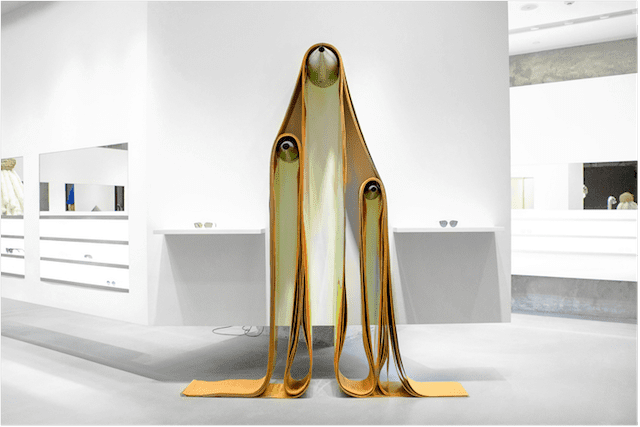
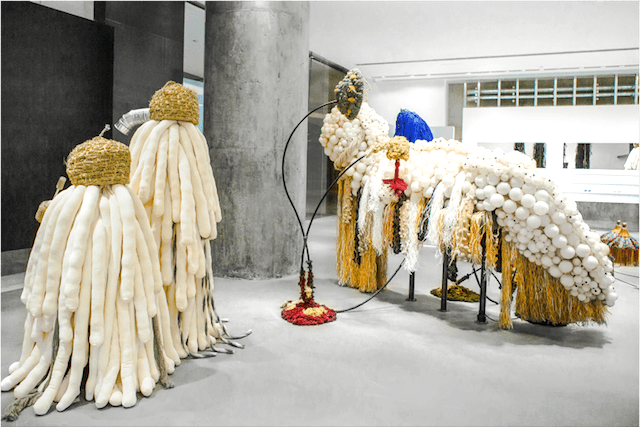
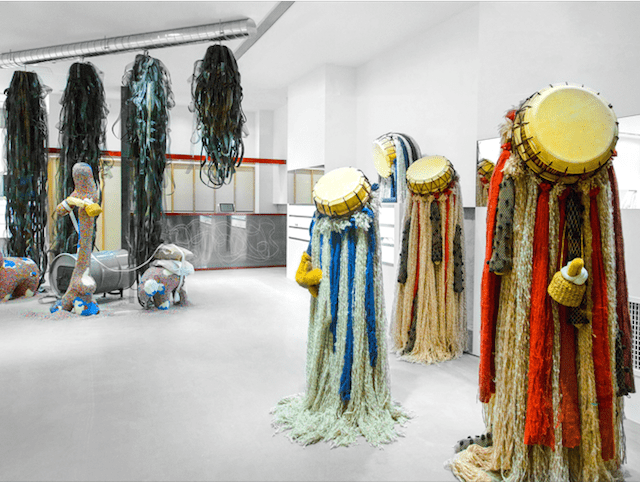
Like other Gentle Monster flagships, the store has a themed interior design, this time with cues taken from the realm of old folk tales. It specifically zooms in on the purifying process in which spirits transcend into deities.
The space is dotted with intricate objects. Some move or make sounds, but all look colourful and exotic. White walls, ceiling and wall-mounted panelling form a neutral backdrop for the creations, while Gentle Monster’s merchandise is showcased on shelving attached to the wall panels.
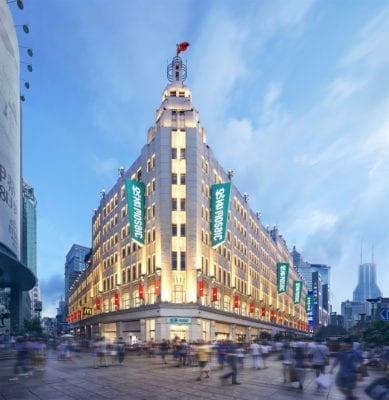
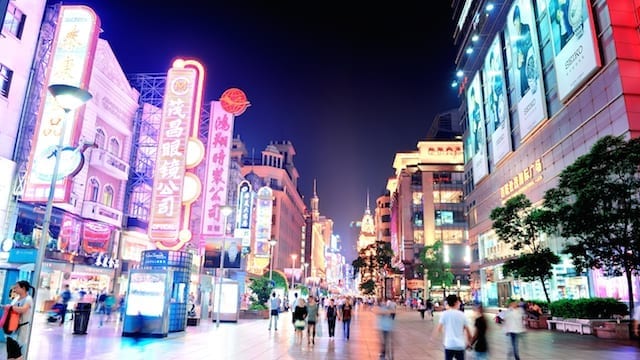
Global retail asset management specialist Pradera Retail Asia has opened M-Square at Mosaic Shanghai (pictured).
On the ground floor of Mosaic Shanghai, M-Square assembles brands popular among young consumers such as Korean cosmetic brand Too Cool For School, Taiwanese bubble-tea store Bu’er Tea, coloured contact-lens shop Sweet Color, Hong Kong mixed drink bar Beauty Bowly, fragrance store Scent Boutique, fashion eyewear brand Rebel Without A Clause, and coffee store 72 Now.
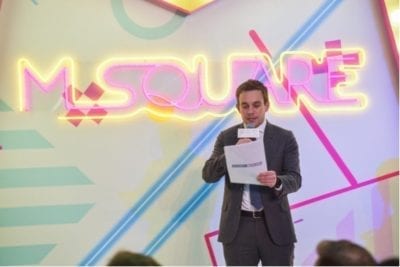
Launch day included a ceremony attended by senior executives from Pradera Retail Asia and Mosaic Shanghai, as well as tenant representatives. There were also performances and interactive activities.
Next to three subway exits on East Nanjing Road, Mosaic Shanghai covers 40,270sqm over seven floors offering retail, dining, lifestyle and entertainment. It is one of the entertainment leading malls on the East Nanjing Road.
Mosaic Shanghai is undergoing a business upgrade to provide a shopping experience aimed at young consumers. This will include The Shanghai Dungeon, the first attraction of its type in Asia, set to open this year.
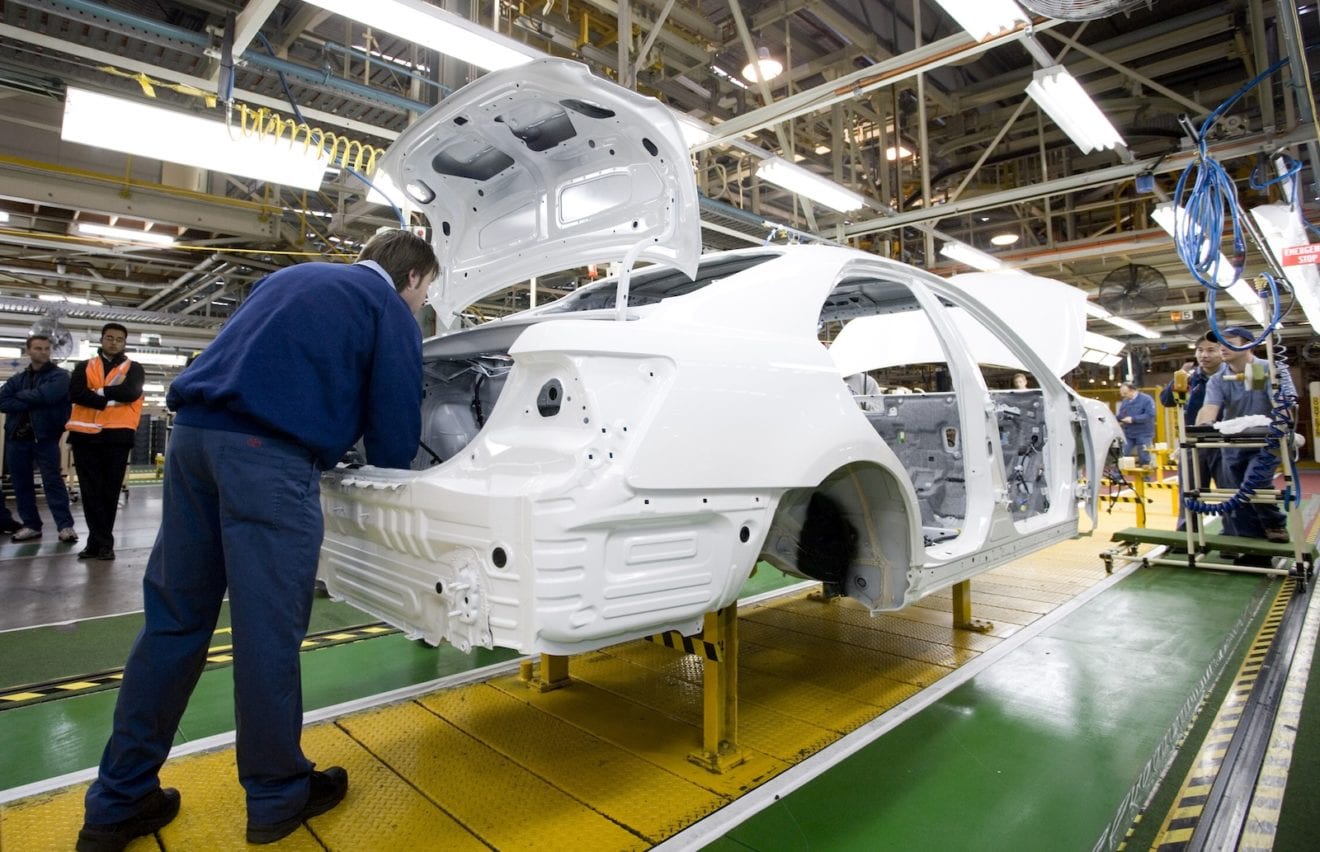
Toyota Motor Corp (7203.T) aims to sell 1.4 million vehicles in China in 2018, nearly 9 percent more than it sold last year, but two insiders at the Japanese automaker said production constraints and other hurdles make it a tough target to meet.
The sales goal announced by Japan’s biggest automaker on Friday comes at a time when the world’s biggest auto market is experiencing a slowdown in overall vehicle sales growth.
The two people said the target is more a “stretch goal.” It is a target that is not the baseline sales forecast and one that executives acknowledge will be difficult to achieve, they said.
A big factor that makes selling 1.4 million vehicles this year more of a challenge is Toyota’s manufacturing capacity which the two individuals said remains strained.
“If we could resolve this capacity issue, it would be easy to make the 1.4 million target. With sufficient capacity, we can possibly sell 1.5 million vehicles,” one of the two people said.
Toyota’s forecast for 2018 is relatively more upbeat than the previous few years in part because it expects to launch a couple of potentially high-volume subcompact sport-utility vehicles (SUVs) later this year, the people said.
They said Toyota plans to launch two China-market versions of the subcompact Toyota CH-R crossover SUV in a June-July time frame. The CH-R hit showrooms in the United States in April last year.
Those two CH-R variants are smallish crossover SUVs that others, most notably Japan’s Honda Motor Co (7267.T), have leveraged to grow sales significantly in China.
A Toyota spokesman said that though the 2018 sales target was not one that can be easily achieved due to the highly competitive market environment, the recent launch of a redesigned Camry sedan and the planned introduction of two subcompact SUVs later this year would enable Toyota to challenge the previous year’s numbers.
China’s overall vehicle market growth was the weakest last year in at least two decades, increasing just 3 percent year-on-year to 28.88 million vehicles, pegged back chiefly by a phasing out of tax breaks on smaller-engine cars that begun in 2017.
According to data from the China Association of Automobile Manufacturers (CAAM), 2018 will another weak year. It predicts the country’s vehicle market will grow 3.5 percent in 2018.
On Friday, Toyota said its sales in China in January rose 24.5 percent from a year earlier to 127,500 vehicles. Smaller rival Honda’s sales in China, meanwhile, rose 10.9 percent in January to 126,174 vehicles.
Honda, which last year sold a total of 1.44 million vehicles in China, did not provide a forecast for volumes for this year.
Tapestry, the fashion retailer formerly known as Coach, has taken back operational control of its Kate Spade China joint ventures in Hong Kong, Macau, Taiwan and the mainland.
CEO Victor Luis described the move as “an important business development initiative” and part of a plan by the group to assume greater direct control over its international distribution.
The company has also entered into a purchase agreement to acquire the Stuart Weitzman business in Northern China from its distributor.
“These transactions are in keeping with our strategic priority to maximise the opportunity with Chinese consumers globally across our brands,” said Luis.
“In addition, we are excited to announce the buyback of the Coach business in Australia and New Zealand from our distributor, with an expected closing in the third fiscal quarter. As a result, we will be creating a Tapestry hub and center of excellence in Sydney to drive growth across our portfolio, further unlocking the value of a multi-brand operating model.”
The news was included in the company’s second quarter results announcement in which Tapestry revealed a 35 per cent increase in sales, largely fuelled by the addition of the Kate Spade operations to its figures after its acquisition last July.
Net sales totalled $1.79 billion for the second quarter, up from $1.32 billion in the prior year, while net income was $63 million.
Luis said the second quarter performance exceeded the company’s expectations, with a return to growth for Coach, improved sales at Stuart Weitzman and the contribution of Kate Spade which continued to make progress after its integration into the business.
A “significant step forward”
Neil Saunders, MD of GlobalData Retail, said after removing the Kate Spade data from Tapestry’s comparable sales numbers, a modest growth rate of 2.2 per cent was achieved, which was still a “a significant step forward for the group”.
“Most pleasing is the return to growth of the Coach brand which has, for some time, seen revenue slide as the result of a pullback from a number of sales channels, including department stores. The 2.2 per cent increase signals that this period of painful adjustment is mostly over and that Coach has a stable platform from which to expand. A more disciplined approach to discounting and promotions helped margins at the brand, which flowed through to some healthy gains in operating income. In short, Coach’s game plan of becoming less ubiquitous and selling more at higher price points is now delivering.”
Saunders said Coach deserves credit for an on-trend holiday line up, a compelling marketing campaign, and great in-store execution.
“However, we also believe that gains were aided by a confident consumer and flattered by a very soft prior year comparative. Both factors were particularly influential in the key North American market.
This leads us to be a bit more cautious about prospects over the upcoming quarters, especially as comparatives become tougher and gifting sales are less significant.”
But he said any softness in the North American market can be offset by a more aggressive and coordinated approach to international expansion.
“On this front, we are encouraged that Tapestry is taking back direct control of the Coach business in Australia and New Zealand and believe that this will help to improve the brand’s presence and influence in the region.”
Looking beyond Coach, Tapestry’s newest brand, Kate Spade performed less well. Global comparable sales declined by 7 per cent over the period, driven in part by a fall in e-commerce.
“As much as this looks disastrous, the dip is mostly the result of a deliberate change in strategy, with Tapestry pulling back from the flash sales and heavy discounting that Kate Spade previously used to drive revenue. Predictably, this has resulted in a dramatic volume decline and waning interest among some consumer segments.
“The intention is clear: Tapestry wants to take Kate Spade through the same process used to rebuild Coach. This is a necessary step to bolster brand value as Kate Spade had become too value-oriented and overly reliant on excessive, and margin depleting, promotions to drive results. We are conscious that weaning Kate Spade off the discounting drug will be far from easy and better numbers will only come through over the medium to longer term.”
A Chinese businessman who is eyeing a parcel of land on the West Loop has filed a zoning change application that would allow him to build residential towers as tall as 15 stories high with up to 200 units per tower.
The potential building heights listed in paperwork submitted to the city Monday would rival some of the tallest buildings in downtown Tyler. However, in interviews on Tuesday, the developer and his representative indicated they planned to scale down from what the application says and focus on three- to four-story buildings.
Xing Tan, the China-based businessman, is seeking to develop a 178-acre piece of land near the intersection of west southwest Loop 323 and Earl Campbell Parkway, near Sam’s Club, that has been vacant for years.
Tan’s vision is to build an East-meets-West community and sell housing on the land in the Chinese and American markets, according to Karen Lee, his Dallas-based spokeswoman who translated for him during an interview Tuesday. A significant part of the project’s vision is to bring Chinese exchange students to Tyler, Lee said.
In order to build the residential towers, Tan’s company, America Hongyun City International Enterprise Group LLC, is seeking a zoning change from the city of Tyler that would allow what the company calls “low-rise” and “mid-rise” residential towers, among other things.
Low-rise towers would be between four and seven stories with a parking garage of up to three stories, according to the company’s zoning application. Mid-rise towers would be between eight and 15 stories with a parking garage of up to five stories, according to the application. By comparison, the Bank of America Building is 20 stories, the People’s Petroleum Building stands at 15 and the old Carlton Hotel is 14.
The entire ground floor of each tower may be used for commercial space, according to the application. The options include post offices, police departments, banks, restaurants and retail shops. Certain wholesale and manufacturing facilities would be prohibited.
The property currently is zoned as a planned commercial district, which means the land can be used only for commercial purposes. Tan’s company is seeking to have the property classified as a planned mixed-use district 2, which allows for high-density residential development.
Kyle Kingma, the city of Tyler’s planning manager, said Tuesday that applications for such high buildings are uncommon in Tyler.
“It’s not infrequent to have multifamily requests — but mixed-use high-rises, that’s pretty rare,” Kingma said.
Requests for zoning changes go to the city’s Planning and Zoning Commission, which meets monthly. Kingma said the commission typically considers applications at the regular meeting the month after the applications are submitted, but this project could take a few months.
“The next step is for the city to review their request and go back to them with some comments and questions on their proposal,” Kingma said. “We’re going to have multiple departments take a look at it.”
Bryan Rossman, a manager at Adams Engineering, has been representing Tan in the project and presenting Tan’s vision to community leaders. Adams Engineering has been doing due diligence work for Tan’s company and submitted the zoning application on the company’s behalf.
Rossman said in an interview Tuesday afternoon that the development proposal is not finalized, and that the towers are still just an option.
“We are just barely in the development process,” Rossman said. “I don’t know who’s wound around the axle about the (building height), but (the investors have) already demonstrated that they want to embrace the local culture.”
Lee, translating for Tan, said he is used to high-rise buildings where he is from in the Guizhou Province in China, but said Tan is committed to embracing a combination of Chinese culture and American culture. He is now seeking to focus on three- or four-story buildings, she said.
“The local culture is different,” Lee said. “This is the first case when East meets West, and we (will change our) mindset.”
Rossman said it is too early in the development process to say whether Tan will submit a revised zoning application.
“That’s a discussion that is later on in the development process,” Rossman said. “It’s way too early to talk about that.”
China’s wine market is as riddled with pitfalls as it is exciting. The Chinese thirst for wine is notoriously insatiable with both money and growth fueling it, this has created a thriving market – but one that definitely has its own peculiar set of challenges.
None more peculiar than the prominent presence in the market of not fake but “lookalike” wines. Brands that don’t claim to be an exact copy of Latour but are instead La Ture, Latour’s long-lost cousin, or so the branding would imply. This association is the real fakery. By using oh-so-similar branding – down to a slightly more generic tower image – the consumer is lulled into thinking either that it’s a genuine Latour or it’s at least under the same umbrella. And the contents if not the same, will be very, very similar, or so the packaging suggests. How prevalent is this problem and how deep do you need to dig to encounter it?t With bustling trade fairs in Hong Kong, Guangzhou, Chengdu and Shanghai, a simple trip to one reveals all.
The import statistics are again showing robust growth, with bottled imports seemingly holding their growth rates at a robust 14 percent – Australia leads the pack at 30 percent. Whilst Australia’s volume growth has been exceptional, the average price per bottle has slipped by 20 percent (over the corresponding period). But that’s not the whole picture. If you take a closer look, Penfolds, which has been enjoying a runaway success in China, represents almost 25 percent of Australia’s imports at premium price points. Behind those headline figures there are some worrying trends that directly challenge the relatively novice Chinese wine consumers to find good wines at fair prices on the shelves of both online and offline retailers.
A brief tour at a Shanghai wine show in November provided some insight – at many of the booths exhibitors headlined their “Authentic Brand” whilst quietly offering a range of “Buyer’s Own Brand” options at seriously low prices – AOC Bordeaux at €1.80 ($2.25) per bottle, Australian Shiraz from AU$2 ($1.60) with a variety of labels, and packaging options. One of the biggest bulk bottlers displayed the all too ironic phrase “Absorption in Global Wine Supply” – if China is on course to drain the various wine lakes around the world then there is no shortage of traders and retailers in mainland China who will create a disposal brand that looks and sounds like a world-leader but is made from the simplest of origins.
While many of the sensational news stories one hears about China’s wine market revolve around the problem of fake bottles of famous names, the real threat to your average Chinese wine consumer is the raft of “lookalike” brands that are increasingly entering the market. A brief look around the biggest offline stores in Shanghai – some foreign owned and some local, tells a depressing tale – “Byfolds” branded in full Penfold’s livery, “Lafei Manor” (Lafei is the Chinese pronunciation of Lafite) in correspondingly familiar DBR colours and a raft of others – some subtle some not but it does seem to this wine lover’s eyes that the losers in all of this are the consumers.
While major global brands should be congratulated for bringing their history, stories and globally recognized wines with them, the reality is that behind the top 10 comes an enormous tail of dross that fills the offline shelves of China’s retail landscape. The only function of these wines and “lookalike” labels is to dupe the customer into paying a premium that the packaging, labelling and price that an “authentic retailer” would expect – sadly that is not what’s in the bottle. While Alibaba and the likes keep out the actual fakes they are powerless to stop cynical marketers and sales organizations from pumping “lookalike” brands through their considerable networks. In a mature market, like the UK or Australia, there are checks and balances, gatekeepers and experienced buyers to build, maintain and defend the reputations of the retailer. If you were to buy a regional wine from Tesco’s in the UK or Dan Murphy’s in Australia for example – you would do so in the knowledge that a team of buyers would have worked on that project with the producer to reach a certain quality standard that would stand the test of an expert panel and be priced accordingly.
Retailers and distributors are aware of these issues and work hard to combat them. A spokesperson from Treasury Wine Estates concurred: “TWE has driven huge success in China, particularly through the growth of our global luxury Penfolds brand. With this success, comes the challenge of illegal copycat producers who infringe on our famous trademarks – this is an issue for many premium and luxury brands. We are aware that some of this copycat wine is being exported out of Australia, as well as being produced in China and other countries. It is therefore critical that genuine producers and third party packagers take action, along with authorities and the wider industry, to stop the production and exportation of illegal copycat wine, to ultimately protect the reputation of Australian wine. TWE has a strategy in place to fight this, and we are continuing to aggressively protect the integrity of our brands.”
In China there is just a rampant cynicism that does nothing to improve the experience of a thirsty population of wine consumers. Perhaps this is just the state of play in the market and a reality check for brands and importers looking to play in China – the costs of doing business both online and offline are rising rapidly, online marketing and the cost to market effectively in a fiercely competitive field are not going away. If you add in to this mix the huge quantities of wine that have been imported by opportunists who have since dumped their products at cost or a loss then the whole picture becomes even more complex.
Following series-A funding of US$2.75 million, Taiwan online retail platform Citiesocial seeks to expand into other parts of Asia.
Its funding round was led by the Taiwan fund of Alibaba Group Holding.
Citiesocial, which sells items such as water bottles and kitchenware from emerging brands, plans to use the funds to bolster services and technology to help rising designers grow their presence in Asia, says founder Eric Wang. This will start in the next few months with strategic partnerships with e-commerce channels in China, Japan and Korea, he says.
Citiesocial curates branded goods as a point of difference from other platforms that offer mainstream brands. It revenue last year reached $20 million, with monthly sales valued 130 times more than at the beginning of 2014. It has 600,000 customers and a staff of 42, including Wang, who describes his customer demographic as “leaning slightly” toward a more mature, well-educated male consumer.
“We curate goods globally to sell at least in Taiwan and Hong Kong,” he says. “A third of our revenue comes from goods that no-one else sells in Taiwan and Hong Kong.”
One of Citiesocial’s top performing brands is British men’s accessories maker Vanacci, while it has just sold more than 1000 travel jackets from Kickstarter graduate Baubax.
Taiwan’s fragmented e-commerce market allowed Citiesocial to be able to pivot many times in its seven and half years with only $700,000. Elsewhere he would have burned that money within the first six months, says Wang, who worked in the US for 18 years.
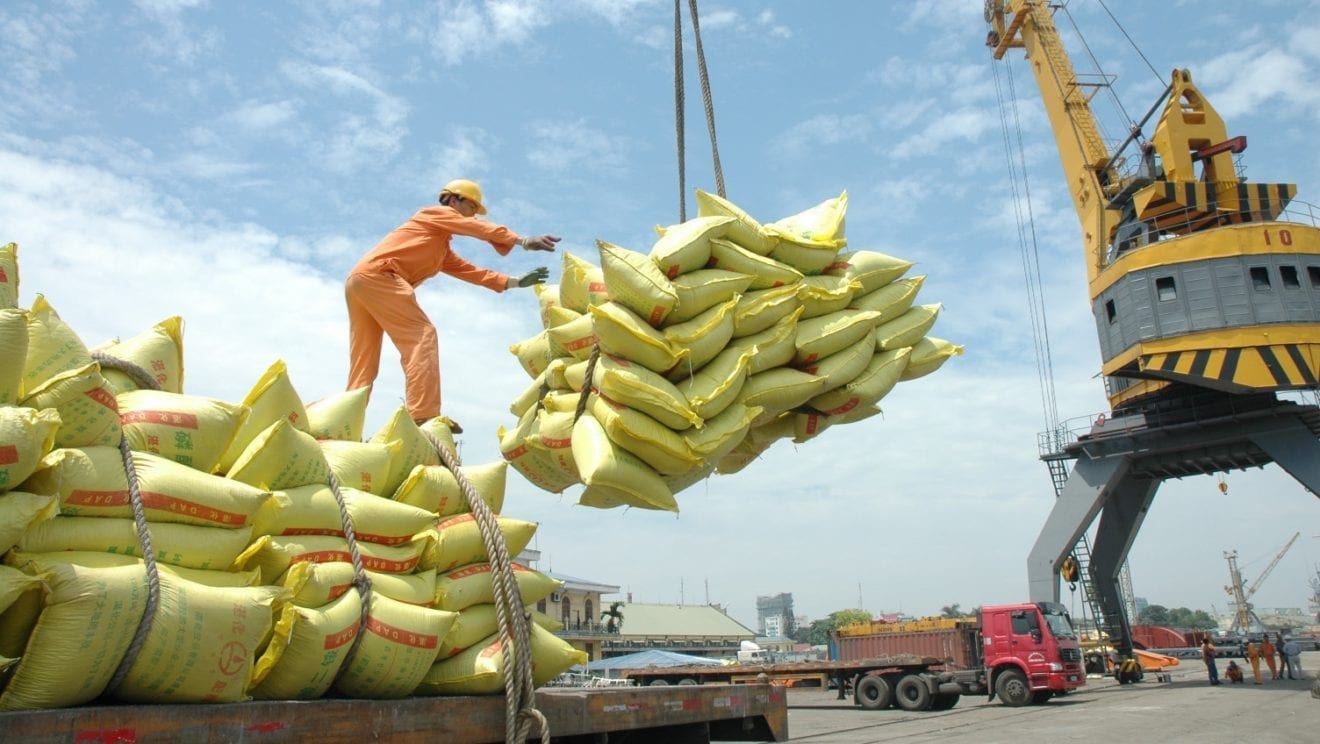
Việt Nam’s rice export volume in 2018 is expected to increase by 400,000 tonnes from 2017 to reach 6 million tonnes, due to increased demand from Southeast Asia, especially from the Philippines, with China expected to be the country’s largest rice market.
The Vietnam Food Association (VFA), in a report earlier in January, said countries in Southeast Asia will import a large amount of rice from Việt Nam, helping boost the country’s turnover this year.
The VFA said Indonesia will import rice from Việt Nam and Thailand again in 2018 to increase reserves, as Indonesia’s rice price has been rising, almost double the floor price.
Similarly, the National Food Board of the Philippines approved of up to 250,000 tonnes of imported rice to offset declining inventories, due to unfavourable weather in 2017.
These developments are encouraging for Việt Nam’s rice export market, said the VFA’s report, with export price of 5 per cent broken rice rising to US$400 per tonne from $390.
Domestic rice price also increased, with the average price between to $267 to $293 per tonne as of January’s end, having increased by $13 to $15 per tonne from December 2017’s price.
According to the VFA’s data, throughout 2017, the country exported 5.7 million tonnes of rice worth $2.54 billion.
As mentioned by the US Department of Agriculture (USDA)’s 2018 world rice production forecast, issued late 2017, the main factor behind this year’s rice trade expansion is increased output from Việt Nam, Pakistan and Myanmar, three of the world’s top six rice exporting countries.
The USDA’s report stated that though 2017 global rice output fell by 20 per cent from 2016’s number, as a result of weak outlook for grain products, long, heavy rainfall and spring floods and other unfavourable weather, meaning there should be positive signals from traditional rice importing markets in Southeast Asia in early 2018.
In Bangladesh and Sri Lanka, whose rice crops were heavily influenced by harsh weather, demand for rice imports will also increase in 2018. Rising import demand is supported by increased purchasing power in Africa and the Middle East, while China continues to be a leading importer of rice from neighbouring regions.
As such, Việt Nam will witness an increase in revenue from rice exports to several large consumer markets.
According to the Department of Crop Production under the Ministry of Agriculture and Rural Development, in early January 2018, the Mekong Delta’s rice producers harvested 860,000 hectares of rice, with an average yield of 5.3 tonnes per hectare.
Nonetheless, problems remain for national rice production, the majority of which stem from farmers’ ignorance.
Talking to Vietnam News Agency during a late 2017 agricultural conference in the Mekong Delta, Võ Tòng Xuân, former vice rector of Cần Thơ University and rice expert, emphasised growing competition in global rice markets.
Xuân warned that Việt Nam needs to find ways to make its rice exports stand out if it wants to achieve export targets.
Regarding export rice quality, he was convinced that since rice merchants often mix different batches from different farmers into one large batch, there is virtually no way to completely track the origin of any batch.
Without clear origin, there are no certain product quality controls, and no major national rice brand for Việt Nam, Xuân added.
He suggested issuing contracts between rice farmers and processing plants for sustainable production, via agricultural co-operatives instead of relying on middlemen.
Xuân also said that there remain regulations acting as barriers to small and medium enterprises from entering the rice market. Exporting low quality rice and fragrant rice without a brand name is becoming increasingly difficult for Việt Nam, especially in finding niche markets to sell several thousand tonnes.
Tencent’s WeChat Pay is now linking to non-Chinese credit cards for mobile payments.
This means expats in China and foreign residents of Hong Kong, Macau and Taiwan can now bind and activate WeChat Pay accounts with credit-card services provided by JCB, MasterCard and Visa.
Tencent says it is the first time WeChat Pay users do not need a Chinese bank account or credit card.
With China going cashless, Alipay and WeChat Pay are now used for online shopping, ride-hailing, buying tickets, renting bikes, food delivery and hotel bookings.
In its five years, WeChat Pay has expanded to 25 countries, serving Chinese tourists.
According to a Tencent data report last year, more than 64 per cent of expats in China use WeChat Pay for their daily needs.
Alibaba’s C2C e-commerce site Taobao aims at seniors and their families on a newly launched shopping channel on its platform.
Taobao for retirees aims to be easier for seniors to register an account and browse products, delivering an improved user experience that includes personalised recommendations and after-sales service, says Taobao head of development Ding Jian.
It also includes a peer-to-peer chat service, allowing family members to share products and consult or help one another in one click, as well as a new “pay-for-me” option to pay for another’s purchases.
It is the first move by Taobao this year to refine services based on a particular consumer group. “We want Taobao to become a bridge that helps them strengthen relationships with the younger generation, brings them closer together,” says Ding.
The channel also expands Taobao from being “a tool for individuals” to a more-social “shopping destination for our relatives, partners and children…a shared place where we can seamlessly exchange product information and interact with each other as a unit,” says product manager Zhang Xiaoyu.
“Great to see”
“For middle-aged to elderly people, the website layout is too loud with too much information. Things we don’t need to see can be removed,” says retired teacher Liu Yanping, quoted on Alibaba Group’s Alizila news service. “And they did it – they simplified the website and made it cleaner. It’s great to see that.”
Former engineering professor Li Lu says the channel will have a major impact on seniors. “In my social circle, most of us stay home and rely on Taobao. Retirement would be impossible without Taobao. Groceries can be too heavy to carry,” says the 83-year-old.
Alibaba is recruiting two “senior experience officers”, senior citizens who are influential in their social circles, to provide user feedback and help further improve the channel.
China’s population of over-60s is expected to exceed 255 million by 2020, up from 230 million in 2016 and equivalent to 16.7 per cent of the nation’s overall population, according to the National Health and Family Planning Commission.
Alibaba figures show that more than 30 million Taobao users are 50 years or older, with more than 75 per cent falling in the 50-59 range, and nearly 20 per cent 60-69. More than 1000 livestream shows aimed toward this consumer group are broadcast on Taobao daily.
Chinese investors have become a powerful force on the global M&A scene.
Companies such as La Perla, C&A and Bally are all reported to be courting Chinese capital. This chimes well with BoF’s 2018 The State of Fashion Report, published in partnership with McKinsey & Company, which predicts that Asian firms will assert their power and leadership even more aggressively this year through global-scale investment and expansion.
Chinese investment in European luxury and fashion labels, in particular, comes on the back of rising spending by the Chinese consumer on clothing and footwear, says consumer analyst Nainika Singh at BMI Research. The research firm forecasts that the clothing and footwear segment in China will grow by an average 10 percent annually between 2018 and 2022.
To this end, last year saw Fujian Septwolves Industry Co. Ltd. acquire a stake in Karl Lagerfeld Greater China Holdings while Shenzhen Ellassay Fashion Co. Ltd. purchased a majority stake in Vivienne Tam’s China rights.
One of the pending deals involves luxury footwear and accessory brand, Bally. “Shandong Ruyi Group, currently based in Shanghai, has been increasing its investment in the fashion segment and is now looking to acquire the Swiss luxury brand for a price of approximately $700 million,” says Singh.
Bally declined to comment on the deal, which analysts believe is imminent. An injection from Shandong Ruyi, a textile firm, could make sense for Bally given the former’s growing portfolio that now includes Gieves & Hawkes, Aquascutum and the company behind French contemporary brands Sandro and Maje. Meanwhile, Bally’s current owners JAB Holdings are said to be offloading most of their luxury assets.
Gordon Orr, senior advisor to McKinsey & Company and former chairman of the firm’s Asia division, believes that the value upside of reaching just a fraction of the hundreds of millions of middle-class consumers in China is often worth creating an option by buying a brand with local exposure. “For smaller brands, the acquiring company may also have a scale that allows them to move to new levels of efficiency in sourcing and production,” he explains.
While some recent investees are brands with well-established divisions in China, others are not. But Orr believes that the common theme is a belief in the Chinese investor and in the value-creation opportunity to grow the investees business in China. “This is often on the basis that the investor has access and capabilities in China that the investee does not,”
In particular, Chinese consumer-facing companies can also bring distinctive digital capabilities to a non-Chinese target as a result of their experiences in what Orr describes as the “online everything” China market.
However, he cautions that “if Chinese investors are not familiar with the industry or are making their first international acquisition, they can become frustrated by things like the volatility of returns and the high, seemingly arbitrary cost of talent. Depending on their sources of funding, they may have allocated a specific amount of capital to the acquisition and if further capital is needed post-acquisition, they may not have ready access [to] more funds [thereby] delaying expansion.”
Orr also warns that it can go wrong if the investor has minimal experience in the relevant industry in China or if the cultural mismatch between owner and management is insurmountable. “The latter has more chance of occurring if the transaction is the Chinese company’s first international deal. If they have a portfolio already, they will have gone through a learning curve and the chances of success are higher. Well executed, these deals are a win for both parties.”
Fosun International recently entered into exclusive acquisition talks with high-end Italian lingerie brand La Perla. And at the affordable end of the spectrum, German-Dutch fashion chain C&A is reported to be close to selling the company to an undisclosed Chinese investor.
In December 2017, Chow Tai Fook heir Adrian Cheng made a significant stake in Moda Operandithrough two of his investment vehicles, K11 Investments and C Ventures.
Through the former, Cheng invested $10 million in US-based artificial intelligence company ObEN and through the latter, he has taken stakes in luxury fashion rental start-up Armarium and upscale fitness brand Bandier, among others.
Meanwhile, in London, Chinese investor Wendy Yu revealed details of her minority stake in the Mary Katrantzou brand. The deal was carried out in October 2017 by Yu Capital, a division of Hong Kong-based Yu Holdings, founded by Yu, who also serves as chief executive.
Chinese investors tend to set high targets and let management get on with the day-to-day operations, says Orr. “Provided management hits the targets, intervention from new owners or investors is likely to be modest. If targets are not hit, oversight becomes closer, although they tend to be slow to move to actually replacing management in the investee company.”
The announcement last week of Shanghai-based Masha Ma International securing an additional $40 million funding from Korean and Singaporean investors illustrates that that not all investment is outbound. The local Chinese fashion sector is also proving attractive to Asian investors and observers believe that Ma could evolve into a global talent under the leadership of new chief executive Jimmy KW Chan.
As an expert in nurturing talent across brand management, retail and technology from his Hong Kong-based company Semeiotics, Chan thinks investments are coming inbound to China because it is a relatively blank canvas with a greater possibilities for innovation. Speaking of Ma’s new injection, he says, “Commercially speaking, I have no doubt there will be a significant emphasis on the domestic market due to its consumption power. But from its inception, Masha Ma International was set up to compete on a global platform. So we are looking forward to executing a duel strategy.”