Tag: China

  • Alipay partners Global Tax Free to roll out tax refund service in Singapore

    Alipay partners Global Tax Free to roll out tax refund service in Singapore

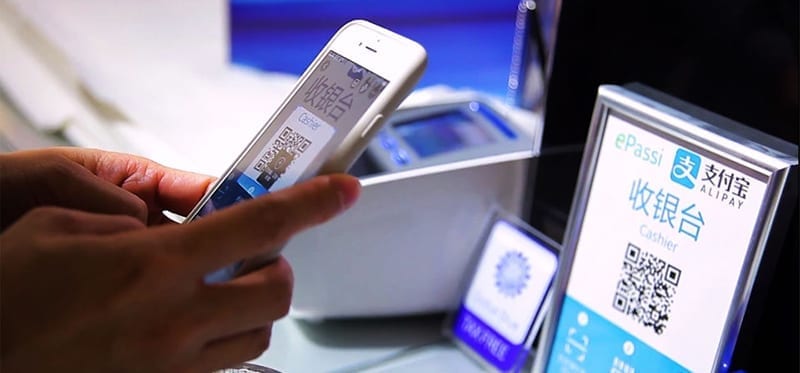
    Alipay, the world’s largest mobile and online payment platform operated by Ant Financial Services Group, along with Global Tax Free today announced that Chinese travelers visiting Singapore can now have tax refunds deposited directly into their Alipay accounts after completing all procedures at the airport. Singapore is the first country in Southeast Asia to offer this service to Chinese tourists.

    The move follows the signing of a memorandum of understanding (MoU) between Alipay and Global Tax Free (GTF) last September.

    “The Singapore Tourism Board (STB) is pleased to support the launch of Alipay as an additional mode of refund beyond cash and credit card. This will offer Chinese shoppers, who are frequent users of digital payment systems, a more seamless and enjoyable shopping experience in Singapore,” said Ms Ranita Sundra, Director, Attractions, Dining & Retail, STB.

    The new tax refund service is easy to use (see image below) and offers a shorter waiting time over credit card refund, which requires a lead time of up to 10 days. Through Alipay, Chinese shoppers can now enjoy a faster and more seamless refund process, as they can get their refunds in Chinese Yuan credited into their Alipay accounts immediately after completing the necessary procedures at the airport. Alipay also offers a strong and favourable exchange rate that further enhances the overall shopping experience for Chinese visitors in Singapore.

    China is one of Singapore’s key markets for tourism. Based on statistics published by the Singapore Tourism Board, 2.86 million Chinese travelers that visited the nation in 2016 accounted for S$3.5 billion in Tourism Receipts, of which 43% was contributed by shopping.

    Alipay has rolled out the tax refund service in 20 countries worldwide, including South Korea and Germany. Singapore is the first country in Southeast Asia to implement the Alipay tax refund scheme.

  • Alibaba and Kroger in talks

    Alibaba and Kroger in talks

    Looking to fight back against Amazon’s move into the grocery business, Cincinnati-based Kroger is reportedly eyeing an alliance with the Seattle juggernaut’s nemesis: China’s Alibaba.

    Industry speculation has Kroger exploring everything from a technology alliance to an outright acquisition by the Hangzhou-based tech company. Such an epic takeover – which could easily top $50 billion – would be four times larger than last year’s acquisition of Whole Foods by Amazon that sent traditional grocers scrambling to boost their digital capabilities.

    Senior Kroger executives met with senior Alibaba officials last month in China, the New York Post and Reuters reported, citing unnamed sources. While details of a potential partnership were not revealed, an arrangement of some type was disclosed by of all sources, China’s Ministry of Commerce.

    “Alibaba has teamed up with Kroger … to speed up the integration of online and off-line sales,” the Chinese agency said in a statement on Jan. 13.

    Kroger shares rose Thursday as investors pondered the merits of a pact or a takeover of Kroger by Alibaba. Kroger stock climbed as high as $30.46 on Thursday, up 3.3 percent. Shares closed at $30.26, up 2.7 percent.

    Alibaba at the least could provide a digital payment platform to create stores that would not need cashiers or checkout stations. That’s something it has done in China and which Amazon introduced earlier this week in Seattle with a new Amazon Go store.

    With 2,800 stores across the U.S., Kroger could provide Alibaba a massive American platform to compete against Amazon. The Cincinnati-based grocer is the U.S.’s largest supermarket chain. Further, Kroger could direct some business to Alibaba’s site for general merchandise, sources told the paper.

    But while Alibaba’s annual sales last year were only $25 billion versus Kroger’s more than $100 billion, it has pockets nearly as deep as Amazon. The company is worth 10 times Kroger. If Alibaba wants to enter Western markets via an acquisition, it could make a credible offer.

    Wall Street analysts were intrigued at the possibility of a takeover, but seemed to think a partnership was more likely to result from the talks.

    “If these articles are in fact true, we applaud Kroger for thinking outside the box – because a Kroger/Alibaba partnership would be a superior solution… and would meaningfully alter the competitive landscape in the US,” wrote Barclays analyst Karen Short in a Thursday note to investors. “Alibaba could certainly provide Kroger with the most – if not all – of the e-commerce solutions.”

    Wells Fargo analyst Edward Kelly also leaned toward a possible alliance.

    “A partnership with a player like Alibaba would seem to make a lot of sense, as it could provide an attractive opportunity to advance Kroger’s technology platform and digital knowledge without significant upfront cost,” Kelly wrote in a Thursday note to investors.

    Andy Stout, managing director of investments at Simply Money in Symmes Township, said a takeover might be hard to pull off as regulators might resist a foreign ownership for a Fortune 500 company. He noted regulators early this year helped kill the acquisition of Moneygram by Alibaba subsidiary Ant Financial.

    “Regulators would look very closely at a Chinese company buying the third-largest retailer in the US,” Stout said. “In this age of populism, I think regulators probably would not allow Alibaba to buy Kroger.”

    Kroger officials declined to comment Thursday, labeling the reports “rumor or speculation.”

    Speculation of possible Kroger acquisitions or partnerships are in overdrive this month with news outlets suggesting the grocer was eyeing potential takeovers of digital wholesaler Boxed as well as online retailer Overstock.com. The common thread to all these reports besides unnamed sources and Kroger silence was avenues for the retailer to beef up its digital abilities.c


  • LVMH hits up record revenue in 2017

    LVMH hits up record revenue in 2017

    It has been another record year for luxury products group LVMH Moet Hennessy Louis Vuitton.

    Revenue increased by 13 per cent year on year to reach €42.6 billion (US$52.9 billion), while organic revenue growth was 12 per cent.

    All business groups recorded double-digit organic growth with the exception of wines and spirits, where second-half growth was hit by supply constraints.

    Profit from recurring operations reached €8.2 billion, up 18 per cent. Operating margin reached 19.5 per cent, while the group share of net profit was €5.1 billion, growth of 29 per cent.

    Describing the performance as “excellent”, LVMH chairman/CEO Bernard Arnault says the record year was partly because of a buoyant environment but above all a result of the creative strength of the group’s brands “and their ability to constantly reinvent themselves”.

    Key highlights of last year listed by the group include:

    ● Record revenue and profit from recurring operations.

    ● Growth in Asia, Europe and the US.

    ● The success of both iconic and new products at Louis Vuitton, “whose profitability remains at an exceptional level”.

    ● The acquisition of Christian Dior Couture.

    ● Growth at Fendi and Loro Piana.

    ● The first year of integration of Rimowa luggage.

    ● Strong momentum at Parfums Christian Dior, driven by product innovation.

    ● An excellent year for Bulgari and good progress at Hublot and Tag Heuer.

    ● Growth at Sephora.

    ● Free cashflow of €4.7 billion, up 20 per cent.

    “Significant” growth in China helped Hennessy cognac volumes grow by 8 per cent, with 7.5 million cases shipped despite the second-half supply constraints.

    In fashion and leather goods, key events of the year were products arising from collaborations with artist Jeff Koons as well as the Supreme brand, the launch of the brand’s first smartwatch and the inauguration of the Maison Louis Vuitton Vendome in Paris.

    There was rapid growth in Asia for the perfumes and cosmetics segment, and growth was particularly strong in Asia for Bulgari. Asia again shone in the selective retailing group with Sephora continuing to gain market share.

    LVMH says the year was a positive turning point for DFS, with new stores in Cambodia and Italy continuing to grow sales.

    Despite unfavourable currencies and geopolitical uncertainties, LVMH says it is well equipped to continue its growth momentum across all business groups this year.

  • Starbucks China sales rises 30 per cent

    Starbucks China sales rises 30 per cent

    Starbucks China sales grew 30 per cent in the first quarter, overshadowing a lacklustre performance in the US company’s home market.

    Same-store sales in the core Asian market rose a respectable 6 per cent, with the majority of the growth down to new store openings: 700 new Starbucks stores opened, taking its global network to 28,039.

    US same-store sales rose by 2 per cent, driven by a similar increase in the average transaction value. Global revenue reach US$6 billion in the 13 weeks to December 31.

    Neil Saunders, MD of GlobalData Retail, said the strong Chinese result “hides an underlying softness – although we would stop short of saying problem – in the rest of the business”.

    “Barring last quarter – which was affected by one less week of trade than the prior year – Starbucks’ growth trajectory has slowed. This is most noticeable in the US, where both overall and comparable sales growth is trending lower,” said Saunders.

    “This slowdown does not mean the domestic business is broken. Instead, it is a function of maturity and saturation which has made both adding new stores and driving performance from existing locations steadily more challenging. Given that this dynamic will only worsen over time, it raises a question as to how Starbucks intends to remedy the issue.”

    Kevin Johnson, president and CEO of Starbucks, said the strategic acquisition of East China positioned the company to accelerate its growth in the key China market.

    “Today, Starbucks has two powerful, independent but complementary engines driving our global growth, the US and China. Our work to streamline the company is sharpening our focus on our core operating priorities.”

  • Vietnam phone exports to China surge eight-fold

    Vietnam phone exports to China surge eight-fold

    Customs data shows China became the second largest importer of phones and phone parts from Vietnam last year, just behind the European Union with US$11.96 billion, a year-on-year increase of 6.4%.

    Exports of the products to South Korea also rose by a staggering 45.4% year-on-year to US$3.97 billion and shipments to the United Arab Emirates edged up a slight 1.6% to US$3.89 billion.

    The report indicates Vietnam spent US$8.75 billion importing phones and phone parts from China and US$6.18 billion from South Korea last year, up 42.4% and 72.6% from a year earlier.

    Therefore, for these products alone, Vietnam ran respective trade deficits of around US$600 million and US$2.21 billion with China and South Korea.

    Notably, according to the report, China has accounted for around half of phone and phone part exports to Vietnam in recent years.

    Apart from hi-end gadgets of tech giants like Samsung, Apple and HTC, industry watchers said Chinese brands such as Oppo, Huawei, Xiaomi and Vivo have dominated the mid-end and feature-phone market segments.

    Although some major Korean phone producers like Samsung and LG have set up shop in Vietnam, many parts suppliers of these tech firms have yet to come to the country. Therefore, analysts forecast Vietnam will have to continue importing phone parts from the Northeast Asian nation this year.

    Customs data shows Vietnam exported phones and phone parts worth US$45.27 billion last year, a year-on-year increase of 31.9%, while the country saw a 54.8% rise in imports of these products at US$16.34 billion. The products made up over 21% of the country’s export revenue last year.

  • JD.com Announced Its Chic New Paris Office

    JD.com Announced Its Chic New Paris Office

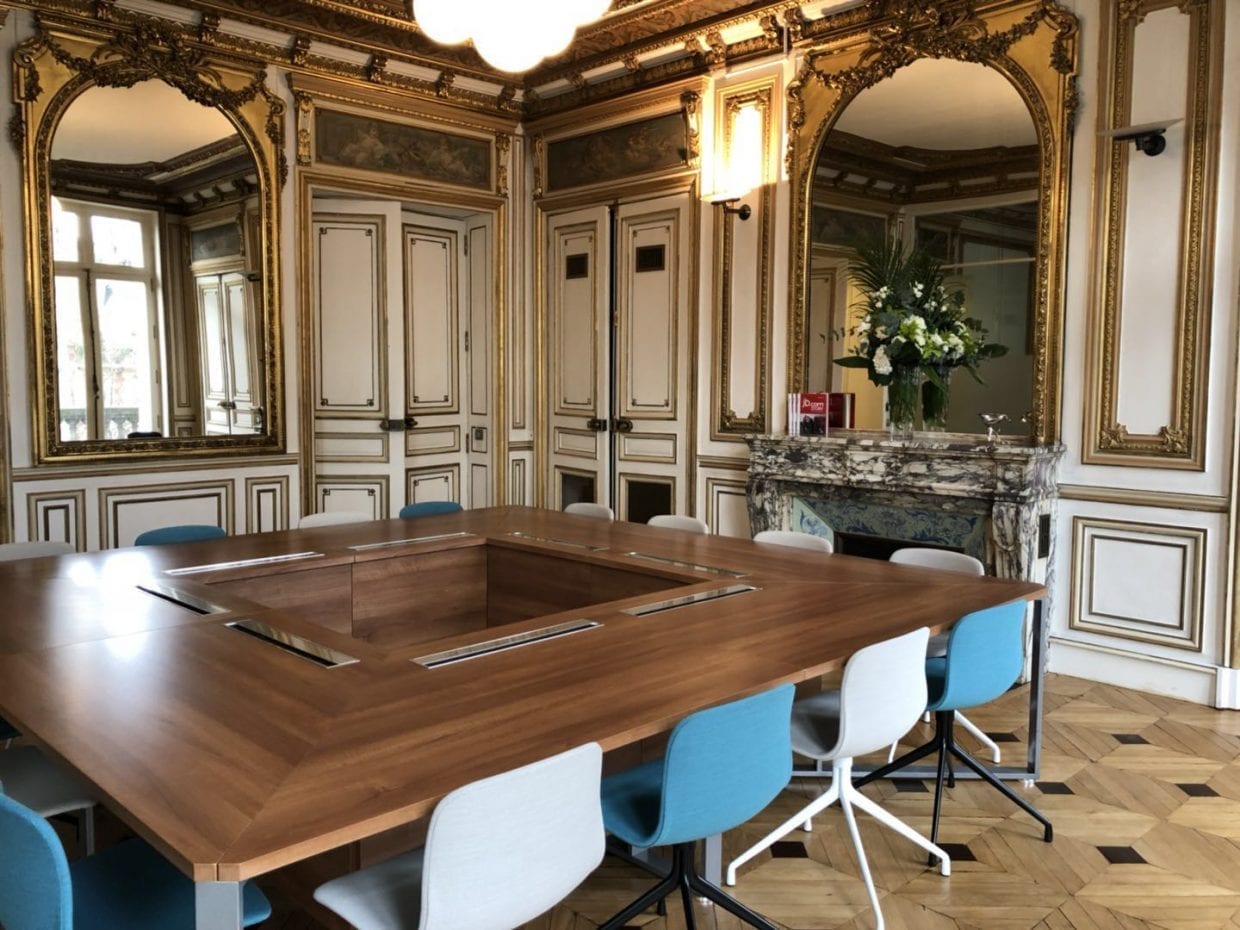
    JD.com announced yesterday that it has opened a Paris office. The move follows an agreement with France’s official trade promotion agency, Business France, to sell €2 billion (US$2.4 billion) in French products to Chinese consumers over the next two years.

    It’s a strategic move, putting JD.com in close proximity to many of the world’s top luxury brands at a time when China’s leading e-commerce platforms are battling for a bigger share of the luxury market.

    JD.com France’s Managing Director, Florent Courau

    JD.com first made public its intentions to woo French retailers earlier this month when French President Emmanuel Macron made a state visit to China. This visit also coincided with another landmark announcement that French luxury fashion house Saint Laurent would be officially partnering with JD.com to sell its collections on the e-commerce site’s luxury platform, Toplife, joining the ranks of La Perla, Tod’s, Emporio Armani, and more recently, Derek Lam.

    Company representatives called the collaboration with France a “milestone” for the e-commerce giant. The newly appointed Managing Director for JD.com in France is Florent Courau, who worked as COO of Sephora in North Asia and, before that, at LVMH for 12 years, six of them in China.

    JD.com intends to leverage stronger relations with the country to broaden its luxury portfolio in Europe, giving its customers access to a wider range and a better quality selection of not only fashion brands, but categories like cosmetics, food, and wine and spirits.

    “Our customers value the quality of French products, making this a critical market for us to further expand our brand relationships,” Courau said in a statement. “Our Paris office will be committed to providing tailor-made support to our French partners who want to seize the immense opportunity that JD offers.”

    A new report released by Bain last week revealed that many luxury consumers were still wary about making purchases online and preferred shopping either at brick and mortar stores, on the brand’s official website, or on its WeChat platform. Luxury aggregators like JD.com’s Toplife and Alibaba’s Tmall Luxury Pavilion were the third most-preferred resource for these consumers.

    But both JD.com and Alibaba have been ramping up their efforts to secure the trust of both consumers and brands in the luxury sector with the launch of these ‘pure play’ platforms—JD.com launched Toplife last fall—that keep luxury goods separate from their other mass market offerings and even counterfeit goods.

    These platforms also let JD.com cater to the specific demands of luxury consumers through offering better customer service, guaranteed authenticity, and a “white glove” delivery service. JD.com has also spent much of the past year forging stronger networks in the luxury industry beginning with $397 million deal with UK luxury platform Farfetch.

    “Since we launched Toplife the goal has been to provide the convenience of online with the personalized feel of making a luxury purchase online,” VP for International Corporate Affairs at JD.com Josh Gartner said. “Our physical presence in France brings us closer to the world’s leading luxury brands and helps us understand them better so we can ensure the integrity of their offline brand identity when they come online with us in China.”

    To smooth the process of entering China’s world of online retail, JD.com also plans to offer a new training program for senior executives on reaching China’s online shoppers, as well as build a logistics center to smooth out the overseas shipping process.

    “Now, we want to bring the best of France, not only in terms of world-class brands, but also in terms of a world-class shopping experience, right to the doorsteps of our luxury consumers,” Gartner said.

  • Mary Katrantzou pursues China expansion with an investment from Yu Capital

    Mary Katrantzou pursues China expansion with an investment from Yu Capital

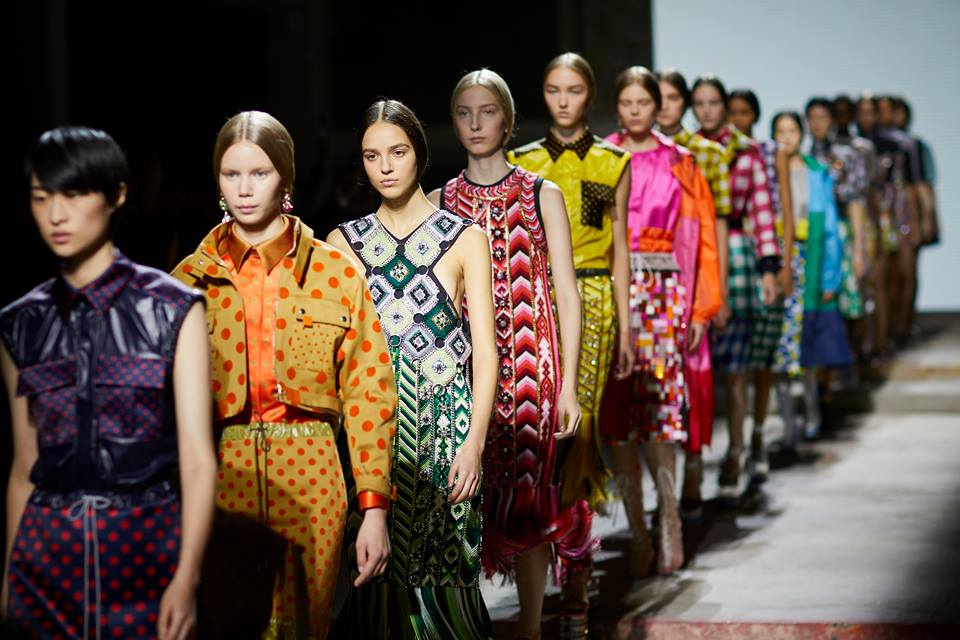
    To boost its presence in China, London-based womenswear brand Mary Katrantzou has received funding from fashion investor Wendy Yu’s investment fund Yu Capital.

    With only two points of sale on the Chinese mainland – in the stores of multi-brand retailer Joyce in Beijing and Shanghai – and one in Hong Kong at On Pedder, the Greek designer firmly believes her brand has expansion potential in China.

    Katrantzou and Yu are friends, and the designer believes Yu to be an investor with “a pragmatic and forward-looking vision”.

    Daughter of Chinese billionaire Jingyuan Yu, the owner of wooden goods company Mengtian, Wendy Yu attended boarding school in the UK, and as an investor aims to “bridge the economic and cultural gap between China and the rest of the world”, reports Fashion Network.

    As well as philanthropic activities, notably with the British Fashion Council, the British Museum and the V&A Museum, she founded Yu Capital in 2015, an investment fund specialising in technology, lifestyle and fashion.

    Along with Yu Culture, which aims to enrich the Chinese cultural scene through international projects and partnerships, and Yu Fashion, which has the goal of working with brands and designers to promote creativity, Yu Capital is part of Yu Holdings, a platform launched by Yu this month with the aim of investing US$20 million in emerging businesses this year.

    Already Yu Capital has invested in brands such as ASAP54, now Fashion Concierge, a fashion-centered search application, and Bottletop, a British leather goods label.

    By becoming a minority shareholder in Mary Katrantzou’s brand, Yu has entered the luxury sector. She says the brand, which has its tenth anniversary this year, owes its fame to its whimsical prints and collaborations with Adidas and Longchamp.

  • Tencent expands WeChat Pay to HK residents

    Tencent expands WeChat Pay to HK residents

    Tencent has expanded its WeChat Pay user base to Hong Kong residents, who now will not need to have a Chinese bank account or credit card to take advantage of the Mainland’s popular cashless payment system.

    With the announcement, Hong Kong residents can now bind and activate their WeChat Pay accounts with any international credit cards, including MasterCard, Visa and JCB.

    They can activate WeChat Pay in two ways:

    • Bind any Mastercard, Visa and JCB credit cards for online payments such as online shopping, taxi hailing, ticket purchasing, bike-shares, food delivery and hotel booking.
    • Bind any credit cards or bank cards issued by 71 banks in China, together with proof of a valid passport, China Resident Identity Card, a Mainland Travel Permit for Hong Kong and Macau Residents or a Mainland Travel Permit for Taiwan Residents, to pay for all online and offline payments. Users with these bank cards can also activate their QQ Wallet.

    Besides Hong Kong residents, Tencent opens WeChat to expatriates living in China as well as to Macau and Taiwan residents.

    According to the 2017 WeChat Data Report that tracked consumption habits of foreign residents in China, over 64% of expatriates use Weixin Pay for their daily needs, especially for splitting bills, food delivery, transportation, dining, as well as shopping in stores, supermarkets and online.

    With the introduction of using credit card accounts, this number is expected to grow as the payment system will be simpler and more convenient to use for citizens outside of China.

    In China, WeChat is being used by a group of friends to split a restaurant bill, check into or out of a hotel, board a bus or train, hail a car service or hop on a bike. WeChat provides access to China’s car hailing service Didi Chuxing and bicycle-sharing system Mobike.

  • I.T group positive sales despite store closures

    I.T group positive sales despite store closures

    Improved consumer sentiment across Greater China and strong sales growth in Hong Kong helped boost third-quarter business for Hong Kong multi-brand fashion group I.T Limited.

    With fewer discounts offered, the group also enhanced its gross margin for the three months to the end of November.

    However, store closures continued in Hong Kong in the face of a persistent upsurge in running costs, causing downward pressure on sales.

    I.T Group operates its own brands, including Chocolate and 5cm, concept stores Izzue and Double-Park; international brands it has local licences for including Kurt Geiger and Camper; and A Bathing Ape, which the company rescued from Japanese owners in 2011.

    While comparable-store sales growth in Hong Kong and Macau rose 2.4 per cent for the quarter, there was a 3.9 per cent dip for the first nine months.

    For Japan and the US, sales growth soared by 25.5 per cent for the quarter and 30.7 per cent for the nine months, while for China the growth was 1.5 and 1.1 per cent respectively.

    Gross profit margin for the quarter was up 1.6 points to 62.9 per cent in Hong Kong and Macau, edging up 0.8 points to 60.9 per cent for the nine months.

    For Japan and the US, the margin fell 0.8 points to 68.9 per cent, and eased 0.1 points to 70.8 per cent for the nine months, while in Mainland China it edged up 0.3 points to 64.8 per cent for the quarter, and rose 2.1 points to 62.8 per cent for the nine months.

    For the group overall, the rise was 1 point to 64.9 per cent for the quarter, and 1.6 points to 63.4 per cent for the nine months.

  • Likely loss in first half, Esprit Holdings to be alert

    Likely loss in first half, Esprit Holdings to be alert

    Fashion group Esprit Holdings has issued a warning it expects a net loss for its first half, to the end of December.

    Based on a preliminary review of its unaudited consolidated management accounts, the net loss is expected to be in the range of about HK$950 million (US$121.5 million) to $980 million, compared to a net profit of $61 million in the same period a year earlier.

    Esprit attributes the anticipated loss to the combination of three major factors:

    1. Full impairment of the remaining balance of the goodwill and customer relationships in association with the group’s China business, which has had a “significant decline” in recent years, resulting in a negative impact of about $795 million before taxation.

    2. A larger-than-expected drop in group revenue in the second quarter after expecting a modest decline as a result of strategic rationalisation of its distribution footprint. The decline was exacerbated by lower sales at its brick-and-mortar stores. As a result, loss before interest and taxation (LBIT) and before the China Impairment is estimated to be in the range of $150 million to $180 million for the first half, compared to LBIT of $13 million in the same period a year earlier. While gross profit margin had slightly increased and running expenses had further reduced in the first half, it was not enough to outweigh the negative impact of the revenue decline.

    3. Net taxation expense of about $5 million in the first half in contrast to a net taxation credit of $74 million in the same period last year.

    Esprit’s company secretary, Florence Ng Wai Yin, says the board wants to reassure shareholders that the group is in the midst of fine tuning its strategic measures to establish a solid platform for long-term profitable growth. “The retail environment continues to be challenging, and because of the seasonality of the business, the performance in the second half of a financial year is usually not as good as the first half. This means the financial performance of the group in the second half remains uncertain.”

    Esprit expects to release its interim results at the end of next month.  

  • DFS Group Announces Exclusive New Bvlgari Collection

    DFS Group Announces Exclusive New Bvlgari Collection

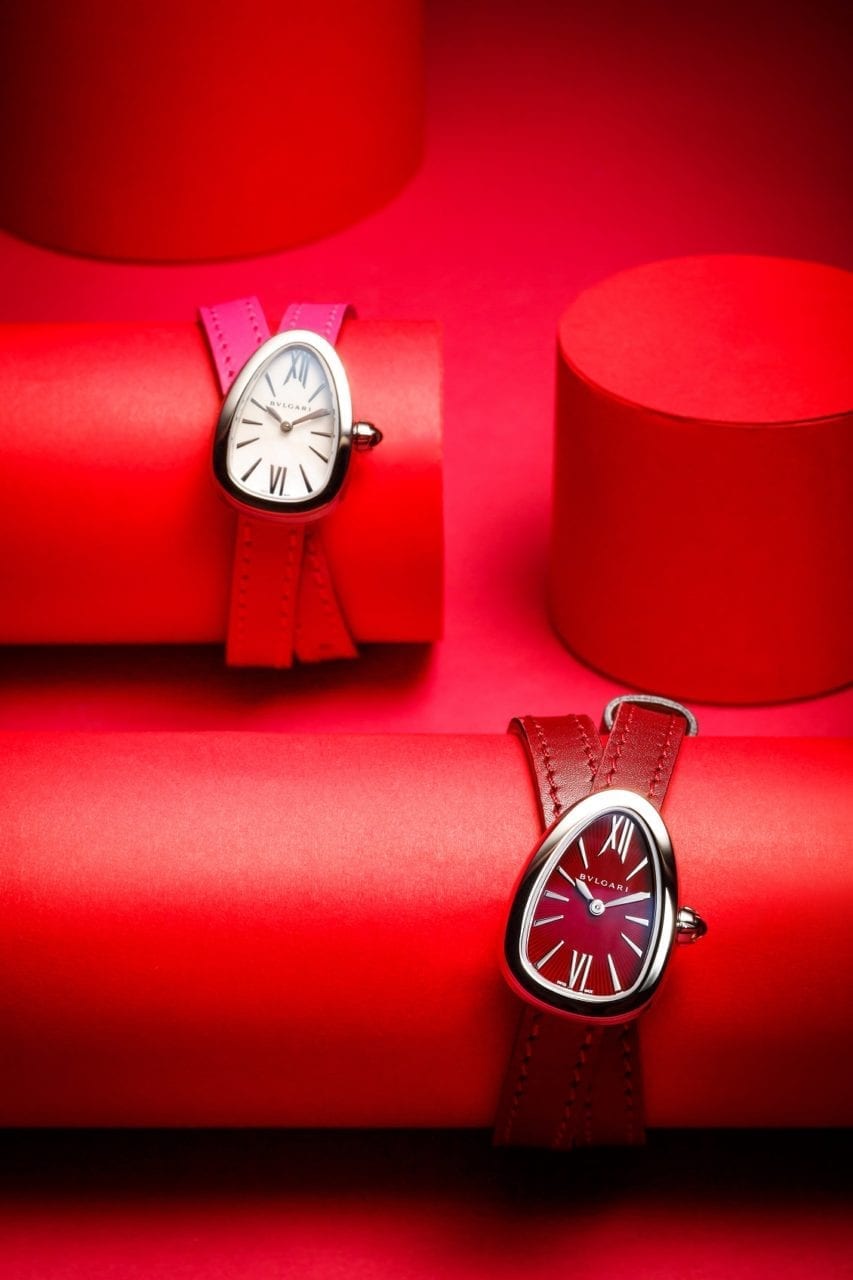
    DFS Group, the world’s leading luxury travel retailer and the magnificent Italian High Jeweler, BVLGARI, are delighted to introduce the new Serpenti Passion Red collection, available exclusively at DFS airport stores and T Gallerias from January 1, 2018.

    This exclusive collection introduces four new brilliant BVLGARI pieces, immediately recognizable by their
    unmistakable Italian design reflecting 2,700 years of Roman history, and embracing stylistic audacity and a
    penchant for rich, vibrant colour.

    The collection features two Serpenti Twist Your Time watches with interchangeable straps crafted in calf and
    Karung leather in pink and red or burgundy and black, a Serpenti Seduttori pendant with a ruby eye, and a
    Serpenti Forever ruby red handbag in brushed metallic calf leather with a red and white Serpenti head and onyx
    eyes.

    Christophe Chaix, DFS Group Senior Vice President Fashion, Watches, Jewelry and Accessories said the introduction of the new collection symbolizes DFS Group’s appreciation of BVLGARI’s unrivalled commitment to high-end quality.

    “We are delighted to continue our unique partnership with BVLGARI, whose name is synonymous with a luxurious lifestyle,” said Christophe. “These stunning new designs are a perfect complement to DFS’ belief that
    life should be lived beautifully. We are sure our discerning traveling customers will be thrilled to find Serpenti
    and Seduttori in our collection of fine watches and jewelry.”

    Lelio Gavazza, Executive Vice President Sales and Retail BVLGARI, said the new collection signifies what
    BVLGARI is and has always been about; homage to legacy, and the grace of uniquely designed jewelry,
    watches and bags.

    “BVLGARI is pleased to present this exclusive capsule collection to DFS. This premium network represents the
    ultimate luxury retail shopping experience in travel retail channel. With BVLGARI‘s unique products combined
    with DFS expertise in delivering customized customer experience, we are certain to satisfy various travelers’
    needs, especially during the coming Chinese New Year holiday. ”

    DFS brings BVLGARI’S new Serpenti Passion Red range to global travelers, luxury shoppers and particularly
    to customers in Hong Kong, China, Macau and Japan who value high-quality luxury fashion and jewelry.
    BVLGARI’sSerpenti Passion Red will be available for purchase at T Galleria by DFS stores worldwide until 31
    December 2018.

    Details of the new BVLGARI Serpenti and Seduttori range:

    • BVLGARI Serpenti Twist Your Time 27mm Watch with Pink and Red Interchangeable Straps in calf and Karung leather: Watch size 27 mm in steel case, Mother of Pearl dial sourced from Australia and Indonesia, pink bracelet calf with two loops, hour/minute display, quartz stones, waterproof up to 30 metres and Crown with Rubellite

    • BVLGARI Serpenti Twist Your Time 27mm Watch with Burgundy Red and Black Interchangeable Straps in calf and Karung leather: Watch size 27 mm in steel case, red dial, bordeaux bracelet calf with two loops, hour/minute display, quartz stones, waterproof up to 30 metres and Crown with Rubellite

    • BVLGARI Seduttori Pink Gold Pendant with Ruby: Pink gold necklace with .24 ct pear ruby in a round mounted setting

    • BVLGARI Serpenti Forever Nappa Handbag Ruby Red Limited Edition: Flap Cover, Serpenti Forever
    Accessories, brushed metallic calf leather in ruby red and light gold with 100% Nappa Ruby Red lining.

  • Carrefour steps up e-commerce push, chases Tencent deal in China

    Carrefour steps up e-commerce push, chases Tencent deal in China

    Carrefour is to cut jobs, boost ecommerce investment and seek a partnership in China with Tencent in the face of competition from Amazon, sending its shares higher on Tuesday.

    Alexandre Bompard, who took over as CEO in July, is trying to overhaul Carrefour’s French hypermarket business as well as expand online retail. Amazon’s purchase of Whole Foods in the United States last year has prompted speculation that the tech company could be targeting food retail in Europe next.

    Bompard plans to invest 2.8 billion euros ($3.4 billion) in digital commerce by 2022, six times its current investment, as Carrefour plays catch-up in online food retail.

    “Carrefour has reached a turning point in its history. We have a huge ambition and I am well aware of the magnitude of this challenge,” Bompard told a news conference.

    Under pressure to increase profits, Bompard also announced cost savings of 2 billion euros by 2020, including a voluntary redundancy plan for 2,400 employees at its French head office and plans to sell or close 273 underperforming stores Carrefour bought from Spanish retailer Dia in 2014.

    Carrefour shares rose around 6 percent, their biggest one-day gain since October 2015.

    “Consumer trends are changing, and Carrefour is adapting accordingly,” said Benoit de Broissia, analyst at Paris-based investment firm Keren Finance, which owns Carrefour shares.

    The group, the world’s second largest retailer with more than 380,000 employees, is targeting 5 billion euros in sales in food e-commerce by 2022 – an amount that would be six times greater than at present, which would represent a 20 percent market share in France.

    Carrefour’s online sales accounted for just 1.7 percent of its total French food sales in 2016, while more digital-savvy rival Leclerc managed 8 percent, according to analysts at brokerage Bernstein.

    Carrefour has struggled for years to reduce its reliance on hypermarkets, particularly in France, where it makes 47 percent of its sales.

    Bompard, previously CEO of electronics retailer Fnac Darty, ruled out closing any of the 247 French hypermarkets, proposing instead to reduce selling space whenever it was relevant and to transfer five hypermarkets to lease management contracts.

    In China, Carrefour remains loss-making amid fierce competition from local players and a buoyant online market.

    A partnership between rival French retailer Auchan AUCH.UL and Alibaba has also increased the pressure on Carrefour’s China business.

    In response, Bompard announced a potential deal with Tencent and local retailer Yonghu to take a stake in Carrefour China. Carrefour would still be the largest shareholder.

    UNION ACTION

    Bompard’s plan to shed 2,400 jobs out of a total French HQ workforce of 10,500 could set the chief executive on a collision course with France’s trade unions, including Force Ouvriere, which has already called for a walkout on Feb. 8.

    Carrefour is the largest private sector employer in France, which accounts for 44 percent of its operating profits.

    Bompard also said if the Dia stores did not find buyers and had to be closed there could be more redundancies.

    “This is a plan destined to please shareholders. We remain vigilant and still fear as many as 4,500 jobs could go,” Dejan Terglav, secretary general at the Force Ouvriere (FO) trade union said.

    French Economy Minister Bruno Le Maire also said the government would be “very vigilant” on the staff cut plans.

    Other big European retailers are also cutting jobs. Britain’s supermarket group Tesco said on Monday it would cut a net 800 jobs from its UK business to simplify operations and cut costs.

    Bompard also outlined plans to accelerate growth in supermarkets and convenience stores globally, especially in Brazil in where it wants to open 20 new Atacadao cash and carry per year.

    His plans followed Carrefour’s warning last week that its 2017 operating profit could fall by 15 percent amid weak sales, marking its second profit warning in six months.
     

  • Frasers Commercial Trust Q1 DPU down 4.4% on lower occupancies

    Frasers Commercial Trust Q1 DPU down 4.4% on lower occupancies

    Frasers Commercial Trust (FCOT) has posted a first-quarter distribution per unit (DPU) of 2.40 Singapore cents, down 4.4 per cent from 2.51 Singapore cents in the same period a year earlier as property income fell while the number of issued units had increased.

    The topline took a hit from lower occupancy rates at Alexandra Technopark, China Square Central, 55 Market Street and Perth’s Central Park.

    Gross revenue for the first quarter ended Dec 31, 2017 dipped 11 per cent to S$35.3 million from the same period a year earlier. China Square Central was impacted by planned vacancies to facilitate asset enhancement works at the retail podium.

    A weaker Australian dollar also dented takings.

    Net property income fell 14.9 per cent to S$24.9 million. Half of this came from FCOT’s three Singapore buildings and half from its three properties in Australia.

    In December, FCOT announced its maiden acquisition in the United Kingdom. It expects to complete its purchase of a 50 per cent stake in Farnborough Business Park by the end of January.

    Meanwhile, the S$45 million makeover of Alexandra Technopark announced a year ago is slated to be completed in the middle of this year.

    China Square Central’s retail podium will also undergo a S$38 million asset enhancement starting in the first quarter of 2018 with completion expected by mid-2019.

    FCOT had a 80.3 per cent average occupancy rate as at Dec 31 and an average committed occupancy rate of 86.6 per cent.

    WeWork Singapore, the co-working space operator, has committed to lease around 28,700 sq ft of space at one of China Square Central’s heritage shophouse blocks, FCOT added in its results filing on Monday.

    WeWork will take up the space in phases starting with 16,800 sq ft in the second half of 2018.

    Jack Lam, chief executive of the Reit manager, said: “We are delighted to welcome WeWork to China Square Central … The take-up by WeWork is a strong testament to the attractiveness of China Square Central as a work and business location. We foresee rising demand for co-working facilities and other non-traditional workplace formats in light of the continuous evolution of work culture and reshaping of the business ecosystem.”

    First-quarter earnings per unit was 1.64 Singapore cents, down from 2.36 Singapore cents in the same period a year earlier.

    Net asset value per share was 1.55 Singapore cents as at Dec 31.

    FCOT had a gearing of 34.8 per cent as at Dec 31, and an interest coverage ratio of 4.3 times.

    The counter added two Singapore cents or 1.31 per cent to close at S$1.55 on Monday.

  • WeChat launches first pop-up store in Shanghai

    WeChat launches first pop-up store in Shanghai

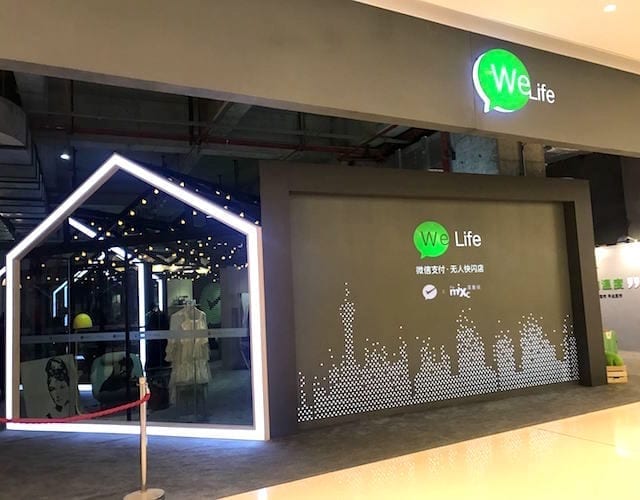
    Chinese messaging app WeChat has launched its first cashierless pop-up store in Shanghai.

    The Tencent company has teamed with more than 300 merchants, including EasyGo and Elle, as well as shopping mall The Mixc to build up its first “flash retailing” pop-up store.

    By scanning a QR code via WeChat, customers can enter the store. The system verifies the customer’s identification and gains access to their digital wallet WeChat Pay. All products have RFID tags to identify them and their price. Buyers can easily check the bill by scanning codes.

    The Bai Zhenjie company, which applies WeChat Pay to the retail industry, says the concept of flash retailing is constantly being polished. Face-recognition technology and a credit-evaluation system are expected to also be applied to the stores.

  • China leads for L’Occitane International

    China leads for L’Occitane International

    China and Hong Kong, along with Brazil, had the highest sales growth in local currencies for French cosmetics company L’Occitane International for the nine months to the end of December.

    China sales grew 23.4 per cent in local currency, with same-store sales up 17.4 per cent.

    Hong Kong had 9.7 per cent growth at constant exchange rates, thanks to strong travel-retail sales in Asia, particularly Greater China, Korea and Japan.

    The group’s net sales reached €1 billion (US$1.2 billion), or 3 per cent growth at constant rates for the period. Unfavourable foreign-exchange rates knocked down sales at reported rates by 0.6 per cent.

    Same-store sales growth for the nine months further improved to 1.4 per cent from a 0.1 per cent drop for the six months to September 30. The improvement was mainly contributed by holiday offerings in the third quarter that fueled same-store sales growth in China, Hong Kong, Taiwan, Russia and other key markets.

    Sell-out sales accounted for 74.1 per cent of net sales, amounting to €741.9 million, down 1.4 per cent at reported rates but up 2.5 per cent at constant rates. This growth was primarily from positive same-store growth as well as non-comparable stores and other sales, including new and renovated stores, marketplaces and spa businesses.

    Web sell-out channels (own e-commerce and marketplaces) delivered encouraging growth of 21.2 per cent to reach 14.3 per cent of total sell-out sales.

    Sell-in sales accounted for 25.9 per cent of the group’s total sales, amounting to €259 million and an increase of 4.4 per cent at constant exchange rates. Like-for-like growth was 8.2 per cent.

    The increase was primarily driven by travel retail, distribution, B2B and web-partner channels of the L’Occitane en Provence brand. The emerging brands Erborian and Melvita continued double-digit growth.

    The group opened 16 stores and renovated 118 during the nine months, compared to 56 store openings and 79 renovations for the same period a year earlier.