Tag: China

  • Asia Gold-Price gain keeps buyers at bay; market eyes China holiday boost

    Asia Gold-Price gain keeps buyers at bay; market eyes China holiday boost

    Demand for physical gold remained lacklustre across top Asian centres this week as buyers were put off by a rally in prices, but an approaching Chinese New Year could reignite appeal for the yellow metal.

    Gold prices rose for a third session on Friday to hit their highest since September, with a slump in the U.S. dollar helping drive bullion towards its fifth straight weekly gain.

    High prices are weighing on physical demand for gold, but demand is expected to rise ahead of the Chinese New Year, according to Brian Lan, managing director at dealer GoldSilver Central in Singapore.

    In top consumer China, the range for premiums broadened to about $5-$8 an ounce from $6-$7 last week.

    The Chinese New Year holiday will kick in by the middle of next month.

    There is not too much demand currently and if prices come down to the $1,300 level, demand and premiums will increase, said Ronald Leung, chief dealer at Lee Cheong Gold Dealers in Hong Kong.

    Premiums of 60-80 cents an ounce were being charged over the benchmark in Singapore this week, while in Hong Kong, premiums ranged between 60 cents and $1.20, against 70 cents previously.

    Demand remained subdued in India, the world’s second largest consumer of the metal, as well, since jewellers and retail buyers were postponing purchases due to a rally in local prices to the highest level in 1-1/2 months.

    Jewellers need to buy gold for the next month’s jewellery exhibition, but they are postponing purchases due to the price rise, said Mukesh Kothari, director at bullion dealer RiddiSiddhi Bullions in Mumbai.

    “They will wait for a week or so for price correction. Then they have to make purchases.”

    Local gold prices jumped to 29,550 rupees per 10 grams, the highest level since Nov. 20, 2017.

    Dealers in India were offering a discount of up to $2 an ounce this week over official domestic prices, unchanged from last week. The domestic price includes a 10 percent import tax.

    Jewellers were keeping a lower inventory as some people are speculating the government will reduce import duty in the budget on Feb. 1, said a Mumbai-based dealer with a private bank.

    India’s gold imports surged 67 percent in 2017 from the previous year to 855 tonnes, provisional data from precious metals consultancy GFMS showed.

    Meanwhile, in Japan, public selling volumes rose, causing sellers to keep offering discounts of 50 cents, unchanged from the previous week. (Reporting by Nithin Prasad in Bengaluru, editing by David Evans)r
  • Alibaba’s plan to revamp mom-and-pop stores ‘innovative’, but Singapore ‘not ready’

    Alibaba’s plan to revamp mom-and-pop stores ‘innovative’, but Singapore ‘not ready’

    Ahead of its annual online shopping extravaganza, popularly known as Singles Day, last November, Chinese tech titan Alibaba unveiled its Ling Shou Tong retail strategy.

    Ling Shou Tong’s idea is simple: To connect convenience stores, often mom-and-pop stores, to the e-commerce giant’s network of supply chain, logistics and data analytics – and by doing so, revamp how these shops operate.

    As it said on its news portal Alizila: “The programme doesn’t just give a cosmetic update to convenience stores. It’s also an extreme tech makeover, injecting modern analytics to improve, streamline and automate operations that have long relied on elbow grease and intuition.”

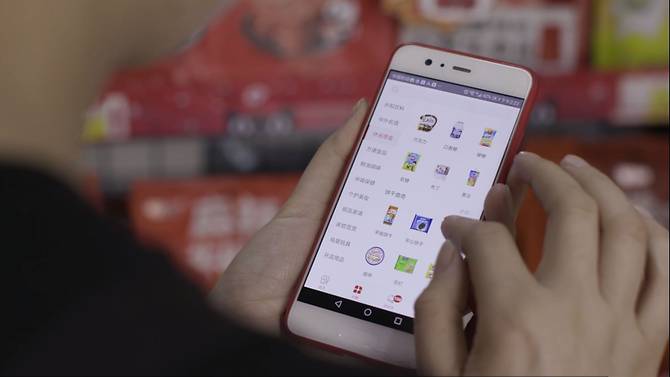
    In practical terms, this means when shopowners order goods via the Ling Shou Tong app, analytics of their stores would suggest to them the products that are most in demand. They are also able place their orders online, in a centralised manner, without having to negotiate with multiple distributors.

    Alibaba said a large number of mom-and-pop stores in China are owned by those over 45, who “log long hours and do everything themselves”, and these are characteristics that could apply to small retailers here in Singapore too.

    LING SHOU TONG IN SINGAPORE?

    But could Alibaba bring the Ling Shou Tong concept to Singapore?

    IDC’s lead analyst for Future of Commerce Lawrence Cheok said in an email that this retail strategy provides similar benefits for consumers and small merchants here, such as greater supply chain efficiencies and, hopefully, competitive prices.

    However, he noted that Ling Shou Tong is similar to the tech titan’s other rural commerce initiatives in that it is an effort to more deeply penetrate the local domestic market, given that e-commerce is mostly saturated in the top tier cities. With that in mind, he questioned if bringing this retail concept here is the “lowest lying fruit” for the Singapore market.

    Other analysts also downplayed the possibility of Ling Shou Tong being brought here, with Forrester Research’s senior analyst Xiaofeng Wang saying that Singapore is not ready for the retail concept as consumers or small merchants are not prepared for it.

    Ms Wang pointed out that mobile payment in China is already so dominant, with the majority of consumers and small merchants, even street stall owners, using this method on a daily basis. So upgrading to Ling Shou Tong and using digital means to order and manage inventory “wouldn’t be that far away” for these mom-and-pop shopowners.

    “In Singapore, there’s still a long way to go,” the analyst said in an email. “Majority of consumers and merchants still use cash in hawker centres even after QR code payment is launched.”

    Gartner’s research director Adrian Lee also said that while the concept is “innovative”, he does not see it “playing out well” here.

    Mr Lee said in his email that Ling Shou Tong needs several conditions to be successfully implemented: A near ubiquitous digital payment channel and point-of-sale management to facilitate seamless checkout, a robust and integrated logistics network and fulfillment partners such as Cainiao and sufficient number of store owners who believe in the value of tapping into the company’s massive inventory to gain cost savings when stocking up.

    “For the above reasons, I do not believe that Ling Shou Tong is viable in Singapore.”

    NEW RETAIL METHODS “A MATTER OF TIME”

    That said, IDC’s Cheok is of the opinion that Alibaba’s New Retail strategy, which Ling Shou Tong is a part of, will spread to the rest of Asia. Chairman Jack Ma had said last October that New Retail will “bring about a restructuring of the global supply chain and change the complexion of globalization from the domain of big businesses to small businesses”.

    The imported retail concept would be a variation of the China model “in order to cater to local requirements” and would likely entail partnerships with local players who can provide value, the analyst explained.

    “For instance, Alibaba would require local consumer data and insights to provide the same benefits they are providing to the Chinese merchants. In addition, new supplier relationships would be required to cater to local merchandising preferences,” he said.

    Should this happen, it will “definitely impact the bottom line for competitors caught unawares”, Gartner’s Lee suggested.

    “Amazon will have an advantage in that they’ve launched similar converged retail initiatives and is also sufficiently funded to scale up,” he said. “The capital investment required to carry out Ling Shou Tong will prove an obstacle for local supermarket chains and players like honestbee.”


  • Sa Sa International looking good, thanks to tourists

    Sa Sa International looking good, thanks to tourists

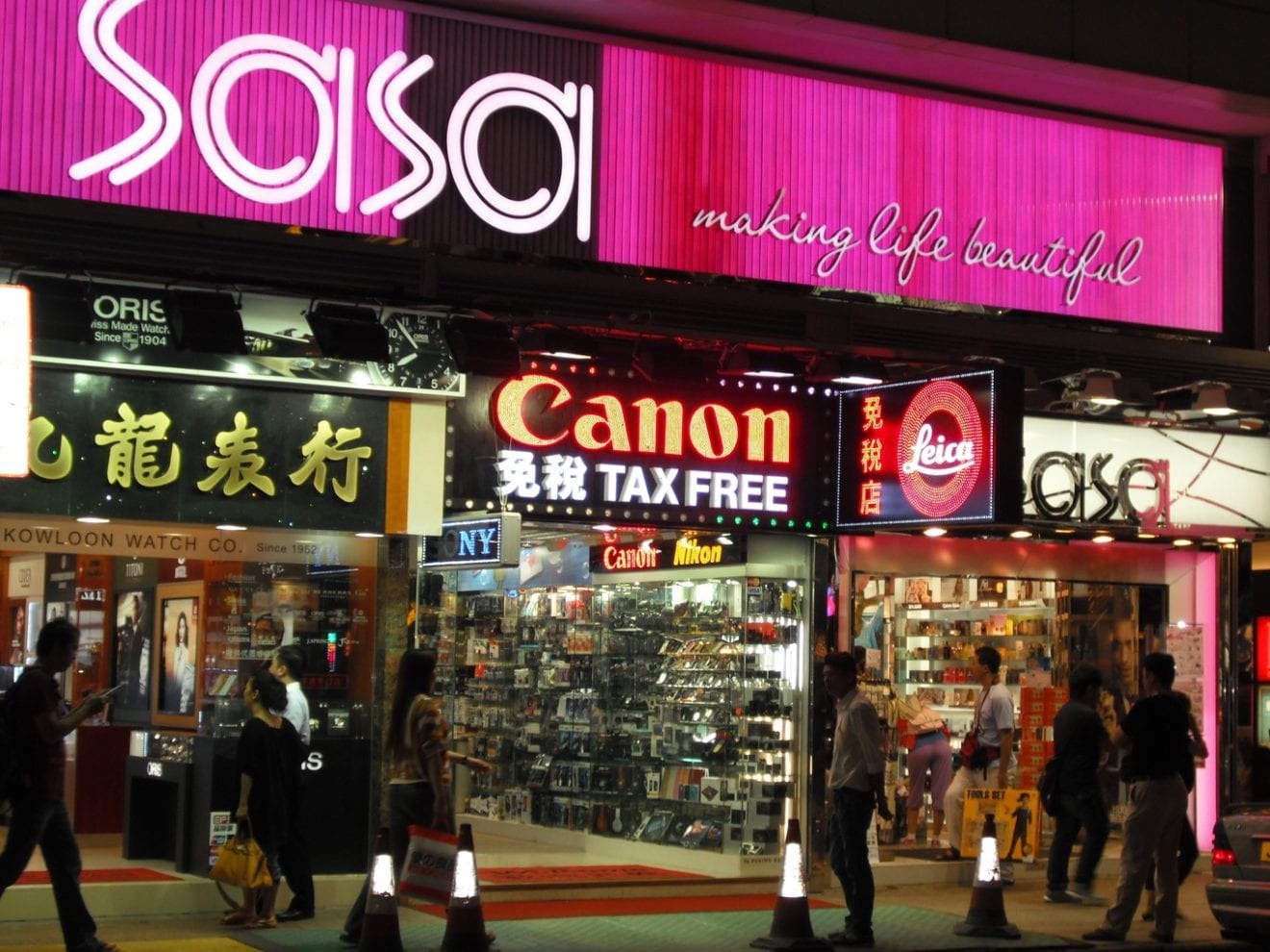
    Stronger store traffic drove overall sales for cosmetics retailer Sa Sa International for its third quarter to the end of December.

    This was in line with expectations, says the company.

    Total transactions increased by 5 per cent year on year to 5.1 million, while the number of transactions with local and mainland tourists grew 6.6 and 4.1 per cent respectively. The average transaction value also rose, by 4.2 and 2.8 per cent (to reach $367) respectively.

    The group’s total turnover grew by 6.5 per cent to HK$2.2 billion (US$281 million), led by Hong Kong and Macau where the growth was 8.1 per cent to reach $1.8 billion, while same-store sales increased by 3.7 per cent.

    Overall retail sales and same-store sales had 9.5 and 5.6 per cent growth respectively during December.

    Turnover in Mainland China, Singapore and Malaysia grew 13, 3.6 and 3.9 per cent respectively, while the turnover for Taiwan and e-commerce dropped by 5.5 and 21.9 per cent.

    Total turnover for the nine months to the end of December was $5.9 billion, up 3.4 per cent. For Hong Kong and Macau the figure was $4.8 billion, up 4.5 per cent.

    Same-store sales were flat for the nine months, while the average sales per transaction rose 3.3 per cent for to $343. There were 14 million transactions, up 1 per cent.

    At the end of December the company had 290 stores, no change from a year previously. However, the number of stores increased in Hong Kong and Macau (from 115 to 119), while there was a drop in Singapore (from 21 to 19) and in Taiwan (from 25 to 21). China and Malaysia had no change with 56 and 73 stores respectively.

  • Santander and JD.com to support UK brands expanding into China

    Santander and JD.com to support UK brands expanding into China

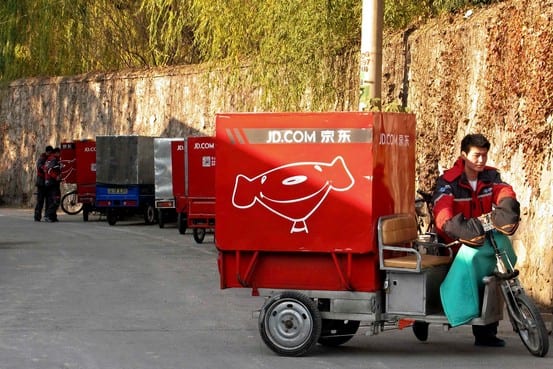
    Santander UK has partnered with Chinese retailer JD.com to give British brands access to China’s massive retail and consumer market.

    As part of the agreement, small and medium-sized business customers at Santander with turnover of at least £10 million and international trading experience will be able to launch stores on JD.com, which is known as one of China’s largest B2C online retailers.

    The online marketplace has a customer base of over 266 million people, and its extensive delivery network has attracted top European and American brands. Luxury brand Saint Lauren was the latest to join the platform this week as it announced its launch on JD.com’s Toplife.

    The Santander/JD announcement comes after the signing of a Memorandum of Understanding in July 2016.

    Deputy general manager of JD.com worldwide Kaisi Li commented: “This partnership with Santander opens up many more opportunities to small and medium-size enterprises across the UK. Demand for imported products in China is strong and growing rapidly, and we’re excited to work with Santander to enable more UK-based brands to benefit from the growth of this huge market.”

    JD rival ecommerce site Alibaba features brands such as Burberry, Hugo Boss and Gucci.

  • Honeywell invests in, forms JV with FLUX to pursue opportunities outside China

    Honeywell invests in, forms JV with FLUX to pursue opportunities outside China

    Honeywell has signed an agreement to acquire a 25 per cent ownership interest in FLUX Information Technology, a leading provider of warehouse management and related supply chain software in China. Honeywell will also form a new joint venture company with FLUX’s founder to serve customers outside China. Honeywell will hold a 75 per cent stake in the new joint venture, which will initially focus on opportunities in the Asia Pacific region. The investment in FLUX is expected to close by the end of the fourth quarter pending Chinese regulatory approvals.

    FLUX develops and implements warehouse management systems and other software for customers in multiple industries, and is a leading player in China’s booming e-commerce, apparel, pharmaceutical, retail, third-party logistics, cold chain and manufacturing sectors. FLUX’s supply chain execution solutions include its Warehouse Management System, Transportation Management System, Order Management System and Data Exchange Platform.

    FLUX’s offerings complement those of Honeywell Safety and Productivity Solutions, which develops hardware and software that improve productivity, enhance worker safety, and increase accuracy and throughput of supply chains.

    “We are pleased to be partnering with a dynamic, emerging leader with a proven track record in a fast-growing market,” said John Waldron, president and CEO, Honeywell Safety and Productivity Solutions. “FLUX’s strong software capabilities fit well into Honeywell’s Connected Supply Chain strategy, complementing the warehouse expertise of our Honeywell Intelligrated business. FLUX’s warehouse, transportation management and order management offerings complement Honeywell’s data capture technology, worker productivity and warehouse automation solutions, and enable us to maximise customer satisfaction in the digital age.”

    Over the past decade, FLUX’s business has grown significantly. Its software now manages more than 12 million square metres of warehouse space in China alone. During China’s November 11 “Singles’ Day” online shopping festival – the largest e-commerce day in the world – FLUX’s solutions helped process up to 650,000 orders per warehouse per day. E-commerce sales currently total more than US$1.3 trillion in the Asia Pacific region according to expert estimates, and sales are expected to more than double to US$3 trillion by 2021.

    “We are pleased to team up with Honeywell to further expand in China and to play an active role in the global warehousing and logistics industry by offering our leading Warehouse Management System solutions,” Shi Zunli, founder and CEO of FLUX. “Honeywell has outstanding industry reach and strong global presence, which will enable us to fulfil our vision of globalisation. With this strategic partnership, we will connect, collaborate and create more value for our customers.”

    Li Ning, president of Honeywell SPS Greater China & India, said, “This partnership will allow Honeywell to accelerate the pace of executing our connected strategy in China and the Asia-Pacific region and create a win-win situation for both companies. This agreement strengthens our position as a software-industrial company and supports our efforts in developing and acquiring capabilities in China that are relevant for a global customer base.”

  • Natuzzi, Kuka signed JV agreement

    Natuzzi, Kuka signed JV agreement

    Natuzzi has signed a preliminary agreement to form a JV with China’s Kuka furniture company with the aim of expanding the Italian brand’s retail network in Greater China.

    “We have known Kuka for many years and have always admired its growth-oriented entrepreneurial spirit and approach,” says Natuzzi chairman/CEO Pasquale Natuzzi. “This partnership will enable Natuzzi and Kuka to become the leading player in the emerging and growing market for branded luxury home furnishings in Greater China.”

    Kuka chairman Jiangsheng Gu says Natuzzi is the right product and brand for the new growth in the Chinese home-furnishing market.

    Subject to certain terms and conditions in the preliminary agreement, and to applicable authorisations, it is expected Natuzzi will contribute exclusive perpetual distribution rights for the Natuzzi Italia and Natuzzi Editions trademarks into a Chinese corporate entity, and that Kuka will invest €65 million (US$77.5 million) to sustain the expansion of the Natuzzi retail network in Greater China, particularly Mainland China, Hong Kong and Macao.

    Of Kuku’s investment, €15 million is in exchange for Natuzzi’s trademark contribution. Natuzzi and Kuka will own 49 and 51 per cent respectively of the entity.

    The preliminary agreement also envisages Natuzzi will contribute its existing stores and commercial organisation in China. Further, the venture will employ Natuzzi’s retail management team.

    It is also expected the JV will take over existing distribution agreements related to the Natuzzi network of franchised stores.

    If the parties fail to reach a final agreement by March 31, the preliminary agreement will be voided.

  • Xiaomi IPO plan reportedly eyes $200b valuation

    Xiaomi IPO plan reportedly eyes $200b valuation

    Planning to go public late this year, Chinese smartphone maker Xiaomi Corp is said to be seeking a valuation of up to US$200 billion.

    Based in Beijing, the electronics and software company prefers Hong Kong over New York for its listing mainly because Hong Kong retail investors are more familiar with its products and founder as reported.

    Xiaomi chairman/founder Lei Jun started liaising with investment banks in November, according to media reports in China. Also, senior executives have told several employees of the impending public issue, reports News.163.com.

    The company was valued at $46 billion in its latest funding round in 2014. After declining sales in 2016, the company managed to revive growth last year, partly by opening offline retail stores and expanding its presence internationally, especially in India.

    In the third quarter of last year, Xiaomi caught up with Samsung to become the largest smartphone brand in India. It had 23.5 per cent of the market with a shipment of 9.2 million units, marking a 300 per cent year-on-year jump, data from research company International Data Corp shows.

    Xiaomi says it topped its annual revenue goal of RMB100 billion (US$15 billion) by the end of October.

    Should it reach US$200 billion valuation, Xiaomi would be the biggest technology IPO after Alibaba Group Holding, which raised a record $25 billion for a $231.4 billion market value in 2014.

  • Paid less than male peers, BBC China editor quits and speaks out

    Paid less than male peers, BBC China editor quits and speaks out

    The BBC’s China Editor Carrie Gracie has quit her post in Beijing to fight for her right to pay equality with male peers, posting an attack on what she called the “secretive and illegal BBC pay culture”.

    Gracie’s revolt is part of the fallout from pay disclosures the British broadcaster was forced to make last July, which showed that two thirds of the highest earners on air were men, and that some of them were earning far more than women in equivalent roles.

    Funded by a license fee levied on TV viewers and reaching 95 percent of British adults every week, the BBC is a pillar of the nation’s life, but as such it is closely scrutinized and held to exacting standards by the public and rival media.

    Gracie’s stand was one of the top news headlines of the day on the BBC itself and on other British media, and many prominent women from the BBC and beyond voiced their support on social media under the slogan #IStandWithCarrie.

    Gracie, who speaks fluent Mandarin and has reported on China for three decades, has not left the BBC. She said she was returning to her former post in the TV newsroom in London where she expected to be paid equally to men in equal jobs.

    “I am not asking for more money. I believe I am very well paid already — especially as someone working for a publicly funded organization. I simply want the BBC to abide by the law and value men and women equally,” she wrote on her website.

    Gracie said she was paid 135,000 pounds ($182,800) a year as China editor. According to last July’s disclosures, North America Editor Jon Sopel earned between 200,000 and 250,000 pounds a year, while Middle East Editor Jeremy Bowen was in the 150,000 to 200,000 bracket.

    Europe editor Katya Adler, the BBC’s only other female editor in foreign news, did not feature in the disclosures, meaning her pay was less than 150,000 pounds.

    Gracie said managers had offered to increase her pay to 180,000 pounds, but that was no solution. She rejected the rise and insisted that all four of the BBC’s international editors should receive equal pay.

    “I was not interested in more money. I was interested in equality,” she said during an interview on BBC radio.

    Britain enacted legislation outlawing sex discrimination in the 1970s and this was followed by an equality act in 2010, but women still earn less than men across much of the economy.

    “Enough is enough”

    The BBC defended itself by saying its gender pay gap was below the national average and less bad than at many other organizations, adding that it was committed to wiping it out by 2020. It also said an independent audit of rank and file staff had found “no systemic discrimination against women” at the BBC.

    Several high-profile women seized on the Gracie story to say the problem was much bigger than the BBC and affected the whole of society.

    “Tip of the iceberg in @BBC & most other orgs (organizations). Equality Act 2010 means no hiding place for shameful discrimination against women. Ending it long overdue,” wrote prominent lawmaker Harriet Harman of the opposition Labor Party, a long-time advocate of women’s equality, on Twitter.

    As in many other countries, pay inequality based on gender has been a persistent problem in Britain, which by some measures has performed worse than comparable European countries in recent years. Britain was ranked 15th in the World Economic Forum’s global gender gap index 2017, below France and Germany.

    But Gracie said her complaint was not about the gender pay gap the BBC admits to, which stems from men earning more on average because they do more of the best paid jobs. “It is men earning more in the same jobs or jobs of equal value. It is pay discrimination and it is illegal,” she said.

    Gracie accused the BBC of adopting a botched “divide and rule” response to the legitimate anger of female staff, offering pay rises to some women while locking down others in a protracted complaints process. In her own case, the process had been “dismayingly incompetent and undermining”, she said.

    “Enough is enough. The rise of China is one of the biggest stories of our time and one of the hardest to tell,” she wrote, citing Chinese state censorship, surveillance, police harassment and official intimidation.

    “I cannot do it justice while battling my bosses and a byzantine complaints process.”v

  • China 1Q11 search engine revenues over USD492m

    China 1Q11 search engine revenues over USD492m

    Search engines in the China market generated total revenues of CNY3.245 billion (USD492 million) in the first quarter of 2011, decreasing 15.62 percent on quarter but increasing 66.76 percent on year, according to China-based consulting company Analysys International.

  • China Unicom, Kuang-Chi sign cooperation agreements

    China Unicom, Kuang-Chi sign cooperation agreements

    China Unicom has signed business cooperation framework agreements with Kuang-Chi Technologies and KuangChi Science, subsidiaries of Kuang-Chi Group.

    The agreement is an integral part of a series of cooperation framework agreements which Unicom signed with strategic investors in key industry verticals participating in its mixed-ownership reform, the Chinese operator said in a statement.

    Under the agreement, Unicom will work closely with Kuang-Chi Technologies and KuangChi Science in areas such as military-civil integration, public security, smart cities and smart transportation. The companies will also cooperate to explore new opportunities in cloud computation, big data, internet of things (IoT), artificial intelligence (AI), digital content and payment finance.

    Unicom announced its 77.9 billion yuan ($11.7 billion) ownership reform plan in August 2017, bringing in 14 new strategic investors including large internet companies, industrial groups and industry vertical companies and financial enterprises.  The operator has already signed framework agreements with internet and e-commerce giants Baidu, Alibaba, Tencent and Jingdong (owner of the JD.com brand).

  • Chinese online retailer surges 25 per cent in New York after saying it will take bitcoin payments

    Chinese online retailer surges 25 per cent in New York after saying it will take bitcoin payments

    Shares of Chinese online retailer LightInTheBox surged by more than a quarter on the New York Stock Exchange early on Monday, after the company announced it had started to accept payment in bitcoin.

    The Beijing-based firm is the latest in a growing list of companies keen to involve themselves with digital currencies in an attempt to woo investors. Many companies in China and abroad have had their stocks soar as a result of doing so, despite the Chinese authorities’ increasingly vocal criticism of bitcoin.

    LightInTheBox, which sells goods ranging from wedding dresses to electronic devices to overseas customers, saw its shares surge from US$2.38 to US$3.52 at the start of trading on Monday. It said earlier in the day that as of January 5, the virtual currency was a legitimate means of payment on its main sites, LightInTheBox.com and MiniInTheBox.com. All transactions would be processed through BitPay, a US start-up backed by Hong Kong billionaire Li Ka-shing.

    The shares later retreated, finishing Monday at US$2.81.

    Before yesterday’s surge, the share price had shed 26 per cent between early January last year and January 2, 2018.

    “I’m glad to introduce bitcoin as a new payment channel to our customers. We think blockchain could potentially be an important technology for us,” said Alan Guo, chairman and CEO of LightInTheBox, who was one of the founders of Google China.

    However, the announcement comes at a time when the Chinese authorities are taking an increasingly firm line against bitcoin and digital currencies more broadly.

    Last week, a commentary in state mouthpiece People’s Daily labelled the volatile cryptocurrency a bubble and a modern-day tulip mania.

    As such, analysts said other Chinese retailers were unlikely to follow LightInTheBox’s lead.

    “Bitcoin payment in China remains a grey area,” said Tang Xiaotang, founder of Chinese retail consultancy Nofashion. “Other Chinese retailers would not dare to go against the will of the government.”

    LightInTheBox is not the only US-listed Chinese company to see its share price spike after announcing an interest in cryptocurrencies.

    Social media platform Renren – sometimes referred to as the Facebook of China – saw its shares skyrocket in the US after it said it would launch its own virtual token, RR Coin, and that it was developing a blockchain-based open-source platform that can record users’ trading behaviour.

    Investors liked the idea so much that shares in the company surged by more than 80 per cent on January 3, the day after Renren made the announcement in a “white paper”.

    However, after the initial frenzy, the stock was trading in New York just slightly higher than its level before the surge, and, on Tuesday, Bloomberg reported that Renren had cancelled its initial coin offering, a way of distributing the virtual token and raising cash, after being warned off by regulators.

    In September, the People’s Bank of China banned initial coin offerings.

    Chinanet Online Holdings, a Nasdaq-listed internet company, surged more than 600 per cent on January 4 after it said a day earlier it would collaborate with another Chinese firm to develop blockchain-related technologies.

  • Macy’s taps VR, live video in China push

    Macy’s taps VR, live video in China push

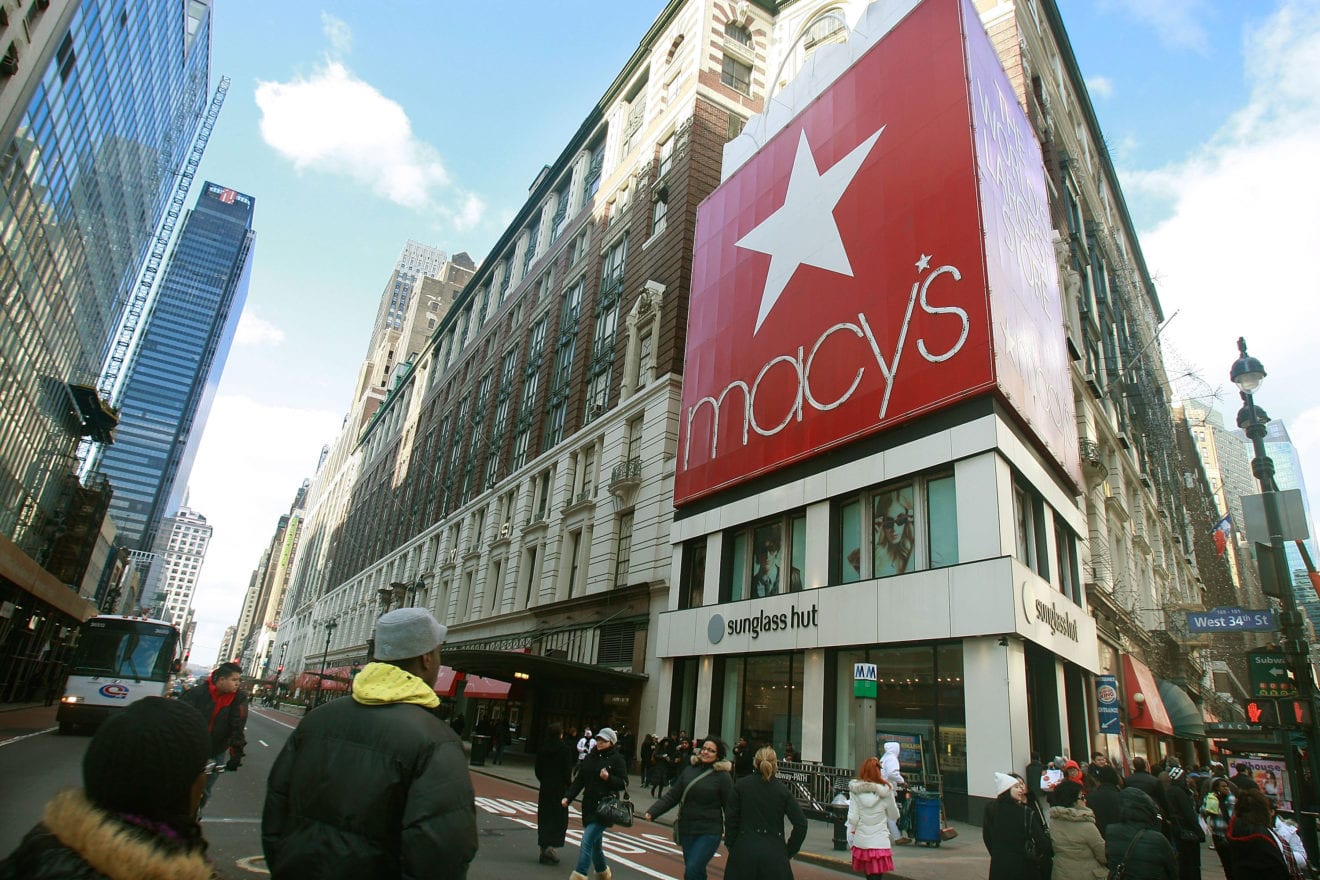
    Macy’s, the iconic US bricks-and-mortar retailer, has taken a digital-first approach in its effort to crack the complicated China market by using innovative virtual reality and influencer strategies.

    “When we came into China, we started digital first, and we started building big digital homes,” Dustin Jones, Executive Vice-President and Managing Director of Macy’s China, told an audience at the World Retail Congress Asia Pacific event in Hong Kong.

    “We view ourselves as not a player or an instrument in China but an orchestrator of a better, more simple, more entertaining consumer transaction,” he added.

    To make a splash with Chinese millennials, Macy’s turned to virtual reality. In late October, Alibaba sold 150,000 cardboard VR headsets for just 1 yuan (about US$0.15) on Taobao, China’s equivalent to eBay. In the days leading up to Singles Day – 11 November – customers could use the headsets with Taobao’s app to shop a virtual reality version of Macy’s iconic New York flagship store.

    “We created the first virtual reality department store,” said Jones. “We launched that virtual reality department store last year on (Single’s Day) – five million people shopped that virtual reality store with us. We filmed it all in New York in Macy’s Herald Square and made all those products shoppable.”

    Macy’s has also tapped live streaming to bring New York fanfare to Shanghai, with a local twist.

    “We did a fashion show even last year for what we would call ‘grand opening’ on Tmall. That fashion show was live-streamed in New York with an after-party by a Chinese host. And also, then a talk show was created in Shanghai where we did a fashion show down the side of the very tall building and showed the product in a completely different way, and we sold all of the product through live video,” Jones said.

    “On that event, 150m people participated in our live show, and on the two events combined, 300m people participated.”

  • China’s Ruyi Emerges as Leading Bidder for Bally

    China’s Ruyi Emerges as Leading Bidder for Bally

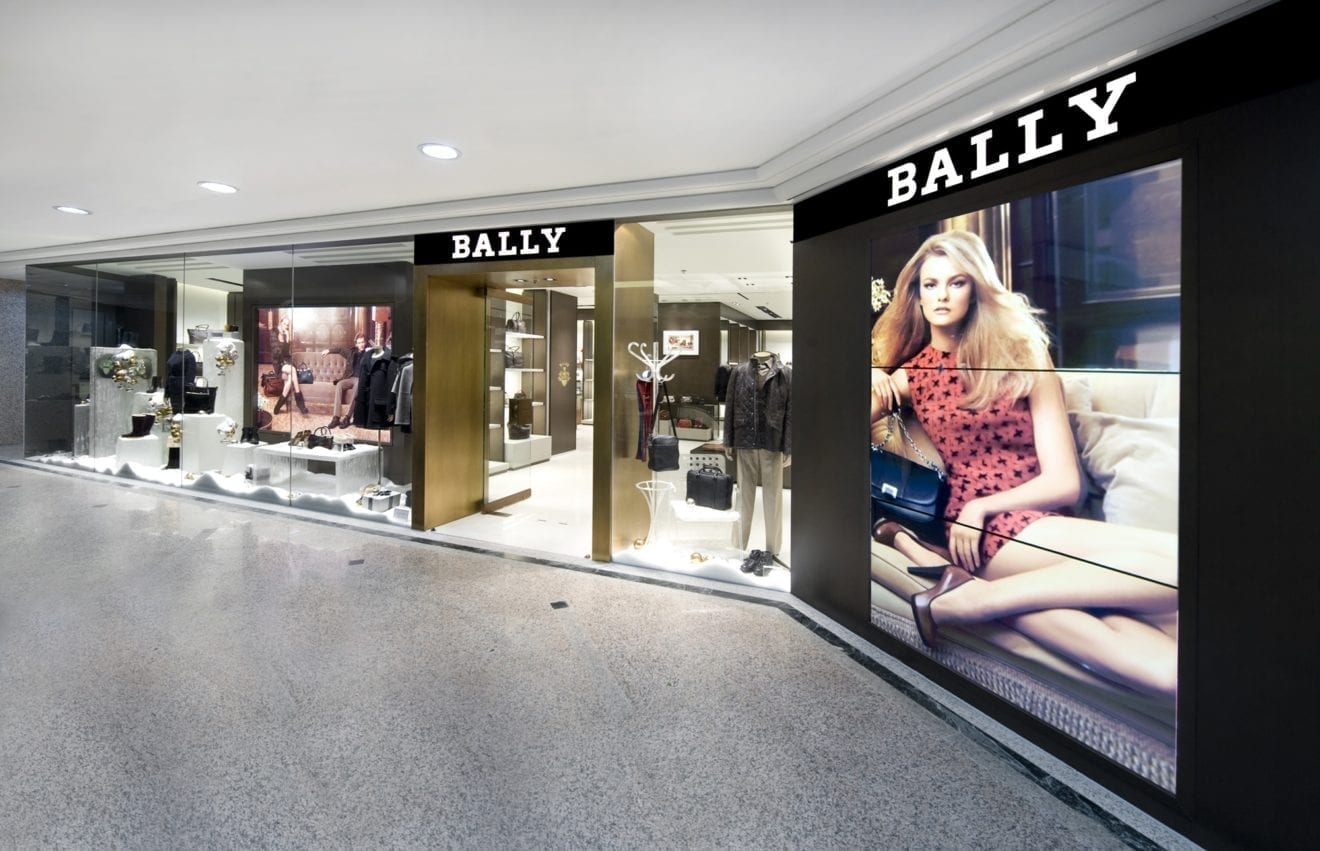
    Chinese textile producer Shandong Ruyi Group is emerging as leading bidder for Swiss luxury brand Bally International.

    In advanced negotiations with Bally’s owner, JAB Holding, the group has been discussing a price of about US$700 million, insiders say.

    Ruyi has pulled ahead of other suitors including Club Med owner Fosun International and Chinese apparel maker Fujian Septwolves Industry, and another buyer may yet emerge.

    Ruyi agreed in November to buy a controlling stake in Trinity, the owner of British bespoke suit-maker Gieves & Hawkes, for HK$2.22 billion (U$284 million). The previous month, it said it would buy the owner of material company Lycra. In 2016, it acquired SMCP, whose fashion brands include Sandro, Maje and Claudie Pierlot, and agreed to buy British trench-coat maker Aquascutum last year.

    Founded in Switzerland in 1851, Bally was previously owned by US buyout firm TPG, which agreed to sell the firm to JAB in 2008.

  • Saint Laurent joins Toplife

    Saint Laurent joins Toplife

    French fashion label Saint Laurent, part of Kering, will start selling online in China through a JD.com portal, joining shopping players like Alibaba in trying to tap strong luxury goods demand from Chinese consumers.

    The French brand created in 1961 by its late founder Yves Saint Laurent, said  it was partnering with Toplife, a platform launched last October by JD.com, which aims to woo luxury buyers with same-day deliveries and premium services.

    “Thanks to the sophisticated logistics network and personalised platform provided by our partnership with Toplife, Saint Laurent will be able to implement its omnichannel development in China, securing a top-level luxury journey to our clients,” said Francesca Bellettini, president and chief executive of Saint Laurent, in a statement.

    Brands on the platform will have access to “JD.com’s upper middle class user base” and “an online luxury experience that can match the in-store experience,” said Xia Ding, president of JD.com’s fashion division.

    Toplife rivals Luxury Pavilion, a similar portal launched in August, which is backed by Alibaba’s Tmall platform and features products from fashion groups such as Burberry.

    Chinese shoppers made up 32 percent of the worldwide luxury market in 2017, more than any other nationality, consultancy Bain & Co said, making it a crucial market for fashion brands.

    KPMG has projected, meanwhile, that half of China’s domestic luxury consumption could come from web sales by 2020.

    Online shopping has proved a potent earnings driver for fashion brands even if many were initially reluctant to distribute their wares too widely.

    Top labels such as Kering’s Gucci or LVMH’s Louis Vuitton recently started marketing directly to Chinese buyers with their own websites in the country.

    High-end fashion houses are still wary of alliances with mass-market platforms such as Amazon, however, fearful they will lose control of their image.

    JD.com and Alibaba’s specialist luxury platforms have already lured several other brands, touting themselves as more exclusive, selective sites.

  • Central Group to add its online presence with JD.com

    Central Group to add its online presence with JD.com

    After forming an e-commerce partnership with China’s JD.com, Thai retail giant Central Group expects online sales to account for as much as 15 per cent of its revenue in five years’ time, from 2 per cent now.

    CEO Tos Chirathivat says the $500 million JV, announced in September, will help it compete in Southeast Asia’s booming e-commerce market and also open up businesses opportunities in China.

    Tos estimates online retail in Thailand could rise fivefold to 10 per cent of the market as web access spreads via smartphones.

    While Central Group is a privately held investment arm of the Chirathivat family, it controls a range of publicly traded businesses – Central Pattana is a mall developer, Central Plaza Hotel runs resorts and restaurants, Robinson is a chain of department stores and COL is an office supplies company. Central Pattana turnover surged 50 per cent last year, Central Plaza 47 per cent and COL more than doubled.

    Outside of Thailand, Central Group owns Italian luxury department store La Rinascente, Danish retailer Illum and the Big C hypermarket chain in Vietnam, along with interested in retail chains including Nguyen Kim (Vietnam) and B2S (Thailand).

    Central Group is targeting annual revenue growth of 13 per cent this year, says Tos. Local sentiment is helping the company, with consumer spending in Thailand picking up after the October cremation of King Bhumibol Adulyadej ended the nation’s year-long mourning period.