Tag: China

  • Farfetch’s Store of the Future

    Farfetch’s Store of the Future

    In a brick-walled basement in Hackney, amidst rails hung with Balenciaga and clusters of technology developers, “The Store of the Future” was almost ready.

    Here, billion-dollar fashion “unicorn” Farfetch has been staging a test run of the tech-powered retail experience the company is set to unveil later today at the debut FarfetchOS conference at London’s new Design Museum in a move that further extends the platform into physical stores.

    The announcement comes at a critical time for Farfetch, which is reportedly preparing for an IPO. The company, which connects consumers with a curated network of boutiques and brands, is now the world’s top luxury e-commerce destination measured by traffic, outperforming competitors including Yoox Net-a Porter and Neiman Marcus, according to data from web analytics service Alexa.

    And though Farfetch is not yet profitable (market reports suggest it lost around $40 million last year), it surpassed gross sales of $800 million in 2016, up 60 percent from 2015, with estimated annual revenues in the region of $150 million. (Farfetch is said to take a 25 percent commission on net revenues from partners.)

    But Store of the Future could prove to be one of the company’s most important moves yet. While luxury e-commerce is growing fast, the portion of personal luxury goods purchases that happen online — now about 7 percent of total — is expected to plateau at about 20 percent by 2025. This means that, for the foreseeable future, the vast majority of sales will still take place in physical stores, which have yet to really benefit from the digital revolution.

    From fitting rooms equipped with photo booths to mannequins with screens on their foreheads, most in-store technology has been gimmicky stuff that’s more likely to drive short-term PR than actual sales. By contrast, Farfetch’s Store of the Future aims to dramatically improve retail productivity by capturing invaluable customer data and enhancing human interactions between shoppers and sales associates.

    The concept is also modular, meaning brand and boutique partners can pick and choose the components that make most sense for their businesses. And while Farfetch has developed the core operating system on which Store of the Future runs, the initiative is conceived as a platform, meaning the majority of innovation will ultimately come from third-parties, who build new services on top of it.

    For the time being, Farfetch has developed a few key applications to demonstrate the power of the platform: a universal login that recognises a customer as she checks into the store; an RFID-enabled clothing rack that detects which products she is browsing and auto-populates her wishlist; a digital mirror that allows her to view her wishlist and summon items in different sizes and colours; a mobile payment experience similar to what exists in Apple Stores; and, of course, the underlying data layer that connects these services with each other and the Farfetch platform.

    Store of the Future is still in beta. But the concept will launch this autumn with London-based boutique Browns, which Farfetch acquired in 2015, and Thom Browne, which will join the Farfetch platform and deploy the technology in its New York flagship. A full commercial roll out is planned for 2018, although the business model has yet to be tightly defined.

    Ahead of its official unveiling, Farfetch founder and CEO José Neves explained to BoF more about the vision and business logic behind Store of the Future.

    Neves talked about the beginning of this journey and says: “We started roughly two years ago and we were really thinking about: five years out, 10 years out, how are people going to shop for fashion? Today, over 90 percent of transactions take place in brick-and-mortar stores. By 2025, it will be around 80 percent, which is still eight out of 10 sales. Although digital is already influencing most consumption behaviour — and that’s where the eyeballs are; it’s the new TV, it’s the new print, it’s the new everything — when it comes to actually purchasing fashion, there will be a plateau in online sales. Fashion is not downloadable, which makes it very different from movies or music”.

    Three were the key facts presented by Neves: number one, digital is completely influencing consumer behaviour and the creation of desire; number two, online is growing much faster than offline; but three, offline is still — and will be — where the vast majority of transactions take place.

    Neves explained that the project is really about creating the luxury experience of the future. We’ve been omnichannel from day one. From the very start, we essentially connected physical inventory to a digital platform. The first step is a single view of inventory. Then we launched more omnichannel propositions, like same-day delivery in 10 cities, click and collect in store. The Store of the Future is the next step, using the physical store as a service point. It’s post-omnichannel, or what we call “augmented retail.”

    The physical store is going to survive and is going to remain the centre-stage of shopping, but it is not going to be a physical store as it exists today. This has been a shared comment among different stakeholders in the retail industry.

    “The disconnected store — as opposed to the connected store — won’t be around. Period. And the biggest evidence of this is actually Farfetch itself, because once we connect a boutique to the platform, we account for about 45 percent of sales. It is like an OpenTable for boutiques — they know every empty table, we know every shoe that is sitting on every shelf unsold. We know how much offline is moving and how much online is moving. And just by making your physical inventory available 24-7 to a global audience, you massively boost your economics”, Neves explained.

    The store of the future’s built on three principles.

    The first is human touch. If you go into a store today, the sales staff are doing things machines should do: they’re checking if they have your pair of shoes in the backroom; or they are asking your name and looking you up in the database. Is this empowering human touch? Not at all. The store of the future is fundamentally about releasing customers and shop assistants to focus on the human side of the interaction. It’s about empowering the staff in the shops to stop being inventory controllers and start being in-store influencers. Right now, they are inventory controllers.

    The second principle is being modular. Neves says: “We absolutely do not believe there is one store of the future. There will be 1,000 stores of the future. Think about the way a brand commissions an interior designer and differentiates the space, the smell, the experience, the merchandising. What we do not want is cookie-cutter experiences. So some components will be suitable for some brands and not for others”.

    And the third is open architecture. Neves unveils: “We don’t want to come up with all the innovation ourselves. The idea is to create a “Store of the Future” platform and then invite start-ups and brands themselves to come and build on top of it”.

    Data is the common denominator. What’s built on top of this can be built by Farfetch, by a cool startup or by a brand. Farfetch is working with RFID companies, and with hologram companies.

    One essential component is  the “Shop Floor” app. That’s the app that shop assistants will have. With this one, we will tend to do everything in-house, because it is what handles all the data from all the various points.

    On the customer side, there is Farfetch app, which works with Store of the Future. But in the future, there will also be white-label apps for brands or just provide the API, so they can integrate this into their own apps themselves.

    It is all a very millennial-style negotiation: I will give you my data if you give me something in return. That is what we do every time we open Instagram, every time we open Facebook. We know those guys are gathering all this data, but the exchange makes sense. Data is currency and I expect something back. This needs to be absolute practice for the “Store of the Future.”

    But once you get a consumer to [share her data], it is gold dust… You have asked permission from the customer to drop a cookie. It is a brick-and-mortar cookie. And you will be able to know everything: how long the consumer was in the store, which products were picked up, what did she try, what were the sizes that fit and the sizes that did not fit, what are her preferred payment methods, does she have it delivered to her house, her hotel… and that cookie will be linked to the online cookie as well. So then you have a real single view of a customer.

    What you can do with that data is offer a super-personalized experience, both online and offline, it also makes your company much more efficient. Take marketing; imagine targeting a customer on Instagram because you know that five hours earlier they have been to your shop and they’ve picked up a certain bag. And let’s remember, this is currently where 90 percent of the action is happening.

    The commercial model is not defined yet. The philosophy of Farfetch has always been win-win. Our platform is a pure revenue share model. There is no minimums, no set-up fee. Black & White is mostly a revenue share model as well. Store of the Future obviously involves physical hardware, which involves set-up costs and stuff like that. But we will never be a hardware company; we will never be a software licensing business. We are in the business of revolutionizing retail and being a positive force for the industry. If we do that, there will be money to be made for everyone. And then how we split it needs to be win-win for both sides.


  • Volvo’s XC60 makes China debut on Tmall

    Volvo’s XC60 makes China debut on Tmall

    Volvo, the Chinese-owned automaker founded in Sweden, debuted the latest iteration of its best-selling XC60 model on Tmall, Alibaba’s B2C shopping platform.

    The online offer meant that Chinese consumers can buy the new crossover SUV from Volvo, which is a unit of Hangzhou-based Zhejiang Geely Holding Group, a day before it goes on sale through all of Volvo’s other distribution channels in China.

    The XC60 comes in about a dozen colors depending on the market, but the blue version will be available only to Tmall shoppers. All 288 exclusive blue models offered in the initial round of sales on Tmall, starting at RMB 429,900, were sold out within the first 75 seconds.

    Also, 40 of the new cars will be available to Alibaba Super Members for a Super Test-Drive, a service introduced last week as part of Alibaba’s soon-to-launch Auto Vending Machines.

    The announcement is the latest in a series of initiatives from Alibaba in the auto space. Earlier this month, the Chinese technology giant announced a partnership with Ford Motor in which the two companies said they would leverage artificial intelligence, cloud computing, the Internet of Things and e-commerce via Tmall to “redefine the consumer journey and user experience for automobiles.”

    SEE ALSO : Alibaba’s Singles’ Day Sales Hit $10 Billion in one hour

    Tmall is also slated to open its car vending machine next month, although the location has yet to be disclosed. Consumers will browse cars stored in a massive garage-like structure on their smartphones, make their purchase, and then the cars will be delivered to them at ground level. The cars, including the XC60, will also be available for a test-drive.

    “The car vending machine reflects our efforts in New Retail, and we hope working together [with Volvo] to develop this innovative business model can help drive the transformation of the auto industry,” Bo Liu, marketing director of Tmall, said.

    First unveiled at this year’s Geneva Motor Show, the new mid-size SUV replaces Volvo’s highly successful original XC60. The model, which has been around for nearly a decade, represents about 30% of Volvo’s total global sales today.

    Volvo said that the second-generation XC60 is one of the safest cars ever made. It features the latest in safety technology, such as a new Oncoming Lane Mitigation system, which uses a steer assist to help mitigate head-on collisions. The SUV recently captured Japan’s most prestigious automotive award, the Japan Car of the Year, beating finalists including BMW 5-Series and Lexus LC.

    Automakers worldwide have been investing in innovative approaches to auto retail, as China’s automotive market expects significant growth. According to a September McKinsey report, China will contribute over half of global car sales growth through 2022, while the growth in the luxury car category is expected to outpace the rest of the market.

  • Pokemon Go game set to launch in China

    Pokemon Go game set to launch in China

    Pokemon Go maker Niantic has announced plans to launch its monster-catching game in China.

    The firm said it would bring the augmented reality game to China after striking a partnership deal with a local company NetEase.

    Chinese regulations covering online content demand that foreign firms find a partner to launch digital ventures in the country.

    Niantic gave no specific date for when Pokemon Go would be turned on in China.

    Competition time

    John Hanke, chief executive of the US firm, told the FT that it “absolutely” intended to take its games to China – the worlds largest mobile market.

    The 2016 launch of Pokemon Go and its massive popularity had left the company cash rich, he said, and in a good position to expand.

    Also, he added, a recent funding round had raised $200m (£148m) from investors that would also fuel expansion.

    The Pokemon game involves players using their smartphones to find and catch the game’s titular monsters in the real world. They then use the captive creatures to battle other players. Augmented reality (AR) technology inserts the monsters when people view the world through their phone’s camera.

    Player numbers had dwindled sharply since Pokemon’s launch, said Mr Hanke, but there was a “solid” core of players who had stuck with the game.

    The technical and policy expertise Niantic had amassed while launching Pokemon Go would serve it well as it developed more games, he said.

    The next big game it plans to launch will be based around the hugely popular Harry Potter series of stories. That game had the potential to appeal to a very wide range of people, he said.

    The game is due to be released in the second half of 2018.

    Niantic could face increased competition in 2018 from Google, Apple, Facebook and Snap all of whom have released AR toolkits for developers. Additionally, in China online retail giant Alibaba has announced plans to use AR to help commercial partners.

  • What Will the Giorgio Armani-TMall Partnership Bring About?

    What Will the Giorgio Armani-TMall Partnership Bring About?

    Giorgio Armani will launch a flagship e-tail store on TMall to sell its high-end cosmetic products in China, the company announced at the end of December last year. It will also partner with Luxury Pavilion, a subsidiary of TMall featuring luxury brands, to provide customers with first-hand, exclusive sales called “TMall Super Brand Days” this month. It seems that in recent years, Western luxury brands have become increasingly eager to join China’s e-commerce platforms.

    So what will the Giorgio Armani-TMall partnership bring about this time? Here are some Jing Daily’s concerns and takeaways:

    More exclusivity?

    In August when the Luxury Pavilion was first launched, only 17 brands, including LVMH’s Zenith, Guerlain and Rimowa; La Mer; Burberry; Hugo Boss; and Maserati, were invited to participate in the platform’s first-phase sales. As for consumers, the access to the Luxury Pavilion was also invitation-only, which means Alibaba has filtered out customers in advance based on their previous transactions on Taobao. The more one has spent on Taobao, the more likely one will be invited to the Luxury Pavilion. Therefore, even though joining TMall may help Giorgio Armani expand its presence in China, the effort might be limited, given that such an e-tail store will only be available to select luxury consumers. Of course, differentiating individual shoppers is the best way to maximize profits and is in fact quite popular in the industry. But doesn’t this also indicate routine profiling and discrimination from the retailer? Will it be a good policy in the long run?

    More convenience?

    Western high-end cosmetics brands usually cost more in China due to import tariffs, and sometimes certain brands are not even available in local brick-and-mortar stores, which forces many Chinese customers to turn to daigou (shopping agents), who go abroad to buy goods to resell in China, for cheaper deals and purchases. By launching a flagship store on TMall, Giorgio Armani will make it easier for Chinese customers to order products directly from its authorized e-retail website – otherwise, these Chinese customers might step up their purchases through daigou in other countries or from other platforms. However, it’s still not clear the pricing Giorgio Armani will offer to TMall customers. If prices are not competitive compared to the price that a daigou can offer, customers may very well avoid using the platform.

    More anti-counterfeiting efforts?

    Despite e-commerce platforms’ relentless efforts to fight against counterfeit goods, it is impossible to make each e-commerce site completely fake-free. Hence, selling products through a flagship store directly from the brand will help provide a quality local resource for Chinese fashionistas – in this case, the Giorgio Armani fans. However, even if Giorgio Armani manages to deal with the fake goods issue, it may still face another challenge: how to combat against counterfeit goods. Look-alike goods are often hard to examine and can exist in all corners of the e-commerce world. For example, Kering, which owns brands including Gucci and Yves Saint Laurent, has filed law suits against Alibaba for allegedly selling counterfeit (note: not fake) goods on the platform.

    More consumers?

    The post-90 generation, who have grown up and matured with mobile technology, is now a driving force for the online luxury purchase industry, according to the latest report on China’s e-luxury market by Secoo and Tencent. Giorgio Armani’s e-tail will certainly cater to such groups, but will it appeal to all customers? Many consumers from older generations still prefer visiting brick-and-mortar stores, especially when it comes to luxury cosmetics shopping. In all fairness, most consumers still want to try on lipsticks or find the perfect foundation color match before any expensive purchase.

  • ‘Qatar in prime position’ to draw Chinese tourists

    ‘Qatar in prime position’ to draw Chinese tourists

    Welcome Chinese, the only official overseas hospitality certification programme recognised by the Chinese government, collaborates with Qatar Tourism Authority (QTA) to empower the country’s hospitality, tourism and retail sectors to meet the requirements of Chinese tourists.

    “China is the world’s biggest and fastest-growing outbound tourism market. Opportunities are limitless and we strongly believe that Qatar is in a prime position to entice Chinese tourists to travel to Doha and explore areas beyond the capital city,” Welcome Chinese marketing consultant Anna Klapper said.

    “The tourism world is extremely competitive. However, the ease of visa-free travel is a game changer,” she noted.
    Citizens of 80 countries, including China, India and Russia, can now enter Qatar visa-free, making it the most open country in the region.

    Nationals of more than 240 countries are also eligible to apply for a tourist e-visa online to visit the country, according to QTA. While shopping and retail remain to be key attractions for Chinese tourists, Klapper pointed out that Qatar has a lot to offer.

    She cited the country’s rich culture and heritage, and unique experiences such as “sweeping natural landscapes, stunning urban architecture, Arabian culture and hospitality.”  “We have conducted a lot of research which shows that as the Chinese travellers evolve, they will seek experiential travel more and more – and Qatar can meet those needs,” Klapper stressed.

    “The desert meets the water in Qatar. There are only two places in the world where you can do that, and I would say Qatar is number one as the water is warm enough so you can take advantage of that too,” she explained. “Seeing the sand dunes next to the water under a setting sun – Who doesn’t want to have a memory of a lifetime?”
    Qatar was granted Approved Destination Status (ADS) in China in September last year, allowing it to receive Chinese tourists and promote its tourism destinations within China.

    The ADS system seeks to guarantee safe and reliable tourism services for Chinese customers, from both local travel agencies and international tour operators. Asked about her favourite experiences and attractions in Qatar, Klapper said she felt welcomed by the hospitality and friendliness of the people during her 48 hours in the country.

    “I was particularly taken by the architecture of the Museum of Islamic Art: The fountain area, which leads out to the library and overlooks Doha’s skyline framed by the arches is absolutely stunning,” she added.
    “I was also introduced to my first falcon and learned about their incredible abilities and different hunting techniques. They are beautiful creatures and they have my full respect,” recounted Klapper, who mulls visiting Qatar with her family again in the future to explore more.

    Key requirements of the Chinese market

    Basic requirements include training hospitality professionals in Chinese customs and culture to ensure they can appropriately host guests from China. Facilitating money transactions is also important, and therefore the ability to accept Union Pay is a requirement, according to Anna Klapper.

    She noted that Qatar Tourism Authority (QTA) is creating the country’s own set of resources and plans are underway to improve existing facilities such as providing a directory of Chinese-speaking doctors or providing Chinese-speaking staff round-the-clock in case of emergencies.

    Welcome Chinese, present in 30 countries globally and in the GCC region, has partners across various verticals in the travel industry, including airlines, airports, cities, regions, attractions and museums. It now has more than 150 hotels certified on a global level with the Welcome Chinese designation.

    In collaborating with QTA, it is the first time that Welcome Chinese work closely with a government entity on a national level to prepare and promote a country as a destination for Chinese tourists.

  • Company Bets China Has an Appetite for Taco Bell

    Company Bets China Has an Appetite for Taco Bell

    After a year of consolidation, Yum China Holdings has opened two more Mexican-inspired Taco Bell restaurants in Shanghai.

    Along with Taco Bell Corp, the company launched the brand in Shanghai’s Lujiazui area a year ago. The two new outlets are in a shopping mall in Wu Jiao Chang and the shopping precinct of Feng Sheng Li.

    “The response to our first Taco Bell store in Shanghai has been fantastic,” says Yum China CEO Micky Pant. “The new restaurants integrate Taco Bell’s signature brand and spirit into the local community, and bring both classic menu items and original recipes to cater to Chinese customers.”

    He says the company looks forward to opening further outlets in other parts of China this year.
    New dishes include a Ribeye Steak & Mushroom Taco, Taco Salad Bowl, Beef Kebab Nachos and XL-Wing Nachos. The two new restaurants also offer alcoholic beverages, including the Shanghai Cosmopolitan.

    New service model

    A new service model has been rolled out with the new outlets, with orders being delivered directly to the table. The Wu Jiao Chang restaurant, which is close to several universities, has a design that combines the chain’s Californian roots with Chinese style and culture. Communal tables encourage students and urban professionals to socialise, and customers are invited to display their artwork, poetry, designs and other creative expressions on the walls. The restaurant will also host events to showcase local talent.

    In an historic residential area close to a shopping precinct, the Feng Sheng Li restaurant is designed in the Shikumen (stone gate) architectural style. In a Shanghai-style townhouse, it incorporates elements of Taco Bell’s signature look and feel. Its decor includes images of the Shanghai Oriental Pearl Tower and the city’s Art Deco buildings alongside California palm trees and skateboards.

    A neighbouring alleyway, historically a place for residents to congregate, features customised street art as a backdrop to the outdoor dining area. It has clusters to cater to different group sizes, with a canopy to ensure all-weather dining.

    Taco Bell has more than 7000 restaurants, nearly 400 of them in 26 countries outside of the US.

  • Ban on ivory sales in China to take effect on Sunday

    Ban on ivory sales in China to take effect on Sunday

    A ban on ivory sales in China, the world’s largest importer and end user of elephant tusks, takes effect on Sunday. Wildlife activists have described the move as a vital step towards reducing the slaughter of the endangered animals.

    It is estimated 30,000 elephants are killed by poachers in Africa every year. China has made a big push to eradicate ivory sales and demand has fallen since early 2014 due to a crackdown on corruption and slower economic growth.

    Public awareness campaigns featuring celebrities have helped boost awareness of the bloody cost of ivory. “It is the greatest single step toward reducing elephant poaching,” said Peter Knights, chief executive of the conservation group WildAid.

    Legal ivory

    China has allowed the sale of pre-convention ivory, which refers to products such as carvings and crafts acquired before the 1975 Convention on International Trade in Endangered Species of Wild Fauna and Flora (CITES), as long as it is accompanied by certificates.

    The trade in pre-convention ivory has legally thrived in China and Hong Kong since 1975, but environmental activists have long asserted that it has spurred demand for all ivory.

    The ban on all ivory sales has already led to an 80 per cent decline in seizures of illegal ivory entering China as well as a 65 per cent decline in raw ivory prices, according to WildAid.

    Under the ban, China’s 172 ivory-carving factories and retail outlets will also close. Some factories and shops started closing in March.

    This year, ivory prices in China were about 65 per cent lower than 2014 levels, said WildAid, with retailers in some places trying to sell off stocks and offering heavy discounts before the ban.

    Hong Kong

    The Chinese ban has been hailed by activists but they warn that Hong Kong, an administrative region of China, remains a big obstacle to the eradication of elephant poaching.

    China’s ban on sales do not apply in the former British colony, which has the largest retail market for ivory and has traded it for more than 150 years.

    Hong Kong is a prime transit and consumption hub for ivory with more than 90 per cent of consumers from mainland China.

    Since 2003, Hong Kong has intercepted about 40 tonnes (40,000kg) of illegal ivory, only about 10 per cent of what is believed to have been smuggled in, WildAid said in a paper to the city’s legislature in May.

    Hong Kong set a timetable for a ban on ivory trading last year, with a phase-out time of five years. A final vote on the ban is expected in the city’s legislature in early 2018.

    Conservationist Zhou Fei said the Chinese ban could be a catalyst for the closure of ivory markets across Asia.

    However, Kenya-based conservation group Save the Elephants said this year that neighbouring Laos has expanded its retail market more rapidly than any other country.

  • Chinese brands earn youth’s trust

    Chinese brands earn youth’s trust

    Young people visit a self-service shop in Qingdao, Shandong province. Today’s Chinese youth recognize major domestic brands better than well-known international brands, an AT Kearney report said.

    Chinese millennials, or people born in the late ’80s and early ’90s, and the internet generation, or those born after 1998, recognize major domestic brands better than well-known international brands, according to an AT Kearney report.

    The global consultancy surveyed more than 7,000 consumers in different age-group across China, Japan, India, the United States, the United Kingdom, France and Germany, and found several trends that will drive markets in the future.

    The report found that 71 percent of internet native consumers in China showed an increasing trust in major domestic brands, whereas 57 percent of those showed an increasing trust in international brands.

    “Chinese consumers, especially the young generation, have significantly increased their trust in local big brands. This signals a very positive sign for the rise of Chinese brands,” said He Xiaoqing, partner and head of consumption and retail industry at AT Kearney Greater China.

    “Compared with five years ago, well-known international brands will have an increasingly difficult time to gain or retain consumers’ trust merely by offering quality products and services,” she said.

    In the next 10 to 20 years, young Chinese born in the digital age will become the largest consumer group.

    The report showed that instead of swearing by big brands, about 60 percent of them are expected to prefer brands that commit to social causes, support environmental conservation and have distinctive brand values.

    This trend is particularly obvious in the food sector, with 93 percent of millennials and the internet native consumers willing to pay an extra 5 percent of the price for those products that are environmentally friendly or with a strong sense of social responsibility.

    Young Chinese consumers also tend to pay attention to the history of the brands, the report said.

    The gradual loss of trust in big international brands has been particularly significant in the UK, France, the US, and Germany.

    Now in China and India, they are still able to play the “cool kid” and “quality” cards. In the next few decades, however, it will be a different situation in China, as the younger consumers showed less trust compared to older generations, the survey stated.

    The report found that in today’s age of hyper-connectivity and social networking, individual voices can be amplified to influence the entire market, and companies are facing significant risks of losing their brand values in a short time.

    For instance, in April, a video showing a man being violently dragged off an overbooked United Airlines flight has led to an uproar on social media, and later the market value of the airline shrunk by $1 billion.

    “Consumers in the old world were defined by their possessions, and companies were able to meet their customers’ needs to an adequate degree with static business models and a ‘one size fits all’ marketing strategy that followed major trends,” AT Kearney’s He said.

    “But now, the new business model calls for highly differentiated approaches, which rely on individual influencers and those who are capable of immediately understanding consumers’ signals and translating them into action.”

    In this case, one of the most important steps is to identify the right “influencers”, also known as KOLs, or key opinion leaders.

    The report also introduced the concept of “macro influencer”, such as sports or pop-culture stars with huge number of followers of their social media accounts, as well as “micro influencer”, who are likely to be more segmented.

    For example, “micro influencers” can be bloggers with a fashion sense or foodies. They have fewer followers, but may have more impact than macro influencers because they engage more actively with their followers and therefore build trust more effectively.

  • How China is leading the ‘new retail’ revolution

    How China is leading the ‘new retail’ revolution

    While the past two years may have been brutal for brick-and-mortar stores worldwide, China’s online and offline retailers have witnessed a “new retail” revolution, driving an increasingly stronger national consumption.

    Since China launched economic reforms in 1978, the country’s retail industry has undergone multiple stages of development.

    With foreign retailers flooding in after China joined the World Trade Organisation in 2001, the scene was diversified. Offline retail started to be challenged by Taobao, Alibaba’s online shopping platform, which was founded in 2003 and grew ­exponentially in the following decade. The transaction amount for Alibaba’s “Singles’ Day” 24-hour online sales each November 11 has grown from 50 million yuan (HK$59 million) in 2009 to 168 billion yuan this year.

    With e-commerce booming, businesses have been adopting an “online to offline” (O2O) model, using online channels to attract offline traffic. In the past few years, this phenomenon has evolved into the notion of “new retail”.

    New retail represents a trend of online merging seamlessly with offline, resulting from the prevalence of digital technology, like mobile payment, wireless internet, sensors and artificial intelligence (AI).

    In this model, online is no longer just a sales channel, but provides ubiquitous touchpoints to interact with consumers and their social groups. By contrast, offline retailers are trying hard to keep consumers in their brick-and-mortar stores for longer, offering better customer experiences by leveraging digital technologies.

    From sales and marketing to ­logistics and inventory management, the new retail revolution is transforming the industry. For example, Amazon Go, the pioneer in new retail in the US, tracks purchasing behaviour with sensors placed on supermarket shelves. After consumers choose their products, they can just walk out of the store, with the amount payable automatically deducted from their mobile payment account.

    Some aspects of the retail operation are also becoming less human-led. In China, logistics firm Cainiao is incorporating hi-tech-enabled hardware and software to improve efficiency. In its logistics park, ­Cainiao deploys drones to monitor the security of the venue. Within the warehouse, several robots called “Geek+” work with staff to sort packages. It also uses computer vision to identify, monitor and ­arrange different orders.

    Improved logistics efficiency is contributing to the consumer experience as well. Consumers will not only receive their packages faster, but also with fewer errors and get fresher goods.

    China’s speed and intensity in new retail have gone into orbit

    Whereas in America, Amazon is at the forefront of the new retail revolution, China’s speed and intensity have gone into orbit. Players big and small are experimenting with various forms of new retail, making the industry more dynamic than ever.

    Driven by the huge market ­opportunities and abundant venture capital, start-ups in China are actively participating in this revolution. For example, Xingbianli, a convenience store and vending machine start-up, offers many popular Korean and Japanese products that could mostly only be bought via daigou (individuals who shop overseas and resell to Chinese consumers). More importantly, it is testing the area of unmanned retail.

    Products have their own bar code, which can be scanned by consumers when they choose their shopping and then check out on the Xingbianli app. There is also a mini-library and a ­café within the convenience store, aimed at making consumers linger.

    Traditional local retailers are also incubating their own new retail formats, such as Super Species, a subsidiary of China’s largest supermarket chain, Yonghui Superstores.

    Super Species specialises in selling fresh produce, such as vegetables and seafood, and combines the traditional market with restaurants, ­cafés, florists, and so on. It has also introduced a Yonghui Partnership Plan, allowing staff to present more innovative retail ideas and pilot them within the stores. Super Species itself is becoming an incubator for those innovative ideas, and new retail here is no longer just about changing the store format, but also the mindsets of all staff.

    Tech giants like Alibaba, Tencent and JD.com are heavily investing and competing head to head in the offline battleground. Alibaba ­invested US$2.9 billion in one of China’s largest supermarket chains, Sun Art Retail Group, in November. It aims to transform Sun Art’s offline business of over 400 ­Auchan and RT-Mart branded ­hypermarkets and provides technology to enhance customer data and inventory management.

    In 2015, JD.com invested US$700 million in Yonghui Superstores. This month, Tencent, a close ally of JD.com, acquired a 5 per cent share in Super Species, and made capital injection for a 15 per cent stake in Yonghui Yunchuang Technology, Yonghui’s supply chain and logistics subsidiary.

    To further compete with Alibaba online and enrich their own ecosystems, Tencent and JD.com are ­investing in VIP.com, a Chinese e-commerce platform specialising in discounted products for women.

    They will together own 12.5 per cent of VIP.com and, as they further monetise their traffic, the new retail battle with Alibaba will ­get fiercer.

    Foreign companies are also ­actively piloting their new retail strategy in China. Earlier this month, the world’s largest Starbucks ­Reserve Roastery opened in Shanghai, leveraging Alibaba’s technology to give consumers a more immersed Starbucks journey.

    This is also the first mass offline application of augmented reality (AR) technology. Consumers can use the Taobao app to unlock the AR features in the store, such as learning about the details of the Starbucks coffee brewing process.

    Technologies are enabling these companies to create new business approaches, while intense competition is driving all players to ­become better. They can’t afford to slow down. China’s scale also allows companies to use the market as a business laboratory and to experiment with business models.

    Consumers will ­increasingly be viewed as a ‘segment of one’ and receive more personalised solutions

    Through fast launch and adaptation, players can fine-tune their business model at a rapid pace.

    Beyond retail, the future consumption landscape will be much more complicated and sophisticated. Digital technologies, especially AI, 5G network and the internet of things, are already blurring the boundaries of industries.

    Eventually, retail will be merely one layer of the consumer lifestyle, albeit a high-frequency one. The internet of things will create a new ecosystem that is ubiquitous and interconnected. Also, 5G network development will facilitate this process in the near future and bring about disruption in the retail world.

    Assisted by machine learning and big data, consumers will ­increasingly be viewed as a “segment of one” and receive more personalised solutions, not just in ­retail, but in every facet of their life.

    To that end, China will be at the global forefront of innovation and experimentation.

  • AirAsia sets up subsidiary in China

    AirAsia sets up subsidiary in China

    AirAsia is a step closer to setting up a joint-venture low-cost airline operation in China, having received a business licence approval on Nov 13 from the local government (via unit AirAsia Investment) and incorporated a wholly-owned subsidiary. In a filing with Bursa Malaysia on Wednesday, AirAsia said the new subsidiary, AirAsia (Guangzhou) Aviation Service Ltd Company, was expected to have issued share capital of US$1mil.

    “The main objective of establishing the subsidiary is to have an aviation and commercial services company in China. The incorporation of the subsidiary is not expected to have any immediate effect on the issued and paid-up share capital or substantial shareholders’ shareholding in AirAsia,” it said.

    On Sept 25, AirAsia inked a non-binding term sheet with Everbright Financial Investment Holdings, Plato Capital and Oxley Capital to supplement a memorandum of understanding (MoU) dated May 14 between it, Everbright and Henan Government Working Group for purposes of setting up a JV in China to operate a low-cost aviation business.

    China-based Everbright is a conglomerate focusing mainly on financial services. Plato, listed on the Singapore Exchange, is involved in hospitality, education and precision engineering sectors while Oxley is part of the Oxley Group, a Singapore-headquartered private investment firm.

    According to the announcement on the MoU, the JV will also look into developing infrastructure apart from setting up a JV low-cost airline. The JV will invest in the development of a low-cost carrier terminal, an aviation academy for pilots, engineers and crew training as well as a maintenance, repair and overhaul provider in Zhengzhou, which is intended as AirAsia China’s operating base and headquarters.

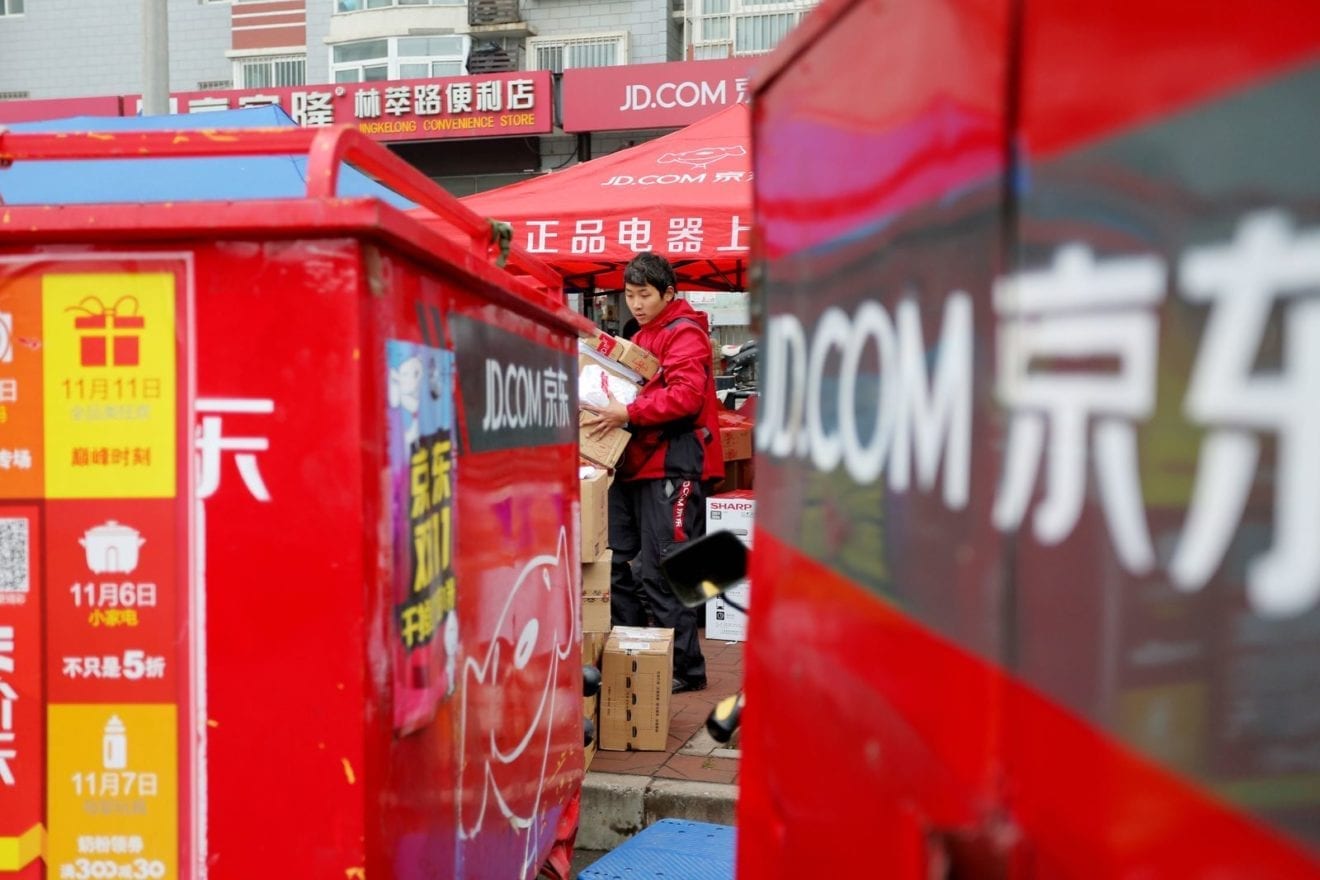
  • Yamato teams up with JD.com to send goods across China

    Yamato teams up with JD.com to send goods across China

    Yamato Holdings will partner with Chinese e-commerce giant JD.com to ship products from Japanese retailers throughout China starting in 2018, likely boosting Japanese online sales there.

    JD.com is China’s second-largest internet retailer, after Alibaba Group Holding, and operates a nationwide delivery network.

    Yamato will handle international shipping from Japan to China and use JD.com’s network for home delivery under an agreement concluded Monday. Responsibility for clearing customs will be decided later.

    The alliance will enable Chinese consumers buying items on Japanese websites to have purchases delivered to where they live. With cosmetics and food products from Japan popular in China, sales of Japanese companies are growing as they offer goods on internet marketplaces there. Yamato’s service will offer a way into China for small and midsize Japanese business that have yet to enter the country’s online retail market.

    JD.com will receive shipping service support from Yamato as well. The parcel courier is already consulting JD.com on its cold-chain network and other delivery methods to maintain product quality in transit. This will help JD.com better handle fresh Japanese foods and other perishables, expanding its online retail business.

    China-bound online sales from Japan grew some 30% in 2016 to 1.03 trillion yen ($9.08 billion), according to the Ministry of Economy, Trade and Industry. The market is estimated to nearly double to 1.9 trillion yen in 2020.

    New strategy

    The profitability of home delivery services in Japan has been squeezed amid a personnel shortage that has pushed up labor costs. Yamato sees international delivery, which carries high rates, as a growth field.

    Yamato had been able to offer home deliveries from Japan to only those areas where it has a transport network, such as Shanghai and Hong Kong in China. But it is abandoning this model and partnering with other companies to accelerate expansion abroad. Yamato launched a home delivery service in Thailand with Siam Cement in January.

    But the competition is intense. Japan Post already has Japan-China transport infrastructure and holds a large share of such shipments. It partnered with China’s STO Express to launch a low-cost delivery service in October. Nippon Express is also cooperating with Alibaba in China-bound shipping, handling international transport of goods and customs.

  • China’s 2018 Slowdown Imminent

    China’s 2018 Slowdown Imminent

    Chinese industrial firms continued to ramp up production in the fourth quarter, a private survey on Wednesday showed, but growth in wages and hiring slowed in a further sign of cooling momentum in the world’s second-biggest economy. The quarterly survey of thousands of Chinese firms by China Beige Book International showed “old economy” firms in the commodities sector sustained an increase in net capacity and production. Overall, wages and hiring ebbed in the December quarter, with the retail sector suffering the biggest blow on weak revenue, a hiring slowdown and worsening cash flow.

    The results reinforce views that China’s economy will slacken in 2018 after posting better-than-expected 6.9% growth through the first-three quarters of this year in the run-up to a key meeting of the ruling Communist Party.

    For much of this year activity was supported by robust exports and a construction boom, thanks to a government-led infrastructure spending spree. But a relentless crackdown on debt risks has started to weigh on the economy. “If you expect a noticeable slowdown in 2018, the first post-congress returns support those expectations,” CBB said of its fourth quarter findings. Performance in the retail sector lagged that of other industries, the survey showed, despite Beijing’s efforts to restructure growth towards domestic consumption from years of overreliance on exports and credit-intensive investment.

    Authorities are in the second year of an extended campaign to foster sustainable growth by reducing high levels of debt across the economy, particularly targeting speculative lending in the financial sector and the housing market.

    Mixed Results

    While fourth quarter corporate borrowing fell from the third, and banks sold fewer ‘shadow banking’ investment products, average lending rates fell for a second quarter in a row, CBB said, underscoring the mixed results from the deleveraging process. CBB highlighted weakness in the auto retail segment, where growth is slowing from a high base, while apparel and luxury goods saw rapid inventory growth, which could point to future weakness.

    The fourth quarter survey again showed little evidence of supply-side reform, with industrial commodity firms adding net capacity and ramping up production, as well as boosting their payrolls.
    Beijing said last week that it will push forward structural supply-side reform that saw outdated capacity taken offline, including surpassing a target for cutting 50 million tons of steel capacity this year.

    Trade Deficit Widens

    China’s trade deficit in services widened to $18.3 billion in November from $17.8 billion in October, the foreign exchange regulator said on Wednesday. The deficit was largely due to a $14.9 billion gulf in spending between foreign tourists and the Chinese, who splurge more abroad than do visitors to China, data from the State Administration of Foreign Exchange showed.

    For the January-November period, China’s services trade deficit stood at $234.8 billion, versus a gap of $216.5 billion for January-October. Shanghai stocks suffered their biggest loss in two weeks on Wednesday amid signs of slowing economic growth and year-end liquidity tightness. Benchmark rates in the banking systems kept climbing in signs of liquidity stress. The one-month Shanghai Interbank Offered Rate climbed to 4.93% on Wednesday, the highest level since April, 2015. The 14-day repo rate rose as much as 10%, the highest level in four years.

    Profits Fall

    China’s major industrial firms reported slower profit growth in the first 11 months, but saw progress in improving profitability and lowering debt levels, the National Bureau of Statistics said Wednesday. Businesses with annual revenue of more than 20 million yuan (about $3 million) reported aggregate profits of 6.88 trillion yuan in the first 11 months, a 21.9% increase from one year earlier.

    The growth marked a mild slowdown from 23.3% in the January-October period. In November alone, profits were up by 14.9%, down from 25.1% during the previous month and the weakest pace since April. Combined revenue from main business was up 11.4% in the first 11 months, down from 12.4% in October. NBS statistician He Ping said slowing price growth bit into corporate profits. “Primary calculation showed price changes… reduced profits by 94.4 billion yuan month on month, dragging down the profit increase by 13.8 percentage points,” he said.

  • Folli Follie To Open 50 New China Stores

    Folli Follie To Open 50 New China Stores

    Greek jewelry- and timepiece-maker Folli Follie plans to open 50 new stores in China next year, showing a renewed faith in a market in which its presence has shrunk in recent years.

    Twenty of the locations will be directly operated by the company, five to seven of which will become its flagship stores in major Chinese cities, including Beijing, Shanghai and Shenzhen, Folli Follie China Director Connie Law told Caixin.

    The other 30 shops will run on a franchise model, Law said.

    The brand recently launched a necklace that includes depictions of dogs ahead of the Chinese year of the dog, the first time the company has launched such a design and a clear attempt to appeal to Chinese consumers.

    Folli Follie became well-known to Chinese fashionistas in 2011 when domestic conglomerate Fosun Group became its second-largest shareholder. The brand had 220 stores in China in 2014, according to a Fosun financial report. This figure has since declined to only 150, Law said.

    An industry insider said that the decline was in part caused by some Folli Follie franchisees switching to rivals such as Austria’s Swarovski.

    Law told Caixin that Chinese consumers are buying entry-level luxury goods at home rather than abroad as the price gap between China and other countries has narrowed.

    As e-commerce continues to rapidly expand in China — online sales grew 32% in the first 11 months of 2017, compared to a 10% increase in total retail spending — Folli Follie has also established stores on online marketplaces, including Alibaba’s Tmall and JD.com.

    But 75% of the company’s spending in China goes to its offline stores, Law said, adding that the company will never abandon its brick-and-mortar business.

  • Ford Partners With Alibaba to sell Cars In China

    Ford Partners With Alibaba to sell Cars In China

    Online retail giant Alibaba has signed a deal to sell Ford’s electric vehicles in China using gigantic vending machines. Shoppers scan the vehicle they’re interested in  purchasing, using Alibaba’s Taobao app. They then pick a color and other customized options. Next, they snap a selfie that is used to match them with their order. The system then arranges for a test drive of the car, using facial recognition as a way to unlock access to the vending machine.

    The multi-floor vending machine rotates the cars in stock until the one the customer selected is found.  Alibaba customers pay a deposit and are given three days to test the vehicle to determine whether they want to purchase it. Once they decide, they can use the smartphone app to pay for the car or to return it and arrange another test drive.

    Customers are limited to five test periods every two months. They also must qualify as Alibaba Super Members, and have reached a certain level on the company’s credit scoring service.

    Alibaba plans to open two facilities in January 2018 in Shanghai and Nanjing, followed by dozens more across China next year if the concept proves a success.

  • Il Bisonte plans to open shops in Asia

    Il Bisonte plans to open shops in Asia

    Italian leather goods label Il Bisonte, owned by UK investment fund Palamon since 2015, plans to open a directly owned shop in Hong Kong as a way into China.

    Founded by Wanny Di Filippo in 1970, the company expects to close this year with revenue exceeding €27 million (US$32 million), says CEO Sofia Ciucchi, who was appointed in January. This would be up 27 per cent on last year’s revenue.

    As well as eyeing Asia, the brand has growth plans closer to home. It will open an 800sqm showroom next month on the top floor of Florence’s historic Palazzo Corsini, with a launch event celebrating the fact that Il Bisonte’s entire output is produced with a 30km radius of the city. The showroom will also house the company’s offices, while manufacturing and product development remain in Pontassieve.

    At the end of next month Il Bisonte will open a six-month pop-up store in Rue St Honore, Paris, and its two permanent Parisian stores will be later renovated.

    Overseas plans include a possible second store in London and an opening in the US, most likely New York.

    Another main focus for the label is e-commerce, to which end it will expand its manufacturing and logistics infrastructure next year, building a 2000sqm warehouse in Pontassieve.