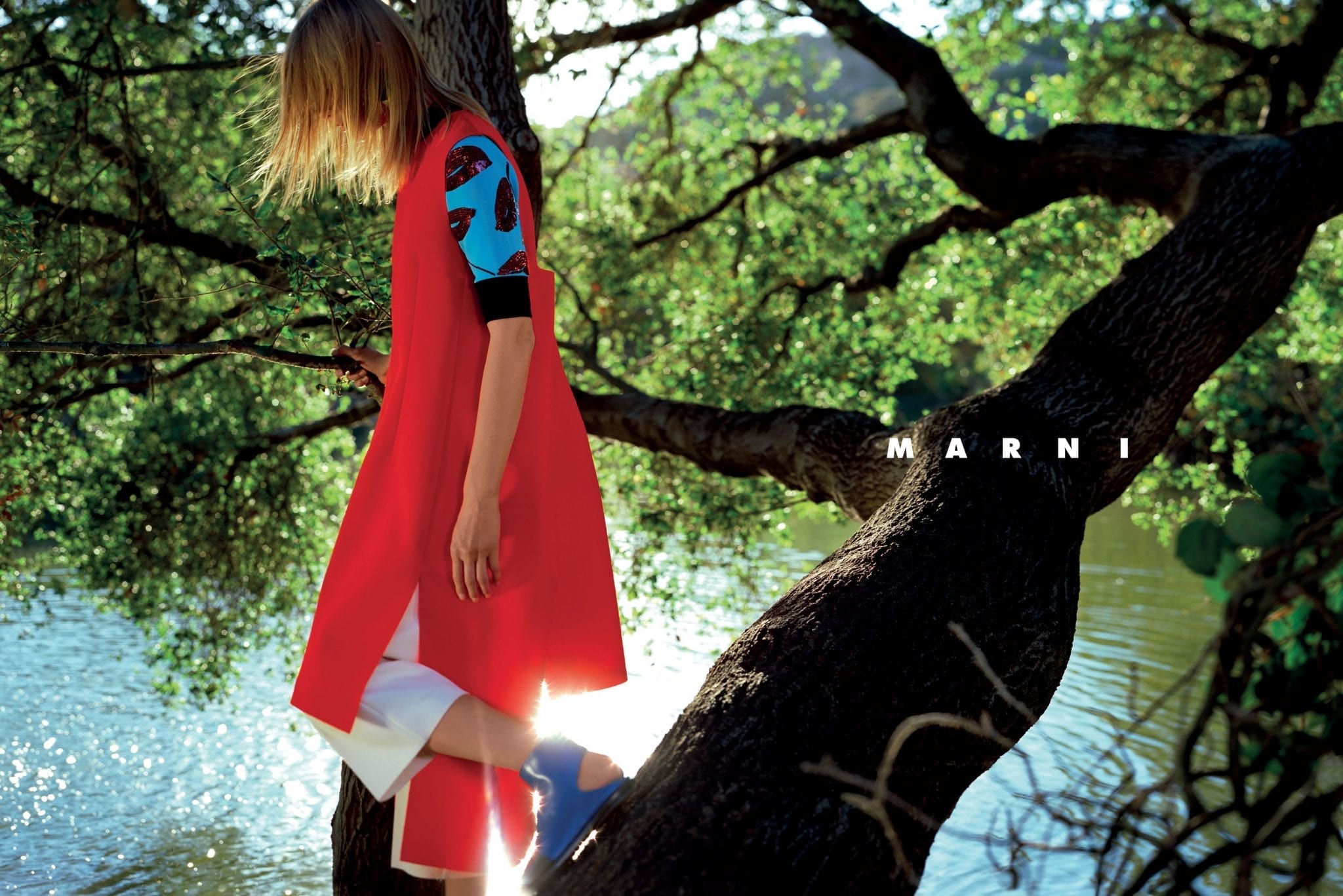
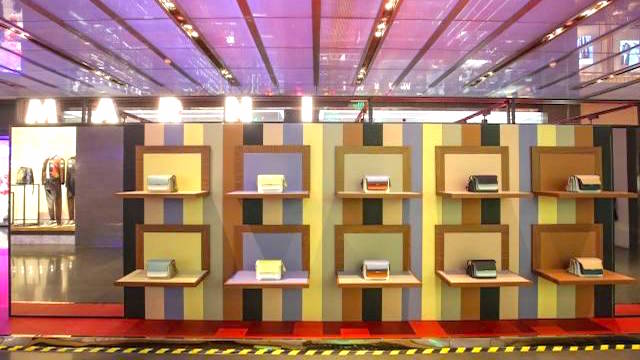
Marni China has reopened its renovated boutique in Shanghai’s Reel Department Store in the downtown district of Jing’An.
To celebrate the event, the Italian luxury fashion brand hosted its first-ever Marni Christmas Carnival.
This featured a limited-edition range of “Marni Visitors”, puppets the brand commissions from Colombian artisans for the festive season each year. A portion of proceeds from the sale of the puppets worldwide go to the Milan-based children’s charity Piccolo Principe.
In addition, five limited-edition trunk bags were also designed for the carnival.
The Shanghai store is one of 15 the brand has in China.
Founded in 1994, Marni has been undergoing a transformation since creative director Francesco Risso took over from founder/designer Consuelo Castiglioni last year. Risso was previously the designer of Prada womenswear.
Handsome, the fashion unit of South Korean retailer Hyundai Department Store Group, has signed a deal to help accelerate its move into the Chinese consumer market.
An agreement between its fashion label The Cashmere with Hong Kong’s retail/brand-management/distribution firm ImagineX Group involves supplying five coat styles to Club Monaco outlets in China.
ImagineX represents such brands as DKNY, Jo Malone and Salvatore Ferragamo, and has more than 250 points of sale throughout Asia including Singapore and Taiwan.
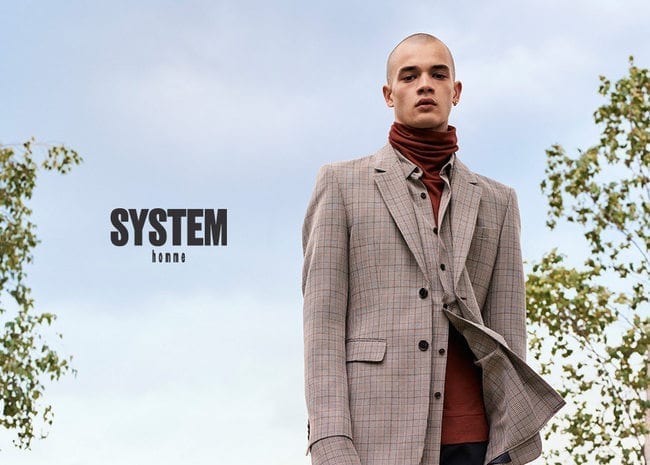
Handsome has previously taken its System and System Homme brands abroad. It has also clinched a deal with Artifacts, a boutique store in Taiwan that has six outlets in Taipei and Taichung. Earlier this year, the two clothing labels were picked up by department stores and shopping malls in China as well as the Galeries Lafayette department store in Paris.
Handsome entered the Chinese market early this year by partnering with Hangzhou Zhiheng Industrial.
Founded in 1987, Handsome was bought by Hyundai Home Shopping Network in 2012. It owns a string of fashion labels including Mine, System and Time.
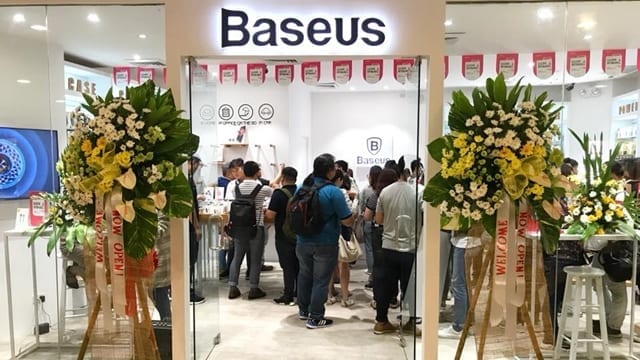
Chinese tech accessory brand Baseus has opened its first flagship store in the Philippines.
The Shenzhen company has partnered with Digits CEO Charles Paw for its outlets in the Philippines, and opened its first store in Trinoma, Quezon City.
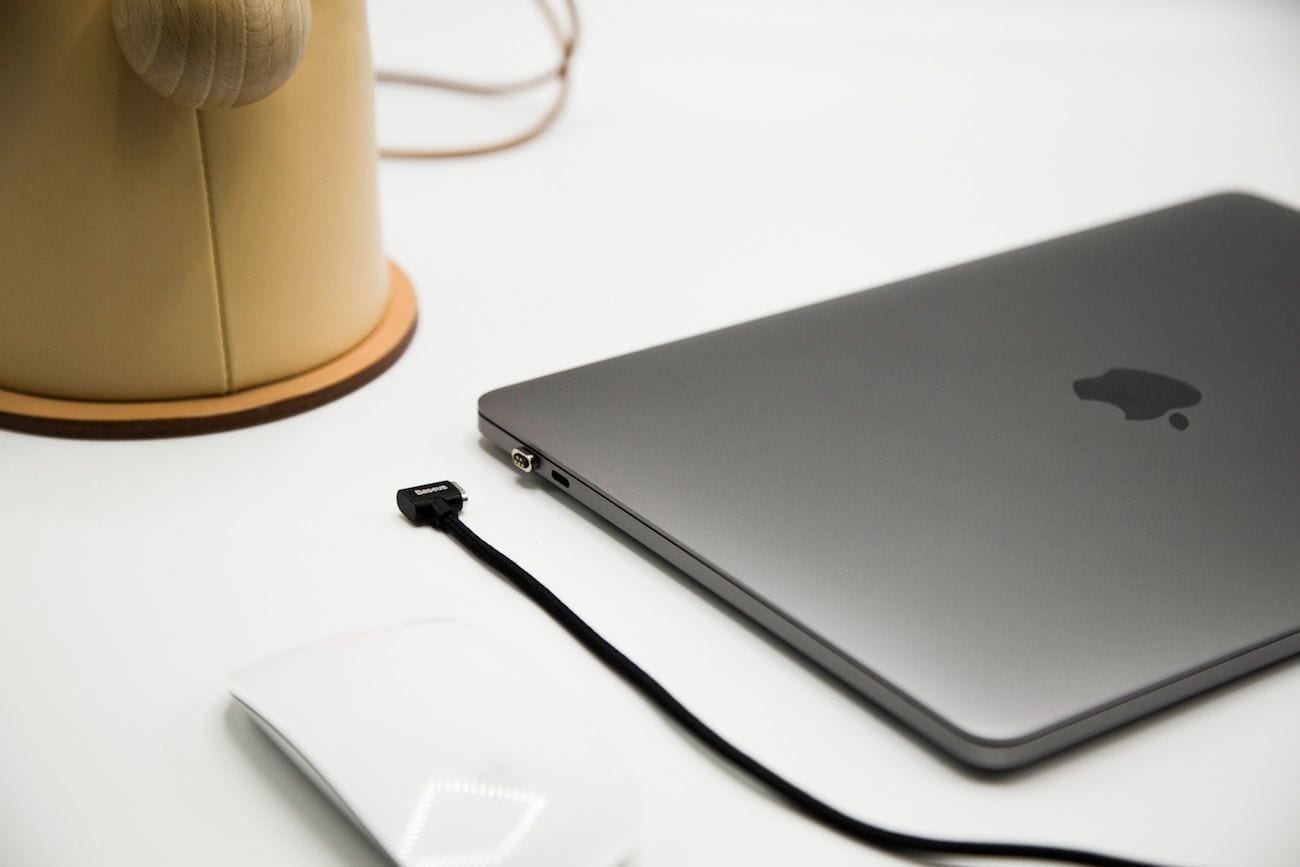
Baseus makes cellphone accessories and gadgets such as car chargers, multi-use cables, car mounts, flash drives, wireless chargers and power bank cases. It has received such accolades as the IF Design Award, and plans to open 10 stores a year in the Philippines.
It is offering special deals to mark the store launch.
Seoul will have one of six Chanel flagship stores being launched next year, with the brand also about to open in Beijing’s China World mall.
“These will be either brand new stores or major re-openings, which will be very impactful,” says Chanel fashion and accessories divisions president Bruno Pavlovsky.
On December 1, Chanel opened a second Tokyo flagship in Ginza following a three-year renovation by architect Peter Marino.
Just before that, designer Karl Lagerfeld was in Chengdu, where Chanel reprised its Ancient Greek Goddess cruise collection, originally shown in Paris in May.
“We scored 698 million hits from that show on WeChat and Weibo and so on,” says Pavlovsky. “That impact allows us to create an accessible dream: a chance to see and touch and understand what the brand is all about. That has nothing to do with customers – we don’t have 500 million customers in our boutiques.”
He believes the key equation in luxury is balancing accessibility to the dream with exclusivity inside boutiques. This is why Chanel’s e-commerce is essentially limited to beauty and eyewear.
“Chanel is not a click,” says Pavlovsky. “But when you think of a $5000 jacket or a $10,000 dress, the customer experience has to be more than just a click.”
He says business in China has been boosted by the policy of global price harmonisation he started introducing in 2015. “We see more and more Chinese in China coming to our boutiques regularly.
They don’t need to travel to Paris, New York or London to buy Chanel, and this is very important.”
One vehicle to boost sales in China will be harnessing influencers, says Pavlovsky. “What is interesting about influencers in China is their point of view of the brand. Some are followed by 20 or 25 million people, which is quite impressive. And they are very clear that what their followers want from them is a point of view. We have to work with them not to dilute this kind of positioning.”
Ford Motor Company in China is in talks with Alibaba’s Tmall that could see itmay soon be selling cars through Tmall and an “Automotive Vending Machine” concept.
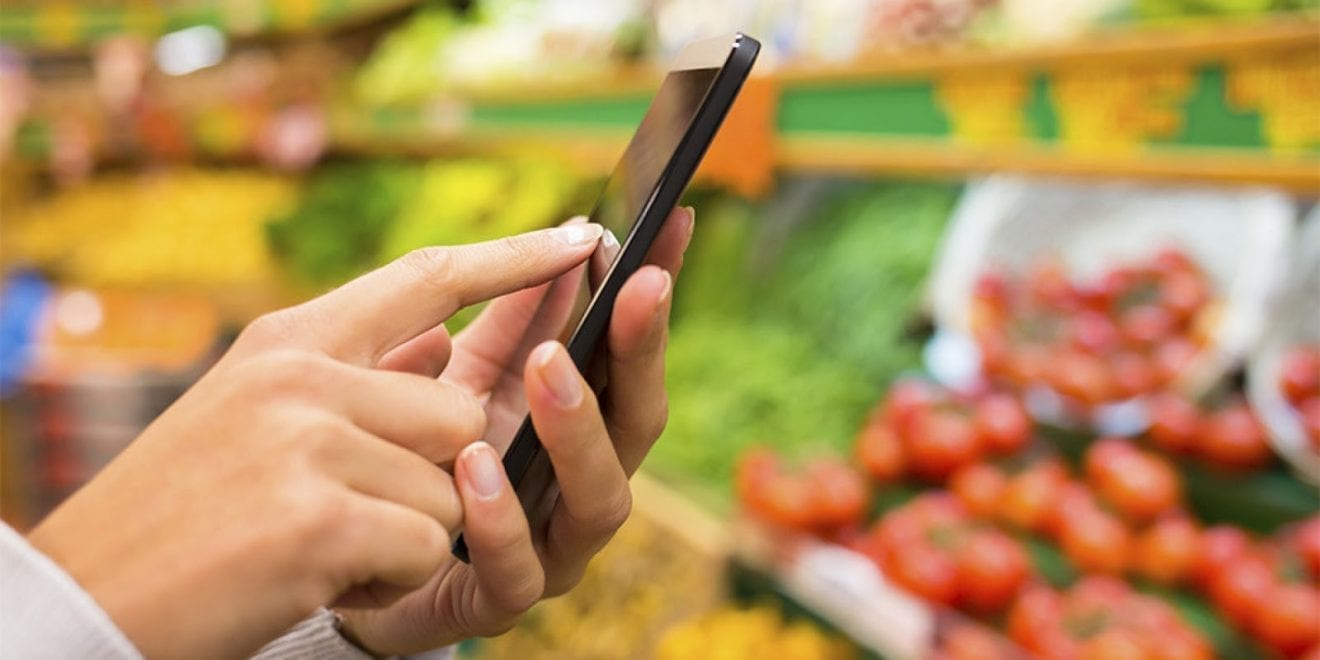
The “Automotive Vending Machine” is a multi-storey parking garage that partly resembles a giant vending machine which allows consumer to use their phones to browse through the cars and choose to either test drive or buy a vehicle.
Once they’ve made their choice, the vehicle is delivered to them on the ground floor.
According to the Detroit News, the US automaker has signed a three-year agreement signed with Alibaba Group to expand its footprint in China, following a visit to Alibaba headquarters by Ford CEO Jim Hackett and executive chairman Bill Ford Jr.
Just last month Ford inked a $756 million partnership with Anhui Zotye Automobile Co to build electric vehicles, and more recently Hackett and Ford announced plans to bring 50 new vehicles to market in China by 2025 – including five new models in China.
This plays well with Alibaba’s efforts to “redefine” the retail experience.
Their first priority is to come up with new ways for people to buy, maintain and own vehicles using the internet, computers or other technology.
Chinese e-commerce giant Alibaba Group Holding plans to invest about US$200 million in India’s online supermarket Bigbasket.
This leads a $280 million funding round and would give it a stake of about 25 per cent in the startup, insiders say. The deal is awaiting approval from the Competition Commission of India.
Based in Bangalore, the grocer has previously had investment discussions with Amazon.com, which was given government approval this year to invest $500 million into food retailing. Founder Jeff Bezos has said he will invest $5 billion in India.
Meanwhile, Alibaba has invested in One97 Communications, which runs digital payment and e-commerce businesses.
Owned by Innovative Retail Concepts, Bigbasket has TV commercials featuring Bollywood actor Shahrukh Khan. The company offers delivery in more than 25 cities and offers 18,000 products from 1000-plus brands.
Luxury brands have started embracing e-commerce in China, says the Luxury China report released by digital marketing company L2.
It says 91 per cent of luxury brands in China had gone online by June last year, more than double the 43 per cent using e-commerce 12 months earlier.
This comes as Chinese millennials and generation Z are set to become the dominant driver of luxury consumption over the next decade, according to the 2017 Chinese Luxury E-Commerce Whitebook report from high-end e-commerce platform Secoo and data company Tencent.
The average age of the online shopper of luxury goods in China is now 25, 15 years younger than the average age of European luxury consumers, and 20 years younger than those in the US. These young consumers are stepping up their buying of minority brands – as opposed to high-profile labels – in a quest for more personalised and less mainstream experiences. For example, the streetwear trend has gradually become more mainstream, leading to more young people embracing such brands as Supreme and Vetements.
“Consumers are no longer too loyal to one specific brand, but want luxury brands that speak for themselves,” says a Deloitte global luxury consumption survey about millennium consumers. “They are more willing to pay attention to trendy brands with stories.”
Secoo has announced partnerships with niche brands including Corto Moltedo, Maison Kistune and Mr&Mrs Italy, which has been popularised by a South Korean TV series. Corto Moltedo is known for its entirely handmade bags.
Corto Moltedo and Mr&Mrs Italy have signed exclusive co-operation agreements with Secoo, and all their collections are sold simultaneously across the world at the same prices.
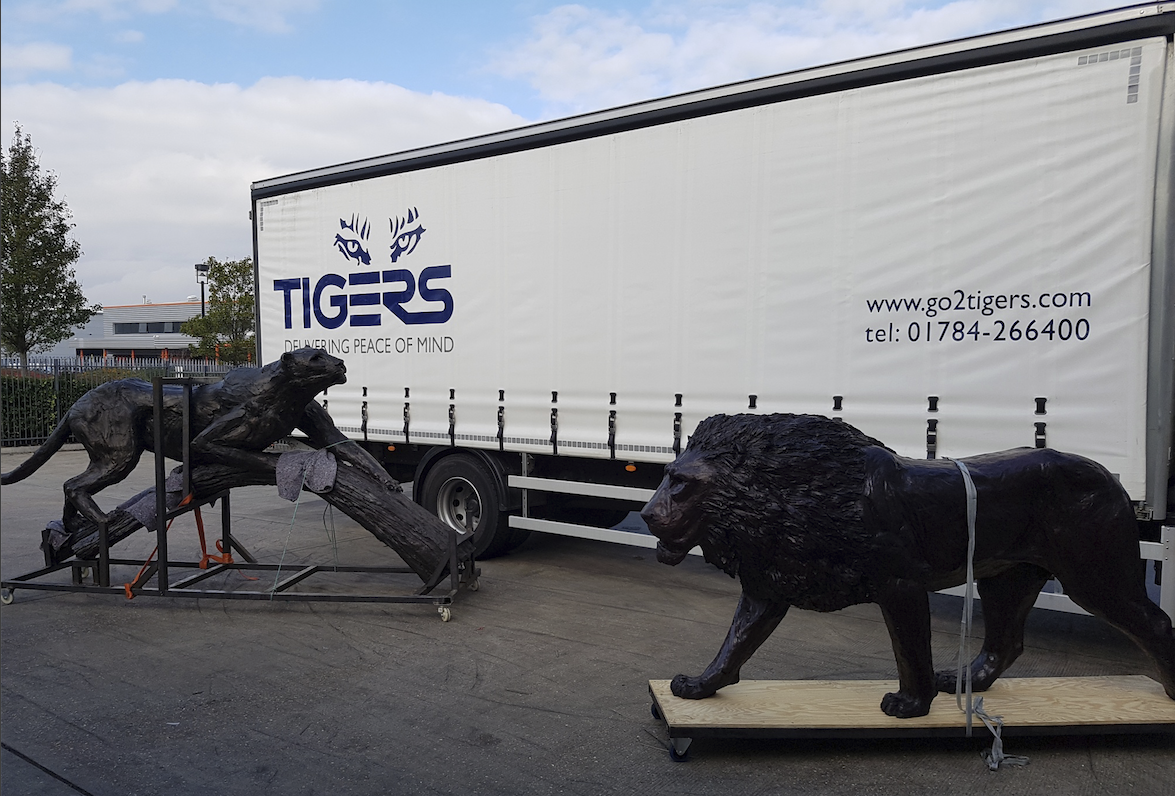
Tigers has transported 29 large bronze wildlife sculptures from Cape Town, South Africa to London, United Kingdom for conservationist-turned-artist Bruce Little’s largest exhibition to date, held at the Mall Galleries.
The sculptures ranged from a tiny Harvester Mouse, measuring just 10cm long, 10cm wide, and 10cm high, and weighing three kilograms, to a Leopard, measuring 450cm long, 160cm wide, and 120cm high, and weighing 250 kilograms.
“We loaded the sculptures under the watchful eye of the artist himself, Bruce Little, and re-palletised and delicately wrapped them to ensure a safe and secure movement to the gallery,” said Trevor Weeks, Branch Manager, London Heathrow Airport, Tigers.
“Twenty-nine large sculptures arrived in an ocean freight container at Tigers’ London Heathrow Airport facility, and were cleared as temporary import with a view to possible sale, providing the customer with the most cost-effective solution.
“A further 31 smaller sculptures were moved from an address in the UK, and were delivered together at the Mall Galleries, using a vehicle mounted forklift truck to assist the gallery team with offloading.”
Tigers collected the sculptures from the Mall Galleries after the exhibition had ended, and delivered them to another location in the UK for a private show.
“Hosting an exhibition, the scale of which we have just had in London, is no easy feat particularly when the source of work has come from thousands of kilometres away,” said Bruce Little.
“Fortunately, we have companies like Tigers at our disposal that have assisted seamlessly in delivering our bronzes where and when they are supposed to be.
“Last year they moved a monumental lion for me from Cape Town to Longleat, Wiltshire, UK, which weighed approximately five tonnes and this too went without a hitch.
“I am most grateful for Tigers and their associates that have made it possible for me to exhibit around the world.”
Tigers operates seven offices in the United Kingdom, including London Heathrow Airport, Gatwick Airport, Felixstowe, Cardiff, Banbury, and Leeds.
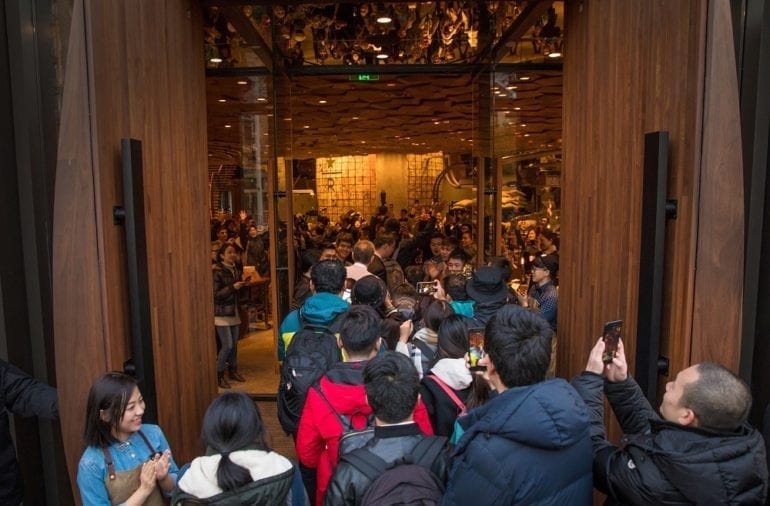
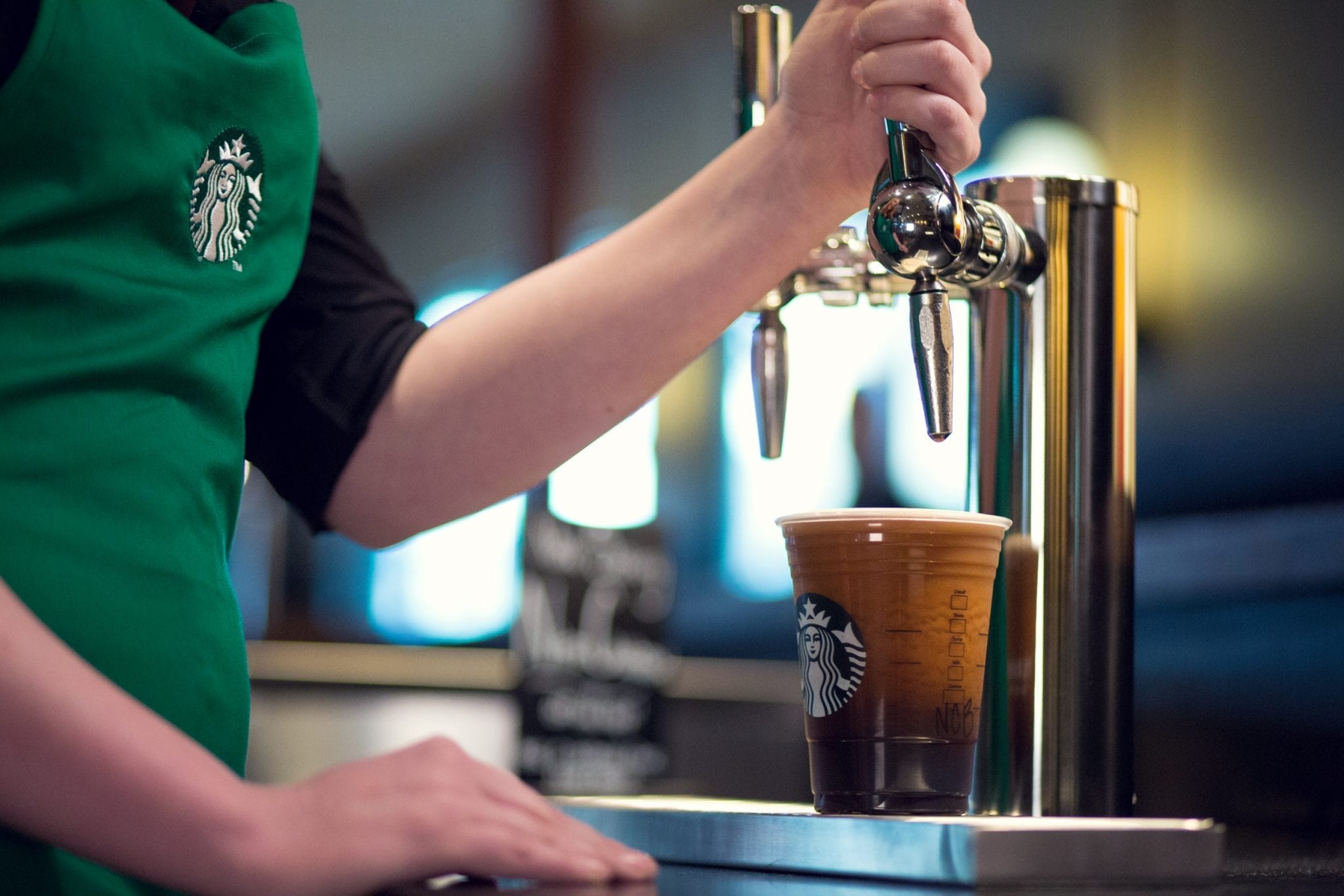
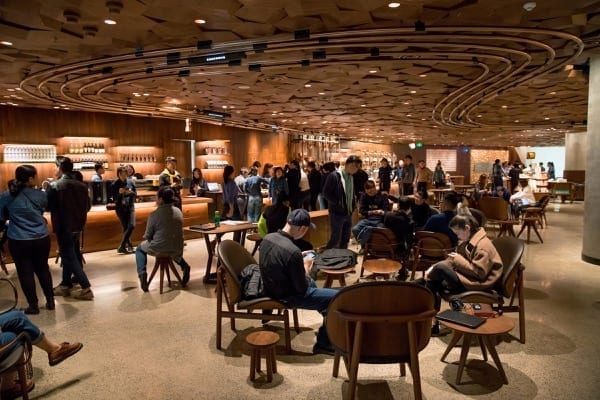
That would be the company’s new Shanghai Roastery, a 30,000 square-foot “coffee wonderland,” which opened Tuesday and is Starbucks’ largest store to date.
Located in the company’s fastest-growing country, the new Roastery is double the size of the original in Seattle that opened in 2014. It features three coffee bars offering multiple brewing methods; a 3D-printed tea bar; an Italian bakery, Princi; and a ceiling built with 10,000 handmade wooden hexagon-shaped tiles. There’s also a two-story, 40-ton copper cask with more than 1,000 hand-engraved Chinese stamps that tell the story of Starbucks and coffee.
Technology is weaved into the store, including Starbucks’ first-ever in-store augmented reality experience, built in partnership with Chinese tech giant Alibaba, which is also selling Roastery coffee and merchandise on its Tmall online marketplace. Yahoo noted that sales on Tmall reached $1 million in the 48 hours before the Roastery opened.
People gather in the new Starbucks Roastery in Shanghai, China. Photographed on Friday, December 1, 2017.
An augmented reality app is used in the new Starbucks Roastery in Shanghai, China. Photographed on Friday, December 1, 2017.
Starbucks plans to open more Roastery locations next year in Milan and New York City; and in Chicago and Tokyo in 2019. Speaking at the GeekWire Summit in October, Starbucks CEO Kevin Johnson explained that the Roastery stores act as “a center of innovation” for the company, which now has 27,000 stores in 75 countries and serves 90 million customers per week.
“You’ll see us invest in taking the innovation we get from the Roasteries and propagate it throughout all our Starbucks stores around the world,” Johnson said.
China represents Starbucks’ fastest-growing market with more than 3,000 stores across 136 cities, and 600 alone in Shanghai. The company posted same-store sales growth of 8 percent in the most recent quarter for China, compared to a 2 percent global average growth for stores worldwide. In July, Starbucks paid $1.3 billion to acquire the remaining shares in its East China business as it unified mainland China as a company-operated market.
At a press event in Shanghai this week, Johnson said that China will become Starbucks’ fastest-growing market within a decade, according to the South China Morning Post.
“If you look at the growing middle class in China and the opportunity for more and more people to frequent Starbucks, we can build stores in China for decades and still have runway to build more,” Johnson said at the GeekWire Summit.
Starbucks CEO Kevin Johnson speaks at the 2017 GeekWire Summit.
China can also act as a testbed for the company’s new digital products and services, given that there are nearly 700 million smartphone users. In July, Starbucks Chairman Howard Schultz hinted that Starbucks would partner with more Chinese tech companies “based on the fact that the consumer in China is well more advanced than the U.S. consumer in terms of being a digital native.” It previously partnered with another Chinese tech giant, Tencent, for social gifting integration on WeChat.
At the GeekWire Summit, Johnson noted that Starbucks is working to create a “unified commerce platform” that enables its rewards program to work seamlessly across international markets.
“The key factor is some software that our teams are writing that is rolling out country by country around the world, and it might take us another two years to touch every country,” he noted.
Asked how Starbucks creates a consistent customer experience at its stores around the world while staying true to local culture, Johnson said it’s about creating a welcoming store environment, providing top quality coffee, and most importantly, human connection — the “one thing that every single one of us on this planet has in common.”
“We’ve all experienced joy and sorrow; we’ve all experienced the struggle and the success,” Johnson explained. “So just anchoring on the fact that human beings, we are tribal people — we get energy from one another. If you create an environment where people are connecting with other people in our stores, it works everywhere.”
Johnson also talked about how Starbucks ties together a physical store experience with digital innovation.
“One, you must be focused on experiential retail that creates an experience in your store that becomes a destination for the customer,” Johnson explained when asked about what physical retailers must consider in 2017. “And number two, you have to extend that experience from brick-and-mortar to a digital-mobile relationship. So our approach to this is investing in elevating the experience we create in our stores, and investing in the digital-mobile connection we have with our customers.”
What is the quintessential New York experience in the eyes of Chinese luxury travelers? How does it differ between men and women, and for millennials?
To answer these questions, we spoke with independent tour operators who organize tours of the city for HNWI (high-net-worth individuals) from mainland China. These are the four things they’re looking for.
1. Fodder for their WeChat
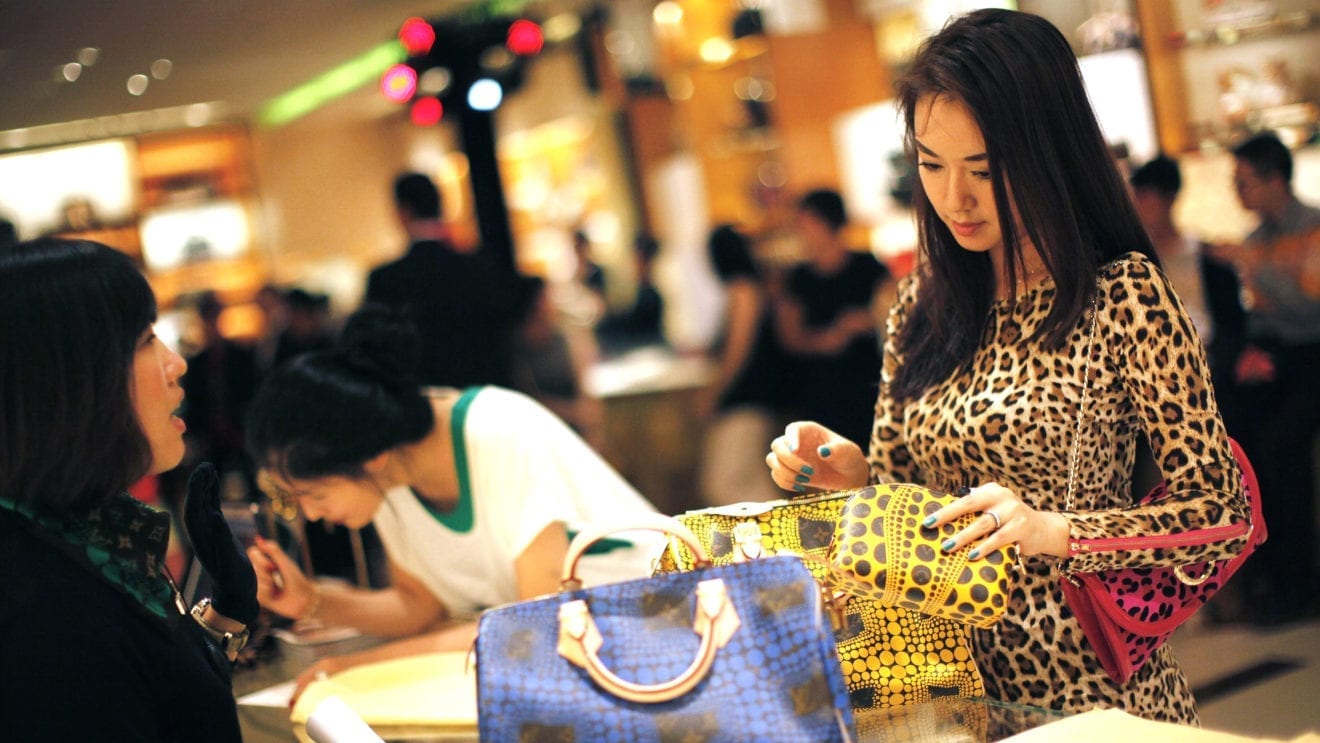
Even affluent Chinese travelers like to get a bargain. But in New York City, shopping is often less of a priority because only American brands such as Kate Spade and Tory Burch are cheaper than they can find them elsewhere. Instead, what attracts them most is the experience of shopping in an exclusively NYC style that will impress their friends on WeChat. To accomplish this, they prefer to interact with local people as much as possible.
“VIP luxury shoppers are regularly invited to stores’ grand openings in China, [so] when they travel abroad, they expect a similar ‘rolling out the red carpet’ kind of experience,” said Serena Huang, founder of YOLO luxury travel, a New York-based boutique travel agency.
High-end retail stores such as Barneys and Bergdorf Goodman are considered must-visits.
2. Personal Shopping Assistants
In order to maximize their time in New York, they expect to shop with the help of a personal assistant and a mandarin-speaking translator.
A good personal shopper can intuit a client’s style immediately, and knows the equivalent sizing across different brands, making the experience seamlessly efficient. They are also knowledgeable about local fashion trends, and can offer an expert eye on some more sophisticated luxury goods that travelers won’t come across in China.
3. Chances for Career and Social Advancement
According to Huang, Chinese women usually shop for themselves and family, whereas men like to buy business gifts. This different shopping preference reflects the type of events they wish to attend in store.
In partnership with a third party, usually a financial institution like Morgan Stanley or Wells Fargo, tour operators often collaborate with luxury retailers to host networking events. They bring high-net-worth clients from China, mostly men interested in making career connections with New York-based professionals. In such settings, the store and the goods displayed function as an ice-breaker, and an opportunity to display their purchasing power. It’s a chance to shop their way to the top.
In contrast, a lot of female travelers’ main ambition is to arrange a meaningful and educational tour for their kids. They want luxury stores to create tailor-made programs to entertain the kids while they shop, such as etiquette classes for mingling with Western elites.
4. Secret Spots
For younger affluent Chinese travelers, itineraries are influenced by media and KOLs. They like to visit independent stores around Soho and art galleries in Chelsea during the day, and sip cocktails in a speakeasy in the East Village at night. Local, hidden gems excite them.
One tour operator told us, for example, that they will take clients to a secret lingerie museum inside the Victoria’s Secret’s store on Fifth Avenue, which opened in May this year. Its latest exhibit features a $3 million angels’ bra, Gigi Hadid’s bodysuit, and Stella Maxwell’s crystal-encrusted one-piece from last year’s Victoria’s Secret Fashion Show in Paris. A lingerie expert will also introduce the fashion show’s history and host a pajama party, where she offers tips on wearing bras the correct way.
Other experiences on young travelers’ bucket list include Tiffany‘s newly opened Blue Box Cafe, which offers them a chance to channel their inner Audrey Hepburn.
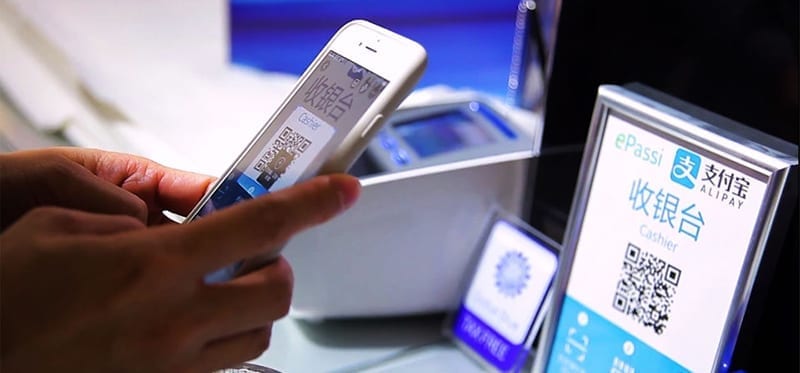
Alipay, the world’s largest online, mobile payment and lifestyle platform operated by Ant Financial Services Group, today launched this year’s “Double 12” Global Shopping Festival in 15 countries spanning across four continents. In addition, Ant Financial’s strategic partners in Hong Kong, India, Thailand and the Philippines will introduce campaigns for their local e-wallet users for the first time. These partners include Paytm in India, TrueMoney in Thailand, and GCash in the Philippines. Together with CK Hutchison Holdings (“CK Hutchison), AlipayHK was launched in Hong Kong earlier this year to further develop local service offerings in the city.
In short, we call it ‘glocalization.’” Douglas Feagin, President of International Business, Ant Financial Services Group said at the launch ceremony. “This concept is about developing Alipay globally while also developing localized service offerings.”
“Working with our global merchants network, we also continue to focus on enhancing the Alipay mobile payment experience for Mainland Chinese tourists wherever they travel,” he added. “In particular, some of our most attractive Double 12 promotions are in the Greater Bay Area, where millions of Chinese travellers regularly visit.”
As part of this year’s Double 12 Shopping Festival, almost 10,000 merchants in Hong Kong and Macau will offer exclusive discounts throughout December to Alipay users from Mainland China. This year, a key feature of this year’s Double 12 offering is focused on Hong Kong delicacies to attract Mainland China users. In Hong Kong’s Mongkok district, a promotion of “Hong Kong snacks for 1 RMB” can be enjoyed by Alipay users. In the Guangdong province, Alipay users will receive a cashback for every payment made in over 2 million stores.
Venetia Lee, General Manager of Alipay Hong Kong, Taiwan & Macau said, “Our aim is to provide a seamless payment and travel experience to millions of Alipay users who constantly travel to the Greater Bay Area. We will plan to launch more integrated campaigns to further enhance our user experience and bring more value to our merchant network in the region.”
Jennifer Tan, CEO designate of the joint venture between CK Hutchison and Ant Financial that offers AlipayHK separately commented on plans for Hong Kong. “Building on Alipay’s success in mainland China, we are rolling out a creative, localized payment experience for our Hong Kong users. Participating in this year’s Double 12 Festival is a first step towards that, and we are very excited to be partnering with so many local merchants to bring this festival to life by providing exclusive offerings to AlipayHK users.”
CK Hutchison and Ant Financial first announced the strategic partnership in September 2017. The joint venture remains subject to regulatory approval, and is expected to complete in the first quarter of 2018.
AlipayHK has partnered with over 8,000 brick-and-mortar stores to offer exclusive gifts, discounts and rewards throughout December. In addition, vendors in the Po Tat Market will offer “1 Dollar Groceries” flash sale on December 12.
Alipay is also working with partners across Southeast Asia to launch localized versions of Double 12 shopping festival. In Thailand for example, more than 10,000 merchants will be participating in the 1212 D-day Deals for TrueMoney users while 3,000 merchants will offer exclusive discounts on 1212 GCash Day in the Philippines.
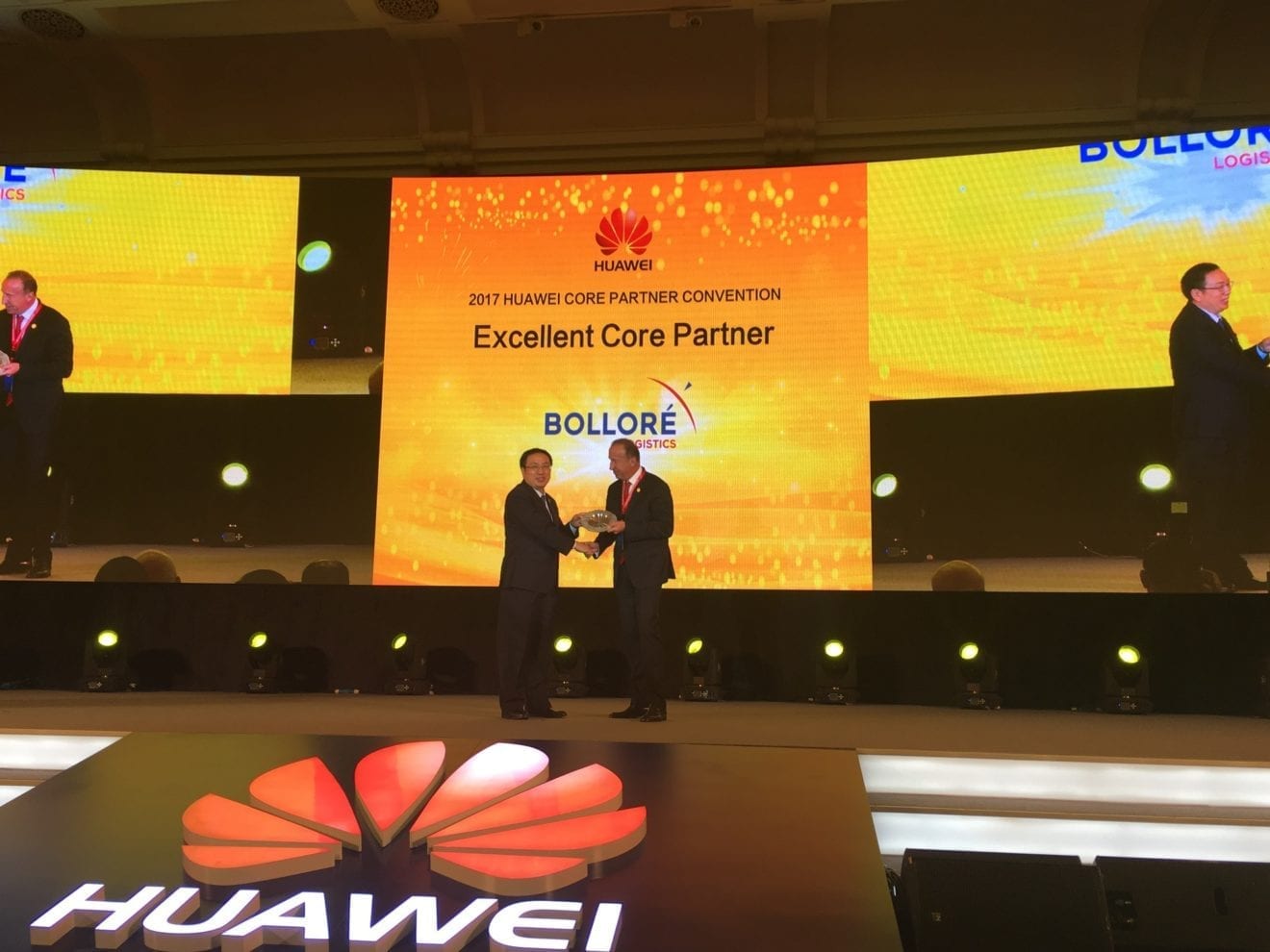
On November 17th, 2017, Bolloré Logistics received Huawei’s Excellent Core Partner and Best-Quality Logistics Service Awards on the occasion of the Huawei Logistics Core Partner Convention (LCPC 2017) held in Shenzhen, China.
Mr. Thierry Ehrenbogen, CEO of Bolloré Logistics, was present in Shenzhen to receive the award from the hands of Mr. Yao Fuhai, Member of the Supervisory Board, President of the Procurement Qualification Management Department and Director of the Group Procurement Management Committee at Huawei Technologies Co Ltd. “This is the 8th award we receive. What a lucky number! But it is not thanks to luck that we receive it, it is thanks to the continuous efforts in serving Huawei’s demanding supply chain models for the past 12 years, which allow us to be awarded again this year,” said Mr. Thierry Ehrenbogen at the convention.
“On our way to the future, innovation is driving us, through large investments, where digitalization, smart supply chain, big data, predictive analytics, and a lot more, take us to a higher partnership level with Huawei,” Ehrenbogen added.
The awards recognize Bolloré Logistics’ excellence in managing Huawei’s international, transportation and supply chain. Recently, Bolloré Logistics has set up a regional warehouse in Tangier Med Free Trade Zone (FTZ) in Morocco to support Huawei’s supply chain and has adopted Huawei’s technologies iSupply in Bolloré Logistics’ warehouses across Africa and Asia Pacific. With risk management mechanism, Bolloré Logistics is able to monitor closely the risks related to Africa Trade and proactively alert on such risks while looking for alternative solutions.
Huawei highly appreciates the customer-centric mindset and attitude of Bolloré Logistics’ Key Account and operational teams, who are always willing to go the extra mile for the client.
Apart from the awards, Bolloré Logistics also officially signed the Strategic Cooperation Agreement with Huawei on November 17th, which will bring the partnership to a higher level in the coming years. Bolloré Logistics is committed to support its customers in their growth by providing customized services that allow them to be more competitive in their respective market.
The world’s largest, most beautiful Starbucks yet opened its doors yesterday in Shanghai at 30,000 square feet.
Featuring everything from Starbucks longest coffee bar, to the world’s only 3-D printed tea bar, and Starbucks first Augmented Reality experience, the roastery takes coffee lovers through a one-of-a-kind coffee journey that is sure to impress.
The Roastery in Shanghai is the epitome of coffee and retail innovation for Starbucks. As China is at the forefront of Starbucks vision for global growth and innovation, it was the perfect place for the largest Starbucks to open. China is the company’s fastest growing market with more than 3,000 stores across more than 130 cities.
On Dec 5, two of the world’s most innovative retail titans – Howard Schultz and Jack Ma – came together to celebrate the opening of Starbucks Reserve Roastery Shanghai.
Officially the largest, most beautiful Starbucks® location in the world at nearly 30,000 square feet (2,700 square meters). FUN FACT: The Starbucks Reserve Roastery Shanghai is twice the size of the flagship Reserve® Roastery in Seattle and the equivalent of 40 average NYC apartments.
Home to three coffee experience bars, one of which is 88 feet (26.9 meters) long, making for the longest Starbucks coffee bar in the world. FUN FACT: Known as the main engine of the Roastery, the coffee bar was handcrafted by premiere Chinese artisans and references the unique roasting curve of individual coffee beans.
Mirroring the signature copper cask at the inaugural Reserve Roastery in Seattle, at entry, customers will be greeted by the stunning site of a two-story, 40-ton copper cask adorned with over 1,000 traditional Chinese chops, or stamps, hand-engraved to narrate the story of Starbucks and our Reserve coffee. FUN FACT: The iconic cask connects to the three coffee bars with pneumatic copper piping, replenishing all the roasted Starbucks Reserve® coffee silos.
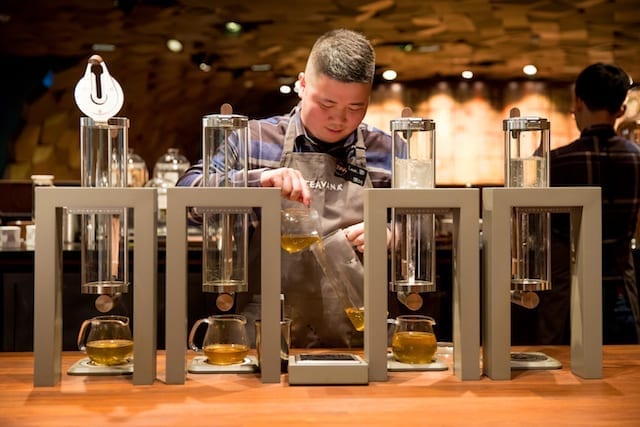
Unique beverage menu items that cannot be found at any other Starbucks in China. FUN FACT: Over 100 beverages are on the Roastery menu including Teavana tea infused with nitrogen as well as a new take on tea brewing with the Steampunk, which uses steam to extract unique flavors from each tea leaf.
Overall design of the space inspired by coffee and created exclusively in China for China – it will never be repeated. FUN FACTS: Some of the key design features include a ceiling consisting of 10,000 handmade wooden hexagon-shaped tiles inspired by the locking of an espresso shot on an espresso machine.
First PrinciTM bakery and café location in Asia, with more than 30 skilled Chinese bakers and chefs. FUN FACT: More than 80 menu items will be baked fresh onsite daily, bringing acclaimed Italian baker Rocco Princi’s artisanal Italian recipes to customers in China for the first time.
The new Shanghai Roastery features China’s first Starbucks® Teavana Bar, a reimagined tea experience supported by the world’s only tea bar made entirely from 3-D printed recycled materials. FUN FACT: The light jade coloring of the Teavana Bar was inspired by ancient green clay teapots and the stains formed by brewing over time. Starbucks will continue China’s rich brewing tradition alongside tea curators as they practice mixology with the help of the Steampunk system’s nitrogen flavor extraction.
First Starbucks Reserve Roastery outside the U.S., and only second Reserve Roastery to date. FUN FACT: Additional Roasteries are slated to open in Milan and New York in 2018, and Tokyo and Chicago in 2019.
Starbucks first-ever in-store Augmented Reality Experience. FUN FACT: Designed by Starbucks, and powered by Alibaba, the Shanghai Roastery will become the first Starbucks location, and the first-of-its kind in China, to seamlessly integrate a real-time, in-store and online customer experience. Roastery customers are invited to immerse themselves in the first Starbucks augmented reality (AR) experience by simply pointing their phones at key features around the Roastery to bring to life information about the Starbucks bean-to-cup story. Guided through the space by a custom-designed AR “tour-guide,” customers can unlock virtual badges and a unique Roastery filter to commemorate their visit.
China is Starbucks fastest growing market with a new store opening every 15 hours. FUN FACT: Starbucks has had a presence in China for more than 18 years, now with more than 3,000 stores across 136 cities, over 600 of which are in Shanghai, the largest number of stores globally of any city where Starbucks has a presence.
Alibaba Group plans to open 2000 branches of its Hema supermarket, which aims to merge online and offline shopping, in China over next three to five years.
It opened its first Hema last year and will end with year with 22 stores. Its latest outlets are in Beijing, Guiyang, Hangzhou, Shanghai and Shenzhen, and this month it opened its second store in Ningbo to be followed by one in Suzhou next week.
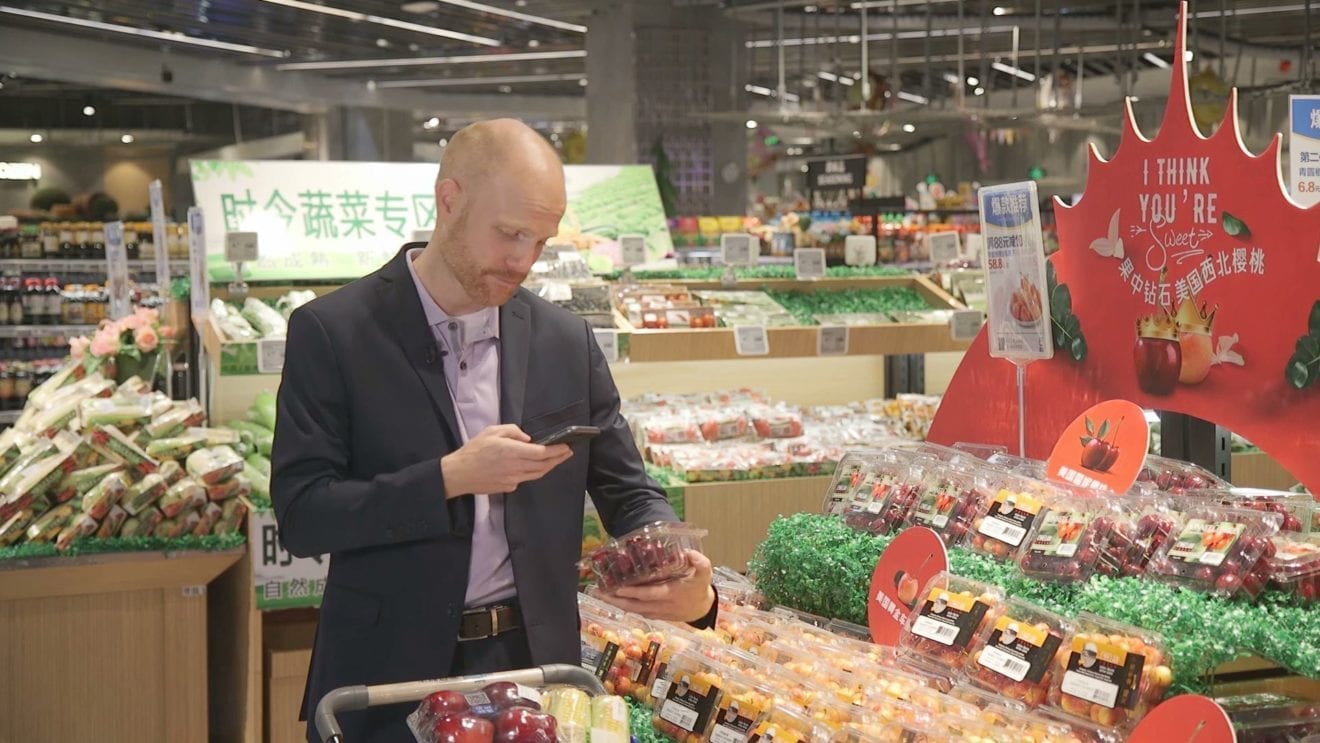
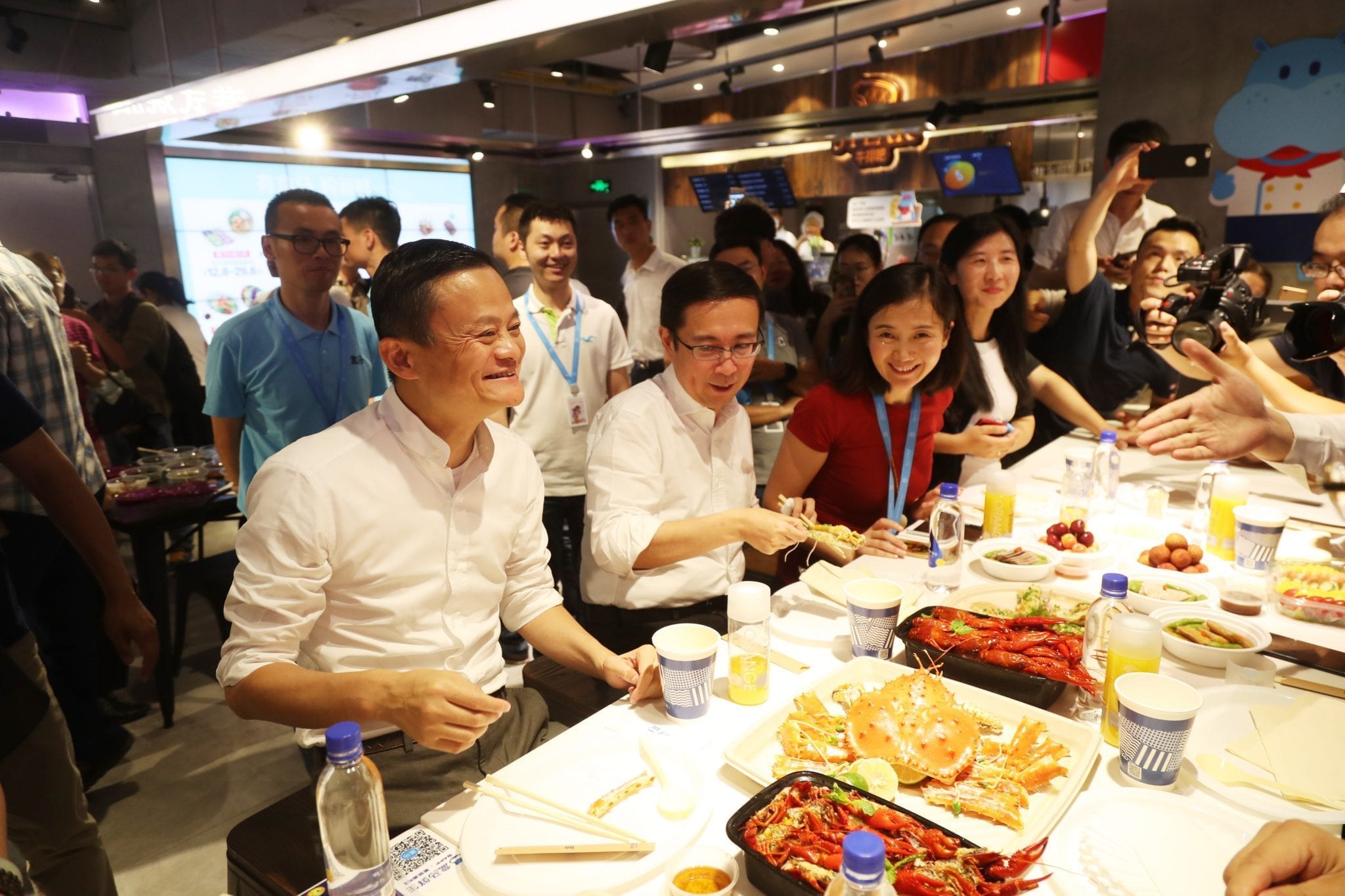
Hema stores are part of Alibaba’s “new retail” strategy that enables customers to shop, order groceries for home delivery and eat in-store. Purchases can be made through the Hema mobile app, which is linked to Alipay.
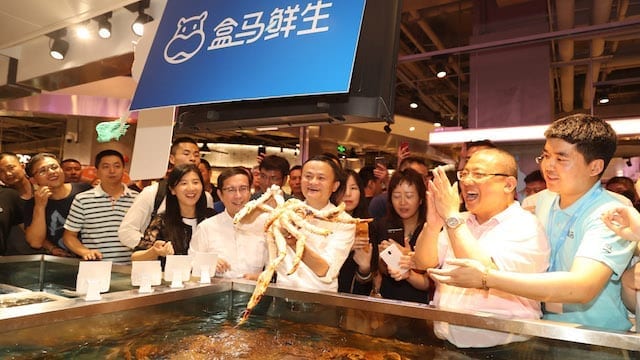
The stores focus on a wide assortment of food, and the brand places an emphasis on fresh – and live – seafood. Moreover, the business model combines supermarket, restaurant and e-commerce, complete with mobile app. This means customers can buy items in the supermarket for the restaurant staff to cook for them.
At the moment, about half of sales at Hema stores take place online. The company claims that customers within a 3km radius of a store can have their shopping delivered within 30 minutes.
Alibaba CEO Daniel Zhang says Hema draws on data and smart logistics technology to seamlessly integrate online/offline systems.
“Hema’s goal is to broaden the new retail model by working with retail partners like Sanjiang Shopping Club and Xingli Department Store,” says Hema CEO Hou Yi. “As our model becomes more established, it can be shared with other traditional retailers to help them transform in the digital age.”
Ford Motor China may soon be selling cars through Alibaba’s Tmall and via an “auto vending-machine” concept.
The US automaker yesterday signed a three-year agreement signed with Alibaba Group to expand its footprint in China. It is the latest partnership in a series in China in recent months, and follows a visit to Hangzhou, where Alibaba has its headquarters, by Ford CEO Jim Hackett and executive chairman Bill Ford Jr.
Last month the company announced a $756 million partnership with Anhui Zotye Automobile Co to build electric vehicles, and earlier this week Hackett and Ford announced plans to bring 50 new vehicles to market in China by 2025, and to build five new models in China.
Hackett says Ford is collaborating with technology leaders to build on its vision for smart vehicles in a smart world.
Meanwhile, the Alibaba partnership is based on the companies jointly finding new ways to sell vehicles, which could include an online component. They aim to “redefine” the retail experience and explore sustainability concepts, working together in the fields of mobility, connectivity, cloud computing, AI and digital marketing.
Their first priority is to come up with new ways for people to buy, maintain and own vehicles using the internet, computers or other technology.
The partnership will be part of Ford’s efforts to overhaul its China strategy to revive the growth momentum it has lost in recent months, Reuters reports. The agreement could mean that cars bought online are delivered to buyers by franchised Ford retail stores, which would maintain and repair the vehicles.
Ford could also use Tmall’s new retail concept, the “Automotive Vending Machine”, a multi-storey parking garage that partly resembles a giant vending machine. Alibaba says buyers can use their phones to browse through the cars and choose to either immediately test drive or buy a vehicle, which would be delivered to them on the ground floor.
Shoppers with good credit would be able to drive away after a 10 per cent down payment, then make monthly payments through Alibaba’s affiliate Alipay.





 Starbucks CEO Kevin Johnson speaks at the 2017 GeekWire Summit.