Tag: China

  • Victoria’s Secret pins hopes on Shanghai show to enhance Chinese market share

    Victoria’s Secret pins hopes on Shanghai show to enhance Chinese market share

    Victoria’s Secret understands “sexy”.

    And with the retail market for women’s lingerie in China estimated at $25 billion – nearly twice that of the United States – China is the new “sexy”.

    Shanghai maga show

    This month, the retailer is debuting its Victoria’s Secret Fashion Show featuring its “angels”, young models clad in whiffs of lace and exotic, bejeweled wings, in Shanghai. The show will be globally televised on Nov 28 on CBS in 190 countries and regions worldwide.

    After the 2016 Victoria’s Secret Fashion Show in Paris, the company received complaints from Chinese bloggers about the use of Chinese-themed dragons and other Chinese cultural symbols. So a lot is riding on the success of the inaugural effort in Shanghai.

    Ed Razek, executive producer of the fashion show and Victoria’s Secret chief creative officer, told Xinhua that there will be performances by former One Direction boy band member Harry Styles, Grammy-winning artist Miguel, Tony Award winner Leslie Odom Jr., and Chinese popstar Jane Zhang and solo pianist Yundi Li.

    In addition, 55 models from 18 countries and regions will be strutting the catwalk, including top Chinese models Ju Xiaowen, Liu Wen, He Sui, Ming Xi, Wang Yi, Xie Xin and Estelle Chen.

    Founded in San Francisco in 1977, Victoria’s Secret burst onto the American market by styling itself as an alternative to more humdrum, purely functional women’s inner wear. The core strategy was to inject sex appeal into mass-market undies.

    The strategy paid off and it became the largest American retailer of women’s lingerie, pulling in $8 billion in revenue in 2016 despite an 11 percent dip in sales.

    Still, all is not rosy in the Victoria’s Secret boudoir.

    Women’s groups have long decried its objectification of women’s bodies. In “Victoria’s Dirty Secret”, a research article published by Canada’s Wilfrid Laurier University and the University of Waterloo, its authors asserted, “Victoria’s Secret sends a message to these adolescent girls and women that their models are the standard of beauty. Women in these ads are highly objectified, idealized, and sexualized. If women feel they have to live up to this sociocultural norm standard, it is only telling men that it is okay to objectify and sexualize women.”

    As varying body types have become more accepted, competitors have gained ground, and the athleisure movement is luring more women to place stylish comfort over high-maintenance sex appeal.

    Add to that the growing trend to shop online and even leading brands are feeling the burn. To trim corporate fat, Victoria’s Secret recently canceled its print catalogue, dumped its swimwear line, and announced plans to lay off 200 employees.

    So the booming Chinese market could be manna from heaven. Rapid economic growth and higher disposable income, combined with widespread exposure to leading global luxury brands has given Chinese consumers a taste for international brands and luxury merchandise.

    Big but no easy market

    After expanding internationally in the 1990s and 2000s in 38 countries and regions, Victoria’s Secret entered China in 2015, opening its first storefront in Shanghai. Plans for a second store in Chengdu are in the works.

    Spurred on by trends in social media and fashion-forward celebrities, Chinese women are increasingly embracing luxury lingerie, and are willing to pay a premium for it.

    In Victoria’s Secret’s pink glass-fronted, four-story flagship store on Huaihai Road near Shanghai’s fashionable Xintiandi shopping district, prices range from 300 yuan ($45) to 4,000 yuan ($605) or more.

    The store also features “The Angel Suite”, one of only three in the world, with the other two being in New York and London, catering to VIP customers seeking to view the latest in lingerie fashions in a private and exclusive setting.

    However, while the Shanghai fashion show may create greater exposure, it can’t solve the pressing issue of growing global competition.

    Luxury Italian lingerie maker La Perla already has eight stores in China with additional outlets coming down the pike. Canada’s athleisure yoga brand leader Lululemon is also weighing in with a flagship store in Shanghai. And China’s own Guangdong-based mass-market lingerie brand Cosmo Lady has already staked claim to 4 percent of the domestic market.
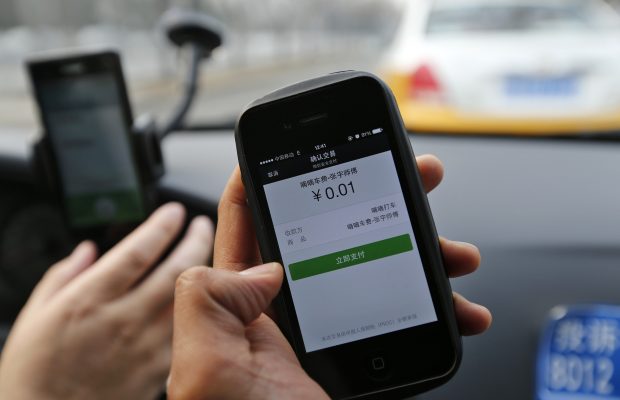

  • Digital wallet WeChat Pay launches in UK

    Digital wallet WeChat Pay launches in UK

    In the middle of London’s Camden Market, a trader from China hands red-bean cakes to a group of tourists from Sweden, as tattooed locals dressed in black leather weave their way between food stalls cooking up dishes including barbecued meat and fish and chips.

    The market, which has been at the heart of London’s punk scene since the 1970s, has evolved into one of the capital’s busiest tourist attractions. It draws hundreds of thousands of people every week to its maze of clothing shops, tattoo and piercing parlors, and food stands.

    And starting this month, Chinese visitors will be able to buy goods with the help of mobile payment platform WeChat Pay.

    Camden Market is a sharp contrast to luxury shopping hotspots such as Bicester Village and Oxford Street where Chinese tourists spend millions of pounds each year and might not seem the obvious choice for the United Kingdom launch of WeChat’s hugely popular digital wallet, which accounts for 40 percent of the Chinese mobile payment market.

    However, the number of Chinese visitors to Camden is climbing. In September 2016, 5 percent of visitors were Chinese. The proportion doubled to 10 percent in March.

    “In terms of demographics, the number of Chinese tourists in Camden is certainly growing, and in terms of a brand, Camden was an obvious choice. It’s iconic in London,” said Craig Jacoby, head of retail payments at SafeCharge.

    WeChat has worked with SafeCharge, a British payment technology company, to make WeChat Pay available at point-of-sale locations in the UK for the first time.

    During the next four months, SafeCharge will provide more than one thousand Camden Market vendors with a software update that enables in-store payment terminals to generate QR codes and perform transactions.

    Chinese tourists spent 513 million pounds ($681 million) in the UK last year, according to tourism authority VisitBritain. Camden Market’s management wants to better accommodate those bigspenders.

    Jacoby said WeChat Pay will soon be available at other shopping destinations in London, and it is also launching at six large retailers in Paris as WeChat moves forward with its international expansion.

    WeChat Pay rival Alipay has also made recent moves in Europe. In October, Alipay expanded its partnership with Dutch payment company Adyen to facilitate in-store mobile payments at retail partners in the UK.

    In Camden, merchants and customers were upbeat about the development. Yi-yin Wei, a shopkeeper from Taiwan who sells red-bean cakes at Wheel Cake Island, thought the update will be useful.

    “Chinese people are used to paying for things with their phones, so it will be like home for them,” Wei said.

    And Angel Chow, a tourist from Hong Kong, said Chinese shoppers will likely spend more now they have WeChat Pay as an option.

    “They will find it convenient if they can use their phones and will buy more. I think they will be excited to be able to use it in England,” Chow said.

    Other Camden merchants were not sure there would be enough demand. Vari McGeachy, manager of Books Iconica, said fewer than 5 percent of her customers are from Asia.

    “We don’t have many Chinese people coming through the doors, and when they do they don’t have a problem paying with cash or card,” McGeachy said. “It wouldn’t be worth having to train my staff about a new system.”

    SafeCharge Chief Executive David Avgi said in general there is great motivation to accommodate Chinese consumers in Europe, where 50 percent of luxury purchases are made by Asian tourists.

    And he said it is a matter of time before the mobile payment systems that are ubiquitous in China catch on in the West.

    “This innovative payment method is seen as the next big payment phenomenon in Europe,” Avgi said.

  • The most expensive, in-demand phone in China right now isn’t the iPhone X

    The most expensive, in-demand phone in China right now isn’t the iPhone X

    Even if you don’t intend to buy one, there’s a good chance you know how much the iPhone X costs, due to its $1,000-plus price gaining plenty of attention. Despite being one of the most expensive phones you can buy, it’s apparently not the one that’s most expensive, in-demand phone in China right now. That dubious honor goes to Huawei, and its Porsche Design-branded spin-off of the Mate 10 Pro.

    Even at standard retail price the Huawei Mate 10 Pro Porsche Design is more expensive than the iPhone X, but a high degree of demand has seen prices double, as people clamor to get their hands on the phone. In China, the Porsche Design version costs 9,000 yuan, or about $1,370 at today’s exchange rate. That’s if you can find one for sale at all.

    The limited edition phone has found plenty of buyers, and its rarity is pushing prices on the resale market up. Online retailers are selling the phone for between 18,500 yuan and 27,000 yuan, or $2,800 and $4,100. By comparison, the iPhone X is readily available on Taobao and JD.com for around 9,000 yuan, only slightly more than its official, cheapest retail price.

    A retailer selling the Mate 10 Pro Porsche Design on Chinese online site Taobao said he has received many enquires for the device, but few have been able to actually buy it. A 38 year-old who tried, but ultimately failed, to buy the phone through the official Huawei sales channel said the phone sold out in seconds. Huawei and Porsche Design have never said how many of the phone will be produced.

    In addition to China, the Porsche Design phone is sold in Europe, where it’s priced at 1,395 euros and is expected to ship at the beginning of December if you pre-order now. The European Porsche Design store also sells a Chinese version of the device, and orders will ship in January if placed now.

    Is the Porsche Design Mate 10 Pro worth not only the trouble of finding one, but also paying considerably more than the regular price, or even the standard Huawei Mate 10 Pro? We’ve used the phone, and definitely concluded that you’re better off saving some cash and just buying the superb standard Mate 10 Pro.

  • Alibaba And Singles Day Make Black Friday Look Small And Show The Future Of Retail

    Alibaba And Singles Day Make Black Friday Look Small And Show The Future Of Retail

    Singles Day may be an invented holiday, but Nov. 11 in China gives an indication of how retail will evolve globally over the next decade. And Alibaba is the company to watch. The numbers posted by e-commerce giant Alibaba on Singles Day — a holiday created as an antidote to China’s Valentine’s Day, which has caught on big time — in 2017 are mind-boggling. Alipay, the company’s payments system, processed $25B of payments, more than four times what the entire U.S. spent on Black Friday weekend and Cyber Monday in 2016.

    That is 1.5 billion individual transactions, 325,000 orders per second, at the day’s peak. Cainaio, the logistics company owned by Alibaba, processed 812 million delivery orders. The opportunity for brands is clear, and Alibaba said 167 companies each generated more than $15M in sales, 17 companies surpassed $75M, and six companies surpassed $150M.

    But as important as the numbers Alibaba posted was the way it posted them, because this gives an insight into how the worlds of online and physical retail will intertwine. “More than $25B of orders in one day is not just a sales figure,” Alibaba Chief Executive Daniel Zhang said in a statement. “It reflects how merchants and consumers alike have now fully embraced the integration of online and offline retail.”

    Ahead of Singles Day, Alibaba, founded by Chairman Jack Ma, sent an army of technicians across China to help more than 600,000 independent retailers — mom-and-pop stores, convenience stores and independents selling everything from clothes to hardware  — upgrade their computer systems.

    Those stores were able to sell goods through one of Alibaba’s online platforms, Tmail.com, and now serve as delivery and storage centres for goods sold on Alibaba. Wikimedia Commons Alibaba Chairman Jack Ma Convenience stores use an Alibaba app that helps manage these sales and deliveries, but also gives store owners advice on what they should be stocking to maximise profits and how their wares should be displayed. This is part of Alibaba’s wider effort to have deeper links into the world of physical retail.

    It is also working on the conversion of 100,000 retail stores into Alibaba-linked smart stores. If customers go into a shop and cannot find a product, they can find other stores nearby that might sell it, or have it delivered at home. “Alibaba plans to use these retailers to reach the elderly and children, who largely aren’t engaging with Tmail online,” said Henry Mason, managing director of consumer insights firm Trend Watching.

    “This move demonstrates that the future of retail is not a simple battle between online and offline. It is far more nuanced than that. As Alibaba in China and Amazon in the U.S. have noted, a purely online presence is not enough. “Because despite the proclamations of many online-obsessed, future-focused trend watchers, there are still hundreds of millions of consumers who aren’t pressing Amazon Dash buttons or using WeChat to order toilet paper via drone delivery on a daily basis.”

    Courtesy of Trend Watching Henry Mason Alibaba also has a chain of department stores called Intime, which double as fulfilment centres. Alibaba’s Singles Day numbers also highlight how smartphones will play an increasing role in retail, both online and offline — 90% of the payments Alibaba took were from mobile phones. “In major Chinese cities you hardly see cash machines anywhere,” Value Retail Chairman Scott Malkin said. “You pay for goods using your phone everywhere, whether it is at the street food stall or in the store.”

    Of course, the innovations being pushed by Alibaba will not be replicated exactly in other markets. The company has the advantage of working in a market which, because of the rapid pace of economic development and recent political history, does not have the pre-existing infrastructure and methodology of Western countries. “If you don’t have legacy companies like Marks & Spencer operating then you can go straight to what people want,” Malkin said. Its methods will not be adopted wholesale, but the way Alibaba is creating a platform that connects physical stores and online retailing is a development that will surely be replicated around the globe.

  • Asia to dominate global grocery market by 2022

    Asia to dominate global grocery market by 2022

    The region is expected to enjoy a CAGR of 6.6%.

    Asia is expected to dominate the global grocery retail market as it is projected to add $1.2t in sales which is more than Africa, Europe and Latin America combined, according to Institute of Grocery Distribution (IGD).

    IGD forecasts that Asia will enjoy a compound annual growth rate (CAGR) of 6.6%.

    Levels of consumer spending from Asia account for nearly half of additional sales generated until 2022 as the region’s grocery retail market is significantly boosted by its continuously rising population.

    Six countries from Asia secured a spot in the top 20 largest grocery markets by 2022, led by China at second place with a projected value of $1.67b.

    India follows at third place with an expected $812b value by 2022.

    Japan is at fifth place with a projected value of $455b; Indonesia notched seventh with $313b; Philippines at $153b and South Korea at $141b.

    “With China, India and Japan all in the top five, Asia’s grocery market continues to be in rude health thanks to growing populations and shoppers with more disposable income. Innovations in this market also continue apace, especially in China, where retailers are experimenting to drive the online and convenience channels,” said John Wright of IGD.

  • Another Alibaba major step in China retail

    Another Alibaba major step in China retail

    This week’s Alibaba-Sun Art deal is a major step in the development of a new retail landscape in China, write Wai-chan Chan and Jacques Penhirin of Oliver Wyman.

    This is not a “real estate play” with Alibaba buying 446 grocery stores, but shows how serious Alibaba are in developing the “new retail” model combining the strengths of online and offline retail.

    The first winners from this alliance are likely to be consumers.  Alibaba will use its investment in Sun Art to improve its price, service levels and the range of products available. In addition, expect to see Alibaba add the ability to deliver a wide range of goods from these stores to consumers’ homes in super quick times. Today delivery time is the new battlefield but performance is still highly dependent on physical networks.

    In the context of retail this alliance is more important than Amazon’s acquisition of Whole Foods in the US.  Sun Art is the largest, and one of the most respected grocery players in China, while Alibaba already has a large grocery business, making it an alliance between two leading players in retail.

    Unlocking fresh

    Despite the huge advances in e-commerce in China, fresh food has been one of the areas that has been most difficult to convert to e-commerce.  Freshness is the key driver for consumers in grocery shopping. According to a survey of 1500 consumers Oliver Wyman conducted in August, consumers purchase fresh products 4.9 times per week on average, and ‘fresh’ is the number one criterion in grocery retailer selection regarding range, product quality, and value for money. However, 81 per cent of respondents do not think e-commerce provides good quality fresh products compared with offline hypermarkets.

    As one of the top two hypermarkets receiving the highest rating from consumers on their fresh offering, Sun Art has strong expertise in operating fresh categories, which will greatly unlock Alibaba’s capabilities.

    Ally or die

    It is becoming clearer that the endgame of two eco-systems being established by Alibaba and JD.com is inevitable in the retail landscape of China, which poses pressure on those ‘unallied’ retailers such as China Resources, Carrefour, WuMart, etc. For retailers, capturing traffic through their own e-commerce platform will become even more challenging. Traditional retailers must understand that they are competing with giants with unlimited abilities to invest and the ambition of integrating online and offline retail. O2O orders already contribute 30 per cent of sales of Alibaba’s Hema Fresh Supermarket – it is indeed transforming the economics of the offline shopping cart, which is challenged by the declining like-for-like growth over the past 12 successive quarters.

    Traditional retailers need to choose their battlefield very quickly, but expect compromise on bargaining power and decision-making in the long term.

    Bad news for second-tier brands

    The two ecosystems are not pure retailers anymore but integrated media and branding platforms. It does not leave Consumer Packaged Goods brands much of a choice but to closely coordinate with Alibaba and JD.com and learn their rules. Niche brands which understand both the ecosystem and consumers will take this opportunity to grow, and top-tier brands will continue to flourish if they learn how to effectively partner with Alibaba or JD, to have both parties learn from each other. By comparison, weak brands will suffer because the traditional retail stores they rely on are losing ground. Furthermore, as O2O develops, the terms and conditions will become more transparent within the two ecosystems. Promotional pressure will likely increase, requiring more diligence on the return on investment.

    Despite the prospects for this alliance, Alibaba and Sun Art need to start thinking how to effectively realise its potential. Operationally, there is huge complexity in integrating the two businesses and overcome barriers of management and culture. After all, it is more difficult to manage shoppers than to manage mobile devices.

  • Is Watsons ripe for a spin-off?

    Is Watsons ripe for a spin-off?

    Hong Kong billionaire Li Ka-shing’s business empire Cheung Kong has been able to get the best price when offloading some assets. For instance, the Centre, its Grade A office building, was sold for over HK$40 billion early this month on the back of soaring land prices. Some buyers offered about HK$30 billion late last year.

    When Cheung Kong planned to spin off its retail outlets including Watsons and Parknshop in 2013, the deal was shelved as the company was unhappy with the price. The wind has shifted in recent years, and leading brick-and-mortar retailers are becoming desirable again. Cheung Kong owns more than 14,000 outlets worldwide.

    On Monday, Alibaba said it would invest 22.4 billion yuan for a 36.16 percent stake in the top Chinese hypermarket operator Sun Art.

    Sun Art operates 446 hypermarkets across China. The deal marks the internet giant’s move into offline retail. Omnichannel is essential in offering the new retail experience. The transaction values Sun Art at 62 billion yuan, which roughly puts each hypermarket at above 100 million yuan.

    It’s worth noting how Alibaba will transform classic retail by integrating technology in order to provide a seamless online and offline experience to customers. In fact, the deal marks Alibaba’s latest acquisition of a traditional retailer after Suning Commerce, Intime Retail Group and Lianhua Supermarket.

    Nonetheless, we have yet to see any major reform in these newly joined partners, although customers can make payment with Alipay or collect online orders.

    It’s obvious that the retail experiment has to connect online and offline realms. Market players are still trying out the system. Amazon spent US$13.7 billion to acquire Whole Foods in August, but it has yet to start an overhaul of the latter’s 500 outlets. Currently, Amazon has designated one shelve in each Whole Foods store to sell Echo or Kindle, and move some of the goods in-store to the online platform.

    The deep-pocketed e-commerce giants are aggressively acquiring offline retailers. But it remains unclear who will be able to integrate online and offline realms successfully.

    Certainly, the traditional retailer with massive outlet network will become sought-after. Walmart, the world’s largest retailer, has shown that it can hold on its own in a challenging retail environment. Its share price has soared nearly 80 percent over the past 12 months, and the retailer’s market value tops US$300 billion.

    In fact, Watsons Group is the world’s largest retailer in terms of the number of outlets. It operates more than 14,000 shops worldwide, including supermarkets and drug stores. Over 3,000 shops are in mainland China, and most of the rest are in Europe.

    Cheung Kong has put on hold a plan to spin off or sell the retail group after failing to fetch a good price in 2013. Back then, global offline retailers were struggling.

    The scale of Watsons is more than 10 times that of Whole Foods or Sun Art. And Cheung Kong would definitely try its best to get the best price. Therefore, it’s more likely that the conglomerate might cooperate with internet giants to leverage its massive network of offline stores.

    In September, CK Hutchison Holdings, Li’s flagship conglomerate, formed a joint venture with Ant Financial Services Group, an affiliate of Alibaba Group, to integrate online and offline Hong Kong dollar payments under the AlipayHK brand.

  • Chow Tai Fook sales is blooming

    Chow Tai Fook sales is blooming

    Growth momentum has continued for Chow Tai Fook sales as the group looks at further expansion in China.

    Revenue contribution from Mainland China has increased steadily over the past few years,
    and contributed more than 60 per cent of group revenue in the half-year to the end of September.

    China delivered 16.3 per cent growth while Hong Kong, Macau and other markets grew by 13.1 per cent.

    With improving consumer sentiment plus rising opportunities from the development of shopping malls, the company plans to expand its retail network on the mainland in the second half. With 11 point-of-sale openings, it had 2358 outlets at the end of September, including 95 outlets in Hong Kong and Macau, where 10 stores were closed during the six months, mainly in tourism areas, and two new ones opened in Tsuen Wan and Yuen Long.

    Chow Tai Fook plans to close more stores in tourist areas and open in selected residential neighbourhoods.

  • The five pitfalls that threaten FMCG brand growth in the SEA

    The five pitfalls that threaten FMCG brand growth in the SEA

    Asia’s developing markets are some of the most promising places on Earth to sell fast-moving consumer goods (FMCG).

    They can also be a place to fail fast: The rules of the game are changing at an ever-increasing pace, and many multinational and local brands are struggling to keep up.

    According to new analysis from Bain & Company, Turbocharging Consumer Products in Developing Asia, despite developing Asia’s massive opportunities, fewer than 20 percent of brands outgrow their categories in this region—roughly the same proportion as in low-growth developed markets. To successfully compete in these markets, brands need to push themselves more than ever to swiftly and continuously adapt to the new realities.

    Accelerating market changes, combined with a few basic challenges, serve as obstacles for brands aiming to achieve sustainable growth in developing Asia. Consumers in the region are increasingly willing to pay for convenience, and they are more digitally connected than ever.

    Each of these shifts has caused an accompanying change in retailing. For example, throughout developing Asia, consumers now make fewer trips to larger stores, instead flocking to convenience stores. Further, the steady rise in digital connectivity is fueling a boom in online sales and transforming the way brands talk to consumers to influence purchase decisions.

    Several fundamental factors have also made it tough for brands in developing Asia.

    Because the region’s distribution channels are highly fragmented, it is harder to gain household penetration, the most important contributor to brand growth. Another new complication for companies trying to plot a winning strategy is bifurcated demand. In the last 20 years, most value growth came from the “belly” of the market. Now the middle is shrinking, while a category’s premium and discount ends grow faster.

    “Fundamental consumer shifts in developing Asia have accelerated in the past few years, making it tougher for brands to survive and win in a region that remains critical for multinationals,” said Paolo Misurale, Partner and head of Bain & Company’s SEA consumer products practice. “All of this is altering the rules of the game for consumer products companies, requiring them to rethink their strategies from ‘where to play’ to ‘how to win’. Then they need to deliver the change, building new capabilities and forging alignment across stakeholders and functions. Those that fail to adapt – even large and establish brands – will be left gasping for air.”

    Amid these challenges, nimble local players manage to gain traction by revising their playbooks to new market realities. Developing Asia also offers huge opportunities for incumbents (whether local or multinational) that are able to adapt quickly and use their scale advantages to both capitalize on these emerging trends and further consolidate their competitive positions. Yet, even with the best plans, too many brands in the region get tripped up by predictable hazards.

    Through its extensive work with multinational, national and local brands across Asia’s developing markets, Bain has identified five common pitfalls and ways to overcome them.

    Pitfall 1: Sailing with outdated maps

    Bain finds that too many brands in developing Asia underinvest when it comes to learning the basics to support that big decision. They also fail to understand other essential elements of their category rules, such as whether the category is more repertoire or less repertoire. Successful companies know where they fit in, and then determine where and how to compete. They set growth initiatives that are consistent with category fundamentals and then translate those initiatives to operational metrics to track progress and capture value.

    Pitfall 2: Saying it wrong

    In developing Asia, it is easy to get brand messaging wrong. The goal is to anchor a brand (or a brand story) in consumers’ long-term memories. However, many brands have a relatively short history in these markets, and haven’t yet established and reinforced the kinds of memory structures that have worked so well for them in the developed world. Winning companies overcome this pitfall by understanding the guiding principles for building high-quality brand memorability.

    Pitfall 3: Succumbing to the lure of the new and different

    Traditional trade still abounds in developing Asia, and convenience stores are gaining in popularity. Both small formats offer limited shelf space. Yet, Bain finds that many brands are unwilling to reduce their product assortments (or tailor their ranges to unique channel needs) in order to focus on the proven and profitable hero SKUs with the highest velocity on the shelf, year after year. Winners invest to understand their heroes by brand and SKU, determining the value propositions they present over non-heroes. Then they look for the gaps in their current assortments, ultimately creating portfolio and investment strategies focused on the top sellers for target consumers and occasions.

    Pitfall 4: Losing at the first moment of truth

    Many brands, especially domestic brands selling in developing Asian markets, lack the abundance of data that allows for sophisticated account planning in developed markets. Without such data, FMCG players need to be as focused as they can on making their hero SKUs available and visible to fundamentally repertoire shoppers, while ensuring the retailer has incentives to push those SKUs. The most successful companies play by the real category rules: Solid consumer insights inform their priority in-store execution and activation moves. Winners are also clear about what matters most to increase sales on a channel-by-channel basis.

    Pitfall 5: Failing to build the right route to market

    In developing Asia’s fragmented retail environment, many brands fall short on their efforts to ensure that products get through the last mile and retain their ability to influence consumers’ decisions at the point of sale. The winners in this area are mostly “local champions” that use direct distribution (or a high-touch managed distribution model) in high-density areas, where modern trade is typically more established.

    At the same time, they build a multi-tiered distribution network and collaborate with hundreds of wholesalers in low-density rural areas, making the big trade-off between having influence over outlets and having penetration across outlets to maintain a sustainable cost to serve.

    “Brands can turbocharge their growth through a relentless focus on increasing penetration and consideration,” said Nader Stefano Elkhweet, Partner and head of Bain & Company’s Indonesian consumer products and retail practices. “This requires focusing on what shoppers actually do – as opposed to what they say they do in surveys – planning from the ‘shelf back’ to win the battle in stores, and relying heavily on advanced analytics tools to generate the insights that help brands make the smartest trade-off decisions.”

  • Demand for gold in China lifts profit at world’s top jeweller

    Demand for gold in China lifts profit at world’s top jeweller

    Chow Tai Fook Jewellery Group’s profit increased for a second consecutive six-month period as demand for gold products lifted sales at the world’s leading jewellery retailer.

    Shares jumped after the company reported net income rose 46 per cent to HK$1.78 billion (S$308 million) in the six months through September. The stock rose 4.4 per cent to HK$9.19 as of 11.03am in Hong Kong on Wednesday (Nov 22), heading for its biggest two-day gain in a year.

    The results mirror the continued recovery in demand for luxury goods in China after a two-year slump amid a corruption crackdown in the country.

    Sales at the company’s stores are picking up and more customers are also purchasing its products online as the world’s second-largest economy is on track for its first full-year acceleration in seven years.

    Revenue climbed 15 per cent to HK$24.8 billion, the Hong Kong-based company said on Tuesday. Retail sales of Chow Tai Fook in mainland China increased 16 per cent, and 13 per cent in Hong Kong and Macau. Growth momentum was fuelled by gold products, the company said.

    The current financial year “will be a turning point for our business given the nascent jewellery market recovery”, the company said. “Although the recovery is gradual and mild, the industry is expected to return to a stable yet sustainable growth.”

    The retailer expanded the number of outlets in mainland China to 2,358 at the end of September. It will continue the expansion “in view of the improving general consumer sentiment, coupled with the rising opportunities from the development of shopping malls in the region”, Chow Tai Fook said.

    In Hong Kong and Macau, the company will optimise outlets in tourist centres and selectively open stores in residential neighbourhoods.

    The company expects its total rent cost declining 15 per cent in the current financial year, finance director Hamilton Cheng said at a press briefing in Hong Kong on Tuesday after the results.

    Demand for jewellery, watches and clocks, and valuable gifts has been picking up. Sales of these products in Hong Kong rose 4.3 per cent this year through September, compared with a 17 per cent plunge in all of 2016.

    Luxury-watch retailer Hengdeli Holdings said this month that it is boosting orders for the upcoming Chinese New Year, expecting stronger demand from shoppers in Hong Kong.

    Tourists from mainland China, who account for more than three quarters of arrivals to Hong Kong, grew in the nine months through September.

    With more Chinese tourists likely to travel to Hong Kong next year as the yuan strengthens against the Hong Kong dollar, retailers are poised to benefit from the rise in store sales and falling rents, according to Ms Catherine Lim, an analyst at Bloomberg Intelligence.

  • Some words from Jack Ma for successful start up business

    Some words from Jack Ma for successful start up business

    Jack Ma has some blunt advice to startups: “If it’s hot, forget it.”

    “By that time everyone is doing it. It’s too late,” Ma told attendees of the Jumpstarter 2017 finale at the Hong Kong Exhibition and Convention Centre last night.

    Ma, who shared the stage with Hong Kong chief executive Carrie Lam, was on hand to present US$1 million in funding to winning startups from medical, agricultural and energy sectors.

    Ma encouraged startups to pursue their dreams.

    “The advice is first you should be optimistic – a great entrepreneur is optimistic for the future. And you have to answer what problem will you solve. What way can you solve it which is different? Why are you better than anyone else?

    “The second is that you have to find a group of people who can work together. Those people who have the same ambition. Those people coming to join you not just because it is a job, but because they believe in you and they believe in the mission.

    “And the third is: What price are you going to pay for it. You don’t ask “What can I get?” You ask “What can I give?”. If you have a great idea, you may have to wait 10 years. If you think I will win this in three years, prepare for five years.”

    Ma said when he conceived Alibaba 18 years ago and went out to raise money from venture capitalists, he was rejected by all of them.

    “The first money I got from a capital fund was $50,000. I thought this would last 10 months. We even counted every cent we spent. But it lasted only four months. We were almost bankrupt.”

    He also warned startup founders to be patient.

    “Today if you are only a tractor, don’t try to put a Boeing 747 engine inside. It will destroy you. You should find the people who suit the company. I have hired a lot of vice presidents from big companies – they almost destroyed my company. I only had $5 million and a guy came in with a marketing plan $12 million. I said: How can you have $12 million? He said: “I have never made a plan below $20 million.

    “Find the right person,” said Ma.

    Tax breaks

    He urged governments if they cannot fund startups, why not reduce the tax to them.

    “I’m doing that,” interjected Lam, who has met with Ma four times since her election in July and enjoyed wide-ranging discussions on technology and business.

    Both people said they were “very optimistic” about Hong Kong’s future as a base for startups.

    Ma said that although the city is not a large market, Alibaba is interested in the talent that the city offers. Its capital and technology also appealed.

    “The reason why Hong Kong has been so successful in the past 50 years is because Hong Kong is very open-minded, and accommodates all kinds of cultures. [Hong Kong] should also welcome people from all over the world,” he said.

    “Young people in Hong Kong, don’t focus your eyes only on Hong Kong. America, Europe, anywhere there is opportunity, go there and build something and bring ideas back.”

    Lam said Hong Kong needed to review immigration policies to encourage entrepreneurs to come to the city.

    “We need more time to nurture local talent and [in the meantime] we need to bring in outside talent. Hong Kong remains very attractive to a lot of expatriates and people from the mainland,” she said.

  • L’Occitane growth and China’s contribution

    L’Occitane growth and China’s contribution

    China was among the fastest-growing markets for cosmetics and wellbeing products group L’Occitane International for the six months to September 30.

    Along with Japan and Hong Kong, it was among the key contributing countries to overall growth.

    China’s net sales rose 18.2 per cent year on year to €60 million (US$70 million), the group’s interim results show. At constant exchange rates, the growth was 22.7 per cent, driven mainly by same-store sales growth of 15.8 per cent. As well as the recovery of China’s retail market, the company says a marketing campaign featuring Chinese artist Lu Han continued to draw traffic both online and offline.

    T-mall sales continued to grow at triple digits and were ahead of plan, and B2B also delivered an excellent performance thanks to growing orders from independent hotels and the Shangri-La chain, says L’Occitane.

    In Hong Kong, net sales edged up 0.4 per cent to €51.1 million (2.6 per cent at constant exchange rates), growth being driven mainly by the travel retail channel. As well as duty free, this included airlines in China and Japan.

    The retail market was still sluggish, and two underperforming stores were closed. There were also some temporary closures for renovations.

    Hit by typhoons

    Typhoons forced store closures in Japan, where net sales fell 4.8 per cent (1.8 per cent at constant exchange rates) to €99.4 million. Same-store sales growth was 1.4 per cent. However, e-commerce showed low double-digit growth. Melvita remained the growth engine in Japan with new stores. At the end of September, Japan had 30 Melvita outlets.

    Same-store sales deteriorated by 7.9 per cent from the first quarter for Taiwan, where net sales for the six months dropped 3.6 per cent (71 per cent at constant exchange rates) to €15.3 million.

    “Retail sales were hindered by the less-generous summer promotion offered by department stores, a couple of mediocre launches and the timing difference in anniversary sales in department stores,” says L’Occitane.

    Nonetheless, sales of skincare products stayed strong, in particular the Immortelle and Reine Blanche ranges.

    Overall, despite a challenging retail backdrop, group net sales were €548.2 million, down 0.6 per cent (up 1.1 per cent at constant exchange rates), with like-for-like sales growth 2.3 per cent.

    Gross profit margin reached 82.8 per cent, 0.6 points higher, while operating margin fell by one point, mainly because of currency exchange headwinds. Profit for the period ended at €10.7 million.

    During the year the company disposed of Le Couvent des Minimes, and excluding this and a one-off deal for L’Occitane au Brésil in September last year, the group’s sales grew by 2.3 per cent at constant rates and 0.5 per cent at reported rates.

    Retail locations increased from 3037 at the end of March to 3104 as at September 30, while the group increased its own retail stores from 1514 to 1519.

  • More online super sales for Asia online market

    More online super sales for Asia online market

    While the US formulated online super sales, such as this week’s Black Friday, Asia has adopted the concept with a vengeance.

    In fact, China has increasingly been exporting Alibaba’s Singles Day (11.11) event, which this month racked up a massive US$35 billion in sales. November is the favoured month for this new consumer mania, offering the Singles Day, Black Friday and Cyber Monday sales.

    Both Black Friday and Cyber Monday themselves have been catching on in the Asia Pacific, growing by 29 per cent last year, according to global payments company WorldPay.

    It says that despite forking out $17.8 billion on Singles Day last year, Chinese consumers still went hunting Black Friday bargains, with overall spending on the day up by 37 per cent from the previous year. In Hong Kong, the rate of growth was 32 per cent, and in Singapore 21 per cent.

    While retailers are among the biggest Black Friday winners, new WorldPay data suggests this year could also be a great opportunity for savvy APAC businesses in the travel and digital sectors. In Hong Kong, spending with travel and airlines saw a 30 per cent surge last year, with Singapore figures up 20 per cent as travellers jumped online to search for flight and hotel deals.

    Not just retailers

    Shoppers are also increasingly seeking out bargains for digital content such as subscriptions, e-books and on-demand box sets. Black Friday spending in this sector last year grew 62 per cent in Hong Kong and 14 per cent in Singapore.

    Not just retailers can benefit from Black Friday, but also a range of e-commerce businesses, says WorldPay Asia Pacific GM Phil Pomford.

    “While Black Friday and Cyber Monday have typically been the realm of retailers, a more diverse range of businesses are now recognising they can also take can take advantage of this special online opportunity.

    Shoppers during this time are highly engaged, proactive and looking for a wide range of online deals, so the potential to reach new customers and strengthen brand loyalty is huge, regardless of sector.

    “E-commerce businesses should set themselves up for success by ensuring their websites are prepared for heavy traffic, and offer simple payment options to drive shopping-cart conversions. They might also consider following the example of Amazon and kickstart Black Friday deals a week early.”

    Black Friday online sales surpassed $3 billion last year and are expected to rise this week, says Adobe Digital Insights, as buyers seek to avoid long queues and lost hours in retail stores.

    In Southeast Asia, Google searches for “Black Friday” have surged over the past five years, and 12 months ago major offline/online retailers like Robinsons, Sephora and Zalora offered generous discounts for the event.

    “Many industries rely on this event to make up a large portion of their fourth-quarter sales, in particular toys and games,” says Euromonitor International senior toys and games analyst Matthew Hudak.

    ‘Sure to jump on’

    Digital campaign company RTB House says Black Friday last year attracted 106 per cent more people to online stores, with 204 per cent more transactions.

    “We anticipate conversion rates surging this time,” says RTB House Southeast Asia country director Chandra Kuncara. “Customers who missed out on Singles Day will be sure to jump on this event.”

    He says personalised retargeting is an important selling tool during Black Friday. With AI technology and deep-learning algorithms, marketers can highlight most-desired products for each individual customer.

    More purchases mean more packages being shipped, and international courier service FedEx is again expecting to handle a record number of packages over the peak holiday shopping period, which starts on Monday and runs to December 24. This year it is expecting 380 to 400 million packages.

    The growth of cross-border e-commerce is turning the peak shipping season into a global phenomenon, says FedEx. For instance, 37 per cent of Singles Day purchases in China last year were from international brands or merchants. Cross-border shopping is expected to make up 20 per cent of e-commerce sales by 2022, led by Asia Pacific.

    “While an online purchase takes just a few clicks, logistics providers are working hard behind the scenes powering every moment,” says FedEx Express AsiaPacific president Karen Reddington. “Our business is the backbone of the e-commerce market.”

    Meanwhile, while shoppers scramble for Black Friday bargains this week, outdoor retailer REI is closing its 154 US stores for the third consecutive year, offering its nearly 12,000 employees a paid holiday. It is truly going against the tide by also putting a hold on online orders.

  • Salvatore Ferragamo revamps its website in Europe and China

    Salvatore Ferragamo revamps its website in Europe and China

    Florentine luxury label Salvatore Ferragamo is busy deploying its new, revamped www.ferragamo.com website.

    After being first introduced in the USA and Canada, the new-look site, featuring fresh design and content, is now also available in Italy, the rest of Europe and China.

    “We wanted to blend the contemporary style of the Ferragamo world today with its brand’s unique heritage,” said Eraldo Poletto, the Ferragamo group’s CEO.

    The website will go live in the rest of Asia, in Australia and Latin America in 2018.

    Once fully deployed, it will be active in 28 countries, making it possible to buy and pay for the label’s products in 13 different currencies.

    The new site hosts all of Ferragamo’s collections: menswear, womenswear, accessories, handbags and footwear.

    The site’s omni-channel functionalities allow direct access to products available in-store, with the possibility of ordering online and picking up the items at the customer’s preferred store.

    The site is mobile and tablet-friendly and also features a news section with up-to-date information on the label’s initiatives and its history.

    As of the end of September 2017, the Ferragamo group employed about 4,000 people and, through its parent company and its US and Asian subsidiaries, it operated a network of 687 monobrand stores worldwide.

  • GM’s Cadillac expects China sales to jump 60 percent in 2017

    GM’s Cadillac expects China sales to jump 60 percent in 2017

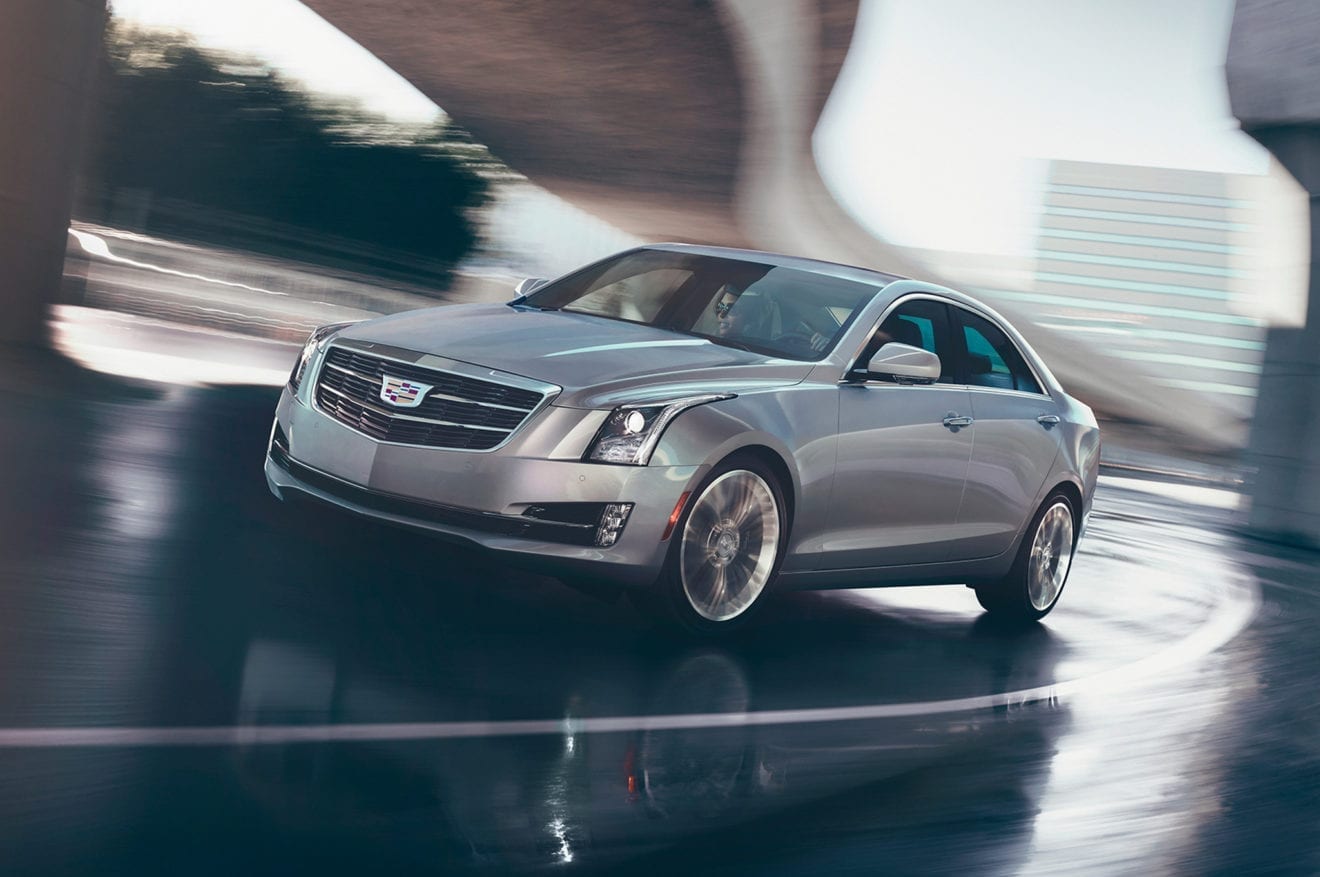
    General Motors’ Cadillac luxury brand expects its China sales to surge 60 percent in 2017, faster than it had projected at the start of the year, on strong demand from younger buyers, the brand’s country chief said.

    The GM premium brand, which saw a sharp spike in sales after it opened its first dedicated factory in the country last year, had said in January that China sales would continue growing at a double-digit rate but at a slower pace than the roughly 50-percent growth it posted in 2016.

    Cadillac, relatively late to introduce local production in the world’s biggest auto market, is among a second wave of luxury car brands in China that seek to take market share from established brands such as BMW (BMWG.DE), Daimler’s (DAIGn.DE) Mercedes-Benz, and Volkswagen’s (VOWG_p.DE) Audi.

    In order to sustain the momentum in Cadillac sales in China, the brand plans to double the number of retail stores over the next five years to more than 300, from the current 180.

    “A lot of younger people in China are looking for something different to stand out of the crowd. We have a very young target audience. That is a significant difference to the other countries in the world,” Cadillac’s China chief, Andreas Schaaf, told Reuters in an interview on Friday.

    The average age of Cadillac buyers in China is 33 years, compared to 50 years in Europe and the United States combined, Schaaf said.