Tag: China

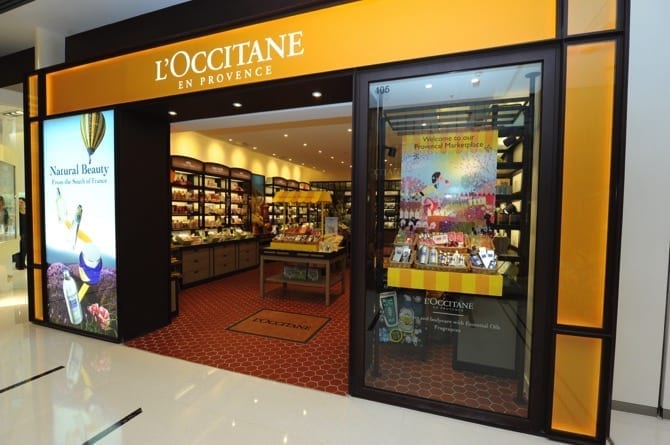
  • L’Occitane ‘bullish’ on China

    L’Occitane ‘bullish’ on China

    L’Occitane International, the French cosmetics and personal-care products company, said it was optimistic on its outlook for mainland China, despite what it called a “challenging” global retail environment.

    “We are still very bullish on China,” Andre Hoffmann, vice chairman and managing director, said at a press conference in Hong Kong.

    “Today, China is the No. 3 market globally for the L’Occitane group,” Hoffman said. “We expect by the end of the fiscal year it could reach the No. 2 market status after Japan,” surpassing the U.S.

    The comments came as the Hong Kong-listed company reported a drop in fiscal first-half net income for the period ended 30 September 2017.

    Net sales in China for the first half were 60 million euros ($70.7 million), up 18.2% from a year earlier, boosted primarily by a 15.8% increase in same-store sales, the company said in a statement, adding that a marketing campaign featuring Chinese singer Lu Han “continued to draw traffic both online and offline.”

    While the company maintains its own e-commerce website in China, Hoffmann noted that “it really cannot compete in terms of traffic and awareness with the major marketplaces like [Alibaba Group Holding’s] Tmall.”

    “It is better that we focus our energy and investments to build up the brand through Tmall,” he said.

    L’Occitane said first-half net profit fell 59.4% to 10.7 million euros compared with 26.4 million euros in the same period a year earlier.

    Thomas Levilion, executive director and group deputy general manager of finance and administration, attributed the drop to unfavorable exchange rates, one-off costs and seasonal effects.

    Those included expenses related to the opening of two new flagship stores in London and Paris, marketing and promotional costs in preparation for the important Christmas shopping season, and a tax credit of 6.5 million euros in the year-earlier period.

  • Alibaba to buy major stake in Taiwan’s RT-mart business in China

    Alibaba to buy major stake in Taiwan’s RT-mart business in China

    Alibaba Group Holding Ltd., China’s biggest e-commerce company, agreed to acquire a stake in a hypermarket chain partly owned by the Taiwan-based company Ruentex Group in its effort to push into offline retail.

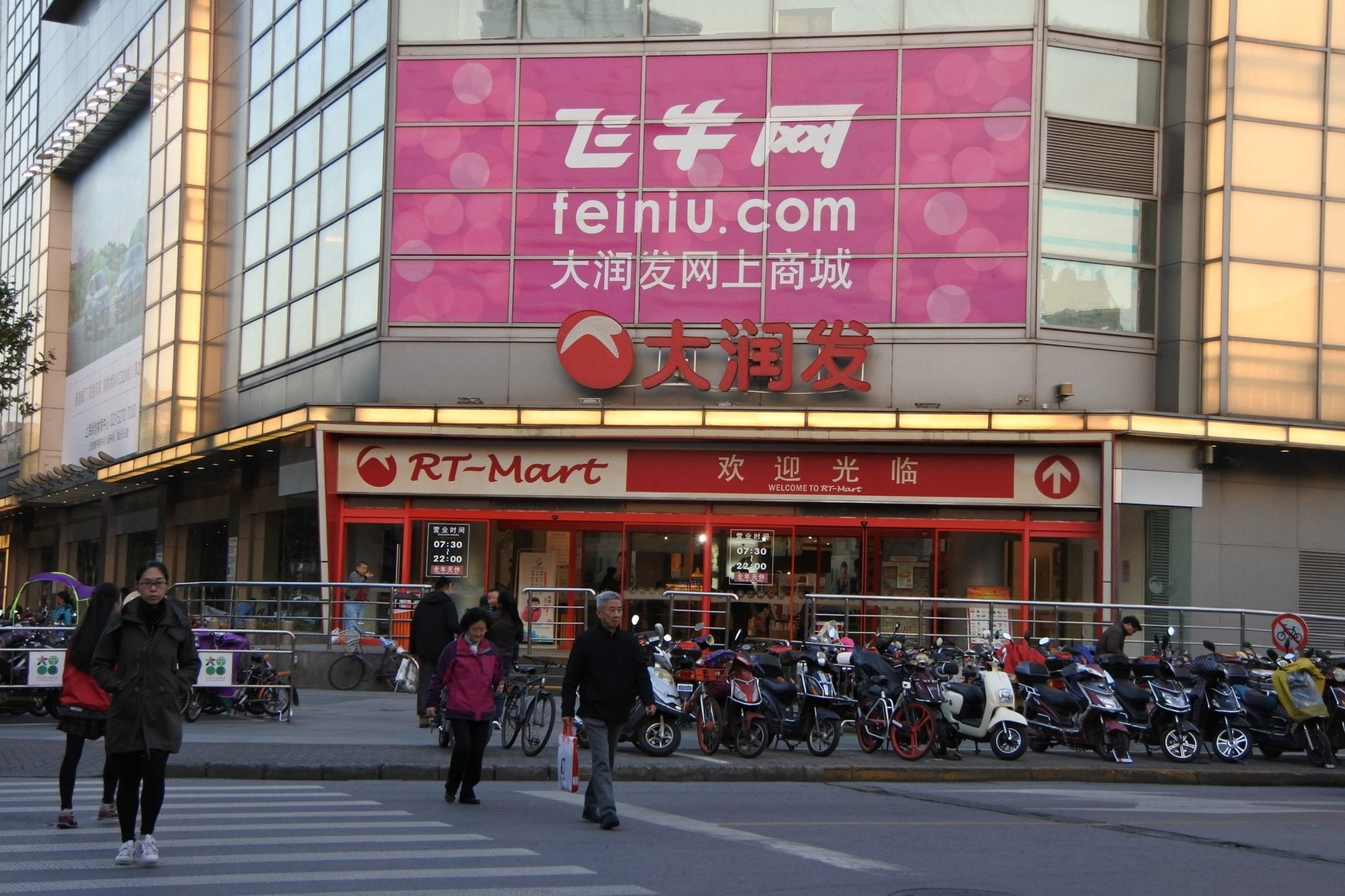
    Alibaba said on Monday that it would invest US$2.87 billion for a 36.16 percent stake in China’s top hypermarket operator, the Hong Kong-based Sun Art Retail Group, which operates more than 440 RT-Mart and Auchan stores in China, reported CNA.

    Under the agreement between the three companies, the deal would give French retailer Groupe Auchan, China’s Alibaba Group and Taiwanese conglomerate Ruentex 36.18 percent, 36.16 percent and 4.67 percent stakes respectively in Sun Art.

    According to Financial Times, the investment is the latest in a series of deals by Alibaba designed to blur the lines between online shopping and physical stores and explore new opportunities in China’s food retail sector.

    Ruentex, meanwhile, said the deal will help the three partners to create a strategic alliance in the retail market in China.

    Ruentex Vice Chairman Peter Huang said in a statement: “Ruentex is delighted to see the win-win collaboration between Sun Art and Alibaba with high synergies in online and offline that will meet the needs of consumers for a better life with better products and services and higher efficiency.”

    Ruentex Group is a Taiwan-based company principally engaged in the manufacture of textile products, the wholesales of commodities and investment businesses.

  • Victoria’s Secret gala stumbles across the line in China

    Victoria’s Secret gala stumbles across the line in China

    The glitzy Victoria’s Secret fashion show stumbled across the finish line Monday night in its first-ever China staging after a run-up marred by setbacks and reports of political interference by Beijing.

    Models breezed down the catwalk sporting elaborate feathered wings and billowing trains as the US brand held the racy show in Shanghai in hopes of making a splash in the country’s growing lingerie market to offset declining American profits.

    But the show, now in its 23rd year, suffered a blow when top US model Gigi Hadid announced Friday she was withdrawing.

    She gave no reason for the decision but it came after Chinese internet users savaged the 22-year-old over a video clip showing her squinting her eyes in an apparently derogatory facial expression.

    US media also reported that singer Katy Perry was expected to headline the musical acts but was denied a visa by China. Instead, England’s Harry Styles led the way.

    The reports suggested that China was upset that Perry had previously draped herself in the flag of diplomatic rival Taiwan and performed in colors implying support for those on the island opposing closer relations with China.

    Neither Perry, Victoria’s Secret, nor China’s government have confirmed the reports but the state-aligned Global Times suggested in an editorial Sunday that Hadid and Perry had “dropped a stone” on their own feet.

    “Payback was unavoidable. Those who are serious about developing careers in the Chinese market can draw lessons from this case and learn to abide by the rules in China,” it said.

    Tripped up

    The stumbles continued Monday night at Shanghai’s Mercedes-Benz arena, whose exterior was bathed in garish pink.

    A system breakdown slowed the entry of the thousands of invited guests, delaying the show’s start, and the Chinese crowd largely resisted entreaties to show much enthusiasm.

    According to reports, as part of its China charm offensive Victoria’s Secret selected a record seven Chinese women to be among the 55 models.

    But one of them, Ming Xi, tripped on her costume and went down hard on the catwalk, triggering an outpouring of sympathy on the Chinese internet.

    Read also: Victoria’s Secret to charm China with fashion gala

    The scene is certain to be excised when the edited production airs in more than 190 countries on November 28.

    Earlier during make-up, China’s top model Liu Wen, a veteran of several Victoria’s Secret shows, told AFP that Monday’s version was “even more special” to her this year because it was held at home.

    “We can be thankful that China is such a big market, so there could be so many Chinese faces appearing. So personally I feel proud of my own country,” Liu, 29, said.

    Victoria’s Secret is hoping to win a slice of that market, opening its first two super-stores in China this year, in Shanghai and Chengdu.

    The company’s US sales have sagged, with analysts blaming its slow-footed response to a trend away from constructed bras towards more comfortable intimate wear.

    Victoria’s Secret is banking on its name recognition and on top models like Adriana Lima and her Chinese counterparts winning over women in China who are increasingly interested in expressing their sexuality, say social and fashion analysts.

    Lingerie is one of the fastest-growing segments in Chinese women’s apparel, according to market-intelligence firm Mintel.

    Mintel predicts it will grow to 148 billion yuan ($22 billion) by 2020, up 32 percent from 2015 numbers.

    The show’s priciest piece of lingerie was the annual “Fantasy Bra”.

    This year’s version, worn by Brazil’s Lais Ribeiro, was a $2 million creation by Swiss-based luxury-goods company Mouawad, studded with nearly 6,000 gemstones.

    Matthew Crabbe, Mintel’s regional trends director, said the fashion show was “a great way to raise consumer awareness”.

    But he added that Victoria’s Secret was entering “a tough retail market with many competitors”, both foreign and domestic.

    US fashion media have also run unconfirmed reports that three Russian and one Ukrainian model were denied visas.
  • Alibaba, Auchan, Sun Art partnership goal in China market

    Alibaba, Auchan, Sun Art partnership goal in China market

    A new Alibaba, Auchan, Sun Art partnership will further strengthen Alibaba’s efforts to integrate online and offline, say analysts.

    China’s Alibaba Group Holding, France’s Auchan Retail and Taiwan’s Ruentex Group have formed a strategic alliance to bring together their online and offline expertise to explore opportunities in China’s food-retail sector.

    As part of the deal, Alibaba is investing HK$22.4 billion (US$2.8 billion) to obtain an aggregate direct and indirect stake of 36.16 per cent in Chinese food retailer Sun Art Retail Group by acquiring shares from Ruentex.

    Auchan Retail is also increasing its stake in Sun Art, with the transaction giving it, Alibaba and Ruentex about 36.18, 36.16 and 4.67 per cent economic interest respectively in the multi-format offline food retailer.

    Sun Art had a total gross floor area of about 12 million sqm in China at June 30. It has 446 hypermarkets as large as 17,000sqm across China under the Auchan and RT-Mart banners. It also has superstores and unmanned stores under the Auchan Minute brand.

    Alibaba says the alliance reflects its “new retail” concept, while Auchan Retail says it aligns with its “Auchan changes lives” vision.

    Alibaba Group CEO Daniel Zhang says the move aims to redefine traditional retail through digital transformation. “Physical stores serve an indispensable role in the consumer journey, and should be enhanced through data-driven technology and personalised services in the digital economy.”

    ‘Positive impact’

    “Bringing together the leaders of instore retail and of online retail will allow us to offer hundreds of millions of Chinese consumers a fully integrated, world-class shopping experience,” says CEO Wilhelm Hubner of Auchan Retail, which has a presence in 17 countries with 3715 points of sale.

    “Consumer demands have changed tremendously with the rapid growth of the mobile internet, and Sun Art is also trying to move from offline to online,” says Ruentex Group vice-chairman Peter Huang.

    “I think this deal will have a positive impact for all involved,” says OC&C Strategy Consultants associate partner Veronica Wang.

    “It will further strengthen Alibaba’s efforts to integrate online and offline,” says Wang. “Alibaba has been quite aggressive in investing offline in the past two to three years with its continuous investments in the likes of retailer Suning and mall company Intime, as well as its own launch of Hema supermarkets.”

    She says the alliance could help Sun Art build digital capabilities, with the company trying to tap into e-commerce and build an O2O business since 2014, but with limited success. “Feiniu.com was the first attempt, which is still losing money after three years, and Sun Art launched cashier-free self-service convenience stores this year which are still in the stage of trial and error.”

    OC&C associate partner Steven Kwok says the move is no surprise “especially when retailers in general are finding that grocery retailing, unlike other categories thus far, has encountered greater barriers to the shift online”.

    He says Sun Art’s reach across China not only gives Alibaba an enhanced distribution network, but also serves as a testing ground for digital initiatives.

  • It Is All About Tencent In China

    It Is All About Tencent In China

    Asia has been the best performing region globally this year as China 2.0 kicked in as a theme with China (at the MSCI level) being the best performing market and tech being the best performing sector. As Mark Tinker, responsable de AXA IM Framlington Equities Asia, comments: “In Hong Kong the story has all been about Tencent, while in Korea it has been about Samsung.”

    In fact, in Hong Kong in particular the impact of Tencent has been extra-ordinary as the largest stock in the market with a current weighting of almost 12% has effectively doubled over the last 12 months, while the second biggest, HSBC, is up a mere 17% – albeit with a significant dividend to yield a total return of 23%. In South Korea, where Samsung Electronics is more than 20% of the index, it has risen by 83%. Probably not since Apple became the biggest stock in the US market back in 2011/2 and then doubled has the index effect had such a big impact on so many active institutional investors.

    “Of course the argument threatens to become circular” says Tinker.  Therefore, he wonders if Tencent or Samsung are up so much because people are buying the index or vice versa?

    For Tencent there may well be some influence from the fact that mainland Chinese investors can buy it through the Southbound Stock Connect, which continues to expand its influence on Hong Kong markets. Tencent is affecting the real economy in China as well as here in Hong Kong.

    As previously noted by Will Chuang in Hong Kong, “it is not only possible but actually significantly easier to spend a weekend in Shanghai without using either cash or a credit card, simply using WeChat pay by Tencent. Tinker adds that “all you have to do is click on your phone to call up a quick response (QR) code that the merchant scans and you are done.”

    It is now said that you can always spot the tourists in Shanghai as they are the ones using credit cards, or if they are really old fashioned, cash.The fact that the largest note in China is RMB100, which is the equivalent of around EUR15 is probably a factor in using WePay to replace cash, but even here in Hong Kong it is increasingly being used.

    Tencent is mainly Chinese but it is also having something of a wealth effect here in Hong Kong as the number of people trading the stock and several of the connected spin-offs that have recently IPO’d here are clearly celebrating their ‘success’ in the bars and restaurants in Central. The expert of AXA IM in Asia explains:

    The retail offering of Tencent spin-off China Literature for example was 625 times oversubscribed and effectively doubled on opening, having caused a huge spike in interbank rates as money was locked up in anticipation.

    Former Hong Kong Chief Executive Chun-ying Leung used to refer to Hong Kong as “where the rest of the country meets the rest of the world” and as well as offering an outbound conduit for mainland investors through its H share listing, the company itself is, like a number of others, investing overseas, most notably when it picked up around 12% of SNAP as that particular stock continued to slide. Many have noticed the contrast between the performance of US tech IPOs and their Chinese equivalents.

  • China faces waste hangover after Singles’ Day buying binge

    China faces waste hangover after Singles’ Day buying binge

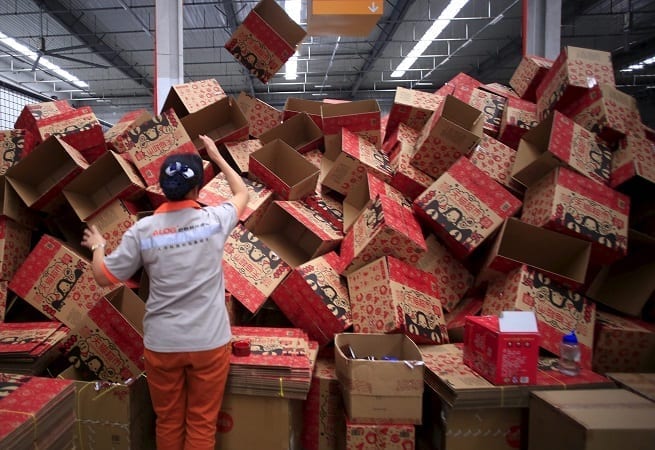
    China’s Singles’ Day online discount sales bonanza on Saturday saw bargain-hungry buyers spend over $38 billion, flooding the postal and courier businesses with around 331 million packages – and leaving an estimated 160,000 tonnes of packaging waste.

    The annual Nov. 11 buying frenzy is a regular fillip for giant online retailers like Alibaba and JD.com, but the mountains of trash produced from just one day of conspicuous consumption have angered environmentalists.

    “Record-setting over-consumption means record-setting waste,” said Nie Li, toxics campaigner at Greenpeace, which estimates this year’s orders will produce more than 160,000 tonnes of packaging waste, including plastic, cardboard and tape.

    Total sales from Singles’ Day hit 254 billion yuan ($38.25 billion), with 1.38 billion orders placed, state media reported. Around a quarter of the total sales involved household electric devices or mobile phones.

    China’s State Post Bureau (SPB) said postal and courier companies are having to deal with at least 331 million packages, up 31.5 percent from last year.

    Greenpeace described the annual promotion as a “catastrophe for the environment” that not only creates waste, but leads to a surge in carbon emissions from manufacturing, packaging and shipping. In a report published last week, it estimated that total orders last year produced 52,400 tonnes of additional climate-warming carbon dioxide.

    E-commerce firms have drawn up measures aimed at solving the problem, and aim to replace cardboard boxes with reusable plastic ones that courier companies can share. They have also experimented with biodegradable delivery bags and tape-free boxes, but Nie said the efforts were still not enough.

    “China’s online retail giants have taken few real steps to reduce delivery packaging waste,” she said. “Ultimately, packaging that we throw out after one use is not a sustainable option.”

    A spokesman for JD.com said it is “continually improving ways to better reduce waste and pollution” and, among other measures, aims to raise the proportion of biodegradable materials in its packaging materials to 80 percent by 2020.

    Alibaba’s Cainiao logistics arm said in emailed comments that it had launched initiatives aimed at minimising its environmental impact. “We are committed to work closely with different stakeholders to protect the environment and contribute to the sustainable development of the industry,” it said.

    MOUNTAINS OF WASTE

    China’s packaging waste problems are not confined to Singles’ Day.

    Official data shows China’s courier firms delivered around 20 billion orders in 2015, using 8.27 billion plastic bags, 9.92 billion packing boxes and enough sticky tape to go around the globe more than 400 times.

    Overall deliveries continue to surge, with the number of packages expected to hit 50 billion next year, up from 30 billion in 2016, according to forecasts by the SPB.

    But even that’s only a small part of China’s mounting waste problem, with large sections of the country’s soil and water contaminated by untreated industrial, rural and household trash.

    With China’s major cities producing around 2 billion tonnes of solid waste a year, they are already surrounded by circles of landfill known in Beijing as the “seventh ring road”.

    China has also struggled to finance the infrastructure required to handle surging volumes of discarded white goods, consumer electronics and batteries.

    Despite massive production volumes that have left the country dependent on imported raw materials, overall recycling rates in industries like steel, glass or textiles remain way behind their international counterparts.

    On top of that, China has only just started to impose restrictions on imported waste, which stood at 47 million tonnes in 2015.

    Recycling of foreign and domestic trash was traditionally handled by migrant workers, known as “scavengers”, who ripped apart discarded goods in back-street workshops.

    But rising economic prosperity means fewer people seek to make a living recycling waste, and tougher environmental regulations have forced small-scale recyclers to close.

  • Premier outlet malls to receive some financing

    Premier outlet malls to receive some financing

    A US$750 million fund to finance premier outlet malls in China has been set up by asset manager Allianz and realty investor TH Real Estate.

    The Eres APAC II – China Outlets fund will be established by the Allianz real-estate investment arm Allianz Real Estate. It aims initially to raise the target commitments ($750 million) to acquire two established outlet malls, Florentia Village Jingjin, between Beijing and Tianjin, and Florentia Village Shanghai.

    In fact, say the asset managers, the fund has identified a pipeline of targets.

    Allianz will be the anchor investor with a 30 per cent share, the balance to be held by institutional investors like TH Real Estate, which will also act as fund manager. RDM Asia, part of Italy’s Fingen Group, will be asset manager.

    It is not the first partnership for Allianz and TH Real Estate, but is their first bid to form an investment fund in China. In 2004, both parties invested in Europe Outlet Mall Fund followed in 2008 by the UK Outlet Mall Fund.

    Three months ago Allianz partnered with Singapore’s Keppel Group to buy Hongkou Soho in Shanghai for $525 million.

    “China is moving toward an economy led by services and domestic consumption,” says Allianz Real Estate Asia-Pacific CEO Rushabh Desai. “Alongside the traditional brick-and-mortar retail formats, outlet malls have been successful in attracting buyers looking for branded products at discounted prices. We look forward to replicating our European outlet mall performance in China.”

  • Sales plunge for Salvatore Ferragamo

    Sales plunge for Salvatore Ferragamo

    Asia Pacific, particularly China, was best dressed for Italian luxury brand Salvatore Ferragamo as it foundered overall in negative territory for the nine months to the end of September.

    Asia Pacific was its top market, with revenues growing by 2.8 per cent (3.5 per cent at constant exchange rates), despite softness in South Korea through significantly reduced tourism from China, and ongoing negative performance in Hong Kong.

    Meanwhile, says its consolidated interim report, China recorded 8.1 per cent retail grown (15.5 per cent at constant exchange rates) for the period, while there was a 6.7 per cent (4 per cent) drop in the Japanese market.

    Ferragamo says a strategic rationalisation of its wholesale channel saw revenues drop 0.8 per cent to €1 billion (US$1.1 billion), while overall retail revenue rose 1.2 per cent. The wholesale channel was also penalised by political tensions in South Korea and a strategic rationalisation in Japan.

    Its gross operating profit (EBITDA) fell by 25.1 per cent to €162 million, and its net profit by 28.3 per cent to €79 million.

    Footwear sales were down by 1.2 per cent, and handbags and leather accessories by 0.6 per cent, while fragrance sales were up 3.2 per cent.

    At the end of September, the group’s retail network comprised 687 points of sales including 407 directly run stores and 280 third-party outlets in the wholesale and travel retail channel, as well as its presence in department stores and multi-brand specialty stores.

    With a positive net financial position of  €100 million compared to debt of €18 million at the same time last year, Ferragamo says the current year is a transition period for the group which will see the introduction of strategic initiatives.

  • Koda is off to a flying start

    Koda is off to a flying start

    Expansion in China of its in-house brand Commune has kickstarted the latest fiscal year for Singapore furniture group Koda.

    With seven more Commune stores on the mainland, coupled with rising exports, Koda’s first-quarter net profit jumped 64 per cent to US$1.4 million while revenue rose 4.5 per cent to $12.3 million.

    This, coupled with lower production costs, improved economies of scale and more efficient supply chain, lifted the group’s gross profit margin by 6.1 points to 34.5 per cent.

    At the end of the quarter on September 30, Commune had 50 outlets across Singapore, China, Malaysia and Australia, and says it is on track to setting up 100 outlets in China by 2020. Over the next 12 months, Commune will be rolled out in fresh markets within Asia.

    In China, Commune is seen as being different, even avant-garde, says Commune CEO Joshua Koh. “Commune’s growing appeal among younger home-owners gives us confidence to roll out more stores in China and elsewhere in Asia.”

    Founded in Singapore in 1972, Koda is an original design manufacturer that has production and sourcing bases in China and Vietnam, plus a specialist manufacturing plant in Malaysia. Established in 2011, Commune Lifestyle is a wholly owned subsidiary managed by the third generation of the founding Koh family.

  • Korean retailers shifting to ASEAN from China

    Korean retailers shifting to ASEAN from China

    Lotte, Shinsegae and other retailers in Korea have been shifting their focus to Southeast Asia as it has become difficult to conduct business in China amid deteriorating Korea-Sino ties.

    The increasing number of middle-class consumers in Vietnam and other countries has also encouraged the retailers to establish a larger presence in the rapidly-growing region.

    The exodus from the Chinese mainland has been accelerating as the Chinese government shows no signs of easing economic retaliation against Korean firms and their products because of Seoul’s decision to deploy a Terminal High Altitude Area Defense (THAAD) battery here.

    Of the Korean retailers, Lotte Group has engaged most actively in the Southeast Asian markets, pushing ahead with its plan to carry out multi-complex construction projects in Southeast Asia as the group’s new growth engine.

    Lotte Mart, the hypermarket brand of the nation’s largest retailer, is currently operating 45 stores in Indonesia and 13 in Vietnam, industry sources said. It will also open another store in Lampung Province, Indonesia, in December 2017.

    In September 2014, Lotte built the Lotte Center in Hanoi, Vietnam. The 65-story multi-complex offers the group’s various shopping and accommodation brands, including Lotte Department Store, Lotte Mart and Lotte Hotel.

    Lotte is building a large-size shopping mall with a gross floor area of 200,000 square meters in Hanoi, with completion scheduled for 2020. It is also reviewing its plans to invest about 2 trillion won (US$1.74 billion) to build another 100,000-square meter multi-complex in Ho Chi Minh City.

    Lotte Duty Free, the group’s duty free store affiliate, has also recently entered Vietnam. It partnered with a local retailer to establish the Phu Khanh Duty Free at the Da Nang International Airport, and the company official said it has a similar plan to open business in other major cities in Vietnam.

    Shinsegae Group’s discount chain brand E-Mart is also shifting to Southeast Asian markets.

    It has officially announced its exit from the Chinese market, and chose Vietnam as its new overseas growth engine. E-Mart opened its first store in the Go Bap area of Ho Chi Minh City, in December 2015, and is planning to open its second store in the city soon.

    The E-Mart Go Bap store recorded 41.9 billion sales the previous year to exceed its sales target by 20 percent. Its sales performance also marked 25.8 billion won during the first half of this year, up 27.5 percent from the same period the previous year.

    It signed an MOU deal with Ho Chi Minh City last year to invest $200 million in September, and an E-Mart official said it will enter Laos, Indonesia and Cambodia soon.

    GS Retail, the nation’s convenience store brand is also entering Southeast Asian markets.

    GS Retail, which operates the GS25 convenience store chain, has recently established a joint venture with Vietnamese SonKim Group. Taking 30 percent in shares, GS Retail plans to open its first store in Ho Chi Minh City.

    GS Retail opened its first GS Supermarket in Indonesia in October 2017.

  • DHL Express to expand opration at HKIA hub

    DHL Express to expand opration at HKIA hub

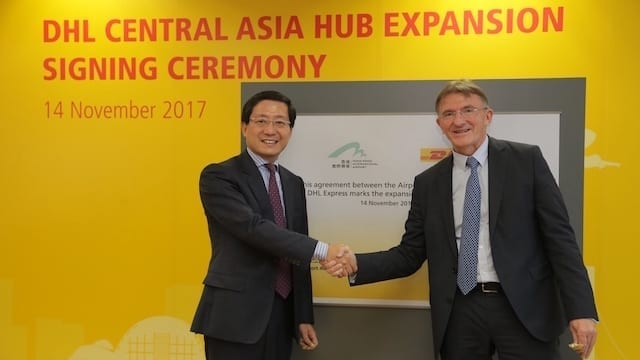
    Growing regional e-commerce trade has prompted DHL Express to expand its central-Asia hub (CAH) in partnership with Airport Authority Hong Kong.

    Costing about HK$2.9 billion (US$371.4 million), the expansion takes DHL’s commitment for the hub to about $4.5 billion.

    Recording an average 12 per cent year-on-year growth in its shipping volume in the past decade, CAH is one of three global hubs for DHL. With its expansion, it will handle more than 40 per cent of DHL’s Asia Pacific shipments.

    DHL Express CEO Ken Allen says the hub is based in a location that is strategically important for the company as the region’s international trade demands continue rapid growth.

    As part of the expansion, CAH will be equipped with an enhanced material-handling system that will improve productivity and increase throughput from 75,000 shipment items an hour to 125,000 items. The annual throughput of the expanded hub is expected to rise by 50 per cent to 1.06 million tonnes.

    As a dedicated air express cargo unit at Hong Kong International Airport (HKIA), the expanded CAH can handle six times more in terms of shipment volume than when it was established in 2004.

    Three times faster

    “Connecting with more than 70 DHL Express gateways in the region, the hub plays a significant role in strengthening our network in Asia Pacific, including Bangkok, Shanghai and Singapore,” says DHL Express Asia Pacific CEO Ken Lee.

    “The expansion will also help us capitalise on the growth in intra-Asian trade that currently contributes more than 40 per cent of our revenue in Asia Pacific. Equipped with fully automated X-ray inspection machines, the expansion will make our shipment inspection three times faster.”


    “The strong growth of cross-boundary e-commerce has generated new opportunities for the air-cargo industry,” says Airport Authority Hong Kong CEO Fred Lam. “We have taken an array of measures to further strengthen our role as an international and regional aviation hub, which include reserving land on both the airside and landside to support the growth in transshipment, cross-boundary e-commerce and the high value-added air-cargo business.”

    The CAH extension is expected to start work in early 2022, in time to capture demand in the Pan-Pearl River Delta region and completion of the airport’s three-runway system in 2024. The expansion will increase the CAH warehouse space by about 50 per cent to 47,000sqm.

    Its security system will have 520 CCTV cameras and an advanced access-control system, and a quality-control centre will monitor flight uplift/landing times and reporting any irregularities so DHL can notify customers of flight delays or cancellations.

  • Apple’s Asia Suppliers Rise on Forecast of Strong Holiday Sales

    Apple’s Asia Suppliers Rise on Forecast of Strong Holiday Sales

    Apple Inc.’s suppliers in Asia, including Hon Hai Precision Industry Co. and Wistron Corp., rose after Apple forecast revenue for the quarter ending in December that topped estimates amid strong demand for its 10th anniversary iPhone.

    Hon Hai, the main assembler of the iPhone X, rose as much as 1.8 percent in Taipei trading, while Wistron, another Apple assembler, rose as much as 4.3 percent. Quanta Computer Inc., Pegatron Corp. and Genius Electronic Optical Co. also rose.

    After concerns about production volumes this year, Apple signaled it’s fixing supply problems with the iPhone X and setting itself up for a better-than-expected holiday period. Supported by resurgent iPad and Mac sales, the 10-year anniversary iPhone will help push revenue to a record high of $84 billion to $87 billion in the quarter ending in late December, Apple said in a statement. Analysts had predicted $84 billion, according to data compiled by Bloomberg.

    Apple shares rose about 4 percent in late U.S. trading after the earnings report. The Cupertino, California-based company is the most valuable in the world with a market valuation of more than $850 billion.

  • DFS Group Kicks Off Its Seasonal Gifting Campaign

    DFS Group Kicks Off Its Seasonal Gifting Campaign

    DFS Group kicked off its Give Joy Together seasonal gifting campaign in
    style with the Art of Personalization shopping experience, which was held on November 11 at T Galleria by
    DFS, City of Dreams, Macau. The world’s leading luxury travel retailer sshowcased a bespoke approach to gift
    giving through craftsmanship and customization, simultaneously drawing attention to the wide range of exclusive
    luxury items available at the store.

    Global retail influencers Bag Snob and Mr. Bags and world-famous contemporary pop artist Boyarde joined
    senior DFS executives including Sibylle Scherer, President Merchandising and Consumer Marketing, Christophe
    Chaix, Senior Vice President, Fashion, Watches, Jewelry and Accessories, Nelson Mui, Vice President of Global
    Fashion Merchandising and Trends, and Johan Pretorius, Managing Director, Cotai Limitada, DFS at the event.

    “The Art of Personalization demonstrated how bespoke craftsmanship can transform luxury handbags and
    accessories into highly desirable one-of-a-kind gifts, and we were delighted that Bag Snob, Mr. Bags and
    Boyarde were able to join us,” said Nelson Mui. “Their collective talent and knowledge of the luxury retail
    market is vast and we were honored that they were a part of this exciting event.”

    Each celebrity presented a curated selection of pieces as gift inspiration for the holiday season. Bag Snob,
    passionate bag lover and founder of BagSnob.com, highlighted her top choices for seasonal gifts that included a
    DFS exclusive Bulgari bag and watch, a Tiffany & Co Key necklace, exclusive Tod’s shoes and an exclusive
    wallet on chain by Valentino. Style guru Mr. Bags, who has more than three million followers on Chinese
    microblogging site Weibo, promoted eight of his favorite products from the many brands available at the store.

    These included a Tiffany & Co Key necklace, bags by Dolce & Gabbana, Burberry and Bulgari, shoes by Rupert
    Sanderson, Bing Xu and Tod’s, and whisky by Johnnie Walker. Pop artist Boyarde, whose playful designs are
    highly sought after around the world, conducted mini workshops and conducted live paintings. The British artist
    also presented a selection of exclusively designed and hand painted bag straps and charms for her customers.

    Bag Snob gave her tips on how best to spend 24 hours in Macau, while VIP guests had the opportunity to offer
    their own thoughts on personalization. The visiting influencers also highlighted the customization services
    available in store at the Make it Yours counter throughout the holiday season, such as tag embossing, bottle
    engraving and personalized gift wrap creation.

    A silent auction to raise money for Make-A-Wish, the world’s largest wish-granting organization, was run
    throughout the event, reminding guests that gifting is also about giving to others less fortunate. Bidders vied for a
    fabulous leather jacket donated by AllSaints and handbags chosen by Mr. Bags and Bag Snob, all personalized
    with Boyarde’s iconic and eye-catching designs. This is the fourth successive year that DFS has partnered with
    the foundation, which has made dreams come true for over 415,000 children around the world who suffer from
    life-threatening medical conditions.

    The evening culminated in a party featuring two spectacular balloon drops. Any guest catching a glitter-filled
    balloon stood the chance to win amazing prizes, whilst shoppers who spent over MOP1000 enjoyed MOP200 off
    their purchase.

  • JD.com surprises with first profitable quarter

    JD.com surprises with first profitable quarter

    JD.com profit soared 50 per cent after a 39 per cent increase in sales during the Chinese online retailer’s latest quarter.

    Its unaudited results for the three months to the end of September show revenue of RMB83.7 billion (US$12.6 billion), with a record 50.3 per cent surge in gross profit to RMB13 billion. Non-GAAP gross profit was RMB12.8 billion, up 51.9 per cent.

    Active customer accounts increased by 34 per cent to 266.3 million in the 12 months to September 30.

    Chairman/CEO Richard Lio says the company is building robust product content and enhancing user engagement with innovative tools that enable brands to launch highly targeted online marketing programs.

    “The scale economies of our model are becoming clearer with every quarter,” says CFO Sidney Huang. “Looking ahead, we will continue to prioritise investments in technology and leading R&D talent as we execute on our vision to revolutionise China’s retail industry.”

    While releasing its third-quarter figures, JD.com also listed its latest business developments…

    In October, JD and Tencent expanded their partnership with the launch of a marketing initiative that integrates insights on consumer behaviour from Tencent’s social-media platforms with online and offline shopping data from JD and its brand partners. As well as enabling more precise target marketing, the move benefits consumers by offering them wider access to sales promotions and preferred discounts.

    Strategic partnerships

    During the past three months, JD.com also formed strategic partnerships with Baidu, iQIYI, NetEase, Sogou and Qihoo 360 with their big-data resources, massive user bases and AI algorithm technologies.

    JD also continued to strengthen its position among top-tier international brands, expanding its partnership with high-fashion brand Armani with the opening of official online stores for Armani Exchange and Emporio Armani.

    JD Worldwide also launched flagship stores for such companies as Reckitt Benckiser, Spectrum Brands and Tiger, while its new Toplife platform attracted marquee brands like Dyson, La Perla, Rimowa (LVMH) and Trussardi.

    During the quarter, JD Logistics test-launched an unmanned sorting centre, the first of its kind in the logistics industry. JD also signed agreements to lay the groundwork for the rollout of China’s largest drone network.

    In September, JD Logistics expanded its environmentally friendly logistics and packaging campaign, working with brands including  Johnson & Johnson, Kimberly-Clark, Lego, L’Oreal, P&G, Nestle, Unilever, Watsons and Wrigley. The aim is to minimise environmental impact by cutting back on packaging materials.

    Customer demand

    JD also enhanced its fresh product offerings during the quarter to meet customer demand. In July, it launched the Canadian Fresh Food Pavilion, the first country pavilion for fresh products on the JD.com platform. Live lobsters from Canada can now be delivered to customers’ doorsteps in China in as little as 48 hours. During JD’s Super Canadian Day, 140,000 lobsters were sold within 24 hours.

    In September, JD.com, JD Finance, Central Group and Provident Capital announced agreements to establish two JVs in Thailand covering e-commerce and fintech services, with an aggregate investment of $500 million. JD.com is providing its expertise in technology, e-commerce and logistics while Central Group is drawing on its retail store network, brand and merchant relationships, and retail behaviour insights from its loyalty program.

    In October, JD and Sam’s Club launched a promotion offering customers discounted bundled memberships for Sam’s Club and the JD Plus paid-for membership service.

    By the end of October, JD.com JV New Dada had partnered with 146 Walmart stores and 301 Yonghui stores, as well as many other supermarkets and grocery stores, to provide online fresh grocery shopping with one-hour home delivery.

    At the end of September, JD.com had 405 warehouses and provided scheduled delivery services in 250 Chinese cities. It had about 160,000 merchants on its online marketplace, and 137,975 full-time employees.

  • Hundreds of new shops for China’s Auchan Minute

    Hundreds of new shops for China’s Auchan Minute

    “Several hundred” Auchan Minute shops without checkout counters are planned for China by year’s end.

    Customers enter by scanning a code via the WeChat app. After products are scanned, they are added to a virtual cart. The customer then pays via AliPay or WeChat Pay.

    Every Auchan Minute will offer 500 products 24 hours a day.

    Founded in 1961, Auchan is France’s second-largest retail group after Carrefour.