Tag: China

  • Tokidoki Plans to Open 10 to 15 Hotels in China in the Next Five Years

    Tokidoki Plans to Open 10 to 15 Hotels in China in the Next Five Years

    Devotees of Tokidoki, the overly cute character lifestyle brand, will in future be able to book a room in a Tokidoki-adorned hotel. Cofounders Pooneh Mohajer and Simone Legno plan to open 10 to 15 Tokidoki hotels in China in the next five years, with the first one expected to be welcoming guests by the end of next year. Chasing young professionals who favor ultra-clean design with touches of art, the company is laying the groundwork for its own affordable luxury hotels. The Tokidoki branded hotel will feature its own designed decor, including hospitality products that will be available for purchase at the hotel. Legno, creative director, said, “It is a 360-degree experience as a designer. I have a graphic design background so I will apply that to stationery for the Tokidoki hotel, as well as a new logo.” (His fine art will also be sprinkled throughout the hotel.)

    Tokidoki’s interpretation of Kartell “Ghost” chairs will be in the hotel rooms. The company just unveiled the $480 Louis Ghost chair and the $185 Lou Lo one for children, reimagining the iconic seats that Philippe Starck designed for the company. Legno said, “We will promote it for sure. Why not? That’s the wonderful part of a design project.”

    The name Tokidoki means “sometimes” in Japanese, but the Asian-inspired products are made by an Italian artist now living in Los Angeles. The mash-up of cultures has led to collaborations with Karl Lagerfeld, LeSportsac, Marvel and Hello Kitty, among others, and a global following. The new Kartell chairs, for example, will be sold via Tokidoki’s site, Kartell’s New York and Miami stores and its wholesale accounts. With 10 Tokidoki stores, including outposts in Shanghai and a two-month pop-up shop at Galeries Lafayette in Beijing that featured big-screen animation. The 12-year-old company, which has flagship in IAPM Mall in Shanghai, plans to open 20 more before the end of this year.

    In January, the brand teamed with the conglomerate Chow Tai Fook for fine jewelry which is being distributed through more than 1,500 outposts in China, as well as stores in the U.S., Japan, South Korea, Singapore and Malaysia.

    This week alone included stays in Singapore, Los Angeles and New York. Monday they will be off to Vancouver. Next month, trips to New York, London, Milan and Indonesia are slated. “A year feels like it goes by in a month,” Mohajer said. “It’s pretty insane.”

    Reminded of his recent trips to India and Thailand, Legno said, “You have to push as much as possible when it’s a hot moment. We’re trying to focus on a global label and expand the brand as much as possible.”

    Li & Fung, Toki’s master licensing partner for China, Taiwan and South Korea, coordinated the hotel deal, and is scouting new ones for jewelry and cosmetics. A jewelry collaboration is in place and more shoppers are in search of Tokidoki’s vinyl art collectible figurines. Mohajer said of Li & Fung, “They’re constantly generating good flow. It’s been amazing to work with them. They were part of negotiating and procuring a retail partner for us for China.”

  • BYD chief expects all vehicles to be electric in China by 2030

    BYD chief expects all vehicles to be electric in China by 2030

    The head of Chinese automaker expects all vehicles in the country to be electric or hybrid by 2030, a more aggressive timeframe than even Europe, as Beijing pushes ahead on a longer-term plan to shift away from petrol-engine cars.

    Earlier this month, a senior Chinese official said the world’s largest auto market had begun studying when to ban the production and sale of cars using traditional fuels, without giving a timeframe from the shift.

    The United Kingdom and France have said they will ban new petrol and diesel cars from 2040.

    “We are very confident about all the timetables (to eliminate fossil fuel cars) and we think it will happen earlier than expected,” said Wang Chuanfu, chairman and president at Shenzhen-based carmaker BYD, which has invested heavily in battery electric and plug-in hybrid vehicles.

    “Various governments have announced timetables to end the sale of fossil fuel cars and this is putting pressure on everyone else,” Wang told reporters in Shenzhen on Thursday.

    China has set goals for electric and plug-in hybrid cars to make up at least a fifth of its auto sales by 2025 in a bid to combat air pollution and close a competitive gap between its newer domestic automakers and their global rivals.

    However, China is also phasing out subsidies for the electric-vehicle market that have supported makers of new-energy vehicles like BYD. BYD, which is backed by U.S. investor Warren Buffett, has seen its profits fall sharply this year.

    Wang added that 20 cities in China would begin building BYD sky rail transport systems next year, amid a push by the firm to diversify away from cars alone.

    BYD’s first sky rail project was launched in China’s northwestern city of Yinchuan at the beginning of this month.


  • Element Fresh has redefined healthy dining in China

    Element Fresh has redefined healthy dining in China

    Now bound for wider Asia, a fresh-food restaurant concept focusing on expats has caught the imagination of more than 1 million mainland Chinese.

    Salads, organic food and superfoods are not usually the first types of cuisine one considers staples in Mainland China, but a young American entrepreneur has hatched a fast-growing chain of quick-service restaurants serving up just that to thousands of Chinese and expat diners every day.

    Now the concept is heading to other Asian cities as its reputation spreads.

    Best known for its salads, sandwiches, juices and smoothies, Element Fresh also offers a variety of Asian dishes and a creative dinner menu, expanding into steaks, fish and pasta. With a positioning statement “Enjoying fresh food!”, the company’s unique selling point is delivering diners “the freshest food in China”.

    Element Fresh was founded by Bostonian Scott Minoie, a self-professed “lifelong foodie and chef”, and his mate Sheldon Habiger, who started a catering service in Shanghai which they morphed into a health-food and juice bar.

    In 2002, a loyal customer who happened to be a leasing executive from the Shanghai Centre, suggested they take some space in the mixed-use development, which as well as a popular shopping mall, houses thousands of office workers during the day. A few other customers pitched in some cash to help the idea come to fruition.

    The store opened on July 12, 2002, and is now part of a 40-strong chain. Within the next three years, another 30 stores are planned on the mainland, all company-owned, and the first in other Asian cities to be run under a franchise system.

    Asiawide franchise specialist VF Franchise Consulting is representing Element Fresh throughout the region.

    “After 15 years of tried, true, tested success in China, it’s a nice time to take it abroad,” Paul Barbone, Element Fresh’s international franchise business director, told Inside Retail on the sidelines of a VF Franchise Consultants business-matching event in Manila.

    “Hong Kong, Singapore and Bangkok – those big centres are very attractive, they’re definitely places we aspire to be. Vietnam is still emerging, so it is not an easy sell. We are here looking at Manila. We would never rule out North America, and Australia has been discussed.”

    Barbone has spent 18 years in the Middle East expanding globally recognised franchise brands there, so that region is on the radar as well, but for now the focus is on Southeast Asia – and Hong Kong, given its proximity to the mainland.

    More than salad

    Timing is often a decisive factor  in new concepts, and it certainly played a big part in the success of Element Fresh.

    When Minoie landed in China on an exploratory journey that has never come to an end, the whole foods, organic and superfoods market was emerging, not just in the US but globally.

    In a country where a lot of food had the goodness fried, steamed or otherwise cooked out of it, the alternative of eating raw vegetables was not attractive. So he began piecing together a viable business opportunity, starting with raw vegetables in a salad format, dressed up to look delicious.

    From there, the concept parlayed into what has today become a very popular destination – initially with westerners and now with local Chinese.

    “I say we are the leaders in casual dining,” says Barbone. “We are definitely a pioneer. People have mimicked what we are doing, so we have to be a step ahead of people copying us, but we’re still the leaders.”

    Barbone has seen some good concepts in China, but not developed to the same scale as Element Fresh.

    “A lot of the players have difficulty competing in Shanghai on many levels. One of those may be just the scalability of their organisation and trying to get locations to expand. That said, we do benefit from that, but it only came from taking a relative risk in the early 2000s and not becoming complacent in those decisions.”

    Resisting bland

    While the core of Element Fresh’s menu started out with salads, the whole concept has expanded into a full dining experience, from breakfasts to smoothies and full-sized entrees.

    “The main thing we sell is gourmet salads, topped with protein options. With marinated, grilled chicken, meats and seafood, we offer a whole plethora of proteins. Grilled foods have taste – you can’t always eat bland food.

    “We are not vegetarian. The health aspect comes in with a lot of these things – like the dressings – being properly portioned. That said, a person could order a salad and ask the waiter for more dressing. That’s OK, but that’s where most of the calorific intake comes from. Yogurt green miso dressing is good in moderation, but it becomes unhealthy if you eat too much of it.”

    Pastas are becoming more and more popular at Element Fresh, but in line with the overall theme whole-grain pasta is served.

    “We serve a great Australian steak. People look at that and say, ‘That’s not healthy’, but red meat in general in moderation is healthy – a 250g cut rather than a huge American-style 330g serving, of course, and complemented with vegetables.

    “We give customers an opportunity to be healthy. I eat a lot of Element Fresh and I like the way I feel after leaving the restaurant: I’m not drained, my body is not focused on dealing with fat.”

    The juices and smoothies are 100 per cent real fruit. “The first time I went to one of the restaurants I was surprised they don’t put ice in the juices. People can ask for ice, but when they buy a 16-ounce juice they want a 16-ounce juice, not 12 ounces of juice and four ounces of ice. We are going to be fully transparent, and when people order a juice, they get a juice.”

    As much as possible in China the company uses organic ingredients. It also uses superfoods, such as kale in a pesto (instead of basil) and, of course, berries.

    With 1 million followers on WeChat, the company invests a lot of time trying to educate people on the benefits of various foods and of healthy eating. “We take that very seriously and we want to engage with them,” says Barbone.

    Behind the scenes

    A significant factor in Element Fresh’s stellar growth is what the business does outside its restaurants.

    “We work with suppliers to help them understand why we need things grown in a certain way. It’s about long-term relationships and making sure all the things we do are taken on board.

    “Then we have the only HACCP-certified central kitchen in Mainland China. We are very particular about how we handle our food. Food safety is top of Chinese consumers’ minds (after recent KFC and other scares). We have our own lab in the central kitchen testing everything we produce.”

    The company also has its own fleet of distribution trucks rather than relying on third parties, thus ensuring temperature control and food-safety standards are met throughout the whole life of the food it sells.

    “It really is A to Z, and people appreciate that. When walking around Shanghai and looking at some of these beef noodle huts where some guy is literally chopping his meat on the sidewalk, I think, ‘OK, I am never eating there’. Many food-court outlets, such as steak places, pick a steak off a tray, grill it and cut it up. They don’t keep their steaks chilled but at ambient temperature, In North America, those places would be shut down in a nano-second.”

    Perhaps that has helped attract Chinese to the brand in growing numbers. What cleary started as an offer targeting expats is now very much a concept embraced by locals.

    Inside Retail asked how the brand managed to convert Chinese to the concept.

    “People want to familiarise themselves with more western-style things, and over time we gained popularity. Those trends take off in China at 10 times the pace of elsewhere. When  there is a shift in the market, it’s counted in thousands rather than tens.

    “You can’t eat beef noodles every day, and people are looking at other foods. We are challenging a lot of cultural norms.”

    Pricewise, Elements Fresh is very mid range. “A lot of people see us as expensive. For those people, I’d love to show them our central kitchen.”

    That said, a salad is priced around US$10 and a juice from $3 to $4. The average check runs at about $14 to $15 a person.

    Deuce for juice

    A key factor in the brand’s growth is a partnership with former international tennis player Li Na, in an ambassadorial role. However, she is involved in much more than just marketing activities. Li Na helps with menu development, “putting her fingerprint” on the brand, which has even stretched to a co-branded restaurant in her home city of Wuhan.

    “She wanted to do something special. The restaurant has Li Na themes and branding that really talks to the relationship we have with her. Scott and her see eye to eye. She wants to be an ambassador not only for Element Fresh, but for a healthy lifestyle, which coincides with our philosophy.”

    China’s second-best-known sports star, Li Na also retains a relationship with Nike, keeping her profile high all over the nation.

    Apart from Wuhan, most of Element Fresh’s growth focus in China has been on Shanghai, where there are now 17 eateries, and Beijing, with 12. But now the company is expanding into tier-two cities, mostly across the south, including Chengdu, Guangzhou, Nanjing and Shenzhen.

    Still privately owned, the company has grown to a payroll of 2500 staff members and serves more than 15,000 guests daily.

    Positioned as “healthy dining, redefined”, Element Fresh is a concept that will offer tailormade food for Asia’s local populations and expatriates.
  • Alibaba Cloud launches MaxCompute in HK

    Alibaba Cloud has launched a new big data processing service named MaxCompute in Hong Kong to help meet rising demand for scalable computing services.

    The new platform will allow enterprise customers to store and process up to a petabyte of structured and unstructured data, with a single MaxCompute cluster scalable up to 10,000 servers.

    The platform is capable of CPU and GPU based machine learning and offers built-in security protection as well as disaster recovery capabilities.

    Alibaba Cloud has already launched MaxCompute in mainland China and Singapore, and last year the platform set a new record with the lowest computing cost at $1.44 per TB in the CloudSort category of the 2016 Sort Benchmarkcompetition.

    “As industry demand increases and evolves, data processing and analysis remains a major service for cloud providers,” Alibaba Cloud AI scientist Wanli Min said.

    “The launch of MaxCompute in Hong Kong, combining with our current products and services, allows us to lift our offering to the next level – to provide our clients with total cloud solutions to meet the rising demand for secure and scalable computing services.’

    Alibaba Cloud set up its first data center in Hong Kong in 2014, and has since doubled its data storage and processing capacity with a second facility. The company is now one of the largest public cloud providers in the local market.

  • China Telecom Global launches SD-WAN service

    China Telecom Global launches SD-WAN service

    China Telecom Global has launched a new SD-WAN service portfolio in partnership with software-based networking and security company Versa Networks.

    The new service offering enables direct and secure access to public cloud services such as Microsoft Azure and Amazon via backbone networks, and will be accessible via mobile devices.

    It also uses Versa’s carrier-grade NFV software to provide an on-the-go network diagnostics solution for customers.

    Nodes for the service have been set up in Hong Kong, Singapore, Sydney, Tokyo, Los Angeles, Paris, Frankfurt, Kuala Lumpur, Jakarta and Mumbai, and the offering will grow to over 30 PoPs across APAC, Europe and North America by the end of the year.

    CTG also plans to extend the service coverage to major cities in China, including Beijing, Shanghai, Guangzhou and Shenzhen using parent company China Telecom’s domestic resources.

    “Today we are delighted to offer a new industry benchmark in enterprise network services for the new business world,” China Telecom Global EVP Joe Han said.

    “CTG’s industry experience, along with the strengths of China Telecom, enables a fast, seamless, secure and on-the-go experience for our customers. SD-WAN is the future for businesses – especially SMEs – seeking greater access, capacity, speed and control. Together with Versa Networks, we are committed to the evolution of SD-WAN.”

  • Hamleys China opens super store in Xuzhou

    Hamleys China opens super store in Xuzhou

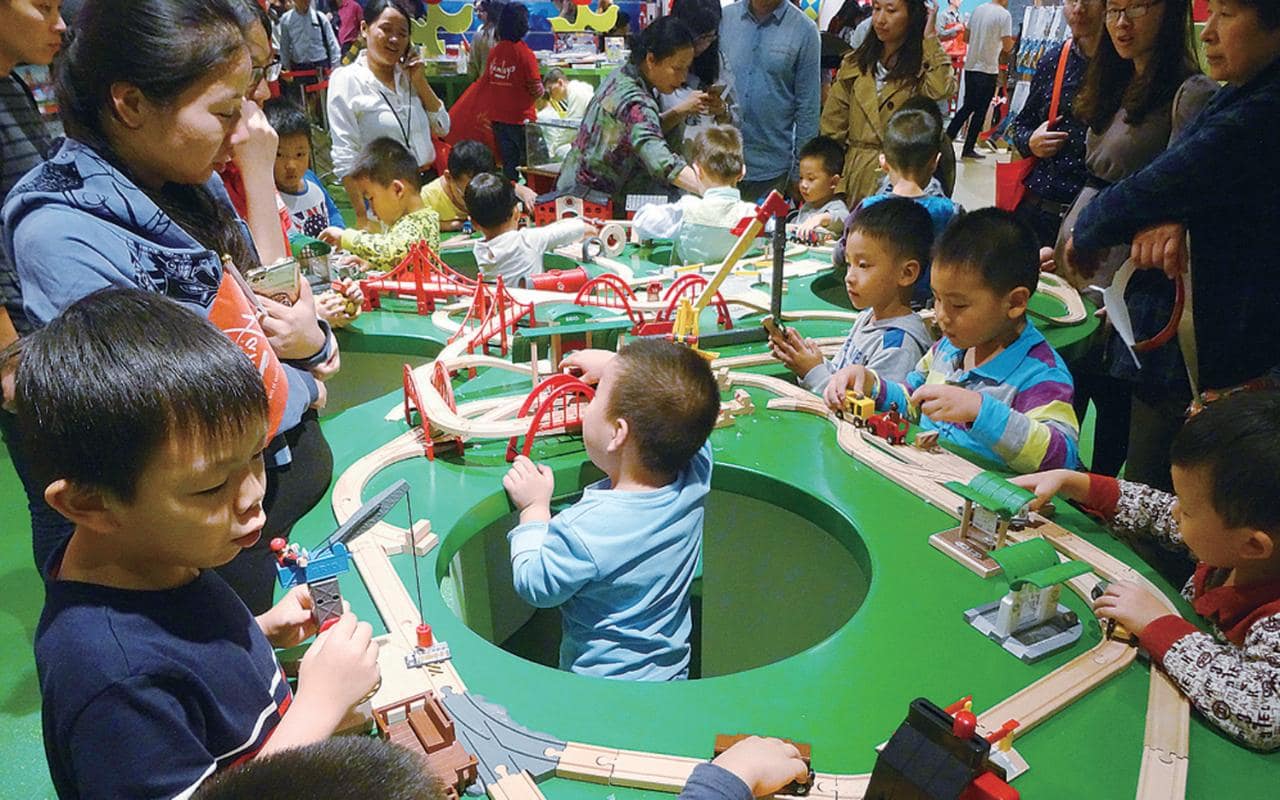
    Hamleys China has opened its second store, covering three levels in Xuzhou Sanpower International Plaza.

    The UK retailer offers more than 1000 SKU in the store, with 80 types of toys from more than 50 brand suppliers. There are also several play zones.

    Covering 10,000sqm, the store can cater more than 50,000 customers a day. It surpasses in size it previous largest store, the Lubyanka Store in Moscow. Hamleys has 114 stores internationally.

    Founded in 1760 with a store on London’s Regent Street, Hamleys is the oldest toy retailer in the UK. It entered the Chinese market in 2015 with a flagship store at the Sanpower International Plaza in Nanjing, with a total floor space of about 7000sqm.

    Xuzhou Hamleys is styled differently, as a traditional British toy kingdom with a wider range of child-related products such as apparel. There are also family experience and entertainment activities.

    On the first floor, the retailer’s best sellers are on display as well as children’s apparel, fashion brands and products with such brands as Ape Kids, Balabala Kids and New Balance.

    Considered the command centre of the store is the Toys Playground on the second floor. It offers Hamleys’ classical brands such as Barbie, Disney Princess, Harry Potter, Lego, Peppa Pig and Transformers.

    On the third floor is the Infants and Creativity Zone. This features The Bath, a swimming area, with educational activities as well as family DIY workshops. There are also child-care services, educational robots, and a painting and baking workshop for children.

    Also on the third floor is a special venue for birthday parties.

    Other activities exclusive to the Xuzhou store include a spiral slide, the Ocean Ball Pool, Water World and a merry-go-round. Nanjing’s Nerf Zone is replicated at the store.

  • Mecca’s maximum store opens in Australia

    Mecca’s maximum store opens in Australia

    Cosmetics retailer, Mecca Maxima, has opened its largest store at ISPT-owned Wintergarden in Brisbane last Friday.

    The 553sqm next generation Mecca Maxima store will be home to more than 60 of the world’s leading cosmetics and skincare brands including exclusive brands NARS, Too Faced, Urban Decay, Smashbox, bareMinerals and Hourglass, as well as Mecca’s newest signature line, Mecca Max.

    Leah Mienert, ISPT spokesperson, said the opening of the largest Australian Mecca Maxima store is a coup for Wintergarden and ISPT and showed the Queen Street Mall was fast becoming a world class fashion and lifestyle retail precinct.

    “The launch of the largest Australian Mecca Maxima store alongside flagship stores from the world’s leading fashion retailers including Zara, H&M and Uniqlo has put Brisbane’s Queen Street Mall firmly on the global fashion and retail map,” she said.

    Mienert said the Queen Street Mall is emerging as a globally recognised retail precinct and a sought-after destination for leading Australian and international retailers, attracting in excess of 26 million people each year and generating annual sales of over $1 billion.

    Mienert said the Mecca Maxima announcement was the first of a number of other announcements for Wintergarden, with more new stores to be opened before Christmas.

    ISPT also owns other Queen Street Mall retail destinations including the redeveloped 155 Queen Street which houses the three-level flagship Zara store and 170 Queen Street, which contains both the H&M and Uniqlo flagship stores.

  • Sheng Siong puts top bid on Punggol property

    Sheng Siong puts top bid on Punggol property

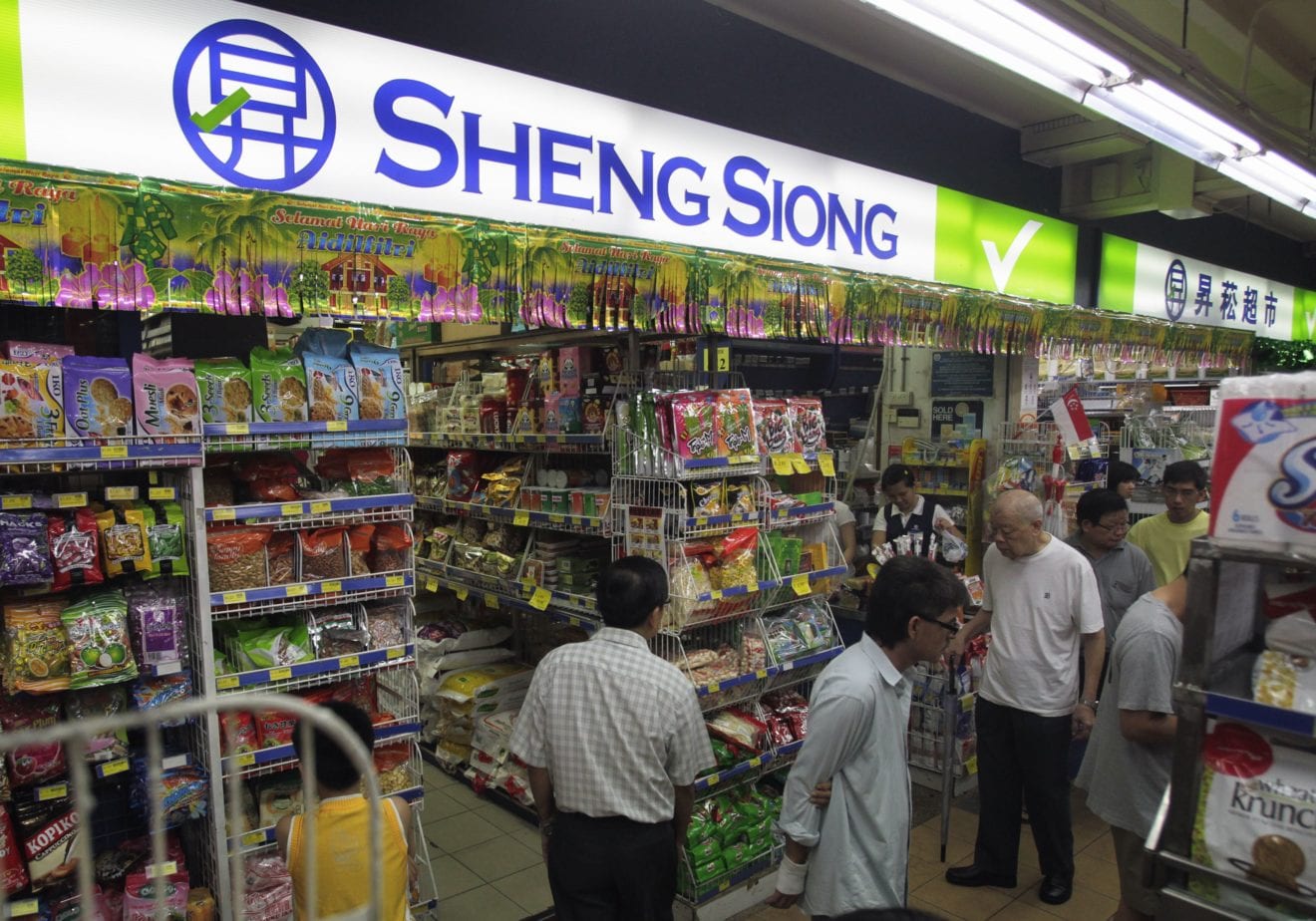
    Supermarket chain Sheng Siong Group (SSG) has put in the highest bid for a 3100sqft (287.9sqm) store in Edgedale Plans, Punggol.

    It has also submitted the second-highest bid for another store the same size along Woodlands Drive.

    SSG’s 41,500sqft Woodland store is set to close next month, but two are set to open – a 4000sqft store at Bukit Panjang this month and a 12,000sqft property in Woodlands St next month.

  • GM, China JV to recall over 2.5 million vehicles over airbags

    GM, China JV to recall over 2.5 million vehicles over airbags

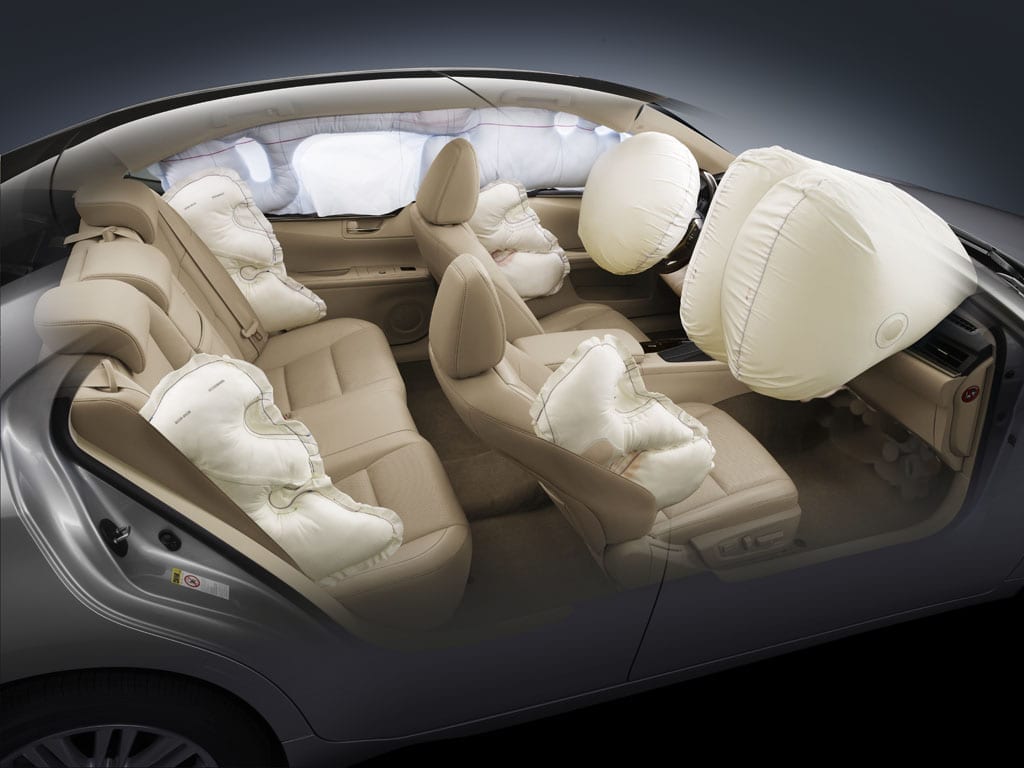
    General Motors and its joint venture in China, Shanghai GM, will recall more than 2.5 million vehicles due to faulty airbag inflators, China’s top quality watchdog as said.

    The vehicles are equipped with airbag inflators produced by troubled Japanese manufacturer Takata, according to the General Administration of Quality Supervision, Inspection and Quarantine.

    From Oct. 29, the companies will recall 13,492 imported Saab and Opel vehicles, and from Dec. 29 another recall will start that involves more than 2.51 million Chevrolet and Buick cars.

    The recall, announced by the administration on Friday, followed a similar recall last week by Volkswagen AG and its Chinese joint ventures involving 4.86 million vehicles in China due to potential issues with Takata air bags.

    State news agency Xinhua quoted the quality watchdog as saying the faulty airbag inflator involved 37 car manufacturers and more than 20 million vehicles, of which 24 carmakers had recalled 10.59 million vehicles by the end of June.

    Takata air bags have been linked to at least 16 deaths and 180 injuries globally. The air bags have the potential to explode with too much force and spray shrapnel. The defect led to the biggest recall in automotive history and the eventual bankruptcy of the Japanese maker.

  • Amazon China on recruitment drive

    Amazon China on recruitment drive

    Amazon China appears to be ramping up business with nearly 400 mainland jobs listed on its careers website, plus another 900-odd on LinkedIn.

    The US company’s China-centred recruitment drive includes senior content executives to acquire and manage content, a leader for its Amazon Lending program and a head for its storefront on Alibaba’s Tmall.

    While the Seattle company still sells goods from abroad to Chinese consumers, the country’s e-commerce market is dominated by Alibaba and JD.Com, and the government places limits on foreign companies.

    Meanwhile, Amazon is encouraging its more than 2 million merchants to expand their horizons to embrace international markets. To streamline the process, it offers language translation services, currency conversion and tariff services.

    Amazon’s sales in China represented just 1.1 per cent of the nation’s online gross merchandise value in 2015, and by last year that figure had dropped to 0.8 per cent, according to iResearch figures.

    However, in last year’s fourth quarter, Amazon controlled 7 per cent of the China’s cross-border commerce, according to ICBC. For the first quarter this year, its cross-border sales were 11 times above their level two years earlier.

    Amazon this year started hiring HR executives for a new regional “shared-services hub” in Beijing, and a new office in Hangzhou – Alibaba’s home territory – is hiring sales team leaders empowered to headhunt more staff.

  • Luk Fook US opens second San Francisco shop

    Luk Fook US opens second San Francisco shop

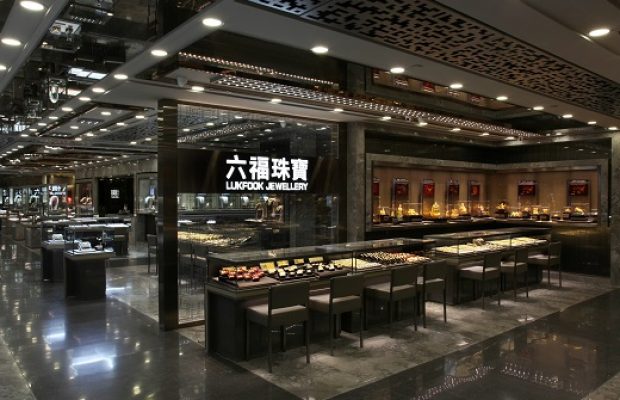
    Luk Fook US has opened its second retail shop in San Francisco with a ribbon-cutting ceremony.

    Officiating guests included California State Senator Scott Wiener, Chinese Consolidated Benevolent Association president William Yu, Miss Asia California Katie Lam, and group co-founder Pauline Yeung, a Miss Hong Kong Pageant winner.

    Group chairman/CEO Wong Wai Sheung says Lukfook Jewellery has been well received and supported by overseas Chinese customers. “This year marks the 20th anniversary of the group’s public listing, and we are dedicated to extend the network here in Chinatown, San Francisco.”

    He says the group also plans to expand further overseas to fulfil its corporate vision of “Brand of Hong Kong, Sparkling the World”.

    With shops across Mainland China and Hong Kong, the group tapped into the North American market in 2003. It has more than 1500 shops in nine countries and regions.

  • China’s e-Shand Redwood sells logistics assets to Invesco

    China’s e-Shand Redwood sells logistics assets to Invesco

    e-Shang Redwood (ESR), a pan-Asia logistics real estate developer, owner and operator, has formed a joint venture with Invesco Real Estate to acquire and manage core logistics assets in China, marking the first collaboration of its kind for both parties in the region.

    The portfolio consists of class A stabilized logistics real estate assets in China, valued in excess of RMB 2 billion (US$300 million). Invesco acquired a majority stake in the portfolio from ESR. ESR will retain an equity interest and act as the project and property manager of the assets to drive future value for Invesco in partnership with Invesco’s asset management team.

  • Jung Wook-jun switches gender focus

    Jung Wook-jun switches gender focus

    On the 10th anniversary of his avant-garde fashion label Juun.J, South Korean designer Jung Wook-jun has ventured into rare territory for him: womenswear.

    His latest collection starred in the Hong Kong Trade Development Council’s Centrestage event last week, and much like his menswear it featured oversized silhouettes, excessive layering and street-style tailoring.

    Jung, 50, says the switch to womenswear coinciding with the anniversary follows his usual pattern of change and renewal. He says women have been wearing his clothes for a long time, and people around him have been asking him to make womenswear for years.

    He says his aesthetic has gradually shifted over the years from menswear with feminine elements to increasingly gender-neutral clothes. Now he is reversing the dynamic by giving womenswear a more masculine edge.

    Jung is working with Hong Kong fashion boutique Joyce again this month on a menswear-focused pop-up store inside Lane Crawford IFC as well as online. Titled “No Man is an Island”, it features collections from similar avant-garde designers Raf SImons, Rick Owens and Yohji Yamamoto.

  • China leads growth for Prada Asia

    China leads growth for Prada Asia

    Greater China was the outstanding market for Prada Asia for its half-year, while sales fell in Japan.

    Overall, the group had lower sales with conflicting trends, some markets recovering and others contracting.

    Growth for Asia Pacific edged up 0.4 per cent. While sales grew for clothing and leather good, footwear sales fell.

    Net sales in Greater China reached €301.9 million (US$362.5 million), up by 4.5 per cent, whereas other countries in the region had declines. Sales in Japan fell by 14.2 per cent, hit by a decline in both local demand and in tourist spending.

    Global net revenues for the period were €1.4 billion, down by 5.5 per cent. EBIT for the half-year was €166.8 million, or 11.4 per cent of net revenues, down from €213.7 million (13.8 per cent) for the same period last year.

    Miu Miu shines

    Clothing sales rose by 4.3 per cent overall, with the Miu Miu brand recording double-digit sales growth. Leather goods sales fell by 7.4 per cent, with a lesser decline for the Prada brand. Footwear sales were down by 9.7 per cent.

    Net sales of the Prada brand fell by 4.6 per cent, with the Asia Pacific region reporting sales in line with those of the same period of last year, while the other regions had lower sales.

    Miu Miu net sales fell by 9.9 per cent, affected by the closure of eight stores during the period.
    Net sales of the Church’s brand fell by 15 per cent, mainly as a result of the distribution channel being restructured.

    For the group’s other brands, the sales of Marchesi 1824 patisserie goods grew thanks to expansion, while the Car Shoe brand had a decline.

    Prada’s gross margin for the six months was €1 billion, or 74.1 per cent of net sales, up by 190 points. Half-year EBITDA was €279.6 million, corresponding to 19.1 per cent of net revenues, a dilution of 210 points.

    Thirteen stores were closed down during the six months (four Prada, eight Miu Miu and one Church’s), plus six stores were opened (two Prada, two Miu Miu and two Church’s).
    Sales in the wholesale channel grew by 5.1 per cent.

    Prada says its plan to bring Miu Miu stores into line with the brand’s new look progressed, and special projects were completed for Prada stores such as new layouts and extension of the “resort” concept to seaside stores.

    The group also introduced an e-commerce plan for all its brands, including an omnichannel growth strategy focusing on gradual expansion of the online sales channel in terms of merchandising and territorial coverage, plus new versions of the websites.

    Digital initiatives also involved advertising and communications, with the creation of special content and the acquisition of online space and media tools intended to create synergy among the three distribution channels.

  • Alibaba and Mexico forge digital deal

    Alibaba and Mexico forge digital deal

    Alibaba and Mexico have signed a deal to promote the nation’s products online and help tap into the Chinese economy though e-commerce.

    In a ceremony at Alibaba Group’s headquarters, Alibaba Group’s executive chairman Jack Ma and Mexico’s President Enrique Peña Nieto witnessed the signing of a Memorandum of Understanding (MoU). Alibaba Group president Mike Evans and Undersecretary of Industry and Commerce of the Ministry of Economy of Mexico José Rogelio Garza were the signatories of the MoU.

    Under the agreement, Alibaba will work closely with the Ministry of Economy of Mexico to help Mexican SMEs to expand into international markets, in particular China, starting with a tailored program for them to benefit from the company’s B2B trading platform, Alibaba.com. Alibaba, together with its ecosystem partners, will also share expertise in logistics and payment platforms in order to enhance the cross-border e-commerce capabilities of Mexican SMEs and to attract Chinese tourists to Mexico.

    Alibaba will also share with Mexican SMEs international best practices related to digital transformation and e-commerce trends. Specialised training will focus on key areas including e-commerce, digital payments, logistics and analytics that drive consumer insight, product innovation and rural development in China. This is an effort to create a more inclusive world by helping SMEs and entrepreneurs to better reap the benefits of globalisation by leveraging e-commerce and learning from Alibaba’s experience in China.

    “Alibaba is one of the world´s largest technology companies with a sophisticated e-commerce ecosystem and a remarkable reach of more than 500 million active annual consumers globally,” said President Peña Nieto. “By partnering with Alibaba, we can expand Mexico’s export options in China and in Asia more broadly, while enhancing Mexican SMEs’ knowledge of e-commerce and cross-border trade.”

    “Alibaba is committed to inspiring, motivating and enabling SMEs from around the world to grow and thrive through e-commerce and the use of technology,” said Ma. “We are delighted to help promote cross-border trade with Mexico through this MoU. We view our cooperation as a way to energise economic development in both countries.”

    Ma travelled to Mexico last May and met with Nieto to discuss how technology plays a critical role in economic development and competitiveness. Discussions regarding the signing of this MoU began during that visit. Alibaba says the deal demonstrates Alibaba’s interest in, and commitment to, facilitating the entry of Mexican SMEs into the large Chinese consumer market.

    China is Mexico’s third largest trading partner globally, with much room for growth. Today, well-known Mexican products, ranging from agricultural products to packaged food and tourism, are already being sold in Alibaba’s ecosystem.