Tag: China

  • Mainland China’s demand for wine driving online sales surge

    Mainland China’s demand for wine driving online sales surge

    China’s demand for wine has surged as a result of the continuing expansion of the middle class across the mainland, the newsletter of the Hong Kong Trade Development Council.

    This has led to the number of e-commerce sites and apps specialising in wine sales soaring in recent years. Online entrepreneurs have noted the sector’s potential as mainland wine consumption rose by 6.9 per cent to a total of 1.72 billion litres last year.

    As wine imports for the first quarter of this year show a year-on-year increase of 8.7 per cent, the newsletter says the trend is set to continue.

    While the online wine sector is relatively undeveloped, two companies have emerged as potential market leaders: Yijiu Yijiu (trading as 1919) and Liquor Easy. Both businesses have adopted the O2O (online-to-offline) model, selling a range of wines through multi-channels and offering both door-to-door deliveries – typically within an hour – and in-store pick-up.

    As well as conventional outlets, both companies have embraced other sales channels including online shopping malls and collaborative ventures with China’s internet giants, notably JD.com, WeChat and food-delivery service Baidu Waimai. Both companies have also developed smartphone apps.

    As well as their core offering of wine, they sell a selection of Chinese white spirits, imported spirits, beers, rice wine, soft drinks and drinking accessories.

    Different approaches

    As the larger player, 1919 has opened nearly 1000 stores across the mainland, 430 of these being added last year. By comparison, Liquor Easy is relatively small, but its development model may prove instructive to small- or medium-sized investors considering entering the sector, says the newsletter.

    Liquor Easy started out in Henan, gradually extending north into Beijing and Xian. It now has 220 directly run outlets, with slightly more than half of them in Henan. In Beijing it has 92 sites including distribution hubs, and by the end of the year will have 11 outlets in Xian.

    Most of the company’s Beijing outlets are in mid-market residential districts. Typically covering about 28 sqm, the stores are characterised by a high standard of merchandise display, a variety of seasonal sales promotions and knowledgeable sales staff.

    At the end of last year, Liquor Easy made its initial listing on the National Equities Exchange and Quotations Company, the Beijing over-the-counter share-trading platform better known as China’s New Third Board. As with 1919, it trades on a membership basis.

    Meanwhile, accelerated growth is forecast for online wine sales. Membership numbers are expected to soar, while both the level of repeat business and brand awareness are also set to grow.

    In their initial phase of expansion, both 1919 and Liquor Easy were willing to work with individual investors to accelerate growth. As they became more established, both companies have changed their operational preferences.

    Funding change

    In the case of 1919, its forward-development plan commits it to working less with individual investors. Instead, it plans to raise backing from funding platforms, channelling proceeds into store openings. This approach is expected to enhance management consistency across outlets, ultimately boosting the profitability of each site while allowing them to compete more effectively.

    By comparison, Liquor Easy still seeks to work with individual partners, especially those with knowledge of particular markets and experience in brand development. In such cases, the company is happy to work similarly to a franchise: it will provide support in terms of pre-openings, store operation and systems management, as well as central co-ordination of data and logistics, and sharing subscriber information and order allocation on a geographical basis.

    Many overseas companies are also said to be eyeing wine-related e-commerce opportunities on the mainland. Inevitably, once such companies access China’s e-commerce channels, competition will intensify dramatically.

    To prepare for the changes, some domestic players have already started optimising their offerings, such as developing new retail formats, improving efficiency and enhancing service and supply chains.

    New models

    New business models emerging include S2B (supply-chain platform to business) which directly links wine professionals and specialist outlets on a regional basis to wine aficionados.

    Taking the lead in this particular approach is the Jiudating (Wine Inquirer) platform. Essentially, it enables local wine professionals or wine shops to share their expertise with would-be wine consumers via social media. Guided by expert insights and recommendations, consumers can order particular wines with Jiudating handling logistics, payment processing and credit guarantees.

    Another innovative approach has been piloted by Songjiuxia, a Beijing-based discount chain specialising in mass-market imported wine. With a modest investment, its members are primarily small off-licences, typically in third- and fourth-tier cities, county capitals and small towns.

    The company also runs a range of smart wine-vending machines, primarily in first-tier cities. Orders can be placed via the company’s app, while the wine – maintained at optimum temperature – can be paid for remotely.

    Despite the apparent vibrancy of the sector, many of the prominent players have yet to turn a profit. For instance, 1919 had a net loss last year despite almost doubling its sales revenue. The company says it chose to take a strategic loss while continuing to build market share.

    Facing similar problems, Liquor Easy opted to scale down its expansion plans following its costly move into Beijing. However, it is planning extra distribution stations in residential districts to help trim running costs.

    With these conflicting indicators of increasing sales but poor returns, would-be entrants to the sector are advised to consider how best to optimise and integrate offline and online sales channels, advises the newsletter. Harnessing big data is also essential to effectively manage supply chains.
  • Marriott forms joint venture with Alibaba

    Marriott forms joint venture with Alibaba

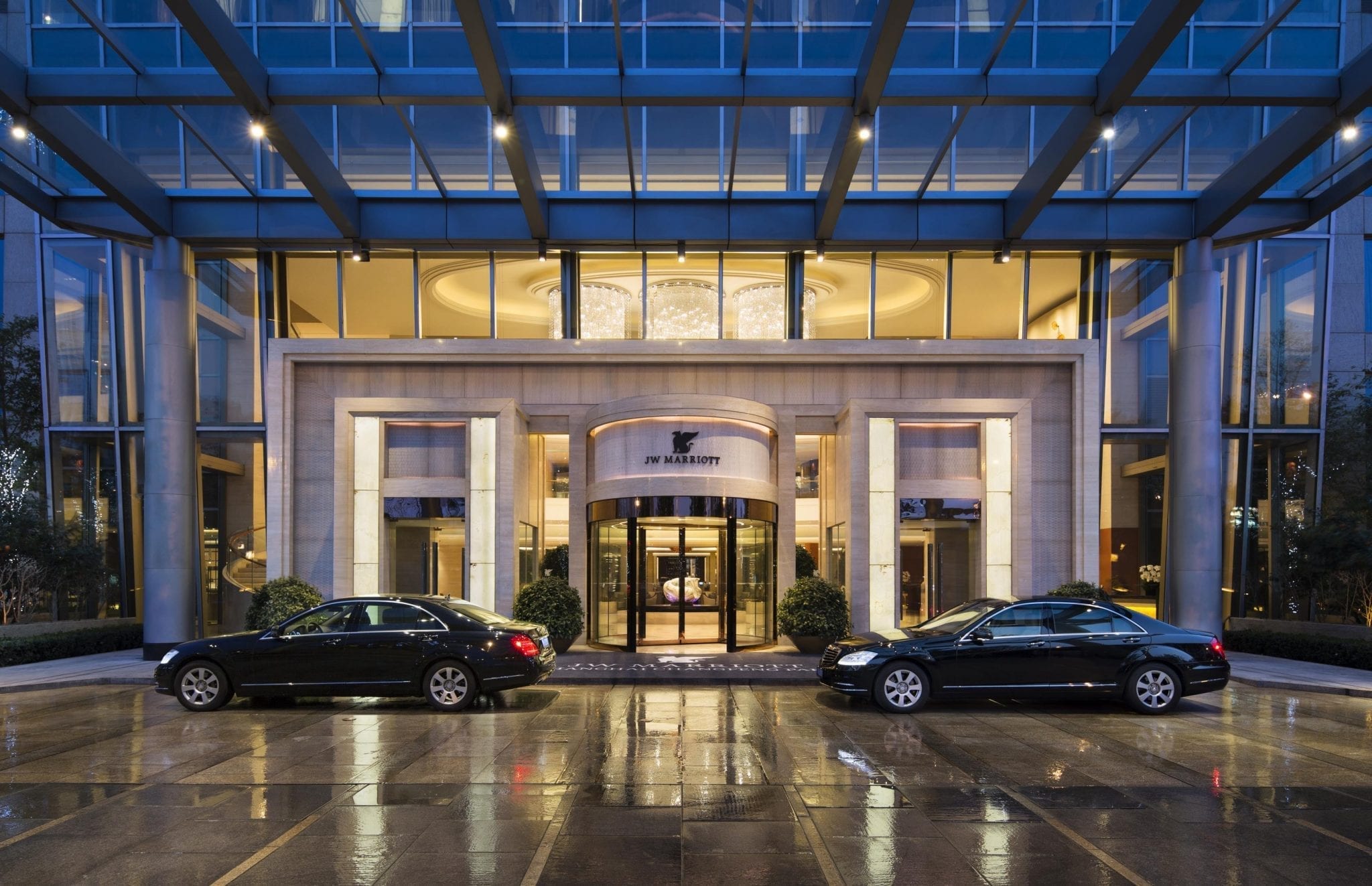
    Marriott has inked a joint venture with Alibaba Group aiming to “redefine the travel experience for the hundreds of millions of Chinese consumers” who travel each year.

    Marriott, which has a bevy of brand and deep hospitality experience, is facing intense challenges from online booking sites, price aggregators and new economy giants like Airbnb. However, consumerism in China is evolving. With earning powers rising, Chinese consumers want more. Marriott feels it can give them that.

    The hospitality giant aims to use Alibaba as a gateway for all its international brand. It also gives the firm the ability to reach Alibaba’s 50 million mobile monthly active users.

    “We are proud to join forces with Marriott International – combining our large-scale consumer base, leading-edge technology and consumer insights with their unparalleled hospitality expertise,” Daniel Zhang, Chief Executive Officer of Alibaba Group said in a press release.

    “Together, we are elevating and redefining the travel experience for Chinese consumers to be more seamless and personalized as they embark on adventures to discover the world,” he added.

    The joint venture will use the resources of both companies to manage Marriott’s storefront on Fliggy, Alibaba’s travel service platform. Besides reaching directly to Alibaba’s customer base, the venture will see a link between Marriott’s popular loyalty programs and Alibaba’s loyalty program, and support Marriott hotels globally with content, programs and promotions targeting the Chinese traveler.

    “By forming this partnership, we are pairing our hospitality expertise with Alibaba’s digital travel platform, retail expertise and digital payment platform, Alipay, and driving membership to our loyalty programs. With the growing number of Chinese consumers exploring new destinations, this venture will introduce our hotels worldwide to this new and growing traveling class,” Marriott International CEO Arne Sorenson said.

  • Record quarterly profit for WeChat parent Tencent Holdings

    Record quarterly profit for WeChat parent Tencent Holdings

    Marrying social media with mobile gaming has helped Chinese internet giant Tencent Holdings post its fastest revenue growth in seven years for a record profit.

    It tapped the spending power of about 200 million players, including a solid female representation, of Honour of Kings and other games, boosting mobile-game revenue past that of desktops for the first time.

    Its flagship game, Honour of Kings allows WeChat users to discuss strategy as well as co-opt friends to join their team. Tencent is reportedly taking the game to new markets.

    Games distributed to more than a billion users on QQ and WeChat combined fueled a 54 per cent surge in mobile gaming revenue in Tencent’s latest quarter. It had a 70 per cent leap in net income to a record RMB18.2 billion (US$2.7 billion) for the three months to the end of June. Sales soared 59 per cent to RMB56.6 billion yuan.

    Tencent’s payments and cloud businesses both grew by triple digits in the quarter, says president Martin Lau.

    Revenue from value-added services, including games and messaging, rose 43 per cent to RMB36.8 billion. Online advertising sales increased 55 per cent to RMB10.1 billion yuan.

  • Unicom to get $11.65b funding injection

    Unicom to get $11.65b funding injection

    Chinese state-owned operator China Unicom will raise around 78 billion yuan ($11.65 billion) through investments from private companies including Baidu, Alibaba and Tencent.

    The operator announced it has secured approval from the National Development and Reform Commission (NDRC) for its plan to open up to private investment under the government’s mixed ownership reform pilot program.

    The company will bring in 14 new strategic investors including large internet companies, industrial groups and industry vertical companies and financial enterprises.

    Unicom has already signed framework agreements with internet and e-commerce giants Baidu, Alibaba, Tencent and Jingdong (owner of the JD.com brand).

    Other investors include retailer Suning Holdings, technology conglomerate Kuang-Chi Group, Didi Chuxing (China’s Uber) and data center services provider Wangsu Science and Technology.

    As part of the ownership reform, Unicom also intends to issue around 850 million shares to employees as incentive bonuses, representing around 2.7% of the company.

    Under the new structure, Unicom Group’s stake in the operator would be reduced to 36.7% from the current 62.7%. The new investors will pick up a combined 35.2% stake. Public shareholders in Unicom’s Hong Kong listed investment vehicle would meanwhile see their ownership reduced to 25.4% from the current 37.3%.

    Unicom plans to use the funds raised from the investment to enhance its 4G capacity and coverage, conduct 5G trials and build pre-commercial trial networks and invest in innovative new businesses.

    The development came as China Unicom reported a strong 68.9% growth in net profit for the first half of 2017 as the operator made progress with its turnaround efforts.

    Net profit reached 2.41 billion yuan, despite a 1.5% decrease in operating revenue to 138.16 billion yuan. But service revenue improved 3.2% to 124.11 billion yuan.

  • Dufry Cruise services onboard the Norwegian Joy in China

    Dufry Cruise services onboard the Norwegian Joy in China

    Dufry today announced an ambitious expansion of its cruise line retail activities with the creation of Dufry Cruise Services and a related Center of Excellence, based in Miami, USA.

    The world’s largest travel retailer underlined its ambitions for the channel by also revealing that it has just started operations onboard Norwegian Joy. The Norwegian Cruise Lines vessel was especially built for and customised to the Chinese cruise market.

    Norwegian Joy is Norwegian Cruise Line’s first ship to have been built specifically for Chinese travelers.

    Dufry CEO of Division 4 Rene Riedi  commented: “The new operational offices will complement the current operations and logistics-purchasing platform, in order to have our resources close to the main cruise ship itineraries. It allows a global footprint with specialised local knowledge and regional expertise.

    Dufry’s cruise ship operations cover routes from the USA to the Caribbean, Alaska, Europe and Asia. The company operates total retail space of close to 9,000sqm, ranging from 140sqm to near 2,000s m per store on vessels owned by Norwegian Cruise Lines, Carnival and Pullmantur.

    Dufry is currently present on 17 cruise ships and offers a full range of traditional duty free products as well as brand boutiques similar to airports and specialist shops, such as the Colombian Emeralds jewellery shops.

    Dufry debuts on Norwegian Joy with nine shops covering 1,950sq m of retail space. The ship is the first Norwegian cruise liner which has been built specifically for Chinese travelers.

    The new Breakaway-Plus Class Ship caters for the 3,850 guests it can accommodate with luxurious suites in an exclusive ‘ship-within-a-ship’ complex. “For Dufry this is an important strategic step to open the Asian cruise market and further expand this growing channel,” the company said.

    According to the Cruise Lines International Association (CLIA), ocean cruise passengers reached 24.7 million in 2016. For 2017, CLIA projects another year of growth with a passenger forecast of 25.8 million.

    Part of that rise can be attributed to the development of the Asian market, whose ocean capacity was up by +9.2% in 2016, representing a +38% increase compared to 2015, Dufry said.

  • China’s Geely beats expectations as Volvo pays off

    China’s Geely beats expectations as Volvo pays off

    China’s Geely Automobile Holdings Ltd said on Wednesday that first-half profit more than doubled, scoring its fastest earnings growth in eight years as cars designed with its Swedish unit Volvo won over domestic consumers.

    Although known at one point more for its copycat designs and lower quality vehicles, the Hangzhou-based firm has transformed itself into an automaker with up-market aspirations.

    Vehicles engineered with Volvo know-how, such as the GC9 sedan and the Boyue sport-utility vehicle, have been hot-sellers in China, the world’s biggest auto market.

    “So far in 2017, the group’s performance has exceeded management’s original expectations despite a generally weaker market in China during the same period,” the company said in a statement to the Hong Kong bourse.

    Net profit came in at 4.34 billion yuan ($648.96 million), 128 percent higher than the 1.91 billion yuan it made in the same period a year earlier and eclipsing an estimate of 3.61 billion yuan from CCB International.

    It said it had decided not to pay an interim dividend.

    Sales jumped 89 percent in January-July and last month Geely raised its 2017 sales target by 10 percent to 1.1 million vehicles. It sold 766,000 vehicles last year.

    Geely’s parent Zhejiang Geely Holding Group owns the maker of London’s black cabs and this year acquired a 49.9 percent stake in Malaysian automaker Proton.

    The carmaker said that the business environment in its previous key export markets in Eastern Europe and the Middle East remained weak and that it would continue to operate its exports business at the current restricted scale for the rest of 2017.

    In its next phase of expansion, Geely plans to market a third brand, Lynk & Co – in developed markets next year, beginning with Europe and the United States.

    Geely also plans to use more Volvo-developed technologies including small turbo-charged gasoline engines in Geely-brand cars.

  • McDonald’s China partners with property developer

    McDonald’s China partners with property developer

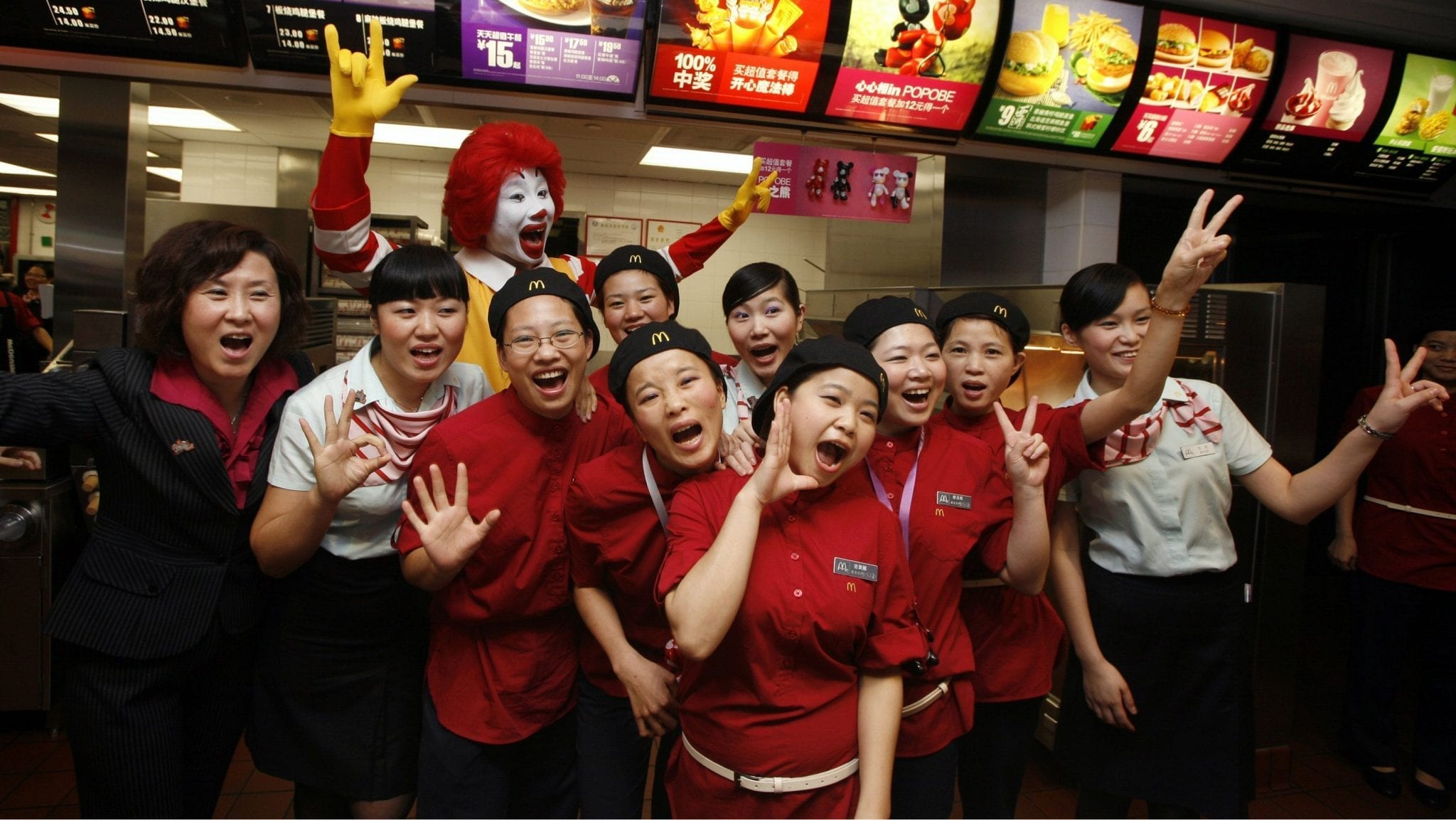
    McDonald’s China has formed a partnership with property developer Evergrande Group with the aim of speeding up expansion throughout the mainland.

    This has been announced just a fortnight after the US fast-food giant sold a controlling stake in its Chinese and Hong Kong divisions to China’s state-owned Citic Group. The newly formed McDonald’s China unveiled a plan to add 2000 more restaurants to its 2500 outlets on the mainland China over the next five years.

    Citic chairman Chang Zhenming says the strategic co-operation with Evergrande will help McDonald’s restaurants quickly expand its footprint, especially in third- and fourth-tier cities.

    Evergrande will give McDonald’s “priority” in site selection for its residential property developments nationwide, Citic says.

    The restaurant chain is now aiming to have 45 per cent of its China stores in third- and fourth-tier cities, with more than 75 per cent of them offering delivery.

    Evergrande Group has about 700 property projects in 240 mainly lower-tier mainland cities.

  • UPS appoints Harld Peters as new China president

    UPS appoints Harld Peters as new China president

    UPS announced the appointment of Harld Peters as the new president of UPS China. A UPS veteran with 18 years of logistics experience, Peters will be responsible for leading strategic initiatives across UPS’s package delivery and supply chain operations in China. Peters succeeds Richard Loi, who will be retiring after 26 years of dedicated service with UPS.

    “The Belt and Road Initiative (BRI) will continue to open new trade corridors between two of the world’s biggest traders,” said Ross McCullough, president of UPS Asia Pacific. “Harld’s extensive experience working closely with European customers across major industry segments positions him well to bolster UPS’s Chinese customers in their efforts to accelerate growth overseas.”

    “As China continues to transform with increased cross-border commerce and with the rise of global markets, I am confident that Harld’s leadership will take UPS to the next level of growth in China,” he added.

    “UPS has made significant strides since we started doing business in Asia over 25 years ago,” said Harld Peters, President of UPS China. “Customers demand more from their partners with China’s transformation from a low cost manufacturing model to an innovation-driven economy. I am excited about leading the next phase in our growth, and building upon Richard’s successes in this key market for UPS. Our commitment to helping China go global will be seen in our upgraded global transportation network, rich industry intelligence and expanded service enhancement.”

    UPS has set in place a multi-year investment and growth plan for China that is focused on widening and deepening its geographical presence, and improving the customer experience through differentiated service offerings. Earlier this year, the company announced the addition of six stations to its Preferred Full and Less-than-Container Load (FCL and LCL) multimodal rail service between Europe and China. It also announced a joint venture with S.F. Holding, the parent company of S.F. Express, to develop and provide international delivery services initially from China to the US, with expansion plans for other destinations.

    Peters formerly served as President of UPS West Europe District, where he led the successful integration of over 10,000 UPS Access Point™ locations, a network of neighborhood stores and businesses that make online shopping and delivery more convenient for customers. He joined UPS in 1999 as a Contract Manager of Supply Chain Solutions in the Netherlands and later assumed various management positions in the Express and Supply Chain Solutions business units throughout Europe, including Vice President of Contract Logistics.

  • Unicom expects 69% profit growth for 1H17

    Unicom expects 69% profit growth for 1H17

    China Unicom has announced it expects to report a 68.9% increase in profit for the first six months of the year, partly as a result of improved cost efficiencies.

    The company estimates it earned a profit of 2.4 billion yuan ($359.9 million) for the six month period, despite a 1.5% decrease in overall revenue to 138.2 billion.

    Service revenue is expected to be up 3.2% year-on-year to 124.1 billion yuan, with mobile service revenue up 5.2% year on year.

    But due to intense competition in the fixed broadband market, China Unicom expects flat fixed line service revenue of 46.6 billion yuan. Combined with a decline in revenue from sales of telecoms products, total revenue is expected to have declined.

    But sales and marketing expenses, handset subsidies and other expenses were both lower year-on-year, leading to a projected 5.5% increase in ebitda to 43.6 billion yuan, representing around 35.1% of service revenue.

    Looking ahead to the second half of the year, Unicom cautioned that the mandated abolition of domestic long distance and roaming fees on September 1 and cyclical increases in competition will place increasing pressure on the company’s financial performance.

    Unicom will meanwhile act as the test subject for China’s planned mixed ownership model pilot program for the nation’s state-owned operators, bringing in private investors.

  • JD.com expansion of offline experience shops

    JD.com expansion of offline experience shops

    The company, which rose quickly to become China’s largest retailer, online or offline, through its e-commerce business, is looking to leverage the advantages of an offline experience to further expand its lead.

    It is rolling out offline “JD Retail Experience Shops”, where customers can touch and feel products ranging from digital and home appliance products, to books, JD’s DingDong smart speaker and baby and maternal products, all of which are sourced from JD.com.

    The selection is focused on products that consumers often like to feel and test in person before buying, and tailored on a store-by-store basis using the big data that we have from each neighborhood’s shopping habits.

    Using a franchise model with centralized oversight and quality control, the shops will be powered by JD’s cutting-edge retail technology for demand planning, inventory management and targeted marketing, making the storefronts more efficient and adaptable to market changes than any traditional retail business.

    The shops provide a glimpse into the way e-commerce will change the future of retail. JD is working together with service partners to adapt their supply chains to increasing demand from customers for better and faster service.

    One of the biggest pain points for retail in today’s fast-moving consumer culture is inventory management.

    Unlike e-commerce companies, brick-and-mortar retailers have to keep many physical storefronts stocked with products, leading to inventory bloat when they overestimate demand, and lost business when they underestimate it.

    JD’s technology, powered by predictive analytics using big data, will keep offline stores stocked with recommended categories and suggested amounts of products, while localizing the selection depending on consumer buying preferences in each location.

    So far, there are 92 JD Retail Experience Shops with nearly 15,000 SKUs that are stocked and replenished using JD’s smart supply chain management systems. The number will increase to 300 by end of this year.

    JD Retail Experience Shops, some of which feature children’s play areas and massage areas for the elderly, are built as 200 square-meter spaces within stores operated by JD’s service partners. In Changping, a Beijing suburb, one JD Retail Experience Shop generated 1,096 orders worth RMB 1.23 million on its opening day.

  • Brazilian Flip Flops Brand Enters Suzhou Jiuguang

    Brazilian Flip Flops Brand Enters Suzhou Jiuguang

    Brazil’s well-known flip flops brand Ipanema opened a new store in Jiuguang Department Store, Suzhou, which is reportedly Ipanema’s seventh store in the city.

    Established in 2001, Ipanema provides four major series of products, including women’s products, men’s products, children’s products, and brand-partnered products; and its product lines cover flip flops, sandals, and slippers.

    The company started expanding into international markets in 2003 and over the following ten years, Ipanema became a popular high-end sandals brand in over 90 countries with its unique designs and comfortable products.

    Ipanema’s sandals are mainly made from PVC materials and processed with a special soft rubber compound technology.

    At the same time, 99% of its materials are claimed to be recyclable, which meets the environmental standard of developed countries. The brand will launch new products each season and about 400 new products are available annually.

    Ipanema’s manufacturer is the large sandals maker Grendene. Grendene was founded in Farroupilha in 1971 and it currently has 13 large factories and over 30,000 employees.

    The company is a large group enterprise which integrates material production, abrasives development, design, and brand management.

    At present, Ipanema products are well received in countries like United States, France, Italy, Spain, the Netherlands, Portugal, India, Germany, Ireland, Switzerland, the United Kingdom, Paraguay, and Mexico.

  • New McDonald’s China offers vision of innovation

    New McDonald’s China offers vision of innovation

    Deliveries and a digitalised, personalised dining experience are part of the “Vision 2022” strategy to be rolled out by the new owners of McDonald’s China and Hong Kong.

    McDonald’s Corporation yesterday confirmed its strategic partnership with Citic, Citic Capital Partners and The Carlyle Group following China’s regulatory approval half a year after the deal was announced.

    It is the largest McDonald’s franchisee outside of the US, covering existing businesses in Mainland China (about 2500 restaurants) and Hong Kong (about 240). Its development initiatives for China aim to drive double-digit sales growth in each of the next five years by almost doubling the number of restaurants to 4500 by the end of 2022.

    There will also be delivery hubs for more than three-quarters of the restaurants, plus more than 90 per cent will offer the “Experience of the Future” concept, taking digitalised and personalised dining to more customers.

    Innovation hubs

    The opening pace of mainland restaurants is expected to progressively ramp up from about 250 this year to 500 a year by 2022. Vision 2022 includes plans to significantly grow the restaurant portfolio mix in tier-three to -four cities to about 45 per cent.

    Innovation hubs in Hong Kong and Shanghai will introduce new menus and advanced digital retail experience.

    “China will soon become our largest market outside of the US, and we are excited to join forces with Citic and Carlyle for better localised decision-making to meet changing customer demands in this dynamic market,” says McDonald’s Corporation president/CEO Steve Easterbrook. “China and Hong Kong are leading the global system in capturing new consumer trends such as delivery and digitalisation, and its driving strong performance and growth momentum.”

    He says the corporation will continue to play an active part in the China growth journey through its remaining interest and participation on the China board.

    “We believe this is a winning formula that fuses McDonald’s global standards and branding with Citic and Carlyle’s extensive resources and market expertise,” says new McDonald’s China board chairman Zhang Yichen.

    McDonald’s has more than 37,000 locations in more than 100 countries. About 90 per cent of the restaurants worldwide are franchises.

  • Hung Fook Tong may double first-half profit

    Hung Fook Tong may double first-half profit

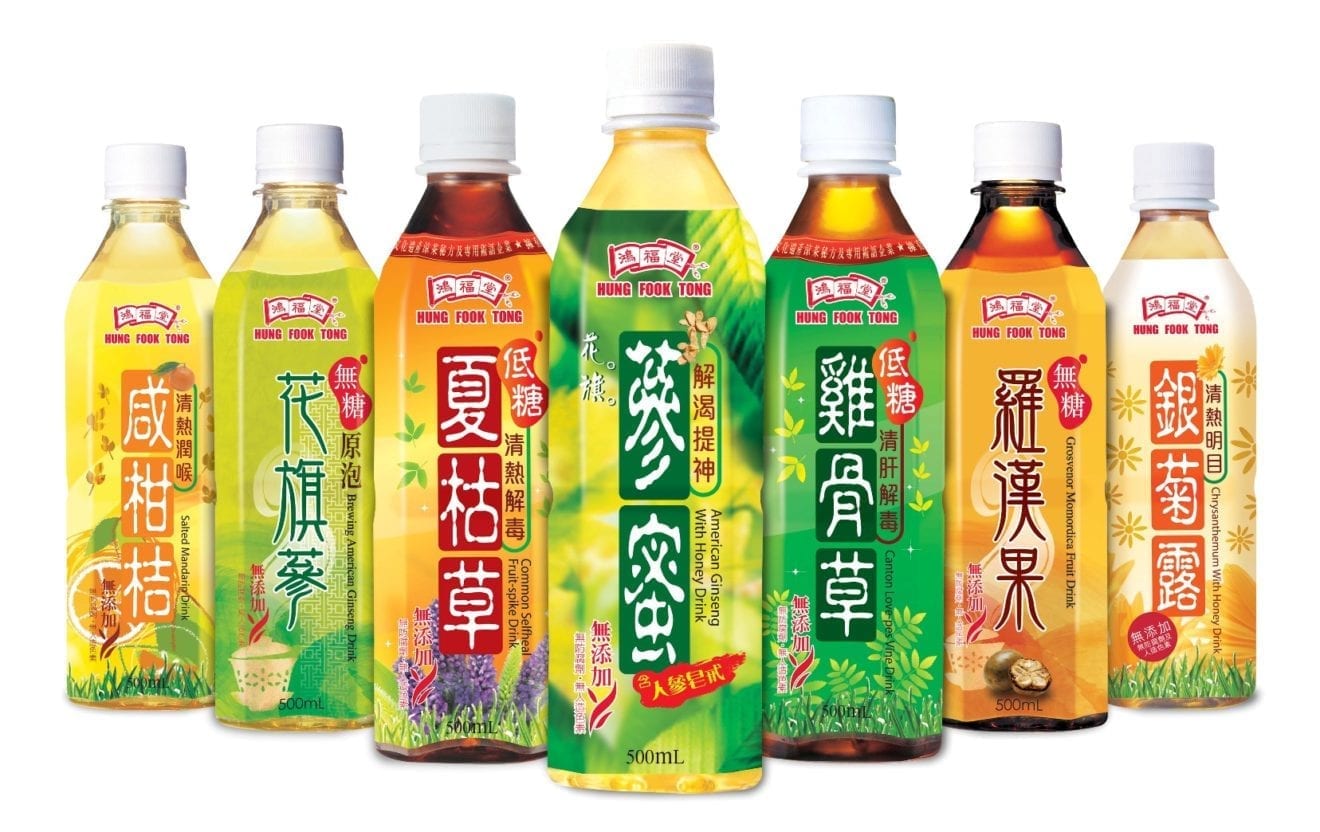
    Chinese herbal products retailer Hung Fook Tong Group Holdings has issued a positive profit alert, saying it expects to more than double the profit attributable to the owners of the company.

    Based on a review of its unaudited management accounts for the six months to the end of June, the profit is expected to be about HK$3 million (US$380,000), compared to the $1.4 million for its first half last year.

    Chairman/executive director Tse Po Tat says the increase is mainly attributable to:

    (i) an approximate 2 per cent increase in net sales, mainly in the wholesale segment through closer co-operation with key accounts in Hong Kong as well as more stringent control in rebates and discounts granted in Mainland China; and

    (ii) slight improvement in gross profit margin mainly because of continuous enhancement in procurement procedures.

    Hung Fook Tong expects to announce its interim results before the end of this month.

  • Pandora APAC sales up 34%, eyes 60 more China stores

    Pandora APAC sales up 34%, eyes 60 more China stores

    Danish jeweller Pandora posted a surge in its APAC sales for the second-quarter period, as the Copenhagen-based firm signalled a shift toward the Chinese market to fight trading headwinds in the U.S.

    The jewellery maker known for its customisable charm bracelets said total revenue hit DKr4.83bn ($770m) – a 12 per cent gain on the previous year, but short of analysts’ expectations for DKr4.91bn.

    Net profit for the period dipped from DKr1.2bn to DKr1.1bn – analysts had expected it to be flat, said the news source. EBITDA reached DKr1.61bn, compared with an expected 1.74 billion.

    “We are pleased with the results for the second quarter delivering double digit top-line growth and continued healthy profitability,” said Anders Colding Friis, chief executive of Pandora.

    By market, Pandora said the US “remains challenging,” despite a comparable sale increase of 8 per cent. The EMEA increased 10%, driven by the UK, while APAC (China and Australia) revenues grew 34 per cent.

    “Markets like China, Italy, the UK, and Australia performed well, reflecting the significant growth potential for our product offering in both our newer and more developed markets. We also continue to make strides in improving the quality of our global store network and added net 70 new concept stores during the quarter.”

    The news follows on from Pandora’s first quarter period announced earlier in the year where it was reported that China revenues grew 91% in local currency.

    As a result, the company elevated its strategic focus in China to open 60 Pandora-branded stores in the nation this year, up from its previous estimate of 50.

  • Odyssey expands facility for chemical sample fulfilment in Shanghai

    Odyssey expands facility for chemical sample fulfilment in Shanghai

    Odyssey Logistics & Technology Corporation, a global logistics provider, has opened a newly expanded facility for chemical sample fulfilment in Shanghai Chemical Industry Park (SCIP), China. The new facility is strategically located near major chemical manufacturers, and can support increased throughput by up to 40 percent.

    “Chemical manufacturers in this region are paying closer attention to safety and are partnering with professional Dangerous Good (DG) logistics service providers for their sampling needs. Up to now this vital service has been a cottage industry,” said Lawrence Hu, senior vice president and president, Odyssey Logistics & Technology Asia-Pacific. “This is an investment in the future of this region and continues to strengthen our leadership position by providing our customers with innovative and responsible solutions to their chemical sample challenges.”

    Hu also noted that among manufacturers in Asia there is a growing trend toward increased awareness of the importance of safe handling and labeling of chemical products. “Odyssey not only has the expertise, but it also has the demonstrated processes and technology to provide this niche service to the chemical industry. This facility was designed to better serve our chemical sample customers and support growing demand for safe chemical handling,” said Hu.

    The new facility has DG class A, B and C storage and handling capabilities as well as large storage spaces to accommodate anticipated growth.

    Chemical Marketing Concepts LLC (CMC), a subsidiary of Odyssey Logistics & Technology, is the global leader for outsourced sample fulfillment and logistics services. More than 65 manufacturers use CMC to safely store, package and ship their sample and small revenue orders. CMC has processed more than 10 million sample shipments and has facilities in the United States, Netherlands and China.