Tag: China

  • Direct access to China’s online market through Alibaba’s Mr. Fresh

    Direct access to China’s online market through Alibaba’s Mr. Fresh

    The online retail market in China is booming, as are sales of perishables. Ahead of the curve is Tmall (part of the Alibaba Group) which, through Tmall Fresh and Mr. Fresh, has created some of the first B2C platforms that caters for fresh produce online sales and delivery.

    Alibaba’s Tmall is the biggest domestic online B2C retailer. It is a platform for international and Chinese brands to sell goods directly to consumers in Mainland China, Hong Kong, Macau and Taiwan, and has a reach of millions of consumers. Tmall Fresh is the organisation’s new portal for perishable products.

    Usually, due to high subscription costs, only large brands have online ‘flagship stores’ on Tmall and Tmall Fresh. Tmall Fresh currently only hosts Chinese online stores. Most of the existing flagship stores are importers or large distributors, that have been selling products on Tmall in the past before switching to Tmall Fresh.

    Tmall Fresh and Mr. Fresh

    “Tmall Fresh has been launched to meet the growing demand for fresh produce. It is becoming the online sales channel for perishables in China. Products include seafood, meat, dairy and, increasingly, fresh fruits,” says He Chunlei, CEO of Tmall Fresh.

    To assist rookie foreign fresh produce exporters in overcoming difficulties that come with market entry, Mr. Fresh was introduced alongside Tmall Fresh.

    Mr. Fresh is an online flagship store for foreign products on Tmall Fresh, entirely run by the Tmall Fresh Team. It aims to support foreign brands entering China. Mr. Fresh takes care of customers, marketing, sales, logistics and customer services. As such, it provides foreign suppliers with a low-cost entry to the Chinese market, whilst also avoiding the investment costs it takes to open a store on Tmall.

    Supporting foreign exporters

    “For foreign fruit exporters, Tmall offers two solutions. Foreign exporters can either cooperate with Chinese flagship stores, and sell their products through these existing portals on Tmall Fresh. Or, the second option, is that foreign exporters can join Mr. Fresh. Through cooperation with Mr. Fresh, foreign fruits can easily be sold into the Chinese market. We introduced the concept to solve trade barriers that foreign companies are facing entering China as a new market. The idea is that, after having sold their products on Mr. Fresh for a couple of years, foreign exporters are well positioned to open a flagship store on Tmall Fresh,” according to He Chunlei.

    “Mr. Fresh is designed to meet both the needs of the supplier and the consumer. Fruit varieties that are currently sold are New Zealand kiwifruit, Thai durian, Chilean cherries and Vietnamese mangoes. Our mission is to help foreign companies enter the B2C market in China by providing them with a complete solution package. At the same time, we provide the consumer with product and company information. We use our sales data and marketing information to help our suppliers understand the needs and preferences of Chinese consumers. The market for online fresh produce sales is growing at 7% a year. So far, fruits make up a small share of total sales of perishables, but we see huge potential.”

    PMA Fresh Connections China

    From March 15 to 17, the PMA Produce Marketing Association (PMA) is organising Fresh Connections China, a yearly summit taking place in Shanghai. He Chunlei, CEO of Tmall Fresh, will be one of the speakers at the conference organised on the second day.

  • Korean cosmetics drop in price, shipment volume in China

    Korean cosmetics drop in price, shipment volume in China

    The price of imported Korean cosmetics in China dropped by some 40 percent last year, Chinese customs data showed Thursday, for reasons industry watchers see as driven both politically and by the market.

    Records from the Tianjin Entry-Exit Inspection and Quarantine Bureau indicated an average 40 percent drop in the price of cosmetics shipped in from South Korea. The volume of the imported shipments totaled 2,200 tons last year, down 46 percent from the year before.

    The numbers translate to an average $11 per kilogram of imports, down from the previous $18.The monetary value of the imports reached $23 million, down 69 percent. The import volume, which had nearly doubled in 2015, fell back to the level of 2013, data indicated.

    The two countries’ relations, persistently challenged by the differences in the way their governments deal with North Korea, have recently roiled over Seoul’s decision to host an advanced US missile defense system, known as THAAD, which Beijing argues is also aimed at China. Beijing has retaliated by imposing bans on Korean culture content and a number of import items, and restricting travel to South Korea.

    In November last year, Chinese authorities prohibited imports of 19 South Korean cosmetics products, turning back 11 tons of them.

    Industry officials say that the South Korea-China free trade agreement that took effect in December 2015 and China’s lowering of the consumption tax on cosmetics also pushed down the prices, with competition with global brands stiffening for South Korean companies.

    Market watchers are predicting more price markdowns this year, as some of the Korean exporting companies already have made downward adjustments.

    Amorepacific, South Korea’s biggest cosmetics firm, lowered the price on 327 products by between 3 and 30 percent in January.

    “The cosmetics prices are becoming more transparent as online and direct shopping grow at a fast speed,” an industry official said. “It’s inevitable for foreign cosmetics companies to change their retail prices in China.”

  • Apple China sales slide further

    Apple China sales slide further

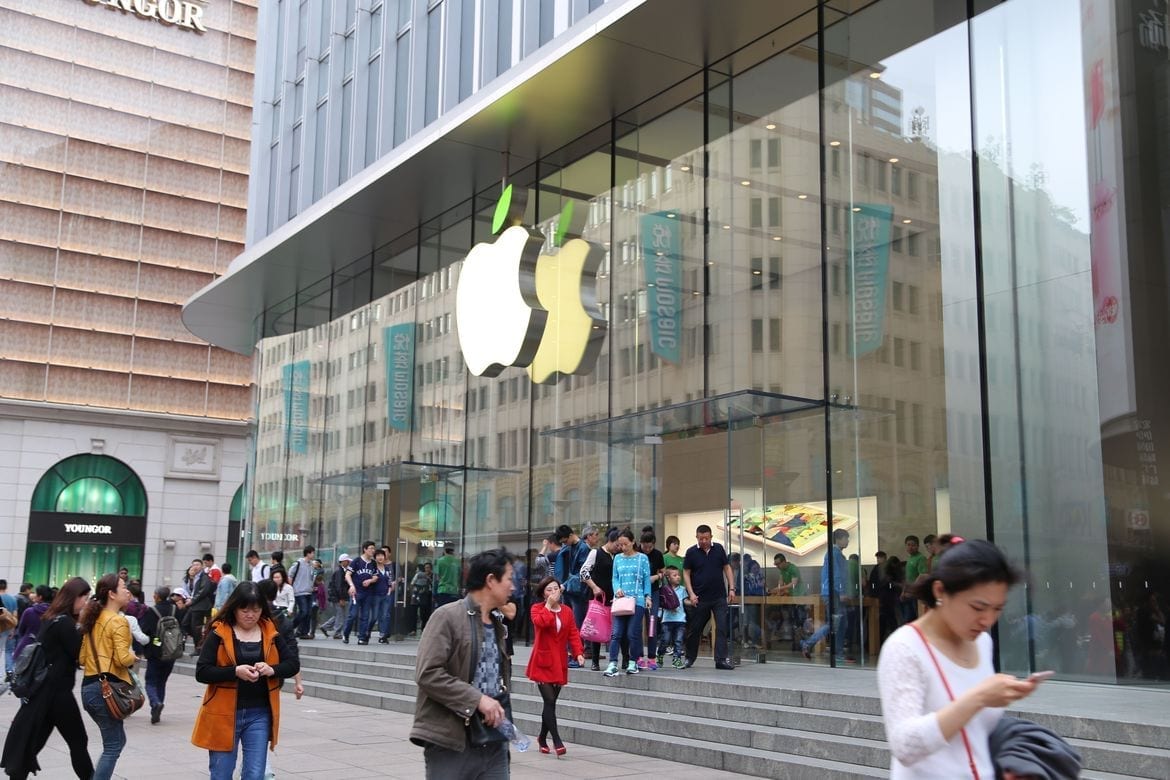
    Apple China sales have fallen for the fourth consecutive quarter, but the tech giant is putting on a brave face, buoyed by rising global revenue.

    Apple sold 78.29 million iPhones in the quarter ended December 31, up from 74.78 million last year, marking the first quarterly growth in iPhone sales in 12 months. It was as many as 2 million handsets more than analysts were predicting.

    But revenue in Greater China fell 11.6 per cent to US$16.23 billion as the iPhone came under heavy pressure from a raft of locally produced Android-based handsets with similar or higher specification and half the price.

    Apple executives put a positive spin on the China problem. “We were encouraged by our performance in China because it was clearly an improvement over the last couple of quarters,” CFO Luca Maestri said in a conference call. “In Mainland China in particular, our revenue was flat and actually grew in constant currency terms.”

    Neil Saunders, MD of GlobalData Retail, (formerly Conlumino), said both the new model iPhones and MacBook Pros helped deliver global growth for Apple: iPhone sales rose by 5 per cent in terms of units and revenues, and Mac sales were up by 7 per cent in revenue, and by 1 per cent in units.

    “In our view, the new MacBook Pros have a niche appeal, but the much higher price points helped to inflate sales. That said, given there is a more limited market for this fairly expensive kit, we question how much of a contribution to growth the new laptops will make over the remainder of this fiscal year.”

    Saunders said the first quarter results were a fairly positive note for the company, “finally pulling out of the tailspin of lower sales which have dogged it over the past year”.

    “However, the revenue uplifts have come off the back of fairly soft prior year comparatives, especially so in the North American market. Even so, the performance will come as a relief to Apple.”

    Services key to future

    Apple CEO Tim Cook said he expects revenue from services – which include the App Store, Apple Pay and iCloud – to double in the next four years after an 18 per cent improvement to to US$7.17 billion in the last quarter. Pokemon Go and subscription revenues had driven the growth.

    Saunders notes that in monetary terms services is now bigger than iPad sales and is almost as big as Mac sales.

    “Encouragingly, the division is nowhere near as mature as other parts of Apple’s business and we believe there is significant scope for future growth as Apple rolls out more content and services.”

    Despite these positives, Apple’s results do not provide the company with a completely clean bill of health, according to Saunders.

    “The iPad business, which was once a key driver of growth, is now firmly in decline with sales down 22 per cent over the prior year. And despite both product and operating system updates, sales of the Apple Watch continue to be anemic and it is clear that this product line is unlikely to be a significant winner.

    “The other major negative comes from the profit line where net income fell by 2.6 per cent. Admittedly this is much better than the circa-20 per cent declines that Apple has posted across the past three quarters. However, it underlines the fact that the top line is not moving ahead by enough to keep pace with the increased investment costs in store refreshes, product development, and research. Given that Apple remains extremely profitable, this is not a huge problem – but it does indicate that the days of heady bottom line growth are over, at least for this fiscal year.”

  • Top 30 Chinese global brands: Lenovo, Huwaei, Alibaba rank first

    Top 30 Chinese global brands: Lenovo, Huwaei, Alibaba rank first

    Lenovo is the most powerful Chinese global brand builder, followed by Huawei and Alibaba, according to new research released this week.
    The first “Brand Top 30 Chinese Global Brand Builders”, released by WPP and Kantar Millward Brown in collaboration with Google, said the personal computer and mobile technology firm is the most powerful Chinese export brand with a Brand Power score of 1,682. Lenovo was followed by consumer electronics brand Huawei (1,256) the e-commerce marketplace giant Alibaba (1,047).

    Kantar Millward Brown calculated the Brand Power (the BrandZ measure of consumer predisposition to choose a particular brand) of Chinese brands outside of China across seven countries, supported by research conducted using Google Surveys in September 2016, to find the ranking. The evaluation looked at 167 Chinese brands, the median Brand Power score of which is 85.

    The biggest find was how the Made in China brand is shifting. While established brands currently have an edge over the emerging internet-lead brands, with 57% of the total Brand Power in the ranking, digital brands were the biggest winner.

    Collectively, consumer electronics and mobile gaming lead the ranking, both in terms of the number of brands in the ranking (17) and combined Brand Power (59%). The result reflects the transformation of Chinese brands, which consumers abroad increasingly associate with innovative digital devices and services.

    One challenge facing Chinese brands is that international consumers are generally less aware of, and less likely to consider purchasing, a Chinese brand than a local or globally recognised one, said the research.

    However, awareness and consideration gaps vary, with consumers in France, Germany and Spain more aware of and likely to consider Chinese brands than consumers in Japan, Britain or America, said report authors.

    “The study shows that the movement of ideas and product leadership has expanded globally, with consumers increasingly looking to China as a potential source for the newest and most innovative products and brands,” said David Roth, CEO of EMEA & Asia, The Store WPP.

    “This is the opportune time for Chinese brands to expand abroad, despite the many obstacles and this is why in collaboration with Google we have produced the ground-breaking “BrandZ Top 30 Chinese Global Brand Builders 2017” report. By analysing consumer perceptions of Chinese and non-Chinese brands, we have been able to identify gaps in Chinese brand performance and provide recommendations for brand building strength.”

  • Korean duty free shops rely on online Chinese celebs

    Korean duty free shops rely on online Chinese celebs

    Duty free shops in Korea have begun to invite internet celebrities from China, better known as “Wang Hong” there, to attract Chinese tourists during the upcoming holiday season.

    The shops are seeking to break through Beijing’s economic retaliation against Seoul’s decision to deploy a U.S. Terminal High Altitude Area Defense (THAAD) battery here.

    Last Wednesday, HDC Shilla invited four Chinese internet celebrities to HDC I’Park Mall and Shilla I’PARK Duty Free in Yongsan, central Seoul.

    The online stars, who have millions of followers on social media such as Weibo, broadcast their shopping for two hours to China through their smartphones.

    At toy store Toys & Hobby in I’Park Mall, the four introduced “kidult culture” in Korea, which has yet to be seen in China. They introduced Korea’s fashion and beauty brands as well at The Handsome and 3 Concept Eyes outlets in Shilla I’PARK Duty Free.

    “The promotional video broadcast by the four celebrities will likely get more than 5 million views within a week,” an HDC Shilla official said.

    The Shilla Duty Free also invited 15 Chinese internet celebrities to Korea to offer them a trip for five days and four nights from this Monday to Friday. The affiliate of Hotel Shilla plans to give them various experiences beyond shopping.

    Image result for shilla duty free korea

    Traveling from Seoul to Jeju, the 15 will visit hidden local restaurants and a tangerine farm on the island. They will also enjoy make-up sessions, a tea ceremony and pop arts, according to The Shilla Duty Free.

    An official said, “We expect more Chinese tourists, who are interested in beauty, food and experiences, to come to Korea.”

    The duty free shops want the celebrities to attract more Chinese tourists to Korea during the Lunar New Year festival from Jan. 27 to Feb. 2, which is regarded as one of the most lucrative times of the year in the industry.

    Last year, Lotte Duty Free and The Shilla Duty Free posted 10 per cent more in sales during the festival.

    However, duty free shops this year are facing a gloomy outlook due to Beijing’s order to regulate group tours to Korea.

    According to the Korea Duty Free Association, the number of foreign shoppers last November declined 17.8 per cent from a year earlier. The total sales of duty free shops also fell 8 per cent year-on-year, as sales to foreigners decreased 9.6 per cent.

    Observers said the recent invitations of Chinese celebrities are targeting non-group tourists, who visit Korea individually without travel agencies and who can replace the group tours.

    “The non-group tourists are not regulated by the Chinese authorities,” another HDC Shilla official said. “So, we want those tourists to visit Korea more, after watching promotional videos filmed by Chinese celebrities.”

    The Shilla Duty Free also said the itinerary of celebrities was arranged to help non-group tourists who are considering visiting Korea.

  • Mainland China accounts for 28m of 30m Macau visitors

    Mainland China accounts for 28m of 30m Macau visitors

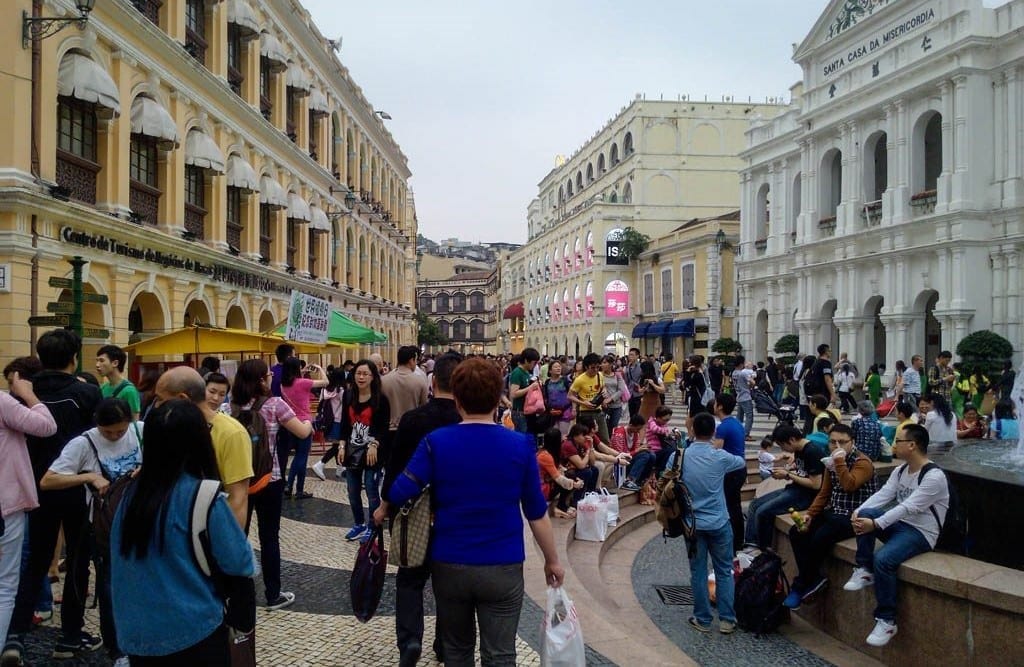
    Macau’s total visitor arrivals rose a nominal 0.8% to a new record 30.95m in 2016, with nearly 28m travelling from Greater China markets (+0.1%), a slight increase of 0.1%, whereas the much smaller international visitor arrival total grew by 7.9%.

    This will be encouraging news for DFS Macau in particular, plus Duty Free Americas, Dufry and many other standalone retailers currently operating shops in Macau’s hotels and tourist district.

    MACAU GAMBLING ON CASINO RECOVERY

    The increase also comes at a time when Macau’s casino business appears to be recovering some of its big spenders, with last December’s revenue up an impressive 8%.

    Most of these big ’high rollers’ were put off visiting the location, following Beijing’s crack down on irresponsible gambling by some mainlanders three years ago.

    Having said that, there was still a 3% fall in Macau’s overall gambling revenue to $28bn last year and this is still the Special Administrative Region of China’s biggest source of revenue by far [three times the gambling revenues generated in Las Vegas-Ed].

    Macau also continues to be only territory anywhere in China that is allowed to operate casinos.

    MACAU STILL NEEDS A LOT MORE HOTEL ROOMS

    The huge new bridge being constructed to link Hong Kong and Macau and the planned expansion of ferry operations to Macau are also expected to greatly increase visitor arrivals – although this expansion will only as good as the number of hotel rooms that are available – around 35,000 at present.

    In the meantime, the MGTO says it continue to work towards completing the tourism development goals in the 5- year development plan formulated by the SAR Government aimed at turning Macau into a World Centre of Tourism and Leisure.

    Macau welcomed more than 20m Mainland visitors last year, up by 0.2%, with 44% from Guangdong Province. There were also nearly 9.56m ‘independent’ visitors from the Mainland. An increase of 8.8% was recorded for the Taiwan market, whereas the sum of Hong Kong visitors dropped by 1.8%.

    HALF A MILLION KOREANS VISITED MACAU LAST YEAR

    As for international markets, South Korea still ranked highest, contributing over 660,000 visitors to Macau last year (+20%). Southeast Asian markets also performed well, with visitors from Thailand registering the largest growth of over 30% among the top ten source markets.

  • French fashion labels to establish joint online presence in China

    French fashion labels to establish joint online presence in China

    Twenty French fashion labels are taking their business to China, through the ‘French Boutique’ launched by the French Federation of women’s ready-to-wear apparel (FFPAPF) on Alibaba’s Tmall Global website. Participating labels include Teddy Smith, IKKS, Ateliers de la Maille, Ollygan and Bensimon.

    Labels Prêt pour Partir, Nathalie Chaize, Groupe Mado, Mât de Misaine, Urbahia, Daniel Faret, Zyga Lin’n Laundry, Les Petites Bombes, Lab Dip, Europann and Rica Lewis will also take part in the initiative. They will all be featured on a website that claims it draws 439 million active Chinese customers per year. The market is expected to grow even further, given that only 50% of Chinese consumers currently have internet access.

    The online ’boutique’ will be launched next March, with the support of DEFI. The brands featured on ‘French Boutique’ will be assisted locally by the FFPAPF’s Chinese office, established at the end of 2015 in Hangzhou, also home to the Alibaba Group‘s headquarters.

    FFPAPF President Pierre-François Le Louët underlined how the objective is to introduce a “French multi-brand” presence, presenting Chinese consumers with “the best that French ready-to-wear [labels] can offer.” “The FFPAPF has carried out research work to simplify logistics, and handling social media presence,” said Marion Bayle, Asia business representative for IKKS, which established a foothold in China five years ago through a local partner. The French label is planning to expand internationally, and the initiative is expected to allow IKKS to learn more about its Chinese customers through the information on consumer preferences yielded by the online presence.

  • Right time to outshine China in shoes and clothes

    Right time to outshine China in shoes and clothes

    India is witnessing a ‘historic opportunity’ to take over China in the apparel, leather and footwear sectors but it is being outrun by its neighbouring East Asian economies, the Survey has said.

    The survey touched upon India’s declining share in global cattle population and exports of cattle hides. The Survey said that limited availability of cattle for slaughter in India is leading to a loss of potential comparative advantage due to underutilisation of the abundantly available natural resource“ for the leather sector.

    The Survey added that in spite of significantly lower wages than China, countries such as Bangladesh, Vietnam and Myanmar have outpaced India in these sectors. “The window of opportunity is narrowing and India needs to act fast if it is to regain competitiveness and market share in these sectors,” the Survey said.

    The monthly wages for semi-skilled workers in India ranges between $81 and $119, while in China its $250-300. India’s wage costs are even less compared with Vietnam and Indonesia but challenges of logistics, labour regulations, tax and tariff policy have put India at a disadvantage in a global scenario.

    These difficulties have led to several Indian firms choosing to relocate to Bangladesh, Vietnam, Myanmar and Ethiopia. All of these factors have brought India’s share in global exports of apparel, footwear and leather to less than 5%, falling behind countries such as Bangladesh and Vietnam.

    Being labour intensive, apparel and leather sectors have been provided subsidy by government for increasing employment but a lot more needs to be done if India wants to create more jobs and opportunities for exports and growth.

    The Survey said the government needs to take up a number of labour reforms to overcome the obstacles of employment generation and also bring in the Goods and Services Tax (GST) for tax rationalisation.

    Noting that all economic growth take-off in East Asia has had a direct correlation with the clothing and footwear exports, the Survey said India has underperformed in these sectors.

    At a GDP growth rate of 7-10% in East Asian economies, the average annual growth of apparel exports was between 20% and 50%, while it was more than 25% in case of leather. For India, this figure has been 12.7% and 5.4% respectively, showing a huge untapped potential.

  • Wellcome supermarket criticised for failing to provide seats for on-duty cashiers

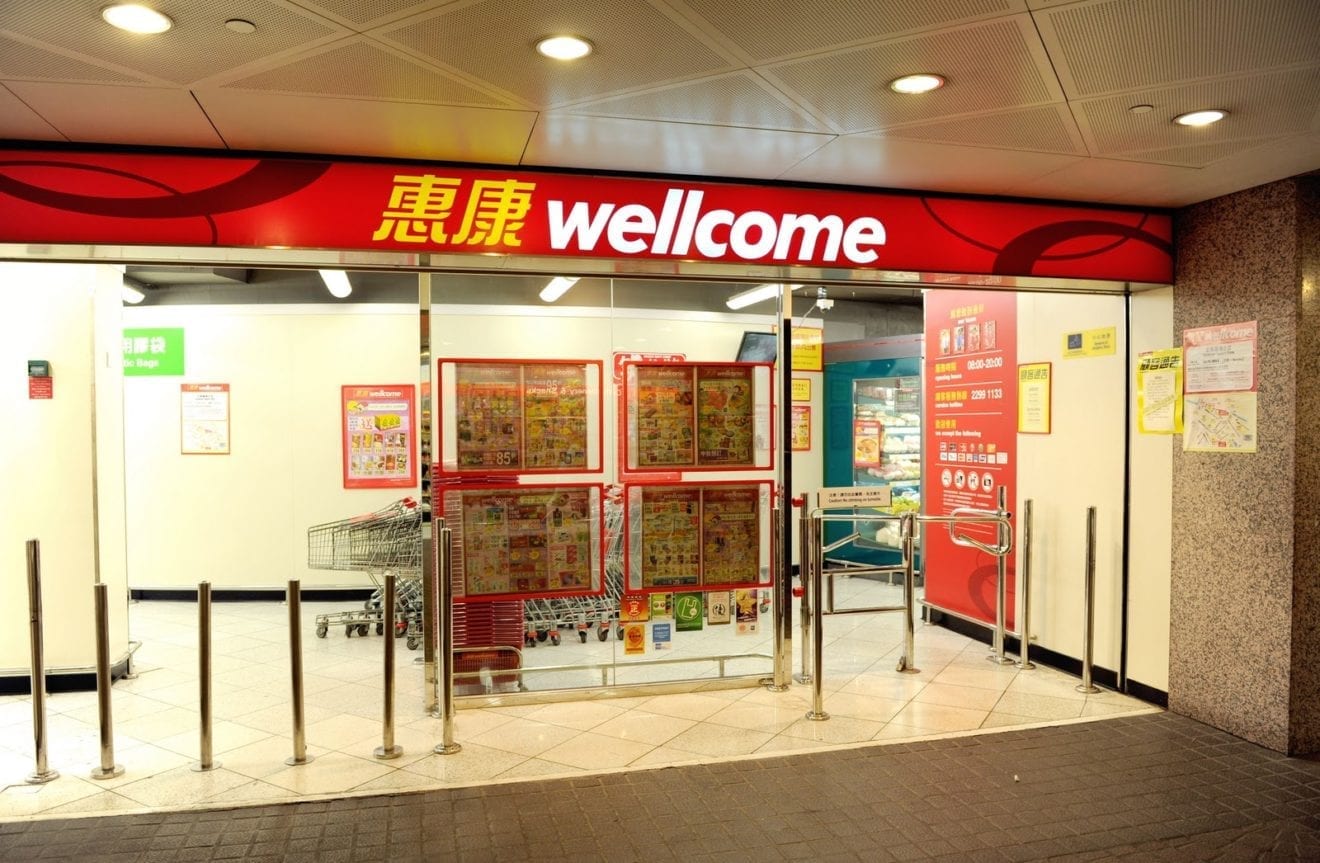
    Wellcome supermarket criticised for failing to provide seats for on-duty cashiers

    The Wellcome supermarket chain has come under fire for failing to protect workers’ health as it emerged that they do not provide chairs for on-duty cashiers.

    The Retail, Commerce and Clothing Industries General Union said Thursday that none of the 154 Wellcome branches it surveyed provided seats to cashiers during working hours. It slammed the company for disregarding the wellbeing of its workers. Prolonged standing carries health risks such as muscle ache, back pain and swollen veins, it said.

    In response, Wellcome said that it is conducting a pilot test to introduce chairs for cashiers at four branches: Beacon Hill, Johnston Road in Wanchai, San Fung Avenue in Sheung Shui, and Avon Park in Fanling.

    It promised to gradually provide chairs to cashiers at all 281 Wellcome branches in the city.

    According to an occupational health guide issued by the Labour Department, retail employers are advised to ensure the safety and health of their workers by providing seats at their workplaces.

    Employers should ensure that employees are allowed to be seated “unless operational needs warrant otherwise,” the guide said.

    labour department guide retail

    The Labour Department’s guide on preventing health hazards for retail workers. Photo: Labour Department screenshot.

    But the union said the guide, which is not legally binding, is not enough to protect workers’ rights. It urged the Labour Department to include leg fatigue in its list of compensable occupational diseases and enforce the Occupational Safety and Health Ordinance against employers who violate the law.

    It also demanded that Dairy Farm International, which operates the Wellcome chain, review policies in all of its retail stores to ensure the safety of their workers.

    Activist Ching Chin-wai, who helped lead the campaign, said that Wellcome failed to respond to public enquiries about the progress and details of its pilot test. He slammed the supermarket chain for “disrespecting” its employees and avoiding public accountability. Ching previously led similar campaigns for other occupations such as security guards.

    The retail union is a member of the Hong Kong Confederation of Trade Unions.


  • What US department stores can learn from China

    What US department stores can learn from China

    Lucy Kruse loved the smell of perfume enveloping her as she entered the department stores of her youth. She remembers trying on soft leather gloves, and following a splash of color to the store’s elaborate hats with their feathers and veils. At Sakowitz in Houston, she peered into the Sky Terrace restaurant to see fashion models  sashay past the tables.

    From the Christmas windows of Marshall Field’s in Chicago to the extravagance of Neiman Marcus in Dallas, department stores once defined the modern retail experience. Created to be emporiums of pleasure, however, today they are falling off the map.

    This month, Macy’s announced the closing 100 of stores nationwide and layoffs for about 10,000 workers. The closings include three stores in Houston: Greenspoint Mall, Pasadena Town Square and West Oaks Mall.

    During the same month, Sears announced that it will close 150 stores by April — 10 percent of its locations. The company shuttered 78 stores last year and more than 200 in 2015. JCPenney, meanwhile, has announced it will be closing branches too.

    The cause, most experts say, is online shopping. “The short answer is Amazon.com,” said Harold Livesay, a professor of business history at Texas A&M University and author of Andrew Carnegie and the Rise of Big Business. “The long answer is FedEx, UPS and the Internet. The infrastructure is reliable and so is the ease of delivery. You can shop from home, and don’t have to schlep to the store.”

    In Chongqing, 20 couples compete in a kissing contest at the New Century Department Store in Yongchuan Shopping Center. The winning couple beat others with 56 minute of kissing in seven rounds with different postures. Photo: Getty Images, Visual China Group / 2015 Visual China Group

    There’s no doubt that e-commerce plays a substantial role in the demise of department stores. But customers may not be abandoning department stores just because they want to shop in their pajamas from the couch. Yet there may be more to the story.  Paradoxically, while department stores are failing in the U.S., in China many are thriving.

    According to recent research, about a third of China’s urban dwellers shop at department stores more than once a week.

    “Department stores in China are suffering from online competition too, but they are doing better than in America because they have a different kind of concept of what a department store is,” said Haiyang Li, professor of strategic management at Rice Business in Houston. “They have added different entertainment elements, like ice skating rinks and cinemas and children’s playgrounds and restaurants. Shopping is more experiential in China. It is not just grab something and go.”

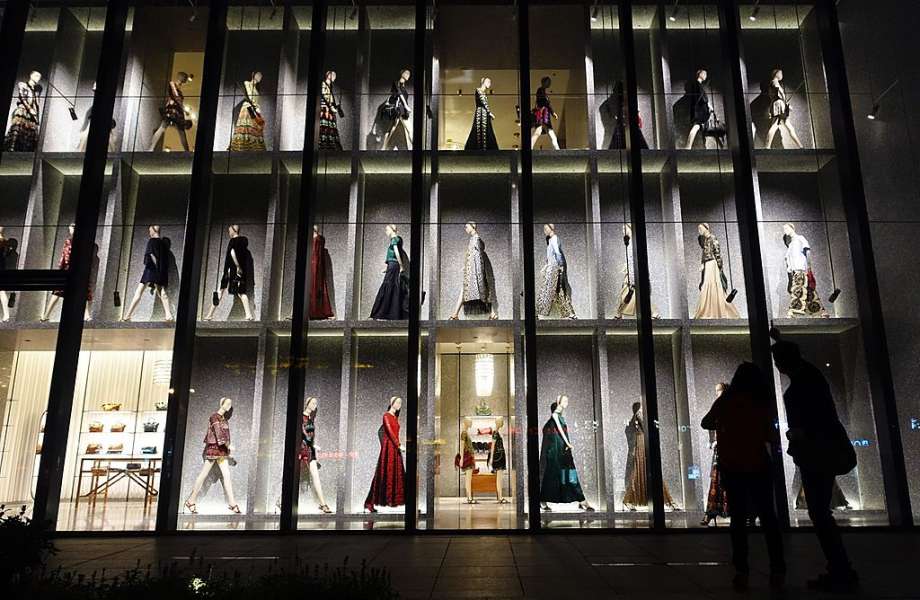
    A shop window in Shanghai. Photo: Getty Images, Johannes Eisele / AFP

    Department stores in the U.S. once offered this sense of excitement. Even small towns boasted department stores that were destinations. When Kruse, now 94, was growing up in Kingsville, she found it thrilling to take the area’s only escalator up to the tea room for lunch at Ragland’s.

    But Kruse doesn’t shop much at department stores anymore, even though she is healthy and fit. Instead, she shops online or orders out of catalogues.

    “Department stores used to be more elegant, and the staff was well-versed about the products,” she said. “The clerks really aren’t very helpful anymore. Shopping has become a chore and there is almost too much to choose from.”

    Shoppers test a bed at Ikealand in Shanghai. In China, IKEA is not only a place for shopping but also place to play. go on dates, and even sleep. Photo: Getty Images, Olivier Chouchana/Gamma-Rapho / 2011 Gamma-Rapho

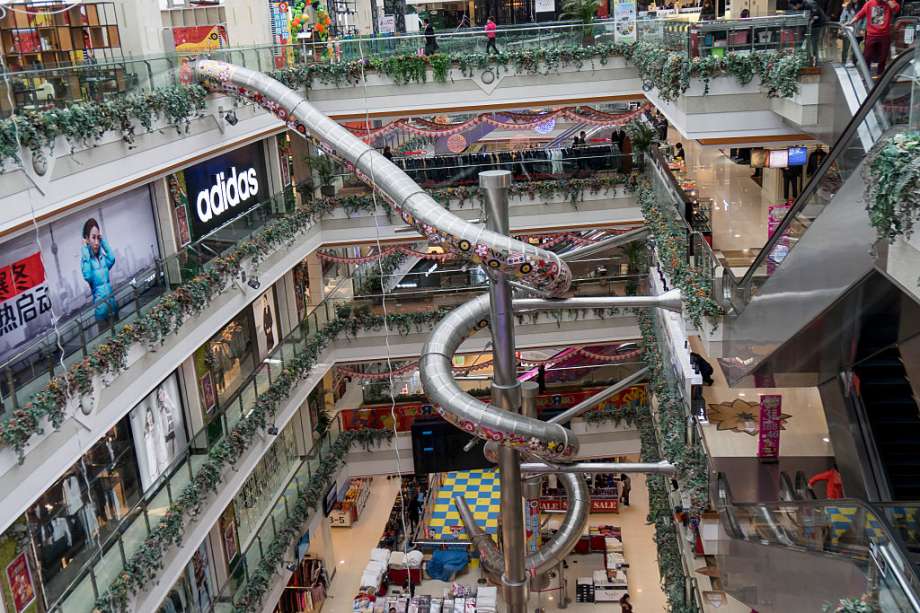
    In contrast, the Beijing-based Shimao department store recently reduced its retail floor space from 80 to 20 percent and added restaurants and entertainment areas. In Hong Kong’s Crawford Lane, concierges assist customers on every floor and 60 personal stylists stand ready to help shoppers craft their own individual chic looks.  And in Shanghai, when the upscale French department store Printemps opened a branch it included a five-story high-speed slide in the shape of a dragon so shoppers could swish from the top floor to the bottom.

    The Chinese stores hark back to a time when service, extravagance and play characterized European and American department stores. The department store became the epitome of elegance and luxury in the late 19th century, as entrepreneurs invented a new style of consumption in which shopping equaled pleasure.  French author Emile Zola set his novel Au Bonheur des Dames (The Ladies’ Delight) in the Paris department store Le Bon Marche. As the owner enticed his female customers into purchasing an exotic array of appealingly arranged goods, the dramatic customs of this new institution unfolded among the staff.

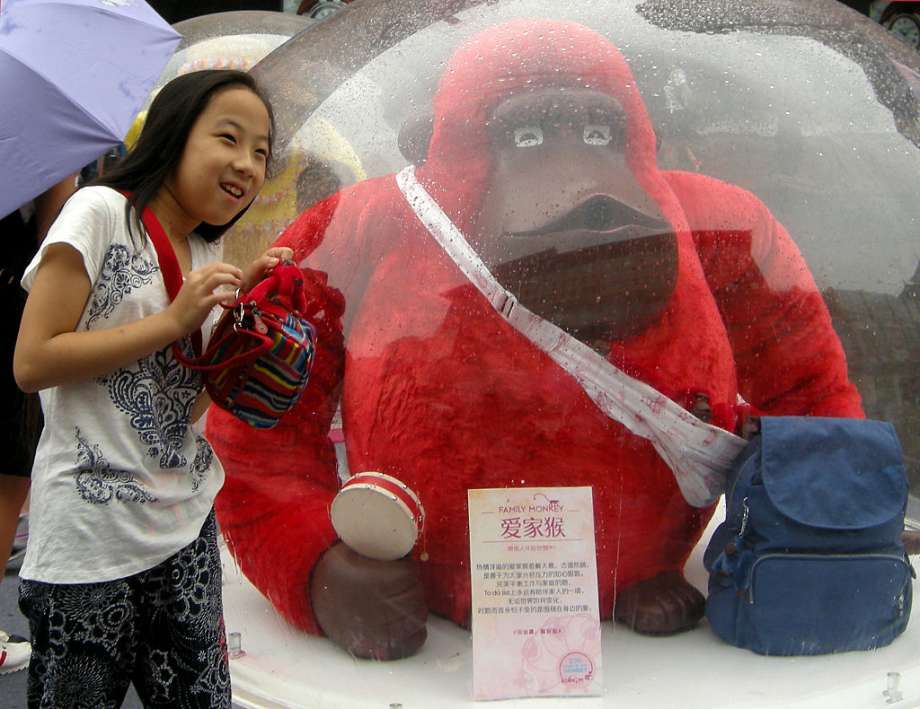
    In Beijing, a girl poses with a cartoon monkey in front of Wangfujing department store. The leisure bag brand Kipling's monkey exhibit was a hit with tourists. Photo: Getty Images, Visual China Group / 2016 VCG

    In the United States, from the 1890s into the 1960s, American department stores hired the best architects to design their flagships on prime downtown real estate. Each store’s restaurant boasted a signature dish, from deviled crab to chicken velvet soup. Filene’s offered a health menu, from which weary shoppers could refresh themselves with potassium broth, acidophilus milk or a cold glass of kraut juice.

    These stores played a central role in a city’s identity, too. Their tall clocks were meeting places where memories began. Any child born in Georgia received a birthday card from Rich’s.”  In Dallas, the Neiman-Marcus offered its famous his and hers gift at Christmas, with offerings ranging from airplanes to mummies to live camels. In Chicago, Marshall Field’s was such an institution that after the bombing of Pearl Harbor, one woman reportedly exclaimed, “Nothing is left anymore, except, thank God, Marshall Field’s.”

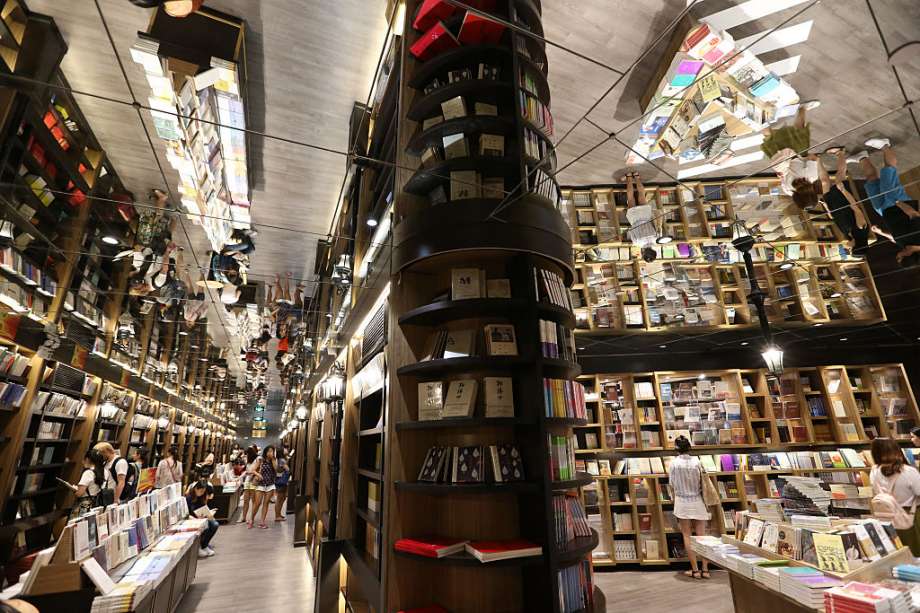
    The new Zhongshuge bookstore at Reel Department store in Shanghai, China. The bookstore chain goes to great lengths to make itself attractive: Interior wooden shelves are painted in a spectrum of bright colors, and ceiling lights are arranged to suggest a starry sky. Photo: Getty Images, Visual China Group / 2016 VCG

    Chinese department stores, where shopping tends to be a group activity, today play a similar communal role, Li said. The stores offer a stage for the new middle and upper class to parade their status and a familiar hub where family and friends to reconnect. They’re even associated with romance.  Chinese branches of IKEA have become such popular places for Chinese in their 70s and 80s to go on dates that IKEA has made new rules limiting the length of their stays.

    “My thought is there is differentiation in China,” Li said. “People go online for some kinds of things, but they also want to go shopping so they can enjoy the unique environment the stores create. In the United States, there is no need to go to Macy’s. You don’t add any value by going there.”

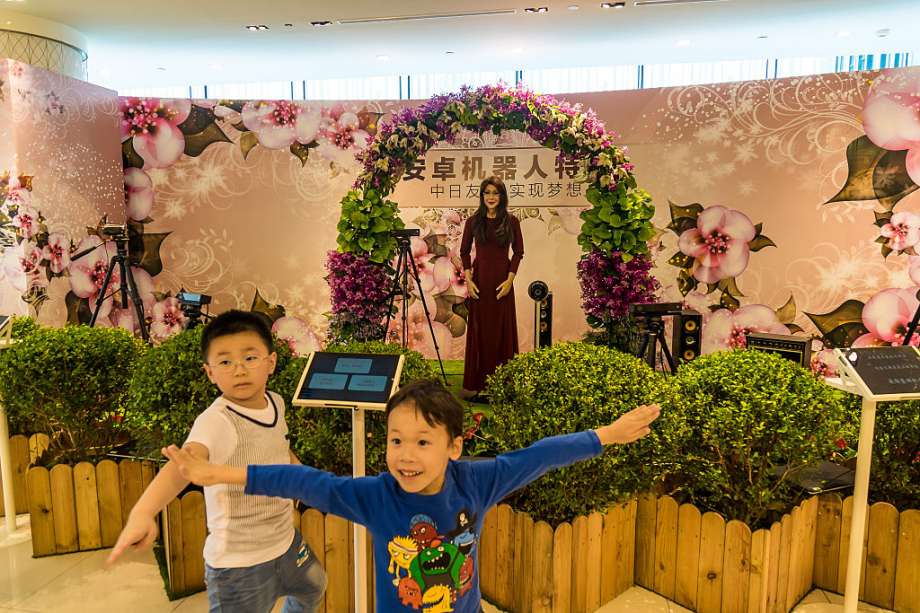
    At the Takashimaya Department Store in Shanghai, children react in front to an android that could speak, sing, shake hands and hug with people. Photo: Getty Images, Visual China Group / 2015 Visual China Group

    At least for now, Chinese retailers seem to think both shopping styles can coexist. The same week Macy’s and Sears announced their closures,  Chinese online retail giant Alibaba revealed that it would become the controlling shareholder of the Chinese department store and mall company, Intime, and would begin integrating its enormous e-commerce assets with  Intime’s brick and mortar stores.   Rather than foreseeing competition with physical stores, Alibaba plans to tap the latest technology to draw customers to stores, including artificial intelligence, virtual reality and Internet-of-Things.

    If department stores in the West are to survive, they may have to somehow recapture a time when they were destinations in themselves — a time when women like Lucy Kruse were excited to ride the escalator and savor lunch in luxurious surroundings. They may have to revive the art of customer service. And they will have to figure out how to blend the convenience of technology with the real-life scent of perfume and the warmth of crowds.


  • S.F. Express to build Asia’s largest air freight hub in China

    S.F. Express to build Asia’s largest air freight hub in China

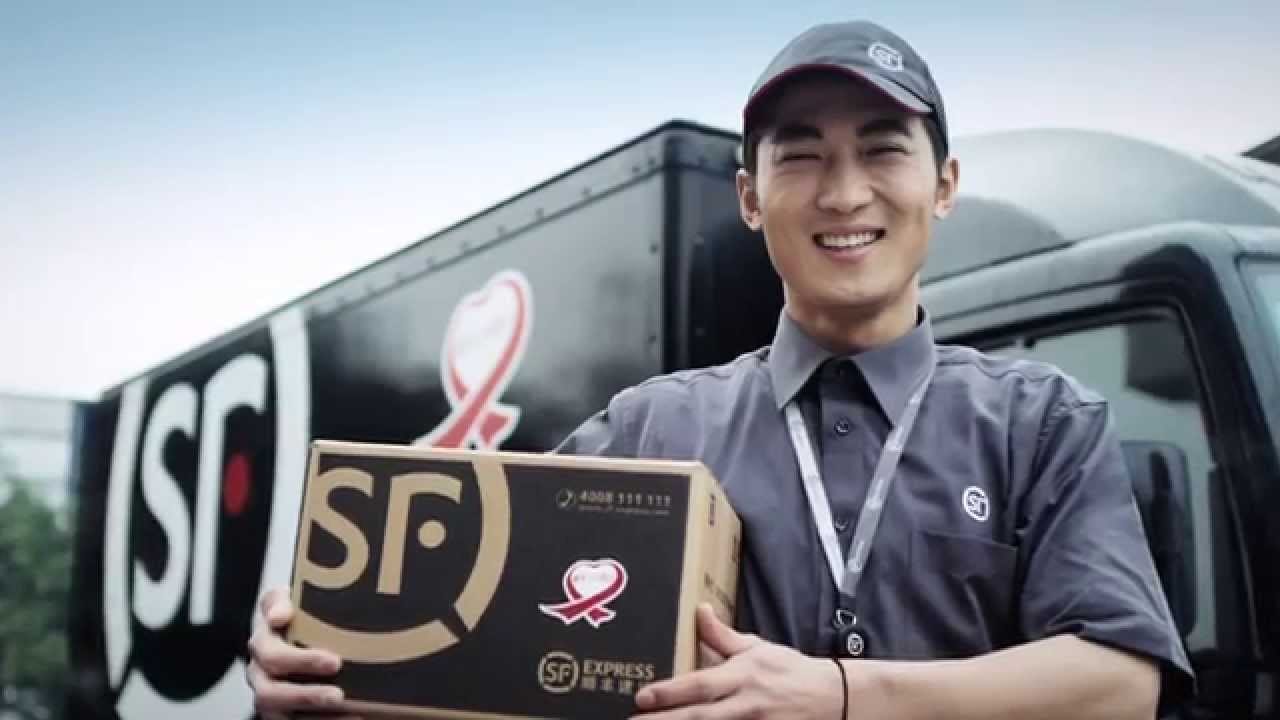
    Chinese private logistics giant S.F. Express Co Ltd has pledged to build the busiest air cargo hub in Asia, reaching areas accounting for 80% of the country’s Gross Domestic Product within two hours, including major cities like Beijing and Shanghai.

    The firm said it would construct an airport in Ezhou city, Hubei province in central China, that could handle more than 2.6 million tonnes of freight and 1.5 million passengers by 2025. The airport would be the fourth busiest in the world and could cater for all jets except the Airbus’ superjumbo A380.

    The joint venture in charge of building the air hub has an investment capital of 100 million yuan (US$14.4 million). The venture will be responsible for the design, construction as well as the operation and management of the mega development project.

    A unit of S.F. Express – S.F. Airport Investment – and China VAST Industrial Urban Development Company have contributed 40 million yuan and 60 million yuan, respectively, to set up the joint venture.

    S.F. Airport Investment had invested 470 billion yuan in VAST late last year. S.F. Express, founded in 1993, is the largest private courier in China, and started building its own fleet in 2009. As of November 30, it owned a fleet of 36 aircraft, according to the company’s website.

    China’s logistics industry has boomed following the development of e-commerce giants, such as Alibaba’s Taobao. In 2016, more than 250 million people used courier services each day, according to the state Xinhua news agency.

    At the annual Singles’ Day e-commerce sale last year on November 11, postal services handled 251 million parcels, a 52% increase compared to 2015, according to another Xinhua news report. S.F. Express even rented high-speed trains to ensure punctual delivery of goods.

    The new airport project is part of an aero city mega development, spanning an area of 36 square kilometers, for a population of only a million.

  • China interested in establishing direct flight to West-Java

    China interested in establishing direct flight to West-Java

    The Executive Director of PT Bandara Internasional Jawa Barat, Virda Dimas Ekaputra, said that the Chengdu administration of China has stated its interest in establishing direct flight to Kertajati Airport of West Java Province.

    “They were excited when they knew that the West Java administration was to build a new international airport in Kertajati of Majalengka District,” Ekaputra said here on Tuesday.

    According to the director, the Chengdu administration has proposed the direct flight to Soekarno-Hatta Airport of Tangerang City.

    However, Soekarno-Hatta Airport could not accept their proposal due to the flight slot being full.

    Ekaputra stated that all ASEAN countries, except Indonesia, have maintained connection of their cities with Chengdu.

    He hoped that the establishment of the airport in West Java Province could develop the tourism sector in the area.

    Thus, the company will cooperate with West Java Cultural and Tourism Service to promote tourism in the region.

    “West Java would be one of the tourism destinations. The development would contribute to achieve 20 million foreign tourists,” Ekaputra added.

  • Why China’s ivory ban is a mammoth step towards saving the elephant

    Why China’s ivory ban is a mammoth step towards saving the elephant

    At the end of last year, China announced a complete ban on its ivory trade and processing activities by the end of 2017. The news, a late Christmas gift to many conservationists, was greeted as a “game changer” by groups including the World Wildlife Fund, which says around 20,000 African elephants are being killed every year for their ivory. As the world’s largest consumer of ivory products, Chinese demand has seen poaching increase and ivory prices rise. The country has had a seemingly insatiable appetite for so-called “white gold”.

    At a meeting of the Convention on International Trade in Endangered Species of Wild Fauna and Flora (CITES) last September, a resolution was tabled which recommended that its 183 member states “close their domestic markets for commercial trade in raw and worked ivory as a matter of urgency”. China’s support of the resolution surprised many and led to it being adopted by consensus. The country had taken a big step in re-evaluating its relationship with ivory and its effect on the world’s elephants.

    The subsequent announcement on December 30 2016 saw China commit to closing up to 15 of its 34 ivory processing firms and 50 to 60 of its 130 licensed ivory retail shops by March 31 2017. The second stage will see China phase out the country’s remaining registered legal processors and traders by the end of the year.

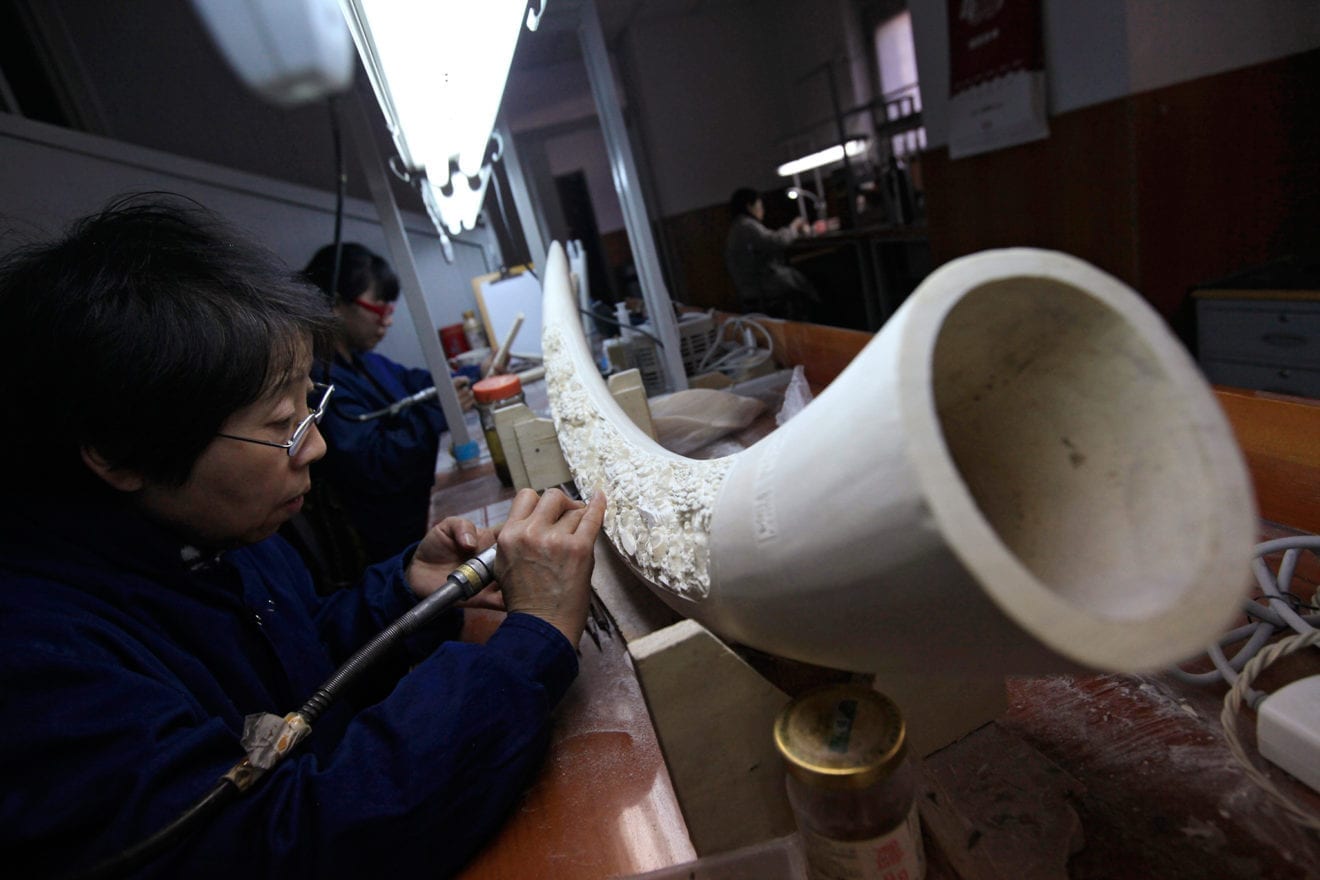
    China has a popular ivory carving industry with a history which stretches back to the Ming and Qing Dynasties. To assist those who carry out this work, there will be schemes to assist ivory carvers with the transition into working with other mediums. “Master carvers” will be encouraged to work in museums and in the repair and maintenance of artistic and culturally significant ivory artefacts.

    The Chinese move effectively brings to an end the future of the country’s domestic ivory market. But there are millions of pieces of (currently) legally owned ivory artefacts all over China which will have to be dealt with through a strict new management system. Ivory products will only be displayed in museums and art galleries for non-commercial purposes or exhibition and the giving and inheriting of ivory will still be allowed.

    The elephant in the sale

    More worryingly, the Chinese ban on trade specifically excludes items described as “genuine antiques”. This exemption raises concerns that elephants will continue to be poached to supply an increased trade in “ghost ivory” (illegal ivory sold as antique legal ivory) as the legitimate market closes.

    Another problem is that a large portion of China’s ivory trade will simply shift to Hong Kong, which is not subject to the Chinese ban. Hong Kong is the world’s biggest legal retail market for elephant ivory and a major transit hub for illegal imports. Hong Kong has itself pledged to phase out its domestic ivory market by 2021 and it is hoped that the Chinese announcement will encourage Hong Kong to speed up the timescale. But there is no guarantee this will happen.

    Concerns over the sale of “ghost ivory” alongside legitimate legal ivory pieces are even greater in Hong Kong. “Hong Kong ivory” has even come to be a derogatory term to describe new ivory masquerading as old.

    This point was recently highlighted by British auctioneer James Lewis, who said of his experiences in Hong Kong:

    You see old ivory on the same shelf as new ivory. I realised then there’s a major market in the Far East that looks at ivory as a commodity as well as an art form, and that the old ivory market is fuelling modern ivory demand.

    But these concerns should not distract us from the positive aspects of China’s plans. In terms of addressing the decline in wild elephant populations and Asia’s attitudes to ivory, the Chinese ban can only be a good thing. Provided Beijing is able to police and manage the changes effectively it could even be the “game changer” conservationists hope for.

    Just as importantly, the fact that China has gone so far and with such a strict time scale after years of negotiation could be the catalyst for other states such as Hong Kong, Laos, Myanmar and Vietnam to follow suit. Demand for “white gold” has taken the elephant to the brink of extinction. Chinese remorse could be the species’ salvation.

  • Foreign Taobao shop owners in China share experiences and secrets to their success

    Foreign Taobao shop owners in China share experiences and secrets to their success

    Taobao.com, founded by Alibaba in 2003, has become the single most popular e-retailer in China with 423 million active registered shoppers by the end of March 2016. The figure has also far surpassed American e-commerce giants Amazon and eBay. Taobao has not only transformed China’s retail marketplace by providing products and online convenience to rural customers, but it has also created millions of jobs and alternate sources of income for private entrepreneurs, many of whom have become millionaires thanks to the country’s booming e-commerce phenomenon. Foreigners living and working in China are now hoping to get in on the action by opening their own Taobao shops, but are the cultural challenges and business hurdles facing them worth the payout?

    To glean some insight into expatriate e-retailing, the Global Times recently reached out to two foreign Taobao shop owners about their experiences and successes (or lack thereof).

    Kaikai, the Chinese name of a 29-year-old American, became a Taobao shop owner in 2012. He said that his first visit to China was in 2007, when he studied Putonghua at Peking University and National Taiwan University.

    “I can say everything in Chinese, I can also read and type the words on computers and mobile phones,” he said. “However, I didn’t dedicate my Chinese studies to handwriting as there is not much practicality for it in this day and age.”

    His excellent command of Putonghua laid a solid foundation for his future Taobao career. In 2012, Kaikai began selling household kitchen appliances, electronic devices and travel accessories on Taobao.

    He said he was inspired by Chinese friends who kept asking him to buy iPhone 4S from the US for them.

    “At that time, I had a need to convert my salary (paid in dollars) into yuan, so it was a win-win for both sides,” he said.

    Realizing the viability of this new trade, Kaikai decided to quit his job and begin selling products on Taobao full time.

    In terms of procedure, he said foreigners without Chinese partners need only a passport and the completion of a simple Chinese-language test. Like many budding entrepreneurs, Kaikai didn’t have any help at the beginning of his business.

    “I first started the business by myself, living and operating out of a youth hostel in Shanghai. From product procurement overseas, to logistics, importing, sales and final fulfillment, I controlled every step of the process,” he said. “I didn’t have anyone to hold my hand, so I had to learn everything on the fly.”

    Authentic American

    Even though he is not a native Chinese speaker, Kaikai conducted all his customer service interactions himself. “I would often send messages using Taobao’s voice function, which made the sales experience with customers a lot more intimate and congenial, because Chinese are happy to know that it’s really a foreigner communicating with them,” he added.

    Kaikai admits that his identity as an American guy selling American products in China is his biggest competitive advantage on Taobao.

    “In most of my listings, I take all the product photos and videos myself to differentiate my store from other sellers,” he said. “It’s an effective strategy to give my customers peace-of-mind knowing that they are buying authentic American products from an authentic American.”

    Fortunately, Kaikai’s efforts eventually became profitable. According to him, his store’s sales volume has increased exponentially through a combination of positive feedback, solid reputation and product expansion.

    He also attributes persistence to his success. “I see many small stores come and go because they quickly give up. But if you’re willing to dedicate yourself by putting immense focus and effort into your business, then the possibilities are limitless,” he said.

    Profiting from pollution

    Thomas Talhelm is an assistant professor of behavioral science at the University of Chicago. During his stay in China in 2013, he noticed smog becoming a crucial environmental issue and thus founded the social enterprise Smart Air Filters to promote DIY air filters as cheaper alternatives to expensive air purifiers.

    These DIY purifiers primarily consist of a fan and a high-efficiency particulate air (HEPA) filter, which are the major components of any standard air filter. To ship them to and sell them in China, Talhelm and his team set up their own Taobao store in 2013.

    “We started simple, but since then we’ve expanded to other products that we’ve personally tested and published results for, such as carbon filters for formaldehyde, pollution masks and particle counters,” he said, adding that their customer base is comprised of both expats and locals concerned about China’s worsening air pollution.

    “Opening a Taobao store allowed us to get affordable clean air options to more people in China,” he said. “Taobao is clearly the major online commerce platform in China. The choice is a no-brainer. Now there are more options with Weidian and JD, but Taobao is still huge.”

    When asked about the logistics of opening a Taobao store, Talhelm said that he registered Smart Air Filters as a Chinese company under the name of his Chinese partner, so the registration process was quite simple.

    According to Talhelm, his shop currently has five full-time employees, three part-time employees and several volunteers, most of them foreigners from different cultural backgrounds. All have good command of Putonghua, so language and culture are not barriers for their business.

    “Knowing Chinese is essential, but it’s not enough,” Kaikai countered. “Knowing what to sell, how to buy, how to arrange logistics and how to cope with customer and product issues are equally vital.”

    Talhelm himself designed his Taobao home page and wrote all the Chinese descriptions of their products. He concedes that the business didn’t take off at first, selling less than 10 purifiers in the first week.

    But with China’s “airpocalypse” making domestic and international headlines in recent years, their most popular purifier has now sold over 2,000 units.

    “Over time our open data and tests have reached more and more people, so our sales volume has also gradually increased,” Talhelm said. “Smart Air’s core idea has always been that if people just see the data, most people wouldn’t spend so much money on the expensive purifiers.”

    Trial and error

    Despite such achievements, both foreign shop owners said that they have also encountered numerous challenges and obstacles along the way.

    Kaikai explained that at the beginning he was unsure how to export products from the US into China, which required plenty of logistical research and trial-and-error attempts. “We are now shipping about 12 metric tons of goods each month via air and sea,” he said.

    Kaikai pointed out that learning how to delegate tasks to increase scalability is essential. “Initially, I was a bit of a control freak, as I wanted to control all aspects of the business to ensure the best quality service,” he said.

    “However, I realized that I had to delegate tasks, such as customer service, which is why I now have about five employees just in customer service.”

    Talhelm believes that evaluating customer feedback is extremely helpful, especially negative comments.

    “First we try to figure out what the customer is talking about. Is it true? Where was the problem? If it’s a scientific or technical question, I send data (or even run a new test if it’s something we haven’t tested),” he said.

    He added that the most common negative comment about his product is noise, which is a fundamental problem with almost all air purifiers.

    “Any machine that is pushing out air will create noise, but people want less noise. There are quiet purifiers out there, but they don’t push out enough clean air. We’re working on radical new designs for quiet yet clean filters,” Talhelm said.

    “The reality of day-to-day operations are the less glorious part of my work,” Kaikai said. “Those who can’t handle this will give up and close shop, but if you persevere and are willing to go to battle every day, then you can be a winner.”

    In terms of what administrative or promotional support he expects from Taobao, Kaikai said that he doesn’t expect Jack Ma to just hand over to foreign shop owners a magical key to the castle.

    Thus, his only expectations are for Alibaba to continue maintaining a fair, reliable – and, most importantly, trustworthy – marketplace for both buyers and sellers.

    “There are hundreds of thousands of Taobao shops; my store is just a number in the system. That’s one of the reasons why I love e-commerce in China, though, because I don’t have to deal with guanxi (connections with influential people)” Kaikai said.

    “For the most part, e-commerce in China is very transparent and a level playing field for sellers,” he said. “My success is achieved strictly through hard work and merit, not through relationships with insiders (like bricks-and-mortar stores).”
  • China retail sales grow 10.4 pct in 2016

    China retail sales grow 10.4 pct in 2016

    China’s retail sales of consumer goods, a key indicator of consumption, grew 10.4 percent year on year in 2016, the same as the first three quarters, official data showed Friday.

    Retail sales grew 9.6 percent year on year after deducting price factors, according to the National Bureau of Statistics (NBS).

    Total retail sales of consumer goods hit 33.23 trillion yuan (4.84 trillion U.S. dollars) last year.

    The data showed strong consumption potential in rural areas, with retail sales expanding 10.9 percent, outpacing the 10.4 percent rate in urban areas.

    The NBS said that retail sales of communication equipment and housing goods had grown fast. Sales of communication equipment jumped 11.9 percent year on year, furniture went up 12.7 percent, and building and decoration materials climbed 14 percent.

    The catering industry garnered 3.58 trillion yuan in revenue last year, up 10.8 percent year on year.

    Online sales boomed, surging 26.2 percent year on year to reach 5.16 trillion yuan.

    Per capita spending was 17,111 yuan, representing a nominal growth of 8.9 percent year on year, though real growth was 6.8 percent after deducting price factors.

    In December, nominal growth of retail sales was 10.9 percent year on year, slightly higher than the 10.8 percent increase in November.

    Retail sales contributed significantly to China’s economic growth as the country shifts from an export-driven economy to a consumer society.

    Consumption contributed 64.6 percent of China’s economic expansion in 2016, the NBS said.

    Retail sales of consumer goods are expected to jump by 10.2 percent year on year to exceed 37 trillion yuan in 2017, contributing more than 70 percent of the country’s economic growth, according to a report issued by the China General Chamber of Commerce.

    China’s economy grew 6.7 percent year on year in 2016, well within the government’s annual growth target of 6.5 to 7 percent.