Tag: China

  • Jollibee Foods quits China restaurant stake

    Jollibee Foods quits China restaurant stake

    “The divestment is part of the company’s intention to concentrate its resources on businesses with greater potential,” Jollibee said in its statement, essentially admitting the business was not performing to expectation.

    The company will now focus on “larger businesses in China”.

    SPW has grown from 34 stores to 71 under Jollibee ownership, mostly located in Nanning in Guangxi province in China’s south. The Philippine company expects to raise US$13 million from the sale, with installments staggered over two years.

  • China retail sales peak in November

    China retail sales peak in November

    China has reported November was its strongest month of retail sales growth for the whole year.

    While official government figures are usually greeted with a degree of scepticism by retail company executives, they are the only data available to build any sort of picture on the giant’s market’s trading fortunes.

    According to the latest data, total retail sales climbed 10.8 per cent representing the fastest pace since December 2015 and exceeding expectations of a 10.1 per cent rise.

    According to Reuters news agency, the figures were boosted by a higher than usual number of motor vehicle sales (During Alibaba’s 11.11 promotion, 100,000 new cars were sold) along with home appliances and cosmetics.

    Luxury retailers like Kering Burberry and TIffany are among those reporting improved fortunes in the mainland this year after a three-year long decline.

    “Part of that is due to the falling value of the yuan, which diminishes the appeal of spending abroad and encourages more domestic spending,” Wang Jianhui, an economist with Capital Securities in Beijing, told Reuters.

  • Quest for franchisee for Focus Brands

    Quest for franchisee for Focus Brands

    Focus Brands is seeking franchisees to develop its Cinnabon and Auntie Anne’s brands in China as part of its international growth strategy.

    Founded in 1985, Cinnabon is a cinnamon roll bakery with 580 outlets in 52 countries. Auntie Anne’s, founded in 1988, is a soft-pretzel chain with more than 530 locations in 29 countries.“China is a priority market for us based on consumer insight research that shows our freshly baked products have a broad appeal,” says Focus Brands International president Nicolas Boudet.

    “Both brands have received numerous industry accolades, with Cinnabon being named a top-five quick-service brand in Technomic’s Millennials’ Favorite Chains report. Auntie Anne’s was recognised as a Top 50 limited-service restaurant brand by QSR Magazine.

    This year Cinnabon has opened 64 international locations with plans to add more than 70 next year. Auntie Anne’s has opened 89 international outlets this year and aims for 100 more next year.

    Other Focus Brands franchises include Carvel, McAlister’s Deli, Moe’s Southwest Grill and Schlotzsky’s.

    Based in Atlanta, Focus Brands runs more than 1300 franchised ice-cream shops, bakeries, restaurants, and cafes outside the US. It grew its total international system-wide sales by 10.5 per cent last year.

    Founded in Seattle, Cinnabon has more than 1200 franchised locations worldwide, primarily in high-traffic venues such as shopping malls, airports, train stations, travel plazas, entertainment centres and military establishments.

    At its more than 1600 locations internationally, Auntie Anne’s mixes, twists and bakes pretzels all day long in full view of guests.

  • Sunlight returns to retail

    Sunlight returns to retail

    Chief executive of Sunlight Real Estate Investment Trust (0435) Keith Wu Shiu- kee said the volatile period in the retail market at the start of the year has passed.

    Wu said though the local retail market was not performing well over the past two to three years but its impact on rents for shops in shopping malls was limited. He pointed out that rents for shops extending their rental contract in the REIT’s shopping malls went up 6.5 percent during the three months ended September 30. A slowdown in the retail market had not affected shops selling daily necessities, he said. He expected the retail market to continue to improve next year. Commenting on increasing demand for Hong Kong’s office spaces from mainland companies, Wu said it might increase the cost for purchasing offices.

    Meanwhile, he said the revamp of Sheung Shui Centre is nearing completion but admitted that the occupancies was not 100 percent.

    Retail spaces occupied by food and beverages shops in the mall has gone down following revamp, he said, but rents from the food and beverages shops have gone up by a double digit. Seperately, Lifestyle International (1212) said the total investment cost for its Kai Tak commercial project is expected to be about HK$13 billion.

    Lifestyle, operator of Sogo department store, acquired the first commercial site in Kai Tak development zone in November for HK$7.39 billion.

    The company said it intend to develop the site into two blocks of commercial buildings to provide spaces for both retailing and office use.

    Lifestyle planned to house a department store and other facilities which are complementary to the department store operations in the retailing portion, while the office space will be held partly for self-use and partly for leasing out.

    It expected the development to be completed before 2022.

  • Spar China franchisor launches IPO

    Spar China franchisor launches IPO

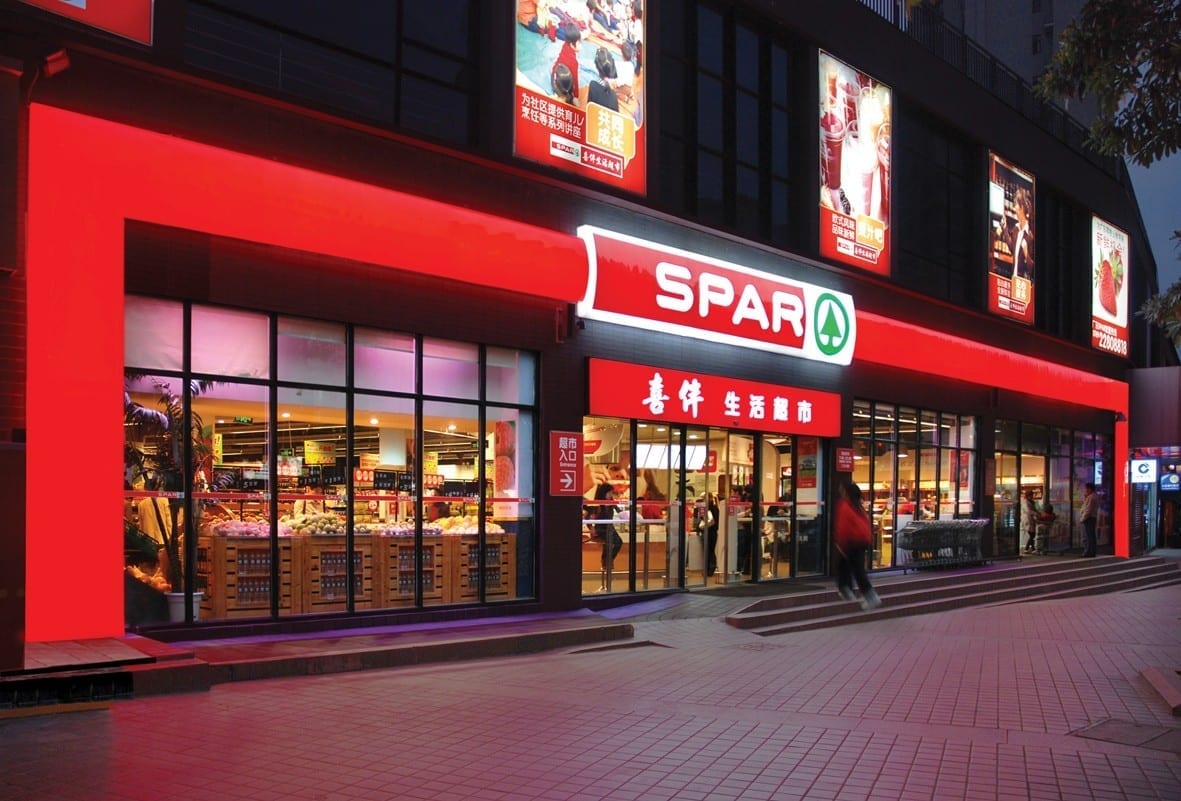
    Jijiayue Group, the parent of Spar China franchisor Spar Shandong, has launched an IPO.

    Spar Shandong became Spar International’s first retail partner in China in 2004, and opened its first store in 2005 in the city of Weihai, north east China. Since then, Spar China has opened 360 stores with nearly 1 million sqm of selling space in eight provinces, employing over 30,000 people. It also operates eight distribution centres delivering across 50 cities.

    Jiajiayue issued 90 million shares, listing on the Shanghai Stock Exchange. Late last month, interest from investors saw the online portion of the IPO oversubscribed 4407 times and the share price rose 43 per cent on its first day of trading.

    The funds raised will be used to finance new store openings and upgrades of existing stores, developing distribution centres and logistics infrastructure and enhancing the existing technology and IT infrastructure.

    spar-china-ipo-image-2
    From left to right: Mr Ding Mingbo – Vice General Manager of SPAR Shandong Jiajiayue Group, Ms Fu Yuanhui – Executive Vice General Manager, Mr. Wang Peihuan – Chairman SPAR Shandong, Mr. Tobias Wasmuht – Managing Director SPAR International, Yoep Man – Managing Director SPAR China and Mr Zhang Aiguo – Vice General Manager.


    Tobias Wasmuht, MD of Spar International described the IPO as a significant milestone, not just for Spar Shandong, but for the wider Spar China family as well.

    “All at Spar are delighted to have contributed to the success of Jiajiayue. Over the last 12 years the company has continued to lead the way, working closely with the growing list of Spar Partners in China to grow and enhance the brand. Investor interest in today’s IPO is testament to the strength and vision of the company and its management team.”

    In addition to its partnership with Spar, Jiajiayue Group is involved in food processing, thye wholesaling of agricultural products and foreign trade business. In total it operates over 400 stores with a selling space of 900,000 sqm in 34 cities within Shandong province such as Weihai, Yantai, Jinan, Weifang, Qingdao, Linyi, Laiwu and Zaozhuang.

    The store formats cover hypermarket, supermarket, department store, neighbourhood store and discount store. The company has been recognised with a number of awards, including top 100 China FMCG Chain, Customer Satisfied Company in Shandong Province and Top Employer of China Retailing.


  • APT nearing 100% 4G take-up

    APT nearing 100% 4G take-up

    Taiwan’s Asia Pacific Telecom (APT) is nearing 100% take-up of 4G services among existing customers, and expects nearly all its subscribers to have migrated to 4G by the end of Q1.

    APT only has around 100,000 3G users left to migrate to 4G, around 6% of the operator’s total subscriber base. The remaining users are expected to upgrade in the next few months.

    In order to encourage migration and boost interest in the operator’s 4G services among new customers, APT has introduced a new line of plans that offer unlimited broadband and free domestic voice calls even to subscribers of Taiwan’s other mobile operators. The plan starts at TW$999 ($31.39).

    APT chairman Lu Fang-ming told the Taipei Times that the operator has reached the subscriber migration target set when the operator launched 4G two years ago.

    As the operator moves to the next phase, it plans to focus on expanding its customer base to improve ARPU.

    APT also recently announced a new home OTT video service to be delivered to Taiwanese customers in collaboration with Netflix, China’s iQiyi, movie distributor Catchplay and Taiwan Mobile’s myVideo, the report adds.

  • Apple Korea targets 15pc market share

    Apple Korea targets 15pc market share

    Apple Korea is going head on to Samsung on its home turf, on target to sell 2.9 million iPhones in South Korea this year, giving it a market share of about 15 per cent.

    At the end of last month it had sold 2.6 million iPhones, and is forecasting improved results for the year. Its operating profit has reached more than KRW800 billion (US$684 million) on revenue of KRW3 trillion, according to Yonhap News Agency.

    Sales of iPhones account for more than 75 per cent of Apple’s revenue in Korea, sources say. It launched the iPhone 7 in October with the opportunity to take share from market leader Samsung after its Galaxy Note 7 debacle.

    On top of that, the Cupertino-based tech company is building its first flagship retail store in Seoul, expected to be completed next November, right across the street from Samsung’s headquarters.

    Apple’s market share in Korea peaked at 33 per cent in the fourth quarter of 2014 following the launch of the iPhone 6, according to Counterpoint. Samsung and LG now have a combined market share of more than 80 per cent. LG had a 19 per cent market share in the second quarter of this year.

    South Korea and Japan, where the iPhone had more than a 50 per share for the three-month period ending October 30, are rare growth markets in Asia for Apple. Its iPhone shipments in China plunged 31 per cent to 7.5 million units in the third quarter, with market share falling to 6.2 from 10.3 per cent, according to Strategy Analytics.

    Apple reportedly reduced orders from component suppliers for its iPhone 7 models early this month because of demand being weaker than expected in many markets, including China.

  • Metro China changes track

    Metro China changes track

    Surging property costs and a changing consumer landscape have forced German retail giant Metro Group to change its approach to the market in China.

    In the 20 years since it opened its first Metro China wholesale store in Shanghai, the retailer has had a rigid policy of building its Metro Cash & Carry stores rather than renting.

    Now, in Wuhan, the capital of central China’s Hubei province, Metro is trying to redevelop one of its stores into its first shopping complex.

    “We are partly turning to asset-light from asset-heavy,” says expansion director and head of project development for China Geoffrey Guo. Metro Jinjiang Cash & Carry, a JV with Shanghai-based Jinjiang Group, has partnered with a local developer to build the Wuhan project, and has transferred property ownership to the developer. The plan is to expand the outlet into a 167,000 sqm German-themed town comprising a mall, office buildings and apartments.

    The complex will include a smaller cash-and-carry shop, and Metro will buy back the store ownership. Meanwhile, it will participate in running the complex and try to introduce German brands through tenant leasing.

    “Some of our land used to be in remote areas, but after a decade or two it became the city centre,” says Guo, “so we need to negotiate with local governments and change our plan.”

    City plans

    As well as Wuhan, Metro China is considering redeveloping some of its stores in Shanghai and other cities into five-star hotels, office buildings or neighbourhood centres.

    Metro has grown slowly in China compared to its peers, opening 86 stores in 58 cities so far, about two-thirds of them owned by the company. In comparison, US-based Walmart has 423 stores in China.

    With the rise of eCommerce, the German retailer has started renting more stores in the past few years to enable quicker expansion. It also launched its first two My Mart convenience stores in Shanghai this year.

    “The demand for supermarkets is not so strong in places like Shanghai, where convenience stores are thriving,” says Guo.

    My Mart offers Metro’s exclusive imported products, private-label lines and fresh fruits, as well as about 100 ready-to-eat items. Metro plans to roll out the concept to other cities in China through franchise.

    While Guo says Metro’s focus will always be its wholesale stores, the company is seeking to open more stores in western Chinese cities such as Xi’an and Zhengzhou.

    Metro’s sales in China climbed 17.4 per cent to €2.662 billion (US$2.8 billion) in the year to September 2015.

  • Tourists visiting Singapore chase bargains, not baccarat

    Tourists visiting Singapore chase bargains, not baccarat

    Research from HSBC shows a growing number of Chinese tourists visiting Singapore fuelled a 44 per cent increase in retail spending in the first half of this year, versus the same period last year. That put retail ahead of casinos in terms of tourist spending for the first time in five years.

    The number of  Singapore-bound Chinese tourists totalled about 2.1 million in 2016 – twice the number of 2009, the year before the country opened the first of its two casinos.

    Erwan Rambourg, London-based global co-head of consumer and retail research with HSBC, said Chinese, Indonesian and Indian visitors were the top three spenders in the second quarter of 2016, accounting for 40 per cent of total tourist spending. A quarter of spending went on shopping – up from just 18 per cent in the same period last year.

    Last year, Chinese spent S1.15 billion in Singapore stores – compared with just $175 million spent by Indians and $112 million by Japanese. But they spent less than any other nationality on food and accommodation.

  • Hanon Systems Expands Engineering Capability in China

    Hanon Systems Expands Engineering Capability in China

    Hanon Systems, a leading global provider of automotive thermal solutions, is enhancing its ability to serve vehicle manufacturers in China by opening a new engineering center in Shanghai.

    Located in Shanghai’s Songjiang district, the new 3,612 square meter multi-story facility will serve as the engineering epicenter of technical collaboration for application engineering and system evaluation supporting Chinese automakers and global vehicle manufacturers operating in China.

    “Supporting customers is a top priority and China is an important market to Hanon Systems,” said In-Young Lee, president and chief executive officer of Hanon Systems. “We are pleased to open this new engineering center in Shanghai to provide automakers with local technical expertise and testing capability to better support the growing China market.”

    The engineering center also is equipped with state-of-the-art test equipment to provide in-house design verification, product validation and in-process testing. Specific test capability includes noise, vibration and harshness (NVH) evaluation; air handling performance and durability of heating, ventilation and air conditioning modules; and thermal system component testing for electric vehicles.

    “Hanon Systems is well-positioned to support the demand for new energy vehicles (NEV) in China with a suite of products that are proven with global vehicle manufacturers and designed specifically for NEV architectures,” said Dr. Kwangtaek Hong, chief technology officer of Hanon Systems. “This new engineering center is a testament to our commitment to support the China market and the NEV trend.”

    Hanon Systems is relocating its Shanghai technical staff from an existing site approximately 25 kilometers in distance to the new facility in the Songjiang district, which has the capacity to accommodate additional resources to support growth based on business and customer needs.

    The Shanghai center is one of 14 engineering locations supported by four global technical centers that are responsible for developing advanced technologies, core product development and global standardization of new technologies. Hanon Systems’ global technical centers are located Daejeon, Korea; Kerpen, Germany; Nový Jičín, Czech Republic; and Van Buren Township, Mich.

  • Tag Heuer sales buck watch trend

    Tag Heuer sales buck watch trend

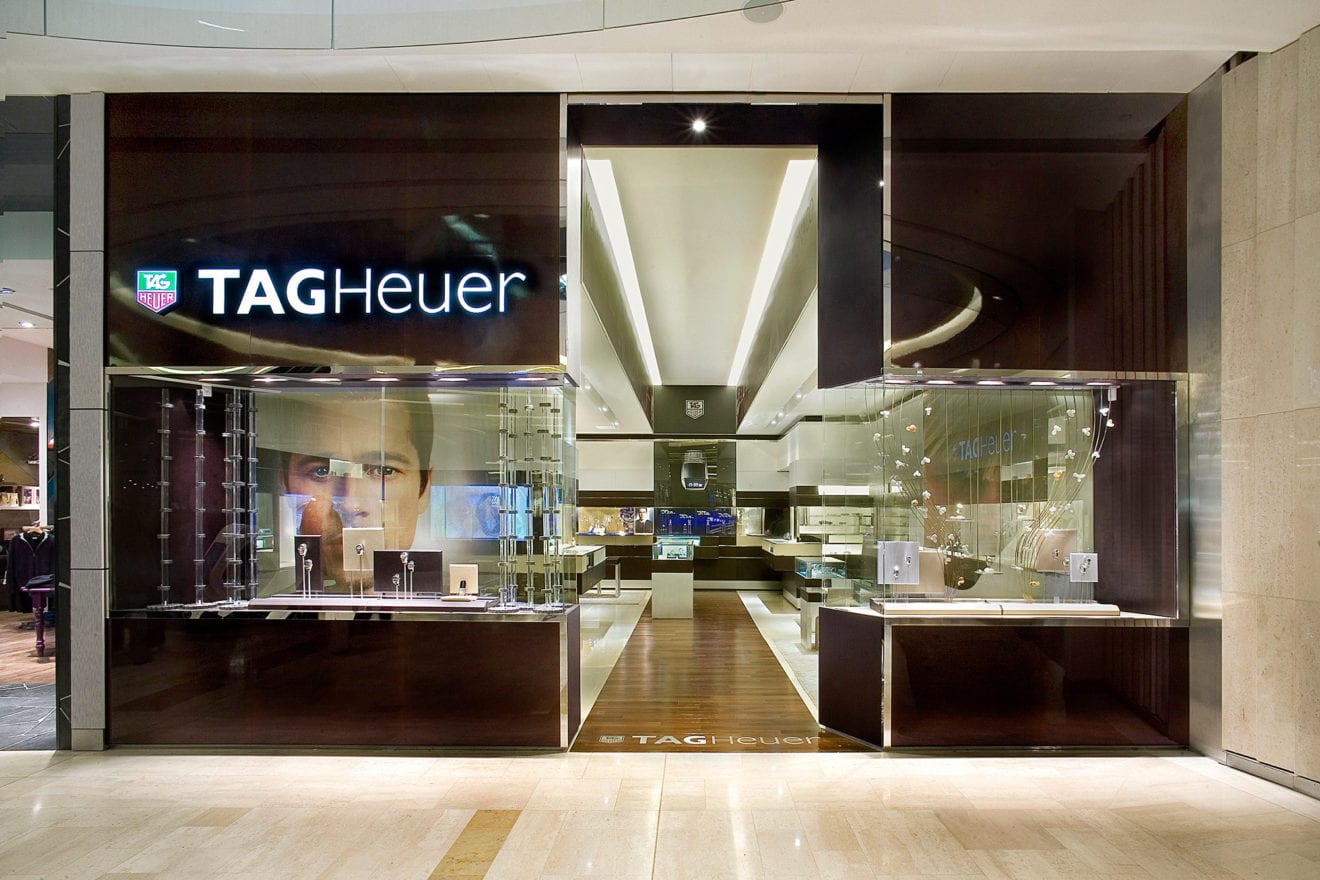
    Tag Heuer sales have soared as the LVMH-owned luxury watch brand defies the downturn in the Swiss watch industry.

    And now the company is eying a greater presence in China, undeterred by the routing of the luxury retail market in Hong Kong.  It has opened 60 new points-of-sale in Greater China this year.

    In an interview with Reuters, CEO Jean-Claude Biver said sales for the brand have risen more than 10 per cent so far this year – and is confident more growth is ahead. That contrasts with a 10 per cent sales plunge just two years ago.

    He cites new models and a smart watch for the improved fortunes, with the most growth in the company’s core US$1000 to $2000 price bracket.

    Tag Heuer’s remarkable growth has come as Swiss watch exports fell 11 per cent year-to-date.

    “For us, China is a country where historically we were not very present, so it is huge opportunity,” Biver told Reuters.

    “We are investing massively in China while the others are cutting their investments,” he said.

  • Thailand signs up for eCommerce initiatives

    High-level witnesses attended the signing of a letter of intent in China that will see Thailand co-operate with Alibaba on eCommerce initiatives.

    Thailand’s deputy prime minister Somkid Jatusripitak was invited by the eCommerce giant to its headquarters in Hangzhou to witness the signing alongside Alibaba Group executive chairman Jack Ma.

    Initiatives covered by the agreement include training for SMEs and individuals, and exploring ways to enhance logistics capabilities to support digital economy strategies as well as the government’s new Thailand 4.0 economic model, aimed at steering the country toward a value-based economy.

    Other senior Thai government officials also attended the signing along with private-sector representatives. Thailand’s permanent secretary Wiboonlasana Ruamraksathe and Alibaba Group president Michael Evans signed the documents.

    “This visit to Alibaba represents a continuation of the bilateral talks between the prime minister and Jack Ma,” says Somkid Jatusripitak. “To strengthen the competitiveness of Thailand’s SMEs and help them succeed in an increasingly digital era, the prime minister earlier assigned responsibilities to a task force made up of government agencies and private enterprises to work with Alibaba in a joint effort to lift the export capabilities of Thai businesses, starting from the grassroots and community level and extending to mid-tier businesses.”

    “We are very honoured to have this opportunity to work with the Thai government,” Ma said at the signing ceremony, “and I would like to thank the Thai people for their trust, because trust is the basis of any successful partnership.”

    Long-term vision

    He said that since Alibaba was founded 17 years ago, its vision had always been about empowering small businesses and young people, particularly those in developing nations.

    “We want to partner with governments and organisations that share this vision and commitment. By working together and applying technology and innovative ideas, I believe we can make that vision a reality, and magic will happen.”

    Four key areas are covered by the Thailand agreement, the first involving eCommerce training for 30,000 Thai SMEs to help them access both domestic and international platforms. Alibaba and its majority-owned eCommerce platform in Southeast Asia, Lazada Group, will help provide the training.

    The group will also share its experience and expertise with the Thai government to help build the nation’s own national eCommerce platform.

    Secondly, Thailand and Alibaba will collaborate on creating a nationwide program to train around 10,000 individuals so they can be proficient in digital technology. The two sides will also work on nurturing software developers, who will be given access to the China market via Alibaba Cloud’s marketplace for the software apps they create.

    Training for officials

    Furthermore, senior government officials will receive training at the Thailand Digital Government Academy, initially on big data and AI technologies. Alibaba and Lazada will jointly run a train-the-trainer program to groom eCommerce business co-ordinators who will in turn help SMEs establish their own online export capabilities.

    Thirdly, Alibaba and Lazada will contribute to the development of the Thailand’s supply-chain and logistics systems by sharing their experience and expertise with Thailand Post in a bid to expand domestic delivery services to all provinces. Thailand Post will also study Alibaba’s inventory-management systems and international eCommerce fulfillment services to gain insight into the establishment of bonded warehouses and fulfillment centres.

    Finally, Alibaba and the Thai government will explore co-operation opportunities under the Eastern Economic Corridor Development (EECD) project with the aim of helping establish Thailand as a hub of digital technology and regional data centres in Southeast Asia.

    Various Thai agencies lead the taskforce in charge of building upon the bilateral talks, including the Ministry of Commerce, Ministry of Digital Economy and Society, Ministry of Science and Technology, the Office of Small and Medium Enterprises Promotion, the Small and Medium Enterprise Development Bank of Thailand, the Export-Import Bank of Thailand, the Electronic Government Agency (a public organisation), and Thailand Post.

  • Michael Jordan wins trademark dispute

    Michael Jordan wins trademark dispute

    Following a four-year legal battle over a trademark dispute, US basketballer Michael Jordan now owns his Chinese name.

    China’s highest court has decided in his favour against Chinese sportswear maker Qiaodan Sports. Its name, pronounced “Cheeow-dan”, is a transliteration of “Jordan” in Mandarin, and the company was selling its own shoes and sportswear with Qiaodan as its registered trademark.

    Jordan has been known by the Chinese characters for “Qiaodan” since he became popular in the 1980s, and previously argued unsuccessfully in Beijing courts that Qiaodan Sports had used his Chinese name, his old jersey number, 23, and basketball player logo to make it look like he was associated with its brand.

    Now, the Supreme People’s Court has overturned two rulings by Beijing courts against Jordan, from 2014 and 2015, that had found there was not sufficient evidence to support the athlete’s allegations over the use of his image, and that “Qiaodan” was the translation of a common family name as claimed by the Chinese company.

    It also ordered the trademark bureau to issue a new ruling on the use of the Chinese characters in the brand name “Qiaodan”, effectively awarding the trademark to Jordan. The company can continue to use the Romanised spelling of the name, however.

    Chief judge Tao Kaiyuan says there was an established link between Jordan and the Chinese characters for “Qiaodan”, which are commonly used by the public when referring to the former basketball player, meaning that Jordan was entitled to protection under the trademark law.

    Jordan says millions of Chinese fans and consumers have always known him by the name Qiaodan.

    “Chinese consumers deserve to know that Qiaodan Sports and its products have no connection to me. Nothing is more important than protecting your own name, and today’s decision shows the importance of that principle.”

    After the ruling, the company defended its actions but said it would respect the court’s decision.

    In a twist, Qiaodan Sports was able to counter-sue Jordan in 2013 for preventing it from pursuing a stock-market listing because of the trademark lawsuit.

  • Carrefour China expands to Suzhou, Wuxi

    Carrefour China expands to Suzhou, Wuxi

    French retailer Carrefour has expanded its eCommerce access in China by launching online shops and apps for Suzhou and Wuxi.

    It already covers Beijing, Chengdu, Kunming and Shanghai with plans for further expansion. Wuhan is next on the list, expected to come on line before the end of this month.

    Carrefour has rolled out its eCommerce offerings internationally, going up against such rivals as Amazon in Spain.

  • DJI Opens Its Second China Flagship Store In Shanghai

    DJI Opens Its Second China Flagship Store In Shanghai

    DJI, the world leader in unmanned aerial vehicle technology, will open the doors of its Shanghai flagship store to the public on December 10, giving residents of China’s largest city the opportunity to explore the creative and professional possibilities that drone technology has brought to the world. 

    Located at the center of Shanghai’s busiest shopping, dining and entertainment district in Xintiandi (aka “New Heaven and Earth”), the two-story, 500-square-meters flagship store will display DJI’s full range of aerial platforms and camera products. Drone enthusiasts and novices alike can get hands-on experience with DJI’s market-leading technology, from the foldable yet powerful Mavic Pro personal drone to the latest professional products such as the Phantom 4 Pro and Inspire 2 drones. 

    “2016 is a milestone year for DJI as we celebrate 10 years of imagination, inspiration and innovation,” said Paul Xu, DJI Vice President. “We’ve expanded creative possibilities for professionals, and we’ve made it easier for general consumers to experience the fun and excitement of flight. Our flagship stores have become important touch points for people to discover, learn and be inspired. Our newest Shanghai flagship store will allow us to continue on this path and provide more people the opportunity to experience our aerial technology first hand.”

    The Shanghai flagship store’s building retains traditional Shanghainese architectural elements, combining Western and Chinese design concepts. The outdoor cafes, art galleries and lifestyle boutiques in the surrounding Xintiandi neighborhood also create a vibrant cultural backdrop for the new flagship store.

     The first floor of the DJI Shanghai flagship store will house a 20-square-meters flight cage demonstrating DJI drones in flight, which can also be seen by pedestrians outside the store. Also on the first floor is the Technical Support Center and the DJI Story Corner where visitors can see creative use cases and the evolution of the DJI Story on a curved surface projection screen. The SkyPixel Gallery on the second floor will showcase breathtaking aerial images by photographers from around the world. A dedicated space is also set aside for future customer workshops, photography seminars and special events.

    The DJI Shanghai flagship store will officially open its doors to the public at 12 noon on Saturday, December 10. The first 300 customers can enjoy special discounts when purchasing selected DJI products or bundles on opening day. The first 100 visitors to the store will also receive a limited edition DJI t-shirt.

    In celebration of the store opening, there will be a series of activities and programs throughout the day around the Xintiandi area. Life-size DJI Phantom and Osmo mascots will kickstart the opening celebration with a street parade, flight simulators and virtual reality goggles will be set up for people to experience the thrill of being in the pilot’s seat, and those who want to play the role of a movie director can try out the Osmo+ and Osmo Mobile handheld stabilized gimbals.

    The Shanghai flagship store is DJI’s fourth foray into retail after opening its first flagship store in Shenzhen, China in December 2015, followed by the Seoul, Korea flagship store opening in March and the Hong Kong flagship store opening in September.

    The DJI Shanghai flagship store is located at No. 222 Madang Road, Xintiandi, Shanghai, China. Opening hours of the store are Mon – Sun, 10 am to 10 pm. The Technical Support Center will begin operations the following Monday, December 12, and is opened Mon – Sun, 10 am to 10 pm.