Tag: China

  • DJI Launches Xmas Promotion

    DJI Launches Xmas Promotion

    DJI, the world leader in unmanned aerial technology, Monday launched its Xmas Promotion featuring price reductions, free accessories with purchases and special holiday gifts.

    Whether you are a content creator looking for the best stabilized handheld camera equipment to shoot your next online video or an experienced aerial photographer looking to take your skills to the next level, there is something for everyone to be excited about this holiday season. 

    DJI’s Xmas Promotion will commence December 12, 2016 and end at 4 pm HK time January 5, 2017. The Phantom discount and Osmo bundle promotion will be available on https://campaign.dji.com/xmas, at authorized DJI dealers and in the Shanghai, Shenzhen, Seoul and Hong Kong DJI Flagship Stores. 

    The DJI Xmas Promotion features:

    • Price reductions on select Phantom drone models as detailed in the chart below (excluding Japan and China).
    • Free High Capacity Intelligent Battery with the purchase of the Osmo+ handheld stabilizer or free Intelligent Battery and Osmo Base with the purchase of the Osmo Mobile.
    • All DJI Care service plans are discounted by 12%. For more info and applicable countries, please visit https://store.dji.com/category/service.
    • The first 400 customers who purchase the recently released Phantom 4 Pro or Inspire 2 at store.dji.com/ will receive a special holiday gift which includes a DJI scarf and 3D Christmas card.

    Pricing Details:

    Model


    AUD

    HKD

    TWD

    USD

    (SGP & MYS)

    Phantom 4

    Original Price

    2,099

    9,299

    53,000

    1,279

    Promotional Price

    1,699

    7,999

    37,400

    1,069

    Phantom 3 Professional

    Original Price

    1,699

    7,999

    36,800

    1,070

    Promotional Price

    1,399

    6,499

    30,000

    859

    Phantom 3 Standard

    Original Price

    859

    3,869

    18,300

    530

    Promotional Price

    689

    3,199

    15,000

    429

    Phantom 4 – Obstacle avoidance, intelligent tracking and computer vision, allowing you to experience a simplified flying experience

    The Phantom 4 expands on previous generations of DJI’s iconic Phantom line by adding new on-board intelligence that make piloting and shooting great shots simple through features like its Obstacle Sensing System, ActiveTrack and TapFly. It is the first consumer quadcopter to use highly advanced computer vision and sensing technology, which makes professional aerial imaging easier for everyone.

    For more info: https://www.dji.com/phantom-4 

    Phantom 3 Professional – Smart, responsive and stable, enabling you to unleash your creativity

    The Phantom 3 Professional makes flying remarkably easy so you can shoot like a pro. With GPS-assisted hover, Vision Positioning System, smart features such as Return-To-Home, Point of Interest, Follow Me and real-time flight data, capturing the perfect shot has never been easier. The Phantom 3 Professional is one of the most intelligent, ready-to-fly drone that allows you to unleash all sorts of creative possibilities.

    For more info: https://www.dji.com/phantom-3-pr 

    Phantom 3 Standard – Remarkably intuitive and easy to use, allowing you to enjoy the thrill of flight

    The Phantom 3 Standard makes flying fun and exciting with its powerful, responsive motors. Soar on the path you want, stop in place, speed up, or fly higher in an instant. From takeoff to landing, it’s completely under your control while its onboard intelligent features does all the work, making it the most affordable and easy to fly consumer drone.

    For more info: https://www.dji.com/phantom-3-standard 

    Osmo+ – Control your composition with zoom and capture smooth, cinematic videos

    The Osmo+ allows you to capture motion without blur, action shots without shake and create the perfect video even on the move. It is DJI’s first consumer handheld gimbal with an integrated zoom camera that empower users with a 7× zoom without sacrificing HD quality. This gives you more control over your composition than ever before, allowing you to frame the perfect shot.

    For more info: https://www.dji.com/osmo-plus

    Osmo Mobile – Turn your smartphone into a smart motion camera

    The Osmo Mobile allows you to capture memories and share life’s moments more easily than ever before by turning your smartphone into a motion camera. It can make every moment you shoot look smooth, professional and ready to share. With the DJI GO app, you can automatically track your subject, capture stunning motion timelapses or even stream your moment as it happens.

    For more info: https://www.dji.com/osmo-mobile

    Phantom 4 Pro – An intelligent, easy to use aerial platform for those who demand more from the camera

    The Phantom 4 Pro offers a powerful imaging system for those who demand excellence from the camera. The camera packs a 1-inch 20-megapixel sensor and almost 12 stops of dynamic range to bring out levels of detail even in low-light. Enhanced features include sensing systems on the four sides that help it avoid obstacles, Landing Protection function and newly added subject tracking capabilities.

    For more info: https://www.dji.com/phantom-4-pro

    Inspire 2 – A ready-to-fly platform for professional filmmakers and video creators

    The Inspire 2 takes everything that was good about the revolutionary Inspire 1 and improves it, with an upgraded camera system, dual intelligent battery, autonomous flight features and added sensors for better obstacle detection. An upgraded video transmission system is now capable of dual signal frequency and dual channel, streaming video from an onboard FPV camera and the main camera simultaneously, for better pilot and camera operator collaboration.

    For more info: https://www.dji.com/inspire-2

  • Starbucks, Tencent debut social gifting on WeChat

    Starbucks, Tencent debut social gifting on WeChat

    Starbucks Coffee Company and Tencent Holdings have entered an alliance to co-create a new social gifting feature on WeChat.

    The new service, which will be rolled out early next year, will make it easy for Starbucks China customers to gift items to a friend or a family member.

    Customers will be able to select from Starbucks-branded gifts and products and add a personalized message. Recipients of these personal gifts and messages can save their gifts and memories on their WeChat accounts and redeem their gift at Starbucks stores across China.

    Users can use WeChat Pay to pay for their goods and services from their mobile devices at Starbucks retails stores. In China, more than 300 million users (as of March 2016) have linked their bank cards with WeChat or QQ, another flagship service of Tencent.

    “Just as Starbucks cards are among the most gifted around the globe, we aspire to also become the most gifted brand digitally in China,” said Belinda Wong, Starbucks China’s newly appointed CEO.

    The online social gifting platform is part of the company’s growing digital presence focused on connecting with customers through digital channels, including the Starbucks Mobile App, the My Starbucks Rewards program and social media.

    The announcement also builds on Starbucks rapidly expanding the portfolio of digital innovations in the country, which integrates the in-store experience with the digital “Fourth Place” experience.

    Earlier this year, Starbucks also launched a mobile payment system in China aimed at providing My Starbucks Rewards (MSR) members access to a fast, seamless and convenient way to pay for purchases, using their pre-loaded Starbucks Gift Card on their mobile devices.

    Wong, who was appointed from president to CEO of Starbucks China in October, has been instrumental in Starbucks unprecedented growth in country – from 400 stores in 2011 to over 2,300 stores today.

    The company said in a news release when her appointment was announced that she will oversee Starbucks plans to double its scale to operate 5,000 stores in China by 2021.

    Aside from focusing on the company’s overall long-term growth strategy, she will be responsible for key areas, including the vast digital and e-commerce opportunities across the market.

  • DJI second China flagship store opens

    DJI second China flagship store opens

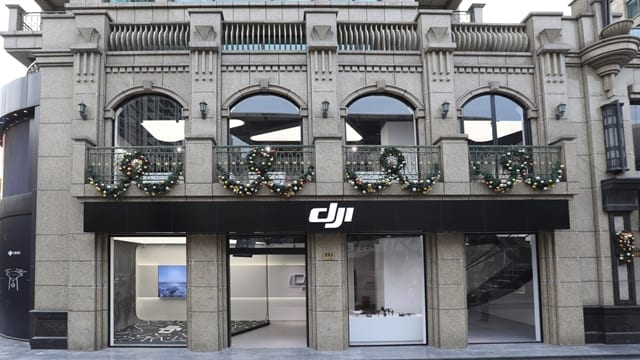
    Aerial vehicle technology retailer DJI will open its second China flagship store in Shanghai tomorrow.

    dji-first-floor-product-display

    The two-storey store is in the city’s shopping, dining and entertainment precinct Xintiandi.

    dji-first-floor-enterprise-products

    Covering 500 sqm, it offers the full range of DJI aerial platforms and camera products, offering hands-on experience of its products, including the foldable Mavic Pro personal drone and professional drones Inspire 2 and Phantom 4 Pro.

    dji-first-floor-full-image-2

    Combining Chinese and Western design concepts, the store is surrounded by outdoor cafes, art galleries and lifestyle boutiques. The first floor features a 20 sqm flight cage so drones can be seen in  flight, even by pedestrians passing by the store. There is also a technical support centre and the DJI Story Corner.

    dji-first-floor-accessories

    On the second floor, the SkyPixel Gallery showcases aerial images by international photographers, along with a space for customer workshops, photography seminars and special events.

    To celebrate the store’s opening, there will be activities and programs throughout the day.

    DJI’s first flagship store opened in Shenzhen last year.

  • Starbucks, Tencent to launch social gifting on WeChat in China

    Starbucks, Tencent to launch social gifting on WeChat in China

    Starbucks Coffee Company and Tencent Holdings Limited has partnered  to co-create a new social gifting feature on WeChat, China’s leading mobile social communications service.

    The new service, which will be rolled out early next year, will make it easy for Starbucks China customers to gift Starbucks to a friend or a family member.

    Customers will be able to select from Starbucks-branded gifts and products and add a personalized message. Recipients of these personal gifts and messages can save their gifts and memories on their WeChat accounts and redeem their gift at Starbucks stores across China.

    Users can use WeChat Pay to pay for their goods and services from their mobile devices at Starbucks retails stores. In China, more than 300 million users (as of March 2016) have linked their bank cards with WeChat or QQ, another flagship service of Tencent.

    “Just as Starbucks cards are among the most gifted around the globe, we aspire to also become the most gifted brand digitally in China,” said Belinda Wong, Starbucks China’s newly appointed CEO.

    The online social gifting platform is part of the company’s growing digital presence focused on connecting with customers through digital channels, including the Starbucks Mobile App, the My Starbucks Rewards program and social media.

    The announcement also builds on Starbucks rapidly expanding the portfolio of digital innovations in the country, which integrates the in-store experience with the digital “Fourth Place” experience.

    Earlier this year, Starbucks also launched a mobile payment system in China aimed at providing My Starbucks Rewards (MSR) members access to a fast, seamless and convenient way to pay for purchases, using their pre-loaded Starbucks Gift Card on their mobile devices.

    Wong, who was appointed from president to CEO of Starbucks China in October, has been instrumental in Starbucks unprecedented growth in country – from 400 stores in 2011 to over 2,300 stores today.

    The company said in a news release when her appointment was announced that she will oversee Starbucks plans to double its scale to operate 5,000 stores in China by 2021.

    Aside from  focusing on the company’s overall long-term growth strategy, she will be responsible for key areas, including the vast digital and e-commerce opportunities across the market.

  • China November vehicle sales up 16.6 pct

    China November vehicle sales up 16.6 pct

    China auto sales in November rose 16.6 percent from a year earlier to 2.9 million vehicles, the sixth consecutive month of double-digit growth, the China Association of Automobile Manufacturers said on Monday.

    That compares with an 18.7 percent rise in October and a 26.1 percent rise in September.

    In the first 11 months of 2016, sales grew 14.1 percent compared with the previous year, the association said at a briefing in Beijing.

    In October, the association raised its forecast for full-year 2016 growth to 7 percent, from 6 percent previously.

  • China expansion plan for Nitori Holdings

    China expansion plan for Nitori Holdings

    Japanese furniture and home-accessory retailer Nitori Holdings is ramping up its presence in China to kick-start its global expansion.

    It plans to open add more than eight outlets in 2018 to its present 10.

    Nitori aims to have 2000 stores overseas as well as 1000 at home by 2032. It now has 41 stores abroad and 420 in Japan. Nitori opened its first overseas outlet in Taiwan in 2007, where it now has 26 stores. It also has five stores in the US.

    China is the main focus of its international expansion strategy, with plans for 1000 to 1500 outlets. It intends to initially concentrate in the cities of Shanghai and Wuhan to quickly boost its brand profile and establish dominance.

    Other options are also being explored in China, including online retailing and package offerings of home furniture.

    nitori-studio-1

    Monthly sales in China, where its first store was opened in Wuhan in 2014, have continued to exceed year-earlier levels by about 20 per cent for past several months. The Chinese outlets have prices similar to those in its Japanese stores as the company does not add tariffs to price tags and economises on logistics.

    In Taiwan its stores took six years to achieve profitability, while its business in the US is still in the red.

    Meanwhile, a new outlet in Tokyo’s Takashimaya Times Square commercial complex in Shinjuku is targeting overseas tourists, serving as “a starting point of our brand recognition” among overseas customers, says Nitori Holdings senior MD Fumihiro Sudo.

  • Mulberry expansion plan in Asia

    Mulberry expansion plan in Asia

    Mulberry Asia, a new joint venture between the British fashion brand and Challice Limited, has announced plans to open four stores in Hong Kong, China and Taiwan and a Chinese language eCommerce site.

    The move was announced along with the company’s half year results which saw sales rise 10 per cent, but the company posting a loss due to investments, mainly in a new collection.

    Mulberry will cease its current distribution agreement with Club 21, although its new partner Challice shares the same ultimate ownership.

    Mulberry Asia will locate its head office in Hong Kong from where it will manage all retail, digital fulfillment and wholesale distribution for the region. Challice will hold a stake of about 40 per cent in the new business.

    The company says it expects to post losses for two years during its establishment phase, moving into profit in year three.

    Mulberry CEO Thierry Andretta said the new venture would progress the group’s international strategy of developing its retail and omnichannel model “in a key luxury market where we see significant growth opportunity”.

    Subject to a number of practical issues, including obtaining Chinese trading licenses, Mulberry Asia is expected to be operational from Spring 2017.

    Analyst said Mulberry Asia was an impressive direction to take.

    “It will allow the brand to better serve its customers in North Asia and provide it with a solid foundation to further grow its business in this region. However, investment in product design and creativeness must continue so that Mulberry stands out in the increasingly difficult and crowded Asian market.”

    Footfall rises

    Meanwhile, while investment to create the new collection has had a negative impact on gross margin, down 2.4 percentage points to 59.1 per cent, it has successfully driven footfall into stores and turned its wholesale business around. Revenue was up 10 per cent in the half year, compared with an 11 per cent decline in the same period last year.

    Strachan says modern totes and bucket bags have improved the desirability of Mulberry’s offer, appealing to a new, younger shopper demanding more on-trend innovative pieces but with the craftsmanship and quality credentials that the brand continues to leverage and showcase.

    “Mulberry has achieved impressive UK like-for-like growth, despite tough 2015/16 comparatives, benefiting from international visitors taking advantage of the weak pound and high demand for British heritage brands. The opening of its new Covent Garden store was fortunate timing to showcase its new collections to this influx of lucrative shoppers,” said Strachan.

    “Conversely, the devaluation of the pound has hit the sales performance in some of its tourism-driven stores in Europe and the US, and has led to higher UK production costs and running costs of overseas subsidiaries.”

  • Target China learning fast as it gains momentum

    Target China learning fast as it gains momentum

    Target China is continuing to learn about the vast mainland market as it builds brand awareness in the region in preparation for a major push.

    Vincent Lau, GM China with Target Corporation, told the Omni-Channel Retailing Conference half-year seminar yesterday that China represented a steep learning curve for the US$73.8 billion US-headquartered value retail business.

    “We had to forget everything we know. Being number two in the US market doesn’t resonate into anything in China.”

    Lau said that while 96 per cent of Americans recognised the distinctive red circles of the Target logo, it was probably the opposite in China. “They just see a bullseye.”

    Target believes its US brand promise “Expect more, pay less” is relevant to Chinese. But the stock range had to be adjusted to local market expectations. To date, Target is strong in mother and baby products and dry grocery lines, where it has localised sourcing and range.

    “We keep an open mind. We test and we learn. We want to see what [Chinese consumers want] and why.”

    Partnering with Alibaba has been crucial for Target in building the brand there. On Singles Day, or 11.11, Target was one of the US retailers to sign on to Alibaba’s Buy+ Virtual Reality shopping experience where shoppers online could ‘walk the aisles’ of a target store in Harlem.

    Lau declined to reveal sales figures but said every product on the digital shelf had sold multiple numbers during the 24-hour online sales.

  • Luxury-brand in China rising from grave

    Luxury-brand in China rising from grave

    Luxury-brand sales are reviving in mainland China, with Macau paying the price.

    As China’s currency depreciates, the narrowing price gap is keeping mainland luxury shoppers at home, further contributing to Macau’s retail slump, reports the Macau Business Daily.

    Some brands in China are expecting this year to return to the figures of their sales peak in 2012, says partner Bruno Lannes of Shanghai-based consulting firm Bain. He says luxury sales in the mainland have risen an estimated 4 per cent after three years of decline.

    According to the latest data from the Macau Statistics and Census Services (DSEC), retail sales of watches, clocks and jewellery have fallen 21.2 per cent year-on-year, with the overall volume of retail sales dropping 5.9 per cent in the third quarter.

    More than 45 per cent of retailers interviewed by DSEC expect their sales volume to decrease for the present quarter. Meanwhile, visitor numbers from the mainland edged up 0.4 per cent year-on-year in October, but have fallen by the same amount over the first 10 months of this year.

  • Alipay reaches Australian stores

    Alipay reaches Australian stores

    Innovative Australian payments provider Quest Payment Systems is launching Alipay in Australian stores.

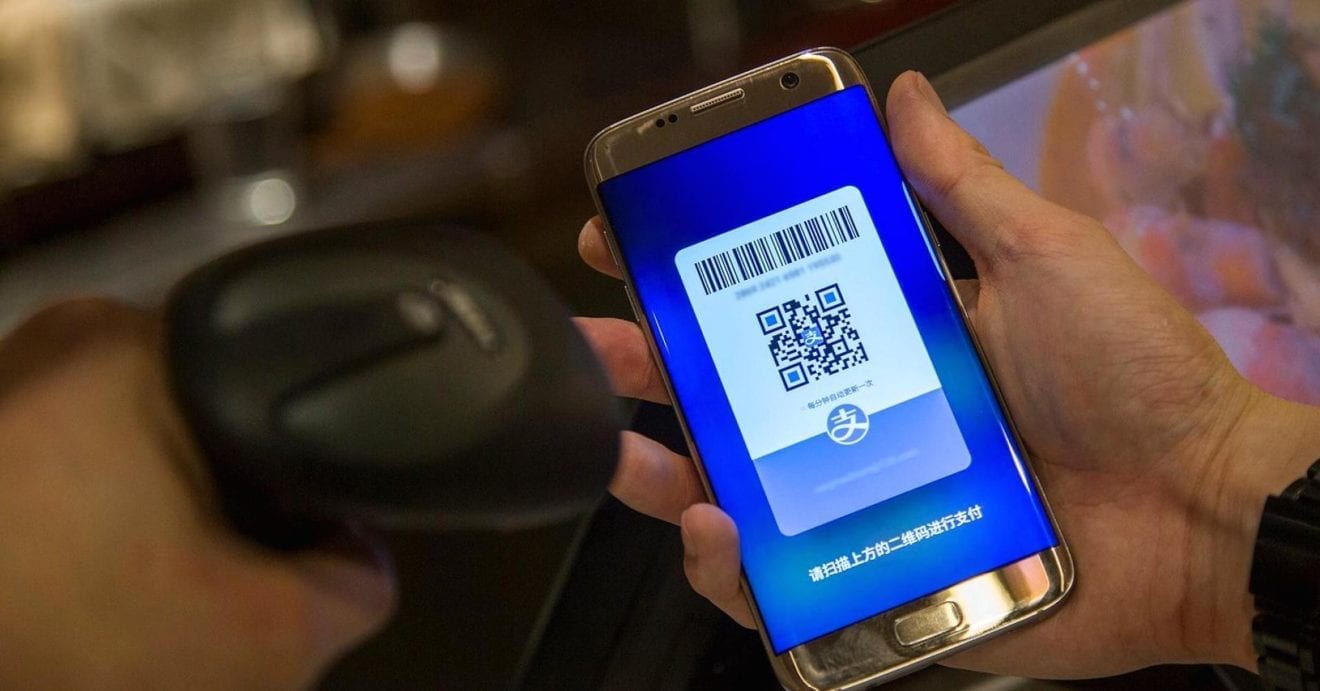
    Its collaboration with Alipay, the world’s largest mobile and online payment company, will make it easy for Chinese nationals to pay for purchases in-store using their mobile phones, and in their own currency.

    Quest has designed the software to integrate with POS systems to ensure a seamless experience for both retailers and customers.

    Tourism Australia says Chinese visitors spent a record AU$8.9 billion over the 12 months to March this year. On average, Chinese tourists spend about AU$8000 each visit to Australia.

    Quest has already enabled Alipay at select stores within The Chemist Warehouse and My Chemist pharmacy groups, with full rollout planned for early next year.

    Quest innovation manager Luke Fuller says Alipay customers in Australia simply need to scan a code displayed on a payment terminal screen in order to pay from their mobile phone. “It’s simple, intuitive and ensures the customer can see exactly what their purchase will cost in both Australian dollars and their local currency.”

  • China drives Ikea growth

    China drives Ikea growth

    China has been cited as one of the major contributors to a year in which Ikea’s profits surged 19.6 per cent.

    Ikea growth was strongest in China, while the company’s largest markets were Germany, the US, France, Britain and Sweden.

    The Stockholm-headquartered furniture and homewares retailer reported a profit of 4.2 billion euros ($US4.5 billion). Total sales rose 7.1 per cent to 34.2 billion euros for the 2016 financial year ending in August, the company said.

    In the past year Ikea has opened 12 new stores and 19 pick-up and order points worldwide, and in the coming year planned to open its first stores in Serbia and in Hyderabad, India.

    “Growth and profitability give us freedom to choose our own way, the flexibility to move fast and the independence to think and invest long term,” Peter Agnefjall, Ikea Group CEO, said in a statement.

    The retailer registered 783 million visits to its 340 stores in 28 countries during the 12-month period but was also expanding its online offers. In addition, 49 stores are operated by other franchises.

    As part of its efforts to reduce its environmental footprint, the company said it was to invest 1 billion euros in sustainable materials. This included forestry and firms involved in recycling, renewable energy and developing biomaterials.

    It said 71 per cent of the energy it used in 2016 came from renewable energy sources such as solar and wind farms. Ikea plans to be energy independent by 2020.

  • Cross-border eCommerce ‘set to skyrocket’ in China

    Cross-border eCommerce ‘set to skyrocket’ in China

    Cross-border eCommerce (CBEC) is set to skyrocket in China according to a new report from international think tank Fung Global Retail & Technology.

    To capitalise on this, international retailers need to complement their existing expansion strategy with online sales platforms, says Fung Global MD Deborah Weinswig.

    Cross-border eCommerce is the most efficient platform to reach increasingly affluent and sophisticated Chinese shoppers seeking products from overseas, says the report, The International Retailers’ Guide to Cross-Border E-Commerce in China.

    With Chinese authorities relaxing the rules, online purchases of overseas products are expected to increase to US$285 billion in value in 2018, up from US$136 billion last year.

    As well as authenticity being less of a concern, eCommerce purchases attract less taxes so are cheaper for consumers, writes Weinswig. As a result, it is projected that a quarter of the population will shop on foreign sites or through third parties in 2020, up from 15 per cent this year.

    “We expect CBEC will drive the next leg of eCommerce growth as Chinese eCommerce companies and international retailers launch globalised versions of their portals. By selling through CBEC, international retailers can reach Chinese shoppers regardless of whether or not they have a physical presence in China.”

    China is already the largest eCommerce market in the world, with the use of CBEC via such marketplaces as JD Worldwide and Tmall Global being attributed to the continuing rise of the upper middle class with its growing use of the internet and belief that international brands are of higher quality.

    Regulations formalised

    Most shoppers seek items related to wellbeing such as cosmetics and organic foods, expensive or hard to find domestically, says the report. Many foreign eCommerce companies have launched Chinese websites, and since late 2014 authorities have been formalising regulations including tax reforms and expediting customs clearances.

    Japanese companies in particular are targeting Chinese CBEC shoppers, using mobile apps such as Rakuten and China’s Wandou.

    Choosing the right platform is crucial, writes Weinswig. Options include…

    • Online marketplaces such as Alibaba’s Tmall Global, a third-party eCommerce platform that lets brands open a storefront. International distributors using this platform include Macy’s, Metro, Shiseido and Uniqlo.
    • Online direct sales such as Amazon.cn, Jumei Global Store, Kaola.com (for smaller brands) and Vipshop. Distributors buy from the retailers to resell to consumers.
    • Hybrid eCommerce platforms such as JD Worldwide that combine elements of an online marketplace and online direct sales. JD Worldwide partners include eBay, Lotte, Rakuten and Unilever.
    • Overseas shopping platforms.

    “To succeed in the Chinese market, international retailers are advised to have a strategic plan for CBEC that complements their China strategy,” writes Weinswig. “International retailers will need to decide which cross-border channels to sell on, driven by considerations of each platform’s targeted clientele and product category, costs, track record and suite of value-added services.”

    Fung Global Retail & Technology is based in Hong Kong, London and New York.

  • Pizza Hut China debuts robot waiters

    Pizza Hut China debuts robot waiters

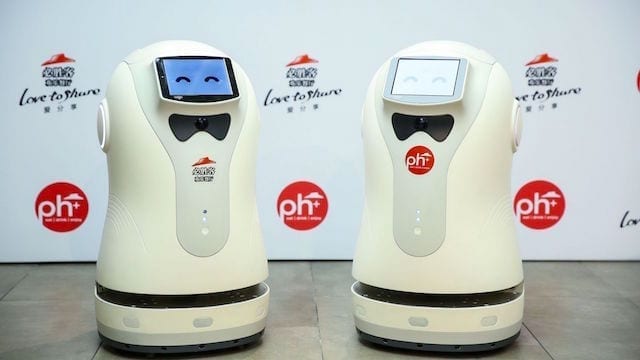
    Pizza Hut China has jumped on the robot restaurant bandwagon with its latest Shanghai outlet featuring two robot waiters.

    On the basement floor of the new Shanghai Tower, which as yet only has its observatory open, it is Pizza Hut’s first concept store, PH+.

    Guests are greeted by the two 80cm robots (both named Casper) at the door. The guest’s table number appears on their screen and one of them will lead the diner to their seat.


    Diners can place their orders via a display screen. Signature dishes include steaks and soft-shell crab pizza, and there are also special cocktails.

    In May, KFC introduced a high-tech outlet at Shanghai’s National Exhibition and Convention Center, where robots take the orders.


  • Changed deal as McDonald’s Corp sells

    Changed deal as McDonald’s Corp sells

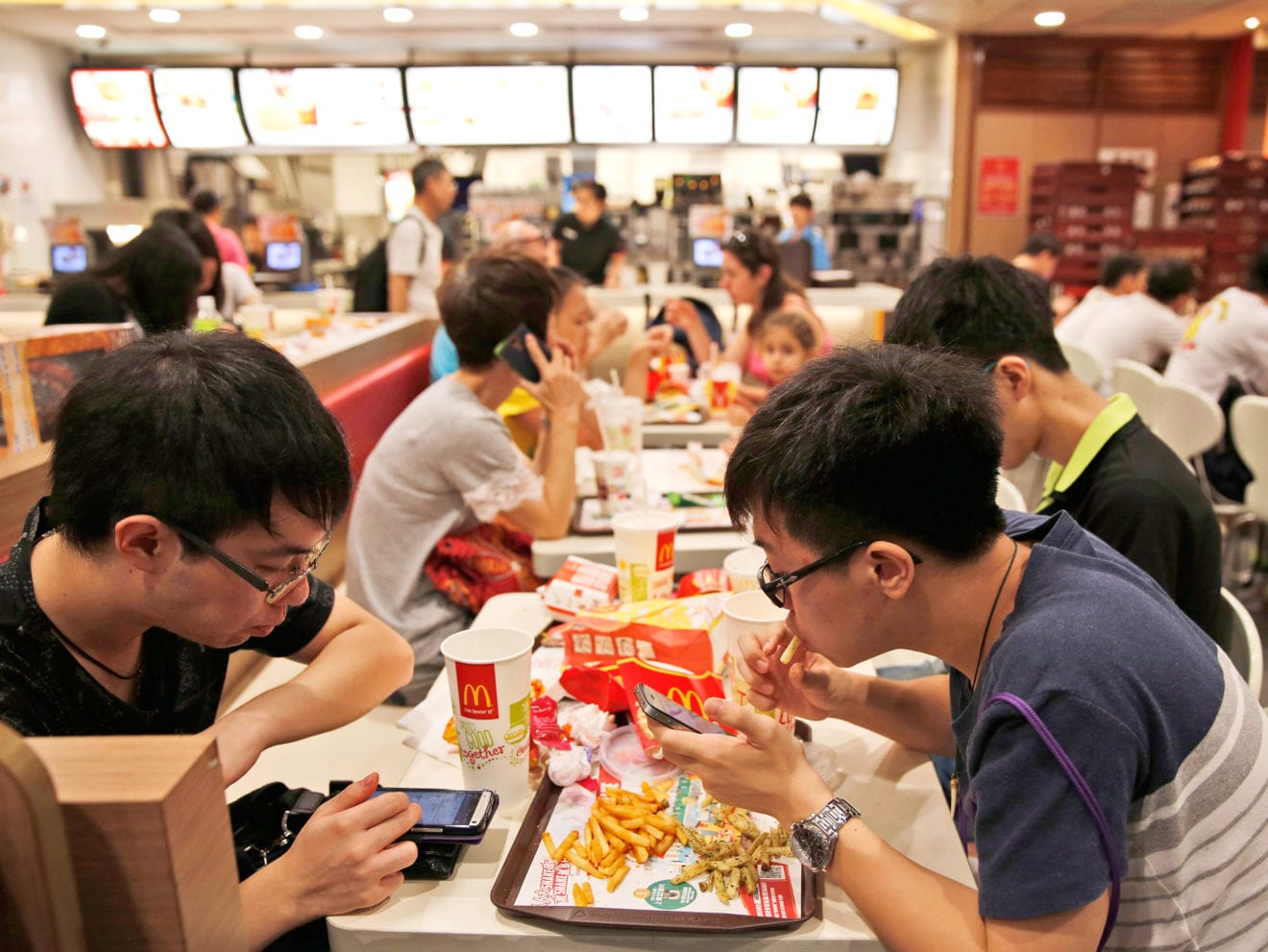
    While finalising a buyer for its China and Hong Kong stores, McDonald’s Corp has decided to keep a “significant” minority stake.

    The US fast-food chain has picked a consortium led by private-equity firm Carlyle Group and Chinese conglomerate Citic Group to buy the stores.

    Its decision to retain the minority stake lowered the price tag from the $3 billion reportedly sought. An insider says McDonald’s decided to keep a slice of the business as it wants exposure to future growth in the world’s second-largest economy.

    Meantime, the company will also keep its stores in South Korea, which it previously also wanted to sell, Reuters reports.

    Early this year McDonald’s said it was reorganising its business in the region, seeking strategic partners in China, Hong Kong and South Korea as it switches to a less capital-intensive franchise model.

  • HSBC to step up hiring in China

    HSBC to step up hiring in China

    HSBC Holdings plans to step up hiring in China for its retail and wealth business next year. The London-based lender is persisting with its expansion in China despite Britain’s economic slowdown and measures to stem capital outflows.

    The bank increased the number of retail bank employees in China’s Pearl River Delta by 57 per cent in the 12 months to September, according to Mr Kevin Martin, the firm’s Asia-Pacific head of retail banking and wealth management.

    The pace of hiring may accelerate next year as HSBC Holdings expands in areas like mortgages, credit cards, personal lending and wealth services in the Pearl River Delta, he said.

    “We’re exactly where we expected to be,” Mr Martin said in an interview in Hong Kong last Friday, referring to his unit’s growth in the region.

    “Historically, our customers in Shenzhen were Shenzhen-Hong Kong customers. Now the Shenzhen customers stay in Shenzhen because we’re building our local business as well as our cross-border business.”

    HSBC started its credit card business in China yesterday after it received regulatory approval to issue cards by itself. It had previously partnered Bank of Communications to do so. HSBC is seeking to issue more than 3 million cards in the short to medium term and add “a handful more” branches across China next year, Mr Martin said.

    HSBC is trying to capture business from China’s swelling ranks of affluent individuals even as economic growth slows and the authorities take steps to curb outflows of yuan from the country and cool the property market.

    Chief executive officer Stuart Gulliver said in February that HSBC will hire 4,000 employees mainly in the Pearl River Delta over five years instead of three, as a result of the economic downturn. Retail banking and wealth management accounted for 36 per cent of the bank’s Asian pretax profit in the third quarter.

    Mr Martin said: “Despite everything that’s happened, we’ve done everything we said we would. Retail business is a long-term business. We don’t make decisions based on changing regulations on the day. It’s the honest answer.”