Tag: China

  • Huawei announces mobile app X Labs

    Huawei announces mobile app X Labs

    Huawei has announced a new research platform that aims to bring together operators, technology providers and vertical industry partners to explore future use cases for mobile applications.

    The X Labs initiative will aim to encourage mobile operators to build application-centric networks and help establish an open industry ecosystem.

    The research platform is designed to explore three areas of mobile communications – people, verticals and the household, Huawei said. The mLab focuses on creating immersive user experiences for emerging mobile applications including live video, VR and AR.

    A second lab, vLab, focuses on ways mobile technology can enable digital transformation across all industries. The third is hLab, which will concentrate on connecting more households with smart home applications utilizing broadband connections.

    During a keynote speech announcing the initiative, Huawei rotating CEO Ken Hu said mobile applications are reshaping everything in the world.

    “I firmly believe that in the future, all services will be delivered through mobile applications,” he said. “I would say that we are living in a wild world of mobile applications.”

    Hu noted that when Apple’s App Store launched eight years ago, it had just 500 apps. It took just six years for that number to reach 1 million, and this figure doubled in another two years. Android app stores have even more apps – around 5 million.

    “At Huawei, we aim to support and enable the mobile ecosystem. We have made a lot of progress, and we want to do more,” he said.

  • Sa Sa profits dive

    Sa Sa profits dive

    Sa Sa profits took a hit of 37.3 per cent for the six months to September 30.

    The Hong Kong-listed beauty products retailer’s interim results show turnover easing by 4 per cent to HK$3.628 billion (US$467.7 million) for the period, with retail sales in Hong Kong/Macau decreasing by 3.6 per cent to HK$2.9032 billion.

    Profit fell from $153 million to $96 million with its gross profit margin dropping from 42.9 to 41.2 per cent.

    During the six months, the group rationalised its retail network from 291 to 283 – six fewer Sasa stores and two fewer single-brand stores/counters.

    While sales fell in Hong Kong/Macau, the number of transactions rose by 0.2 per cent for local customers and 4.4 per cent for Mainland Chinese tourists. The value of each transaction, however, fell by 6.3 and 6.6 per cent respectively.

    Retail sales in Hong Kong continued to be weak, mainly because of average transaction values being lower. The company says the underlying reasons were a change in consumer preferences, a strong Hong Kong dollar and a depreciating yuan. Also, the policy change limiting Shenzhen residents’ multiple-entry permits to one visit a week has had a “significant” impact.

    However, Sa Sa reports an uptick toward positive growth in July as the company adapted with faster product launches, shorter product cycles and cheaper trendy products.

    Korean swing

    As an indication of market change, Sa Sa’s Korean product mix grew from 16.7 per cent of total sales to 23.5 per cent, and the parallel-imported product mix increased from 29.1 to 31.7 per cent. Sales for house brands dropped from 41.5 to 38.5 per cent.

    Overall turnover for Mainland China decreased by 4.3 per cent to $135 million, while same-store sales fell 5.1 per cent. The loss for the period amounted to $13.7 million. Profitability was impacted by the relocation of warehouses.

    Turnover for Singapore at $101.3 million was a drop of 11.1 per cent. As well as weaker sales, management issues impacted performance. While turnover was high, this created difficulties in retaining the knowledge base. However, a restructuring process has drawn on the resources of the relatively strong Malaysian management team.

    Malaysia’s turnover was down 19.1 per cent to $163.4 million, though same-store sales rose 11.2 per cent. Retail sales growth exceeded other markets thanks to the group’s strong retail network and effective marketing campaigns.

    Turnover in Taiwan fell by 23.1 per cent to $98.3 million, with same-store sales tumbling 19.5 per cent because of weak consumer sentiment and ongoing restructuring of the management team.

    Logistics problem

    In eCommerce, Sasa.com turnover reached $193 million, a dip of 0.1 per cent. Sales were affected by the appointment of a new logistics provider in April with the aim of increasing scalability. However, changeover difficulties resulted in a decision to return to the original service provider.

    “Significant numbers of orders had to be cancelled, and further costs were incurred by moving inventory back and forth as well as the running of two warehouses in parallel during the period,” says the company.

    Building on the growth of mobile internet use, the company launched a mobile app and started a collaboration with eCommerce platform Kaola in addition to its partnership with JD.com, Suning.com and T-Mall.

    On the mainland, the dynamics of the cosmetics market are changing with internet retailing growing at a rapid pace, says the company. Because of these challenges, it is continuing to strengthen management and recruit staff.

    “We are also seconding experienced staff from Hong Kong to improve the attractiveness of our product offerings and strengthen inventory management.”

  • Hard half-year for Luk Fook Holdings

    Hard half-year for Luk Fook Holdings

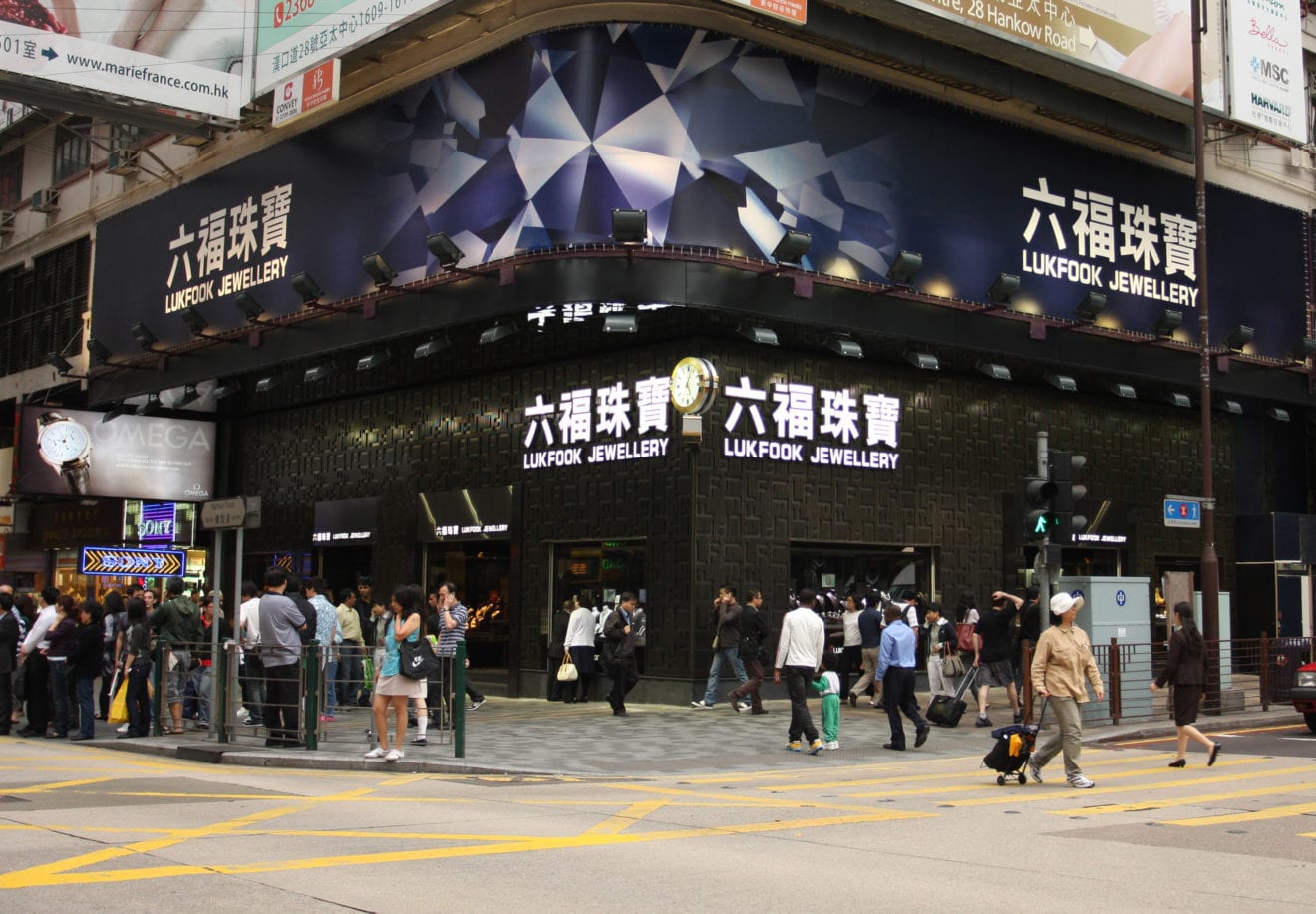
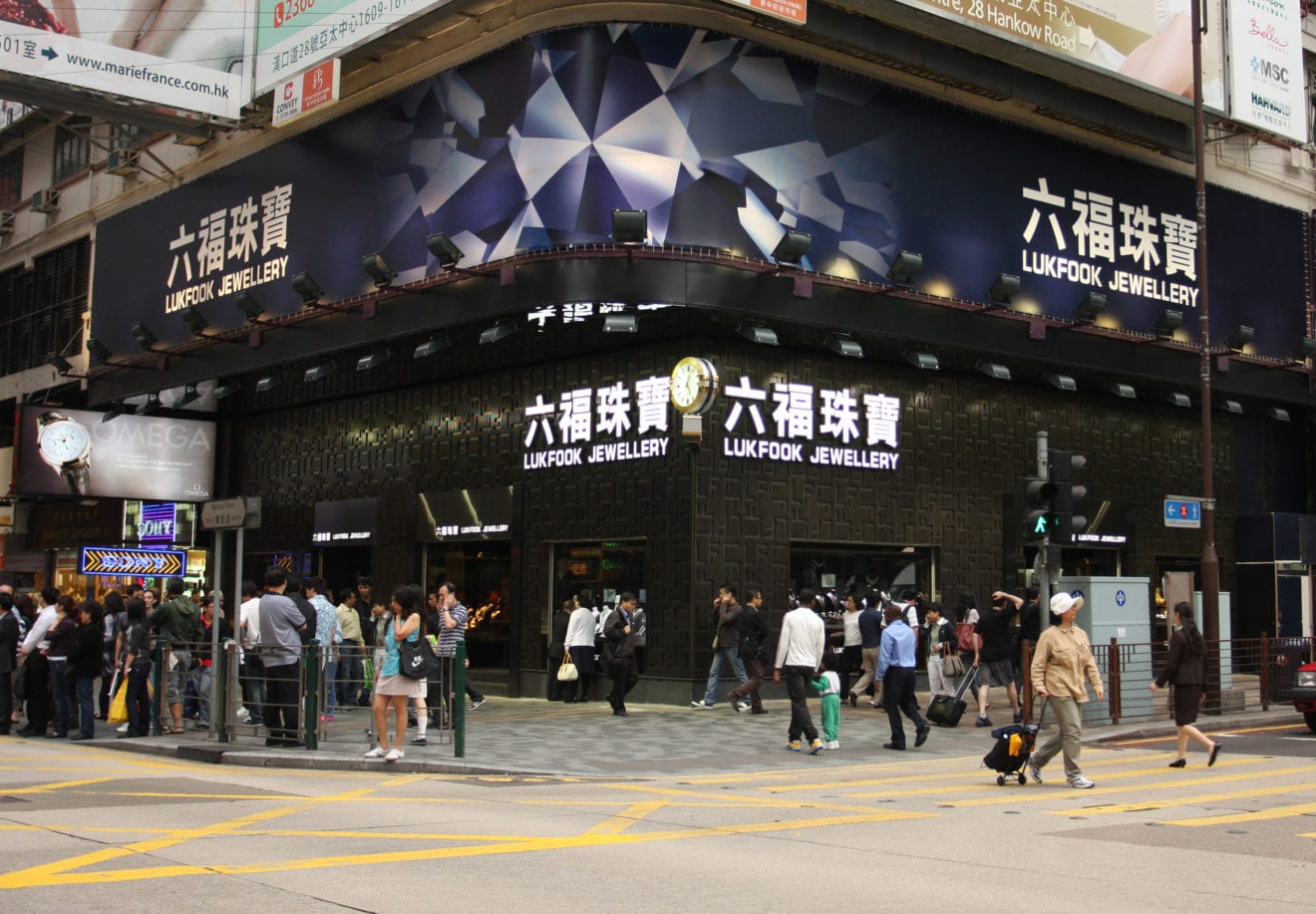
    Revenue plunged by 21.5 per cent for jeweller Luk Fook Holdings (International) to reach HK$5.5 billion (US$709 million) for the six months to September 30.

    Its interim results also show a drop of 31.5 per cent in overall same-store sales for the period.

    However, its overall gross margin improved by 5.3 points to 28 per cent as a result of a relatively high gold price and higher gemset jewellery sales mix. Because of this, the gross profit decreased by only 3 per cent to HK$1.5 billion.

    Mainland China accounted for 54.6 per cent of total profits, an increase of 12.8 points.
    With a lacklustre market, retail revenue in Hong Kong plunged by 33.4 per cent to $2.642 billion, while the wholesale business shot up by 51.1 per cent to $361.6 million because of an increase in scrap gold sales as well as wholesale rough diamonds.

    Luk Fook says a relatively high gold price saw gold sales fall more than expected.

    During the six months, the group added 27 Lukfook shops worldwide, including 24 in China (nine of them licensed shops), a self-run shop in both Macau’s casino district and New York,and  a licensed shop in Seoul. This brought its total to 1455 Lukfook shops (up from 1412 at the same time last year), spanning Australia, Canada, China, Hong Kong, Korea, Macau, Singapore and the US, as well as nine 3D-Gold shops (up from four) on the mainland.

    The group says it has been striving to diversify its product mix, and since 2010 has been trying to expand its mid- to high-end watch business. At the end of September is was the authorised dealer of 34 watch brands including Audemars Piguet, Bulova, Burberry, Bulgari, Emporio Armani, Eterna, Frederique Constant, Longines, Omega, Oris, Rado, Tag Heuer, and Victorinox Swiss Army.

    For the six months, the watch business contributed revenue of HK$104.49 million down from HK$119.39 million for the same period last year, representing 1.9 per cent of the group’s total revenue, a 12.5 per cent decrease.

    Looking ahead, the group aims to continue to develop its eCommerce business and to further strengthen cooperation with eCommerce platforms in China. At the end of September, the group had 15 online sales platforms in China, including JD.com, Suning.com, Tmall.com and VIP.com.

  • Veeko, Wanko and Colourmix parent finds Singapore tougher than HK

    Veeko, Wanko and Colourmix parent finds Singapore tougher than HK

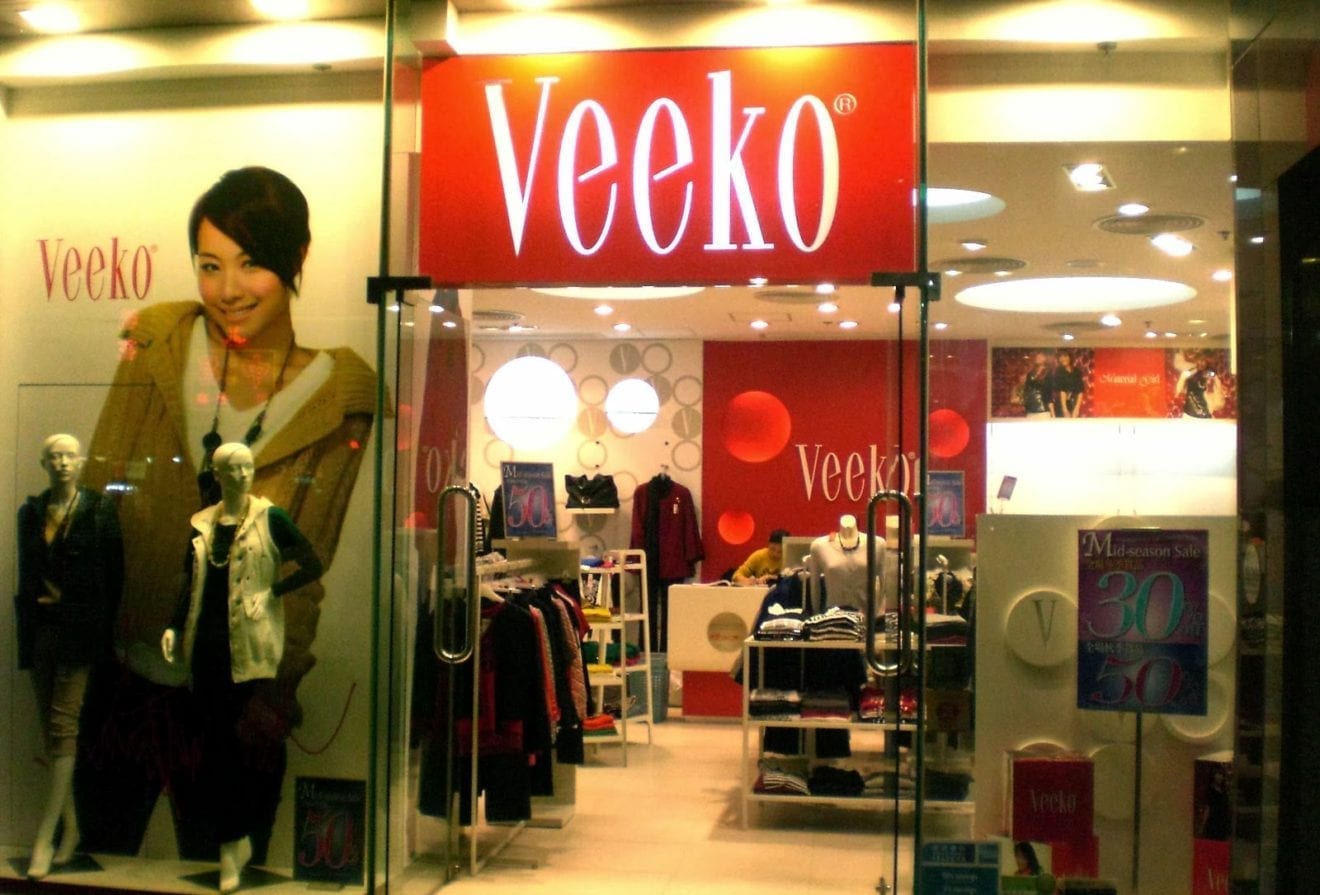
    Hong Kong-headquartered fashion retailer Veeko – the Wanko and Colourmix parent – has found Singapore more challenging than its home market.

    For the six months to September 30, Veeko International Holdings recorded a turnover of

    HK$1.029 billion, down 3.5 per cent year-on-year.

    Its cosmetics business, the Colourmix and Morimor stores, sales were stable, down by just 0.1 per cent at $828 million, accounting for 80.5 per cent of the company’s business, compared with 77.6 per cent last year.

    That highlights the core of the company’s problem – its fashion stores, trading under the Veeko and Wanko brands – which recorded a 16.1 per cent decline in sales to $200.7 million.

    Sales in Singapore, where it closed one store and now has eight, plunged 23 per cent year-on-year.

    Yet in Hong Kong and Macau, where the overall decline in retail sales during the half year was nudging double digits, sales declined by a more modest 7.6 per cent and the gross profit margin rose marginally from 71.8 per cent to 72 per cent. It added three stores during the period, taking the network to 83.

    In Mainland China, fashion sales declined 14.3 per cent and it closed three stores, leaving a net 38.

    Colourmix holds its own

    Beauty is the powerhouse of the Veeko business. The company has 87 Colourmix stores – five more than at the same time last year – of which 82 are in Hong Kong, four in Macau and one in the mainland.  In August 2015, the group launched another cosmetics store brand Morimor, with seven now trading in Hong Kong. This brand is positioned as offering “high-quality trendy skin care and cosmetics products by integrating global premier skincare and beauty concepts, with diversified products covering skin care, fragrance, make-up, hairdressing, body care and cosmeceuticals and health food”.

    Veeko chairman Johnny Cheng Chung Man says the South Korean series of cosmetics and beauty products are very popular among young customers.

    “In addition, the professional beauty consultants offer customised personal services and consultations on skin care so that customers can enjoy the relaxed and pleasant experience of beauty services.”

    The gross profit margin of the cosmetics business for the period was 32.4 per cent, down 3.3 percentage points year-on-year. The cosmetics business for the period recorded a segment profit of HK$1.319 million, representing a significant decrease of 97.7 per cent.

    “As a result of the rapid growth in the cosmetics business experienced in the past consecutive years, a considerably high base has been accumulated. With the continuously weak retail market and overall consumption environment in Hong Kong as well as a drop in the number of visitors to Hong Kong during the period under review, it was necessary for the group to offer several promotional discounts and organise marketing activities to stimulate sales, which led to a reduction in gross profit margin and a significant decrease in segment profit as compared with the same period last year,” said Man.

    Looking forward

    Man says looking forward, the group expects the challenges faced by the retail business to continue.

    “The retail environment in Hong Kong is anticipated to remain severe while a cautious consumption sentiment prevails. The group will continue to enrich its product portfolio of cosmetics products, increase trendy beauty products with exclusive distributorship, conduct staff training on providing quality professional services, and strengthen its internal consolidation.”

    Man said the fashion retail business will continue to focus primarily on the Hong Kong and Macau market. “To cope with the stagnant retail environment as well as to meet constantly changing needs in the market, the group will continue to optimise product designs and improve customers’ shopping experience. As for the overseas markets, the group will continue its cautious control on its overseas stores portfolio. Underperforming stores will be closed down further to focus its business on profitable stores.”

    In Hong Kong, given the slowdown in the retail market and a decline in rental charges for stores located in prime districts, the enhanced bargaining power of the retailers will therefore help reduce the rental pressure for stores with expiring lease terms, he said.

    “As the group will close down certain stores with low profitability and open new stores in prime locations, additional rental saving will be expected in the near future.”

  • Cybercrime rising Asia as cashless payments rise

    Cybercrime rising Asia as cashless payments rise

    Cashless payments are growing rapidly in Asia-Pacific and so is cybercrime, costing the region an estimated $US 81 billion.

    With new combinations of malware customised for local markets, phishing and social engineering attacks as well increasing e-commerce and ATM fraud, businesses are increasingly at risk for payment data theft, according to the PCI Security Standards Council.

    Singapore’s cards and payments market is one of the most competitive and attractive in the Asia-Pacific region. Already, 69 per cent of consumer spending in Singapore is made through electronic payments.

    It’s against this backdrop that global payment and cybersecurity experts met at the PCI Asia-Pacific Community Meeting in Singapore to collaborate on helping businesses prevent, detect and respond to cyberattacks that can lead to payment data breaches and fraud.

    “We simply must work together to advance payment security,” PCI Security Standards Council (PCI SSC) international director Jeremy King told attendees.

    “New technologies are driving adoption of cashless, mobile and digital commerce in Singapore and the Asia-Pacific region, and it’s critical that we ensure consumers remain confident in the security of their financial information with every payment transaction. As payments evolve, businesses must prioritise data protection with robust security standards and practices.”

    The PCI SSC has reinforced its mission to foster secure transactions globally and emphasised that as new cyber threats emerge, and advances in technology change the way payments are conducted, PCI Standards will evolve to protect the next generation of payments. Regional and industry experts speaking at the event included representatives from the PCI Security Standards Council, Interpol, Verizon, Diners Club Singapore, Foregenix, Beijing Information Technology and Pen Test Partners.

    Presentations and discussions addressed a mix of regional and global topics ranging from new threats via the Internet of Things; cybersecurity trends in Asia-Pacific; Point-to-Point Encryption for protecting payment data throughout the entire processing environment; preventing skimming at ATMs and the future of mobile and digital commerce.

    PCI SSC GM Stephen Orfei said the Asia-Pacific region has made tremendous advances in payment security in the past decade.

    “More and more companies in the region are making cybersecurity a top priority.  With the rapid growth in mobile payments, now, more than ever, we must join forces to devalue payment data and make it useless to criminals.  It is very encouraging to see industry and public-private partnerships in Asia-Pacific working together to address the ever expanding cyber threats from around the world.”

    The PCI Security Standards Council is a global forum that is responsible for the development, management, education, and awareness of the PCI Data Security Standard (PCI DSS) and other standards that increase payment data security.

    Key focus areas at the PCI Asia Pacific Community Meeting included:

    • Devaluing data with point-to-point encryption: More and more solution providers in Asia-Pacific are encouraged to adopt the PCI Point-to-Point Encryption (P2PE) Standard to provide solutions that devalue data and simplify security and PCI DSS compliance efforts for businesses.
    • Simplifying security for small merchants: The PCI SSC Small Merchant Task Force urged banks, technology providers and security assessors with small business customers to adopt and disseminate newly published PCI Payment Protection Resources for Small Merchants.
    • Improving security of online and mobile payments with stronger authentication: PCI SSC chief technology officer Troy Leach discussed the newly released device standards (PTS POI v5 and HSM v3) that support online and mobile payment security. PCI SSC is collaborating with EMVCo to support 3-D Secure 2.0 (3DS 2.0), which provides a way for consumers to directly authenticate their card with the card issuer when shopping online.
  • Meet China’s online super-consumers

    Meet China’s online super-consumers

    Like many college students in China, Song Yang buys most of the things she needs for daily life by shopping on the internet. But while her peers have to satisfy the urge to splurge with the occasional new smartphone or pair of branded sneakers, Song doesn’t worry much about living on a student’s budget.

    A finance major at Beijing’s prestigious Peking University who says she made a “pot of gold” in the stock market after being staked by her parents, Song, 21, spends upwards of $15,000 a year shopping on Alibaba Group’s Taobao e-commerce website. Her purchases range from high-end imported cosmetics, fashion apparel and consumer electronics, to Japanese snacks and organic produce, to furnishings for her family’s new apartment, to parts and gadgets for her father’s car.

    “As long as I have free time, I am on Taobao,” says Song, adding that her binge-shopping habit has resulted in up to 30 packages delivered to her home in a single day. “Whenever I have a new idea, I will search on Taobao,” she said.

    Song is the kind of China super-consumer that retailers dream of connecting with—and Alibaba Group is happy to oblige. In 2014, Alibaba recognized that out of the millions of consumers that shop in the company’s China retail marketplaces, a small percentage had adopted online shopping as a significant part of their daily lives. The company created a membership program called APASS (Alibaba Passport) to cater to their needs by assigning them personal account managers and organizing special events like wine tastings and automobile test drives.

    Alibaba top shoppers

    APASS shoppers are mostly young, internet-savvy and increasingly affluent members of China’s rising middle class. To qualify for the program, consumers must spend a minimum of nearly $15,000 a year online. That’s just the minimum. In fact, the average annual spend among current APASS members is about $45,000. In contrast, American’s millennials—defined as aged 18 to 34 with higher consumption than other demographic groups—spend about $2,000 a year online, according to a recent study conducted by BI Intelligence. During Alibaba’s recent 11.11 Global Shopping Festival, a 24-hour online sale, APASS members spent nearly eight times as much as the average consumer shopping on Alibaba’s platforms.

    Alibaba identifies candidates based on an algorithm that takes into account not only how much e-shoppers spend, but how often they shop online, the range of products purchased, credit record, and engagement in online communities.  If you think this screening limits membership to a very exclusive few, think again: There are about 100,000 APASS members.

    Fostering relationships with top customers is a time-honored marketing tactic. To Alibaba, APASS members are vanguards of an emerging consumer lifestyle in China. “They are opinion leaders who drive the consumption trend among China’s middle class,” said Zheng Dongyang, senior manager of the APASS program. To stay on their radar and cultivate loyalty, Alibaba recently upgraded APASS to foster online communities and to offer members exclusive daily deals from more than 100 top brands including Maserati, Burberry, Fissler and Estee Lauder.

    An APASS member who has recently enjoyed the perks of belonging is Hong Degang, a self-described “consumer electronics geek” who runs a wedding photography studio in the city of Wuhan. Hong, 27, was selected as one of 10 APASS members for a nine-day, all-expenses-paid trip to Italy. The mini-holiday included visits to the venues of eight top Italian brands including wine producer Mezzacorona and luxury carmaker Maserati.

    Alibaba livestreamed parts of these visits on the company’s Tmall app and video site Youku over a nine-day period. A trip to a Mezzacorona vineyard generated 400,000 views, 200,000 likes and 120,000 comments, but it wasn’t just social sharing that was inspired. According to Tmall, total sales of the online shops of the eight featured brands jumped more than fivefold over the livestreaming period compared with sales during the nine days preceding the event.

    Despite his recent exposure to Italian brands, Hong says he’ll likely remain enamored mainly with electronics gear. He says that he owns up to 20 computers and tablets at any given time, and stays immersed in his passion by reading electronics blogs on Mobile Taobao’s news channel every day while spending more than $3,000 a pop to acquire the latest cameras from Sony and Canon. He trades his used cameras and computers in Alibaba’s flea market app, Xianyu.

    “I celebrate 11.11 every day,” Hong jokes, referring to Alibaba’s giant annual online sale.

    Not every APASS member shops purely for the joy of it. Wu Xiaofang, a 41-year-old interior designer who lives in Lishui, a small city located in southern Zhejiang Province, says she is a big online spender and APASS member because she sources products for clients on Taobao.

    Wu designs exclusively for themed country inns and guesthouses that are popular in her mountainous province, so before she shops she determines whether customers want rooms done up in Chinese ancient style, American country style, French classic style or other themes. Everything is purchased online: toilets, shower kits, bathroom faucets, customized beds and wardrobes, curtains, lamps and other furnishings.

    “Taobao can always fill my specific demands,” Wu says. “I can buy second-hand antique French or German furniture on Taobao, and classic, floral-pattern tiles from ancient Chinese buildings. You won’t be able to find this unique stuff elsewhere.”

    She says she has so far finished five “Taobao inns” at a total cost of about $270,000 on all the furnishing—but admits that APASS perks encourage her to shop not just for business but for herself and her family.

    “I think everyone goes through the same journey,” she said. “When you first start online shopping, you are just curious. Later on, you kind of get addicted to it.”

  • Tmall flagship store for Cosmax

    Tmall flagship store for Cosmax

    South Korean cosmetics developer/manufacturer Cosmax Inc is to run an online flagship store on China’s Tmall.com.

    It has signed an agreement with online retail giant Alibaba Group Holding to establish the eCommerce platform to distribute Korean beauty products across China.

    cosmax-tmall

    Under the contract, Cosmax will be Korea’s first multi-shop dealer for various cosmetics brands on Tmall.com, China’s largest third-party platform for brands and retailers.

    The launch of the Cosmax platform is expected to help expedite the China Food and Drug Administration (CFDA) hygiene approval process for Korean cosmetics companies.

    Cosmax, which entered China in 2003, has cosmetics factories in Guangzhou and Shanghai. It earned more than 200 billion won (US$181.1 million) in China alone last year.

  • Vipshop adds customers, but margin narrow

    Vipshop adds customers, but margin narrow

    Chinese online discount business Vipshop reports rising revenues but narrower margins during the third quarter.

    The New York-listed eCommerce player says its total net revenue increased by 38.4 per cent to RMB12 billion (US$1.8 billion), primarily attributable to a 43 per cent year-on-year increase in the number of active customers to 20.8 million and a 34 per cent year-on-year increase in total orders to 60.1 million.

    Gross profit increased by 36 per cent to RMB2.93 billion (US$439.7 million) from RMB2.16 billion in the prior year period.

    Income from operations increased by 21.3 per cent to RMB528.8 million (US$79.3 million) from RMB436.1 million in the prior year period, but the company’s operating margin fell from 5 per cent last year to 4.4 per cent.

    Vipshop’s net income attributable to shareholders increased by 8.3 per cent to RMB342.9 million (US$51.4 million).

    “We are pleased to have delivered solid financial results and healthy customer growth despite a seasonally soft quarter for retail,” said Eric Shen, chairman and CEO.

    “As a leading online discount retailer for brands in China, we are committed to advancing the end-to-end shopping experience on our platform by providing our customers with diverse products and more personalised merchandising. The superior user experience across our platform led to improved user stickiness, as demonstrated by the strong 49 per cent year-on-year increase in repeat customers to 16.7 million. Despite macro weakness, our robust customer growth and retention is a testament to the resilience of our business model. We are confident that our strong foundation will continue to drive our overall secular business growth and enable us to maintain our market leadership regardless of macro environment changes,” said Shen.

    For the fourth quarter of 2016, the company expects its total net revenue to be between RMB18 billion and RMB18.5 billion, representing a year-on-year growth rate of 30 per cent to 33 per cent.

  • China’s Ctrip is buying flight search company SkyScanner

    China’s Ctrip is buying flight search company SkyScanner

    Skyscanner, the Scotland-based flight search company, has been acquired by Chinese online travel giant Ctrip for £1.4 billion, or approximately $1.74 billion.

    The deal is predominantly cash and is expected to close before the end of this year. Once completed, SkyScanner will operate independently of Ctrip, both parties confirmed.

    Ctrip was founded in 1999, and it is China’s largest online travel firm. Its revenue for Q3 2016, which was announced today, came in at RMB 5.6 billion ($810 million), that’s up 75 percent year-on-year, with a slim $4 million net profit. Ctrip recently raised close to $1 billion from the sale of convertible notes, a raise that looks to have be coordinated with the Skyscanner deal.

    This news comes less than a year after Skyscanner, which has over 700 staff across 10 offices, raised $192 million in funding in January 2016 to expand its reach worldwide. That was the company’s first financing in more than two years, and investors included Khazanah Nasional Berhad, the Malaysian government’s strategic investment fund, Yahoo Japan, fund manager Artemis, investment firm Baillie Gifford, and PE firm Vitruvian Partners. Sequoia is an existing backer.

    The round valued SkyScanner at a reported $1.6 billion. The company was widely-expected to pursue an IPO in 2017, which made its acquisition somewhat surprisingly while the price isn’t a huge leap on that previous valuation. SkyScanner had seen its revenue growth slow, as Skift reported, but the company put that down to increased investment in product rather than marketing.

    Regardless, this is the largest travel tech acquisition in Europe to date. SkyScanner placed much emphasis on Asia — partnering with Yahoo Japan and acquiring China-based travel search startup Youbibi — but the deal promises to help Ctrip expand its business into international markets.

    “Skyscanner will complement our positioning at a global scale and Ctrip will leverage our experience, technology and booking capabilities to Skyscanner’s,” Ctrip co-founder and executive chairman James Jianzhang Liang said in a statement.

    In a video statement, Skycanner CEO and co-founder Gareth Williams said that the deal would enable his company to gain access to greater resources to make travel “simpler:”

    It’s been a busy past year or so for Ctrip, which has pursued M&A activity to expand. More than a year has passed since it agreed to a share swap with arch rival Qunar which saw it gain a 45 percent voting interest in Qunar in exchange for 25 percent of the Ctrip business.

    In January of this year, Ctrip spent $180 million to buy around one-quarter of India’s MakeMyTrip, while it splurged $463 million this summer to get a slice of China Eastern Airlines, a state-run airline that claims 94 million passengers.

  • China tapping 10 Philippine’s banks

    China tapping 10 Philippine’s banks

    State-owned Bank of China is in talks with ten Philippines banks including  Banco de Oro Unibank Inc. and Land Bank of the Philippines to retail the $3-billion fund committed by the Chinese lender to the Philippines.

    A team of high ranking officials from Bank of China’s main office in Beijing attended the first of a series of roadshows in the Philippines to link with local financing institutions including banks and microfinance lenders.

    Bank of China president Jun Deng said more financing institutions and legitimate lenders would be announced soon.

    “This is just the initial phase. We will be having discussions with the banks we invited. Maybe later on, we’ll disclose these banks and the development of our discussions,” he said during the Manila leg of the roadshow held Thursday at Fairmont Hotel in Makati City.

    The roadshow is a pre-event exercise in preparation for the Bank of China’s global SME cross-border trade and investment conference that will take place in Davao City in 2017.

    Bank of China will provide details on how it will disperse financing to Philippine SMEs during the Davao conference.

    The bank said it would also bring in 100 Chinese SMEs interested in the Philippine agro-industrial industry.

    “Agribusiness is one of the key areas important to China. Other interests include technology, renewable energy which is heavy on solar-based power production and the furniture industry,” said International Chamber of Commerce of the Philippines president Jesus Varela.

    Initial talks between the Chinese bankers and Filipino businessmen pointed to Mindanao as the priority area.

    The conference will also serve as a matchmaking event for SMES to have access to financing from credited financing retailers of Bank of China.

    Bank of China said while the $3-billion financing commitment would not be for the sole benefit of SMEs, the bigger portion of the fund will help SMEs grow and build a global enterprise.

    Deng said a portion of the financing would also support important infrastructure and energy projects and programs that would promote industrialization.

    Bank of China held 26 cross-border trade and investment conferences across the world that attracted over 30,000 people from political and business circles and  more than 15,000 enterprises from 60 countries over the past two years.

  • Luk Fook plans to double jewelry stores in China

    Luk Fook plans to double jewelry stores in China

    Hong Kong-based jeweler Luk Fook is pushing ahead with its expansion into mainland China by doubling its stores there even as competitors are moving at a slower pace amid tepid demand for luxury goods.

    The company, a smaller rival to Chow Tai Fook Jewellery Group, one of the world’s largest listed jewelry chain, said on Thursday it “still had room” to increase its mainland outlets to 2,000-3,000, up from 1,400 currently, without giving a timeframe for the expansion.

    “We are only in about 300 Chinese cities comparing with 500 cities of our rivals,” said Luk Fook Executive Director Shirley Wong Hau-yeung, adding that the group would focus its expansion in quality shopping malls in second- and lower-tier cities.

    The jeweler is also looking to boost its revenue contribution from the mainland, which now accounts for over half of its total — a three-year goal it set two years ago. “We actually met our target early,” said Chairman and Chief Executive Wong Wai-sheung. “Having 80-90% of revenue from China is probable.”

    Chairman Wong’s upbeat remarks comes at a time when Luk Fook is seeking to diversify from a struggling home market where luxury retail has been hit hard by a dwindling number of deep-pocketed mainland visitors to Hong Kong.

    First-half net profit fell 7.4% on the year to its lowest level since 2010 at only $429 million Hong Kong dollars ($55.3 million) between April and September. Revenue dived 21.5% to HK$5.47 billion, dragged lower by a 32.3% sales plunge in stores that had been open for over a year in Hong Kong and Macau, while its mainland sales saw a slightly less severe decline of 23.7% from a year ago.

    The group added 27 shops to its network of 1,455 outlets globally, including 24 in China and the rest in Macau, New York and Seoul in the same period. “A further depreciation of the Chinese yuan will prompt more mainlanders to spend at home and boost local consumption,” said Chief Financial Officer Kathy Chan So-kuen, justifying the group’s strategy in mainland China.

    Meanwhile, rival Chow Tai Fook would be “selective” when entering mainland China, said Managing Director Kent Wong Siu-kei on Tuesday. The Hong Kong-listed jeweler added only 11 shops on the mainland — many of them in shopping malls — between April and September, bringing the total to 2,100 in the country.

    Chow Tai Fook’s more cautious approach followed a decade of aggressive expansion into the mainland market that hurt its profitability as the country’s economic slowdown and anti-corruption drive dampened appetite for luxury goods. With about half of its turnover from the mainland, the group reported its lowest first-half profit since its 2011 listing — just HK$1.22 billion, a fall of 21.5% from a year ago.

    With competition from e-commerce players such as Alibaba Group Holding and JD.com, the group would continue to close loss-making outlets in department stores and hopefully turn its shops into logistics centers for handling e-commerce orders in a bid to find better use for its ailing assets.

  • Online retailer Ymatou expects huge Black Friday sales

    Online retailer Ymatou expects huge Black Friday sales

    Jia Yi, a white-collar employee from Chengdu, the capital city of Sichuan province is passionate about overseas brands and products. She is now considering buying a Coach handbag on the upcoming Black Friday shopping event.

    “The price in the domestic market could reach more than 2,000 yuan ($290), but it is just 848 yuan on the e-commerce platform during Black Friday. It is very cost-effective and I am prepared to buy one,” said Jia.

    China’s cross-border e-commerce has been growing over the past few years. The Shanghai-based cross-border e-commerce site ymatou.com expects the scale of the Black Friday event this year to be 10 times over last year by hiring more than 30,000 overseas buyers.

    The company, which has participated in the biggest retail sales day of the year since 2014, said customers could buy more than 600,000 imported goods from 83 countries, including discounted clothes, shoes, bags, cosmetics, fine jewelry and health care products without leaving the house.

    “There is a trend that consumers from second- and third-tier cities are more willing to buy overseas products. Chinese consumers’ demands have been upgraded as they have diversified and personalized requirements for products and services,” said Zeng Bibo, chief executive officer of Ymatou.

    Zeng added they prefer to buy niche brands from European designers than the mass-market brands in America.

    Black Friday, the day following Thanksgiving Day in the United States, is a busy shopping day with the highest discounts of the year and a major impact on brick-and-mortar retailers, e-commerce players and consumers around the world.

    Ymatou said it is set to ensure that Chinese online shoppers can get the same deals that their Western counterparts enjoy during Black Friday. Buyers can broadcast their shopping process at the online shopping platforms.

    It continues to increase investment in the access threshold of buyers to ensure the authenticity of the goods’ sources. Zeng said they will check the credit status of buyers from time to time, requiring them to offer credentials for long-term living overseas and identifications.

    Furthermore, Ymatou has established an independent logistics company, XLobo, to develop overseas direct mail business.

    XLobo collects and bundles individual parcels at overseas locations and ships them to China as a single consignment. It now owns 15 international logistics centers around the world to ensure the period of direct mail within five days, on average.

    “The number of professional logistics service staff has been doubled. We have expanded the space of warehouses in New York, San Francisco and Osaka, and the investment in equipment and logistics this year has surpassed the total input of last year,” said Zeng.

    It arranges over 90 chartered airplanes each week to transport the goods and other airlines that have cooperative relations with Ymatou will reserve shipping space for XLobo in advance.

    Chinese e-commerce companies, such as Alibaba Group Holdings and JD.com Inc have developed their own cross-border e-commerce businesses.

    Statistics from the China E-Commerce Research Center show that China’s cross-border e-commerce transactions totaled 5.4 trillion yuan ($783 billion) last year, a year-on-year increase of 28.6 percent.

    The generation aged between 20 and 35 old is the major force of cross-border shopping, experts said.

    Cao Lei, director of the China E-Commerce Research Center, said customers need to choose an excellent cross-border e-commerce platform, pay attention to sellers’ reputations or ranking level and customers’ comments, adding they should choose a platform that owns and operates its logistics system.

  • AirAsia launches daily Manila-Taipei service

    AirAsia launches daily Manila-Taipei service

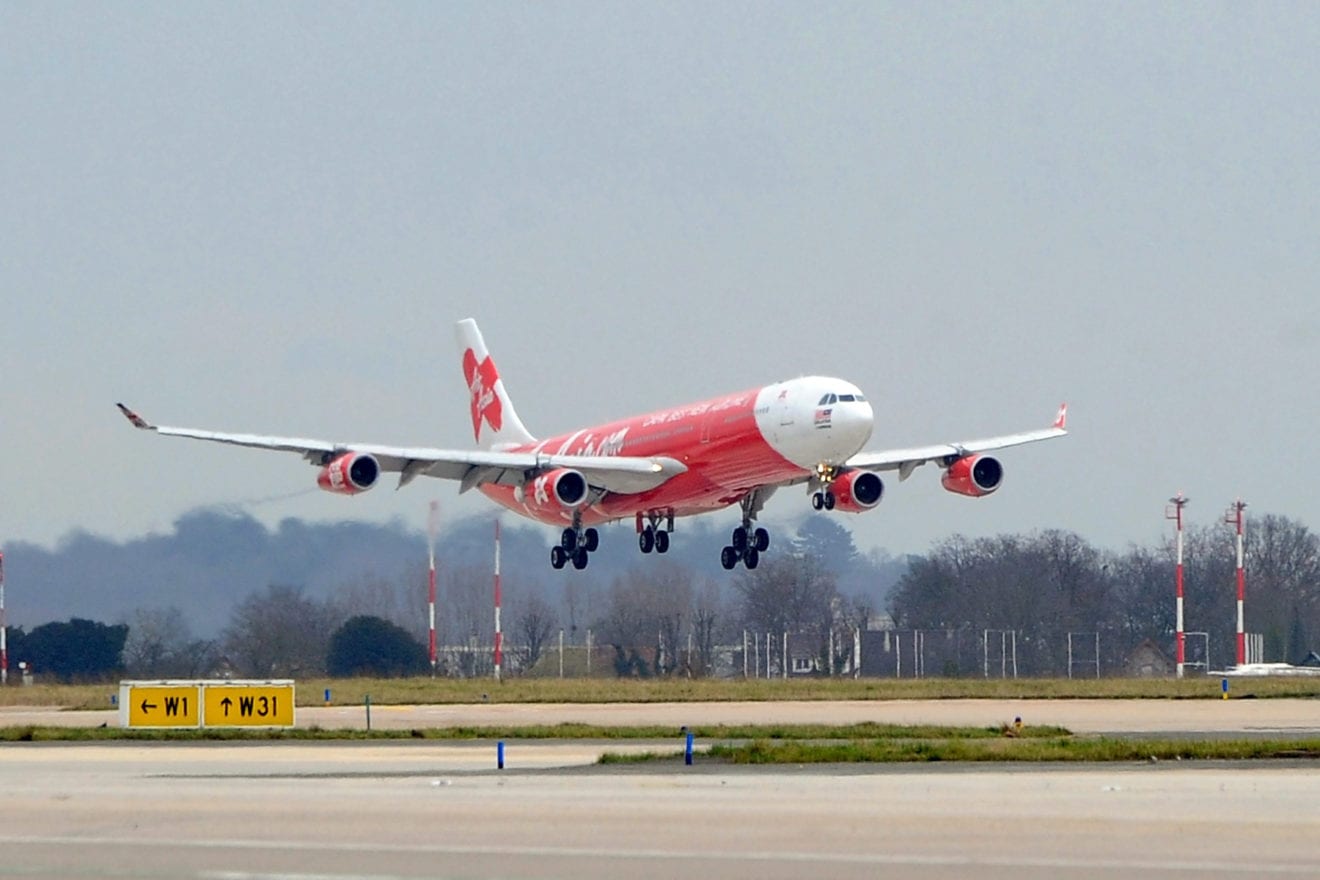
    Travellers from the Philippines now have more options when flying to Taiwan after Philippines AirAsia started its daily Manila-Taipei service last Monday.

    Philippines AirAsia chief executive Captain Dexter Comendador himself piloted the Airbus A320 to mark the budget airline’s maiden voyage from Manila to Taipei.

    “Today heralds a brighter and much closer ties between two countries to improve trade and tourism,” he addressed the passengers midway through the flight.

    “We have introduced amazing connections for our guests to enjoy and we are aiming to go further across Asia by strengthening AirAsia’s presence in Taiwan,” Comendador added.

    The flight touched down at the Taoyuan International Airport after midnight to a welcome water barrage from firetrucks.

    The Taipei-Manila route was officially launched Tuesday at a press conference at the Grand Sheraton in Taipei, which was attended by Philippines AirAsia chair Maan Hontiveros and AirAsia North Asia CEO Kathleen Tan.

    A thrice-weekly Cebu-Taipei service was also announced with performances from Sinulog dancers. Taiwanese celebrity travel blogger Patty Woo also regaled guests with her beach adventures during her recent trip to Cebu.

    Starting Friday, Philippines AirAsia will begin regular flights from Cebu to Taipei on Wednesday, Friday and Sunday.

    Taiwanese tourist arrivals in the Philippines have reached 157,517 from January to August this year. Taiwan is currently the country’s sixth top visitor market after Korea, the United States, China, Japan and Australia.

    “Taiwan and the Philippines share a strong affinity with one another. They enjoy robust economic ties, many Filipinos live and work in Taiwan and more and more Taiwanese are visiting the many beautiful islands in the Philippines. We are honored to be able to bring the countries even closer together,” Tan said.

    Taiwan is known for night markets, tourist attractions like Taipei 101, and foodie adventures with its diverse culinary offerings

    Philippines AirAsia has teamed up with TourMeAway Walking Tours to make exploring Taipei more fun. From now until November 30, Philippines AirAsia travelers to Taipei may join the Hunger Game Walking Tour or the Taipei Chillout Tour for free.

  • Isetan Mitsukoshi launching online store

    Isetan Mitsukoshi launching online store

    As part of its aim to have digital strategy as the core of its business, Japanese department store company Isetan Mitsukoshi Holdings is preparing to launch an online store.

    It has started tests leading up to its launch this month of its first online store on Alibaba Group Holding’s Tmall Global.

    In the first half of this year, Isetan Mitsukoshi saw sales of duty-free items rise about 3.7 times compared with the same period in 2013. It says Chinese customers account for about 70 per cent of duty-free sales, and are interested in Japanese products that are popular in Japan. This has led to it seeking to develop a following in China through its strategic partnership with Tmall Global.

    It will offer safe, high-quality products, mainly Japanese, on Tmall Global; form an alliance between its Chinese and Japanese stores; and accumulate know-how on marketing in China.

    Isetan Mitsukoshi will initially offer hundreds of types of products on the platform ranging from fashion and cosmetics to foodstuffs and daily necessities, with plans to subsequently expand the scope of ifs offering.

    It will focus on its own brands and seasonal products, and gradually add other Japanese brands. From next year it will stage special campaigns in collaboration with designers.

    There will also be after-sale services, including repairs, as well as pop-up stores through its network in China.

    Alibaba Group, which runs Tmall – China’s largest B2C online shopping mall – and other eCommerce portals, had 434 million active users on China’s retail market as of June.

    Isetan Mitsukoshi was formed in 2008 by merging Mitsukoshi and Isetan, originally inaugurated in 1673 and 1886 respectively as kimono shops. It runs Japan’s largest department store network with 27 outlets in Japan and 31 overseas.

  • China Telecom Shanghai, Huawei test network slicing

    China Telecom Shanghai, Huawei test network slicing

    China Telecom Shanghai and Huawei have successfully jointly implemented access network slicing at a trial site.

    The trial solution involves slicing the access network into home, enterprise and campus connections, which will potentially allow the operator to use a single network to deliver all types of services.

    OLT hardware is shared by services, and all segments are isolated from each other in order to improve service reliability and network security.

    China Telecom Shanghai engaged Huawei to develop an access network slicing solution to address issues including insufficient equipment room space and runaway power consumption associated with rapid user base growth.

    “Traditional OLTs do not support the access of full services. Network slicing enables service isolation and optimizes resource utilization,” China Telecom Shanghai vice chief engineer Zhang Jun said.

    “Network slicing is our first step toward cloud. It is now being including in the related technical standards of China Telecom. In the future, we will cooperate with Huawei to further optimize network slicing.”

    The companies expect that network slicing will propel the development of gigabit networks. This will be essential to helping operators meet the enormous capacity demands of the cloud era.