Tag: China

  • Korea’s Eland Aims At Ten Shopping Centers In China In 2016

    Korea’s Eland Aims At Ten Shopping Centers In China In 2016

    South Korean apparel brand Eland plans to develop ten shopping centers in China before the end of 2016. Eland started tapping the shopping center market in China from January 2016. By cooperating with Parkson, the company aims to transfer traditional department stores into city outlets. For the next step, Eland will cooperate with other department stores and shopping malls in China, aiming to open ten shopping centers in this marketplace before the end of 2016. For the year 2017, the company aims to have over 30 outlets and by 2020, they aim at 500 outlets and sales scale of CNY200 billion.

    Eland Group has 56 Newcore Outlets in South Korea. The company plans to bring its successful operating model and experience into China and transfer traditional department stores into city outlets to attract young consumers.

    At present, Eland has opened two shopping centers in China, one cooperating with Parkson in Shanghai and the other cooperating with Hualian in Chengdu. In addition, Parkson previously closed a store in Nanchang in September 2016 and said they will team with Eland Group to implement transformation and upgrades for the store.

  • Chinese mall opens ‘nursery’ room for husbands

    Chinese mall opens ‘nursery’ room for husbands

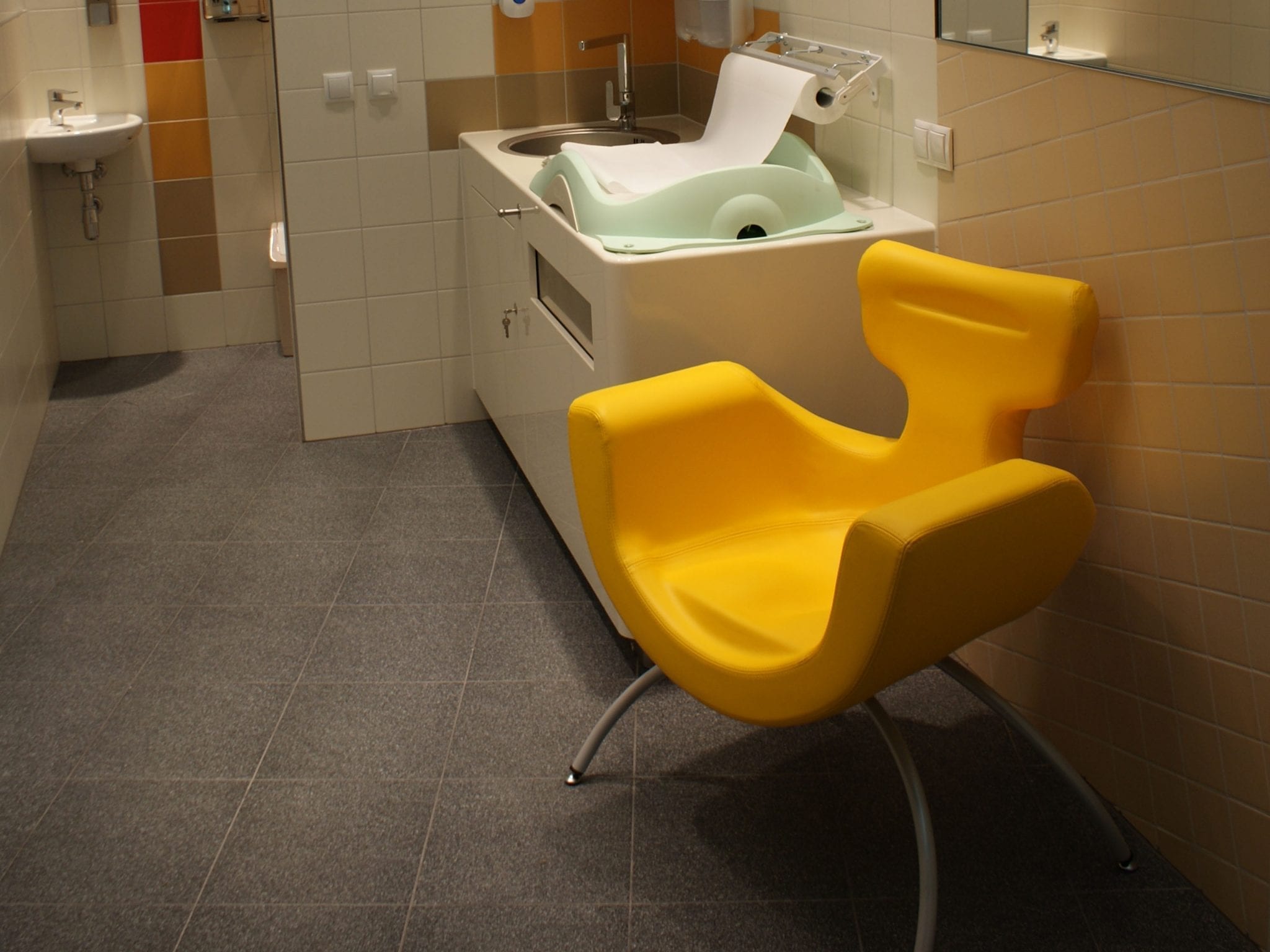
    A new mall in Shanghai has set aside a space for what it is calling a ‘husbands nursery’, where it hopes bored spouses will hang out while their wives are shopping in the mall, China Central Television (CCTV) reported.

    This ‘husbands nursery’, on the third floor of a shopping mall in Shanghai which opened on October 30, “is equipped with multiple leisure facilities, including magazines in its reading area, and a television,” supposedly for men to relax, CCTV said. But what those running the mall may not know is that Chinese men – the mainland’s biggest online shoppers – will likely be racking up credit card debt sitting in the ‘husbands nursery’ and splurging on themselves.

    “Mainland men are more likely to splurge on themselves when making purchases over the internet than women – who focus more on buying daily necessities,” according to a May 2016 survey.

    The survey was conducted by Ant Financial Services, an affiliate of the Alibaba Group that owns the South China Morning Post. Its findings are contrary to popular perception that it is women who go on shopping sprees, buying cosmetics and clothes. And, the study also found that women are buying more daily household necessities, while men are splurging on personal-care products and leisure goods.

    “Male online shoppers prove to be more hedonistic and the level of online spending by men is higher than women,” Ant Financial said in its report published in May.

    The survey said that women still bought a greater number of goods and services on the internet, but that they were buying more daily necessities for household use. Men’s online spending on entertainment, sports, dining and travel was 26 percent higher than the spending of women, and that women’s online purchases were aimed at running more efficient households.

    Ant Financial conducted the survey in partnership with the China Academy of New Supply Side Economics. The survey was based on data collected by Alipay, China’s online payment giant operated by Ant Financial, which has 450 million users.

  • Zhouheiya fast food chain to list in Hong Kong

    Zhouheiya fast food chain to list in Hong Kong

    The initial public offering of Zhouheiya, a Hubei province-based fast food chain known for its spicy-braised duck neck and other ready-to-eat snacks, opened for subscription in Hong Kong, looking to raise up to HK$3.3 billion ($425.7 million).

    The braised food producer and retailer, scheduled to make its trading debut on Nov 11, will sell 424 million shares at an indicative range between HK$5.8 and HK$7.8 apiece.

    Founded in 2002 in Wuhan, Hubei province, Zhouheiya beefed up its business footprint in 38 cities across 12 mainland provinces with 715 self-operated retail stores.

    Executive Director Hao Lixiao told a news conference in Hong Kong on Monday that the company is always looking to expand into the Hong Kong and Macao markets. However, he didn’t reveal a detailed timeline, adding that the firm still deals with the local licenses, not to mention that product research and the buildup of sales networks also takes time.

    Zhouheiya’s Hong Kong IPO highlighted an industrywide trend of mainland duck-food manufacturers floating public shares. Competitors like Jiangxi Huangshanghuang Group listed in Shenzhen back in 2012, while Hunan Juewei has been stuck for more than two years in the Chinese mainland’s clogged pipeline of IPOs.

    “Such a trend indicates that growth of mainland duck-food chains has somewhat run into a bottleneck which pushes them to raise capital via public listings as a growth booster,” said Zhu Danpeng, a researcher at the China Brand Research Institute.

    With rival Hunan Juewei being trapped in a big logjam of mainland IPO filings, Zhouheiya’s decision to join in a cluster of mainland food companies floating in Hong Kong appears to be a time-saving move.

    Choosing Hong Kong as a listing destination helps companies jump the long IPO queue in the Chinese mainland, but low valuation in the Asia’s financial hub remains a sure thing. In particular, Hong Kong investors still view food stocks listed there as generally expensive options, which may explain why some believe shares of Zhouheiya are priced a bit too high, said Hannah Li, a Hong Kong-based strategist with UOB Kay Hian.The IPO logjam that has long beset mainland catering companies accessing mainland capital markets was spotlighted when high- and mid-end restaurant chain Xiao Nan Guo Restaurants Holdings, and hotpot chain Xiabu Xiabu turned to Hong Kong to list in 2014.

  • Chinese firm plans to process re-fresh cod products for Shanghai retail

    Chinese firm plans to process re-fresh cod products for Shanghai retail

    Beiyang Jiamei Seafood, a Chinese processor switching its business from exports to imports, plans to expand into re-fresh products for the domestic market.

    The company, which is based in Qingdao, hopes to start processing re-fresh, packaged cod products for retail in Shanghai early next year, said Peng Song, its general manager.

    “We have in mind selling re-fresh cod and redfish. I think cod, both Atlantic and Pacific, can be very big in the Chinese market,” he told.

    If this model works, it could then be applied in other Chinese cities, he said. “I think we would be the first company in China to do this,” he said, during the China Fisheries & Seafood Expo.

    The company is also starting to sell frozen cod products into Chinese retail, wholesale and foodservice.

    “For the big, longline Pacific cod, we cut it into steaks. For the Atlantic cod, we make loins, portions and J-cuts,” he said. “I do think this item will boom in China, in a very short time.”

    Chinese in coastal cites do eat Pacific cod, he said, as the same species that is caught by Russians and American vessels is also in Chinese waters.

    But, the species is not sold as “cod” and consumers are unfamiliar. “The catching is inconsistent, so people do not like to promote it. The species may not be new, but to name it Pacific cod, Atlantic cod, that is new,” he said.

    The company is also putting the Marine Stewardship Council (MSC) logo on its cod retail bags.

    “We now have most of our products MSC approved. I think that is the future,” said Song.

    “The MSC is also fully traceable, from catch-to-plate. That is a powerful message for the Chinese consumer, who is worried about food safety,” he said.

    Promoting the traceability angle of the MSC logo is the best way to expand in the China market, he said, due to the concerns over food safety in China.

    Shift to domestic sales

    Beiyang Jiamei now generates around $35 million from domestic sales, as well as the same amount from re-processing and exporting.

    For the re-processing business, cod, haddock and arrowtooth flounder are the main species, he said.

    The company only started doing domestic sales in 2011. Beiyang Jiamei is selling into wholesale, into retail and foodservice, and also via online stores on JD.com and Tmall.

    Beiyang Jiamei’s main brand is “Sea Mix”, but it also has another for families, “Dinosaurs”. Also, the company is launching a high-end brand, “Prime Catch”, for crab and other more expensive items.

    A big focus of the domestic business, including e-commerce, is coldwater shrimp. Beiyang Jiamei imports around 5,000 metric tons of coldwater shrimp a year.

    Due to the quota cuts for coldwater shrimp in Canada, the company is now importing more vannamei from Ecuador and also red shrimp from Argentina.

    “We use coldwater shrimp to open the door to the supermarkets. Then, we try and introduce our other products to them. Coldwater shrimp will remain the most important item to us,” he said.

    “Needless to say, the high prices of coldwater shrimp mean vannamei has taken a share of the market,” said Song.

    “The price is RMB 91.50 ($13.53) per kilogram. This is the same price as L1 [Argentine shrimp] or 30/40 from Ecuador,” he said.

    “In China, if you entertain a guest, you want the bigger size to create a good impression”, meaning the vannamei and Argentina shrimp has a strong appeal, he said.

  • Alisports invests $100 million to popularize Rugby in China

    Alisports invests $100 million to popularize Rugby in China

    Alisports is to invest US$100 million over the next 10 years in an effort to popularise rugby in China, World Rugby announced on Wednesday.

    The company – the sporting division of e-commerce giant Alibaba – revealed its plans at a launch in Shanghai.

    The cash will be used to set up the first professional leagues for men and women, and national sevens programmes.

    And a massive mass participation programme will be launched in 10,000 universities and schools in an effort to attract one million new players over five years.

    Development programmes aim to recruit and train 30,000 coaches and 15,000 match officials by 2020, while the firm will launch a nationwide marketing programme and broadcast rugby on its TV and digital channels.

    “Rugby is a great Olympic team sport with strong values, which is why we are so excited about its undoubted potential in China,” said Zhang Dazhong, CEO of Alisports in a statement issued by World Rugby.

    “We have a great partner in World Rugby and together we will work tirelessly to promote the development of rugby in China with a goal of inspiring one million new players in five years.

    “With the support of World Rugby and a strong strategic plan, we believe that rugby in China will take off as an attractive, inclusive mass-participation sport of sportsmanship and character.”

    The country is making a major effort to increase sporting participation at all levels, and businesses have been rushing to get involved.

    And rugby is seen as a sport with huge potential in Asia, especially after its inclusion in the Olympics.

    “World Rugby’s strategic mission is to grow the global rugby family,” said World Rugby chief executive Brett Gosper in the statement.

    “China is central to that mission and we are delighted to be announcing further details of our ground-breaking plans in partnership with Alisports and the China Rugby Football Association.

    “Driven by a common vision, ambitious but attainable goals and an unprecedented investment programme, we are confident that we can build a strong and sustainable platform from which to ensure that China is in the best-possible position to become a major force on the international stage with strong men’s and women’s sevens and 15s teams, sustainable leagues, model development and participation programmes and real major event hosting potential.”

    According to World Rugby, participation in the sport in China has increased by 40 per cent in the past year with 76,000 players.

  • Amazon Prime is launching in China

    Amazon Prime is launching in China

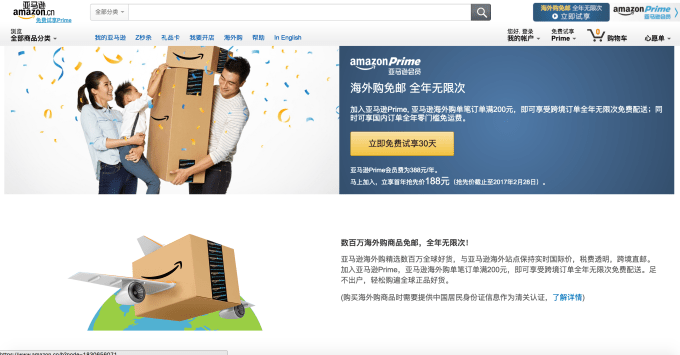
    Amazon announced it’s bringing a version of its Prime membership program to customers in China, which will include free, cross-border shipping from the Amazon Global Store as well as no minimum free domestic shipping, the company says. The service, which will compete with local rivals like Alibaba and JD.com, will cost 388 yuan ($57.23) per year after the first year, a discounted rate.

    Unlike the U.S. version of Prime, there aren’t a host of perks for Chinese customers outside of the shipping deals – instead, the main focus here is on increasing Amazon’s footprint in China by making it more affordable to buy foreign products from its site.

    Amazon today doesn’t have a significant footprint in China – less than 1.5 percent of the market, according to iResearch. It even launched a store on Alibaba’s Tmall site last year in order to reach Chinese consumers.

    Cross-border e-commerce is a growing trend in China, thanks to rising incomes and increased demand for foreign products. According to a McKinsey study from earlier this year, cross-border consumer e-commerce amounted to an estimated $40 billion (U.S.) in 2015, more than 6 percent of China’s total consumer e-commerce. The report also said it’s growing upwards of 50 percent annually.

    Chinese Prime members will be able to shop over 4 million international products from the Amazon Global Store – a storefront the company launched in November 2014 to cater to an international audience. The localized store’s millions of products are organized across 30 product categories, including those that appeal to Chinese consumers like apparel, shoes, baby, toys, home, kitchen and beauty.

    These international orders are delivered by Amazon fulfillment centers in the U.S. through its global logistics capabilities, says Amazon, and Prime members will receive those packages in an estimated 5-9 days in 82 cities.

    screen-shot-2016-10-28-at-9-58-38-am

    In some cases, orders may take longer. Single orders of over ¥2,000 or total orders for a citizen in a year totaling more than ¥20,000 will be routed through a customs channel which requires additional processing time, the retailer notes.

    Meanwhile, Amazon Prime members can also take unlimited free shipping with no minimum purchase on more than 9 million domestic products.

    “Launching a unique program designed for our Chinese customers shows our obsession with Chinese customer needs, and demonstrates our long-term commitment to growing our business in China,” said Russ Grandinetti, Senior Vice President of Amazon, in a statement about the launch. “We will continue to innovate for customers in China to deliver more value over time.”

    To kick off the launch, Amazon is discounting the Prime membership to encourage signups. Instead of ¥388, it will be ¥188 for the entire first year. A free, 30-day trial is also available from z.cn/prime.

    The launch coincides with Amazon’s third Global Shopping Festival, which runs until December 2, 2016, and will include deals on over 70,000 international brands as well as Black Friday deals on the Amazon Global Store.

  • India looks to cut tariff concessions on Chinese goods

    India looks to cut tariff concessions on Chinese goods

    India is expected to push for a new approach to tariff cuts at the 16-country trade bloc to prevent China from flooding its market with cheap goods. The commerce department is working on ways to give minimum tariff concessions to Chinese goods and delay the concessions by a long number of years even as it allows imports from other member countries at lower duties.

    As part of the Regional Comprehensive Economic Partnership (RCEP) trade negotiations, India is looking to treat Chinese products differently due to the burgeoning trade deficit it has with Beijing. In 2015-16, India’s exports to China were $9 billion while the imports were a staggering $61.7 billion leaving a trade deficit of $52.7 billion.
    India hopes this longer phasing out of tariff concessions and differential treatment, called “deviations”, will become the basis for RCEP negotiations. The new approach comes ahead of the next ministerial meeting on November 3-4 in the Philippines.

    Moreover, since India had to do away with a three-tier structure of differential duty cuts as part of the negotiations, deviations are the last ray of hope to contain the trade deficit with China under a formal trade agreement. In the earlier tiered structure, India had proposed to remove duties on 42.5% of the items traded with China, something that Beijing had termed as low.

    “We hope the tiers come back from the backdoor through deviations,” said a commerce department official, adding that the difference in tariff cuts may not be as much as in the earlier structure of three tiers.

    “We can look at longer staging periods for China by delaying the concessions by some years or not offer key products for tariff cuts to them at all,” the official said. Despite agreeing to a common concession, India is insisting on a single undertaking for the RCEP which means nothing is agreed until everything is agreed. “With single undertaking, we can be sure other members will not lose interest in India’s demands once we accept their demands for tariff concessions on goods,” the official said.

    Trade Openness

    Our problem with China seems to be a lack of trade access. And to better manage our trade deficit with China, we need to call for better trade access rather than opt to keep tariff barriers high. The latter option would only raise transactions costs and lead to thoroughly suboptimal policy going forward. are definite gains from trade and openness

  • Across China, Walmart Faces Labor Unrest as Authorities Stand Aside

    Across China, Walmart Faces Labor Unrest as Authorities Stand Aside

    In a one-man war room in his apartment, a laid-off Walmart employee named Wang Shishu was tapping out a message on his phone to a group of workers and plotting his next move.

    Over the past few months, Mr. Wang, 56, has helped organize a national movement in China against Walmart. Labor strikes have hit stores in the south simultaneously. There have been boycotts in the northeast. And here in Shenzhen, where Walmart opened its first outlet in China two decades ago, employees have filed a lawsuit demanding back pay.

    “We want a snowball effect,” he said in the booming baritone of a street preacher. “We want everybody to know what to do next.”

    As the Chinese economy has slowed, strikes and labor protests have broken out across the country, mostly scattered episodes targeting a single factory or business. The government has responded aggressively, detaining activists and increasing censorship to keep unrest from spreading.

    But activism against Walmart’s more than 400 stores in China in recent months has followed a different pattern: workers in several cities agitating against the same company, bypassing official unions controlled by the Communist Party and using social media to coordinate their actions — while the authorities largely stand aside.

    Across China, Walmart employees have raised their fists at protests, chanting, “Workers, stand up!” They have appealed to local officials with patriotic fervor, invoking the struggles of Mao Zedong against foreign imperialists. They have posted screeds online against unkind bosses and “union puppets.”

    In doing so, the Chinese work force of the world’s largest retail chain has put the ruling Communist Party in an uncomfortable position, publicly testing its Marxist commitment to defend the working class and pitting that against its fear of independent labor activism.

    Ever since the Solidarity trade union helped topple Communist rule in Poland, Beijing has sought to prevent the emergence of a nationwide labor movement, suppressing efforts by workers to organize across industries or localities.

    But the authorities appear to be hesitating in the case of Walmart, whose workers have complained of low wages and a new scheduling system they say has left them poorer and exhausted.

    In recent months, as many as 20,000 people, about a fifth of the company’s work force in China, have joined messaging groups set up by Mr. Wang and other activists on WeChat, a popular app. In these forums, they vent about company policies, share protest slogans and discuss plans to coordinate demonstrations for maximum effect.

    Mr. Wang, a former customer service representative whom Walmart has fired twice, spends his days babysitting his granddaughter and trading messages with workers across the country, often as late as 2 a.m.

    “What they’re doing is inhumane,” he said. “I want Walmart to return to the sympathetic company it used to be.”

    Eli Friedman, a labor scholar at Cornell University, said the Walmart movement was “probably the most substantive example of sustained, cross-workplace, independent worker organizing we’ve ever seen in China’s private sector.”

    The government appears to be keeping a distance because it is worried about provoking a backlash, or about acting on behalf of a prominent American company against Chinese workers at a time when nationalism in China is rising.

    But by doing little or nothing, it risks encouraging disaffected workers elsewhere, especially at the growing number of national chain businesses with operations across China. Already, workers at Neutrogena stores and China Unicom, a state-owned telecom operator, have used similar tactics, while avoiding serious punishment.

    “We can only expect that online organizing will continue to break down local barriers,” said Keegan Elmer, a researcher for China Labour Bulletin, an advocacy group based in Hong Kong.

    The retail sector in particular has become a hotbed of worker activism. The government wants to shift growth from manufacturing to service industries, but many new jobs at restaurants, hotels and stores are low-paying or part-time.

    From July through September, there were 124 strikes and protests at service-sector firms, about double the number last year, outpacing episodes in manufacturing for the first time since at least 2011, according to China Labour Bulletin.

    Chinese law requires businesses to establish labor unions, but they are almost always controlled by management, and companies generally use the unions to contain worker activism. In the face of labor strife, some businesses have offered back pay, bonuses and other benefits to workers.

    But others, concerned that labor activism could force costly concessions, have resorted to tougher tactics, retaliating against those who help organize protests. At Walmart, some of the most vocal workers have been deprived of raises, reassigned, or in some cases fired, according to interviews with more than a dozen employees.

    At one store in Zhongshan, west of Shenzhen, a labor activist said a supervisor photographed her in the bathroom as retribution for speaking out. She asked not to be identified for fear of further antagonizing her bosses.

    Much of the discontent stems from a new scheduling system that Walmart put in place this summer as a way, the company said, of giving workers more flexibility. Workers have argued that it has resulted in cuts to overtime pay and excessively long shifts, and some say they were coerced into signing new contracts agreeing to the system.

    Walmart denied that it had treated its employees unfairly or had pressured them to accept the new schedules. Rebecca Lui, a spokeswoman, said that the vast majority of its work force supported the new system, and that employees were free to keep their old schedules.

    “Our associates are our most valuable asset,” she said in a statement.

    Zhai Xiuhua, a former greeter at a Walmart store in Shenzhen, said she was fired in September after leading a fight against the new scheduling system.

    “I told them, ‘Even if you put a knife to my neck, I’ll never agree,’” she recalled at her home, where her uniform and identification badge — No. 14470 — still hang on the wall. Ms. Zhai, worried about medical bills, says she now hopes to find work in her hometown in the southwestern province of Sichuan.

    Walmart, which has resisted unionization at its thousands of stores across the world, was forced by the government in 2006 to establish branches of the Communist Party-controlled All-China Federation of Trade Unions for its roughly 100,000 Chinese employees, part of a broader push by the party to unionize foreign businesses.

    But union branches at many Walmart stores are under the thumb of store managers, and higher-level union officials appear torn about how to respond to complaints from workers like Ms. Zhai.

    While union officials here in Guangdong Province have criticized Walmart for not seeking governmental approval for the new scheduling system, they have not taken more forceful action or helped mobilize workers.

    Labor activists at Walmart have cited the ideals of President Xi Jinping and the Communist Party’s history of protecting workers, and experts said they appeared to be benefiting from a belief among some officials that the influence of foreign companies such as Walmart should be curtailed.

    “If the Chinese authorities try to suppress the workers on behalf of Walmart,” said Wang Jiangsong, a Chinese labor scholar, “it will hurt the country’s image.”

    When Walmart opened its first store in China in 1996, workers rushed to snap up jobs that paid more than those at Chinese competitors.

    Now, some employees say, a Walmart job does not pay enough to comfortably support a family, with wages hovering around minimum wage, or about $300 a month. While Walmart has led a high-profile campaign in the United States to raise pay, salaries in China have remained largely stagnant, workers said, barely keeping pace with inflation.

    Walmart has struggled to keep up with the fast-changing tastes of Chinese consumers and tried to re-energize its business by making investments in online retailers.

    But the continuing labor unrest poses a potential hurdle.

    You Tianyu, 45, a customer service employee at a Walmart store in Shenzhen, caught the attention of her supervisors in August when she wrote a letter to the president of Walmart, Doug McMillon, to complain about the company’s efforts to silence aggrieved workers.

    Ms. You said her bosses now harassed her daily because she spoke out, and she has received a diagnosis of anxiety and depression.

    She spends most of her nonworking hours rummaging through a mess of worker manifestoes, union laws and pay slips in her tiny apartment, hoping to find a new line of attack against Walmart.

    “I’m on the verge of collapsing,” she said. “I don’t know how much longer I’ll last.”

  • Adyen supports WeChat Pay globally

    Adyen supports WeChat Pay globally

    Global payments technology provider Adyen has added WeChat Pay support to help businesses worldwide sell to customers in China and Hong Kong.

    Adyen provides the payment infrastructure for multiple major internet companies including Uber, Facebook and Neflix. With the agreement, Adyen will be the first payment service provider to support WeChat Pay on a global scale.

    Adyen CCO Roelant Prins said China is at the forefront of the digital payments revolution, with 15% of the total population expected to make a cross-border purchase in 2016.

    “We are very excited to support WeChat Pay. When combined with our existing UnionPay and Alipay integrations, it gives businesses access to the world’s biggest e-commerce market with a single partner,” he said.

    “This is the final key to unlocking full access to the Chinese shopper. This is especially appealing to travel businesses and high-end retailers.”

    According to Adyen data, despite the rapid adoption of digital payments in Hong Kong, credit cards are expected to remain the most popular payment method in the market. Visa has a significant lead over rival MasterCard.

    Because no local entity is required for cross-border transactions it is easy to accept and settle payments in Hong Kong dollars with no impact on currency conversion.

  • Walmart Invests $50M In JD.Com’s O2O Logistics Services App New Dada

    Walmart Invests $50M In JD.Com’s O2O Logistics Services App New Dada

    Walmart has made a US$50 million strategic investment in New Dada, formerly known as Dada and controlled by JD.com Inc., in another step deepening an existing partnership between the global retail giant and China’s second largest e-commerce firm.

    New Dada was created in April from a merger between JD.com’s O2O (online-to-offline) unit and Dada Nexus Ltd., a venture-backed Uber-like mobile app that focuses on providing last mile logistics services.

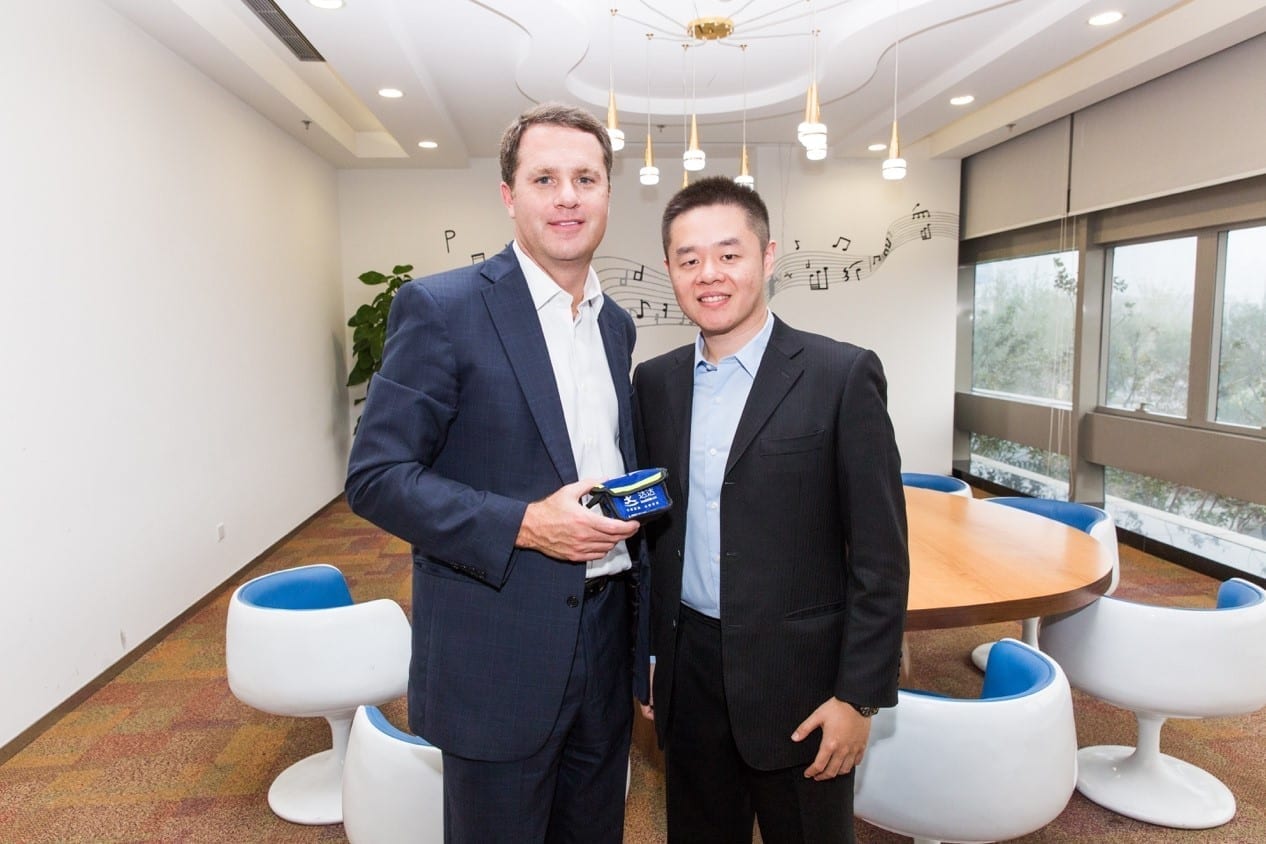
    “Our alliance with JD and cooperation with New Dada will enable seamless shopping to millions of customers across China,” says Walmart CEO, Doug McMillon.

    The O2O logistics services provider New Dada currently has more than 25 million registered users, and provides local on-demand delivery capabilities with 2.5 million crowd-sourced deliverers across more than 300 cities in China.

    New Dada currently offers customers two-hour delivery on groceries ordered from Walmart stores to customers within a 3-kilometer radius of more than 20 Walmart stores in China. The number of Walmart stores offering two-hour delivery is expected to double by the end of the year.

    Officially launched in 2014, Dada operates through Imdada.cn and last completed a US$300 million series D round of financing from DST Global, Sequoia Capital and others in January.

    It previously raised three rounds of venture funding from DST Global, Sequoia Capital, Greenwoods Investment Management and other undisclosed investors.

    In April, JD.com paid US$200 million in cash and injected JD Daojia assets into Dada in exchange for a 47.4% stake in the newly merged Dada.

  • SM Prime Holdings eyes China expansion

    SM Prime Holdings eyes China expansion

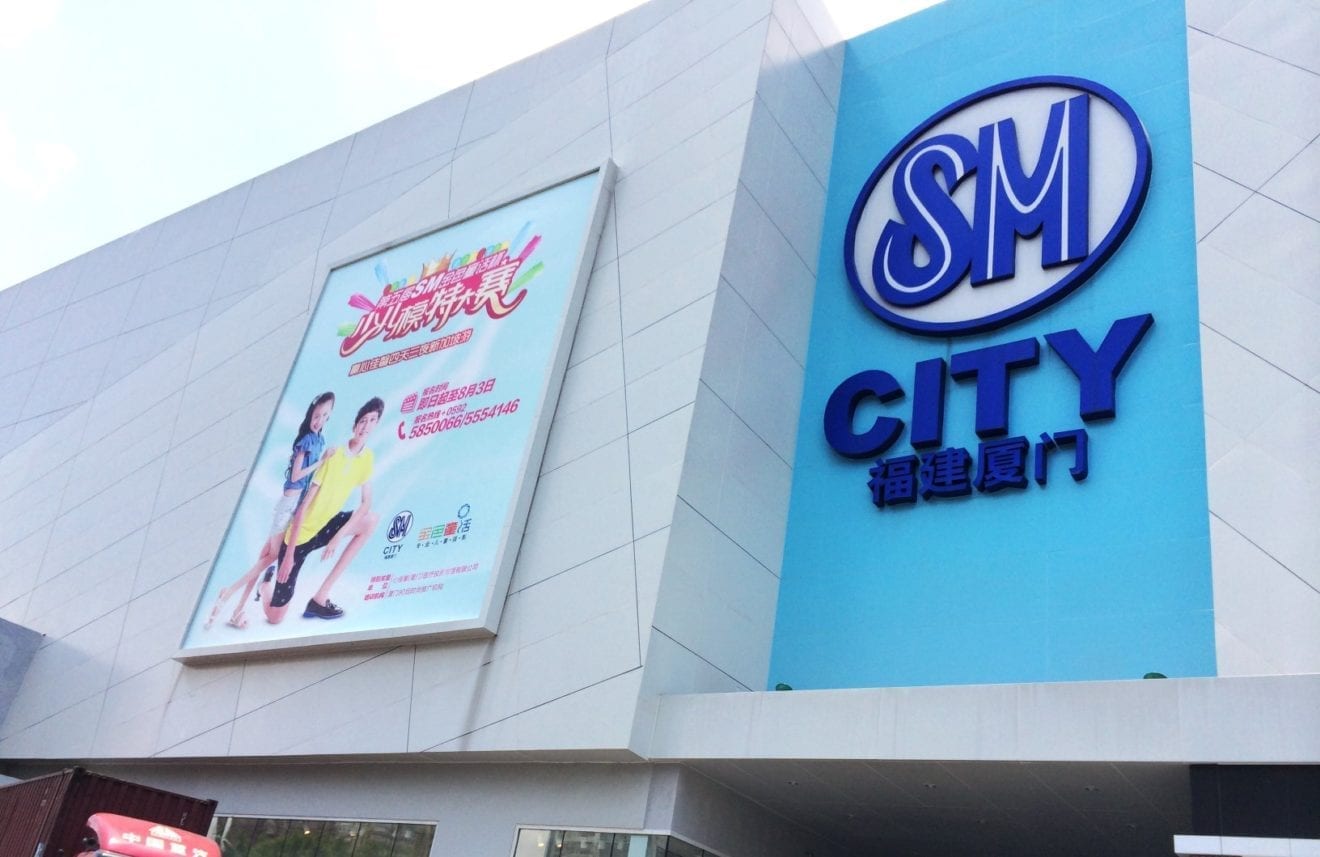
    Philippines property developer SM Prime Holdings is looking to acquire shopping malls in China as well as buying more land for expansion.

    But it is interested only in the Fujian province, says SM Prime executive committee head Hans Sy.
    “We are still continuing to really look,” he says.

    With “phenomenal development” in the past 10 years, the value of land has risen in China, and Sy says the group is assessing different areas that could offer value for money.

    While there are malls up for sale, SM Prime is being careful about possible acquisitions. “I’m being choosy,” says Sy. “I only want within Fujian province.”

    Fujian is the home province of his father, Henry Sy, the richest man in the Philippines, who built his retail empire from a small shoe store in Manila.

    “We have the advantage right now [in Fujian] because of our success,” Sy says.

    SM’s malls in China include Chengdu (166,665 sqm), Chongqing (149,429 sqm), Jinjiang (167,830 sqm), Suzhou (72,552 sqm), Xiamen (238,125 sqm) and Zibo (150,600 sqm) for a total gross floor area of 945,200 sqm. The company’s mall in Tianjin, which partially opened this year, has a gross floor area of 540,000 sqm.

    In all, SM is targeting to further expand its mall network in the Philippines and China to 10.6 million square meters of gross floor area by 2018, according to documents presented in a briefing by SM Investments. This would be an extra 28 per cent from the 8.3 million gross floor area the company hit last year.

    Of the target, 85 per cent would be accounted for by malls in the Philippines while 15 per cent would be in China.

  • South Korean, Chinese cinema giants line up to enter Indonesian market

    South Korean, Chinese cinema giants line up to enter Indonesian market

    The government’s recent decision to allow full foreign ownership in local movie businesses has attracted the interest of South Korean and Chinese cinema giants to invest in Southeast Asia’s largest market, a government official said.

    Creative Economy Agency (Bekraf) head Triawan Munaf said a number of foreign investors were currently conducting feasibility studies for expanding their operations in Indonesia, home to more than 250 million people. Among the big names on the list are South Korean’s Lotte Cinema and Megabox, as well as China’s Dalian Wanda, which is also the world’s largest cinema chain operator.

    “Hopefully they can come by the middle of 2017,” he said on Thursday on the sidelines of the DBS Asian Insights Conference 2016 in Jakarta.

    Despite being the largest economy in Southeast Asia, Indonesia has one of the least penetrated cinema markets in the world. Data gathered from various commercial cinemas shows that there are only about 1,100 film screens available in the whole of Indonesia, with 35 percent of all theaters being in Jakarta.

    With its population size, Indonesia, Triawan said, ideally should have 15,000 screens.

    BKPM estimates that the recent removal of certain sectors from the nation’s negative investment list, signed by President Joko “Jokowi” Widodo earlier this year, will help efforts to hit the investment target of Rp 594.8 trillion (US$43.6 billion) by the end of this year.

    Under new regulations, foreign investors can now fully own local cinemas, film production houses and distribution firms.

  • eHi Car Services Announces Third Quarter 2016 Results

    eHi Car Services Announces Third Quarter 2016 Results

    eHi Car Services Limited rentals and car services provider in China, today announced its unaudited financial results for the third quarter ended September 30, 2016.

    Third Quarter 2016 Highlights

    • Net revenues increased by 47.8% year-over-year to RMB582.1 million (US$87.3 million[1]) for the third quarter of 2016, from RMB393.8 million for the third quarter of 2015.

    Three months ended September 30,

    Year-Over-Year

    (RMB ‘000)

    2015

    2016

    Comparison

    Car rentals

    300,700

    464,271

    54.4%

    Car services

    93,080

    117,783

    26.5%

    Total Net

    Revenues

    393,780

    582,054

    47.8%

    Gross profit[2] increased by 83.9% year-over-year to RMB165.7 million (US$24.8 million) for the third quarter of 2016, from RMB90.1 million for the third quarter of 2015. Gross profit margin[2] increased to 28.5% for the third quarter of 2016, from 22.9% for the third quarter of 2015.

    • Net income increased by 269.5% year-over-year to RMB22.3 million (US$3.3 million) for the third quarter of 2016, from RMB6.0 million for the third quarter of 2015. Net income margin increased to 3.8% for the third quarter of 2016, from 1.5% for the third quarter of 2015.
    • Non-GAAP adjusted EBIT[3] increased by 97.4% year-over-year to RMB80.6 million (US$12.1 million) for the third quarter of 2016, from RMB40.8 million for the third quarter of 2015. Non-GAAP adjusted EBIT margin[3]increased to 13.8% for the third quarter of 2016, from 10.4% for the third quarter of 2015.
    • Non-GAAP adjusted EBITDA[4] increased by 60.0% year-over-year to RMB264.5 million (US$39.7 million) for the third quarter of 2016, from RMB165.3 million for the third quarter of 2015. Non-GAAP adjusted EBITDA margin[4]increased to 45.4% for the third quarter of 2016, from 42.0% for the third quarter of 2015.
    • Total average available fleet size[5] increased by 46.5% year-over-year to 41,742 vehicles for the third quarter of 2016, from 28,499 vehicles for the third quarter of 2015. Total fleet RevPAC[6] increased to RMB152 for the third quarter of 2016, from RMB150 for the third quarter of 2015.

    [1] The Company’s business is conducted in China and substantially all of its revenues are denominated in Renminbi (RMB). However, this earnings announcement contains translations of RMB amounts into U.S. dollars (US$) at specified rates solely for the convenience of the reader. Unless otherwise noted, all translations from RMB to U.S. dollars are made at a rate of RMB6.6685 to US$1.00, the effective noon buying rate as of September 30, 2016 in The City of New York for cable transfers of RMB as certified for customs purposes by the Federal Reserve Bank of New York.

    [2] Gross profit is defined as net revenues less cost of net revenues (vehicle operating expenses).  Gross profit margin is defined as the percentage representing gross profit divided by net revenues.

    [3] Non-GAAP adjusted EBIT is defined as net income before share-based compensation, interest expenses, interest income, provision for income taxes, gains from waiver of warrants and gains from sale of cost method investment. For more information, refer to “About Non-GAAP Financial Measures” and “Reconciliation of GAAP and Non-GAAP Results” at the end of this press release. Non-GAAP adjusted EBIT margin is defined as the percentage representing Non-GAAP adjusted EBIT divided by net revenues.

    [4] Non-GAAP adjusted EBITDA is defined as net income before depreciation and amortization, share-based compensation, interest expenses, interest income, provision for income taxes, gains from waiver of warrants and gains from sale of cost method investment. For more information, refer to “About Non-GAAP Financial Measures” and “Reconciliation of GAAP and Non-GAAP Results” at the end of this press release. Non-GAAP adjusted EBITDA margin is defined as the percentage representing Non-GAAP adjusted EBITDA divided by net revenues.

    [5] “Average available fleet size” is calculated by dividing the aggregate number of days in which the Company’s fleet was in operation during a given period by the total number of days during the same period. In determining the size of the Company’s fleet in operation, eHi includes all vehicles in its car rentals and/or car services fleets except for vehicles that have been written off in accordance with its accounting policy and vehicles that have not been consistently made available for rent and that it may consider to dispose of when appropriate opportunities arise.

    [6] “RevPAC” refers to average daily net revenue per available car, which is calculated by dividing the net revenues during a given period by the aggregate number of days in which the Company’s fleet was in operation during the same period.


    Average Available

    Fleet Size

    RevPAC

    (RMB)

    2015Q3

    2016Q3

    Year-Over-Year

    Comparison

    2015Q3

    2016Q3

    Year-Over-Year

    Comparison

    Car rentals

    26,200

    39,227

    49.7%

    125

    129

    3.2%

    Car services

    2,299

    2,515

    9.4%

    440

    509

    15.7%

    Total

    28,499

    41,742

    46.5%

    150

    152

    1.3%

    • Fleet utilization rate[7] for car rentals was 71.9% for the third quarter of 2016, compared with 73.8% for the third quarter of 2015.
    • As of September 30, 2016, total period-end fleet size[8] was 48,934 vehicles.

    [7] “Fleet utilization rate” refers to the aggregate transaction days for the Company’s car rental fleet during a given period divided by the aggregate days the car rental fleet was in operation during the same period.

    [8] “Period-end fleet size” refers to the aggregate number of vehicles in the Company’s car rentals and car services fleets as of the last day of a given period which the Company holds legal title to and reflects in its balance sheet, including vehicles that are currently missing but have not been written off in accordance with its accounting policy. The period-end fleet size as of September 30, 2016 excluded 144 vehicles which the Company had written off from its balance sheet in accordance with its accounting policy.

    Mr. Ray Zhang, eHi’s Chairman and Chief Executive Officer, said, “Our business continued to thrive during the third quarter, leading to both strong top-line growth and significant improvement in profitability. As a fast-growing company, we are committed to driving ongoing operating leverage and are well-positioned to capture the growing demand from China’s rapidly rising domestic tourism and business-related travel.”

    “The recent regulations regarding online car-hailing business in China, we believe, provide us with greater potential to explore business and strategic cooperation opportunities to enhance our competitive position. Looking ahead, we remain focused on continuing to execute on our growth plan and achieving our strategic objectives,” Mr. Zhang concluded.

    Mr. Colin Sung, eHi’s Chief Financial Officer, said, “We are pleased to report strong third quarter results with net revenues increasing by 47.8% year-over-year, while recording 269.5% bottom-line growth from the prior-year period. Notably, our continued focus on operating efficiency and cost control measures contributed to broad-based margin improvement. Our gross margin and non-GAAP adjusted EBITDA margin both reached record-highs of 28.5% and 45.4%, respectively. Our financial discipline is well-established, and we remain committed to prudent expansion and a balanced approach between growth and profitability.”

    Third Quarter 2016 Financial Results

    Net revenues for the third quarter of 2016 were RMB582.1 million (US$87.3 million), up 47.8% year-over-year, attributable to increased net revenues from both car rentals and car services.

    Net revenues from car rentals for the third quarter of 2016 were RMB464.3 million (US$69.6 million), up 54.4% year-over-year, primarily driven by the growing average available fleet size for car rentals in response to customer demand.

    Net revenues from car services for the third quarter of 2016 were RMB117.8 million (US$17.7 million), up 26.5% year-over-year, primarily driven by the increased car services RevPAC as we provided services to more business clients.

    Cost of revenues (vehicle operating expenses) for the third quarter of 2016 was RMB416.4 million (US$62.4 million), up 37.1% year-over-year, primarily driven by increased depreciation and labor costs.

    In the third quarter of 2016, 486 used vehicles were disposed of, and 358 used vehicles were under sales contracts pending title transfer. The Company recognized a disposal loss of RMB0.3 million (US$0.04 million) in aggregate for these 844 vehicles. In addition, a disposal gain of RMB0.7 million (US$0.1 million), which was unrecognized in the previous quarters, was recognized in the third quarter of 2016 as a result of the completion of title transfer during such period. The disposal loss and gain were both recognized as adjustments to the vehicle-related depreciation expense as part of the cost of revenues.

    Gross profit for the third quarter of 2016 was RMB165.7 million (US$24.8 million), up 83.9% year-over-year. Gross profit margin for the third quarter of 2016 was 28.5%, compared with 22.9% for the third quarter of 2015. Gross profit margin improvement was due to certain cost controls primarily in vehicle insurance, and to a lesser extent, in vehicle repair and maintenance as well as labor costs, in connection with enhanced economies of scale and operating efficiency.

    Selling and marketing expenses for the third quarter of 2016 were RMB28.5 million (US$4.3 million), up 81.8% year-over-year, primarily due to increased channel marketing and promotion fees as the Company expanded branding and channel promotion activities during such period.

    General and administrative expenses for the third quarter of 2016 were RMB63.1 million (US$9.5 million), up 38.6% year-over-year, primarily due to increased employee-related costs including salaries and welfare expenses as a result of increased headcount, as well as a foreign exchange loss in the third quarter of 2016 compared with a foreign exchange gain in the third quarter of 2015.

    Profit from operations for the third quarter of 2016 was RMB77.0 million (US$11.5 million), up 124.2% year-over-year.

    Interest expense for the third quarter of 2016 was RMB55.7 million (US$8.3 million), up 79.5% year-over-year, primarily attributable to the interest expense associated with the Company’s senior unsecured notes of US$200 million due 2018.

    Net income for the third quarter of 2016 was RMB22.3 million (US$3.3 million), up 269.5% from RMB6.0 millionfor the third quarter of 2015. Net income margin for the third quarter of 2016 was 3.8%, compared with 1.5% for the third quarter of 2015.

    Basic and diluted earnings per ADS for the third quarter of 2016 were RMB0.32 (US$0.05) each, compared with basic and diluted earnings per ADS of RMB0.09 (US$0.01) each for the third quarter of 2015.

    Non-GAAP adjusted EBIT for the third quarter of 2016 was RMB80.6 million (US$12.1 million), up 97.4% year-over-year. Non-GAAP adjusted EBIT margin for the third quarter of 2016 was 13.8%, compared with 10.4% for the third quarter of 2015.

    Non-GAAP adjusted EBITDA for the third quarter of 2016 was RMB264.5 million (US$39.7 million), up 60.0% year-over-year. Non-GAAP adjusted EBITDA margin for the third quarter of 2016 was 45.4%, compared with 42.0% for the third quarter of 2015.

    As of September 30, 2016, the Company’s cash, cash equivalents and restricted cash balance was RMB1.5 billion (US$223.7 million).

    Recent Development

    On August 30, 2016, the Company entered into a US$150 million syndicated loan facility agreement. This loan facility agreement includes an initial facility of US$110 million and a greenshoe facility of US$40 million. The loan facilities have a three-year term and will be repaid in installments. The interest margin is priced at 350 basis points per annum over LIBOR. Deutsche Bank AG, Singapore Branch is acting as the original mandated lead arranger of the loan facilities. The Company had fully drawn down the US$150 million facility as of September 27, 2016, and used part of the proceeds for repaying certain existing indebtedness with high interest rates. The remaining proceeds will be used for funding capital expenditures and other general corporate purposes of the Company.

    Outlook

    The Company estimates that net revenues for the full year of 2016 will range from RMB2.1 billion to RMB2.2 billion, and total period-end fleet size will reach approximately 57,000 vehicles as of December 31, 2016. This outlook reflects the Company’s current and preliminary view, which is subject to change.

  • Volkswagen aims to sell 400,000 new energy vehicles a year in China by 2020

    Volkswagen aims to sell 400,000 new energy vehicles a year in China by 2020

    Volkswagen aims to boost new energy vehicle sales in China to 400,000 units a year by 2020, the automaker’s China chief Jochem Heizmann said, as Beijing pushes automakers to sell low-emissions cars via incentives and friendly regulations.

    It aims to eventually sell 1.5 million new energy vehicles (NEVs) annually by 2025, Heizmann told reporters ahead of the Guangzhou auto show, which opens on Friday.

    “We have to do more in the NEV area. The government is pushing, the general environment in China is pushing that,” Heizmann said.

    Overall sales of NEVs in China more than quadrupled last year with rapid growth continuing in 2016.

    Volkswagen will deliver its first locally produced NEVs, as battery electric and plug-in hybrid cars are referred to in China, under its Audi brand this year.

    Audi AG manufactures the vehicles in a joint venture with China FAW Group.

    Volkswagen also has a JV with SAIC Motor (600104.SS), and the two companies have plans to sell plug-in hybrid cars in China in the future.

    Global auto brands are only allowed to manufacture cars domestically in China through ventures with local partners, with automakers typically limited to two JV partners.

    Volkswagen said in September that it had signed a preliminary deal to explore making electric vehicles in a new joint venture with China’s Anhui Jianghuai Automobile.

    The deal is not final and is subject to approvals.

    “We are making good progress in our feasibility study with JAC,” Heizmann said.

    He said he was hopeful the government would allow what would be Volkswagen’s third JV in China, with the government pushing for less-polluting vehicles.

    “Normally the legal framework is you are only allowed to have two joint ventures. There is a special chance to have this additional joint venture just on pure battery cars,” Heizmann said.

  • The rise and rise of property management firms in China

    The rise and rise of property management firms in China

    Virginia Huang has amassed nearly 20 years of top-level commercial real estate industry knowledge, and is the longest serving member of the CBRE team in Beijing.

    After joining the firm in 1997, she is now the firm’s managing director, and head of advisory and transaction services for Greater China

    A specialist, particularly, in the office leasing market, Huang has been involved in some of the Chinese capital’s highest profile transactions, dealing with top-tier Chinese and international developers.

    She shares her thoughts on the sea changes that have happened in China’s commercial real estate landscape, the recent rise in the amount of retail space being converted into offices, and the emergence of Beijing’s decentralised markets.

    What major changes have you seen during your 20 years in the commercial real estate sector?

    When I first entered the industry in the late 1990s, Chinese companies basically wouldn’t use our services. Our customers were primarily foreign corporations whose own corporate real estate teams were small and much more used to outsourcing.

    The traditional perception about CBRE as a company was that we were classy but aloof, dealing only with foreign clients. But we set out to convince people that was not the case, that we were straight forward, humble and down to earth, and that we had and in-depth understanding of Chinese companies and the Chinese market.

    Our domestic client base, as a result, has grown rapidly in the past few years, very much in line with the rise in size and number of many Chinese companies. There has also been a change in mindset, that they increasingly recognise the value of a professional international firm, as many are looking overseas for business.

    How can companies ensure their real estate requirements match their overall growth strategy?

    Many Chinese companies, especially technology firms, have grown so fast that often their property planning procedures has failed to keep pace, even if they do have procedures in place. But the same is often true in many mature multinationals, who might not have clear procedures in place to make these types of decision. It’s a universal problem.

    Chinese firms in this aspect do face a gap, especially when it comes to decision making: who, at what stage should they be involved? Often that is unclear. That fits their early-stage nature. But when start-ups grow larger and larger, as some now do, they will naturally shift to see leasing more as a means to attract and retain talent and improve working efficiency. In that way they would be less likely to compromise quality simply for cost.

    Workplace management should be aligned more with other departments from the start, especially with the top management and the overall strategy of the company. In terms of leasehold or freehold, there is no fixed solution. Each company has to make its workplace strategy in line with its overall strategy.

    A lot of companies have reported that finding good office space in Beijing’s central business district(CBD) is becoming increasingly difficult, and expensive – but many are unwilling to locate to less popular and cheaper sites away from the city centre. How can the problem be solved?

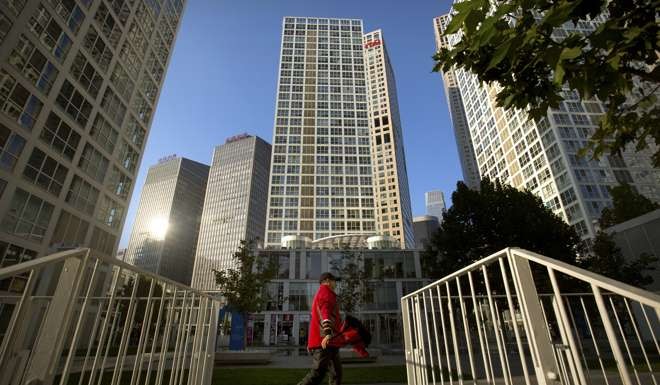
    Contrary to popular perception, there is plenty of supply in Beijing CBD, a lot more in fact than in the city’s Financial Street or Zhongguancun, where an office can be really hard to find.

    Also contrary to perception is that emerging markets, such as Wangjing area, have a high vacancy ratio. The vacancy ratio in Wangjing is low, and rents are not low any more.

    The problem some of these areas have in filling their space is to do with infrastructure

    Office workers in Wangjing, particularly, complain it’s hard to get to by public transport. Services and amenities, such as convenience stores, restaurants and hotels are rare.

    These types of out-of-town areas used to attract tenants with cheap rents and favourable policies. But office owners are becoming increasingly aware they cannot attract firms just by offering generous discounts. They have to do more complete the surrounding amenities, the soft environment of their markets, and more will be willing to move into them.

    With an oversupply of retail space in China, many underperforming malls are being converted into offices. Is there a danger of that too becoming oversupplied if the trend continues?

    There are two types of retail space being converted into offices: complementary retail space in bigger complexes, and whole retail buildings that are underperforming due to their poor location or poor management.

    On the first type, often their small size and flaws in design make them difficult to attract tenants. Ideally owners should be converting the second, third and fourth floors into offices, especially if higher floors are already offices.

    Whole underperforming retail buildings can be more be difficult to convert, because of their design, the position of their escalators, windows and so on. It can also be hard for there types of building to attract traditional tenants such as financial and law firms.

    I don’t think there’s an oversupply issue for now, because the trend is exclusively robust in Beijing. There is an acute supply issue in the capital, because it is nearly impossible to find new office projects in the downtown area because of policy regulations. Demand for offices here continues, unabated.

    If retail property owners invest in converting the lower levels of their buildings into office space, they will be able to earn much higher rents, than if for instance the site was leased as a restaurant. So there is a strong incentives to do so.