Tag: China

  • Alibaba Cloud to open new data centers

    Alibaba Cloud to open new data centers

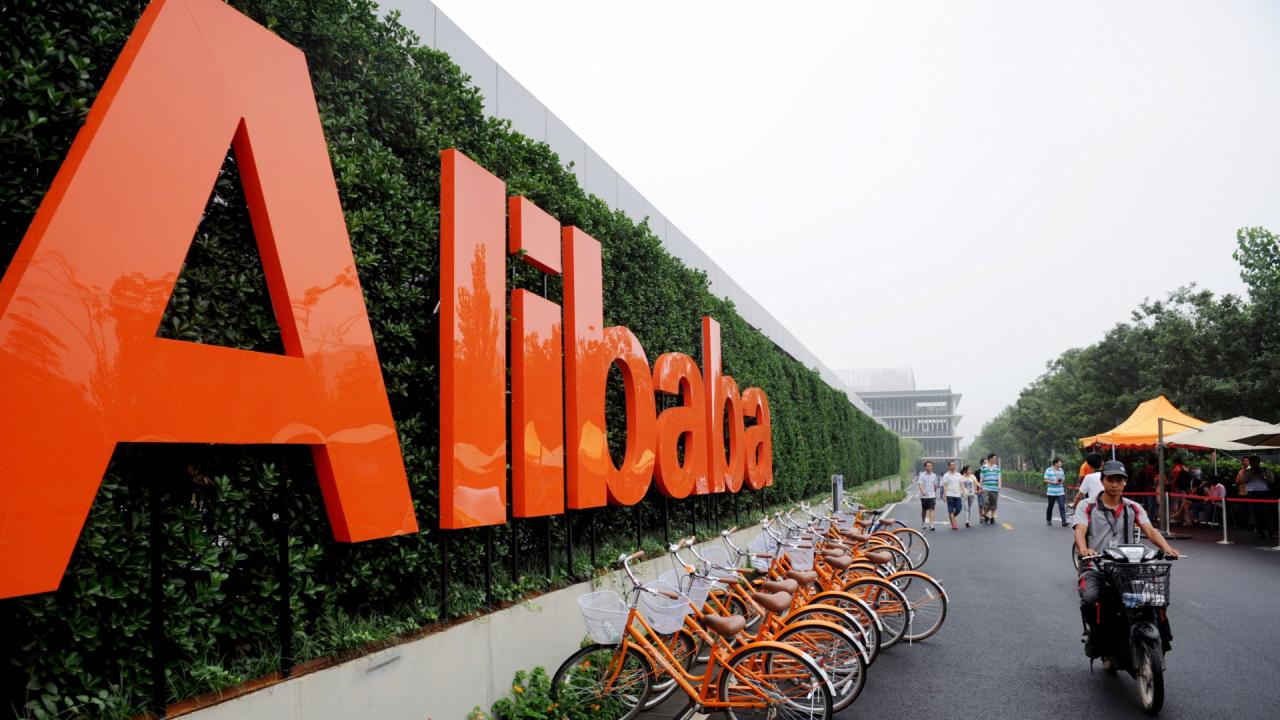
    Alibaba Cloud has announced plans to open four new data centers by the end of 2016 in the Middle East, Europe, Australia and Japan.

    The new centers are expected to boost its data center network to 14 locations, covering key economic centers around the world. The data center in the Middle East, located in Dubai in the United Arab Emirates, commenced initial operations today.

    Alibaba Cloud’s expansion aims to provide customers in Asia and worldwide with improved latency and greater access to diverse offerings, including data storage and analytics services, enterprise-level middleware, and cloud security services. The new data centers are expected to support Alibaba Cloud’s growing client base beyond the current 2.3 million.

    Extending its global footprint in the Asia-Pacific, Alibaba Cloud will open a new data center in Sydney, Australia by the end of 2016.

    Alibaba Cloud will bring its most popular cloud services in data storage and processing services, enterprise-level middleware, and cloud security services to the Australian market. A dedicated team will be based in Australia, and build up a cloud ecosystem with local technology partners to drive cloud and big-data business in the region.

    The planned new Japan Data Center, hosted by SB Cloud Corporation, a joint venture between Softbank and Alibaba Group, will meanwhile provide Japanese enterprises with public cloud computing services from Alibaba Cloud.

    With the joint venture, Alibaba Cloud will further expand its cloud computing service platform by leveraging SoftBank’s extensive enterprise customer base in Japan.

    “Alibaba Cloud has contributed significantly to China’s technology advancement, establishing critical commerce infrastructure to enable cross-border businesses, online marketplaces, payments, logistics, cloud computing and big data to work together seamlessly,” Alibaba Cloud president Simon Hu said.

    “We want to establish cloud computing as the digital foundation for the new global economy using the opportunities of cloud computing to empower businesses of all sizes across all markets.”

  • Stores in China using apps to increase foot traffic

    Stores in China using apps to increase foot traffic

    A growing number of retail stores in China are using specially designed apps to track shoppers’ behavior in a bid to boost sales.

    Yo-ren, an information technology startup, has developed an app to collect information about members enrolled in reward programs offered by stores. Convenience store operator Lawson has introduced the app at select locations in China.

    The Chinese government has desire to make consumption the primary driver of growth. But spreading online shopping will bring the detriment on brick-and-mortar shops.

    Incentive programs

    In 2015, the Shanghai-based Yo-ren, which provides digital marketing services in China, began supplying Lawson stores in Shanghai with an app to manage the convenience store’s reward points program. Since the beginning of this year, the companies have expanded use of the app to other cities, including Beijing, Dalian and Wuhan.

    The app is designed to provide product information and discount coupons while giving customers reward points based on their purchases.

    Under the current plan, members earn 10 points for each yuan they spend, exchangeable for store coupons, at the rate of 1,000 points for 1 yuan (15 cents).

    Since the service was rolled out, the number of members in Shanghai increased to 350,000. About 15% of them use the app at least once a week. These active users visit Lawson stores three times per week on average.

    Lawson has invested around $900,000 in Yo-ren, which is now using the money to enhance the app’s features.

    Tailored services

    Lawson plans to analyze information collected through the app, such as customer profiles and purchase records, for consumer preferences and trends. Findings will then be used to boost traffic during slow business hours, such as by offering coupons for free cups of coffee between 3 p.m. and 5 p.m. at locations close to members’ workplaces.

    Chinese consumers are flocking to internet shopping services provided by Alibaba Group Holding and other e-commerce players. Soaring online purchases are denting earnings at brick-and-mortar retailers, especially department stores.

    Convenience stores have proved less vulnerable to the trend, but Yo-ren CEO Osamu Kaneda said there is still a lot of room for them to boost their ability to attract consumers.

    Yo-ren’s app allows stores to track members in real time. Its features enable stores to analyze customer preferences and then develop new revenue streams from makers through targeted advertising. The app will also help stores tailor their services to match customers’ needs.

    China is in the midst of an economic evolution in which consumer spending is replacing investment and exports as the main driver of economic growth. The service sector is an important link in this shift because it employs large numbers of people.

    But the decline of brick-and-mortar sales will inhibit consumption due to slower job creation in the service sector and lower wages for those jobs.

    To make consumer spending the new engine of economic growth, China needs to engineer a balance between online shopping and sales at traditional retail stores.

  • Boycott China? Dragon now angel for Indian startups

    Boycott China? Dragon now angel for Indian startups

    ‘Boycott China’ messages may have become routine on WhatsApp in India. But in the startup world, India and China are drawing closer.

    Chinese firms and funds have become big investors in Indian startups , and they are becoming particularly useful now as US funds slow down. Beijing Miteno Communication Technology, a Chinese tech conglomerate, made this year’s biggest acquisition in the technology startup space — the $900 million buyout of Media.net, a subsidiary of Mumbai-based Directi, founded by brothers Bhavin and Divyank Turakhia.

    Ecommerce giant Alibaba has made large investments in Paytm and Snapdeal. Didi Chuxing, the equivalent of Uber in China, has invested in Ola. Internet giant Tencent recently led a $175 million funding in messaging app Hike; prior to that, it led a $90 million round in healthcare solutions firm Practo and, through its joint venture with South Africa’s Naspers, invested in online travel firm Ibibo Group.

    “There are demographic similarities and both countries are seeing consumer growth for digital firms. Also, Chinese players have experience in market creation and running successful digital companies, so they can play a bigger role than being just financial investors,” says Ashish Kashyap, founder of Ibibo, which last month merged with rival MakeMyTrip. Alibaba, for instance, is seen to be actively helping Paytm in various aspects.

    Bhavin Turakhia says the Chinese understand the Indian market better than US companies do as the Indian market is on the same evolution path as that of China, but about 5 to 10 years behind.

    Chinese companies and funds have become big investors in Indian startups . Cheetah Mobile, which owns products like Clean Master, invested in fitness app GOQii late last year.

    Ctrip, one of China’s largest online travel companies, invested $180 million in MakeMyTrip in January. China-based investment firm Hillhouse Capital has invested in CarDekho. Smartphone maker Xiaomi led a $25-million funding round in content provider Hungama Digital Media Entertainment in April.

    Web services company Baidu has said it is scouting for investment opportunities in Indian startups.

    Even other Asian companies are nowhere close to investing as much as the Chinese in Indian startups. Japan’s SoftBank and Singapore’s Temasek are among the few non-Chinese ones that have made investments. Taiwan’s Foxconn has also made several investments, like in Qikpod, Hike and Snapdeal, but some see Foxconn as practically a Chinese company, given that much of its operations is in China.

    What’s pushing the Chinese tech companies to make large investments are two things: one, many of them are making big profits in their home market, thanks partly to the restrictions on foreign competition; and two, the Chinese economy is slowing down.

    So they want to use their surpluses to expand into what is potentially the world’s third largest digital market.

    “There are only two big growing markets where they can invest: India and the United States. Silicon Valley does not respect Chinese capital. So the Indian tech sector becomes attractive to them,” says Mohan Kumar, executive director at Norwest Ventures, a US-based venture fund that has operations in India. Kumar also notes that Chinese investors often value Indian startups at three to five times more than what other seasoned investors do. “So entrepreneurs naturally prefer them,” he says.

    Higher valuations mean the Chinese investors take lower stakes for the same amount of investment, and founders can hope for an even higher valuation in their next round of fund raising.

    Language and politics are a challenge. May be for that reason, the Chinese are for now preferring partnerships and not outright buys. Even investment firms are building partnerships. Chinese VC fund Incapital has tied up with Indian fund IvyCap Ventures to enable its partner investors to have a closer look at potential investment opportunities in Indian startups.

    China is showing interest in traditional industries too. In July, Chinese pharma company Shanghai Fosun Pharmaceutical Co acquired Indian injectables manufacturer Gland Pharma for $1.27 billion, and in August, Chinese conglomerate Jiangsu Longzhe Technology and Trade Development Co acquired Diamond Power Infrastructure, Vadodara-based manufacturer of cables, conductors, transformers and other power sector equipment, for $125 million. But digital technology looks to be where the biggest action is.

  • Alibaba investing in Sanjiang Shopping Club

    Alibaba investing in Sanjiang Shopping Club

    Chinese eCommerce giant Alibaba Group Holding plans to invest 2.1 billion yuan (US$305 million) in supermarket chain Sanjiang Shopping Club.

    Sanjiang’s share were suspended by the Shanghai stock exchange on November 8, with trading resuming today.

    Under the terms of the deal, according to stock-exchange filings, Alibaba will subscribe to a private placement in Sanjiang, giving it about a 25 per cent stake.

    Sanjiang also plans to issue up to 188 million yuan worth of exchangeable bonds to Alibaba, which will also acquire another 9.3 per cent stake for 438.6 million yuan via a share transfer, says Sanjiang. This will take Alibaba’s stake to 32 per cent, above the 30 per cent threshold where Chinese law says a company must make a full takeover bid in China. Alibaba will need approval from Sanjiang’s shareholders to waive this requirement.

    Sanjiang said it aims to use Alibaba’s eCommerce platform as China’s economic growth slows.

  • Aldi poised to sell wine in China

    Aldi poised to sell wine in China

    The discounter has been rumoured to be mulling a launch in mainline China since 2014, when it was reported by the Guardian, however a report in German trade publication Lebensmittel Zeitung announcing the online-only move last week has been confirmed to the Australian media by Aldi.

    The Aldi spokesman said the discounter had been researching the market and undertaking feasibility studies for several years and was now ready to launch an e-commerce site in mainland China during the early part of 2017.

    “In the second quarter of 2017, Aldi will commence selling a carefully selected range of everyday grocery items to Chinese consumers,” a spokesman was reported as saying.

    The statement noted that Aldi had enjoyed a strong and long lasting relationships with many of its Australian suppliers since its first stores opened in 2001 and the Australian business had grown rapidly and would benefit from continued investment to expand. “Our growth across the country has provided increased business for these suppliers, allowing them to invest this back into their own operations and contributing to their success. We look forward to further expanding these relationships as we develop further opportunities in Asia,” it said. “We know there is a strong demand among Chinese consumers for Australian manufactured products and our goal is to provide a competitively priced alternative for shoppers seeking quality groceries. We believe our unique offer of high-quality Australian products at unbeatable prices will be an attractive proposition for Chinese consumers.”

    The move will use Aldi’s Australian retail business to supply China, and will concentrate on wine, and ambient groceries.

    There is huge demand for wine in China, and Australia has enjoyed a boom in sales to Chinese consumers. Last year, China overtook the US as Australia’s most valuable market, rising 51% to AUS$474 million during 2015, while last month, the China Association for Imports & Export of Wines & Spirits released figures showing the country imported more than 354 million litres of wines between January and September 2016 – an increase of 19.06% on the same period last year.

    Aldi launched its first UK e-commerce operation in January this year focusing on wine sales, and sold more 3,000 cases on its first day. The team said the it had continued to be  extremely popular, growing sales in key areas of the South of the UK and London, where there are currently fewer stores.

  • FINE jewellery launches into travel retail in China

    FINE jewellery launches into travel retail in China

    The 130-piece Treasure Collection includes silver pendants and earrings with cubic zirconia, diamonds and pearls, with each piece presented in a transparent sealed box. Prices range from US$49 to US$499.

    F.I.N.E Managing Director Ari Johansson said: “Jewellery is the most profitable category per cubic centimetre in retail, and we’ve developed a unique brand and a range of jewellery that inspires the wearer.

    “We also created a product that travel retailers can stock and manage more efficiently. Our extensive experience in manufacturing, logistics and training is reflective in the way we innovate in this space, be it in the box, on the box or out of the box.”

    Johansson will address the conference and trade fair on ‘Three ways to improve jewellery sales in duty free’.

  • Hong Kong’s Q3 economic momentum cools on China slowdown

    Hong Kong’s Q3 economic momentum cools on China slowdown

    Though the government kept its full-year estimate for 2016 in the middle of its previous forecast range of between 1 and 2 percent, underlying momentum slowed from the June quarter.

    Looking ahead, the government expects growth to remain on a modest track in the near term due to a number of concerns, including the likely trend of rising interest rates in the United States and elevated geopolitical risks elsewhere.

    “There is a need to stay alert to these risks for their possible repercussions on the global financial and economic situation,” it said in a statement.

    The economy grew a seasonally-adjusted 0.6 percent in the third quarter, compared with a downwardly revised 1.5 percent in the June quarter. Economists surveyed by Reuters had predicted growth of 0.3 percent.

    From a year earlier, the economy expanded 1.9 percent in the third quarter compared with 1.7 percent in the previous quarter and economists’ expectations of 1.6 percent.

    A marked slowdown in exports and weaker growth in private consumption and government spending combined to push down GDP in the third quarter.

    Hong Kong’s services sector has also been in a prolonged slump with retail sales falling for the 19th straight month in September as a strong local currency crimped business activity and tourism.

    Slower economic growth could pile further pressure on Hong Kong leader Leung Chun-ying ahead of an election next year and amid rising tensions with the central government in China over concerns of increased meddling by Beijing in the city’s affairs.

    Hong Kong’s benchmark index closed down 1.4 percent before the data on Friday, capping a turbulent week in financial markets in the wake of Donald Trump’s surprise presidential win at the U.S. elections.

    The former British colony’s economy is now more vulnerable as it struggles with weaker retail sales and a slump in cash-rich mainland Chinese streaming across the border on shopping sprees.

    Prospects for Hong Kong could be further compounded by new U.S. trade policies and China’s economic performance at a time when exports are weak and economists are waiting to see the impact of property cooling measures imposed this month.

    The government said it would raise stamp duties on home purchases to 15 percent, across the board, effective Nov. 5.

    Some economists said the once vibrant city would continue to face pressure from global economic uncertainty as well as increasing tensions with Beijing that could threaten stability and impede policymaking.

  • Frasers Centrepoint Trust buys retail podium of Yishun 10 Cinema Complex

    Frasers Centrepoint Trust buys retail podium of Yishun 10 Cinema Complex

    Frasers Centrepoint Trust has entered into two sale and purchase agreements for the acquisition of the retail podium of Yishu 10 Cinema Complex. The deal is worth $37.8m.

    One of which was with Goldvein Trading Pte. Ltd., for the acquisition of units #01-01, #01-02, #01-04/04A, #01-05, #01-06, #01-07, #01-08 and #01-09 of the retail podium of Yishun 10 Cinema Complex, 51 Yishun Central 1, Singapore 768794 at a consideration sum of S$25.9m

    The other was with Bon-Food Pte Ltd, for the acquisition of unit #01-03 of the Retail Podium at a consideration sum of S$11.8m.

    The acquisition is in line with the strategy of FCT of nvesting in quality income-producing properties used primarily for retail purposes.

    Goldvein Trading Pte. Ltd. and Bon-Food Pte Ltd are whollyowned Singapore subsidiaries of Bonvests Holdings Limited, a company listed on the Main Board of Singapore Exchange Securities Trading Limited.

    The Aggregate Consideration for the Acquisition was arrived at on a willing-buyer and willing-seller basis after taking into account the location, occupancy and rental income generated by the Retail Podium. The independent valuation as at 30 September 2016 of all 10 units of the Retail Podium by Jones Lang LaSalle Property Consultants Pte. Ltd., which was appointed by the Trustee, is S$40m and derived using the discounted cash flow approach and direct capitalisation approach.

    The Aggregate Consideration will be paid in cash to the Vendors on completion of the Acquisition, which is expected to be on 16 November 2016.

  • Duck-Snack Maker Flounders with Weak IPO Pricing

    Duck-Snack Maker Flounders with Weak IPO Pricing

    One of the year’s quirkier IPOs had its wings clipped after investors’ appetites failed to take off for one of China’s leading makers of popular snack foods made from duck parts.

    After making a splash with its original listing announcement, Zhou Hei Ya International Holdings Co. Ltd. couldn’t impress investors even with a growth story that includes annual profit and revenue growth of more than 40% annually between 2013 and 2015.

    The offering in Hong Kong was ultimately priced at HK$5.88 (76 U.S. cents) per share, or near the bottom of its previously announced range of HK$5.80 to HK$7.80.

    Hong Kong retail investors, who normally flock to IPOs for famous brands, gave the offering an especially cold shoulder. Of the 42.4 million shares available for those mom-and-pop buyers, representing 10% of the total offering, only 81% were actually sold.

    That forced Zhou Hei Ya, whose name means “Zhou Family Black Duck,” to sell about 8 million orphaned shares from that portion of the allotment to institutional investors instead. Zhou Hei Ya raised HK$2.37 billion from the offering, far short of its original target of up to HK$3.3 billion.

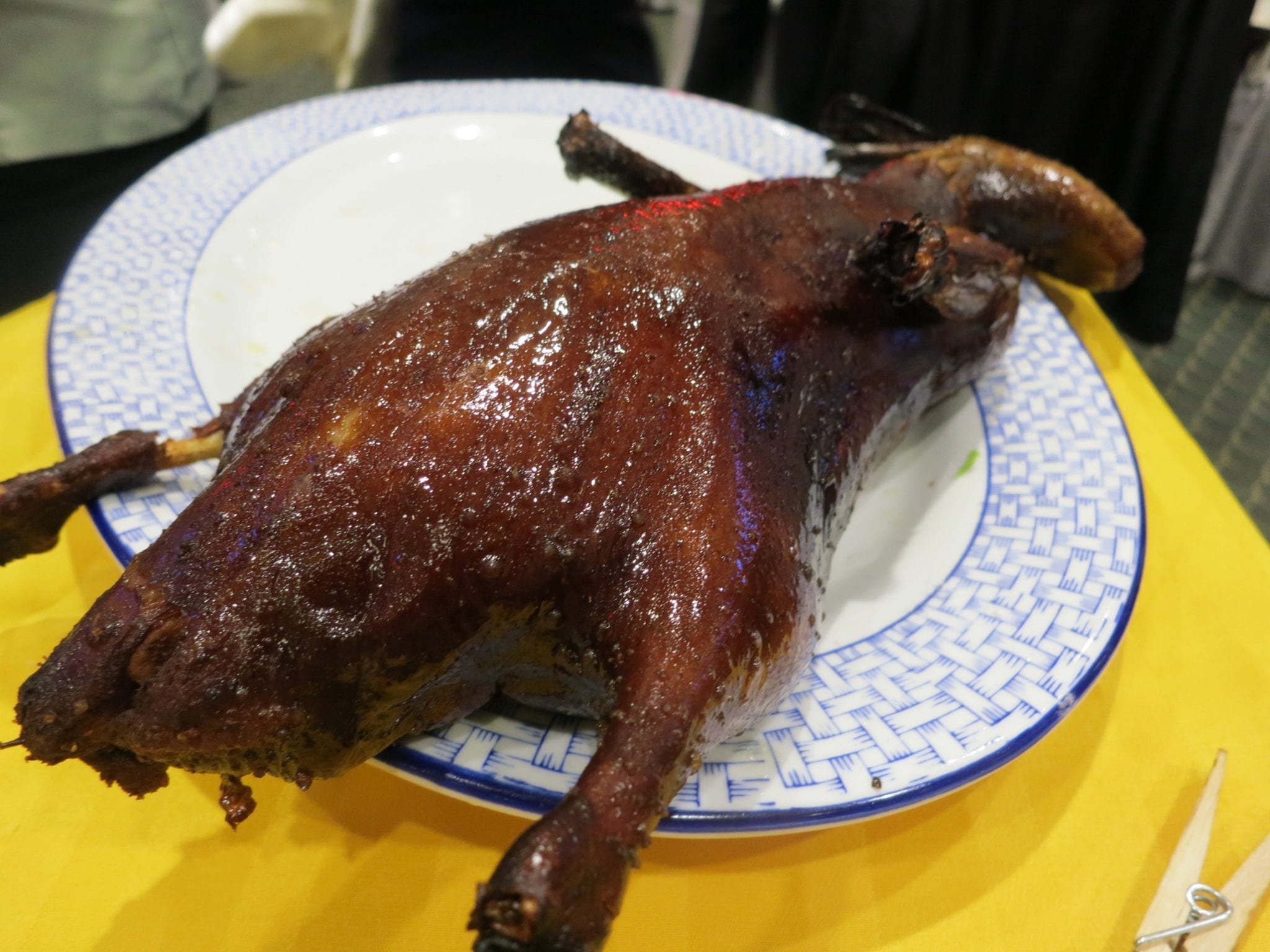
    A big name in the domestic snack-food market, Zhou Hei Ya hopes to use the funds to expand internationally. Started in 2002 as a family-run snack stall in the interior city of Wuhan, Hubei province, the company’s products are now sold in 750 retail stores across 40 Chinese cities. In addition to its namesake duck necks, its products also include local delicacies like duck feet, braised peanuts and duck tongue.

    Braised snacks have a long history in China, where they are commonly sold at roadside stalls. But they are increasingly being marketed by major snack brands. Meat, tofu and other ingredients are simmered for hours in a rich savory broth, and many regions have their own special seasoning blends.

  • China approves 16 duty free arrivals shops

    China approves 16 duty free arrivals shops

    China’s Ministry of Finance has approved applications to open 16 duty free arrival shops in 10 international airports and at six land border crossing points, introducing limited competition to the nation’s growing duty free market for the first time.

    Four state-backed enterprises with existing duty free retail operations have qualified to bid for the 16 arrival shop licenses that are due to be awarded during the next six months.

    The four companies are: China Duty Free Group (CDFG), China National Service Corporation For Chinese Personnel Working Abroad (CNSC), Shenzhen Duty Free and Zhuhai Duty Free.

    “There is departure, arrival and downtown duty free shopping in China, now arrival shopping will be open to limited competition,” commented a source at one of the operating companies selected to bid for the licenses.

    CDFG AND CNSC HEAD TO HEAD…

    “The four companies are qualified to bid for all the duty free arrival shops. Probably Shenzhen Duty Free and Zhuhai Duty Free are not interested in operating nationally, but will bid for local arrival border shops, so the airport competition will be between CDFG and CNSC as they are the only two national operating companies.”

    The 10 airports approved to open duty free arrival shops include some of China’s top ten airports. The list does not include Beijing Capital International Airport, Shanghai Pudong International Airport and Shanghai Hongqiao International Airport, however, as these already offer duty free arrival shopping services under a special government dispensation issued in 2008 to assist in the preparation of tourist facilities for the Beijing 2012 Olympic Games.

    New airports selected to open duty free arrival shops are believed to include: Chengdu Shuangliu International Airport, Chongqing Jiangbei International Airport, Dalian Zhoushiuzi International Airport, Guangzhou Baiyun International Airport and Tianjin Binhai International Airport.

    Ministry of Finance regulations permit the arrival shops to sell perfume and cosmetics, liquor and tobacco, confectionery, fashion items, accessories and watches.

    MOSTLY L&T AND P&C

    “Airport authorities rely on duty free operators to arrange the merchandise categories,” the source remarked. “The airports will want to sell mostly liquor and tobacco, and perfume and cosmetics. Airports care more about the sales volumes as that’s where their revenue comes from.”

    The largest arrival shop application approved is understood to be Chongqing Airport’s plan to open a 500sq m arrival store while the smallest arrival outlet approved is Tianjin Airport’s 50sq m arrival shop.

    Most airports have applied to open one arrival shop, though several with sufficient arrival halls have received permission to open two arrival stores.

    Under Ministry of Finance regulations each of the 16 duty free arrival shop operator licenses awarded will be for 10 years. All the licenses are required to be tendered and awarded within six months of the date of the arrival shop application being approved.

    TENDERS UNDER PREPARATION

    While results of all the tenders will be registered with the Finance Ministry, China’s General Administration of Customs will be the controlling authority regarding arrival shop retail operations. Selected airport owners and land border crossing authorities are just starting to prepare their arrival shop tender specifications.

    The various licenses are expected to be awarded in March and April 2017 as all 16 applications were approved at the beginning of November.

    Constructing the arrival shops is expected to take about six months after each license is awarded. Consequently most of the new arrival shops are likely to begin trading around September and October 2017.

    SHENZHEN AND ZHUHAI FOR LAND BORDER SHOPS?

    Meanwhile, competition is likely to be fierce between CDFG and local operators Shenzhen Duty Free and Zhuhai Duty Free to win the land border arrival shop licenses as all the locations are busy crossing points.

    Five of the six land border arrival shop licenses are for crossings on Guangdong Province’s southern border – four of these are for crossing points on the Shenzhen-Hong Kong border and one on the Zhuhai-Macau border where Shenzhen Duty Free and Zhuhai Duty Free operate departure duty free shops.

    The other land border arrival shop license is for Heihe in northern China on the border with Russia where CDFG operates a large departure duty free shop.

    The opening of border arrival shops in southern Guangdong also could have important implications for retailers in Hong Kong and Macau who will soon be competing with China’s new arrival border shops for mainland tourists’ custom.

  • Tencent revenues up 13pc

    Tencent revenues up 13pc

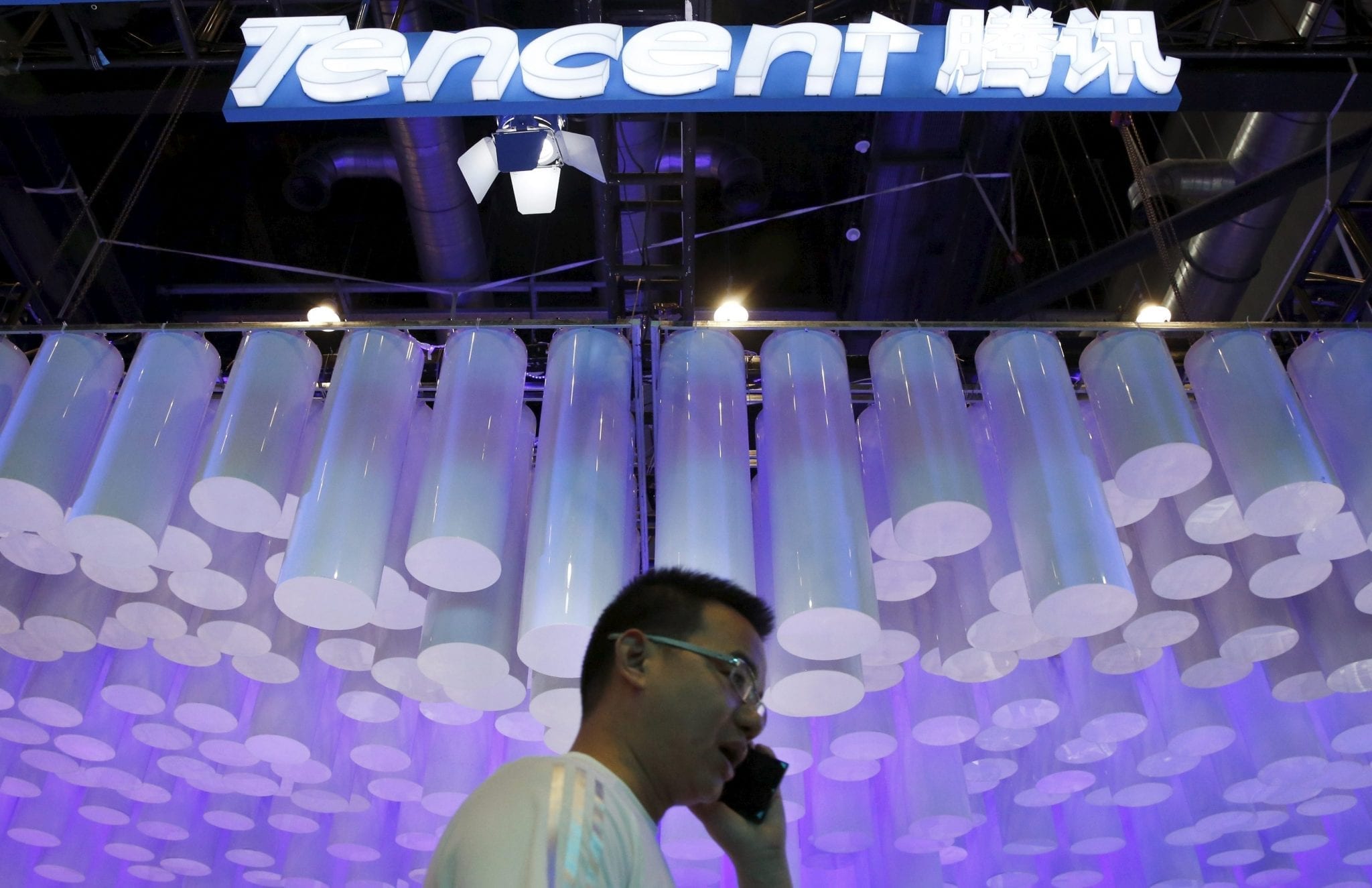
    Third-quarter revenues grew by 13 per cent to RMB40.388 billion (US$5.951 billion) for China’s Tencent Holdings, an investment holding company whose subsidiaries provide media, entertainment, internet and mobile-phone value-added services, and online advertising.

    Tencent revenues from value-added services business increased by 9 per cent to RMB27.975 billion for the quarter, while revenues from online games revenues rose by 6 per cent to RMB18.166 billion, mainly driven by positive seasonality for PC online games and by continued contributions from new smartphone games.

    Social networks revenues went up by 15 per cent to RMB9.809 billion, reflecting growth from digital content subscription services, and to a lesser extent from virtual item sales.

    Revenues from online advertising increased by 14 per cent to RMB7.449 billion, performance-based advertising revenues grew by 18 per cent to RMB4.368 billion, and brand display advertising revenues increased by 9 per cent to RMB3.081 billion, primarily driven by higher contributions from mobile platforms such as Tencent News and the positive impact of the Rio Olympic Games.

    Profit attributable to equity holders of the company eased by 1 per cent to RMB10.646 billion for the quarter.

    Strategy continues

    Tencent Holdings continued its “Connection” strategy during the quarter by strengthening its social platforms and leveraging social traffic. More interactive social and performance advertising formats were added to drive user engagement, while advertiser tools were sharpened to improve performance measurement and deliver deeper data insight.

    For digital content, the company’s CMC (China Music Corporation) and QQ Music management teams were integrated, and there was “aggressive” investment in content for its video platform, resulting in a substantial growth in subscriptions. Partly because of a healthier copyright control environment, more users paid for content on the company’s digital literature platform.

    For payment-related services, the company says it made significant progress in driving merchant adoption. Nearly 700,000 merchants participated in its Weixin Pay “Cash-free Day” promotion in August – an increase of more than seven times year-on-year. A Weixin Checkout feature was introduced for merchants to simplify onboarding procedures and minimise payment integration work.

    Cloud services revenue more than tripled year-on-year as more enterprise accounts were opened and use by key accounts increased, particularly in sectors such as online games, online video and O2O services.

    During the year the company strengthened its mobile security in such areas as virus scanning, phony base-station detection, anti-fraudulent phone-number library, phone memory optimisation and speed boosting.

    More users

    For its key platforms, the company says monthly active users (MAU) for QQ increased by 1 per cent to 647 million, with new features including SMshow, offering animated personal avatars.

    During the Rio Olympics, more than 100 million QQ users participated in a virtual torch relay campaign by building augmented reality into phone-to-phone interactions.

    For Qzone, smart-device MAU also grew by 1 per cent, to 584 million. For WeChat and Weixin together, MAU reached 846 million, representing year-on-year growth of 30 per cent.

    Revenue growth was strong for the company’s social networks business through more game-related virtual items being generated, plus digital content sales.

    There was an 87 per cent leap in revenue from smartphone games, to about RMB9.9 billion. This was mainly driven by portfolio expansion and strong performance by major titles. At the end of September, Honour of Kings surpassed  a record 40 million daily active users.

    Advertising saw robust expansion, with Weixin and the mobile news app being the key contributors to year-on-year growth. Initiatives featuring the Rio Olympics attracted about 700 million unique visitors across the news and video platforms.

  • CapitaLand Mall Asia Showtime in Cannes

    CapitaLand Mall Asia Showtime in Cannes

    Targeting global retailers who are looking to Asia to chart growth, CapitaLand Mall Asia has its biggest presence ever at international retail event Mapic in Cannes, France.

    It is the fifth consecutive year CapitaLand has exhibited at Mapic, one of the world’s largest events matching developers with retailers. It runs over three days this week.

    Crowds at CapitaLand's booth at MAPIC

    CapitaLand is preparing to open eight malls in three Asian countries next year with a combined retail gross floor area (GFA) of nearly 1 million sqm, the group’s largest-ever retail offering in a single year.

    Of the eight malls, six are retail components of integrated developments in China and the others are stand-alone malls in India and Malaysia. They are Raffles City Changning, CapitaLand’s second Raffles City project in Shanghai; LuOne, also in Shanghai; Raffles City Shenzhen; Raffles City Hangzhou; Suzhou Center Mall (pictured); CapitaMall Westgate in Wuhan; Melawati Mall in Kuala Lumpur; and Forum Mall in Mysore.

    Raffles City Changning

    Raffles City Changning


    Ready catchments

    CapitaLand Mall Asia CEO Jason Leow says the opening of the malls underscores the group’s strength in connecting retailers to ready catchments of shoppers.

    At September 30, 76 per cent of CapitaLand’s assets contributed to recurring income, of which shopping malls and integrated developments form the bulk, says Leow.

    “Our 103 malls in Singapore, China, India, Japan and Malaysia provide brands with access to about 3 billion consumers in these five markets combined.”

    He says Mapic is an excellent platform for CapitaLand to boost its brand visibility and strengthen its retailer network.

    Mr Jason Leow with retailers at MAPIC

    Its presence at the trade show has been enhanced by one of its joint ventures being nominated for the Mapic Awards. Listed for Best Futura Shopping Centre Award, Jewel Changi Airport was developed by Jewel Changi Airport Trustee – a JV between Changi Airport Group and CapitaLand Mall Asia – as a mixed-use complex featuring lifestyle offerings including a five-storey indoor garden, play attractions, shopping and dining options, a hotel, and airport services.

    It is scheduled to open next year. The Futura award recognises retail developments with outstanding architectural qualities and strong, original concepts.

    Jewel Changi Airport is the only Singapore entry among 50 projects shortlisted across 12 categories at the Mapic Awards, with the results to be announced at a gala dinner.

    CapitaLand Mall Asia CapitaLand Mall Asia, a wholly owned subsidiary of real-estate company CapitaLand, is one of the largest shopping mall developers, owners and managers in Asia by total property value of assets and geographic reach.

  • China’s personal shoppers are cashing in

    China’s personal shoppers are cashing in

    Julie Li is laden with Harrods carrier bags full of cosmetics, but they are not hers; the 30-year-old finance graduate from Beijing is a fulltime freelance retail consultant, something known in China as a daigou.

    “I worked as a daigou alongside my day job for about three years, but six months ago, I decided to quit my job to fully concentrate on the business because the profit margin is lucrative and the hours are more flexible,” said Li, who asked to be known by a pseudonym.

    Dressed in a fashionable white Reiss dress and holding a light color Chanel leather handbag, Li is glued to her smartphone. She is using the messaging app Wechat to communicate with clients in China who are willing to pay a premium for authentic luxury goods that are usually relatively cheaper than they are in China.

    Having developed three major wholesale clients, each with around 300 customers, Li buys 10,000 pounds’ worth of top-end lipsticks on behalf of clients every day.

    “The weak pound after Brexit is also giving a boost to my business and sales have doubled in recent months,” Li said.

    Charging 5 percent of the retail price and handling large quantities on a daily basis, she is able to pocket as much as 20,000 pounds in commission during a good month.

    “My clients are usually middle-incomers in China who have a strong appetite for high-quality products,” she said. “I believe the quality standards, the product ranges and the cheaper prices are the main reasons why Chinese consumers look to the West.”

    Li said a high-end daigou has to know about products, prices, colors, range, and availability.

    Experts say the agents have challenges because customers need to be convinced the goods they receive are genuine and that suppliers are reliable.

    “An important issue is the uncertainty faced by consumers who wonder whether products are genuine because, the higher the demand for a product, the more there is a chance it will be a fake or an adulterated product,” said Pervez Ghauri, professor of international business at Birmingham Business School.

    The buyers are mainly from the Chinese mainland and specialize in helping customers in China buy luxury products, including bags and cosmetics, as well as health supplements, such as baby milk formula.

    Business has boomed in recent years, accounting for RMB 34 billion to RMB 50 billion ($5 billion to $7.4 billion) in global sales last year, according to a report from consultants Bain & Company.

    In 2008, the baby milk scandal, in which Chinese milk and infant formula was contaminated with melamine, led to many Chinese parents shopping overseas for milk formula. At the height of the boom in demand for milk formula, retailers in the UK rationed the sale of powdered baby milk to ensure availability for domestic parents.

    Observers note that safety standards are one of the reasons why some Chinese consumers buy Western products.

    Geoffrey Wood, dean of the Essex Business School, said many Chinese consumers believe Western countries have more rigorous production standards, and the will to enforce rules ensuring quality.

    Seizing the opportunity presented by the baby milk scandal, 29-year-old Jimmy Zhen-not his real name-began buying milk powder for his Chinese customers in 2009 while working a fulltime job.

    “In the beginning, I only shopped for family and friends who knew I was abroad and felt the authenticity of the products was assured. Through word of mouth, I developed a large customer base, and built trust with my clients,” he said. After demand rose, he became a fulltime shopper in 2011.

    A restriction brought in by the UK government in 2013 to cap the sales of milk formula at two cans per customer stacked the deck against Zhen’s business, but he managed to find a way out by paying students 50 pence above the retail price for every can they sold him. He currently ships more than 8,000 tins each month.

    Earlier this year, the Chinese authorities tightened regulations around cross-border online shopping. Commentators say the changes, to Chinese customs regulations and ecommerce has dented the daigou’s trade, but Zhen has adjusted by shipping four cans at a time instead of six. It ensures he avoids paying import tax.

    Daigou shoppers admit their industry exists in a grey zone legally and is likely to be short-lived, but Li is cashing in for as long as she is able.

  • Instant noodles sales slumps in China

    Instant noodles sales slumps in China

    Instant noodles, once an easy meal for millions of Chinese workers, is getting less popular. Workers scrapping instant noodles are seen as a symbol of the chaining lifestyle of the working class. The sales of instant noodles fell 12.5 percent last year. The King of noodles in China, Taiwanese Tingyi, known for its brand Master Kong (Kong Shifu), was evicted from the Hang Seng Index on the Stock Exchange of Hong Kong in September. Its profits declined by 60 percent last year. According to Bloomberg, this is a classic example of the economic and demographic transition in China.

    Between 2003 and 2008, the instant noodle market has exploded in China, from $ 35 billion to 59 billion yuan ($ 4.7 billion to EUR 7.9 billion). At the time, Chinese growth exceeded 10% of the average (14.2% in 2007). The industry flourished with the boom of construction, heavy industry, and the low-end factories, which needed cheap labor. The coast provinces attracted millions of migrant workers, who relied on these convenient meals.

    Unfortunately for the noodle industry, China has developed. Today, the 25 cents noodle is less exciting. Because of the policy of one-child, the Chinese population of working age began to decline in 2010. And by 2015, for the first time in 30 years, the population of migrants has declined, after having exceeded 250 million.

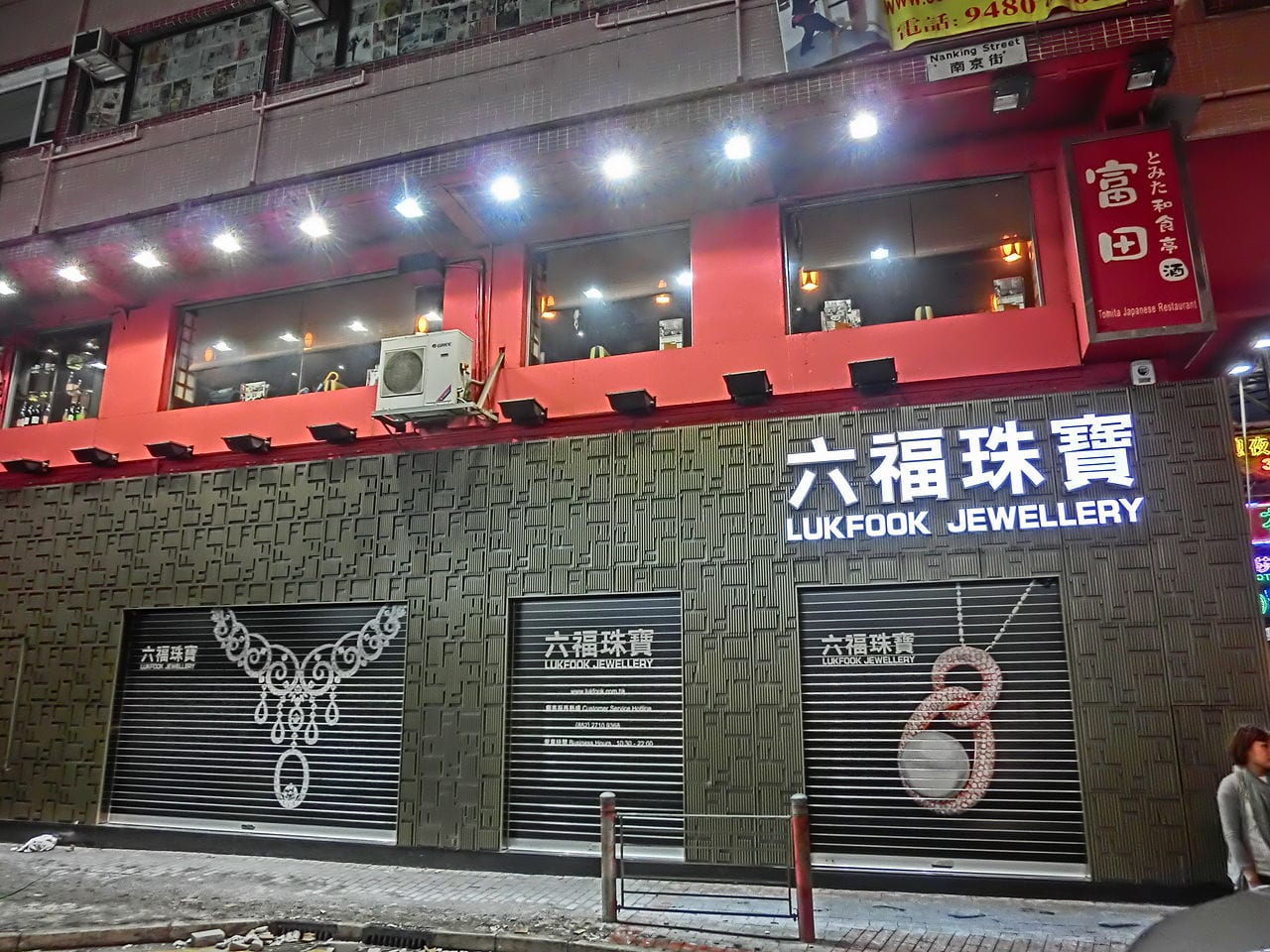
  • Grand Opening of the Second “Lukfook Jewellery” Shop in New York

    Grand Opening of the Second “Lukfook Jewellery” Shop in New York

    Luk Fook Holdings is pleased to announce that the Group opens its new retail shop in New York City. Located on first floor, New World Mall in Flushing, this new shop is the Group’s second retail shop in New York City after opening its first shop in Manhattan. To mark this occasion, the Group hosted a grand ribbon-cutting ceremony on 29 October. Officiating guests including Ms. Toby Ann Stavisky, the New York State Senator, Ms. Grace Meng, U.S. Congresswoman and Ms. Pauline Yeung, co-founder of the Group and winner of Miss Hong Kong Pageant, witnessed this significant moment together with many other guests.

    Mr. Wong Wai Sheung, Chairman and Chief Executive of the Group said, “Adhering to our corporate vision of “Brand of Hong Kong, Sparkling the World”, we have been actively expanding our retail network globally. Currently, the Group has over 1,460 shops in eight countries and regions. With the opening of the second shop in New York, the Group anticipates to further penetrate into the Chinese communities in the overseas market. We will continue to pursue high quality and innovation to enhance our brand competitiveness, and endeavour to provide quality jewellery products and professional services to customers all over the world, in order to build Lukfook as a premier jewellery brand for customers.”

    The Group has tapped into the North American market since 2003 and opened shops in Canada and the United States, laying the foundation for further overseas expansion. The new shop is located in New World Mall, which is one of the largest indoor Asian malls in the northeastern region of the United States. The mall features over 100 shops, offering jewellery, clothing, cosmetics, electronics, world cuisine and many more. With convenient location and easy accessibility, New World Mall is a popular shopping and entertainment hotspot for the Chinese in Flushing and Queens.

    Address: Space Nos. 112 – 116, First Floor, New World Mall, 136-20 Roosevelt Avenue, Flushing, New York, NY 11354, USA