Tag: China

  • China Mobile deploys wideband Massive MIMO

    China Mobile deploys wideband Massive MIMO

    China Mobile Shanghai and Huawei have jointly deployed the world’s first wideband Massive MIMO site to help improve 4G network spectral efficiency.

    China Mobile has been focusing on the design of wideband Massive MIMO as part of its research on 5G. The technology been oriented specifically towards large-scale commercial use by the operator.

    Wideband Massive MIMO allows a single module to support the activation of three 2.6-GHz carriers, potentially allowing for a three-fold increase in the spectral efficiency of cells.

    The live deployment in Shanghai has achieved peak cell throughput rates of 72Mpbs using an uplink 8-stream capability configuration, as well as 630Mbps downlink.

    Huawei said the technology supports a smooth transition to CloudRAN architecture, while its in-house developed chips and optimization techniques helps provide processing capabilities four times higher than that of the industry standard.

    The technology is particularly suited to meeting specialized coverage requirements such as high-rise buildings.

  • Marks & Spencer plans to close all stores in Chinese mainland after profits plunged

    Marks & Spencer plans to close all stores in Chinese mainland after profits plunged

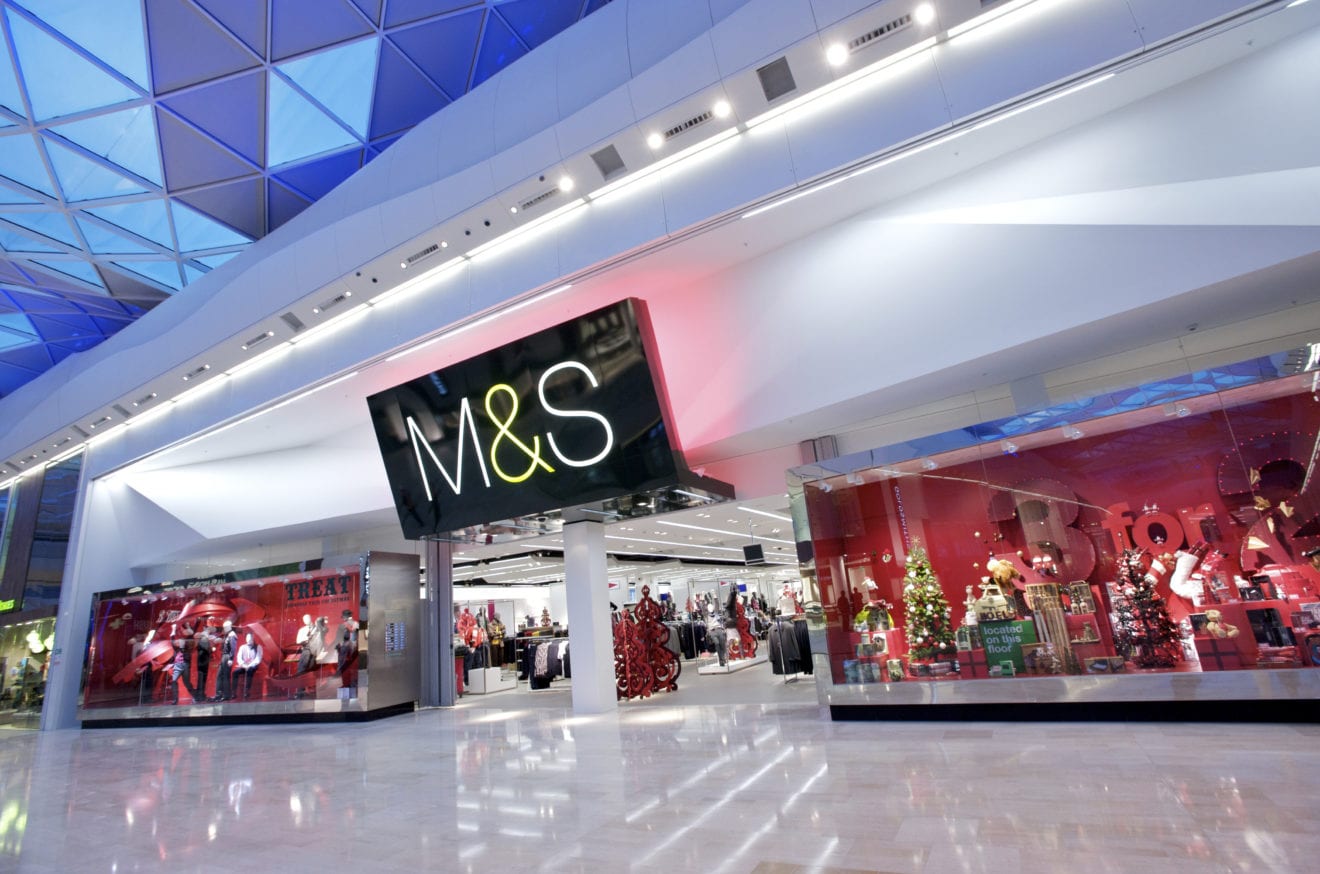
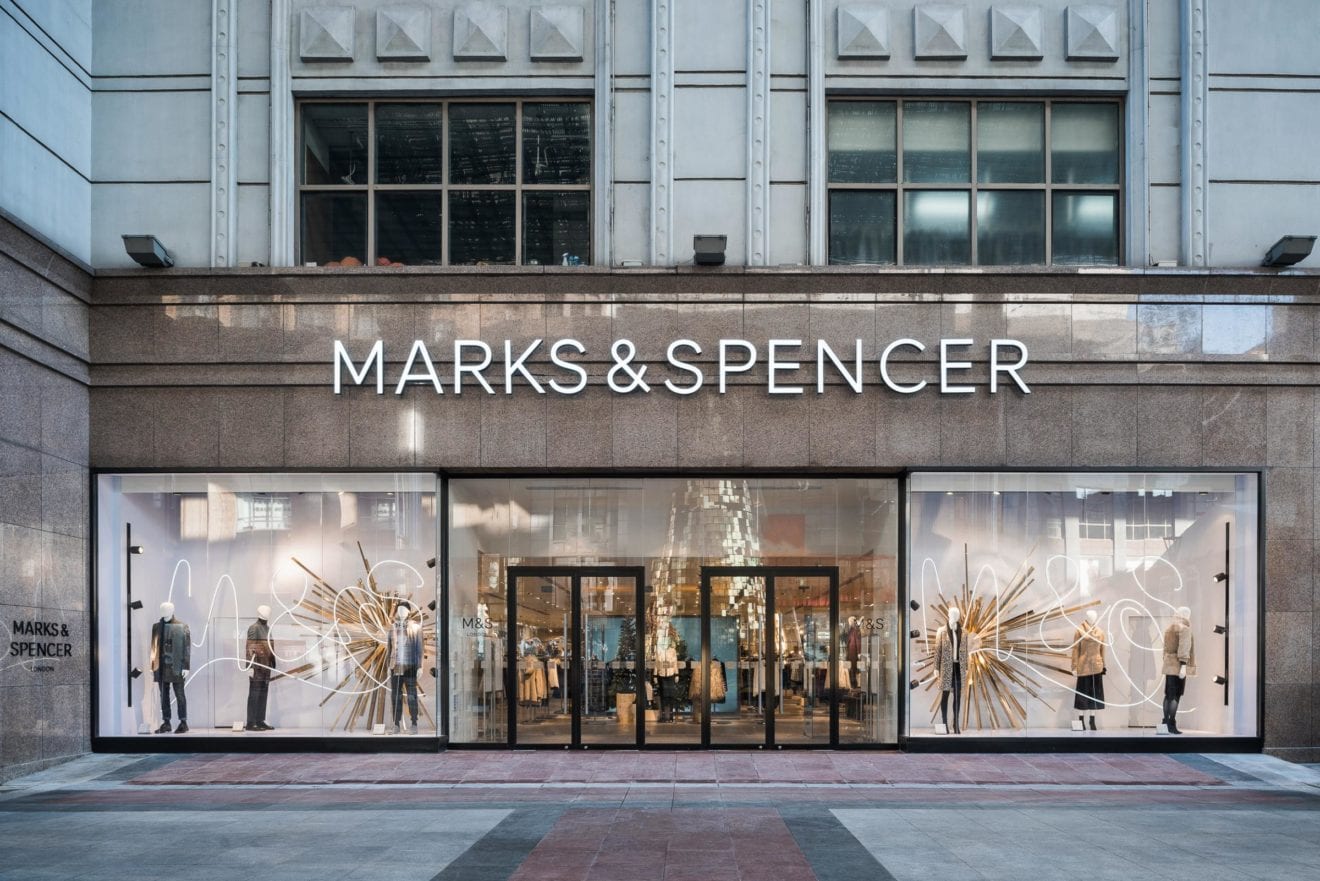
    UK retailer Marks & Spencer announced on Wednesday that it will pull out of the Chinese mainland market and close all the 10 stores amid shrinking profits, according to a statement the company sent to the Global Times on Wednesday.

    “Our review has shown that our stores in Chinese mainland continue to make losses and as result we can no longer trade with a store presence in the Chinese market,” Adam Colton, managing director of Greater China at Marks & Spencer, said in the statement.

    The company didn’t disclose sales revenues in the Chinese mainland market.

    An employee at an Marks & Spencer store in Beijing told the Global Times on Wednesday that he feels sorry about the closures because business in Beijing was quite good and there were a lot of loyal customers. He did not know when his last day of work would be. The 1,500-square Beijing flagship store at the Place shopping mall was opened in December 2015.

    Intensified competition and relatively high prices were the main reasons behind Marks & Spencer’s retreat from Chinese mainland, experts noted.

    “In Chinese mainland, the traditional UK brand did not have much appeal for Chinese consumers. For example, the prices in its food shops were a bit more expensive than even imported food stores,” Wang Xinmiao, a Beijing-based retail industry analyst, told the Global Times on Wednesday.

    In addition, the company did not have much time to cultivate brand awareness and a loyal customer base because the Chinese apparel market had already been saturated with “fast fashion” international brands, such as Zara, H&M, GAP, and Uniqlo, which marched into the Chinese mainland market much earlier than Marks & Spencer, Wang said.

    In contrast, the UK retailer has built a profitable wholly-owned business in Hong Kong in large part because it entered the market as early as 1988, the statement noted. Marks & Spencer is planning to expand its business in Hong Kong by opening more food stores in the near future.

    A customer said he came on purpose to the Beijing shop here after he has known the closure news. He has lived in UK for years and he trusts M&S, and he will shop in Hong Kong after the end of business here.

    The UK retailer has been losing ground in other international markets. In addition to its closures on the Chinese mainland, the company outlined plans to shutter 53 stores in 10 international markets, including seven in France, while pulling out of Belgium, Estonia, Hungary and Lithuania.

    In the first half of 2016, the company’s pre-tax profit plummeted 88 percent to 25.1 million pounds ($ 31.39million), down from 216 million pounds in the same period a year ago, as reported by BBC on Wednesday.

  • Alibaba Singles’ Day to extend beyond mainland China

    Alibaba Singles’ Day to extend beyond mainland China

    Alibaba’s Singles’ Day – now dubbed 11.11.Global Shopping Festival – is set to expand into international territories for the first time this year.

    The online retail giant founded by Jack Ma plans to use the celebrations around the event and its catalogue of data to target shoppers in Hong Kong and Taiwan.

    Next year, Alibaba plans to target Southeast Asia too.

    The sales-shopping frenzy, which is poised to lure millions of Chinese buyers and has been extended to 24 days, commences on Friday morning.

    American singer Katy Perry and boy band One Direction have been lined up to perform at the countdown gala in Shenzhen, near Hong Kong, on Thursday.

    The biggest Singles’ Day yet

    Chinese websites are preparing to smash Singles’ Day records

    Singles’ Day began seven years ago and involved only 27 merchants, but since then the event has ballooned.

    Last year Singles’ Day raked in $14.3bn in sales, more than the combined online sales over the five-day period covering Thanksgiving, Black Friday and Cyber Monday in the US – $11.1bn.

    Chinese websites are preparing to smash singles day records

    According to global delivery firm Fastline International, Singles’ Day sales will soar by 50% this year – rocketing to $21.45bn and eclipsing Black Friday.

    “Such is the growth in China’s home shopping market,” said Fastline head of consumer research David Jinks.

    “Long gone are the days when Singles’ Day was only celebrated by single male students at Nanjing University. Today it is the biggest sales day on the planet.”

    While the event was not originally invented by Alibaba, the retailer has made it a fixture of the retail calendar.

    Based on an anti-Valentine’s concept, Singles’ Day launches on November 11 (11.11) because of its four single digits. It was historically a shopping day for singles, but is popular now with bachelors and couples alike.

    Singles’ Day and other similar events such as 8.8 have driven the growth of Alibaba, which reported a 55% sales increase in its third-quarter results last month.

  • China October vehicle sales rise 20% at 2.2 million

    China October vehicle sales rise 20% at 2.2 million

    Passenger vehicle sales in China to retail customers rose 20 percent in October from a year earlier, the China Passenger Car Association (CPCA) said on Tuesday.

    Auto retail sales totalled 2.2 million vehicles in October, CPCA said in a statement on its website. For January-October, passenger car sales rose 15.2 percent versus the same period in 2015, it said.

    The China Association of Automobile Manufacturers, whose statistics are generally viewed as the benchmark for the industry, is due to report wholesale data for October on Thursday.

    The CPCA predicted 13 percent growth in passenger car sales for 2016, state media reported earlier on Tuesday.

  • Nissan expects sales growth to slow in China, U.S. in near term

    Nissan expects sales growth to slow in China, U.S. in near term

    Nissan Motor Co Ltd on Monday said its sales growth in the world’s two biggest auto markets is likely slow in the near term as consumer tax breaks end in China while U.S. tastes move away from the automaker’s main area of focus.

    Japan’s second-biggest automaker by sales, which earlier blamed a strong yen for a 19 percent drop in second-quarter profit, made the comments after growth in Chinese and North American retail vehicle sales outperformed many markets in April-September.

    Sales in China in the six-month period grew 3.8 percent from a year prior, and Nissan’s head of operations in the country, Jun Seki, expects double-digit sales growth for calendar 2016, aided by economic incentives aimed at stimulating demand.

    “But as the government’s small-car subsidies wind down at the end of the year, we’re expecting to see a slowdown in sales early next year, and see single digit growth for the year,” Seki told reporters at Nissan’s Yokohama headquarters via telephone.

    Nissan also said recent growth in China’s auto market was due mainly to rising demand for local brands. In response, the automaker said it would further promote its China-only Venucia brand.

    The automaker sells almost a quarter of its output in China, and around 40 percent in North America.

    Its North American retail vehicle sales rose 5.4 percent in April-September. But it said demand growth was peaking and that any additional growth had been limited by its dependence on sales of sedans, at a time when low fuel prices had boosted demand for petrol-guzzling sport utility vehicles.

    Aggressive buying incentives for its sedans had also crimped profit margins, Nissan said.

    The automaker on Monday nevertheless kept its operating profit forecast at 710.0 billion yen ($6.80 billion) for the year through March, down 10.5 percent from a year prior, and said it continues to expect sales of 5.6 million vehicles.

    It also said it still expects the domestic currency to average 105 yen to the U.S. dollar and 120 yen to the euro.

    Earlier, Nissan said yen strength was responsible for July-September operating profit falling 19 percent to 163.9 billion yen – a result that still beat the 154.5 billion yen average of 10 estimates from analysts surveyed by Thomson Reuters I/B/E/S/. For April-September, profit fell 14 percent.

    Nissan raised its exposure to the strong yen at the start of the business year in April as it has been exporting its Rogue SUV crossover model from Japan to North America to meet demand.

  • Tencent IBG helps local businesses attract tourists from China

    Tencent IBG helps local businesses attract tourists from China

    International Business Group (IBG) of Tencent, a leading provider of Internet value added services in China, announced today the roll-out of one-stop service advertising solutions. The ad solutions include options to build brand awareness and develop product familiarity, prior to the Chinese tourist’s visit to Singapore as well as in-market advertisements to target Chinese tourists while they are in the country.

    Singapore saw 1.47 million visitors from the mainland in the first half of this year, up 55.2% from the same period last year, according to the Singapore Tourism Board. Chinese tourists accounted for nearly 18% of the visitors to Singapore during this period. Aware of the untapped spending potential of these tourists, the Singapore Retailers Association recently launched initiatives such as the Singapore Golden Week, timed to coincide with the national holidays in China.

    “Singapore is well positioned to benefit from the surge in the number of Chinese tourists,” said Benny Ho, Senior Director of Business Development, Tencent. “Reaching out to Chinese tourists on platforms they are familiar with is the best approach for local businesses.”

    Brands need to engage early in the Chinese customer journey in order to influence purchase decisions before they travel. Tencent’s one-stop service advertising platforms will help Singapore businesses raise awareness and increase engagement opportunities with the surging numbers of Chinese tourists, even before they depart China. Tencent’s suite of advertising solutions provides previously unavailable opportunities for Singapore advertisers, enabling brands to engage Chinese customers globally and to offer an easy all-in-one advertising hub and solution leveraging both domestic and international traffic.

    Mobile advertising for mobile tourists

    According to the eMarketer’s survey “WeChat in China” from June 2016, the top two leading social media sites/chatting apps among social media users in China are WeChat and Qzone – both Tencent products. With WeChat’s position as a leading social media platform in China, the roll-out of one-stop service advertising solutions would empower local businesses to unlock the untapped spending potential and better reach Chinese tourists. Additionally, Tencent’s International Advertising Solutions can be customised to fit specific brand objectives.

    Tencent’s platforms continue to grow their influence with Chinese consumers. There are more than 806 million active users for both WeChat and Weixin today, and GlobalWebIndex (GWI), operator of the world’s largest study on digital consumer behaviours and trends, revealed that between the first half of 2015 and the first half of 2016, WeChat nearly doubled its usage rates in APAC outside of China. The leading mobile messaging app in China, Weixin connects users through its communication features with services and hardware through its open platform, including advertising, official accounts, and online to offline (O2O) payment. Mobile QQ, one of the most popular communication apps in China, and Mobile Qzone, a leading social networking site in China, and QQ Music, one of the most popular digital music platforms in China, will also provide the Chinese social platform gateway for advertisers in Singapore.

    To address communications and business objectives, there will be WeChat representatives to assist merchants in Singapore. Tencent’s IBG will provide a one-stop service advertising solutions including media planning, creative designs, advanced user targeting, ad placement execution, bid optimisation, and reporting.

    Tencent creates a robust ecosystem in China through these customised advertising solutions, unleashing the potential to reach high-spending Chinese consumers. Key advertising products include “WeChat Official Account Banner Ad”, which redirects users to an external URL through a single click, “WeChat Moments Ad”, unique native social feed style display ads for a non-disruptive experience and “Mobile Qzone Friend Newsfeed Ad” which manifests as either an article or a video and is shown in a similar format as friend posts. Thus far, Tencent has launched its International Advertising Solutions across, Hong Kong, Indonesia, Japan, Korea, Malaysia, and Taiwan in Asia, excluding China.

    IBG will not have an exclusive partner in Singapore and will welcome any local partners and resellers to support marketers and advertisers.

  • Boom quarter for Alibaba Group

    Boom quarter for Alibaba Group

    While China’s economy goes through a sluggish patch, internet shopping mall giant Alibaba Group has announced a sparkling quarter in which profit beat expectations, its fledgling cloud computing business more than doubled sales, and its entertainment income quadrupled.

    “Our results reflect our increasing ability to monetise our 450 million mobile users through new and innovative social commerce experiences,” says CEO Daniel Zhang.

    “Beyond the strong performance of our core commerce business, we are pleased with the continued rapid growth of our cloud computing business. We also see huge potential in our newly integrated digital media and entertainment unit. By combining engaging online experiences with highly relevant content, we delivered impressive financial and operational results for the quarter. ”

    CFO Maggie Wu says the group had robust revenue growth of 55 per for the quarter ended September 30.

    “Our highly profitable and cashflow-generative core commerce business enables us to invest in our future growth areas of cloud computing, digital media, and entertainment and innovation initiatives. We expect each of these businesses to drive long-term value for both our customers and shareholders.”

    At RMB34.292 billion (US$5.142 billion), revenue increased 55 per cent year-over-year, the star sector being digital media and entertainment, which ballooned 302 per cent to RMB3.608 billion. There was also an impressive 130 per cent growth in revenue from cloud computing to RMB1.493 billion, while revenue from innovation and other sources grew 78 per cent to  RMB698 million, and revenue from core commerce rose 41 per cent to RMB28.493 billion.

    Up 23 million

    Mobile monthly active users (MAUs) on its China retail marketplaces reached 450 million in September, an increase of 23 million over June, while annual active buyers reached 439 million, an increase of 5 million from the 12-month period ended in June.

    Customers for its cloud computing business grew to 651,000 from 577,000 in the previous quarter. The operating loss from cloud computing was RMB398 million for the quarter, and adjusted EBITA loss narrowed from RMB158 million in the previous quarter to RMB57 million.

    Alibaba says its Taobao app continues to be the leading social-commerce platform, serving creative content, social-engagement opportunities and personalised shopping recommendations. Livestreamed demonstrations for fashion apparel, cosmetics, maternity/baby products, sports and activewear generated millions of daily views.

    The company says it also achieved high social engagement on the mobile Taobao platform, citing more than 6 million app users sharing their shopping experience with friends each day.

    “We continue to see strength in the consumer electronics category, with robust growth in smartphones and large appliances,” says Alibaba. “In September, Apple recognised our branding reach and distribution capability by appointing Tmall the third-party online platform for the simultaneous launch of the iPhone 7 with Apple in China.”

    In the large appliance category, Alibaba is continuing to work with Haier’s logistics subsidiary RRS, with orders from its marketplaces handled by RRS growing by more than 82 per cent for the quarter.

    Triple digits

    Alibaba has also continued to make strong progress in the FMCG category, with personal care, food, and mother and baby being among the top growth categories. Its Tmall Supermarket has seen its volumes grow by triple digits year-on-year.

    “Multinational FMCG brands are working with us as the partner of choice, not only to drive their transaction volume, but also in the areas of brand building, channel expansion and product launches to grow their presence in China.”

    During the year Alibaba launched innovations around livestreaming, AR and VR to drive consumer engagement. Examples include a livestreamed “See now, buy now” fashion show watched by 7 million viewers on Taobao, Tmall and the Tudou and Youku apps. Alibaba also integrated the omni-channel shopping experience at more than 60,000 offline storefronts, including Gap, Uniqlo and Intime department store.

    A pilot program has been introduced to help global merchants sell beyond China. Hong Kong and Taiwan are the first markets outside the mainland.

    Alibaba Cloud hosts and provides security products and services for more than 35 per cent of China’s websites, says the company.

  • Kobe Bryant joins Katy Perry in 11.11 launch

    Kobe Bryant joins Katy Perry in 11.11 launch

    Legendary Los Angeles Laker Kobe Bryant will join Katy Perry as the headline celebrities in Alibaba’s 11.11 Countdown Gala Celebration on November 10.

    US pop-rock band OneRepublic has also been confirmed, likely to perform its hit song Counting Stars

    11-11

    Alibaba had earlier named Katy Perry as a “global ambassador” for the gala, which is being held in Shenzhen in the hours leading up to the eCommerce giant’s 11.11 Global Shopping Festival’s midnight kickoff. The American singer will perform a number of her chart-topping singles, including her most recent, Rise.

    Mixing sports stars, singers and actors is a variety show formula that has been long dormant in the West as broadcast entertainment, Alibaba’s eclectic event – a way to warm up online shoppers for the world’s largest online sale – drew 100 million Chinese viewers in its debut last year.

    Alibaba Group chief marketing officer Chris Tung called the gala “a global carnival, a world-class performance that involves the audience throughout the event with many touch points and is like nothing else you have experienced”.

    It’s those touch points that Alibaba is focusing on in order to make the four-hour broadcast something viewers can participate in instead of just watch. One interactive feature planned for the show will give the audience a chance to win prizes by shaking their phones with the Mobile Taobao and Tmall apps open during key moments. Alibaba will also offer a sort of “choose your own adventure” feature where viewers can vote to decide how some segments of the gala play out.

    While the Hangzhou, China-based company did not release the full roster of celebrities expected to appear on the live broadcast, choosing instead to tease out names over the coming week, Alibaba did say that Beth Behrs, star of US sitcom 2 Broke Girls, which is wildly popular in China, and German footballer Thomas Muller are on the list.

    Alibaba has recruited Hollywood talent to produce the gala. David Hill, who is known for his work on the Oscars, NFL Super Bowls and reality show American Idol, was brought on board earlier this month to oversee the event. “Combining Alibaba’s technology with my experience at other global events we are going to develop a spectacle like no other,” Hill said in the statement.

    In addition, four one-minute time slots will be awarded to those merchants, consumers and charities who submit the best advertisements or promotions to Alibaba. Those winning videos will be aired during the gala.

  • Singulato is China’s latest e-car newcomer to rev up with big fundraising

    Singulato is China’s latest e-car newcomer to rev up with big fundraising

    Little-known Chinese electric car start-up Singulato Motors is expected to say this week it raised around $600 million in a second fundraising – the latest such move illustrating China’s headlong ‘gold rush’ into all-electric battery cars.

    The apparent ease with which Chinese electric car start-ups can raise new funds is largely down to government subsidies and favorable policies. Subsidies can total around 110,000 yuan ($16,285) a car, or around a third of the sticker price of a model such as the BYD e6.

    While China today is reminiscent of Detroit in the early 20th century, with a host of new car makers arriving on the scene, Beijing is expected to phase out subsidies from 2020 – potentially crushing the start-ups’ survival rate.

    China has made a priority of making smart, connected electric cars. Entry barriers are relatively low, and Beijing sees the sector as a way for its auto industry to challenge, and even overtake, established global automakers, several of which have instead focused more on cleaner hydrogen fuel cell propulsion technology.

    Shen Haiyin, Beijing-based Singulato’s 42-year-old co-founder and CEO, says his company has raised about $700 million in total, much of it from an investment fund run by the municipal government of Tongling City in Anhui province as part of a “strategic partnership”.

    Tongling city mayor Ni Duping said the decision to invest in Singulato is part of a strategy to promote the new energy automotive industry. “We believe this effort will definitely allow Tongling to accelerate the city’s industry transformation,” he said in a statement.

    The company plans to invest in technology and build what Shen says will be a state-of-the-art electric vehicle (EV) production plant in Tongling capable of making 200,000 cars a year, by around 2020.

    The two-year-old start-up, with 140 employees, plans to roll out its first product, a crossover sport utility vehicle, by late next year or early 2018. Production will be outsourced, at least initially, to an existing automaker with excess manufacturing capacity, Shen said.

    “We’re targeting our EVs at young city dwellers in Beijing, Shanghai, Shenzhen and other large cities where buying a gasoline car is becoming more difficult because of purchase restrictions imposed by the government,” Shen told Reuters in his modest office.

    “If they buy an EV, they could buy a car immediately as EVs are exempt from purchase restrictions. Tech-savvy young people are naturally going to gravitate toward EVs.”

    Battling road congestion and air pollution, more Chinese cities are restricting new vehicle purchases – holding auctions and lotteries to sell a limited number of license plates. In Beijing, drivers of gasoline cars are barred from driving on one weekday per week. All-electric battery cars and heavily electrified plug-in hybrids are usually exempt.

    EASY MONEY

    Singulato’s fundraising follows an around $1 billion financing deal for another Chinese EV start-up WM Motor, again largely involving a municipal government.

    Other well-funded Chinese electric car start-ups include Future Mobility, LeEco’s LeSee, Next EV, Ch-Auto’s Qiantu Motor, and Changjiang Auto, as well as U.S.-based Chinese-funded start-ups Atieva and Faraday Future.

    LeSee, which aims to launch an all-electric luxury car, for example, raised more than $1 billion in a latest financing, mostly from Chinese investors including state-owned enterprises and a local municipality.

    Some 289,000 ‘new energy’ vehicles, including all-electric battery and plug-in electric vehicles, were sold in China in January-September. Full-year sales are likely to fall well short of a 700,000 target, according to a top official at the China Association of Automobile Manufacturers.

    MOVING IN-HOUSE

    Singulato’s Shen, who made his money as a tech entrepreneur in Tokyo, plans to aim straight for the electric car mass market rather than follow Tesla Motors’ model of first making a high-profile electric battery super sports car to stir up buzz around a new brand.

    Shen declined to elaborate on his pricing strategy beyond saying his cars would compete on price with Tesla’s $35,000 Model 3.

    For its first model, Singulato has developed in-house the electric propulsion and smart, connected systems, while doors, seats, panels and other basic parts were outsourced to Beijing-based IAT Automobile Technology Co.

    For future models, Singulato plans to design, develop and manufacture more on its own, and has been scouting global automakers for talent.

    “Compared to gasoline cars, EVs don’t have complex mechanical systems like the engine and transmission. They’re much easier to engineer and manufacture,” Shen said.

    “We think an even bigger differentiator will be how connected and intelligent the car is going to be, and we’re focusing on that more than the car itself.”

  • Potential bidders for Takata may balk at GM bankruptcy precedent

    Potential bidders for Takata may balk at GM bankruptcy precedent

    As auto supplier Takata Corp (7312.T) prepares for a possible U.S. bankruptcy filing, potential bidders are poring over a recent U.S. court ruling that could expose a buyer to liability for the company’s defective air bags, sources have told Reuters.

    Takata faces potentially billions of dollars in costs from the world’s largest automotive recall, stemming from millions of its air bags that were equipped with malfunctioning inflators.

    The Japanese company has said it is seeking a financial backer. But interested bidders, if the parts maker goes up for sale, want Takata to put its U.S. business into bankruptcy first, the sources said.

    Generally, U.S. bankruptcy law allows a bidder to buy assets free and clear of lawsuits and other liabilities, and the selling company uses the money to repay its creditors.

    General Motors used the strategy when it filed for Chapter 11 bankruptcy in 2009. The automaker quickly sold its best assets to a so-called “new GM,” scrubbed free of billions of dollars of debt, which enabled the company to withstand an economic crisis.

    In July, the 2nd U.S. Circuit Court of Appeals in Manhattan held that General Motors Co (GM.N), the “new GM,” could be sued over faulty ignition switches made by “old GM.”

    The ruling set what some see as a troubling precedent.

    “What that says to me: buyer beware,” said Henry Jaffe, a bankruptcy lawyer with Pepper Hamilton in Wilmington, Delaware who represents debtors and creditors. Jaffe said the ruling could undercut what bidders are willing to pay for Takata.

    Takata’s air bags use a chemical compound that can explode with excessive force after prolonged exposure to hot conditions and have been linked to at least 16 deaths globally, mainly in the United States. About 100 million Takata air bag inflators have been classified as defective, leading to continuing safety recalls.

    Last month, the company received proposals from five bidders, all of whom have presented plans that require Takata to file for a GM-style bankruptcy protection.

    Takata’s creditors include automakers who want to be reimbursed for millions of dollars spent on recalls. They may also demand that any buyer of Takata’s assets share in some of those costs. The automakers could also try to use the tools of bankruptcy to protect themselves from lawsuits by car owners for the faulty air bags, according to bankruptcy attorneys.

    The U.S. government is also likely to play a role. Takata is operating under a five-year, $200 million consent decree with the U.S. National Highway Traffic Safety Administration.

    Given the uncertainties, bidders could propose using “holdback,” bankruptcy lawyers said. Some sale money would remain in escrow and be used to settle any unanticipated legal claims against the buyer. Over time, unused money would be released to the Takata bankruptcy estate.

    Takata and its creditors would likely resist a holdback, lawyers said.

    In Japan, Takata Chief Financial Officer Yoichiro Nomura told reporters on Friday that the company hoped to reach an agreement with its automaker customers on a restructuring by year end. He said the company preferred to avoid bankruptcy.

    Takata has posted a net loss in three of the past four financial years, but it remains one of the auto industry’s biggest suppliers of air bag systems. The company is also one of the world’s top seatbelt producers, and makes steering wheels, electronic control units and child safety seats.

    ‘GIVE A BUYER HEARTBURN’

    To get a sale approved quickly, a Takata buyer may have to assume some legal obligations, an approach used by “new GM” which took on 15 categories of liabilities.

    “That will give a buyer heartburn,” said Bill Weintraub at Goodwin Procter in New York, who worked with ignition switch plaintiffs on the GM appeals court case.

    GM has said it plans to ask the U.S. Supreme Court to review the July ruling, which it said wrongly punishes it, the buyer, for mistakes made by “old GM,” the seller. The company and business groups have argued that the ruling, if allowed to stand, will depress the value of assets that are sold in bankruptcy.

    Those who are close to GM and Takata are quick to point out the situations of the two companies differ in key ways.

    Takata’s air bags have been subject to headline-grabbing recalls for years. By contrast, GM knew its ignition switches were faulty when it introduced them in 2002 but concealed the problem until 2014, five years after its bankruptcy sale.

    Because of the concealment, the court of appeals reasoned that GM’s customers had been denied the opportunity to object or file a claim over the ignition switch defects as part of GM’s bankruptcy and sale. To remedy the lack of notice, the court said car owners could pursue a class action against the buyer of GM rather than the bankruptcy estate.

    Takata’s notoriety could work to the advantage of bidders, ensuring potential claims have been identified.

    “You have a known problem,” said bankruptcy lawyer Ed Weisfelner, who also represented some ignition switch plaintiffs in the GM appeal case.

    The GM ruling only binds U.S. Bankruptcy Courts in one of 11 U.S. judicial circuits, and Takata may look to other courts.

    In its appeals case, GM cited precedent in the 3rd U.S. Circuit, which it said is more protective of buyers in bankruptcy sales.

    Takata’s main U.S. subsidiary, Michigan-based TK Holdings Inc, is incorporated in Delaware, giving the company access to the state’s prominent bankruptcy court and 3rd U.S. Circuit precedent.

    “Any bankruptcy judge will be really nervous about this one,” said John Pottow, a professor at University of Michigan Law School who specializes in bankruptcy.
  • Unicom trials ADVA’s G.metro technology

    Unicom trials ADVA’s G.metro technology

    China Unicom has completed a field trial of ADVA Optical Networking’s prototype G.metro (WDM-PON) technology in a fronthaul network.

    The operator demonstrated the use of a prototype technology involving using a single bidirectional fiber link between head-end and tail-end equipment during a lab demonstration in Beijing.

    The prototype uses autonomous transponders to help reduce the costs and complexity involved in metro access network applications.

    “Due to booming demand for mobile data, it’s become essential that we find innovative ways to increase capacity. Converged metro-access networks are key to this, but so are reducing complexity and improving operational efficiency,” China Unicom network technology research institute director Guangquan Wang commented.

    “During the trial, the prototype was installed in one of our central offices in Tianjin to replace the transmission link of one of our working LTE stations. The results showed that the new technology integrated seamlessly with our current wireless equipment and had no impact on services whatsoever.”

    G.metro directly distributes DWDM wavelengths to remote radio units, base stations, desktops or end users, enabling up to 40 DWDM wavelength channels with a 100GHz grid. Each channel is able to transmit data at 10Gbps over a 20km fiber distance without optical amplification.

  • Hermes results show luxury rebound

    Hermes results show luxury rebound

    Rebounding luxury goods sales in Mainland China and improvements in Hong Kong have boosted third-quarter Hermes results.

    Analysts are pointing to these and last week’s strong Kering numbers in tipping the worst may now be over for both luxury markets.

    Hermes reported overnight that sales climbed to 1.26 billion euros (US$1.4 billion) in the last quarter, ahead of estimates.  Sales growth was strongest in Asia-Pacific, up 14 per cent and fuelling a global increase of 8.8 per cent excluding currency fluctuations. That’s the fastest growth rate in two years in the region.

    “The driving trend is that the Chinese customer is slowly coming back,” Makiko Zuercher, who manages the Dynapartners Luxury Brands Fund, told Reuters.

    Chinese customers are the most prolific buyers of luxury goods globally, accounting for about one third of demand. Luxury brands say their return to stores has been driven by government policies encouraging domestic consumption.

    “China is growing at a better pace, mainly because the economy is strengthening and because of domestic consumption,” Hermes CEO Axel Dumas told journalists in a conference call. “In our case, I’m not talking about a rebound, because we always had growth.”

    Hermes’ sales of leather goods rose 16 per cent, with the $9000 Constance purse and $5000 Halzan shoulder bag leading the way.

    After reporting growth of 7.7 per cent for the first nine months of the year, Hermes is predicting full-year growth of just under 8 per cent, a target analysts expect it will exceed.

    LVMH and Richemont have also reported improvements in Asian sales in recent weeks.

  • Victoria’s Secret China unit eyes $1bn sales

    Victoria’s Secret China unit eyes $1bn sales

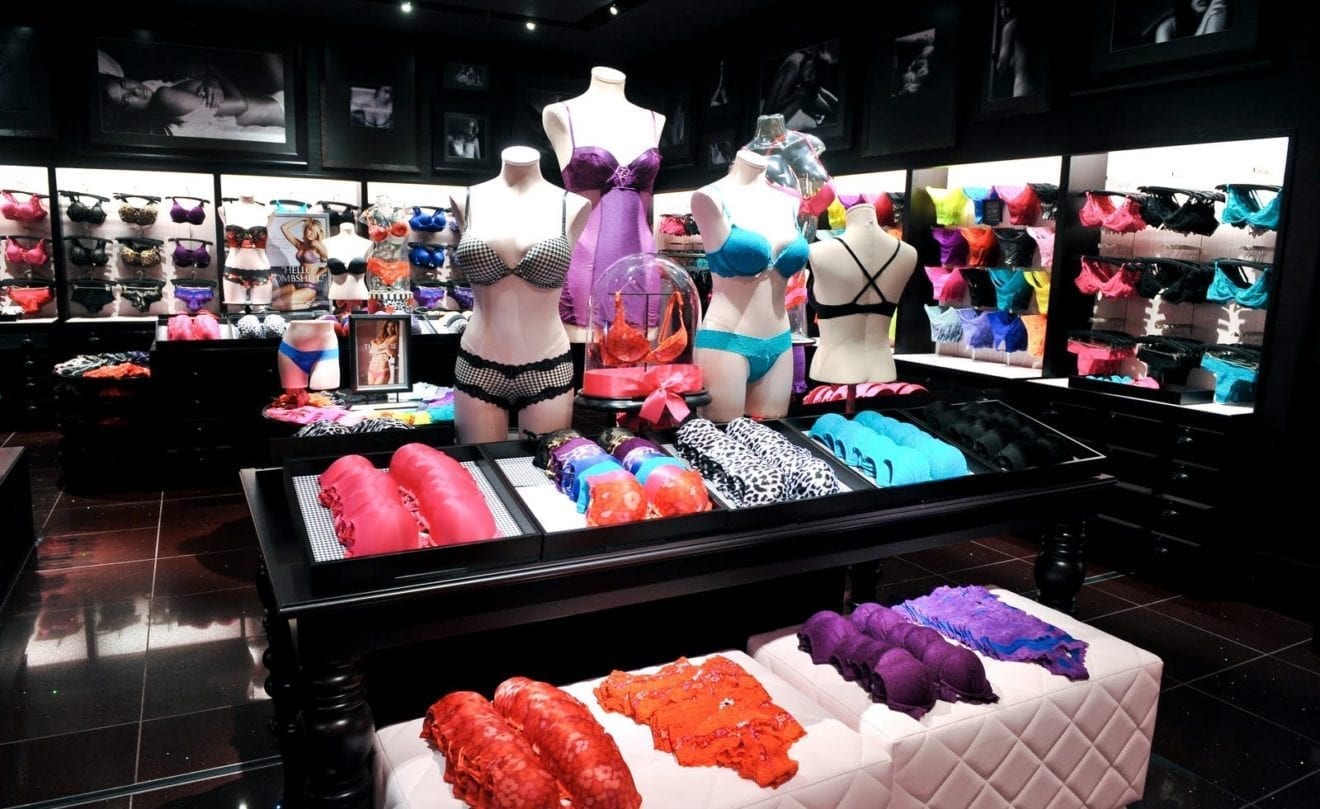
    L Brands, the parent of Victoria’s Secret, now considers China its most important global market.

    Executives said this week they expect that in as few as five years China, Western Europe and the Middle East will each account for US$1 billion in annual sales. That would put the Victoria’s Secret China operation on a par with the North American business.

    China is “our most important market,” Martin Waters, president of L Brands International, said.

    “Maybe someday we’ll have the fashion show in Shanghai – maybe – because we’re a global brand,” added Leslie Wexner, L Brands’ founder, chairman and CEO. “We have demonstrated that we have the best brand-building ability in the world. People who can’t read English, when they see the Victoria’s Secret name, they smile.”

    As many as 350 million Chinese are expected to watch the upcoming Victoria’s Secret Fashion Show, a sure sign of the brand’s growing appeal there.

    Wexner and Waters were commenting at an investors presentation after the company warned its October same-store sales would fall by up to 2 per cent. The company’s stock price slipped 7.9 per cent as a result.

    But the executives were upbeat about the company’s prospects, comparing the poor quarter to a football match loss.

    “Like Urban Meyer, I’m not happy about getting beaten in any quarter or any game,” Wexner said. “Not having the best-in-world profit margin is, for us, a catastrophe in the same way losing one game in a season is a catastrophe for Urban Meyer.”

    During the last 12 months, L Brands has moved away from franchise model in China in favour of company-owned stores, which works well for it in the US.

    Wexner says his company has focused on a slow, careful expansion in China rather than rush in as some foreign brands had done, to their regret.

    “We’ve been a patient second or slow third… because we thought we would learn more,” Wexner said. “We always asked ourselves: Are you really building a sustainable international business?”

  • Aeon revenues rise

    Aeon revenues rise

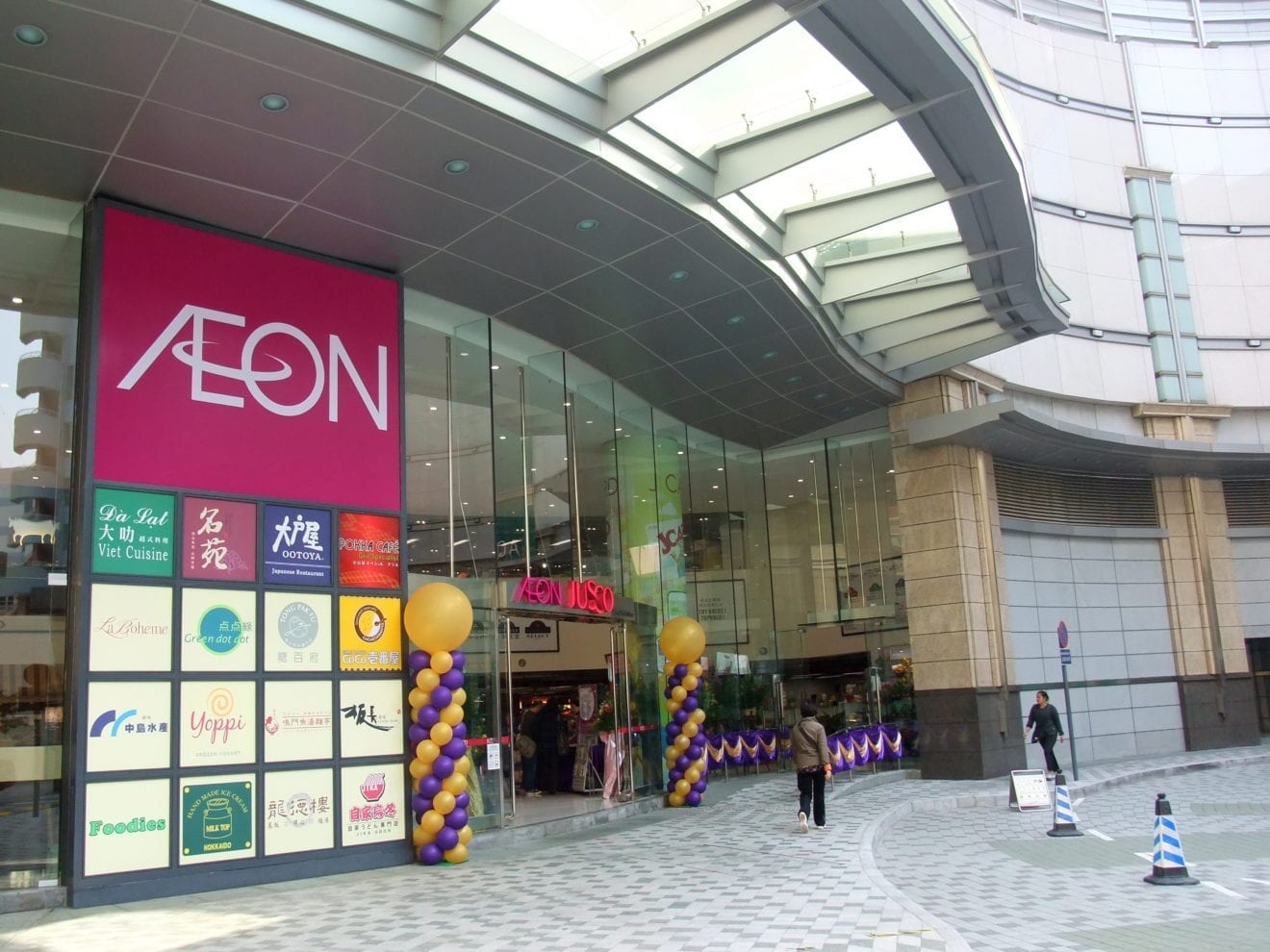
    Japanese retailer Aeon has seen its revenue edged up 0.9 per cent in the latest half year,  but its results vary greatly between formats.

    Total sales reached JPY 4,112 billion (US$39.2 billion), for the six months to August 31, while operating profit improved by a meagre 0.1 per cent to JPY72.4 billion (US$0.69 billion).

    In an analysis of the company’s performance, retail research house IGD observed stronger performances by Aeon’s convenience store business and its pharmacy interests than in its general merchandise and supermarket businesses.

    Aeon’s convenience store business reported a 6.1 per cent increase in operating revenues of JPY190.6 billion (US$1.8 billion), up 7 per cent year-on-year for the first half.

    “The group’s Ministop and My Basket operations performed strong thanks to the enhanced merchandise selection and improved services,” says IGD.

    The drugstore and pharmacy business grew revenues by 5.8 per cent, with the Welcia banner increasing its number of 24-hour stores to enhance customer convenience, driving steady growth in same-store sales.

    Conversely, the supermarket and discount store business posted a 7 per cent decline in revenue to JPY1,448.5 billion (US$13.8 billion). This was mainly due to the impact of the transfer of Daiei’s stores.

    And its general merchandise store business suffered a significant loss, amid weak consumer spending in Japan.

    Outside Japan, Aeon reported operating revenue of JPY205.3 billion (US$1.96 billion), down 5.4 per cent year-on-year. Aeon China and Hong Kong achieved an improvement after the group completed refurbishment of its flagship stores, which helped strengthen the business foundation in China and bolster earrings. In the reporting period, the group also expanded further in Asean markets, opening a new stores in Malaysia and Vietnam.

  • Marks & Spencer’s China stores risk closure

    Marks & Spencer’s China stores risk closure

    Marks & Spencer is reportedly due to announce the closure of some of its Chinese shops when it releases its trading update next week.

    There is speculation that chief executive Steve Rowe will reveal his plans to help bring the department store chain back into business when the company’s half-year results are published.

    M&S currently has 10 stores in China, and according to Bloomberg some of them could be in the firing line.

    The news comes just a week after speculation that M&S’ Paris flagship would also close down, as part of Rowe’s plans to move away from loss-making international operations.

    The department store chain will reveal its interim results on November 8.