Tag: China

  • New York-based LAGUARDA.LOW ARCHITECTS has announced the completion of KK One

    New York-based LAGUARDA.LOW ARCHITECTS has announced the completion of KK One

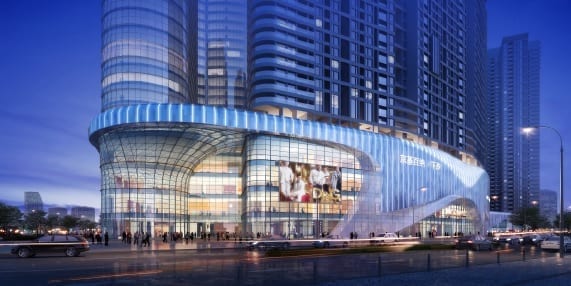
    New York-based LAGUARDA.LOW ARCHITECTS has announced the completion of KK One, a new 1.1 million square-foot retail complex in Shenzhen. Set at the base of an expansive mixed-use complex encompassing three residential towers, four office towers, and one hotel tower, KK One connects two adjacent land parcels to create a premiere shopping facility in the city’s Futian District.

    The exterior swooping facade, composed of aluminum panels in three tones of gray, was designed to create a sense of movement around the dense blocks of high-rise towers. The aluminum skin gives unity to the site’s eight towers and peels back at several points to reveal a minimal glass and steel structure. To give the development a distinctive presence at night, rows of inset, vertical bands of LED lights illuminate the facade.

    The interior of the five-story mall is luminous with gently curving forms and a palette of white surfaces and clear glass throughout. Natural light permeates through the clerestory at the top level and four sky-lit atrium spaces. To soften direct light from above, LAGUARDA.LOW designed custom ceiling grids for the two main atrium spaces that filter daylight through five levels and create a dynamic pattern of light and shadow throughout the day. 

    “With five levels of shopping, food and entertainment and direct access to the subway, KK One was designed to be the center of commerce for this growing urban district,” states John Low, Principal of LAGUARDA.LOW.  He continues: “The fluid exterior façade and bright interior spaces create an inspiring destination for shoppers and a tranquil point of refuge from the fast pace of the city.” 

    The opening of KK One marks LAGUARDA.LOW’s second completed project for KingKey Real Estate Group, following the 2010 completion of KKMall in Shenzhen. The completion of KK One follows LAGUARDA.LOW’s recent announcement for the design of OCT Longhua – an expansive new 3.7 million square-foot mixed-use development in Longhua New District of Shenzhen.

  • ICT vendors must prepare for China’s 13th Plan

    ICT vendors must prepare for China’s 13th Plan

    As China moves to implement its 13th Five-Year Plan, ICT vendors need to reassess their positions to take advantage of the major business opportunities it will offer, according to IDC.

    China’s 13th Five-Year Plan, and the decisions and policies introduced at the Third Plenary Session of the 18th Central Committee of the Communist Party of China will serve as the roadmap and action plan for the country’s economic development over the next five to ten years.

    Based on these two guiding documents and amid a challenging macroeconomic environment, the Chinese government has rolled out a host of policies and initiatives to advance the cause. These efforts will bring huge opportunities and become the cornerstone of China’s IT market in coming years, IDC predicts.

    IDC sees six areas that will be the foundation for China’s economic development as follows:

    1. Some 165 major projects to maintain economic growth – IDC estimates that total investment in these 165 projects will exceed 6 trillion yuan ($900 billion), generating over 500 billion yuan ($ 75 billion) in ICT business opportunities, with 300 billion yuan ($45 billion) alone in the rollout of 5G.

    2. Innovation to advance economic restructuring – The Chinese government has established innovation and entrepreneurship as two of its top policy initiatives to facilitate economic restructuring. IDC believes that such government-led endeavors will generate immense business opportunities for ICT vendors in ICT infrastructure; cloud computing and big data; mergers and acquisitions of startups; and the transition of traditional industries to digital.

    3. Policies to improve public well-being – In 2016, the State Council issued a joint initiative to promote Internet+Government services and kicked off 80 pilot cities with the One Window One Network plan that introduced interregional sharing of electronic certificates and public service information across government offices.

    For ICT vendors, the main business opportunities will be ICT infrastructure, cloud computing and services, big data platforms, smart community, and mobile apps, which are seen as the basis for the digital transformation of government.

    4. The Belt and Road Initiative to facilitate globalization – Initially introduced in 2013, this initiative has connected 18 of China’s provinces with nearly 40 countries along its route across Asia and Europe. For ICT vendors, IDC predicts the initiative to  give rise to abundant business opportunities as Chinese companies venturing abroad upgrade their IT systems, countries along the route construct their IT infrastructures, and China develops its own big data platforms for the initiative.

    5. Expanding Free Trade Zones – The first Free Trade Zone (FTZ) was established in Shanghai in 2013. In 2014, the second batch of FTZs was established in Tianjin, Guangdong, and Fujian. In 2016, Liaoning, Zhejiang, Henan, Chongqing, Sichuan, and Shanxi provinces were approved to set up FTZs. Currently, 11 FTZs have been established across China. Collectively, they support the Belt and Road Initiative in promoting globalization and the smooth development of China’s economy.

    According to IDC, ICT vendors should focus on developing smart parks, smart transportation, smart logistics, and other smart city projects, in addition to utilizing the cloud platform infrastructure to support the digital transformation of FTZ regions.

    6.China as an internet powerhouse – China’s national IT development strategy was first introduced in 2006 and has acted as the basis of many of China’s IT development policies since then. In 2016, the Chinese government introduced an outline that standardizes and guides the next 10 years of China’s IT development.

    To remain competitive in this market, multinationals will have to radically transform many things, including their domestic business models, strategic investment, technology transfer, equity transfer, and joint investment strategy.

    “ICT vendors should capitalize on China’s supportive policies and economic environment, making use of ICT technologies and displaying their strengths to discover the opportunities being brought by Digital Transformation,” IDC China VP and chief analyst Lianfeng Wu said.

  • Yaok offers online service for luxury boutiques

    Yaok offers online service for luxury boutiques

    Chinese company Yaok has built an online reservation service for offline brand boutiques to tackle the online/offline conflict.

    It is the result of 10 years of market research the preparation, including five years of in-depth communication with more than 100 luxury brands.

    Founder/CEO Steven Yao says that many luxury brands, including Chanel and Dior, have realised the importance of the internet, but while finding online partners still have concerns about brand image.

    “Everyone is looking for an online solution, especially one that’s appealing to Chinese consumers,” he says. “Unfortunately, current Chinese online players can’t fulfill luxury-brand needs because of false brand perception, unfit target audience, and lack of control on product authenticity.

    “Some chose to set up their own eCommerce platforms, but found it difficult to attract traffic with one single brand.”

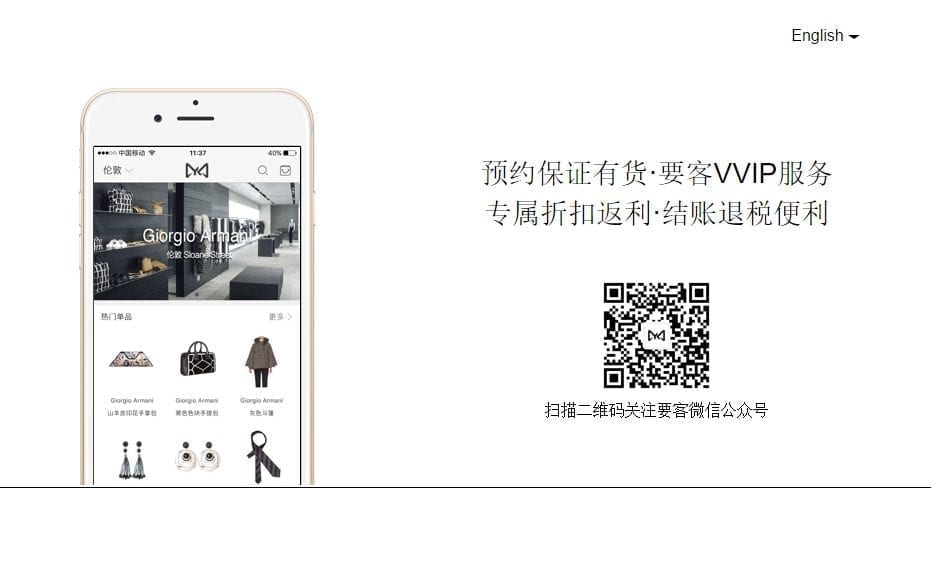
    Through Yaok, a brand can have its own official reservation platform, giving it absolute control in managing its image, product inventory, order status and customer database. It also allows instant communication between brand and customer.

    According to the China’s Fortune Character Institute, 73 per cent of Chinese consumers have a shopping list before overseas travel, 45 per cent of which cannot be fulfilled because of such factors as lack of desired size or model, resulting in loss of sales and unsatisfying customer experiences.

    Agreements in place

    Yaok lets customers reserve products in advance and have VIP services in store. Already the company has global or regional collaboration agreements with most international luxury brands.

    Yao says that when the platform officially launches at the end of next month, products from 80 per cent of luxury brands will be available. Users will be able to make VIP reservations in nine countries and regions.

    He estimates that 500,000 shoppers, all with a net wealth exceeding $2 million, will use Yaok to buy luxury goods globally. Its prestige service is either by invitation only or for current brand VIPs. Applications can be submitted via Yaok app or WeChat, but acceptance is not guaranteed.

    Yaok has completed two rounds of fundraising, with Feng Ye as angel investor.

    Yao was the first CEO for the Hurun Report, the magazine known for its “China Rich List”. Other core Yaok members have also worked in brand houses like Giorgio Armani or Louis Vuitton for more than 10 years.

    Yaok is affiliated to the Fortune Character group, founded in 2008, which specialises in researching the luxury market.

  • Singapore, Manila rise in retail rent rankings

    Singapore, Manila rise in retail rent rankings

    The data may be a little dated, but Asian cities are holding their own in the retail rent rankings.

    New York’s Fifth Avenue still tops the list with an average rent of US$3500 per sqft per year. Hong Kong’s Causeway Bay is cemented in second place at $2399 and the Champs Elysee in Paris a distant third at $1372.

    (It should be noted, the list ranks the single most most expensive shopping strip in each country, not overall.)

    Data released by Cushman Wakefield this month – albeit more than a year out of date – shows the Philippines making the biggest gain: retail rental rates in Manila’s Bonifacio Global City High St were a mere US$56.40 per sqft per annum, but that is enough to make Manila 51st on the top 65 list – up eight places.

    Singapore’s Orchard Rd ranked 14th – up two places – at $336.80 and Taipei’s ZhongXiao East Rd 20th, up three places, at $273.20.

    The Ginza in Tokyo,  Japan, ranks a modest eighth at $881.90 in a virtual tie with Myeongdong in Seoul, Korea at $881.80.  The Ginza has fallen from sixth in last year’s survey, while Myeongdong has dropped from eighth.

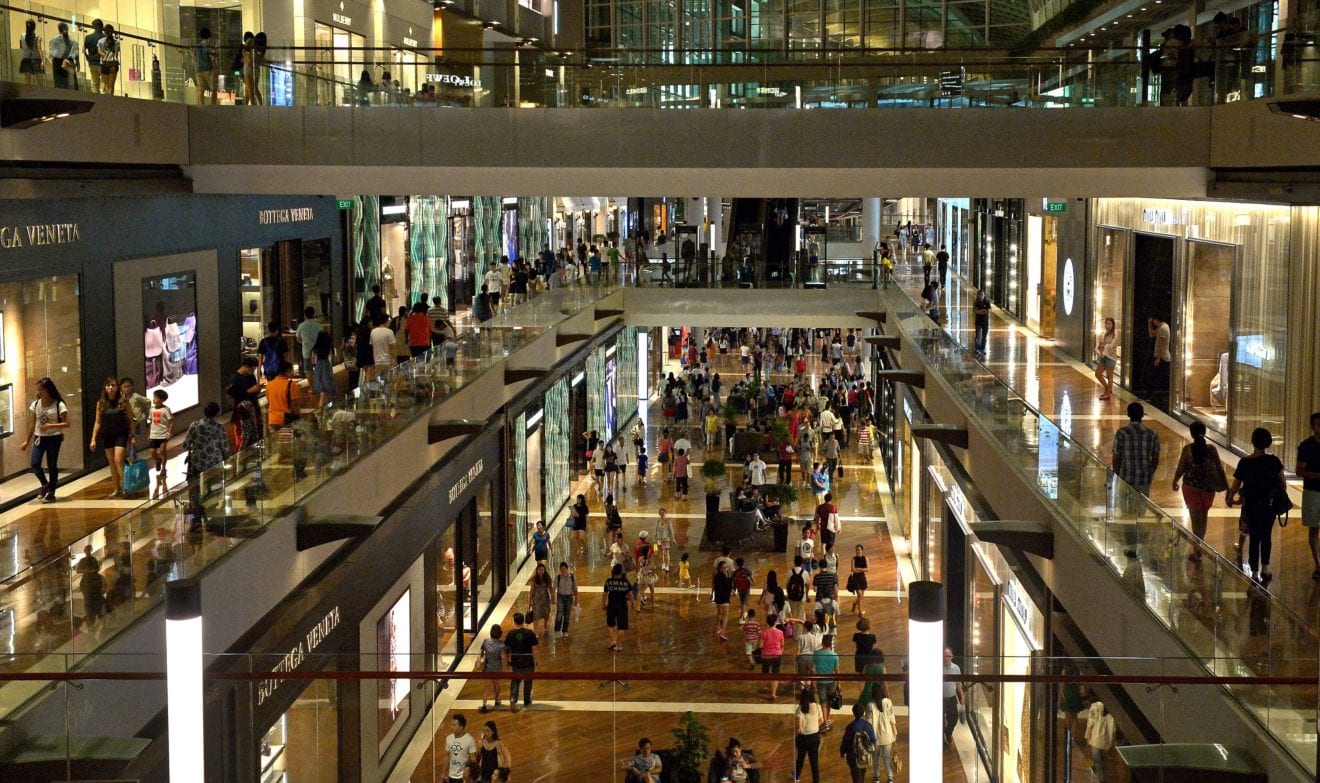
    Cushman & Wakefield stresses that the global rankings focus on high street locations. This excludes mall rental rates – and in cities like Manila, Bangkok and Kuala Lumpur, malls dominate the premium retail landscape, not high street strips.

    Vietnam’s Ho Chi Minh City CBD retail rents are more expensive than in Bangkok at $150.50 for 32nd place, and $125.40 for 35th respectively. Bukit Bintang in Kuala Lumpur, Malaysia, ranked 40th (up one place) at $111.

  • Starbucks plans to double its stores in China to 5000 by 2021, opening a new one every day

    Starbucks plans to double its stores in China to 5000 by 2021, opening a new one every day

    Starbucks announced that it plans to double the number of its stores in China from more than 2,300 to 5,000 by 2021. According to CNN, Starbucks says that it will open more than one new store a day for the next five years.

    To oversee this task (which Starbucks also hinted at in January), the company promoted Belinda Wong to Starbucks China CEO. According to the company’s official statement, Wong will also be in change of “digital and e-commerce opportunities across China,” as well as the opening of Starbucks’ first international Roastery and Reserve Tasting Room in Shanghai in 2017.

    belinda_wang.jpgAs Starbucks China’s former president, Wong led a team that drove the company’s growth in China from 400 stores in 2011 to more than 2,300 stories currently, operating in over 100 cities.

    The 45-year-old Starbucks Coffee Company opened its first store in China 17 years ago. In an interview with CNN, Starbucks CEO Howard Schultz discussed the initial road bumps the company encountered in the tea-obsessed country. “We had to educate and teach many Chinese about what coffee was — the coffee ritual, what a latte was… So in the early years, we did not make money,” Schultz said.

    Since then, excluding some meat scandals, Starbucks China’s business has been doing quite well. The South China Morning Post reports that “Starbucks’ second-quarter sales rose 18% in China, a faster pace than the company’s worldwide revenue increase of 9% over the same period.” Starbucks’s growth is even more impressive given that China’s economic growth was just 6.7% this quarter (again).

    Compared to Starbucks, other Western brands have not fared so well in China. Disappointed with its poor profits and earnings for the third quarter this year, the CEO of Yum Brands, which owns KFC and Pizza Hut, has pointed blame at the South China Sea ruling. This rise and fall of Western food brands is also apparent in retail brands.

    Hopefully customers will show as much loyalty to the company as one “Starbucks uncle” during the recent flooding in Hong Kong.

  • Alibaba Group promises to redefine retail as it sets the clock ticking for Singles Day shopping festival

    Alibaba Group promises to redefine retail as it sets the clock ticking for Singles Day shopping festival

    Alibaba Group has started the clock on the Global Shopping Festival it will hold on November 11, which is known as Singles Day in the Chinese market where it dominates online shopping.

    The retailer, which trades through marketplace sites including Alibaba.com and TMall, has unveiled its plans for a festival that’s set to include a countdown gala, an eight-hour live streamed fashion show, virtual reality shopping, interactive games and more.

    These are all innovations aimed at enabling almost 100,000 merchants to build their brands, as well as engage with and sell to the hundreds of millions of Chinese consumers it predicts will shop on its marketplaces during the festival.

    Last year’s event, saw goods worth £9.3bn sold via the group’s websites.

    The press launch alone was attended by brands from Macy’s and Costco through to Swisse and eMart. There, Daniel Zhang, chief executive officer of Alibaba Group, said, “11.11 Shopping Festival has become the global retail benchmark over the past seven years, and we have raised the bar again this year to redefine the retail experience for consumers together with our merchants from around the world.”

    Zhang continued, “11.11 has evolved far beyond a 24-hours sales event. From today through November 11, consumers will discover, explore, play, watch, comment, share, recommend and shop across our entire ecosystem with our merchants both online and offline. Leveraging our robust infrastructure, global merchants have been empowered with unprecedented capability to seamlessly engage and serve customers through new technology and new environments.”

    Highlights of the Global Shopping Festival will include a Tmall eight-hour fashion show in Shanghai in which 50 international brands and 160 models will take part. It will be streamed live via Tmall and Taobao mobile apps that viewers can use to pre-order items as they appear on the catwalk.

    Shoppers will be able to use virtual reality to buy, as Alibaba pilots Buy+, billed as the world’s first complete virtual reality (VR) shopping experience. Those who use it will be virtually transported to select retail stores internationally, where they can experience the entire shopping process from product selection to payment, all via VR.

    In the run-up to the event, more than 600 international brands are streaming live broadcasts on Tmall to tell consumers about their brand and the deals and products they’ll be offering on 11.11.

    Katy Perry will headline the 11.11 Global Shopping Festival Gala on November 10.

    The event will link online and offline: Alibaba believes the future of commerce is not online only but will integrate the online and offline experience. A location-based augmented reality mobile, to be released two weeks ahead of the festival, will enable consumers to follow the Tmall Cat across the online and offline retail ecosystem: offline partners include shopping malls in Beijing and Shenzen, Shanghai Disneyland, KFC and Starbucks. Alibaba is also working with more than a million offline shops to present consumers with a joined-up experience.

    The retailer also promises each consumer a personalised shopping experience, thanks to the use of big data that will drive tailored product recommendations, search results, and user-generated content.

    The retailer is also focusing on going global, and aims within 10 years to serve two billion consumers, while supporting 10m small businesses, brands and retailers. The 2016 11.11 Global Shopping Festival includes a ‘buy globally, sell globally’ initiative that focuses on making Alibaba a gateway for international brands and merchants to sell to consumers in China. Meanwhile, it is also piloting approaches to supporting global retailers and brands as they sell beyond China. It is taking its infrastructure, including logistics and payments to Hong Kong and Taiwan – the first steps in its expansion strategy.


  • GM to add SUV production line at China JV in 2017

    GM to add SUV production line at China JV in 2017

    General Motors Co (GM.N) plans to launch a new SUV production line at its joint venture factory in the Chinese central city of Wuhan during the first half of 2017, the official Xinhua News Agency reported on Sunday, citing company sources.

    SAIC General Motors (SGM), a joint venture between China’s SAIC and General Motors, started operations at the Wuhan plant last year. The new production line will be able to produce 360,000 vehicles a year, bringing the combined capacity to 600,000, Xinhua said.

    SGM said it has invested 7.5 billion yuan ($1.1 billion) for the new production line, which has been under construction since January 2015, the news agency reported. It will manufacture a new generation of GM Chevrolet Equinox SUVs.

    The plant generated revenue of nearly 23 billion yuan ($3.4 billion) in the first nine months of this year, Xinhua said.

    GM’s China chief Matt Tsien told a press conference in March that Wuhan plant was operating at maximum utilization, and a planned second phase is being added there that will double capacity.

    He said that sport-utility vehicles, multi-purpose vehicles and luxury cars will continue to be hot segments in China going forward, with SUVs and MPVs accounting for 40 percent of firm’s overall China growth to 2020.

  • China’s garment retail sales grow 7.2% in Jan-Sept ’16

    China’s garment retail sales grow 7.2% in Jan-Sept ’16

    Retail sales of garments, footwear, hats and knitwear of Chinese enterprises above designated size increased 7.2 per cent year-on-year during the first nine months of 2016. The total value of retail sales of these goods was 1,002 billion yuan ($148.121 billion). However, the growth rate was lower compared to total retail sales of consumer goods.

    During January-September 2016, the total retail sales of consumer goods reached 23,848.2 billion yuan, up by 10.4 per cent year-on-year. Of the total, the retail sales of consumer goods of units above designated size was 10,834.4 billion yuan, up 7.8 per cent, according to the National Bureau of Statistics of China.

    The national online retail sales of goods and services during the nine-month period was 3,465.1 billion yuan, up 26.1 per cent year-on-year. Of this, the online retail sales of physical goods was 2,795.0 billion yuan, growing at 25.1 per cent and accounting for 11.7 per cent of the total retail sales of consumer goods. Of the online retail sales of physical goods, clothing sales went up by 16.3 per cent.

    The Bureau also released its preliminary estimate of the Chinese economy during the first three quarters of 2016. According to the estimate, the gross domestic product (GDP) of China in the first three quarters of this year was 52,997.1 billion yuan, a year-on-year increase of 6.7 per cent at comparable prices.

    The value added of the primary industry was 4,066.6 billion yuan, up by 3.5 per cent year-on-year; that of the secondary industry was 20,941.5 billion yuan, up by 6.1 per cent; and that of the tertiary industry was 27,989.0 billion yuan, up by 7.6 per cent.

    In terms of external trade, the total value of imports and exports in the first three quarters of 2016 was 17,531.8 billion yuan, a decrease of 1.9 per cent year-on-year. The total value of exports was 10,058.5 billion yuan, registering a drop of 1.6 per cent. The value of imports was 7,473.3 billion yuan, down by 2.3 per cent. The trade surplus was 2,585.2 billion yuan.

  • This Retail Tycoon Wants to Open 500 Stores in China in Three Years

    This Retail Tycoon Wants to Open 500 Stores in China in Three Years

    As Europe’s fashion giants brace for what could be the toughest leg of their expansion in China, a South African retail tycoon has launched a bold assault on the world’s most populous nation.

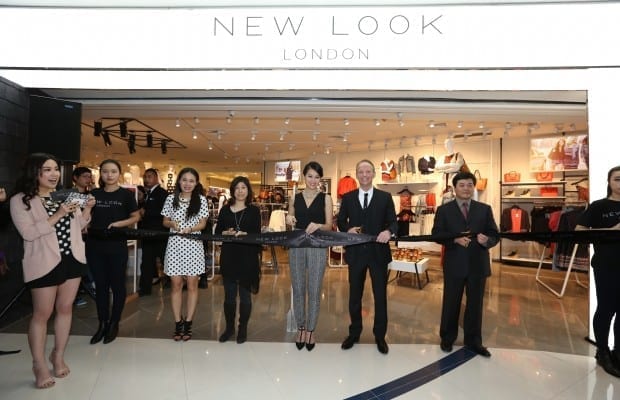
    Christo Wiese is promising to open 500 of his New Look stores in just three years, catapulting the British brand into the same league in China as the world’s top fashion chains – Spain’s Inditex and Sweden’s H&M.

    His plan is to make most of the clothes in China to ensure they cater to local tastes and can get to stores quickly – a strategy similar to the one successfully pursued in Europe by Zara-owner Inditex.

    The arrival of New Look – and its local sourcing strategy – poses a new risk for the likes of H&M and Inditex, already suffering from slower growth in China, fierce competition for real estate and the cost of investing in ecommerce.

    H&M is opening more stores in China this year than anywhere else in the world and the country is already the second biggest market for Inditex outside Spain.

    China is a big draw for retailers who hope to tap the aspirations of a fast-growing middle class, with mid-range names benefiting as consumers trade down from luxury brands since Beijing’s clampdown on corruption and conspicuous spending.

    But recent history offers plenty of examples of failure. Western brands that have struggled in China include Gap Inc , Abercrombie & Fitch and Marks and Spencer , which decided last year to close five stores in smaller cities to focus on flagship stores in large cities and online.

    “Most of the Western fashion labels that are mid-range fail in China. A large part of it is that the styles and the fit are so completely different,” said Shaun Rein, founder of market intelligence firm China Market Research.

    LOCAL TASTES, LOCAL SOURCING

    New Look, a chain founded in 1969 and bought last year by Wiese’s investment vehicle Brait SE, does not want to make the same mistake. It now runs 94 stores in China, out of a global total of 852, and hopes to have up to 150 by next March.

    “I will definitely give it a try if it is a foreign brand and as long as I like it,” said Chen Jie, a 32-year-old businessman from Shenzhen who was carrying an H&M bag in a shopping district in Hong Kong. “Price is not an issue but the design and quality must be good.”

    While New Look is cashing in on the popularity in China of British style – it is adding the “London” tag to its logo for its Chinese stores and website – it is also catering for local tastes.

    Sven Gaede, managing director of New Look’s international business, says the firm has an advantage over many European rivals as 85% of what it sells in China is sourced locally and more than a third is designed exclusively for China.

    That has allowed New Look to tap into the current popularity in Asia of culottes – flared, three-quarter length trousers. Gaede said they account for 12% of the firm’s sales in China, though they are not popular in its European markets.

    “South Korea and Japan drive a lot of the trends that the Chinese customer seeks, so our ability to be able to identify those trends, source them locally and get them into our stores quickly is key,” said Gaede.

    That helps explain the success of the Uniqlo chain of Japan’s Fast Retailing in China, which already has almost 500 stores in the country and is aiming for 1,000 stores in about five years – more than in Japan.

    “It’s pretty hard for the foreign fast brands to do the localisation that Uniqlo does in China as it was born with the Asian gene,” said Violet Shen, a marketing executive in Shanghai.

    The “fast fashion” model was pioneered by Inditex, which can bring new styles from the catwalk to stores in Europe within days from factories mostly in Spain and North Africa. However, Inditex does not have the same advantage in China.

    Inditex plans to add 60 stores in the next few years to the 582 it already runs in China, but it serves them from its logistics centres in Spain.

    “As their proportion of sales increases in the East, it challenges this model. You can’t hub out of Spain,” said Dominic Jephcott, chief executive of supply chain experts Vendigital.

    New Look is not the first Western retailer to try to bring the Inditex model to China.

    Denmark’s Bestseller, which runs brands like Vero Moda and Jack & Jones, says over 90% of its products sold in China are also produced in China and most of the designs for the Chinese market are adjusted to local tastes.

    That has helped the family-owned firm to become the clear leader in China, with more than 6,800 stores in over 300 cities, to give it a 2% share of the fragmented market, according to market research firm Euromonitor.

    Anders Kristiansen ran the China business of Bestseller before taking over as New Look chief executive in 2013. Gaede said Kristiansen’s experience in Asia is one of the reasons behind the group’s aggressive expansion strategy.

    H&M also buys many of its garments in China – the country accounts for about a quarter of its global sourcing.

    But the Swedish firm does not make a big point of adjusting its ranges for China, where it has opened 47 stores in the last nine months, taking its total to 400.

    “We see that fashion becomes more and more global and that China doesn’t differ much from the rest of the world regarding trends and fashion,” said investor relations head Nils Vinge.

    “There are of course local differences but that is true for every market. H&M has a business model that can adapt to this,” Vinge said, declining to elaborate.

    Rein of China Market Research says Western brands must strike a delicate balance.

    “You have to keep your global brand image and you can’t be that creatively different in China than other markets. The Chinese travel around the world,” he said. “It is good to localise. But it hard to localise an aspiration.”

    STORES VS ECOMMERCE

    A bigger challenge for New Look may be to secure the right locations, especially as rivals also seek to add hundreds of stores in the coming years.

    “To find 500 stores of real estate and roll that out in the right way … I think it is virtually impossible,” said Franklin Yao, managing partner at strategy consultants Smith Street.

    But the more established New Look’s brand becomes in China, Gaede said, the better the locations and terms it will be offered, adding that the firm was now pushing into smaller cities.

    “We are less wedded to the number each year and we are more wedded to getting quality locations,” he said.

    Meeting soaring Chinese demand for buying clothes online is also tough.

    Most international brands initially launch on Chinese ecommerce sites like JD.com and Alibaba’s Tmall and Taobao, but are keen to build up their own online operations to protect margins and integrate ecommerce and store services.

    New Look is currently available on Tmall and JD.com, but plans its own transactional site in the next 12 to 18 months.

    Partnering with Chinese sites and local payment and delivery service providers is essential to reach consumers across such a vast country, said Vendigital’s Jephcott.

    “It is a hard physical push and a very hard digital push, all premised on a strong relationship with the logistics partner like Taobao,” Jephcott said, noting that Taobao has established a delivery network of micro-stores even in small towns.

  • Walmart makes another big move in China

    Walmart makes another big move in China

    Walmart has made another big e-commerce investment in China.
    On the heels of launching three major e-commerce initiatives in China, Walmart will invest $50 million in New Dada — China’s largest local on-demand logistics and grocery online-to-offline (O2O) e-commerce platform.
    Walmart’s newest investment further extends its agreement with JD.com, which uses New Dada’s network to offer customers two-hour delivery on groceries ordered from Walmart stores through the JD Daojia Dada app.
    New Dada, an independent joint venture between Walmart’s Chinese partner JD.com and Dada, has more than 25 million registered customers. Providing local on-demand delivery capabilities with 2.5 million crowd-sourced deliverers across more than 300 cities in China, this new service complements the 426 stores that Walmart operates in nearly 170 cities.
    Overall, Walmart’s investment in New Dada will help the retailer target Chinese shoppers with faster delivery times in a popular, fiercely competitive online grocery market, according to a company statement.
    “All around the world, we’re creating seamless shopping experiences that bring together our stores, sites and apps to make shopping faster and easier,” said Walmart CEO Doug McMillon. “Our alliance with JD and cooperation with New Dada will enable seamless shopping to millions of customers across China.”
    Specifically, the business partners expect the combination of New Dada’s delivery network with Walmart stores to give “consumers convenient access to a wide range of high-quality goods delivered to their homes and offices in record time,” said Philip Kuai, CEO of New Dada. “We look forward to deepening our cooperation with Walmart as China’s O2O retail industry continues to evolve and grow.”
    Walmart’s next move is to double the number of its stores that offer two-hour delivery by the end of the year, the statement said.
  • Chinese Investors Consider GNC Acquisition

    Chinese Investors Consider GNC Acquisition

    GNC first popped up in Chinese towns and cities in 2011, with small stores within grocery stores, and now rumors are swirling the giant dietary supplement retailer might end up with a Chinese owner.

    The Wall Street Journal broke the news that GNC is up for sale and a pair of Chinese equity firms are among the interested parties. The journal reported any such acquisition could be worth US$4 billion, including debt—GNC’s market value is around $1.3 billion, with outstanding debt of around $1.4 billion.

    One of the prospective buyers named is Fosun Group, a Shanghai-based investment firm with holdings across insurance, financial, retail and other industries. Its motto is “Combining China’s Growth Momentum with Global Resources.” Fosun most recently bought the English football club Wolverhampton Wanderers and, through Fosun Pharmaceutical, acquired Indian pharmaceutical company Gland Pharma—a number of Chinese pharmaceutical firms are also interested in GNC.

    The other named suitor is Zhongzhi Capital (ZZ Capital), a Beijing- and Hong Kong-based asset management firm focused on media/entertainment, internet, high-end manufacturing, healthcare, financial, IT and logistics. Among its goals is to help overseas companies better penetrate the Chinese market.

    Speculation on the motivation of such firms interested in GNC to a Chinese buyer has centered on the growing trend of Chinese investors purchasing overseas vitamin and sports supplement companies to satisfy Chinese consumer demand for foreign nutrition brands in lieu of quality-challenged Chinese brands.

    Beijing-based Primavera Capital Group paid $238 million to purchase Australian nutrition contract manufacturer Vitaco Holdings in August 2016, and Binzhou, China-based Xiwang Foodstuffs Co. acquired Canadian supplement maker Iovate Health Sciences for $730 million in June 2016.

    GNC has opened around 60 store-within-store locations throughout China involving eight grocery chains. According to its 2015 annual report, released in February 2016, it had five locations  in China, including standalone franchise stores and a small regional retail office.

  • China’s Geely shows global ambitions, launching new compact SUV

    China’s Geely shows global ambitions, launching new compact SUV

    Chinese automaker Geely, the owner of Volvo cars, showed off the first model of its new Lynk & Co brand in Germany on Thursday, a compact SUV aimed at taking on the likes of BMW and Mercedes-Benz, as well as ride-hailing service Uber, across the world.

    The Lynk, made in China, will go on sale at home in 2017, followed by Europe and the United States in 2018, and marks one of the first attempts by a Chinese carmaker to create a global brand that makes use of European design and technology know-how.

    Chinese companies have been snapping up cutting-edge German technology to push upmarket and gain a global footprint. This year alone, Chinese home appliances maker Midea has agreed to buy German robotics firm Kuka and Fujian Grand Chip Investment Fund LP is taking over semiconductor equipment maker Aixtron.

    Long seen as a cheap, no-frills brand in China and unheard of in Europe, Zhejiang Geely Holding Group purchased struggling Swedish carmaker Volvo from Ford in 2010 to help it leapfrog a decade of research and development.

    While Volvo will continue to focus on premium vehicles, Lynk is an attempt to grab a slice of the mid market. It will initially take on foreign carmakers’ joint ventures in China, but – as shown by the global launch in Berlin – it also aims to challenge the world’s biggest automakers in their own markets.

    ‘SMARTPHONE ON WHEELS’

    At the launch of the ’01’ model at a former railway station in Berlin that now frequently hosts start-up conventions, Alain Visser, senior vice president at Lynk & Co, described the SUV as “our first smartphone on wheels.”

    It is targeting tech-savvy consumers that may have prioritized flexibility over car ownership in the past. “We are looking very much at millennial consumers all over the world who are very much concentrated around bigger cities,” he said.

    Each car will be permanently connected to the Internet and have a “share” button, enabling owners to rent out their car to other motorists via a smartphone app.

    “That becomes a source of income, which some of the consumers may use, a bit like an Airbnb vehicle,” said Visser, referring to the home rental company.

    Lynk has more models in its line-up, which the carmaker plans to launch over the next 3-5 years, but Visser declined to give details on body styles or launch dates apart from the name of the next car: ’02’.

    Once the full line-up is launched, Lynk aims to sell more than 500,000 vehicles a year by 2021, he said.

    EUROPEAN KNOW-HOW

    Geely’s design has been refined by British designer Peter Horbury, who headed up design at Volvo in the 1990s and oversaw it for Jaguar, Aston Martin and Ford’s other brands from 2002.

    In doing so, Geely is upping the competitive pressure on established global carmakers, which have long accused Chinese rivals of merely ripping off their designs.

    Jaguar Land Rover (JLR), for example, has sued China’s Jiangling Motor after it released the Landwind X7 SUV in 2014, a car that JLR says copies its Land Rover Evoque while costing around the third of a price.

    The car will be a hybrid powered by a 1.5-litre three cylinder petrol engine combined with a lithium-ion battery and electric motor, and will be the first based on the Complex Modular Architecture platform developed by Geely and Volvo.

    Mercedes-owner Daimler and BMW are also investing heavily in hybrid vehicles and will be watching closely to see how the ’01’ fares with European consumers.

    Geely said the car would be priced competitively and said it would be fixed across all markets, but declined to give details. It plans to keep down costs by selling the car online only and limiting the number of configurations available.

  • Chow Tai Fook sales plummet

    Chow Tai Fook sales plummet

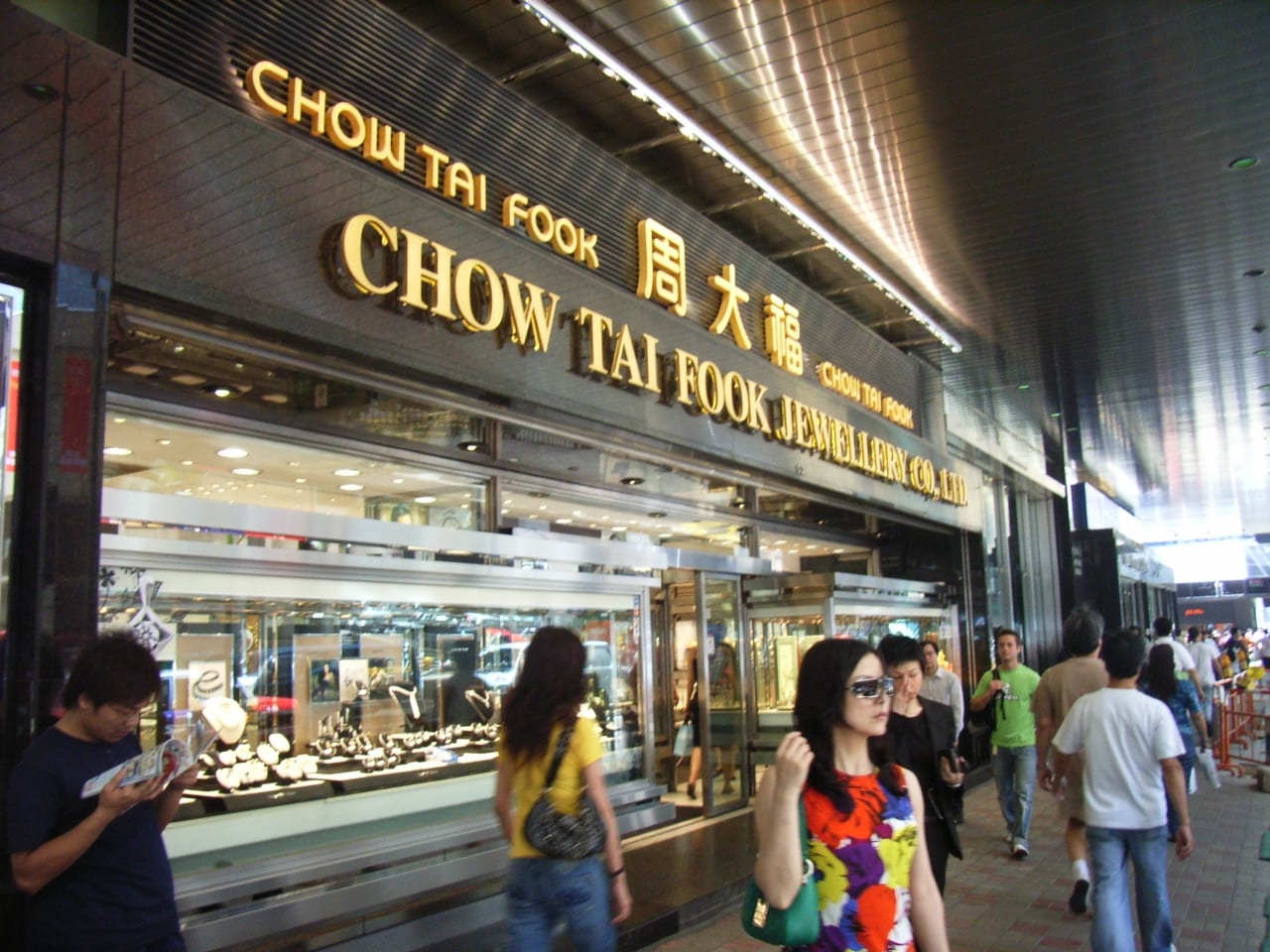
    Chow Tai Fook sales plunged in both Hong Kong and Mainland China markets in the quarter to September 30.

    By value, same-store sales fell by 30 per cent in Hong Kong and Macau and by 22 per cent on the mainland. By volume, same-store sales in Hong Kong fell 39 per cent, and on the mainland by 32 per cent, compared with the same quarter last year.

    Sales of gold products, which account for about 53 per cent of total sales, fell by 23 per cent in Hong Kong and Macau and by 27 per cent in the mainland. Gem set jewellery sales were down 23 per cent and 17 per cent.

    In a statement, the company said its figures in both markets were affected by the high base of 2015, when there was a surge in sales of gold as the price fell.

    But the changing buying behaviour of Mainland Chinese tourists also took its toll, evidenced by the percentage of total sales settled by China UnionPay of in RMB falling from 57 per cent to 43 per cent year-on-year.

    Chow Tai Fook opened a net 11 points of sale during the quarter: 12 jewellery stores and one watch store opened in Mainland China, while its Hong Kong store count dropped by two. At the end of September, Chow Tai Fook had 2326 points of sale.

  • Lenovo launches transit app in China

    Lenovo launches transit app in China

    Lenovo has commercially launched its transit application in China with the electronic payment and settlement service provider BMAC (Beijing Municipal Administration and Communications Card).

    The service is supported  on Lenovo X3 smartphones driven by the eSE PEARL by OT (Oberthur Technologies).

    Thanks to OT’s NFC embedded Secure Element, end-users can now use their Lenovo X3 smartphone to install the Beijing Municipal Administration Traffic Card in their Lenovo Transit application and commute simply by waving their phone in front of contactless transit terminals.

    PEARL by OT is described as  the most advanced embedded Secure Element on the market, offering a yet unattained level of security and the largest memory on the market. It allows easy deployment of secure mobile contactless payment, transit, governmental and automotive applications, as well as secure access to online services for enterprise and consumer markets.

    In addition to its eSE, OT provides its Key Management System to Lenovo to manage security domains on the eSE in which partners can securely load, install and run their applications.

    Via its China Secure Hub, a platform used to connect handset makers and their partners in different cities in China, OT also securely ensures the connectivity between Lenovo and BMAC’s TSM provider, Beijing eNFC science and technology.

    “China is often at the forefront of new technologies and we are happy to offer Lenovo users with a convenient, secure and easy-to-use way of commuting with the BMAC application” said Viken Gazarian, deputy managing director of the connected device makers business at OT.

    “PEARL by OT is the best eSE on the market to address the fragmented market of transport systems throughout the world and is the sole component to support international as well as Chinese transit technologies,” said Gazarian.

  • ‘Tremendous challenges’ for Chinese eCommerce

    ‘Tremendous challenges’ for Chinese eCommerce

    Chinese eCommerce companies could face “tremendous challenges” as Alibaba aims to transform the the mainland’s traditional retail industry, worth an estimated US$4.5 trillion.

    In a letter to shareholders, CEO Daniel Zhang says the company hopes to “upgrade” traditional retailers through improvements to distribution, service and product manufacturing.

    “The most important opportunity on the horizon is not growing online sales in isolation but rather helping traditional retailers upgrade into a brand-new retail model,” he writes. “The consumer retail industry as a whole is experiencing radical disruption driven by digital transformation.”

    Alibaba chairman Jack Ma has set a target of 20 years to attain 2 billion customers and support 10 million profitable businesses globally.

    Zhang cites cloud-based infrastructure and data as two areas where Alibaba sees future growth.

    “Cloud computing and big data will become ubiquitous,” he says. “Data has already become the new ‘natural resource’ that is as vital as oil and electricity. Cloud computing is the new ‘engine’ powering commerce.”