Tag: China

  • Gong Cha Korea to expand globally

    Gong Cha Korea to expand globally

    Bubble tea brand Gong Cha Korea is planning international expansion.

    Aided by the global passion for Hallyu, or the so-called Korean Wave, Gong Cha plans to open stores in the Middle East and Europe. It will also buy more than 1380 stores in 18 countries, including the US, Canada, Australia, New Zealand, China, Japan, Singapore, the Philippines, and Hong Kong.

    Currently, Gong Cha Korea operates only about 360 stores in its home market, which last year brought in KRW8 billion (US$7 million) profit – representing 11 per cent growth year-on-year.

    As most of Gong Cha’s customers are aged from 10 to their 30s, the company expects entering new foreign markets will be easier through creating synergies with Hallyu.

    The expansion will be facilitated by a share transaction with its parent company Royal Tea Taiwan in which the Korean business will progressively boost its ownership from 35 per cent to 70 per cent by January 2017.

    Royal Tea Taiwan was launched in 2006, and introduced to Korea by franchisee Kim Yeo-jin in 2012. Two years later, Japanese private equity fund Unison Capital bought 70 per cent of the Korean business.

  • Surge in Chinese tourist arrivals continues to boost South Korean duty free

    Surge in Chinese tourist arrivals continues to boost South Korean duty free

    Chinese visitor numbers to South Korea in August climbed by +70.2% year-on-year to 873,771, according to the Korea Tourism Organization. The figures are distorted by the 2015 MERS health crisis which ravaged inbound tourism in 2015, prompting a -32.3% year-on-year fall in arrivals last August. A better base comparison is the +15.2% growth in August 2016 over the same month in 2014, when Chinese arrivals reached 757,683.

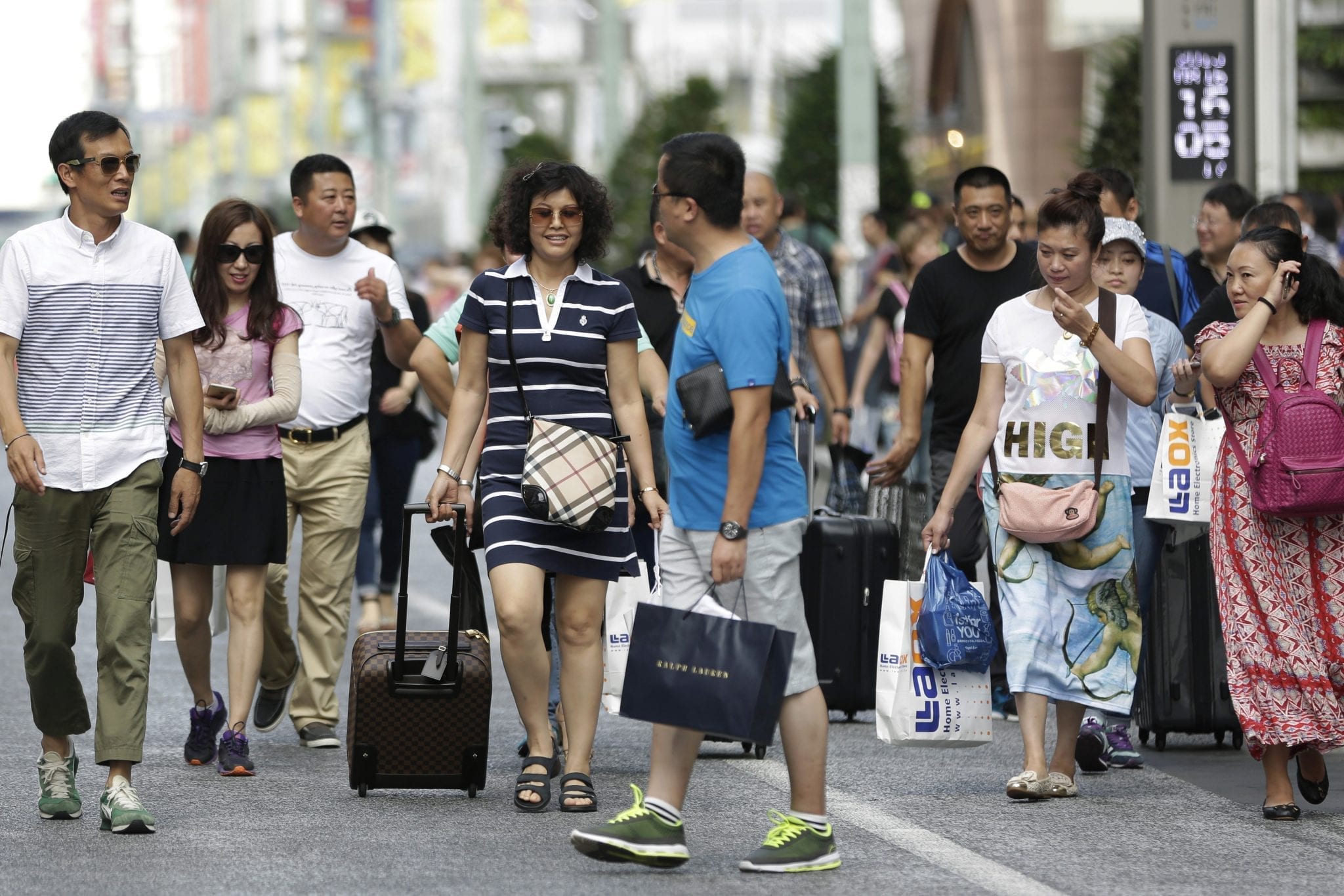
    Chinese visitors are critical to South Korea’s travel retail sector (the world’s largest), representing 52.5% of total arrivals in the month.

    For the first eight months of 2016 Chinese arrivals rose by +48.8% year-on-year to 5,608,046.

    The importance of group tourists to the travel retail channel is underlined by the breakdown of Chinese visitor numbers (see table below) with 4,839,309 group travellers arriving in South Korea over the first eight months. Group tourists accounted for 86% of Chinese arrivals. Others (principally free independent travellers) represented just 731,731 arrivals, a 13% share, with business travellers and officials making up the balance.

    Attracting the FIT market is an increasingly important battleground in the fight between retailers to attract big-name luxury brands.

    However, arrivals by ‘others’ fell -7.0% year-on-year in the first eight months, while Chinese group tourist numbers surged +64.1%.

    Japanese arrivals grew -51.7% to 225,456 in August, a 14% share.

    The first eight months of 2016 saw a +23.5% rise in Japanese visitor numbers to 1,451,565, a 12.6% share.

    Korean departures increased by +12.5% in August to 2,064,241; and for the first eight months by +16.8% to 14,780,387.

    Visitor arrivals by gender for August; Source: Korea Tourism Organization

    Visitor arrivals by gender for August; Source: Korea Tourism Organization

    Accumulative visitor arrivals by gender for first eight months; Source: Korea Tourism Organization

    Accumulative visitor arrivals by gender for first eight months; Source: Korea Tourism Organization

    Visitor arrivals by purpose and nationality for August; Source: Korea Tourism Organization

    Visitor arrivals by purpose and nationality for August; Source: Korea Tourism Organization

    Accumulative visitor arrivals by purpose and nationality for first eight months; Source: Korea Tourism Organization

    Accumulative visitor arrivals by purpose and nationality for first eight months; Source: Korea Tourism Organization

    Outbound departures of Korean nationals by gender for the first eight months of 2016; Source: Korea Tourism Organization

    Outbound departures of Korean nationals by gender for the first eight months of 2016; Source: Korea Tourism Organization

    Outbound departures of Korean nationals by age for the first eight months of 2016; Source: Korea Tourism Organization

    Outbound departures of Korean nationals by age for the first eight months of 2016; Source: Korea Tourism Organization

  • Lotte jumps into Shanghai retail

    Lotte jumps into Shanghai retail

    Lotte Department Store has signed on to a joint venture with Citic Group, a state-owned Chinese company, to operate a shopping mall in Shanghai and to build three more in the region between 2017 and 2019, the Korean company announced Monday.

    The joint venture will operate the already-existing Citic Square Mall in the bustling commercial district of Jing’an on West Nanjing Road. The mall is currently run by Citic Group, and Lotte’s participation in the joint venture with the Chinese company will allow the Korean retail giant to step foot into the Shanghai market without having to navigate through China’s byzantine business regulations.

    Lotte will hold approximately 49 percent of the joint venture’s shares and will focus on operations, while Citic Group will help with property development.

    The partnership was first offered by Citic Group, which makes 60 trillion won ($52.6 billion) in annual sales from financial services, energy and property development. “In China, companies in property development have started to launch businesses in retail because they already have the land to build new facilities,” a Lotte Department Store spokesman said.

    Although Citic Group is an influential company in China, it lacks expertise in retail, as it wasn’t the group’s main business in the past. Competition is also tough, as Shanghai is currently home to over 50 department stores and 80 shopping malls.

    Lotte Department Store, on the other hand, already has five branches across China and has experience with merchandising, store design and employee training in the country. Sales at Lotte’s five department stores rose 28 percent last year from the previous year.

    The Korean retail giant said it plans to use the partnership to create more opportunities for Korean brands to enter Shanghai. Consumers in the metropolis have shown particularly high interest in Korean popular culture, making it a good starting point for Korean fashion companies looking to set foot in China.

    “We believe the partnership with Citic Group will strengthen our stance in the Chinese market,” Lotte Department Store CEO Lee Won-jun said. “Our plan is to use this opportunity to help other domestic companies with potential to expand to China as well.”


  • ASEAN e-commerce market keeps booming

    ASEAN e-commerce market keeps booming

    The ASEAN region (The Association of Southeast Asian Nations) is emerging as one of the most promising e-commerce markets in the world to replace the saturated Chinese market.

    Following the establishment of the ASEAN Economic Community (AEC) at the end of 2015, e-commerce is providing huge opportunities for Korean retailers seeking new customers abroad.

    Most member states of ASEAN, including Indonesia, Thailand, Malaysia, Singapore, the Philippines and Vietnam, are experiencing an e-commerce boom.

    The Internet-based retail market has been relatively underdeveloped in Southeast Asia due to low Internet penetration and lack of customers with purchasing power.

    However, with the middle class growing and Internet penetration spreading, the number of online and mobile shoppers in the region is rising fast.

    Still, it is fragmented and Internet users account for only around 40 percent of the total population of Southeast Asia, indicating that the region has much room to grow.

    According to the 2016 report “E-Conomy SEA (Southeast Asia)” released jointly by Singapore’s sovereign fund Temasek and Google, the average annual growth rate of Internet users in the region is forecast to reach approximately 14 percent by 2020, well above 4 percent for China and 1 percent for the United States.

    Online shoppers, accordingly, are also on a sharp rise.

    According to Bain & Company, the number of digital consumers, or those aged over 16 and using e-commerce, reached 150 million in 2015. Of them, around 100 million or 75 percent actually purchased goods online.

    By nation, Indonesia ranked at the top with 51 million digital consumers, followed by Vietnam (31 million), the Philippines (28 million), Thailand (23 million), Malaysia (14 million) and Singapore (3 million).

    “Chinese and global Internet companies should look at Southeast Asian e-commerce as their next potential gold rush,” reported IT-specialized media TechCrunch in June, 2015.

    In particular, ASEAN’s e-commerce has a special feature that sets itself apart from other countries.

    For example, the online retail market in the U.S. and Korea first grew with expansion of PC-based shopping. However, Southeast Asia experienced the e-commerce boom with more consumers accessing Internet via smartphones.

    In 2015, e-commerce in the ASEAN is estimated at $5.5 billion (6.06 trillion won), and the amount is expected to rise to $8.78 billion by 2025, according to E-Conomy.

    The portion of e-commerce to retail sales in the region stood at only 0.8 percent in 2015 but is forecast to jump to 6.4 percent by 2025.

    Global players eye ASEAN

    Against this backdrop, global players are making fast forays into the ASEAN e-commerce market.

    In April, Alibaba, China’s largest e-commerce company, purchased a controlling stake in Southeast Asian online retailer Lazada Group for $1 billion, its largest overseas investment.

    Lazada was started by Germany’s Rocket Internet in 2012 with headquarters in Singapore. It is operating in Malaysia, Indonesia, the Philippines, Thailand and Vietnam. It is the number one e-commerce player in Philippines, Malaysia, Thailand and Vietnam.

    In June, U.S. retail giant Amazon also decided to invest $600 million to open an e-commerce platform in Indonesia, according to Daniel Tumiwa, chairman of the Ecommerce Association of Indonesia (IDEA).

    Japanese SoftBank and Silicon Valley venture capitalist Sequoia Capital acquired a $100 million stake in Tokopedia, the biggest startup investment in Indonesia. eBay, another U.S. e-commerce giant, currently owns Qoo10, the online shopping mall based in Singapore.

    Korean companies are also expanding their operations in the region to capitalize on the rising popularity of hallyu or the Korean Wave.

    On Sept. 20, CJ Korea Express, South Korea’s largest parcel delivery service company, signed an international delivery service contract with Lazada. Under the deal, CJ would deliver goods made in Korea purchased by customers via Lazada’s website.

    On the same day, KOTRA, Korea’s trade-investment promotion agency, joined hands with Qoo10 to start an online support program and help Korean small firms export their goods to Southeast Asia. Qoo10 has a total of 300 million online members in Singapore, nearly 60 percent of its population.

    SK Planet opened 11th Avenue, its online shopping mall, in Indonesia in 2014 and Malaysia in 2015.

    Korea is now focusing on expanding exports of consumer goods to ASEAN as it has faced limitations to increase external shipments of parts and intermediary products.

    “With more Korean firms entering the ASEAN e-commerce network, including Lazada, exports of Korean consumer goods, such as mobile phones, cosmetics, food and fashion items, are on a sharp rise,” Roh In-ho, KOTRA’s Asia Regional Director based in Singapore, said.

    For sustainable growth, Korean firms need to make more effort to come up with localized strategies that meet demands from local customers.

    “If diversifying marketing strategies, ASEAN e-commerce will offer good opportunities for small Korean exporters,” Roh said. “It is very important to develop designs and products that locals would like.”

  • The first ever SPAR China Congress

    The first ever SPAR China Congress

    The first ever SPAR China Congress kicked off in Weihai, in the Shangdong Peninsula yesterday. The three-day long Congress is being attended by SPAR International Board members, SPAR colleagues from across China and international retail experts as well as guest speakers and strategic partners.

    The Congress gives SPAR China Partners the opportunity to share best practice with each other and international SPAR Partners. Also in attendance are Graham O’Connor, Chairman of SPAR International & SPAR South Africa; Peter Blakemore, Chairman of A F Blakemore UK, Tobias Wasmuht, Managing Director of SPAR International, Paul Klotz, Chairman of SPAR Italy and Knut Johansson, Chairman of SPAR Norway. Over 200 delegates representing more than ten nationalities are gathered in the city.

    Delegates will visit a number of SPAR stores and the food production centre in Weihai, which offers a unique opportunity to see the rapid expansion of retail formats and instore product offerings which are inherent to the market.

    Since entering China in 2004, SPAR now has a presence in the provinces of Shandong, Guangdong, Shanxi & Inner Mongolia, Beijing (city), Sichuan, Henan and Hebei and a central office located in Shanghai. SPAR China has adhered to the brand philosophy of freshness, choice, value and service, focusing on the development of the SPAR Hypermarket, SPAR Supermarket, SPAR Neighbourhood and SPAR Express formats. 

    Great support has been received from many of the SPAR Partners around the world during the development of the strong SPAR operation in China which has continued to show excellent results year-on-year and is ranked fifth amongst global SPAR Partners in turnover terms reporting €1.9 billion in the 2015 results. Investment continues not only in retail with 360 stores trading today, but also supply chain expansion across all of the regions in which SPAR trades.

    “We seek to grow and expand in unity with all our SPAR Partners by sharing our resources and knowledge, ‘Better Together’, just like the theme of the SPAR China Congress. The success of the Congress will help drive the booming growth of our partners and the retail market in China,” said Yoep Man, SPAR China Managing Director.

    A SPAR International Board meeting is also taking place this week in Weihai, enabling the Board of Directors to meet with the Partners from SPAR China and to at see first-hand the development of the brand in this high potential market. 

  • Indonesian herbal medicine to be marketed abroad

    Indonesian herbal medicine to be marketed abroad

    An original Indonesian herbal medicine, Jamu, will be marketed abroad in the Middle Eastern and ASEAN regions, the chairman of the Jamu Association of Central Java, Nyoto Wardoyo, said here on Wednesday.

    Jamu is made from natural materials, such as roots, bark, flowers, seeds, leaves and fruits.

    “Indonesias ambassadors in various countries have started to introduce Jamu to other countries, such as Arab nations and Hongkong,” he informed.

    According to him, Jamu is in demand in many countries because they have realized that its health benefits.

    “Jamu is well known for its nutritional value. Demand for the product is rising and the exports have increased,” he reiterated.

    He also appreciated the fact that the government is encouraging the herbal medicine industry to progress.

    “Entrepreneurs expect expeditious grant of a license. Once we complete all the requirements, we want the government to immediately issue a permit,” he stressed.

    He hoped for better synergy between farmers, entrepreneurs and university researchers to develop Jamu products.

    He also hoped that Jamu products could be a part of the BPJS health program.

    “When people suffer mild colds, coughs or flu, the doctors can treat them with Jamu,” he underlined.

    Thanks to these efforts, the usage of Jamu is expected to rise at home as well as abroad.

  • Qualcomm unveils 5G modem chipset solution

    Qualcomm unveils 5G modem chipset solution

    US chipset maker Qualcomm has announced what it says is the world’s first commercial 5G modem chipset solution to help accelerate the deployments of 5G networks globally.

    Announced at the Qualcomm 4G/5G Summit in Hong Kong on Tuesday, Qualcomm said the Snapdragon X50 5G modem is designed to support original equipment manufacturers (OEMs) in building 5G smartphones and other devices, as well as aid mobile operators with early 5G trials and deployments.

    The solution, with 800MHz bandwidth support, works in the millimetre-wave (mmWave) spectrum in the 28-GHz band and supports a peak download speed of 5Gpbs. It employs MIMO antenna technology with adaptive beam-forming and beam-tracking technology.

    “The Snapdragon X50 5G modem heralds the arrival of 5G as operators and OEMs reach the cellular network and device testing phase,” said Cristiano Amon, executive vice president at Qualcomm Technologies.

    “Utilizing our long history of LTE and Wi-Fi leadership, we are thrilled to deliver a product that will help play a critical role in bringing 5G devices and networks to reality. This shows that we’re not just talking about 5G, we’re truly committed to it.”

    The Snapdragon X50 5G platform includes the modem, the SDR051 mmWave transceivers, and the supporting PMX50 power management chip.

    The modem can be used for multi-mode 4G/5G mobile broadband, along with fixed-wireless broadband devices, when paired with a Qualcomm Snapdragon processor with an integrated Gigabit LTE modem and interwork cohesively via dual-connectivity.

    Sampling for the Snapdragon X50 5G modem is expected to begin in the second half of 2017, with the first commercial products integrated the modem expected in the first half of 2018.

    The company also introduced three new processors for mobile devices – the Snapdragon 653, Snapdragon 626 and Snapdragon 427 processors.

    The Snapdragon 653, Snapdragon 626 are expected to be available in the market by the end of this year, while the 427 processor will appear in commercial devices by early 2017, Qualcomm said.

  • Local e-commerce not fazed by Alibaba expansion plan

    Local e-commerce not fazed by Alibaba expansion plan

    Local e-commerce company Bukalapak is not worried about Chinese giant Alibaba’s plan to expand into Indonesia as local players can still compete with foreign ones, the company’s co-founder said.

    Bukalapak co-founder and chief financial officer Muhammad Fajrin Rasyid said that unlike social media, which adopted a general model for their users worldwide, e-commerce business models needed a so-called “local touch”. This was because customers’ preferences for goods, methods of payment and logistic systems were different in each country, he went on.

    “Our customers mainly buy ‘local goods’ such as sambal [traditional hot relish] and they prefer to use cash on delivery as a method of payment. We must understand things like this,” Fajrin said at a Centre for Strategic and International Studies (CSIS) seminar on the digital economy in Jakarta on Monday.

    He further said that some foreign e-commerce companies had fallen victim to their own poor understanding of local customs. Japanese online market Rakuten Belanja Online closed in March while German-backed online delivery service Foodpanda Indonesia was shuttered on Oct. 3.

    “We are sure our customer to customer [C2C] model is still suitable for Indonesia. We have 1 million sellers and our mobile apps have the highest rate by users compared to other e-commerce companies,” Fajrin said.

    During the event, Investment Coordinating Board (BKPM) deputy of investment planning Tamba Parulian Hutapea confirmed that Chinese tech giant Alibaba would enter the Indonesian market soon. The company has bought German e-commerce company Lazada and plans to use the latter’s resources in Indonesia to make entry into its market.

  • Fast Retailing profit rebounds

    Fast Retailing profit rebounds

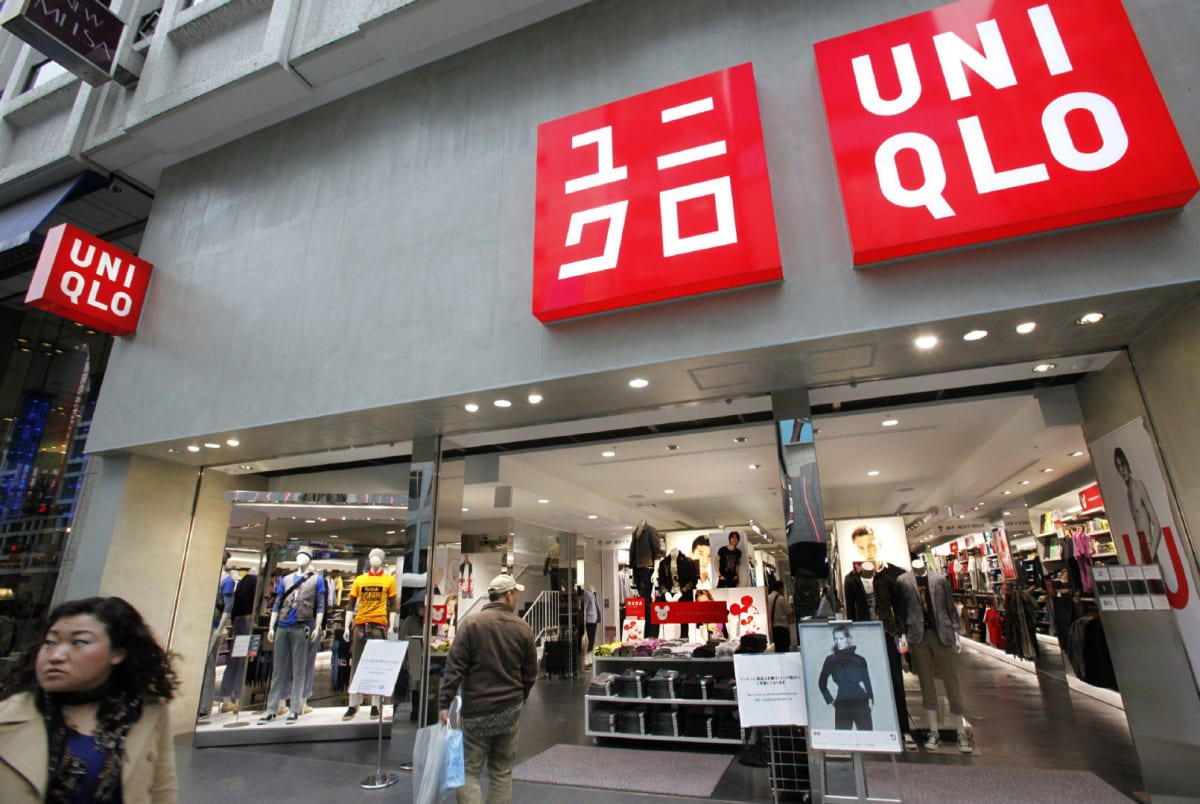
    While Fast Retailing profit fell in the full year, the Japanese apparel giant says its second-half profit rebounded sharply.

    Consolidated revenue rose 6.2 per cent to JP¥1.7864 trillion (US$17.19 trillion) while its operating profit fell 22.6 per cent to ¥127.2 billion.

    Factors underlying the sharp decline in profit include a ¥11 billion foreign-exchange loss, a ¥13.8 billion J Brand impairment loss, and ¥9.3 billion for impairment losses on Uniqlo Japan and Uniqlo US stores, plus retirement and store-closure losses.

    In the second half, from March to August, profit rebounded by 94.3 per cent year-on-year, attributed to a nascent recovery in sales at Uniqlo Japan and Uniqlo International, and concerted cost-cutting efforts.

    For Uniqlo Japan the second-half profit bounced back by 38 per cent. Revenue for the year was ¥799.8 billion, up 2.5 per cent, with profit dropping 12.6 per cent to ¥102.4 billion. Same-store sales rose 4.9 per cent in the second half compared to a 1.9 per cent decline in the preceding six months.

    For Uniqlo International, full-year revenue was up 8.6 per cent to ¥655.4 billion while profit fell 13.7 per cent to ¥37.4 billion. In the second half, however, profit rebounded to 15 times the previous year’s level, mainly because of sharp profit gains in Uniqlo Greater China (encompassing China, Hong Kong and Taiwan), Southeast Asia and Oceania, and Europe.

    For the group’s global brands, revenue rose 11.3 per cent while profit fell 34 per cent for J Brand, revenue rose 32.7 per cent and profit by 34.8 per cent for GU, profit was also up for Theory, while Comptoir des Cotonniers, J Brand and Princesse Tam.tam had losses.

    During the 12 months, Uniqlo International opened a series of stores, including its first global flagship store in Southeast Asia, the Uniqlo Orchard Central store in Singapore. As of August 31, the number of Uniqlo International stores had grown by 160 to 958.

  • China biggest buyer of Korean beauty products

    China biggest buyer of Korean beauty products

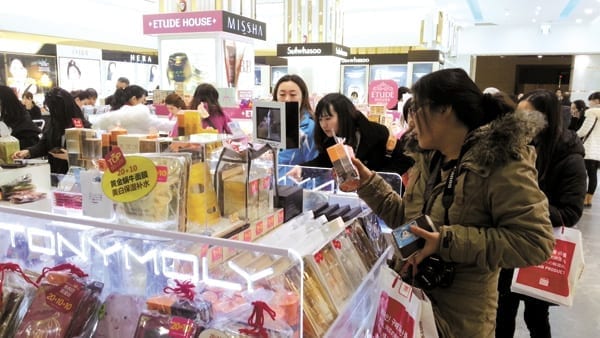
    China was the biggest buyer of Korean beauty products last year, grabbing almost half of the country’s cosmetics exports, according to Korea Health Industry Development Institute data.

    Chinese buyers accounted for 41.1 per cent of South Korea’s cosmetics exports, jumping from 22.1 per cent portion in 2013.

    The value of the exports also skyrocketed, from US$274.34 million in 2013 to $1.04 billion last year.

    However, exports to China could be in jeopardy if Beijing imposes economic sanctions in response to South Korea’s push for an advanced US missile defense system, says the institute. South Korea announced in July that it would take on the Terminal High Altitude Area Defense (THAAD) system by the end of next year to counter growing threats from North Korea.

    “There is concern over the Chinese government enacting indirect or direct economic sanctions and possible anti-South Korea sentiment in China,” says the institute.

  • Golden Week spending spree hits $180b

    Golden Week spending spree hits $180b

    Retailers and catering businesses were the main beneficiaries of the 1.2 trillion yuan (US$180 billion) Golden Week spending spree by Chinese consumers.

    This was 10.7 per cent up on last year’s figure, according to Ministry of Commerce (MOC) data, with the biggest spenders being in Chongqing municipality and Sichuan province in west China, and Hunan province in central China.

    Jewellery and gold, home appliances, IT products and energy cars were among the top picks during the week. There was also a demand for catering services for weddings, birthdays and family reunions.

    It is the second consecutive year Golden Week has hit the 1 trillion yuan spending milestone, says China.org.

    Despite an estimated 6 million Chinese tourists travelling overseas during the holiday week, domestic spending was highly encouraged, reports the International Business Times. Beijing has encouraged domestic spending to stimulate the economy, which jumped 6.7 per cent between January and June.

    “The economy this year, especially in the third quarter, is better than expected,” according to Premier Le Keqiang.

    A joint report by the China Tourism Research Institute and cTrip shows Chinese tourists spent as much as 8000 yuan during the national holiday.

    About 593 million Chinese tourists visited attractions across China, says the China National Tourism Administration, spending a total of 482.2 billion yuan, 12.8 per cent year on year.

    Golden Week, from October 1 to 7, is a national holiday of seven consecutive days.

  • Honda planning new China car factory for 2019 start

    Honda planning new China car factory for 2019 start

    Honda Motor Co plans to build a new factory in China that will produce passenger cars from 2019, boosting its output capacity in the country by about a fifth, two people familiar with the matter said on Tuesday.

    Honda and partner Dongfeng Motor Group Co (0489.HK) are experiencing explosive growth in China with sales for their joint venture soaring 48 percent for the year to date thanks to the popularity of the XR-V sport-utility vehicle as well as the recently launched Civic sedan.

    At the same time, the venture, Dongfeng Honda, is coming close to its capacity limits at its two factories, targeting sales of 450,000 vehicles for 2016 – not far off current annual capacity of 480,000.

    The new factory will be located in Wuhan, central China, a major auto hub. It will initially produce 120,000 cars a year, with capacity likely to double eventually, the sources said, declining to be identified as there had not been a formal announcement by the companies.

    Honda confirmed that it was discussing the additional plant in Wuhan with Dongfeng, but that it had nothing official to announce now. A Beijing-based spokesman for Honda said the project had yet to be formally approved by the company or the government.

    The plan was initially reported by the Nikkei business daily, which said the venture planned to spend “hundreds of millions of dollars” on the factory.

    The new factory would be Honda’s seventh in China. Honda also has a joint venture with GAC Group (601238.SS)(2238.HK) called Guangqi Honda which has three plants. The Japanese automaker also has a separate plant for exports.

    Honda said in April it was looking to boost car sales in China to 1.07 million cars this year. It sold 1.01 million vehicles in 2015, a 33 percent jump over the previous year.

    Auto sales in China strengthened in September for a consecutive fifth month, rising to a three-and-a-half year high.

  • CTE debuts in South Korea

    CTE debuts in South Korea

    Celestial Tiger Entertainment (CTE) has launched its flagship Chinese movie channel, Celestial Movies, on SK Broadband – a major pay TV platform in South Korea with over 3.8 million subscribers.

    The channel is now available on SK Broadband’s linear service “B tv” as well as OTT services “B tv plus” and “oksusu”.  The deal marks CTE’s first foray into South Korea.

    “This launch in South Korea is a very important milestone for Celestial Tiger Entertainment as this marks the 16th country for our network footprint,” said Todd Miller, CEO of CTE.

    Celestial Movies will be fully localized with Korean subtitles.  The channel will offer Chinese blockbusters and iconic films covering a diverse range of genres and featuring superstars like Jet Li, Chow Yun Fat, Stephen Chow and Nicolas Tse.

    Celestial Movies also airs special programming each month centered around themes such as tribute to stars, special holidays and particular genres. Beyond movies, the channel also presents interviews with renowned Chinese stars and directors.

    Celestial Movies is CTE’s flagship Chinese movie channel in Asia.  In Malaysia, Celestial Movies, Celestial Movies HD and Celestial Classic Movies continued to dominate the Chinese demographic as the top three most-watched regional movie channels among Astro Chinese 4+ audiences in the first six months of 2016.  In Indonesia, Celestial Movies remained among the top four regional movie channels including Hollywood services.

  • Hangzhou to harness Alibaba Cloud’s AI, analytics tools

    Hangzhou to harness Alibaba Cloud’s AI, analytics tools

    Alibaba Cloud announced at its recent Computing Conference that it will provide its AI, deep learning and data analytics capabilities for two new cutting-edge developments in China.

    Initiated by the Hangzhou government, the “Hangzhou City Brain” is set to address the city’s urban living challenges. As the hub to consolidate data and provide real-time analysis, the “Hangzhou City Brain” will rely on Alibaba Cloud’s AI program ET and big data analytics capabilities to perform real-time traffic prediction with its video and image recognition technologies.

    The project will support transportation departments’ efforts to ease traffic congestion and provide users with real-time traffic recommendations and travel routes.

    “By establishing the Hangzhou City Brain, Hangzhou is taking the lead in harnessing artificial intelligence and deep learning technologies to promote greater sustainability and improve the quality of urban living for Chinese citizens. Alibaba Cloud is proud to support and be part of this important development, “said Dr Jian Wang, chairman of Alibaba Group’s technology steering committee.

    With automated traffic system capabilities, intelligent adjustments of traffic lights will be performed on the spot; when a vehicle changes direction, the green light will automatically be extended. The pilot of world’s most advanced smart traffic management system in the Hangzhou’s Xiaoshan District, which started in September this year, has since seen an increase in traffic speed by 11%.

    The project is being led by the Hangzhou government in coordination with 13 firms including Alibaba Cloud. As part of the project, a research and development team of scientists from various companies has been formed.

    Forming the backbone of the “Hangzhou City Brain” data processing and analysis capabilities is Apsara, Alibaba Cloud’s large scale computing operating system, which is able to cluster millions of servers into a super computer and to support a multitude of cloud-based services by analyzing terabytes of data points. This computational engine is one of the largest of its kind in the world and uses propriety algorithms.

    Paving the way for astronomical data storage and analytics

    Aiming to leverage its technologies for astronomical data collection and analysis, Alibaba Cloud also announced at the Computing Conference its research collaboration with the National Astronomical Observatory of China (NAOC) on deep space exploration.

    The plans are to set up a data and research centre for astronomy, as well as a virtual solar observatory which will be supported by Apsara’s massive scalability and advanced capabilities to process astronomical data.

  • Alibaba Cloud picks Datapipe as global MSP partner

    Alibaba Cloud picks Datapipe as global MSP partner

    Alibaba Cloud has selected Datapipe as a global managed service provider partner, to help organizations entering China or Chinese companies venturing abroad adopt cloud environments.

    Under the partnership, Alibaba Cloud customers can look to Datapipe to plan, build and run their cloud environments. Datapipe will provide migration, management, and security of Alibaba Cloud solutions for computing, storage, database, CDN and big data.

    China-based Joyful Journey Travel is Datapipe’s first managed Alibaba Cloud client and is the first company to provide financial services to travelers in China.

    Datapipe’s team worked with Joyful Journey Travel to develop a solution based on Alibaba Cloud services including Elastic Computer Service instances, AsparaDB for Relationship Database Systems and Alibaba’s Cloud based CDN.

    “As a pioneer in managed cloud services the addition of Alibaba Cloud to Datapipe’s supported platforms and service capabilities was a natural step,” Datapipe VP of Asia Colin Chan said.

    “We look forward to working closely with Alibaba Cloud to help drive the global adoption of best practice enterprise cloud solutions.”

    “We’re pleased to welcome Datapipe as our global managed service provider partner,” Alibaba Cloud director of global marketplace alliances Unique Song added.

    “Datapipe’s experience in managing cloud environments for customers around the globe makes them well-positioned to help drive Alibaba Cloud deployments for customers in both China and overseas.”