Tag: China

  • Macy’s plans to launch an e-commerce site in China in 2017

    Macy’s plans to launch an e-commerce site in China in 2017

    Macy’s Inc. says it will launch a Chinese e-retail site in 2017 in order to increase its digital presence in the world’s largest e-commerce market. The department store chain announced the plan last week in Shanghai.

    Macy’s began selling online in China last November when it opened a storefront on Tmall Global, a web shopping site for imported products operated by Alibaba Group Holding Ltd. While the retailer did not disclose its sales on Tmall Global, it said more than 300,000 consumers have taken advantage of the social media-like features of Tmall Global to follow Macy’s so they can learn about new products and other information.

    Alibaba says Macy’s has become one of the most popular sellers on Tmall Global where Macy’s sells 1,500 fashion products from such brands as Kipling, Anne Klein, Tommy Hilfiger and Fossil.

    Macy’s also has explored several ways to connect online with young Chinese consumers. For example, the retailer has broadcast live shows online to explain its history and introduce its U.S. stores to Chinese consumers. A Macy’s live online broadcast about last month’s New York Fashion Week attracted about 100,000 Chinese viewers and resulted in some 150 million posts to Chinese social network Weibo, according to Macy’s.

    Many Chinese consumers shop in Macy’s stores when they travel to the U.S. and China is important for the company, the retailer says. However, the Chinese and U.S. markets are very different, Dustin Jones, Macy’s managing director for China, said at the news conference. “Chinese consumers want to know many details, while U.S consumers only want to check out quickly,” Jones said. “We are still learning in China and we will speed up our expansion next year.”

    Macy’s only sells online in China, and does not operate physical stores. Macy’s did not comment on any plans to open stores in China, although Jones said it’s hard to reach Chinese consumers without physical locations.

  • TravelersBox rolling out in Asia

    TravelersBox rolling out in Asia

    TravelersBox kiosks are being launched in Asian airports allowing travellers to deposit their leftover foreign coins into their preferred online accounts.

    More than 40 are expected to be service by the end of the year.

    TravelersBox is the first service allowing travellers to convert foreign currency into usable digital currency at airports. First rolled out at Manila airport in the Philippines, the latest kiosks have just come online in Narita International Airport in Japan.

    In parallel to the expansion, the company is also launching additional products and services in the kiosks tailored to the Asian market.

    Baidu wallet is the first offering, specifically aimed at the Chinese market, the largest travelling population in the world.

    “For the Asian market we’ve given specific attention to each traveller’s nationality,” says TravelersBox co-founder/CEO Tomer Zussman. “Services such as Nets FlashPlay Card for Singaporeans, Lazada for Southeast Asian travellers and more will soon be available in the TravelersBox around the world.”

    TravelersBox has more than 75 kiosks internationally where travellers can convert their leftover foreign change into digital money with options including iTunes, PayPal, Skype and gift cards such as Gap or Starbucks. There is also a donation button.

  • Xiaomi announces its first VR headset

    Xiaomi announces its first VR headset

    Xiaomi is broadening its already expansive range of products by venturing into virtual reality for the first time.

    The company today announced the Mi VR Play, an “entry-level” virtual reality headset that it hopes can open this new exciting medium to new audiences because not everyone has thousands of dollars needed to set up an Oculus Rift or HTC Vive. Democratizing technology is the thesis behind most of Xiaomi’s competitively priced products, including the $550/$750 notebook announced last week that will rival Apple’s Macbook in China.

    This new device recalls Google’s super-cheap and super-simple Cardboard VR headset. It is fairly basic in nature; you pop a smartphone into the lycra-built body then open Xiaomi’s Mi VR app, which contains VR content from selected partners that include Conde Nast Traveler and YouKu, “China’s YouTube.” Xiaomi pledged to invest $1 billion in video content, including VR, last year, so that library is sure to get bigger over time.

    Here’s how Xiaomi describes the headset:

    Mi VR Play has significantly improved upon the design typically used in similar VR products — it is wrapped in lightweight, durable Lycra for long-lasting comfort. In the future, Mi VR Play will also be available in a selection of bold prints and colours for even more stylish options. The unique two-way zipper helps to ensure compatibility, providing a secure grip on a wide range of 4.7- to 5.7-inch smartphones. At the same time, the dual openings on the front allow for slight positioning adjustments and ventilation.

    Here’s the catch — you can’t go and buy one, even if you’re in China.

    Xiaomi is making it available to a limited number of beta test users, who signed up on August 1 when Xiaomi put out a call for volunteers. One million users signed up in just eight hours, the company said, but Xiaomi has selected just a fraction of those — likely “tens of thousands,” a representative told us.

    For those lucky ones accepted into the test program, the Mi VR Play will cost just RMB 1 ($0.15).

    Xiaomi told us that it has plans to make the headset more widely available in the future, but there’s no schedule for that right now. Along those lines, it isn’t clear how much the headset will cost once it is on sale to all. We suspect it won’t be RMB 1, sadly.

  • India passing China as top mobile growth market

    India passing China as top mobile growth market

    India is set to overtake China as the most significant mobile growth market worldwide, and Asia is becoming the growth engine of the entire mobile ecosystem, according to the GSMA.

    In a new report, the GSMA predicts that over one billion additional people worldwide will be connected to mobile networks by 2020.

    Around a third of these new users (337 million) will come from India, compared to more than 200 million from China.

    China and India, combined with Indonesia, Pakistan, Bangladesh and Myanmar, will meanwhile collectively account for around 60% of the world’s expected 1.1 billion new subscribers by the end of the decade.

    The report also shows that 46% of the global population is using mobile phones to access the internet, and that this is expected to increase to 60% by 2020. This will make mobile phone ownership the key factor driving global internet penetration.

    Smartphones may also have grown to become the most commonly owned consumer electronics device, with penetration above 80% in some Asian markets including Korea and Singapore. By contrast, smartphone adoption rates in India stand at only 25%, leaving plenty of room for growth.

    Revenue from mobile services worldwide is meanwhile projected to grow by around 2% annually through to 2020, with slowing revenue growth being compensated for with new revenue opportunities resulting from growing mobile internet adoption and the move to higher-speed networks.

  • McDonald’s Malaysia ‘not in hurry’ to sell

    McDonald’s Malaysia ‘not in hurry’ to sell

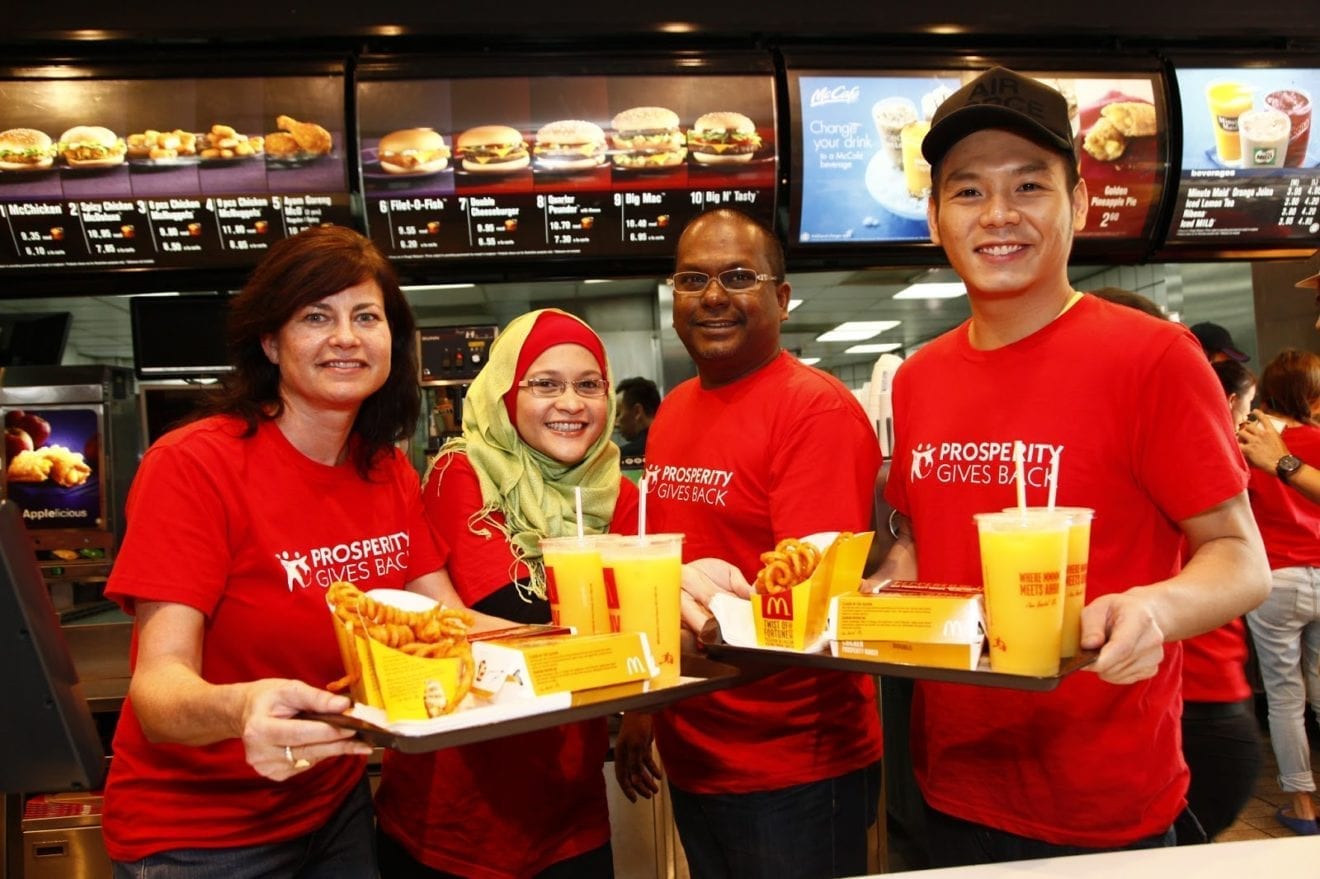
    Despite shortlisting several bidders for the McDonald’s Singapore and McDonald’s Malaysia franchise rights, Malaysian subsidiary Golden Arches Restaurants says it is not in a hurry to sell.

    MD Azmir Jaafar says the deal is being discussed with the shortlisted bidders, but no time frame has been set to complete the transaction.

    “We want to find the right partner who understands the local market and can ensure continuity of McDonald’s value and tradition, as well as be backed by strong capital.”

    He says it has always been the group’s idea to sell the franchise rights to a local partner, which would be more efficient than management by a corporate entity.

    McDonald’s Corp announced a revamp of its ownership models throughout Asia in July, including plans to offload its China, Hong Kong, Malaysia, Singapore and South Korea master franchises.

    CEO Steve Easterbrook’s plan covers about 4000 restaurants with an ultimate goal of having at least 95 per cent of the group’s restaurants franchised.

    Meanwhile, Azmir says that as the Malaysian deal is a business transaction “we will ensure the valuation is done properly”.

    “Still potential”

    There are 260 McDonald’s restaurants in Malaysia, with Golden Arches managing 200 and the rest in the hands of a third party. Though Malaysia has a population of only about 30 million people, which is relatively smaller than China and Indonesia, Azmir still sees huge potential in the market.

    “There are still many underserved areas,” he says. “As the government is improving the infrastructure in Sabah and Sarawak, I think we can expand our footprint into Kota Kinabalu and Kuching and other cities.”

    Azmir says the company intends to open 30 stores in the Klang Valley, Johor, Melaka and Penang as well as Sabah and Sarawak in the next three years. Five to seven new stores are targeted for this year, with one in Presint 2, Putrajaya, and another in Chukai, Terengganu, already open.

    “Our expansion plan is focussed on stand-alone stores as this model works very well, especially in terms of accessibility and convenience. Our ultimate goal is to have 500 stores in the country.”

    Azmir says the company also intends to renovate and remodel up to 30 outlets, each to cost about RM1 million (US$241,700). They have been open for nearly 30 years and will also have their technology upgraded.

    Combined, McDonald’s Singapore and McDonald’s Malaysia have enjoyed record sales in the past few months and is still targeting higher double-digit growth this year.

    Even following the introduction of the goods and services tax in Malaysia in April last year, Azmir says the company raised its selling prices by only about 1 per cent to offset the higher raw-material cost.
    He believes McDonald’s has captured up to 42 per cent market share in the Malaysian fast-food market.

  • Wal-Mart Boosts Stake in JD.com, Expands Further in China

    Wal-Mart Boosts Stake in JD.com, Expands Further in China

    Wal-Mart Stores Inc. has reportedly increased its stake in Chinese eCommerce website, JD.com Inc., to 10.8% from 5.9%, aiming to grab more market share in the world’s largest online market. Shares of JD.com jumped 7.5% in after-hours trading following the news.

    The move comes nearly four months after Wal-Mart inked a deal with JD.com. to sell its Chinese eCommerce business, Yihaodian to JD.com in exchange for a 5% equity stake in the company.

    JD.com is the second-largest online retailer in China after Alibaba Group Holding Ltd. in terms of market cap. The expanded deal with JD.com is expected to offer Wal-Mart a better chance of competing in the cut-throat retail industry in China and expand its reach in the country. Evidently, it expects to generate 25% of global retail growth from the region over the next five years. Further, this will benefit Wal-Mart with JD.com’s huge customer base and its same-day delivery network.

    WAL-MART STORES Price and Consensus

    We note that Wal-Mart has been struggling of late to expand its reach in China. The retailer opened its first store in the country in 1996, but only has about 430 stores there at present. The company has stated various reasons for the sluggish business operations in the region.

    In China, the company has long been dealing with food safety scandals despite trying to maintain high food safety standards. Wal-Mart China too has been facing significant pressure from government austerity measures and deflation. Further, the company faces problems in understanding discerning Chinese consumers as their buying decisions aren’t always price driven.

    Apart from expansion in China, this Bentonville, AR-based company is leaving no stone unturned to acquire a stake in the online business. In this regard, it continues to make huge investments in eCommerce initiatives, including acquisitions. Recently, Wal-Mart completed the acquisition of eCommerce company, Jet.com, Inc., which marked a huge step forward in its quest to dominate ecommerce king, Amazon.com, Inc. Wal-Mart is also in talks to acquire a stake in India’s largest eCommerce firm, Flipkart Online Services Pvt., in order to expand in the fast-growing online retail market.

  • Fast Retailing rolling out GU shops overseas

    Fast Retailing rolling out GU shops overseas

    Japanese retail holding company Fast Retailing intends to have 1000 shops for its low-cost GU brand overseas in 10 years, up from about 10 foreign stores now.

    GU sells clothing often priced at about half that of stablemate Uniqlo.

    Fast Retailing will expand GU first in Asia, where Uniqlo has been successful, says chairman/president Tadashi Yanai.

    After increasing its GU outlets in Taiwan and China, Fast Retailing will turn its attention to South Korea, Hong Kong, Thailand and Singapore for growth in the next five years.

    GU’s first overseas store opened in 2013. In Japan, the brand’s low prices and sensitivity to fashion trends have helped store numbers grow to around 350.

    Meanwhile, Uniqlo now has more stores overseas than in Japan, with plans to set up around 100 shops a year in China.

    Other brands under Fast Retailing’s wing include Comptoir des Cotonniers, J Brand and Princesse Tam-Tam.

  • Yum China has ‘huge potential’

    Yum China has ‘huge potential’

    Yum China is set to exploit “huge potential” after its spin-off from its US parent, says Neil Saunders, CEO of Conlumino.

    Commenting on the parent company’s latest results, the US-based retail commentator said  while the China division once again delivered “an anemic performance” with total system sales declining by 3 per cent over the prior year, the best is yet to come.

    Revenue at both Pizza Hut and KFC fell on a same-restaurant basis.

    “This means that in the year to date, in real terms the China operation has posted no real sales growth. Fortunately, changes to value-added tax in the country allowed Yum! to ease up operating profits across the quarter,” said Saunders.

    “The position of China as a business which has huge potential once it gets through the current patch of slow growth, largely justifies its imminent spin-off into a completely separate operation. The divorce from the rest of the Yum! operation will allow both sides to focus more on their respective priorities and opportunities.”

    He said the overall global result for Yum! Brands suggest the company is making good headway in an increasingly challenging market.

    “However, the reality is far more mixed – mostly because Yum!’s growth figures are flattered by the fact the company strips out exchange rate fluctuations. When these are put back in, total revenue experienced a shrink of 3 per cent over the prior year – a far less impressive outcome.

    “In terms of the core business, the main focus needs to be Pizza Hut which has become something of a problem child for Yum! Over the quarter system sales shrank by 2 per cent in real terms, underpinned by a 1 per cent decline in same-restaurant sales. While there are some markets in which the brand is performing well, these continues to be overshadowed by the US which accounts for the majority of Pizza Hut’s revenue.”

    Saunders said that while admittedly the overall casual dining market, in which Pizza Hut loosely falls, saw customer traffic and spend decline over the third quarter.

    “However, our data also show that Pizza Hut is losing customer share to delivery services like Papa John’s and Domino’s. A defection to cheaper fast-food alternatives, especially among younger families, has also been unhelpful. This is an uncomfortable position and underlines the fact that Pizza Hut still has much work to do in terms of reinvigorating its brand.”

    Taco Bell, meanwhile, had a better quarter with a 5 per cent system-sales growth and 3 per cent same-restaurant growth.

    “While Taco Bell has benefitted from challenges at Chipotle, in our view most of the success is down to a change in marketing which is now more relevant to the younger millennial audience. Menu simplification and focus on popular lines has also helped to drive growth. We think these steps should be seen as part of a longer term upswing in the brand’s fortune.”

    Saunders said that while KFC had a much better quarter than the previous one, especially in the US, Conlumino still harbors concerns about the brand’s longer term growth prospects as younger upstarts like Chick-Fil-A or Popeyes Louisiana Kitchen continue to gain traction.

    “As such, we see KFC’s latest upswing as part of a more turbulent longer term picture.”

  • Hong Kong shines for Sandro Asia

    Hong Kong shines for Sandro Asia

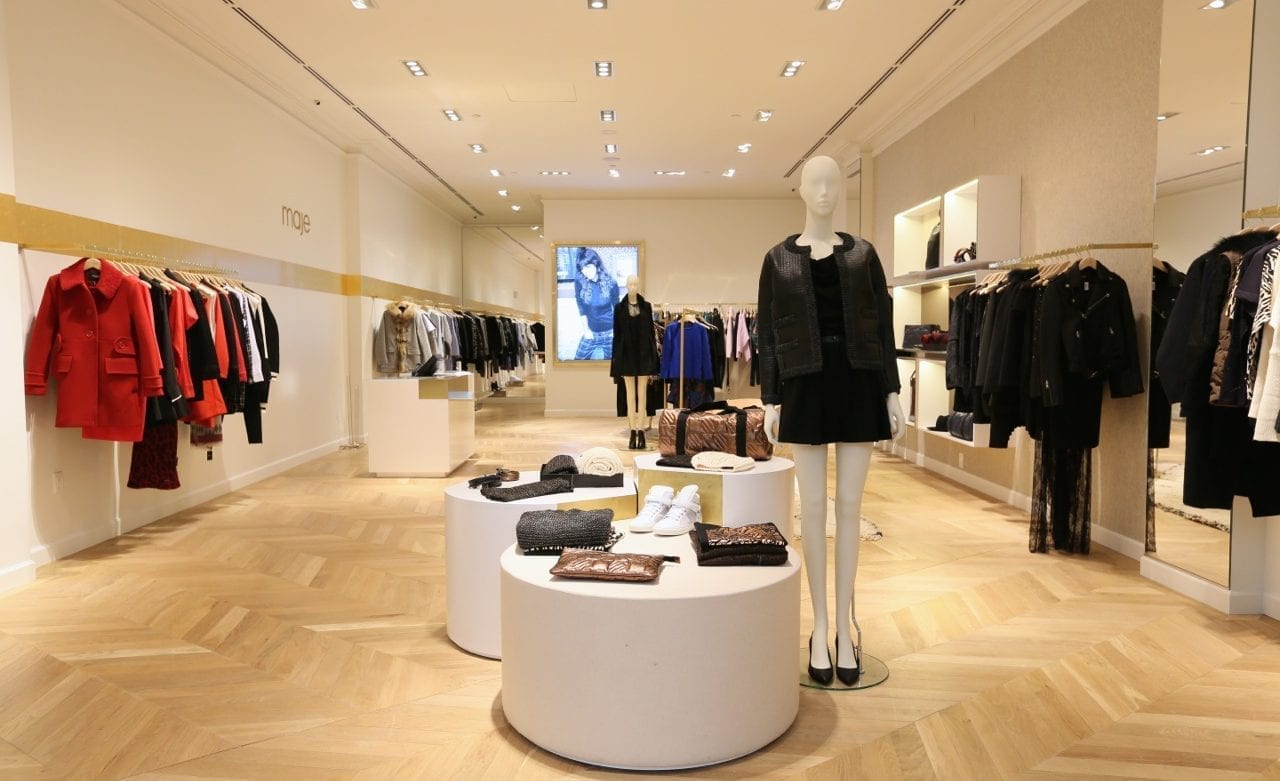
    Paris-based affordable luxury fashion chain Sandro Asia, along with sister brand Maje and Claudie Pierlot, recorded 51 per cent year-on-year growth in Asia Pacific in the first six months of the year.

    Sandro opened its largest Asia flagship store in the heart of Causeway Bay in August, and plans to double the size of its year-old store in Tsim Sha Tsui’s Harbour City.

    This store quickly became the most lucrative of Sandro’s 410 retail outlets worldwide in terms of sales per square metre. In contrast, total tenant sales at Harbour City fell 14.7 per cent to HK$13.3 billion (US$1.7 billion) in the first half, according to financial filings by its parent company Wharf Holdings.

    Sandro now has eight outlets in Hong Kong, and plans to add another two or three more by the end of next year.

    Branding its products as “accessible luxuries”, Sandro’s CEO Jean-Philippe Hecquet says the segment became “very powerful” when people started to look inside their wallets.

    Hecquet, who previously worked for luxury group LVMH, says upper-middle-class consumers still want to enjoy their life even with less money. “They still want to buy luxury products, for sure.”

    Sandro’s launched in Hong Kong in 2012, and Hecquet admits it may have missed the “golden age” when mainland shoppers would queue up outside Chanel, Gucci and Louis Vuitton outlets. But he says that while business is slowing for the traditional luxury brands, “we still see very decent traffic”.

    He believes the emerging young upper-middle class in Asia will be the future powerhouse for luxury goods, and the right time to expand is now. Hong Kong’s retail downturn has freed up more prime retail space and rents are going down. “We have been waiting for a long time to be able to open a flagship,” says Hecquet.

    He says the average age of Sandro’s customers in Hong Kong is between 25 and 30 years, and mainland visitors contribute to a significant portion of sales.

  • Hong Kong Airport remained at the top of the list of China’s busiest airports for cargo

    Hong Kong Airport remained at the top of the list of China’s busiest airports for cargo

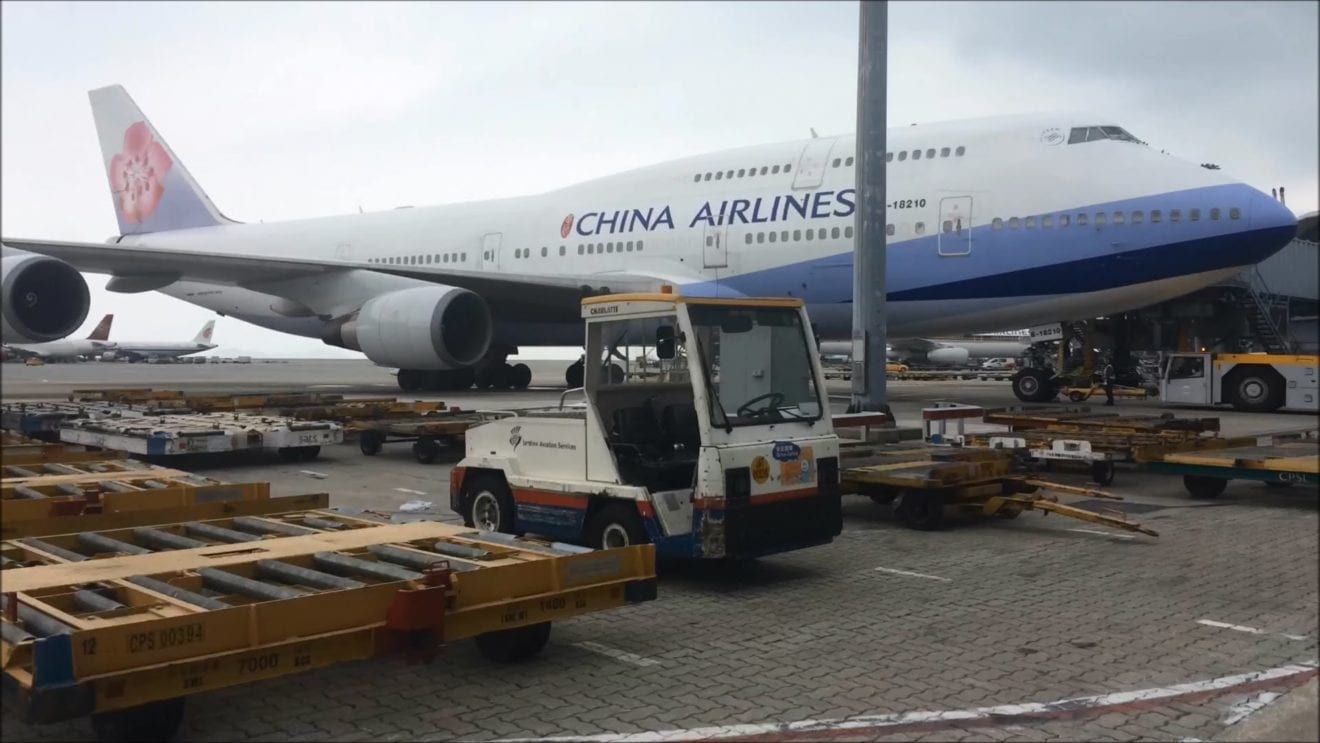
    Hong Kong International Airport remained at the top of the list of China’s busiest airports in terms of cargo traffic for 2015.

    According to statistics, Hong Kong handled a total of 4.38 million tonnes during the year. While this was only a 0.1% year-on-year increase, the airport also maintained its status as the busiest cargo airport in the world for a sixth consecutive year.

    In April 2016, the airport authority received approval from the government for its outline zoning plan and to proceed with the reclamation work for the three-runway system. The expansion project, which includes a 3,800, runway, new taxiways and a new passenger terminal, isn’t expected to be completes until at least 2023, and it remains to be seen whether that will further limit the growth of the cargo business.

    Next on the list was Shanghai’s Pudong International Airport, which handled approximately 3.28 million tonnes in 2015, a 2.9% growth over 2014.

    But flights at the airport are still prone to lengthy delays. According to the Civil Aviation Administration of China, Pudong came last in a ranking of the on-time departure performance of 27 major airports, with just 54.3% of flights departing on-time. 

    “We’re trying hard to solve the congestion issues during the day and talking to the air traffic control authorities,” says Xun Meng, deputy general manager of the Aviation Logistics Development Company at the Shanghai Airport Authority. “Unfortunately we don’t have much control over ATC and slots, but as an airport operator, we have the responsibility and duty to fight for what’s best for our customers. So we’re going to try and coordinate slots for cargo by solving one or two issues. For example, we could agree with some domestic airlines to lease or sell their spare or unused slots to cargo carriers.”  

    Two other factors that could benefit the development of the cargo business, according to Meng, are the completion of the fifth runway and the optimization of military and civil airspace in the Shanghai area. 

    FedEx has been building its own ¥700 million (US$105 million) freight hub at the airport. The necessary inspections will be carried out from July to the end of November 2016. 

    “From December to April next year, it will be handed over to FedEx and they will be launching operations,” says Meng. “This hub is located at the western cargo area and will handle mainly international express shipments and cargo in transit.” 

    The implementation of e-freight has become an important indicator in the evaluation of the efficiency of airports around the world and is something which Pudong is taking very seriously. 

    “This also has very important practical consequences on the development of our hub,” says Meng. “Since we signed an agreement with IATA, Shanghai Customs, the Inspection and Quarantine Bureau, China Eastern Airlines and the e-customs department in March 2015 to promote the digitalization of cargo, we’ve set up and coordinated all the relevant groups and units, agreed on the work flow, and worked hard to roll out the e-freight programme.” 

    With the help and support of the customs department, the airport has been running trials on the use of electronic air waybills for imports and encouraged forwarders and carriers to enter into multilateral e-AWB agreements, so that carriers such as China Eastern, Cathay Pacific, Korean Air and Lufthansa can implement e-freight pilot programmes. 

    “We’ve made a lot of progress – during the first half of the year, e-AWB coverage at Pudong reached 40%,” says Meng. “More than 10 airlines and 80 forwarders are now part of our e-freight initiative, and more than 100 logistics companies have multilateral e-AWB agreements. We handle more than 30,000 e-AWBs every month, which is the highest in China and the second highest globally.” 

    Meng says that China’s readjusted economic growth isn’t a cause for major concern. 

    “The easing of the economy actually has benefits for us too,” he says. “We can use this opportunity to reorganize the airport’s facilities, accelerate the upgrade of our infrastructure and enhance our communication with the relevant government departments.” 

    The airport also has to standardise its operations and change the traditional way of thinking which places more importance on the passenger side.

    “In an environment where there are both opportunities and challenges, we realize that many domestic forwarders and carriers are looking for new trade lanes so we have to become more competitive,” says Meng. “For example, China Southern is constantly improving its high-end products such as temperature control for fresh produce and pharmaceuticals, as well as information and messaging platforms that raise the customer experience. Air China is becoming more and more professional, strengthening its partnership with Cathay to optimize the operation of widebody freighters and improving its hubs at Beijing and Shanghai. China Eastern is turning to the integrated logistics model, looking in particular at developing the e-commerce, express and forwarding businesses.”

    Additionally, Meng says that Pudong airport will need to keep up with the development of Shanghai’s free trade zone, and use whatever chances there are to reform further so that it can improve its high-end offering and overall service efficiency.

    “We also have to strengthen our cross-border e-commerce markets,” he says. “This is something that we have in common with the free trade zone and it will be extremely important for air cargo going forward.”

    In fourth place, Guangzhou Baiyun International Airport’s throughput for the year was roughly 1.54 million tonnes.

    In the next 12 months, the airport will be focusing on the consolidation of exports, the long-haul business, the construction of a cold chain hub, cross-border e-commerce and international transhipment, according to Tony Tang, general manager of the Air Logistics Service Company at Guangzhou Baiyun International Airport Co., Ltd.

    “We’re in partnership discussions with various companies to establish agreements so that we can work closely together on the commercial, technical and managerial aspects of the cold chain,” he says. “That way, we can strengthen our cold chain infrastructure and promote the growth of the business together. In terms of transhipment, we’ll integrate international and domestic flights so that customers have a wider range of transfer options. 

    Guangzhou Baiyun is planning a cross-border trucking service whereby shipments originating in Hong Kong or Macau pass through customs and are trucked to the airport, where they are then loaded onto international flights.

    “After this service is enabled at International Cargo Terminal 1, we estimate that Baiyun will receive an additional 2,000 tonnes of international cargo per year,” says Tang. “This will also help to raise our competitiveness in the Pearl River Delta.” 

    The airport’s total throughput for 2015 represented a 5.8% year-on-year increase, which Tang says was mainly due to the growth of the international business, which was up 9.6% over 2014.

    “Firstly, this came from the increase of freighter flights from Japan, South Korea and the Middle East,” he says. “Secondly, we allocated prime slots to international flights in order to encourage a boost in frequencies.”

    Baiyun is planning infrastructural upgrades to improve service quality and efficiency. For example, it will be investing ¥330 million (US$49 million) to build an integrated cargo complex so that customs, inspection and quarantine, warehousing and offices will all be housed under one roof.  

    “In terms of software, we’ll be upgrading our cargo IT system later this year,” Tang says. “Customers will be able to make delivery and pickup bookings online, which will help to achieve a paperless process at the terminal. At the same time, we’ll also implement a smart warehousing system so that the location and condition of all the cargo can be tracked and monitored.”

    What is posing a challenge for the cargo team at Guangzhou’s airport isn’t necessarily the slowing down of China’s economy, but rather the rapid growth of road and rail transport.

    “There is not much room left to grow the air freight market within 1,000km of our airport, so we’re trying hard to develop niche markets such as express and small parcels,” says Tang. “But we still think there’s huge potential in aviation, especially on routes over 1,000km long and transcontinental routes. Compared to the US, which saw a total cargo and mail throughput of about 67 million tonnes, China handled 14 million tonnes, only about 21% of the US total. This shows our potential compared to developed countries.”

    The third airport in the Pearl River Delta to be among the top 10, Shenzhen Bao’an International Airport handled a total of approximately 1.01 million tonnes in 2015, ending up with a rank of fifth.

    According to Zhengling Sun, deputy general manager of Shenzhen Airport Co., Ltd., an upgrade to the airport’s bonded logistics centre is almost ready.

    “We’re now carrying out a renewal of facilities, hardware and software,” says Sun. “We’ve already handed over all the proposals and relevant documentation to Shenzhen Customs, and we plan to be operational later in July.” 

    During the year, Shenzhen’s airport added a number of international flights, such as China Southern to Dubai and Sydney, Shenzhen Airlines to Tokyo and Air China to Frankfurt and Los Angeles.

    “We would like to introduce more freighter services, but bellyhold cargo on international passenger flights is also a good addition,” says Sun. “We’ll continue to work together with airlines to add more freighter routes, especially international routes and those in support of the Belt and Road Initiative. We’ll attract more airlines to choose Shenzhen through factors such as slots, the customs process, our air logistics policy and our internal management.”

    In response to the booming aviation market in China, Bao’an Airport is rolling out a new phase of construction work, consisting mainly of a third runway, a new passenger terminal, a satellite building, a domestic terminal and warehouses for forwarders. Planning and feasibility studies are also being carried out for a new 100-hectare cargo zone at the northern end of the airport. 

    Sun says the growth in 2015 mainly came from international and regional routes. 

    “We opened a route to Taiwan, and SF Express, China Airlines Cargo and EVA Air Cargo all launched freighter services between Shenzhen and Taipei, with up to 10 flights a week,” he says. “Cargo and mail volume for the Taiwan route increased 95% year-on-year to 43,000 tonnes. Polar Air Cargo, which launched a direct flight to the US in July 2015, also boosted its frequency from one per week to five per week.” 

    The new 73,000m2 SF Express freight centre, which opened over the course of the year, currently handles about 500 tonnes per day, of which 400 are for SF’s own freighters and 100 are for the bellies of commercial flights. 

    More growth is on the way, according to Sun, who says that Shenzhen airport’s international air cargo market is full of potential because Guangdong province is such a huge exporter.

    “Against the readjusted GDP growth across the country, Shenzhen has already restructured its economy and cannot be compared with other inland cities,” he says. “Shenzhen’s GDP no longer relies on agriculture, but is instead based on technology and entrepreneurs. The fact that these high-tech products need to be exported brings us many opportunities. 

    Zhengzhou Xinzheng International Airport, which stayed in eighth ninth place, handled about 403,000 tonnes in 2015, a year-on-year growth of 8.9%.

    To cope with increasing demand, the airport launched operations on its second runway in 2015. The 3,600m runway raised the Zhengzhou airport to category 4F.

    “We usually use the first runway for takeoffs, while the second is mainly used for landings,” says Shu Xia Kong, spokesperson for the board of directors at Henan Airport Group. “On average, more than 250 aircraft land on the new runway every day.”

    Zhengzhou is well on its way towards being ready for the arrival of Cargolux China, which is scheduled to launch operations from the airport in 2017. A major piece of land is being developed into the northern cargo zone, which is designed to be capable of handling 150,000-200,000 tonnes per year when complete.

    “The main functions are to satisfy the needs of international air freight, with plans for a bonded warehouse, a large integrator hub, terminal for other airlines and a cold chain facility,” Kong says. “We’re also planning to construct a taxiway, two access roads and other facilities such as a dangerous goods warehouse and loading and unloading bays that will occupy about 55,000m2.”

    Cargolux isn’t the only company to have chosen to establish a base at Zhengzhou’s airport.

    “China Postal Airlines is going to build a domestic and international sorting centre here which will handle up to 150,000 tonnes per year,” says Kong. “The Dalian Yidu Group, a major fruit trader, has also chosen our northern cargo zone as the site for a cold chain food import distribution centre, which will be capable of handling 200,000 tonnes per year.”

    With all this development, the airport is expecting a throughput of 90,000 tonnes for the first quarter of 2016, as well as a total of 450,000 tonnes for the year, according to Kong. 

    Zhengzhou Xinzheng recorded the second-highest growth among China’s top 10 airports in terms of throughput for 2015, after Kunming Changshui International Airport, which increased its throughput by 12.2% to about 355,000 tonnes.

    Top 10 airports in China in terms of cargo throughput for 2015

    Airport

    2015 total throughput [tonnes]

    2014 total throughput [tonnes]

    Change [%]

    Hong Kong International Airport [HKG]

    4,380,000

    4,376,000

    0.1

    Shanghai Pudong International Airport [PVG]

    3,275,231

    3,181,655

    2.9

    Beijing Capital International Airport [PEK]

    1,889,440

    1,848,251

    2.2

    Guangzhou Baiyun International Airport [CAN]

    1,537,759

    1,454,044

    5.8

    Shenzhen Bao’an International Airport [SZX]

    1,013,691

    963,871

    5.2

    Chengdu Shuangliu International Airport [CTU]

    556,552

    545,011

    2.1

    Shanghai Hongqiao International Airport [SHA]

    433,600

    432,176

    0.3

    Hangzhou Xiaoshan International Airport [HGH]

    424,933

    398,558

    6.6

    Zhengzhou Xinzheng International Airport [CGO]

    403,339

    370,421

    8.9

    Kunming Changshui International Airport [KMG]

    355,423

    316,672

    12.2

  • China plans 5G trials in over 100 cities

    China plans 5G trials in over 100 cities

    China reportedly plans to conduct 5G trials spanning more than 100 cities to help ensure the country plays a key role in 5G technology development.

    A spokesperson for ZTE told that China Mobile alone is planning pre-5G trials in more than 100 cities across more than 20 provinces. The operator plans to roll out 5G services in 2020 once the standard becomes finalized.

    It is unclear whether the two other state-owned operators are also involved in trials.

    According to the report, analysts believe “China Inc” has a strong interest in ensuring that a significant amount of Chinese technology is embedded into the 5G standard. This would free vendors of their need to pay royalties on foreign technologies.

    The telecoms sector is also trying to avoid a repeat of the fragmentation of the 4G standard into TDD and FDD LTE. A single standard would be hugely beneficial to the industry. China developed the TDD standard as an attempt to escape the royalty issue.

    Huawei and ZTE are closely involved in 5G technology development, and Japan’s SoftBank recently arranged to test 5G-ready equipment from the two vendors in Japan, which is expected to be one of the first markets to adopt 5G.

  • McDonald’s China Stores Could Fetch $2 Billion

    McDonald’s China Stores Could Fetch $2 Billion

    McDonald’s Corp. Chief Executive Steve Easterbrook, aiming to slim down the Golden Arches and boost profit, has turned to the market where he can do something big, fast: China.

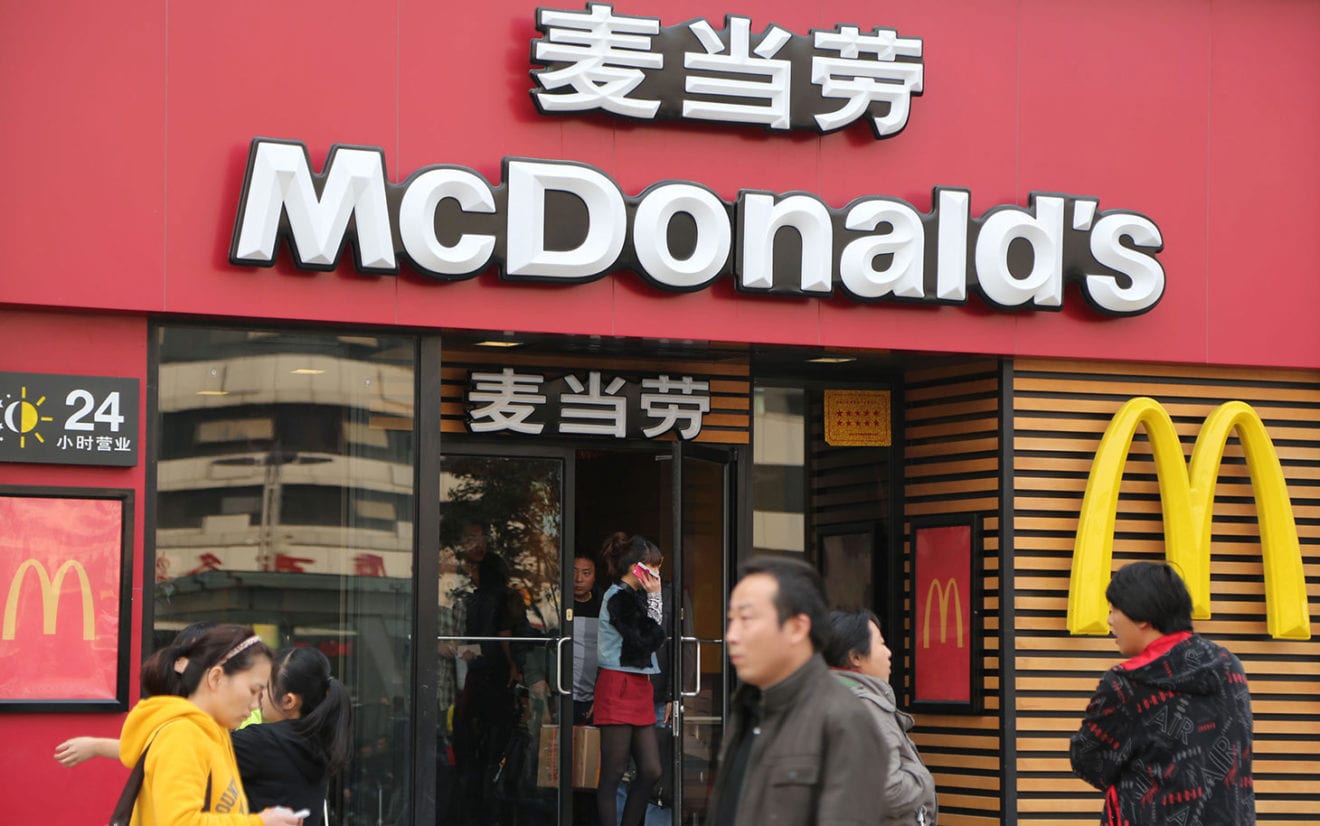
    The Oak Brook, Ill., chain is looking to cut a deal to turn its 2,200-store empire in China—65% of which it owns and operates—into a cash machine through all-out franchising. The move, for which a partner could be determined before the end of the year, is expected to fetch between $1.5 billion and $2 billion up front from investors, people familiar with the matter said.

    McDonald’s would also rake in an estimated 5% to 7% of sales for the 20-year life of the deal. It would keep a minority stake in these far-flung stores, while slashing its operational costs and preserving capital.

    The timing of the initiative also reflects the maturing of the fast-food business in China, where McDonald’s and Yum Brands Inc.—owner of Kentucky Fried Chicken and Pizza Hut—have operated for a quarter-century.

    As big consumer chains move from the familiar streets of Beijing, Shanghai, Guangzhou and other metropolises to smaller cities, they need Chinese partners with knowledge of the country’s real estate and market demographics to know where to put new stores and how to supply them.

    “In the lower-tier cities, we want to accelerate, and a local partner would have more local wisdom and more local resources,” Phyllis Cheung, chief executive of McDonald’s China, said in an interview. “The whole idea of franchising is that you have more flexibility and speed to market—and are more able to answer to consumer needs.”

    There appears to be a healthy appetite for the deal. A clutch of at least six bidders has shown interest in a McDonald’s China franchising deal, including U.S. private-equity giantsCarlyle Group LP, TPG and Bain Capital LLC, according to people familiar with the situation.

    The three private-equity firms have teamed up with local Chinese partners, such as CiticLtd. and Wumart Stores Inc., who know local market conditions. McDonald’s is also looking to cut a similar deal with outside investors for its South Korea stores.

    In China and Hong Kong, McDonald’s is asking its potential partner to take over its more than 1,400 company-owned restaurants and build 1,300 new stores. It still has room to grow in China, the only major market where the number of Kentucky Fried Chicken stores—5,000 and counting—outstrips the number of McDonald’s stores.

    The winner will operate in a country where the novelty of burgers, fries and shakes has long since faded. It will need to find new ways to satisfy Chinese consumers demanding healthier, more upscale and personalized alternatives.

    Bessie Wang, 33 years old, began eating at McDonald’s in grade school soon after the fast-food chain entered China 26 years ago, becoming a fan of the company’s fried-chicken sandwiches.

    On a recent weekday, Ms. Wang was dining on a spicy chicken sandwich at the McDonald’s on Beijing’s Wangfujing shopping street. But her visits have declined.

    “Taste isn’t the issue; it’s health reasons,” said Ms. Wang, an office administrator. “I don’t need to go as often anymore because other restaurants offer fried-chicken dishes.”

    Sales from established McDonald’s stores in China have bounced back from a supplier issue that led to shortages of hamburgers and chicken at some restaurants in 2014. Same-store McDonald’s sales in the country shrank for four consecutive quarters before they began recovering in the middle of last year, according to figures provided on the company’s earnings calls.

    And competition is rising. Dicos, a Taiwanese-owned chain, for example, offers chicken sandwiches at more than 2,000 restaurants in China, matching the scale of McDonald’s. Another growing Chinese fast-food chain, known as Real Kung Fu, sports a Bruce Lee logo, offering bowls of Chinese noodles with beef and pork.

    The growing competition, Ms. Cheung said, is one reason McDonald’s is looking for a Chinese partner with a “deep understanding” of China’s market, rather than one that can simply bankroll new stores.

    Yum announced a similar move last year to spin off its KFC and Pizza Hut operations in China and maintain a foothold in the country through royalty payments.

    For companies such as McDonald’s and Yum, moving toward a franchise-only model in China makes sense now because the market has matured to the point where there are more people with experience running fast-food chains and fast-casual restaurants, according to Ben Cavender, director at China Market Research Group.

    “There’s a stronger talent pool, and they have the capability to operate a franchise and operate it well,” he said. “Brands are also clamoring to try to grow into new markets, and they might not be able to do it quickly by themselves, and they need help.”

  • Alibaba And JD Face Chinese Online Clothing Market Deceleration

    Alibaba And JD Face Chinese Online Clothing Market Deceleration

    China’s burgeoning online clothing market experienced a sharp slowdown in the second quarter. Yearly growth rates tumbled from over 70% just six months ago to a two-year low of less than 45%. If the sharp slowdown continues in the second half this year, it will have a substantial impact on the revenues and profits of China’s top online retailers Alibaba, JD.com and Vipshop.

    According to the latest quarterly report by Analysys, China’s B2C apparel trade fetched a record of 208.9 billion yuan in the second quarter this year, an increase of 44.7% over a year ago. It was also higher than the 186.77 billion yuan registered in the first quarter.

    Sales figures for each company’s second quarter are higher than that of first quarter because of two factors. First, most people buy winter clothes in the fourth quarter, in part preparing for the Chinese New Year. Secondly, the second quarter is the time to buy spring and summer clothing. To further stimulate this seasonal demands, different e-retailers have organized in recent years three promotions, namely on April 19, May 20 and June 18. These three days have become national “festivals” and are successful in driving the overall growth of online apparel market.

    Online Clothing Sales Growth Rates Drop Nearly 30 Percentage Points

    However, Chinese online clothing sales now experience a sharp deceleration. The yearly transaction growth rate tumbled from an all-time-high of 72.2% at the fourth quarter last year, to only 44.7 % in the second quarter this year. It was also the lowest growth rate registered in the last two years.

  • C.Banner Announces Hamleys First Flagship Store Open in Nanjing

    C.Banner Announces Hamleys First Flagship Store Open in Nanjing

    C.banner International Holdings Limited (“C.banner” or the “Company”, together with its subsidiaries, the “Group”, HK:1028), a leading international integrated retailer and second largest retailer of mid-to-premium women’s formal and leisure footwear in the PRC, yesterday announced the grand opening of the first Hamleys (a centuries old British toy brand) China flagship store in Nanjing.

    The nearly 7,000 sq.m. store is located at Xinjiekou Sanpower Plaza (Nanjing International Finance Center), providing thousands of high quality traditional to high-tech educational items for children of all ages. In addition to the adorable iconic teddy bears from Hamleys, there are also other toy brand collections. Moreover, Hamleys partners with many world-renowned toy brands, such as Hasbro, Mattel, Lego, and others in this “Toy Museum” outlet.

    While providing high quality toys for children’s playtime fun, Hamleys cares a great deal about children’s mental development. Two special party houses have also been designed and built inside Hamleys’ Nanjing flagship store with a host of different themes to choose from. Their professional team is responsible as well for organising distinctive birthday party events for children, providing games, toys, food, and exclusive birthday cakes and birthday gifts. There are also more than 10 entertainment facilities located from the first to the fourth floor, providing interactive games for children of different ages.

    Facilities like remote car racing and shooting games enhance children’s response sensitivity while augmented reality (AR) games utilising technology and magic let children interact with the latest in virtual reality in areas like the “Water Game Zone”, Creative D.I.Y Workshop and Baby Aesthesia Zone. Hamleys uses the finest quality equipment to stimulate children’s sensory responses, allowing them to experience fun and providing memorable interactive games.

    In 2015, C.banner successfully acquired Hamleys, the centuries old British toy shop. Established in 1760, Hamleys is the oldest toy brand in the UK with a glorious history, well-known brand philosophy and high quality toys. It is a veritable “Magic Kingdom” for kids and adults of all ages. Hamleys now embarks on a new journey in Nanjing, China, with a diversified product range and services provided by creative concepts. Based on the Hamleys brand, the Group will design and build a consumer complex comprising various sections, including children’s entertainment, education, clothing, daily necessities, culture and catering.

    Mr. Chen Yixi, Chairman of C.banner said, “The addition of the Hamleys brand will provide a great boost to continuously enhance our Company’s brand value and realise a strong synergy with our existing business operations allowing us to achieve our global development strategy. The store is intended to serve as a template for future store openings as the Company seeks to replicate the unique Hamleys in-store experience with interactive playtime, events and special demonstrations in other populous cities over the PRC.

    “Next year, the Company plans to roll out more stores in core cities with high populations across China, such as Beijing, Shanghai, Xuzhou, Hangzhou and others. We will also continue to take full advantage of C.banner’s experience in China’s retailing industry and long-term retail network contacts to rapidly expand Hamleys’ business across the mainland. The Group has full confidence in Hamleys’ development in China, and we feel that we are now on the ground floor of greater opportunities ahead. We look forward with great anticipation to achieving strong business growth.”

  • China cuts cosmetics consumption tax

    China cuts cosmetics consumption tax

    China will reduce or remove consumption tax on all cosmetic products, the finance ministry said on Friday, as the country looks to stimulate domestic spending to help prop up slowing economic growth.

    The new policy will see consumption tax – previously set at 30 percent for all cosmetics – waived entirely for non-luxury cosmetic products, while the tax rate on more expensive cosmetics will be cut to 15 percent, the finance ministry said in a statement.

    The move, which comes into effect from Oct. 1, fits with China’s drive to make products more affordable to domestic shoppers, many of whom have traditionally looked to buy more expensive products overseas because of high tax rates at home.

    The cuts could be of some help to imported cosmetics brands, analysts said, but are unlikely to have a major or immediate impact because other steep tariffs mean prices domestically will remain high compared to markets overseas.

    “Cosmetic brands could benefit mildly from the tax reduction with more competitive pricing,” said Jefferies analyst Jessie Guo in a note on Friday. She added, though, that it would only “moderately” boost domestic demand.

    Last year, the ministry slashed import taxes on products from skin care to shoes in a bid to “push forward structural reform” as the country looks to shift its economy to consumption from flagging manufacturing and exports.

    The head of the world’s largest advertising firm, Martin Sorrell, said on Thursday the business environment in China was the toughest he had seen in around three decades, especially hitting international brands.