Tag: China

  • SAP China teams up with Alibaba Cloud

    SAP China teams up with Alibaba Cloud

    SAP China and Alibaba Cloud have teamed up to launch three cloud-based SAP services to Chinese customers by the end of the year.

    The companies have revealed plans to launch in-memory computing platform SAP HANA Cloud Platform and two other services in 2016.

    The two other services are the cloud-based SaaS CRM solution Hybris Cloud for Customer, as well as SAP Business ByDesign, integrated cloud suite tailored for mid-sized businesses.

    Alibaba Cloud president Simon Hu said the partnership is aimed at addressing the growing ubiquity of cloud services.

    “Cloud computing has become the new infrastructure for businesses around the world,” he said. “Through in-depth collaboration, Alibaba Cloud and SAP will join hands to bring more world-class cloud products with highly reliable and strong capabilities to companies in different industries.”

    SAP Greater China president Mark Gibbs said the company achieved triple-digit growth in the region from its cloud business in the first half of 2016.

    “The cloud business is a key part of SAP’s digital framework and one of the driving forces behind our rapid business growth in China.” he said.

    “The three cloud-based solutions that we are about to launch with Alibaba Cloud will further expand SAP’s cloud footprint in China, and meet the needs of more Chinese enterprises. It will help Chinese companies to effectively embrace the opportunities brought by digital transformation.”

  • China to fuel VF Corporation brands

    China to fuel VF Corporation brands

    Multibrand fashion group VF Corporation sees Asia – and especially China – as the primary driver of growth in the years ahead.

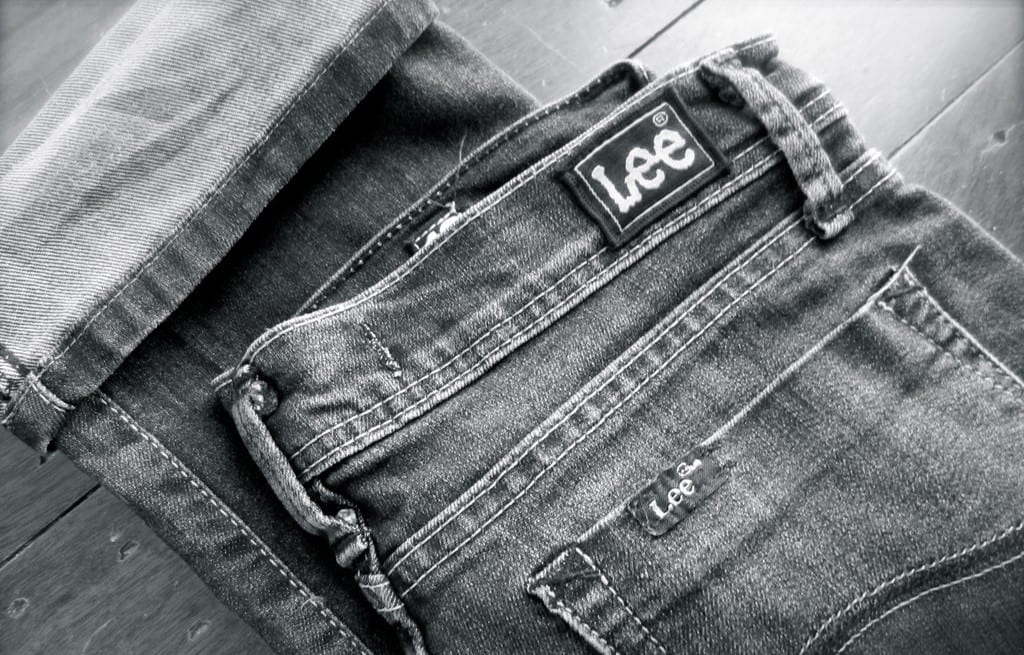
    VF Corporation brands include Vans, Kipling, Lee and The North Face.

    The US-headquartered company says it is focused on expanding geographically to take advantage of its scale in markets around the world.

    “The Asia Pacific (APAC) market, and in particular China, represent robust growth opportunities for VF, according to the company’s business lead,” the company revealed in an online newsletter.

    “Asia Pacific is an important region for business development and remains a priority focus for the company,” said Aidan O’Meara, VF’s Asia Pacific president. “Our plan is to continue to focus on locally relevant innovation, further invest in demand creation and leverage our scale and capabilities as ‘One VF’ to fully capitalise on the growth opportunities and take market share.”

    VF’s APAC business continues to expand. In 2015, currency neutral revenues in the region were up 10 per cent reaching US$1.2 billion.

    China, which accounts for roughly half of APAC revenue, has seen consistent, strong growth from the country’s three largest brands: The North Face, Lee and Vans. In particular, Lee in China has experienced consistently strong growth over the years for the company, with product innovations driving recent success.

    Denim leads the charge in China

    VF brands currently maintain presences in more than 170 Chinese cities. And, that number is expected to increase in coming years.

    “We see growth potential in a market with increasing affluence, a burgeoning middle class and increasing sophistication and demand for quality jeanswear,” O’Meara said.

    The company sees a competitive edge in the market, particularly at Lee. VF launched Lee as the company’s first owned business in China in 1995.

    “Statistics show that while jeans ownership is about eight pairs per person in North America,” O’Meara said. “In China, it is less than one pair per person, and if you look at India, there is still a lot of room as jeans ownership averages about three pairs per person.”

    O’Meara noted there was a time when many jeans manufacturers rested on their laurels. However, as competition intensified, many consumers lost excitement with the products available on the market, opening a door for an innovative new product.

    Lee saw this opportunity and put its research and development to the test. The resulting JadeFusion Denim has been a resounding success and garnered a Bronze Innovation Edison Award in the Materials Science category.

    JadeFusion immediately accounted for 13 per cent of China’s denim sales in its first season on the market in the spring and summer of 2015.

    “Lee exemplifies VF’s continuous innovation as one of the key strategies which differentiate us from our competitors,” O’Meara said.

  • New Arrival app helps Chinese shop abroad

    New Arrival app helps Chinese shop abroad

    A new fashion app, New Arrival, aims to introduce Chinese travellers abroad to lesser-known boutiques abroad.

    The New Arrival app serves as a platform and guide for brick-and-mortar stores Chinese shoppers might otherwise miss in their travels.

    Founded by Howell Hu, the app has two sections. One part focusses on “new arrivals” from on-ground stores, letting users browse products with a swiping feature. Shoppers swipe right to like a product and see more like it, swipe left to “pass” on the product, and swipe down to add it to their shopping cart.

    From there, they can either access more information about the store or arrange to make the purchase directly on the app via Alipay. Users can also browse using a navigation system to shop by category.

    The other section of the New Arrival app lets users tour shops by city. A “nearby” option lets travellers find stores on the go, or they can search by city (destinations include Beijing, Shanghai, New York, Paris and Hong Kong).

    More than 200 stores are presently collaborating with the app, all of them either multi-brand stores or individual designers. While most of the countries included are major tourist destinations, China is also represented as well as several destinations in Asia, such as Johor Bahru in Malaysia.

    The New Arrival app allows returns within one week, and the stores themselves handle shipping.
    Available for iPhone, the app will have an Android version next month.

  • Private-label deal for E-mart Korea

    Private-label deal for E-mart Korea

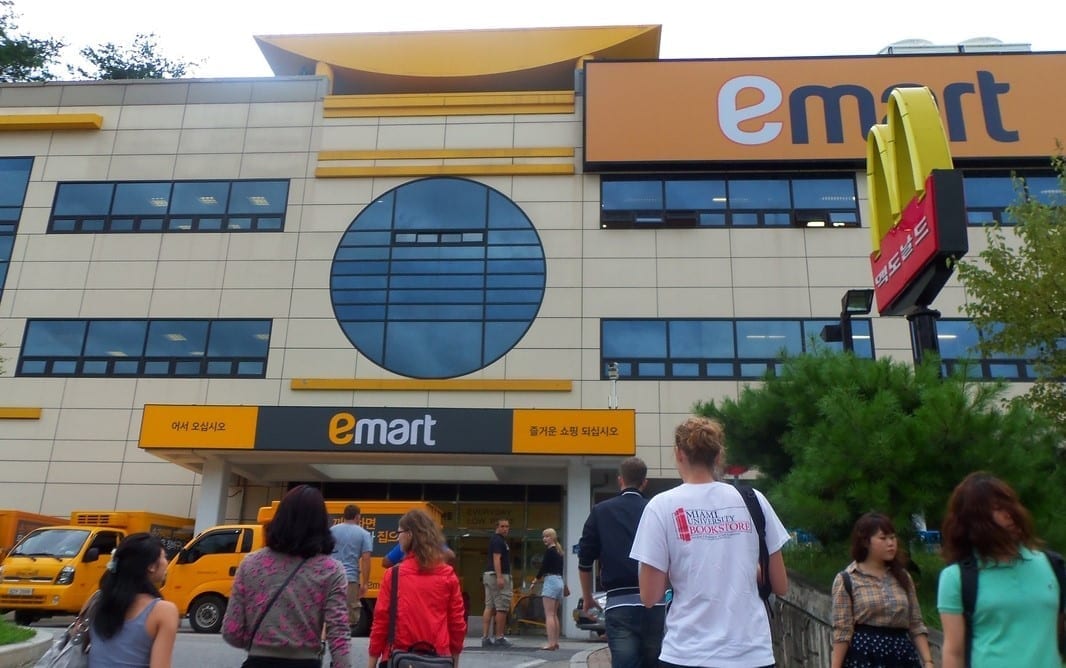
    Discount seller E-mart Korea has signed an agreement to supply its private-label items to Metro China.

    It is introducing four items from its No Brand range, to be sold from next month. It is the first time for E-mart to export to an overseas offline store.

    E-mart’s private-label products already sell in Mongolia and Vietnam. Sales of its No Brand range at its Ulaanbaatar branch, which opened last month, have already reached 600 million won (US$533,000), accounting for about 7 per cent of total sales. No Brand contributed 3 per cent of sales at its Vietnamese outlet, which opened in December.

    Introduced in April last year with nine items, No Brand now has more than 300 products, from butter cookies to car window wipers, and posted 63.8 billion won turnover in the first half of this year.

    Metro is a German retailer that is the third-largest franchise globally following Walmart and Carrefour. It has more than 2200 outlets in 33 countries, with 88 in China.

  • Ikea Group China launching eCommerce trial

    Swedish home furnishings retailer Ikea Group China will launch into eCommerce in Shanghai and start selling its products online within the next couple of weeks.

    As it is a pilot program, delivery services will be limited to Shanghai initially. All its ready-to-assemble furniture, appliances and home accessories, except for food and green plants, will be available.

    If the trial is successful, Ikea plans to roll out its eCommerce services across China as part of its multi-channel retailing strategy. It does not have any stores in China’s third- and fourth-tier cities, but in May Ikea established a pickup and order point in Wenzhou, Zhejiang province. The stores in nearby Ningbo will provide goods for that service.

    In its latest financial year, Ikea China had sales revenues of 11.7 billion yuan (US$1.76 billion), jumping 19.4 per cent year-on-year. About 83 million customers visited its stores, up 20 per cent from the previous year. Ikea’s websites also had more than 67 million individual visits, a 25 per cent increase.

    Ikea opened three new stores in China this year, in Chengdu and Suzhou in Jiangsu province, and Foshan in Guangdong province. It says it will keep to its plan of opening three new stores in China every year.

  • China still strong for Lenovo Group

    China still strong for Lenovo Group

    While sales fell 9.8 per cent in China for technology giant Lenovo Group for its first quarter ending June 30, the country accounted for 28.4 per cent of the company’s worldwide sales.

    Consolidated sales reached US$2.9 billion, and pre-tax profit margins were flat at 4.8 per cent amid softening PC demand.

    Lenovo says its mobile business is moving the portfolio to higher price bands and improving user experiences in China. Data-centre revenues grew 14 per cent year-over-year, a premium for the market, supported by growth from hyperscale and contributions from new partnerships.

    Sales in the Asia Pacific region reached US$1.7 billion, 16.7 per cent of the worldwide figure, while pre-tax profit margins were down 1.2 points to 1 per cent, mainly because of a weaker PC market in Japan and the impact of currency fluctuation.

    PC market share again edged up, by 0.4 points to reach 16.4 per cent. The mobile business outgrew the market in key countries, including India and Indonesia, while the data centre group continues to work on improving profitability.

    Overall revenue for Lenovo was US$10.1 billion, down 6 per cent, with a net income of US$173 million, up 64 per cent.

    During the quarter Lenovo’s core markets saw either slow growth or year-over-year industry declines: PCs were down 4.1 per cent and tablet shipments fell 11.1 per cent, while server industry shipments were flat and smartphone markets grew 0.7 per cent.

    “Going forward, in PCs we will focus on high-growth segments and leverage industry consolidation,” says chairman/CEO Yuanqing Yang. “In smartphones, we will leverage innovative, differentiated products and continue to shift to higher price bands to drive growth and turn around this business.”

    Lenovo’s Data Center Business Group (DCG), which covers servers, storage, software and services sold under both the Lenovo ThinkServer and the System X brands, continues to face stiff challenges in mature markets, it strengthened its lead in the market in China, increasing revenue 14 per cent.

  • Segway China launches flagship store

    Segway China launches flagship store

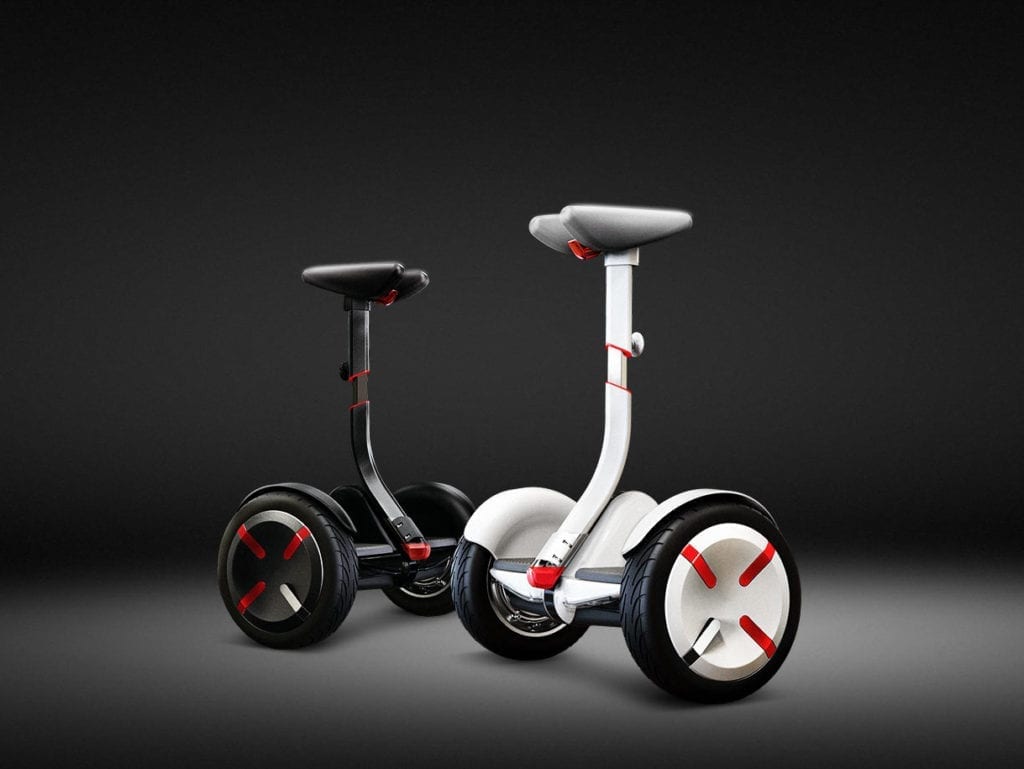
    ‘Short-distance transport’ brand Segway China has launched a flagship store in Beijing.

    Segway COO Zhao Zhongwei and VP for Asia Pacific sales Huang Chen has issued licences to eight dealers from across greater China.

    segway store

    With a minimalist interior design, the Beijing store’s dominant tone is set by the black-and-white Segway VI. Cambered elements and intelligent lighting systems create different colours and a futuristic atmosphere.

    Covering 629 sqm, the store has five zones – demonstration, test drive, after-sale services, VIP reception and an office. The demonstration zone features Segway and Ninebot‘s latest offerings as well as and futuristic products like the Segway Robot and Puma.

    The Segway flagship is at the Beichen Century Center.

    Segway China launches

    Attending the opening ceremony were Segway Group investor Yu Quan and global sales agents. Speakers included Segway CEO Gao Lufeng and investor representatives Hu Haiquan and Chen Yufan.

  • Outlet malls booming in China as department stores feel the pinch

    Outlet malls booming in China as department stores feel the pinch

    Designer outlet malls are sprouting up all over mainland China, even as department stores find themselves struggling amid a slump in retail sales.

    At least 17 new outlet malls are scheduled to open in China in the second half of 2016, according to a report by Outlet Sight, which tracks the industry. Some developers are betting on outlet malls because they typically offer off-season or factory excess goods priced at a discount to the in-season products sold by the same brands in department stores.

    “We think designer outlets are more defensive than high-street retail,” said Chris Reilly, Asia-Pacific managing director at TH Real Estate, a property fund that manages nearly US$100 billion of real estate in Asia, Europe and the US. “Their fundamentals are better in terms of supply and demand.”

    China’s department store sector has been battered in recent years by sluggish sales growth and declining profits, with store closures intensifying since 2015. Offline sales at the mainland’s top 50 retailers declined 3.1 per cent year on year in the first half of 2016, according to figures from the National Commercial Information Centre of China.

    However, the discount mall sector appears ripe for strong growth; for a country with China’s population and spending power, there are relatively few factory outlet malls – just 40 at present – compared with as many as 300 in the US, said Zhong Beichen, chief executive of outlet developer Beijing Capital Juda, which has already opened four such outlets, in Beijing, Hainan, Zhejiang and Jiangsu.

    “We aim to open outlets in more than 20 cities by 2020 and become the largest outlet operator in China,” Zhong told the South China Morning Post. “Discount malls can perform well despite economic ups and downs” because they offer customers cheaper price points, he said. “When the economy expands, people shop to dress nice, but outlets will still be the first choice for those seeking affordable luxury in an economic slowdown.”

    Juda was spun off from state-owned property developer Beijing Capital Land Ltd and listed in Hong Kong in 2015.

    The boom is attracting developers and investors to the fray.

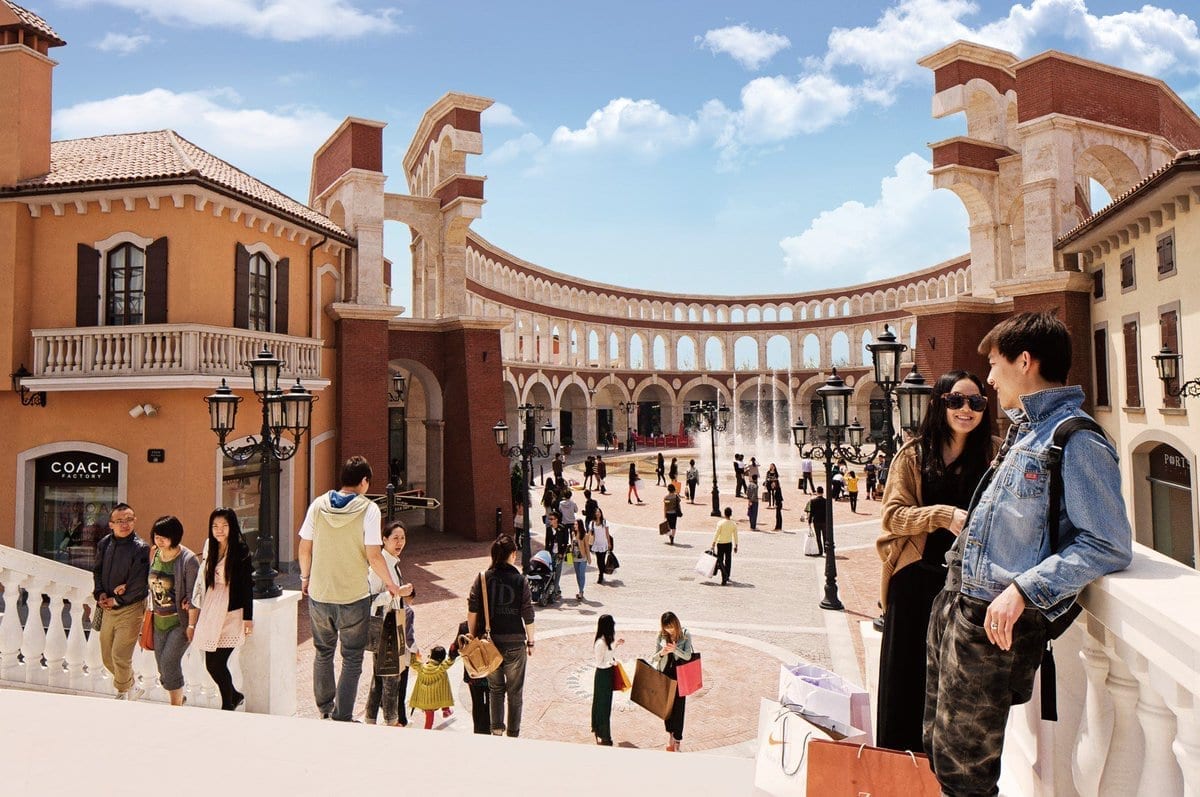
    London-based TH Real Estate launched an US$850 million fund in China, with two Italian village-themed outlet malls in Wuqing in Tianjin city and Shanghai.

    “Our target shopper is the Chinese household earning more than US$20,000 a year,” said TH Real Estate’s Reilly. “This demographic group is already the largest in the world, and we expect the number to more than double over 10 years with the rise of the Chinese middle class.”

    With TH Real Estate’s Florentia Village in Shanghai 90 per cent occupied, and its Florentia Village Wuqing full to capacity, Reilly said he is confident the China Outlet Mall Fund can grow to US$2 billion by 2020. Four more Florentia Village malls are slated to open in Chengdu, Wuhan, Chongqing and Qingdao by 2017.

    Factory outlets face stiff competition from online retailers, but have the advantage of providing a complete experience, Juda’s Zhong said.

    “Our strategy is to build outlets in places with beautiful scenery to attract families for the shopping experience,” he said, citing their 110,000 square meter outlet in Beijing’s Fangshan District, which is located near a forest park.

    Themed malls, such as the Florentia Village brands, are also becoming popular. Covering 90,000 square meters and with 3,000 car parking spaces, Florentia Shanghai reconstructs scenes of Florence including an Italian-styled city plaza, paved streets, porches, fountains and luxury brands such as Versace, Ferragamo and Zegna.

    “Shoppers like to visit outlets for the discounts, they want to try on designer brands, but what’s more important, it’s like a day out,” Reilly said.

    -Originally written by Summer Zhen, SCMP

  • Qihoo 360 launches new advertising initiatives

    Qihoo 360 launches new advertising initiatives

    Chinese internet company Qihoo 360 is rolling a number of initiatives to help CMOs better connect with Chinese netizens.

    The company, named by iResearch as the number one provider of internet and mobile security products in China based on user base, is looking to make advertising effective in China’s fast-growing online market.

    Many global brands are looking to capture the potential of China’s large pool of netizens. With global brands competing with large local brands, CMOs need to fine tune their digital strategy in a market where most consumers prefer to shop online, and increasingly via their mobile phones.

    Qihoo 360 has built one of the largest open internet platforms in China to monetize its massive user base, which is 99.6% of Chinese netizens, primarily through online advertising and through internet value-added services on its open platform. Through its Qihoo 360 International Advertising Unit, the company services over 250 advertising business customers in Hong Kong and overseas markets.

    The new product updates include Huajiao, a livestreaming app showcasing user-generated content that is now available in Hong Kong. Another product, 360 Mobile Security, will soon be available for advertising placement in Hong Kong for selected advertisers, allowing them to precisely target Chinese tourists during their travels.

    Six business core business strategies were also announced for 2H 2016, including “more innovative products”, “more professional support in planning”, “more responsive customer service”, “more comprehensive technology upgrades”, “more powerful voice on behalf of the market”, and “more effective tools and systems.” they aim to help CMOs to target Chinese online customers more effectively.

    “Today, we’re pleased to showcase the power of our big data analytics services, together with the announcement of our latest business strategies and future direction – assisting brand development and boosting advertising effectiveness with branded content,” said Dr. Michael Yang, chief business officer of Qihoo 360.

    “Qihoo 360 connects with 96.6% of Chinese netizens. We aim to help Hong Kong and overseas brands effectively and accurately connect with the right audience in the China market through a comprehensive product portfolio,” he said.

  • Lin Jia Convenience Store Debuts in Times Square

    Lin Jia Convenience Store Debuts in Times Square

    Lin Jia Convenience Store, the dark horse in China’s retail market, has shown remarkable growth recently, thanks to the retailer’s particular focus on excellence in customer service and innovation. The Chinese shop recently debuted on the large billboard overlooking New York’s Times Square, giving the world a glimpse of what a Chinese retailer looks like.

    Lin Jia Convenience Store, the dark horse in China’s retail market, debuts on the large billboard overlooking New York’sTimes Square

    The chosen theme “We are not just a neighbor, we are a family friend” clearly conveys Lin Jia Convenience Store’s brand philosophy of bringing the world to each shopper’s doorstep. The famous crossroads in the heart of New York City, one of the planet’s most popular destinations, has been drawing tourists from the four corners of the globe for many decades.

    In a globalized era, the world’s most well-known intersection has become a platform where leading companies can showcase their strength and where Chinese brands can announce their global expansion plans and successes.

    Catering to a wide range of demands and providing the most shopper-centric housekeeping services to help customers effortlessly maintain their preferred lifestyle

    As part of its commitment to becoming the most conscientious lifestyle service provider for shoppers, Lin Jia has paid utmost attention to both the range of services offered and the quality of those services. The store sells a wide range of fresh and instant foods, snacks, imported products and daily necessities, 24 hours a day, 7 days a week, catering to the whims of even the most demanding consumer.

    The range and variety of foods are designed to please every shopper, regardless of preferences or dietary restrictions. The store also provides a variety of user-friendly services, including laundry, printing, free charging booths for phones and tablets, free Wi-Fi, Lakala Kiosks for offline e-payments, self-service government lottery ticket kiosks and free toilets.

    As part of being the most customer-centric lifestyle products and services retailer, Lin Jia remains open all night. Providing products and services for customers round the clock is in line with the underlying meaning of its management concept encapsulated in the tag line “Lin Jia, Life+” and the basic guarantee underlying every product and service that is offered. The retailer provides the shopper with a quiet and comfortable shopping environment.

    Leading the industry trend, differentiating itself from the competition and accelerating brand development

    As the standard of living in China improves, the pace of day-to-day life accelerates, and expectations that shoppers have of their retailers continue to climb. In the face of this trend and ongoing industry competition, it becomes ever more important for convenience stores to provide a full range of services, while introducing innovations and differentiating themselves from the crowd.

    Lin Jia has already distinguished itself among its peers in the world of retail, by having continually enhanced and continuing to further enhance the quality of its services as well as bring in new innovations, delivering a constantly improving shopping experience to each and every person who enters the store.

    Innovative services create the best shopping experience

    Unlike other convenience stores, in terms of the interior layout Lin Jia Convenience Store installed highly directional speakers for announcements to ensure a quiet in-store environment and fully sealed off the kitchens to avoid having the smell of food being cooked wafting through the sales aisles, assuring the shopper of an end-to-end pleasant shopping experience during every minute spent within the store.

    At the same time, services offered by Lin Jia, including laundry, recharging stations for tablets and cell phones as well as online shopping with 30-minute delivery, maximizes the convenience of modern day living. In effect, Lin Jia has succeeded in filling in for the family housekeeper, with the same kind of personal touch and level of care.

    Lin Jia Convenience Store, a newly emerging force in the convenience retail sector, is committed to strictly adhering to the best practices that are expected of any top-notch retailer, enhancing branding through the excellence of its products and services, and serving as a guide to consumers for identifying the best services and products to support a quality life style.

    The retailer’s appearance in New York’s Times Square shows that China’s convenience stores are ready to take their place on the international stage as they prepare to enter markets beyond the borders of the home country.

  • Carrefour China concentrating on convenience

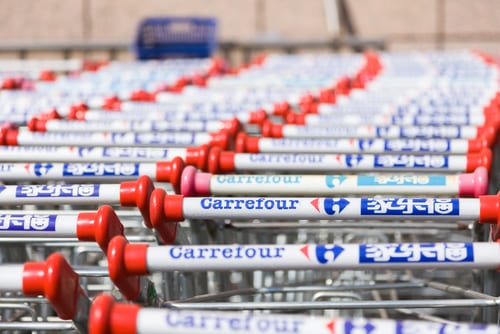
    Carrefour China concentrating on convenience

    Carrefour China says it will concentrate on convenience store development for the rest of this year.

    The French-headquartered retailer has been losing market share in the hypermarket segment and has closed about 30 stores during the past three years. It is trying to find a new growth model for the competitive Chinese model according to IGD analyst Catherine Ellwood and IGD Singapore program director Shirley Zhu.

    Hypermarkets will still play a role for Carrefour, particularly in western and central China, they say. The retailer is changing focus because of the increasing challenges for hypermarkets.

    Carrefour reportedly plans to open 40 to 50 convenience stores in Shanghai as well as about 15 Carrefour Easy stores by the end of the year.

    Rapid urbanisation, smaller families and rising affluence levels mean Chinese shoppers are demanding more convenient solutions, says the IDG team.

    “Convenience stores present a huge growth opportunity, but winning in this sector under rising costs and fierce competition is not an easy task.”

    However, Carrefour does have the advantage of existing sourcing and supply-chain capability for fresh products. Daily delivery from its own fresh distribution centre ensures availability and quality.

    A typical Carrefour Easy store has a floor size of 250 to 300 sqm with plenty of room for fresh produce displays. The stores act as pick-up locations for online shopping, and have kiosks to provide various services. There is also free Wi-Fi and charging devices in-store.

    For mobile payment alone, the stores accept Alipay, Apple Pay, Samsung Pay and WechatPay.

    Carrefour opened an extra distribution centre in June. The 21,000 sqm centre, in Dongguan, Guangdong province, will help with expansion in south China. Carrefour aims to have six distribution centres by the end the year.

  • ‘Super-shoppers’ dominating online retail

    ‘Super-shoppers’ dominating online retail

    A Worldpay global survey of 20,000 consumers has discovered that buying power in the internet age is concentrated within a group of high-spending, high-frequency “super-shoppers”.

    While these shoppers make up just 5 per cent of the population in China, they account for 92 per cent of all money spent buying physical goods online in China each month.

    Worldpay’s research into three Asia Pacific markets further reveals that APAC super-shoppers are most likely to shop online via a mobile device, and are demanding when it comes to payment method. The international payments company polled 2000 consumers in each of the 10 countries covered by the Why Do They Pay That Way? Study, including China and Japan.

    Key findings include…

    • Chinese super-shoppers are more likely than the average Chinese shopper to use a credit or debit card.
    • More than 60 per cent of Japan’s online shoppers will switch to another retailer if they cannot use their preferred payment option at checkout.
    • Australian super-shoppers were the world’s second-biggest buyers, spending on average more than £200 (US$260) on their latest online transaction.
    • The Chinese are the biggest mobile shoppers in the world, with 33 per cent of super-shoppers making their latest online purchase by mobile phone.

    “With eCommerce markets developing at lightning speed across the Asia Pacific region, it’s no surprise elite shoppers are taking their spending power online,” says Worldpay GM Asia Pacific Phil Ponford. “The super-shopper trend is driven by a growing middle class, high mobile penetration and advancements in consumer technology.

    “APAC super-shoppers are passionate about what they buy and sophisticated in how they shop. They do research to find the most competitive prices, and will turn elsewhere if they discover they can’t use their preferred payment method at checkout.”

    Unable to pay

    Internationally, 36 per cent of super-shoppers said they had experienced the situation of reaching checkout and being unable to pay with any of the listed options. This was particularly the case in China, where 44 per cent of Super-Shoppers said they could not use their preferred payment method.

    When faced with not being able to use their preferred payment option, super-shoppers may buy the same item from another website or abandon their purchase all together. In Japan, 61 per cent of super-shoppers said they would switch to another retailer if unable to use their preferred payment option at checkout. Worldpay estimates that for each lost sale globally, retailers are missing out on as much as £100.

    Super-shoppers in APAC overwhelmingly prefer credit cards. While 41 per cent of the general population in China prefers to pay online with Alipay, only 18 per cent of China’s super-shoppers said they were likely to use their nation’s most popular eWallet. Instead, 54 said they preferred to use a credit card.

    “Retailers should be looking at super-shoppers as a distinct group that often behaves very differently from other customers,” says Pomford. Retailers who do not support the right range of payment methods could actually lose major revenue without noticing.

    He describes super-shoppers as an audience that thinks of online shopping as a daily task, not just an occasional treat.

  • PTCL signs fiber leasing deal with Zong

    PTCL signs fiber leasing deal with Zong

    Pakistan’s largest operator PTCL has secured a fiber leasing agreement with China Mobile’s Pakistani mobile unit Zong.

    Under the agreement, PTCL will deploy 789 kilometers of fiber for Zong’s mobile network.

    The fiber leasing agreement will also allow Zong to utilize PTCL’s nationwide fiber footprint, which will help the operator further expand its 3G and 4G networks nationwide.

    PTCL and Zong signed a memorandum of understanding in December last year which declared PTCL as Zong’s preferred partner for infrastructure and technical expertise. PTCL has meanwhile been making efforts to position itself as the “carrier of carriers,” the report states.

    Zong is Pakistan’s third largest mobile operator by subscribers with a market share of around 19% as of late 2014. China Mobile first entered the Pakistani market in 2008 by acquiring an operating license from Millicom, and holds a 100% stake in Zong Pakistan.

  • Apple To Build Its First R&D Center in China

    Apple To Build Its First R&D Center in China

    Apple plans to open its first research and development centre in China this year, the latest in a series of steps to bolster its presence in a vital region as sales slow down.

    Tim Cook, Apple’s chief executive, revealed the plans to increase investment in local R&D during a meeting this week with Zhang Gaoli, China’s vice premier.

    The move comes after Apple reported that revenues fell one-third in the latest quarter in Greater China, where Apple faces growing competition from local smartphone makers such as Huawei and Oppo as well as tougher economic conditions.

    The new R&D centre will be made up of both new and existing staff. Apple already has 9,000 staff in China, roughly half of whom work in its 42 retail stores. In the past four years, Apple has doubled the number of corporate offices in China to 45.

    “We look forward to expanding our operations in China with a new research and development centre as we continue to grow our talented team here,” Apple said, without specifying the scale of staffing or financial investment in the effort.

    “The centre will open later this year, bringing together our engineering and operations teams in China as we develop advanced technologies and services for our products, both for our customers in China and around the world,” Apple added.

    Even as revenues slide, Apple is increasing its investment in future products and international expansion. Last month, the US tech group revealed a 26 per cent increase in its quarterly R&D spending to $2.6bn, a record 6 per cent of revenues. Its annual R&D spending is now approaching $10bn.

    In May, Apple invested $1bn in Didi Chuxing, a Chinese car-hailing service — an unusual move for a company that has typically favoured much smaller deals. As well as providing a strategic partnership as a secretive Apple team works on developing its own car, the investment was widely seen as an attempt to build goodwill with the Chinese government after a series of setbacks in the region.

    Earlier this year, Apple’s iTunes films and iBooks services were blocked in China as part of a wider crackdown on foreign content. Apple also lost a patent case in Beijing that threatened to block sales of the iPhone 6.

    “The new centre is also aimed at strengthening relationships with local partners and universities as we work to support talent development across the country,” Apple said.

    China has also become a growing focus for Apple’s environmental efforts as it pushes its supply chain partners to use more renewable energy. On Wednesday it said that Lens Technology, a glass manufacturer, would obtain 100 per cent of its electricity from wind power by the end of 2018 — the first Apple supplier to make such a commitment.

    In last month’s earnings call Mr Cook stressed the “long-term opportunity” in China, where sales grew 55 per cent to $40bn during the first three quarters of Apple’s fiscal year. Revenues from its books and movies stores in China were “less than $1m” before they were blocked, he added.

  • CapitaLand Retail China Trust to buy shopping mall in Chengdu for 1.5b yuan

    CapitaLand Retail China Trust to buy shopping mall in Chengdu for 1.5b yuan

    CapitaLand Retail China Trust (CRCT) is acquiring a shopping mall in Chengdu for 1.5 billion yuan (S$303 million).

    Galleria is located in the Xinnan Tiandi retail precinct of Gaoxin District in the south of Chengdu, a major shopping belt in the city.

    The mall has been valued at 1.52 billion yuan by Savills Valuation & Professional Services as at July 26. Including acquisition-related expenses, the total investment cost for the mall is expected to be about 1.527 billion yuan. CRCT plans to finance the purchase with a mix of existing cash and additional debt.

    When the transaction is completed, the acquisition will enlarge CRCT’s portfolio size by about 14 per cent to 12.55 billion yuan. The mall has a current net property income yield of about 5.4 per cent and the acquisition is expected to be distribution per unit-accretive for CRCT.

    Tony Tan, chief executive of the manager of CRCT, said: “The proposed acquisition will diversify CRCT’s income and strengthen the resilience of our portfolio to deliver sustainable growth. With the opportunity to tap on CapitaLand’s network of five existing malls in Chengdu, the proposed acquisition is aligned with CRCT’s investment strategy to expand our footprint by leveraging on our sponsor’s strong presence in key Chinese cities where it has a competitive edge.”

    Leases accounting for about two-thirds of the mall’s total rent are up for renewal by 2018, which will give it an opportunity to boost rental income by adjusting the tenant mix, he added.

    The six-storey mall, which opened its doors in 2010, has a gross floor area, excluding car park, of about 53,619 square metres and 900 car park spaces. As at end-May, it was fully occupied.