Tag: China

  • 7-Eleven Hits Milestone of 60000 Stores in 17 Countries

    7-Eleven Hits Milestone of 60000 Stores in 17 Countries

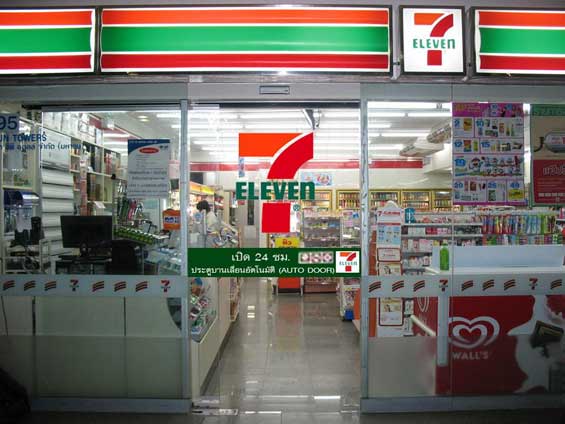
    7-Eleven Inc., the largest convenience retail chain in the world, keeps getting bigger with the opening of its 60,000th global store.

    The Irving-based company traces its roots to the 1927 opening of Southland Ice Co. in Oak Cliff, Texas. In 1946, with stores open from 7 a.m. to 11 p.m., the name was changed to 7-Eleven. Stores started staying open around the clock in 1971.

    7-Eleven moved into Canada in 1969 and into Mexico in 1971 as part of joint ventures. In 1974, the retail chain expanded into Japan with Seven-Eleven Japan, which became the parent company in November 2005.

    7-Eleven now has stores in Thailand, Taiwan, South Korea, China, Malaysia, Singapore, Philippines, Australia, Sweden, Norway, Denmark, Hong Kong, Macau, Indonesia and UAE through area license and master franchise agreements.

    The first 7-Eleven store in Vietnam is expected to open next spring, which will extend the retailer’s operations to 18 countries.

    “The 7-Eleven story is amazing and inspiring; we started as a small local ice house and have grown over the years store by store, community by community, and country by country into an iconic global brand,” said Joe DePinto, 7-Eleven Inc. president and CEO. “We will continue to grow by staying focused on the constantly changing convenience needs of our customers and by staying committed to the communities we serve.”

    Last year, 7-Eleven opened one store every 2.5 hours, for approximately 4,000 stores.

    The company currently has the most stores in Japan (18,860), followed by Thailand (9,278), the United States (8,378), South Korea (8,238) and Taiwan (5,057).

    Other milestones in 7-Eleven’s history include:

    • 1927: First store
    • 1952: 100th store
    • 1963: 1,000th store
    • 1984: 10,000th store
    • 2003: 25,000th store
    • 2010: 40,000th store
  • Laura Ashley to expand to China

    Laura Ashley to expand to China

    After several attempts at cracking the market, Laura Ashley will finally launch in China.

    The British retailer, owned by Malaysia-based MUI Group, will open a website via the Alibaba-owned Tmall website and will have a concession within the first House of Fraser store in China set to open this autumn.

    Laura Ashley finance director Seán Anglim said its long-term aim was to find a Chinese franchise partner.

    “China is not easy as evidenced by how many have got in and how many have come out,” Anglim said.

    “It is all about finding the right partner and doing it at the right time.”

    Laura Ashley currently has franchise partners in 30 countries outside the UK and an online store in six.

    The company also has ambitions to establish new online stores in Hungary and the Czech Republic in coming months.

    The Chinese move comes after the retailer this week reported a £25.8 million profit before tax and exceptional items for the 74 week period to June 30 – a 12.6 per cent increase on the 2015 figure.


  • China Unicom aims to turnaround despite record slump in 1H profit

    China Unicom aims to turnaround despite record slump in 1H profit

    China Unicom, the country’s second largest mobile carrier by subscribers, is expecting a gradual turnaround as soon as next year after the company reported its largest slump in first-half net profit since 2000.

    Unicom chairman and CEO Wang Xiaochu said “a more solid foundation has been built for healthy development in the future with stronger growth momentum.”

    “The company’s most difficult time was over,” Wang told a media briefing in Hong Kong on Wednesday. “We expect a sales turnaround in November and December, and a profit turnaround next year.”

    Unicom announced on Wednesday that its January-June net profit reached 1.43 billion yuan ($216 million), down 79.6% from a year earlier, in line with apreliminary estimate in July. EBITDA fell 18.2% to 41.28 billion yuan while revenue dipped 3.1% to 140.26 billion yuan.

    But the results nonetheless marked a significant improvement of the 3.36 billion yuan loss – excluding the gain from the tower asset disposals – recorded during the second half of last year.

    Unicom blamed the poor interim results on hefty costs resulting from increased tower costs and heavy expenses to market its 4G network and services.

    According to Unicom, the company saw up to 15% fee increase for using China Tower, as well as electricity tariffs and property rental hikes during the first half of this year.

    Meanwhile the delays in building the LTE network for 4G services also led to substantial increase in marketing costs, with sales and marketing expenses in the first half racking up 17.1% on the year to 17.1 billion yuan, while handset subsidies jumped 43.5% to 1.756 billion yuan.

    “Our biggest problem is having missed almost two years to become well-geared for the 4G era,” Wang said.

    Biggest rival China Mobile has been offering 4G service using TD-LTE technology since December 2013. China Unicom and China Telecom, however, were only granted a license to conduct hybrid FDD and TDD LTE network trial in June 2014.

    Despite that, Wang said the company achieved initial success in turning around the unfavorable conditions in business development, by mitigating the underlying shortcomings in areas such as network, terminals, channels, services, IT, systems and mechanisms. This includes focusing its mobile business on 4G and driving availability of 4G handsets and accelerating 4G network rollout through partnership with China Telecom.

    As a result the company achieved a net addition of 8.39 million mobile subscribers during the period. This compares favorably to the operator’s performance last year, when the company recorded net losses of customers for consecutive months.

    Unicom also saw its 4G base grow to reach 72.42 million as of June, thanks to “improvement in 4G network quality, terminal market share and competitiveness.” Yet this number still far behind China Mobile’s 430 million 4G subscribers.

    Unicom and China Telecom signed an agreement in January to push through a five-pronged collaboration, which embraces costs sharing on 4G network build-outs in rural areas and promotion of the so-called “six-mode” smartphones that are compatible with all networks.

    Wang said the collaboration is necessary as Unicom’s network could now support 63% of the mobile handsets in the market, up from 40% at the end of last year. The partnership with China Telecom on 4G infrastructure sharing also helped Unicom achieved 3 billion yuan savings in capex, he added.

    Unicom will continue to push forward comprehensive and strategic cooperation with China Telecom on areas including mobile and fixed infrastructure sharing, Wang added.

    To recoup the lost ground in 4G from China Mobile and China Telecom, Unicom has earmarked 30 billion yuan for 4G network deployment in the second half of the year, with plans to increase the number of its 4G base stations to 680,000 by year-end, up from 280,000 last year.

    China Mobile last week posted a 5.6% increase in net profit to 60.6 billion yuan in the first six month of this year.

    Smaller rival China Telecom will announce its 2016 interim results on August 26.
  • Worldpay research uncovers an elite club of shopaholics in APAC with enormous spending power

    Worldpay research uncovers an elite club of shopaholics in APAC with enormous spending power

    A global survey of 20,000 consumers by Worldpay has discovered that buying power in the internet age is highly concentrated within a group of high spending, high frequency Super-Shoppers. In China, Super-Shoppers make up just 5% of the general population yet accounted for an incredible 92% of all the money spent buying physical goods online in China each month. Worldpay’s research into three Asia Pacific markets further reveals that APAC Super-Shoppers are some of the most likely to shop online via a mobile device and some of the most demanding when it comes to payment method.

    Worldpay polled 2,000 consumers in each of the 10 countries covered by the Why Do They Pay That Way? Study including China, Japan and Australia. Key findings include:

    1. Chinese Super-Shoppers are more likely to use a credit or debit card than the average Chinese shopper.
    2. More than 60% of Japan’s online shoppers will switch to another retailer if they can’t use their preferred payment option at checkout.
    3. Australian Super-Shoppers were the world’s second biggest buyers, spending on average more than £200 (US$260[1]) during their last online transaction.
    4. The Chinese are the biggest mobile shoppers in the world, with 33% of Super-Shoppers making their last online purchase via a mobile phone.
    5. Australian Super-Shoppers had the second highest levels of mobile shopping (19%).

    Phil Pomford, General Manager Asia Pacific, Global eCommerce at Worldpay, said: “With ecommerce markets developing at lightning speed across the Asia Pacific region, it’s no surprise that elite shoppers are taking their spending power online. The Super-Shopper trend is driven by a growing middle class, high mobile penetration and recent advancements in consumer technology. APAC Super-Shoppers are passionate about what they buy and sophisticated in how they shop. They do research to find the most competitive prices, and will turn elsewhere if they discover they can’t use their preferred payment method at checkout.”

    Around the world, 36% of Super-Shoppers said they had experienced the situation of reaching checkout and being unable to pay with any of the listed payment options. This was particularly the case in China, where 44% of Super-Shoppers said they were unable to make purchases using their preferred payment method.

    When faced with not being able to use their preferred payment option, Super-Shoppers may buy the same item from another website or abandon their purchase all together. A staggering 61% of Japanese Super-Shoppers said they would switch to another retailer if unable to use their preferred payment option at checkout. Worldpay estimates that for each lost sale globally, retailers are missing out on as much as £100 (US$130) – representing a significant amount of lost revenue from such frequent and high value shoppers.

    Super-Shoppers in APAC, as around the globe, overwhelmingly preferred credit cards, even in markets where card use is low. Although 41% of the general population in China prefer to pay online with Alipay, only 18% of China’s Super-Shoppers said they were likely to use their nation’s most popular eWallet. Instead, 54% of Chinese Super-Shoppers said they preferred to pay with a credit card.

    Pomford added: “Retailers should be looking at Super-Shoppers as a distinct group that often behaves very differently from other customers. In APAC, Super-Shoppers prefer credit cards even where these cards have little or no traction among the general population. Therefore, a retailer who doesn’t support the right range of payment methods could actually be losing major revenue without noticing.

    “The Super-Shopper phenomenon gives retailers much food for thought – in terms of not only what payment options are available, but in how to merchandise to these consumers to maximise basket size, or market to an audience who thinks of online shopping as a daily task, not just as an occasional treat. With so much buying power concentrated in this group in APAC and around the world, it’s essential that retailers innovate in such a way that they deliver what Super-Shoppers want, when they want it and let them pay for it in the way that suits them best.”

    APAC Super-Shoppers’ most frequent purchases vary from country to country. According to the Worldpay research:

    1. One in 5 (21%) Australian Super-Shoppers buy groceries online – 8% above the global average.
    2. 2. Australian Super-Shoppers are less likely to buy clothes online (21%) than the global average (28%) yet more likely to buy health and beauty products (15% vs global average of 10%).
    3. China leads the world in online meal purchases, with 13% of Chinese Super-Shoppers taking to the internet when they want to order a takeaway.
    4. Super-Shoppers in China also love fashion, with 40% of them buying clothes the last time they shopped online, compared to the global average of 28%.
    5. In Japan, Super-Shoppers are most likely to buy electronics (30%) and groceries (28%).
  • Chinese Online Shoppers to ‘Walk Into Australia and New Zealand’ with Azoya

    Chinese Online Shoppers to ‘Walk Into Australia and New Zealand’ with Azoya

    A select group of influential online celebrities from China will arrive in Australia next week for the ‘Walk Into Australia and New Zealand’ campaign, organised by leading turnkey e-commerce solutions provider Azoya and China’s leading online shopping guide SMZDM

    The ‘Walk Into Australia and New Zealand’ campaign is focused on building the bridge between Chinese online shoppers and Australian retailers by offering face-to-face interactions to help them understand the authenticity and reliability of ethical products from Australia. Deterred by safety and quality issues with domestic products, particularly for healthcare and food supplements, Chinese consumers are increasingly looking to Australia to buy directly through cross-border e-commerce. 

    “China’s ecommerce landscape is rapidly evolving, offering Australian brands and retailers a huge opportunity to take advantage of it,” said Sylvia Wei, deputy managing director – Australia for Azoya. “If they’re going to survive in such a competitive market, they’ll need to build relationships with key online influencers, who are invaluable sources of promotion in China. This campaign will help them develop more effective and rewarding channels, as well as better understand what Chinese consumers need and want.”

    As traditional marketing channels continue to lose their impact in acquiring new consumers in China, live streaming marketing and influential online celebrities, known in China as key opinion leaders (KOLs), are emerging as the channels employed by the local ecommerce industry. While the marketing influence of celebrities in the Western world is useful, KOLs in China have a very powerful influence over consumers. They mainly attract followers by being an authority on a particular subject and gain credibility through a long history of interacting with followers, who have a high-level of trust in them. Therefore, leveraging high-profile bloggers and microbloggers boasting millions of followers is a very effective strategy for brands and retailers to reach target audiences. Retailers can directly influence a large community and reach thousands or even millions of potential customers.

    The 12 person delegation participating in the ‘Walk Into Australia and New Zealand’ tour – including four high-profile Chinese KOLs (selected from over 1,000 applicants) and editors from SMZDM – will participate in a series of online and offline events in Sydney, Melbourne and Auckland between 21-30 August. They will experience production, supply, marketing, order fulfillment and customer service from the stores and warehouses of five of Azoya’s participating retail customers, which all have established ecommerce businesses in China. These include Pharmacy Online (Sydney), Pharmacy 4 Less (Sydney), Amcal (Melbourne), Kiwi Discovery (Auckland) and Pharmacy Direct (Auckland). The delegation will also have the opportunity to meet with leading healthcare brands Swisse and Blackmores. 

    In return, the KOLs will share their experiences online on SMZDM and other sources, potentially exposing participating retailers and brands to more than four million Chinese consumers. The tour will also be broadcast by professional editors on online live streaming channels, giving Chinese consumers a glimpse into how their favourite products are packaged and distributed, showcasing the quality of the products they plan to purchase. During the live streaming, purchase links will be pushed to users to place orders immediately. In addition, a local team in China will help promote the ‘Walk Into Australia and New Zealand’ tour to attract more users to participate. 

    “We’re really excited to be able to offer our healthcare retail customers in Australia such an amazing opportunity to strengthen their brands with Chinese consumers,” added Ms Wei. “China’s healthcare sector keeps developing at an astonishing rate, fueled by favourable demographic trends, continuing urbanisation, an increasing disease burden, the overall economy’s healthy expansion and income growth. The campaign will help drive awareness of their quality healthcare products in China and take their ecommerce businesses to the next level.”

  • New post at Luxasia Group for SingPost’s ex-boss

    New post at Luxasia Group for SingPost’s ex-boss

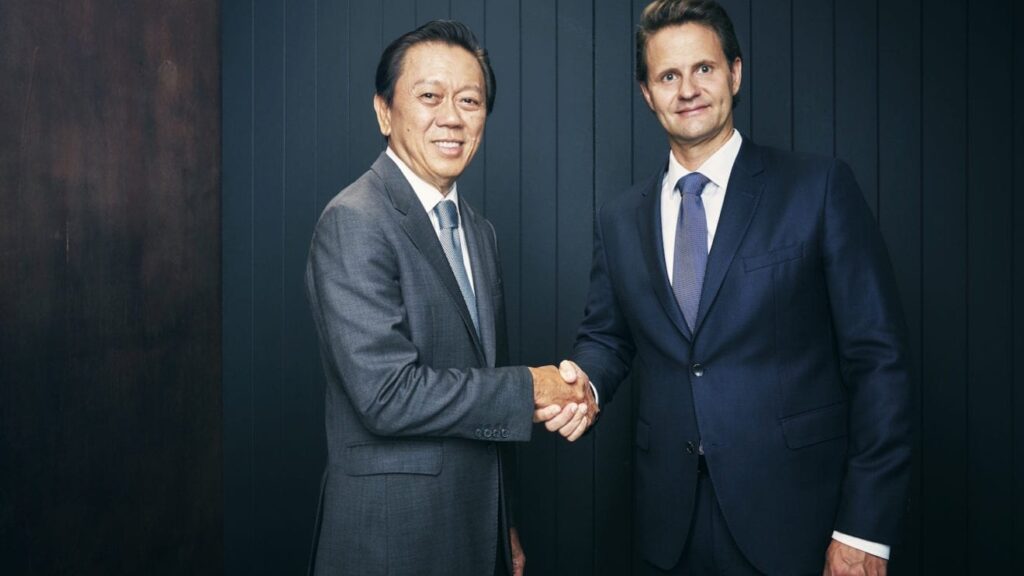
    Beauty retailer The Luxasia Group has appointed former SingPost CEO Dr Wolfgang Baier as group CEO, while founder/owner Patrick Chong has become chairman.

    “Luxasia is now at an important crossroads,” says Chong. “We intend to grow with our international partners and strengthen our core competencies to become the leading Asia consumer-centric omnichannel go-to-market partner of the beauty industry.”

    Patrick-Chong-Wolfgang-Baier

    He says Baier has proven leadership capabilities, vast knowledge and skills in areas such as CRM and omnichannel retail. “His track record in the logistics sector will also help strengthen Luxasia’s partnerships.”

    “Transformation is relevant in every sector and particularly for retail, where the digital and physical space is converging,” says Baier. “This makes developing an omni-channel ecosystem critical. We want to revolutionise how we serve consumers and brand partners in the beauty industry across Asia.”

    Chong says the search for a CEO took more than a year, as it was important Luxasia found the right leader.

    “Not only does Wolfgang understand our operations and share the same aspirations, in some ways he is even more ambitious for Luxasia with regard to developing new areas.”

    Established in 1986, The Luxasia Group has developed retail and distribution networks across Asia for some of the world’s biggest beauty companies. Based in Singapore, the privately held company has 11 offices and more than 2000 full-time employees in Singapore, China, Hong Kong, India, Indonesia, Malaysia, Myanmar, Taiwan, Thailand, the Philippines and Vietnam.

    It manages a portfolio of more than 120 international fragrance, cosmetics, skincare and
    professional salon brands including Beiersdorf, Burberry, Clarins, Estee Lauder, Ferragamo, Hermes, P&G and Shiseido.

  • Baidu adopts Qlik Sense for self-service analytics

    Baidu adopts Qlik Sense for self-service analytics

    Baidu is Qlik Sense to improve its cloud services platform and provide an enhanced data analytics experience to its customers.

    Qlik Sense will be integrated into Baidu Palo to enable self-service visualization analytics on the Palo OLAP engine, giving Chinese enterprises the ability to achieve greater agility in aggregating data from various sources to make data driven business intelligence decisions.

    By incorporating Qlik into the Palo OLAP engine, Baidu aims to provide start-ups in China, especially those enterprises on Baidu Cloud, with greater support in driving data analytics among cloud or filed sources.

    “We are very excited to implement Qlik Sense into Palo OLAP to provide users in China with innovative self-service visual analytics,” said Yang Liu, General Manager, Baidu Open Cloud.

    “Qlik Sense has an open API and powerful features, and is suitable for enterprise level applications. The close cooperation and technical integration of the two companies has led to more powerful and flexible business intelligence solutions, which will greatly enhance the user experience.”

    “With the popularity of big data, cloud computing in BI, social networks, and mobile applications in China these past few years, integrating a powerful visual analytics solution into China’s largest search engine company will only lead to greater value for businesses,” said Toni Adams, senior vice president Partners and Alliances, Qlik.

    “Businesses of all sizes using Baidu’s Palo OLAP will now have the ability to take their analysis to a deeper level, leading to a better understanding of their business, as well as their customers.

  • China Mobile awards contracts for 100G OTN

    China Mobile awards contracts for 100G OTN

    China Mobile has issued contracts to build a 100G optical backbone network to support the rollout of 4G services and help meet its Broadband China strategy ambitions.

    Nokia revealed it has been awarded a more than 30% share of the project. Under the contract, Nokia will deploy a 100G OTN and DWDM backbone for China’s largest mobile operator by subscribers.

    China Mobile plans to use the optical platform to deploy services more rapidly, meet rising mobile data demands and be able to provide scalable capacity for a range of cloud-based 4G services.

    “This is a crucial win with our longstanding partner,” commented Mike Wang, head of the joint management team of Nokia Networks China and Alcatel-Lucent Shanghai Bell. Nokia and China Mobile have had a working relationship since 1994.

    “With our innovative 100G OTN solution, we are able to help China Mobile meet the higher requirements for large-scale 4G construction,” Wang added.

    “We are committed to delivering the latest optical transmission innovations to enable China Mobile to optimize their networks and open up new opportunities for their subscribers.”

  • Huawei tests Samsung-Shinsegae ties

    Huawei tests Samsung-Shinsegae ties

    Huawei, China’s top-tier handset and networking infrastructure business operator, is basking in the limelight for its partnership with Shinsegae, a former Samsung Group affiliate and the nation’s second-largest retailer.

    The partnership is also eye-catching as Huawei has icy relations with its rival Samsung Electronics following a series of lawsuits between the two.

    Shinsegae, which separated from Samsung Group in 1991, had been a decades-long retail services operator of Samsung. Shinsegae Group Chairman Lee Myung-hee is the younger sister of Samsung Group Chairman Lee Kun-hee.

    The partnership was announced last week when Huawei officially named Shinsegae I&C, the IT-based platform service affiliated with the retail giant, as its sole distributor in Korea, to speed up penetration into the market here.

    Given that Samsung and Huawei are engaging in legal battles, critics said the partnership is quite “unexpected.”

    In May, Huawei filed a patent lawsuit against Samsung Electronics in the U.S. District Court for the Northern District of California, claiming that the Korean electronics firm infringed on Huawei’s wireless patents without licensing.

    In response, Samsung Electronics countersued Huawei and a department store in Beijing last month, claiming some $24.14 million in damages.

    Amid the chilly relationship, Huawei held a press conference last week to launch the sales of its two-in-one portable PC, MateBook, in Korea. The company also announced its partnership with Shinsegae I&C whose retail clients include renowned global information and communication technology (ICT) companies such as Google, Hewlett-Packard and JBL.

    “Huawei joined hands with Shinsegae I&C, as the Chinese company appreciates our capability in managing global ICT firms,” said a Shinsegae manager. “We have nothing to comment on why Huawei chose the former Samsung affiliate despite its current estranged relationship with Samsung Electronics.”

    He said the partnership came as Shinsegae has a nationwide foothold to distribute devices by using its e-mart discount chains.

    Huawei established its Korean branch in 2007, but has so far failed to attract huge attention with its consumer electronics products — including smartphones and laptops. Expectations are that the Chinese handset giant aimed to stop the decade-long weak profile here by signing a partnership with the strong retail giant, regardless of its relationship with Samsung.

    There are only a few “hit” Huawei products here — including its budget handset Y6 introduced earlier this year. But the phone failed to gain wider interest, as the country’s smallest mobile carrier LG Uplus was the exclusive distributor for the smartphone.

    Huawei Korea officials were unavailable for comment over the specific reasons for the partnership.

  • China Jo-Jo Drugstores Reports Fiscal 2017 First Quarter Results

    China Jo-Jo Drugstores Reports Fiscal 2017 First Quarter Results

    China Jo-Jo Drugstores, Inc. (CJJD) yesterday announced financial results for its first fiscal quarter ended June 30, 2016.

    FY 2017 First Quarter Highlights:

    • Revenue was $20.9 million compared to $21.3 million a year ago
    • Gross profit increased 2.4% year-over-year to $4.5 million
    • Gross margin increased 90bps year-over-year to 21.4%, retail pharmacy gross margin increased 280 bps to 28.5% from a year ago
    • GAAP net income was $131,153 or $0.01 per diluted share compared to net income of $110,611 or $0.01 per diluted share a year ago
    • Adjusted net income was $754,000 or $0.04 per diluted share compared to adjusted net income of $277,481 or $0.02 per diluted share a year ago

    China Jo-Jo’s Chairman and CEO, Mr. Liu Lei commented, “Our results in the first quarter were temporarily impacted by lower pharmacy traffic due to preparation for the G20 summit in Hangzhou, and the unexpected disruption in the Yikatong referral business. We are proactively seeking referral arrangement with alternative providers of Pharmacy Benefit Management. We remain focused on increasing our gross margin and expanding the online and offline integration of our wellness offerings.”

    Net revenues for the quarter were $20.9 million compared to $21.3 million in the same quarter a year ago, a decrease of $375, 377 or 1.8%. Retail drugstores sales were $12.7 million and increased 4.4% compared to the prior year period. The Company continues to launch in-pharmacy virtual doctor clinics, provide access to mobile payment and implement other operational strategies to promote same store growth. The pharmacy store count increased to 61 as of June 30, 2016, compared to 59 stores a year ago.

    Online pharmacy sales for the quarter were $5.1 million compared to $6.0 million in the same quarter a year ago, a decrease of $894,689 or 15.0%. The decrease was mainly due to the decline in referral transactions from Yikatong on the Company’s own online pharmacy website. Excluding the RMB depreciation, sales via e-commerce platforms increased by 6.0% year over year. The Company is proactively seeking referral arrangements with alternative providers of Pharmacy Benefit Management.

    Net income was $131,153 or $0.01 per diluted share compared to last year’s first quarter net income of $110,611 or $0.01 per diluted share.

    Adjusted net income was $754,000 or $0.04 per diluted share compared to last year’s first quarter adjusted net income of $277,481 million or $0.02 per diluted share.

  • Alibaba revenue grows 59% in June quarter

    Alibaba revenue grows 59% in June quarter

    The Alibaba Group reported a 59% revenue growth (reaching $4.84 billion) for the quarter ended June 30.

    Revenue from its China retail marketplaces ($3.51 million), including Taobao and TMall, also rose 49% from a year earlier.

    It is, however, in the area of mobile that the e-commerce giant had made huge strides.

    Alibaba Group’s Chief Financial Officer Maggie Wu reported that mobile monetization – the commission the group charges for each transaction –  reached 2.80% this quarter, surpassing the non-mobile monetization rate for the first time since the company commenced mobile monetization in the fourth quarter of 2013.

    Mobile monthly active users (MAUs) on the China retail marketplaces also grew to 427 million in the month ended June 30, compared to 410 million in the month ended March 31. This represents a net addition of 17 million MAUs in the quarter and a 39% increase from 307 million a year earlier.

    The company attributes its strong growth in mobile users to the increased adoption of mobile devices by consumers as the primary method of accessing its platforms. Daily and monthly active users ratio of the Taobao App, for example, was 40% in June 2016.

    Joe Tsai, co-founder and vice chairman of Alibaba Group, said during the earnings conference call, that the company overall growth was unprecedented since Alibaba became a public company.

    He noted the tremendous value proposition of the e-commerce platform with 434 million highly engaged customers in China that even its China retail marketplaces have done well against the backdrop of economic headwinds and reduced expectations from the industry.

    He said features that focus on community, sharing,  originality, immediacy, and data-driven customization are capturing the imagination of today’s generation of young consumers. Around 75% of users on the Taobao app, for example, are below 35 years of age.

    “Taobao has fully evolved from a transactional platform to a social commerce platform driven by China millennials,” said Daniel Zhang, Chief Executive Officer of Alibaba Group. “Mobile Taobao enjoyed daily active users (DAU) versus MAU ratio of 40% in June, which points to a high degree of stickiness among our mobile user base.”

  • Apple and Samsung continued to lose smartphone market share in China during Q2

    Apple and Samsung continued to lose smartphone market share in China during Q2

    Smartphone shipments in China during the second quarter rose 14.9% on a year-over-year basis to 149 million units. Sequentially, shipments rose 2.7%. This growth is not coming from high-end manufacturers like Samsung and Apple. Instead, entry-level handsets and mid-range 4G models are capturing attention from subscribers to the nation’s three major carriers. China Mobile, China Unicom and China Telecom are each offering subsidies on these less expensive models.

    This has resulted in a build up of inventory in the country’s retail channels. During the first two quarters of the year, manufacturers shipped more phones than the number that consumers were buying. As a result, analysts expect an “inventory correction” during the fourth quarter. This should result in manufacturers slowing down shipments of smartphones to retail channels in order to keep inventories lean.

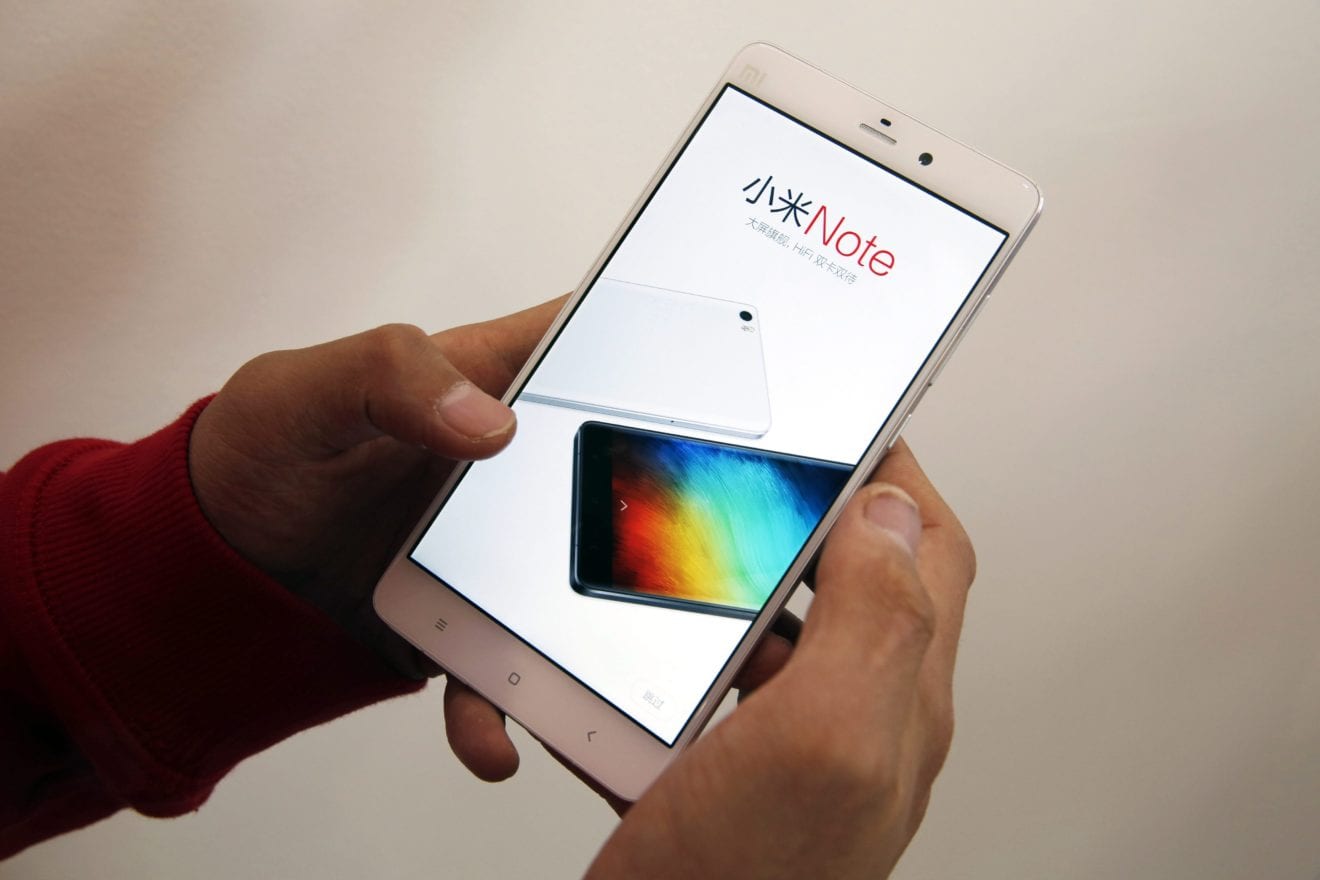
    Digitimes own research has Huawei listed as the top smartphone producer in China with a 14% market share from April through June. The 12.7% share earned by Oppo during the same time period was next, followed by Vivo and Xiaomi with 11.2% and 10.4% of the market, respectively. Apple was fifth with a single digit slice of the pie.

    In an earlier report, Apple was said to have claimed 10.8% of the Chinese smartphone market during the first quarter of this year. That was a decline from the 12% share Apple controlled in the first quarter of 2015. Now in single digit territory, the company is looking at India to provide future growth in iPhone shipments.

    source: Digitimes

  • Alibaba sales soar on international expansion

    Alibaba sales soar on international expansion

    Alibaba sales have soared in the first quarter of its new fiscal year, with overall revenue growth pushing even higher than last quarter’s stellar result.

    Streaming entertainment and cloud computing boosted the business, driving revenue up 59 per cent in the June quarter to 32.15 billion yuan (US$4.8 billion).

    In a contrast to the last reporting period, it is international that has shown the most growth, with revenues rising by 123 per cent. Although this figure is aided by the consolidation of the Lazada business, it is also the result of some good numbers from AliExpress.

    That said, China retail remains the largest part of the group, accounting for just over 73 per cent of revenues. Here performance was strong, with revenues rising by 49 per cent – partly thanks to a combination of the addition of 11 million more active buyers and higher average transaction values over the prior quarter. A sharp increase in marketing spend by those brands and merchants using Alibaba’s various sites also made a significant contribution to the hike in revenues.

    Alibaba’s role as a facilitator for Western brands wanting to sell into China continues to be the company’s main commercial advantage. Its ability to work closely with those merchants to improve performance will benefit the revenue streams of both parties, as well as creating a more attractive and compelling offer for consumers.

    Despite its success at home, Alibaba has struggled to gain traction in already established markets like the US. While this was once a stated ambition, and perhaps remains a long term goal, it is off the agenda for the short term. This is the correct strategy: chasing lower margin, profit eroding international gains for the sake of vanity makes little sense.

    That said, this does not mean that Alibaba’s international ambitions are entirely on hold – as the latest results show. Tactically, Alibaba has decided to focus on high growth markets where commerce is more embryonic. The acquisition of a controlling interest in Lazada, the Southeast Asian eCommerce group, is testament to this.

    While Lazada has grown into a sizeable business, it has a number of challenges including on the delivery, payment and fulfilment front, where it has struggled to optimise the offering. Alibaba, through its expertise and financial muscle, should be able to remedy this. It will also, over the medium term, strengthen the international brands available making the site more compelling and interesting for shoppers.

    The Lazada model represents the approach Alibaba is likely to take to international growth and expansion, and this will yield good long term results.

    With both international and domestic sales forging ahead, and with new areas like cloud computing making a better contribution, Alibaba is firmly on an upward trajectory.

  • Report: Chinese Shoppers Make 40 Percent of Luxury Purchases Abroad

    Report: Chinese Shoppers Make 40 Percent of Luxury Purchases Abroad

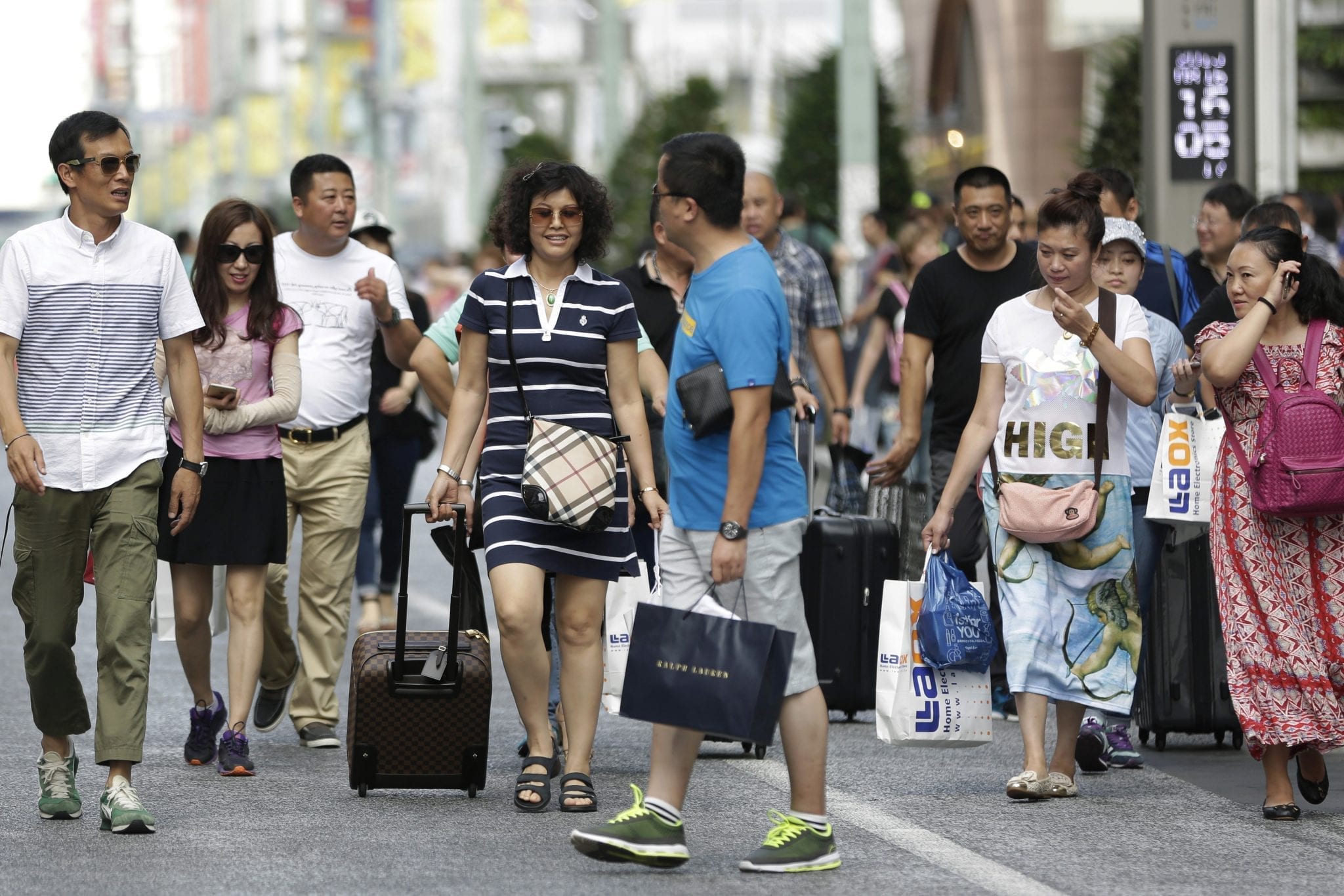
    Chinese travelers are spending billions of dollars abroad, but where exactly are they making their luxury goods purchases? A recent report titled “Who Buys Where: Decrypting Cross-Border Luxury Demand Flows” by digital direct marketing services provider ContactLab and Exane BNP Paribas Research maps out spending patterns by tourists from all over the globe based on three years of data. ContactLab’s research ranks Chinese travelers second in terms of the proportion of spenders who buy luxury goods abroad, finding that 40 percent of Chinese consumers’ luxury spending occurred overseas in the first part of this year.

    chart

    While Chinese consumers spend most of their budget on luxury items abroad, this year, overseas spending dropped 5 percent, but rose 5 percent domestically. ContactLab attributes this to price corrections by major luxury brands on the mainland. For example, last year, Chanel lowered its mainland China prices to encourage Chinese shoppers to purchase there, and deter daigou sellers from benefiting from purchasing cheaper goods abroad.

    How much Chinese spend abroad may provide some insight into exactly who these consumers are. The value of purchases Chinese travelers make in “European Heritage” countries, the United States, and Japan is significantly lower than it is in China—by 20 to 30 percent. ContactLab says this suggests big spenders in these countries are “aspirational first-time buyers.”

    However, despite individual purchases being lower overall, Chinese luxury spending in Europe “appeared to be rising” in the first four months of 2016 compared to the same period two years before, according to the report. This was the case even factoring in the Paris terrorist attacks in late 2015. The increase takes place “possibly because our data includes also a portion of daigou spend (eg Chinese students in Europe whose visas don’t allow tax free refunds, and which are therefore not captured by Global Blue statistics),” said ContactLab senior advisor Marco Pozzi. “If this is what we see in the wake of the November terrorist attacks, then 2H16 could reasonably expected to be even more positive.” It’s still worth noting that since the release of the report last month, there have been further attacks in Europe and numerous luxury brands have reported that they are feeling the repercussions of waning Chinese tourists in light of security concerns.

    In Asia, Chinese tourist luxury spending has also gone up in the last few years in Japan and Korea. In Japan’s case, Chinese travelers make up the majority of the luxury purchases, even though inbound tourists only make up about 5 to 15 percent of sales in the country overall.

    The report also confirms known trends in Hong Kong and Macau’s luxury retail industry. This year, Chinese consumers have done almost the same amount of luxury shopping in Japan, Taiwan, Singapore, and Korea combined as they have done in Hong Kong and Macau. Chinese tourists went from spending 70 percent of their luxury goods budget in Hong Kong in the first four months of 2014 to spending 35 percent in the same period this year. Hong Kong’s luxury retail industry has been struggling with the absence of Chinese tourists and developers are being forced to find alternatives to high-end stores to attract shoppers. This month was the first in over a year where Hong Kong finally experienced a rebound in tourists from the mainland.

  • Mainland China retail sales growth slows in July

    Mainland China retail sales growth slows in July

    Mainland China’s retail sales growth slowed sharply in July, statistics showed Friday, missing expectations in a disappointing sign for the world’s second-largest economy as the mainland China authorities look to consumer demand to push growth.

    Retail sales rose 10.2 percent in the month, the National Bureau of Statistics (NBS) said, a marked slowdown from June’s 10.6 percent increase and below the median forecast of 10.5 percent in a Bloomberg News poll of economists.

    Beijing is looking to retool the economy from a reliance on investment spending and exports to one driven more by consumer demand, but the transition is proving bumpy and gross domestic product growth is slowing.

    China is a key driver of the world economy but grew at its slowest rate in a quarter of a century last year, and has decelerated further since then.

    Industrial output in the Asian giant rose 6.0 percent in July over the year before, the NBS said, while fixed asset investment (FAI), a gauge of infrastructure spending, rose 8.1 percent in the first seven months of the year.

    Those figures also missed expectations of 6.2 percent and 8.9 percent respectively.

    Analysts were disappointed. Zhao Yang of Nomura called the figures an “across-the-board slowdown” that showed more weakness than expected. The investment figures were consistent with a deep contraction in imports that “points to sluggish domestic investment demand.”

    Looking ahead, factory output will face further downward pressures due to efforts to cut overcapacity, analysts with ANZ Research said in a note.

    Industrial production “may further dampen” this quarter, they added, as a result of flooding around the Yangtze River and suspended factory production in Zhejiang province, one of China’s most developed areas, due to a forthcoming G-20 summit in Hangzhou.

    Unswervingly Advance

    The NBS said in a statement China’s economy was “basically steady” in July but said that “serious disasters” from flooding and high temperatures in some parts of the country caused some indicators to slow.

    “However, overall economic development kept performing in a proper range with steady pace, as a result of stable employment and prices, deepened supply-side structural reform and accumulated new impetus,” it said.

    China should “unswervingly advance” supply-side structural reform and expand aggregate demand, it added.

    NBS spokesman Sheng Laiyun said it was “reasonable” for FAI growth to fall long-term as the economy shifts away from traditional heavy industries toward the service sector, which does not require as intensive investment.

    “The trend is good,” Sheng told a news conference. “Even though economic growth dropped slightly, the economy is stable and making steady progress, and the steady trend toward improvement has not changed.”

    Sheng acknowledged, however, that China faces “downward pressure” from weak global demand as Beijing carries out a marathon effort to nurture consumer-driven growth and reduce reliance on trade and investment.