Tag: China

  • CapitaLand Retail China Trust property income rises

    CapitaLand Retail China Trust property income rises

    CapitaLand’s China retail venture has had a strong half year, despite the tepid retail sector.

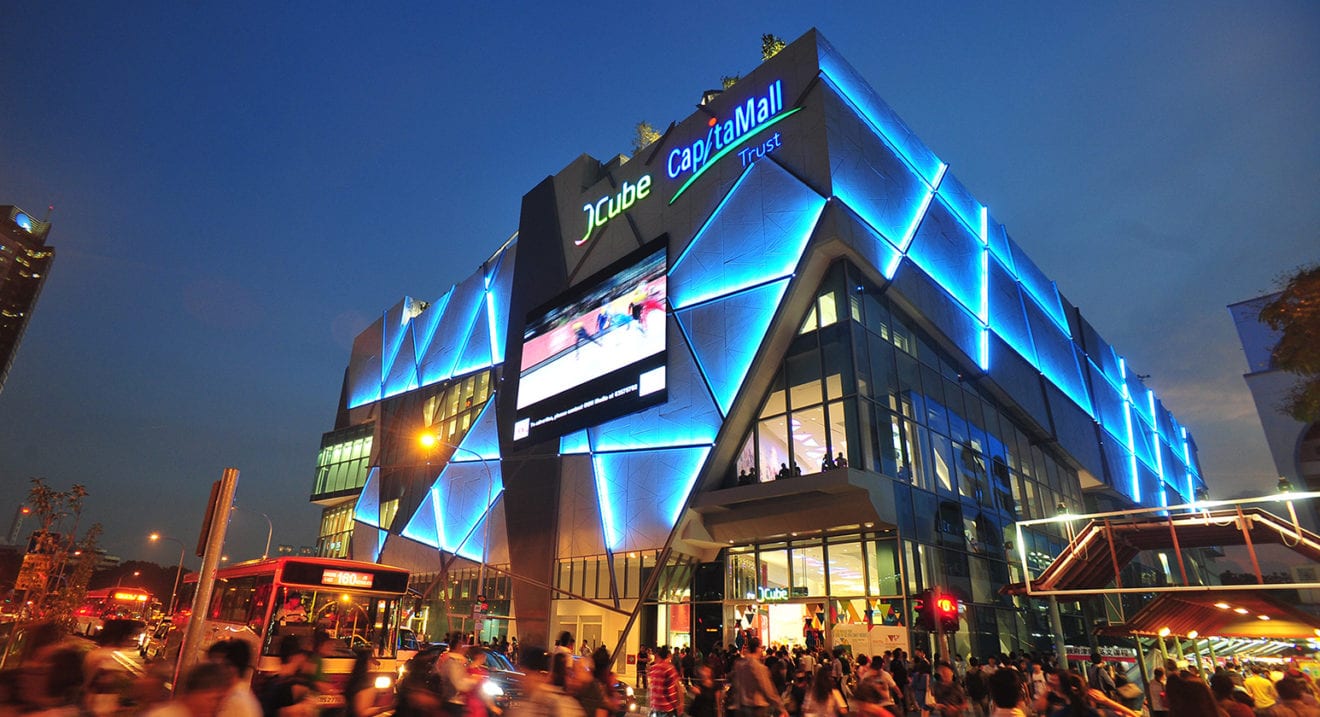
    CapitaLand Retail China Trust Management, which manages CapitaLand Retail China Trust , has achieved net property income of RMB339.3 million (US$50.92 million) for the six months to June 30, up 4.6 per cent from the same period last year.

    Chairman Victor Liew says that with China’s steady growth spurring domestic economic activities, “we continue to be positive on China’s long-term retail growth prospects”.

    CEO Tony Tan says occupancy was steady at 94.9 per cent for the group’s malls for the half-year.

    “We continued to enhance our malls by introducing popular brands and keeping abreast of consumer trends,” he says, citing the opening of the Famiku VR experience centre in CapitaMall Qibao.

    Danish jewellery brand Pandora will soon be opening at CapitaMall Xizhimen, and new F&B brands include Xiao Niu Niu in CapitaMall Xizhimen and Xing Yang Hainanese Chicken Rice in CapitaMall Qibao.

    Meanwhile, CapitaMall Saihan has had its facade upgraded, with similar work almost complete on CapitaMall Wangjing and CapitaMall Qibao to be similarly upgraded this year.

  • Huawei retail plans 15,000 new stores

    Huawei retail plans 15,000 new stores

    Smartphone maker Huawei plans to open 15,000 retail stores internationally this year in a bid for a record-high shipment of smartphones and greater sales of premium-priced models.

    “We are optimistic and confident about reaching our target shipment of 140 million smartphones this year,” says its business group CEO Richard Yu Chengdong. That would mark a 30 per cent increase in smartphone shipments from 108 million units last year.

    Yu says the Huawei retail store expansion would help drive sales of its high-end smartphones in the US$500 to US$600 range.

    Huawei’s retail arm had 35,000 of its own stores around the world at the end of May, up 116 per cent year on year. It has 11,000 stores in mainland China, 6500 stores across the rest of Asia, 6200 in Europe and 1500 in South America. This compares with Apple’s 484 retail outlets in fewer than 20 countries.

    Huawai  is represented in more than 170 countries and territories, supported by a growing number of third-party shops. These include outlets in shopping malls and stores owned by mobile network operators like China Mobile.

    Its smartphone shipments grew 25 per cent year on year to 60.56 million units in the first six months of this year. Sales generated by the company’s consumer business group in the first half jumped 41 per cent to 77.4 billion yuan (US$11.6 billion), with more than half from overseas markets.

    Data from market research firm GFK shows that Huawei’s share of the global smartphone market reached 11.4 per cent at the end of May. Its share of the premium smartphone market was 25.7 per cent, up from 15.2 per cent at the end of March.

    The Shenzhen-based firm, which also sells network equipment to telecommunications service providers and other enterprises, reported this week that its total revenue in the first half of this year jumped 40 per cent to 245.5 billion yuan, up from 175.9 billion yuan for the same period last year.

  • Thaihot Plaza Fuzhou opens

    Thaihot Plaza Fuzhou opens

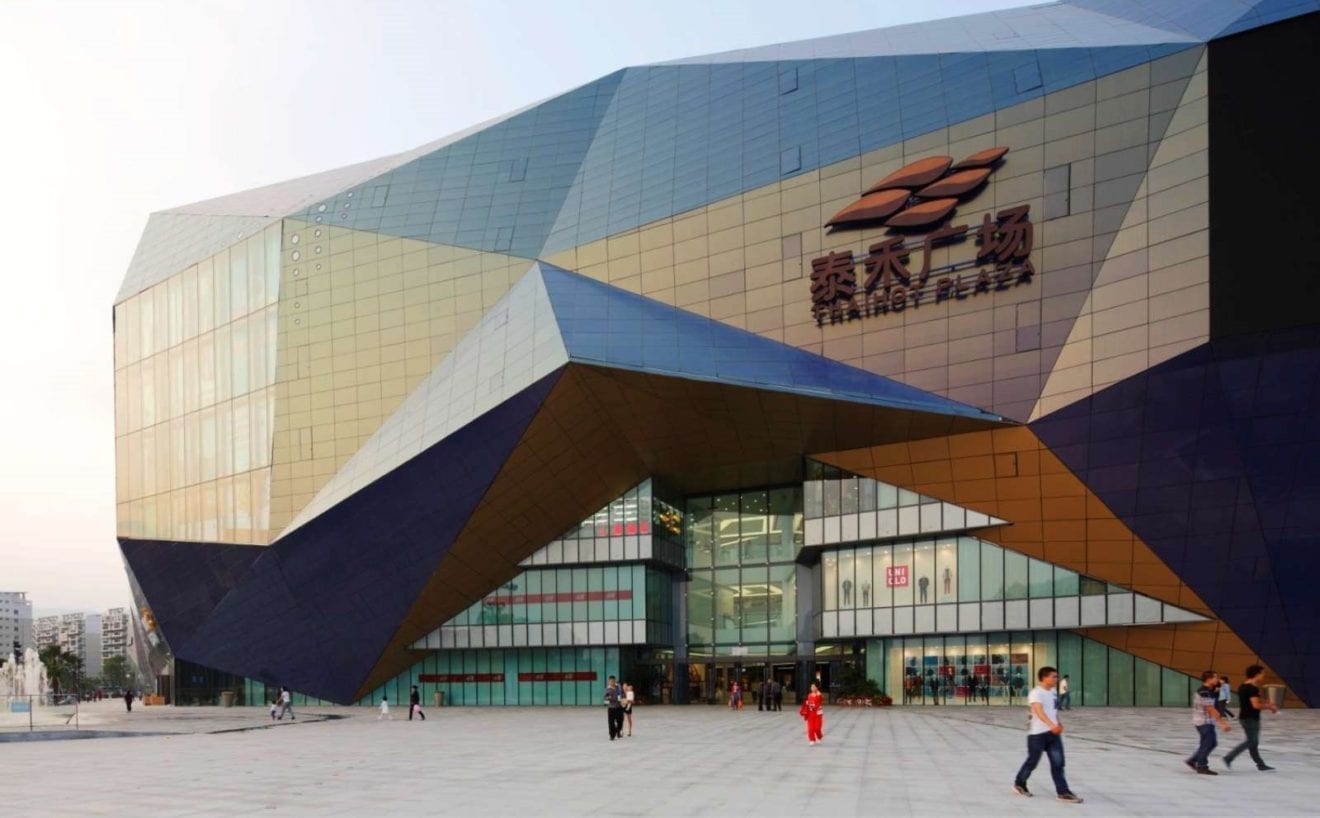
    New York-based Laguarda.Low Architects has designed a retail development in central Fuzhou, China.

    At a major intersection in the city centre, Thaihot Plaza Fuzhou is a 1.4 million sqft (130,064 sqm) retail centre with a six-storey luxury shopping mall to the south, a public plaza, and three levels of outdoor shops and restaurants to the north.

    Fuzhou-Wusibei-Thaihot-Plaza-by-SPARK-03

    “We sought to create a luxurious yet inviting environment, offering convenience, comfort, and lifestyle amenities,” says Laguarda.Low principal John Low.

    Thaihot Plaza Fuzhou is orientated to various transit modes and is near a growing residential and commercial district. Attractions at the complex include an automated fountain with synchronised lighting and music, and an Imax theatre.

    Thaihot Plaza - Fuzhou China 2

    The plaza serves as the central social space of the development. Three levels of shops and restaurants surround the open-air space with views of the surrounding city. Contiguous glass storefronts, wide stairs with integrated lighting and a large LED display above the mall entrance promote activity throughout the space.

    A curvilinear skylight with horizontal and vertical glazed surfaces covers the grand atrium of the mall, filling all six levels with daylight. Above the delicate glass volume, a metal skin wraps the building.

    Thaihot Plaza - Fuzhou China 3

    Top-grade natural and manufactured materials were used in both the interior and exterior of the mixed-use complex, creating an environment of luxury experience for shoppers, says Low. Granite paving and facades, aluminium-framed storefronts with glass canopies, glass and stainless-steel railings, and red-clay tile and zinc are woven into the design.

    Laguarda.Low Architects also designed the just-launched six-storey CapitaMall Xinduxin shopping centre in Qingdao, which comprises a six-level above-ground retail centre, two levels of below-ground retail, and two levels of underground parking.

    Thaihot Plaza - Fuzhou China 1

  • Social Commerce blossoms on mobile Taobao

    Social Commerce blossoms on mobile Taobao

    On the way to becoming the world’s largest e-tailing market (US$590 billion in 2015), online shopping in China has become a highly social activity.

    Wary Chinese consumers don’t swallow advertising at face value and they don’t take vendors at their word – they check the internet for product reviews, swap links to favoured products and seek out third-party opinions, especially those of people they trust. According to a recent McKinsey report, two-thirds of China’s consumers cite recommendations from families and friends as the most important factor in purchasing decisions. In the US, only one out of three people say the same.

    In other words, in China, shopping is also sharing. So pronounced is this trend that Alibaba Group, owner of China’s largest online marketplaces, insists it’s not so much in the e-commerce business these days as it is in the social commerce business. And since more sharing equals more sales, the company is doing everything it can to make it easier for users to interact with one another when shopping online – going beyond offering the standard eCommerce fare of user-generated product recommendations and ratings by establishing online communities, encouraging shoppers to share photos of their latest online purchases and even adding monetary incentives to encourage greater social participation.

    The tip of the social-commerce spear is Mobile Taobao, Alibaba’s hugely popular mobile shopping app. With 369 million monthly active users, Mobile Taobao is “not only China’s, but the world’s largest social commerce platform,” according to Jiang Fan, who leads Mobile Taobao’s business at Alibaba.

    The app, which offers access to Alibaba shopping sites Taobao Marketplace, Tmall.com and Juhuasuan, generates up to 20 million product reviews every day, and involves 5 million users sharing content with friends. Users “like to share whatever they find- fun things, fun merchandise – with their friends through social media,” Jiang said last month during an investor conference at Alibaba headquarters in Hangzhou, China. “We don’t view ourselves [merely] as a shopping app,” he said. “Our community is not only about us serving the consumers, but consumers themselves helping each other.”

    To drive greater customer engagement, Mobile Taobao has been developing new social commerce features within the app. One such addition is the hosting of special interest groups calledquanzi(circles) where hobbyists and other like-minded individuals can talk about their pastimes and favourite products. Taobao says it now hosts more than 1000 circles covering interests such as wedding planning, fishing, infant care and many others.

    “We want to get people together to allow them to discuss and generate content that can serve more people,” said Zhang Jiehan, a Taobao product manager.

    Photo sharing is also a hit with users, said Jiang. “Every day after [mobile shoppers] complete their transactions they like to share what they’ve bought,” he said, “so we have a specific app for buyers to show off their products.” This feature currently generates about 1.5 million daily reviews, he added.

    One of the most popular social functions on Mobile Taobao is a Q&A feature called Wendajia (ask others) that lets shoppers with questions about a particular product get answers from members of the Taobao community. Wendajia helps free consumers from the drudgery of combing randomly through product reviews or resorting to asking sometimes biased and unhelpful vendors for answers. “The essence here is mutual assistance,” Zhang said. “The new feature builds a direct and effective communication channel between people who have purchased and people who want to purchase.”

    Crowdsourced Q&As have been around for a while, of course. But Wendajia is innovative in the way Taobao identifies and proactively reaches out to users who can provide feedback. When a buyer submits a question, Taobao employs big data and a sophisticated algorithm to spot members of the online community who are most likely qualified to answer the question, typically those who have recently purchased the product. After zeroing in on up to 12 potential candidates, the system then sends out messages to their smartphones soliciting responses.

    Wendajia has proven to be a boon to buyers because they don’t have to wait hours or days for fellow shoppers to stumble on their questions and provide answers. One-fourth of all questions are answered within one minute and 60 per cent of questions within 10 minutes, Jiang said.

    “This greatly optimises the pre-shopping decision process,” he said. Every day, it receives as many as 1 million questions, and 2 million consumers participated in answering.

    China’s widespread adoption of smartphones and the reach of the mobile internet has undoubtedly contributed to the growth of social commerce by making participation easy, ubiquitous and dynamic. Still, Mobile Taobao isn’t relying solely on user enthusiasm and social goodwill to foster greater user involvement.

    Last year, Alibaba rolled out a program to encourage bloggers, writers and noteworthy online expertsto post content on Mobile Taobao by paying them small sales commissions for product recommendations that lead to purchases. More recently, Taobao began offering similar incentives for the general public to encourage social participation.

    Through an upgrade to Taobao’s existing membership program, which previously awarded points only for online spending, users can earn additional points by posting product reviews and links, answering consumer questions and interacting with the Taobao community in other ways. While there are no cash awards, amassing points entitles users to benefits such as coupons for car-hailing app Didi Chuxing and service upgrades such as late check-out times at participating hotels.

    In social-media-crazed China, such perks may not be necessary. Just being part of the conversation seems to be enough to keep people involved. According to media research firm ComScore, the average Mobile Taobao user spends more than 25 minutes a day on the app, compared with Amazon Mobile’s nine minutes.

    As Taobao shopper Cici Wang notes, social-commerce features like Wendajia have value “because of the volunteer work offered by ordinary users, which makes it trustworthy.” Indeed, having armies of consumers keeping each other informed and vendors honest is seen as a positive development as e-commerce morphs into social commerce, says Zhang, the Taobao product manager. Digital word-of-mouth provides merchants with continuous feedback and compels them to maintain quality products and services.

    “In the long term, it drives healthy growth of the platform,” Zhang said.

  • China smartphone demand grows 17pc

    China smartphone demand grows 17pc

    China smartphone demand grew 17 per cent last month, according to technology research company Counterpoint’s monthly Market Pulse.

    It was the best-ever June in terms of sell-through for smartphones, despite the overall market having modest growth for the second quarter ending June 31.

    “The competitive environment in the world’s leading smartphone market has taken an interesting turn as domestic brands have significantly ramped up their positions in the smartphone market,” says research director James Yan.

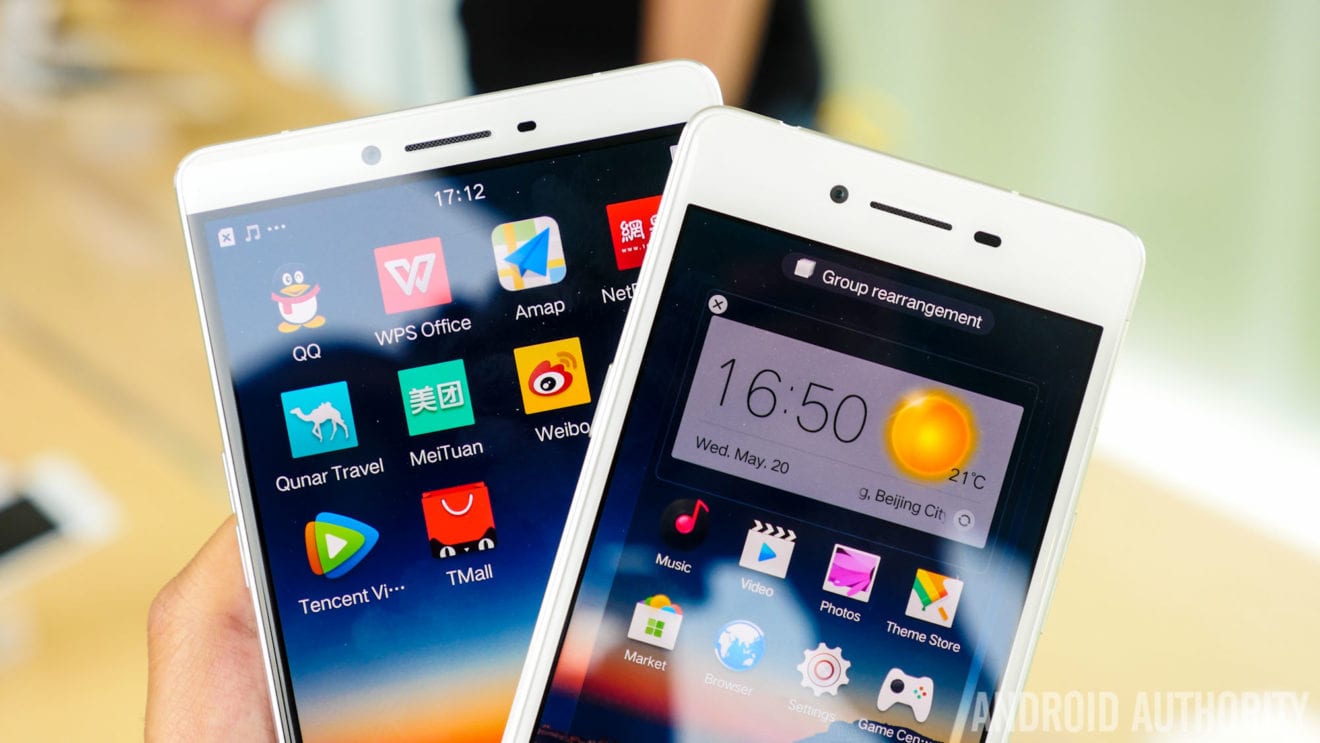
    Oppo became the top-selling brand in China for the first time ever in June, surpassing Huawei, Apple and Xiaomi with a 23 per cent market share and sales volumes leapfrogging 337 per cent.

    Also owned by the BBK group, Vivo also had a strong performance with the launch of a new model. Together, the sister brands captured a third of the Chinese smartphone market, up from a combined 13 per cent in the same month last year.
    Meanwhile, Apple’s market share slipped to 2014 levels.

    Counterpoint research director Neil Shah says Oppo adopted a simple but effective strategy – going after the offline market, which still contributes more than 70 per cent of total sales in China.

    “Aggressive marketing, promotions and sponsorships, greater offline retail penetration beyond tier-two and tier-three cities, better retail margins, dealer support and, above all, innovative smartphone designs have helped Oppo drive its sales in the past 18 months.”

    The brand had also focussed on design and key features such as camera, battery technology and materials.

  • Datapipe drives Baozun digital transformation

    Datapipe drives Baozun digital transformation

    Datapipe, a leading global provider of managed hosting and cloud services for the enterprise, has led the cloud migration and digital transformation of China’s largest brand eCommerce services provider Baozun Inc.

    Baozun has shifted its IT systems to Datapipe’s managed cloud, tapping Datapipe’s expertise as a Managed Services Provider to handle its cloud migration and maintenance. Results include decreasing the time to on-board new clients by 500 per cent, reducing the cost of hosting by 20 per cent, reducing maintenance  from 200 man hours to virtually zero, freeing Baozun’s IT team of over 20 employees to focus on core business activities. Datapipe also reduced Baozun’s server downtime to zero per cent, enabling Baozun to guarantee a 99.95 per cent uptime to its clients – which include over 100 global brands in over 50 countries.

    With operations across China, Hong Kong, Taiwan and the rest of Asia Pacific, Baozun offers end-to-end brand eCommerce solutions to more-than 100 international clients. These include brands in the apparel, appliances, electronics, home and furnishing, food and health, cosmetics, insurance and automobile categories. Baozun helps these companies operate eCommerce sites on China’s most popular online marketplaces, such as Alibaba’s Tmall and JD.com. Key to ensuring their clients’ success is the ability for Baozun to provide scalable, highly available and secure end to end solutions integrating front end shopping experiences with supply chain management and distribution systems.

    Colin Chan, VP of Asia at Datapipe says Baozun has hundreds of global business partners, spanning millions of customers and transactions.

    “Given the scope of its operations, ‎and the unique nature of eCommerce in China, where some days have 1000-times the transaction and visitor numbers than others, the challenge of ensuring infrastructure is able to scale up to meet business demand‎ is very real. We’re pleased to work with Baozun, by migrating their core workloads to a 100 per cent scalable cloud environment and providing management of their infrastructure 24×7.

    “With their IT now supporting their ever-growing business, Baozun is better positioned to take aim at the multi-trillion dollar eCommerce opportunity in China and Asia wide.”

    Prior to working with Datapipe, all of Baozun’s data ran on web servers hosted externally – unsustainable given the business’ rapid growth, because as transactions volumes grew, so too did the server load; consequently, server sizes increased, placing significant pressure on its IT team around maintenance, cost, speed and scale.

    Tony Wu, CTO at Baozun, says Datapipe came highly recommended. “They brought significant expertise in managing cloud environments – including for other large eCommerce ‎businesses in China. They delivered a high-level of customer support, were very affordable and are able to provide open source as well as private cloud services to meet our unique needs. By Datapipe managing our cloud deployment, Baozun is able to focus on other crucial technology processes, accelerating our growth and delivering shareholder value.”

    China surpassed the US last year to become the world’s largest retail eCommerce market, and is expected to cross US$1.21 trillion in retail eCommerce sales in 2017, according to eMarketer. While eCommerce is growing strongly, running an eCommerce business comes with its own set of unique challenges, particularly around scale. When online promotions are launched, for example, Baozun sees significant spikes in sales volumes – up to 100x that of a normal day. On Singles Day in 2015 (11 November), Baozun processed 650,000 orders in the first hour and 3.5 million orders within a span of 24 hours.

    Datapipe recently drove the eCommerce transformation of Challenger Technologies Limited, Singapore’s largest electronics retailer. The company is seeing rapid growth across Asia-Pacific. It has doubled regional manpower year-on-year, with close to 100 employees now in Hong Kong and double the customer base in the region.

    Datapipe is the managed hosting and cloud services provider with the most complete set of services, global locations, and industry leading partners. Datapipe delivers choice, control and confidence in architecting, deploying, and managing multi-platform hybrid IT solutions tailored to individual customer needs. Optimising mission-critical and day-to-day enterprise IT operations, Datapipe enables businesses to transform, innovate, and scale. Backed by a global team of experienced professionals and next-generation data centers Datapipe provides comprehensive security, governance, orchestration, and analytics solutions.

  • Apple China’s quarter sales slump

    Apple China’s quarter sales slump

    Apple China’s sales fell 30 per cent in what one retail analyst described as “another fairly rotten quarter” for the tech giant globally.

    Apple’s international decline has accelerated with total sales revenue sliding by 14.6 per cent and operating income by 28.2 per cent.

    “That the numbers are down come as no real surprise given that Apple has launched very few significant products or initiatives since the last reporting period. However, that they are sequentially worse than last quarter is a cause for some concern, especially so as all geographies, bar Japan, are now in strong decline,” observed Neil Saunders, CEO of Conlumino.

    But Apple’s current problems are a lot more worrying for the company than a couple of bad sets of  quarterly figures, even though the company remains highly profitable and cash-rich. At the core of Apple’s challenge is the long period of sustained innovation and ingenuity seems to have dried up.

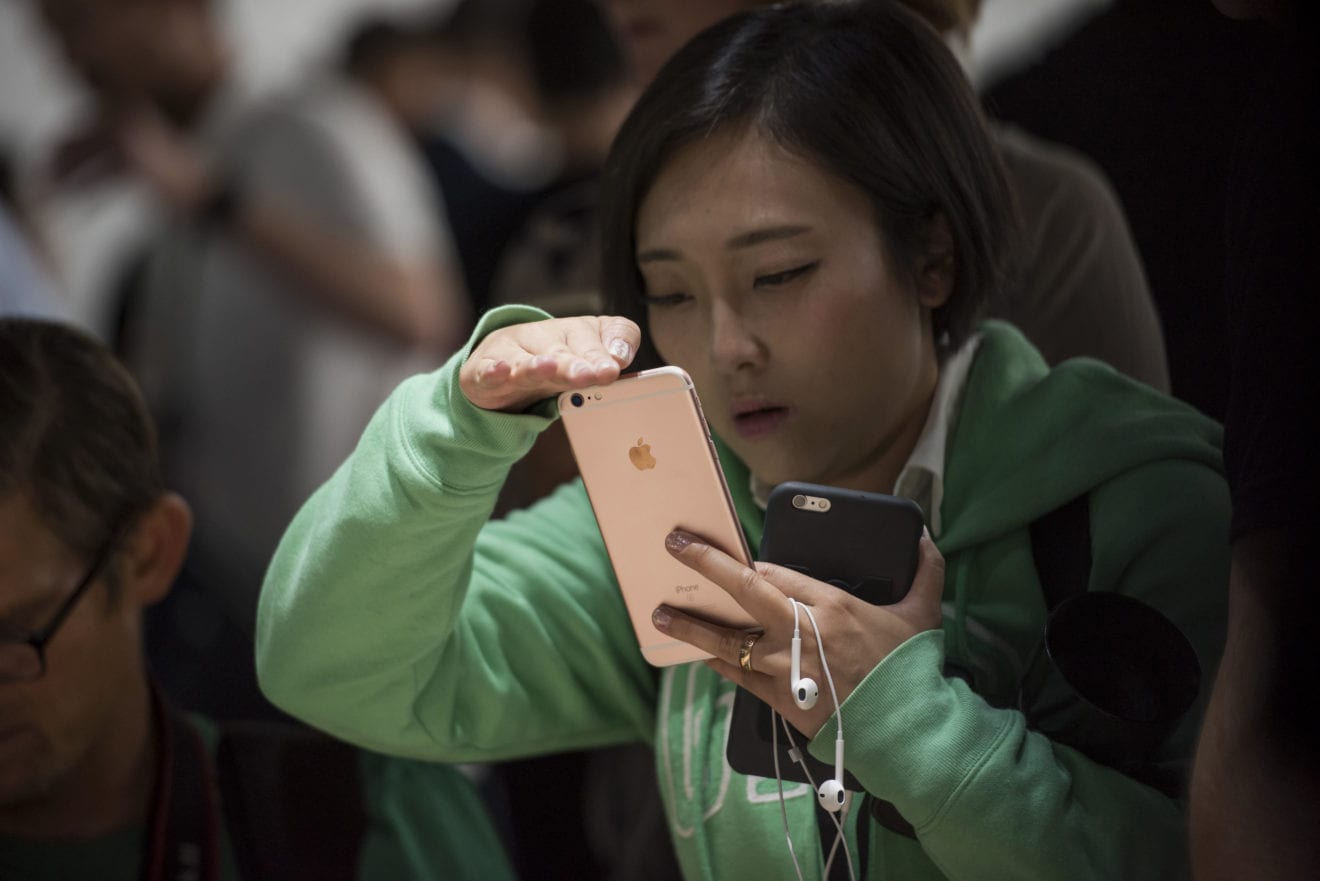
    The same day as Apple announced its latest results, one of the most reliable Apple leak sources, Evan Blass, revealed the next iPhone scheduled for release on September 16 will now be called the iPhone 6SE, because there are insufficient upgrades to warrant a new generation 7 model number. The iPhone – once the mainstay of Apple’s stellar rise – used to be the most-coveted smartphone handset on the market. But Samsung’s Galaxy Edge has well and truly evolved into the most beautiful handset on the market, and a raft of brands around Asia are producing phones with features and specifications equal to or better than the iPhone 6, usually at prices substantially lower.

    That partly explains why iPhone sales fell 23 per cent in revenue terms in the latest quarter: it’s just not as sexy as it once was; customers have a wider choice now, and owning an Edge has as much street cred as owning an Apple in many parts of the world.

    Laptop sales are weak globally as more and more consumers who do not need computers for work purposes find Phablets and tablets are more portable and just as convenient for social networking, email and watching videos. Mac sales fell 13 per cent last quarter – and again Apple has offered little reason to upgrade in recent years, save the high-resolution retina screens. New models are slated for later this year, but expect this to be another round of higher spec for a reduced price as Apple tries to hold its own against the likes of Samsung and arguably the biggest innovator in Windows-platform computers, Lenovo.

    Sales of other Apple physical products fell by 16 per cent.

    The only ‘innovation’ from Apple in the last two years is the Apple Watch, which, as Saunders observes, was supposed to be “the next best thing”.

    “However, its performance has been disappointing [because] it doesn’t really do very much.

    “In most cases it simply replicates what can be done on a phone, albeit less effectively. As such, other than as a status symbol, most consumers do not see the value in spending hundreds of dollars simply to remove the effort of having to lift up their phones. This is a great example of Apple’s genius in producing what remains a technically impressive and aesthetically pleasing device, while missing the bigger picture of how that device fits into people’s lives.”

    Ouch. But he is right: The Apple Watch is a solution searching for a problem. It is not a ‘must-have’, life-changing product, merely a gimmick; an expensive, flashy replacement for a pedometer which, wait, you can download onto your iPhone for free on iTunes…

    “All of this is characteristic of a company that, while still highly successful, has simply lost the edge that once persuaded consumers to continually upgrade and buy into more expensive pieces of kit.  Apple has become too obsessed with the technical minutiae of products rather than developing radically new devices which capture the imagination, and cash, of consumers,” says Saunders.

    Services a bright spot

    Saunders says the one bright spot in an otherwise gloomy set of Apple figures comes from the services segment. Here revenue grew by 19 per cent, thanks to more Apple Music subscribers and the strong performance of the App Store. “However, the ground gained here is nowhere near enough to make up for the decline in product revenue, which is where Apple takes the bulk of its sales and makes most of its profit.”

    Just what Apple is working on behind the scenes as it seeks its next life-changing product is uncertain. There have been long-running reports it is developing a motor vehicle, for example, a huge investment which the company certainly has the cash reserves to fund. But reinventing the motor vehicle is a hard concept to conceive. Elsewhere it seems to be searching for acquisitions which could aid its growth – among the recent rumours is a bid for Formula 1, one of the world’s most-watched televised sports which could bring access to technical innovation, and most importantly content for a planned TV concept and its existing devices. Neither F1 or Apple has denied those rumours.

    Saunders argues that if the company is to return to its once stellar growth, it needs either a radical step change in its existing product line-up or needs to come up with a completely new device that creates a whole new market.

    “This is easier said than done, but there are emerging areas of technology – like virtual reality – where Apple should be at the forefront of developments.”

    Saunders also praises Apple’s latest incarnation of its retail store.

    “Apple’s latest store format is impressive and provides just the type of experience that modern consumers enjoy and will engage with. However, without great products this new format will not deliver very much. As such, Apple needs to put the same sort of forward thinking into its kit as it has done its new shops.”

    He concludes: “As much as this may all sound harsh and critical, it is simply because Apple set such a high benchmark to begin with. It remains a very impressive business and retailer, but it is one that is in desperate need of that magical ‘one last thing’ to transform its trend of declining sales.”

  • Alliance Group market-ready lamb packs to hit Chinese shelves

    Alliance Group market-ready lamb packs to hit Chinese shelves

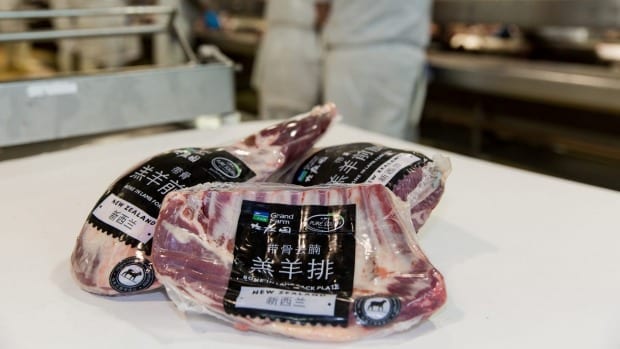
     Alliance Group’s lamb packs for the Chinese retail market.
    Alliance Group’s new lamb range of market-ready retail packs will be launching in China next month.

    The co-branded lamb range will land in China’s retail and food service sectors as the co-operative and its in-market partner Grand Farm strengthen their close ties.

    The initial focus  will be on the upper end of the Chinese market in Beijing, Shanghai, Guangzhou, Shenzhen and Harbin The lamb will be available from eight retail chains boasting 200 selected outlets before being rolled out to other parts of the country.

    Alliance chief executive David Surveyor said the New Zealand-packed lamb was designed for the Chinese market and co-branded Pure South and Grand Farm.

    “It marks a major milestone in our vision to create new product forms and ranges that will be either produced from source or further processed in the market to meet the growing demands of China’s food service sector.”

    The regions were selected based on the higher buying power of their consumers, concentration of foreigners and higher economic activity, he said.

    “This initiative will help us build a deeper understanding of the supply and value chains and eventually secure the added value we are seeking in this market with a ‘packed-at-origin’ offering.”

    Alliance’s focus in China was to obtain more market value for its 5000 farmer-shareholders by understanding consumer tastes and improving its matching of products and markets, as well as investing more in new products and packaging, he said.

    In April, the co-operative signed an agreement with Grand Farm at a ceremony in China. The agreement, which signals further strategic co-operation between the pair, sets out a  plan to improve the returns and add value to both businesses.

    Grand Farm is the best known distributor and marketer of top quality red meat in northern China. The company owns 96 meat shops, operates 260 branded meat counters in selected hypermarkets and supplies over 1000 hypermarkets in China.

    Alliance has been working in China since the mid-1990s and is now the country’s largest exporter of New Zealand lamb to the country.


  • Trinity Pictures co-makes two films with Chinese partners

    Trinity Pictures co-makes two films with Chinese partners

    Trinity Pictures, India’s first franchise feature film studio, is planning two landmark Indo-China co-productions to be released in fiscal 2018, according to Eros International Media.

    These are Kabir Khan’s travel drama The Zookeeper (working title) and Siddharth Anand’s cross-cultural romantic comedy Love in Beijing (working title), to be co-produced with China’s Peacock Mountain Culture & Media and Huaxia Film Distribution.

    The two films are the first ever Indo-China co-productions set in both India and China and will have Han Sanping, former chairman of China Film Group, as their creative producer. Sanping has produced more than 300 films and 100 TV series, including Red Cliff, Karate Kid and Let the Bullet Fly

    With the cast from both India and China — a leading Indian male actor and leading Chinese actress — Kabir Khan’s human drama, The Zookeeper, tells the journey of an Indian zoo keeper to China to find a panda to return to India with in order to save his zoo.

    Siddharth Anand’s cross-cultural romantic comedy, Love in Beijing — also with an A-lister Indian actress and leading Chinese male actor — is based on an Indian girl who falls in love with a Chinese man.

    Production costs for The Zookeeper by Kabir Khan are expected to be at about $25 million and Love in Beijing $15 million.

  • Bottom line: brands chase China’s high-end lingerie market

    Bottom line: brands chase China’s high-end lingerie market

    High-end lingerie sales are outpacing China’s generally downbeat luxury market, and heating up competition between international brands and local rivals looking to go upmarket.

    U.S. brand Victoria’s Secret will open its first store, and companies including Italy’s ultra-luxury La Perla and Germany’s Triumph are adding stores and moving beyond China’s mega-cities to tap a lingerie market that has more than doubled in five years to $18 billion, according to Mintel Group.

    Chinese consumer tastes are maturing, women are more confident about buying for themselves and President Xi Jinping’s drive against conspicuous consumption is likely diverting spending from flashy branded bags and accessories to sports and ath-leisure wear and the more discreet lingerie.

    “Luxury is … not about buying to show off, it’s about buying items that make you feel good,” says Chiara Scaglia, La Perla’s Asia chief.

    China’s women’s underwear market is expected to have a retail value of $25 billion by next year – double that of the United States – and will grow to $33 billion by 2020, according to Euromonitor.

    Chinese firms such as Beijing Aimer, Maniform and Ordifen are also chasing that money, targeting higher-end customers and raising their quality.

    “That means foreign brands will have to out-compete local brands not just on quality, but also innovation,” said Matthew Crabbe, director at Mintel.

    For now, the market is highly fragmented, with none of the leading firms having more than around a 3 percent share. International brands see China as a priority to help bolster overall sales given a fairly bleak global outlook.

    La Perla, which sells bras priced around 2,000 yuan ($300), has eight stores in China and plans additional outlets in Chengdu and Chongqing within the year. It also aims to open a men’s store in Beijing.

    “The perception of the lingerie sector has changed,” Scaglia told Reuters. “At the beginning many people we spoke to were confused as to why anybody should spend over $1,000 on panties for something nobody sees.”

    EXPANDING FOOTPRINT

    Victoria’s Secret will open a 20,000 square foot (1,860 square meter) flagship store in Shanghai this year, taking over a prime downtown location that used to house a Louis Vuitton store. “I think it will announce our arrival in China in a very significant way, and should be the beginning of an enormous business for us,” said Martin Waters, L Brands International President.

    Triumph, which already has 1,000 China stores, plans to open in five new cities this year and up to 11 cities next year.

    Cosmo Lady (2298.HK), a Chinese firm that has focused on the mass market, selling bras from 50 yuan ($7.50), last year bought Ordifen to increase its presence in the luxury market.

    “We would like to gradually step into the high-end market,” said Peter Lam, Cosmo Lady’s assistant chief financial officer.

    Gao Qiannan, a 22-year-old Shandong student who says she spends upwards of 1,500 yuan a year on lingerie, doesn’t think there’s a big difference between Chinese and foreign brands.

    “If I can buy a domestic brand, I will, but if I particularly like the international brand’s style, I’ll get that,” she said.

    The international brands say they don’t offer products specifically for the Chinese market, though La Perla notes that some colors – red and baby pink – sell far better in Asia than in Europe or the United States. The Italian brand has also used Chinese supermodel Liu Wen in its campaigns.

    Japanese and South Korean brands are also growing in popularity in China.

    Yin Huijuan, 23, who spends 800 yuan ($120) on lingerie every three months, said she prefers Japanese brands such as Wacoal and Narue. “I feel foreign brands’ style is more detailed and diversified, these are areas where domestic brands fall short,” she said.

    CONSUMER CAUTION, ONLINE COMPETITION

    Even in the lingerie market, though, there are bumps.

    Cosmo Lady, which has 8,600 outlets including Ordifen’s 550 China stores, saw robust growth in its mass market sales last year, but has warned about its profits for the first half of this year, citing China’s slowing economic growth, consumer caution and competing online sales.

    Hong Kong-listed Embry Holdings (1388.HK), which owns the Embry Form lingerie brand, said its group retail sales slipped by nearly a fifth in April-June on tougher competition and the economy.

    Despite those bumps, the lingerie sector retains a strong appeal, said Eugene Mak, an analyst at China Merchant Securities in Hong Kong, and firms like Cosmo Lady are still outperforming other apparel retailers.

    He predicts the market will hit a consolidation phase at some time. “It’s a very young market, but in the near-term it’s going to be messy,” he said.

    (Reporting by Farah Master, with additional reporting by Giulia Segreti in Milan, Shanghai newsroom, and Sharon Shi and Joyce Zhou in Hong Kong; Editing by Ian Geoghegan)
  • Fast food giant eyes Jollibee China expansion

    Fast food giant eyes Jollibee China expansion

    Philippine fastfood giant Jollibee Foods Corp is keen to expand its footprint in China.

    Jollibee China is likely to add 20 to 40 new stores to its 400 outlets, according to Jollbee CEO Ernestro Tanmantiong. He said the company continues to target 5 to 10 per cent growth in stores.

    “We are exploring acquisitions. Our focus is on food service,” he said, adding that the company had acquired a commissary to support its business.

    Early this year, Jollibee Foods took over a food manufacturing facility that services Yonghe King, a famous non-Western restaurant in China.

    Asked about the recent international ruling on the West Philippine Sea and its impact on the business, Tanmantiong said the company thinks the ongoing dispute is unlikely to hurt the company’s operations in China.

    “I think the move of the government to employ diplomacy is the best way to settle the differences. It is the best solution,” Tanmantiong said.

    “Our vision in the future is to achieve a 50-50 ratio of international versus Philippines. Today, it’s 80 per cent Philippines and 20 per cent international. We hope to achieve a 50-50 ratio but it doesn’t mean we are slowing down in the Philippines,” he said.

  • Huawei grows 1H16 revenue by 40%

    Huawei grows 1H16 revenue by 40%

    Huawei grew its sales revenues for the first half of the year by 40% to 245.5 billion yuan ($36.6 billion), despite a decline in its operating margin.

    The vendor reported an operating margin of 12%, down from 18% in the same period last year, partly as a result of increased investment in the company’s smartphone business as part of an aggressive push to become the market leader in 4-5 years.

    “We achieved steady growth across all three of our business groups, thanks to a well-balanced global presence and an unwavering focus on our pipe strategy,” Huawei’s CFO Sabrina Meng commented.

    “We are confident that Huawei will maintain its current momentum, and round out the full year in a positive financial position backed by sound ongoing operations.”

    Huawei has not yet disclosed its profit for the half-year period. Looking ahead, the company said it plans to continue to adhere to its pipe strategy, and invest heavily in R&D in areas including 5G and the IoT.

    In the carrier business, Huawei said it is focusing its attention on supporting operators’ digital transformation in four core areas – business, operations, architecture, and networks.

  • Chinese beauty retail market predicted to reach $50bn

    Chinese beauty retail market predicted to reach $50bn

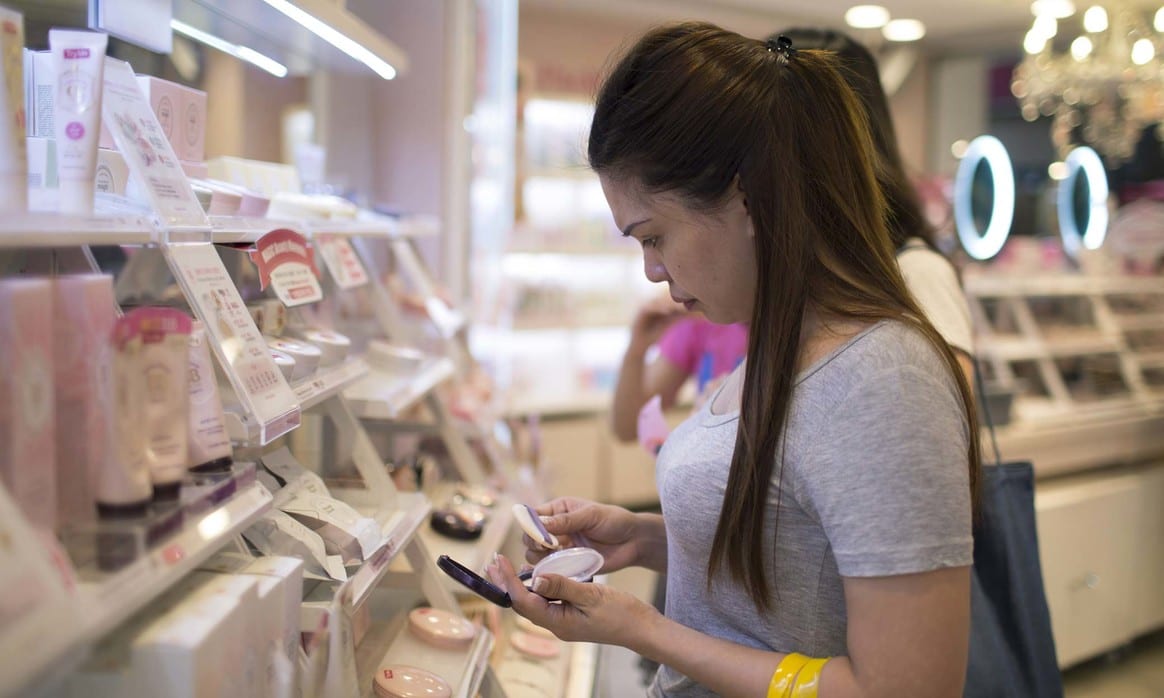
    Despite less frequent purchases, the high demand for skincare products will see the Chinese beauty retail market continue strong growth to reach 338 billion yuan (US$50 billion) in value by 2020, says a new report.

    Research by Mintel shows that 65 per cent of consumers spent more on facial skincare last year than in 2014, despite consumers buying beauty products less often.

    Purchase rates for all beauty and personal-care categories surveyed by Mintel slowed during the three months to October last year. The categories most affected are hair beauty products, beauty supplements and fragrances, falling 32 per cent, 28 per cent and 26 per cent respectively.

    Total retail sales of cosmetics in China grew 12.3 per cent to reach 204.9 billion yuan last year.

    “The beauty retailing market seems resistant to decline, and this is mainly because the dynamic development of the facial skincare market,” says Mintel senior beauty and personal care analyst Chen Wenwen.

    “To leverage their passion and spending power, it is essential for both retailers and manufacturers to engage consumers via mobile platforms.”

    As many as 44 per cent of consumers used a mobile device to pay for beauty/personal care products online in the three months to October – double the number since 2014.

  • Huawei, Vodafone reach 20Gbps speeds in 5G test

    Huawei, Vodafone reach 20Gbps speeds in 5G test

    Huawei and Vodafone have announced they reached 20Gbps wireless transmission rates during 5G field tests using high-frequency E-Band spectrum.

    The 5G mmWave field test covered both single and multi-user multiple-input multiple-output (MIMO) transmissions. The former achieved a 20Gbps EU peak rate, while the latter achieved a 10Gbps peak rate over a long range.

    Announcing the results, Huawei said this marks the first 5G outdoor field test using E-Band (71-GHz to 86-GHz) spectrum to reach the 20Gbps peak rate for a single user device targeted by ITU-R as a 5G requirement.

    The company said E-Band millimiter wave spectrum can be used as a complementary spectrum band to lower-band frequencies to deliver on the performance targets of the 5G standard.

    “This field test in an outdoor environment is a significant step in validating the performance of 5G in high frequency bands, improving our understanding of the capabilities of the technology,” Vodafone Group CTO Johan Wilbergh commented.

    Huawei rotating CEO Eric Xu added that 5G “will introduce full spectrum access to support AR, VR, Smart Automobile and other unknown new services,” and that “the joint trial of 5G mmWave connectivity in a real world radio propagation environment and co-existence of different radio links is encouraging.”

  • Store roll-out boosts Starbucks Asia

    Store roll-out boosts Starbucks Asia

    A massive Starbucks Asia store roll-out has boosted the global coffee company’s third quarter results.

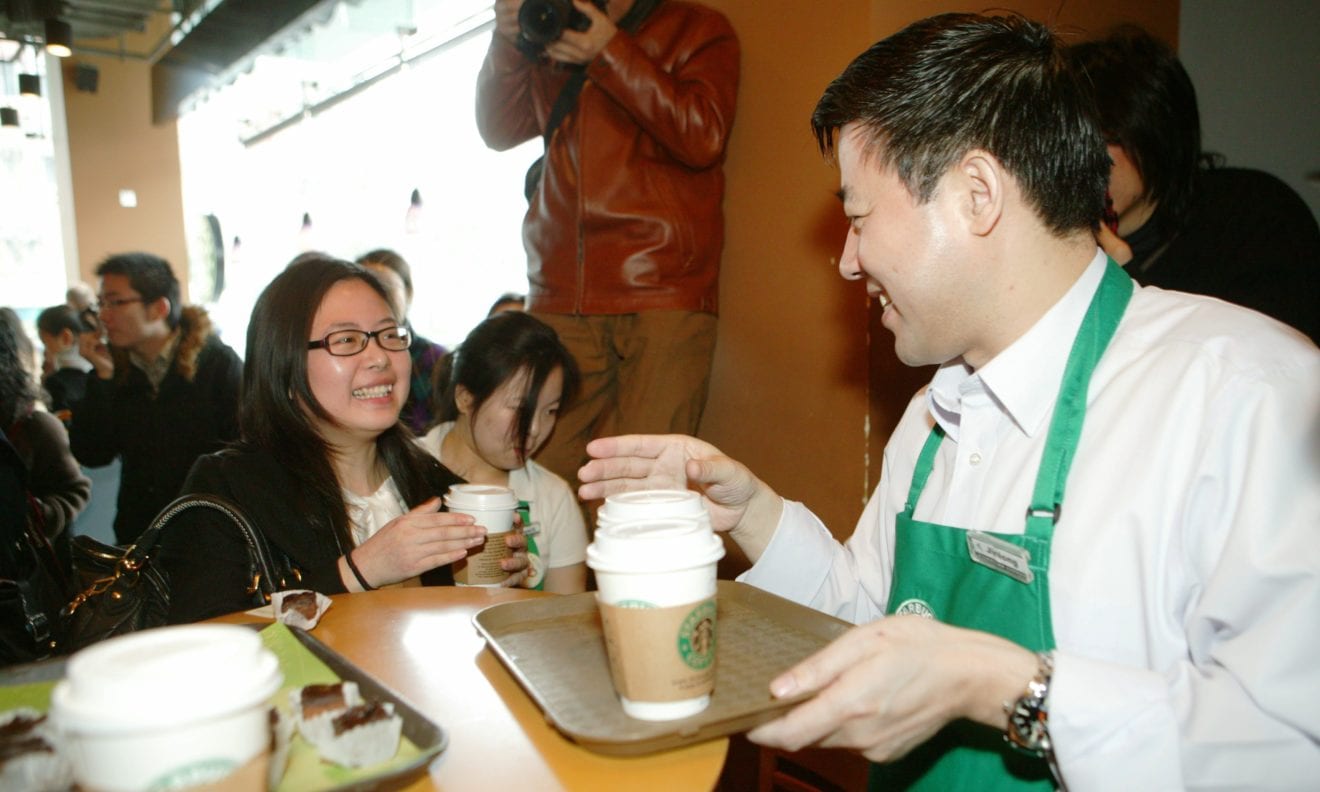
    Across China and the Asia-Pacific region, Starbucks opened 888 new stores in the first nine months of the current financial year. That helped lift revenues by 18 per cent in the region.

    However, underlying same-store sales were a far more modest 3 per cent up on the same quarter last year.

    “The concern is that some of this is related to a general slowdown in China which, if part of a longer term trend, could harm company earnings,’ observed retail analyst Neil Saunders, CEO of Conlumino.

    The company’s Channel Development division – which encompasses the sale of Starbucks branded products in grocers and other stores- also posted positive numbers, with revenues rising 9 per cent. This was aided by strong sales of single-serve Starbucks products following a new agreement with Keurig Green Mountain to push branded K-Cups into more channels. A new partnership with Nespresso to launch Starbucks-branded pods should provided a further uplift to this division in the quarters ahead.

    “Unfortunately, the stronger performances in Asia and in the Channel Development Segment were not enough to offset the weakness in the Americas, which remains larger than all other divisions combined,” said Saunders.

    “And therein lies the forward issue for Starbucks: it has to increase momentum in this part of its business if it is to get back into high growth territory and if it is to avoid a future squeeze on profits.”

    Globally, Starbucks seemed to lose momentum in the third quarter, with overall growth slowing to 7 per cent and global same-store growth moderating to 4 per cent – both below forecast.

    “Worryingly, the slowdown took hold across all regions with even the Americas division, which usually puts in a fairly robust performance, posting a lacklustre same-store increase of 4 per cent. The fact that the company appears to have run out of steam somewhat overshadows its nonetheless impressive achievement of breaking the $1 billion operating income barrier for the first time in a non-holiday quarter.”