Tag: China

  • Eagle Gates Group plans Asia expansion

    Eagle Gates Group plans Asia expansion

    Eagle Gates Group plans to further expand its Asian retail business in the next five years. Eddy McClough, chief executive officer at Eagle Gates Group, says the group will continue to look at retail opportunities in Asia, with possible plans to establish new offices in the region.

    Eagle Gates Group’s history spans almost a decade and through careful stewardship and intelligent investment, the group has expanded to become one of the leading financial services groups across America and Europe.

    Eddy is positive about the outlook for the Asian market.

    “I see tremendous growth opportunities in the Asia Pacific region, especially the likes of China and Thailand. A number of partnership discussions are already underway. The foray into the Asian market reflects our commitment to growing the global footprint of Eagle Gates Group and gives us access to such an important investment market,” he said.

    Eagle Gates Group provides exchange traded funds and other products investing in indices, infrastructure and real estate. Eagle Gates Group also serves institutional investors who need to invest insurance or pension funds.

    In Asia, Eagle Gates Group has a Tokyo office which has been operational since 2013 but Eddy admitted its Asia business should be bigger.

    “The business in Asia Pacific now represents only single digits of our global business asset size. We are targeting a double digit in the next five years. Asia has a young population and a growing segment of wealthy individuals which would support future growth for the asset management industry,” he said.

    SOURCE Eagle Gates Group

  • China’s XL-Muse reinvents the bookstore

    China’s XL-Muse reinvents the bookstore

    Shanghai studio XL-Muse has come up with creative designs for two new stores for book retailer Zhongshuge.

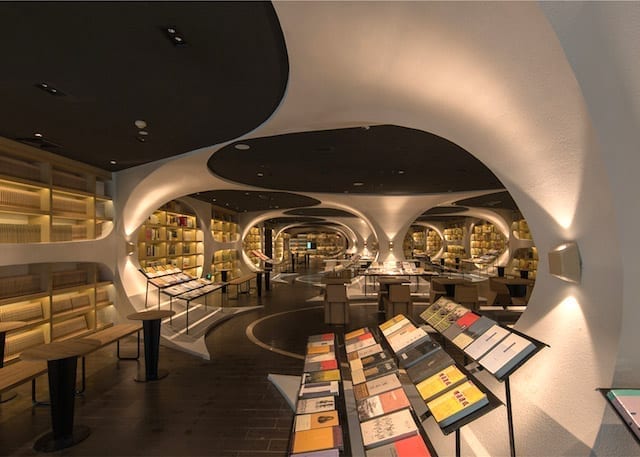
    Shelving reaches to the ceiling in the corridor of the Yangzhou Zhongshuge bookshop and is reflected by the floor below, emulating the effect of water. The designers took inspiration from the store’s waterside location in Zhen Yuan, as well as the area’s arched bridges, reports Dezeen.

    Zhongshuge book store Yangzhou 3

    “In the past, guided by water, many literati and poets visited and gathered here,” says XL-Muse. “The bridges were once the guiding factor of culture and commerce, and they represent the bookstore being the bond between humans and books.”

    The Yangzhou store is the latest interior XL-Muse has created for Zhongshuge. The studio previously created an oval reading room with stepped shelving for a branch that opened in Hangzhou in April. Black mirrored flooring and arched shelves create a tunnel of books. The Zhongshuge-Hangzhou bookshop also has mirrored ceilings and wraparound bookshelves, and a display room with columns shaped like tree trunks.

    Zhongshuge book store Yangzhou 1

    At the Yangzhou store, the concave shelving does not meet at the top, but is separated by a gap shaped like a lightning bolt across the middle of the ceiling. Reflected on the mirrored flooring, this gap is meant to act as a river, leading customers forward into the store.

    Zhongshuge book store Yangzhou 7

    The 1000 sqm space includes a reading room and a village-themed children’s area. The main reading room features curvaceous shapes in the form of sculptural, white pillars that curve inward from the ceiling.

    Zhongshuge book store Yangzhou 2

    Zhongshuge book store Yangzhou

    Shelving is a combination of traditional vertical styles and black metal stands arranged on a gentle slope that complements the curves of the pillars.

    Zhongshuge book store Yangzhou 6

    Meanwhile, the children’s picture book pavilion features shelves shaped like houses, towers, clouds and a hot-air balloon. The wooden shelving is painted in a spectrum of bright colours, and the ceiling lights are arranged to suggest a starry sky.

  • Indonesia sparkles as jewellery retail market

    Indonesia sparkles as jewellery retail market

    Indonesia sparkles in the jewellery retail market, according to a new report from Euromonitor International.

    Buoyed by growth in Asia Pacific, particularly China and India, jewellery will continue to be the best-performing category in the personal accessories segment, according to its research.

    Indonesia is expected to be the fastest-growing country in the world for jewellery sales with 7.8 per cent compound annual growth rate (CAGR) predicted until 2021. It is followed by India at 6.9 per cent.

    Euromonitor’s research shows that jewellery sales will be worth US$316 billion this year. It is the fastest-growing segment within the personal accessories industry with 3 per cent growth over the past year.

    Jewellery, including both costume and fine jewellery, had 15 per cent year-on-year growth of internet retail sales, reaching $19 billion this year, up from $9 billion in 2011. Fine jewellery’s 16 per cent growth in internet retailing beat out costume jewellery’s 12 per cent growth, with more fine jewellery retailers going online.

    “Technology is the answer for the future growth of jewellery and personal accessories,” says industry analyst Jasmine Seng. While global sales of personal accessories are growing at 2 percent, internet retailing is experiencing double-digit growth.

    The lowest performer in internet sales is the watch segment.

    “Facing competition from smartwatches, industry players should collaborate with wearable-technology innovators to drive organic growth for their companies,” says Seng.

    Personal accessories sales are forecast to have 4 per cent CAGR between now and 2021 to reach $633 billion.

  • Turnover falls for Sa Sa International

    Turnover falls for Sa Sa International

    Sa Sa sales are slowing, despite an improvement in Mainland Chinese visitor numbers.

    Retail and wholesale turnover for cosmetics retailer Sa Sa International Holdings fell by 5.7 per cent for the first quarter to June 30, according to unaudited data.

    Turnover dropped 5.4 per cent to HK$1384.9 million (US$178.585 million) in the Hong Kong and Macau markets, while same-store sales decreased by 4.8 per cent. While there were only slightly fewer transactions, their average value fell 5.7 per cent.

    In other markets, including China, Malaysia, Singapore and Taiwan as well as Sasa.com, retail and wholesale turnover dropped 7 per cent to HK$1717.1 million for the quarter.

    While still in decline, the group’s retail sales in Hong Kong and Macau recorded a notable improvement compared to the last quarter of the last financial year, the company attributing this to traffic growth of 2.7 per cent among mainland customers.

    “Their consumption continued to be on the weaker side, with spending declining by 6.4 per cent per transaction. Local consumption sentiment remained sluggish,” says the company.

    Improved sales performances were partially because of the group’s efforts to adjust product offerings to meet market demand.

    As at June 30, the company had 112 stores in Hong Kong and Macau, a drop of one from the start of the quarter. At 55, there were two fewer stores on the mainland, Singapore was steady at 23 stores, Malaysia’s 67 stores included had one more outlet, and Taiwan also lost a store for a total of 31. Overall, the company had 288 stores, down from 291.

    Sales performance during the period was affected by a series of factors, says the company, so the data for the period may not be able to reflect the overall performance of the reporting period.

  • Bruno Magli to launch in China and Japan

    Bruno Magli to launch in China and Japan

    Bruno Magli Hong Kong will launch in August as the Italian luxury brand signs partnerships in China and Japan, paving the way for a focussed Asian expansion.

    The luxury Italian fashion brand has signed new partnerships in Asia with Sitoy Retailing in China and Bruno Magli Partners in Japan. With these partnerships, coupled with its existing legacy business in South Korea, Bruno Magli believes is is positioned to become one of the leading luxury lifestyle brands in Asia.

    Sitoy Retailing will open the first Bruno Magli shop-in-shop in the Sogo department store at Causeway Bay in Hong Kong in August, to be followed by at least 15 mono-branded stores throughout China. In September, Bruno Magli Partners will launch an eCommerce business in Japan, a historic market for Bruno Magli loyalists. Physical stores will start to open from 2017.

    “Bruno Magli has a classic Italian heritage with 80 years in luxury and a reputation for unique design and quality craftsmanship” said Andrew Yeung, executive director and head of retailing at Sitoy Group.

    “With 55 years in Japan, Bruno Magli has built a brand synonymous with classic styling, quality craftsmanship, and exceptional comfort,” said Kyle Nakamura, president at Bruno Magli Partners.  “As investors, [we] are confident that Bruno Magli will continue to grow as a leading lifestyle brand in the Japanese market.”

    The Italian brand plans to launch an “extensive” fall/winter 2016 global advertising campaign, coinciding with the re-launch of Bruno Magli women’s footwear, with actress Lucy Liu as the category’s brand ambassador.

    Other new categories set to launch for holiday include men’s tailoring, men’s bags and small leather goods, men’s hosiery, women’s handbags, and men’s and women’s timepieces.

    “This is an incredible time for Bruno Magli,” said Cory M Baker, COO of Marquee Brands, parent of Bruno Magli. “As we celebrate the brand’s 80th anniversary, our expansion into China and Japan with these strategic partners will help solidify our global growth with an already loyal customer base.”

    Sitoy Group was founded by Michael Yeung in the 1970s and was listed on the Stock Exchange of Hong Kong in 2011. It has been actively developing the Greater China retail market since 2011 for Tuscan’s, a leather goods brand from Italy, with retail outlets in major cities including, Shanghai, Guangzhou and Chengdu, while simultaneously expanding a select distribution network into secondary and tertiary cities.

    Marquee Brands is a brand acquisition, licensing and development company, sponsored by Neuberger Berman Private Equity, which targets high quality brands with strong consumer awareness and long-term growth potential.

  • CapitaMall Xinduxin & Laguardalow works together on mall design

    CapitaMall Xinduxin & Laguardalow works together on mall design

    A new six-storey CapitaLand shopping centre in Qingdao, China, was designed by New York design and planning firm Laguarda.Low Architects.

    CapitaMall Xinduxin comprises a six-level above-ground retail centre, two levels of below-ground retail, and two levels of underground parking.

    Covering more than 1.7 million sqft (157,935 sqm), it is the first international large-scale shopping centre in Qingdao. It has a direct link to Qingdao’s new M3 subway line.

    Laguarda.Low’s concept is an exterior form of interconnected bands along the plane of the facade. The fluid form is accentuated by banded metal-panel cladding on the upper levels, as well as red accent panels and inset LED signage. At ground level, the curtain-like metal facade lifts away from a double-height glazing to reveal activities within the mall.

    Throughout each level, warm and light materials set the tone for a sophisticated and serene environment. The sinuous corridors and expansive floor openings at each level encourage circulation and provide views to the upper levels.

    At the sixth level, a dramatic diagrid roof structure filters in natural light. The varying apertures of the pattern work to maximise daylight for several key spaces, while minimising light for more intimate environments. The resulting variation in pattern evokes the feeling of walking beneath a canopy of trees.

    Indoor garden

    At the fifth and sixth levels, a central, double-height atrium space is completed with lush plantings to create an indoor garden.

    “The design focusses on creating a relaxing shopping experience for guests,” says Laguarda.Low Architects principal Pablo Laguarda. “To achieve this, we positioned key elements like the dining and entertainment spaces on the upper levels, next to the interior garden. This provides a perfect respite from the high energy of the shops and street below.”

    As well as fashion and lifestyle retailers, CapitaMall Xinduxin includes a cinema, dining options and more than 1000 parking spaces.

    Founded 16 years ago, Laguarda.Low Architects is an award-winning architecture practice with a global portfolio including large-scale master plans, mixed-use developments, office and residential towers, hotels, and retail centres. Its projects include OCT Happy Harbor in Shenzhen, a shopping and entertainment destination of 3.2 million sqft overlooking Shenzhen Bay.

    Singapore-headquartered CapitaLand is one of Asia’s largest real-estate companies.

  • Alibaba introduces IP collaboration platform

    Alibaba introduces IP collaboration platform

    Alibaba Group has launched an online platform designed to streamline IP-related communications between brands and Alibaba.

    The new IP Joint-Force System aims to build greater and more collaborative working relationships with global brands as the company strengthens its efforts against counterfeits and IP infringement.

    “E-commerce has become a way of life for consumers both in China and around the world. As the internet sector continues to evolve, brands and online marketplaces alike face new IP enforcement challenges,” said Jessie Zheng, chief platform governance officer at Alibaba Group.

    With over a billion products listed across Alibaba Group’s marketplaces at any given time, its data analytics and processing technologies enabled the company to proactively remove more than 120 million infringing product listings from its marketplaces in 2015, which it said is eight times the number of counterfeit products removed based on takedown requests from brands.

    Under the new IP Joint-Force System, each participating brand will be assigned a dedicated online portal and Alibaba account manager to enhance collaboration, heighten transparency around IP enforcement efforts, and reinforce mutual understanding and trust.

    The system will also enable Alibaba to directly and efficiently seek information from rights holders regarding suspected counterfeit product listings, which Alibaba, as a third-party marketplace, is unable to authenticate on its own with full certainty.

    Alibaba will then initiate the Good Faith Takedown process and immediately remove the listing without required subsequent correspondence with the brand.

    Alibaba recently held the inaugural Rights Holders Collaboration Summit to engage international brands and the intellectual property enforcement community to enhance collaboration in the collective fight against IP infringement.

    More than 100 domestic Chinese and international brands and trade associations attended the event, including Louis Vuitton, Burberry, Apple, Mars, Hewlett-Packard, the Chinese-British Business Council (CBBC) and the Quality Brand Protection Committee (QBPC), among others.

    “The Rights Holders Collaboration Summit and new IP Joint-Force System are some of the many ways Alibaba is working closely with rights holders in our efforts to eradicate counterfeits both online and offline,” Zheng said.

  • Cool Kids Fashion featuring 70 brands

    Cool Kids Fashion featuring 70 brands

    Today’s Chinese kids are increasingly being dressed to a fashion.

    “The demand for the children’s wear in China has shifted from fulfilling basic needs to pursuing fashion and style,” says marketing director Aber of Shenzhen Perseus Brand Management, an exhibitor at Cool Kids Fashion Shanghai this week.

    “Nowadays, Chinese kids want to look ‘cool’ and ‘chic’, so we have incorporated these elements into our products.”

    Differentiation by style, branding and marketing has become more important as demand rises, says Kidswant Children Products product centre director Pinky Lu. “Low prices are no longer effective in securing market share; conversely, the ability to suit personal taste differences is becoming more important.”

    More than 70 global fashion brands will be showcasing their latest product at the third edition of Cool Kids Fashion Shanghai, being held concurrently with CBME China from July 20 to 22.

    Fierce competition

    With fierce competition in the children’s fashion market in China, brands are constantly pushing out new products, says Baodaxiang Shopping for Kids Group procurement manager Yanjing Wang. “The new generation of consumers is more interested in style, brands and value for money.”

    Among the brands at Cool Kids Fashion will be B. Duck (Hong Kong), CCILU (Japan), Cocolico (France), Lab by Baby (Korea), Metro Kids Company (Portugal), Mim-Pi (Netherlands), Overkids (Italy), RIA (Spain), Shadez (Switzerland) and Tip Toey Joey (Brazil). The event will bring together distributors, department stores and property developers, franchisees and fashion buyers.

    There will also be events highlighting trends, creativity, innovation and talent.

    Trend forum speakers include WGSN creative director Zhang Yiling and H&M visual merchandising manager Raj.

    Twenty shortlisted aspiring designers out of 1035 contestants will have their designs and creations displayed at the Kids Design Contest Gallery, followed by a runway showcase.

    Brands featuring in the fashion shows include Angel’s Face (UK), BabyBol (Spain), Blaa (Finland), Maya (US), PennyScallan (Australia) and Teddy Doctor (China).

    Meanwhile, CBME China will showcase baby, child and maternity products. The two shows will cover 223,305 sqm, featuring 3673 brands from 2366 suppliers, at the National Exhibition and Convention Center (NECC) in Shanghai.

    Design is one of the most important factors when parents buy children’s clothing, according to the UBM China Baby Products Market Consumer Research Report 2015.

  • Alibaba and Kodak team up to fight fakes

    Alibaba and Kodak team up to fight fakes

    Alibaba and Kodak have teamed up in a new business venture using high technology to fight fake goods being traded online.

    The cameras and film that helped build the Eastman Kodak empire, launched in 1888, are long gone, but the company has found new life authenticating products.

    With a history of research and hundreds of patents, Kodak is behind a startup working to combat counterfeiting with a technology that places an invisible, digitally traceable marker on products to ensure they are authentic.

    Targeting eCommerce, the new company is named eApeiron, which comes from the Greek word for everlasting.

    Fake and pirated products globally accounted for almost a half-trillion dollars in 2013, according to a report this year by the Organisation for Economic Cooperation and Development (OECD), with 84 per cent of seized goods originating in China and Hong Kong. As well as losses and brand erosion for companies, counterfeiting can mean lost tax revenue for governments. It also discourages innovation.

    “If you’re in charge of brand protection or you’re a security officer of a major brand, this means you have a new tool,” says Kodak CEO Jeff Clarke.

    Miami-based eApeiron will set up its research, engineering and manufacturing arms within Kodak’s business park in Rochester, New York. Some research will also take place in Shanghai and Tel Aviv.

    With China’s largest eCommerce company Alibaba Group an investor, its president Michael Evans will sit on eApeiron’s board along with Clarke. Its CEO is Charles Fernandez.

    Invisible ink

    Meanwhile, invisible-ink security products are already available, including VerifyMe, which signed a memo of understanding in May with HP’s Israel-based Indigo division, part of its HP Graphics business.

    One of VerifyMe’s anti-counterfeiting pigment technologies lets consumers see visible markings on a product while manufacturers can use devices to see invisible markings to support their supply and distribution-chain security.

    YPB Group in Australia makes scannable markers that are invisible to the eye because they blend into the material of the product they are marking.

    While luxury-goods companies are often targeted by counterfeiters, the OECD report says there are also potentially dangerous faked goods such as drugs, toys and spare parts. Tracing these items through the supply chain could ensure they are not expired or forgeries, Clarke says.

    Beaten by the digital revolution, Kodak filed for bankruptcy in 2012, emerging the following year as a commercial printing business. Kodak has continued to team with young companies on technology research, and its labs have more than 50 scientists and 4000 patents.

  • China’s Growing E-Commerce Addiction

    China’s Growing E-Commerce Addiction

    I am admittedly an Amazon shopping addict, so it was interesting to have a long conversation recently with Chinese colleagues in Nanning about their own growing addictions to online shopping. They are big fans of Taobao, although they also use other e-commerce sites likeJD.com and Suning.com. My colleagues are representative of a larger trend of Chinese consumers shifting partly from brick-and-mortar shopping to online shopping, and expanding online shopping in its own right. E-commerce now represents a high-growth sector.

    Though relatively new to online shopping, Chinese consumers already make up for almost half of global online retail sales, and are only growing in numbers. Online retail sales amounted to $581.61 billion in 2015, surging 33.3% from the previous year. The volume of online sales in China now exceeds that in the US, and online sales are expected to grow 20% annually by 2020. Furthermore, online shoppers represent the vanguard of China’s growth story, since they tend to be young, urban, and highly educated. They have a different attitude toward shopping than older generations, which were shaped as savers by more challenging political and economic circumstances. Younger shoppers are more willing to spend.

    Compared to brick-and-mortar retailing in China, e-commerce sales often experience fewer licensing requirements and quicker customs clearance. As a result, e-commerce is to some extent replacing shopping in physical marketplaces, and will comprise 42% of growth in private consumption by 2020 according to Boston Consulting and AliResearch. For this reason and others, hypermarkets such as Carrefour and Walmart have shut down a number of stores. Online shopping also allows consumers to access products that are not available in stores, including organic foods and some luxury products from overseas.

    As consumers in Tier 1 and Tier 2 cities (think Beijing, Shanghai, but also Chongqing and Chengdu) become increasingly savvy online shoppers, there continues to be large potential for online sales particularly in Tier 3 and 4 cities. E-commerce penetration amounts to 89% in Tier 1 and 2 cities, but only amounts to 62% in Tier 3 and 4 cities, as per the McKinsey iConsumer China 2016 Survey. The online shopper base in Tier 3 and 4 cities is 257 million, a population number that is larger than that of almost all countries in the world (except India, China as a whole, and the United States). That is serious market potential.

    To keep up with increasing demand from smaller urban and rural areas, online retailers are seeking to expand logistics infrastructure and services. For example, Alibaba ’s logistics arm, Cainiao, now owns 180,000 express delivery stations for the shipment of products and has recently expanded its fresh food distribution centers across China. The firm recently completed its first external funding round and is expected to spend $16 billion over the next five to eight years to expand its network. Growth in China’s underdeveloped logistics sector can certainly be expected to accompany the expansion of e-commerce.

    *originally posted by Forbes

  • chuang x yi concept store by lukstudio in shanghai

    chuang x yi concept store by lukstudio in shanghai

    chuang x yi concept store by lukstudio in shanghai

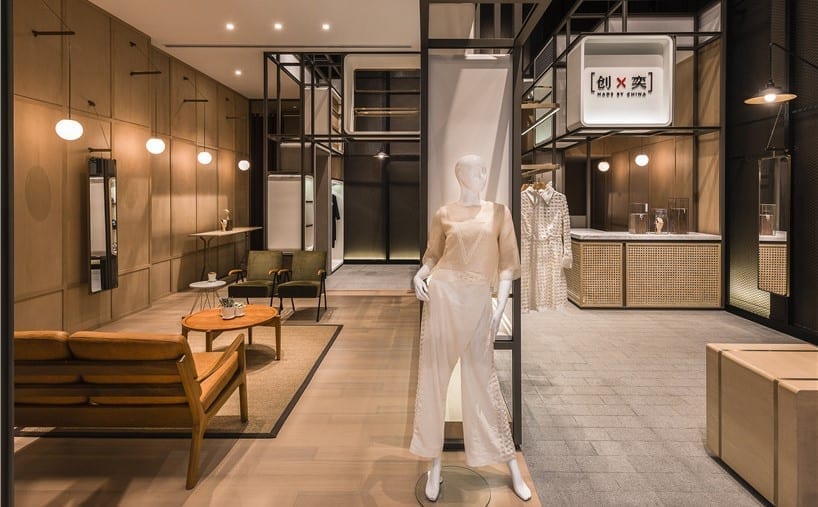
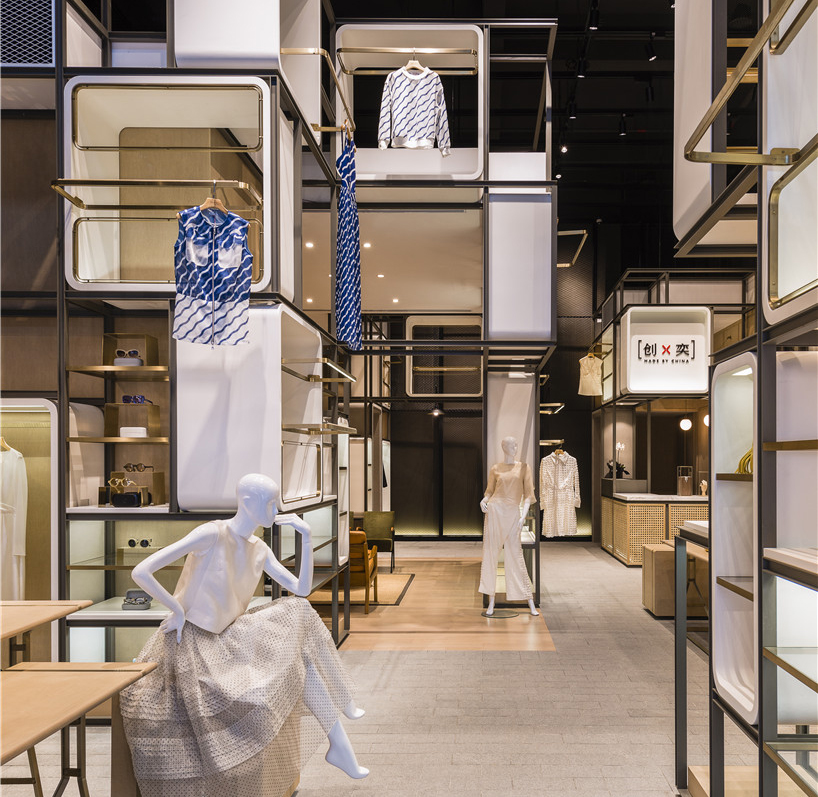
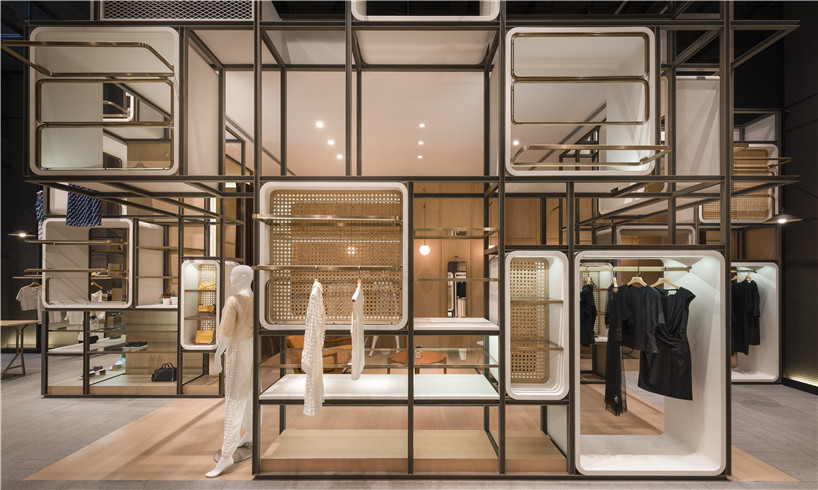
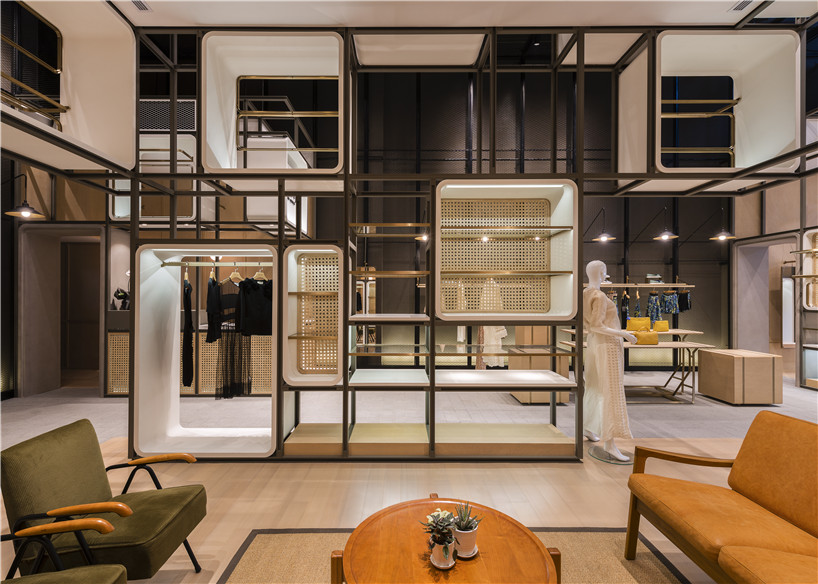
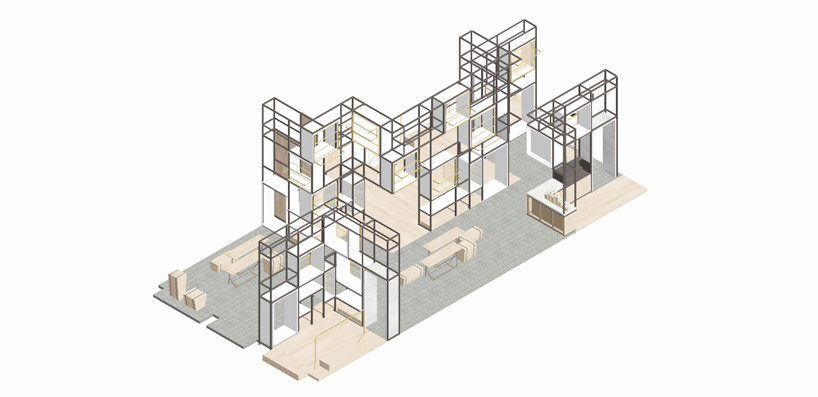
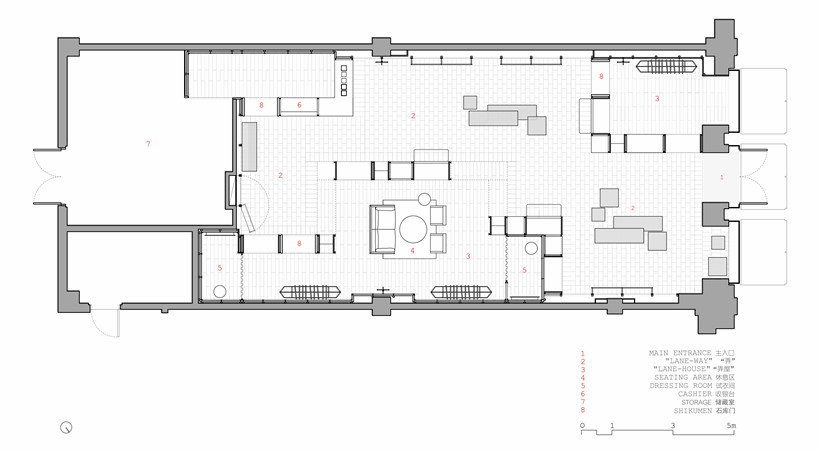
    lukstudio’s ‘modular lilong’ was developed at the behest of value retail china to showcase ‘chuang x yi’ — a fashion platform for chinese designers. the 150 sqm site, located in yioulai shanghai village, is organized around meandering lanes, or lilong, a system that allows creative displays in areas with spatial constraints. this concept, in part, is what gives shanghai its signature streetscape.

    lukstudio07-designboom
    ‘chuang x yi’ concept store
    images © dirk weiblen

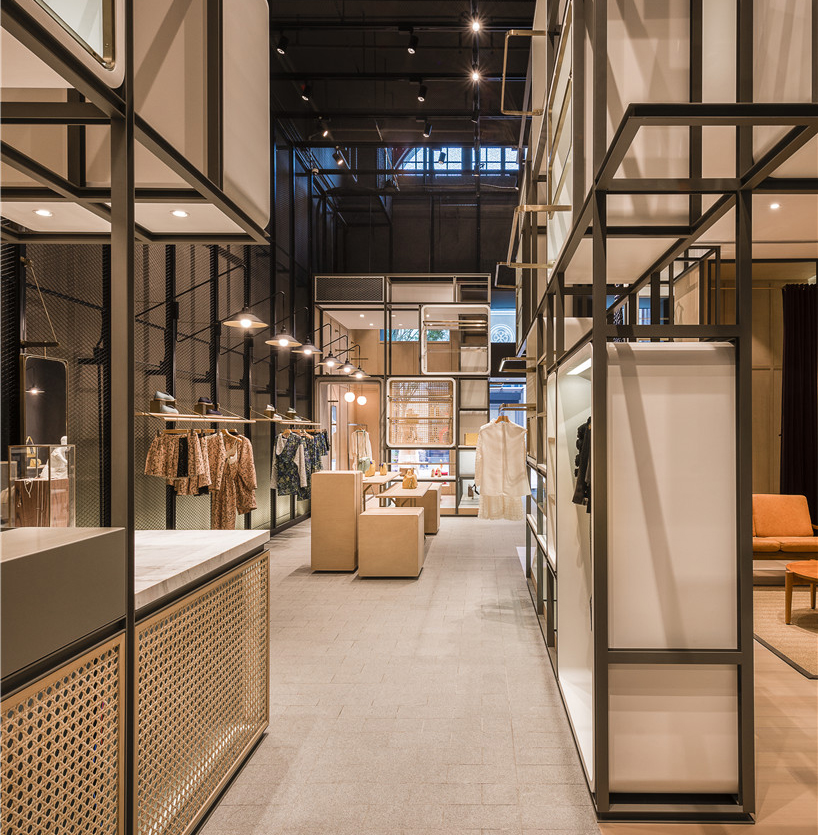
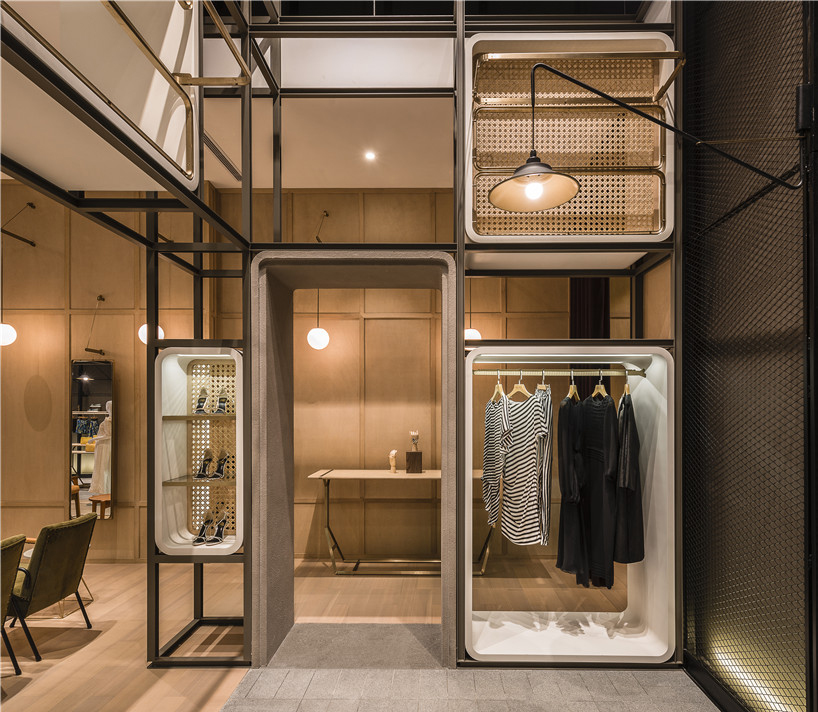
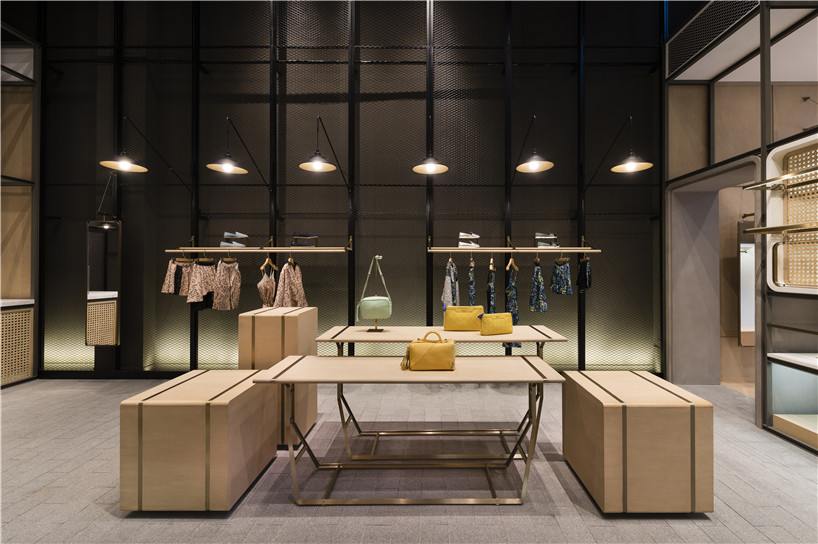
    ‘lilong’, interpreted by lukstudio, results in a modular interior that can be easily disassembled and re-located to other locations. pieces are based on architectural features and textures often found in a ‘lilong’ including old stone ‘shikumen’ gates; visualized in smooth, rounded corners in displays. laundry lines become copper-coated clothing racks, and bamboo rattan is utilized as dividers.

    lukstudio06-designboom
    rattan serves as dividers in the store

    the retail experience of ‘chuang x yi’ offers a visual dialogue between interior and urban environment, combining many layers into a cohesive structure. lukstudio’s work is a journey of discovery that connects historical shanghai architecture and the consumer culture of today.

    lukstudio05-designboom
    interior by lukstudio


    seating and structural display

    lukstudio04-designboom
    grid layout


    interior

    chuang x yi concept store lukstudio shanghai china
    display cube

    lukstudio03-designboom
    axonometric

    lukstudio02-designboom
    floor plan

    project info:

    name: chuang x yi: the modular lilong
    client: value retail china
    location: shanghai village, 88 shendi east road, pudong new area, shanghai, china
    net area: 150 sqm
    interior & lighting design: lukstudio
    team: christina luk, marcello chiado rana, alba beroiz blazquez
    display furniture & custom lighting: TIWU design
    lounge furniture: lost and found, MRT
    timeline: jan. – feb. 2016
    construction: mar. 2016
    general contractor: centroid construction
    photography: dirk weiblen


  • IKEA to Recall Unsafe Furniture in China

    IKEA to Recall Unsafe Furniture in China

    Swedish furniture giant IKEA will recall their unstable Malm furniture line of chests and drawers in China.

    The decision came after many vocal Chinese consumers complained that IKEA was discriminating them. The Malm line was still in Chinese stores amidst recalling over 29 million pieces of chests and drawers in Canada and the United States.

    The product recall in North America transpired two weeks ago, after being linked to the death of six children.

    When IKEA refused to recall their product from their Chinese outlets, consumers complained online and through government controlled media. Government controlled newspaper Xinhua accused IKEA of committing “blatant bullying.”

    The government-run General Administration of Quality Supervision, Inspection and Quarantine claimed that after meeting IKEA, the company decided to change their minds.

    Last Tuesday, the furniture company decided to recall about 1.7 million pieces from their stores. IKEA offered free home installation and an optional refund.

    IKEA’s spokeswoman, Xian Jiaxin, said, “IKEA is a very responsible company. Consumer protection is very important to us, which is how we came to this decision.”

    Many Chinese shoppers go to IKEA for their furniture needs. As a result, the Swedish company incurred a large amount of sales. By September 2015, total revenue totaled to $1.55 billion.

    The furniture company is determined to firm its hold in the vast Chinese retail market. Total retail sales annually is worth $4.5 trillion in China, which will soon exceed sales from the United States.

    Jeff Walters, managing director of the Boston Consulting Group said, “If you look across the world and you look where there is still significant growth in consumer spending, the answer is very much China. Of course any company is going to make sure it’s standing on the right side of regulation to have access to a market that size.”

    Many Chinese consumers are becoming more discriminating due to violation of rights in the past. Since then, government inspectors have been more stringent in regulation and inspection of goods and products.


  • The seven reasons for Alibaba’s success ; Alibaba’s development and framework

    The seven reasons for Alibaba’s success ; Alibaba’s development and framework

    Alibaba was initially founded in Jack Ma’s apartment in Hangzhou in 1999, before Alibaba.com was launched later that same year. In 2003, as the number of Internet users in China reached 80 million,[1] Taobao.com was launched as an online market. Shortly afterwards, both Alipay and Aliwangwang (instant messenger on Taobao) were launched to complete the purchasing process in Taobao. In 2007, the number of Internet users in China rose to 210 million[2] and Alimama was launched as an advertisement transaction platform. Taobao started to monetize that same year. Tmall was launched in 2008, as Alibaba ran both B2C and C2C platforms. In 2009, Alibaba Cloud computing was founded, illustrating Alibaba’s commitment to prioritize big data as part of its strategy. In 2010, the following three platforms were launched as part of Alibaba’s increasing focus on mobile payment: Juhuasuan (a platform for C2B); AliExpress (a global consumer marketplace) and Mobile Taobao App.

    Alibaba’s framework is based on the three following targets:

    1. Chinese customers: Taobao (online shopping destination), Tmall (brands and retail platform), Juhuasuan (group buying marketplace), 1688.com (Chinese wholesale marketplace).
    2. Customers abroad: AliExpress (global consumer marketplace), Alibaba.com (global wholesale marketplace).
    3. Support platforms: Alipay (online payment service); China smart logistic (logistic information system); Alimama (online marketing services); Alibaba cloud computing (platform for internal and third-party use).
     

    Screenshot 2016-07-19 09.20.09

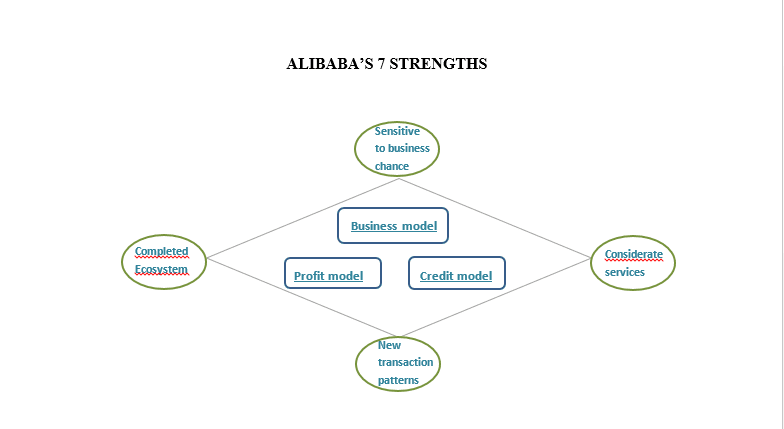
    The three core factors that influence Alibaba are its Business model, Profit model and Credit model. In addition, there are four subsidiary factors namely considerate service, sensitive for business chance, new transaction patterns and completed system supporting Alibaba to gain its success.

    1. Alibaba’s unique business core to provide services mainly to small enterprises and individual defines a unique business opportunity which not only emancipates the productive forces of small enterprises but also offer much more diversified consumption choices for consumers.

    Alibaba’s service offer focuses on small enterprises. Whether we talk about 1688 – a B2B eCommerce platform specifically aimed at wholesale and procurement business – Taobao (including Tmall business shopping mall) – a B2C & C2C eCommerce platform gathering numbers of individual sellers – or YiDaTong (the largest Chinese professional import and export agent) which not only subsidizes small enterprises but also helps them accumulate credit through history data, all three of Alibaba’s core businesses mainly focus on providing services to small enterprises helping them create value which could not be accomplished by any of them individually (such as cost control). Additionally, the three core businesses represent a complete eCommerce ecosystem.

    The focus on small enterprises also leads to a phenomenon whereby a large variety of goods are available to a large variety of target consumer groups (age, profession, wealth, etc.) on the platform. In 2014, the Alibaba platform as a whole experienced a total transaction volume of 2.3bn CNY (close to 330 bn EURO).

    1. Alibaba’s profit model that Alibaba gets profits by charging services in marketing and technical supports rather than by charging admission fee contributes to a large and robust market share made up of loyal customers.

    Alibaba’s profits mainly come from advertisements and keyword bidding within platforms, which in total represents 57% of profits. The second most important source of profits is the variety of technical services based on big data of consumer behaviors, representing 25% of profits. One of the important reasons why Alibaba could beat eBay China can be found in their strive to cultivate the online transaction habit among Chinese customers by allowing sellers to register for free and by removing intermediate fees. EBay China, on the other hand, was in a rush to harvest the Chinese market by charging fees for all transactions completed on the platform. Taobao thus gathered a large number of sellers, thereby encouraging an even larger number of customers to purchase via the Taobao platform. Hence, Alibaba successfully developed a strong and loyal online customer base.

    Nowadays, the Alibaba platform represents more than 0.5bn registered users, among which there are more than 0.23bn active buyers and more than 8m active sellers. The Annual orders already exceed 11bn. [3]Thanks to the large number of customers on the platform, Alibaba can make use of advertisement, keyword bidding and customer’s data for profit. Advertisements on Taobao can generate thousands of clicks for a single brand; the bidding for keywords contributes to the higher ranking of brands in search results; technical services assist sellers in the management of their online store and relationship with customers through analysis of customers’ preferences and feedbacks.

    1. Alibaba’s accurate credit model, which builds a third-party payment platform as a bridge between consumers and e-stores to standardize payment process and to protect consumer’s rights, helps to develop a good and trustworthy reputation among customers.


    • All sellers on the eCommerce platform are requested to pass an online certification test to verify their identity information.

    Such certification ensures the supervision of sellers on the platform at all times and reduces the possibility of illegal transactions.

    • All transactions are recorded and can be traced back by both sellers and customers. Based on the records, Taobao set up a system to measure the degree of integrity of both actors.

    Such a system ensures that any fraudulent behavior is published for everybody to see and can lead to a significant loss in the number of future transactions because of the lack of the other party’s trust. The system protects the legitimacy of each transaction and helps customers chose more reliable sellers.

    • Alipay is an online payment platform, combining ease of use, safety and efficiency. Payments are first transferred to Alipay. Once the buyers have received their product and ensured they are not faulty, the payment is transferred to sellers from Alipay. If the product is faulty or does not meet the expectations of the buyer and returned, so is the payment.

    When eCommerce first appeared in China, the safety of online purchases was the most important problem that concerned customers. Alipay provides a reliable solution which has won the trust of Chinese customers. Because of its convenience, Taobao attracts more and more online shoppers. Nowadays, people can use Alipay to pay for any fees arising in their lives in general. Besides, Alipay allows customers to purchase goods on credit used in the current month and paid back the following month. Up to 2013, the number of users in Alipay approached 0.3bn while the number of transactions reached 900bn CNY (about 128bn EURO) and the active users of the Mobile terminal reached 0.1bn which exceeded the number of users on PayPal.

    • Online feedback is largely encouraged. The more comments a customer writes for products, the more discount coupons he receives.

    Word of mouth can strongly influence customer’s behavior, especially when all information concerning a particular product is more difficult to find. The large amount of comments can guide and encourage customers in their purchasing experience and help them pick out their preferred product, while reducing post-purchasing regrets.

    1. Alibaba’s considerate service offer provides a comfortable purchasing environment and a positive online customer experience leading to high user engagements.

    Based on the analysis of its large customer base, Alibaba always knows how to provide the most suited services for optimal customer satisfaction. It helps sellers to maintain positive interaction with buyers; it offers online business training for various stores; it introduced a special coding system to manage the large number of stores on the platform; it developed its own instant communication tool to improve seller-buyer communication exchange; it enables the reimbursement of any product ensuring payment return within the following seven days, and so on. Those support services help sellers grow their business while helping buyers to find their preferred products, thus generating more and more transactions.

    1. Alibaba excels at identifying and seizing unique business opportunities, thereby positioning itself as a leader and developing customer loyalty.

    In China, two festivals have a major impact on people all over the country: Spring Festival (the Chinese New Year) and ‘Double 11’ (a festival created by Taobao).

    The ‘Double 11’ festival falls on November 11th, just between Chinese National Day and Christmas when people would prefer physical in-store shopping (offline). Although most customers would typically be avoiding shopping during that period, Taobao developed a campaign encouraging consumption, so much so that the day became an actual shopping festival. On that day, various brands offer different discounts and even launch new products. Customers pick out their various preferred products and purchase them online on November 11th. In 2014, ‘Double 11’ generated over 1bn CNY in total trading volume for Tmall within the first three opening minutes. Within the first 14 minutes 2 seconds, volumes exceeded 5bn CNY. Total volume for the day reached 53bn CNY (approximately 7.6bn EURO)! In a single day, Taobao generated revenue of 1.5bn CNY and net profit of more than 0.5bn CNY (approximately 71m EURO).[4]

    The ‘Double 11’ day has successfully developed a new popular shopping event for the majority of customers in China. At such an event, the various Tmall sellers’ needs for advertisement and software services increase largely. Alibaba thus gains enormous profits from the event, while both sellers and buyers rely more on the open platform. Alibaba’s advantage in cloud computing also represents a valuable asset for the shopping festival.

    1. Always keeping an eye on customers’ evolving needs, Alibaba dares to challenge the traditional transaction patterns and explores new ways to create more value for customers.

    C2B transaction model: When customers are in particular predominance for a certain transaction, Alibaba deploys the C2B transaction model to reduce costs in the traditional supply chain and shortens the time required for product turnover, thereby increasing customer satisfaction. On the one hand, Alibaba gathers a large number of scattered customers who express the similar needs to form a powerful purchase group that can buy single products at a wholesale price. On the other hand, Alibaba takes advantage of its massive online customer behavior data to develop products suited to particular customer habits. For example, the analysis may show that customers based in south regions use their dryers more frequently on account of the wet weather and therefore need more resistant machines while other customers may not like vacuum cleaners which require the user to bend down when using it. In that case, Alibaba takes charge of 12 product lines in 12 brands and exerts total control over the production schedule to ensure the production of the selected products which are predicted to be in high demand within shortened production cycles. Lastly, Alibaba integrates the product the production with front-end sales to bring instant personalized products to customers. Within the single day of May 8th 2014, Tianmao sold 180,000 sets of the 12 products which equated the sales volume for a period of 3 months on the internet.

    O2O strategy: In Alibaba’s plan, customers can purchase a product by scanning two-dimensional codes and then receive products with another code which involves the interaction of the instruction and after-sales functions. Customers can also take part in various brand-run initiatives and receive targeted advertisements by scanning corresponding codes. In order to accelerate the plan execution, Alibaba is actively developing its expansion to mobile terminal areas – “Alipay Wallet” represents one such significant trial. “Alipay Wallet” not only provides different ways for payment such as code scan and direct cash-transfer, but also partners with different banks in order to provide an assistance service to customers for managing their many bills and coupons. Along with many other purchased Apps covering other domains including taxi services, maps, weather, music and travel, “Alipay Wallet” aims to transfer the content and activities of customers’ daily lives onto the O2O service.      

    1. Rather than positioning itself as a simple eCommerce company, Alibaba focuses on providing excellent service quality to both sellers and buyers, by introducing easier ways to do business for the former and developing a positive purchasing experience for the latter.

    In order to achieve its goal in terms of positioning, Alibaba keeps expanding its core business to many different domains such as advertising services, logistic network, financial services and mobile terminal services.

    1. Alimama: Alimama is an advertising platform which operates as Alibaba’s B2B system: owners of advertisement positions such as blog owners post the positions in Alimama and advertisers purchase their favorite positions according to their own criteria. Nowadays, Alimama focuses on three dimensions: Big Data, “Taobao Ke” (cost per sale mode) and the combination of video and mobile terminals. Through these dimensions, Alimama aims to help merchants find their specific target customers and help customers achieve their preferred products easily.
    2. Big Data: Besides the massive internet flow, transactions and database that Alimama represents, Ali also integrates comprehensive data resources that cover almost every aspect of customers’ daily lives through the acquisition of software companies in many other domains such as map, weather, taxi, music and travel. The accurate and diversified data can thus help advertisers select the most appropriate website advertising channels and reach customers effectively.
    3. “Taobao Ke” is a group of people dedicated to assisting merchants in the promotion of their products who receive a commission when a transaction is completed (cost per sale billing model). CPS is useful for eCommerce since people who successfully identify customers and convince them to complete a purchase are rewarded by commission.
    4. The combination of video and mobile terminal: In April 2014, Taobao bought 16.5% shares of China’s largest video site, intending to leverage the strengths of video in both PC and mobile to enable the interaction of an advertisement between the two terminals. When the audience watch advertisements during videos, Taobao will send the related information to the mobiles of people in the audience in various forms, including games and coupons to entice clicks from the audience.
    5. Ali micro finance: Ali micro finance mainly provides micro deposits and loans. It uses the data collected directly from the Ali platform: credit data and behavioral data. It translates the online customer behavior data into businesses and categorizes individual credit ratings by small enterprises according to their eligibility to apply for small loans from Ali micro finance (eg. small amount, short-term, momentarily borrow and return), as these small structures usually experience difficulty in obtaining loans in the traditional banking channels. Meanwhile, Ali’s small loan service also attaches great importance to the use of new technologies. It relies a lot on the cloud computing technology to determine whether there is a particular match between a certain buyer and a seller, whether they speculate credits, what rate the risk possibility stands at and so on. This not only ensures the safety and efficiency of the service but also reduces operating costs. In addition, the Internet makes it possible to provide a set of financial services, 24/7, 365 days a year, to large-scale small enterprises at the same time. This meets the major demand for capital resulting from the increasing number of small enterprises being founded in China.
    6. CSN (China Smart Network) project: CSN project was launched by Ali in collaboration with the four most influential logistics companies in China. Ali hopes to achieve the goal of enabling the delivery of products to buyers within 24 hours of ordering via the platform. Different logistic networks belonging to different logistic companies are integrated into forming the single most effective network in terms of parcel turnover for customer delivery. Different logistic companies focus and provide their expertise on specific portions within the network to maximize efficiency. Meanwhile, based on data analysis, Ali selects the most suitable logistic company for different portions of the network and allocates delivery businesses according to performance. As a consequence, logistic companies need to improve service quality and reduce costs, while ensuring continuous delivery. Moreover, customers can choose their favorite types of deliveries such as ‘fastest’, ‘cheapest’, ‘safest’ and ‘best service’ since the CSN can deploy the work capacities of the logistic companies.


    ALI’S FUTURE DEVELOPMENT

    Globalization

    In November 2014, Ali expanded its commercial transaction worldwide for the first time. Since that date, Ali’s global ecosystem consisting of its eCommerce platform, logistic network, cloud computing and big data has been developed further and communicated on publicly. On Tianmao International’s platform, Chinese customers can purchase goods of popular retail brands abroad directly and customers from other countries including Russia, Brazil, the US and Canada can also purchase products from China directly. Due to the reduced amount of procedures required in foreign trades without importers, Ali is able to transfer the profits from the importers to the merchants and thus cut down transaction costs. The CSN network represents a global coverage of countries to increase the convenience for parcel delivery to customers. For example, CSN developed a special supply chain in Russia allowing customers to receive products within 35 days. It also increases the cooperation with banks in other countries to improve the payment system.

    Besides the globalization of its eCommerce activities, Ali is also developing its finance business abroad. Recently, Ali has cooperated with Lending Club – the biggest online loan platform. The cooperation signifies that small American enterprises which get loans from Lending Club can now look for Chinese producers and supply sources on Alibaba’s platform.

    Taobao Village

    Focusing on eCommerce development in rural areas of China is one of Ali’s most important future strategies. In the same way that it always looks for business opportunities among small enterprises and individual customers, Ali fosters the online purchase forces in thousands of villages across China. Taobao village represents the village where active online shops reach more than 10% of local households and trading volume amounts to more than 10m CNY. The high concentration of online shops in these villages makes it possible to form an eCommerce chain made up of producers, suppliers, shops and logistics, thereby facilitating development and economies of scale. Moreover, Taobao village helps to address the problem of local unemployment (Taobao village brings about more than 280,000 jobs and the average income at Taobao village is 2.19 times higher than that found in normal villages); it contributes to the transfer of the environmental advantage into an economic advantage (since the natural and original product is welcomed by customers); and it helps to diminish the purchase gap between urban and rural areas. Up to December 2014, 211 Taobao villages were developed. Ali provides support through credit and loans, talent training and promotion.

    Develop more offers suited to more fields in customers’ daily lives

    Yulebao: An investment platform for television work with approximately 7% annual return on investment. Investors have the opportunities to meet with directors of various TV projects, take part in premieres, travel to the filming locations of certain TV programs, etc. The customer’s preference is better evaluated and will truly influence the Chinese entertainment trends. Besides, it helps high quality projects which do not necessarily have the matching high budget to get investment for production. Yulebao was launched in March 2014.

    Ali future hospital: In August 2014, Ali collaborated with a renowned hospital in Shanghai, installing Alipay to allow patients to complete their own registration process, payment and report-fetching online. Most importantly, Alipay is combined with medical insurance in order to deliver a fully automated service to customers.

    [1] The data comes from  Alibaba’s prospectus: https://www.sec.gov/Archives/edgar/data/1577552/000119312514184994/d709111df1.htm

    [2] The data comes from  Alibaba’s prospectus: https://www.sec.gov/Archives/edgar/data/1577552/000119312514184994/d709111df1.htm

    [3] The data comes from  Alibaba’s prospectus: https://www.sec.gov/Archives/edgar/data/1577552/000119312514184994/d709111df1.htm

    [4] Data comes from “Le single day Chinois bat tous les records de ecommerce”:

    https://www.le-webmarketeur.com/2013/12/10/le-single-day-chinois-bat-tous-les-records-de-e-commerce/


    Author :

    Prof. Xavier Pavie

    Associate Academic Director, MSc in Management, ESSEC Business School

    Director of iMagination Center


    Yixuan Luo

    Master student at ESSEC Business School

  • Yum China divestment on track

    Yum China divestment on track

    The Yum China divestment is expected to be completed by October 31.

    The US fast food giant released the target date along with second quarter figures showing solid sales growth across most Asian markets, especially within the KFC division.

    CEO Greg Creed said he was particularly pleased with “the continued sales momentum at KFC China,” which delivered better-than-expected same-store sales growth of 3 per cent.

    “Yum! Brands delivered second-quarter (global) core operating profit growth of 7 per cent and earnings-per-share growth, excluding special items, of 9 per cent. Given our strong first-half results and current trends in China, I’m pleased to raise our full-year core operating profit growth forecast to at least 14 per cent.”

    Creed said the China result represented its fourth-consecutive quarter of positive same-store sales growth at KFC China.

    “Importantly, our China Division is off to a good start in the third quarter for both KFC and Pizza Hut Casual Dining, including a return to positive same-store sales at Pizza Hut in recent weeks.”

    Outside of China, challenging industry conditions in the US contributed to soft sales results.

    The separation of the China business would create “two powerful, independent, focused growth companies,” said Creed.

    “Our capital structure is fully in place and we plan to return a significant amount of capital to shareholders both prior to and after the spin.”

    Creed promised further information at an investor briefing on October 11.

    Yum China same-store sales were even, with an increase of 3 per cent at KFC, offset by a decline of 11 per cent at Pizza Hut. The China division opened 72 new stores during the quarter, taking its network there to 7246

    Meanwhile, in developing Asian markets – including Malaysia, Indonesia and the Philippines – which account for 7 per cent of KFC’s global turnover, sales rose 11 per cent in the quarter and are running 10 per cent ahead of last year for the first half.

    In Thailand, which accounts for 3 per cent of KFC’s global turnover, sales rose 17 per cent in both the second quarter and the first half.

    And in developed Asian markets – such as Japan, Korea and Taiwan – which accounts for 9 per cent of turnover, sales rose 6 per cent by quarter and half.

    Pizza Hut sales in developing Asian markets rose 5 per cent in the second quarter and 3 per cent in the first half. In developed Asian markets, sales fell 7 per cent this year.

  • First Superdry China stores set to open

    First Superdry China stores set to open

    The first Superdry China stores are set to open in what a commentator describes as a core future market for parent SuperGroup.

    Nivindya Sharma, a senior analyst at Verdict Retail, says the brand’s international expansion strategy will now focus on “two key, but notoriously difficult, markets – the US and China” in the current financial year.

    “Superdry will open its first trial stores in China in 2016 and five in the US as it experiments with different store formats. Its relatively cautious approach to store rollout, and focus on eCommerce as a route to developing brand awareness and understanding local customer behaviour should serve it well,” said Sharma.

    News of its summer debut in China came amid an impressive full-year result: SuperGroup sales rose 21.3 per cent to £590.1 million, aided by its collaboration with British Hollywood star Idris Elba. Underlying pre-tax profit rose 16.3 per cent to £73.5 million.

    “Against a bleak background of stalling sales from major high street players such as Next and Primark, SuperGroup posted a stellar set of full-year results with strong growth across both its retail and wholesale divisions,” said Sharma.

    “No doubt, the net 24 stores the retailer opened during the year were major contributors to its FY results, but robust like-for-like growth indicates consumer demand remains strong for Superdry’s distinctive product.”

    Womenswear was the strongest growing category for the year, reflecting the push Superdry has made to broaden womenswear ranges and merchandise them more prominently in-store and online.

    “The brand is focused on developing its presence in womenswear, especially as it experiments with new concept stores in the UK that give more space to women’s ranges, and focus on enhancing the shopping experience using knowledge from its customer insight program,” said Sharma.

    “However, to truly make a mark in the UK’s highly competitive womenswear market, Superdry will have to consider how best it can soften and translate its male-centric brand image to appeal to female consumers.”