Tag: China

  • Major Asia investment for Michael Kors

    Major Asia investment for Michael Kors

    Michael Kors has paid $500 million in cash to acquire Michael Kors HK, the exclusive licensee of the company in China and certain other jurisdictions in Asia.

    Approved by independent members of the company’s board of directors, the acquisition is subject to adjustment.

    The greater China business generated total revenue of $197 million for the year ended March 31, with a network of 91 company-run retail stores and six travel retail locations across China, Hong Kong, Macau and Taiwan.

    This fiscal year, the greater China business is expected to contribute about $200 million to retail net sales, reflecting sales for the 10-month period following the closing of the acquisition.

    Michael Kors chairman/CEO John Idol says the company is excited about acquiring its greater China licensee. “We have worked diligently over the past several years with our licensed partner in this region to build the infrastructure, establish the brand and grow acceptance of Michael Kors in the Chinese market.

    “We believe our brand is gaining strong momentum in greater China, making it the ideal time for us to integrate this territory into our business and capitalise on the enormous growth potential in this region.”
    CEO Neil Saunders of retail research agency Conlumino says the acquisition will allow the business to ramp up its pace of expansion in the region and, over the medium term, boost earnings potential.

    “It is fortunate Michael Kors has other regions to turn to for growth, with Asia having the most potential.”

    An award-winning designer of luxury accessories and ready-to-wear fashion, Michael Kors established his namesake company in 1981. Michael Kors stores can be found in Seoul and Tokyo.

  • German Retailer Metro to Open its First Two MyMart Stores in Shanghai

    German Retailer Metro to Open its First Two MyMart Stores in Shanghai

    Germany’s Metro Group has opened two My-Mart convenience shops in Shanghai, revealing its new concept.

    My Mart convinient store- Metro Group China 1

    Both stores opened the same day in Putuo district, where Metro China has its headquarters and flagship stores. One is about 110 sqm, near a subway station, and the other about 70 sqm. Both shops offer Metro’s exclusive imported products, private label lines and traceable fresh fruits, as well as about 100 ready-to-eat items.

    My Mart convinient store- Metro Group China 4

    My Mart convinient store- Metro Group China 3

    My Mart convinient store- Metro Group China 2

    Metro China plans to make the My-Mart convenience shops the offline self-pick-up spots for goods ordered at the group’s online shop.

    More My-Marts will open in Shanghai and it is planned to roll out the concept to other cities in China through franchise.

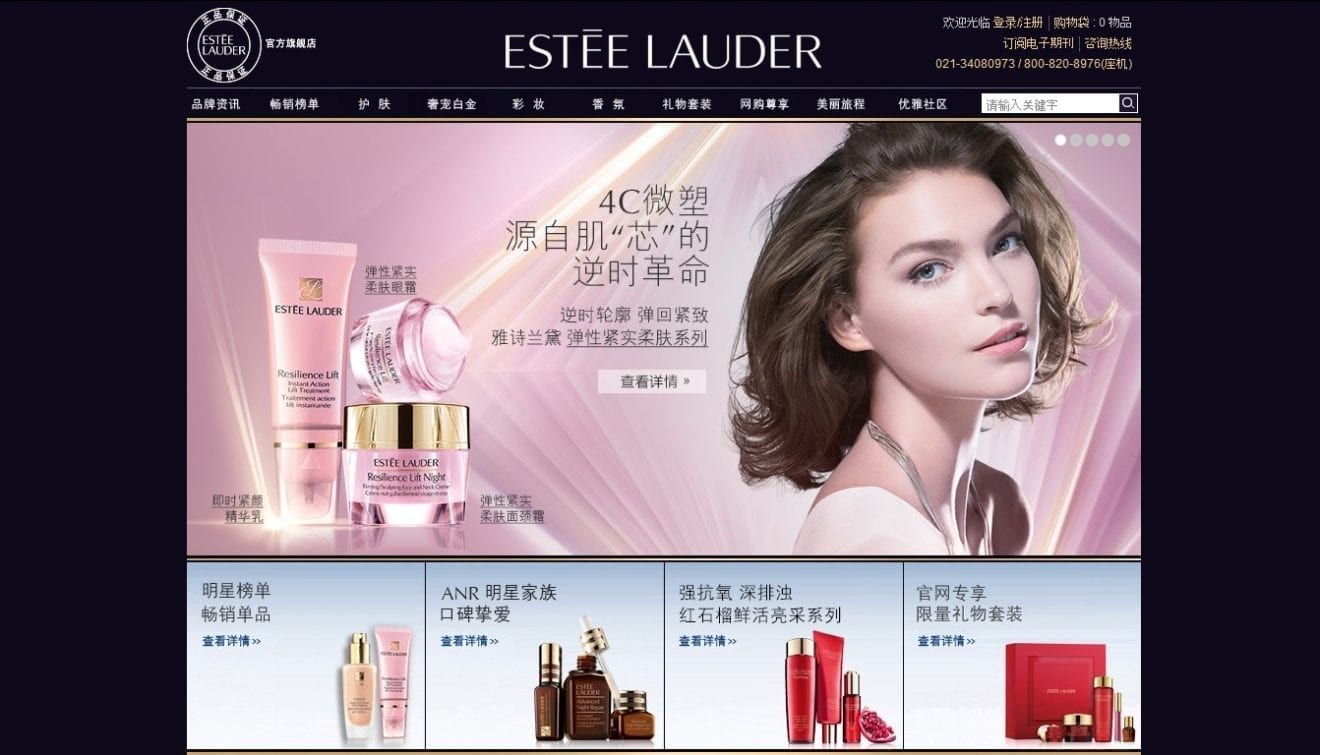
  • Here’s How Estee Lauder Plans To Grow In China

    Here’s How Estee Lauder Plans To Grow In China

    In Q3 2016, Estee Lauder registered an 8% growth in retail sales in China, lower than its all the time high of 20%, but still strong according to the company. The growth in China was primarily due to a 70% growth in e- and mobile commerce sales and 10% of the company’s business in China is now online. Estee Lauder now plans to diversify its brand portfolio in the region along with a geographically diversification by penetrating into more cities in China. It also plans to increase the number of freestanding stores, particularly in cities where there are no alternative distribution solutions such as departmental stores. While the Asia Pacific region (including China) accounts for less than 20% of the company’s net sales, it holds strong potential. Most of the company’s brands expect Estee Lauder registered double digit growth in China for Q3 2016. We believe that its investment in e-commerce, its diversification and increasing focus on distribution channels will drive revenues for the company from this region in future.

    Focus On E-Commerce Initiatives

    Estee Lauder reported that 70% of its growth in China for Q3 2016 came from online sales which now account for 10% of total sales in the region, slightly lower than the 12% figure for the U.S. The company plans to explore the omni channel opportunity in the region, where its freestanding stores will be connected to the online brand and be more efficient. The company also has a store in Alibaba’s Tmall which aims to bring luxury brands to Chinese consumers. Mainland China’s overall luxury market is estimated at $ 17.2 billion. According to a report by KPMG, 50% of China’s domestic luxury consumption will be generated online by 2020. Estee Lauder’s investment in e-commerce initiatives in China is aimed at tapping this market and the company is already witnessing results.

    Diversification – Portfolio and Geographic

    Estee Lauder is looking to spread its geographical reach in China by expanding into more cities through a distribution channel of free standing stores. This model will work well in smaller Chinese cities where there are no departmental stores, but consumers are keen to buy the company’s products. Currently it operates free standing stores of its M.A.C and Jo Malone brands in the region, but expects to add other brands in future. The company believes that over time its speciality channel will also develop in China. Most of its brands, with the exception of Estee Lauder, registered double digit growth in the region for Q3 2016. The company can improve the its visibility in the region by broadening its distribution channel, increasing availability in stores and fostering e-commerce initiatives.

    While Estee Lauder’s sales in China are witnessing growth currently, the company is focused on the region and plans to invest on online and distribution initiatives to generate additional sales. As the Chinese economy shifts towards consumption with an increasing demand for foreign luxury products, Estee Lauder has strong growth prospects in the region.

  • BeautyFresh has bold Asian ambitions

    BeautyFresh has bold Asian ambitions

    Singapore cosmetics startup BeautyFresh is eyeing the eCommerce potential in its home market and broader Asia.

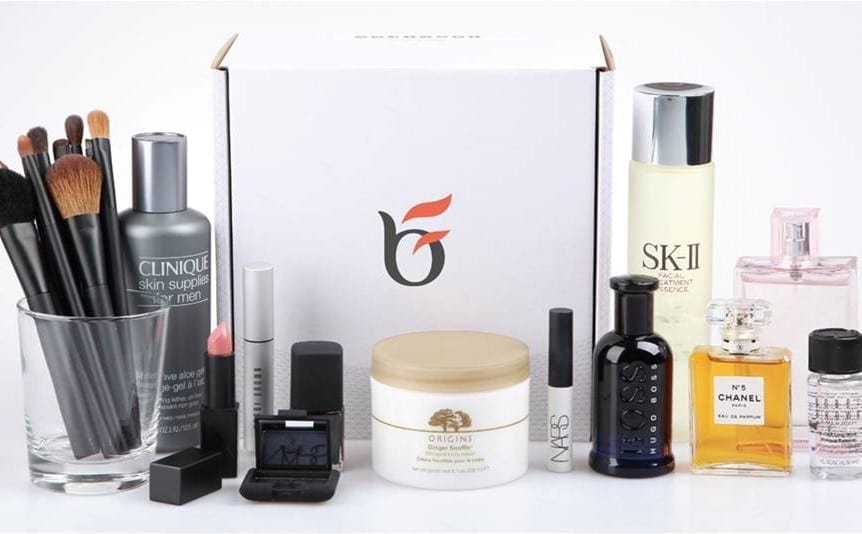
    Stocking more than 70 international brands including Chanel, Dior, Jo Malone and Nars, the company ensures authenticity of its products by scanning them with ultraviolet light to check for defects. Employees also check to ensure products are not near expiry dates.

    Director Jack Wong has a background in online security, so is using his expertise to ensure that client data is secure. The web developments and encryption of the BeautyFresh site are similar to those of online banking (signified by a green lock in the URL).

    Meanwhile, market research firm Mintel says that a growing number of Chinese consumers are going online to buy international beauty products.

    Jo Malone_BeautyFresh.com (1)

    Its research shows that 58 per cent of Chinese consumers bought foreign products online from a domestic shopping website in the six months to the end of November last year. The top three countries buying beauty products were South Korea (47 per cent), Japan (29 per cent) and France (27 per cent).

    According to the report, cross­-border eCommerce grew more than digital retail generally last year, a trend that is expected to continue.

    While cross-border eCommerce is increasingly competitive and provides great sales opportunities, the report warns that brands need to be increasingly responsive to consumer demand.

    Quality of products (63 per cent) and prices (38 per cent) are the top concerns for Chinese online buyers.

    BeautyFresh offers free delivery on orders worth US$40 or more, and offers a 30-day money back guarantee.

  • ZTE China plans new stores

    ZTE China plans new stores

    Chinese multinational telecommunications equipment and systems company ZTE Corporation plans to open 23 stores this year, mainly in China but also Germany and Mexico.

    Meanwhile, its latest smartphone, the flagship Axon 7, will go on sale for $449 in the US next month, up against Apple’s iPhone 6s and Samsung’s Galaxy S7.

    Headquartered in Guangdong, ZTE China has three business units – carrier networks (54 per cent), terminals (29 per cent) and telecommunication (17 per cent). Its core products are wireless, exchange, access, optical transmission and data telecommunications gear, mobile phones and telecommunications software.

    ZTE China also offers video on demand and streaming media. It primarily sells products under its own name.

  • Southeast Asian economies lure Alibaba

    Southeast Asian economies lure Alibaba

    Southeast Asian economies are reaching a stage similar to China’s at the end of the last decade, when eCommerce began to take off, according to Alibaba Group executive vice-chairman Joseph Tsai.

    “I don’t blame you guys for having some degree of excitement about Southeast Asia when you look at the economies here,” he has told a Singapore conference staged by Google and local sovereign wealth fund Temasek.

    For example, he said, the per-capita GDP of Indonesia, the world’s fourth most-populous country, was about $2900. “That’s roughly the same as China’s per-capita GDP in 2009 and into 2010, a period when Alibaba’s C2C marketplace Taobao began to soar, adding about $50 billion in gross merchandise volume.”

    This was one reason Alibaba had invested about $1 billion in Singapore-based Lazada Group last month. Launched in 2012, Lazada now has shopping websites in Indonesia, Malaysia, the Philippines, Singapore, Thailand and Vietnam. It began by selling inventory to customers from its own warehouses but now also runs marketplaces for third-party sellers, as well as using its own logistics networks for deliveries.

    “We’re very excited about our investment in Lazada,” Tsai said. “It is starting from a very small base, but the potential is very, very big.”

    By adding marketplaces in Southeast Asia, Alibaba can offer merchants already selling on its platforms a chance to sell into new markets. “It’s very, very helpful to be able to present something that is more of a geographically diverse platform,” Tsai said. Online healthcare and fintech companies such as Alibaba-affiliate Ant Financial, poised for rapid growth in China, could expand their services to Southeast Asia.

    Tsai said he sees promise in the wide use of the mobile internet in Southeast Asia, a trend that typically gives rise to greater engagement and more purchases by online shoppers.

  • Starbucks Roastery going international

    Starbucks Roastery going international

    Starbucks Coffee Company is to launch its first international Starbucks Roastery and Reserve Tasting Room in China next year.

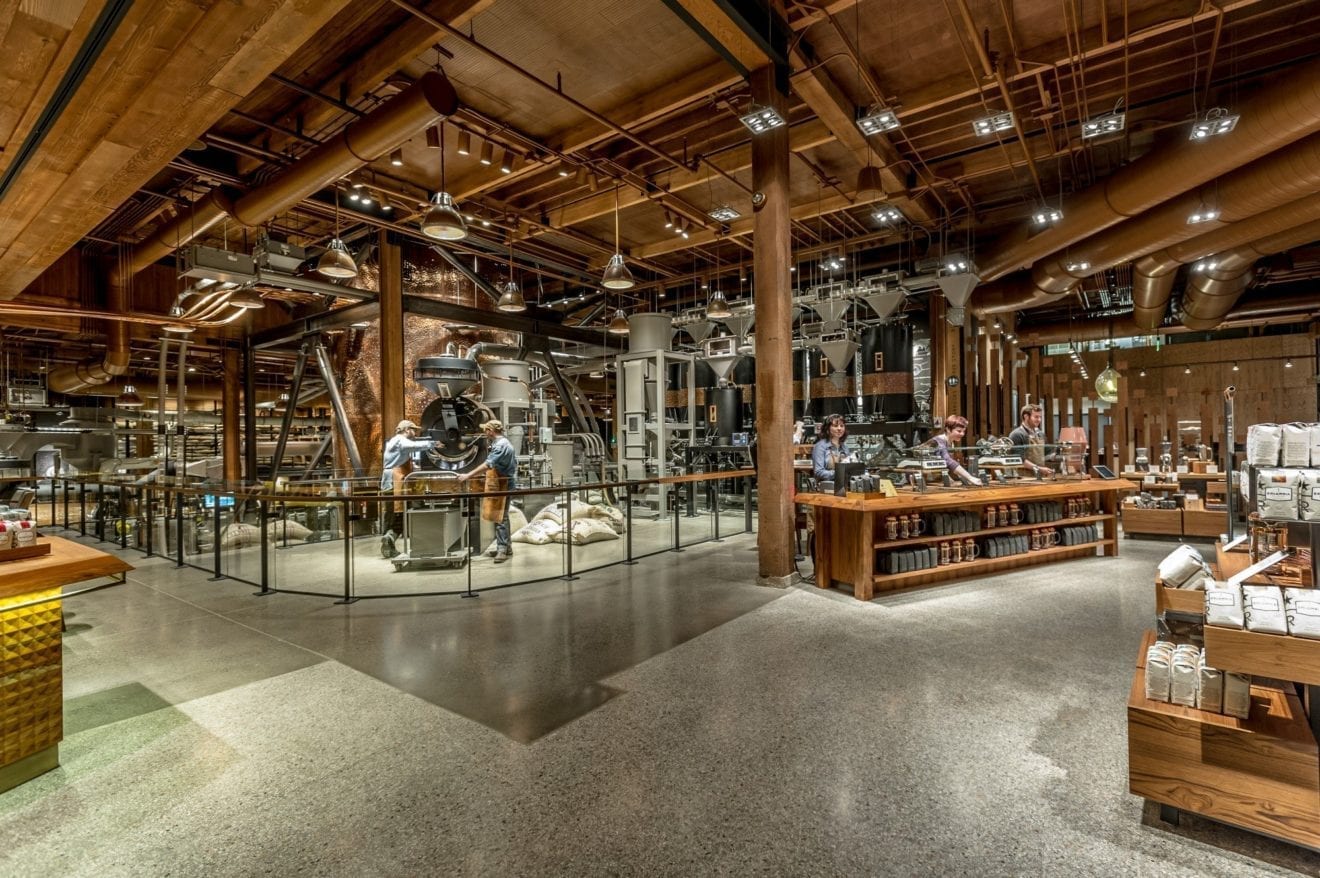
    It will be along Shanghai’s Nanjing Rd West as part of the HKRI Taikoo Hui project, a premium retail, office and hotel precinct, and draws its inspiration from the first roastery that opened in the company’s hometown of Seattle, Washington, in December 2014. There will be a similar immersive, all-sensory experience, offering customers an understanding of the craft of roasting and brewing Starbucks coffees, including the limited-edition Starbucks Reserve coffees.

    Starbucks Roastery photographed on March 10, 2016. (Joshua Trujillo, Starbucks)

    Starbucks_Reserve_Roastery_(2)

    “As our first international roastery, we will take even bolder steps to make the Shanghai location our most stunning store, while relevant to the Chinese customer,” says Starbucks chairman/CEO Howard Schultz.

    Starbucks Roastery photographed on March 10, 2016. (Joshua Trujillo, Starbucks)

    Starbucks Roastery photographed on March 10, 2016. (Joshua Trujillo, Starbucks)

    Starbucks Roastery photographed on March 10, 2016. (Joshua Trujillo, Starbucks)

    China is the company’s largest international market with more than 2100 stores across 102 cities, including 55 Starbucks Reserve stores. Only at the roastery will customers be able to watch freshly roasted beans arrive, connect with coffee specialists and master roasters and sample small-lot coffees brewed in different styles. There will also be a beverage and food menu.

    Starbucks_Reserve_Roastery

    The HKRI Taikoo Hui complex is a pioneering project combining sustainability and quality, being developed by HKR International and Swire Properties. The roastery retail experience will be in a standalone semi-circle building facing Nanjing Road, known as China’s top commercial street.

    “The new Jing’an is focused on developing high-end commercial sectors,” says Shanghai Jing’an mayor Lu Xiaodong. “We aim to establish new developmental goals for a modern cosmopolitan city, and encourage new retail innovations within our district. The government fully supports this pioneering retail experience and initiative from Starbucks.”

  • Chengdu project takes top award

    Chengdu project takes top award

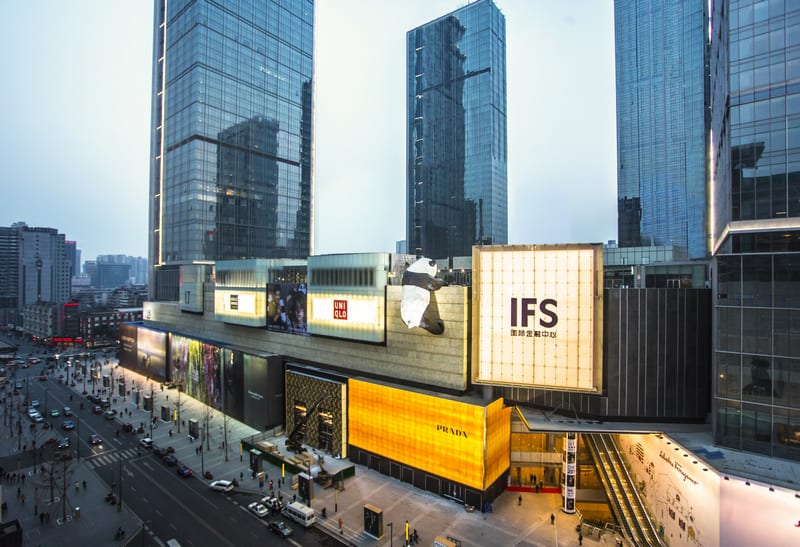
    Integrated development Chengdu IFS has won the overall 2016 VIVA (Vision, Innovation, Value, Achievement) Best-of-the-Best Design and Development Award, presented in Las Vegas by the International Council of Shopping Centers (ICSC).

    Honouring shopping centre design, the VIVA Awards bring together the gold winners from regional competitions to compete for the international title. Chengdu IFS previously won the Gold Award for New Design and Development at the ICSC Asia Pacific Awards last year.

    Benoy - ICSC VIVA Award 2016

    Wharf China Estates GM (operations) Christina Hau accepted the award along with architectural/graphics consultancy Benoy director Ferdinand Cheung, who led the design for Chengdu IFS. It was the third global win for Benoy at the awards, following Hysan Place, Hong Kong in 2014 and Parc 66, Jinan in 2013.

    Benoy - Chengdu IFS (2)

    Chengdu IFS was conceived as a “city within a city”, the 760,000 sqm development being a one-stop destination uniting retail, dining, business, leisure, entertainment, culture and art. Its 210,000 sqm flagship retail podium is flanked by two Grade-A office towers, a five-star hotel and high-end residential properties in the centre of the city.

  • Wal-Mart Needs to Grow Overseas, and China’s the Big Prize

    Wal-Mart Needs to Grow Overseas, and China’s the Big Prize

    Zhong Guoyan sifted through piles of fish at a Wal-Mart in Shenzhen, one of China’s largest cities. She studied the fins, to make sure they were bright red and firm. She peered at the eyeballs — were they bulging?

    “I like when the products are fresh, and the quality is good,” she said. “When I come here, I have a look. If it’s good, then I will buy it. If it’s only cheap, I won’t buy it.”

    In American Wal-Marts, customers are not offered the opportunity to fondle their fish. But America is not China, as the world’s biggest retailer has learned. If the Arkansas-based company wanted to win over foreign consumers like Zhong, it would have to shed some of its American ways, and cater to very different customs and conventions that are fast changing.

    In the U.S., Wal-Mart conquered the marketplace by offering “everyday low prices” to penny-pinching, bulk-buying customers, but Chinese shoppers have good reason to look for quality first, bargains second after scandals involving tainted and mislabeled food. And Chinese shoppers seek fresh food daily because their tiny refrigerators don’t give them room to stock up.

    Zhong eventually tossed a couple of fish into a plastic bag — a small victory in this massive retailer’s struggle to build an international empire.

    The stakes are high: Wal-Mart can’t count on much sales growth from its U.S. business — it’s facing challenges at home with intense competition from online leader Amazon.com and dollar stores, which offer low prices and convenience — so the retailer is depending more on its operations overseas.

    China, the world’s most-populous country, is the ultimate prize. Right now, it represents just 3 percent of Wal-Mart’s global sales of $478.6 billion, according to estimates from IBISWorld, a research firm. And the company has just over 400 stores in China, compared with more than 5,000 in the U.S. But the Chinese grocery market, already the world’s largest at $1.1 trillion a year, is expected to grow to nearly $1.5 trillion in just the next four years, says IGD, a global consumer products research firm.

    “China remains a strategic market for our future,” Doug McMillon, CEO of Wal-Mart Stores Inc. recently told investors.

    Getting the food business right is critical for Wal-Mart. Shoppers buy groceries more often than anything else. If Wal-Mart can get them in the door to buy food regularly, perhaps they will visit more frequently for items like pajamas and coffee makers — and eventually become loyal online customers, too.

    Still, markets in China and elsewhere in the world will not surrender to Wal-Mart, just because it’s Wal-Mart. In particular, global players like Wal-Mart have found that food retailing doesn’t cross borders easily because it’s a largely local business. After struggling on its own in China, Britain’s Tesco PLC decided two years ago to team up with China Resources Enterprise, a state-owned company. Wal-Mart has also taken some lumps.

    Overall international sales growth has been uneven, dropping 9.4 percent last year largely because of the strong dollar. And while Wal-Mart’s overseas business had a strong start to this year, it faces long-term challenges. Wal-Mart gave up in Germany and South Korea, abandoning those markets back in 2006 in the face of tough competition. It’s closing 10 percent of its stores in Brazil. And it’s locked in a price war in the United Kingdom, slugging it out with no-frills German discounters Aldi and Lidl.

    Overseas, Wal-Mart lacks the scale to squeeze local suppliers on price as it does in the U.S. It also faces nimble competitors who are entrenched in foreign markets. It has not always found it easy to duplicate its bedrock strategy of constant bargains outside the United States.

    But Wal-Mart has learned over the years from its missteps, discovering that it can’t just impose its culture on the world, that it needs to adapt to local ways, that patience does pay off.

    In countries like Mexico, Canada and Japan, Wal-Mart has won shoppers over time. After the setbacks in Germany and South Korea, the company established a team to ensure it does a better job integrating international acquisitions, while avoiding the impulse to force employees overseas to adopt all its ways. In Chile, it launched a corporate culture campaign and worked closely with suppliers to coax them into its way of doing business. It’s using its global clout to find and import products from around the world, catering to increasingly sophisticated and demanding middle class consumers.

    Wal-Mart also has come to realize that it can thrive without being the biggest player in every market, says Bryan Roberts, global insights director at TCC Global, a London-based marketing consultancy for grocery retailers. But the company also knows that it needs to succeed in China, now the company’s fourth largest international market by sales. And he believes it will do just that.

    “Wal-Mart,” Roberts says, “is a very determined organization.”

    ___

    WINNING OVER PICKY CONSUMERS

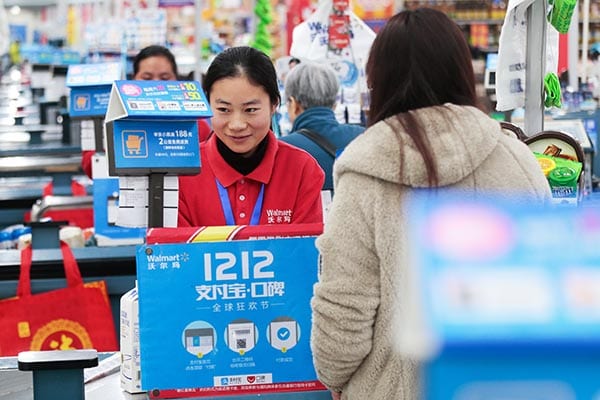
    Except for the signs, most Americans wouldn’t recognize a Wal-Mart in China. At a store in Shenzhen, shoppers sniff bins of rice or use tongs or their hands to examine the piles of local sausage, whole chickens and pigs’ feet. Nearby, tanks brim with live fish, frogs and crabs.

    Americans may like to touch products, but in China, many want to buy live fish, or smell the meat.

    “It has to smell like fresh blood,” said Lina Wang as she examined loose pork.

    Meanwhile, Huang Xiulian stood at a nearby Snickers display, studying the expiration date and where the candy was produced.

    In the massive, unruly Chinese market, some competitors have cut corners, mislabeling products or even selling tainted foods. The risks have made Chinese consumers unusually wary: If a carton of milk or a piece of fish seems too cheap, Chinese shoppers wonder if it’s safe. If items stay on sale day after day, they worry if there’s something wrong with them.

    Sean Clarke, CEO of Wal-Mart China, based in Shenzhen, previously worked in Britain, Japan, Germany, and Canada. China, he says, “is easily the most challenging market to operate.”

    “There is a huge level of distrust in this market,” Clarke says. “Is it fresh? Is the price right?”

    Although China still has plenty of bargain-conscious shoppers, overplaying the price message can also “alienate the increasingly affluent middle-class shoppers, less sensitive on price but (who) value more the quality and assortment of merchandise,” says Jason Yu, general manager of Kantar Worldpanel China, which specializes in research on Chinese shopping habits.

    In particular, Wal-Mart had a difficult time promoting “everyday low prices” — promising the lowest prices on a basket of goods every time consumers shop. Early on, Wal-Mart undermined its own claims for consistently low prices by running lots of short-term promotional gimmicks.

    Then some rivals poached the “everyday low price” message, confusing customers. Wal-Mart scrambled to find the right slogan. In 2010, it switched to “Low Prices.” Two years later, it trotted out “Worry Free” — a message that employs the Chinese characters for “save, heart, price,” implying quality and reassuring shoppers who worry that deals will expire before they get to the store.

    “Worry Free” is Wal-Mart’s key weapon to lure shoppers: 85 percent of the discounts in the Wal-Mart stores in China now last anywhere from four weeks to six months, said Clarke. Unlike in the U.S., Wal-Mart had to build trust by spelling out in signs how long the low prices last.

    The company’s message: Efficiency and good management, not cutting corners, make everyday low prices possible.

    When Wal-Mart came to China, it was slow to tailor its offerings to local tastes. Southern Chinese like rice. Northern Chinese like noodles. Folks from Hunan like their chili peppers. The Cantonese crave chicken feet.

    Realizing its mistake, Wal-Mart gave local managers more leeway to run their businesses. For example, it let them decide when hot deli food was past its sell-by date and gave them free rein in ordering from different local suppliers.

    But that approach backfired, leading to a series of food-safety violations. In one particularly embarrassing episode, Wal-Mart had to recall donkey meat — a delicacy in China — after DNA testing showed it contained traces of fox meat. The misstep came at a time when Chinese consumers were especially wary, because tainted baby formula had sickened hundreds of thousands of infants.

    In response, Wal-Mart slashed nearly two-thirds of its 20,000 suppliers, including food. Now, Wal-Mart knows exactly where each product comes from. Wal-Mart also took back some of the responsibilities from local managers, though they are allowed to decide on such issues as whether meat should be loose or packaged in their stores.

    Wal-Mart increased its investment in food safety. It broke new ground in China by adding mobile testing labs that go around from store to store in both the Southern and Eastern regions of China, checking for pesticides on vegetables and fruits. It’s using handheld devices in South China to check temperatures of meat products.

    “It’s quality first,” Clarke said, “and then we will have the lowest price.”

    ___

    GAINING CONTROL OVER SUPPLIERS, COSTS

    In America, Wal-Mart consistently delivers low prices to shoppers largely because it has the clout — 25 percent of the U.S. grocery business— to force suppliers to do things the Wal-Mart way. That means cutting costs to the bone. In return, the suppliers enjoy steady demand from Wal-Mart, so they don’t have to spend so much on advertising or worry about staffing their factories.

    Wal-Mart’s pull is so strong that more than 1,500 suppliers have opened offices near its headquarters in Bentonville, Arkansas.

    But replicating that model has proven tough overseas, partly because it takes time to work with new suppliers to cut costs. In Brazil, for instance, it’s still a work in progress after two decades.

    In China, things are tougher still. Wal-Mart accounts for just 2.3 percent of the overall grocery market. In fact, the top 10 grocery retailers in China account for just 18.5 percent of the market, says Euromonitor International, a global market research firm. Suppliers are scattered, too. Ninety-five percent of all products Wal-Mart sells in China are supplied by local companies. It’s tough for retailers to have influence over their network of Chinese suppliers.

    The Chinese supply chain is also notoriously inefficient. For years, Wal-Mart and other foreign companies haven’t dealt directly with their suppliers, working mostly instead through a labyrinth of middlemen who handle distribution. One supplier could potentially have 100 distributors, handling delivery to just three or four stores. Wal-Mart would have to work with each distributor.

    Wal-Mart had been making some efforts in centralizing its food distribution. But it didn’t get serious about breaking up the system until three years ago. It decided to cut out, or at least reduce, the middlemen and route as many goods as possible through 20 of its own distribution centers. It built 11 centers for fresh food, and increased its packaged-food distribution centers from five to nine. Now, 85 percent of packaged goods is being sent through distribution centers. For fresh food, that figure is about 50 percent.

    Wal-Mart says it was a challenge to convince many suppliers to unravel their way of doing business. But by eliminating the go-betweens, Wal-Mart could negotiate directly with suppliers and knock down costs — often by 10 percent to 12 percent, says Lesley Smith, senior vice president of the supply chain at Wal-Mart China and the woman behind the move.

    The change also gives Wal-Mart more control over the quality of the food being sent to its stores and the efficiency with which it gets to them. Before the switch, only about 75 percent of orders would actually reach Wal-Mart stores; now 95 percent do. Before, it took three days for products to arrive; now it takes a day and a half, Smith says.

    Nestle S.A., for instance, used to go through 81 Chinese distributors to reach 400 Wal-Marts. Now it’s using Wal-Mart’s national distribution network, which it says is resulting in fresher quality of goods at the store, higher sales and lower costs.

    Another supplier, Beijing-based noodle and flour maker Cofco, is also coming to appreciate the Wal-Mart way. In 2003, it started supplying 11 Wal-Marts. Now it’s selling to 398. Wal-Mart demands that state-owned Cofco keep prices low and stable.

    “At first, we had concerns, especially when the raw material costs had some ups and downs,” says Cofco general manager Liu Hongwei says.

    But Cofco has learned to be more efficient. And Wal-Mart stocks Cofco products in the busiest parts of the stores and markets them under the “worry free” slogan. Cofco sales to Wal-Mart rose 40 percent last year, compared to 10 percent to 20 percent increases for other customers.

    Liu says he negotiates prices with his other customers every two weeks. With Wal-Mart? Twice a year.

    ___

    FIGHTING COMPETITORS

    Often, Wal-Mart enters new markets by acquiring competitors, but that doesn’t guarantee success. Buying the top player, as it did in Chile and Mexico, seems to work best.

    In Chile, Wal-Mart’s intense marketing paid off. Chileans are so sold on Wal-Mart’s supercenter, Lider, that they believe the gap between its prices and rivals is twice what it actually is.

    But in the United Kingdom, Wal-Mart’s Asda and traditional British supermarkets like Tesco and Sainsbury’s are all being undercut by the rapidly expanding Aldi and Lidl chains. In response, Asda is stepping up sustained price cuts and joined the European Marketing Distribution, which pools the buying power of 250 supermarket chains.

    In vast China, Wal-Mart competes with a swarm of regional rivals.

    At first Wal-Mart and France’s Carrefour had China’s big-box retail business pretty much to themselves. But Chinese rivals, learning fast and exploiting close ties to local suppliers, erased their lead.

    Wal-Mart landed in China in 1996, a year behind Carrefour, opening two stores in Shenzhen — a Wal-Mart supercenter and a Sam’s Club. They were the first foreign retailers to offer the big-box shopping experience, which offers everything from clothing to food. That’s a big change from traditional wet markets and mom-and-pop stores filled with counterfeit goods. After investing in a Taiwanese-owned retail chain in 2007, Wal-Mart became China’s biggest super-sized store chain and expanded its lead for over the next two years.

    But Wal-Mart and Carrefour were hobbled. The government restricted foreigners to opening three stores per city. But even after China dropped the store limit in 2001, Wal-Mart and other foreign retailers have faced unfavorable treatment. Government officials have investigated the foreign retailers’ pricing and highlighted their food scandals.

    Meanwhile, local and regional competitors quickly closed the gap. The local players can sometimes undercut Wal-Mart prices because they have closer ties to local suppliers and can negotiate better deals, says Kantar’s Yu in Shanghai.

    Wal-Mart insists its share of the big-store sector has increased three years in a row. But Euromonitor says Wal-Mart’s market share has fallen steadily since peaking at 11.6 percent in 2009. By last year, Wal-Mart held 9.6 percent of the market, good for No. 3.

    Wal-Mart closed about 30 lackluster stores, but it has spent millions to renovate 50 it thinks are promising. Last year, it announced that it plans to add 115 stores by 2017, bringing the total store count to 530. It’s concentrating in markets where it’s already established, including the west, central China and its stronghold in the south.

    From the start, Wal-Mart has had some advantages, including its global clout. It’s able to stock its shelves with foreign imports and sell them at a bigger discount than its rivals can. And it’s been pressing that advantage in the wake of a changing consumer mindset. Three years ago, Wal-Mart imported 212 containers of products into China. Last year, it imported 2,800, including milk sold under its Asda brand — popular with the exploding ranks of middle-class Chinese who can afford to buy better goods.

    But, Wal-Mart faces another challenge in China, and it is not from other big box stores.

    Across the globe, shoppers who are increasingly shifting away from buying at big stores and toward buying online or at small stores. But in China, that trend is more dramatic. It has overtaken the U.S. as the world’s biggest online marketplace.

    That’s meant declines in traffic at Wal-Mart and other big-store rivals, both local and foreign. So Wal-Mart is expanding offerings at its website, which is run by Yihaodian, a Chinese startup Wal-Mart fully took over last year. And it’s blending its online services with its own stores and adding hubs in key cities to deliver goods to shoppers’ homes.

    Sissy Xiao, a journalist, represents the future. Xiao had her hands and nose in the bins of rice at a Wal-Mart store in Beijing. She compared the scents. Her elderly mother was elsewhere in the store, buying food.

    Xiao, however, was not planning to take any home. She’ll do her shopping later, online.

    “I am spending less time at big stores,” Xiao says. “I usually buy things online. It’s more convenient.”
  • Japanese retailer Muji expecting record profit

    Japanese retailer Muji expecting record profit

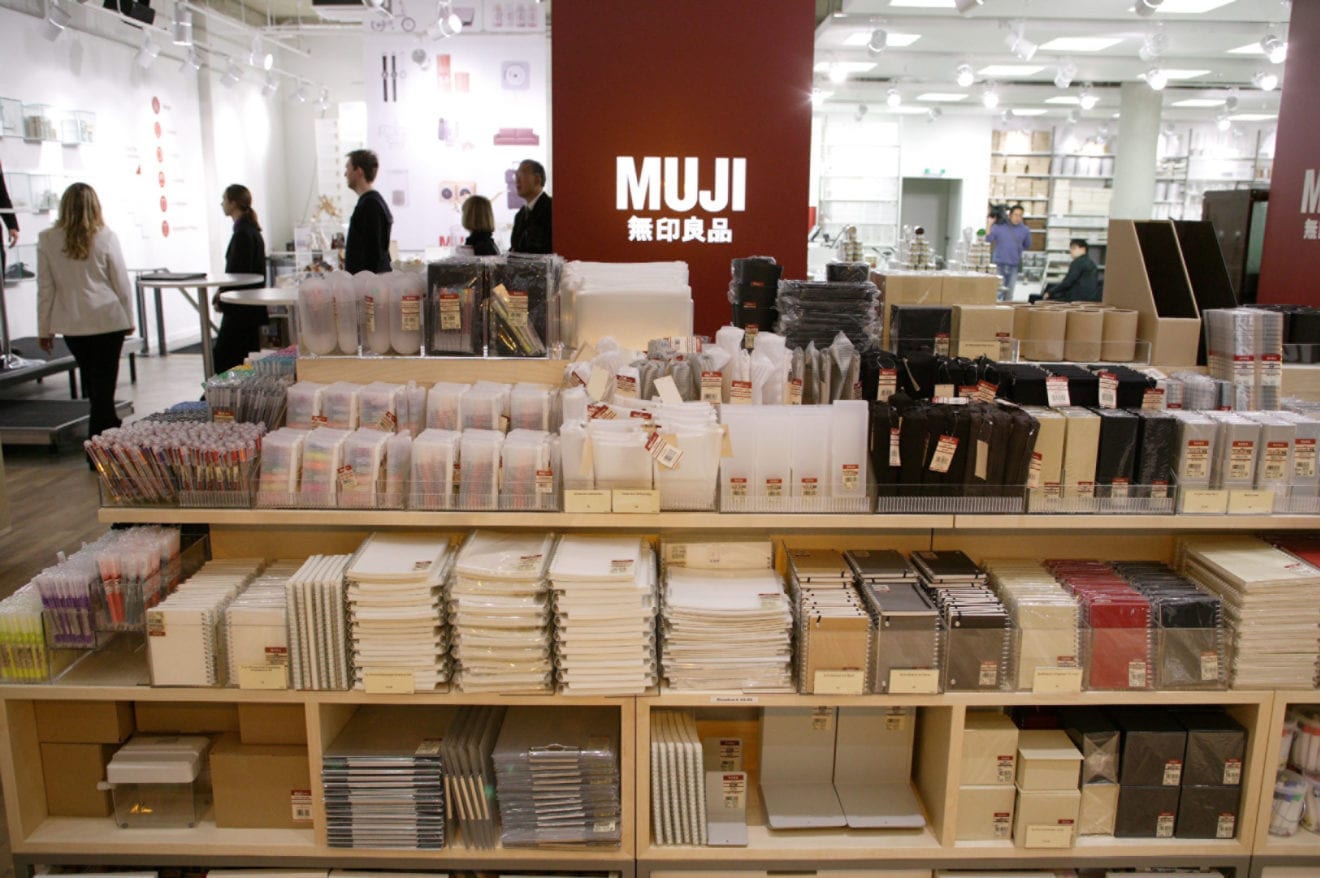
    Japanese retailer Muji is expected to end its latest quarter with a 10 per cent year-on-year rise in group operating profit to about 10.5 billion yen (US$95.5 million), a record for the period.

    Sales for the parent company, Ryohin Keikaku, will probably have similar growth to reach about 85 billion yen.
    During the three months, the company opened 13 stores in Japan. Sales at directly run stores rose 8.1 per cent in March and 7.3 per cent in April. The demand for Muji brand processed foods, such as pasta sauces and freeze-dried rice, has been growing since they were featured on TV. Stronger sales of storage furniture, around 30,000 yen, will probably help lift per-customer sales on average between 2000 and 3000 yen.

    Ryohin Keikaku has also performed solidly abroad, where it generates slightly more than 30 per cent of its sales. In China, which accounts for nearly half of the company’s overseas sales, same-store sales appear on track to beat the year-earlier amount by roughly 5 per cent, thanks to the popularity of lotions and other daily household items.

    Processed foods remain popular at Muji Chinese stores. By bolstering local production, the company was able to expand its food line-up in China, fueling sales growth.

    However, the yen’s appreciation will probably hurt Ryohin Keikaku’s overseas earnings.

    For the full year through to next February, Ryohin Keikaku projects a 9 per cent rise in sales to 336.5 billion yen and a 10 per cent increase in operating profit to 38 billion yen. Both would be record-breaking levels.

  • What young Chinese luxury shoppers want

    What young Chinese luxury shoppers want

    Young Chinese luxury travellers demand bespoke experiences and go abroad every three to four months, mainly for leisure, according to a Hurun Research Institute report.

    It shows that these travellers spend RMB420,000 (US$65,000) on tourism every year and RMB220,000 on travel shopping. Japan is the top destination for shopping – not Hong Kong.

    They demand personalised luxury experiences, Wi-Fi access, and next-generation guest services on smart devices as standard.

    The inaugural Chinese Luxury Traveler 2016 study was released by the institute in conjunction with Marriott International, and is the first collaboration of its kind between a global hotel company and an authority on Chinese luxury travel.

    Key findings reveal a shift in travel habits among this younger generation of travelers, aged 18 to 36 years. They want added value throughout the entire hospitality ecosystem, from planning a trip, to requesting guest services, to choosing which loyalty program to join.

    When it comes to services and information, young Chinese luxury travellers prefer the digital approach. Interactive guest services on smart devices are far more popular than traditional guest services, and travelers also expect this smart technology to record and manage their personal preferences.

    They also do their research on digital platforms, with WeChat emerging as their primary source of travel information. Third-party apps are also important for information, such as C-Trip, Qunar and Tuniu.

    Novel travel experiences are popular, such as adventure travel, polar exploration and road trips.
    Also, this group feels underwhelmed by loyalty programs, many of which are seen as low value and not unique.

    “This is a key focus area for Marriott,” says Marriott International chief sales and marketing officer for Asia Pacific, Peggy Fang Roe. In the first quarter of this year, the hotel group had a 7 per cent increase in domestic travellers in China and a 25 per cent increase in Chinese outbound travellers.

    Hurun Report chairman and chief researcher Rupert Hoogewerf says despite the economy slowing, the impact on outbound travel from high-net-worth individuals seems to have steadily grown.

    “The young luxury travellers have developed significant spending firepower, minted on the back of the recent boom in Chinese entrepreneurship, together with a growing class of second-generation ‘rich kids’.”

    The report says the young, Chinese luxury travellers have an average hotel budget of RMB3100 a night.

    Established as a research unit in 1999, Hurun Report has grown into a media group targeted at high-net-worth individuals in China and India. Headquartered in Shanghai, Hurun Report has offices in Beijing, Guangzhou, Chengdu, Sanya, London, Los Angeles, Chicago and Cochin (Kerala) in India.

  • Strong yen could send Chinese spending back to Hong Kong

    Strong yen could send Chinese spending back to Hong Kong

    Chinese tourists’ consumption in Japan has begun to wither in the face of a strengthening yen, setting up Hong Kong to recapture spending that has moved elsewhere in recent years.

    Affordability is key

    A country appeals more to foreign travelers as its currency weakens, making shopping and food more affordable than in other destinations. This is doubly true for Chinese travelers, who tend to spend heavily while abroad.

    Such was the case for Japan from mid-2014 onward. The yen moved from the level of 16 to the yuan back then to between 19 and 20 in less than a year. Chinese tourism there more than doubled from the previous year to 4.99 million visitors in 2015, with per-visitor spending growing 20%.

    Hong Kong was on the other side of the shift. Mainland visitors dropped 3% in 2015, while retail sales fell 3.7% in a second straight year of decline. Emperor Watch & Jewellery, a seller of luxury watches from such brands as Audemars Piguet and IWC Schaffhausen, reported a 25% drop in sales for the year ended Dec. 31. It blamed a “strong local currency” and an unfavorable tourism environment.

    Chinese buyers’ spending in 2015 accounted only for around 1% of Japan’s retail market excluding such goods as automobiles and gasoline, Nomura International has calculated. That share was 50% in Hong Kong and 30% in Macau, exposing retailers dependent on mainland consumption to heavy damage as spending slipped away.

    Trouble returns

    Yet the landscape is shifting once again as the yuan weakens against the yen. 1 yuan now fetches around 16 yen, compared with 18 yen at the start of the year. Chinese tourists’ spending in Japan came in 10% below the year-earlier level for the January-March quarter. The total value of retail sales shrank 0.8% for April, Japan’s Ministry of Economy, Trade and Industry said Monday — a second straight month of year-on-year drops.

    Retail sales in Hong Kong fell 9.8% for March, indicating improvement following February’s 20.6% tumble. Visitors from mainland China were still 6.9% below the year-earlier level. But overnight visitors declined only 0.8%, compared with a 20%-plus fall in February. Tourism from the mainland over the holidays surrounding Labor Day on May 1 swelled more than expected. While challenges continue, headwinds are gradually weakening.

    Shifts in the Hong Kong dollar compared to the yen bolster this view. According to the Nikkei Currency Index, the Hong Kong dollar became stronger than the yen overall in September 2014, just as Chinese visitors’ so-called explosive buying of goods was taking off in Japan. The yen then continued to weaken while the Hong Kong dollar appreciated.

    But the yen’s value hit bottom in May 2015, with the Japanese currency’s overall strength overtaking the Hong Kong dollar’s in April. The yuan, meanwhile, strengthened through the summer of 2015, only to weaken around 5% to its current level, the index shows.

    Close to home

    Changes in a locale’s exchange rate alter the affordability of goods there. An HSBC index tracking prices of 38 luxury items in various places compared with their home markets of France and Italy demonstrates this for top-of-the-line goods.

    The Japanese market overall rated 121 on the index in February, with home-market prices serving as the baseline of 100. By mid-May, the figure had risen to 127. Hong Kong, meanwhile, has fallen from 119 to 116 over the past three months. The mainland-market figure has dipped slightly as well, from 137 in February to 135.

    Chinese tourists will now feel less benefit from buying luxury brands in Japan as opposed to elsewhere. So while the Hong Kong figure has changed little in absolute terms, shopping here as compared with Japan has taken on fresh appeal, HSBC said. Some goods can even be found more cheaply here than in their home markets.

    Bain & Co. sees Japan’s luxury goods market growing 5% in 2016 — the most among major countries. But a strengthening yen and shrinking Chinese tourism hint at a coming deceleration, according to the U.S. consulting firm.

    Some 120 million Chinese headed abroad in 2015, plunking down more than $200 billion at their destinations. More detailed patterns of consumption will inevitably shift as the focus of spending turns from goods to services. But exchange rates will remain a key factor in these travelers’ buying power worldwide.

  • Furla Shanghai flagship opens

    Furla Shanghai flagship opens

    Italian leather goods brand Furla China has launched its first flagship store in Shanghai as part of a move to expand its presence on the mainland.

    The new Furla Shanghai store is in Citic Square in Nanjing West Rd. As the first duplex design store on the mainland, the flagship has two levels covering 300 sqm, and features women’s and men’s leather collections and accessories, as well as items exclusive to the store.

    A feature of the flagship is its 234 sqm LED facade – a first for Furla.

    Founded in Bologna in 1927, Furla has a strict made-in-Italy policy for its leather goods. The company had more than 30 per cent growth and strong retail expansion across all regions last year, resulting in 339 million euros (US$377 million) in sales.

    Fulra Shanghai 2

    In China, the brand has been bucking trends, growing its market sales by more than 60 per cent in the first quarter of this year.

    Furla president Giovanna Furlanetto says the opening of the Citic Square flagship marks an important step in the company’s dynamic expansion strategy in China.

    A highlight of the opening was the Furla “Made for You” service, with Chinese actress Jiang Shuying designing her own bag, carrying a “Made by Jiang Shuying” tag. The bag was auctioned with the proceeds going to the China Women’s Development Foundation (CWDF), which supports women’s rights and career development.

    As well as Shuying, fashion bloggers Elle Lee, Liu Xiao, Peter Xu and Toni attended the opening event, which also featured the launch of Furla’s limited-edition Metropolis bag, which has the themes “Hello Shanghai”, “Love Shanghai” and “Kiss Shanghai”. It has heart-shaped patterns and comes in red, black and pink.

    Furla has a presence in 100 countries with 400 single-brand shops on international shopping streets, a distribution network with more than 1000 points of sale, and growing channels in travel retail and eCommerce.


  • Chains top China restaurant rankings

    Chains top China restaurant rankings

    Chains outperform independent eateries in China restaurant rankings, new research shows.

    A survey by global consulting firm OC&C Strategy Consultants shows that Chinese consumers dine out on average two or three times a week, with Hai Di Lao, Pizza Hut and Little Sheep ranking as their favourite brands.

    Western brands ranking in the top 10 are: McDonald’s (7), TGI Friday’s (8) and KFC (9). Others on the list are South Beauty (4), Shanghai Min (5), Waipojia (6) and Tairyo (10).

    Food quality, wide choice and service quality shows as the three critical factors in restaurant choice, while serving speed, convenience and pricing are rated as less important Chinese consumers actively seek out new restaurants and are receptive to new formats and concepts such as theming, healthy lifestyle menus and organic produce, as well as innovative, fusion cuisine.

    According to the report, Serving up a Winner – Establishing a Winning Proposition in China’s Restaurant Landscape, China’s restaurant market is more vibrant than ever, with growth outstripping other major markets despite higher volatility.

    “While other retail segments struggle in the face of ‘the new normal’, restaurants are becoming more innovative and reaping the benefits of the growing middle class,” says OC&C greater China partner Jack Chuang. “The arrival and rapid expansion of international chains in the past few years has increased the competitiveness of the market.”

    He says getting diners through the door of a restaurant is still challenging. “Restaurant staff need to ensure that service is authentic and make creative, personalised decisions to delight guests.”

    Chuang says restaurants should also offer a wide menu range with local flavour.

    The study canvassed 2600 respondents in 21 cities across China, with consumer surveys and restaurant audits in February.

    Founded in 1987, OC&C provides corporate and business strategy, channel, marketing, organisational and change strategy, as well as transactional support services. It has more than 400 consultants in 14 offices globally, including China and India. The greater China practice has offices in Hong Kong and Shanghai.

  • Leica camera store opens in Shanghai

    Leica camera store opens in Shanghai

    A new Leica camera store in Shanghai has had a soft launch, with its grand opening scheduled for June 3.

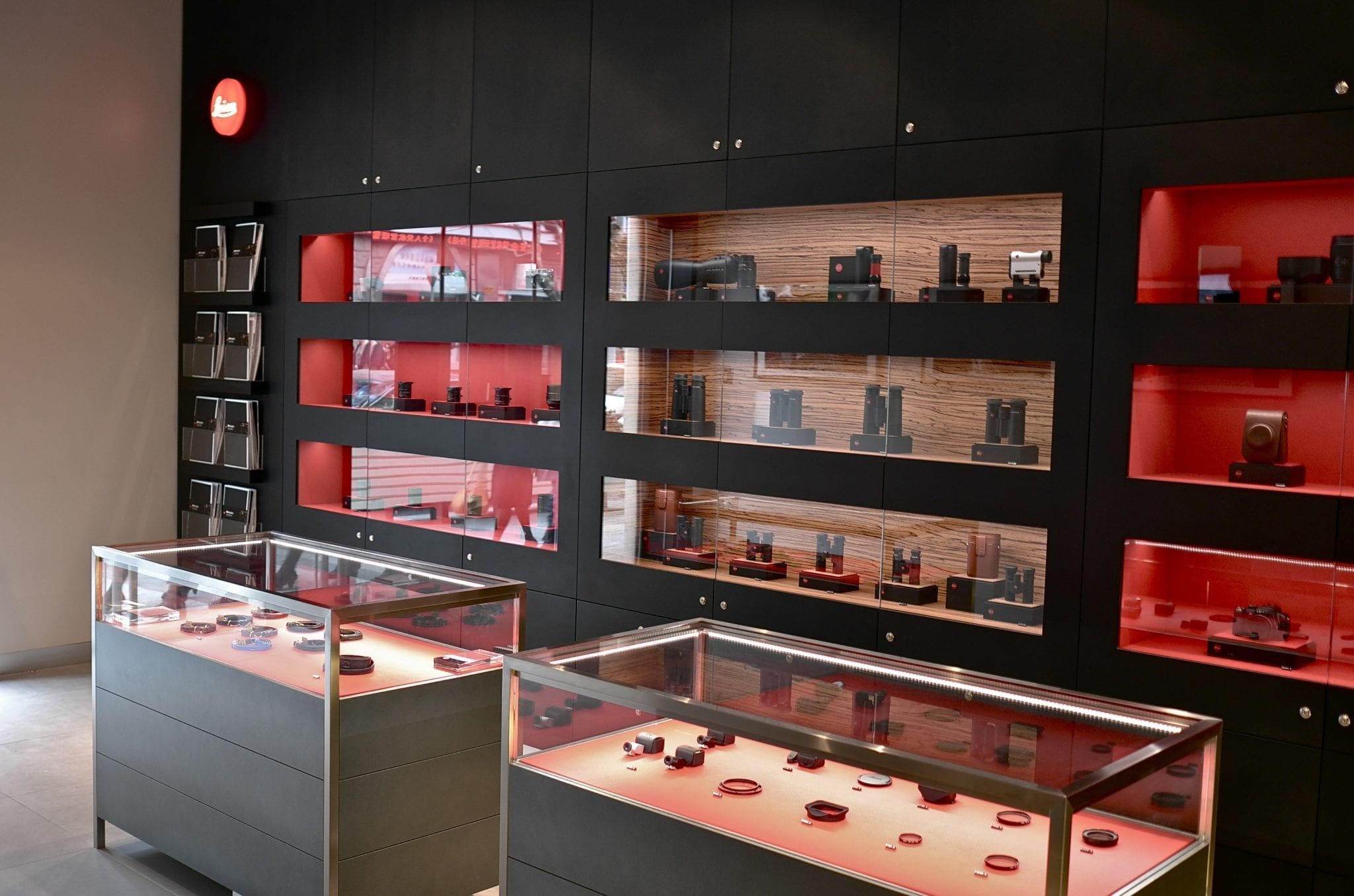
    In West Nanjing Road, Leica Shanghai XinTianDi is surrounded by luxury brand boutiques.

    Leica-Store-Shanghai-XinTianDi-1-560x420


    It displays a full range of Leica products, including cameras as well as binoculars, and includes a gallery for exhibitions of the latest images and photographic works from Leica photographers.

    Leica-Store-Shanghai-XinTianDi-3-560x420

    The store will be open every day, from 10am until 9.30pm.

    Leica opened its first store in China at the Beijing China World Mall in 2010.