Tag: China

  • Wal-Mart to open 60 new stores by 2017

    Wal-Mart to open 60 new stores by 2017

    Wal-Mart China is opening 60 new stores in the country by 2017 as part of its efforts to integrate its hypermarkets, membership stores and online platform to offer customers more convenience and quality products in a highly-competitive retail market, the company’s top executive said.

    Greg Penner, chairman of the Wal-Mart board of directors, said in an exclusive interview with China Daily in Shanghai on Wednesday that the company has already opened more than 50 new stores since a plan to add 115 stores in three years was announced in 2015.

    “China has amazing growth opportunities which in the next five years will surpass the US market in retail potential,” said Penner, who visited two Wal-Mart stores in Shanghai on Tuesday.

    In addition to growing its physical presence, Wal-Mart is also focusing on enhancing its online stores and building stronger digital relations with Chinese customers, he said.

    Penner was elected to lead the board in 2015.

    “Customers want their products from stores and also from online platforms and now have a choice of getting them delivered to their homes or picking up in the stores,” Penner said, referring to the increasing importance of online shopping convenience to customers.

    Wal-Mart to open 60 new stores by 2017

    Greg Penner, chairman of Wal-Mart board of directors.

    He added: “The food safety is critical in China and is a big part of our focus here.”

    Penner said, in 20 years in China, Wal-Mart has built three brands-Wal-Mart hypermarket, the Sam’s Club membership store and Yihaodian, the retailer’s Chinese online offering-all playing important roles in the company’s growing business.

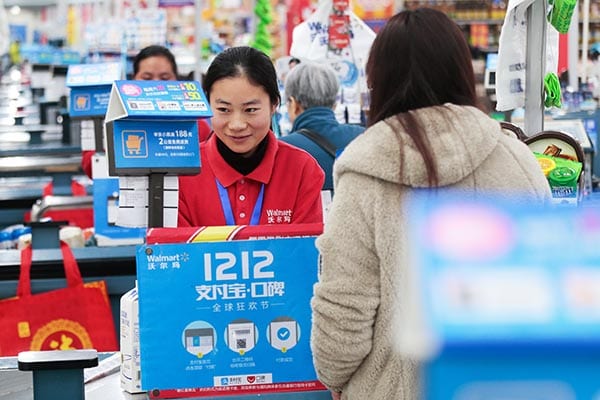
    Wal-Mart China operates 432 stores including 12 Sam’s Clubs in 174 cities and municipalities. And registered users of Yihaodian have reached 130 million.

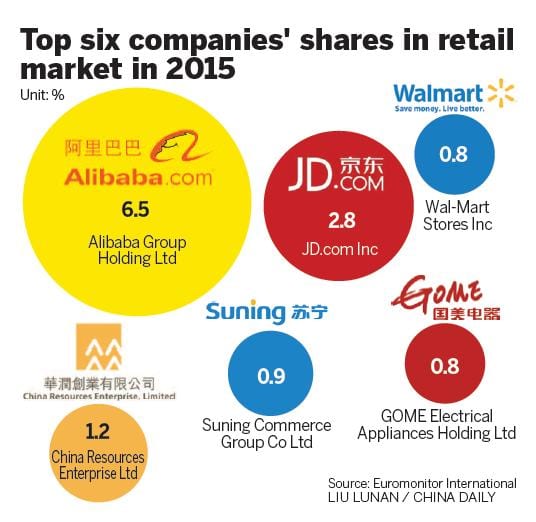
    Wal-Mart is the second-largest retail banner just behind RT-mart in modern trade (including hypermarkets, supermarkets and convenience stores), according to Jason Yu, general manager of Kantar Worldpanel China. This sector of retail business has continued to experience sluggish growth in 2015, only growing by 3.3 percent from 2014.

    Hypermarkets declined in key cities and provincial capitals by 1.5 percent, but it managed to grow at 4.1 percent at national level as a result of more store openings in the lower-tier cities. Kantar Worldpanel expects to see continued development in the hypermarket format in lower-tier cities in the coming years.

    “The group presented clear strength in terms of hypermarket geographic coverage (more cities than anyone else) but also established its leadership in membership club format and e-commerce through acquisition of Yihaodian,” said Yu.

    According to Kantar, Wal-Mart leads the modern trade sector in southern and western China. It started to embrace more O2O opportunities by launching a mobile shopping app and introducing Alipay to drive efficiency and customer experience, said Yu.

    Wal-Mart has recently launched its Global Shop, a cross border e-commerce platform, offering more than 200 imported items on Wal-Mart App.
    Wal-Mart to open 60 new stores by 2017

  • China, Indonesia, South Korea, Thailand bid for 2023 AFC Asian Cup

    China, Indonesia, South Korea, Thailand bid for 2023 AFC Asian Cup

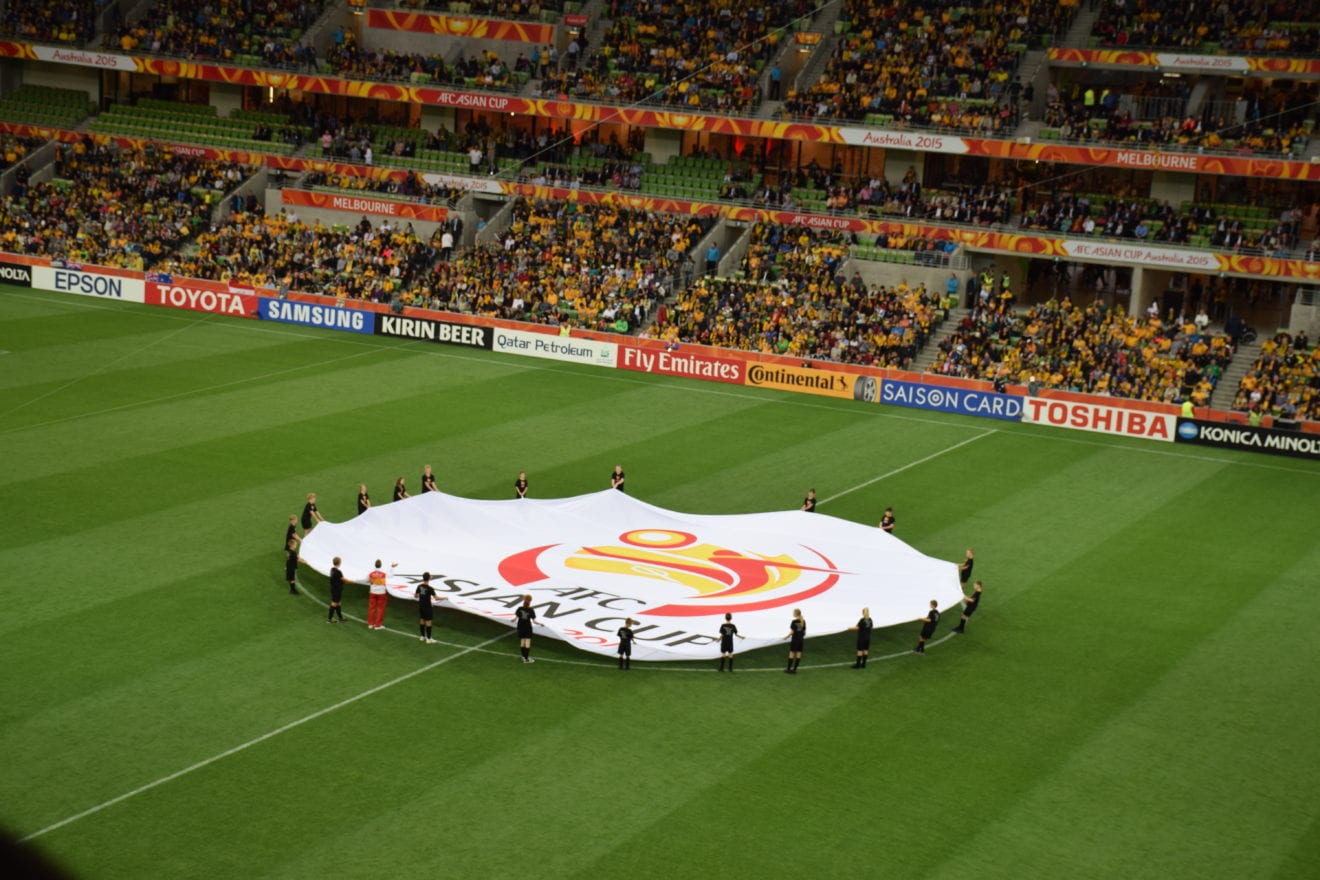
    China, Indonesia, South Korea and Thailand have expressed interest in bidding for hosting the football Asian Cup to be held in 2023, the Asian Football Confederation (AFC) said here on Tuesday.During the meeting held in the Malaysian capital, the AFC Competitions Committee announced that the AFC had received expressions of interest from China, Indonesia, South Korea and Thailand by the deadline of March 31, 2016 to host the AFC Asian Cup in 2023, reports Xinhua.

    “The AFC will now send out the Bidding Agreement and the Host Candidate Questionnaire and seek government guarantees and legal opinion on the bids,” it said. China entered the final when the country hosted the Asian Cup in 2004, but lost to Japan 3-1.

  • Expansion Alibaba to Indonesia to Cause Rising Trade Deficit with China?

    Expansion Alibaba to Indonesia to Cause Rising Trade Deficit with China?

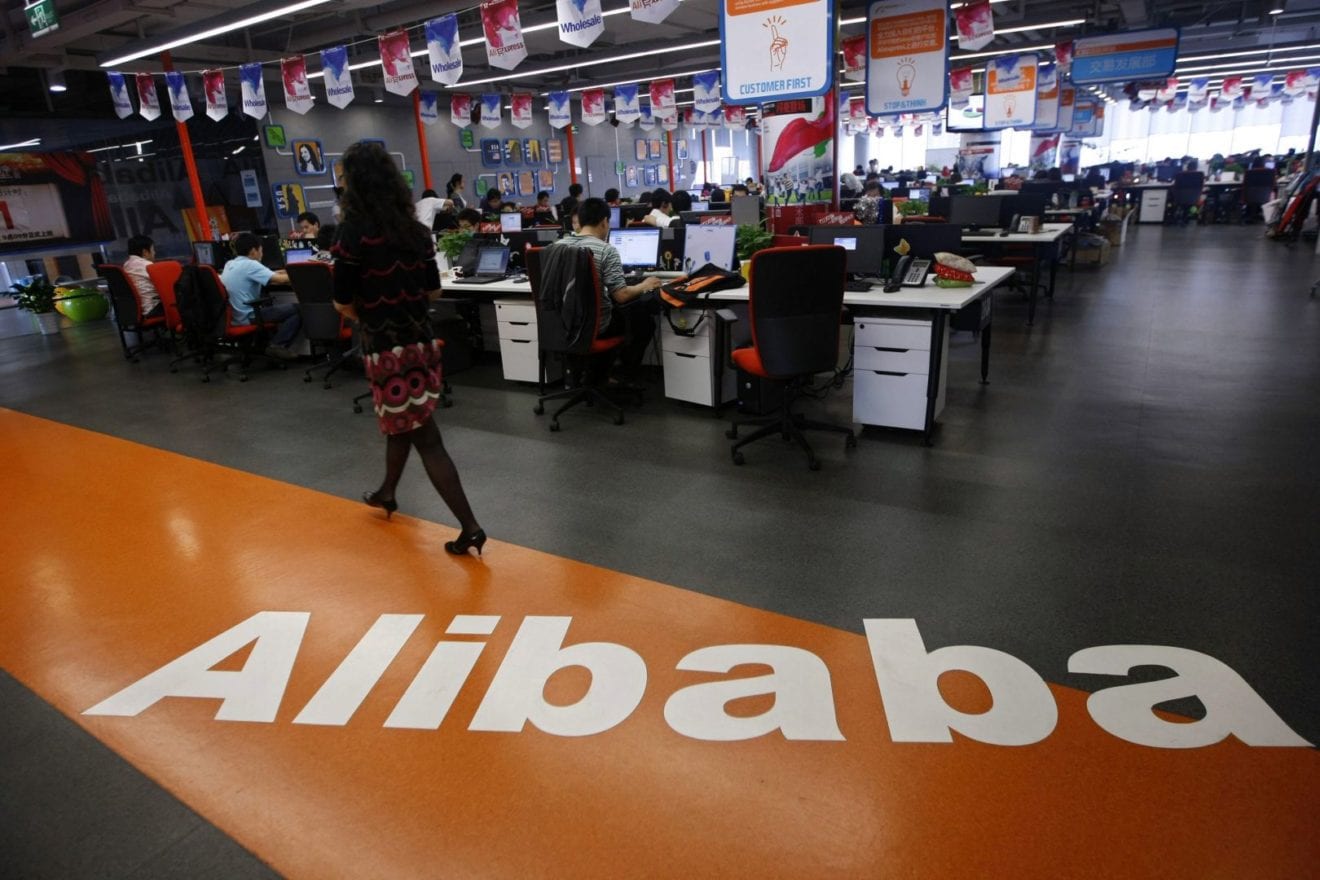
    Through the acquisition Alibaba is to have a firmer grip on the online retail business in Southeast Asia, including Indonesia, the region’s largest economy where Internet and smartphone penetration have been developing rapidly in recent years (although coming from a low base). The Southeast Asian nations where Lazada has been operating so far have a combined population of 560 million (of which an estimated 35 percent are online and thus potential online shoppers). However, Southeast Asia is also a challenging environment for online retail firms as the area is characterized by tough logistical issues (partly due to the relatively weak state of infrastructure) and there remains a lack of warehousing outside more advanced markets such as Singapor

    Through the China-ASEAN Free Trade Agreement (CAFTA), effective per 1 January 2010, about 90 percent of imported goods between Indonesia and China are subject to a zero percent tariff. Due to China’s higher developed manufacturing industry and lower logistics costs the implementation of CAFTA has caused a continuously rising flow of Chinese products into Indonesia. This has caused a rising trade deficit and also curtails development of Indonesia’s manufacturing sector (after all it is cheaper and quicker to import products from China than to invest in costly and long-term import-substitution industrialization).

    In 2015 Indonesia imported USD $29.22 billion worth of (non-oil & gas) products from China, while Indonesian exports to China only totaled USD $13.26 billion, implying a trade deficit of nearly USD $16 billion for Indonesia that year. This is in stark contrast to the years before 2008 when Indonesia had the upper hand in trade with China. The table below shows that Indonesia’s trade deficit with China rose significantly after the implementation of CAFTA in early 2010.

    Indonesia-China Trade Balance (non-oil & gas):

     2007  2008  2009  2010  2011  2012  2013  2014  2015
    Export to China
    (in USD billion)
      9.7  11.6  11.5   14.1   21.6   20.9   21.3   16.5   13.3
    Import from China
    (in USD billion)
      8.6  15.3  14.0   19.7   25.5   29.0   29.6   30.5   29.2
    Trade Balance
    (in USD billion)
      1.1  -3.7  -2.5   -5.6   -3.9   -8.1   -8.3  -14.0  -15.9

    Source: Indonesian Trade Ministry

    With Alibaba now owning a controlling stake in e-commerce platform Lazada, which has a rising costumer base in Indonesia, it could cause two developments: (1) due to the stronger ties between Lazada and China it gives rise to an increasing flow of Chinese products into Indonesia putting pressure on Indonesia’s trade balance, and (2) it threatens the position of local Indonesian start-up e-commerce businesses such as Bukalapak or Tokopedia because Lazada is expected to get a capital injection from Alibaba for expansion purposes and has easier access to cheap Chinese products (more competitive).

  • Mei.com & Alibaba Launch the TMALL Luxury Flash-Sale Channel with Star-Studded Live-Streamed Fashion Show

    Mei.com & Alibaba Launch the TMALL Luxury Flash-Sale Channel with Star-Studded Live-Streamed Fashion Show

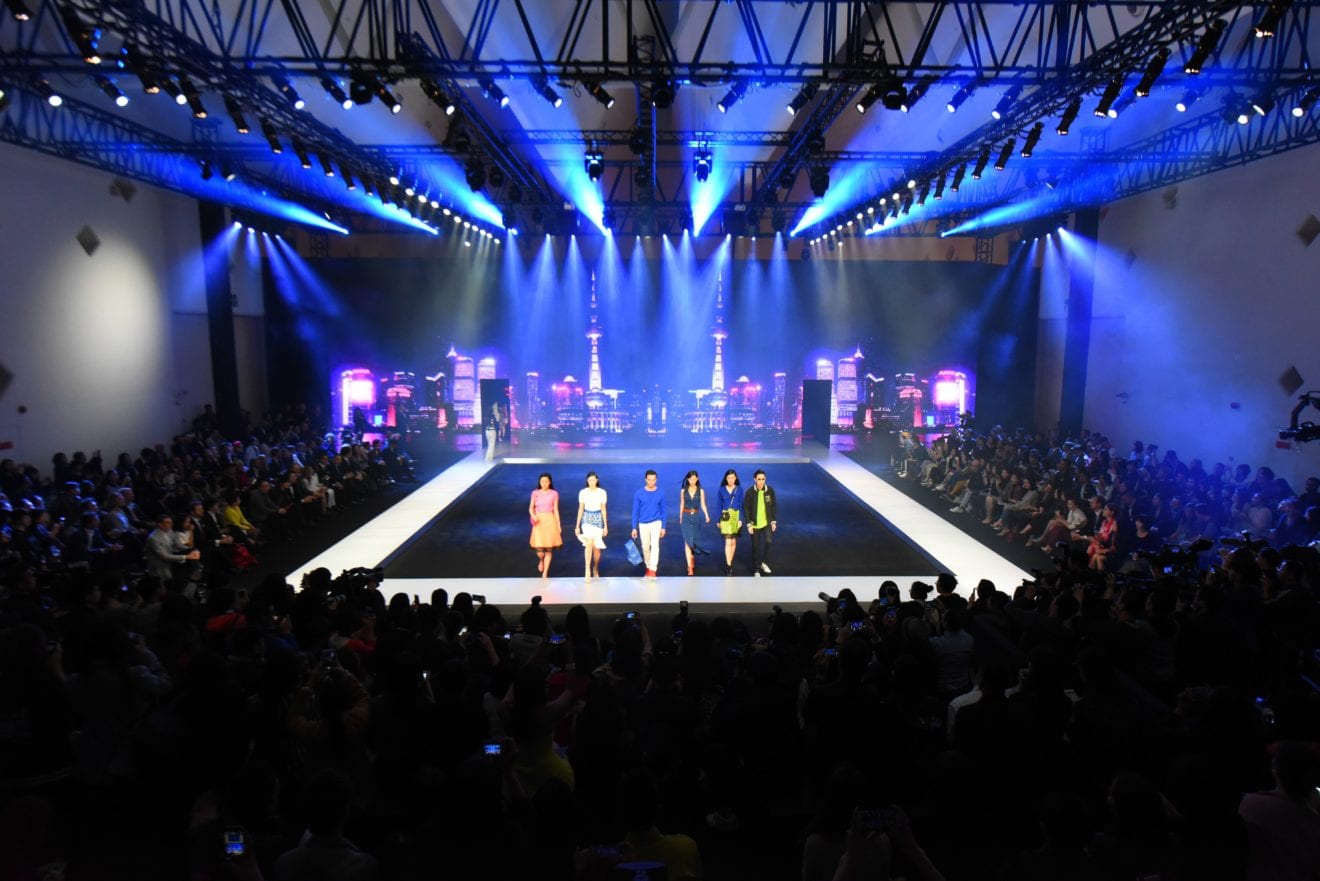
    A live-streamed fashion show featuring 42 looks has marked the launch of a luxury Tmall flash sales channel via app that makes the styles immediately available to shoppers.

    Alibaba Group’s B2C online marketplace Tmall.com has launched the channel through its mobile-phone app, allowing viewers of the live stream to “scan and buy” the runway looks.

    Soft-launched about three months ago, the Tmall channel is being managed by Mei.com, which since 2010 has run a website in China that provides a flash sales outlet for nearly 300 international luxury brands including Armani, Longchamp, Michael Kors, Tumi and Zegna, through exclusive partnerships.

    Mei.com CEO Thibault Villet with Olivia Palermo and Mei.com President Seamon Shi.

    Mei.com CEO Thibault Villet with Olivia Palermo and Mei.com President Seamon Shi.

    Alibaba invested an undisclosed amount in Mei.com in July, saying the site’s relationships with affordable luxury goods merchants would complement Tmall’s roster of high-end retailers such as Burberry, Coach and Hugo Boss. The new flash-sales channel gives Tmall.com shoppers direct access to discounted luxury goods from more than 3000 retailers and authorised distributors.

    “The launch of the channel will further the variety of brands on Tmall and offer China’s burgeoning middle class a one-stop shopping platform,” says Alibaba Group CMO Chris Tung.

    Millions of consumers across China watched the fashion show. It featured clothing and accessories, including 30 womenswear looks, 10 menswear looks, and a finale including two children’s looks.

    Actor Peter Sheng, famous for his role in the China web series Go Princess Go, made his runway debut in the show wearing a Carven suit. American socialite Olivia Palermo styled one of the runway looks and was a front-row attendee of the show wearing the look herself.
    Trendsetters and tastemakers attending the event also included singer Chris Lee and runway model and pop star Tia Ray, who also performed.

  • Shandong Ruyi confirms SMCP deal

    Shandong Ruyi confirms SMCP deal

    Subject to regulatory approvals, Chinese textile and apparel manufacturer Shandong Ruyi Technology Group has acquired a controlling stake in fashion brand parent SMCP.

    The Chinese company has signed an exclusive agreement along with global investment firm KKR, with the expectation that SMCP’s founders and management will reinvest alongside Shandong Ruyi as minority shareholders, while KKR retains a minority interest.

    SMCP, with its brands Claudie Pierlot, Maje and Sandro, has more than 1000 stores in 34 countries, including China, Hong Kong, Indonesia, Korea, Macau, Singapore, Taiwan and Thailand.

    Shandong Ruyi says it intends to maintain the DNA and unique identity of the SMCP brands, with the SMCP design and creative teams continuing to work from its Paris headquarters. SMCP will retain its strategy and organisational structure while benefitting from Shandong Ruyi’s global retailing expertise.

    “We have been highly impressed by the success of Sandro, Maje and Claudie Pierlot, and hold great respect for the founders and management of SMCP both for their passion and their achievement,” says Shandong Ruyi chairman Yafu Qiu.

    “This would be a significant step for Shandong Ruyi Group in our continued endeavour to become a leader in the fully integrated textiles and fashion business, both in China and globally. By taking on board the expertise of SMCP, a group well-rooted with a strong Parisian heritage, we would combine their merits with our existing strength in Asia, in particular China … We also look forward to supporting SMCP in achieving its long-term objective of becoming a global leader in accessible luxury.”

    “My sister Judith Milgrom and I are delighted to embark on the next phase in the journey of our company alongside Shandong Ruyi Group,” says SMCP founder/MD Evelyne Chetrite.

    “After record results for 2015, with 33 per cent net sales growth, we are very excited by the opportunity to partner with Shandong Ruyi Group, which can support us in our global ambition,” says SMCP president/CEO Daniel Lalonde.

    “We will continue expanding in areas where our brands have significant potential: Europe, North America, the Middle East and particularly Asia.”

    Founded in 1972, Shandong Ruyi Technology Group is one of the largest textile manufacturers in China and ranks among the Top 100 Chinese multinational enterprises.

    The group has a fully integrated value chain from cultivating raw materials, processing textiles and designing and selling brands and apparel.

    In the accessible luxury sector, SMCP has 1118 point of sales, 906 of them being run directly and 212 through partnerships. Its brands are in 33 countries.

    Shandong Ruyi’s bid to buy SMCP has been an “on again, off again” affair. On March 9 it was reported to have collapsed, but by the end of the month it was announced as going ahead again. Rumours of takeover bids for SMCP surfaced in January.

  • Kao Group partners with Chinese e-tailer

    Kao Group partners with Chinese e-tailer

    Japanese consumer products group Kao Group has formed a strategic partnership with China’s largest online direct sales company, JD.com.

    Included in the deal is the opening of Kao Group’s cross-border flagship store on JD Worldwide in May, which will initially stock maternal and children’s products, with other product lines expected to be introduced later.

    Founded in 1887, Kao Group owns a range of consumer brands including Attack, Biore, Laurier and Merries. JD.com started co-operating with Kao China in 2014 for categories covering baby and maternity products, personal-care items and cleaning products.

    Leveraging JD.com’s bonded warehouse and self-built delivery network, customers of the new flagship store will be offered efficient delivery of Kao products directly from Japan.
    “JD.com is known for its authentic products and efficient logistics network,” says Kao Group senior managing executive officer Toshiaki Takeuchi.

    “The JD Worldwide platform will provide the safest and most reliable channel for Chinese consumers to buy Kao products, while helping group expand its reputation and footprint in the China market,” says JD.com FMCG business unit president Carol Fung.

    Since launching in April last year, JD Worldwide has attracted brands and merchants from more than 40 countries and regions, and features more than 2.5 million SKUs from 2000 international brands.

    With a history of more than 120 years, the Kao Group is engaged in business in Asia, Japan and Europe with bases in 33 countries and regions. It established a subsidiary in Shanghai in 1993.

    JD.com has seven fulfillment centres and 213 warehouses in 50 cities across China, as well as 5367 delivery pick-up stations.

  • Shanghai Village trading off Disney resort

    Shanghai Village trading off Disney resort

    Upmarket European outlet company Value Retail is opening a luxury shopping destination near the Shanghai Disney Resort, to be called Shanghai Village.

    Disney’s resort launches on June 16, but the village is getting in first with a planned opening date of May 19.

    SHV-rend-mark-up-123013_Page_27

    In the new 24.7 sqkm Shanghai International Tourism and Resorts Zone (SITRZ), across the manmade Wishing Star Lake from the Disney resort, Shanghai Village is the second mainland venture for Value Retail.

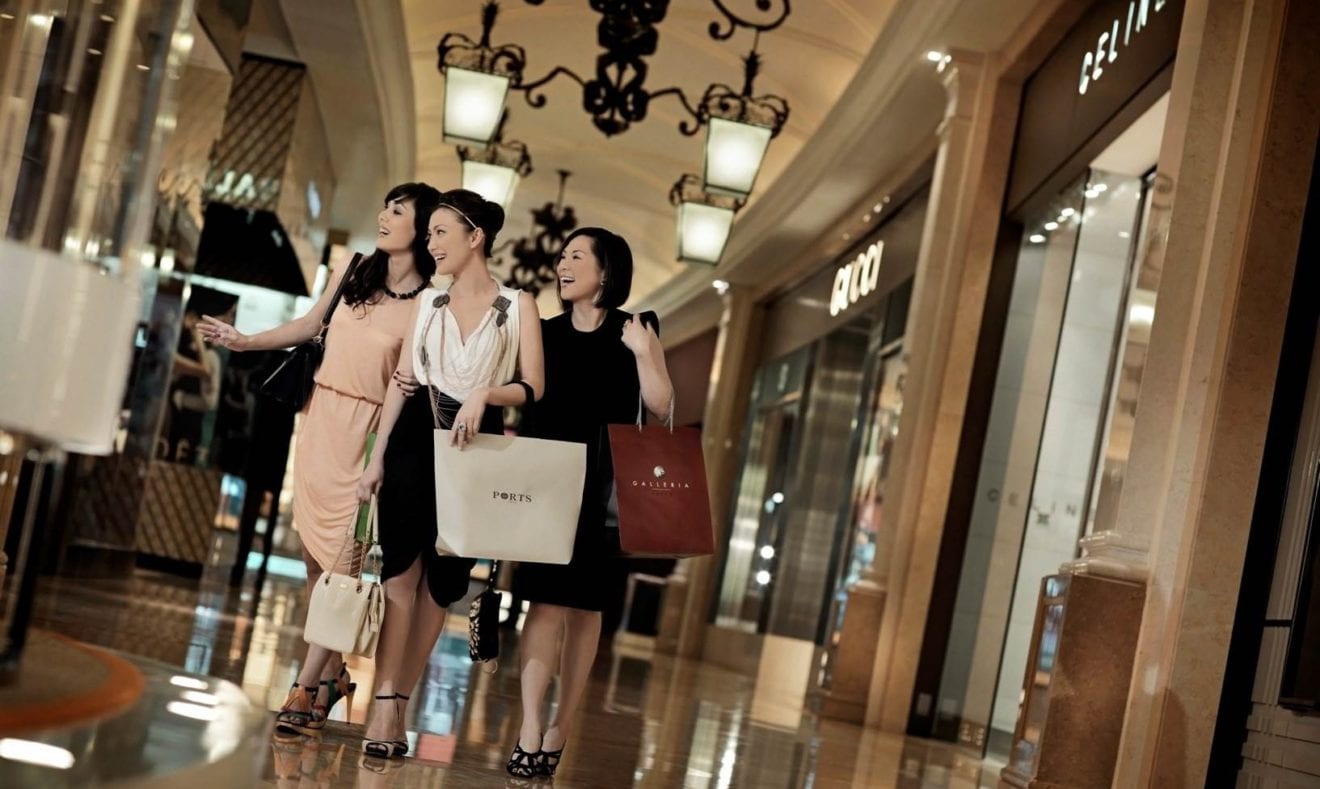
    Covering 55,000 sqm and with 140 boutiques, the Art Deco village features architecture styled after buildings in Milan, New York, Paris, Vienna and Shanghai. It has many lifestyle features aimed at catering to the Chinese demand for “shopping tourism”, a new concept defined by UNWTO in the wake of China’s outbound travel boom.

    While it will be Value Retail’s second location near a Disney park – the other is La Vallee Village near Disneyland Paris – it will have a difference in scale and architecture given that Shanghai Disney Resort is one of the largest destinations Disney has built, according to Value Retail Management CEO Desiree Bollier. “Shanghai Village is the same: it is our largest investment to date.”

    Value Retail Shanghai Village 2

    In addition, the village is run by a joint venture between Value Retail and Shanghai Shendi Group, the state-owned enterprise set up to manage the SITRZ, including the Disney Resort.
    “I think the government is moving to a consumer-led economy, and will want Chinese to spend money in China,” says Bollier.

    “They are looking at various ways to encourage Chinese to view China as a resort destination: hence the development of Hainan as a tourism destination, hence the development of SITRZ as an entertainment destination, hence investment in cinemas, Imax and major theatres. It’s a logical transformation in the Chinese economy.”

    Bollier says Shanghai Village will be following Value Retail model of offering goods at a minimum of 33 per cent off and an average of 40 per cent off full domestic price. It is targeting mainly upper-middle class and affluent consumers.

    Shanghai Village will offer “retailtainment” activities such as dining and exhibitions, as well as outdoor cafe seating overlooking the lake, ferry rides to and from the Disney park, and streets named after historical figures in the Art Deco movement in Mandarin and French. VIP services will include hands-free shopping, valet parking, concierge services and private lounges, as well as meeting spaces.

    A feature will be more niche labels and boutiques by Chinese designers. Brands available at the nearby Suzhou Village location, the group’s first China outlet, include Alexander McQueen, Armani, Givenchy, Gucci, Salvatore Ferragamo and Valentino.


  • McDonald’s China in massive expansion plan

    McDonald’s China in massive expansion plan

    McDonald’s China is set to be supersized as the US fast food giant pursues growth offshore.

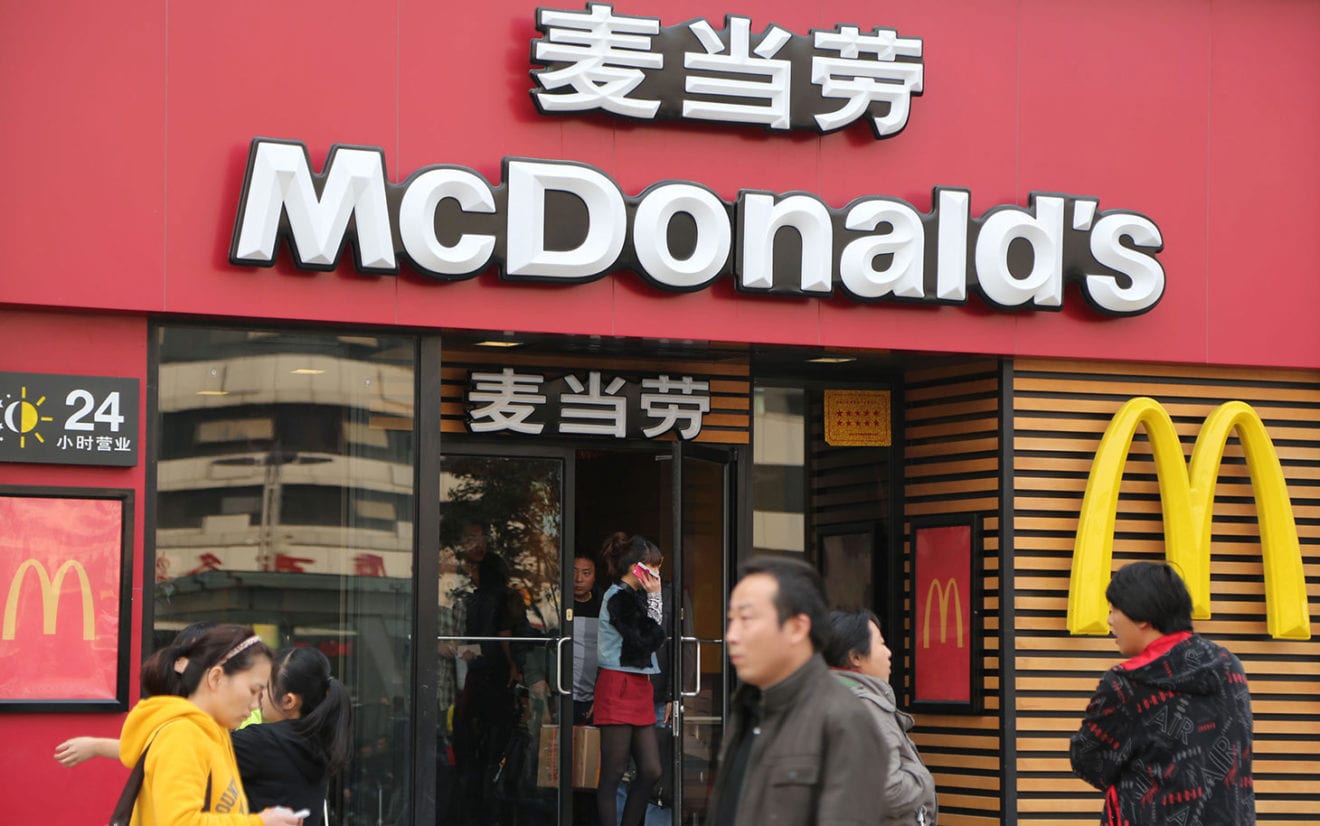
    The company’s Chicago-based CEO Steve Easterbrook has revealed more than 1500 new stores will be opened across China, Hong Kong and Korea over the next five years. About 1300 of those will be in Mainland China.

    McDonald’s already operates some 2200 restaurants – its new target is 3500.

    In a clear strategic shift the company says it is seeking “strategic partners who will add value and unlock growth potential in key markets” in Asia.

    “This will allow McDonald’s to accelerate our growth and scale faster across diverse markets placing us closer to our customers and the communities we serve,” Easterbrook said in a statement.

    “We’re in the midst of transforming our business and taking a strategic and thoughtful approach to enhance our ability to grow around the world. These actions build on our turnaround efforts and will advance local ownership, enable faster decision-making and achieve restaurant growth.”

    Once the target is reached, China will become McDonald’s second largest global market after the US.

    It is not clear how many new stores will open in Hong Kong, where the company already has 230 outlets, but in an email to the South China Morning Post, Easterbrook indicated opening more McCafes will be a priority in the territory.

    The company is also actively seeking partners in Taiwan, and in Japan where it is midway through a major overhaul and repositioning of the brand after incurring massive losses.

  • Ivanka Trump’s Made-In-China Scarves Recalled Over “Burn Risk”

    Ivanka Trump’s Made-In-China Scarves Recalled Over “Burn Risk”

    The latest headline involves eldest Trump daughter Ivanka, whose scarves have been recalled by Global Brands Group Accessories, a Trump licensee, for violating the federal flammability standard.

    According to the Consumer Product Safety Commission, roughly 20,000 scarves sold between October 2014 and January 2016 at retailers including Lord & Taylor, Amazon, TJ Maxx and Century 21 pose a “burn risk” to consumers. The scarves, which are 100 percent rayon, can now be returned for a full refund. Original retail price for the two styles involved — the Beach Wave and Brushstroke Oblong — falls between $12 and $68.

    Of the many scandalous headlines baring the name “Trump,” a generous handful have been related to both Donald and Ivanka’s fashion lines. Specifically, the pair have been criticized because a majority of their products are manufactured outside of the U.S. Of the 838 products under Ivanka’s line, none are made exclusively in America, according to Harvard professor Robert Lawrence. Most are imported, with 354 being produced in China.

    Donald has openly admitted that his neckties are made in China. However, the Republican candidate used this fact to make the point that “it’s very hard to have apparel made in this country,” implying that his reforms — including a tariff as high as 35-45 percent on apparel coming from China and Mexico — would encourage more production on U.S. soil.

    Speaking of Mexico, you may also recall Donald’s drama with Macy’s over his controversial comments regarding Mexican immigrants, another of the magnate/politician’s retail offenses. In July, Macy’s officially severed ties with Donald and phased out his merchandise from shelves. Ivanka’s line, however, continues to be sold at the department store.

  • Anbang to buy Allianz’s South Korean operations

    Anbang to buy Allianz’s South Korean operations

    China’s Anbang Insurance Group Co. reached a deal to buy the South Korean operations of Germany’s Allianz SE, just days after it walked away from a $14 billion bid for Starwood Hotels & Resorts Worldwide Inc.

    Anbang has exploded onto the international scene in recent years by spending billions to acquire insurers and hotels throughout the world. In February 2015, it laid out nearly $2 billion to buy New York’s Waldorf Astoria, the highest price ever paid for a single U.S. hotel. It is also a big player at home, with stakes in listed Chinese developers and banks, while also investing in a traditional Chinese medicine maker and a wind-turbine manufacturer.

    Anbang made a bid in March for Starwood Hotels after the U.S. luxury hotel owner had struck a deal to sell itself to Marriott International Inc. That sparked a bidding war for Starwood that culminated in a $14 billion offer from Anbang, which dropped the bid last week citing “various market considerations.”

    The deal with Germany’s Allianz marks the Chinese insurance group’s second acquisition in South Korea. Beijing-based Anbang bought a controlling stake in South Korean life insurer Tong Yang Life Insurance Co. for $1 billion a year ago from South Korea-focused private-equity firm Vogo Investment Group and other investors.

    Allianz agreed to sell Allianz Life Insurance Korea and Allianz Global Investors Korea to Anbang for an undisclosed amount, the two companies said in a statement Wednesday. The Allianz purchase is subject to local regulatory approvals and the parties expect to complete the deal in the second half of the year.

  • Zalora Thailand and Vietnam to be offloaded

    Zalora Thailand and Vietnam to be offloaded

    Rocket Internet is selling its Zalora Thailand and Vietnam eCommerce fashion sites.

    This follows the Alibaba Group investing in Rocket Internet’s Lazada, valued at US$1.5 billion. Zalora, which raised more than $250 million, was once on an equal footing with Lazada, according toTechCrunch.

    Southeast Asia did not have service from Amazon or eBay when Rocket started Lazada and Zalora in 2012, but the two outlets have posted heavy losses and experienced slow market growth.

    Zalora, part of the Global Fashion Group (GFG), covers 11 countries across Asia Pacific, including Australia, Indonesia and Taiwan. While its revenue rose 78 per cent to US$234 million last year, its net loss blew out 36 per cent to $105 million.

    Meanwhile, Rocket has announced a new strategy that takes it back to its roots, launching early-stage startups. It sold India-based Fab Furnish this month and Foodpanda Vietnam last year, and is said to be seeking buyers for Foodpanda India and eCommerce site Jabong.

  • Cathay Capital Invests In Chinese Furnishing Retailer ABS

    Cathay Capital Invests In Chinese Furnishing Retailer ABS

    Sino-Europe private equity firm Cathay Capital has made an undisclosed investment in Chinese home furnishing product retailer ABS through its Sino French SME Fund, says a company announcement.

    “ABS stands out among the numerous other domestic home furnishing companies in China because it has established an innovative data-based development model and an omni-channel retail system,” says Cai Mingpo, president of Cathay Capital.

    The private equity firm says it plans to leverage its home furnishing industry resources in China and France to assist ABS’ cross-border development.

    Founded in 2009, ABS has developed from a tele and catalogue selling model to an omni-channel and direct sale model with the integration of an online retailing mall, offline brand stores and mobile apps.

  • Alibaba Cloud AI aims to predict singing contest winner

    Alibaba Cloud AI aims to predict singing contest winner

    Alibaba Cloud’s “Ai,” an artificial intelligence program was put on the spot to predict the winner at the grand finale of “I’m a Singer,” the popular Chinese reality television produced by Hunan TV.

    The competition is major annual event and attracts significant public participation in China. Ai predicted the winner by using neurological networks, social computing and emotional perception.

    Min Wanli, chief scientist for AI at Alibaba Cloud said the result was jointly created by TV audience, public judges, as well as the seven contestants.

    “It is very random and almost impossible to predict using human intelligence, and we aim to achieve real-time prediction by Ai,” said Min.

    “In a previous round, Ai predicted two of the top three winners on April 1,” said Min. “We believe that it will achieve a better performance after learning and evolving over the past week.”

    The program has the potential to understand human emotions, gather insights in real-time, and evolve through strong computing and machine-learning capacity.

    With this capability, Ai identified and assessed factors that may affect the result, including popularity of the songs, the singers’ voice pitch and energy, audience response and online discussions, to name a few.

    The program created and used a dynamic computer model to predict the result by computing both fact-based logical data and subjective emotion-based data.

    Ai’s prediction and the judges’ voting were processed independently and did not affect each other.

    In the future, Ai will be applied to areas such as personal assistance, weather analysis, smart cities and social trend predictions.

  • Asos gives up on the Chinese market

    Asos gives up on the Chinese market

    Asos has made the decision to remove its Chinese operations as the retailer found expansion of the business too costly.

    Instead of holding stock in China, Asos will serve it Chinese customers through its global platform and ship clothes from Europe. Asos will also be discontinuing its Mandarin website. Chief Executive Nick Beighton noted that the closure of the Chinese website would “remove the drag on earnings and a £60m to £70m operating loss”.

    Due to complex restrictions on clothing commerce in China, the fashion etailer has found it is easier to ship to China from the UK. Certain difficulties Asos has encountered within China are regulations on clothing labels and cultural issues such as selling one seasonal range in a country with diverse climates throughout.

    As well as these, Asos struggled to attract Chinese consumers away from etail behemoth Alibaba which dominates 75% of the ecommerce market.

    The CEO stated that the company’s decision to pull the plug on Asos.cn was part of its strategy to concentrate on less regions.

    “Getting eyeballs on our product has proven more difficult than we thought. There are always challenges as a start-up in a country, but there are additional challenges to being a start-up in China,” Beighton said.

    “We are simply serving our growing customer base there in a more efficient, less costly manner”.

  • Tencent Holdings rakes in $15 billion

    Tencent Holdings rakes in $15 billion

    Chinese eCommerce giant Tencent Holdings increased its revenues last year by 30 per to RMB101.9 billion ($US15.7 billion).

    Excluding its eCommerce business, the revenue increase was 38 per cent, to RMB102.2 billion.

    Tencent’s subsidiaries provide media, entertainment, internet and mobile-phone value-added services, and provide online advertising services in China.

    Chairman and founder Ma Huateng says its online game business had healthy revenue growth, mainly driven by smartphones, key PC titles and new client games launched during the year. The company’s social network revenues also grew, from increased digital content subscription services, QQ membership subscription services and virtual item sales.

    Revenues from online advertising shot up 110 per cent to RMB17.5 billion.

    Hong Kong- and Singapore-listed Tencent continued its traffic leadership in multiple online media categories such as video, sports, music, news and literature through partnering with premium content providers including the NBA, HBO, Paramount, Sony Music and Warner Music, and investing in original content.

    “During the year, we further executed our ‘connection’ strategy, bringing our own and our partners’ products and services to our consumers through cultivating an ecosystem around our core communication and social platforms,” says Ma in his chairman’s statement.

    Key initiatives for the group’s “internet-plus” ecosystem included:

    * Enriching products and services available within its platforms, such as introducing personal micro-loan products and municipal services like visa applications

    * Promoting online payment services

    * Growing mobile utility services, including security, a browser, an application store and strengthened infrastructural supports

    * Investing in equity stakes in leading companies in related internet verticals, such as Internet Plus Holdings.

    Industry trends

    Ma also noted a range of industry trends…

    “Messaging and social networking continued to rank as the highest time spent and widest penetration activities on smartphones, and evolved into increasingly relevant content-discovery media. Search queries moved primarily to mobile, and search remained an important content-discovery tool, along with application stores.

    “Online shopping became increasingly widespread, especially in lower-tier cities, and eCommerce transaction volumes sustained healthy growth rates.

    “Online advertising activity shifted decisively from PC to mobile, with particular growth in areas such as performance advertising on social networks, pre-roll advertising in video services, and in-feed advertising in news services.

    “Users proved increasingly willing to pay for digital content such as movies, TV series and music.

    “Mid/hard-core smartphone games, including PC game franchises moving to smartphones, boosted game-industry revenue.”

    Ma says China’s internet companies in sectors such as ride-hailing, classified listings, group buying, and online travel services competed with heightened intensity last year, leading to rapid user growth but reduced or negative profitability. “Consequently, several leading companies in these sectors consolidated with competitors, creating a wave of merger and acquisition activities.”

    There were more offline-to-online transactions last year which, together with the emergence of person-to-person payment transactions, contributed to substantial growth in online payments.

    Key platforms

    On Tencent’s key platforms, the QQ Wallet payment service gained popularity, with about 6 billion red envelopes exchanged within six days during the Lunar New Year holidays early this year.

    Qzone user activity benefited from enhanced features in areas such as sticker sharing and photo-album editing.

    There was year-on-year growth of 39 per cent for Weixin and WeChat together, with official accounts becoming a leading platform to connect users to content creators, merchants and advertisers.

    Weixin Pay also increased in popularity, with more than 32 billion red envelopes being exchanged within the six-day Lunar New Year holidays – growing by nine times year-on-year.

    Ma says the group’s social networks experienced 30 per cent revenue growth last year as digital content subscription services, QQ membership subscription services and virtual item sales were improved.

    “Our cloud service achieved more than 100 per cent year-on-year revenue growth as we promoted our services to key enterprise customers from a range of verticals such as eCommerce, O2O services, online games, online video and internet finance.”