Tag: China

  • Hui Xian Reit sees steady growth despite slowing Chinese economy

    Hui Xian Reit sees steady growth despite slowing Chinese economy

    Hui Xian Real Estate Investment Trust, the first yuan-denominated reit listed in Hong Kong, said on Tuesday that its amount available for distribution rose 8.4 per cent last year despite the weak growth in the mainland Chinese economy and the ongoing global slowdown.

    The reit said the amount available for distribution grew to 1.48 billion yuan from 1.36 billion yuan a year ago, with 98 per cent to be distributed to unit holders. Distribution per unit for the second half of the year was about 13.4 fen.

    Together with the interim amount announced earlier, the total distribution per unit for the year rose 5.2 per cent year on year to 27 fen. Its distribution yield was 8.11 per cent, based on the closing unit price of 3.33 yuan on December 31, 2015.

    “Last year was challenging, marked by a worldwide economic slowdown and increased international volatility,” said Kam Hing-lam, chairman of Hui Xian Asset Management, the manager of the reit, which is partly owned by Cheung Kong Property Holdings.

    Nonetheless, Hui Xian Reit managed to maintain the growth momentum, Kam said, adding that the increase was mainly driven by the organic growth of its existing leasing and hotel portfolio. The reit also gained from the additional income contributed by the newly acquired Chongqing Metropolitan Oriental Plaza from March 2 last year.

    Total revenue for the period was 3.05 billion yuan, up 9.1 per cent on an annual basis, while net property income rose 9.9 per cent to 2.04 billion yuan.

    Hui Xian Reit said its core asset, the Oriental Plaza in Beijing, achieved stable growth as it had heavy visitor flows despite a gloomy retail environment in mainland China.

    The average monthly passing rent surged 9 per cent to 1,193 yuan.

    Last year was challenging, marked by a worldwide economic slowdown and increased international volatility
    KAM HING-LAM, CHAIRMAN, HUI XIAN ASSET MANAGEMENT

    The reit said its offices and serviced apartments showed stable income growth while the hotel sector showed signs of stabilising.

    The average occupancy rate at Grand Hyatt Beijing improved to 58.8 per cent from 55.9 per cent a year ago, with the average room rate per night down 7.9 per cent year on year to 1,461 yuan.

    Hui Xian said all its existing projects were in mainland China, generating revenue in yuan. The currency’s exchange rate volatility, however, did not have a significant impact on the performance of the reit’s projects.

    Though most of its borrowings are in Hong Kong dollars, its yuan exposure will become visible when the currency’s exchange gain or loss is realised upon repayment.

  • Samsung Pay China goes live

    Samsung Pay China goes live

    Samsung Pay China is live after being launched by the South Korean smartphone giant this week.

    Samsung Electronics said Tuesday the introduction of the Samsung Pay China mobile payment service will speed its efforts to expand the scope of its flagship mobile payment platform globally.

    The South Korean tech company said Chinese users of high-end Galaxy smartphones can now use Samsung Pay in cooperation with China-based bank card giant UnionPay.

    The mobile platform supports magnetic secure transmission technology that works on traditional credit card machines. Like rivals Apple Pay and Android Pay, it also supports near field communication technology that requires a separate transaction device.

    Users of UnionPay debit and credit cards can now use Samsung Pay-equipped smartphones to make purchases, including the Galaxy S7 and Galaxy S7 Edge just released earlier this month.

    Samsung Pay joined forces with nine major Chinese banks, while six more partners will be added in the near future, Samsung added.

    Samsung said it will also make efforts to roll out more devices that support its mobile payment platform.

    Samsung Pay, first released in South Korea and the US last year, currently boasts around 5 million users. Samsung said last month it is also preparing to launch in Australia, Brazil, Spain and a handful of other countries.

  • HSBC expanding retail banking business in China’s Guangdong province

    HSBC expanding retail banking business in China’s Guangdong province

    HSBC, the largest bank in Europe and Hong Kong, is planning to expand its retail banking business in China’s Guangdong province in the coming years, with credit cards. securities trading and residential mortgage business in the pipeline, said Asia-Pacific chief executive Peter Wong Tung-shun.

    Wong was in Guangzhou on Wednesday morning with group chief executive Stuart Gulliver and Greater China head Helen Wong to co-host the launch ceremony of HSBC Express, the bank’s first train sponsorship programme. Under the sponsorship deal, 11 out of 22 trains between Guangzhou and Shenzhen will be named HSBC Express.

    “These trains are for mass commute. The programme aims to bring the image of HSBC to the public as we are expanding retail banking in Guangdong, which would provide huge opportunities for HSBC in the coming years,” Gulliver told the South China Morning Post at the launch ceremony.

    “While Hong Kong has 8 million customers, there are over 50 million Cantonese speakers in Guangdong province. HSBC is very strong in retail banking in Hong Kong, which is a big part of our business. Retail banking would be our important business thrust in Guangdong in the years ahead,” he said.

    HSBC now has 64 outlets in Guangdong, accounting for a third of its 177 outlets in China. The lender has traditionally focused on corporate banking in China but Gulliver said the growing wealth in Guangdong makes it the ideal place for retail banking. “On its own, the Guangdong economy is the 16th largest in the world. The middle classes are growing, and so is the demand for retail business services,” Gulliver said.

    Wong told the Post that retail expansion would include launching HSBC credit cards, which received regulatory approval last year but the launch date is yet to be confirmed.

    Securities trading is also in the pipeline. The bank has set up a joint venture with the Qianhai authorities, becoming the first foreign firm to hold a majority stake, of 51 per cent, in a securities joint venture trading stocks for customers from Qianhai special economic zone. It is to commence operation sometime this year.

    Wong said resident mortgage business is anther retail segment in demand, adding that the bank would also like to go into other types of wealth management businesses.

    “When people get wealthy, they like to buy homes. HSBC can offer mortgage and other wealth management services for these customers in Guangdong,” Wong said. “HSBC has a long history in both Hong Kong and Guangdong. We have been in Hong Kong for 150 years and set up our first office in Guangzhou in 1909. We financed Kowloon and Guangzhou railway in the old days. We are here for the long term,” Wong said.

    Gulliver said that with the many train and bridge projects linking Hong Kong with Guangdong, the interconnection between the two would be huge in the future. This is transforming the area from a low-end manufacturing centre into a high-end technology area led by Shenzhen, providing huge opportunities for HSBC.

  • PGI: Platinum Jewellery Weathers Difficult Conditions Favorably in Key Markets

    PGI: Platinum Jewellery Weathers Difficult Conditions Favorably in Key Markets

    Platinum Guild International (“PGI”) today published the findings of its third annual Retail Barometer. The Barometer, conducted by independent platinum market experts and industry analysts, reveals the consumer retail sales data of platinum jewellery in 2015 and projections for 2016. It is the only research in the industry that measures sell-out, i.e. platinum ounces sold from retailers to consumers.

    The Retail Barometer gives a unique view of platinum demand from retail sales. Platinum jewellery is the second largest consumer of platinum in the world after the autocatalyst market.

    The research survey covered over 400 jewellery retail companies with approximately 23,000 retail outlets in the four main international markets of China, India, Japan and the USA. The research was conducted between January and February 2016.

    Huw Daniel, Chief Executive Officer of PGI, commented, “Despite manifold challenges in the luxury category and a difficult year for jewellery in general, jewellery retailers vested in platinum have weathered the storm ahead of their peers. The historically low platinum metal price has benefitted consumers and retailers alike, presenting a unique opportunity to acquire the most aspirational fine jewellery. Even China, the biggest market for platinum jewellery, shrank to a much lesser extent than other jewellery sectors. Both China and India remain key development markets for platinum jewellery which we will further grow ahead of the market average, leveraging successful programs and new launches.”

    Tim Schlick, Chief Strategy Officer of PGI, commented, “The jewellery industry is at a point where future growth comes from either conquest of market share or unlocking untapped consumer segments. PGI and our partners feel confident that having initiatives that provide both will continue to give us a competitive edge, as consumers increasingly seek quality and differentiation.”

    China
    China’s economic growth in 2015 was slowest in 25 years at 6.9%. The slow-down reflects an adjustment towards a consumption-based economy, which bodes well for future growth in platinum jewellery. Retail witnessed a year of fluctuation, however the growth in the H2 didn’t counter the decline in H1, resulting in a modest platinum jewellery volume decline of -4% for the whole year

    • The bridal segment continued to grow moderately despite the overall decline in jewellery consumption — in addition to pair rings and engagement rings, bridal platinum jewellery saw growth in other jewellery products, such as necklace and bracelet, which were typically purchased as a set along with the wedding rings.

    Based on initial retailer outlook, PGI expects to see a flat year of virtually no growth, or even a modest decline of 0% to -3%.

    India
    The Indian economy was also impacted by the global slow down, although consumer spending at a macro level increased slightly. Platinum Jewellery volume grew 24% in 2015, driven by increasing acceptance of platinum as the choice of the young aspiring urban consumer. Platinum saw increases across the board from Platinum Love Bands, Men’s Jewellery, and the new Evara Platinum Blessings, which marked platinum’s entry to the key wedding category in 2015.

    For 2016, PGI and retail partners expect continued growth of +23% — retailers expect platinum to continue outperforming the category average.

    Japan
    Japan’s economy is working to maintain modest recovery leading up to the 2020 Olympics with a GDP growth of 0.6%. The exceptionally warm winter benefitted jewellery and record numbers of inbound tourists benefitted metropolitan retailers and service providers, especially department stores and non-bridal. Platinum jewellery sales outperformed total jewellery, and platinum jewellery volume increase 2.7% in 2015.

    For 2016, retailers are nervous about economic outlook, but expect growth rate of +1% to +2% in platinum jewellery volume.

    USA
    The US economy has been further recovering and growing moderately at 1.9% in 2015 with overall retail growing in line with the GDP growth rate. Platinum jewelry imports experienced sharp increases in 2015, while retail demand increased +10%.

    For 2016, PGI expects platinum to continue to benefit from the positive 2015 momentum, in particular if the ounce price remains low, resulting in an expected volume growth rate of +5% to +7%.


  • Private Equity eyes Yum! China

    Private Equity eyes Yum! China

    US private equity company KKR & Co tops a growing list of potential investors in Yum! China, the fast food giant’s planned spin-off.

    Bloomberg has named KKR, Baring Private Equity China and sovereign fund China Investment Corp as potential bidders for cornerstone stakes in the Chinese fast food company which will operate some 9000 franchised restaurants under the KFC, Pizza Hut and Taco Bell brands.

    Yum! Currently has 7100 restaurants in Mainland China and plans to open 600 more this year. It has also just announced plans to launch Taco Bell in China.

    Yum! Is reportedly planning to retain a controlling stake in the spun-off entity, perhaps limiting the stake sold to 20 per cent. That sized stake could attract an investment of US$2 billion.

    Bloomberg also identified Chinese private-equity firm Hopu Investment Management as another potential buyer.

    Such investments – still speculative at this stage – may offer Yum! Another means of raising capital without a formal float

    Yum! Prevously said it believes that where one united company would have targeted 10 per cent earnings per share growth, each of the two separated companies would achieve a 15 per cent growth rate independently (based on EPS growth and dividend yield).

    “We believe this transaction is a classic example of ‘one plus one equaling more than two’ as it will enable each company to realise its full potential and achieve greater value on a standalone basis,” said Greg Creed, Yum! Brands CEO, announcing the spin-off plan last December..

    “We continue to make solid progress on our planned separation into two independent, publicly-traded companies… each with compelling growth strategies, distinct investment characteristics, and optimised capital structures,” he said.

  • Jack Ma’s grand eCommerce plan

    Jack Ma’s grand eCommerce plan

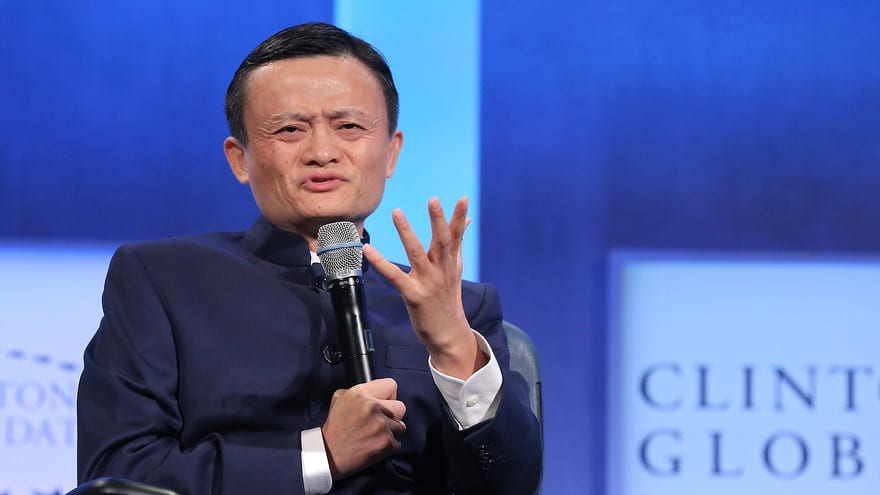
    Alibaba Group executive chairman Jack Ma wants to knock down barriers to global eCommerce by creating a business-driven, Internet-based platform that will function something like the World Trade Organization – but without all the controversy.

    Speaking at the Boao Forum for Asia, the founder of the world’s largest eCommerce company called for the establishment of “a new platform on which we are not debating, not having disputes, we are sharing trade,” Ma said.

    “On this platform we are promoting technologies as well as inclusive financing, so all [small businesses] and young people can enjoy the benefits of trade, so we are connecting the world with trade.”

    Ma’s ultimate goal is the creation of a virtual, borderless economy not constrained by politics. He calls the vehicle for achieving this the World e-Trade Platform, or eWTP. As envisioned, the eWTP would be set up primarily to formulate international rules to eliminate barriers to eCommerce and help small businesses and consumers everywhere participate in cross-border trade. The online platform would be open to a wide range of stakeholders including SMEs and would not be dominated by governments and multinational corporations.

    At the Boao forum – a business, government and academic leadership conference held annually on China’s Hainan Island – Ma said the WTO, which promotes free trade through lower tariffs and other trade barriers, “did a great job” in the last century in fostering a more global economy.

    China in particular after its accession to the WTO in 2001 experienced tremendous economic growth, he noted.

    But globalisation’s benefits have accrued unevenly and the WTO’s current rulemaking round, called the Doha Development Round, has been stalled for the last 15 years, largely over differences between developed and developing nations, Ma pointed out.

    The eWTP’s purpose is to help “the 80 percent of companies and developing countries that cannot participate in world trade,” he said, adding, “It is not the purpose of the eWTP to destroy the WTO, but to try to destroy trade protectionism.”

    Ma, who said last year he wants to help 10 million small businesses outside of China sell into global markets, stressed that he saw the proposed body as “complementary to the WTO … [so that] more nations that are poor like China was 15 years ago, let them enjoy the trade.”

    “Let’s make trade simpler, let’s take out some of the rules and laws that are not working, to move trade faster,” Ma said. “Let businesses drive it with governments and NGOs and other organisations participating.”

    During a Boao panel discussion focusing on Ma’s eWTO proposal, Indonesian trade minister Thomas Lembong and Luis Alberto Moreno, president of the Inter-American Development Bank, expressed support for the initiative.

    The explosive worldwide growth of eCommerce is spawning new business models and has the potential to spark fundamental changes in the way international trade is conducted by eliminating costly layers of intermediaries and shortening global supply chains. At the same time, the borderless, relatively frictionless nature of Internet trade offers small-and medium-sized businesses everywhere unprecedented access to global markets.

    “It’s hard to comprehend how fast things are changing, how fast things are moving,” Lembong said. “We really are talking about the dawn of a new era alongside the old one.”

    The eWTP could speed these changes, Lembong said, calling it “an intriguing concept.”

    “To me, eCommerce is an oasis of freedom in a world that threatens to be over-regulated and politicized” by protectionist trade barriers, he said, comparing the current trade regime to “a traffic jam.”

    Ecommerce “is an antidote to the poison of protectionism,” Lembong said. “Technology is a great equaliser, the best tools are available to the smallest companies. Now, thanks to technology and the mobile Internet, anybody with a mobile phone can become an entrepreneur.”

    Moreno noted that international eCommerce faces a number of challenges. Products can’t be consistently delivered quickly across borders because of inefficiencies in international logistics and customs procedures.

    “For a product to enter a country there might be 10 agencies you have to deal with,” Moreno said.

    Boao panelist Kasper Jakobsen, CEO of US-based infant formula maker Mead Johnson, agreed that global import regulations needed greater uniformity.

    “The biggest barrier to expanding [trade] platforms across boundaries is so many products have to comply with different regulations in all the markets they are sold in,” Jakobsen said.

    A clue to what reduced barriers with eWTP might look like can be seen in China’s efforts to boost cross-border eCommerce by setting up free-trade zones and bonded warehouses where certain goods ordered by Chinese consumers from overseas companies are subject to lower tariffs and receive expedited customs processing.

    “We have to ramp up and get ready for that platform Jack is inviting us to join,” Moreno said.

    Panelists also agreed backing should be sought for the eWTP proposal from world leaders at the upcoming G20 summit, scheduled to be held in September in Hangzhou, China, where Ma’s Alibaba Group is headquartered.


  • Suning Plans $7.7B Fund To Expand And Invest Overseas

    Suning Plans $7.7B Fund To Expand And Invest Overseas

    Suning Commerce Group, one of China’s largest electronics retailers, plans to create a separate investment arm seeking to raise as much as RMB50 billion (US$7.7 billion) within five years.

    The Nanjing-based Suning is also establishing two separate investment funds each targeting RMB2 billion by the end of this year.

    One fund will focus on investing in media and content production industries. The other vehicle will target the sports consumption and retailing sectors.

    The newly planned funds may potentially seek to accelerate the group’s outbound investments, as well as expand its existing investment activities, according to state-owned China Daily.

    Previously, Suning operates its investment activities across three funds.

    Suning Rundong Fund, with RMB5 billion, targets a diverse range of sectors, including technology, media, telecommunications, and the cultural and entertainment industry.

    Suning Goldstone Fund, founded in 2014 with RMB4 billion, focuses on retail infrastructure such as physical stores and logistics.

    Suning Qingchuang Fund, with RMB300 million, backs startups with a focus on those specializing in emerging industries.

    The retail giant invested RMB1.93 billion in smartphone maker Nubia Technology Ltd., a subsidiary of ZTE Group, to take a 33.33% stake in the company in December 2015.

    In August 2015, Alibaba Group Holding Limited formed an extensive strategic alliance with Suning to create a far-reaching O2O (online-to-offline) e-commerce platform.

    In October 2014, Suning planned to transfer 11 retail stores for RMB4.01 billion (US$650 million) to Goldstone Investment Ltd., the direct investment arm of CITIC Securities to focus on core and profitable assets.


  • Asia gives Jimmy Choo an unlikely boost

    Asia gives Jimmy Choo an unlikely boost

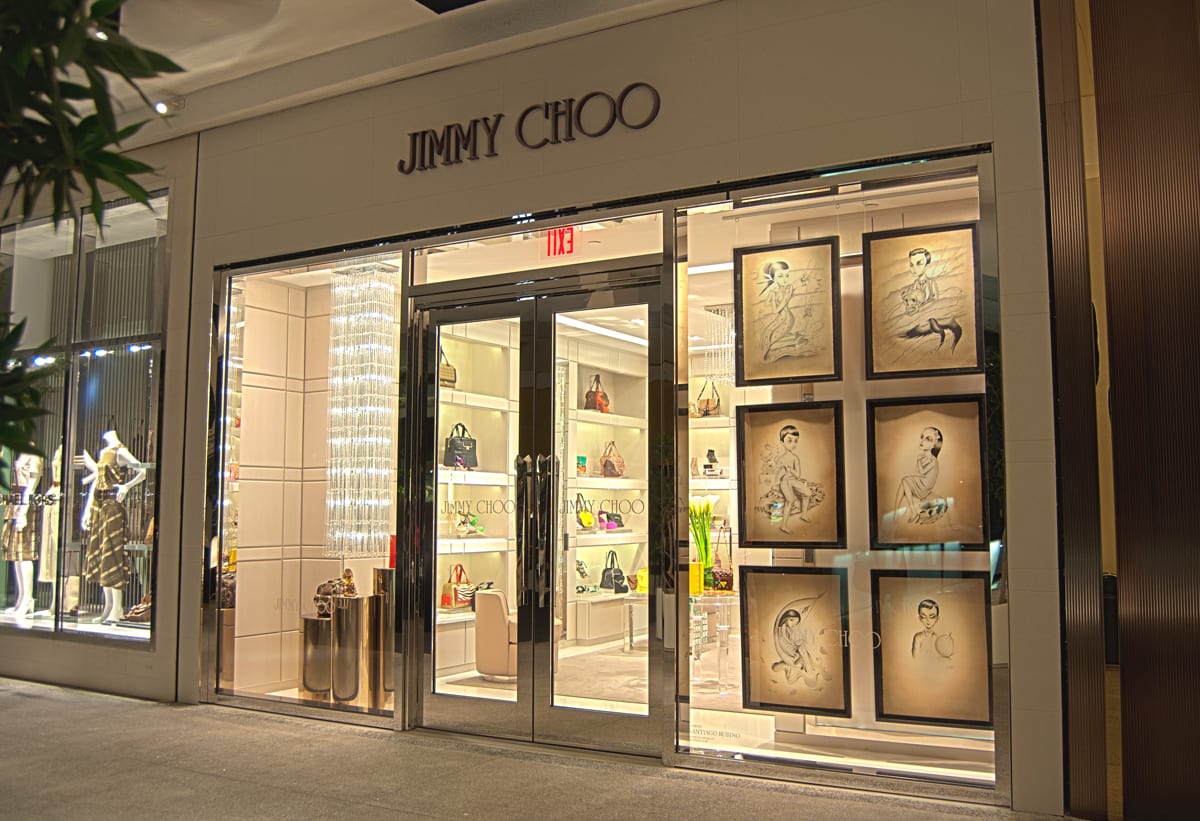
    While a majority of luxury fashion retailers are blaming Asia for declining sales and failing to meet profit projections, Jimmy Choo has confounded the market by praising the continent.

    Jimmy Choo has reported sustained growth in far eastern markets to deliver 6.1 per cent revenue growth for 2015, to £317.9 million.

    “Whereas other players such as Burberry have faltered with declining Chinese demand, Jimmy Choo has been able to deliver impressive revenue growth across Asia,” notes Andrew Hall, an analyst atVerdict Retail.

    “The brand’s relative immaturity in these markets has helped to shield it from the decreasing demand and a stuttering economic slowdown in the region. Investment in new store openings and plans for new flagship stores across Asia sets Jimmy Choo apart from its rivals and will continue to reap rewards for the brand.”

    Jimmy Choo’s Asian sales rose a staggering 21.2 per cent, more than enough to offset a 2 per cent decline in sales in Europe, Middle East and Africa.

    The company reported a pre-tax profit of £22.1million, a significant turnaround on the 2014 loss of £8.2 million. It opened 13 new stores.

    In an earnings statement, Jimmy Choo said its Asian business in Asia and Japan is growing well.

    “We see significant opportunities to maintain this outperformance in the years ahead. Despite challenging market conditions, we expect continuous operating efficiencies and the dynamism and flexibility of our teams to enable us to drive margin expansion and continue the reduction in leverage and financing costs.”

    Said chairman Peter Harf: “Jimmy Choo continues to outpace the sector despite the challenging competitive environment. The company successfully reversed the first half decline in wholesale revenues and remains on track with growth forecasts in Asia and Japan where brand awareness continues to grow strongly.”

    However, Hall warns that Jimmy Choo is far from immune to the geopolitical situation: the decline of Russian luxury consumers in Europe, attacks in Paris deterring European consumers, and the weakening of the euro have contributed to disappointing performance in EMEA.

    “While the brand has achieved an operating margin of 9.4 per cent, compared to 8 per cent last year, the shoe specialist must be wary of creeping costs as it not only pursues store expansion but invests in omnichannel capabilities and continues to develop a strong social media presence,” said Hall.

    “Creative Director Sandra Choi has led a strong year of product design, building upon Jimmy Choo’s British identity to produce seasonal ranges which continue to resonate with consumers across the globe. While attempts to embrace the male market remains a difficult nut to crack, the development of stores aimed at both genders and the strength of new fragrances has seen the brand make headway into capturing a male demographic.”

    Hall said Verdict expects Jimmy Choo to continue to outperform the luxury sector in Asia giving it another year of solid total revenue growth.

    “However the Chinese market remains volatile and Jimmy Choo should be wary of putting all of its eggs in one far-eastern basket as its grip on European markets loosens.”

  • eCommerce won’t dent Asian retail real estate demand

    eCommerce won’t dent Asian retail real estate demand

    Growing online sales will not undermine demand for Asian retail real estate, according to the last CBRE study of major international brands.

    For the seventh edition of How Active Are Retailers Globally?, the real-estate company looked at more than 150 major international brands based in Americas, Asia Pacific and EMEA (Europe, the Middle East and Africa) countries.

    China is the top target market in the Asia Pacific (APAC) and fourth-ranked globally, with 27 per cent of retailers looking to expand there. Hong Kong follows in sixth position (24 per cent), Japan in seventh (22 per cent) and Singapore in ninth (21 per cent). The top three globally were Germany (35 per cent), France (33 per cent) and the UK (29 per cent).

    China and Hong Kong maintained their placings, while Japan, Singapore and Australia (11th) all rose higher in the ranking, up from 13th, 18th and 15th positions respectively.

    “Hong Kong will remain a desirable market for retailers, particularly as it continues to serve as a popular shopping destination for mainland Chinese tourists,” says CBRE Hong Kong executive director for retail services Joe Lin.

    “The main difference is a shift from luxury to mid-range brands. This is forcing luxury retailers to consolidate their footprint, leading to a drop in rental cost in prime locations and therefore opportunities for non-luxury retail brands.”

    Most APAC markets saw increased interest for this year, with the exception of China and South Korea. Malaysia (10 per cent), Indonesia (9 per cent), Thailand, Vietnam and The Philippines (all 8 per cent) received more than double the interest they saw last year, when all markets secured between 1 and 3 per cent.

    Asked about the risk factors for the coming year, brands indicated that real-estate cost escalation (56 per cent) and unclear economic prospects (42 per cent) continue to be at the forefront of their minds.

    “We’re seeing more of a challenging economic environment, and concerns such as high operating costs and a lack of quality space means retailers are somewhat more wary this year,” says CBRE head of Asia Pacific research Dr Henry Chin. “However, even as markets such as China and Hong Kong are experiencing a slowdown, we see increasing numbers of opportunistic retailers looking to enter markets like Hong Kong, supported by strong underlying consumer demand.

    “Japan and Australia remain attractive, while Southeast Asia showed strong growth because of opportunities for retailers around an expanding middle class and stronger economic growth.” CBRE senior director and head of retailer representation for Asia Joel Stephen says there are still opportunities for retailers to grow their business in Asia, underscored by the region having four of the 10 most popular destinations. “The goal now for all brick-and-mortar retailers is to build an engaging offer that encourages people to stay longer and spend more.”

    The survey shows that 83 per cent of brands suggest their physical store expansion plans for this year will not be affected by the growth of eCommerce. From a retailer perspective, only 22 per cent of the brands see stiff competition from online retailing as a threat to their business.

    At the same time, retailers are cautiously optimistic on physical expansion. Of those canvassed, 17 per cent have large-scale ambitions, many of them looking to open more than 40 stores this year (up from 9 per cent last year), while 67 per cent plan to open up to 20 stores.

    “A physical store presence in key locations is still critical to the strength of a brand’s image,” says Stephen. “Customers still feel a need to go into stores, to physically touch a product and enjoy the feel-good factor associated with a particular brand experience. The store is integral to the shopping journey and can be used in different ways, such as to click and collect, research of the product or brand, or to test the product. It isn’t solely about the transactional side.”

    A new trend is brands looking to expand into travel hubs, such as airports and train stations, giving them access to high footfall in busy locations. But for APAC retailers, shopping malls are still the preferred destination by far, at close to 90 per cent.

    While globally the key concern for brands in negotiations for premises is lease length, APAC retailers are most concerned with turnover rent clauses (GP). They are also particularly concerned about changing consumer behaviour (40 per cent), which is higher than the global average (31 per cent).

  • Adidas Sets Goal For 3,000 More Chinese Stores

    Adidas Sets Goal For 3,000 More Chinese Stores

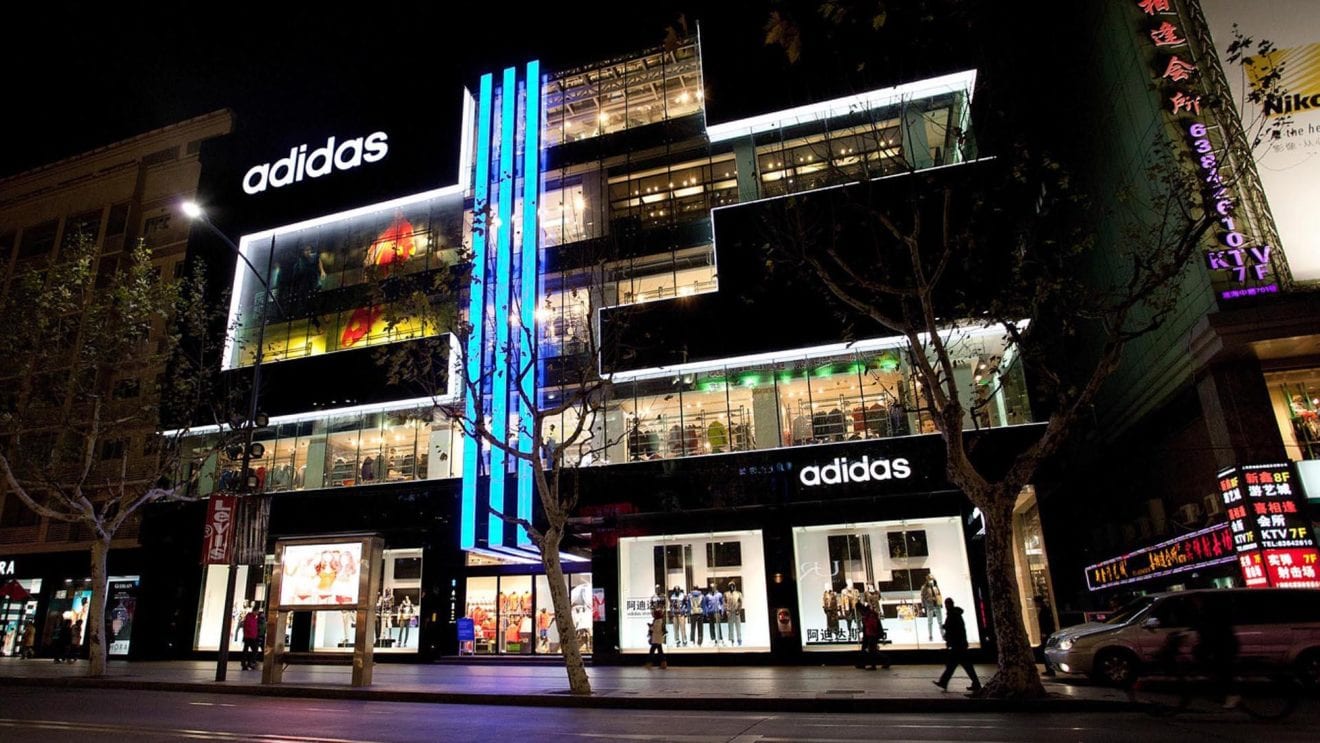
    Colin Currie, head of Adidas’ China operations, announced in a press conference that the sportswear company would be adding 3,000 more storefronts to the 9,000 it already operates inside the People’s Republic. Currie emphasized that these new stores wouldn’t just be rehashes of existing designs but targeted implementations of locations that focus on running, soccer and tennis equipment and apparel.

    It’s details like these that Currie hopes can help Adidas find revenue, even when the Chinese economy doesn’t seem to be making it any easier.

    “We are cautiously optimistic, but we’re far more on the optimistic side,” Currie said during the briefing.

    It’s one thing to say that Adidas is confident but another thing to actually mean it. A pledge to open 3,000 stores certainly seems like an earnest statement that can’t be easily walked back, explained that changing demographics might be why Adidas is so ready to hitch its wagon to the down-right-now Chinese economy. As more and more Chinese consumers enter the middle class, Adidas has planned, since at least 2010, to take advantage of the growing desire for sportswear, not just for fitness but as everyday dress as well.

    “We expect two-thirds of our growth to be from consumers in the lower-tier cities as they become attracted to sportswear — not just for fitness but for easy casual wear,” Currie said at an event in 2010.

    If it’s any consolation for Adidas and the Chinese economy at large, odds are both parties will succeed or fail together.

  • HSBC Going Solo in China Credit Cards Gives Boost to Expansion

    HSBC Going Solo in China Credit Cards Gives Boost to Expansion

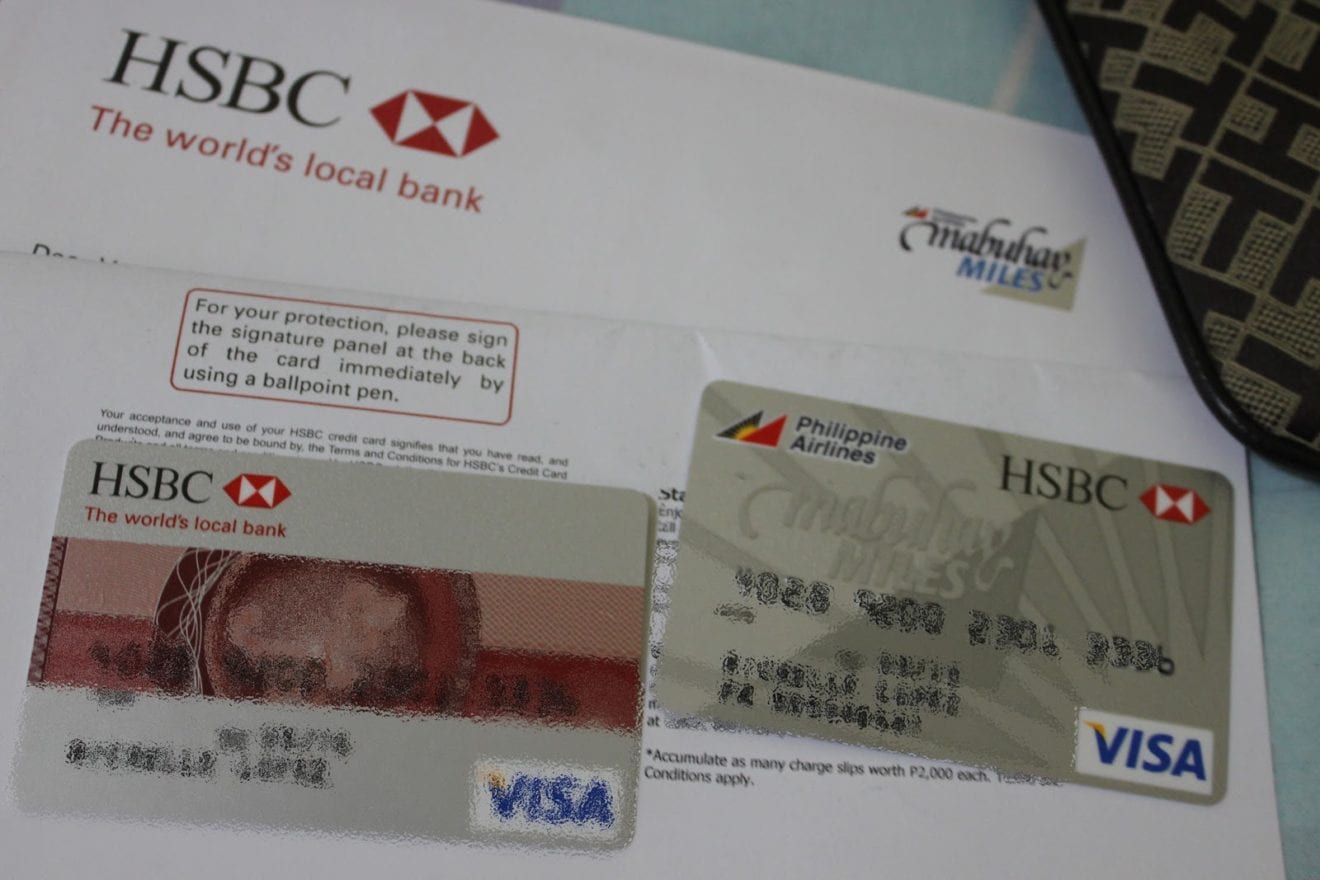
    HSBC Holdings Plc winning approval to start a credit-card business in China’s $1 trillion market offers Chief Executive Officer Stuart Gulliver added flexibility in his push into the nation’s retail banking and wealth-management industries.

    The approval from Chinese authorities came as HSBC ended a card venture with Bank of Communications Co., the bank’s Asia-Pacific head Peter Wong said in a weekend interview, paving the way for the U.K. company to join Citigroup Inc. and Bank of East Asia Ltd. as the only foreign credit-card issuers on the mainland. Wong didn’t say when HSBC won the nod from regulators, or provide any specifics on how the business will be rolled out.

    Gulliver’s Asian ambitions have been dealt a setback by crashing commodity prices, a slowing Chinese economy and a pretax loss in the fourth quarter. An independent card unit in China would improve HSBC’s access to a fast-growing market that had 449 million cards on issue as of September and allow the bank to find new clients for its retail bank.

    Getting approved for its own operation in China “is a meaningful step for HSBC as it gives the bank the autonomy to run the business,” said Chen Xingyu, a Shanghai-based analyst at Phillip Securities Research. “Since the Pearl River Delta is HSBC’s focus, having its own credit-card business can help the bank expand in the region.”

    Credit-card offerings can act as a springboard for drawing customers to other parts of the business such as private banking, Chen said. HSBC is getting a license for a planned brokerage venture with Shenzhen Qianhai Financial Holdings Co.

    The Pearl River Delta, located to the north of Hong Kong and centered around the city of Guangzhou, is home to more than 40 million people. HSBC plans to add 4,000 jobs in that area as the bank shifts about $100 billion of investment to Asia in an effort to expand retail banking and wealth management. The bank will slow the pace of thathiring amid China’s economic downturn, but HSBC won’t alter its strategy, Gulliver said last month.

    Good Relations

    While the bank has ended its card venture with Bank of Communications, HSBC intends to maintain its roughly 19 percent stake in the Chinese lender, Asia-Pacific Chief Executive Officer Wong said Saturday in an interview on the sidelines of China’s annual congress of lawmakers in Beijing.

    “We still have a lot of other initiatives” with Bank of Communications, Wong said. “We have a very good relationship.”

    HSBC’s card offerings would compete with its old venture partner, which had 40 million domestic cards as of June, while Industrial & Commercial Bank of China Ltd. had 108 million, according to their 2015 interim reports.

    The London-based company has been working with Bank of Communications, China’s fifth-largest lender by assets, since 2004 on businesses including credit cards. The Chinese bank announced the establishment of the credit-card venture — with 2.5 billion yuan of capital — in an October 2009 statement to Hong Kong’s stock exchange.

    HSBC shares in Hong Kong fell 0.3 percent on Tuesday to HK$49.50 as of 1:31 p.m. local time, compared with the benchmark Hang Seng Index’s 0.8 percent loss. The bank’s stock dropped 20 percent this year.

    The number of Chinese credit cards in circulation at the end of the third quarter had nearly doubled to 449 million since 2010, central bank data show. That total is about the same as the combined populations of the U.S. and Japan. The outstanding balance on those cards was 6.7 trillion yuan, up 26 percent from a year earlier, according to the People’s Bank of China data.

  • Farah China to launch next year

    Farah China to launch next year

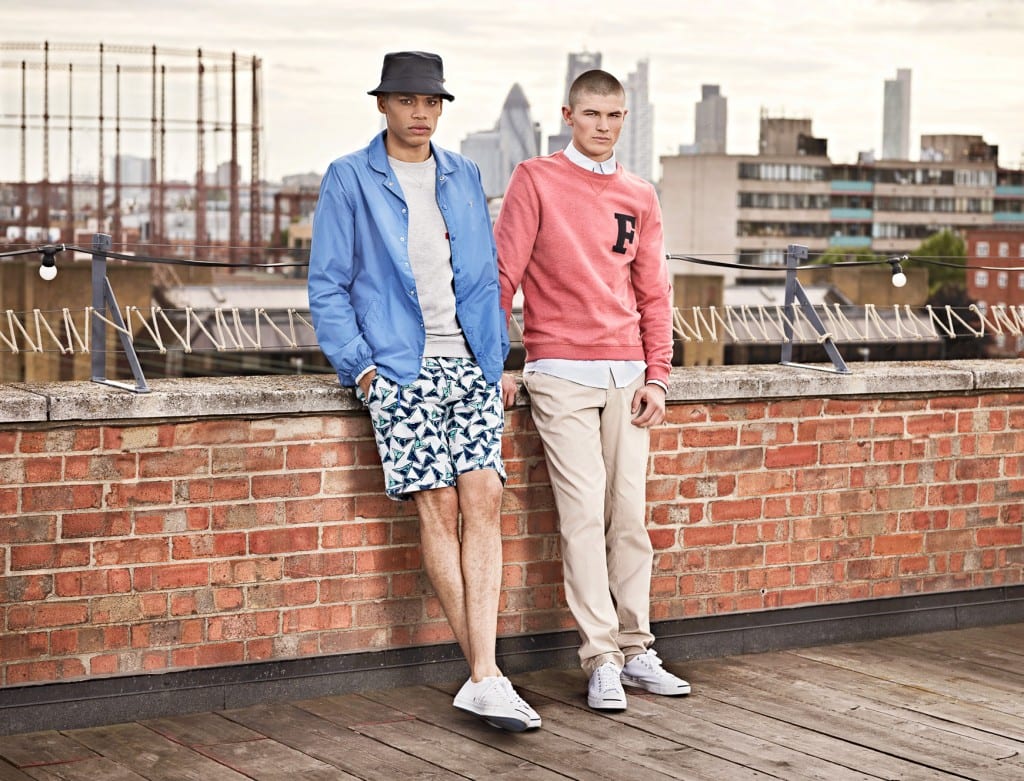
    Perry Ellis International has signed an agreement with MRH SpaRotica Groupe (MRH) to introduceFarah China next year.

    The brand will be launched in department stores, free-standing stores and specialty outlets as well as online with third-party eCommerce platforms such as Tmall. The first free-standing Farah store is planned to open early next year.

    With street credibility, the Farah has creative brand ambassadors from art, music and modern culture who are empowered to become product developers, storytellers and educators inspiring millennials. The products are sold internationally through major retailers and company-owned stores, as well as online.

    “This is our first agreement for Farah in greater China and represents a major step in the expansion of the brand outside of the United Kingdom and Europe,” says Perry Ellis International chairman/CEO George Feldenkreis.

    MRH president/CEO Richard Kisembo says the company is confident of the impact Farah can make in China. “We believe in brands that make emotional connections with consumers, and Farah will stand out for its modern classics.”

    Perry Ellis International is a designer, distributor and licensor of men’s and women’s apparel, accessories and fragrances. It owns a portfolio of brands including: Axist, Ben Hogan, Cubavera, Grand Slam,  Jantzen, John Henry, Laundry by Shelli Segal, Manhattan, Original Penguin by Munsingwear, Perry Ellis, Rafaella and Savane. The company also licenses trademarks from third parties, including Jag and Nike for swimwear, and Callaway, Jack Nicklaus and PGA Tour for golf apparel.

    Based in Shanghai, MRH curates and invests in brands through acquisition and licensing. It has retail stores, distributes merchandise through franchisees, and runs eCommerce websites.

  • Pfizer doubles its web sales of its health products in China

    Pfizer doubles its web sales of its health products in China

    Online shoppers in China are steadily increasing their purchases of health products, and that offers an opportunity for popular U.S. brands of nutrition supplements. E-commerce sales of Pfizer’s health products, including popular supplements like Caltrate and Centrum, are growing at a more than 100% every year in China, according to Don Kerrigan, Pfizer’s vice president of Global Commercial Excellence & Activation.

    In fact, China has become Pfizer’s second-largest market for health products, exceeded only by the U.S. More than 200 million Chinese consumers have purchased health products from Pfizer, Kerrigan says.

    Many of those consumers purchase Pfizer products online, even though Pfizer does not operate its own e-commerce site in China. Instead, it has been selling since 2012 through an official storefront Tmall in 2012, one of the two giant online shopping portals operated by China’s leading e-commerce company, Alibaba Group Holding Ltd. Pfizer also sells on JD.com, Alibaba’s leading competitor, and other marketplaces in China, including Yhd.com, which is owned by Wal-Mart Stores Inc.

    Leveraging marketplaces enabled Pfizer to quickly begin selling online in China, Kerrigan says.

    The massive traffic to Alibaba’s online marketplaces in China—those marketplaces, mainly Taobao and Tmall, generated $449 billion in sales in 2015, Alibaba says—means companies like Pfizer can gather a tremendous amount of information quickly about what Chinese consumers like, Kerrigan says. That lets relatively new players like Pfizer test the market and respond quickly.

    “An e-commerce platform like Tmall can provide data on what consumers are buying in different categories,” Kerrigan says. “You can gain insight into what else they’re buying, and how consumers are managing their health or their wellness. That is helpful to us in how we build out broader solutions for consumers.”

    While many overseas brands employ e-commerce service providers to manage their web sales in China, Pfizer relies on its own 17-person team in China.

    The explosive growth of online shopping in China can make it difficult for brands like Pfizer to anticipate demand. Kerrigan says his business ran out of stock within hours of the beginning of the annual Singles’ Day online sale last Nov. 11.Alibaba says its Singles’ Day 2015 sales grew 60% over the 2014 event to $14.3 billion.

    Pricing is another issue as some merchants or individuals sell a brand’s products at low prices on China’s big web marketplaces. To differentiate itself from these sellers, Pfizer has developed specific products to sell only through e-commerce channels in China.


  • McDonald’s to set up 1500 new restaurants in China, Hong Kong and Korea

    McDonald’s to set up 1500 new restaurants in China, Hong Kong and Korea

    McDonald’s Corporation, the world’s largest hamburger chain, said on Thursday that it was adding more than 1,500 new restaurants in China, Hong Kong and South Korea over the next five years and was on the lookout for suitable investment partners.

    The US company said the new outlets are in addition to the more than 2,800 restaurant locations it has in these markets, most of which are company-owned.

    “We’re committed to Hong Kong for the long term and intend to combine our global brand with local insights and expertise. This gives us the ability to enable faster decision-making, achieve restaurant growth and deliver a great restaurant experience for our customers in Hong Kong,” said Steve Easterbrook, President and Chief Executive of McDonald’s.

    The company has 230 McDonald’s restaurants in Hong Kong and employs more than 15,000 people. On average, it serves about 1 million customers every day.

    McDonald’s Hong Kong said: “We have continued our great success in the past 40 years and we know that we would require continued capital expenditure in the future – to open new locations, rebrand our restaurants, accelerate McCafe penetration, and invest in the digital experience so as to take advantage of the opportunities in Hong Kong.”

    “We have not approached any potential strategic partner(s) at this point in time and we are still exploring what the right ownership structure will be for the new McDonald’s outlets in Hong Kong,” it said.

    Jeannette Chan, regional director of retail department at JLL said McDonald’s ambitious expansion plan showed its confidence on market prospects in Asia.

    “Most of the fast food retailers are contemplating expansion or relocation after seeing a sharp fall in Hong Kong retail rentals for street level shops,” she said.

    However, some industry experts said the expansion would be largely focused on the mainland, where there is still huge growth potential. “The Hong Kong market is already saturated” sources said.

    It would be better for McDonald’s to team up with local partners who have well established retail networks for its expansion in the mainland,” they said.

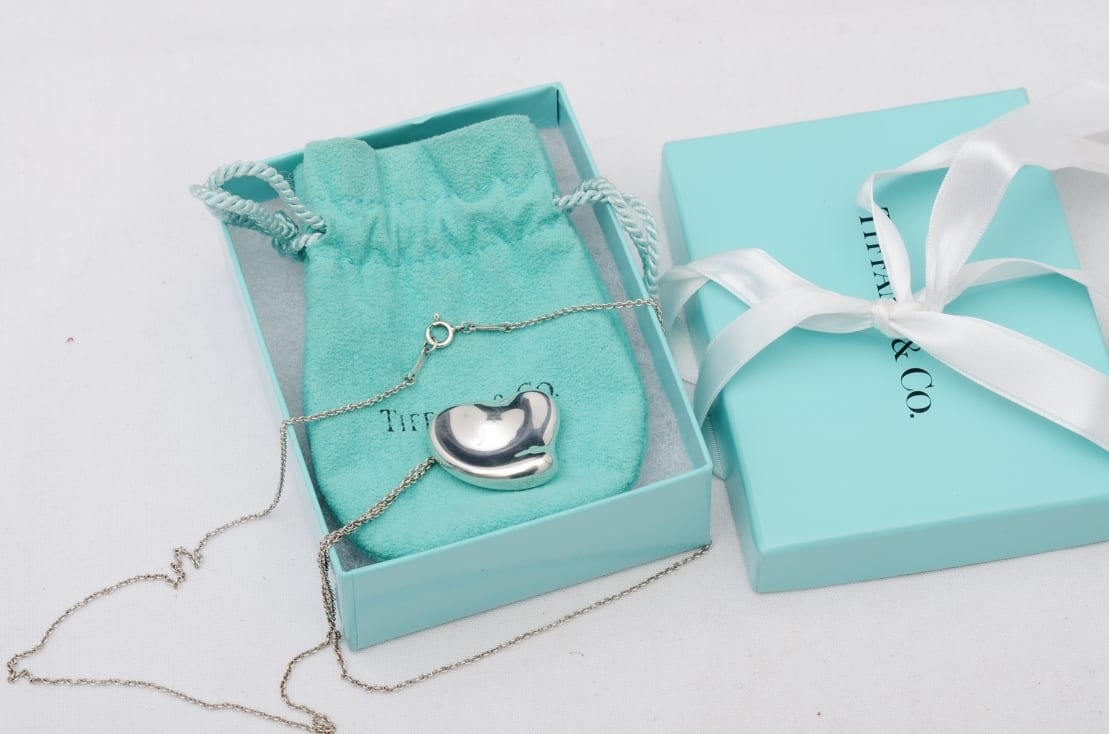
  • Tiffany ‘needs to reconnect’ with consumers

    Tiffany ‘needs to reconnect’ with consumers

    Jeweller Tiffany & Co’s latest results represent a disappointing end to what has been a challenging year for the company.

    The fact that worldwide net sales declined by 2 per cent even on a constant currency basis neatly indicates that the weakness is not solely down to the appreciating dollar. This point is underpinned by the fact that on a constant exchange rate basis all regions – with the exception of Japan – posted negative same store sales growth.

    Looking across the geographies the most problematic region remains the Americas where total sales declined by 8 per cent for the quarter; on a comparable store basis the decline was 10 per cent. While it may be true that some of this is down to weaker tourist spending in key cities where Tiffany has its flagships, it is also the case that Tiffany is struggling to maintain market share and relevance among middle-income and affluent American consumers.

    That this is so is partly down to a much more competitive environment for fashion jewellery, which constitutes an important part of the company’s sales mix. The growth of Pandora across the US, for example, has helped to take some custom away from Tiffany. Although Pandora’s US growth is now on a slower trajectory, we believe it is still gaining market share.

    While Tiffany still has a strong brand, it is notable that the brand resonates most with affluent older shoppers. Among affluent younger shoppers the brand is not viewed negatively but is seen as representing ‘old world luxury’ which does not entirely chime with their lifestyles and values. This means Tiffany often loses out among this important, and growing, group.

    Tiffany has tried to address this problem with the introduction of new fashion focused collections and more accessible introductory price points across some ranges. However, while the changes have been well received, they have been sufficient to change perceptions.

    These are clearly long term issues which have acted as a drag on Tiffany for some time. However, they were exacerbated during the fourth quarter by the lower levels of holiday gifting of jewellery in the US. For a brand like Tiffany, where lavish gifting is an important driver of buying, such a trend was distinctly unhelpful.

    Looking ahead, the upcoming fiscal year will be one in which the declines start to bottom out – especially after the second quarter. However, it is unlikely that the year will be one of much progress and Tiffany will end the year flat to slightly down.

    Growth will only come when Tiffany finds a way to reconnect its brand to the American consumer.