Tag: China

  • China’s Consumers Spend Up On Spas, Travel and Entertainment

    China’s Consumers Spend Up On Spas, Travel and Entertainment

    China’s consumers are ignoring the bears.

    Consultancy McKinsey & Co. is tipping that China’s shoppers will increase their spending by 10 percent per year through the end of the decade as incomes rise. Some 55 percent of consumers expect a significant wage increase over the next five years.

    It’s not just staple goods that will be filling the shopping trolleys. Consumers are spending more on luxury items like spa visits, travel and entertainment.

    The shift is just another sign of China’s economy changing away from one that is fueled by heavy industry and exports and towards one where consumers and services drive growth.

    The chart below shows how shoppers plan to spend more on leisure and travel.

    Here’s another sign of the burgeoning market: consumers are adopting new products, services and retail experiences at rates unseen in developed markets. Mobile payment in China went from zero in 2011 to 25 percent of the population in 2015.

    “Gone are the days of indiscriminate spending on products,” according to McKinsey. “The focus is shifting to purchasing more premium products, and living a more balanced, healthy, and family-centric life.”

    China’s leadership have prioritized economic growth of between 6.5 percent and 7 percent this year and have promised to ensure the economy, which grew by its slowest in 25 years in 2015, will avoid a hard landing.

    While China’s retail sales slowed in the first two months of the year, they remain in a double-digit growth range.  Annual sales of cinema tickets could overtake the U.S. as early as 2017 and outbound tourist trips is on course to reach 200 million by 2020, according to CLSA Ltd.

    Still, for foreign competitors hoping to capture greater market share, the outlook is mixed. While foreign brands dominate the premium segment, local companies are increasing their market share in the mass segment of the market.

    “While scale, speed, and simplicity proved advantageous during the past 15 to 20 years, the changing shape of Chinese consumption is set to topple some giants of the past, and elevate new champions,” McKinsey said.

    McKinsey surveyed 10,000 shoppers aged between 18 and 65 in 44 cities across China.

  • China Resources’s Beer Profit Gains as Retail Units Deepen Loss

    China Resources’s Beer Profit Gains as Retail Units Deepen Loss

    China Resources Beer Holdings Co., the maker of the world’s best-selling beer, reported earnings that missed analyst estimates as sales slowed amid a competitive market and a slowing economy.

    Underlying profit for the beer assets rose 14 percent to HK$831 million ($107 million) in the 12 months ended December, missing an average estimate of HK$933 million from 15 analysts compiled by Bloomberg. The underlying figure excludes asset revaluation and major disposals. Beer sales last year rose 1 percent to HK$34.82 billion.

    China Resources’ Snow beer is the world’s top beer brand, but its presence is predominately in China, where economic growth was at 6.9 percent last year, the least since 1990. The nation’s beer market is one of the most competitive, with major brewers including Tsingtao Brewery Co., Beijing Yanjing Brewery Co., Anheuser-Busch InBev NV, and a myriad of smaller, regional ones.

    The stock rose 3 percent to HK$15.10 in Hong Kong trading, the highest level since March 4 after the Chinese company said the deal to buy out the remaining 49 percent stake in its venture with SABMiller Plc has been submitted to the Ministry of Commerce. The update came from Jason Hou, the general manager of the venture, at a press conference in Hong Kong Friday.

    The deal is scheduled to close at the end of this year and impact earnings only in 2017.

    Snow beer, which has some of the lowest prices in the market according to a January report from Macquarie Group Ltd., has struggled to get drinkers to switch over to its higher-priced offerings, which would offer the company bigger margins.

    The company had sold its non-beer assets, including its money-losing retail venture with Tesco Plc, to its parent for HK$30 billion last year. This was to allow it to focus on its top-selling Snow beer as the existing multi-business structure didn’t reflect its full value, it had said.

    Underlying losses at discontinued operations, comprising retail, food and beverages, widened to HK$5.65 billion from HK$1.52 billion, it said Friday.

  • Online store sells out million-yuan Maseratis

    Online store sells out million-yuan Maseratis

    Italian car-maker Maserati launched its flagship store on Tmall, Alibaba’s online shopping site and the first 100 Maserati SUV Levantes, priced at 999,800 yuan (€137,600), sold out 18 seconds after being put up for advance sale at exactly 3 pm yesterday in China.

    Ultra-luxury cars are suffering from China’s slowest economic growth in a quarter of a century, as well as a government crackdown on ostentatious displays of wealth, but online retailing may provide a window of opportunity for high-end autos.

    The car is Maserati’s first SUV and is due to officially launch in China in July, and Maserati will add 500 cars to the online offering for advance purchase to meet demand.

    Tmall is one of the most popular online shopping sites in China, where buying online is booming. China has 667 million internet users, and it is the world’s largest e-commerce market. Online retail sales in mainland China were worth 3.877 trillion yuan (€530 billion) last year, up by one third on the previous year.

    Slow growth and a general austerity campaign has hit the super-cars, although it did rebound slightly in late 2015 on the back of government tax breaks. The number of imported cars in 2015 dropped 25 per cent year-on-year last year, according to data from China Automobile Trading.

    BMW-owned brand Rolls-Royce saw a decline of 54 per cent in sales last year year-on-year, while Volkswagen-owned Bentley saw its China sales fall 36 per cent last year.

    Maserati’s fellow Italian luxury brand Ferrari said in October that sales in the first three quarters of last year were down 24 per cent to 157 cars.

    Bucking the trend is Porsche, which saw its 2015 China sales rise 24 per cent to 58,000 cars.

    “Compared with mass-market brands, the ultra-luxury car segment has been hit harder by the economic slowdown,” Beijing-based independent industry analyst Zhang Zhiyong told the Global Times newspaper.

    Zhang believes that ultra-luxury cars face limited growth potential in China in the next few years.

    “Entrepreneurs, who are the main consumers of ultra-luxury cars, are more vulnerable to changes in the macro-economy,” he said.

    Gao Mengxiong, sales director of Maserati China, said Maserati’s customers were relatively young. The average age of Quattroporte drivers was 38 years old, while the average age of Ghibli drivers was 32 years of age. The company has already introduced an English-language slogan here – “Levante The Maserati of SUVs”.

    Maserati’s global sales are currently running at around 32,000, below forecasts of 50,000, but CEO Harald Wester said he expects to add around 30,000 cars to sales next year, with China expected to drive strong growth.

  • Lenovo, Juniper enter data center alliance

    Lenovo, Juniper enter data center alliance

    Lenovo and Juniper Networks have inked a global partnership to jointly build new converged, hyper-converged, and hyper-scale data center infrastructure.

    As part of the partnership, customers will be able to purchase Juniper’s networking products directly from Lenovo for easier acquisition, as well as consolidated support.

    In line with the move to disaggregate of hardware and software in the data center, the two companies intend to bring open, flexible solutions to market, leveraging the ONIE (Open Network Install Environment) model.

    To meet customer needs for fast provisioning and easy administration, both companies expect to collaborate to offer simplified management and orchestration in the data center leveraging Lenovo’s xClarity management software as well as Juniper’s Network Director and Contrail SDN software.

    In addition, the two companies plan to collaborate around go to market on a worldwide basis targeting enterprise customers, service providers, channel partners as well as system integrators.

    Lenovo and Juniper aim to develop joint go-to-market plans and a tailor-made resell model to address unique localization requirements in China.

  • Local Milan Station revenues plunge 81 pct in 2015

    Local Milan Station revenues plunge 81 pct in 2015

    Luxury branded handbag store chain Milan Station Holdings Ltd. saw its revenues plunge by 80.8 per cent year-on-year to HK$15.6 million (US$1.94 million) in Macau for 2015, following its closure of retail stores in the territory, according to its filing with Hong Kong Stock Exchange on Wednesday.

    ‘The gaming industry and tourism industry in Macau shrunk in recent years, which greatly bombarded the Group’s business locally. During the year, the Group closed the retail stores in Macau, while the points of sale in exclusive clubhouses also performed unsatisfactorily,’ the retailer noted in the filing.

    The company said it would adjust the product mix for its current sales points in local exclusive clubhouses as well as focusing on selling mid-priced brands in order to improve its revenues in the Special Administrative Region.
    For last year, the company generated total revenues of HK$400 million, a 35 per cent year-on-year drop compared to the HK$616 million it made in 2014. Meanwhile, it posted a narrowed net loss of HK$48 million for the year, some 9 per cent lower than the HK$53 million loss suffered one year ago.

    In addition to the sales drop in the city, Milan Station’s Hong Kong sales also fell 23.9 per cent year-on-year to HK$343.9 million. The company explained that the decline is due to the decreased number of Mainland China tourist visits to the HKSAR, weakening per capita consumption, and exchange rate fluctuations.

  • Is Dalian Apple Store world’s largest?

    Is Dalian Apple Store world’s largest?

    Opening on Saturday, the second Dalian Apple Store is disputedly the brand’s largest flagship to date.

    It is located in the eight-storey Olympia 66 shopping mall in the Xigang district of the Chinese port city. Opened in December, the centre has won several awards, including Best Retail Architecture in Asia Pacific.

    The new shop takes Apple three-quarters of the way toward its goal of 40 stores in China by the end of the year.

    Dalian is known for its food and luxury shopping, attracting visitors from Japan and Korea, as well as China. It already has one Apple Store, at Parkland Mall (pictured), which opened in October.

    There has been confusion – and even vandalism – related to both stores regarding size, especially asApple does not tend to share area details of its stores. While the new store is being touted in the media as the world’s largest, Parkland Mall had signs up in 2012 saying “Apple’s World’s Biggest Flagship Store will be coming soon”, Cult of Mac reported in March that year.

    To add more confusion, when Apple barricades were put up outside Parkland, rival shopping centre Dalian Department Store sent a security team to push down the Apple banners, and there is video of the security guards destroying the barricades.
    It was not clear what the dispute was about, but local reports indicated the rival store opposed the Apple expansion of the mall.

  • Ulta Beauty on expansion fast track

    Ulta Beauty on expansion fast track

    US retail chain Ulta Beauty is on a rapid expansion program, buoyed by soaring demand for cosmetics.

    In the words of US retail publication Chain Store Age, “no [US] retailer has more momentum right now than Ulta Beauty”.

    In the last financial quarter – to January 31 – the company opened 103 new stores, taking its total network to 874. It has already confirmed another 100 for this year as part of a US$390 million capital expenditure program.

    And it is achieving growth not just by network expansion: same store sales rose 12.5 per cent in the last quarter and it is expect to post double digit growth throughout 2016.

    “We continue to benefit from the powerful combination of strong demand in the beauty category and Ulta Beauty’s highly differentiated offering that propels our business to transcend prevailing trends across the retail landscape,” said Ulta Beauty CEO Mary Dillon.

    Fourth quarter sales reached $1.3 billion and net income increased 23.6 per cent to $107.8 million.

    Full year sales increased 21.1 per cent to $3.9 billion and same store sales increased 11.8 per cent compared to a 9.9 per cent the prior year. Full year profit increased 24.5 per cent to $320 million.

    As well as its swelling store ranks, Ulta Beauty is thriving online: fourth quarter eCommerce sales increased 44.2 per cent to $94.8 million and full year eCommerce sales by 47.5 per cent to $221.1 million.

  • China Telecom FY15 profit grows 13.4%

    China Telecom FY15 profit grows 13.4%

    China Telecom has reported a sharp increase in its net profit for 2015 thanks to one-off gains from the sale of telecom towers and related assets last year.

    Profit surged 13.4% year-on-year to 20.05 billion yuan ($3.07 billion) on the back of a one-time gain of 3.94 billion yuan from the transfer of towers and other infrastructure to China Tower, the JV formed by the three telcos last year.

    Revenues rose 2.1% to 331.20 billion yuan, while EBITDA fell 0.8% to 94.11 billion yuan, impacted by a number of regulatory changes and higher costs.

    In its 2015 annual results, China Telecom said revenue growth was mainly driven by its mobile businesses, with revenue rising 3.5% to 124.50 billion yuan.  Fixed service revenue increased 1% to 168.76 billion yuan.

    China Telecom finished the year with 58.46 million 4G customers, or more than a quarter of its total mobile subscriber base of nearly 200 million customers. The operator’s 4G ARPU stood at 78 yuan, against the 58.46 yuan of blended ARPU.

    The operator added more than 51 million 4G customers last year after it received government approval to provide a nationwide 4G service in February.

    Mobile data traffic doubled last year, with 4G contributing 51%.  Monthly average data traffic per 4G user increased by 25% year-on-year to 751 MB. By January-February this year, 4G customers averaged 850 MB per month.

    By comparison, biggest rival China Mobile had 312 million TD-LTE customers, while China Unicom, the country’s second largest mobile carrier, had 44 million 4G customers.

    China Mobile last week reported a 0.6% dip in its full-year net profit for 2015, while Unicom posted its first decline in net profit since 2010 for last year.

    Looking ahead, China Telecom said “2016 is a crucial year for the Company in building up a more favorable market position for the future,” adding that the company will strengthen the core competence in network and operation and grasp the opportunities from the scale-up and value enhancement of its 4G and fiber broadband businesses.

    China Telecom president and COO Yang Jie said China Telecom aims to add 60 million 4G subscribers this year. The operator plans to add 290,000 more 4G base stations by the year-end, bringing the total to around 800,000, as it expands coverage in towns and rural areas.

    China Telecom also plans to deploy 4G+ in all cities, start testing 800-MHz band spectrum and prepare for the launch of VoLTE in 2017.

    The company expects capex to fall to around 97 billion this year from 109 billion in 2015, with nearly half of spending going towards 4G.

    In addition, the operator will expand its FTTH network by another 50 million homes passed, to a total 270 million.

    China Telecom saw a strong growth in its FTTH business last year, with net additions of 28.38 million customers for a total 70.99 million of wireline broadband subscribers.

  • Chance to tap into ‘silver market’ in China

    Chance to tap into ‘silver market’ in China

    With its rapidly ageing population, China offers the world’s largest “silver market” – and trade shows are seen as the best way for foreign companies to start to tap into these consumers.

    About one third of the Chinese economy is now “silver”. There are more than 220 million people 60 years and older – more than the populations of France, Germany and the UK combined. This is set rise to 480 million by 2050 – about a quarter of the world’s elderly.

    This growing consumer segment has greater spending power, more leisure time and improved lifestyles, according to Intex Shanghai, which is the lead organiser for the annual ChinaAid exhibition, which will have its 17th edition at Shanghai New International Expo Centre (SNIEC) from June 8 to 10.

    Managed by the Shanghai Ageing Development Center, the show is supported by the Ministry of Civil Affairs of the People’s Republic of China and such organisations as the China National Committee on Ageing. Other organisers include the Shanghai Municipal Committee on Ageing, China Silver Industry Association and the Shanghai Health Industry Development Association.

    Offering promotional and networking opportunities for businesses seeking a foothold in China, the show has had 66 per cent growth over the past three years.

  • Manchester’s LSE Retail Group drives global growth with China office launch

    Manchester’s LSE Retail Group drives global growth with China office launch

    Manchester online lighting distributor, LSE Retail Group , has launched an office in China as it pushes ahead with ambitious growth plans and expands its global supplier network.

    The company behind brands Value Lights, Iconic Lights and MiniSun has opened the office in Shekou, in the Shenzhen province close to Hong Kong, and has recruited three people from the local area, with plans to hire a fourth staff member by the end of 2016.

    It comes as LSE was named the fastest-growing medium-sized business by the 2016 Ward Hadaway Greater Manchester Fastest 50 Companies list and was ranked number one on the Investec Mid-Market 100 league table in 2015.

    David Gutfreund, managing director of LSE, said: “With the vast majority of LSE’s products sourced in China, the role of the new team will be to maintain our high quality standards, oversee logistics and source new suppliers to extend our ever-increasing range of lighting.

    “The business is going from strength to strength and we’re seeing a 50% year-on-year growth rate, with each financial year performing at a record level. We’re constantly recruiting at our head office in Eccles, Greater Manchester, in order to keep up with increasing demand for products across all three of our brands.”

    All staff members at the China office were recruited locally and LSE sourced the candidates directly, using contacts made through its existing supplier chain. The team will also be responsible for product development and will work closely with members of the Manchester team.

    “With the new direct flight routes between Manchester and China and the Airport City industrial park under construction, links between the north west and the Far East, have arguably never been stronger.

    “We’re extremely excited to be part of this powerful relationship at a time when the region’s economy is flourishing and setting a strong example to the rest of the UK and Europe,” David said.

  • Overseas E-Retailers Represent 25% of China’s 500 Top Web Merchants

    Overseas E-Retailers Represent 25% of China’s 500 Top Web Merchants

    The 500 largest e-retailers in China ranked by annual web sales grew their combined online sales by 59.6% in 2015 to $198.30 billion from $124.22 billion a year prior, according to Internet Retailer’s newly published 2016 China 500. Now in its third edition, the e-commerce research ranks the 500 leading e-retailers in China based on their annual web sales. Of them, 398 are based in China while 102 hail from overseas; this latter group, which includes 52 U.S.-based web merchants, grew web sales by 124.0% to $21.31 billion in 2015. By comparison, U.S. online retail sales grew roughly 15% per year from 2011 to 2014, according to the U.S. Commerce Department.

    The fastest-growing U.S.-based e-retailer in China, according to the data in the 2016 China 500, is no. 11-ranked Apple Inc., which increased its web sales in the country by nearly 150% in 2015 to $2.2 billion, up from $897.6 million a year earlier. Computers/electronics as a merchandise category among the 2016 China 500 e-retailers grew by 49.8% in web sales in China last year.

    More analysis of the fastest-growing e-retailers by merchant type and merchandising category can be found in the 2016 China 500. The database version provides 139 metrics for each retailer, including web sales, web traffic, conversion rates and other key metrics. A 45-page downloadable PDF executive report provides rankings, summary market data and in-depth analysis of competitive trends in China’s e-commerce market.


  • Hong Kong Ponders Plan to Boost Tourism From Mainland

    Hong Kong Ponders Plan to Boost Tourism From Mainland

    Beijing has reportedly asked Hong Kong officials to present a plan for boosting tourism from mainland China following a 3 percent decline last year amid growing anti-mainland sentiment in the territory.

    A plan for drawing tourists to Hong Kong could include cruises between the mainland and Hong Kong and an expansion of the number of cities from which people can travel to Hong Kong without joining a tour. Currently, residents of 49 mainland cities can travel to Hong Kong individually.

    Hong Kong and Beijing officials have also discussed ways to limit tour groups that force people to shop in Hong Kong.

    Joseph Tung, executive director of the Travel Industry Council of Hong Kong, said the mainland Chinese market is important to Hong Kong’s economy.

    “China is a main market, and everyone, all over the world, is trying to induce or promote tourism from China to their countries,” he said.

    The decline in mainland tourists is affecting Hong Kong’s economy, which is expected to grow 1 or 2 percent this year.

    Raymond Yeung, a senior economist with ANZ bank, said the mainland tourists who continue to visit Hong Kong are spending less.

    “The spending pattern of Chinese tourists has changed,” he said. “They no longer think Hong Kong is the place to buy luxurious products. With the opening of individual visas for Chinese tourists to go to Europe, traveling on an individual basis, this trend will continue.”

    Fear of disturbances

    Protests have also scared some mainland tour groups from visiting the city.

    In 2014, Hong Kong’s pro-democracy umbrella movement filled the city’s streets for nearly two months to protest Beijing’s decision to vet all candidates for the territory’s top job. Since then, local groups have staged demonstrations against traders from the mainland who cross the border to buy Hong Kong goods that then will be resold back home.

    In February, there was a violent riot in Mong Kok that injured dozens of people. The riot was sparked when police attempted to clear food stands during the Chinese New Year holiday. Protesters said they were demonstrating against the gradual erosion of Hong Kong local culture.

    But even if protests ease in Hong Kong, the new Chinese middle class, with its rising discretionary income, may increasingly choose to travel elsewhere.

    “A lot of the mainland tourists have been to Hong Kong many times, and they are all traveling farther, to Japan, Korea, Europe, the U.S.,” said Mariana Kou, a retail analyst at the brokerage firm CLSA. “But at the same time, even without this expansion, the local government is putting out a number of initiatives to try to support the tourism sector, by putting out a number of products and expanding their festival circuit and number of events.”

    Hong Kong authorities expect the number of tourists to drop another 2 percent this year.

  • China Shun Ke Long Reaches Cooperation Agreement with Hengli To Advance Into Cross-Border e-Commerce

    China Shun Ke Long Reaches Cooperation Agreement with Hengli To Advance Into Cross-Border e-Commerce

    China Shun Ke Long, a supermarket chain store operator in Guangdong province, entered into a cooperation agreement with Hengli Limited, the wholly-owned subsidiary of Foshan Shunde Shente Trading Limited. The Group will sell cross-border goods, general goods and imported goods through the e-commerce platform “Hellogou” (www.hellogou.com), and the retail outlets of Hengli, advancing into the cross-border sales market.

    Pursuant to the agreement, the Group agreed to sell cross-border goods, general goods and imported goods through “Hellogou” and the retail outlets of Hengli. In addition, the Group agreed to provide various advisory services to Hengli, including to (i) look for new vendors for Hellogou and franchisees for its retail outlet; (ii) promote “Hellogou”; (iii) monitor the vendor portfolio and product mix of “Hellogou”; and (iv) provide training to the staff of Hengli Limited. With the duration of agreement of 5 years, the Group shall pay 2% commission to Hengli for those goods sold through “Hellogou”, and Hengli shall pay advisory fee equivalent to 70% of its revenue to the Group.

    “Hellogou” obtained the approval from Guangzhou Custom Bureau to operate cross-border online sale of goods and the approval from Guangdong Telecommunication Management Bureau to run value-added services online, which made “Hellogou” different from other ordinary e-commerce platforms. Hengli also had set up counters in 10 retail outlets of the Group to promote its “Hellogou” and display samples of oversea products. Customers could access “Hellogou” to complete the transaction online by using their mobile phones to scan the “Quick Respond Code” on the price tags of the samples of overseas products, and the goods will be delivered to the customers directly either from overseas or custom controlled warehouses.

    Mr. LAO Songsheng, Chairman and Executive Director of the Group, stated, “With a strong foothold in the third and fourth-tier cities in Guangdong province of the PRC, SKL possesses in-depth knowledge in the local market. In recent years, the Group has been committed to developing online-to-offline (O2O) retail business and accumulated extensive experience. With Chinese customers’ increasing demand for high-quality imported food and goods, the Group is optimistic towards the cross-border shopping industry. As we reached the agreement with Hengli, at a relatively low commission rate, we could sell high-quality fresh food and other goods through ‘Hellogou’, bringing consumers a wide range of cross-border goods. In the future, the Group will continue to focus on the development of O2O business in response to market trends. We will also enhance the operating platform to improve efficiency and drive revenue growth for the Group.”


  • China retail sales growth slows further

    China retail sales growth slows further

    Official retail sales data from the mainland shows a continuation of slowing growth this year.

    According to the National Bureau of Statistics (NBS) China retail sales of consumer goods rose 10.2 per cent in January and February combined.

    That follows growth of 11.7 per cent in December and 10.7 per cent for the entire 2015 calendar year.

    According to the NBS, Chinese consumers bought 5.29 trillion yuan (US$815.2 billion) worth of consumer goods in the first two months of 2016.

    Urban areas accounted for nearly 86 per cent of China retail sales, rural areas 14 per cent. Sales in rural areas rose by 10.9 per cent – faster than the 10.1 per cent in the cities.

    Online sales also continue to rise sharply, soaring 27.2 per cent year-on-year for the first two months of this year, to 636.1 billion yuan. Online now accounts for about 12 per cent of China’s total retail market.

  • Electronic payments boost economies, said Visa

    Electronic payments boost economies, said Visa


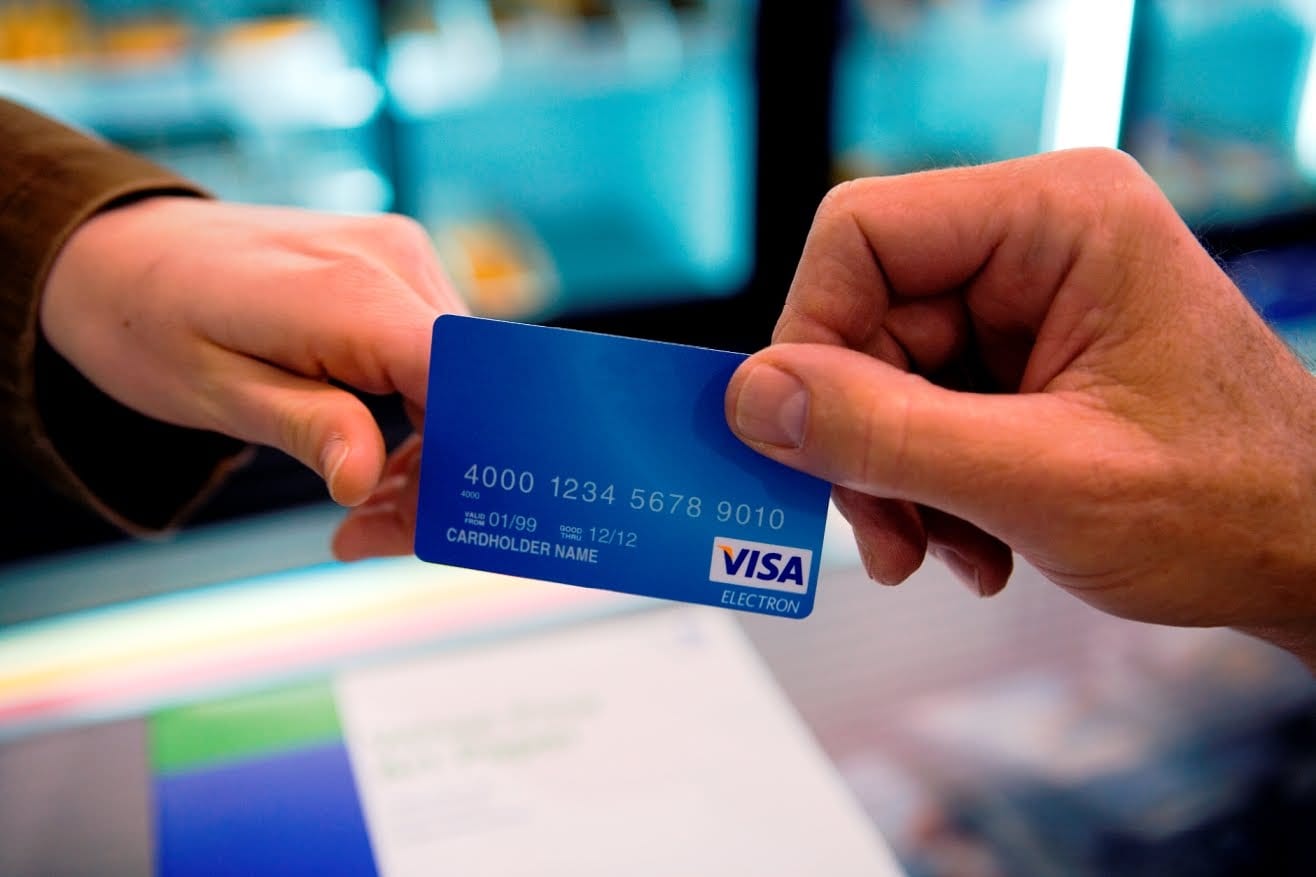
    Electronic payments boost household spending on goods and services as well as boost GDP, according to a study commissioned by global payments technology company Visa.

    Moody’s Analytics investigated the impact of electronic payments on economic growth across 70 countries between 2011 and 2015, finding that the increasing use of credit, debit and prepaid cards added US$296 billion to GDP, while raising household consumption by an average of 0.18 per cent a year. The countries in the study make up almost 95 per cent of global GDP.

    Moody’s economists also estimated that another effect was the creation of 2.6 million jobs on average annually over the five-year period as a result of increased use of electronic payments.

    “Countries that saw large increases in card usage also saw larger contributions to overall growth in their economies,” says chief economist Mark Zandi.

    Purchasing is more convenient and efficient for consumers, and merchants can manage their businesses better and benefit from higher sales.

    Electronic payments also benefit governments and contribute to stable and open business environments, says the study, The Impact of Electronic Payments on Economic Growth. Also, electronic payments help minimise the “grey economy” – economic activity that is often cash-based and goes unreported. This means that electronic payments provide a higher potential tax revenue base for governments, while also bringing the added benefits of lower cash-handling costs, guaranteed payment to merchants and greater financial inclusion for consumers.

    “This research suggests that the right public policies can create an open, competitive payment environment, and contribute to economic growth and job creation,” says Visa CEO Charlie Scharf.

    Two countries stood out for their large gains in employment, stimulated by fast-growing productivity and increased use of cards – China (427,000 jobs added) and India (336,000 jobs).

    As with GDP gains, job gains were not uniform across regions. North America had the highest average job gains per year (69,000), followed by Asia (62,000).

    Some emerging economies have also experienced notable increases in productivity. For example, increased card penetration raised GDP in Vietnam by 0.14 per cent, and Vietnamese labour productivity rose by 18 per cent, resulting in about 75,000 jobs gained each year.

    As consumption growth is, on average, faster in emerging economies, those countries also have more to gain by increasing card usage, says the study.

    Moody’s found that every 1 per cent increase in usage of electronic payments could produce, on average, an annual increase of about $104 billion in the consumption of goods and services. But expanding electronic payments alone do not necessarily increase a country’s prosperity – this needs the support of a well-developed financial system and healthy economy. Countries need to promote policies that minimise unneeded regulation and create a robust financial infrastructure.

    Because of the somewhat lower penetration, card use added 0.06 per cent to GDP a year in Asia.