Tag: China

  • Tom Tailor Launches Its First Online-Shop in China on JD.com

    Tom Tailor Launches Its First Online-Shop in China on JD.com

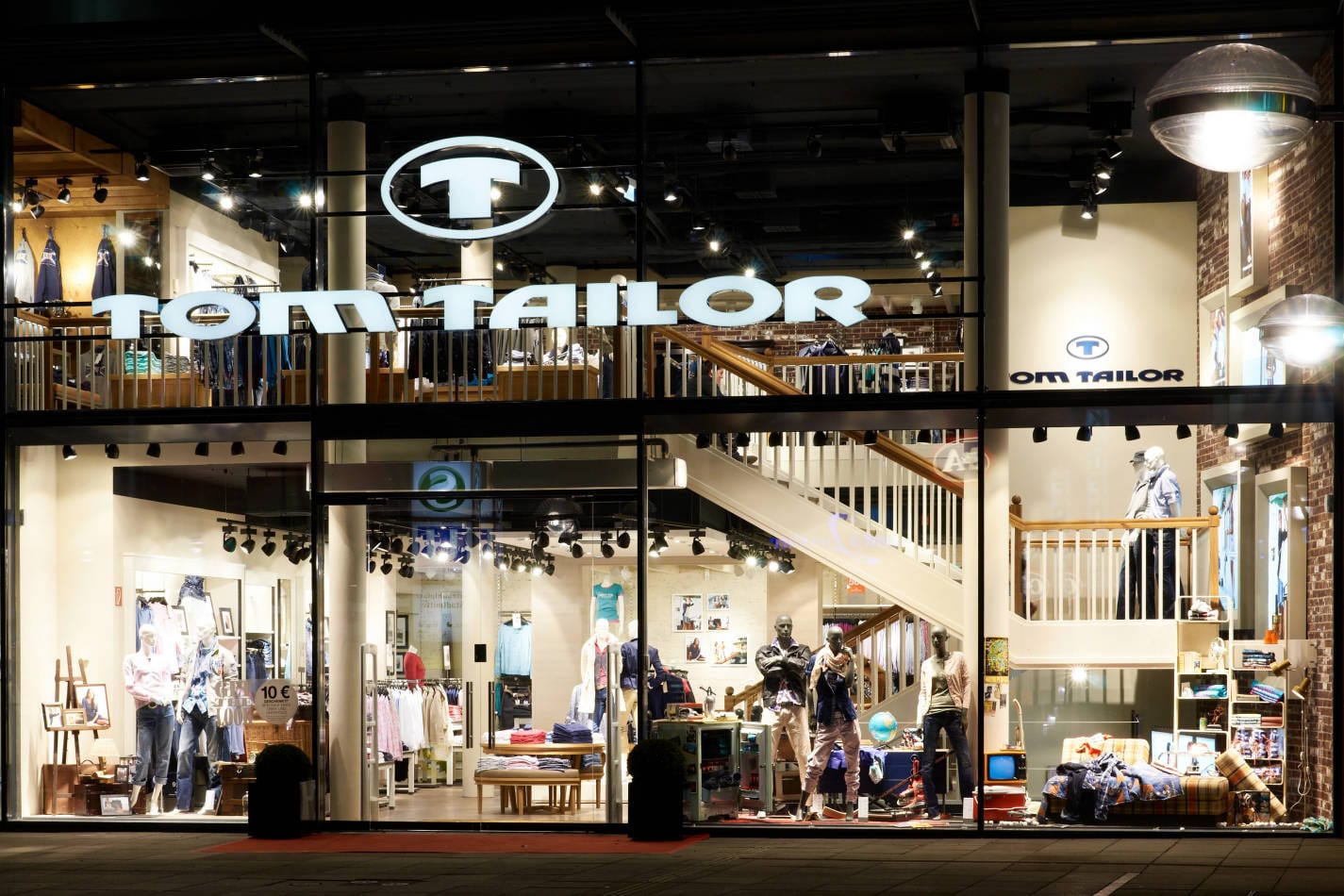
    Tom Tailor has launched its first online shop in China on the e-commerce platform JD.com, China’s largest online direct sales company. The launch marks another important milestone inTom Tailor’s expansion in China, following the opening of the firstTom Tailor retail store in Shanghai in November 2015.

    TheTom Tailor online shop on JD Worldwide features products from across theTom Tailor Denim and Tom Tailor CONTEMPORARY ranges. Building on JD.com’s brand marketing, payment, logistics and after-sales support,Tom Tailor will ensure that the brand’s customers across China enjoy a world-class online shopping experience.”In order to expand our online presence with the umbrella brandTom Tailor in China, JD.com, as China’s largest e-tailer, is an excellent partner,” said Erika Kirsten,Tom Tailor’s Manager of Corporate Communications.

    “JD.com has a high-value user base. With 155 million active consumers across the country who appreciate its versatile product range and superior customer service, JD.com provides the optimal platform for launchingTom Tailor in the Chinese online market.”“We’re delighted to welcomeTom Tailor to JD.com, and look forward to supporting their growth in China,” said Josh Gartner, JD.com’s Senior Director of International Communications. “Apparel is one of the fastest growing categories on our platform because customers know that only JD.com can provide reliable and convenient access to the latest fashions from local and international brands with a 100% guarantee of product quality and authenticity.

    We are excited to expand our portfolio of brands to includeTom Tailor’s stylish designs and we’re confident that customers will respond very positively.”Tom Tailor is represented in China currently with a retail store and 14 shop-in-shops.

  • Jollibee Foods takes over processing unit

    Jollibee Foods takes over processing unit

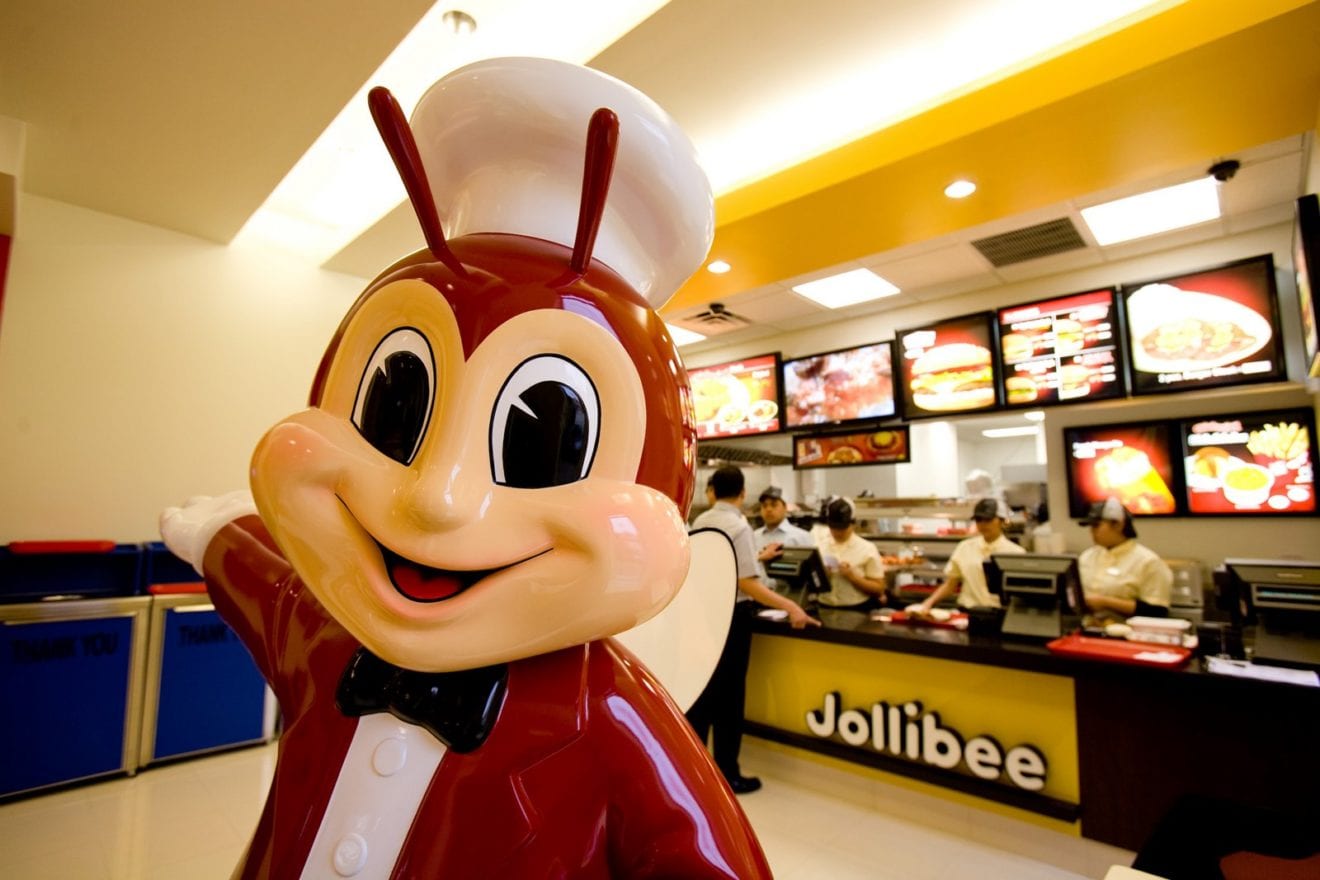
    Asia’s largest fast food player -Philippines-based Jollibee Foods, is seeking to take full control of China’s Happy Bee Foods Processing.

    The Manila company will buy an extra 30 per cent stake for US$10.4 million.

    Jollibee, which now has a 70 per cent stake in Happy Bee, acquired a 40 per cent share of US-based restaurant brand Smashburger for $99 million last October. It is continuing to scour the region for acquisition targets, with as it pursues its goal of becoming one of the world’s top 10 fast-food brands.

    Jollibee VP Valerie Amante has told the stock exchange its wholly-owned subsidiary Jollibee Worldwide (JWPL) entered into an agreement with Hua Xia Harvest Holdings to acquire its 30 per cent equity shareholding in Happy Bee, which is their joint venture entity.
    Hua Xia will be selling its 3,518,018 shares in Happy Bee at $2.96 a share. Jollibee will acquire the remaining 30 per cent of Happy Bee for about $10.4 million in the form of assets related to the production of food products intended for institutions outside of Jollibee brands in China.
    It is expected the deal, which does not include any cash outlay, will be closed this year.
    “The objectives of the acquisition – essentially an equity share and asset swap – are for Jollibee to concentrate on supporting the growth of its Yonghe King business, and on further improving its food quality and increasing assurance on food safety,” says Amante.

  • VIPshop revenue grows 65 per cent

    VIPshop revenue grows 65 per cent

    Bolstered by more customers and orders, Chinese online discount retailer VIPshop Holdings (VIPS) has seen its net revenue grow by 65 per cent to RMB13.9 billion ($2.15 billion) in the latest quarter to December 31.

    During the period, its number of active customers rose to 19.8 million (a 58 per cent year-over-year increase) and total order grew 67 per cent to 64.9 million. This boosted gross profit by 60 per cent to RMB3.35 billion.

    For the year, total net revenue rose 74 per cent to RMB40.2 billion.

    “We topped RMB40 billion in annual sales and attracted nearly 37 million active customers as at the end of the year,” said chairman and CEO Eric Shen.

    “We also continued to enhance the user experience by optimising our platform for mobile interaction and purchasing, as well as expanding our product categories.”

    Founded in August 2008, the company offers quality and popular branded products online throughout China at significant discounts.

  • Currency, tourism hits Bossini profit

    Currency, tourism hits Bossini profit

    A strong Hong Kong dollar and fewer tourists to Hong Kong and Macau hit profits for Hong Kong-listed fashion group Bossini International Holdings for the six months to December 31.

    Revenue dipped 13 per cent to HK$1146 million (US$147 million) from $1319 million for the same period in 2014. The gross profit was $543 million ($665 million in 2014), with the Bossini profit attributable to owners sliding from $87 million to just $14 million.

    However, the group says its financial position is still healthy despite an unseasonably warm winter in several core markets and more fierce competition within the apparel retail industry.

    In Hong Kong and Macau, same-store sales declined by 14 per cent, opposed to a 5 per cent growth for the 2014 period. Same-store sales in mainland China dropped by 8 per cent (as against 2 per cent growth), while Taiwan and Singapore same-store sales declined 14 per cent (2014: 8 per cent growth) and 1 per cent (2014: flat) respectively. Overall, same-store sales for the group fell by 12 per cent, following 4 per cent growth for the same period in 2014.

    At reporting date, the group had outlets in 33 countries and regions – 267 (down 10 on June 30, 2015) directly managed stores and 678 (681) franchised stores, giving a total store count of 945 (938).

    Its export franchising business continued to expand with 15 new franchised stores, taking the total to 615 stores across 29 countries. The group also continued launching its licensing programs, a major strategy, including a Star Wars collection and a further collaboration with the Ocean Park Halloween Bash.

    CEO and executive director Edmund Mak says the group expects the demand for value-for-money apparel to grow as economies slow globally.

    “To cope with this, we intend to offer more items that are easy for mix-and-matching, as well as products with better functions under a more competitive pricing strategy over the coming years.

    “The group will also continue to implement further cost-control measures and focus on expanding operations further afield of Hong Kong and Macau to achieve a more balanced portfolio.

    “We will also continue to devote energy to expanding our apparel lines for kids, which has consistently been our competitive edge and would also perfectly complement the recently announced end to the one-child policy in mainland China. Furthermore, we will launch Bossini eyewear in mainland China through franchise arrangements.

    “Going forward, the Group will continue to create appealing, competitive and quality everyday wear that drives sustainable growth, profitability and customer satisfaction. With a firm focus on our “be happy” core brand value, we will continue to strengthen our competitive edge and endeavour to enhance the value that we offer to our shareholders.”

  • Lego to open largest retail store in Shanghai

    Lego to open largest retail store in Shanghai

    Danish toy giant Lego A/S will open its largest retail store in the world near the Shanghai Disney Resort, the company said on Tuesday.

    The 1,000-square-meter store will be located on the main shopping street outside Disneyland, and will be operated by Lego.

    The resort, the first Disney theme park on the Chinese mainland, is scheduled to open in mid-June.

    “It will be a testament to our confidence in the China market,” said Jacob Kragh, general manager of Lego China.

    Lego to open largest retail store in Shanghai

    Kragh was speaking during a conference call following the release of Lego’s annual report, which showed revenue surged 25 percent to 35.8 billion kroner ($5.2 billion) last year.

    The company did not share the size of individual markets, but China has enjoyed what Lego called a “highly satisfactory” 34 percent growth year-on-year in 2015.

    Meanwhile, CEO Joergen Vig Knudstorp told China Daily that he believes there will be opportunities for Lego to grow as China transforms into a consumption-driven economy.

    While all of the 140 countries where Lego products are sold have posted double-digit growth in 2015, China has been one of the fastest-growing markets.

    Knudstorp expects that China will join the United States and Germany as the top three largest markets for Lego soon.

    Consulting firm Euromonitor International has forecast that by 2017, the Chinese toy market will be worth 100 billion yuan ($15.36 billion) and the Asia-pacific region will outnumber North America in sales as the world’s largest traditional toy market.

    While domestic brands still dominate the market, experts said that Chinese parents are likely to spend more on foreign toys in the coming years.

  • Apple Pay gets off to a fast start in China

    Apple Pay gets off to a fast start in China

    China this month became the fifth country where consumers can use smartphones to pay with Apple Pay, and Chinese shoppers quickly embraced the Apple Inc. payment system.

    In the first two days after the Feb. 18 launch, 3 million consumers linked their bank cards to Apple Pay according to China Merchants Bank, one of 19 Chinese banks involved in the rollout. The payment method can be used to pay in stores with compatible terminals and in mobile apps that link to Apple Pay.

    Every Chinese consumer with a debit card and many with credit cards are eligible to use Apple Pay because Apple is collaborating with the country’s sole debit card network, China UnionPay. Banks have issued 5 billion cards that are accepted on the China UnionPay network, including 500 million credit cards, UnionPay says.

    China Merchants Bank says its customers connected 1 million bank cards with Apple Pay in the first two days of the launch, representing 35% of cards connected with Apple Pay in China. Apple and China UnionPay both declined to confirm this data from China Merchants Bank.

    Apple did say it is quite happy with the launch. “I would rate our first-day performance as 1,000, if the full score is 100,” Jennifer Bailey, vice president of Apple Pay, said at a mid-February press conference in China. Apple also has rolled out Apple Pay in the United States, the United Kingdom, Canada and Australia.

    Apple says the 19 Chinese banks offering Apple Pay, including such major institutions as Bank of China and the Agricultural bank of China, represent about 80% of bank cardholders in China.

    In addition, 16 retail chains, restaurants and online retailers in China have begun accepting Apple Pay. They include Starbucks, McDonald’s, Kentucky Fried Chicken, Circle K and the French department store chain Carrefour. Almost all of those merchants have launched promotions for Apple Pay users. For example, Starbucks offered a 15 yuan ($2.30) discount to Apple Pay users who spend 65 yuan ($10) or more.

    But consumers used Apple Pay the most on the first day of its introduction to pay on the mobile app of Meituan.com, a Groupon-like Chinese service in China, according to China UnionPay. Apple says the new payment method may double the conversion rate for e-commerce apps.

    Starbucks came in second in terms of Apple Pay payments on the launch day, followed by convenience store chain FamilyMart, McDonald’s and another daily-deal site, Dianping.com.

    China UnionPay reported that Apple Pay users’ spent 101 yuan ($15.5) on average on the first day of the service and about 47% of purchases were above 10 yuan ($1.5).

    Web-only e-retailer Vipshop, No. 4 in the Internet Retailer 2015 China 500, is among of retailers accepting Apple Pay in its mobile app, and says it received 10,000 Apple Pay orders on the first day. The company says Apple Pay could help Vipshop offer faster services to online shoppers.

    Apple Pay is hardly the first payment method in China based on mobile phones and wallets. Alibaba Group Holding Ltd.’s payment affiliate Alipay says there are about 300 million bankcards linked to its mobile wallet app, and Chinese online game and social media powerhouse Tencent Holdings Ltd. says the number of banking cards connected with its mobile apps has topped 200 million.

    However, Apple Pay requires fewer steps when paying in a store. An Alipay user must open the app on her phone and then click several times to generate a bar code that the cashier scans. With Apple Pay the consumer need only place her iPhone near a terminal and verify the payment by touching a finger on a button on the phone or by inputting her password. Apple Pay users don’t need to open an app or access the Internet to make a payment, Apple says.

    In stores, Apple Pay runs on China UnionPay’s Quick Pass service network, launched in 2013, which uses wireless Near Field Communication technology to establish a connection between a mobile phone and a terminal. There are 4 million NFC-compatible terminals in the Quick Pass network that can accept Apple Pay, of the 20 million payment terminals that accept UnionPay cards, according to China UnionPay.

    Besides Apple’s iPhone, other smartphones that consumers can use on the Quick Pass network include NFC-enabled phones from manufacturers like Samsung Group and Huawei Technologies Co. Ltd.

    Apple Pay works on the iPhone 6 or 6S, the Apple watch and some versions of the iPad. Consumers can use Apple Pay with an iPhone 5 and 5S if they pair the phone with an Apple Watch.
  • Watsons pioneers cosmetics takeaway in China

    Watsons pioneers cosmetics takeaway in China

    Watsons has kicked off an initiative for selling and delivering cosmetics and groceries as takeaway via Baidu Waimai (takeaway in Chinese).

    Expanding online to boost sales

    The initiative has been launched in Beijing, Shanghai and Guangzhou and will be extended to all the cities that Watsons operates in. Products on Baidu Waimai include personal care, snack and beverages.

    As the leading Health & Beauty chain in China, Watsons has launched various online initiatives, such as its own online shop, stores on online platforms Amazon, Alibaba and JD.com, as well as Watsons app. The launch of takeaway service aims to attract more customers and generate new revenue streams for the retailer.

    Other initiatives to drive growth

    As the growth slows down and margins being squeezed, Watsons has been focusing on satisfying the needs of the ever-changing consumers.

    • store expansion, especially in third and fourth tier cities to reach more shoppers
    • introducing more local brands to lift profitability
    • launching more loyalty schemes and membership cards to attract young shoppers
  • Alibaba Group’s Quest for China’s $100 Billion Retail Drug Market Stalls

    Alibaba Group’s Quest for China’s $100 Billion Retail Drug Market Stalls

    Alibaba Group Holding Ltd. has sailed into headwinds in its plans to conquer China’s medical market by prescribing and selling drugs through an online platform. Chinese officials shut down a government-owned drug tracking system that was created and operated in partnership with Alibaba’s health-care division, Alibaba Health Information Technology Ltd.

    The news saw the unit’s shares take a hit, falling 14% to 4.10 Hong Kong dollars (HKD) on Monday, before rising slightly to close at 4.17 HKD Tuesday.

    The system is owned by China’s Food and Drug Administration, which helps it monitor drugs’ manufacturing, regulatory, expiration and composition data. However, the FDA suspended the system due to complaints from pharmaceutical companies that are jittery over Alibaba’s involvement.

    Meanwhile, the FDA has said that it is reviewing drug-monitoring rules to accommodate the dissenting voices, reported Wall Street Journal.

    Alibaba teamed up with a private-equity startup linked with its founder, Jack Ma, known as Yunfeng Capital Ltd to purchase a controlling 54 percent share in Citic 21CN, which dealt in management of pharmaceutical products data. The new company, Ali Health, subsequently started dealing in Alibaba’s e-commerce sales of over-the-counter drugs.

    It also created an app that links patients with hospitals and community doctors.

    Cure for Country’s Ailing Healthcare Industry

    Ali Health has touted itself as the cure for most problems ailing China’s health-care industry, which is characterized by overcrowding in public hospitals and too much reliance on drugs.

    Data by management consulting firm Bain & Co. shows hospitals in mainland China rely on sales of drugs for 80 percent of their revenues, opening a loophole for corruption to thrive.

    Ali Health ensures local pharmaceutical industry players maintain standards of drug safety as it strives to gain an early market lead over potential rivals should China allow retailers to sell drugs through online platforms.

    This fact hasn’t escaped the eye of drugs firms, who have increasingly expressed dissatisfaction over Alibaba’s participation.

    A provincial pharmacy chain Yontinhe Group sued China’s FDA in January, saying it was creating an uneven playing field by co-operating with Ali Health. It cited provision of big-data view of all medicines produced by all pharmaceutical firms in China to Ali Health as one area it was favoring the latter in, among other accusations.

    Responding to Yontinhe’s claims, the FDA issued a statement on Jan. 26, saying that it backed the drug-monitoring system. Nonetheless, it appears to be responding to the complaints with its decision to seek views of all market participants concerning how to review the drug-monitoring system.

    China’s prescription drugs market is estimated to register sales valued at $100 billion, according to a study by consultancy firm Deloitte.

    Ali Health attributed its involvement in the tracking system for almost all the revenue of US$4.8m (37m HKD) it earned in the year through March 31, 2015. It says its role is to operate the system, while the FDA owns it in a partnership aimed at eliminating counterfeits in the Chinese health-care market.

  • China will bounce back and continue to drive global growth for decades

    China will bounce back and continue to drive global growth for decades

    Economists have often said “when America sneezes, the world catches a cold” reflecting the importance of the US to the global economy.  But the past 12 months suggest the world’s immune system is more sensitive to China’s sniffles than was previously thought.

    The country’s economic slowdown and the overdue lancing of the bubble in its stock market have made the world’s central bankers and policymakers realise that China now has a huge influence on global markets.

    I was in Beijing and Shanghai last week in part to attend the G20 summit in my role as a board member of the Institute of International Finance but also to see for myself what is happening in China. There is no substitute for visiting a country if you really want to understand what is going on there. Get there, meet companies and policymakers and listen to what the people you meet have to say.

    This is especially the case with somewhere like China because it can be opaque and a lot of what is written about the country is nonsense. You can only get so much information to form a view from sitting in an office 6,000 miles away.

    One of my most interesting meetings was with Dr Pan Gongsheng, deputy governor of China’s central bank. It is true that the economy is slowing. Never mind the validity of the official figures, the 6.9pc growth achieved last year is a far cry from the double-digit expansion achieved a few years ago.

    But is this slowdown really so bad? The change in the pace of growth is as much by design as by accident. China’s policymakers made a deliberate decision a few years ago, to move the economy away from an investment-led, export-driven model towards one in which domestic consumption plays the dominant role. The country’s leaders want growth that is sustainable.

    For a long time investors have focused on China’s manufacturing data as an indicator to how well or badly the economy is doing. Recent weakness in the manufacturing data has been interpreted as a big negative and has ignored the growth of service industries, especially in the private sector.

    Real estate, finance, hospitality, retail, transport, construction and other services accounted for some 55pc of GDP in 2014, up from 47pc in 2006, according to data compiled by CLSA and Citic Securities.

    As the economy continues to move to a more domestic focus, this share will continue to rise. This is not to say everything is rosy in China. In recent years, western leaders watched with wide-eyed wonder at their Chinese counterparts’ handling of the economy. They looked on in envy at Beijing’s ability to manage the economy at a time when the world seemed to be closing in.

    That reputation has taken a major dent recently. They successfully deflated a bubble in the property market but that meant that China’s army of retail investors piled into the domestic stock markets. The authorities should not have tried to prop this over-leveraged and speculative bubble. They should have let it pop but chose to intervene and then did so in a messy, unclear and unsuccessful way.

    While they were bungling the rescue of the stock market, the authorities made a mess of communicating a loosening in renminbi policy, which fuelled suspicions the country was seeking to devalue its way out of trouble. This is prompting wealthy locals to move their cash offshore and in response the government is making it harder for money to be moved overseas.

    Local government and corporate debt are big problems, the state sector is bloated and inefficient, while the property market remains fragile. Whilst my trip provided comfort on the state of the economy, my views on the stock market remain unchanged. We have always been very cautious about investing in Chinese companies because so many are opaque and many have woeful corporate governance.

    It’s obvious if you spend time in China to see that the Shanghai and Shenzhen stock markets operate like casinos. Trading activity is dominated by retail investors who buy on rumours and flee at the first sign of trouble. It’s much more sensible to expose yourself to China’s growth by investing in companies which aren’t based there but do business there.


    It’s a much easier way of investing in companies with decent growth prospects, that have quality management and adhere to good levels of transparency and accounting standards. From speaking to companies, economists and analysts in China, it’s clear to me that the country is heading for a softer, rather than harder, landing. You need to look beyond the stock market for the clues of why, though. China’s consumer spending is still motoring. Consumers have taken to internet shopping at a startling pace.

    Barely 15pc of the population had shopped on the internet a few years ago. Now over 40pc have. Chinese shoppers spent nearly $8bn (£5.7bn) in the first 10 hours of the country’s equivalent of Cyber Monday or Black Friday. Chinese authorities might have lost some of their reputation for financial competency, but they have $3.4 trillion in foreign exchange reserves to soften the blow of a slowing economy.

    Unlike many policymakers in the West, those in Beijing still have plenty of tools at their disposal to avert economic disaster and to help the country to develop. The announcement last week of the opening up of the bond market to long-term international investors is a prime example and is a step in the right direction.

    Ultimately China will shake off its current sniffles to continue to be a driver of global growth for decades to come.

  • Ecommerce is so huge in China that even the 2nd biggest store saw $71b in purchases

    Ecommerce is so huge in China that even the 2nd biggest store saw $71b in purchases

    You know ecommerce is insanely huge and fully ingrained in daily life in China when the country’s second largest online store booked US$71.6 billion in purchases in the past year. That’s the figure revealed today by JD, the closest competitor to Alibaba, in its newest earnings report.

    Alibaba, which posted financials a few weeks earlier, is well ahead with a total of about US$460 billion worth of purchases on its Chinese shopping marketplaces in 2015. JD now has 155 million active shoppers who collectively placed 1.26 billion fulfilled orders in 2015.

    JD, which differs from Alibaba in that it mostly ships items to shoppers from its own inventory rather than relying on a huge network of merchants, says that its 2015 expenditure tally was up 78 percent on 2014’s. The ecommerce firm, in which WeChat maker Tencent has a 20 percent stake, now has 155 million annual active customers, up from just over 90 million back in 2014.

    They collectively placed 1.26 billion orders that were fulfilled in 2015, which nearly doubled from the prior 12-month period.

    Trillion-dollar baby

    Ecommerce spending in China this year is expected to inch past US$900 billion, says Emarketer. The data revealed by Alibaba and JD, which together account for a very sizeable chunk of online shopping in China, seems to support that projection. By 2017, China’s appetite for buying stuff online will sail past a trillion, and it’ll be worth about US$1.57 trillion by 2018.

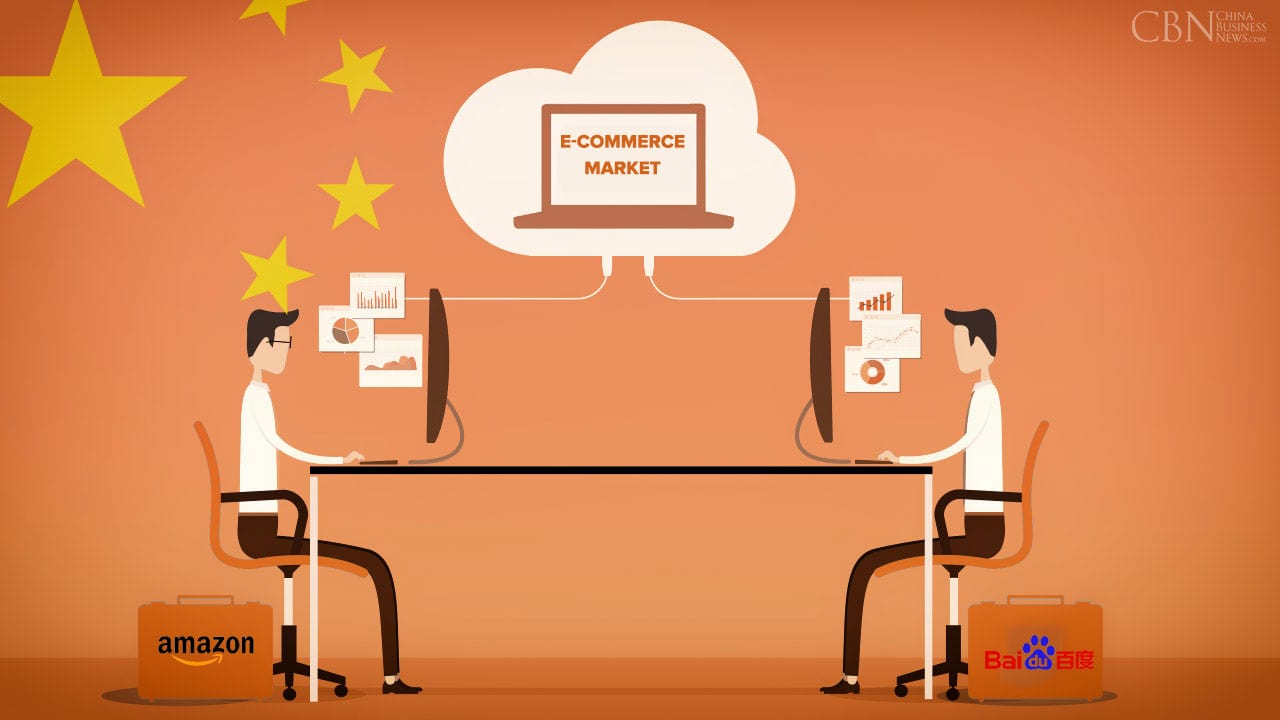
    Amazon does not reveal consumer expenditure figures – known in the industry as gross merchandise volume, or GMV – which makes it hard to see how Alibaba and JD stack up against the US-based ecommerce giant. Amazon operates in China, but it’s a minor player there.

  • Victoria’s Secret to Open First Full Retail Lingerie Store in China

    Victoria’s Secret to Open First Full Retail Lingerie Store in China

    Good news to all fashionitas out there! Premium lingerie brand Victoria’s Secret has announced that it will be launching its first full retail store in the mainland, offering its well-known bras and panties, its China-based office told China Daily.

    The firm is set to open a 1,475-square meter boutique at Lippo Plaza – the former house of one of Louis Vuitton’s four retail outlets in Shanghai. The lingerie shop is anticipated to make its debut by the end of the year. However, according to an insider, specific details have not been confirmed as the opening date largely depends on when the customs clears the company’s entire collection.

    Since last year, Victoria Secret’s parent company L Brands has opened 20 stores across the mainland including one in Shanghai, Guangzhou and Chengdu. But, these outlets are all advertised as “Victoria’s Secret concept stores,” with only accessories and beauty products such as shampoos, perfumes and canvas bags available.

    The insider revealed that although the company remains cautious of selling its prime products in China, L Brands will continue to widen its concept outlets in more cities.

    Despite plummeting sales in the luxury goods industry, the lingerie market has been experiencing soaring sales, with a double-digit growth rate. According to Frost and Sullivan, a consultancy firm, the lingerie market in China will reach approximately $240 million by the end of the year.

    Experts predict that apart from bags and shoes, tremendous amount of money will be splurged on intimate apparels as the spurring growth of the middle class will start bragging of their new wealth.

    Victoria’s Secret is globally known for its annually televised fashion shows. But those lacy apparels, which the company allocates millions to market with top models, are apparently only available in three countries, namely, Canada, the United States and the United Kingdom.

  • China duty free push

    China duty free push

    Nineteen inbound China duty-free shops have opened to serve domestic travellers returning home.

    The state’s Ministry of Finance announced the stores have been built in 13 airports including Guangzhou Baiyun, Hangzhou Xiaoshan and Qingdao Liuting, as well as six sea ports.
    Passengers can carry up to 8000 yuan ($1230) worth of duty-free goods, up from the previous 5000-yuan limit, when clearing customs, the ministry said, claiming that the shops feature more products than existing inbound duty-free outlets.

    Isetan Mitsukoshi Holdings says its stores served about 50 per cent more international duty-free shoppers from February 7 to 13 compared with the same holiday week last year, thanks to a spike from mainland China – but customer spend was 15 per cent less this time.

    Visitors from mainland China doubled to five million, helping Japan’s overall tourist numbers reach nearly 20 million – a target the government had hoped to achieve by 2020.

    Shopping by Chinese tourists at department stores and electronics shops last year created a buzzword, “bakugai”, or “explosive buying”, and came as a boon for Japanese retailers smarting from decades of sluggish demand from domestic consumers. However, China’s economy has since sagged to a 25-year low, with stock markets slumping mid-year.

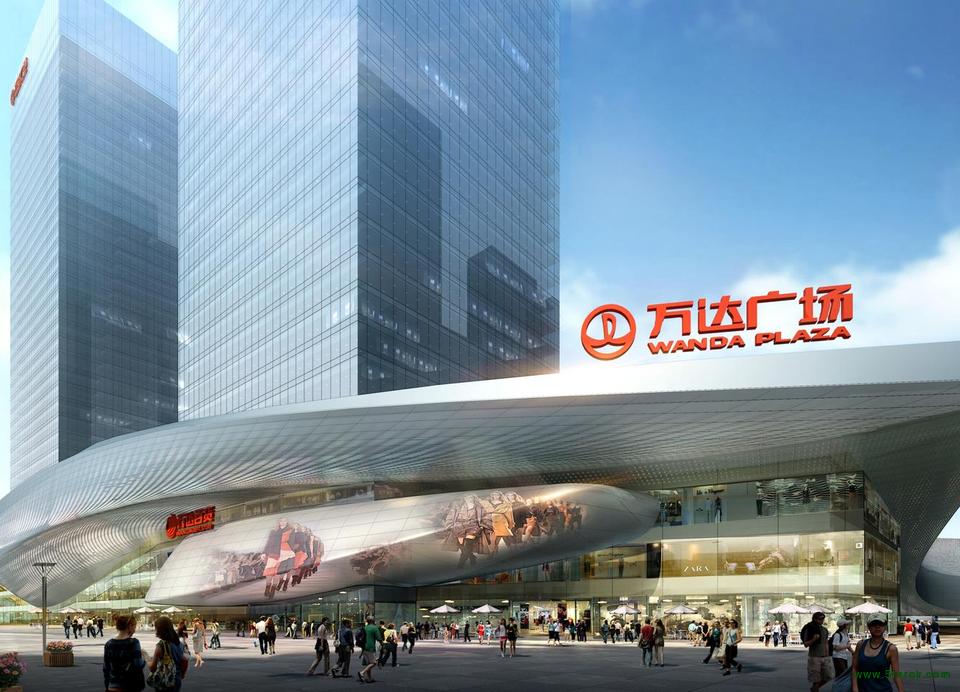
  • Wanda said to plan massive retail-leisure project near Paris

    Wanda said to plan massive retail-leisure project near Paris

    Chinese billionaire Wang Jianlin’s Dalian Wanda Group Co. plans to invest billions of euros in a retail and leisure development outside of Paris, Bloomberg reports, citing people familiar with the matter.

    Wang said at the University of Oxford on Tuesday that Wanda would announce a “major deal” this week, though he didn’t provide details.

    The project, known as EuropaCity, will be built in Gonesse, a town 16 kilometers northeast of Paris, between Le Bourget and Charles de Gaulle airports, according to a website for the property.

    For Wanda, which runs theme parks across China, movie theater chains in the United States and a soccer club in Spain, the move represents a renewed overseas push, underscoring Wang’s increasingly global ambitions.

    The conglomerate agreed in January to buy “Godzilla” producer Legendary Entertainment for US$3.5 billion, paving the way for the tycoon to become the first Chinese person to control a Hollywood film company.

    Construction on EuropaCity is slated to begin in 2019, with the project opening in 2024, according to the website.

    The development, being built by property company Immochan, will include a theme park, shopping center, water and snow parks, sports fields, performance spaces and hotels, according to the site.

    Immochan is the development arm of Groupe Auchan, a family-owned supermarket operator. A spokesman for Immochan declined to comment.

    Wang, who is estimated by the Bloomberg Billionaires Index to be worth US$27.2 billion, told executives in January that visitor arrivals and revenue at Wanda’s tourism projects in Wuxi and Guangzhou will beat those of Disneyland in Shanghai and Hong Kong, respectively.

    Besides the Legendary deal, Wanda announced a US$2.3 billion investment in three hospitals, the formation of a financial group and the signing a US$10 billion development deal in India.

    In addition, Wanda has said it’s planning five major acquisitions in 2016, three of them overseas.

    Separately, the group’s Wanda Cinema Line Co. theater chain unit was suspended from trading in Shenzhen on Wednesday pending the announcement of an acquisition.

    The Wall Street Journal reported that the group is seeking to raise US$1.5 billion from domestic Chinese investors for its closely held film-making Wanda Pictures subsidiary.

    While Wang’s investments in Europe include the Club Atletico de Madrid soccer team and Swiss marketing firm Infront Sports & Media AG, Wanda’s culture-and-entertainment business has a relatively smaller presence in the region than in China.

    Wang’s film, tourism and sports operations all fall under Wanda’s fast-growing Cultural Industry Group, which saw revenue climb 46 percent last year and is forecast to climb 30 percent in 2016.

    By comparison, Wanda Group estimates overall sales rose 19 percent in 2015 and will probably decline 12 percent this year because of the slump in its property business.


  • Xiaomi to open 300 retail stores to secure top spot

    Xiaomi to open 300 retail stores to secure top spot

    Xiaomi to open 300 retail stores to secure top spot

    Lei Jun, CEO of the Beijing-based Xiaomi Corp, at the launch of Mi 5 smarthphone. ZHANG JIN/CHINA DAILY

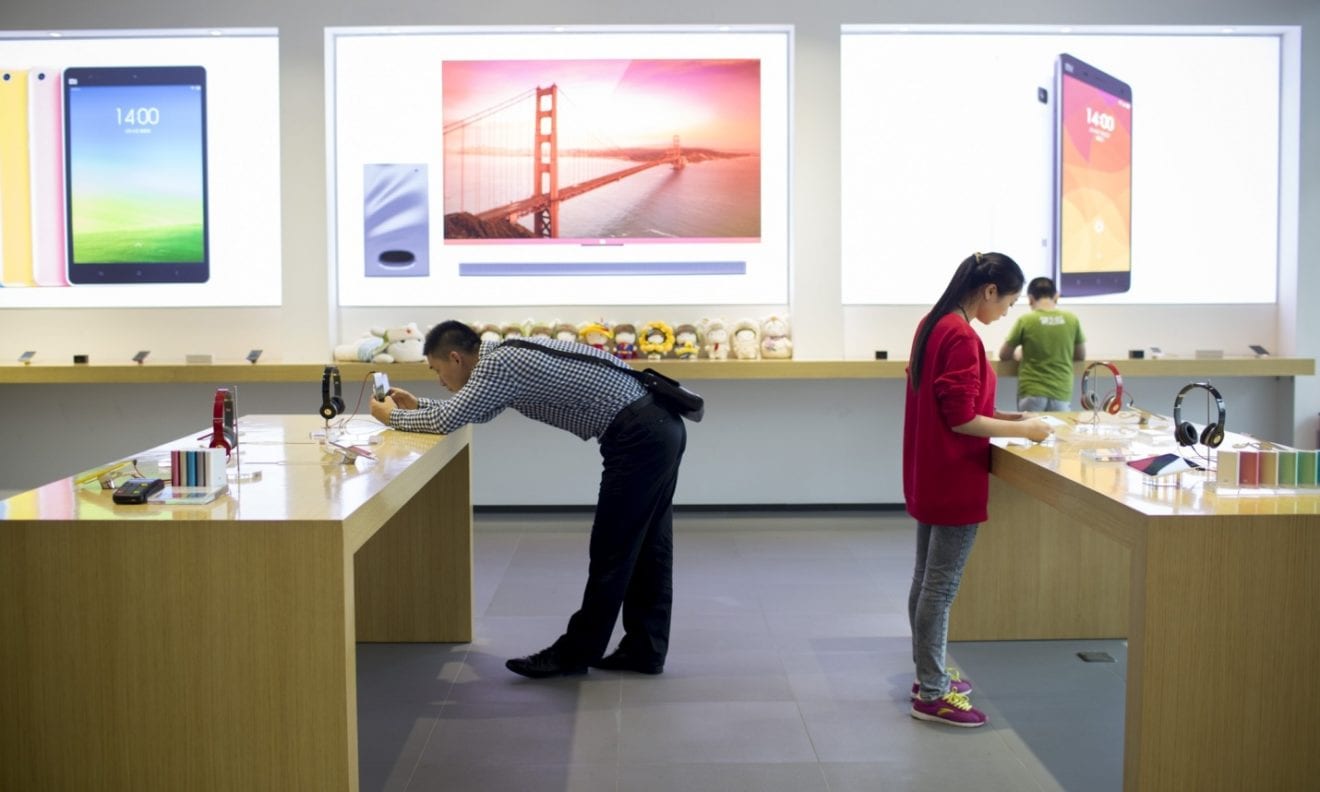
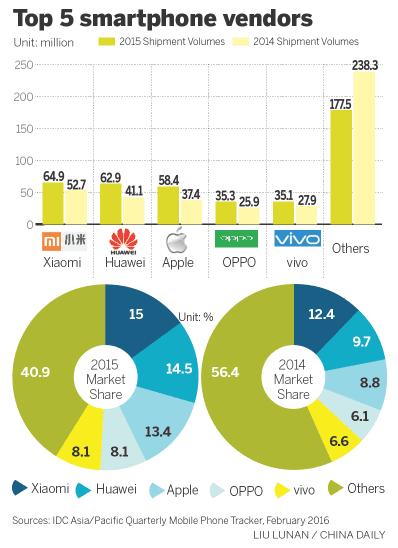
    Smartphone maker Xiaomi Corp on Wednesday debuted its flagship handset and pledged to open 300 retail stores to fight against Huawei Technologies Co Ltd, which is threatening its leading position in China.

    Lei Jun, CEO and co-founder of the Beijing-based Xiaomi, said the new device and offline sales plan will let the challengers know who is the boss on the market.

    “We are sorry other vendors were left disappointed,” Lei said on Wednesday at the launch. He was obviously mocking Huawei’s 2015 plan to get on top of Xiaomi in Chinese market by the year-end. Xiaomi ended up shipping 2 million devices more than Huawei did last year, according to research firm International Data Corp.

    “We are rolling out more top-tier products to secure the No 1 place,” said Lei.

    The company will relay on the new Mi 5 handset to achieve the target. The 5-inch-screen handset comes with a 16-megapixel back camera, a fingerprint sensor, a ceramic back, a powerful processor and a 128-gigabyte storage.

    The retail prices were set between 1,999 yuan ($306) to 2,699 yuan depending on the configurations. In comparison, Huawei’s slightly bigger flagship Mate 8 is selling from 3,199 yuan. The storage and processing power are similar to Mi 5’s cheapest option.

    The Mi 5 will be available on the Chinese mainland starting from March 1, followed by India, according to Xiaomi. However, the product will not enter the United States market although the 5-year-old Xiaomi launched an online store in the US selling power banks and mobile accessories.

    The delayed US release was largely due to lack of necessary patents. Lei said at Wednesday’s event the company is growing its patent pool and has applied about 3,600 patents over the past years.

    China, the world’s biggest smartphone market, will remain the top priority for Xiaomi in the coming years however. Lei said the company will open 200 to 300 retail stores in Chinese cities to boost sales.

    Nicole Peng, director of consultancy Canalys China, said going offline was a huge strategic change for Xiaomi as the company aims to grow sales as the market goes weak.

    Most of the Xiaomi devices were sold online currently. Internet-only sales model helped Xiaomi keep down its operational cost. The decision was made as demand for smartphones in the country stopped to grow because of high penetration rate.

    A number of vendors are also mulling over more stores in smaller cities for bigger sales.

    Apple Inc is heavily dependent on Chinese market and the company eyes to have around 40 bricks-and-mortar stores in the country. The new outlets mainly target buyers in smaller cities such as Qingdao in Shandong province.

    Tay Xiaohan, an analyst from IDC, said the market has changed significantly as telecom carriers are reducing smartphone subsidy.

    “Xiaomi entered the market at a time when the China smartphone market was still growing, and was able to capture a significant market share with its disruptive sales model,” Tay said.

    Company steps into financial services

    Xiaomi Corp has purchased a 65 percent stake in a third-party payment company, indicating that the biggest smartphone maker in China is preparing to step into the financial services sector.

    Xiaomi completed its stake purchase of Inner Mongolia-based Jiefu Ruitong in late January, according to a filing to the State Administration for Industry and Commerce. Jiefu Ruitong provides mobile and Internet payment services. The company said it handled more than $300 million in payment transactions as early as 2011.

    The performance of Jiefu Ruitong is unclear because it is a privately owned firm.

    During Mi 5’s launch, Xiaomi CEO Lei Jun said the new device would support mobile payment using near-field communication technology. The device could also work as a public transit card to pay bus and underground fares.

    Xiaomi to open 300 retail stores to secure top spot

  • Imax China to Install 100 New Screens in 2016, Bullish on Growth

    Imax China to Install 100 New Screens in 2016, Bullish on Growth

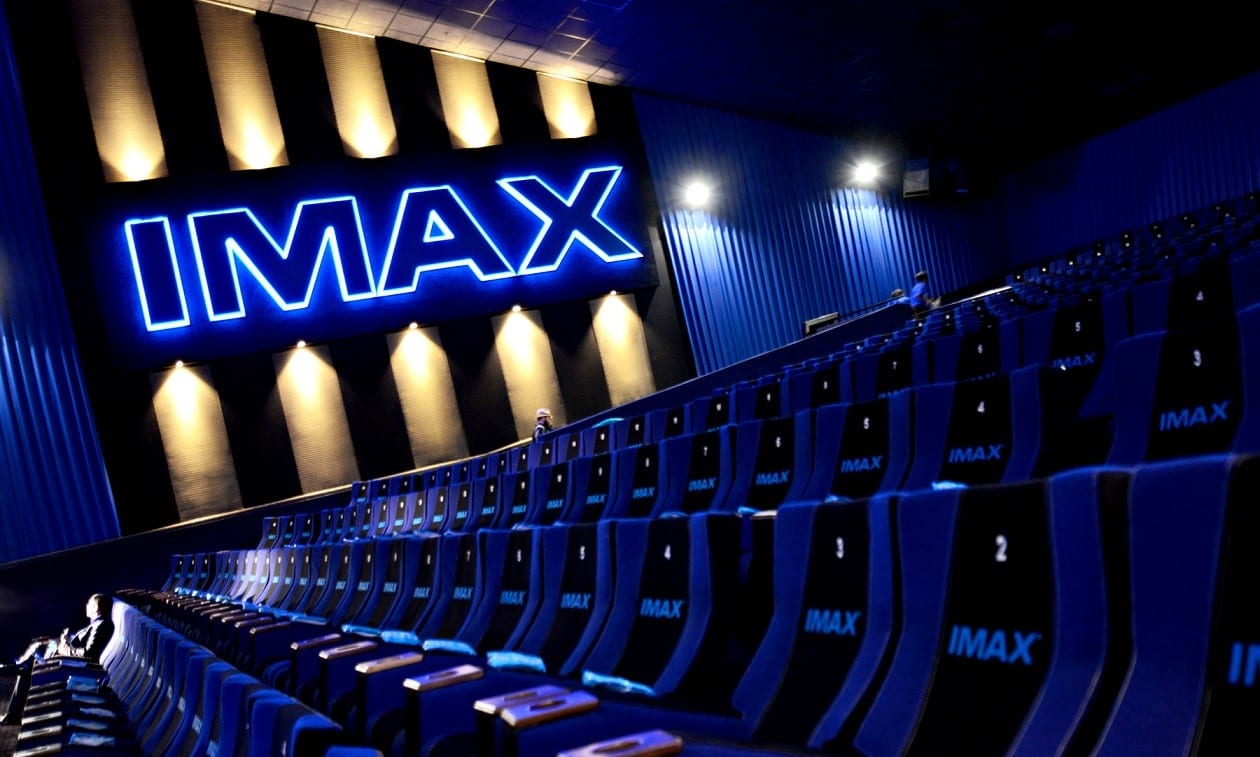
    Imax China, the Hong Kong Stock Exchange-listed subsidiary of the Canadian giant-screen exhibitor, reported a robust year of growth in the booming China market on Thursday.

    The company’s greater China box office reached $312.4 million, a 53.8 percent increase over net grosses in the territory in 2014. Reflecting the record box office and the company’s ongoing screen installations, total revenues surged 41.4 percent to $110.6 million, with adjusted profit growing 66.9 percent year-over-year to reach $43.4 million.

    The company said it will continue its expansion in the Chinese market with the installation of 100 new screens in 2016. Last year, Imax installed a record 74 giant screens, bringing its country-wide network total to 307 theaters.

    In 2015, Imax exhibited 31 films in China, a record eight of which were local-language Chinese titles. Imax reports that its per screen average in greater China was up 10 percent for the year to $1.34 million. The company indicated that it was pleased with the growing-per-screen average given that it has been aggressively expanding in the market at the same time.

    The biggest performing title for the company in 2015 was Furious 7, which earned a record $39 million in Imax box office. Local blockbuster Monster Hunt also set a domestic record, grossing $27 million in the format.

    Imax China, listed on the Hong Kong Stock Exchange on Oct. 8, 2015, received $57 million in net proceeds, resulting in a cash balance of $90.7 million as of Dec. 31, 2015.