Tag: China

  • Cross-border deals, connected shoppers, and mobile payments

    Cross-border deals, connected shoppers, and mobile payments

    Black Friday, the day after the Thanksgiving holiday in the US (celebrated on the fourth Thursday in November), and Cyber Monday, the first Monday after Thanksgiving, mark the start of the year-end holiday shopping season.

    Figures from the United States National Retail Federation shows that over 151 million consumers made purchases online and in physical stores during the most recent Black Friday and Cyber Monday shopping seasons.

    The trend, however, is becoming global. In Asia, where connected shoppers are constantly searching for the best deals, often crossing physical and geographical boundaries, Black Friday and Cyber Monday have been integrated into the retail experience. This, despite the popularity of China’s own Single’s Day online shopping festival that is also being adopted by many retailers across the region.

    Warren Hayashi, President, Asia-Pacific, Adyen, said this is partly due to the growth of cross-border e-commerce, which is giving Asian consumers access to both US and European retailers, who market Black Friday and Cyber Monday promotions in the region and ship to Asia.

    The trend has also been driven by the growing reach of US e-commerce giants like Amazon, which has meant that e-commerce companies based in other markets, such as Lazada, Qoo10, Rakuten, Alibaba, and Zalora, are rolling out similar promotional periods.

    “An interesting effect of this trend is that rather than adversely affecting transactions during the non-promotion period, we are seeing that seasonal shopping promotions actually expand the size of the market. They provide consumers with even more opportunities to shop,” he explained.

    Ayden’s data shows that in Asia, sales volumes increased by 170 percent in a year-on-year comparison over the course of the Black Friday weekend. Meanwhile, shoppers in China spent twice the amount during Black Friday 2015 as compared to the same period in 2014. In Japan, the average transaction value increased by 50 percent.

    Interestingly, the payments industry for online and offline retail is also innovating to keep up with these developments in the retail scene. Ayden sees that companies are also going global with a payments first approach.

    “For example, we have Asian merchants expanding into Europe with their English-language website and local payment methods, such as iDEAL in the Netherlands (which accounts for over 60 percent of transaction volume in that market), SOFORT in Germany, and so on,” Hayashi shared.

    “Likewise, we have global customers selling in Asian markets from their global website, but offering targeted payment methods such as Alipay, which are dynamically offered at the checkout stage according to the shopper’s geographical location. This is a huge opportunity for retailers to expand globally,” he added.

    Interestingly, he said one of the most innovative payments technologies that is changing the user experience is the zero-click transaction – which takes place in the background, without any action required by the customer. An example is how Uber is accepting payments.

    “When passengers take an Uber, they do not need to take any specific action for the payment to be made, everything happens in the background. This kind of frictionless connectivity brings businesses closer to their customers and will spread rapidly,” he explained.

    In 2016, Hayashi sees the retail landscape in the region as going more on mobile, especially in the area of payments.

    Citing Ayden’s own data – tracked quarterly through the Mobile Payments Index – shows that Asia-based payment methods such as Alipay, UnionPay, and JCB have among the highest proportions of mobile payments globally.

    “With everything they do around payments, retailers should simply be asking themselves, how does this improve the customer experience? One key goal should be to provide a frictionless payment experience across channels,” he said.

    “For mobile, along with optimizing the size of the page, many merchants find that a “less is more” approach drives conversion increases, with page layout minimized to ensure the smoothest possible payment flow,” he continued. “It’s also important to remember that the checkout stage of the shopper should be the beginning of an on-going relationship with the consumer. Merchants that have created a frictionless checkout experience, regardless of the channel, see sustained increases in their repeat customers and purchases.”
  • CapitaLand China growth outpaces economy

    CapitaLand China growth outpaces economy

    Singapore-based shopping mall investment company CapitaLand Retail China Trust (CRCT) grew its income last year by 10.3 per cent to S$89.2 million ($63 million) from S$80.9 million.

    With China’s economy growing 6.9 per cent last year, the company’s retail sales drew 10.7 per cent of RMB30.1 trillion ($4.58 trillion), reports CRCTML chairman Victor Liew (CRCTML manages CRCT).

    “China’s slower growth is reflective of an economy undergoing transition, but it is expanding from a much larger base now and its growth is still considerably faster than those of most other economies,” says Liew. “CRCT’s family-oriented shopping malls are well-placed to benefit from China’s growing urban population and rising retail sales as domestic consumption becomes the country’s new growth engine.”

    It was the first time CapitaLand China’s gross revenue had crossed the RMB1-billion mark, says CRCTML CEO Tony Tan. “Portfolio occupancy remained high at 95.1 per cent  as at December 31, while rental reversion for the full year was 8.1 per cent.

    “Annual tenants’ sales increased 11.6 per cent and shopper traffic rose 1.8 per cent year-on-year.

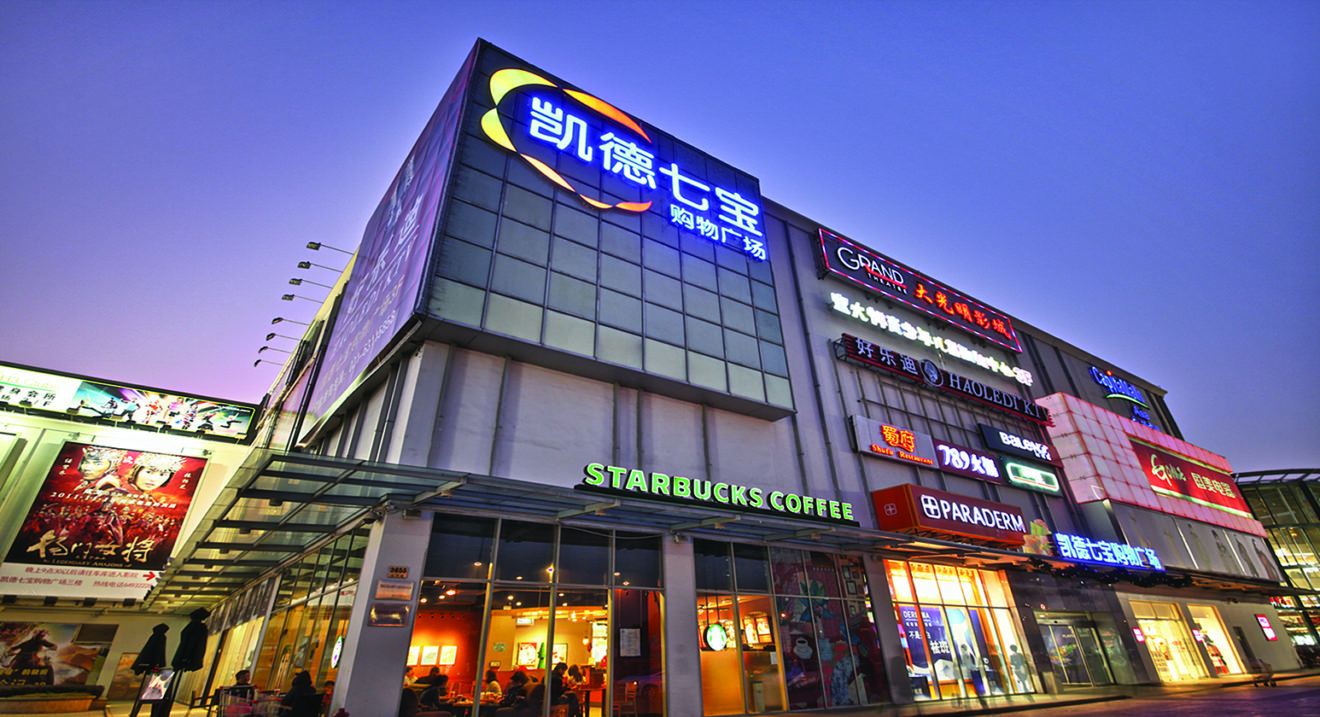
    “We continually refresh our mall offerings to stay relevant to our shoppers’ evolving preferences and needs. For example, CapitaMall Xizhimen (pictured) brought in the popular Jing Ge Steamboat to increase the variety of its F&B offerings, while CapitaMall Qibao introduced a water park.

    “To improve sustainability and the shopping experience, CapitaMall Grand Canyon installed energy-saving LED lights in common areas and upgraded its car park with new flooring.

    “CapitaMall Wangjing is carrying out renovation work to rejuvenate its façade, and is on track to unveil its new look by June.

    “We will continue to strengthen our malls’ tenant mix and uplift the shopping experience through continual asset enhancement initiatives.”

    Gross revenue for the year increased RMB17.5 million, or 1.8 per cent, over the previous year. This was attributed mainly to rental growth from the multi-tenanted malls, partially offset by lower revenue fromCapitaMall Minzhongleyuan, which was impacted by road closure for the building of a subway line, and from CapitaMall Wuhu, where tenancy adjustments are being introduced to achieve stronger positioning and better trade mix.

    CRCT is the first China shopping mall real estate investment trust (REIT) in Singapore, with a portfolio of 10 malls. Listed in Singapore in 2006, its objective is to establish long-term investments in a diversified portfolio of real estate used primarily for retail in China, Hong Kong and Macau.

    A significant portion of CapitaLand China’s properties’ tenancies comprises major international and domestic retailers such as the Beijing Hualian Group, Carrefour and Wal-Mart. The anchor tenants are complemented by specialty brands such as BreadTalk, Innisfree, KFC, Nanjing Impressions, Nike,Sephora, Starbucks, Uniqlo, Watsons and Zara.

  • Yum! China fortunes rebound

    Yum! China fortunes rebound

    Yum! China has showed progress with a system wide sales increase of 3 per cent in the latest quarter – or 7 per cent on a constant currency basis.

    Same restaurant sales are now in positive growth, although by a fairly meagre 2 per cent given the 16 per cent decline in the same quarter last year. Nevertheless, the strong pace of 743 new restaurant openings, combined with some good productivity gains, helped to swell operating profit by 200 per cent.

    Given the big differential in growth prospects and the fact that China faces a very different set of problems and opportunities, it is hardly surprising that Yum! is looking to split its business into two separate companies. This is a sensible step that will allow Yum! and Yum! China to focus on their respective priorities. However, without the boost to growth provided by China, the legacy business will need to work much harder to reestablish its relevance if it is to grow in a much more competitive market.

    Globally, Yum! produced a set of results that exactly mirrors those of last quarter.

    KFC has ended its fiscal year with a fairly solid set of numbers. That said, the growth figures are expressed on a constant currency basis and so exclude the negative impact of the strong US dollar. When this is factored in the outcome is a little less rosy with total revenue for the quarter falling by 1.2 per cent over the prior year.

    Behind the numbers, both KFC and Pizza Hut continue to struggle with system wide sales, including the impact of exchange rates, falling by 5 per cent and 2 per cent respectively. Fortunately this has been somewhat offset by the rebuilding of restaurant margins, but not by sufficient enough a degree to prevent profits at KFC dipping and profits at Pizza Hut virtually flatlining. Across the quarter, these two traditional engines of growth simply failed to propel the company forward.

    One of the key issues for both brands is the relatively slim growth within the US, which in the case of KFC is the division’s single largest market, and in the case of Pizza Hut accounts for the majority of the division’s sales. In our view both suffer from the challenge of maturity and, while they remain popular, the rather tired nature of the brands and a lack of meaningful menu innovation means they struggle to compete against rivals like Chick-Fil-A which are seen as more interesting by consumers. In many ways, both brands need to take a leaf out of the McDonald’s playbook in terms of reinventing themselves to become more relevant to diners.

    In contrast the Taco Bell division saw a strong rise in sales on at both total and same restaurant level. Restaurant margins also increased thanks to some favorable cost changes for commodities. While the combination of these things should have resulted in a good uplift in operating profit, a number of one-off costs – which included investment spending, legal fees, and the creation of a scholarship program – put pay to that. For the quarter Taco Bell operating profit declined by 7 per cent.

  • 2016, a crunch year for China luxury retail

    Fears of an economic slowdown in China, the devaluation of the yuan, and persistent turmoil in the stock market throughout January have grabbed media headlines.

    All raise questions about the continuing strength of demand for luxury goods among Chinese consumers in the year ahead.

    Global Blue data for December shows growth in Tax Free Shopping (TFS) spend by Chinese shoppers worldwide slowed to 16 per cent, after a peak of 42 per cent in November. Despite concerns around Chinese luxury spending worldwide, however, there are positive signs for luxury brands in 2016, provided they respond to modern consumer preferences and behaviour.

    Slower growth, continued travel

    China’s economy grew 6.9 per cent in 2015, following a 7.3 per cent rise in 2014, according to the Wall Street Journal. Economists predict growth of more than 5 per cent in 2016.

    “[This] may seem weak compared to the past, but it is still far above what other countries are experiencing,” said Philip Guarino, European director at China Luxury Advisors.

    “More people are becoming part of the country’s middle class every day, and millions more Chinese are travelling abroad each year, learning about new brands and purchasing luxury goods,” he added.

    According to a Consumer Life survey by market research firm GfK, more than 109 million Chinese travelled overseas in 2015, up from 100 million the previous year. By 2020, this figure is set to rise to more than 200 million.

    Travel bookings for the upcoming Spring Festival 2016 (Lunar New year) in February indicate strong demand from Chinese travellers. Online travel service Ctrip reports that more than 60 per cent of those Chinese taking holidays during the festival will do so overseas.

    Spending in China

    Despite expectations of a slowdown in global luxury sales and the impact Chinese consumers may have on worldwide sales, analysts at Goldman Sachs have backed the luxury market, upgrading investor advice on global luxury conglomerates LVMH and Kering, according to the Financial Times.

    One of the themes driving Goldman Sachs’ endorsement of the global luxury market is spending in China.

    Recent trading updates by luxury brands show a rebound in demand within mainland China. In Q3 trading, both Burberry and Richemont Group highlighted a reversal in the decline of luxury sales in China, attributed in part to a new breed of middle-class shoppers.

    Luxury spending in China should rise by 6 per cent in 2016, noted Goldman Sachs, the slowest rate since the Chinese luxury market opened up a decade ago, and less than the 10 per cent of 2015.

    Despite slower growth, the investment bank said: ”The emerged and emerging middle class have a lower propensity to spend on luxury, but the desire for branded, status luxury brands remains unchecked.”

    This means a greater focus on affordable luxuries to a more mass customer base, reducing the emphasis on status-driven purchasing. Three quarters of total growth in 2016 is expected to come from 70 million middle-class consumers in China with an annual disposable income of US$30,000-$65,000.

    Chinese consumers are also starting to buy more frequently, something that should benefit brands with a strong footwear, cosmetics and ready-to-wear offering, said Paul Swinand, analyst at investment firm Morningstar.

    “We believe Chinese consumers will behave more like their Western counterparts, with more frequent lifestyle purchases of aspirational luxuries on a per household basis and fewer purchases of status symbol goods that were often a store of wealth,” said Swinand.

    SHANGHAI, CHINA - MAY 28: Nanjing Road street night view on May 28, 2012 in Shanghai, China. Nanjing

    Chinese millennials

    Chinese outbound travel is dominated by millennials. More than 50 per cent of Chinese outbound travellers are aged between 15 and 29, according to GfK, while 37 per cent are aged 30 to 44, and just 10 per cent are aged 45 to 59.

    The behaviour of millennial travellers differs from that of older generations. They are increasingly likely to be looking for travel and dining experiences as well as products, especially as their income rises. This has given rise to a number of designer brand/gourmet crossovers within mainland China itself, as well as in other Asia tourist hotspots.

    Sharing on social media is central to any overseas travel experience for young Chinese travellers and is an opportunity that luxury brands are yet to fully leverage.

    Luxury purchases remain a big part of overseas trips, with just over half (51 per cent) of Chinese millennials aged 18-29 likely to buy luxury goods when travelling overseas, according to MasterCard research. This group is the biggest purchaser of luxury goods in Asia Pacific, and its members are set to spend an average of US$4362 per head on luxury goods in 2016, twice as much as the average across nationalities.

    Global Blue believes that despite concerns around Chinese luxury spending worldwide, there are positive signs for luxury brands in 2016, provided they adjust to modern consumer preferences:

    • A growing Chinese middle class and a shift away from conspicuous luxury consumption is opening up opportunities for affordable luxury goods purchases. Chinese millennials are the dominant age group for overseas travel and for luxury goods purchases on trips.
    • Luxury brands should not underestimate the quickly changing behaviours and preferences of millennial travellers; a desire for unique cultural experiences combined with luxury lifestyle opportunities is high on their agenda.
    • 2016 is an important year for luxury brands as they reexamine how they engage with Chinese consumers both at home and abroad.
  • WeChat replaces waiters at Chinese restaurant

    WeChat replaces waiters at Chinese restaurant

    A Chinese restaurant in Beijing has replaced its front-of-house staff and diners use messaging app WeChat to order and pay.

    Diners at Renrenxiang Restaurant launch the app on their smartphone to browse the menu and place their order. They then pay for their meal using the messenger service, and are given an order number, reports Springwise.

    Their meal is prepared in the kitchen and their number called out over a loudspeaker when it is ready. The customer can then collect their food. After eating, they leave their crockery on a cleaning table.

    Customers do not even need to be in the restaurant to order. One frequent diner who works nearby says she orders while still in the office, then strolls to the restaurant. By the time she arrives, her meal is ready.

    Meanwhile, the noodle restaurant’s owner is looking at cutting his overheads even further, reports CNN.

    “There will be four ‘no’s in the restaurant – that is, no waitress, no cashier, no merchandiser and no chef,” says Renrenxiang founder Liu Zheng. “I did this because I’m following the technology development trend in China.

    “Thanks to the app, we can cut out unnecessary expenditure, simplify management and focus more on taste and quality.”

    The app also collects customer-related data – such as what dish is most popular, and what age groups visit more frequently. Renrenxiang uses the data to improve its marketing strategy. But despite its high-tech approach, the restaurant does not have its own website.

    Also, it is not the first restaurant to offer waiterless service. In 2007, a restaurant in Nuremberg, Germany, began to offer fully automated order and table services. There are also similar eateries in Japan and the US.

    Using robots to cook, serve and clean is also becoming more common in China.

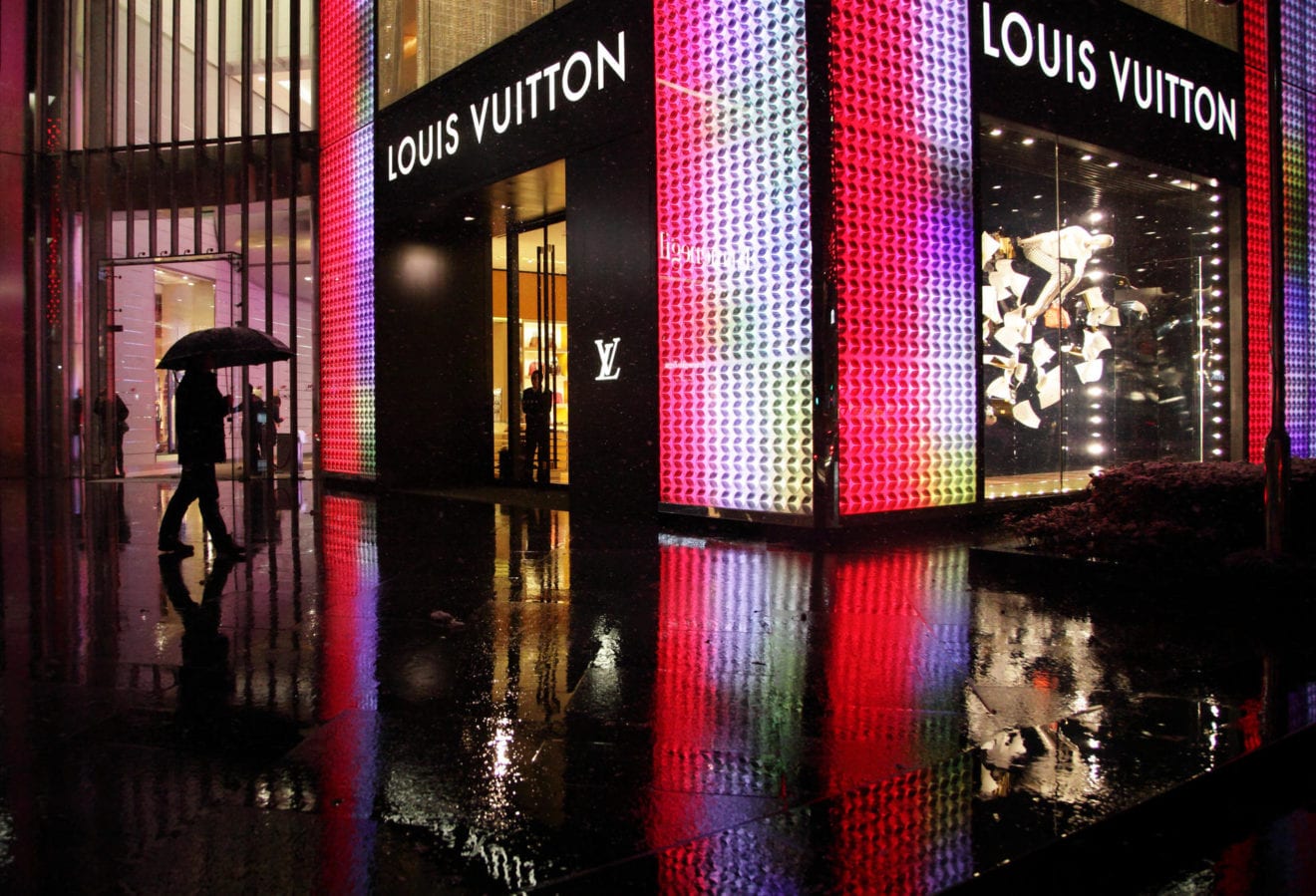
  • Louis Vuitton Hong Kong problems ‘cyclical’

    Louis Vuitton Hong Kong problems ‘cyclical’

    Louis Vuitton is committed to the Greater China market and the company’s chief believes Hong Kong’s challenges are of a short term nature.

    And the company has announced it will soon commence renovations of its Louis Vuitton Hong Kong flagship store at Landmark Central.

    Chairman and CEO Bernard Arnault told the company’s annual meeting in Pairs that the current downturn in Hong Kong is just a “cyclical” problem.

    He said the luxury retailer will be keeping all of its stores in the territory, apparently referring to all the group’s brands which also include Celine, Loewe, Kenzo, Givenchy, Fendi, Donna Karan and Marc Jacobs.

    “In Hong Kong, [there] is no question of closing the few shops that we have,” he said.

    “Hong Kong is a cyclical city. As you know, you have ups and downs there. Right now, Hong Kong is going through a trough,” Arnault told shareholders.

    “Hong Kong will remain one of the high points in Asia and one of the drivers of our growth.”

    In the mainland, where Louis Vuitton has been culling about one in five of its stores, the company was planning to maintain the same number of stores – just in different locations.

    “If we [close stores], it is only because Louis Vuitton will open shops elsewhere,” he said.

    “The retail picture is evolving rapidly in China, you have some areas of the country that may be attractive one day, less attractive the next day.”

    The company will continue to close stores which were not performing when their leases came up for renewal.

    “When new malls are built, the leases are very attractive.”

    Arnault said it often made sense for the brand to leave a mall where the business was not performing well in order to open in another centre where the company might secure two or three years free rent.

    “Of course we will take the opportunity” he concluded.

  • Wing Tai’s Q2 net profit falls 85% to $1.08m

    Wing Tai’s Q2 net profit falls 85% to $1.08m

    Earnings plunged 85 per cent at developer Wing Tai Holdings in the second quarter due to the absence of a one-off gain in the corresponding quarter last year.

    The group had recorded a gain of $21.1 million on the disposal of a property subsidiary in Indonesia in the same period a year ago.

    Net profit this time came in at $1.08 million for the three months to Dec 31 while revenue fell 5 per cent to $120.6 million.

    The decline in turnover was due mainly to progressive sales of units recognised from The Tembusu, additional units sold at Le Nouvel Ardmore in Singapore, The Lakeview in China as well as contribution from Phase 2 of Jesselton Hills in Penang.

    The group’s share of profits from associated and joint venture companies fell by 25 per cent to $15.8 million, largely due to the lower contributions from Wing Tai Properties in Hong Kong.

    Distribution expenses fell 20 per cent to $22.2 million from $27.7 million due to lower rental and depreciation from its Singapore retail outlets. Administrative and other expenses rose 12 per cent to $23.8 million from $21.3 million a year ago due to the closure of Singapore retail outlets.

    Earnings per share tumbled to 0.40 cent from four cents, while net asset value per share rose to $4.09 as of Dec 31 from $4.07 as at June 30.

    No dividend was declared.

    The firm said the effect of the cooling measures will continue to weigh on market sentiment here this year while economic conditions in Malaysia will likely keep sales soft.

    In China, residential sales are expected to improve with the relaxation of home purchase restrictions in certain cities.

    Wing Tai shares closed 0.3 per cent or 0.5 cent up to $1.525 yesterday.

  • Fall in JLR sales in China dents Tata Motors’ Profits

    Fall in JLR sales in China dents Tata Motors’ Profits

    Tata Motors – the owner of Jaguar Land Rover – said today that net profit for the last quarter fell by 2%, hit by lower JLR sales in China. This was better than many analysts had expected.

    JLR’s retail sales in China fell by 10% percent in China in the period. Local production of Range Rover Evoque and Discovery Sport SUVs in China and the ending of an annual tax rebate there also lowered margins, JLR said.

    But strong JLR sales in Europe and North America offset the slowdown in China. The firm posted a near 50% increase in US and European sales, with sales up by 47% in the UK. Other overseas markets were up 6% overall. In volume terms it was the firm’s best ever quarter.

    Total revenues were £5.8 billion, 2% down on the same period of in 2014. JLR reported Earnings Before Interest, Taxes, Depreciation and Amortisation (EBITDA) of £834 million, representing an EBITDA margin of 14.4% for the quarter (up from 12.2% in the previous quarter, which pleased analysts), although this was still down from a near 20% in earlier quarters.

    Profit Before Tax came in at most £500m, including a £30 million favourable exceptional item relating to the initial insurance payments for thousands of cars damaged in the 2015 Tianjin Port explosion.

    This compares to a profit before tax figure of £685 million for the same period of 2014. Yet the £500m figure was still a good result as it was up significantly from the (exceptional) pre-tax loss that the firm reported in the previous quarter.

    The challenges that JLR faced in China in 2015 have been the subject of recent Birmingham Post blogs, see here for example.

    Despite opening a new plant operating in China in late 2014, the firm saw a sharp decline in sales there in 2015 as the economy cooled and the impact of the stock market crash was felt on premium car sales. China accounted for about a quarter of JLR’s retail sales in 2014 and a much higher proportion of its profits given the high prices the firm had been able to command there.

    Despite the Chinese slowdown, JLR still has impressive growth potential according to many analysts. Its new products – including the Discovery Sport, XE and XF, are expected to drive strong growth and profits. And the Chinese premium market is already showing signs of picking up.

    New models will help. For example, Jaguar will launch its F-Pace ‘crossover’ (or SUV) model shortly, which could really boost Jaguar sales in the US and China. The SUV/crossover market is set to expand rapidly in coming years around the world. Even in China, while car sales rose slowly at the back end of 2015, SUV sales jumped. The F-Pace may be just the first of a range of Jaguar crossovers.

    JLR wants to release some 50 new or updated products over the next five years and recently signed a deal to build a new plant in Slovakia. JLR does not publicly discuss long-term sales goals, but it’s thought to want to achieve at least 1m in sales by 2020 — which would be about half the current annual volumes of BMW. JLR is on course to top 500,000 sales this fiscal year.

    What’s important here is that the firm now has strengths across different markets and with its impressive product line up, can – probably for the first time in its history – ride out shocks in different parts of the world. There’s no room for complacency, of course; indeed the Chinese slowdown in part stimulated the launch last year of an ambition cost reduction programme at the firm, as part of a programme called ‘Leap 4.5.’

    Overall, after a difficult period in mid-2015 owing to the sharp slowdown in the Chinese premium auto market, Jaguar Land Rover (JLR) has returned to form on latest figures.

  • The power of Western brands in China

    The power of Western brands in China

    Jimmy Choo increased their annual global revenue in 2015 by 7 per cent to £318m thanks in part to its eight new stores in China.  This demonstrates the continuing popularity with western brands in the country. Retail sales in China for December 2015 were up 10.1per cent year on year despite the worries about the overall economy as the nation continues to be a hotbed for retailers.

    To sell successfully online it is critical that retailers offer a localised online service for the country, as 32 per cent of Chinese consumers’ state they shop online to access a wider range of brands, highlighted particularly amongst those who live away from the major cities.  This is key given the vast size of China.

    And we know they love to buy from abroad. A recent payments report stated that thirty-five per cent of online shoppers in China are now buying cross-border.  This is driven by consumers wanting the guarantee of high quality goods that is ensured from buying direct from foreign brands. This quality assurance is the reason that 51 per cent of consumers in China use eCommerce. For businesses, developing a direct eCommerce strategy reinforces this brand integrity, while offering a localised  website for the Chinese economy allows for convenience, easy access and simple payment acceptance.

    Andy Muldoon CEO of PowaWeb, a leading eCommerce provider to global retailers’ comments: “It’s great to see how resilient the Jimmy Choo brand has been in the Chinese market, yet by adopting a direct online retail approach, they can also significantly increase their potential consumer-base. With the high-street store having a relatively limited reach due to the size of the country, retailers must take full advantage of the penetration rate of online shopping which stands at roughly 55.7 per cent.”

    Online purchasing in China is not limited to low-cost goods, on average 17 per cent of consumers spent RMB1515 on their most recent purchase, with another 17 per cent having spent at least RMB2000 on a single product. With total eCommerce sales about to reach $1 trillion in China by 2019, it is of vital importance that retailers establish their strategy and avoid falling behind competitors in this fast growing market.

    Andy Muldoon continues: “With such large amounts being spent online in China, retailers need to offer a direct to consumer eCommerce solution that compliments the brick-and-mortar stores to create a dedicated omni-channel environment for their consumers. To not offer this is damaging to retailers  particular as the rising middle-class are often the biggest spenders on high-quality products, are located away from the major cities.”

  • Coach China leads transformation

    Coach China leads transformation

    Coach Inc says its net sales totalled US$1.27 billion for the second fiscal quarter – up 4 per cent year on year, and up 7 per cent on a constant currency basis.

    China was a primary driver of the increase in the three months to December 26, with sales up in the double digits and Japan also performed well for the New York based luxury accessories and lifestyle brands, which also owns Stuart Weitzman.

    Gross margin slipped from 68.9 per cent to 67.4 per cent, but gross profit rose $18 million to $859 million.

    Total Coach China sales rose 2 per cent in dollars and 5 per cent in constant currency with double-digit growth and positive comparable store sales on the Mainland offset in part by continued weakness in Hong Kong and Macau.

    In Japan, sales rose 2 per cent on a constant currency basis, despite a decrease in square footage and consistent with expectations, while dollar sales declined 3 per cent, reflecting the weaker yen.

    “Sales for the remaining directly operated businesses in Asia grew modestly in constant currency but declined in dollars, while Europe remained very strong, growing at a double digit pace in both total and comparable store sales,” the company said in its earnings statement.

    CEO Victor Luis said the result reflects “the most significant progress to date” on the company’s transformation plan despite the difficult retail environment globally.

    “We drove further sequential improvement in our North America bricks and mortar business – led, as expected, by our retail stores, while our outlet store channel also strengthened against a backdrop of lower tourist traffic and a highly promotional environment.

    “Our international businesses posted strong growth on a constant currency basis, highlighted by double-digit increases in Europe, and Mainland China, as well as sales gains in Japan. Overall, our results continue to give us confidence that the cumulative impact of our actions will result in a return to top line growth this fiscal year and positive North American comps by our fourth quarter.

    “We were also excited about Stuart Weitzman’s results during the quarter, which exceeded expectations. Importantly, we are effectively integrating Stuart Weitzman to Coach Inc while continuing to successfully execute the Coach brand transformation,” said Luis.

    “At points of sale, sales in international wholesale locations increased slightly, driven by strong domestic performance offset in large part by relatively weak tourist location results. Net sales into the channel grew significantly from prior year positively impacted by shipment timing to ensure appropriate inventory positions for Chinese New Year,” the company said.

  • Eu Yan Sang reports 75% plunge in Q2 net profit

    Eu Yan Sang reports 75% plunge in Q2 net profit

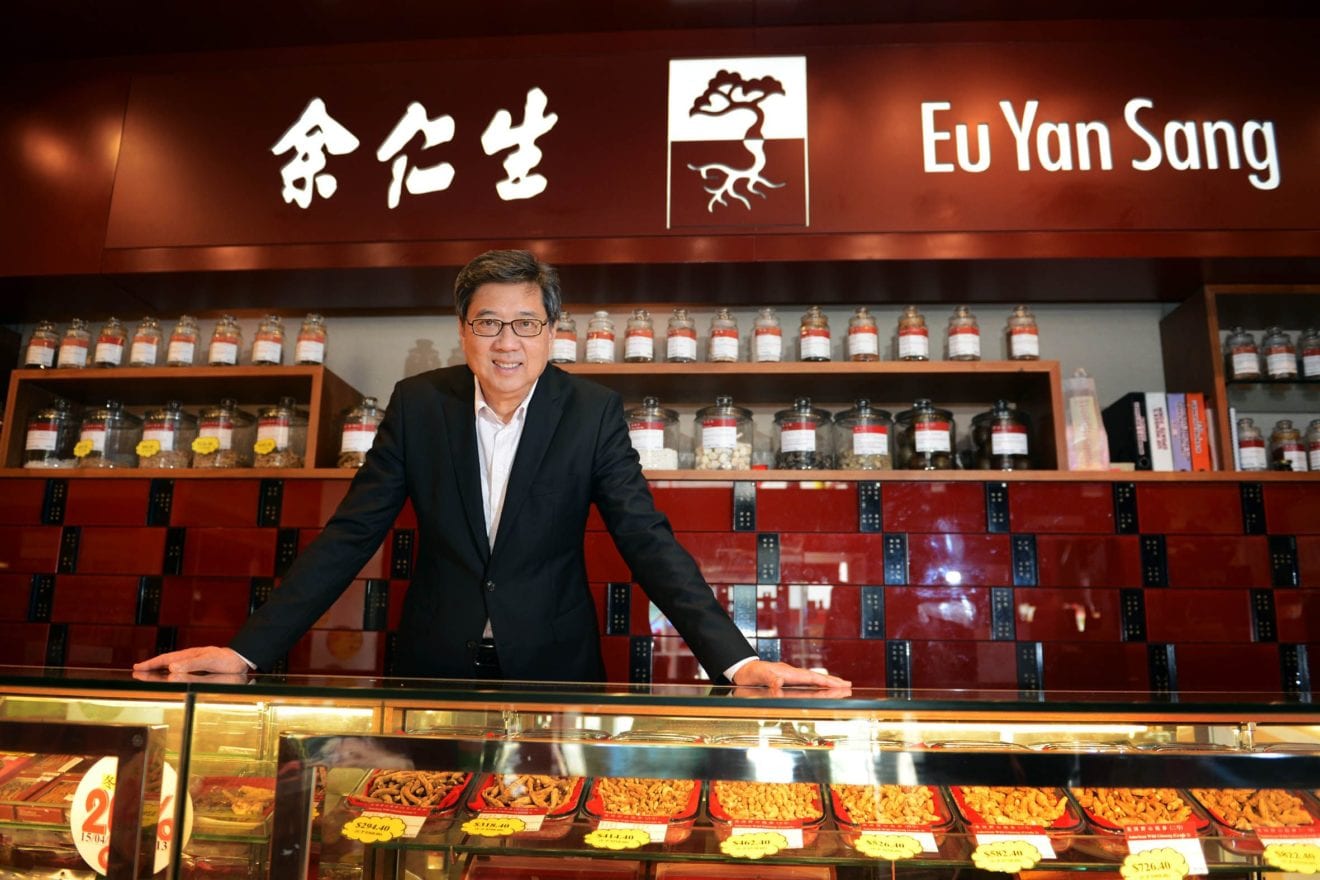
    Mainboard-listed Eu Yan Sang International said on Friday (Feb 12) its net profit for the second quarter plummeted 75 per cent, hurt by a weak Malaysian ringgit and lower revenue from the Hong Kong market.

    Net profit for the three months to Dec 31 was S$498,000, down from S$1.98 million in the same period a year ago.

    Revenue, however, was up 1 per cent at S$85.61 million, compared with S$84.69 million a year ago, mainly due to higher sales from Singapore and Australia.

    Revenue from Hong Kong declined 13 per cent in the quarter, due to a decline in spending by mainland Chinese tourists and the “ongoing challenging retail environment”, the company said. This was partially offset by the strong Hong Kong dollar, which helped to reduce the revenue decline to 5 per cent when translated to Singapore dollars.

    Revenue from Malaysia rose 14 per cent due to higher sales, but as a result of the weak ringgit, was down 8 per cent when translated into Singapore dollars.

    In Australia, revenue rose by 18 per cent due to an increase in the number of outlets and higher sales. However, the appreciation of the Singapore dollar against the Australian currency resulted in only an 8 per cent increment in revenue in Singapore dollars, Eu Yan Sang said.

    Revenue from Singapore improved by 13 per cent during the quarter, due to the launch of new products and promotional campaigns.

    “Despite the challenging business environments in key markets of Hong Kong and Malaysia, we are glad that Hong Kong’s rate of decline is showing signs of moderation and an improvement in Malaysia. Singapore and Australia have continued to show positive growth and added resilience to our Group’s results,” Group CEO Richard Eu said.

    The company plans to expand its retail network in Australia and Malaysia, and will also launch several joint ventures in China to boost its growth in the Chinese market, he added.

    Looking forward, Eu Yan Sang said it remains cautious on its business outlook. The company plans to reduce costs through the “rationalisation” of weak performing retail outlets, while continuing to improve its operational efficiency through technology, it said.

  • Amazon shores up logistics in China as its global delivery business

    Amazon shores up logistics in China as its global delivery business

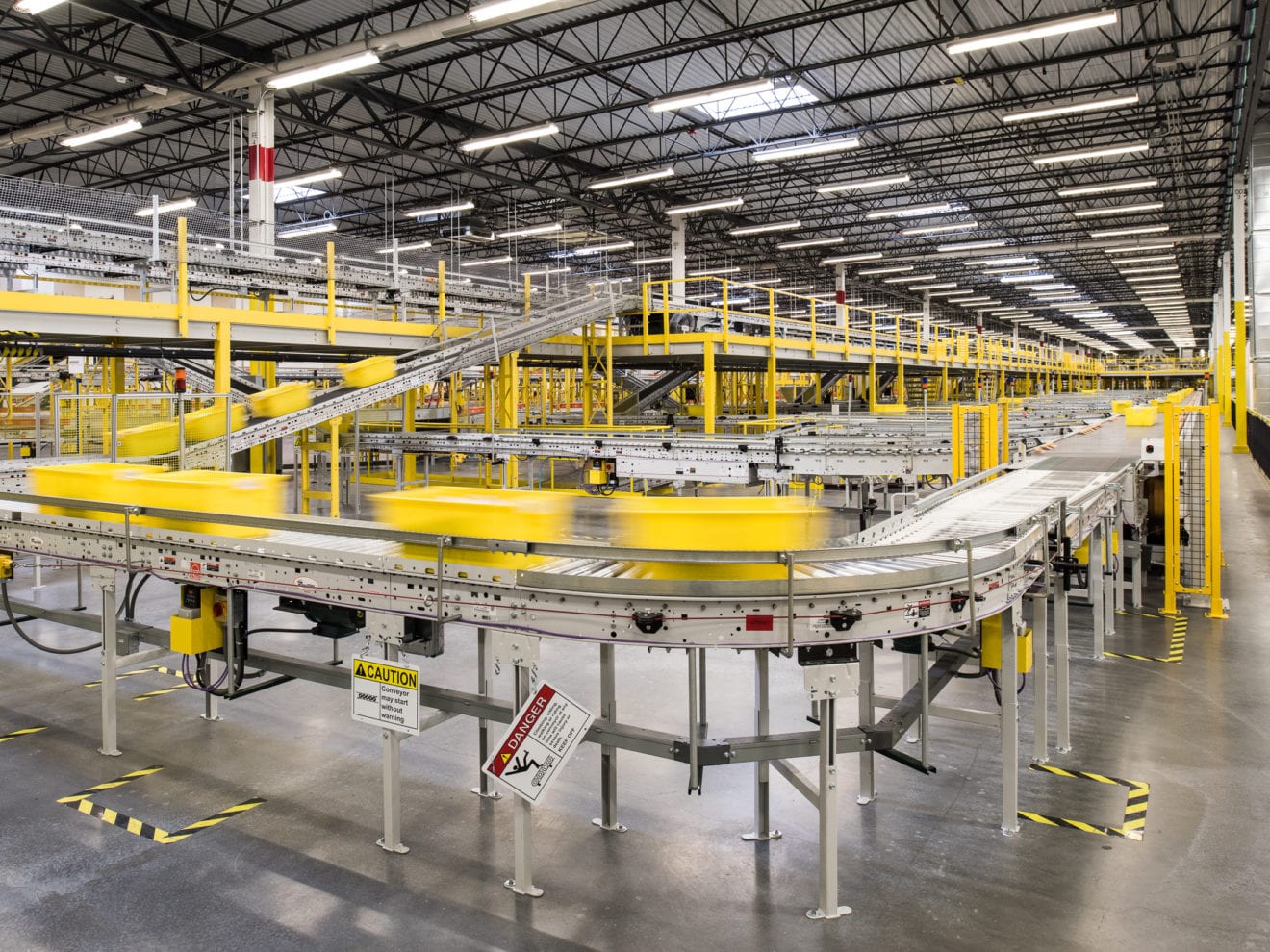
    Amazon is expanding its logistics services into mainland China and other major shipping hubs to reduce logistics costs as it seeks to expand into the cross-border e-commerce market.

    This would see it take on domestic market leader Alibaba Group in the global cross-border e-commerce market, which is projected to reach US$1 trillion by 2020, according to data supplied by Accenture and AliResearch.

    However, its ambitions may be grander yet. One rumour doing the rounds this month maintains that Amazon has even begun leasing planes – under the radar, so to speak – to further its ambitions that may extend to taking on its current delivery partners like FedEx and the United Parcel Service.

    Seattle-based e-commerce juggernaut Amazon filed an application with the Shanghai Shipping Exchange last year that would allow its Chinese subsidiary, Beijing Century Joyo Courier Service, to serve as a shipping broker to countries in Europe, Japan and the United States.

    A broker takes care of cargo and customs issues on behalf of merchants so make sure goods reach their final destination.

    Amazon submitted a similar application to the US Federal Maritime Commission in November, allowing it to serve as a middleman for ocean freight services to other US-based companies that wish to export to other countries.

    These moves suggest the company is one step closer to becoming a transnational logistics and fulfilment hub, as outlined in a 2013 proposal to senior executives at the company, Bloomberg reported.

    Although Amazon deals with e-commerce, it does not hold its own inventory, similar to Chinese online retailer JD.com. Amazon largely taps merchants who wish to sell their products on its own platform.

    Merchants can choose to list their products and sell to customers directly from the site, or ship their goods to Amazon, which then fulfils orders on their behalf.

    By serving as a middleman in ocean freight, Amazon can tap the growing e-commerce cross-border market in China and the US by consolidating large volumes of cargo from merchants there.

    “The licenses that Amazon have received not only strengthens its own position as a fulfilment channel for its own cross border trade, but also allows it to act as a potential competitor to the likes of DHL, Fedex and UPS in delivery services,” said Michael Yeo, analyst at market research firm IDC.

    Amazon’s strategy in logistics is similar to that of its cloud computing business unit, Amazon Web Services. AWS was launched with the aim of fulfilling Amazon’s cloud computing needs but has since expanded into providing cloud services for other companies.

    “Much like how Amazon Web Services now provides cloud services to others, we can assume that Amazon has larger plans for its logistics services than simply for goods that are purchased directly on Amazon,” said Yeo.

    Amazon’s logistics strategy puts it head-to-head with Alibaba Group, which has also been aggressively expanding its logistics subsidiary Cainiao.

    Cainiao has struck partnerships with domestic and international logistics partners such as Singapore’s SingPost and the United States Postal Service for its cross-border logistics solutions.

    Meanwhile, Alibaba’s Tmall leads the retail e-commerce sector in China, wielding 58.6 per cent market share in the first quarter of 2015, according to data by iResearch.

    In contrast, Amazon China only held 1.1 per cent of the market, despite having its hand in the game since 2004, four years ahead of Alibaba’s Tmall launch.

    Doug Gurr, president of Amazon China, said the company was chasing areas where it has “unique competitive advantages” in satisfying local appetites for imported products.

    “We want to help Chinese customers gain easy access to high quality and authentic international products at fair prices around the world … and help sellers from China to grow their business globally,” he said.

  • Will escalating China woes derail CRCT’s growth story?

    Will escalating China woes derail CRCT’s growth story?

    It will benefit from increased consumption.

    CapitaLand Retail China Trust is still poised for growth despite China’s slowing economy, according to a report by DBS.

    Although investors are currently fearful of the slowdown in China’s GDP growth, DBS said that RCT should remain well positioned as it should benefit from China’s move towards a consumption-based economy. This trend is illustrated by the 10.7% jump in retail sales for FY15, faster than the overall GDP growth of 6.9%.

    “Going forward, we understand CRCT remains confident of generating positive rental reversions (in the “single-digit range), although lower than the 15-20% achieved over the past few years,” DBS said.

    The lower level of rental reversion is also due to CRCT making a strategic decision to attract certain tenants as part of its constant tenant remixing to sustain the performance of its malls in the long term, DBS noted.

    “CRCT’s earnings have been negatively impacted by the road closures surrounding Minzhongleyuan over the past two years. As these works are scheduled to be completed by end-2016, we believe we are approaching an inflection point for the mall’s earnings,” the report added.

  • UK retailers fail to capitalise on burgeoning e-commerce in China

    UK retailers fail to capitalise on burgeoning e-commerce in China

    ‘Retailers are falling short in serving both Chinese shoppers and others overseas by not providing the seamless shopping experience they offer here in the UK’

    Although 71% of the UK’s largest online retailers are selling internationally, almost half (45%) are completely ignoring China’s burgeoning e-commerce market, new research has found.

    China’s total e-commerce market is expected to increase by 50% to $6.5 trillion by 2020, with online transactions accounting for nearly half of that growth.

    China’s Centre for International Economic Exchanges predicts the nation’s international online retail will account for 30% to 40% of total world trade by 2025.

    Meanwhile, recent research by Worldpay revealed that 44% of people in China shop on overseas websites.

    But while many UK retailers, such as Selfridges and John Lewis, have taken steps to make the shopping experience in-store more welcoming for high-spending visitors from China, relatively few retailers have made similar improvements online.

    Just 55% offer shipping to China – and among those that do, the shopping experience offered to shoppers varies wildly.

    New research by Global-e, which assessed more than 150 of the UK’s largest online retailers, found that just one in ten (10%) retailers that ship to China offer shoppers a Mandarin language option.

    Across all retailers, just under a fifth (17%) offer non-English language options, with retailers that offer international language options offering 5.7 languages on average.

    And while more than a third (36%) of retailers offer prices in other currencies, just 26% of UK retailers that ship to China present prices in Chinese Yuan, and only 22% accept Chinese local payment methods, such as AliPay, UnionPay and TenPay.

    Of retailers that do accept Chinese payment methods, 42% offer a single option, barring some prospective customers from making a purchase.

    Furthermore, almost all (98%) retailers that ship to China do not provide full duties calculations and prepayment, which means that shoppers may be stung by unexpected charges or taxes.

    Not only does this put the retailer’s reputation at risk, but these companies will also be unlikely to generate brand loyalty in China.

    “Shoppers expect more from the online retail experience but very few retailers can claim to offer ‘global shopping’,” said Nir Debbi, co-founder and CMO at Global-e. “Our research shows that retailers are falling short in serving both Chinese shoppers and others overseas by not providing the seamless shopping experience they offer here in the UK.

    “To boost conversions abroad and harness untapped opportunities, retailers need to remove the frictions in the customer experience by providing effective shipping and returns, localised pricing, local currencies, and payment methods with guaranteed landed cost.”

  • Downturn won’t dent H&M China confidence

    Downturn won’t dent H&M China confidence

    Despite feeling the pinch from an economic slowdown in China, Swedish fashion giant Hennes & Mauritz (H&M) says it plans to continue to bet big on the country.

    It blames an 11 per cent drop in quarterly net profit on adverse currency swings and mild November weather across several divisions, especially H&M China.

    This fell to 5.53 billion Swedish kronor (US$649 million) for the three months to November 30 from 6.22 billion kronor for the same period a year earlier. Revenue grew 14 per cent to 56.5 billion kronor in the fiscal quarter from 49.7 billion kronor. Excluding value-added tax, sales totaled 48.7 billion kronor.

    While acknowledging that sales growth in China has slowed dramatically – coming in a 4 per cent in local currencies for the quarter compared with 34 per cent – CEO Karl-Johan Persson says his faith in the country’s long-term prospect is unshaken.

    “We will open most new stores in China this year,” he says. The company plans 425 new stores globally in the fiscal year, with China and the US its main expansion markets.

    Persson says his confidence in China is based on the belief that the country will gradually pivot toward a consumer-driven economy, creating vast opportunities for retailers.

    Affluent shoppers 35 years and younger as well as internet users are still propelling the consumer market there, which is expected to jump to $6.5 trillion in sales by 2020, an increase of 54 per cent from last year, according to the Boston Consulting Group.

    H&M also plans to continue online expansion, with plans to open online stores in Japan and in eight other markets this year.

    The group’s gross margin has slipped to 57.5 per cent from 60.4 per cent, mainly because of the stronger dollar. H&M sources most of its clothes in Asia, where it pays in dollars.