Tag: China

  • Alibaba’s Q3 sales grow 23% and profits double

    Alibaba’s Q3 sales grow 23% and profits double

    Alibaba reported consumers bought 964 billion yuan ($149 billion) worth of goods on its Chinese online marketplaces in the quarter ended Dec. 31, an increase of 23% from the gross merchandise value, or GMV, of sales in the same quarter of 2014. Shoppers made 68% of those purchases on mobile devices.

    The value of purchases on Alibaba’s China marketplaces during the 12 months ended Dec. 31 totaled just under $449 billion, well above anticipated U.S. e-retail volume for 2015 of around $350 billion. Alibaba’s China sites accounted for about 76% of the $589 billion in China 2015 online retail purchases reported recently by China’s National Bureau of Statistics.

    “We had excellent results this quarter. We achieved impressive revenue growth as we are increasingly monetizing the user activity on our marketplaces, particularly on mobile devices. In this quarter, revenue grew 32% year over year and China retail marketplace revenue grew 35% year-over-year,” says Maggie Wu, chief financial officer of Alibaba Group. “Meanwhile, we generated strong free cash flow of US$3.7 billion this quarter. The fundamental strength of our core business gives us the confidence to invest in our strategic priorities.”

    Alibaba attributes the growth mainly to more consumers shopping its online shopping sites. Alibaba said active buyers, those who purchased in the past year, increased to 407 million in this quarter, a 22% increase from 334 million a year ago. Mobile active users who shop every month in December reached 393 million, up 48% from the prior-year period.

    While Alibaba derives most of its revenue from its big China web marketplaces—Taobao, Tmall and Juhuasuan—it also reported growth in international ventures.

    One of those is the Tmall Global marketplace, launched last year to allow foreign companies without a business license in China to sell online to Chinese consumers. Sales on Tmall Global increased 179% in the recent quarter, though Alibaba did not report the actual sales. Plus, more foreign companies that have obtained China business licenses opened branded stores on the main Tmall.com site. Among the more than 200 international brands opening flagship stores on Tmall during the quarter were Coca-Cola, Starbucks and Lululemon, Alibaba says.

    Alibaba also sells to online shoppers around the world through its AliExpress.com retail marketplace. Revenue from selling products to overseas consumers, mainly on Alixpress.com, totaled 632 million yuan ($97 million) in the quarter, an increase of 14% from 554 million yuan in the same quarter of 2014.

    Like U.S. e-retail powerhouse Amazon.com Inc., Alibaba’s fastest-growing business is its cloud computing service. AliCloud, which grew its sales to 819 million yuan ($126 million), representing a year-over-year increase of 126%, Alibaba said.

    “Alibaba reported results mostly above expectations, highlighted by strong revenue growth and impressive mobile monetization improvement,” Colin Sebastian, a senior research analyst at investment firm Robert W. Baird & Co., said in a note to investors today. “While slowing GMV growth is a potential yellow flag, we believe concerns about the effects of China’s macro conditions on Alibaba are largely overblown. Overall, we view these results as largely reinforcing a positive view of Alibaba, even in the face of a transitioning China economy.”

    For the fiscal third quarter ended Dec. 31, Alibaba also reported:

    • Revenue was 34.543 billion yuan ($5.333 billion), an increase of 32% year-over-year from 26.179 billion yuan in same period 2014.
    • Mobile revenue was 18.746 billion yuan ($2.89 billion), an increase of 192% from 6.42 billion yuan in same quarter of 2014.
    • Net income of 12.456 billion ($1.923 billion), a 108% increase compared to 5.983 billion yuan in the same quarter of 2014

    For the 12 months ended Dec. 31, Alibaba reported:

    • Chinese retail transactions increased 29.4% year over year to 2.95 trillion yuan ($448.71 billion) from 2.28 trillion yuan in 2014.
    • Revenue grew 33.3% year over year to 94.39 billion yuan ($14.35 billion) from 70.81 billion yuan in 2014.
    • Net income reached 66.44 billion yuan billion ($10.10 billion), a 146% increase from 27.05 billion yuan in 2014.
  • Lane Crawford Fetes Lunar New Year With Visual Art Installations

    Lane Crawford Fetes Lunar New Year With Visual Art Installations

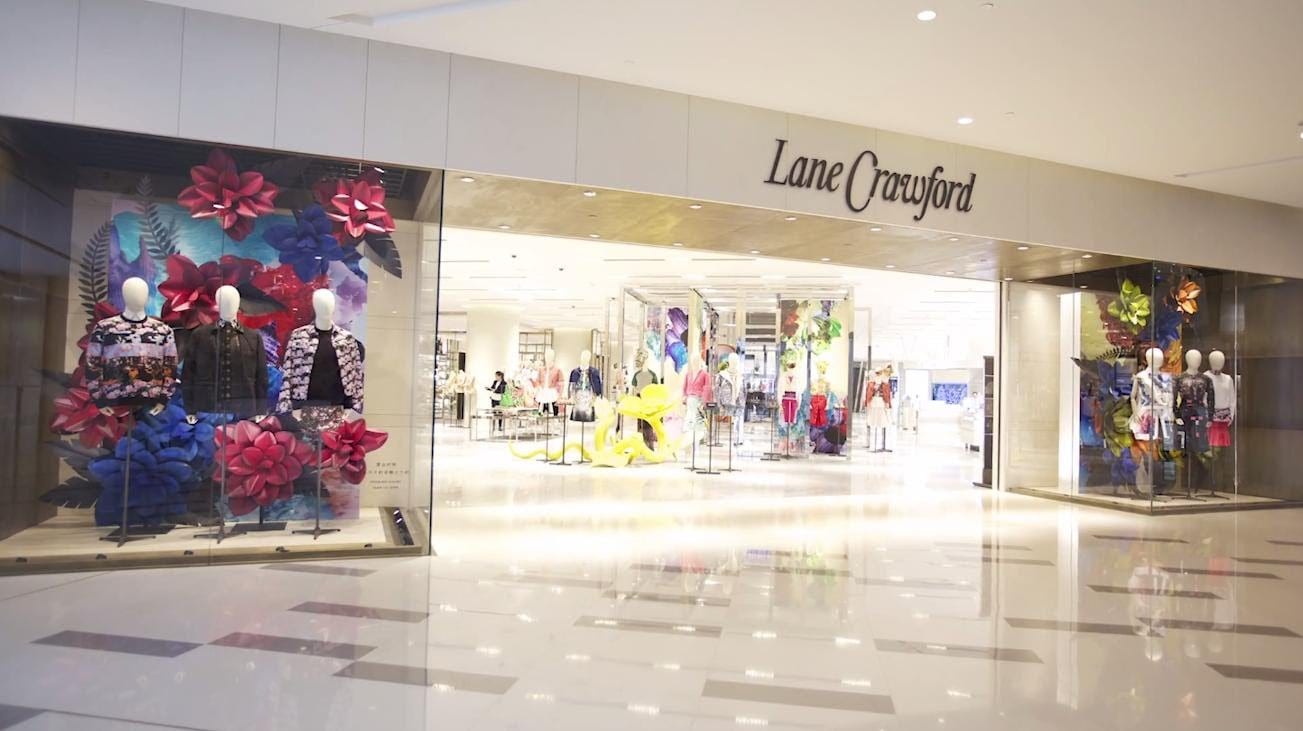
    Lane Crawford has big plans to celebrate the upcoming Lunar New Year — also called the Chinese New Year — which kicks off in early February.

    According to the Chinese zodiac tradition, this will be the year of the monkey. Lane Crawford has tapped nine artists to create a series of visual installations for the luxury retail company’s stores in Hong Kong and China. 

    Participating artists include Andrea Minini, Angel Chen, Desmond Leung, Hui Hoi Kiu, Huijun Guan, Mosaic Art Projects (which is led by visual artists Karen Pow and Chao Harn Kae), Jan Zhou and Yeli Gu — WWD reported. 

    Pow and Kae created a massive, papier-mâché sculpture of a monkey, which references the traditional Chinese art of paper-cutting. 

    In related news, British luxury brand Burberry is also celebrating the Lunar New Year in February.

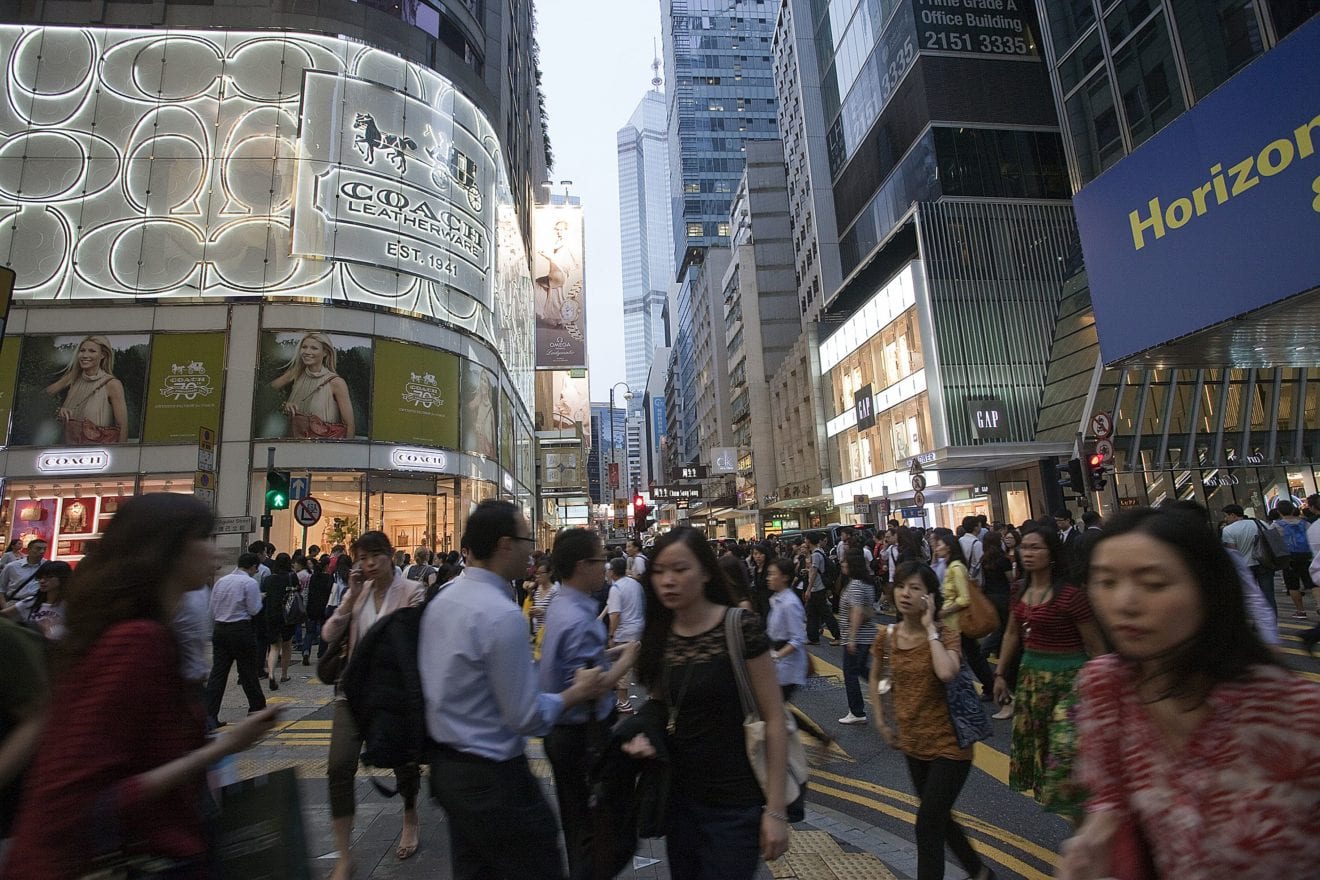
    Shoppers viewed through a window of the Lane Crawford store in Hong Kong

    Beginning at the start of the Chinese New Year, Burberry fans will be able to use WeChat, a popular Chinese social messaging platform, to reveal gifts from the label and send personalized celebratory envelopes to family and friends.

    Additionally, users in China will have the opportunity to win limited edition physical Burberry Lunar New Year envelopes.


  • Brookstone Opens First Overseas Stores in China

    Brookstone Opens First Overseas Stores in China

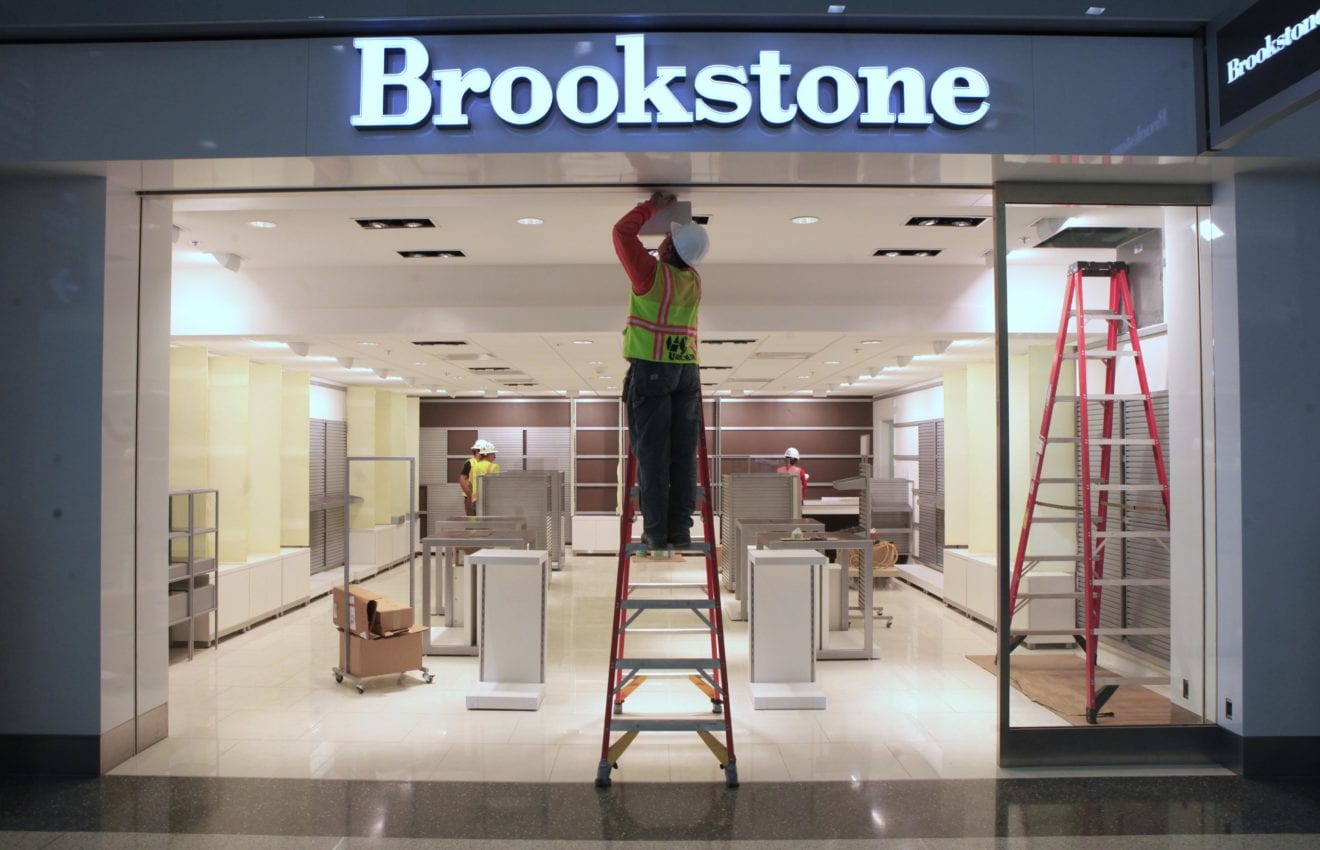
    First Step Includes One Walk-In Retail and Three Store-in-Store Location. The company’s strategy is “to bring premium American lifestyle products to shoppers in China while providing China-based makers access to American and international retail markets.” (Image: sargarch.com)

    • Brookstone’s new retail store is located in one of China’s largest retail shopping centers in Nanjing.
    • Brookstone, founded in Massachusetts in 1965, was acquired in 2014 by the China-based Sanpower Group.
    • Brookstone’s goal in China is to offer shoppers “Easy Surprises…premium, unique and innovative products.”

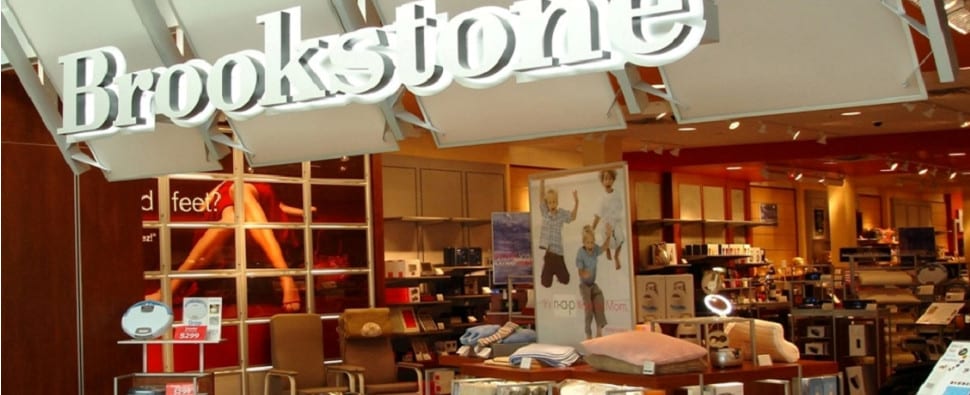
    Innovative product developer and specialty retailer Brookstone has taken its first step into the global arena with the opening of one walk-in retail and three store-in-store locations in China.

    The retail store is located in one of China’s largest retail shopping centers in Nanjing with the three store-in-stores in Funtalk Telecommunication’s stores in Beijing and Shanghai.

    Brookstone company strategy will generate more shipments of export cargo and import cargo in international trade.

    “We’re thrilled with how enthusiastically customers are embracing their first Brookstone China store experience,” said Brookstone CEO Tom Via. “They love being able to try out our massagers, wear the Cat Ear Headphones and see the drones in action.”

    Brookstone, founded in Massachusetts in 1965, was acquired in 2014 by the China-based Sanpower Group, a multi-national conglomerate, and “is fulfilling its corporate mission to bring premium American lifestyle products to shoppers in China while providing China-based makers access to American and international retail markets,” the company said in a statement.

    Known in the U.S. for its memory foam pillows, sleep sound machines, massagers and checkpoint-friendly luggage, the company’s goal in China is to offer shoppers “Easy Surprises…premium, unique and innovative products” and position it “as a destination for people to find surprising innovations that make life easier,” said Brookstone China CEO Xin Kexia.

    In time, Brookstone China “will adopt a sales model that features a hands-on interactive shopping experience with stores transitioning from being simply sales channels to platforms for hands-on and interactive experiences,” the company said.

    “Store associates will be not so much salespersons as friendly guides that let customers experience products on their own. Associates will show the customers how to operate the wildly successful Brookstone cat ear headphones, massagers, and sleep machines,” it said.

    According to the Sanpower Group, plans call for Brookstone to open independent shops in airports and high-speed railway stations, and continue to launch store-in-stores in its offline retail brands, including Hisap and Smart Funtalk Telecommunications, “so as to synergize with the business resources of the Group.”

  • Hong Kong airport launches Chinese New Year promotions

    Hong Kong airport launches Chinese New Year promotions

    Hong Kong International airport (HKIA) is to offer various promotions including cash redemptions of up to HK$5,000 ($640)  in celebration of the upcoming Chinese New Year.

    From February 4 to February 15, travellers spending over HK$2,000, HK$5,000, HK$10,000 and HK$50,000 by electronic payment can redeem HKIA cash-coupons of HK$100, HK$300, HK$700 and HK$5,000 respectively. During the campaign period, designated retailers at HKIA will also offer free red packet redemption on a first-come-first-served basis.

    HKIA’s mascot will dress in the Year of the Monkey costume at T1 and distribute specially designed Fai Chuns for free.

    In departures east hall level six, travellers will find a grand display box with a selection of Chinese New Year products and an interactive-game booth. Passengers with boarding passes and any purchase receipt from HKIA can participate in the game. Among the 12,000 prizes are suitcases, massagers and necklaces, along with HKIA cash-coupons and HKIA red packets.

    Travellers spending over HK$1,000 in a single transaction at HKIA can enjoy free local delivery service. Free delivery service to Mainland China, Macao and Taiwan is also offered to travellers spending over HK$2,500 on clothing bags and accessories in a single transaction.

    Those interested in Chinese New Year traditions will also be treated to various music performances during the festive period including the lion dance.

  • China quarter feeblest since ’09

    China quarter feeblest since ’09

    China’s economy slowed in December, capping the weakest quarter of growth since the 2009 global recession, as the Communist leadership grapples with a transition to consumer-led expansion.

    Industrial production, retail sales and fixed-asset investment all slowed at the end of the year, while gross domestic product rose 6.8 percent in the fourth quarter from a year earlier. Full-year growth of 6.9 percent, the least since 1990, was near the government’s target of about 7 percent.

    Policymakers must weigh the need for further monetary easing with the risk it would spur more weakness in the yuan and additional capital outflows. Arguing against major stimulus: A rise in services, which became more than half of the economy for the first time, cushioned the slowdown and underpinned employment.

    “2016 will be another challenging year as the old capital-intensive, highly levered industrial sector continues to be placed under severe strain,” said Kenneth Courtis, former Asia vice chairman at Goldman Sachs Group Inc. and now chairman of Starfort Holdings. “But we remain constructive on the outlook for the period ahead,” he said, citing steady job gains and retail sales that are rising faster than GDP.

    Industrial production posted one of the weakest gains in the past quarter century, increasing 5.9 percent in December from a year earlier, compared with a 6 percent median estimate of analysts and November’s 6.2 percent.

    Retail sales increased 11.1 percent from a year earlier, compared with the 11.3 percent projected by economists. Fixed-asset investment excluding rural areas expanded 10 percent last year, the slowest pace since 2000.

    The Shanghai Composite Index closed 3.2 percent higher as the data fueled speculation of increased stimulus and industrial shares rallied on prospects of state-fund buying.

    In an update to its annual outlook published Tuesday, the International Monetary Fund left its estimate for China’s growth this year unchanged at 6.3 percent even as it lowered the global projection to 3.4 percent. The fund said risks to the global outlook remain tilted to the downside, with the world facing three big adjustments: the emerging-market slowdown, China’s shift to growth driven less by exports and manufacturing, and the Federal Reserve’s gradual exit from ultra-low interest rates.

    China’s top leadership has signaled in recent months it may allow some additional slowness as officials tackle delicate tasks such as reducing excess capacity, but nothing that could threaten President Xi Jinping’s goal of at least 6.5 percent growth through 2020. The world’s second-largest economy will slow to 6.5 percent this year and 6.3 percent next year, according to the median of economist estimates.

    Reaching the official 6.5 percent target “is fast becoming a challenge,” Shen Jianguang, chief Asia economist at Mizuho Securities Asia Ltd. in Hong Kong, said in a note.

    China’s economy is going through a “tough transition to make, but critical if growth is to be sustainable,” former Fed Chairman Ben Bernanke said at a forum Tuesday in Hong Kong. “You have to have a transition to more services if you want to keep the economy growing and providing jobs.”

    China’s economy is growing at two speeds, with old rust-belt industries from steel to coal and cement in decline while consumption, services and technology do better. Services accounted for 50.5 percent of output last year.

    The policy response to last year’s slowdown included accelerated monetary easing with six interest-rate cuts since late 2014 and increased fiscal spending. Through market turbulence, the central bank forged ahead with interest-rate liberalization by removing a cap on deposit rates and won the IMF’s approval for the yuan to enter its Special Drawing Rights basket of reserve currencies.

    This year, attention is likely to turn more to a new focus on supply-side tactics such as cutting excess industrial capacity and labor in state enterprises, lowering taxes and increasing productivity.

    Information for this article was contributed by Xiaoqing Pi, Ailing Tan, Jeff Kearns, Enda Curran and Christopher Anstey of Bloomberg News.

    Business on 01/20/2016

  • A bigger shoe may yet drop for Apple stock

    A bigger shoe may yet drop for Apple stock

    As analysts and investors eye prospects for Apple stock, many are drilling down on the company’s sales and earnings prospects in China, its biggest overseas market.

    On Wednesday, the company’s stock was down as much as 5 percent, a day after the tech giant reported disappointing sales of the iPhone and the slowest year-over-year growth ever for the blockbuster device. That news raised a red flag, since those sales account for two-thirds of Apple’s total revenue.

    In response, Apple CEO Tim Cook remained confident on the outlook for China. He noted that Chinese incomes are rising and their savings rate is among the highest on the planet. China’s consumers sent retail sales up 11 percent year-over-year in December — not very ruffled, for now, by the nation’s market turmoil.

    The question, for Apple, is whether that confidence can last: Cook noted in a conference call after Apple’s earnings announcement Tuesday that sales in Greater China, especially Hong Kong, began to “soften” in January. But for now, China’s consumers are the reason why Apple execs rattled off a list of eight nations and regions they were worried about, from Canada to Turkey, without mentioning China.

    “Young urban Chinese elites have savings, so they can afford it,” said Todd Lee, senior director of economic consulting firm IHS Global Insight.

    The damage was less for the simple reason that China’s consumers are relatively flush, even as the nation’s investment and export sectors are enduring shocks. Their savings rate is about 38.5 percent of income, and average per capita disposable income rose 7.4 percent in 2015, even as China’s financial markets whipsawed throughout the second half of the year.

    That’s also a reason why expectations are fairly high for the Jan. 28 report from Chinese e-commerce giant Alibaba, which RBC Capital Markets analyst Mark Mahaney said will boost adjusted profit per share by 31 percent. Consensus estimates are lower, calling for a 25 percent gain.

    Apple said its overall profit for the first quarter of its 2016 fiscal year rose 1.9 percent, to $18.4 billion, or $3.28 per share, from $18 billion and $3.06 a share last year. (The 7.2 percent gain in per-share earnings reflects stock buybacks that reduced Apple’s share count.)

    Sales rose 1.7 percent, to $75.9 billion, but would have been up 8 percent if the value of the world’s different currencies had stayed the same as last year, Apple said. “The difference is about the size of an average Fortune 500 company,” Cook said.

    iPhones’ average price was reduced by $49, to $691, by the rise in the U.S. dollar, which makes each sale in local currency abroad less valuable to U.S.-based shareholders. Currency is also the reason for about a third of the drop in revenue that Apple projected for the March quarter.

    By contrast, Apple’s Brazil sales fell because of a 40 percent drop in the Brazilian real that required Apple to raise iPhone prices there, dragging overall sales in the Americas 1 percent lower. Japan was down 12 percent, sales in Russia were hurt by the collapsing price of oil and the ruble, and the falling euro combined with Russia’s woes to turn an 18 percent European sales gain in constant currency into only a 4 percent as-reported gain. Apple now gets two-thirds of its revenue from outside the U.S.

    “Major currencies, such as the Canadian dollar, Australian dollar, Mexican peso and Turkish lira have declined 20 percent or more,” Cook said, adding that “$100 of Apple’s non-U.S. dollar revenue in Q4 of 2014 translated to only $85 last quarter due to the weakening currencies in our international markets.”

    Analysts had expected Apple to earn $3.23 a share on $76.6 billion in revenue.

    Shares of Apple rose modestly after the earnings were announced, then sagged as Cook and other executives talked on the post-earnings conference call with analysts. Having closed at $99.99, they slumped under $95 on Wednesday morning. The stock was above $120 as recently as November.

    “[The] negative reaction after hours reflect[ed] … a huge shift in tone as AAPL sounded more susceptible to China macro versus 90 days ago,” RBC Capital Markets analyst Amit Daryanani wrote.

    Apple’s relatively strong China performance isn’t an anomaly or tied to any Asian enthusiasm for a quintessentially American brand. China’s retail sales gains all last year were nearly five times the rate in the United States, where consumer spending has also been growing faster than the economy as a whole. According to Moody’s Analytics, China’s retail sales were up by double digits in every month of 2015.

    According to Lee of IHS Global Insight, China’s consumers have increased their spending at a fairly predictable pace in recent years, behaving much the same way when the investment side of the economy is growing faster than 10 percent as they are now, with overall growth reported at just under 7 percent in official statistics. Investors have openly questioned whether the official statistics exaggerate the health of China’s economy.

    The price of an iPhone is still stiff for Chinese consumers who make an average income of about $10,000 per three-person household, Lee said. But the average income of the top 20 percent of the population is about $23,000, making them the primary target of Apple’s continued push into China. And consumers in China still have enough savings to keep consuming — though that could change if markets there keep gyrating, he said.

    “It depends on the severity and the type of the slowdown,” Lee said. A slow, steady decline in growth wouldn’t be likely to spook consumers, but “if there’s a banking crisis that crushes the economy, all bets are off.”

    Not all bets. Long-term prospects are bullish enough that Apple isn’t planning to pull back on investing heavily in China, Cook said.

    “The middle class in China was less than 50 million people in 2010, and by 2020 it’s projected to be about half a billion,” he said.

    But in a possible sign that even Apple is hedging its bet on China, Cook’s quickly changed the topic to India — which has a younger population and lower smartphone penetration than China, and where Apple boosted sales 38 percent.

    “India is incredibly exciting,” Cook said. “It’s quickly becoming the fastest-growing BRIC country.”

  • Starbucks Asia performance concerns

    Starbucks Asia performance concerns

    Starbucks’ latest overall figures look impressive- but this first set of results of its new fiscal year show a marked polarisation in performance around the globe.

    In the Americas, the company’s largest market, sales and profits powered ahead. However, the same cannot be said of both Europe and China, where the results were far more subdued.

    Turning first to China and Asia Pacific, at first glance the results do not look too bad, with revenues up by a very solid 32 per cent. However, most of this increase is attributable to incremental revenues from the acquisition of Starbucks Japan early in the last fiscal year.

    A significant 885 net new store openings across the region also helped to boost top line growth.

    Despite this there are two areas for concern. The first is underlying sales growth, which at 5 per cent has come in below expectations; the concern is that some of this is related to a general slowdown in China which, if part of a longer term trend, could harm company earnings.

    The second is the margin position which has deteriorated because of higher wage costs and the change of ownership of the Japanese operation.

    Turning to the Americas: Despite having been accused of “declaring war on Christmas”,  Starbucks’ results showed much more holiday cheer than its generic red cups. Across the region revenue rose by a very respectable 11 per cent, underpinned by 9 per cent comparable growth.

    Operating income also rose by 14 per cent. Tweaks to the menu which saw the inclusion of some more expensive drinks options and an enhanced range of food helped to drive up average ticket across the period.

    The American results were particularly impressive given the warmer weather across most of the holiday period. That this did not deplete sales underscores the habitual nature of Starbucks and its importance as a small indulgence for many of its regular customers. This loyalty has, in our view, been further strengthen by strong take-up of the mobile app which encourages and stimulates regular buying.

    Within Europe and the wider EMEA region, the net addition of 79 stores did little to bolster overall revenue which declined by 6 per cent on a year-over-year basis. Admittedly much of this was related to unfavorable exchange rates but some is also attributable to weak underlying sales growth at existing shops. The impact on profits has been negative, something further exacerbated by the shift to developing more licensed stores which operate at a lower margin than company-owned outlets.

    Looking ahead, initiatives such as the evening sale of alcoholic beverages and an enhanced food menu, will help to further drive productivity in US stores.

    However, Starbucks will need to work harder to ensure that these gains are not diminished by the deteriorating environment in Asia and the lackluster performance in Europe.

  • Tight market hits Watches & Wonders

    Tight market hits Watches & Wonders

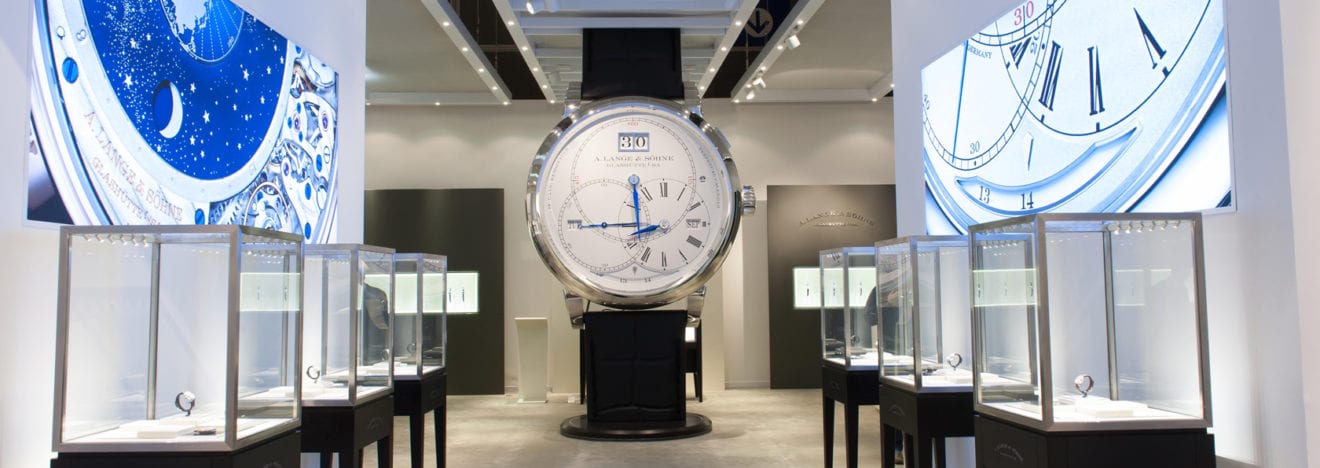
    With sales slipping in the industry’s largest market, the annual Watches & Wonders exhibition in Hong Kong may be cut back to every two years.

    High-end watchmakers are looking at a shift in strategy in Hong Kong in the face of the most severe downturn the industry has faced since the 2008-09 financial crisis, reports Reuters.

    Branching out from the two biggest trade shows in Switzerland, the Salon International de la Haute Horlogerie (SIHH) in Geneva and Baselworld, Watches & Wonders was launched in 2013 by theFondation de la Haute Horlogerie, which is now talking with exhibitors about the show’s future format, according to Richard Mille, CEO of independent watchmaker Richard Mille.

    Watches & Wonders mainly showcases Richemont-owned brands like Cartier, Montblanc and Vacheron Constantin, as well as some independents, reports Bloomberg.

    “Some brands have been fighting to get out, completely out, to stop Watches & Wonders,” Mille said at this week’s SIHH in Geneva, the industry’s first event of the year.

    “Some of the brands want to do it every two years, some say every year. It’s a negotiation.”

    A decision will be made after this week’s show, according to foundation chairwoman Fabienne Lupo.

    The event also competes with the annual Hong Kong Watch & Clock Fair, which had nearly 800 exhibitors last year.

    China’s crackdown on extravagant spending plus currency fluctuations have hit the demand for expensive timepieces in Hong Kong, with Swiss watch exports to the island city plunging 23 per cent in the first 11 months of 2015, and facing the first annual decline since 2009. TAG Heuer closed one of its Hong Kong stores in August.

    Mille, whose watches sell from about 70,000 Swiss francs ($70,000) upward, says the objective of exhibiting in Watches & Wonders is to make contact with clients who are unable to attend the boutique shows. “It’s not cheap, but it’s worthwhile.”

    Meanwhile, high-end watchmakers are considering expanding their range of more affordable products. Executives at the Geneva event say the industry is having to adapt to a market with fewer Chinese, Middle Eastern and Russian buyers than a year ago, an outcome of record low oil prices and signs of economic weakness in China.

    Cartier, Richemont’s leading brand and main source of profit, is presenting more models than ever at more accessible prices at this week’s SIHH. Among them is Cartier’s new Drive model, a steel-cased men’s watch priced at a little more than 5000 euros ($5430). Previously, Cartier would offer only new models in gold and leather, with prices starting at more than 10,000 euros.

    Sister brand Piaget, generally starting no lower than 10,000 euros, has re-launched a women’s line starting at about 7000 euros, while Richemont stablemate Montblanc has introduced a wide range of lower-priced models.

    Montblanc CEO Jerome Lambert says that whatever happens, his company will stay active in Hong Kong with major exhibitions.

    “There is a different price awareness among customers now… and less price elasticity,” Piaget chief executive Philippe Leopold-Metzger told Reuters at the fair. “Times are difficult.”

    Several watchmakers have cut staff numbers in recent months, including Kering‘s newly acquired Ulysse Nardin and privately owned Parimigiani and Christophe Claret. Piaget closed a boutique in Shanghai last month, and Parmigiani plants to cut back its global outlets to about 250 from around 300 by the end of the year.

    Van Cleef & Arpels, one of the fastest-growing brands within the Richemont group, has also seen a slowdown in Hong Kong, Macao and the US. It is looking at new growth opportunities in such markets as Australia, Canada and Thailand, where it has just opened a store.

  • GE sells appliance business to China’s Haier for $5.4 bn

    GE sells appliance business to China’s Haier for $5.4 bn

    US industrial giant General Electric will sell its appliances business to China’s Haier Group for USD 5.4 billion, it said today, in one of the largest Chinese acquisitions of an American firm yet.

    The transaction epitomises the changing nature of the global economy, with a 100-year-old US company selling what was once one of its core units to a Chinese upstart that emerged from a refrigerator factory that was nearly bankrupt 30 years ago.

    Haier is seeking to establish itself as a global brand, while China is looking to re-balance its economy more towards consumption and away from the infrastructure and investment-driven model of the past.

    The Chinese firm was “committed to growing the business globally”, GE chairman and CEO Jeff Immelt said in a statement, calling the agreement “a good deal which will benefit our investors, customers and employees”.

    GE had previously been due to sell the unit to Swedish rival manufacturer Electrolux for USD 3.3 billion, but the deal ran into opposition from US competition authorities.

    Haier Group is China’s second largest electronics manufacturer, and emerged from the Qingdao Refrigerator Factory, in the eastern port of the same name, which its CEO Zhang Ruimin was appointed to run in the mid-1980s.

    Zhang is renowned for his reaction to a customer complaint, when he examined the firm’s warehouse and found 76 fridges out of more than 400 in stock were substandard.

    He ordered the personnel to smash them to pieces, personally leading the destruction with a hammer.

    “If I allow the 76 fridges to be sold, it would imply that I would allow 760 or even 7,600 such substandard fridges to be produced tomorrow,” he was quoted as saying by the official news agency Xinhua.

    The tool Zhang wielded is now in a national museum, Xinhua said.

    Haier’s methods have been studied in business schools including Harvard, but its exact ownership structure remains opaque.

    Officially, the group is divided into several units which are collectively owned. It has two quoted subsidiaries, Haier Electronics in Hong Kong and Qingdao Haier in Shanghai — which is the vehicle for the GE acquisition.

    Haier has close ties to the ruling Communist Party, and Zhang is an alternate member of the party’s elite central committee.

    The deal is the latest major Chinese acquisition of a US company, and comes in the same week that Wanda Group, founded by China’s richest man Wang Jianlin, acquired Hollywood studio Legendary Entertainment for USD 3.5 billion.

    Previous major acquisitions have included 2013’s USD 7 billion purchase of Smithfield Foods by Shuanghui, and Lenovo buying IBM’s PC business for USD 1.75 billion.

    Haier says it is the world’s biggest large household appliance brand, with a 10.2 percent global market share, and also has businesses in communications, logistics, finance and real estate.

    It had a global turnover of 200.7 billion yuan ($30.47 billion) and total profit of 15 billion yuan in 2014, according to its website, with activities and customers across 100 countries and regions.

    Haier bought the white goods operations of Japanese company Sanyo in 2011, the first time a Chinese firm has bought major business segments from a large Japanese manufacturer.

    But it had just a one percent share of the US consumer appliance market in 2015, the state-run China Daily cited market analysts Euromonitor as saying.

  • China is facing into a period of painful economic adjustments

    China is facing into a period of painful economic adjustments

    On February 8th, China will celebrate the Year of the Monkey. The monkey is famously a smart, naughty, wily and vigilant animal, and anybody trying to make money in the rest of 2016 will have to learn how to outsmart the animal.

    A useful barometer of the Chinese economy is always to look on the streets and see what cars are clogging up the dual carriageways and main roads of the big cities like Beijing, Shanghai and Guangzhou.

    By this measure, the world’s second largest economy is doing pretty well.

    Sentiment is not good as far as monkeys go – it has remained below 90 since June 2014, far below the 100 breakeven level. According to the China Auto Purchase Sentiment Report, people are buying cars, but they are buying smaller, cheaper vehicles. Despite the fall in sentiment, this sees more Chinese households reporting that they currently own a vehicle.

    The Car Purchase Indicator is a composite indicator designed to gauge future demand for cars and it fell 4.5 per cent to 83.2 in December from 87.1 in November, the lowest reading since April 2012.

    But yet there is still obvious strength in the market. Despite a damaging emissions scandal, Volkswagen continues to lead the passenger car market in China, with deliveries of 2.63 million units from January to December. And while this is down 4.6 per cent, the fourth quarter of 2015 was a very successful one for the carmaker.

    But then you look at the stock market.

    With the nightmare of summer 2015 still fresh in the minds of badly burned retail investors, China’s stock market opened 2016 with a stark reminder that the fundamental situation in the markets remained deeply unstable.

    China was forced to twice deploy its “circuit breaker” mechanism to halt trading as stock markets nose-dived by 10 per cent in the first week of the year.

    After the second time, Beijing scrambled to abandon the mechanism, which the markets, especially overseas, had always considered a weak and useless measure. By abandoning the “circuit breaker”, the regulators appeared clueless on how to stabilise the market and the situation appeared to go back to square one.

    Unlike many western economies, the stock market in China does not offer a bellwether of the overall health of the economy and even a massive slide on the stock market would be tolerable were the data coming out of the world’s second largest economy inspiring confidence on the future outlook.

    New normal

    However, these are the days of the “new normal” when the Chinese government is trying to sell the idea of slower, consumption and services-based growth and move away from the heady days of double-digit expansion which defined the economy for the past two decades.

    Gross domestic product growth fell to a six-year low of 6.9 per cent in the July-September quarter and is forecast by the International Monetary Fund to decline further to 6.3 per cent in 2016. This level of growth is not enough to keep generating new jobs – there are more than 7.5 million graduates expected to enter the labour market later this year and robust growth is needed to keep the economy expanding at a rate that will maintain stability for the ruling Communist Party.

    Cheng Shi from ICBC international research group expects growth to continue to slow in 2016.

    “Firstly, the global economic recovery means weaker external factors for China’s economic growth. Secondly, for the last 30 years, China has accumulated massive capacity and the difficulty of keep on growing is increased and the growth rate declines naturally. Thirdly, it is affected by the ageing population and the labour cost has been growing for a long time. Fourth, the real estate market is going through an adjustment period,” said Cheng.

    In the short term, the risks caused by structural economic adjustments will keep on showing and the pain is unavoidable, said Cheng.

    “In the long run, the opportunities brought by deepening economic reform will gradually start to appear and the rise won’t stop,” he said.

    “I think at the bottom of this is a fundamental story about a slowdown in China,” Peter Oppenheimer, chief global equity strategist at Goldman Sachs told CNBC. “The focus at the moment is the ongoing weakness in the manufacturing sector but also the lack of evidence that traditional policy easing is really stabilising the economy.”

    He underlined concerns about further weakness in exchange rates, and the possibility for that to flow through the broader markets.

    The collapse in growth shows that investors are reluctant to buy into the government vision of the “new normal”.

    China’s stock market more than doubled between late 2014 and June, then dived by 30 per cent, an event that caused deep pain among retail investors.

    “We expect growth momentum to slow in the first half of 2016, and for headline growth to fall to 6.4 per cent in the second quarter of 2016, before recovering in the second half of 2016 as more easing measures kick in,” HSBC said in a research note.

    “Policymakers need to strike a balance between financial and SOE reforms and the need to reflate the economy,” HSBC said.

    To this heady brew, add in the slide in the Chinese yuan currency to a five-year low against the dollar, which has forced the government to spend tens of millions of dollars from its foreign currency stockpile to defend it, and you can see a perfect storm of negative factors clouding the outlook for the Monkey Year.

    Overall it was the worst beginning to the year for the Chinese yuan since 1994, on growing concerns that the economy is weakening further.

    The government last week guided the yuan 1.5 per cent lower to give a boost to the country’s export sector, which is bearing the brunt of China’s goods becoming expensive overseas compared to other Asian neighbours. The move to lower the yuan was not deftly done, and the resulting nervous reaction further weighed on share prices.

    “Upbeat trade data could go some way to reassure global investors that China’s economy is stabilising,” said Tom Rafferty, lead China analyst at the Economist Intelligence Unit. “The data is in line with other indicators that suggest China’s economy is stabilising on the back of sustained stimulus measures, some of which have been targeted at the external sector.”

    “There will be some qualms expressed about the reliability of the data, given the weaker performance in December of other major Asian exporters. However, China has consistently outperformed the region in what was a difficult year for global trade,” he said.

    Then you have other anomalies.

    During 2015, seven property developers reported annual sales of more than 100 billion yuan (€14 billion) as the property market continued to perform strongly, despite a slowdown, while a total of 104 developers reported annual sales of over 100 billion (€1.4 billion) in the same period.

    The top three by sales were Vanke, with 261 billion yuan (€36.6 billion), Greenland with 230 billion (€32.3 billion) and Evergrande with 200 billion yuan (€28 billion). All involved will be hoping they can outsmart the monkey again in 2016.

  • Davidoff thinks big as it exercises Bluebell option

    Davidoff thinks big as it exercises Bluebell option

    As expected, Oettinger Davidoff AG has acquired the majority interest in Bluebell Cigars (Asia) Ltd – its long-time Asian distributor – in what is a highly significant strategic move.

    Bluebell is a family-owned company that is one of the largest brand luxury distributors in Asia, representing over 50 luxury and lifestyle brands in 10 countries, operating 500 retail stores, and employing over 2,500 dedicated staff. It has also been associated with Davidoff cigars for more than 50 years.

    Davidoff’s majority share investment in Bluebell follows the 25% stake taken by the leading premium cigar company a year ago and this new ownership has been effective from January 1, 2016.

    As part of the new structure, Davidoff says that Bluebell Cigars (Asia) Ltd will be renamed Davidoff of Geneva (Asia) Ltd. and will continue to be led by Laurent de Rougemont as Managing Director.

    Davidoff CEO Hans-Kristian Hoejsgaard and Laurent de Rougemont Senior Vice President Asia

    Left to right: Davidoff CEO Hans-Kristian Hoejsgaard and Laurent de Rougemont, new Senior Vice President Asia.

    He will report directly to Oettinger Davidoff CEO Hans-Kristian Hoejsgaard in his new role as Senior Vice President Asia and  Rougemont will also be a member of Oettinger Davidoff’s global management group.

    In addition, Gerhard Anderlohr, Oettinger Davidoff’s current Head of Asia, will take up a new role as Vice President Business Development with a particular focus on China and the Chinese consumer.

    Commenting, Hans-Kristian Hoejsgaard, CEO Oettinger Davidoff AG, said: “The 2015 Agreement with Bluebell Cigars (Asia) Ltd provided us with a right over time to acquire a majority interest in our long-standing Asian partner and the time was now right to make that move.

    “The JV will continue to operate in the spirit of equal partnership and Bluebell and Oettinger Davidoff will be equally represented on the company’s Board of Directors. I am delighted in this way to cement our relationship with Bluebell and further deepen our commitment to the Asia Region, which continues to represent significant future potential for the Davidoff business.”

    Ashley Micklewright, CEO Bluebell (Asia) Ltd. stated: “We are delighted Oettinger Davidoff exercised their right to increase their interest in our joint venture and that we can now operate the business in the spirit both parties initially intended over a year ago.

    “In today’s market, the impact of digital technologies and the harmonisation of markets across the globe has meant legacy relationships have had to be revisited and adapted so that the interest of parties remain aligned for the greater good of the brand.

    “We have been particularly proud to have been associated with Davidoff for the past fifty years and of course its success in Asia, and we believe we have a foundation which will allow us to remain as proud for many more years to come.”

  • China on track for a more sustainable economic expansion

    China on track for a more sustainable economic expansion

    Investors world-over fear that China could record another worse-than-expected slowdown this year. Over the past two decades, annual GDP growth in China has averaged around an impressive 10 percent, underpinned mostly by investments, as well as exports. The IMF expects China to account for almost 18 per cent of world economic activity in 2016. Hence a bump in China’s economy can definitely not be ignored. A drop in China’s growth rate from an expansion of more than 10 per cent in 2010 to 6.3 per cent expected this year could directly knock-off about 0.75 percentage points off the global growth rate.

    The recent week’s turmoil in China has hit both stocks and currency markets, sending shock-waves through global financial markets. Stock indexes around the world have seen massive sell-offs, global markets have fallen by 7.1% since January 1st, their worst ever start to a year. The instability brings back to light China’s stock market crash and a surprise Yuan devaluation by Beijing in August 2015 which sparked a global rout, and wiped out trillions of U.S. dollars in value from Chinese equities.

    Some of China’s leading economic indicators, such as its manufacturing index and factory output, are indeed slowing. This is a rational slowdown which would deliver a healthier and more sustainable growth path. The emerging markets and the rest of the world may just have to the deal with the “new normal” of global growth as the Asian giant seeks a slower, but more sustainable, economic expansion.

    Markets will keep focus on China data-deluge, including the GDP, industrial production and retail sales due tomorrow. Expectations are for data to remain weak. Barclays forecasts Q4 GDP growth data to have slowed further to 6.6 % y/y (consensus: 6.9%) from 6.9% in Q3. Industrial production is likely to have moderated, (Barclays: +5.9%y/y; consensus: 6.0%), retail sales (+11%y/y) and fixed asset investment (+10.1%y/y).

    PBoC has strongly signaled a desire for near-term stability by keeping its USD/CNY fixings stable at about 6.56 over the past week. On Monday, the PBoC said they will start implementing RRR to some banks involved in the offshore yuan market, in a move that seemed intended to soak up additional liquidity. The spot market opened at 6.5800 per dollar on Monday and was trading at 6.5792 in early trade, 48 pips below the previous close and 0.31 percent away from the midpoint, which was set at 6.559. The offshore yuan was trading -0.18 percent away from the onshore spot at 6.591 per dollar, firmer than the previous day’s close of 6.6165.


  • Bossini profit decimated

    Bossini profit decimated

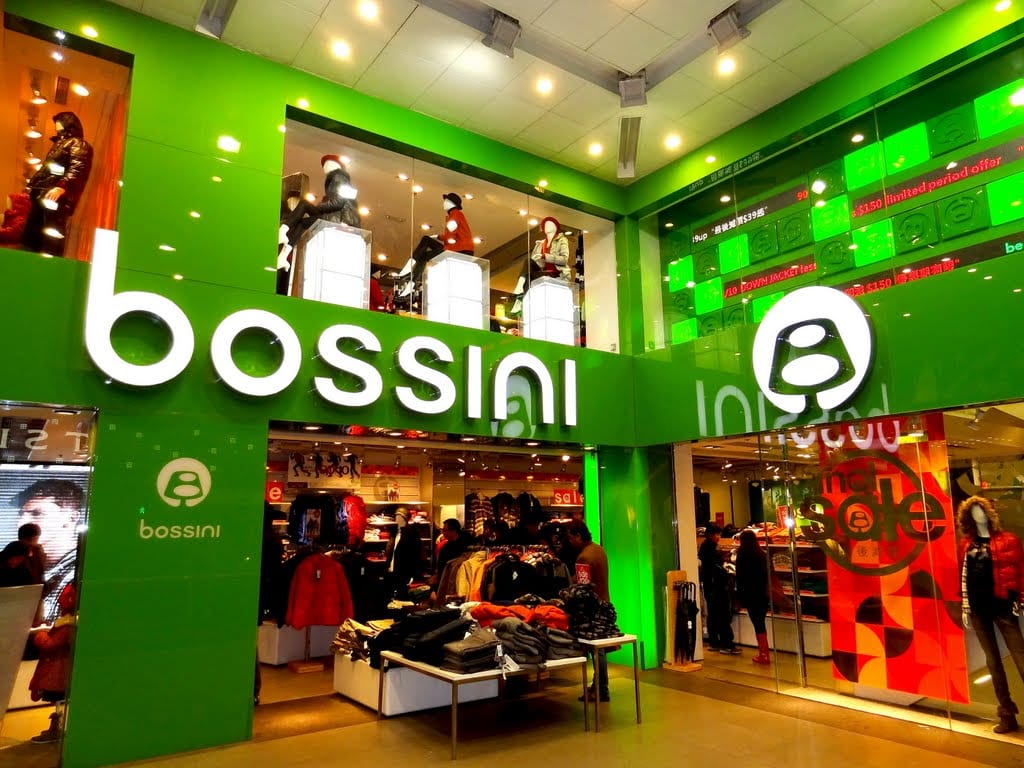
    Fast fashion retailer Bossini has warned shareholders its profit for the six months to December 31 will be down by between 80 and 90 per cent.

    Based on the comparable trading period to December 31, 2014, when Bossini reported a profit  of HK$665 million, that suggests a profit in the range of $66.5 million to $133 million.

    In a profit warning issued to the Hong Kong stock exchange, the company says the profit plunge “was mainly caused by the significant decrease in revenue and gross profit attributable to (i) less visitors and strong Hong Kong dollar which led to less consumption from them in Hong Kong and Macau, and (ii) weak local consumer sentiment, unseasonal warm winter weather and intensified competition in several core markets where the group operates”.

    “As the company is still in the course of preparing and finalising its interim results for the six months… the information… is only based on a preliminary assessment on the information currently available.”

    The full financial details, including the final Bossini profit, will be revealed in late February.

    While Bossini is not the first Hong Kong based retailer to warn of or report profit declines, most of the others are operating in the luxury end of the market, where sales of watches, jewellery and luxury fashion goods and apparel are down by up to 20 per cent year on year.

    But Bossini has no exposure to that market – its business is based on selling t-shirts and casual clothing at low price points.

    Data from GfK shows the number of Mainland Chinese visitors to Hong Kong in 2015 – up until November, at least – rose by 37 per cent. As previosuly reported by Inside Retail Asia, the issue for Hong Kong retailers is not that there are fewer tourists visiting the city – but there are fewer wealthy tourists visiting the city. So Bossini, and other retailers targeting the lower end of the market, are not managing to capture the imagination of the more profilgate shoppers now coming to the territory.

    Even more puzzling is that Bossini has been one of the few retail brands to stand out over the last 12 to 18 months as bucking the broader retail trend.

    In September, the company revealed its results for the year to June 30, reporting a mere one per cent decline in sales to HK$2.523 billion, and a three per cent decline in gross profit to HK$1.264 billion with gross margin down one per cent to 50 per cent. Profit attributable to shareholders fell nine per cent.

    “During the fiscal year 2014/15, despite facing challenging retail conditions in Hong Kong and Macau, its segmental business, which includes the export franchising operations, registered record-high sales with flat same-store sales growth for the directly managed stores,” the company said at the time.

    “The operations in mainland China, Taiwan and Singapore all experienced improvements in segment results, resulting from the continuously improving shop productivity and stringent cost control measures. Mainland China segment achieved six per cent same-store sales growth and also recorded nine consecutive quarters of positive same-store gross profit growth. Taiwan segment saw a same-store sales growth of seven per cent, representing seven consecutive quarters of positive same-store sales growth.”

    In the half year to December 31, 2014, Bossini reported a revenue increase of four per cent year-on-year to HK$1,319 million (then US$170,056,190) and gross profit for the period under review was HK$665 million (then US$85,737,200).

  • Tiffany struggles as Mainlanders baulk

    Tiffany struggles as Mainlanders baulk

    If Tiffany was hoping for some holiday respite following a year of negative numbers it will be sorely disappointed by its latest results.

    Indeed, the pace of decline has actually accelerated since the third quarter, which covered the three months up until the end of October. Given the significant opportunity that the holiday season affords this is a worrying outcome.

    Reported in US dollars, worldwide net sales of $961 million were 6 per cent lower than the prior year.

    Despite some solid growth in China and Japan – the latter coming off weak comparatives – the poor numbers out of Hong Kong, which has suffered from a decline in visitors from the Chinese mainland, pulled down the regional result.

    In the Asia-Pacific region, on a constant-exchange-rate basis total sales and comparable store sales declined 6 per cent and 9 per cent, respectively. A continuation of strong sales growth in China was more than offset by significant weakness in Hong Kong and Singapore, with varying performance in other markets. Reported in US dollars, total sales of $187 million were 11 per cent below the prior year.

    In Japan, on a constant-exchange-rate basis total sales increased 12 per cent and comparable store sales rose 10 per cent, reflecting higher sales to local customers and foreign tourists. Reported in US dollars, total sales rose 9 per cent to $123 million.

    Globally, as it did throughout 2015, Tiffany has pinned the blame for its sales declines on the strong dollar. There is truth in such an assertion, although it is not the whole truth. This is evidenced by the fact that even on a constant currency basis worldwide sales still fell by 3 per cent in total and by 5 per cent in comparable terms. Clearly, there are forces other than fluctuating exchange rates at play.

    The Americas is a case in point. Although the magnitude of the sales decline in the region was broadly similar to that posted last quarter, it still represents a marked deterioration in trade. The claim that tourist spending on jewellery in key locations like New York was down thanks to an unfavorable exchange rate has some validity, even if it sits somewhat uncomfortably with MasterCard data that shows 2015 was a record year for international visitor spending in the Big Apple. However, sales were not just down at Tiffany’s stores in tourist destinations, they were down across most of the US.

    One of the factors at play, at least in the US, is a shift in holiday purchasing. Prior to the economic downturn of 2008 the period between Thanksgiving and Christmas was key for jewellery buying. Today, while it remains the most important single period for purchasing, it accounts for a much smaller share of annual sales than it once did. Jewellery is no longer at the top of the Christmas list. For a brand like Tiffany, where lavish gifting is an important driver of buying, such a trend is distinctly unhelpful.

    As important as this factor may be, it is exacerbated by the more competitive environment for jewellery and the rise of other brands. Against this backdrop Tiffany has lost some of its relevance, especially to more moderate spending shoppers. The company has tried to arrest this development with new collections such as Tiffany T, but the results to date have been lacklustre.

    These brand issues are somewhat less relevant to the Asian markets where Tiffany is still seen as a hallmark of fine jewellery.

    The consequence of a weak holiday period is that final quarter profits will now come in lower than previous guidance.

    Tiffany is ending its fiscal year with very little sparkle.

  • Netflix on brink of being global TV powerhouse

    Netflix on brink of being global TV powerhouse

    Netflix has added a record 5.59 million subscribers across the fourth and final quarter of its fiscal year, putting it within touching distance of 75 million subscribers.

    Such impressive growth is, primarily, the result of a global rollout that has seen international subscriptions almost double over the past two years.

    That global drive has, however, taken its toll on the company’s bottom line. Associated development, marketing and expansion costs have taken a chunk out of profits, pushing the international segment to a $333 million loss for the full fiscal year –  one of the worst ever performances. This, in turn, deflated final year net income by 54 per cent over the prior year.

    Despite the lower profit outcome, we concur with Netflix’s view that such a deterioration should be seen as an investment that will, over the longer term, pay dividends. The fact that the company now has a global footprint in all countries bar China is a significant achievement, and one that provides it with enormous potential for growth.

    Such a global focus is especially necessary given the slowdown in Netflix’s home market, where subscription growth in the fourth quarter was at its lowest for several years. This is hardly surprising given the company’s past success and its relative maturity, but it does underline the necessity to look firmly beyond the shores of the US for future growth.

    Despite the slowdown, the US operation remains the prime driver of profit and for the first time ever made a contribution of over a billion for the full fiscal year. While it is unlikely that this profit will be diluted in the near term, increased competition in the market does mean Netflix will have to fight increasingly hard to maintain its share.

    On this front there are three reasons to be optimistic. The first is the growing trend among consumers to ‘cut the cable’ and stop subscribing to cable TV packages; this represents a significant saving that can more than cover the costs of Netflix and other streaming services.

    The second is that the threat from Amazon is, in our view, overplayed. Many consumers will happily subscribe to both Amazon and Netflix because the former is seen as a more rounded service with a range of benefits, rather than as just another streaming service.

    The third factor is the high quality content development in which Netflix is engaging. Series like House of Cards and Making a Murderer are key to persuading existing customers to maintain their subscriptions and new customers to buy into the service.

    If Netflix can hold its US position and grow its international operations into profitable territory it will become a truly global powerhouse of the modern age of television.