Tag: China

  • Alibaba to focus on China’s biggest cities

    Alibaba to focus on China’s biggest cities

    Alibaba Group CEO Daniel Zhang has laid out the eCommerce giant’s strategic direction for 2016, saying Alibaba will be looking to grow its already large operations in China’s biggest cities.

    That change of focus follows a year in which it made global expansion and greater penetration of China’s underserved rural markets priorities during 2015.

    “We are going to consolidate and expand our current market, particularly by enhancing reputation, optimising user experience and increasing our market share in first-tier cities,” Zhang told employees at the company’s campus in Hangzhou.

    Although he provided few details, this refocusing on the country’s wealthy mega-cities was foreshadowed in September when Alibaba announced it would add China’s capital, Beijing, as a second headquarters.

    The company has been bolstering its Beijing operations in areas such as the online sale of groceries and consumer electronics, and plans to use the city as a gateway to better serve some 400 million people in northern China, where penetration and support infrastructure is less developed than it is in the country’s southeastern provinces.

    Outlining a three-prong expansion strategy that he stopped short of calling “Alibaba everywhere,” Zhang said in addition to targeting first-tier Chinese cities, the company in 2016 would continue to promote eCommerce among rural Chinese residents and globally through its international eCommerce websites.

    “Global import, rural eCommerce, and top-tier cities are the three key battlefields for Alibaba in 2016,” he said.

    Zhang last year said the globalisation of Alibaba’s mostly Chinese operations was a top priority. The company hired former top Goldman Sachs executive Michael Evans to oversee international expansion, boosted its presence in Europe and made cross-border online shopping a highlight of its annual 11.11 Shopping Festival.

    This year, Zhang said, the company will continue to build up channels that allow international brands and merchants to sell online to Chinese consumers.

    The focus of this effort will be Alibaba’s Tmall Global, a cross-border shopping solution that provides Western merchants with a simplified channel for selling online in China, and g.taobao.com, a niche channel within the company’s giant Taobao Marketplace that helps consumers discover quality products sourced from around the world.

    “We are going to build our businesses around the two brands, in order to raise their awareness among customers and offer optimal user experience,” Zhang said.

    Meanwhile, the company plans to invest in operations that not only allow to retailers tap the growing purchasing power of rural Chinese consumers, but also in platforms that help farmers in the hinterlands sell and deliver agricultural products to online shoppers in the country’s big cities.

    “In 2016, we are going to ramp up our efforts to bring quality goods to rural buyers, and deliver local produce to urban customers,” Zhang said, “so the rural market can be connected to the whole country and even the whole world.”

    Alibaba has built more than 10,000 village-level service centers that promote eCommerce and provide delivery services in more than 20 provinces.

    Zhang added that Alibaba this year would continue to drive innovation in omnichannel retailing and build up its on-demand services offerings.
  • First Brookstone store China opens

    First Brookstone store China opens

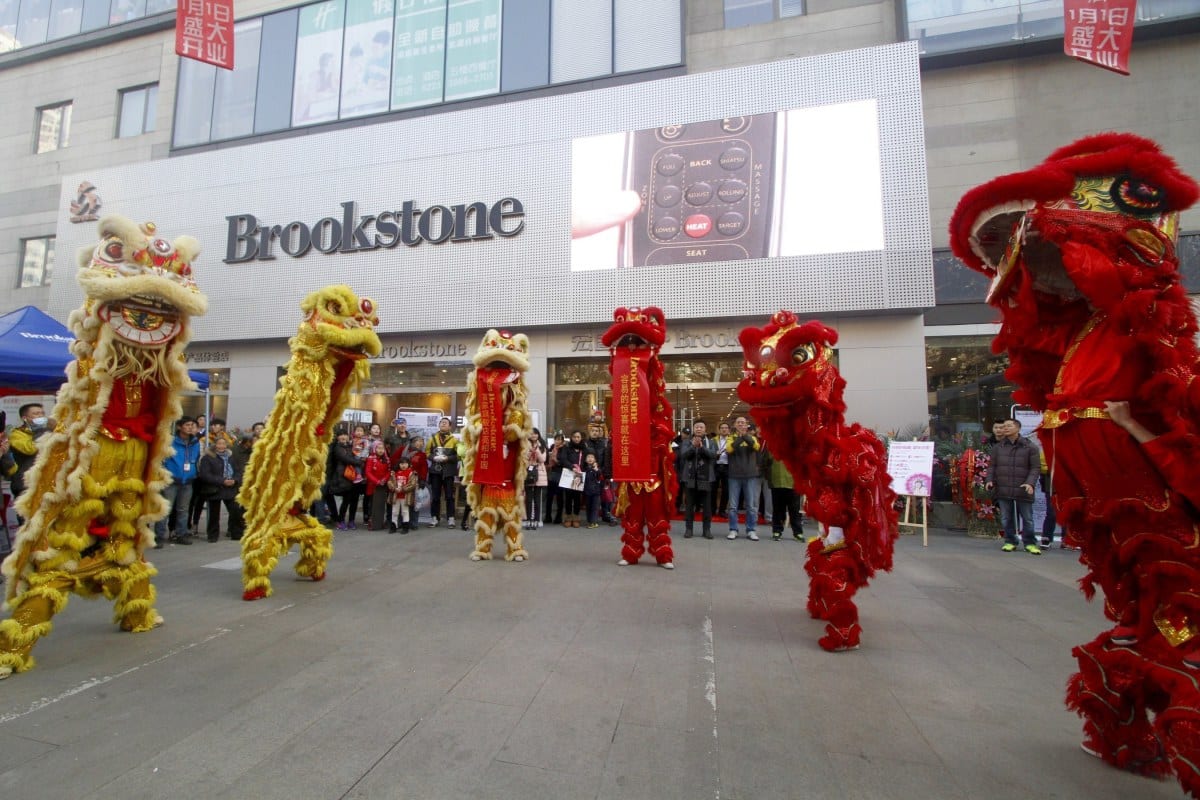
    US specialty retailer Brookstone has opened its first overseas store in one of the largest shopping centers in Nanjing, China.

    First-day sales far exceeded expectations for the new outlet, says CEO Tom Via. “We’re thrilled with how enthusiastically customers are embracing their first Brookstone China store experience.”

    Brookstone shops allow customers to try out products, and Via says visitors to the new outlet “love being able to try out our massagers, wear the Cat Ear headphones and see drones in action”.

    Founded in 1965, Brookstone offers innovative and lifestyle products designed for smart living. It has more than 300 mall and airport stores across the US, plus an online presence and a B2B/wholesale business. Two months after filing for bankruptcy in April 2014, the company was bought by Chinese investment firm Sailing Capital and Chinese conglomerate Sanpower for more than $173 million. By July, the company had emerged from bankruptcy with a restructured balance sheet, improved capital structure and a new strategic partner with a corporate mission to introduce premium American lifestyle products to shoppers in China.

    Over the years, Brookstone has built a following for its memory-foam pillows, sleep-sound machines, massagers and checkpoint-friendly luggage.

    Brookstone China chairman Xin Kexia is using the slogan “Easy surprise” to position the store as a destination for people to find “surprising innovations that make life easier”.

    Not only does the brand have in-house R&D teams that develop exclusive products, it also explores innovative products from makers all over the world.

    “For offline commerce to have any real meaning in the future internet-based society, it must meet the spiritual needs of consumers,” says Xin Kexia, “and offer customers a richer experience. Our mission is to consistently offer fresh and exciting product that customers have never seen before.”

    To help achieve this goal, the Sanpower Group has made active strategic adjustments and joined hands with Brookstone to sign a co-operation agreement with research and innovation institution MIT Media Lab.

    For China, Brookstone is adopting a sales model featuring hands-on interactive shopping. Store “associates” (rather than sales persons) will show customers how to control its products.

    Looking ahead, Brookstone’s China strategy will include opening independent shops in airports and high-speed railway stations, says chairman and Sanpower Group global vice-president Piau Phang Foo. It will also continue to launch store-in-stores in Sanpower’s offline retail brands, including Hisap and Smart Funtalk Telecommunications.

  • Jewellery retailers bearish on sales for CNY holiday

    Jewellery retailers bearish on sales for CNY holiday

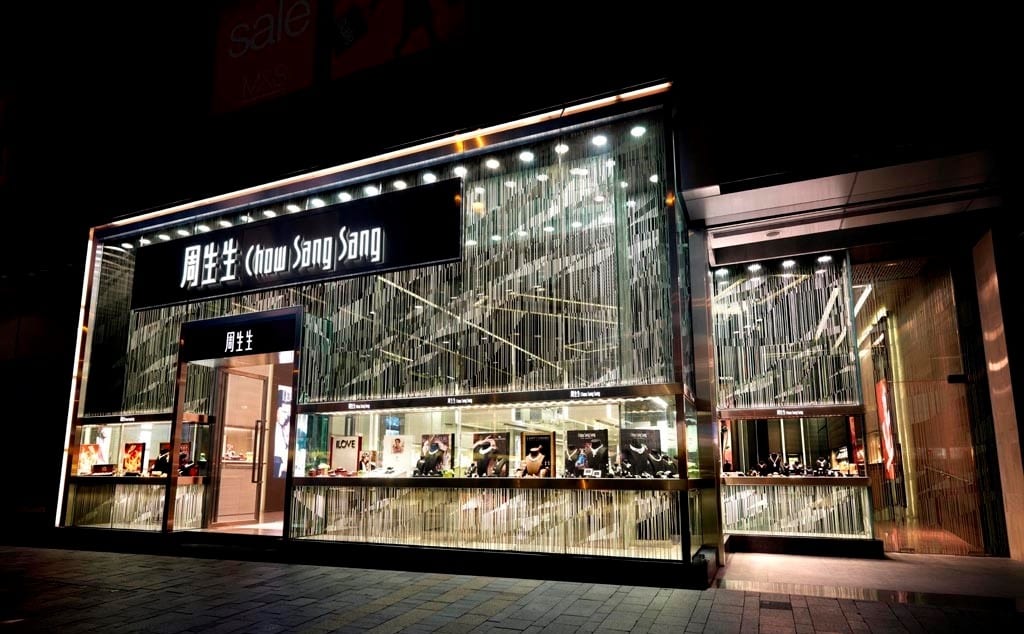
    Retailers Chow Sang Sang and Seng Fung both reckon the fall trend in jewellery sales seen in 2015 will last until the upcoming holiday

    The fall trend seen in jewellery sales last year will persist all the way through the upcoming Chinese New Year holiday in February, and more shop consolidations or a halt of retail expansion are likely to happen under the bearish outlook on sales, said jewellery retailers. Mr Lau Hak Bun, general manager of retail operations (Greater China) at the jewellery retailer Chow Sang Sang Holdings International Ltd, told media yesterday after attending a Hong Kong radio programme of his bearish forecast for sales for the coming Chinese New Year holiday, with a likely register of “single-digit” drop in sales for Hong Kong and Macau.

    The Chinese New Year holiday this year will fall on the second week of February.

    Speaking to media, Mr Lau has noted that sales during Christmas have failed to stimulate overall sales for Chow Sang Sang, which has already seen a fall trend since the first half of 2015. Chow Sang Sang saw its same store sales in Hong Kong and Macau decline by 12 percent year-on-year for the first half of last year as the consumption sentiment from mainland Chinese clients weakened and the unit selling price of the company’s jewellery items decreased, Mr Lau said.

    The gaining strength of the US dollar and the depreciation of Southeast Asian currencies will also affect visitors’ high-end spendings in Hong Kong this year, the jewellery retailer executive expected. Lee Koi Ian, general manager at local jewellery retailer Seng Fung Jewellery Co Ltd, shared a similar sales outlook with Mr Lau.

    “The recent drop in gold prices has not really stimulated much of our sales,” Mr Lee told Business Daily, “Since last year, the sales of jewellery has weakened a lot as we have seen much less gift hunting [from mainland Chinese shoppers] and spending from gamblers.”
    Declining to give a full sales figure for last year, Mr Lee said Seng Fung has suffered a “double-digit” drop in its turnover for the whole year.
    “Visitors’ traffic did improve a bit during the Christmas holiday, but still on a year-on-year basis, we saw our sales register a single-digit drop,” Mr Lee said.

    For the first three quarters of 2015, notable decline is seen in the sales of watches and jewellery here: the value of the retail sales of watches and jewellery has dropped by 26.1 percent year-on-year to MOP10.15 billion in the period, latest available data from Statistics and Census Service (DSEC) shows.

    Cautious outlook
    In response to the weaker sales performance, both Chow Sang Sang and Seng Fung said that they are not going to offer steep discounts for the promotion of sales of their products.

    “But we’ll be more cautious in our shop expansion plan,” Mr Lee said, “In the coming one or two years, we don’t think we are having more shops in casinos.”

    Currently Seng Fung runs eight shops across Macau, mostly on streets. In Chow Sang Sang’s interim report filed in September last year, the retailer has already mentioned that one street-level shop in Macau was closed at the expiry of its lease. Now Chow Sang Sang runs four shops in Macau, of which three are in casino-resorts.

    The Hong Kong-listed jewellery retailer does not rule out more shop consolidation or even closures to happen, Mr Lau noted to media yesterday. Chow Sang Sang has already closed two stores last year, one in Causeway Bay and another in Kwai Fong.

  • Understanding CapitaLand Limited From An Investor’s Perspective

    Understanding CapitaLand Limited From An Investor’s Perspective

    CapitaLand Limited (SGX: C31) is one of Asia’s largest real estate companies with a presence in Singapore, China, Indonesia, Malaysia and Vietnam. It is listed on the Singapore Exchange with a market capitalization of over S$13 billion.

    The company has a diversified suite of real estate businesses. This includes the development of residential and commercial properties, as well as the ownership and management of retail malls, offices, and hospitality properties. In addition, CapitaLand has a number of Singapore-listed trusts under its umbrella and these include:

    • CapitaLand Mall Trust (SGX: C38U), a real estate investment trust (REIT) that owns and manages mainly retail malls in Singapore.
    • CapitaLand Commercial Trust (SGX: C61U), a REIT with a portfolio of predominantly Singapore commercial/retail buildings.
    • Ascott Residence Trust (SGX: A68U), a REIT that holds hospitality-related properties (such as serviced residences) in the U.S., Europe, Asia, and Australia.
    • CapitaLand Retail China Trust (SGX: AU8U), a China-focused REIT that owns a portfolio of retail malls in the country.

    2015 was a year in which the Singapore stock market, as represented by the Straits Times Index (SGX: ^STI), fell by 14%. CapitaLand, however, bucked the trend with a gain, albeit a meagre one of just 1.4%.

    Let’s analyze the company’s financials to understand if it may be a potential investing opportunity now. For this we will be using four metrics, namely the price to earnings (P/E) ratio, price to book (P/B) ratio, net debt to equity ratio, and dividend yield.

    CapitaLand has a trailing 12 months (TTM) earnings per share of S$0.288, according to S&P Capital IQ. With the company’s current share price of S$3.14, this implies a P/E ratio of 11. This is on par with the P/E ratio of the SPDR STI ETF (SGX: ES3) – an exchange-traded fund tracking the Straits Times Index – which stands at 11.

    As at the end of the third-quarter of 2015, CapitaLand has a net asset value per share of S$4.14. This would mean that the company has a P/B ratio of 0.76 at its current share price. What this means is that investors are able to buy the company’s assets, net of all liabilities, at a discount at the moment. Investors might thus be able to get a margin of safety with CapitaLand.

    Moving on, CapitaLand had net debt (total borrowings minus cash) of S$12.5 billion and equity of S$24.5 billion as of 30 September 2015. This would imply a net debt to equity ratio of 51%, which is on the high side, in my opinion.

    Lastly, the company has a dividend yield of 2.9% based on its 2014 annual dividend of S$0.09 per share. It’s worth noting that CapitaLand’s ordinary dividend has been growing over the past few years, rising in 1 cent per share increments in each year from S$0.06 per share in 2011 to S$0.09 in 2014.

    In looking at the four metrics, the negatives appear to outweigh the positives. While CapitaLand’s low P/B ratio may give investors some margin of safety, its high net debt to equity ratio could add some risk. Moreover, CapitaLand’s P/E ratio and dividend yield are not very attractive.

    To sum it up, the four metrics seem to suggest that CapitaLand may not be a potential investing opportunity for investors currently. That being said, a deeper look will still be required before any firm investing conclusion can be reached – the four metrics only represent a useful starting point for further research.


  • Apple Crash? iPhone Parts Orders Slashed 30%

    Apple Crash? iPhone Parts Orders Slashed 30%

    Apple’s bet that Chinese consumers would rush to buy massive numbers of iPhones appears to have imploded as the tech leader has cut supplier parts orders by 30 percent.
    Apple’ss stock fell by $3 to $102 on January 5 after the Nikkei Asian Review reported that with iPhone 6S and 6S Plus models ballooning on retail shelves in China and Europe, the company was forced to slash parts demand by almost a third versus last year.

    Breitbart News warned on July 10, with Apple’s stock price at $124 a share, that the international dominance of Apple’s iPhone was at risk from the long-term impacts of China’s stock market crash, which saw prices fall by 40 percent over a 10-week period.

    We pointed out at the time that Apple’s growing dominance in the “Red Dragon” was due to huge investments by the company to make iOS and Mac OS X easier for Chinese language users. Many of the upgrades at Apple Worldwide Developers Conference 2015 were optimized specifically to target Chinese users.

    The company also embarked on a crash program to build 40 retail stores and Genius Bar help desks in premium retail spaces in an effort to portray Apple as an aspirational brand.

    Despite losing significant market share in the rest of the world, Apple’s strategy of betting the farm in China had seemed brilliant through the month of May. China’s “Silk Road” domestic reforms, aimed at expanding consumption by taking hundreds of state-owned-enterprises public, had caused 150 percent gain in the nation’s stock markets over the past year.

    With the number of retail brokerage accounts for Chinese investors exploding up from 20 million to about 100 million accounts, the ultimate status symbol in China had become watching live stock prices on the iPhone 6.

    The China stock indexes tumbled by 41 percent and wiped out $5 trillion in value in a three-month period this summer. Goldman Sachs just estimated that the Chinese government had to spend $236 billion and ban selling by major shareholders to stabilize markets. But the international brokerage firm is worried that with China now owning the equivalent of 9.2 percent of China’s freely-traded stock shares, the stock markets are at risk of crashing again if the government tries to sell.

    Despite the summer’s turmoil, Apple announced on October 27 that for the year ending September 30, the company achieved 99 percent year-over-year revenue growth in China. Apple CEO Tim Cook triumphantly told institutional investors later in the day that he anticipates the Greater China region, currently accounting for 24 percent of sales, will become “Apple’s top market in the world.”

    Despite all the company’s positive spin, Apple’s stock is now in a “bear market.” It just made an annual low, down 23 percent from its July high.

    With Apple’s stock appearing to carve out what some traders are calling a very dangerous “head and shoulders trading pattern,” a re-acceleration of the China stock crash represents a huge downside risk to Apple shareholders.

  • GM posts sales high of 3.61M vehicles in China in 2015

    GM posts sales high of 3.61M vehicles in China in 2015

    The carmaker said Wednesday that China remains the company’s largest sales market, as retail sales rose 5.2 percent from the previous high set in 2014. December 2015 sales also set an all-time monthly high at 445,227 vehicles, up 14 percent year-over-year. Industry sales improved later in the year after the stock market in China fell around mid year. The government in China in the fall also cut a tax and instituted incentives to help bolster demand for vehicles and aid sales.

    “We expect to have increased our market share in 2015 through great products and our team’s relentless effort,” GM China President Matt Tsien said in a statement. “We anticipate continued growth in 2016, as we plan to introduce 13 new and refreshed models starting with Cadillac’s all-new CT6 sedan later this month.”

    GM said SUV sales last year jumped 144 percent as SUVs accounted for 13 percent of the company’s sales in 2015 in China, up from 5.6 percent in 2014. Multi-purpose vehicle sales also increased 12 percent from 2014.

    Sales for the Cadillac luxury brand rose 17 percent from 2014 to 79,779 vehicles in 2015. Buick retail sales increased 12 percent to a record 989,167 vehicles. GM said sales were led by the Excelle GT, which sold 258,834 vehicles, followed by the Envision SUV, which had sales of 147,093. And Baojun sales surged 173 percent to a record 463,532 last year.

    Sales for Chevrolet fell 9.7 percent to 612,024 vehicles, which GM blamed mostly on vehicle model changeovers. The automaker said it expects sales in 2016 to improve with the new models such as the Malibu XL and Cruze XL. Wuling brand sales also slipped 7.5 percent to nearly 1.47 million vehicles.

    GM and its joint ventures last year added 12 new or refreshed vehicles.


  • China’s Li Ning on track to end bad run

    China’s Li Ning on track to end bad run

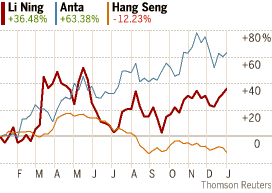
    Li Ning, the struggling Chinese sportswear company that is one of the mainland’s best known brands, says it will break even for 2015, leaving behind three years of annual losses.

    In a filing to the Hong Kong stock exchange, the company said it expected to “record an approximate break-even in terms of profit and loss attributable to the equity holders” in the year that ended December 31, “principally due to an increase in both the sales revenue and gross profit of the group and a decrease in expense ratio”.

    Li Ning has spent most of the past three years trying to restructure its business, clearing out inventory built up by third-party distributors, closing thousands of underperforming stores and increasing the percentage of direct-run outlets.

    The brand, which has struggled to shake off the image of a producer of cheap sports shoes that are little more than western knock-offs, announced a net loss of Rmb781m ($119m) for 2014, its third consecutive annual loss. But it reported signs at that time of a recovery in sales growth.

    The company on Wednesday attributed the improved performance to enhanced direct retail operating efficiency and long-term relationships with channel partners, and expanded ecommerce business.

    “It looks like their efforts to shut down unprofitable stores and focus on inventory with better sales and better margins are finally paying off,” said Ben Cavender of China Market Research in Shanghai.

    A recovery in the broader China sportswear market also appears to have played a role, retail analysts said.

    Ma Gang, a China-based footwear and apparel analyst, noted that “the whole industry is now on the upturn . . . and Li Ning has done a lot of work [to stem its losses].” But “whether the company will start to make profit now depends on its future strategy, including whether it keeps opening more stores,” he added.

    Chen Ke, Shanghai-based retail partner at Roland Berger, projects that the Chinese sportswear market will “maintain a 10 per cent growth rate in the next three years” while Li Ning itself “has improved efficiency after a shift . . . to opening more of its own stores”.

    But Mr Cavender pointed out that Li Ning “is still lagging behind some of their major domestic and international competitors and it’s unclear whether they have enough exciting products in place to make a strong run in 2016”.

    Anta, Li Ning’s top domestic sportswear rival, said net profit for the first half of 2015 rose 20 per cent from the same period a year earlier.

    Shares in Li Ning closed up nearly 7 per cent on Wednesday in Hong Kong, in a broader market down almost 1 per cent.


  • WeChat use by retail investors poses headache for regulators

    WeChat use by retail investors poses headache for regulators

    The growing popularity of messaging and social media app WeChat among China’s stock market investors is posing a problem to regulators, who now find it harder to monitor trades and spot illegal activity, Reuters reports, citing traders and investors.

    While using apps for trading is not unlawful in China, regulations require reliable monitoring and recording of trades to prevent activities such as insider trading or market manipulation, and to keep regulators on top of threats to market stability such as excessive margin trading.

    The China Securities Regulatory Commission has been clamping down on breaches, including fining four brokerages in September for failing to collect information about the identities of clients who traded stocks through external systems. 

    It also shut down third-party trading software used by brokers that helped traders skirt regulations by dividing one account into many sub-accounts without the need to register a name, the news agency said, citing local media reports.

    Even so, using apps to buy and sell stocks over mobile phones is common in a country where retail investors account for 80 percent of share market volume.

    Despite closer scrutiny from China’s regulators, brokerages including large firms like China Galaxy Securities (06881.HK) and smaller entities such as Great Wall Securities, started offering WeChat share trading account services last year in a bid to access the growing pool of retail traders.

    Overall account openings swelled to around 46 million in the first half of 2015, from around two million over the same period in 2014, according to official data.

    For brokers, the advantages of using WeChat are obvious, since it is the preferred means of communication for many of its 600 million users.

    But a case in Hong Kong last month highlights regulators’ concerns with the trend.

    The regulator there suspended a trader for receiving a buy order on WhatsApp, a messaging app owned by Facebook Inc., in breach of the internal communication policies of the firm he then worked for, BTIG, noting that the company had no control over the recording and retention of such messages.

    While the Hong Kong Securities and Futures Commission code of conduct does not prohibit the use of social messaging apps, it encourages the strict recording and time stamping of all communications and says the use of mobile phones for orders is “strongly discouraged”.

    Some of China’s institutional investors are also using WeChat to instruct their brokers.

    “In practice lots of people don’t care about compliance and take orders on WeChat,” said a Hong Kong-based institutional sales trader specializing in China.

    Such concerns are not limited to China.

    Clara Shih, chief executive and founder of Hearsay Social, a San Francisco-based social media compliance company, said messaging apps are also a potential gap in the compliance systems that US financial services firms have spent years building.

    US brokerages must monitor and store copies of employees’ electronic communications for three years and have a duty to protect clients’ personal information and confidentiality, tasks made more complicated by the proliferation of social media platforms.

    Technology has evolved in recent years to make it easier for companies to monitor employees’ activity on traditional social media platforms such as Facebook and Twitter. But WhatsApp and WeChat are not compatible with that technology, Shih said.

    Using social media for business is a growing trend but also a growing risk for compliance, said Craig Brauff, chief executive of Erado, a social media compliance company in Renton, Washington.

    “Regulations are designed to keep honest people honest. If someone really wants to be dishonest, there are lots of ways around it,” he said.


  • Suzhou selected to host China Retail Trade Fair

    Suzhou selected to host China Retail Trade Fair

    The China Retail Trade Fair, more commonly known as CHINASHOP, the benchmark and barometer of China’s retail industry, announced that following voting by exhibitors and followers, Suzhou International Expo Center, the convention and exhibition venue owned and operated by Suzhou Culture and Expo Center Co., Ltd., has been selected to host 18th edition of the event, CHINASHOP 2016, with 41% of votes.

    CHINASHOP rolled out a voting campaign on December 11, 2015, inviting exhibitors and followers to select the host venue for the 18th CHINASHOP by choosing between five cities: Haikou , Qingdao , Nanjing , Suzhou and Chongqing .

    Suzhou outrivaled other cities with 41 per cent of votes. Following a wide-ranging consultation with exhibitors and on-site investigation of the venue, the organizers announced that the event will be held at Suzhou International Expo Center between the 3rd and the 5th of November 2016.

    With the approval and support of China’s Ministry of Commerce, CHINASHOP is organized by China Chain Store & Franchise Association and Beijing Zhihe Lianchuang Exhibition Co., Ltd. With a 16-year track record under its belt, CHINASHOP has become China’s largest and the world’s second largest retail industry event and is regarded by retailers worldwide as a key annual gathering.

    The city’s unique advantages lend to Suzhou International Expo Center’s popularity

    Suzhou, located in the fast-growing Yangtze River Delta, is in close proximity to major commercial centers including Shanghai , Nanjing and Zhejiang and is, itself, a city which is seeing a rapid expansion in its commercial activities. Recent statistics show that dozens of large shopping malls and supermarkets opened their doors here in 2015 and that the local retail industry has been on the fast growth track.
    At the same time, Suzhou and the nearby cities of Shanghai , Wuxi and Kunshan are all home to China’s leading manufacturers of commercial shelves, logos and signs. CHINASHOP 2016 in Suzhou will not only allow purchasers to visit and inspect suppliers, but also reduce exhibitors’ labor and transportation costs. Jiangsu province is also a very active hub in terms of the development of China’s online businesses, giving exhibitors an opportunity to enter into face-to-face conversations with China’s leading Internet companies and further explore how to best be a part of the transformation of the traditional retail industry in the new consumption environment.

    Suzhou International Expo Center is located in Suzhou Industrial Park. The center has available 60 conference rooms of varying sizes, occupying a combined area of 50,000 square meters, as well as 100,000 square meters of indoor exhibition space and 60,000 square meters of outdoor space. Its 8,000 square meter column-free luxury banquet hall is among the best in Asia . Based in Suzhou, a city with deep historical and cultural roots, the center has a full range of support facilities in immediate proximity including hotels, restaurants, shopping malls and entertainment venues. At the same time, the center is conveniently located in terms of transportation, with proximity to airports and high-speed railway stations in Shanghai and Wuxi, facilitating access for exhibitors and visitors.

    “We are honored to provide the venue for CHINASHOP 2016,” said Yin Weidong , chairman of Suzhou International Expo Center. “We sincerely invite all to the center between November 3 and 5, 2016 , when we will offer exhibitors and visitors all over the world an international expo with the most advanced exhibition facilities, the most comprehensive support services and the most professional exhibition team.”

  • Alibaba is preparing to do battle with rural China’s terrible roads

    Alibaba is preparing to do battle with rural China’s terrible roads

    Alibaba, China’s e-commerce giant, is hungry to expand its reach into less developed parts of northern China, and it’s prepared to do it even though it’s going to have a tough time delivering its goods to customers there.

    Part of the company’s 2016 strategy involves growing its operations in China’s biggest cities. That includes paying more attention to online grocery and electronic sales in Beijing, a gateway for serving the some 400 million people in the less developed northern territories, the company said.

    It’s being packaged as an “Alibaba everywhere” approach, and hinges on making it easier for rural populations to buy from Alibaba. The company’s slowing growth (paywall) in larger Chinese cities has spurred it to make inroads in untapped regions.

    The problem? Getting “everywhere” is tough. China’s postal system is notoriously unreliable, there are too few distribution centers, and rural roads are in bad shape.

    Total online sales in China are expected to reach $356 billion in 2016, according to the Journal. In large cities, that means millions of packages being delivered by couriers zipping through streets on scooters. In far-flung communities, though, getting deliveries is a more cumbersome venture.

    Customer complaints about lost mail have led China to strip (paywall) more than 100 delivery companies of their permits—a challenge for a country that’s been ranked by the World Bank as 26th in the world for logistics infrastructure, according to the Journal.

    One reason for this is that China has fewer dominant national retail chains that serve consumers than in the US, where big- and medium-sized box stores are sprinkled generously across the 50 states. The US also benefits from the roads built in the late 1800s to accommodate a robust postal system.

    And because China’s retail store networks are less developed, more than 11% of total retail sales take place online, versus 8% in the US, according to Moody’s. That’s expected to increase to just under 16% by the end of this year. That means Alibaba will have its work cut out finding a way to get reliably get packages from online to off-road.

  • Apple on a roll with retail expansion in China as it announces 30th store

    Apple on a roll with retail expansion in China as it announces 30th store

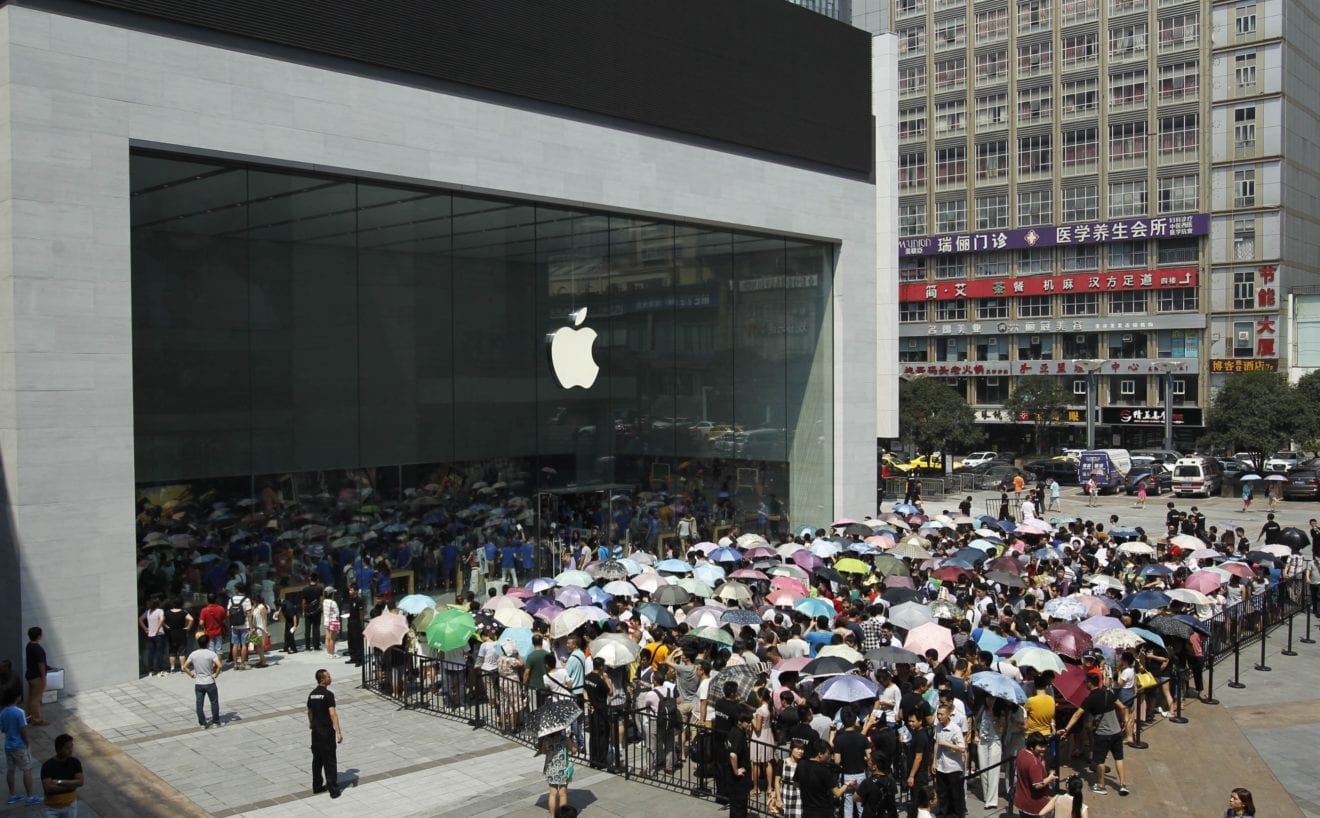
    China’s current economic problems – share trading suspended for the second time in a week after stocks fell 7% – doesn’t seem to be impacting Apple’s retail store expansion program in the country. The company has announced the opening of its 30th retail store in China, the second one it is opening this month. Back in 2014, the company set a goal of opening 40 stores in the country by October of this year.

    The latest store is in Xiamen, a port city on the Taiwan Strait. Xiamen is home to one of the four Special Economic Zones established by the Chinese government back in the 1980s, to encourage foreign investment and trade.

    Unusually, the store opens on a weekday, with Apple’s website showing that it will open at 10am on Thursday 14th January. The store is located in the SM Lifestyle Center at 399 Jiahe Road, in the Siming District of the city. It opens just a few days after the 29th store in Shenyang.

  • Apple to open its 25th new retail store in China

    Apple to open its 25th new retail store in China

    Apple has declared that its 29th retail location in China opens in Shenyang, the capital city of Liaoning, on Saturday, January 9 at 10:00 a.m. local time. The store will be situated in the MixC shopping center at 288 Qingnian Street in Shenyang’s Heping District.  The new store will be open Monday to Sunday between 10 a.m. to 9:30 p.m. local time, and offer traditional Apple Store services, including the Genius Bar, Workshops, Joint Venture, events and classes.

    This new MixC area in Shenyang will be Apple’s 25th retail location in Chinese territory, and the organization also operates in four retail locations in Hong Kong. Shenyang is situated around 250 miles (402 km) upper east of Dalian, a noteworthy port city in southern Liaoning where Apple’s 21st retail location in China opened on October 24, 2015.

    Apple has forcefully extended its foot print in China under the initiative of retail chief Angela Ahrendts, having opened new stores in Nanning on December 12, Beijing on November 28 and Chengdu on November 21. Apple likewise opened stores in retail locations in Chongqing, Hangzhou, Hong Kong, Nanjing and Tianjin all through 2015.

  • First passenger drone makes its debut at CES

    First passenger drone makes its debut at CES

    Chinese entrepreneurs bring their one-person craft, which is controlled by tablet and capable of flying 60mph, to the annual technology convention CES.

    A Chinese company claimed a world first on Wednesday by unveiling a drone capable of carrying a human passenger.

    Guangzhou-based Ehang Inc pulled the cloth off the Ehang 184 at the Las Vegas convention center during the CES gadget show.

    In a company video showing the 184 flying, it looks like a small helicopter but with four propellers spinning parallel to the ground in a similar configuration to other drones.

    The electric-powered drone can be fully charged in two hours, carry up to 100kg (220lb) and fly for 23 minutes at sea level, according to Ehang. The cabin fits one person and a small backpack and is fitted with air conditioning and a reading light. It is designed to fit, with propellers folded, in a single parking spot.

    After setting a flight plan, passengers needed only to give two commands – “take off” and “land” – done with a single click on a tablet, the company said.

    The drone is designed to fly 300 metres to 500 metres (1,000 to 1,650 feet) off the ground with a maximum altitude of 3.5km (11,500 feet) and top speed of 63 mph (100km/h).

    US authorities are starting to lay out guidelines for drone use, and a human-passenger drone seems certain to face strict scrutiny.

    Michael Huerta, head of the Federal Aviation Administration, was at CES but could not immediately be reached for comment.

    Shang Hsiao, Ehang’s co-founder and chief financial officer, said his company hoped to sell the device for $200,000-$300,000 this year but acknowledged it occupied a legal grey area. “The whole world never had something like this before,” he said.

    A passenger would have no controls as a backup, he said. The company was planning a remote control centre that would take over the vehicle in the event of a problem and ensure it landed safely.

    Derrick Xiong, the chief marketing officer, said the vehicle had been flown more than 100 times at low altitudes in a forested area in Guangzhou, including several times with a person aboard.

    One feature that made the quadcopter safer than a helicopter was its numerous propellers, Xiong said. Even if three of the four arms had their six propellers disabled, the final arm’s working propellers could ensure a rough landing by spiralling toward the ground.

    The company, which also makes smaller drones, said in August that it had raised $42m in capital from various investors including GP Capital, GGV Capital, ZhenFund and others, after raising $10 m the previous year.

  • Apple Inc. Continues To Bet Big On China, To Open 29th Store

    Apple Inc. Continues To Bet Big On China, To Open 29th Store

    Apple Inc. continues to bet big on China. It did so last year, and is doing so this year also. The US firm will open its 29th retail store in Shenyang – capital city of Liaoning – on January 9. The store will be in the MixC shopping mall at 288 Qingnian Street in Shenyang’s Heping District.

    Apple is expanding its footprint in China at a very aggressive pace under retail chief Angela Ahrendts, and has opened new stores in Nanning on December 12, Beijing on November 28 and Chengdu on November 21. In 2015, the US firm also opened retail stores in Chongqing, Hangzhou, Hong Kong, Nanjing and Tianjin.

    Apple Inc's Apple Store NASDAQ:AAPL

    Apple’s new store will be open on all five days from Monday to Sunday between 10 a.m. and 9:30 p.m. local time, and will offer traditional Apple Store services. At the same time, it will include the Genius Bar, Workshops, JointVenture, events and seminars. This new store in Shenyang will be the company’s 25th retail store in mainland China, and it already operates four retail stores in Hong Kong.

    Magic fading in China?

    Apple Inc. has been generating huge revenue from China on YoY basis. In the past three years, China has contributed 23%, 41% and 53% to Apple’s total revenue. In fiscal 2015, China for the first time overtook Europe, in terms of revenue. Despite the impressive growth, there are many who believe economic slowdown in the region will impact the iPhone sales.

    However, CEO Tim Cook says there is no issue at all. A few months back, Cook gave reasons for his stance, saying, “if I were to shut off my web and shut off the TV and just look at how many customers are coming in our stores regardless of whether they’re buying, how many people are coming online, and in addition looking at our sales trends, I wouldn’t know there was any economic issue at all in China.”

    But, two indices suggests, that Apple sales in China may not witness the growth it has seen in the last few years. These two indices are – drop in quarter-on-quarter sales in Greater China and an erosion of Apple’s overall market share, said an earlier report from Bloomberg. In the last quarter of fiscal 2015, Apple witnessed a 5.4% drop in revenue versus the prior quarter.

    In the Q2 this year, Apple Inc.’s smartphone market share in the region dropped to 7.7% from 10.8% in the previous quarter, as per the data from Bloomberg Intelligence. This may suggest that Apple’s magic in China may be fading.

  • Vipshop Stock Slumping as China Trading Halted

    Vipshop Stock Slumping as China Trading Halted

    Shares of Vipshop Holdings are lower by 7.99% to $14.05 on Monday morning, as stocks traded in the U.S. but based in China tumble due to the global stock selloff, spurred by concerns regarding the Asian nation’s economic stability.

    Vipshop is a Guangzhou-based holding company that operates as an online discount retailer for brands in China.

    Weak manufacturing data in China sent the country’s markets plummeting, with the Shanghai index falling by 6.9% and the Shenzhen down by more than 8% before trading was halted on Monday.

    Contributing to the decline in China’s market is a lower than expected Caixin survey, which was released earlier today, CNBC.com reports. The Caixin index is a gauge of nationwide manufacturing activity, with a focus on small and medium sized companies.

    The Caixin December manufacturing PMI was lower at 48.2 versus 48.6 in November.

    Recently, TheStreet Ratings objectively rated this stock according to its “risk-adjusted” total return prospect over a 12-month investment horizon. Not based on the news in any given day, the rating may differ from Jim Cramer’s view or that of this articles’s author. TheStreet Ratings has this to say about the recommendation:

    We rate VIPSHOP HOLDINGS LTD -ADR as a Buy with a ratings score of B-. This is driven by some important positives, which we believe should have a greater impact than any weaknesses, and should give investors a better performance opportunity than most stocks we cover. The company’s strengths can be seen in multiple areas, such as its robust revenue growth, notable return on equity, reasonable valuation levels, impressive record of earnings per share growth and compelling growth in net income. We feel its strengths outweigh the fact that the company has had generally high debt management risk by most measures that we evaluated.

    Highlights from the analysis by TheStreet Ratings Team goes as follows:

    • VIPS’s very impressive revenue growth exceeded the industry average of 38.0%. Since the same quarter one year prior, revenues leaped by 54.6%. This growth in revenue appears to have trickled down to the company’s bottom line, improving the earnings per share.
    • VIPSHOP HOLDINGS LTD -ADR reported significant earnings per share improvement in the most recent quarter compared to the same quarter a year ago. The company has demonstrated a pattern of positive earnings per share growth over the past two years. We feel that this trend should continue. During the past fiscal year, VIPSHOP HOLDINGS LTD -ADR increased its bottom line by earning $0.23 versus $0.09 in the prior year. This year, the market expects an improvement in earnings ($3.48 versus $0.23).
    • Current return on equity exceeded its ROE from the same quarter one year prior. This is a clear sign of strength within the company. Compared to other companies in the Internet & Catalog Retail industry and the overall market, VIPSHOP HOLDINGS LTD -ADR’s return on equity significantly exceeds that of both the industry average and the S&P 500.
    • The company, on the basis of net income growth from the same quarter one year ago, has significantly underperformed compared to the Internet & Catalog Retail industry average, but is greater than that of the S&P 500. The net income increased by 79.9% when compared to the same quarter one year prior, rising from $27.70 million to $49.83 million.