Tag: China

  • Ralph Lauren profits tumble

    Ralph Lauren profits tumble

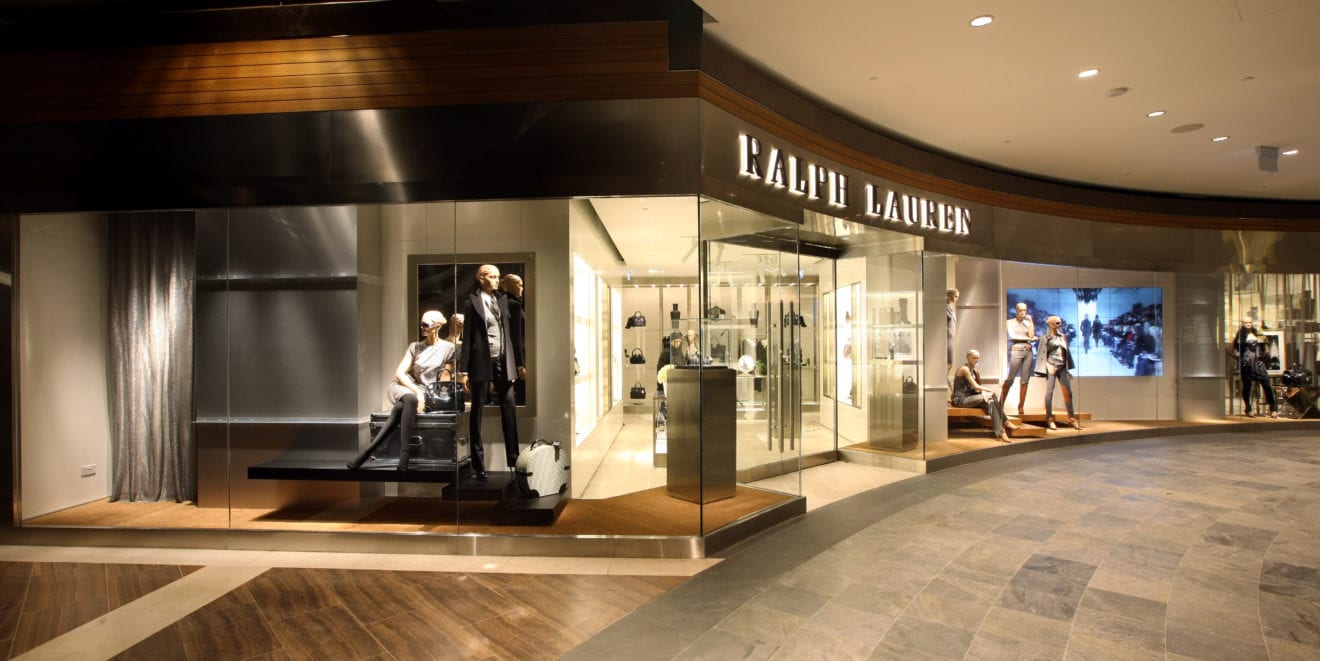
    US fashion label Ralph Lauren’s operating profit has tumbled almost 39 per cent year to date as it continues to restructure its operations.

    The latest quarterly numbers just released show a solid sequential improvement on the prior quarter, with the strength of the US dollar responsible for most of the headline deterioration. When reported on a constant currency basis, net revenues look more respectable, rising four per cent over the prior year.

    “Despite the fall in profits, Ralph Lauren has taken steps to help ease up its bottom line over the medium term,” comments Håkon Helgesen, retail analyst at Conlumino.

    “These include the global reorganisation into a centralised structure run by six global brand groups which, by the end of 2017, should yield an annual $100 million in terms of efficiency savings. This measure has, however, come with short term costs attached – $38 million of which were recognised during this quarter, and more of which will filter through into subsequent quarters.

    “Despite the squeeze this exerts on profits, we believe that Ralph Lauren is to be applauded for taking the long term view.”

    The global launch of Polo Sport was completed during the quarter and initial indications suggest it has been well received.

    “In our view this activewear brand gives Ralph Lauren a much more significant presence in a lucrative – and rapidly growing – part of the apparel market and will be a solid contributor to future growth,” said Helgesen.

    Geographically, although international growth was deflated by the unfavorable exchange rate, it remains in double digits when expressed in local currency terms.

    “The same cannot be said of Ralph Lauren’s home market where the company struggled to generate sales momentum. Stores in big city locations – which make up about half of the total fleet – have the legitimate excuse of reduced tourist spend, again related to the relative strength of the dollar. This has inevitably acted as a drag on growth.”

    Helgesen says despite sluggish growth and a more promotional retail environment, Ralph Lauren continues to be conservative about discounting.

    “Although this has likely cost it some sales in the US, it has helped to protect margins and, ultimately, brand equity. Again, this is an example of Ralph Lauren being confident enough to take the long term view.”

    Responsibility for the day-to-day running of the company will now fall to Stefan Larsson, who takes over as CEO from its founder Ralph Lauren this month.

    “While some have questioned Larsson’s background – he previously worked at the distinctly mass-market retailers Old Navy and H&M – this is, in our view, to ignore the skills he brings to the table. While these may not have been honed in a luxury brand environment, the operating disciplines of both fashion businesses are points of learning for Ralph Lauren as it continues its quest for efficiency.

    “In any case, Ralph Lauren – and his design prowess – will still be on hand as he takes up his new role of chairman and chief creative officer,” concluded Helgesen.

  • Dairy Farm struggles in SE Asia

    Dairy Farm struggles in SE Asia

    Dairy Farm International Holdings says softer sales growth and steep cost increases led to weakened margins in the third quarter.

    In an interim management statement, which does not include financial data, the Hong Kong-based pan-Asian retailer says the group faced more difficult economic conditions, and focused on building market share and investing for the long-term health of its businesses.

    Tighter margins and unfavourable exchange rate movements continued to affect the group’s US dollar reported results and led to lower underlying earnings for the period.

    “The group expects similar trading conditions to prevail for the remainder of the year.”

    Dairy Farm says profitability of its Singapore food business – where it owns the 7-Eleven franchise and Cold Storage supermarket chain – fell, principally due to weak performances from newly opened supermarkets and the impact on 7-Eleven of government restrictions on alcohol sales.

    In Malaysia, the introduction of GST and softer consumer confidence dampened spending at itsGiantstores.

    “In Indonesia, despite good sales momentum in July and August, higher labour costs and price investments to attract customers have reduced margins,” the company said.

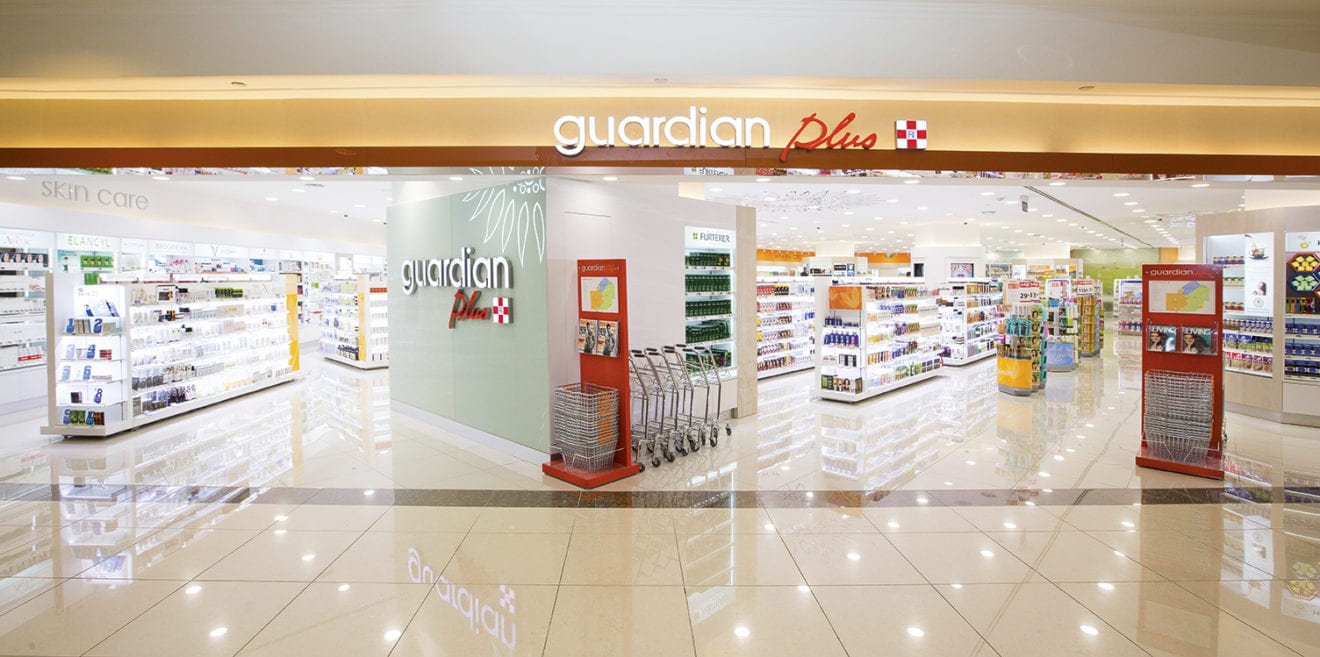
    The Health and Beauty Division – led by the Guardian and Mannings brands – continued to perform well in Hong Kong, despite the slowdown in Mainland Chinese tourist arrivals, and has seen improvements in profitability in Singapore. The overall results were, however, held back by poorer performances in Malaysia and Indonesia.

    Both the Home Furnishings and Restaurants Divisions have increased sales and profits. Ikea performed well in both Hong Kong and Taiwan, and the new Ikea store in Indonesia continues to trade ahead of expectations.

    Restaurant group Maxim’s, which operates Starbucks amongst other brands,  maintained its consistent performance.

    The group is to invest a further US$210 million in Yonghui Superstores in early 2016 so as to maintain its 19.99 per cent stake following a placement by Yonghui of a 10 per cent shareholding to internet retailer, JD.com. The investment by JD.com will provide Yonghui with additional opportunities for expansion into eCommerce.

    “With respect to recent investments, there have been positive contributions from [supermarket chain] San Miu in Macau and from Yonghui in China, despite the challenging trading environment. Meanwhile, progress continues on the integration and repositioning of the Rose Pharmacy business in the Philippines,” the company said.

    “Notwithstanding the challenging conditions, Dairy Farm was able to maintain its cashflow from operating activities through better working capital management.

    Dairy Farm operates over 6400 outlets – including supermarkets, hypermarkets, convenience stores, health and beauty stores, home furnishings stores, cafes and restaurants – employing over 170,000 people, and had total annual sales in 2014 exceeding US$13 billion.

  • Chile salmon JV benefiting from Norway, China trade troubles

    Chile salmon JV benefiting from Norway, China trade troubles

    Chile’s salmon joint venture New World Currents, comprised of Australis Seafoods, Blumar Seafoods, Pesquera Camanchaca and Cultivos Yadran, has met this year’s target to sell salmon to the Chinese market.

    In 2014, the venture already exceeded the expectations of its partner companies. The JV’s sales volume target for the year was originally 2,000 metric tons, but it had already hit 3,000t as of Nov. 6 last year.

    So far this year, the company has sold about 5,000t of salmon to China, of which 70% was frozen and 30% fresh, Eduardo Goycoolea, executive director of the New World Currents venture told Undercurrent News.

    “We have increased our sales 40% year-on-year already and we’ll keep growing in China. Chilean salmon has become an attractive alternative after the conflict between Norway and China,” Goycoolea said.

    Norway’s salmon exports to China have been fraught with difficulties since the 2010 Nobel peace prize. In March this year China delivered another blow to Norwegian producers: it announced it would ban all imports of whole head-on salmon from three Norwegian counties — Nordland, Troms and Trondelag.

    Although China and Norway agreed on a new certificate formula that meant exports of salmon to China could be maintained a month later, Chile has benefited from Norway’s difficulties for trade into the Asian country.

    “Fresh salmon account for 30% of our total sales volumes to China, and we want to send more fresh product as we are working to improve our logistics for air freight shipments,” Goycoolea said.

    New World Currents has done freight shipments from Chiloe once per week, but due to higher demand of fresh salmon from China, the JV has began to send salmon through additional flights out of Buenos Aires, Argentina, from October 1.

    The venture is also looking to export more value-added products in China’s retail segment, Goycoolea said.

    The commitment of the venture with China’s market is clear, as it has already two sales offices in the country, one in Shanghai and another Shenzhen. By the end of November, the JV plans to open a third sales office in Qingdao, Goycoolea said.

    “By the next three years we want to sell about 10,000t to China, as consumption in this country is growing,” he said.

    Despite salmon falling prices, China is a “very interesting market”, as it consumes the largest sizes, which are more profitable as they have higher prices.

    New World Currents represent about 25% of salmon production in Chile, and it is having requests from other Chilean companies to join the venture, although it wants first to consolidate its brand and ties with local distributors before expanding, Goycoolea said.

    China’s growth potential

    Chile’s salmon farmers aim to double sales to China within the next five years, taking advantage of its potential market growth.

    The Chinese market for salmon has significant prospects for growth not only because the country has more than 1.3 billion population, but also because salmon consumption is still low, leaving space for further market penetration.

    In 2014, Chilean salmon exports to China totaled $147 million, which was up by 4.18% year-on-year. China, however, represents just 3.37% of total salmon exports from Chile.

    Chilean salmon companies export to more than 65 markets, but just three countries — the US, Japan and Brazil — account for 68.2% of total exports.

  • Jewelry.com Selects VoyageOne to Expand and Sell Products in China’s B2C Online Marketplaces

    Jewelry.com Selects VoyageOne to Expand and Sell Products in China’s B2C Online Marketplaces

    Jewelry.com announced that is has chosen VoyageOne, a pioneer in B2C “cross-border” ecommerce solutions and services, to help launch its direct-to-consumer online expansion plans for China.

    With over 14 years in the industry, Jewelry.com is one of the foremost online retailers in North America. VoyageOne provides localized branding, online marketing, merchandising campaigns, operational support, a local entity with inventory in China and local customer service support.

    “We are very proud to have reached a strategic partnership agreement for the online presence of our products leveraging VoyageOne’s turnkey solutions and services,” said Ofer Azrielant, President of Jewelry.com. “One of the great untapped opportunities for us is China’s online marketplaces including worldwide leader, Alibaba’s Tmall Global. Now we are able to provide our jewelry assortment to online shoppers in China while empowering them to express their individuality and taste in an entirely new way.”

    “We quickly learned that VoyageOne has the technology, domain expertise and proven track record of helping U.S.-based retailers to quickly and efficiently deploy an online presence in China, enabling brands to sell products directly to consumers while preserving brand values. We are also excited to be part of the largest Tmall Global Single’s Day aka 11/11 which is the one the largest online events in the world” said Jon Azrielant, Director of Marketing for Jewelry.com.

    “Jewelry.com recognized the importance of leveraging an integrated turnkey B2C cross-border ecommerce platform, localized business practices and operational methodologies right from the beginning to pave the way for success in China.” said Dennis Zhang, Founder and CEO of VoyageOne.

    VoyageOne’s Ecom360™ is a proprietary solution that provides U.S.-based retailers and brands with cost-effective and streamlined access to China’s Direct-to-Consumer “cross-border” ecommerce and online marketplaces, enabling them to ship directly from their U.S. warehouse to consumers in China.

    “We’re extremely excited to partner with Jewelry.com to deliver memorable online shopping and customer service experiences for their new customers in China.” said Patrick Hoss, Sr. Vice President of VoyageOne. “Today, online shoppers in China can easily purchase their favorite jewelry from https://Jewelry.tmall.hk and receive their packages shipped directly from the U.S. to their doorsteps in a matter of few days!” added Hoss.


  • GM China sales up 15% in October

    GM China sales up 15% in October

    The automaker said its sales were up 15 percent year-over-year in October and Buick sales jumped 42 percent from a year ago. Monthly sales for the brand hit more than 100,000 for the first time.

    “GM is well-positioned to capture the growth opportunities in the SUV, MPV (multi-purpose vehicles) and luxury segments, and our new products are gaining market share,” GM China President Matt Tsien said in a statement. “The recently announced government incentive for vehicle purchases helped boost buying sentiment starting in October.”

    Cadillac sold an October record 5,757 luxury vehicles, up 23 percent year-over-year, while Baojun brand sales soared 113 percent to 51,589 vehicles, also a record for October. Chevrolet sales fell 8.4 percent to 51,173 vehicles, which GM blamed mostly on vehicle model changeover. Wuling brand sales also decreased 6.8 percent to 116,786 vehicles because of a decline in the mini-commercial vehicle market, GM said.

    Through October, GM says its retail sales in China are up 2.9 percent year-over-year to a record nearly 2.82 million vehicles.


  • Yum Brands boosted by China sales growth

    Yum Brands boosted by China sales growth

    Investors sweetened towards shares in Yum Brands, the owner of KFC, Pizza Hut and Taco Bell, after the company reported stronger-than-expected October same-store sales growth in China. The Louisville, Kentucky-based company said same-store sales, a key industry metric, grew 5 per cent last month.

    However, Yum reiterated its fourth-quarter guidance for comparable sales growth of zero to 4 per cent, noting that it remains “difficult to forecast in China”.

    “While an early sign of perhaps some stabilisation in the market, investors should avoid being overly buoyed by the magnitude of the beat, as China sales have been extremely volatile, and we were not provided with the year-ago monthly compares,” according to Jason West, an analyst at Credit Suisse.

    The news comes a month after Yum announced plans to spin off its Chinese operations, which accounted for about half the company’s overall revenue last year, into a separate company.

    Shares in Yum gained more than 2 per cent to $68.64, trimming its year-to-date decline to 5.8 per cent.

    Retail stocks continued to get punished ahead of the key US shopping season after Nordstrom cut its full-year profit forecast a day after Macy’s.

    The S&P 500 department stores index, which includes just Nordstrom, Kohl’s and Macy’s, fell 8 per cent on Friday and is down nearly 17 per cent for the week. The broader S&P 500 retail index declined more than 5 per cent over the week.

    Retailers have attributed weak results to warm weather and the strength of the US dollar, which has hurt tourist spending. Analysts said weak customer traffic has resulted in higher inventory and that could drive more promotional activity during the key shopping season

    Nordstrom shares tumbled more than 16 per cent to $53.05 after the upmarket retailer said it now sees earnings in the range of $3.40 to $3.50 a share, compared with its previous outlook for $3.70 to $3.80. This missed analysts’ estimates for $3.80.

    Meanwhile, the retailer expects to increase same-store sales for the year by 2.5 per cent to 3 per cent, below its previous forecast.

    Nordstrom said profits fell nearly 43 per cent to $81m or 42 cents a share, shy of analysts’ estimates for 72 cents a share. Adjusting for one-time items earnings of 57 cents a share also missed. Total revenues rose 6 per cent to $3.3bn.

    Despite reporting better than expected results, shares in JC Penney fell nearly 14 per cent to $7.59 amid the broader sell-off in the sector.

    Mylan shares jumped 13 per cent to $48.99 after the drugmaker’s attempt to buy rival Perrigo in a $26bn deal failed. Perrigo shares fell 7 per cent to $145.98.

    The S&P 500 declined for the third consecutive day led by a sell-off in the consumer discretionary sector.

    At midday, the S&P 500 was 0.8 per cent lower to 2,030.37, the Dow Jones Industrial Average had declined 0.9 per cent to 17,295.14. The Nasdaq Composite fell 1 per cent to 4,957.21.

  • Chinese account for 31% of global luxury sales

    Chinese account for 31% of global luxury sales

    Chinese shoppers now account for 31 per cent of the world’s annual luxury sales.

    According to Bain & Company’s 2015 Worldwide Luxury Report, the overall luxury industry will surpass €1 trillion in retail sales value in 2015.

    The market delivered healthy growth of five per cent year on year (at constant exchange rates), driven primarily by luxury cars (eight per cent), luxury hospitality (seven per cent) and fine arts (six per cent).  Aided by global currency fluctuations and continued jet-setting of “borderless consumers,” the personal luxury goods market ballooned to over a quarter trillion euros.

    That sector – including leather accessories, fashion, hard luxury and fragrance & cosmetics – reached €253 billion in 2015. This represents 13 per cent growth at current exchange rates, while real growth is significantly slowing to between one and two per cent.

    But the report warns that luxury brands will need the right pricing model to win against hard to predict currency volatility in the year ahead, which has impacted heavily on luxury retailers especially.

    While global tourists flocked to Europe and Japan to capitalise on a weak euro and yen, the Americas region, stagnant in real terms, was strongly inflated by the super dollar, thus capturing more than a third (34 per cent) of the global market spend in 2015.

    Meanwhile, Asia registered the worst historical performance (at constant exchange rates), driven by the lacklustre trend of Mainland China and the sharp drop in sales in Hong Kong and Macau.

    “For the last several years, we’ve referenced ‘luxury’s new normal’ with a deceleration of the personal luxury goods market. Now, we are starting to feel the impact of that slow-down,” said Claudia D’Arpizio, a Bain partner in Milan and lead author of the study.

    “The challenge for luxury brands in this environment is how to successfully navigate through hard-to-predict volatility.”

    According to Bain’s research, Chinese consumers continue to spend the largest share of luxury purchases (31 per cent) globally, followed by Americans (24 per cent) and Europeans (18 per cent).

    Chinese consumers are flocking to mature markets in droves, especially Europe, where an analysis of European tax-free shopping data, conducted in partnership with Global Blue, shows Chinese tax-free purchases increased by 64 per cent, particularly among the accessible and aspirational luxury segments, thanks to a weak euro.

    Americans also increased their tax-free spending in Europe by 67 per cent, aimed largely at the high end of the luxury spectrum.  Meanwhile, Russians cut their European spending by 37 per cent, and spending among the Japanese in Europe withered by 16 per cent.

    “Undoubtedly, Chinese consumers play a primary role in the growth of luxury spending worldwide,” said Federica Levato, principal at Bain and co-author of the study.

    “For years, we have known that they spend far more abroad than in Mainland China, but what’s changing is that they’re spending little money in historically popular destinations, such as Hong Kong and Macau, and are instead gravitating to new locales, such as Europe, South Korea or Japan, to benefit from currency fluctuations that drive favorable price gaps.”

    In terms of constant exchange rates, the US market did not deliver.  The “super dollar” was too expensive for many global tourists and though local consumption is growing, it was barely sufficient to offset the lost tourism revenue. Nevertheless, the US is the confirmed largest luxury market in terms of global luxury value, reaching €79 billion; New York City alone outweighed all of Japan.

    Another trend evident this year is the impact of eCommerce, which grew to seven per cent market share in 2015, nearly double its penetration since 2012. Luxury globetrotters have also fuelled the performance of airport retail, which posted 29 per cent growth in current exchange rates (18 per cent in constant exchange rates) and now accounts for six per cent of the global luxury market.

    With the growing middle class in economies such as China seeking good quality and good value, the off-price channel has more than doubled to nearly €26 billion.  Mark-downs are also increasing in prevalence across more than 35 per cent of the luxury market, with a strong relevance in department and specialty stores, as well as online.

    The Price of Luxury

    According to Bain, the number one challenge facing most luxury brands is establishing the right pricing model.

    The rise of eCommerce and global tourism growth create greater transparency around international price differentials. Additionally, price-conscious luxury shoppers are struggling to reconcile the price of luxury products with their real value. As a result, luxury brands must assess how to mitigate volatility and how best to deliver at local and global levels. This includes managing inventory to accommodate fluctuations in tourism and coordinating pricing and mark-downs across markets and channels.

    Luxury brands also face a host of tough issues such as rethinking their store footprint and the role of their stores in a world of growing digitalisation, as well as figuring out how to delight local customers even as masses of tourists flock to stores in mature markets.

    “Relentless price increases over the last decade, aimed at creating a more exclusive position in the market and maximising touristic flows are now starting to backfire on luxury brands,” said D’Arpizio.

    “They face the long-term challenge of rebuilding credibility and trust among consumers, rather than simply making shortsighted, tactical pricing adjustments to benefit from market fluctuations.”

  • Hunger Games theme park planned for Zhuhai

    Hunger Games theme park planned for Zhuhai

    Two Hong Kong companies have formed a joint venture to secure the rights from US cinema giant Lionsgate to create a Hunger Games theme park in Zhuhai.

    The companies are now planning a themed destination which would include amusement attractions, retailing and dining and ultimately cash in on Zhuhai’s upcoming connection by the new road bridge under construction linking Macau, Hong Kong and Zhuhai City on Macau’s border.

    Zhuhai Hengqin Laisun Creative Culture City Co Ltd is the developer, 80 per cent owned by Lai Fung Holdings Limited and 20 per cent by eSun Holdings Limited.

    The new company has entered into a License Agreement with Lionsgate LBE for the development and operation of an Immersive Experience Center (“IEC”) in Phase I of the Creative Culture City Project in Hengqin, Zhuhai.

    LG is a major Hollywood film and entertainment producer and owns a series of blockbuster hits such as The Hunger Games series, Divergent and Now You See Me.

    “These IPs will be developed and applied for use in the IEC,” the two Hong Kong companies said in a joint statement.

    “The size of the IEC will be approximately 22,000 sqm, containing multiple interactive experiences with at least 10 to 15 attractions developed from six Lionsgate IPs plus food and beverage facilities as well as retail concessions.”

    The licence will last 10 years with an option to renew for another 10 years.

    “Pursuant to the terms of the License, LG will license various intellectual property rights to ZH and provide various support services, in return for payments, largely in the form of royalties payable on a periodic basis.

  • JD.com seeks Alibaba probe

    JD.com seeks Alibaba probe

    China’s second largest online retailer, JD.com, has lodged a formal complaint with Chinese regulators, alleging its larger rival Alibaba is attempting to restrict competition.

    China’s competition regulator, the State Administration for Industry and Commerce (SAIC), imposed a new regulation on October 1 preventing eCommerce platforms from restricting their sellers from participating in promotions on rival platforms.

    According to a letter from JD.com, it has evidence of Alibaba “forcing” merchants to deal exclusively with one eCommerce site during promotional activities.

    JD.com claims merchants have been told if they participate in Alibaba’s 11.11 promotion, they must not participate in promotions on rival platforms – eg: JD.com. If they do, they face “punishment or sanctions”.

    But an Alibaba spokesman, Rico Ngai, told Reuters the company “strongly denies the accusations”.

    “Alibaba welcomes competition as it benefits consumers, merchants and service providers,” he said.

    But JD.com claims Alibaba’s behaviour has “harmed merchants’ interests” and “not only obstructed normal market competition, but also seriously harmed consumers’ interests”.

  • Hong Kong ‘centre of whipsaw’ says Crocodile Garments

    Hong Kong ‘centre of whipsaw’ says Crocodile Garments

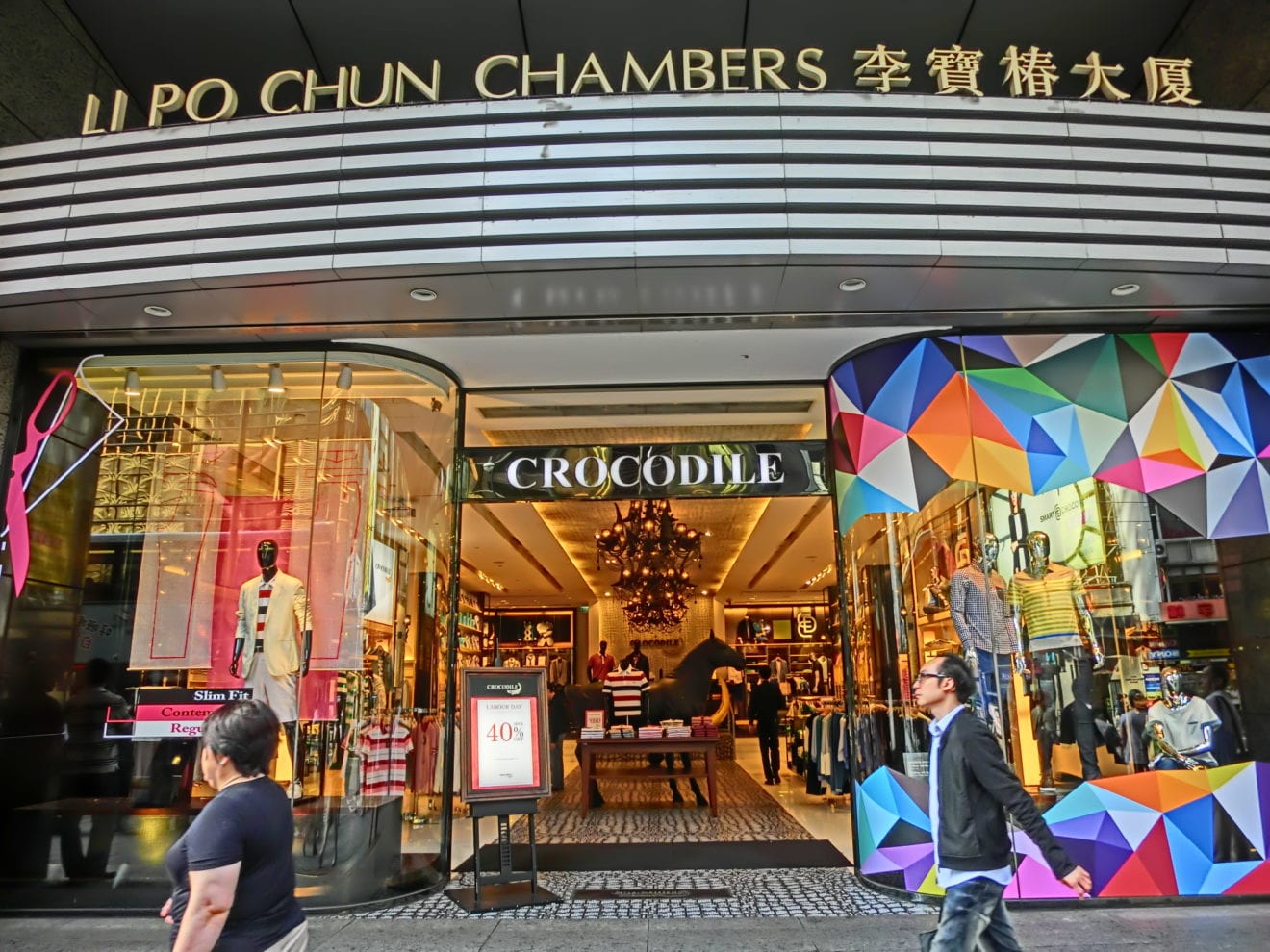
    Crocodile Garments’ profit has plunged as the apparel retailer was caught in “the centre of whipsaw’’ in Hong Kong and a depressed Mainland China market.

    Revenue in the year to July 31 fell from HK$502 million in 2014 to $405 million this year; gross profit was $252 million, down from $303 million.

    Retail sales revenue slid by 22 per cent to $354 million, with a loss of $44 million.

    “Against the backdrop of poor market sentiment, deep sales discounts offered by competitors to grasp the already-underwhelming retail market and protracted sales network restructuring taken by the group, the Garment and Related Accessories Business segment plodded on through a nadir in the year ended July 31,” the company said in its stock exchange filing.

    With the property Investment and Letting Business figures added in, the total income attributable to the owners of the company was $49 million – less than half 2014’s figure of $106 million.

    Crocodile Garments has 87 shops in the Mainland (35 fewer than a year earlier), including 21 self-operated shops (down 27) and 66 franchisees (down four).

    “The Garment and Related Accessories Business segment was operating under an extremely intricate environment in the mainland. The economy was facing an accelerating downside risk as evidenced by the deteriorating data released. To balance the slump of growth in exports and productions, the mainland government planned to boost domestic spending through the wealth effect created by a prosperous stock market; however, it was derailed by the abrupt plunge. The consequential murky economic ambience battered the retail market sentiment and the consumption power of general public further, which materially curbed the sales and gross profit margins of the segment,” the company explained.

    “As a cushion against the above tailspin, the group had rationalised its sales channel to ratchet up the brand presence and, at the same time, constrain rental expenses. Stringent inventory discipline had been enforced to keep the stock on hand relevant and fresh.”

    Hong Kong, the group’s home base, is “at the centre of whipsaw” the company said.

    “On one side, Hong Kong economy is vulnerable to the stumbling investment and consumer spending whereas on the other side, at the heels of a strong US dollar, the appreciation of the Hong Kong dollar under the pegging mechanism could kindle savage corrections in asset markets. Needless to mention the persistent social disputes, the business environment for the group in Hong Kong is formidable. To mitigate the above negative impact, the group will hasten the restructuring of its shop portfolio to enhance the operating efficiency.”

    Crocodile Garments said the outlook of the global economy is bleak in the wake of loss in momentum of the mainland, the world’s major growth engine for the past decade.

    “Giving the beleaguered retail sector, the group has reined back sales channel inventory [in the mainland] and fortified supply chain management. Moreover, the group will reorganise its sales channels and merchandise mix.”

  • Shopping drives Baidu growth

    Shopping drives Baidu growth

    Chinese search engine Baidu is experiencing rapid growth as more and more Chinese shop online.

    Releasing its September quarter sales results, the US Nasdaq-listed business says Online to Offline is driving a massive growth in mobile users, gross merchandise value and mobile map usage.

    “With mobile accounting for nearly two-thirds of Baidu’s search traffic and China squarely in a mobile age, Baidu is pioneering and redefining the mobile experience for users in China,” said Robin Li, chairman and CEO of Baidu.

    “We further extended the reach of our platform by deeply integrating and connecting search and maps with transaction services,” he said.

    Jennifer Li, Baidu’s CFO, said the momentum in transaction services gives the company confidence to continue investing.

    Mobile search monthly active users (MAUs) were 643 million for the month of September 2015, an increase of 26 per cent year on year. Mobile maps MAUs were 326 million for the month of September 2015, an increase of 34 per cent.

    And Gross merchandise value (GMV) for transaction services totalled RMB60.2 billion (US$9.5 billion) for the third quarter of 2015, an increase of 119 per cent year on year.

    The company’s payment service, Baidu Wallet reported a 520 per cent increase in activated accounts to reach 45 million at the end of September.

    Total revenues in the third quarter of 2015 were RMB 18.383 billion (US$2.892 billion), a 36 per cent increase from the corresponding period in 2014. Mobile revenue represented 54 per cent of total revenues for the third quarter of 2015, compared to 37 per cent for the corresponding period in 2014.

    Operating profit in the third quarter of 2015 was RMB2.512 billion ($395.2 million), a 35.9 per cent decrease from the corresponding period in 2014.

  • Joy City wins mall accolade

    Joy City wins mall accolade

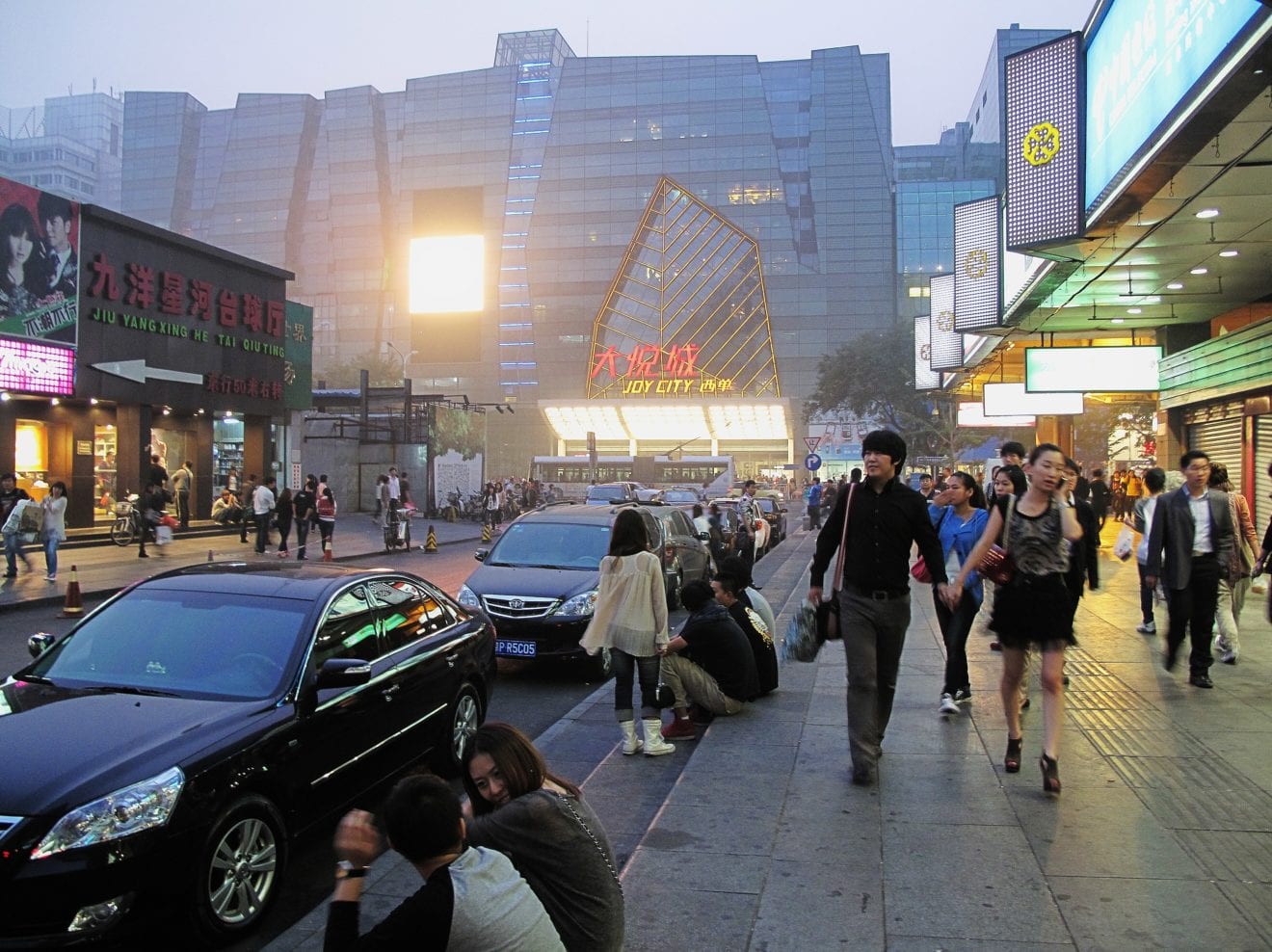
    Joy City Property has scooped two honours in the ICSC China Shopping Centre Awards at the 2015 Recon Asia-Pacific convention.

    Yantai Joy City’s new media marketing campaign, New Year Red Packets won a gold award in the Emerging Digital Technology category, and Tianjin Joy City’s O2O marketing initiative, Liangshiju took a silver award in the New Retail Concepts category.

    “It is noteworthy that Yantai Joy City not only pioneered the combination of WeChat Red Packets and payment methods through the New Year Red Packets, but also achieved mutual benefits for itself, its tenants and customers with the innovative marketing campaign,” said a Joy City spokesman.

    Meanwhile, Tianjin Joy City’s Liangshiju is China’s first O2O customer loyalty platform to adapt to the internet. Consisting of its online and offline stores, the O2O customer loyalty platform encourages purchases on mobile applications and effectively guides the customers to the company’s stores with gift redemption and induce them to become its members.

    The initiative has increased the membership significantly and at the same time boosted sales with accumulation and redemption of bonus points earned through purchases. The O2O initiative has enabled the company to surpass geographical limitations and revolutionise the conventional service of traditional customer membership centres.

  • 11.11.2015: A new twist to Asian retailing’s biggest day

    11.11.2015: A new twist to Asian retailing’s biggest day

    China’s Singles Day – 11.11.2015 –  the biggest shopping festival in the world, will no doubt once again break international eCommerce records this Wednesday.

    But while watching numbers tick astronomically higher is exciting, retailers should be paying attention to what Alibaba is doing differently this year: omnichannel.

    For the first time, Alibaba is bringing part of Singles Day (also known as Double 11, or Guangun Jie) offline. It has promised that more than 1000 retail brands encompassing over 180,000 stores across 330 cities in China will join the 11.11 Festival.

    Customers will be able to price match in-store goods with TMall discounts. Some areas will be able to deliver products within two hours, essentially turning stores into distribution centres.

    Much like Alibaba’s 2014 mobile shopping push made mCommerce a “new normal,” you can expect 2015 to begin a boom in omnichannel. Retailers will do well to begin strategising through a smart integration of their physical stores and digital commerce now.

    Here are two guidelines to consider when reassessing how your physical and digital presences can complement each other in this new omnichannel world:

    Make the store a customer solution

    The consumer does not make a distinction between a brand offline and online – and neither should retailers. Physical stores create interesting opportunities to reduce customer friction points or quickly resolve customer problems. Extend in-store services to add incremental customer value or create a good atmosphere.

    We recently helped GrandVision, the world’s largest eyewear conglomerate, create a retail experience centered around eye care. They wanted to emphasize their medical-grade professionalism and commitment to demystifying eye care for consumers.

    Design points such as having an eye-testing facility placed in the middle of each store emphasises their dedication to this cause, and informational content placed across all digital channels means customers could empower and inform themselves across desktop, mobile or in-store digital panels.

    By consolidating all consumer interactions with GrandVision into one platform, everything from booking an eye exam to buying lenses have been made seamless both offline and on. The one view of consumers helps give store associates the tools they need to better understand customer motivations, provide support and make the store an integral part of customer interactions with the brand.

    Make your store experiential

    Retail used to be rooted in the transaction, but now that technology has decoupled transactions from physical spaces, retailers have tremendous freedom to build a memorable experience in stores.

    We helped Audi design an interactive experience for its flagship showroom in Beijing, using screens and responsive content to let customers cycle through endless customisations of their ideal Audi cars. The Audi City showroom cut down on costly retail rents while allowing Audi to showcase all inventory and imprint its brand message of “Vorsprung durch Technik (advancement through technology).”

    Physical store experiences properly integrated with digital are part of the equation for brand differentiation and continued relevance. Consumers go seamlessly from online to offline and back. Retailers need to learn to do the same.

  • DFS Group looks for new wine business leader

    DFS Group looks for new wine business leader

    Christian Pillsbury has left DFS Group where he headed up DFS Group’s international wine business in Hong Kong to join Coravin Inc., the maker of Coravin Wine Systems as Director of Sales, Asia Pacific with immediate effect.

    According to a statement by Coravin, Pillsbury oversaw operations across more than ten countries and 120 retail outlets at DFS Group and prior to that was the founder of Applied Wine, a first of its kind company devoted to helping restaurants make wine a core part of their business.

    Commenting on his new appointment, Pillsbury said: “Asia is becoming an exciting destination for wine and is seeing tremendous growth.

    “Coravin has transformed the way wine is sold, served, and enjoyed in both North America and Europe and I am honoured to introduce the brand to wine lovers all over Asia.

    When contacted to see if a replacement has been found, a DFS spokesperson told: “We’ll announce Christian’s replacement soon.”DFS has recently been been looking to fill a position for a new senior member to join its global wine team based in Hong Kong, to work across 11 countries and manage a team of experienced travel retail professionals.

  • 40 per cent of online trade in China fake or substandard

    Chinese lawmakers have been urged to tighten controls on online trade after a report suggested counterfeit and low quality goods accounted for just over 40 per cent of sales.

    The report on the implementation of the latest iteration of the Law on the Protection of the Rights and Interests of Consumers also notes that China is now the biggest online marketplace in the world, overtaking the $300bn US market, and was valued at 2.8trn yuan ($442bn) last year.

    An article notes that complaints concerning online purchases rose 357 per cent to reach 77,800 last year, according to data from the General Administration of Quality Supervision, Inspection and Quarantine (AQSIQ).

    This has prompted calls for the Chinese government to bring in new legislation to govern e-commerce, particularly with regard to the rights of consumers and the responsibilities of retailers.

    The report (in Chinese) was presented at a plenary meeting of the National People’s Congress (NPC) Standing Committee, which was presided over by Chairman Zhang Dejiang.

    The revelations come as China’s online retail platforms, and particularly Alibaba, have come under intense scrutiny of late over counterfeit listings, and the measures taken by the sites to take them down.

    Earlier this year, the State Administration for Industry and Commerce (SAIC) accused Alibaba of being ‘lax’ in what it allows traders to sell on its online retail platforms, prompting a war of words between the company and Chinese government.

    Alibaba’s chief executive Daniel Zhang said during the company’s financial results conference last week that the company “remains committed to providing a trusted consumer experience with authentic products by driving merchants that peddle counterfeit products off our marketplaces.”

    .