Tag: China

  • C-star Retail Trade Fair Returns to Shanghai

    C-star Retail Trade Fair Returns to Shanghai

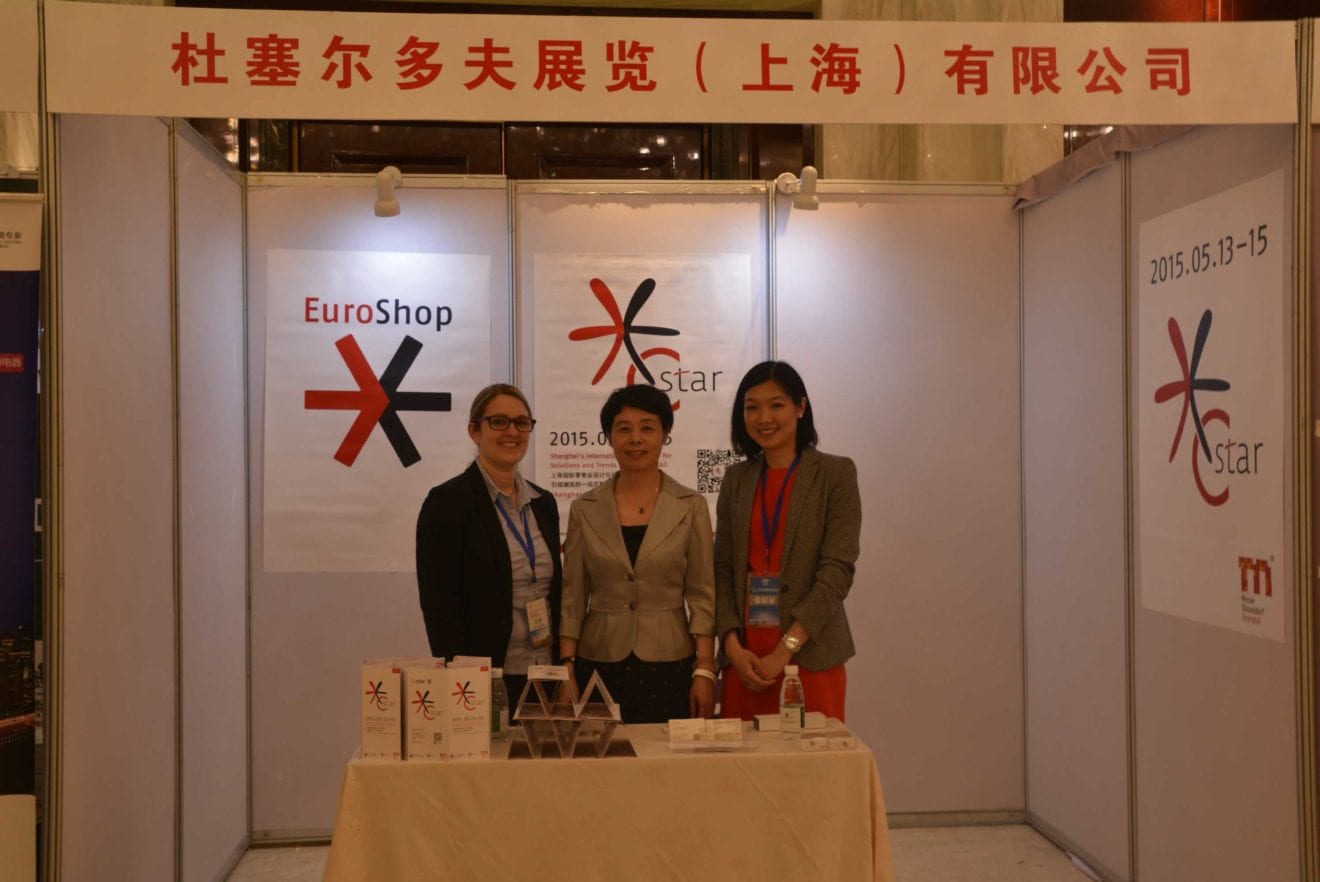
    After its successful premiere in 2015, C-star, Shanghai’s International Trade Fair for Solutions and Trends all about Retail, will return to the Shanghai New International Expo Centre from May 18 – 20, 2016. Next year, C-star will occupy two halls in order to give exhibitors more space to present their latest innovations and solutions for the retail sector.

    C-star will again be organized by Messe Düsseldorf Shanghai, a subsidiary of Messe Düsseldorf located in Germany. Messe Düsseldorf is renowned as the organizer of EuroShop (The World’s Leading Retail Trade Fair) held every three years in Düsseldorf, Germany,

    C-star 2016 will be clearly divided into four segments:

    • Store fitting and design, lighting, refrigeration
    • Retail technology
    • Visual merchandising and marketing
    • Stand design

    Hall N5 will be dedicated to POP marketing, expo and event marketing, store fitting and design with a strong focus on non-food retailing, while hall N4 will complete the exhibition range with food technology and equipment, energy management and retail technology.

    A new special area will be the Retail Technology Village. Modeled after the EuroCIS trade fair in Düsseldorf, the Village is a response to the fast-growing demand for state-of-the-art technology especially for the retail market, ranging from innovative payment systems and sophisticated security systems to complex IT solutions.

    Another highlight will be the Designer Village where leading design agencies will present their latest holistic solutions in visual merchandising and store design.

    An extensive supporting program will complement the C-star 2016 exhibits. One of the show’s highlights will be the C-star Retail Conference, a 2-day event with international retail experts sharing their exclusive industry insights. The conference topic will be “Local Heroes” and will focus on innovative retail concepts of both Chinese and international industry players. With conference chairman Prof. Dr. Helmut Merkel – former CEO of Karstadt, former President of the International Group of Department Stores and Chairman of Eurasia – as well as the strong support of associations such as the EHI Retail Institute and Mall China, the C-star Retail Conference will be an important meeting point of retail industry leaders.

    Another highlight will be the annual EuroShop Retail Design Award (ERDA) ceremony. At this renowned gala event, the best store concepts worldwide are rewarded by the EHI Retail Institute together with Messe Düsseldorf.

    The C-star experience will be rounded off by the in-hall C-star Forum and the C-star Retail Tour. At the Forum, leading international industry peers will talk about their experiences with the Chinese retail market. The 1-day C-star Retail Tour will visit Shanghai’s most innovative and sophisticated shopping malls.

    Despite a recent slowdown in the Chinese economy, China’s retail market is still of key importance to international retailers and has kept posting impressive year over year growth numbers of more than 10% throughout 2014 and 2015. Innovative retail solutions are in high demand on the Chinese market. With its clear structure and a unique show concept, C-star is geared to the needs of the Chinese retail sector. C-star’s international exhibitor structure will meet the demand of Chinese retailers for innovative solutions and products from international suppliers. With the extensive ancillary program, the trade fair will also cater to international retailers looking for information about the Chinese retail market.

    The first staging of C-star in 2015 attracted 162 exhibitors from 23 countries and more than 5,700 trade visitors.

    For further information on visiting or exhibiting at C-star 2016, contact Messe Düsseldorf North America, 150 North Michigan Avenue, Suite 2920, Chicago, IL 60601. Telephone: (312) 781-5180; Fax: (312) 781-5188; or visit our web site www.mdna.com.

     

  • Online, mobile luxury spending rises in China

    Online, mobile luxury spending rises in China

    Online and mobile commerce for luxury brands in China has risen at an exponential pace while smartphone penetration continues to grow rapidly, results of a recent survey shows.

    The new study of online spending in the country was conducted by KPMG in partnership with Mei.com, a China-based online luxury flash sales retailer, and Weibo, an online social media platform in China.

    Among the key findings is that 45 percent of respondents said they purchased most of their luxury items through online options, and the maximum amount they felt comfortable paying online for a single item is RMB4,200 ($660.8), far higher than the RMB1,900 ($298.9) they indicated in a similar survey in 2014, or an increase of 121 percent.

    The average spend levels also went up about 28 percent compared to the previous 2014 survey.

    China’s consumers are spending close to one-third more on online purchases – averaging around RMB2,300 ($361.9) on each single luxury transaction.

    The top driver for purchasing online remains pricing and better deals, however, close to one-third of respondents had made luxury online purchases at the full, non-discounted price.

    “Price is becoming less of a driver. But value remains important as customers are well informed about global prices since most of them travel physically or digitally,” said Thibault Villet, CEO of Mei.com.

    The survey likewise points to an increase in the average amount spent on luxury purchases in most product categories.

    A higher amount was spent on average for popular categories such as bags (109 percent), women’s apparel (58 percent) and cosmetics (18 percent), and also noted a significant increase in spending on categories such as watches (126 percent) and jewelry (65 percent) that accounts for a relatively smaller share of total online luxury sales.

    Cosmetics is the most popular product bought online, followed by women’s shoes, bags and leather goods, women’s apparel and accessories.

    The survey finds that among the key online triggers to purchase luxury e-commerce, the most persuasive one is reading about a product on a blog or social site and seeing the product in an online shop.

    While online shops are setting up temporary or pop-up stores, most luxury brands are also increasingly developing their China websites and shops on popular e-commerce platforms.

    “The pace of change in today’s marketplace in China is taking retailers and brands by surprise. This change is unrelenting and now outrunning the company strategy in many cases,” Egidio Zarrella, Clients and Innovation Partner, KPMG China, noted.

    In addition to luxury items, the survey finds increased numbers of luxury services purchased online, including online hotel and restaurant bookings, followed by domestic and overseas trips.

    Forty-eight percent of respondents said they had bought items overseas over the previous 12 months, close to a majority. More than two-thirds of these claimed they increased their overseas online luxury purchases in the past 12 months.

    The survey sees a near doubling of Chinese luxury online consumers planning to buy overseas trips online – from 35 percent who indicated they bought an overseas trip online during the past 12 months, to a forecast 61 percent during the next 12 months, or a growth of more than 70 percent.

    “Chinese consumers have a significant propensity to spend, they are technology savvy and want the best quality. Therefore, both new and existing entrants to China must expect to compete in a dynamic and fast-paced market. They must develop the right strategies to survive and thrive in an increasingly disruptive environment,” Zarrella concluded.

  • Sa Sa profit set to plunge

    Sa Sa profit set to plunge

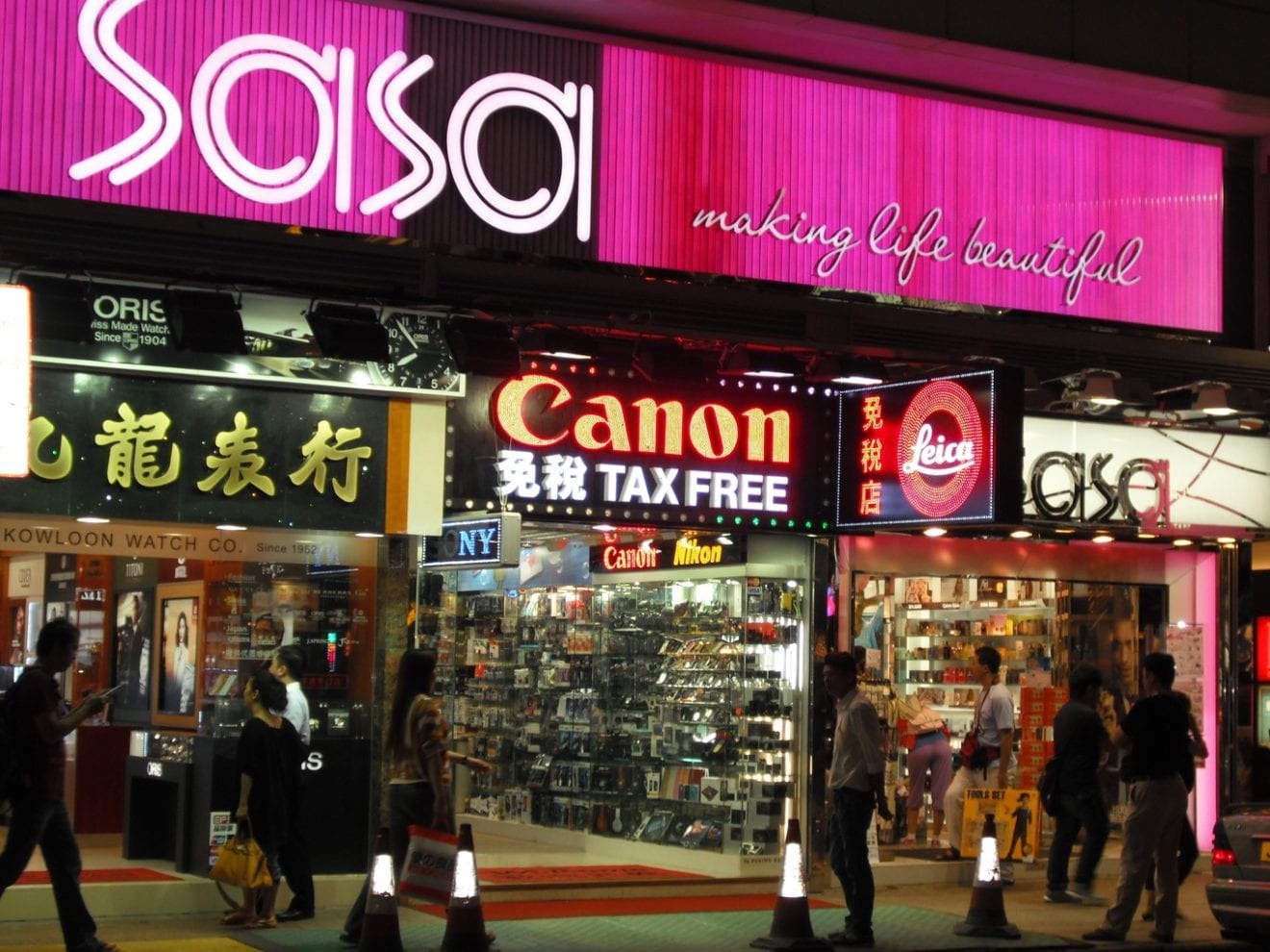
    Beauty products retailer Sa Sa International has warned its half year profits will plunge by 50 per cent.

    A Sa Sa profit warning filed with the Hong Kong Stock Exchange said preliminary analysis of accounts for the six months to September 30 pointed to a record decline in profit for the group.

    It blamed “the worsening operating environment of the retail sector which has led to significant drops in both sales and gross profit and reduced operational efficiency as a result”.

    In the second quarter, to September 30, Sa Sa has reported a 12.4 per cent fall in retail and wholesale turnover.

    “Turnover in Hong Kong and Macau markets declined by 13.2 per cent, while same store sales decreased by 10.1 per cent. The number of transactions decreased by 5.7 per cent, while the average sales per transaction decreased by 7.9 per cent.

    “The group’s retail and wholesale turnover in other markets (including Mainland China, Singapore, Malaysia, Taiwan and sasa.com) recorded a drop of 8.9 per cent during this period.”

    Sa Sa said overall consumer sentiment and Mainland Chinese arrivals “continued to be adversely affected by a number of factors with no significant signs of improvement”.

    “The strength of the Hong Kong dollar and the weaker yuan adversely affected the attractiveness of shopping in Hong Kong for both local consumers and Mainland Chinese visitors. Furthermore, the impact of “one-trip-per-week” policy has gradually gained momentum, leading to a decline of 13.1 per cent and 10.1 per cent in the group’s retail sales and same store sales in Hong Kong and Macau markets during the second quarter respectively.

    “The number of transactions of Mainland Chinese customers decreased by 4.1 per cent, while their average sales per transaction decreased by 12.5 per cent on a year-on-year basis, dragging down the overall performance.”

    Sa Sa says it will work on optimising product offerings and enhancing its customers’ shopping experiences to strengthen its position.

    The company says it will release final results for the half before November 30.

  • Tupperware finds favour in China

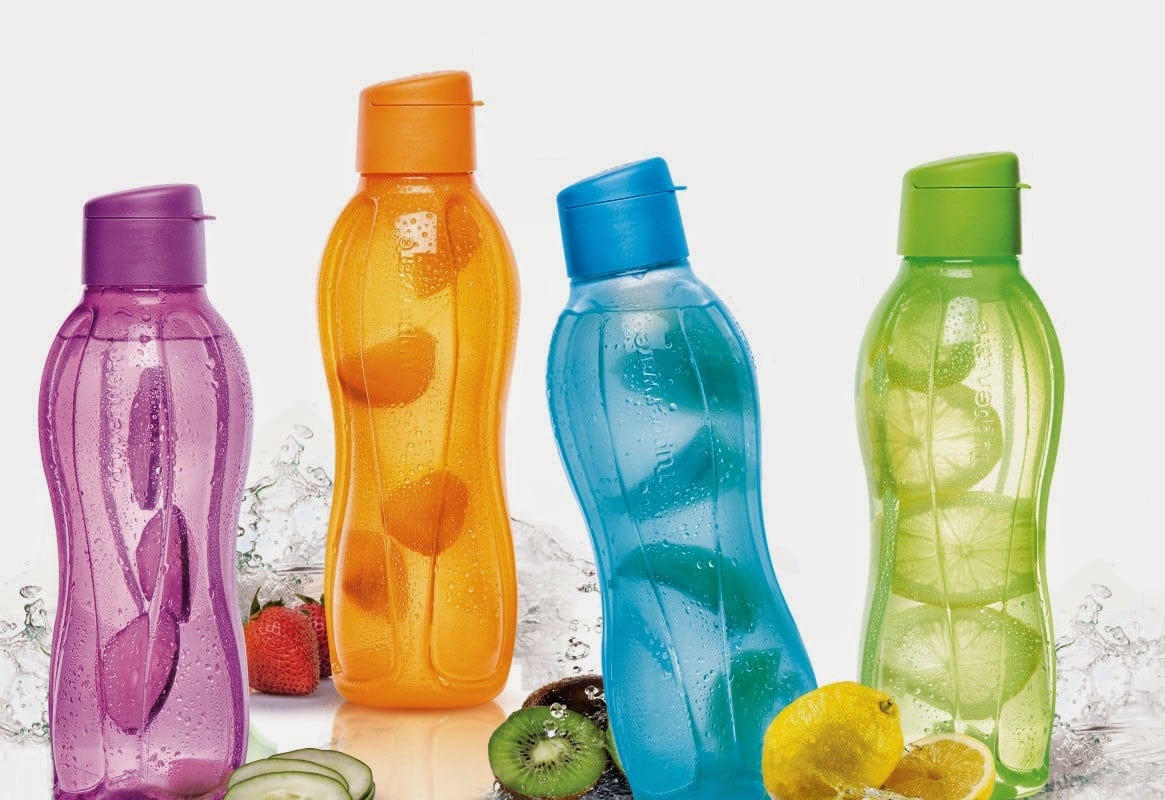
    Tupperware finds favour in China

    Not long ago, Tupperware seemed to be a brand with a limited future.

    Tupperware’s background is selling products at relatively high prices through direct selling, or the party plan concept, rather than retail stores, a system dating back to the 1970s. In recent times it has come under pressure from mass-produced containers, usually manufactured in Asia, and marketed in retail stores at low price points.

    Neil Saunders, CEO of Conlumino, analysing the company’s last quarter financial results, says with another sequential improvement in its sales number, “Tupperware continues to show signs of progress”.

    Away from the established western markets – namely in North America and Europe –  emerging regions continue to be the mainstay of growth with sales up by 11 per cent on a local currency basis.

    “Within this group China (up 18 per cent), Indonesia (up 12 per cent), Middle East and North Africa (up 97 per cent), and South Africa (up 52 per cent) all posted strong performances.

    “Across most of these geographies, Tupperware continues to benefit from the growing number of middle class consumers and increased interest in home products.

    “That said, across most emerging markets sales are dominated by relatively simple food preservation products which are sold via catalogues,” observes Saunders.

    “Tupperware has identified this as an opportunity for growth. One of its ongoing initiatives is to increase the support and training of representatives in these regions so that more sales are made via parties and demonstrations – both of which are proven to result in the sale of higher priced products and in higher average order values. This, in our view, should help these regions to continue delivering even as they become more mature.”

    Tupperware’s total sales actually fell 11 per cent in the latest quarter. However that was purely the effect of exchange rate losses, with sales up seven per cent when measured in local currencies – up from four per cent a quarter earlier.

    Saunders says Tupperware’s development of Experience Centres are a positive move. These centres, which launched in Canada earlier this year and are now being introduced to the US, are physical locations in which the Tupperware sales force can be trained and where consumers can visit for demonstrations of products in a professional environment.

    “The aim behind the centers is both to increase brand exposure and to ensure a strong local presence in key markets in an era when many transactions are becoming remote and disintermediated. Initial results are encouraging.”

    Saunders says it is to Tupperware’s credit that it has recognised, that the way consumers buy and behave is changing.

    “However, rather than shifting its entire business model – which would mean the risk of moving away from relationship based selling – Tupperware is updating existing practices and procedures. This, in our view, is a sensible strategy.”

  • Sands China reveals retail mall performance

    Sands China reveals retail mall performance

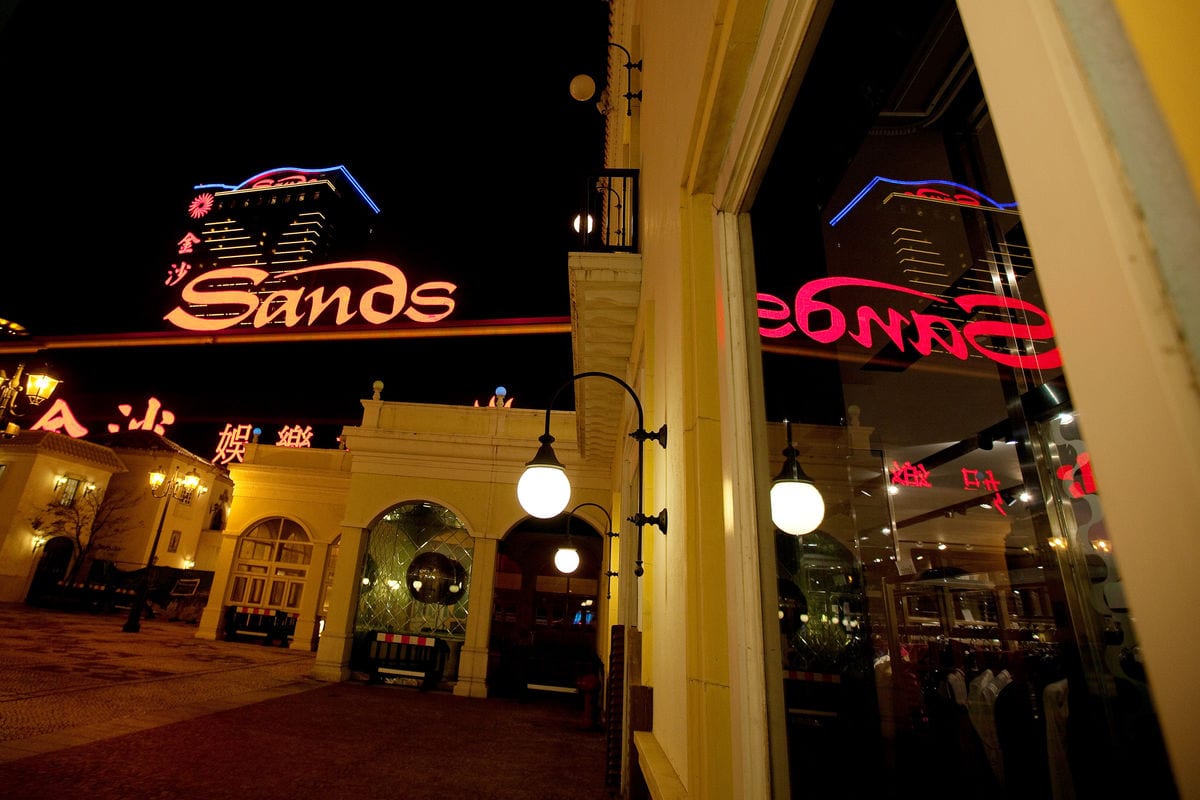
    Sales may be down at Sands China’s shopping malls, but by nowhere near the decline in Macau’s gambling revenues.

    Sands China has revealed that gross revenue from tenants in the company’s retail malls on Cotai (The Venetian Macao, Four Seasons Macao and Sands Cotai Central) and Marina Bay Sands in Singapore was US$139.3 million for the third quarter of 2015, a decrease of 6.8 per cent compared to the third quarter of 2014.

    Operating profit derived from these retail mall assets decreased 5.2 per cent year on year to US$125 million.

    By comparison, total net revenue for Sands China fell 28.8 per cent to US$1.66 billion in the third quarter, down from $2.33 billion in the same period last year.

    As the table below shows, occupancy levels at the end of the three months to September 30 was running at 100 per cent – or close to it – at all the company’s retail properties in Macau. At the Marina Bay Sands, occupancy was at 95.5 per cent, perhaps reflecting an ongoing reshuffle of tenancies in the centre.

    Sands numbers

    The company’s operating profit margin across all the facilities ran at between 87.7 and 94.1 per cent.

    Sheldon Adelson, chairman and CEO of Sands China’s US parent Las Vegas Sands, said while the operating environment in Macao, particularly in the high-end gaming segments, remained challenging during the quarter, the company’s focus on the higher margin mass and non-gaming segments and the geographic diversification of its cash flows allowed the company to again deliver in excess of US$1 billion of adjusted property EBITDA during the quarter and weather this cyclical downturn better than the industry overall.

    “In Macao… we remain confident that our market-leading Cotai Strip properties, which will be complemented in the future by the St. Regis tower at Sands Cotai Central opening in December 2015, and by The Parisian Macao, targeted to open in late 2016, will continue to provide the economic benefits of diversification to Macao, help attract greater numbers of business and leisure travellers, and provide an outstanding and diversified platform for growth in the years ahead.”

  • Coccinelle expands global shop network

    Coccinelle expands global shop network

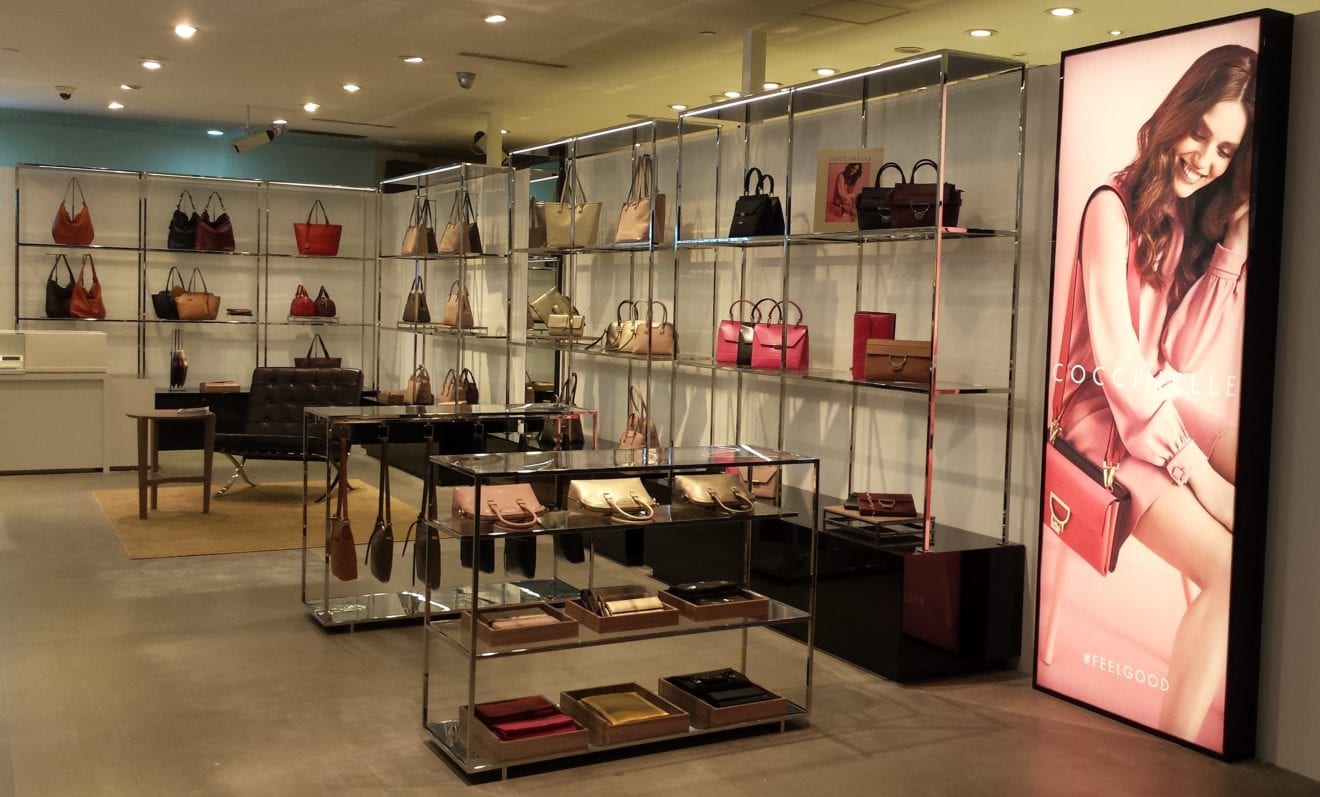
    Coccinelle has further extended its global network of shops with three new openings in China and Morocco and on board the St Peter Line cruise ship, which sails the Baltic Sea.

    The three locations opened in August and September and carry the Autumn/Winter 2015 collection, which channels ‘relaxed femininity, effortless glamour and spontaneity’ according to the Italian accessories brand.

    The collection is an expression of the #FeelGood concept that interprets the true spirit of the brand, “a positive attitude that Coccinelle transforms into a game of colours (chocolate, amber, ivy green and bicoloured fuchsia combined with wine red), of contrasts and details,” says Coccinelle.

    The Arlettis Bag is said to be the ‘key bag’ of the season featuring a stirrup-shape golden latch and a double variation of leather, calfskin and suede across different models.

    The personalised 30sq m shop-in-shop at Chengdu Shuangliu International Airport Terminal 2 opened in partnership with Dufry, and features the new store concept.

    “Bright steel for the wall display module and fumé mirrors give the interior a timeless elegance and make the best use of the available space and open displays that showcase bags and accessories,” adds the brand.

    Emanuele Mazziotta, Head of Travel Retail, says: “We are pleased to be present at Chengdu Shuangliu Airport. Chengdu is a key business city and represents an important milestone for our expansion plan into China domestic and travel retail channels. We want to thank Dufry for all the efforts and support for this opening.”

    Coccinelle has also opened a corner at Casablanca International Airport in partnership with International Duty Free Shops and an additional corner on board of the Baltic Sea’s St Peter Line cruise ship.

    Emanuele Mazziotta, added: “We want to thank International Duty Free Shops; Casablanca Airport is another important opening for Coccinelle in 2015 and the first one in the region.

    “In September we have also opened a corner on board of St Peter Line cruise ship, following the recent openings on Costa Crociere cruise ships with Starboard. This additional location on the Baltic Sea show our interest and trust in the cruise business”.

  • Fine wines languishing in China warehouses as demand cools

    Fine wines languishing in China warehouses as demand cools

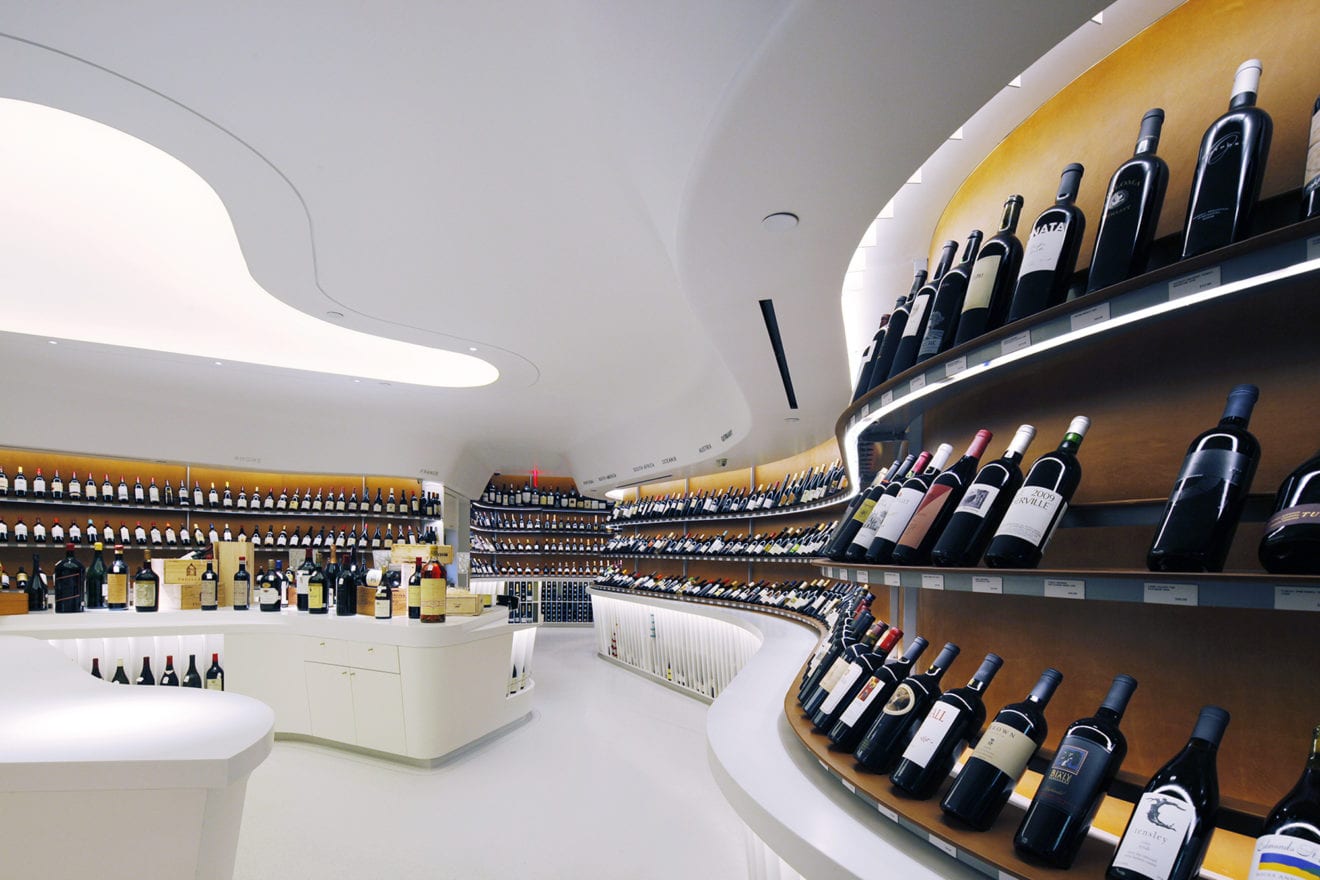
    Importers of fine wines are cutting the prices of their products by as much as three-quarters amid a drop in demand.

    The fire sales are prompted by a huge oversupply of wine that had built up after a swarm of importers jumped at seemingly stellar growth from 2010.

    China wine consumption, which had been rising in double digits, dropped last year and is set to inch up just over 1 percent annually until 2020, Reuters reported.

    The striking slowdown is a headache for a global wine industry pinning hopes on fast China growth, and a further sign that Chinese consumers are reining in spending even as Beijing hopes they will pick up the slack from falling exports.

    “When we started there was huge demand so we could control prices, big margins no problem,” said Xavier Grangier, sales director at logistics firm Europasia, which runs a  4,000 square meter Shanghai warehouse storing 250,000 bottles of mostly European wine.

    Now, his firm has had to lower some prices and been stuck with some wine it is unlikely to sell.

    “In Shanghai alone, 2,000 firms in the wine business just vanished over the last couple of years,” he added.

    China’s retail wine market is worth around 78 billion yuan (US$12.36 billion), with imports making up around a third, according to a 2015 report from wine data analytics firm IWSR.

    While official retail sales figures have been a rare bright spot amid a stream of economic data showing China’s economy faltering, private sector surveys have shown consumer sentiment plumbing record lows in recent months.

    A crackdown on corruption now in its third year has also discouraged conspicuous consumption, hitting not just wine but also sellers of other luxury goods from LVMH and Burberry to global auto makers.

    “In 2010 everyone was screaming from the rooftops that China was the El Dorado for wine and you could become a millionaire by jumping into the business,” said Pierrick Fayoux, Shanghai-based marketing manager at French wine importer VGF China Ltd.

    “Now wine is being sold below cost, some is going bad sitting for long periods in poorly maintained warehouses and decent Bordeaux wines are going for 15 yuan a bottle.”

    To be sure, China’s wine industry has long-term potential: the market is already the world’s fifth largest, but with only 38 million wine drinkers — mostly in big cities such as Shanghai, Beijing and Tianjin — among a population of 1.4 billion, annual consumption per capita is only 5.8 liters, a fraction of the 50 liters consumed in France.

    For now though, the inventory overhang and the downward pressure on prices is making it hard to turn a profit.

    Even China’s biggest wine importer, ASC Fine Wines, has trimmed prices and taken a hit to its margins, a person with direct knowledge of the firm’s operations told Reuters.

    ASC, owned by Japan’s Suntory Beverage & Food Ltd., said the wine market was in a new slower stage of growth and that consumers were increasingly “price-conscious”.

    “We are expanding our entry-level wine selections to meet the changes in consumer demand,” said ASC’s chief executive officer Bruno Baudry in emailed comments to Reuters.

    The squeeze on prices could be better news for more affordable New World wines, with countries such as Chile and South Africa already taking more market share with wines under 100 yuan.

    “There is still demand for imported wine, but not the same wines,” said Guillaume Deglise, chief executive of Vinexpo, which organizes wine fairs to help introduce producers to China buyers.

    “Before it was mostly the luxury end of the business — up-market wines from Bordeaux. Now it’s the entry-level market.”

  • Abolition of China’s one-child policy may boost dairy demand

    Abolition of China’s one-child policy may boost dairy demand

    Chinese like Shao, who were born in the 1980s and 1990s, when the one-child policy was most strictly enforced, say they were lonely growing up without siblings.

    The one-child policy was gradually eased in recent years as China experienced economic growth and as the country had to deal with its aging population. Historically and economically speaking, the argument was spot on. “They need to eliminate it entirely”, Mr Chen, who now lives is the U.S., said of the government.

    A skewed gender balance and a rapidly ageing workforce are among the worst symptoms of state-ordered birth control. However, things have been hitting a low point after China’s ageing population has grown to a cause for concern.

    The statement also emphasized that the nation will still uphold family planning policy, improve its population strategy and seek a balanced development of population.

    While once there may have been pent up demand for more children, experts say that as the country has grown wealthier, couples have increasingly delayed having even one child as they devote more time to other goals, such as building their careers.

    About 90 million couples will qualify to have a second child after the policy is enacted, Wang said, adding that around 60% of the qualified women were 35 years old or older.

    Couples in China will be allowed to have two children after decades of a strict one-child policy, announced the ruling Communist Party on Thursday.

    Though there were exceptions to the policy, most couples who violated it faced punishment, from fines and the loss of employment to forced abortions.

    Looking elsewhere in Asia, though, the Chinese government may find that it is much easier to “encourage” people to have fewer children than to have more.

    Critics said the relaxation of rules was too little, too late to redress substantial negative effects of the one-child policy on the economy and society.

    China’s dramatic drop in fertility in the ’70s and ’80s created a demographic time bomb that will leave the country with a smaller work force and more older citizens to care for in the coming decades.

    Reggie Littlejohn, Chairman of “Women’s Rights Without Borders” told VOA she believes the two-child policy does not stop population control.

    More mouths to feed: that means less for families to spend on consumer goods.

    In addition, China – favoring male children – has a shortage of girls and women.

    The policy will not officially change until the Chinese legislature approves it, but many Chinese couples are already excited to grow their families.

    “It might serve to address the current imbalance in the sense that if they do not boost the growth rate, then very soon, within 20 years or less, the working population will be supporting four aged parents”.

    The Credit Suisse report said that with the annual cost of raising a child estimated at 40,000 yuan (£4,100), the extra births would translate into an extra 120bn-240bn yuan in consumer spending a year, or 4-6% of China’s total retail sales.

  • Condom sales slump as China announces end to one child policy

    Condom sales slump as China announces end to one child policy

    Shares of companies that make nappies, prams and infant formula got a boost on Friday from China’s decision to scrap its one-child policy. But for the maker of a popular brand of condoms, it was not the brightest of days.

    Investors are betting on a bump in sales for companies with baby or child-related businesses after China’s ruling Communist Party announced that all married couples would be allowed to have two children. The economic repercussions travelled as far afield as New Zealand, where the currency of the dairy-exporting country surged.

    Analysts at investment bank Credit Suisse estimated that the relaxed controls would result in an extra 3-6 million babies born annually in the five-year period starting in 2017. China, the world’s most populous country with nearly 1.4 billion people, has about 16.5 million births each year.

    The one-child policy began in 1979 to curb a surging population at a time when extreme poverty was widespread in China.

    The Credit Suisse report said that with the annual cost of raising a child estimated at 40,000 yuan ($6,330), the extra births would translate into an extra 120-240 billion yuan ($19-38 billion) in consumer spending a year, or 4-6 per cent of China’s total retail sales.

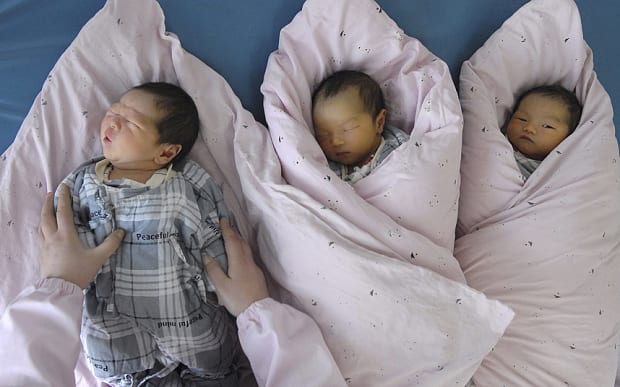
    A nurse takes care of newborn infants at a hospital in Huai'an, Jiangsu provinceA nurse takes care of newborn infants at a hospital in Huai’an, Jiangsu province  Photo: Patty Chen/Reuters

    One of the biggest winners in the financial markets was China Child Care Corp., which makes hair and skin care products for kids. Its shares ended 40 per cent higher on Hong Kong’s stock exchange.

    On the losing side, Japanese condom maker Okamoto Industries Inc., a favorite of Chinese visitors to Japan, slumped 10 per cent in Tokyo.

    Formula makers in Hong Kong and mainland China rose strongly, led by Beingmate Baby & Child Food Co., which jumped 10 per cent on China’s smaller Shenzhen stock exchange.

    Japanese and other foreign brands are popular with Chinese buyers because they’re seen as being authentic and better quality. Those characteristics are prized in China following food and other product safety scandals involving domestic brands.

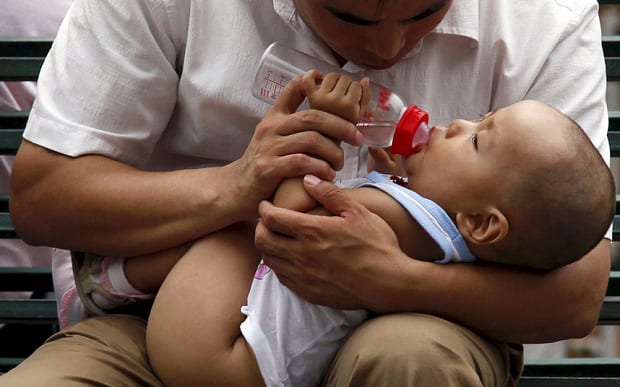
    A Chinese man feeds his baby in central Beijing

    Some cautioned the increase in births may not be as big as predicted because of the expense of raising a second child and other factors.

    “The rush for baby-related stocks may not necessarily bear fruit,” said IG analyst Bernard Aw in a report.

    In New Zealand, the local dollar jumped as high as $0.6772, gaining nearly 1 percent from $0.6699 the day before. The country is a major dairy exporter and its milk powder and formula industry would likely benefit from a baby boomlet in China.

    Some baby stocks started rising Thursday ahead of the official announcement on Chinese state media.

    Goodbaby International, which makes strollers, car seats and cribs, rocketed 7.4 percent on Thursday and followed that up with a 2.3 per cent gain on Friday. Rumours had already been swirling in China that the policy would be adjusted at a meeting on China’s next five year plan that was held this week.

  • Soo Kee Group plans to sell diamonds online

    Soo Kee Group plans to sell diamonds online

    Singapore listed jeweller Soo Kee Group is planning to become the first bricks and mortar store in the city to start selling gold and diamonds online.

    Soo Kee operates a network of more than 60 retail stores under the brands Soo Kee Jewellery, SK Jewellery and Love & Co in Singapore and Malaysia.

    In an interview published in the Straits Times newspaper, CEO Daniel Lim said his company has already launched the first of three planned online stores, choosing its namesake brand for the online debut. He said the site was designed to improve service to local customers by showcasing its entire range online before they visit a physical store.

    “Some of our customers live in Indonesia, Malaysia and Myanmar, and with this eCommerce platform, we can better target and attract them,” he told the newspaper.

    Sites for the other two retail brands will follow later.

    Lim acknowledged that while consumers are happily embracing online shopping in most categories, when it comes to jewellery there is a reticence to buy online due to security and the importance of trust and personal experience in selecting purchases.

    The company is strategically positioning its websites as complementary to the physical retail store experience.

    Earlier this year, Soo Kee Group executed an IPO, raising $31.6 million. Those funds are being used to expand the business via new store openings, development of eCommerce and developing new products.

  • Japan duty free sales boom

    Japan duty free sales boom

    Japan duty free sales soared in the first quarter of the current financial year as Chinese tourist ranks swelled.

    Major duty free retailers have reported sales on the mainland soared 20 per cent or more year on year, with brands preferred by Chinese shoppers performing the best.

    Japanese government figures show inbound tourists into the nation soared 47 per cent in the first six months of the 2015 calendar year – to 11 million. In the whole of 2014, inbound visitors totalled just 13.4 million.

    Sales of jewellery – especially gold jewellery – and watches lead the growth in a virtual mirror image of the experience of Hong Kong retailers, demonstrating clearly how the cashed up Chinese have changed their preferred duty free shopping destination.

    Leather goods are reportedly selling well and airport boutiques are experiencing healthy turnover increases.

    Japan’s government scrapped visas for Chinese mainlanders early this year, which has definitely helped fuel the boom.

  • Internet of Things China gains momentum

    Internet of Things China gains momentum

    The Chinese are appearing quick to embrace the Internet of Things, in turn driving demand from businesses and app developers for enabling technology.

    Jasper, a global Internet of Things (IoT) platform leader, says three months after it made its enabling software available in China, more than 500 enterprises have activated trial accounts on the China Unicom Control Center IoT platform.

    The enterprises, serving a growing demand for Internet of Things China services, included retail, connected cars, theft prevention and wearables.

    A large number have already converted their trial accounts into paid accounts enabling them to deploy their IoT services to customers across China.

    “We see significant appetite across China to capitalise on the Internet of Things,” said Cindy Patterson, chief customer officer at Jasper.

    “The response and market adoption illustrate the demand for an IoT platform that can help enterprises rapidly and cost-effectively launch, manage and monetise their IoT services throughout China and globally.

    “Forward thinking companies across industries have been quick to adopt the Control Center IoT platform. These innovators are seizing the opportunity to transform their businesses with IoT services in ways that add value for their customers while growing their revenues,” she said.

    “The diversity of industries represented by these companies is remarkable and it is exciting to see this level of activity in such a short time period.”

    The combination of China Unicom’s mobile network and Jasper’s IoT service platform enable fast time-to-market for businesses, and provides a flexible, turnkey solution that can be configured to meet the specialised needs of businesses across any industry. For example:

    • Several major retailers have selected the IoT service platform from China Unicom and Jasper to deliver wireless POS and mobile payment services.
    • Jasper’s Control Center is being used to connect aftermarket theft detection devices to enable more robust theft prevention services nationwide.
    • Two of China’s 10 largest auto manufacturers are now using Control Center to cost-effectively deliver connected services in cars. One manufacturer is using Control Center to enable a new line of budget-friendly vehicles, giving more people access to value-added connected services in their cars.
    • A large provider of consumer hotspots, which wanted powerful nationwide connectivity and mobile service management, provisioning and real-time diagnostics, chose to deploy on Control Center to ensure the best service for its customers.
    • Several aftermarket telematics service providers have selected Control Center to deliver connected IoT services to vehicles in China.
    • Personal health device manufacturers are leveraging Control Center to transform their hardware-based businesses to service businesses.

    China Unicom is the only operator in China using the same 3G and 4G technologies as the majority of mobile operators worldwide, enabling seamless entry into the Chinese market for multinational enterprises. Jasper partners with 27 mobile operator groups worldwide, representing over 100 mobile operator networks – enabling enterprises to configure their services on Jasper’s platform once and easily turn on services on other operators worldwide.

    Jasper describes itself as a global Internet of Things (IoT) platform leader. It has designed a cloud-based IoT platform to enable companies of all sizes to rapidly and cost-effectively launch, manage and monetise IoT services on a global scale.

  • Asos China braces for losses

    Asos China braces for losses

    Online fashion retailer Asos is budgeting for losses as it breaks into the China market.

    Announcing a pretax profit of £47.5 million for the year to August 31, the company offered an overview of its future plans geographically, including a lessened focus on the Australian market.

    New CEO Nick Beighton said China was a “key market” for Asos moving forward but the company was still in startup mode there.

    “It’s all about planting the seeds for future growth.”

    He said Asos expects losses of £5 to £7 million over the next 12 months in China as it builds its offer.

    In the year ahead, Asos will be focusing more on the UK – which remains its biggest market, Europe, the US and China.

    Last year, global sales rose 17 per cent to £1.12 billion. UK sales rose 27 per cent while international sales were up 11 per cent.

    Beighton said the online retailer’s mission to be the number one fashion destination for twenty-somethings, remains the same. The new CEO won’t be changing the Asos culture or the way the business does things, but he acknowledged the world Asos plays in is changing fast.

    “It’s more about mobile, it’s more about social, it’s more about content,” he said.

    The online retailer’s strategy is made up of four key pillars: great fashion at a great price, be awesome on mobile and, deliver engaging content and experience, supported by best in class service (ie. a friction-free experience from logistics through to customer care).

    “This really has been another year of mobile,” Beighton said.

    “In the last 12 months mobile penetration has increased throughout our business. In August 60 per cent of our global traffic came from mobile devices alone.” He added, just in the UK in August, 50 per cent of orders – not traffic – came from mobile devices.

  • Chinese tourism drives record result for McArthurGlen

    Chinese tourism drives record result for McArthurGlen

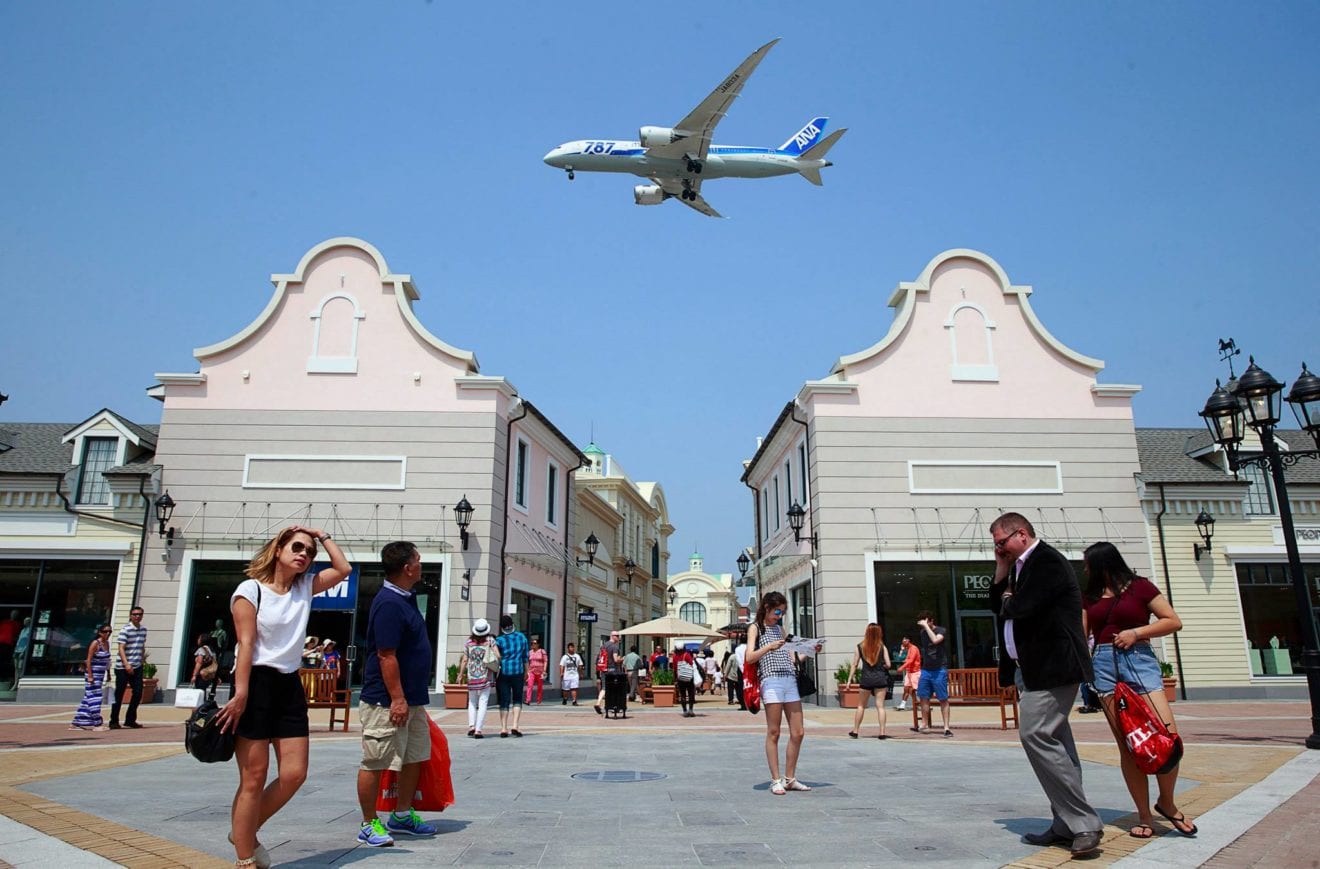
    Chinese travellers are discovering the thrill of shopping at one of McArthurGlen’s 21 Designer Outlets, all near important tourist destinations across eight countries in Europe and most recently, a new centre in Canada.

    Sales by Chinese shoppers at McArthurGlen’s Designer Outlets have increased more than 7 fold over the past four year years (2010-2014); as they discover the most sought-after European fashion and international luxury brands. McArthurGlen offers tax free shopping alongside year-round savings of 30-70% in stunning and vibrant shopping environments which take inspiration from local design and architecture.

    McArthurGlen’s Designer Outlets offer the largest choice of luxury and premium lifestyle brands in the European outlet market. The centres are home to nearly 3,000 stores and 900 brands. At the same time, the centres are part of the local tourism fabric, within easy reach of major European city centres by shuttle bus or public transport, including: Vienna and Salzburg in Austria; Luxembourg, near our centre in Belgium; Lille and Reims (the Champagne region) in France; Berlin and Hamburg in Germany; Athens in Greece; Düsseldorf, near Roermond, our centre in Holland; Florence, Milan, Naples, Rome and Venice in Italy; and Bath, Cardiff, London, Manchester, Nottingham and York in the UK.

    In July 2015 we opened our first centre outside Europe, in Vancouver. The centre is built adjacent to Vancouver’s International Airport and we have just recently celebrated our millionth visitor at the centre.

    Shaeren McKenzie, Group Marketing Director, says: “Our McArthurGlen Designer Outlets offer the finest European shopping experience. Shoppers can find the top international luxury names alongside premium niche brands worn by the fashion crowd, all with year-round savings of 30-70%. We also enhance our customers’ shopping experience with exclusive events, offering special promotions.”

    Anthony Rippingale, Head of Tourism, McArthurGlen, adds: “We are heading for yet another record year at our 21 Designer Outlets, welcoming more Chinese shoppers than ever before. As the biggest operator of designer outlets in Europe, our Chinese customers have always been extremely important to us, and even more so now given that they account for nearly one in four euros spent by our international shoppers, and rising. We have also just had our most successful Golden Week ever.”

    The look and feel of McArthurGlen’s Designer Outlets reflect the luxury and premium brands that we represent: show-stopping sculptures by famous artists, dancing fountains, green walls made from thousands of plants, piazzas and porticoes, as well as a wide range of cafes for a refreshing cup of tea and restaurants for a leisurely lunch or a quick snack, with al fresco seating for the warmer months.

    Spending by our Chinese customers is growing faster than any other nationality visiting our Designer Outlets. Sales to Chinese travellers increased by 80 per cent in the first nine months of 2015, compared with the same period last year. Some of the biggest rises were at our five Italian centres (which include Italy’s largest designer outlet, Serravalle, near Milan), with sales up 95 per cent in the first nine months of 2015.

    The favourite brands of Chinese shoppers at our centres are, in particular, the most-loved names in international luxury, as well as niche local brands popular with the local fashion and style crowd, whether Dsquared2, Agnona or Patrizia Pepe in Italy, or Jil Sander, Karl Lagerfeld or Marc Cain in Northern Europe.

    We look to engage with our Chinese customers while they plan their trip to Europe, whether through our office in Beijing, or through social media in China (including Weibo and WeChat) and our centre websites which are available in Chinese.

    Once Chinese shoppers arrive in Europe, our centres offer Chinese-language maps and guides, while UnionPay is accepted in most stores. Our most popular Designer Outlets offer special promotions, including limited-edition gifts and additional savings, during key Chinese holidays, namely Golden Week and Chinese New Year.

  • Yum China to split from parent

    Yum China to split from parent

    US fast food giant Yum! Brands is to spin off its troubled Chinese operation into a separate business.

    The new company will be called Yum China.

    The move will strengthen the parent company which will retain 41,000 restaurants trading under the KFC, Pizza Hut and Taco Bell brands in 125 countries – and which will no loger be saddled with the ongoing losses from the Chinese operations. Nearly all of its restaurants will be operated by franchisees.

    “Following the separation, each standalone company will be able to intensify focus on its distinct commercial priorities, allocate its own resources to meet the needs of its business, and pursue distinct capital structures and capital allocation strategies,” said Yum CEO, Greg Creed in a statement.

    “This will provide a clear investment thesis and visibility to attract a long-term investor base suited to each business.”

    The likely interpretation of that statement is that Yum China will seek local investors or possibly a joint venture partner to help bring the business back on track.

    Yum China has 6900 KFC and Pizza Hut restaurants, but has struggled for more than two years after high profile food safety scares involving suppliers.

    Mid last year, a Chinese TV network screened footage of a supplier mixing allegedly expired meat with fresh meat. The company, a subsidiary of OSI Group, was a minor supplier to Yum! and its contract was cancelled immediately. But the TV news footage was sufficient to spook Chinese customers, many of whom stopped eating at KFC China outlets.