Tag: China

  • Burberry second-quarter sales hit by China slowdown

    Burberry second-quarter sales hit by China slowdown

    Burberry has reported a slowdown in sales as it felt the impact of a challenging global luxury market, particularly in China and Hong Kong.

    • Retail sales growth slows to 2% in first half
    • Luxury retailer points to “weakening consumer sentiment” in China
    • Share price slips 12% to lowest point since April 2013
    • Analyst brands full-year profit forecast “ominous”

    Retail sales on an underlying basis rose 2% to £774m in the six months to the end of September after 8% growth in the first quarter, the fashion retailer and brand said. Group sales were flat at £1.1bn.

    “In the second quarter, demand from luxury consumers, particularly Chinese customers was affected by a more challenging external environment,” Burberry said.

    Across the Asia-Pacific region Burberry recorded a “mid-single-digit” drop in sales because of “deceleration” in Hong Kong, while in China sales fell “slightly” due to “weakening consumer sentiment” in the second quarter.

    Burberry’s chief executive and chief creative officer Christopher Bailey said: “The external environment became more challenging during the half, affecting luxury consumer demand in some of our key markets.

    “In response, we have intensified our focus on driving sales and productivity, while taking swift action on discretionary costs.”

    Looking ahead, Burberry, which owns 218 stores worldwide, said full-year pre-tax profits will be “broadly in line with the average of those analysts who have recently updated forecasts”.

    It added: “Our assumptions include a return to mid-single-digit percentage growth in comparable sales in the second half, ongoing cost efficiencies, a reduction in performance-related pay and a benefit of about £10m to reported profit if exchange rates remain at current levels.”

    However, independent analyst Nick Bubb branded the profit forecast provoked alarm bells. “The worry beforehand was that group performance would be hit by the slowdown in China and the comment that ‘for FY 2016, we expect that adjusted PBT will be broadly in line with the average of those analysts who have recently downgraded forecasts’ is ominous,” he said.

  • A Chinese online retail giant has Australia in its sights

    A Chinese online retail giant has Australia in its sights

    The possibility that China’s second-largest online retail giant will enter the Australian market poses a huge potential threat not just to bricks-and-mortar shops but to the slow-growing domestic online retail sector as well.

    That is the conclusion of Invast’s chief market analyst Peter Esho, who has just returned from a trip to China and was gobsmacked by the pace and scale of the digital revolution taking place there.

    He says the slowdown in overall Chinese GDP doesn’t capture the explosive growth in the tech space and widespread acceptance of online shopping, especially on mobiles.

    Nasdaq-listed JD.com is the Chinese equivalent of Amazon, second in size only to Alibaba. It started out selling electronics and has since moved into fashion, cosmetics, food and virtually every other consumer category (25 million SKUs in 2013 and it seems to have stopped counting since then.)

    With its own logistics infrastructure, its promise of same-day delivery has whacked physical shopping in parts of China.

    Esho believes that JD.com is eyeing the Australian market as part of its expansion plans in a push that could disrupt global competitors.

    “JD.com is considering an expansion into Australia which will see the Chinese online retailer potentially pipping Amazon.com to become the first truly global online retailer with an Australian operation,” he says.

    This could not only disrupt traditional stores, but many online retailers whose business model has been based on importing from Chinese manufacturers and selling to Australian consumers.

    “JD.com removes that middle-market opportunity,” Esho says, because it would link Chinese manufacturers directly with Australian consumers with same-day delivery.

    Despite years of speculation, Amazon has yet to set up a local operation in Australia, with rumours about warehouse space amounting to nothing. Its prices and shipping have also steadily risen in recent years, making it less attractive to local consumers.

    JD.com however has already established relationships in Australia including a logistics agreement with Australia Post after it set up its own Australian online mall earlier this year, which sells goods from Australian producers directly to Chinese consumers.

    It has signed up firms including Treasury Wine Estates, Blackmores and meat business Sanger to tap swelling demand from middle-class Chinese for well-regulated Australian food and health products. The company also bought a small stake in Murray Goulburn, and now sells its milk powder at about a 100 per cent mark-up.

    The Australian mall joined similar stores from the United States, Japan, France and South Korea selling authentic international brands on JD.com into a country flooded with cheap knock-offs.

    JD.com is one of the world’s largest e-commerce firms, with a market capitalisation on the Nasdaq of $US38 billion. It has 118 million active customer accounts and filled 689 million orders last year, according to its most recent results. Annual revenue growth is 61 per cent and the shares gained 4 per cent in 12 months, while Alibaba slumped 25 per cent.

    Within China, JD.com has 166 warehouses in 44 cities and delivers many products within one hour of the order being placed. Compare that with some online Australian retailers where one or two days can go by before even a confirmation email is sent to the shopper.

    Online shopping has slowed in Australia in recent months, growing at an annual rate of 7 per cent in August, according to NAB’s monthly online retail sales index. That is slightly faster than the comparable growth at retailers (excluding cafes and restaurants) of 4.7 per cent.

    Overall, online retail makes up about 7.1 per cent of retail spending, a similar proportion to the e-commerce market in the United States although annual growth in the US is a much faster at 14.1 per cent, according to the Commerce Department. In China, online retail grew 50 per cent last year.

    If a new global entrant with an established logistics model and massive buying power takes aim at the Australian market, it will not only undercut existing players but could also expand the market for an efficient, reliable everything store.

    “We are a large, unserviced market,” says Esho. “A lot of the problem with online is the delay in delivery, and that’s JD’s competitive advantage.”

  • Tie-up between Alibaba and Tencent a wake-up call for ‘bricks and mortar’ retailers

    Tie-up between Alibaba and Tencent a wake-up call for ‘bricks and mortar’ retailers

    Last week’s proposed merger between two of China’s leading consumer lifestyle sites was a wake-up call for firms that have yet to start an e-commerce platform in an economy where online transactions are tipped to total half of all consumer sales within seven years , experts say.

    Consolidation is raising barriers to entry in China’s highly competitive and rapidly growing online-to-offline (O2O) sector, where cab-hailing mobile application Uber and other firms try to draw customers to physical services via the internet. That means new entrants better have deep pockets and a smart business plan.

    Unless you have something special to offer, “a bricks and mortar strategy is basically dead in China”, said Shaun Rein, the Shanghai-based founder of China Market Research Group. And even then, O2O companies were still in cash-burning mode, “building market share but not generating revenues”, by subsidising services like a restaurant meal or cinema ticket to attract hits, Rein said.

    Last Thursday’s deal was a case in point. Valued at US$15 billion or more, the tie-up unites Alibaba-backed Meituan.com with Tencent-funded Dianping.com to create a dominant O2O player in services such as finding online deals, as well as in the group buying of coupons and accessing of ratings.

    The combined firm will now overshadow the sector’s third major player, the Baidu-owned Nuomi, which itself only recently unveiled plans to invest US$3.2 billion over the next three years, as it bids for a slice of an e-commerce market expected to grow from US$672 billion this year to US$1.97 trillion by 2019, according to eMarketer.

    Unfavourable demographics and competition from e-commerce create worse than expected headwinds to conventional consumer bands/products and distribution channels

    Jefferies analysts

    The speed at which China’s e-commerce market has grown has not surprised onlookers who say consumers savour the convenience of online shopping and home delivery rather than having to deal with gridlocked streets and polluted air.

    Chinese consumers bought 12.4 per cent of their retail products online last year. That number should rise to 33.6 per cent in 2019, forecasts eMarketer, and Rein predicts it may hit 50 per cent by 2022. By comparison, online retails sales in the United States, where retail space per capita is four times higher than in China, are expected to total just 9.8 per cent of total sales by 2019, barely budging from 6.5 per cent last year, eMarketer data shows.

    Those numbers are translating into a lot of deal making. There have been US$58.4 billion of internet deals involving Chinese companies this year, already almost double the amount for the whole of last year, Bloomberg data shows.

    China’s offline retailers have “to embrace e-commerce or fade away”, said Duncan Clark, chairman of BDA, a Beijing-based tech sector consultancy, while adding that managers must be mindful of the costs involved.

    Referencing the recent tie-up, Clark said: “Alibaba and Tencent are pragmatic when it comes to combining their proxies if it means ending ‘subsidy wars’ which get out of control. Its okay to toss in a few tens of millions of dollars into supporting a proxy, perhaps even a few hundred million, but beyond that logic kicks in and the temptation of combining forces to create a dominant player is too hard to resist.”

    The competition would only increase, Clark said, given improvement in logistics allowing same-day delivery of even refrigerated items.

    The lack of an e-commerce strategy is already weighing on investor sentiment, with a recent Chinese consumer report by investment bank Jefferies ranking a swathe of retailer and department store stocks “neutral” in part because of competition from online platforms.

    “Unfavourable demographics and competition from e-commerce create worse than expected headwinds to conventional consumer bands/products and distribution channels,” Jefferies analysts wrote.

    Challenges still exist for established retailers wanting to make the switch.

    “A lot of executives used to bricks and mortar can’t make the transition,” Rein said.

    Understanding the product range and service level expected by digital consumers was tough for people used to doing business in a different way, he said.

    “The competition is fierce and a lot will go out of business,” Rein said.

  • Capital Group, Samsung Asset Management form strategic partnership in Korea

    Capital Group, Samsung Asset Management form strategic partnership in Korea

    Capital Group and Seoul-based Samsung Asset Management on Wednesday announced a strategic partnership to cooperate on developing active investment strategies for institutional and retail investors in Korea.

    Capital Group, with $1.4 trillion in assets under management, and Samsung Asset Management, Korea’s top manager with $166 billion in AUM, “will work together to co-develop retirement solutions and asset allocation products and enhance SAM’s active investment capability,” a news release said.

    Under the agreement, Capital Group will help its Korean partner become familiar with “Capital-style active management,” and work to provide management know-how in areas such as business management and client management.

    A Seoul-based spokesman for Samsung Asset Management said the partnership with Capital Group would be a cornerstone of the firm’s goal of becoming one of Asia’s top three home-grown asset management companies by 2020.

    Sung-hoon Koo, SAM’s CEO, said in the release that the partnership will pave the way for his firm to “upgrade its active equity investment capability and implement life cycle asset allocation product strategies.”

    The news release also quoted Tim Armour, chairman of the Capital Group, saying the “broader plan is to co-design investment solutions to fulfill the savings, retirement and insurance-linked needs of Korean investors.”

    The Samsung spokesman, in a telephone interview, and Tom Joyce, Capital’s head of global media relations, in an e-mail, said details of the economics of the relationship — specifically how co-developed products would be distributed and revenues shared — had yet to be worked out. “It is too early to say what the pricing and structures will be,” noted Mr. Joyce, adding “the economics will be worked through.”

    Separately, the news release said the partnership will include selecting and using “appropriate Capital Group products and services across multiple Samsung distribution channels.”

    Mr. Joyce didn’t respond directly to a question about whether this was the first time Capital Group had entered into such a partnership. Instead, he cited Samsung’s interest in learning more about Capital’s system and “way of investing,” while noting Capital’s interest in learning “how Samsung markets and distributes products to Korean investors.”

    According to data provider eVestment, Capital Group listed roughly $275 million in AUM managed on behalf of Korean investors.

  • China Xiniya Fashion sales plummet

    China Xiniya Fashion sales plummet

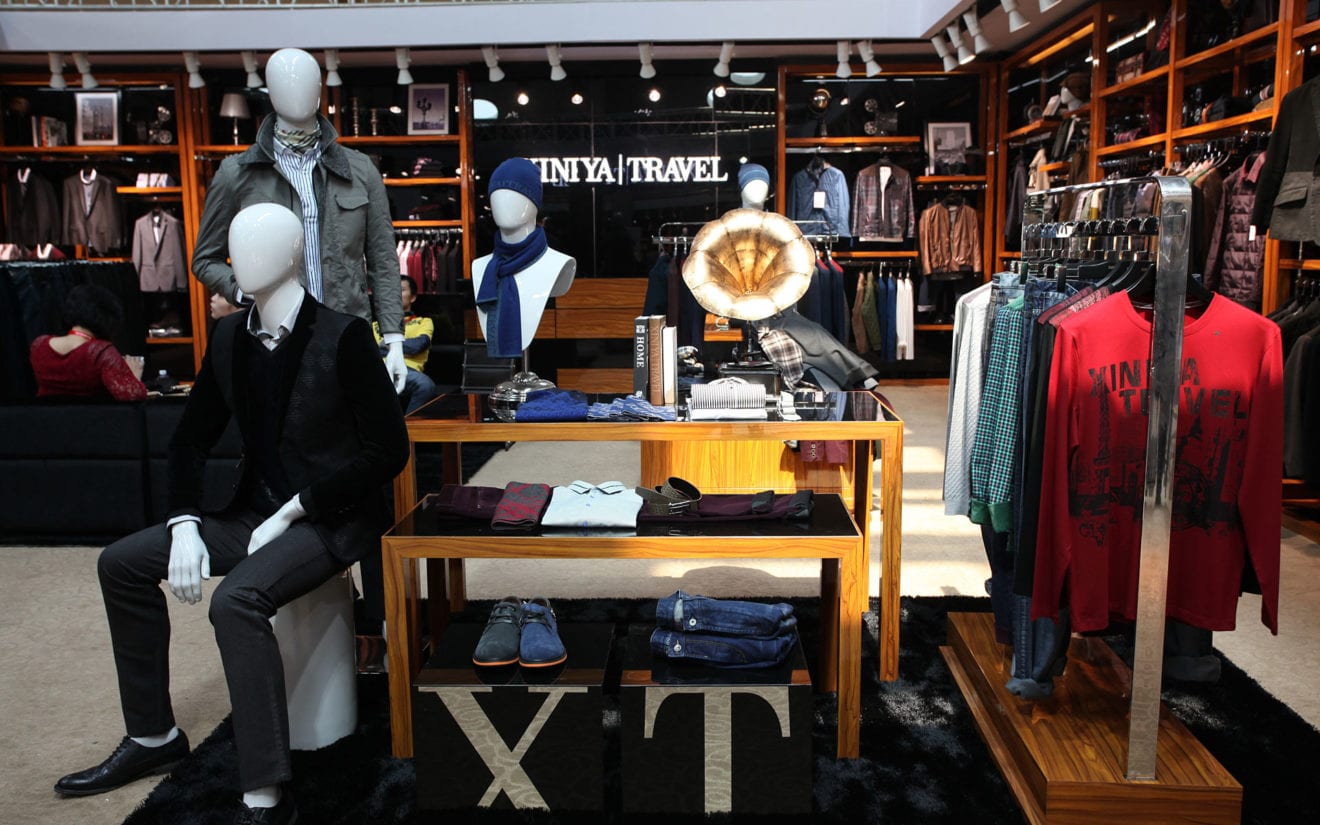
    Menswear retailer China Xiniya Fashion says its second quarter sales nearly halved this year.

    Revenue during the second quarter of 2015 decreased by 47.2 per cent to RMB106.4 million, compared to RMB201.7 million in the second quarter of 2014.

    Gross margin fell from 27 per cent to 20.8 per cent and the company turned a pre-tax profit of RMB18.4 million into a loss of RMB8.7 million.

    That despite the net addition of 31 authorised retail outlets ( 64 opened, 33 closed) taking the network to 635 as at June 30/

    Despite the appalling firgures, chairman and CEO Qiming Xu managed a positive spin on the company’s situation.

    “To further support and stabilise our retail network during this transition period, we implemented the second phase of our inventory buyback. We are beginning to see a definite positive impact on our business from the buyback initiatives and expect this progress to continue for the rest of the year,” he said.

    “Confidence from our distributors and existing and prospective authorised retailers has improved, evidenced by the increase in orders from our sales fair and the net increase in number of authorised retail outlets.

    “While we expect the economic environment to remain challenging, we are confident that our strategy to adjust our business will ensure the long-term sustainability of our business and brand.”

    The company said its 2015 Winter Collection Sales Fair in June in Xiamen City, showcased more than 500 new products. Orders increased 15 per cent over last year’s figures.

    Of the reduced margin, the company observed: “The decrease in gross margin was primarily due to an increase in research and development expenses as a percentage of total sales in the second quarter of 2015 and a decrease in retail prices to improve the price competitiveness and attractiveness of the company’s products to consumers.”

    Xiniya specialises in men’s business and casual apparel in China. It targets male working professionals in China aged 25 to 45 , seeking fashionable clothing to suit their working and lifestyle needs.

  • Playboy drops full monty for bigger piece of China

    Playboy drops full monty for bigger piece of China

    Playboy will no longer publish images of fully nude women in its magazine from next spring. You can blame China for that.

    The porn pioneer, which gave generations of pubescent boys around the globe their first glimpse of breasts, earns a surprisingly rock solid 40 percent of its revenues in China.

    Not from its magazine, which is banned in the country, but from the happy returns on licensed merchandise.

    From Heilongjiang to Guangdong, Tibet to Shandong, it’s not uncommon to see men and women wearing t-shirts or carrying handbags donning the ubiquitous bunny logo—a rabbit head wearing a tuxedo bow tie.

    Or upon closer inspection at high-end department stores, dress shirts and suits, women’s apparel, bags and shoes, belts and wallets, and luggage, not to mention bath products and fragrances, liquor and jewelry and a lot of other things Playboy has slapped a logo on.

    “China is one of our most important markets,” Playboy CEO Scott Flanders said in a statement earlier this year. “To achieve this leadership position without ever having a media entity in China is a testament to the tremendous power of our brand.”

    And that brand translates into hard cash.

    Last year, roughly one-third of Playboy’s US$1.5 billion global retail sales came from China, said CNN. Over the past decade, the company has made US$5 billion in retail sales in the country.

    “In China and other Asian markets, Playboy has positioned itself as a lifestyle brand for sophisticated, suave, fashion-conscious consumers by working with strong licensees in premium mass-market apparel, sportswear, eyewear, et cetera,” said Torsten Stocker, greater China retail partner at AT Kearney, in an interview with the Financial Times.

    In recent years, Playboy has partnered with top tier retailers and brands in Asia, such as Lane Crawford (Hong Kong, Beijing and Shanghai), Isetan (Tokyo) and Marc Jacobs (global).

    In May, Playboy announced plans to build flagship stores in major Chinese cities, and expand its retail presence from 3,000 to 3,500 outlets, in partnership with Handong United, a recently formed group.

    While Playboy will continue to feature loads of perfectly airbrushed models in various stages of undress, explicit nudity in the magazine risks complaints from shoppers and tarnishing a brand built over the company’s 20-year history in China.

    Is distributing pictures of naked women really a business liability?

    “You could argue that nudity is a distraction for us and actually shrinks our audience rather than expand it,” Playboy’s Flanders argued last year.

    Besides, despite China’s anti-porn measures, Chinese consumers—and pervs everywhere—can get as much smut as they want on the internet.

    “You’re now one click away from every sex act imaginable for free. And so it’s just passé at this juncture,” said Flanders.

    Playboy will also continue its tradition of investigative journalism, in-depth interviews and fiction, notes the New York Times, a move that will be appreciated by those who buy the magazine “for the articles”.

    The company cleaned up its website last year (stopped showing pictures of naked women) and saw traffic quadruple and the median age of its readers move from 47 years of age to 30, “an attractive demographic for advertisers,” the Washington Post quoted a statement from Playboy as saying.

    Playboy is a household name in China, with 97 percent brand awareness among Chinese consumers, according to research firm Penn Schoen Berland.

    “As one of the most famous and treasured brands in China, Playboy is considered the ‘must-have’ fashion choice by men and women across the Mainland,” said Xiaojian Hong of Handong United.

    Through licensing agreements, Playboy-branded consumer products are now in 180 countries.

  • China’s JD.com expands operations to Silicon Valley

    China’s JD.com expands operations to Silicon Valley

    JD.com, China’s second-largest e-commerce services provider by sales, has expanded its operations in the United States, with the opening on Monday of a research and development facility in Santa Clara, California — right in the centre of Silicon Valley.

    “Given the scope and strength of American brands, products and capabilities, the US was the obvious choice as we sought a location for our first office outside of Asia,” said Richard Liu Qiangdong, the founder and chief executive of JD.

    The move followed JD’s unveiling last month of a new office in Hong Kong that was set up to help the Beijing-based company better engage with major brands and retailers across Asia.

    Dennis Weng, the chief technical advisor for JD Mall, has been tasked to initially oversee the new US facility, which will focus on areas such as cloud computing, mobile applications and big-data infrastructure to improve the online retail experience for its customers in mainland China and boost the company’s US-sourced offerings.

    JD’s research and development operation is also expected to provide both rotational job possibilities for engineers in China and opportunities for certain skilled technical workers in Silicon Valley.

    “Our nearly 120 million active customers stay loyal because they know we work continuously to improve their shopping and fulfillment experience by implementing the most advanced technologies and processes,” said Rain Long, JD’s chief human resources officer and general counsel.

    Nasdaq-listed JD launched a “US Mall” marketplace on its website, dedicated exclusively to meeting the demand on the mainland for authentic imported American products.

    “As we build out and staff our new facility in the coming months we look forward to forging new partnerships and attracting new talent that will help JD.com achieve its goals of delivering an unparalleled level of service and quality,” Long said.

    JD, which posted second-quarter revenue of 45.9 billion yuan (US$7.2 billion), claims it has the largest fulfilment infrastructure of any e-commerce company in mainland China.

    It operates seven so-called fulfilment centres and a total of 166 warehouses in 44 cities. In addition, its own staff runs 4,142 delivery stations and pick-up stations in 2,043 counties and districts across the country.

    Efforts to widen JD’s international sourcing capabilities are in line with the company’s announcement in August of expanding into 100,000 villages across mainland China by the end of this year. This marks the company’s most aggressive domestic market expansion since 2013, when it started its foray into lower-tier cities..

    “Management expects to see more than 50 per cent order contribution from lower-tier cities in the near term,” Jefferies equity analyst Cynthia Meng said in a report.

    Meng said the fastest-growing product categories on business-to-consumer e-commerce platform JD Mall included apparel and shoes, home furnishing, watches, food and beverage, cosmetics and baby products.

    JD’s rural expansion would heat up competition with domestic market leader Tmall.com, e-commerce giant Alibaba Group’s business-to-consumer operation, in that fast-growing market segment.

    The number of online shoppers in rural mainland China increased 40.6 per cent year-on-year to 77.14 million at the end of December, according to data from the China Internet Network Information Centre.

  • Apple iPhone 6s Sales in China Below Expectations, Says Boutique Researcher J.L. Warren

    Apple iPhone 6s Sales in China Below Expectations, Says Boutique Researcher J.L. Warren

    Junheng Li with boutique research shop J.L. Warren Capital this morning opines that Apple‘s (AAPL) rollout of its iPhone 6s is failing to meet expectations, citing as the main reason a failure of the Chinese market to deliver.
    “According to information and/or data readily available from AAPL suppliers, we consider that the iPhone 6s initial launch in the 12 markets globally, is not meeting market expectations,” writes Li.

    Oddly enough, although Apple announced on September 28th that its first-weekend sales of the 6s beat last year’s 10 million for the iPhone 6, selling more than 13 million units, Li argues the result was underwhelming.

    “During the first week (including weekend) or 3 days post launch, we estimate ~13million units were sold. This number is lower than original expectations, largely due to an overestimated demand from mainland China.”

    Li cites some China market data from something called Gray Market Marker, which apparently collects the price of iPhones trading on the black market:

    AAPL launched the iPhone 6s simultaneously in Hong Kong and mainland China which cannibalized sales in HK. According to the largest grey market make [sic] a consumer electronics trading platform, the current spot prices for many models even on the launch data (9/30/2015) were below the official retail prices, unprecedented in the iPhone launch history. In total, we estimate that ~2.5-3 million of units of the 6s were sold in the mainland and ~1.5 units sold in HK. In comparison with previous years iPhone launches, when the mainland was not included in the initial launch, only 30% of the 6s purchases were from mainland, vs. 50% in previous years.

    (One point not addressed by Li is whether the premium can be expected to be lower, or even absent, precisely because the iPhone 6 was only available on the black market last year, having been left out of rhr first round of retail sales.)

    Li offers one explanation for why she thinks sales to China are below plan: “Since ZTE and Huawei already launched smart phones with 3D force touch, the new screen is not novel to Chinese consumers.”

    Li also offers some other tidbits, such as that the iPhone that comes in rose gold finish was the best seller, making 45% of sales.

    As for the outlook, she opines,

    We believe that China is the biggest moving piece for AAPL’s global sales in 2015, given it is about 20+% of the company’s global market and the demand for the iPhone is growing at ~20% according to our research. We currently project 200 million units of sell-in for iPhone 6/6+ and iPhone 6s/6s+ combined in 2015, which is 10million sell-through units lower than, the current street consensus.

    Apple shares today are down 81 cents, or 0.7%, at $110.50.

  • Hong Kong Suffers for Its Devotion to the Peg

    Hong Kong Suffers for Its Devotion to the Peg

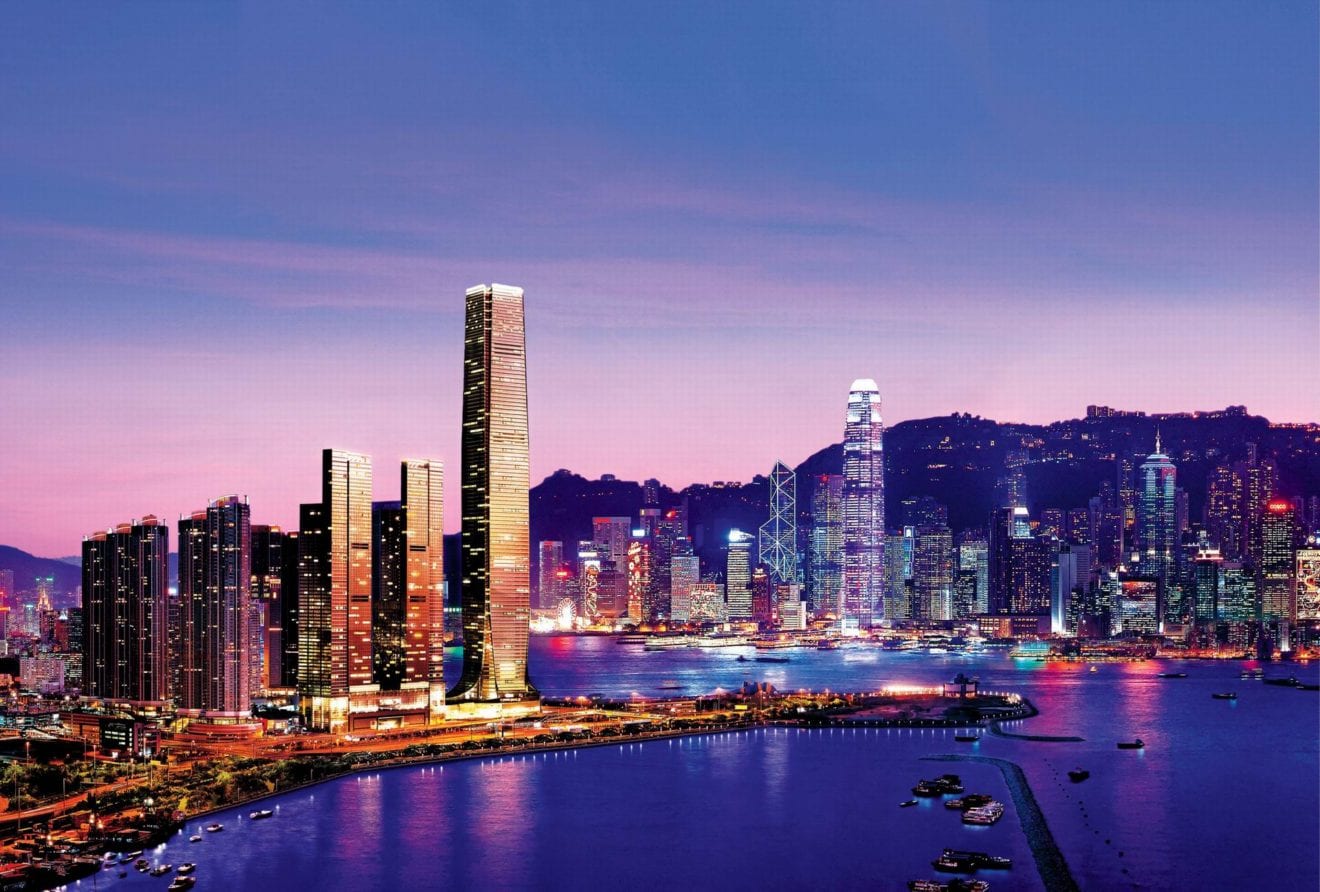
    Hong Kong has pegged the value of its dollar to the greenback since 1983. The peg was meant to ensure financial stability as the city embarked on the long process of re-integrating with China. Since then its currency has been one of the most stable in the region. To lock the HK ­dollar’s trading range against the greenback into a narrow band, about 7.75 to the US dollar, the Hong Kong Monetary Authority (HKMA) buys and sells the two currencies. Whenever the Federal Reserve raises or lowers interest rates, Hong Kong follows suit.

    That means Hong Kong is caught between tightening monetary policy in the US and the economic slump of its main trading partner, China. If the Fed moves on the rate soon, Hong Kong will have to raise interest rates even as the mainland’s slowdown puts pressure on the city’s wages and property prices. “It’s a double whammy,” says BNP Paribas economist Mole Hau.

    “Nobody was in the mood to buy an apartment”

    China’s surprise devaluation of the yuan last month helped trigger currency declines worldwide and increased speculation about Hong Kong’s willingness to keep putting up with such pain. In the options market, bets on an end to the peg jumped to their highest in more than a decade. On his blog in late August, Hong Kong Financial Secretary John Tsang warned that the economy may slow from the 2.6 per cent growth rate it managed in the first half of the year. “Hong Kong still needs to face the challenges brought by the fluctuating financial markets, weak foreign trade, and slower tourism,” he wrote.

    Hurt by the Chinese devaluation as well as low prices for oil and other commodities, regional currencies have declined an average 6.4 per cent against the US dollar in the past six months. That’s making the prices at the city’s stores more expensive for visitors, including the Chinese.

    As tourist arrivals from China fell 9.8 per cent in July compared with a year earlier, the Hong Kong retail industry’s sales for the month fell 2.8 per cent to HK$37.6 billion ($4.85 billion). That was the fifth consecutive month of declines, and much worse than the 1.2 per cent contraction economists surveyed by Bloomberg had predicted.

    Home prices in Hong Kong have increased 60 per cent since 2010, fuelled by strong demand from the mainland and low interest rates. But Hong Kong in August had the weakest home sales in 17 months. With the stock market plummeting, “nobody was in the mood to buy an apartment,” says Louis Chan, chief executive officer of the residential unit of Centaline Property Agency, one of the city’s two largest brokers. Home prices may start falling as much as 10 per cent a year starting in 2016, says Cusson Leung, an analyst with JPMorgan Chase.

    Investors and economists have been talking about the peg’s demise since China regained control of the city in 1997. There’s always the possibility of the HKMA pegging the HK dollar to the yuan instead of the greenback. Zhang Yichen, chairman and CEO of Citic Capital, the Chinese investment bank, says that won’t occur soon. Speaking at the World Economic Forum in the Chinese city of Dalian on 9 September, Zhang said the Hong Kong government will be hard-pressed to end the peg until the yuan becomes a truly convertible currency, meaning that it must be exchangeable for foreign currencies in unlimited amounts.

  • Asia Pacific Travel Retail Association launches member survey

    Asia Pacific Travel Retail Association launches member survey

    The Asia Pacific Travel Retail Association (APTRA) has launched a survey among its members to ascertain priorities for the 2016/2017 APTRA research programme.

    According to APTRA, it is a fundamental mission to further the knowledge of members through studies conducted in partnership with accredited research agencies into past performance of the duty-free and travel-retail industry in the Asia/Pacific and current trends in consumer behaviour to facilitate future development.

    APTRA president Jaya Singh commented: “The business environment of today and indeed the future, is getting increasingly sophisticated and demanding. We live in dynamic times and the greater the level of insights we can achieve through our research platform the greater the relevance that all our stakeholders and members can deliver.”

    Recent reports have covered a range of topics including Chinese, Indian and Korean consumer behaviour, Cambodian travelling consumer trends, impact of security regulations and product category reports into fashion and accessories, confectionery, gifting and eyewear. Although the full research reports are available exclusively to APTRA members through www.aptra.asia, key findings are shared with members and other interested parties at APTRA Insights Seminars staged around the Asia/Pacific.

    In September, a total of over 250 participants attended the latest APTRA Insights Seminars which took place in Hong Kong, New Delhi and Seoul.

    Topics included key results of the APTRA m1nd-set study into Chinese, Korean and Indian travellers, analysis of e-commerce behaviour from KPMG, Chinese social-media landscape and potential of WeChat marketing from China International Duty Free and potential of technology to reach travellers on the move from geo-location marketing company NEAR.

    Singh added: “Through its research programme, APTRA provides actionable insights which enable members to understand their customers better and identify future opportunities. We want to target our research where it is most needed so we have asked members to nominate future subjects for research.”

    Commenting on the seminars, he said the “the response from delegates to the recent APTRA Insights Seminars was extremely favourable and we intend to schedule similar seminars into the programme next year.


  • Luxury shoppers in China spending 28 per cent more per online purchase than in 2014, study shows

    Luxury shoppers in China spending 28 per cent more per online purchase than in 2014, study shows

    Unfazed by the country’s economic slowdown, luxury shoppers on the Chinese mainland have increased their purchases online as a range of e-commerce options provide attractive deals – from cosmetics and clothes to cars and property.

    That trend was uncovered from a joint survey of 10,150 luxury consumers in China by global professional services giant KPMG, online luxury retailer Mei.com and Chinese media firm Sina’s Nasdaq-listed micro-blogging service Weibo. The survey was called China’s Connected Consumers 2015.

    “The pace of change in today’s marketplace in China is taking retailers and brands by surprise,” Egidio Zarrella, the clients and innovation partner for China at global professional services giant KPMG, said on Tuesday.

    The new KPMG-led study found that the average spending by mainland luxury shoppers has increased 28 per cent to 2,300 yuan (US$362) for each single e-commerce purchase, up from 1,800 yuan average in last year’s survey.

    It also found that 45 per cent of respondents in the latest survey said they have bought many luxury items online.

    While only 1 per cent said they have bought domestic and overseas properties and cars online, about 50 per cent of those surveyed said they have not ruled out making those purchases online in the future.

    “China’s luxury consumers are looking for something beyond the physical shopping experience,” Zarrella said.
    “They are moving from just owning a luxury product to experiencing luxury, including gourmet dining, fine wines, private flights, bespoke safaris, luxurious travel tours, spa treatments, art auctions and an ever increasing range of investment services.”
    In a report early this year, management consulting firm Bain & Company estimated that China’s luxury market reached 115 billion yuan last year, down 1 per cent from the previous year, as Beijing cracked down on lavish spending by government officials.

    The country’s luxury market was largely expected to remain under pressure because of the slowing economy. Mainland China’s gross domestic product growth was exactly 7 per cent in the first and second quarters of this year, compared with close to 8 per cent last year.

    Zarrella, however, pointed out that e-commerce spending in the world’s second-largest economy shows a completely different picture.

    The survey, which had respondents from 90 Chinese cities, found an increase in the average amount spent on luxury purchases in most product categories.

    It showed that a higher amount was being spent on average for popular categories such as bags at 109 per cent, women’s apparel at 58 per cent and cosmetics at 18 per cent. There was also a significant increase in spending on categories such as watches at 126 per cent and jewellery at 65 per cent.

    The top-selling product categories in China’s e-commerce market are cosmetics, women’s shoes, bags and leather goods, women’s apparel and accessories.

    “Price is becoming less of a driver [for online sales],” said Thibault Villet, the chief executive at Mei.com. “But value remains important as customers are well informed about global prices since most of them travel.”

    The study found that Chinese luxury online shoppers prefer to buy on so-called online-shopping platforms, such as e-commerce giant Alibaba Group’s Tmall.com.

    “Tmall controls over 50 per cent of the total business-to-consumer e-commerce market in China,” Villet said.

    That preference was attributed to the multiple online merchants in such platforms, the extensive information on products and pricing, peer ratings of sellers, regular promotional activities and payment gateways like Alipay and Tencent Holdings’ Tenpay.

    Villet said Mei.com plans to open its own e-commerce platform dedicated to luxury goods by next year to better compete on the mainland.

    He said the exponential growth of smartphone adoption on the mainland has also helped boost mobile e-commerce purchases. “We expect Mei.com to be fully mobile by the end of 2016,” he added.

    Mobile e-commerce sales will account for more than half of online retail shopping in mainland China by next year, according to New York-based research firm eMarketer.

    It forecast mobile e-commerce would make up 10.9 per cent of all retail sales in the country next year and 55.5 per cent of online retail shopping as the sector grew to a record US$505.74 billion, up from an estimated US$333.99 billion this year.

    The government-backed China Internet Network Information Centre has reported the number of users who accessed the internet through mobile devices reached 594 million in June, up from 557 million in December last year, while the overall number of internet users rose to 668 million from 649 million.

    Andrew Taylor, a co-founder of Juwai.com, which connects Chinese buyers to overseas property, said mobile browsing by consumers in China was a major driver of brand awareness for his company.

    “We see that many of the more affluent customers who look for luxury properties use [Tencent’s instant messaging service] QQ and call us,” Taylor said.

    “The younger consumers contact us through [Tencent social mobile messaging platform] WeChat and Sina Weibo.”

    So-called online-to-offline activities is a trend that will continue. Zarrella said that physical stores have a role to play in triggering e-commerce purchases of luxury goods.

    “We see a growing number of online platforms launching pop-up shops in malls, or have tie-ups with physical stores to give buyers an opportunity to inspect these products,” Zarrella said.

    Thomas Crampton, the global managing director at Social@Ogilvy, the worldwide practice of marketing group Ogilvy & Mather involved in social media, said an online-only approach in China is not sustainable for brands.

    “At some point, each brand will need a face-to-face touchpoint,” Crampton said.

    “We helped an automotive brand, analyse, interpret and optimise the shopper journey,” he said as an example. “From a traditional purchase cycle of over 200 days, the brand managed to sell over 300 cars in a matter of three minutes through WeChat.”

  • IMAX China Listing Underperforming

    IMAX China Listing Underperforming

    The demand for IMAX China shares has not met expectations, according to a filing on Wednesday.

    The $248-million initial public offering (IPO) of IMAX China Holding Inc. in Hong Kong saw a relatively weak demand from retail investors, according to a filing on Wednesday.

    The demand for new listings in Asia Pacific stock markets has been hurt by the weakening of the Chinese stock markets earlier this year, as well as the rather sporadic performance of other equity markets around the world.

    IMAX China Holding Inc., majority-owned by the giant screen movie theater equipment maker of the same name, is most likely a casualty of this market slowdown.

    There have been some signs of improving confidence in the market, with China Huarong Asset Management Co. and China Reinsurance Group interested to make their Hong Kong IPOs this week, worth a combined $5 billion. However, market players and analysts have said that it is still too early to predict a recovery.

    “Sentiment has not recovered, it’s not that strong yet because the market remains volatile recently,” according to Jasper Chan, a Corporate Finance Officer at brokerage Phillip Securities in Hong Kong.

    The IMAX China IPO was priced last week at HK$31 ($4) per share, near the bottom of its marketed range. Demand for shares from retail investors accounted for a mere 70 percent of the shares that were offered, according to the filing.

    In comparison, the listing of Yunnan Water Investment Co. Ltd. in May was demanded by retail investors 354 times the number of shares offered.

    In April, the listing of Shanghai Haohai Biological Technology Co. Ltd. was oversubscribed around 180 times the shares offered.

    However, the institutional tranche of the deal was oversubscribed, according to IMAX China.

    The IMAX Corp. China unit debuted on the Hong Kong stock exchange on Thursday, marking the first listing by a major global brand there since 2011.

  • Asia luxury goods market still growing

    The Asia luxury goods market is still growing rapidly despite negative press about Hong Kong, Macau and deteriorating China spending.

    Luxury goods retail sales in Asia-Pacific are expected to reach US$134.9 billion by 2019, growing at a CAGR of seven per cent during 2014-2019, according to the report Luxury Goods Retailing Market in Asia-Pacific, 2014-2019 Market and Category Expenditure and Forecasts, Trends, and Competitive Landscape.

    Japan will remain the largest Asia Pacific luxury goods market amid a slowdown in China and India’s luxury goods market is the fastest growing in Asia-Pacific, driven by rising disposable income, growing fascination towards luxury brands, and the desire of high earners to differentiate themselves from others.

    The report says jewellery, watches and accessories is the largest and fastest growing category in the region, driven by higher spending on jewellery and watches by Chinese, Japanese, and Korean consumers.

    The Hong Kong luxury goods market is struggling due to political unrest and reduced Chinese spending. A luxury tax exemption is expected to boost luxury goods consumption in Indonesia.

    Social messaging apps is a trending marketing channel for luxury brands, as the digital channel is influencing the purchasing decisions and pattern of consumers.

  • Despite Slowdown, China’s Outbound Tourists Reach 242 Million

    Despite Slowdown, China’s Outbound Tourists Reach 242 Million

    As Chinese tourists head across the globe for Golden Week this week, luxury retailers are worried that an ailing stock market and devalued yuan will lead to muted growth compared to holiday seasons of the past. But according to newly released figures, long-term growth prospects remain strong for Chinese travelers, who are expected to double in number over the next decade.

    Some destinations may be in for a Chinese spending slump when it comes to luxury shopping over the holiday. According to recent figures released by Global Blue, UK luxury retailers are especially expected to feel the pain of China’s current economic woes during Golden Week.

    The retail tourism firm reported that the devaluation of the yuan in June led to a 2 percent year-on-year decline in Chinese tourist spending in August for the UK, down from 8 percent growth in spending between January and July.

    According to an official statement, “Global Blue is anticipating the Golden Week rush will be significantly weaker this year, and the decline could continue throughout the fourth quarter as Chinese are left disinclined to book trips abroad.”

    But retailers shouldn’t fret too much about long-term prospects, as a recent study published by HSBC found that outbound Chinese traveler numbers are expected to hit 242 million by 2024—a number more than double last year’s amount, which was estimated by HSBC to be 116 million. In addition, a recent report by the Fung Business Intelligence Center and China Luxury Advisors found that outbound Chinese traveler spending will hit $422 billion by 2020, up from an estimated $200 billion this year.

    Even as retailers fret about their sales prospects for this Golden Week, not everyone is expected to lose out. A weak euro still makes Europe a popular destination despite the devalued Chinese currency, and Global Blue found that Chinese shopper numbers in Europe rose by 74 percent in the first half of this year.

    Online travel agency Ctrip still expects outbound tour bookings to double for the period, and has reported that Hong Kong, Tokyo, and Bangkok are the top three holiday destinations for Chinese tourists. While luxury retailers in some destinations may be noticing the slowdown much more than others, those that keep their eye on the prize when it comes to Chinese travelers are more likely to have a fruitful decade to come.

  • Asia mCommerce shopping soars

    Asia mCommerce shopping soars

    Asia Pacific consumers are increasingly likely to make their online purchases and bill payments through mobile devices (mobile phone or tablet), rather than via desktops, according to Visa’s 2015 Regional eCommerce Monitor Survey.

    The survey, which polled 11,760 respondents from 13 markets in Asia Pacific, found respondents reported an average 22 per cent increase from 2014 in Asia mCommerce shopping.

    Respondents from Indonesia (36 per cent), Mainland China (34 per cent) and Taiwan (28 per cent) reported the greatest growth in mCommerce during the year.

    The rising popularity of mCommerce among Asia Pacific consumers is narrowing the gap with traditional eCommerce channels such as laptops or desktop computers across the region. In Thailand, consumers are as likely to purchase using their mobile devices as through desktops, while the mCommerce-eCommerce gap in markets such as Mainland China (eight per cent), Korea (nine per cent) and Indonesia (nine per cent) is decreasing.

    Visa’s regional director for eCommerce, Conor Lynch said the results show that making purchases on the go through mobile devices is becoming the norm in Asia Pacific.

    “As consumers get more comfortable using their smart devices to research, browse and purchase, mCommerce should soon overtake traditional eCommerce habits, strengthening this channel of engagement between consumers and retailers.”

    The survey also found travel, bill payments and movies were the top spending categories for eCommerce in general across Asia.

    For mCommerce, the top three categories are also fashion, bills and movies at 27 per cent each.

    “Across Asia Pacific, we are seeing that ticket-size, as well as the nature of the purchase, impacts how consumers purchase goods and services online. Consumers in this part of the world, are already comfortable purchasing smaller ticket-sized, everyday items by clicking the purchase button on an app or checkout button on a mobile device,” Lynch said.

    Another continuing trend revealed by the survey is the tendency for consumers to engage in cross-border online shopping. In particular, consumers from Singapore (77 per cent), Australia and Hong Kong (75 per cent) and New Zealand (74 per cent), are the most likely to make online purchases from retailers abroad, well above the regional average of 55 per cent. On the other hand, consumers from Japan (81 per cent), Taiwan (61 per cent) and Vietnam (57 per cent) are more likely to shop at domestic online stores.

    When shopping online with an overseas retailer, price (68 per cent), access to products (60 per cent), paying and delivery processes (40 per cent) and reputation of products (29 per cent) are key motivations for Asia Pacific consumers.

    The Visa eCommerce Monitor Survey 2015 was conducted by ORC International Singapore with 11,760 consumers, aged 15 to 55 years and across 13 countries and markets – Australia, Mainland China, Hong Kong, India, Indonesia, Japan, Malaysia, New Zealand, Singapore, South Korea, Taiwan, Thailand and Vietnam in May and June 2015.