Tag: China

  • UBS Capitulates, Slashes Hang Seng Forecast

    UBS Capitulates, Slashes Hang Seng Forecast

    As China devalues yuan and the U.S. is on track to raise rates, Hong Kong, whose currency is pegged to the dollar, is in trouble.

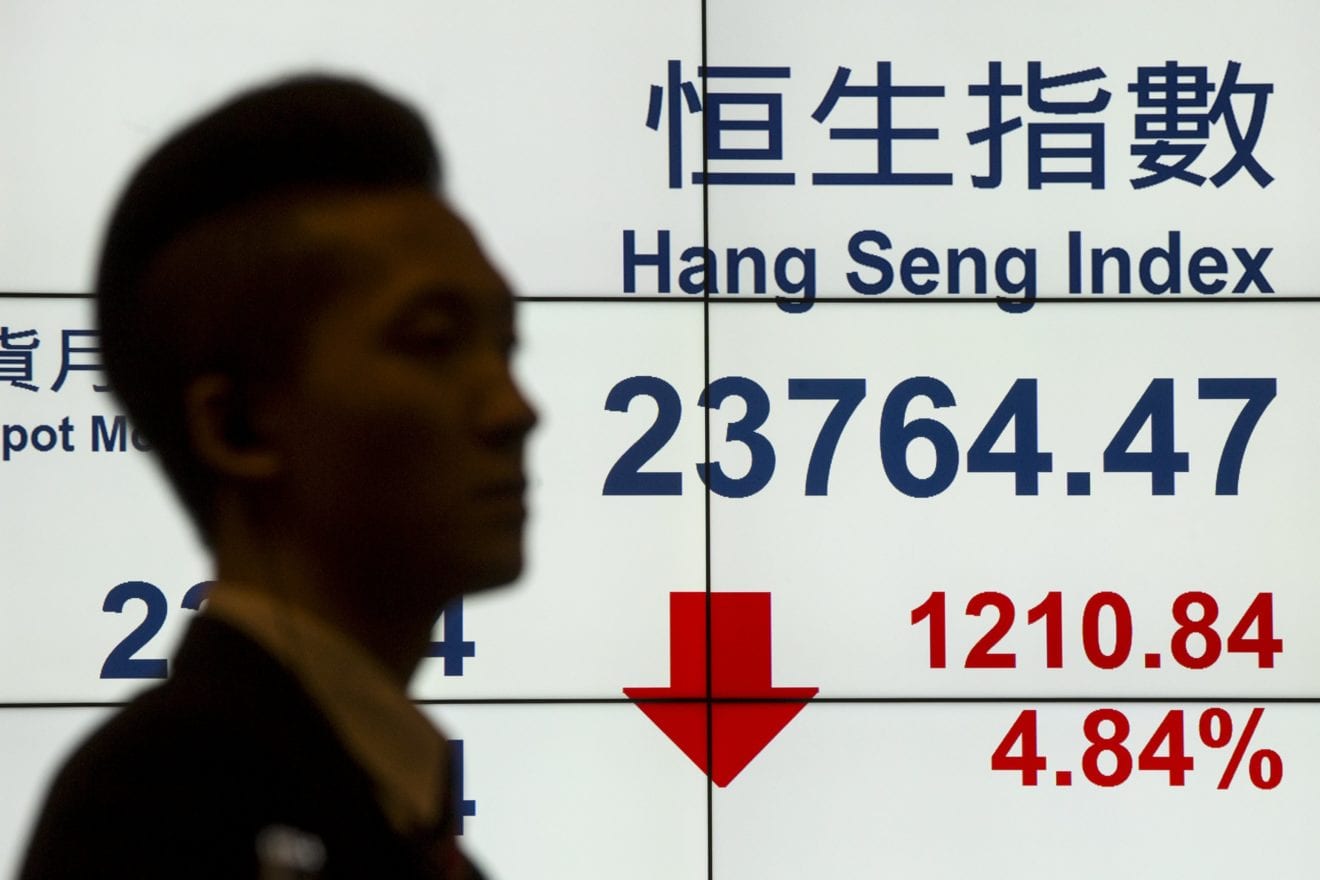
    Forecasting “black sky”, UBS now sees the Hang Seng Index to end the year at 19,775, another 5.5% downside from its current level. The Hang Seng Index has fallen by about 25% since its late April high.

    Apart from China slowdown, “we have seen a combination of the three pillars of Hong Kong’s economy weakening (tourism and re-export) or showing signs of weakness (property),” wrote Spencer Leung.

    The Hang Seng Index is now valued at only 9.4 times forward earnings, a good 0.8 times standard deviation below its 2-year average, but “the current valuation of Hong Kong equity may not be attractive enough to compensate for potential earnings downside.” UBS estimates Hong Kong companies’ earnings could drop 31% next year.

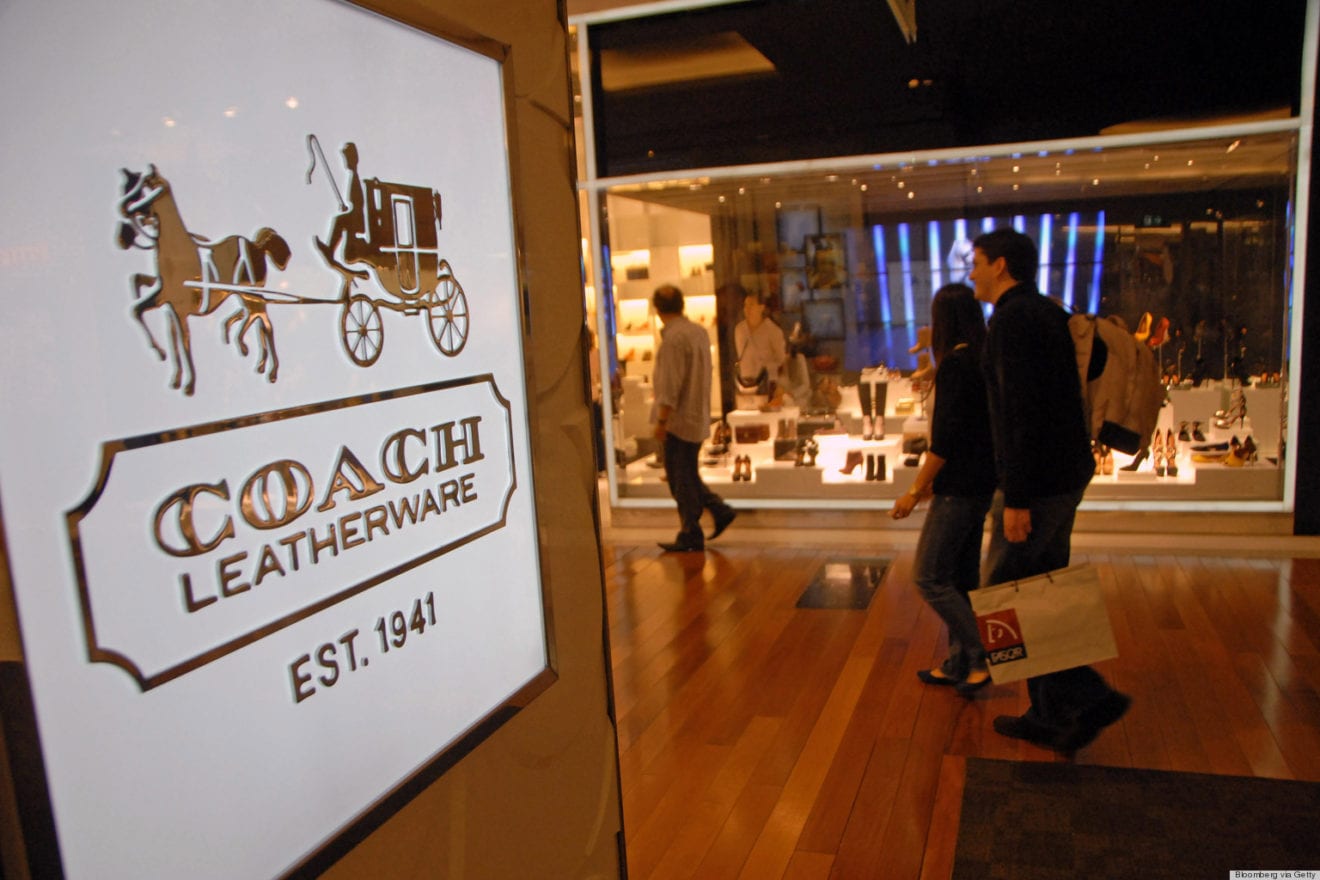
    It is not easy for retail businesses to operate in Hong Kong, because the rent is simply too high. UBS estimates that ground-level stores in prime shopping districts in Hong Kong will have to see their rental expenses drop 70% from their peak to break even. Last week, U.S. handbag bag Coach closed its flagship shop in the Central shopping district.

    Overnight, the iShares MSCI Hong Kong ETF rose 0.5%.

  • Online security ‘paramount’ for shoppers

    Online security ‘paramount’ for shoppers

    A sense of security is paramount for nearly one quarter of shoppers when evaluating whether to purchase goods from a retailer online, according to a new survey from Worldpay, a payments provider.

    Assuring customers they are in safe hands throughout the entire payment experience should be a priority for retailers, according to 3500 online shoppers polled globally.

    Similarly, for one in four online shoppers, seeing payment authentication and digital certificate logos displayed prominently on a retail site’s homepage is the single most reassuring element in the purchasing process. Forty-six per cent of consumers globally admit this would help address their concerns.

    Transparency around online security is particularly important in China, where 70 per cent of shoppers said they feel more secure shopping when payment authentication and certificate logos are clearly displayed, indicating that this simple measure will go a long way in addressing the misgivings of online customers.

    Shoppers also want security transparency when retailers store personal and payment details. Thirty-one per cent of shoppers worldwide say they don’t want a retail website to store their payment details, and South Koreans and Australians are most averse to the idea with over 50 per cent saying they don’t want this information stored online. In China and Japan, 65 per cent of shoppers expect reassurance that their details will be kept safe by the retailer and want a clear explanation of how this will be done.

    Stuart Thornton, VP of business development in APAC with Worldpay, said: “Nagging doubts about the security of their payment details can add up over the multiple stages of the purchasing journey for shoppers and stop them from ever clicking ‘buy’, even if they really want a product. When selling online, retailers need to step in and reassure customers that their information is in safe hands, from the second they start browsing a site to the moment they receive an email confirming their purchase”.

    At checkout, shoppers expect the ability to use their preferred payment method and want the process to be simple and intuitive. Sixty-five per cent globally have abandoned their purchase at the checkout stage as a result of not being able to pay how they wish.

    Nearly 60 per cent of shoppers worldwide would drop out of a purchase if their preferred payment method was displayed on a retail site’s homepage but wasn’t available at checkout. Forty per cent of shoppers globally admit they would not take the time to look for their preferred payment method at checkout if it was not easy to find. This figure is even higher in Japan, where 62 per cent of shoppers say they wouldn’t search for their preferred payment method if it wasn’t already clearly indicated on the website.

    Retailers must also manage consumer expectations by clearly indicating what they can expect at each stage of the payments journey, particularly when redirecting them to a third-party website. Ninety-four per cent of shoppers globally say this is important, and one-fifth would instantly drop a transaction if ushered to a third-party site without warning. In Japan, nearly 30 per cent of shoppers would drop out if unexpectedly redirected to a third-party site to enter additional details.

    “Purchasing products online demands a certain level of trust between retailers and shoppers, and making the process simple and transparent is absolutely essential,” said Thornton.

    “Retailers will struggle to inspire confidence in their customers if they cannot deliver on shoppers’ expectations and give them peace of mind throughout the online shopping journey”.

    The need for retailers to act as a source of reassurance for shoppers is equally strong when it comes to handling errors or providing customer support. Nearly two-thirds of online shoppers (64 per cent) want a clear and immediate explanation of exactly what went wrong. When it comes to additional support, 27 per cent want to be able to call customer support, while 24 per cent want the option to email a support representative.

    Clear error messages also head off any potential confusion as to whether a transaction has been processed. Ninety-six per cent of shoppers say it is important they receive an email confirming that their order has been processed and their payment accepted.

    Adds Thornton: “If there is one thing to take away from these findings it is that the online payments journey is inextricably linked to the user experience. If retailers cannot reassure customers that their transaction will be quick, secure, and managed to the highest standard of professionalism throughout the payment journey they will struggle to keep shoppers engaged”.

    The research was carried out in partnership with KAE Marketing Intelligence, which conducted a desktop analysis of 350 top retail sites and surveyed 3500 online shoppers in 14 countries across North America, South America, EMEA, and APAC.

  • Blackmores, Sanger to open stores on JD.com

    Blackmores, Sanger to open stores on JD.com

    JD.com says it has secured partnerships with Australian brands Blackmores, a leading Australian natural health company, and Sanger Australia, the Australian meat sales and marketing business of the Bindaree Beef Group.

    Both brands will open stores on JD.com’s direct sales channel and will use the company’s same-day delivery services. Sanger Australia will also leverage JD.com’s cold chain logistics network to ensure that its meat products are delivered fresh to Chinese customers from Australia.

    The announcements follow the successful launch in late June of a dedicated Australian Mall for authentic imported Australian products on JD.com’s cross-border platform, JD Worldwide. Since its launch, dozens of Australian brands have successfully sold their products to Chinese consumers through Australian Mall. The most popular product categories in the first two months of the program include health  care, baby care products and fresh food.

    “We’re pleased to be working with leading Australian brands to build winning eCommerce strategies for this market and help them take advantage of our large and growing base of upwardly mobile Chinese consumers,” said Carol Fung, VP of JD.comand president of JD.com’s FMCG Business Unit.

    “Blackmores is a long-time partner, and we are very excited to be expanding the range of their outstanding healthcare products available to our rapidly growing user base. With demand for Australian fresh produce growing exponentially, the addition of Sanger Australia’s world-class beef to our platform is an outstanding development for our customers.”

    Blackmores Asia MD Peter Osborne said his company has been working with JD.com since 2013.

    “Our increased engagement is testament to our strong relationship and commitment to growing our China business. Working with JD.com not only ensures we get our products to consumers quickly, but will also enable us to initiate targeted and specialised marketing campaigns leveraging JD’s data analytics capabilities.”

  • US wine giant Robert Mondavi to launch online in China

    US wine giant Robert Mondavi to launch online in China

    Famed Californian winery Robert Mondavi is to join Alibaba Group’s Tmall.com online shopping marketplace to reach more consumers in China, the world’s largest wine-consuming market.

    Robert Mondavi says its exclusive Tmall flagship store will be the California company’s first and only online sales channel in China. The outlet will sell US-bottled labels such as Robert Mondavi Winery, Robert Mondavi Private Selection, Woodbridge by Robert Mondavi, and Twin Oaks by Robert Mondavi. The Robert Mondavi brand is owned by alcoholic beverage maker Constellation Brands, which bills itself on its website as the world’s top premium wine producer.

    Philip Kingston, senior vice president of international for Constellation Brands, said the company in recent years has “seen a very encouraging uptake in Chinese tourists visiting our wineries in California, as well as wine sales in China.”

    Opening a store on Tmall – China’s largest B2C online marketplace and part of Alibaba Group, whose retail shopping sites in the PRC have 367 million annual active buyers – “allows us to sell our wines to Chinese consumers in a marketplace which we believe will build our brand,” Kingston said in a statement.

    “It also strengthens our presence in China as we expect to benefit from Alibaba’s sophisticated data-analytics capabilities and extensive customer insights.”

    The growth and sheer size of China’s consumer class in recent years has made the country a top market for the world’s vintners. China’s wine consumption in 2014 was more than double that of second placed US, according to data from research firm IWSR.

    Tmall said with the opening of the Robert Mondavi Wines flagship store, it was launching a  “Tmall Vineyard Direct” program, promising to connect with more wineries around the world to allow them to sell directly to Chinese consumers through Tmall. Gary Clubb, head of Tmall international business development, said  “working directly with the winery itself is key to a robust supply chain and allows us to leverage the power of the Alibaba ecosystem to pioneer innovative sales and marketing campaigns to the 367 million buyers on our platforms”.

    Tmall has been aggressively recruiting Western retailers and brands selling products in a range of categories, from fast-moving consumer goods to apparel, to build up Alibaba’s cross-border online sales.

  • Coach to exit landmark location in Hong Kong

    Coach to exit landmark location in Hong Kong

    Leather goods maker Coach Inc. is shutting one of its three flagship locations in Hong Kong, the latest retailer to be hit by the drop in the number of mainland Chinese visitors to the city amid a slowing economy and weaker yuan.

    The store towers above Queen’s Road Central in the central business district of a city where high rents and labour costs, as well as slowing sales, have hit other retailers.

    Coach said the store would close on August 31 but said it remained committed to the Hong Kong and China markets. Earlier this month, Coach said its mainland China sales grew 9 per cent year-on-year to $595 million in fiscal 2015, but growth in Hong Kong and Macau was slower.

    “Sales growth in China was driven entirely by the mainland, as Hong Kong and Macau continued to experience traffic declines from a decrease in PRC (People’s Republic of China) tourists,” Chief Executive Victor Luis said.

    For this fiscal year, China sales growth is forecast to slow to about 5 per cent, the company said. Chinese tourists have been the main customers of Hong Kong’s luxury retailers, but the slowing economic growth and the recent devaluation of the yuan have dented their once voracious appetite for goods ranging from cosmetics to luxury watches.

    Tighter visa rules and a flare up of anti-Chinese sentiment in Hong Kong have also contributed to the decline in mainland visitors. Hong Kong’s retail sales fell for the fourth straight month in June.

  • Xiaomi Mi 4C Retail Box Surfaces, Confirms Snapdragon 808

    Xiaomi Mi 4C Retail Box Surfaces, Confirms Snapdragon 808

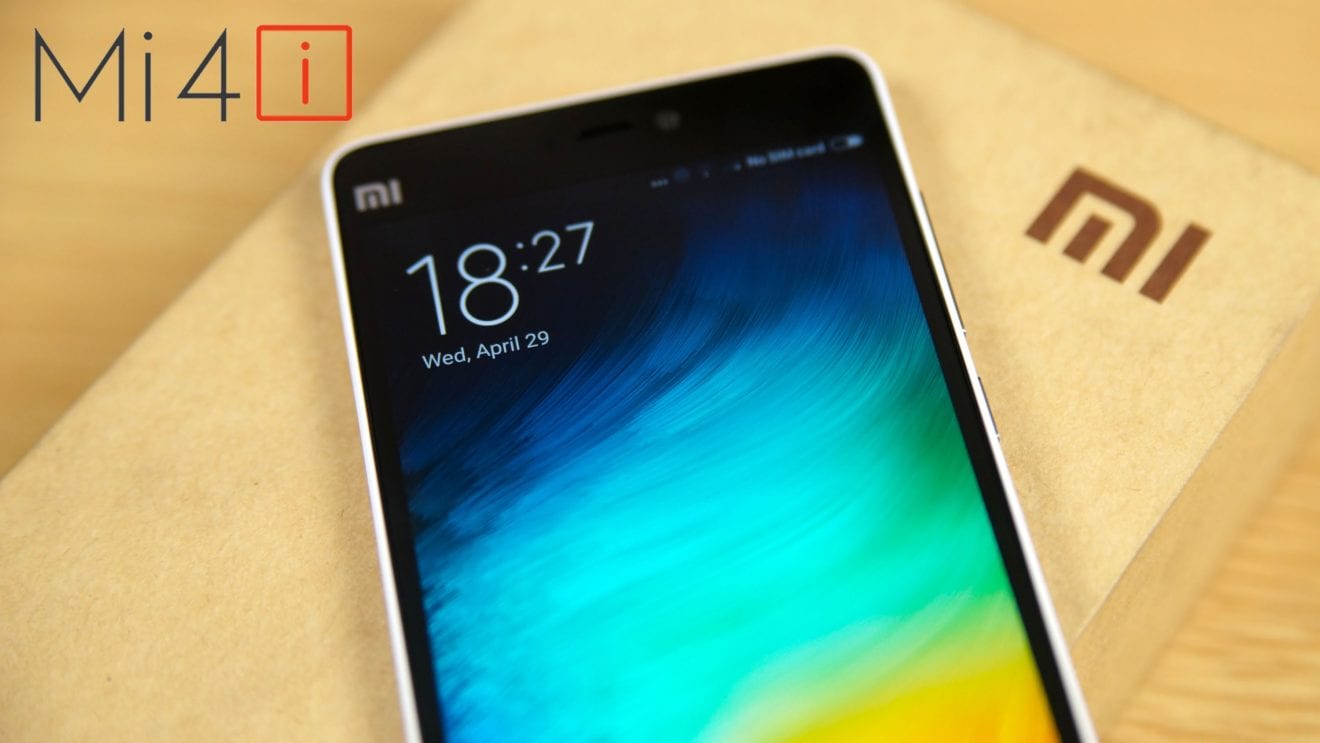
    Xiaomi was incredibly successful last year. The company managed to become China’s number one smartphone OEM and ship 61 million smartphones. Xiaomi is looking to improve upon that next year, and they’ve released a number of really compelling handsets thus far. The company has unveiled their flagship Mi Note phablets, along with a slew of other devices, like the Mi 4i for example. This is the first Xiaomi handset to make it to India before anywhere else, and it’s more than a decent mid-ranger, not to mention it’s quite affordable.

    Well, we’ve spotted another variant of Mi 4i in China recently, dubbed Mi 4C. The reports have been claiming that the ‘C’ stands for China, and the device has also surfaced on TENAA (China’s equivalent to the FCC) quite recently. The device was said to sport Qualcomm’s Snapdragon 808 64-bit hexa-core SoC, and a newly-leaked retail box of the device actually confirms that fact. If you take a look at the provided images, you’ll notice that not only the Snapdragon 808 is listed here, but some other details about the device as well. The box says that the Snapdragon 808 will be clocked at 1.8GHz, and that the device will ship with 3,000mAh battery. 4G LTE support will be on board as well, and the device will also sport the Type-C USB 3.0 port that we’ve seen on the OnePlus 2 (and a couple of other smartphones) recently.

    According to the previously-leaked AnTuTu listing of this device, this thing will be identical to its predecessor (aside from SoC, of course). The phone will sport a 5-inch 1080p (1920 x 1080) display, 2GB of RAM and 16GB of internal storage. The 13-megapixel shooter will be available on its back, and a 5-megapixel snapper will be located up front. Android 5.1.1 Lollipop will come pre-installed on this smartphone, and Xiaomi’s MIUI OS will be placed on top of it. We still don’t know which variant of MIUI will be installed though, MIUI did unveil MIUI 7 recently, but it’s still unknown if this phone will come with that version pre-installed. Either way, Xiaomi is expected to announce this handset soon, so stay tuned.

  • European Markets Dropped On Renewed China Worries

    European Markets Dropped On Renewed China Worries

    The European markets ended Monday’s session in negative territory, as renewed concerns over China weighed on investor sentiment. Concerns over the upcoming snap elections in Greece and the likelihood of a near-term U.S. interest rate hike also contributed to the negative mood at the start of the new trading week.

    The Financial Times reported that the Chinese government has decided to abandon attempts to boost the stock market through large-scale share purchases. Senior regulatory officials told the Financial Times China’s leaders feel they mishandled their efforts to rescue the stock market.

    The Chinese government resumed large-scale stock buying late in the trading day last Thursday to help the Shanghai Composite Index finish sharply higher, but officials said the government will refrain from further large-scale buying of equities.

    The Euro Stoxx 50 index of eurozone bluechip stocks decreased by 0.52 percent, while the Stoxx Europe 50 index, which includes some major U.K. companies, lost 0.30 percent.

    The DAX of Germany dropped by 0.38 percent and the CAC 40 of France fell by 0.47 percent. The SMI of Switzerland finished higher by 0.45 percent, but the FTSE of the U.K. was closed for a banking holiday.

    In Frankfurt, Volkswagen decreased by 1.14 percent. Japan’s Suzuki Motor Corp said that it would buy back the 19.9 percent stake it sold to the German automaker after an international court settled a dispute between the automakers over their soured partnership.

    BMW fell by 0.90 percent and Daimler lost 0.97 percent.

    Insurer Allianz rose by 0.18 percent, on reported that its infrastructure arm is weighing bids for London City Airport.

    RWE sank by 4.25 percent and E.ON dropped by 1.60 percent.

    In Paris, Renault surrendered 2.28 percent and Peugeot weakened by 1.19 percent. Car parts maker Valeo also decreased by 1.45 percent.

    Total tumbled by 0.91 percent and Technip lost 0.99 percent.

    Givaudan gained 0.73 percent in Zurich, after it agreed to acquire Induchem Holding, a cosmetic ingredient producer.

    Shares of NeuroVive Pharmaceutical AB plunged by 39.13 percent in Stockholm after the mitochondrial medicine company announced that it would not pursue development of CicloMulsion in the indication of acute myocardial infarction.

    Eni SpA climbed by 1.53 percent in Milan. The company announced over the weekend that it has discovered a massive natural gas discovery off the coast of Egypt.

    Eurozone inflation remained unchanged at a very low level in August as further fall in oil prices curbed its ability to move upward. Inflation came in at 0.2 percent in August, the same rate as seen in July and June, preliminary data from Eurostat showed Monday. It was forecast to ease to 0.1 percent.

    Germany’s retail sales rebounded in July to grow at the fastest pace in nine months, signaling that consumer spending boosted economic growth at the start of the third quarter. Retail sales advanced 1.4 percent on a monthly basis in July, Destatis reported Monday. This was the fastest growth since October 2014, when sales climbed 1.8 percent.

    Italy’s retail sales dropped for the second straight month in June, figures from the statistical office Istat showed Monday. Retail sales fell a seasonally adjusted 0.3 percent month-over-month in June, following a 0.2 percent decrease in the previous month. In April, sales had risen 0.7 percent.

    Greece’s retail sales declined in June after rising in the previous month, preliminary figures from the Hellenic Statistical Authority showed Monday. The volume of retail sales decreased 0.4 percent year-over-year in June, in contrast to a 4.1 percent sharp gain in May, which was revised down from 4.2 percent. In April sales had fallen 1.8 percent.

    China’s trade deficit in services widened in July, the State Administration of Foreign Exchange said Monday. The deficit on trade in services increased to $17.6 billion in July from $14.9 billion in June. At the same time, the merchandise trade showed a surplus of $46 billion in July.

    Business activity in the Chicago area unexpectedly grew at a slower rate in the month of August, according to a report released by MNI Indicators on Monday. MNI Indicators said its Chicago business barometer dipped to 54.4 in August from 54.7 in July. While a reading above 50 indicates growth, economists had expected the index to inch up to 54.9.

  • Hong Kong banks launch hotline to fight back against torrent of phone scams

    Hong Kong banks launch hotline to fight back against torrent of phone scams

    All retail banks in Hong Kong have set up hotlines for customers to verify the identities of their employees in a bid to battle a flood of phone scam cases.

    Banking chiefs said yesterday the hotlines – some exclusively for the purpose of verifying employees’ information – would be available through the websites of the Hong Kong Monetary Authority and Hong Kong Association of Banks, with each of the 21 retail banks also putting hotline information on their websites.

    Phone scams have evolved and increased in recent months, with scammers posing as bank employees trying to sell products to government departments and even the central government’s liaison office. Hongkongers have handed over more than HK$182 million over the past couple of months in cases that most often involve fake mainland officials.

    However, the authority’s deputy chief executive, Arthur Yuen Kwok-hang, said so far banks had received only 200 calls regarding cold-callers.

    “The numbers are low – much lower than we anticipated. I think this is because there isn’t this awareness among the public yet,” said Yuen.

    Yesterday, the Mandatory Provident Fund Schemes Authority – which handles the retirement funds of Hongkongers – received an inquiry about a suspicious call from its hotline. The MPFA confirmed the hotline only took incoming calls and reiterated that “it never contacts people to sell MPF products or set up meetings”.

    HKAB chairman George Leung Siu-kay said banks would never ask for full personal information of clients over the phone or by email.

    “[A bank employee] will only ask for partial information – like the last three digits of a Hong Kong identity card number,” said Leung. “They will never ask for passwords.” He also warned against calling back phone numbers on the caller ID.

    Leung said there were no statistics on the number of scam cases banks had dealt with since July, but they would “keep watch for suspicious transactions, especially among vulnerable groups”.

  • Vietnam leads SE Asian smartphone rush

    Vietnam leads SE Asian smartphone rush

    Vietnam is the fastest growing smartphone market in South East Asia, where sales topped $8bn in the first half of the year according to new figures.

    Data from market researcher GfK indicated that, overall, some 39.8m smartphones were sold in the region, up from 36.6m in the corresponding period of 2104.

    Sales volumes in Vietnam rose 27% in the first half of 2015 compared to the same period a year earlier to reach to total of 6m, making it the third largest smartphone market in the region, Inside Retail Asia reported.

    Thailand was the second-fastest growing market, up 13% to a total of 6.6m, a figure which also put in second place in terms of market size. The Philippines was the third fastest-growing market, up 10%.

    Indonesia, however, remains the largest market in terms of volume, with 14.9m units shifted in six months.

    Sales growth was sluggish in the mature markets of Singapore and in Malaysia, where consumers have cut back on their spending since the introduction of a general sales tax.

    GfK has also started tracking the mobile handset market in Myanmar and reported that 3m units had been sold in the first half, with most of these being smartphones (89%).

    “The availability of a wide range of lower price options nowadays have made it possible and much more affordable for price-sensitive consumers in these developing markets to switch over and own their first smartphone,” said Gerard Tan, GfK account director for technology.

    He pointed out that in the first half of 2013 just 15% of smartphones sold in the region had cost under $100, a proportion that has now climbed to 35%.

    Indonesia, he added, was the country with the most number of entry level smartphone brands and consumers in the region.

    This transformation is being almost entirely driven by Chinese brands, which now account for around 25% of the region’s market compared to 4% in 2013.

    “The perception of Chinese brands has been elevated considerably as a result of their heightened marketing campaigns and the opening up of dedicated showrooms and retail counters,” Tan said.

  • Thai AirAsia sets up Utapao base

    Thai AirAsia sets up Utapao base

    Thai AirAsia (FD, Bangkok Don Mueang) has set about establishing a base in Utapao with the launch of flights to Hangzhou, China on September 1. The 3x weekly charter service runs until October 24.

    Airline Route indicates the AirAsia (AK, Kuala Lumpur Int’l) subsidiary will also launch a 4x weekly service to Nanning on September 25 followed by a 3x weekly Nanchang service on September 26.

    Flights are on-board an A320-200.

    Currently, Thai AirAsia serves forty-four destinations spread across eleven countries including China, India, Macau, Myanmar, Vietnam, Hong Kong, Malaysia, Cambodia, Singapore, and Indonesia. It has four bases in Thailand, Bangkok’s Don Mueang airport, Chiang Mai, Krabi and Phuket.

  • ‘M’ Retaurant groups up the glam factor on the Shanghai Bund

    ‘M’ Retaurant groups up the glam factor on the Shanghai Bund

    ‘M’ Restaurant Group is pleased to announce the launch of Glam, a sophisticated new Shanghai dining lounge & bar at 5 on the Bund – the same address that has been home to Shanghai institution and Bund pioneer, M on the Bund restaurant.  

    ‘M’, spearheaded by Shanghai’s legendary entrepreneur Michelle Garnaut, is famed for setting new standards of dining in Asia. Her restaurant collection began with the opening of M at the Fringe in Hong Kong (1989), from which she went on to pioneer the revival of sophistication in Shanghai with world famous M on the Bund (1999), and then further enhance Shanghai’s glamorous nightlife scene with the launch of The Glamour Bar (2006).  From here, she brought fine dining to the heart of Beijing’s Tian’anmen Square, with the opening of Capital M, (2009).

    “We look forward to bringing renewed life and energy to the heart of The Bund with an intoxicating mix of innovative and contemporary sharing plates (different from M on the Bund), fabulous cocktails, and the most extensive selection of wines by the glass offered in Shanghai.  There’s something for everyone…over 18 years of age. It’s a fun place for grownups!” says Michelle Garnaut.

    The menu, created under the watchful eye of Executive Chef Hamish Pollitt offers a delicious array of modern food designed for sharing, at prices that will have guests coming back often. With each menu, he respects the seasons, highlights local ingredients and introduces something new every month.

    Depending on the size of their appetites, guests are advised to choose one or two items from each of the sections, where favourites include the Veggie Pakoras andSweet Eggplant Pickle (RMB 36), Smoking Salmon and Salmon Caviar (RMB 48), Chili Salt-Crusted Bean Curd & Black Beans (RMB 38), Thai Tah Tah (RMB 68), 18-hour Lamb Shoulder Rogan Josh (RMB 128), and Ginger-Glazed Duck Dome Pie (RMB 108).

    The playful ‘Folly Trolley’ is stacked with a revolving selection of desserts including sweet Verrines (RMB 42) served in M’s beautiful colourful cut glasses, Alfonso’s Exploding Mango Pannacotta, Carmen Miranda’s tres fash Iles Flotante, Josephine Baker’s Chocolat Mousse, and Pavlov’s Dog … in a glass.

    A selection of madly modernistic and dramatically eclectic cocktails are on offer alongside the classics. At the vintage bar experienced mixologists are busy concocting delicious creations, many showcasing Glam Manager David’s crafted bitters, such as Saffron & Spice, Fellini Martini, Evening Thyme, Fire & Ice, or Mrs Peacock’s Folly.

    Guests enter the sensuous space through a glittering crystal waterfall, revealing low tables and dark jewel tone interiors inspired by the feathery tail of a Peacock. Designers Duncan Miller Ullmann (DMU) have ultimately created a warm and alluring interior. A comfortable mix of bespoke furniture and dark mirrored ceilings emphasize a series of works exclusively designed for Glam by famed cinematographer / artist / writer Christopher Doyle. It’s Glam on the Bund!

  • Carrefour online store + Carrefour easy store

    Carrefour online store + Carrefour easy store

    French retailer Carrefour is embracing advanced technology to bring shoppers closer to its services in the fast-changing retail landscape.

    In June, the company launched its second Easy Carrefour store in Xuhui District. It’s a new initiative to cater to changing consumer habits and demand for neighborhood services in locations near residential or commercial areas.

    By the end of this year, Carrefour plans to open about 10 Easy Carrefour stores in Shanghai, Olivier Tollet, new format projects director of Carrefour China, told Shanghai Daily.

    “We have a much bigger plan but currently we’re still in the pilot phase,” he said.

    Regarding its e-commerce operations, Carrefour also launched its online shopping store www.carrefour.cn for its Shanghai customers in mid June and Tollet said he is pleased to see it working smoothly during the trial period.

    Shopping online

    “The basic idea of our website is to bring Carrefour products closer to consumers and all the products will be available for online shoppers,” he said.

    “Our intention is to duplicate the service wherever there’s a Carrefour presence in China, but we’ll go step by step for both formats,” he added.

    Easy Carrefour is offering products in three categories — immediate consumption, take-away, and groceries.

    By covering these categories, Easy Carrefour hopes consumers can find the right products and services when they need them.

    The Easy Carrefour store on Chaling Road N. also provides mobile top-up and credit card reimbursement in an effort to link consumers with online-to-offline services.

    Carrefour is looking for new locations for its Easy stores, and Tollet said they are targeting a combination of residential areas, transportation hubs and office areas.

    People living around or people passing by are basically the key customers Easy Carrefour aims to serve. Easy Carrefour is a new format adapted for people who value their time and convenience while shopping. It’s also adjusting the operations of the Easy Carrefour store step by step, with more services likely in the future.

    Commenting on Carrefour China’s e-commerce operations, Tollet said logistics is one of its key strengths as the chain can rely on its existing stores in more than 70 cities all over China.

    Merchandise ordered by consumers will be delivered from stores to their doorsteps, while packages ordered from e-commerce websites have to go through several dispatch hubs before delivery.

    Pick-up stations

    Currently, three out of Carrefour’s 29 outlets in Shanghai act as pick-up stops or stations for return of goods.

    Earlier this year, Carrefour China restructured its merchandise department and set up six territory merchandise centers to streamline supply chain management and leverage the advantages of a centralized procurement model.

    “The restructuring of the merchandise team is aimed at having new logistics capability to support the development of new formats such as our Easy stores and online shopping website,” Tollet added.

    Carrefour’s e-commerce operation is expected to launch in Beijing at the end of this year and eventually will be available all over the country.

  • Chinese shoppers keep Japan’s tills ringing

    Chinese shoppers keep Japan’s tills ringing

    According to the English-language Japan news site RocketNews 24, a few weeks ago two families got into a fight at a large retail outlet in Kobe over disposable diapers. Both families had come to the store when it opened in order to buy as many diapers as they could, only to discover that the store had already sold out. Apparently these two families knew each other from previous diaper-buying binges and harbored mutual resentments that turned physical. A store employee called the police, who broke up the fight. Neither party filed a complaint or disclosed what the argument was about.

    RocketNews speculates that the two families resell the diapers in China, since both have members who are Chinese nationals. Japanese diapers are particularly popular in China, and, in fact, this particular brand — Merries, made by Kao — is sold in China. Nevertheless, there’s obviously enough demand to support a lucrative resale market.

    It’s not as if the Chinese don’t make and sell their own disposable diapers, but when it comes to their children, consumers will pay a premium for Japanese products because they don’t trust domestic makers. This sensibility has been growing since 2008, when locally made baby formula caused the deaths of six children and sent thousands to the hospital after somebody adulterated it with melamine to make it seem as if the protein content was higher.

    It is illegal to import Japanese formula made in certain prefectures because of radiation fears, but apparently there’s substantial black-market trade in the product. Last month, 425 kg of smuggled formula made in Gunma Prefecture was discovered by authorities in Hunan province with an estimated retail value of ¥800,000.

    It’s often said that despite the diplomatic frictions that exist between Japan and China, they are dependent on each other economically and, as far as Japan’s dependence goes, it is very much influenced by Chinese consumers’ trust of Japanese products, which runs pretty deep.

    Some economists thought that China’s stock market plunge and the resulting government-approved devaluation of the yuan would hurt sales of Japanese goods both in China and in Japan, where Chinese tourists seem to be supporting the Japanese economy. But according to Luo Yiwen, the president of home electronics retailer Laox, speaking at an Aug. 13 news conference, the stock and currency issues aren’t having any negative effect on sales at his store’s duty-free shop, which caters mainly to Chinese visitors. As it stands, sales for January to June at the shop have more than doubled since the same period in 2014 to ¥45 billion, with profits increasing nearly eightyfold to ¥4.6 billion. Laox received 1.49 million Chinese customers last year, four times the number for the previous year, and “much more than we expected,” he said. He predicts not only that the devaluation of the yuan will not hurt sales, but that they’ll go up even more. He projects a net profit this year of ¥8.3 billion on sales of ¥90 billion.

    The two reasons for the strong Chinese tourist market are the lower yen and fewer visa restrictions for Chinese tourists. The Nihon Keizai Shimbun cites a third reason: more cheap flights between China and Japan thanks to the proliferation of low-cost carriers. The economic value of Chinese tourism in Japan bottomed out in 2011 at ¥813 billion due to the March 11 disaster, but rebounded to ¥1.8 trillion the next year. In 2014 the economic value was ¥2.3 trillion.

    In that year, 2.4 million Chinese came to Japan, which is actually less than the number of visitors from Taiwan, which was 2.8 million. The difference is that per person, the Chinese spent more: ¥231,000 compared to ¥125,000 for the Taiwanese and ¥147,000 for visitors from Hong Kong, who are counted separately from mainlanders.

    In fact, Chinese account for one-third of all the tourist money spent in Japan, and this figure is rising. The amount of money Chinese visitors spent increased by 83 percent from 2013 to 2014. More to the point, 55 percent of the money Chinese spend in Japan is for shopping. For all tourists, the average spent on shopping is 35 percent. In contrast, Chinese spend less on accommodation than visitors from other countries, which suggests they are more concerned with buying stuff than sightseeing.

    Also, according to a Tourism Agency survey cited in the Nikkei, it isn’t just rich Chinese who are spending. More middle-class Chinese are coming and buying things. Broken down by category, the agency says that 76 percent of Chinese buy “confections,” 63 percent cosmetics and perfume, 55 percent food, liquor and cigarettes, and 52 percent drugs and toiletries. Only 37 percent buy appliances, but when they buy them, they buy a lot. The average spent by all foreign tourists on electronics is ¥65,000. Chinese on average spend ¥88,000.

    Chinese tourists, in fact, seem to be single-handedly keeping Japanese department stores in business. Although airport duty-free shops are the main venue for Chinese purchases followed by “shopping centers,” department stores that offer tariff-free sales to foreigners are a strong third and, according to the Nikkei, the reason is that they know the designer brands they buy in department stores are “authentic,” meaning not knock-offs. (For what it’s worth, both real designer goods and their fake counterparts tend to be made in China.) And if it seems unwise to purchase such goods in department stores, which tend to charge more, they’re likely still cheaper than those bought in China, which may be subject to tariffs.

  • Online to offline seen as a marriage of convenience

    Online to offline seen as a marriage of convenience

    The eating habits of urban Chinese have changed dramatically since the proliferation of takeaway food delivery apps brought restaurant-quality meals to almost everyone’s front door.

    Engineer Zhao Baijun, 29, now eats in more often than he eats out.

    “Before these apps, most restaurants did not offer deliveries. I had very few choices, mostly fast food chains,” he said.

    Besides the convenience for busy people like Zhang, online to offline means extra sales for traditional food suppliers and beyond. Connecting online to offline is the new Holy Grail for the biggest players in China’s Internet shopping explosion, whether they be domestic or overseas operators.

    Recently, China’s largest e-commerce company Alibaba and electronics retailer Suning agreed a multi-billion dollar deal on platforms, logistics and payments.

    Alibaba will pay about 28 billion yuan (US$4.5 billion) for 19.99 percent of Suning, becoming its second-largest shareholder, while Suning will buy no less than 28 million new shares in Alibaba for 14 billion yuan.

    Suning owns more than 1,600 stores and 3,000 aftersales service centers which will now be “seamlessly connected” with Alibaba’s online network. A Suning online sales center on Tmall.com, part of Alibaba’s retail operation, completes the new setup. The arrangement was described as a “wedding” by Alibaba chairman Jack Ma.

    “If we do not integrate with offline, we will not have a future,” he said. The deal is set to reshuffle China’s e-commerce deck and help Alibaba in its battle against archrival JD.com.

    E-commerce companies are queueing up to find stores to align themselves with.

    In its quest for existing networks of physical stores, JD.com announced it had taken a 10 percent stake in domestic supermarket chain Yonghui Superstores for 4.31 billion yuan.

    Early last year, Alibaba became the main shareholder of Hong Kong-listed department store operator Intime. In July, after the cap on the number of shares foreign firms can hold in Chinese e-commerce platforms was lifted, Walmart took a 100 percent stake in Yhd.com.

    The local advantages of Yhd.com combined with Walmart’s global procurement resources, retail stores and supply chain will be a huge fillip to Walmart’s campaign to win over China’s consumers.

    For Zhao, the most important aspect of the rapidly evolving industry is that he can have a decent meal in the comfort of his own home.

  • Amazon lures investors back from Alibaba

    Amazon lures investors back from Alibaba

    China is no longer in vogue with e-commerce investors, as money returns to the US and Amazon.com following a brief fling with Alibaba Group Holding and its 367 million customers.

    With a market value of more than US$240 billion, Amazon is once again the world’s most valuable e-commerce company, a spot it lost after Alibaba’s record-setting US$25 billion initial public offering in September. Alibaba’s current market capitalisation is at about US$180 billion, down more than 30 per cent from its peak in November.

    Alibaba reported earnings on Wednesday showing that quarterly sales grew at their slowest pace in three years, with transaction volume falling short of estimates.

    Investors viewed Alibaba as a profitable alternative to the free-spending ways of Jeff Bezos, Amazon’s chief executive officer. Now, concerns are focused on China’s cooling economy and slower consumer spending, as well as Alibaba’s reluctance to aggressively pursue business in the US. Meanwhile, Amazon impressed investors last month when it reported a surprise second-quarter profit, thanks to its fast-growing cloud-computing business and spending discipline.

    “You can’t overlook the China slowdown,” said RJ Hottovy, an analyst at Morningstar Inc. in Chicago. “Chinese consumer spending trends are in a slowdown.”  Among investors, JPMorgan Chase & Co, Wellington Management Group and TIAA-CREF Investment Management reduced their share holdings in Alibaba by an average of 42 per cent in the past three quarters, while increasing their holdings in Amazon by 65 per cent, according to data compiled by Bloomberg.

    For now, the e-commerce giants are mostly steering clear of each other’s home turf. Amazon is focusing its overseas growth ambitions on India after investments in China failed to gain traction. Alibaba in June announced plans to sell its US website 11 Main, and is looking to Russia and Brazil to expand. Rather than sell Chinese goods in the US, Alibaba is focused on encouraging American businesses to sell into China.

    While Alibaba initially benefited from interest in a new investment opportunity at its market debut, Amazon has the advantage of being publicly traded for almost two decades, said Kirthi Kalyanam, director of the Retail Management Institute at Santa Clara University.

    “Familiarity creates a big advantage for Amazon,” Mr Kalyanam said. “This is Wall Street saying, ‘If you think Alibaba is going to come into the US and take on Amazon, think again.’”