Tag: China

  • China Jo-Jo Drugstores Announces $3 Million Registered Direct Offering

    China Jo-Jo Drugstores Announces $3 Million Registered Direct Offering

    China Jo-Jo Drugstores, Inc., a leading China-based retail and wholesale distributor of pharmaceutical and health care products through its own online and retail pharmacies, today announced that it has entered into definitive agreements with a single health-care focused institutional investor to purchase an aggregate of $3 million of its common stock in a  registered direct offering at $2.50 per share.  Additionally, for each share of common stock purchased, the investor will receive a Warrant to purchase one-half of a share of the Company’s common stock at an exercise price of $3.10 per share, which shall be initially exercisable six months following issuance and expire five years from the date of issuance.  The closing of the offering is expected to take place on or about July 23, 2015, subject to the satisfaction of customary closing conditions.

    H.C. Wainwright & Co., LLC acted as exclusive placement agent in connection with the offering.

    The net proceeds from this offering will be used for working capital purposes.  A shelf registration statement relating to the shares and warrants issued in the offering has been filed with and declared effective by the Securities and Exchange Commission (the “SEC”). A prospectus supplement relating to the offering will be filed by the company with the SEC. Once it is filed, copies of the prospectus supplement, together with the accompanying prospectus, can be obtained at the SEC’s website.

    This press release does not constitute an offer to sell or the solicitation of an offer to buy any securities of China Jo-Jo in this offering. There shall not be any offer, solicitation of an offer to buy, or sale of securities in any state or jurisdiction in which such an offering, solicitation, or sale would be unlawful prior to registration or qualification under the securities laws of any such state or jurisdiction. Any offering will be made only by means of a prospectus, including a prospectus supplement, forming a part of the effective registration statement.

    China Jo-Jo Drugstores, Inc., through its own retail drugstores, wholesale distributor and online pharmacy, is a leading retailer and wholesale distributor of pharmaceutical and healthcare products in China. As of March 31, 2015, the Company had 59 retail pharmacies in Hangzhou. The Company’s wholesale subsidiary not only supplies its retail stores, but also distributes drug and other healthcare products to other drugstores and drug vendors.

    Forward Looking Statement

    Statements in this press release regarding the Company that are not historical facts are forward-looking statements and are subject to risks and uncertainties that could cause actual future events or results to differ materially from such statements. Any such forward-looking statements, including, but not limited to, financial guidance, are made pursuant to the safe harbor provisions of the Private Securities Litigation Reform Act of 1995. These statements can be identified by the use of forward-looking terminology such as “believe,” “expect,” “may,” “will,” “should,” “project,” “plan,” “seek,” “intend,” “anticipate,” the negatives thereof, or comparable terminology.

    Such statements typically involve risks and uncertainties and may include financial projections or information regarding the progress of new product development. It is routine for the Company’s internal projections and expectations to change as the quarter and year progresses, and therefore it should be clearly understood that the internal projections and beliefs upon which the Company bases its expectations may change. Although these expectations may change, the Company is under no obligation to inform you if they do. Actual results could differ materially from the expectations reflected in such forward-looking statements as a result of numerous factors, including the risks associated with the effect of changing economic conditions in the People’s Republic of China, variations in cash flow, reliance on collaborative retail partners and on new product development, variations in new product development, risks associated with rapid technological change, and the potential of introduced or undetected flaws and defects in products. Readers are referred to the reports and documents filed from time to time by the Company with the Securities and Exchange Commission for a discussion of these and other important risk factors that could cause actual results to differ from those discussed in forward-looking statements.
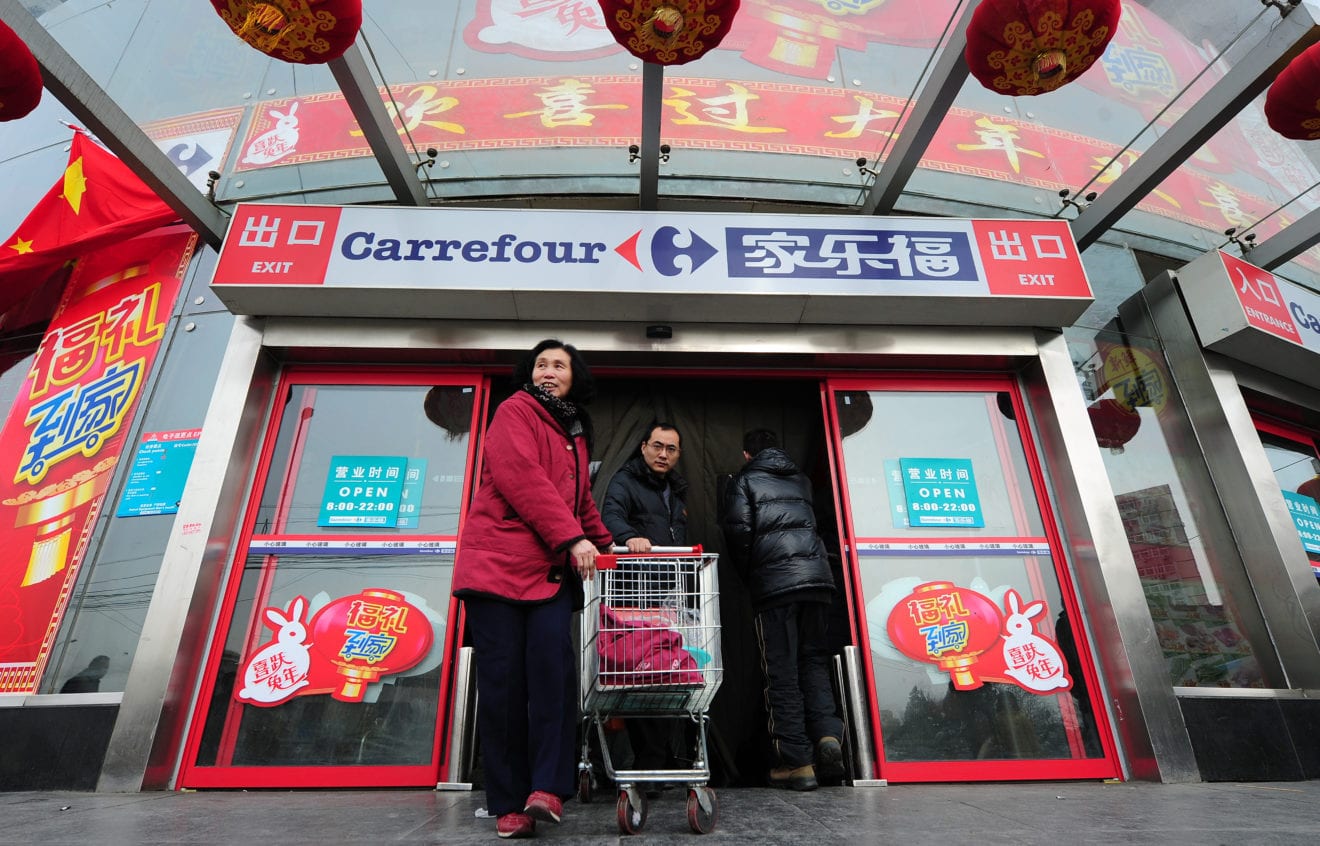

  • Carrefour’s Six China Distribution Centers To Be Opened Within Two Years

    Carrefour’s Six China Distribution Centers To Be Opened Within Two Years

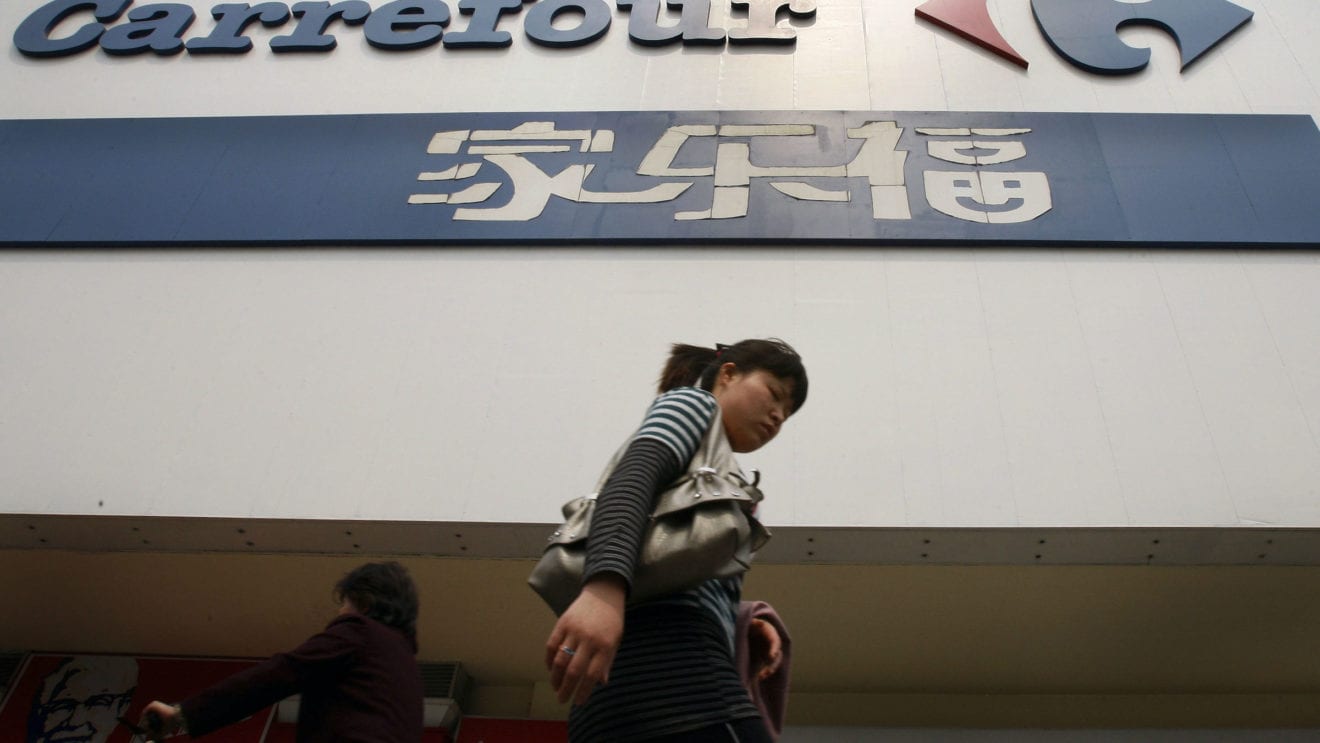
    The world’s leading supermarket retailer Carrefour announced that the company will enhance investments in logistics distribution centers in mainland China over the next two years.

    Carrefour’s new distribution center in Kunshan was completed in June 2014, serving the East China region; and its distribution center in Chengdu was completed in April 2015, serving the West China region. In 2015, the company plans to build two more distribution centers: one in Wuhan, Hubei province, and the other is responsible for the Beijing and Tianjin region. In 2016, Carrefour expects to have two more logistics distribution centers for Northeast region and South China region, respectively.

    By the end of 2016, Carrefour will have six modern distribution centers in the Chinese mainland which will lead the Chinese retail industry sector by construction scale and speed-to-market.

    Carrefour’s Kunshan logistics distribution center, which has already been completed, covers 60 hypermarkets in Jiangsu, Zhejiang, and Shanghai. It adopts the world’s most advanced voice picking system, which boasts a voice picking accuracy of 99.97%.

  • China’s 2Q economic growth steady at 7 percent

    China has released figures of its economic growth for the second quarter showing the country’s economy has grown at a steady seven percent, its weakest performance since the global crisis but slightly better than expected. Citibank said recently that it believes China’s actual growth rate could be closer to 5%.

    The Chinese economy has posted a 7-per cent growth in the second quarter compared to a year ago quarter, beating market predictions of a 6.8-per cent expansion and demonstrating that the world’s second-largest economy is on a stable path. They suggested the Chinese government would need to continue implementing a “proactive fiscal policy”, including further interest rate cuts, in the second half of the year, in order to hit its investment targets.

    Suan Teck Kin, an economist at UOB, took the data at face value, raising his full-year growth forecast to 7.1 percent from 6.8 percent. Late last month, the People’s Bank of China (PBOC) cut interest rates and the reserve requirement ratio (RRR) for some lenders in a bigger-than-expected easing package.

    Slowing growth in trade, investment and domestic demand has been compounded by a cooling property sector, deflationary pressure, and the recent equity market panic, so signs of improvement may help buttress faltering investor confidence in the effectiveness of Beijing’s management.

    China’s total trade declined in the first half of this year, official data showed Monday, falling well short of the government’s targets.

    The National Bureau of Statistics data showed that growth in the June quarter was 1.7 per cent, up from an upwardly revised 1.4 per cent in the previous quarter.

    Retail sales quickened to 10.6 per cent, compared with expectations for a 10.2 per cent gain.

    In light of the figures Nomura lifted its annual GDP forecast from 6.8 percent to 6.9 percent.

    Retail investors have sent $3.4 billion to China-focused mutual funds and ETFs for the year to date, the largest amount since 2009, according to Lipper data.

    It is not only the government reporting a warmer second quarter; the recent independent China Beige Book survey also reported signs of a broad-based recovery for the period, which it said was largely driven by growth in the interior provinces.

    It is higher than the growth rate of the industrial sector, or the secondary industry, that expanded by 6.1 percent.


  • Hong Kong Is Key Link in Ivory Trade

    Hong Kong Is Key Link in Ivory Trade

    A new report from conservation group Save the Elephants shows Hong Kong has more ivory products for sale than any other city in the world. The group says the illegal export of these products to mainland China is undermining that government’s efforts to stop the ivory trade.

    According to the report released Thursday in Nairobi, researchers counted more than 30,000 ivory items on sale in Hong Kong in 72 different retail outlets. Most of the items are carved jewelry and figurines, sold to tourists at luxury hotels and shops.

    In Hong Kong, the sale of ivory from registered stocks is permitted by law, but export to mainland China is not.

    Illegal smuggling

    Researchers found 90 percent of the ivory being sold in Hong Kong is being bought by customers from the mainland. Much of it is then smuggled illegally into China.

    Save the Elephants founder Iain Douglas-Hamilton said the practice is damaging to China’s efforts to stop demand for elephant ivory.

    “I think the future of Africa’s elephants actually lie in the hands of China. Hong Kong is part of China, and it is undermining bans that are increasingly being deployed in China,” he said.

    Douglas-Hamilton said 100,000 elephants were killed across Africa for their ivory between 2010 and 2012. Most of the slaughter is driven by demand in Asia.

    Hong Kong has not legally imported ivory since 1990; new items are carved and sold from existing stocks.

    Although the report does not conclude that Hong Kong has been marketing illegal ivory, conservationists have suggested traders in the city may be slipping poached ivory into their stocks.

    Seized shipments

    Report lead researcher Esmond Martin said Hong Kong is a known transit point for illegal ivory, and notes authorities there have seized several large shipments from Africa.

    “With these large consignments being intercepted in Hong Kong, almost all of them, according to the government and to the research that we have carried out, is going to mainland China, almost all of it,” said Martin. “And this is an extremely important point. But the question to ask is how much is going through Hong Kong that is not being picked up? And that is we do not really know much about.”

    Martin said some of the larger shipments recently seized in Hong Kong originated from Kenya, Tanzania and Togo.

    He said corruption along the supply line, starting in the national parks where elephants live, remains one of the most pressing challenges to stopping the ivory trade.

  • Metro China expands into Deyang

    Metro China expands into Deyang

    Metro China has opened its eighth wholesale store in West China.

    The new outlet is located in Deyang, Sichuan, described as the “Heavy Duty Equipment Capital” of China.

    “Deyang is a center for manufacturing, and the local economy has seen phenomenal growth in the past few years.” said Jeroen de Groot, president of Metro China.

    “Aiming to be the Champion for Independent Business, Metro China is well positioned to support Deyang’s growing number of small and medium-sized businesses by providing high-quality and safe products, as well as professional solutions and excellent services.”

    Metro entered West China in 2001 by opening two stores in Chongqing and Chengdu. The company opened its second store in Chongqing in 2013, which is also the wholesaler’s 750th store worldwide. With the opening of the Deyang store, Metro will introduce its Cash & Carry new store concept, meanwhile its online store will also open to local customers on the same day to better meet their needs.

    True to the wholesaler’s commitment to local sourcing, Metro has built close relationships with local suppliers through deep roots established in Sichuan over the past years. Hengdu Beef and Luzhou Langjiu Liquor are among the best-selling products in Metro stores throughout the year. Local vegetables and fruits in Sichuan, including kiwifruit, lemon and mango, are purchased and distributed to Metro stores nationwide through Metro’s professional logistics system to provide authentic Sichuan flavor to the customers.

    The new store has a sales area of nearly 5500 sqm, offering more than 19,200 items.

    A feature of Metro Deyang is the coldness in food related display areas, reflecting the importance of the cold chain to food freshness and high quality. The store has multi-temperature areas to meet the demand of different products, such as 0 Celsius – 4 Celsius for fresh meat, 5 Celsius – 7 Celsius for dairy products, etc. If customers want to walk into the cold storage areas to select products, they may borrow clean cotton-padded jackets, considerately prepared by the store for customers’ convenience.

    The store also sells a wide range of non-food products, including Seasonal, Kitchen, Cooking & Table, Apparel, Office & Media, and Business & Home Care, satisfying customers’ various needs.

    To meet expectations of the customers, especially small and independent businesses, Metro Deyang store adopts a wholesale pricing scheme. On top of the already competitive shelf prices, customers receive five per cent off if they buy three of the same item, and up to 20 per cent off on six of the same on selected items, truly buying more with better prices.

    The new store features a Metro Cafe, Welfare & Gifting Showroom, Express Delivery, scan pole, information counter and complimentary in-store WiFi.

  • Carrefour China sales slip

    Carrefour China sales slip

    French-headquartered retailer Carrefour says its Asian sales rose 13 per cent in the second quarter of this year.

    But Carrefour China struggled during the quarter, its sales down 11.4 per cent measured organically and 12.3 per cent on same store sales basis.

    The overall Asia figure benefited from a positive currency effect, with organic sales down 8.6 per cent.

    In Taiwan, sales grew for the second consecutive quarter, both same store and organic sales rose, by 2.1 per cent and 1.4 per cent respectively.

    The company said the China market was affected by slowing consumption nationwide.

    “We are continuing the roll-out of our action plan in the country,” the company said in its sales statement.

    That plan includes enhancing its logistics and distribution centers in Mainland China over the next two years. After opening new centers in Kunshan in June 2014 and Chengdu last April, Carrefour China plans two more in Wuhan, Hubei, and another in Beijing serving the capital and the Tianjin region this year.

    Two more will follow in 2016 serving the northeast and South China regions.

    Carrefour says when complete its six center distribution network will be the best in China’s retail industry, based on scale and speed to market. The centres will use advanced voice-picking technology.

  • Uniqlo denies video role

    Uniqlo denies video role

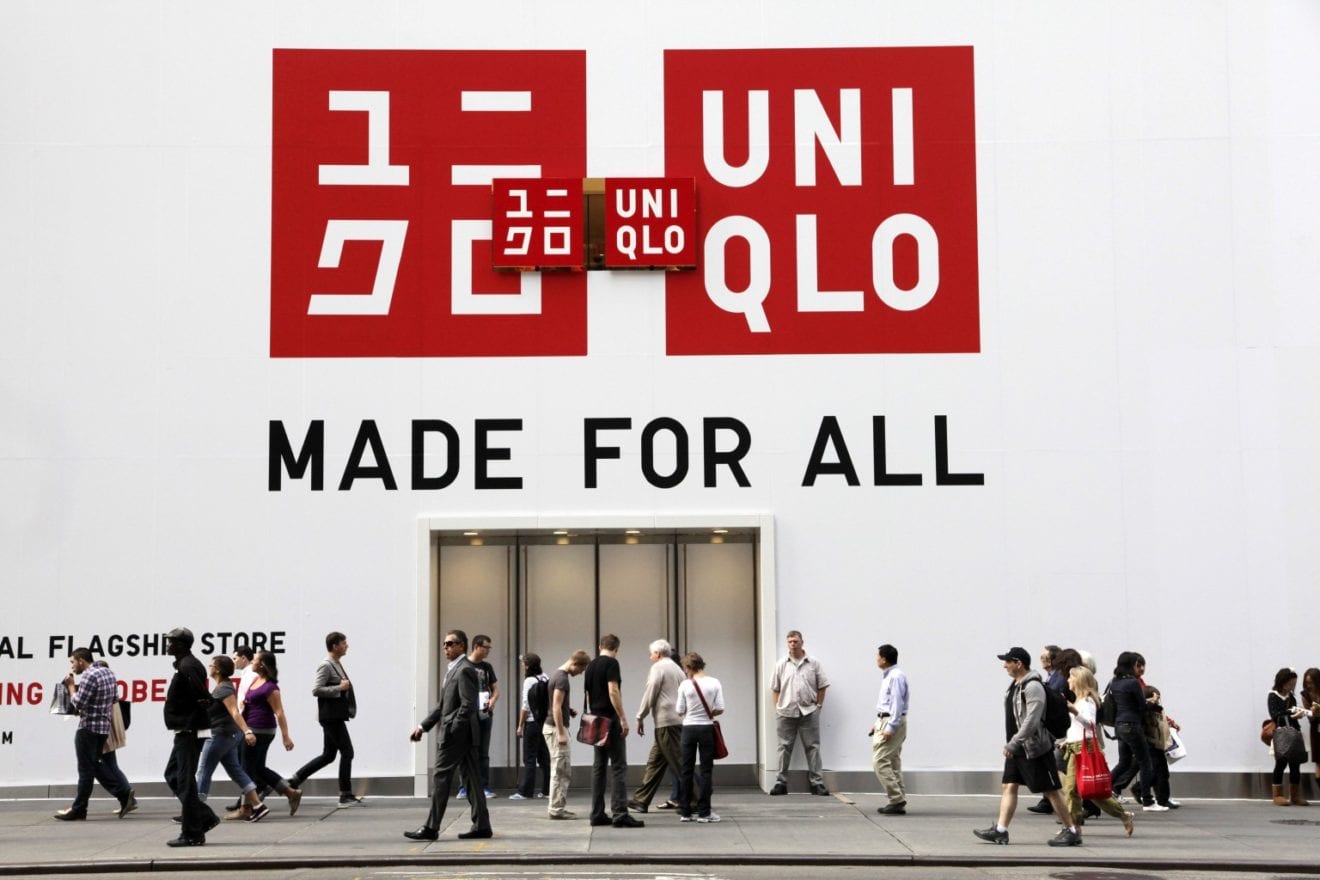
    Beijing police have arrested five people they say played a role in the filming of a video of a couple having sex in a Uniqlo fitting room in China’s capital.

    The sheer number of people involved in the video, which has gone viral on social media networks around the world, has raised speculation the apparel retailer was somehow involved behind the scenes in engineering the video as a publicity stunt.

    But the company has strenuously denied it had anything to do with the one minute long production, or endorses it. And such a viral campaign certainly does not fit with the company’s ethical positioning or its record of community involvement and sponsorships.

    Some Chinese media say the police “suspect that the case may possibly be a publicity stunt by Uniqlo”, one going so far as to quote a Beijing lawyer saying the company could face a fine of between 200,000 and 1 million RMB (US$32,000 and $165,000) and have its trading licence revoked if it was found to be involved.

    In a statement (not issued through Uniqlo’s normal media media channels) Uniqlo reportedly condemned the filming.

    Since the video was uploaded, attracting attention from news organisations worldwide, the Sanlitun flagship in which it was filmed has become something of a tourist attraction, with people posing for photographs outside.

    The young couple who had reportedly “only just met” were quickly identified via social media and have become celebrities on Chinese social media networks, albeit they have now reportedly been arrested and charged with indecency.

    From censored stills posted online by news media outlets, the video appears to have been filmed entirely by mobile phone. So the involvement of an additional three people is puzzling unless they were responsible for its spread or reposting, rather than production as reported in China.

    Meanwhile, Chinese authorities have summoned representatives of Tencent and Weibo to discuss how the video was so widely shared and viewable on its networks. Chinese law prohibits pornography.

  • China retail sales stabilise

    China retail sales stabilise

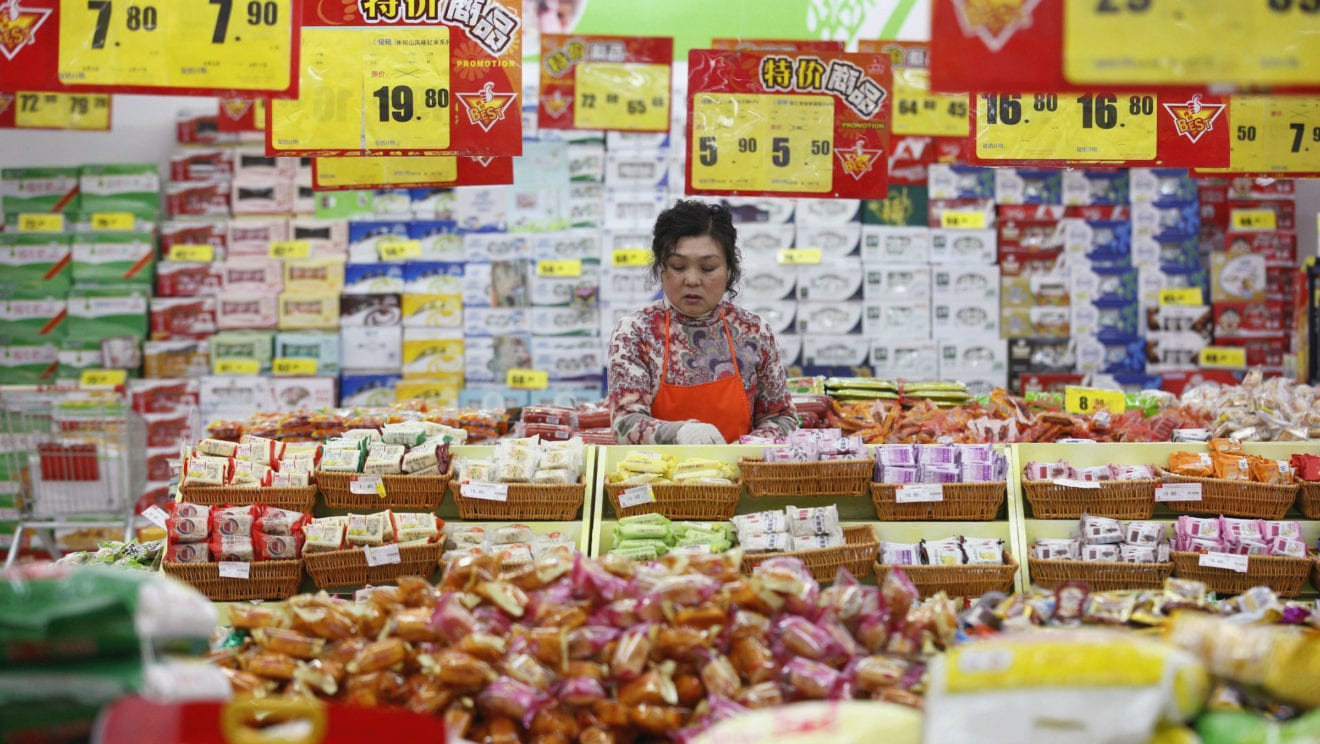
    China retail sales growth is stabilising.

    Figures from the National Bureau of Statistics show a 10.4 per cent year on year growth rate in the first half of 2015, to US$2.32 trillion.

    That rate is a negligible 0.2 percentage points lower than the rate seen in the first quarter.

    In the latest month, June, retail sales rose by 10.6 per cent, half a percentage point ahead of May.

    The biggest mover was the catering sector, which recorded an 11.5 per cent year on year rise in the first six months of 2015. ‘Other consumer products’ was the next best performing category with growth of 10.3 per cent.

    Online retail sales soared 39.1 per cent.

  • Kappa China sales soar

    Kappa China sales soar

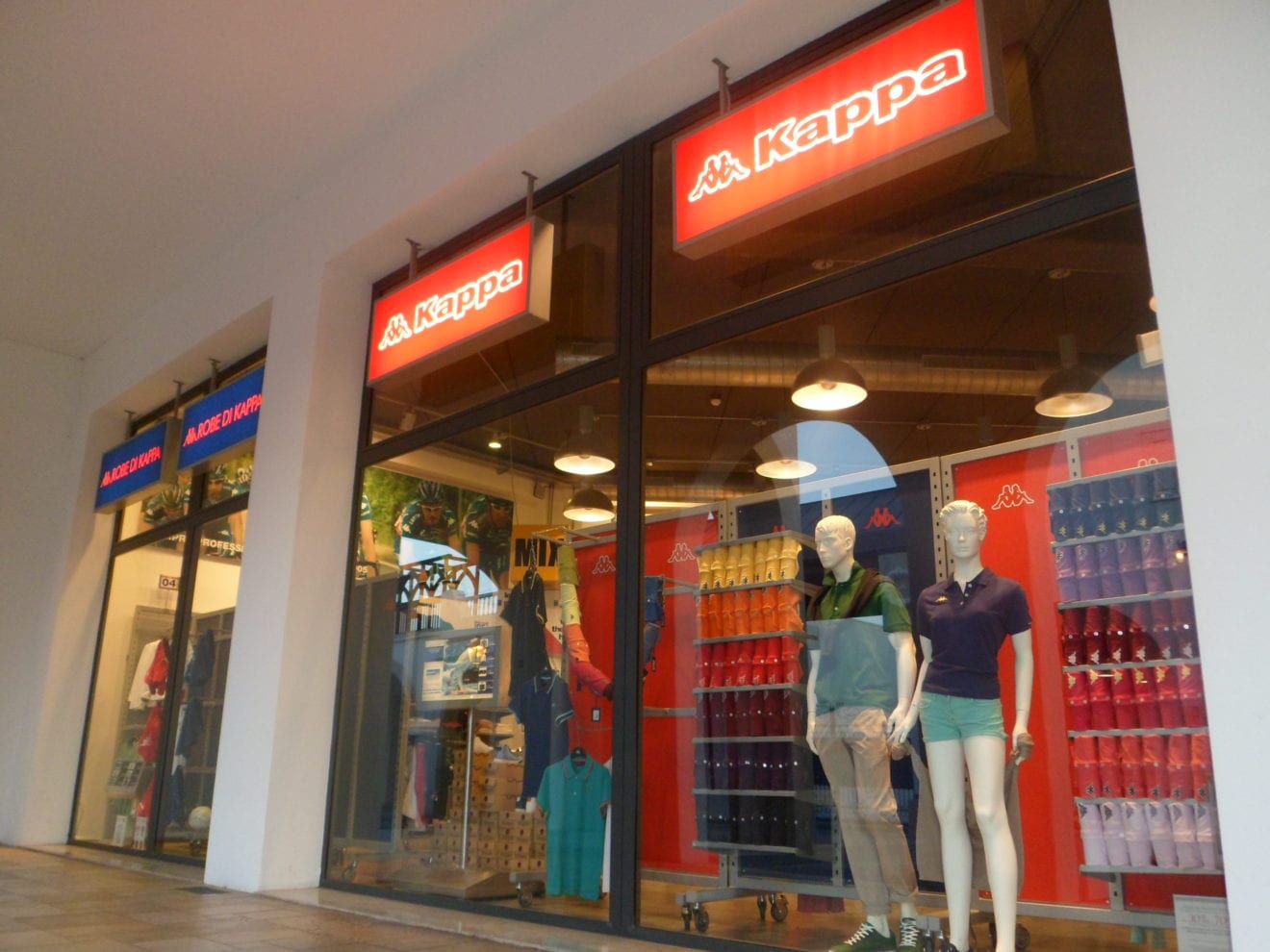
    Kappa China sportswear brand sales are soaring in the Mainland.

    China Dongxiang, the Kappa sportswear and accessories brand’s Chinese rights owner, has reported a 21.5 per cent year-on-year same-store sales growth in China for the second quarter of 2015.

    There were 1231 Kappa retail stores trading at the end of the quarter, a net increase of 21 stores over six months.

    And Kappa’s trade orders also posted double digit growth.

    Chen Yihong, chairman, CEO and executive director of China Dongxiang, described the retail trading result as “spectacular” saying they were the result of efforts to streamline the company’s brands and business, sales and supply-chain models. China Dongxiang, listed on the Hong Kong stock exchange, designs, develops, markets and wholesales of branded sportswear in China.

    Currently, China Dongxiang owns all rights to the internationally renowned Kappa brand in China, Macau and Japan.

    The company believes the Kappa brand’s success in China is due to the products conveying “a vibrant, fashionable and youthful image hugely popular with China’s fast-growing base of consumers with potentially high spending powers”.

    China Dongxiang also owns Phenix, the most popular ski brand in Japan.

  • Swire unveils HKRI Taikoo Hui

    Swire unveils HKRI Taikoo Hui

    HKR International and Swire Properties  have jointly revealed the name of their Shanghai joint-venture project: HKRI Taikoo Hui.

    The large-scale mixed-use development formerly known as the Dazhongli project, is located on Nanjing Road (West), one of Shanghai’s major shopping thoroughfares, in the Jingan District of Puxi, Shanghai.  It will have a gross floor area of some 3.46 million sq ft (approximately 321,200 sqm) and comprise a retail mall, two office towers and three hotels/serviced apartments.

    It is served by three metro lines – the existing Line 2 and two planned Lines 12 and 13 due to open in 2015-2016. The development is also close to the Yanan and N-S Elevated Highways, providing good accessibility to downtown locations and Pudong and Hongqiao International Airports.

    “The project is poised to become a landmark development in the heart of Shanghai and will inject new excitement into the retail, dining and entertainment scene in the buzzing Nanjing Road (West) neighbourhood,” the two companies said in a statement.

    “As the founding partner of the project, we have come a long way since acquiring the Dazhongli site in 2002. With great pleasure, we announce the launch of HKRI Taikoo Hui together with Swire Properties, our partner since 2006,” said Cha Mou Zing Victor, deputy chairman & MD of HKR International.

    “We look forward to the imminent completion of the mixed-use commercial development, which is set to become the next focal point for business and leisure activities in Shanghai with its prime location and excellent connectivity.”

    Guy Bradley, Swire Properties CEO, said the project is being built in the most vibrant district of an amazing city and will be the last major development in the Jingan District.

    “We intend to make it a spectacular addition, and I am confident that HKRI Taikoo Hui will become a new lifestyle destination and a premium business address in Shanghai.”

    Hong Kong listed HKR International has diversified interests in real estate development and investment, property management, luxury hotels and serviced apartments, healthcare services and other investments in Hong Kong, Mainland China and across Asia.

    Also listed in Hong Kong, Swire Properties develops and manages commercial, retail, hotel and residential properties, with a particular focus on mixed-use developments in prime locations. Its properties include Taikoo Place, Cityplaza and Pacific Place.

  • Parkson HK to take over Singapore assets

    Parkson HK to take over Singapore assets

    Malaysia’s Parkson Holdings is to sell a 67.6 per cent stake in its Singapore-listed Parkson Retail Asia Ltd to its Hong Kong listed subsidiary Parkson Retail Group Ltd.

    The rearrangement of its assets will net it US$167.2 million, according to the financial press.

    The purpose of the exercise is to consolidate the retail business of the Singapore-based business, which operates in Southeast Asia, with the Hong Kong listed business which operates in China.

    All three companies predominantly trade in the department store business with their formats becoming increasingly aligned across markets.

    The move will also allow Parkson Holdings (Malaysia) to raise cash for investment in business expansion which has not been detailed as yet.

    Parkson is a subsidiary of the Lion Group, headed by Malaysian billionaire William Cheng.

  • Burberry Hong Kong sales still falling

    Burberry Hong Kong sales still falling

    Burberry Hong Kong was the only apparent dampener on a solid quarter for the British luxury fashion retailer.

    Global retail revenue reached £407 million in the three months to June 30, representing an eight per cent increase, or 10 per cent at reported foreign exchange rates.

    But Hong Kong, where sales fell at a double-digit percentage rate, dragged the broader Asia-Pacific market down by the “low single-digit percentage”.

    “Mainland China comparable sales grew by a low single-digit percentage and Japan saw exceptional growth, albeit off a small base,” said Burberry in its sales statement issued Wednesday.

    Christopher Bailey, CEO and chief creative officer said Burberry was pleased with its underlying six per cent same store sales growth.

    “While mindful that the external environment remains challenging, we will continue to focus on growth opportunities across channels, regions and products, with exciting plans for the year ahead.”

    Bailey said the sales growth – outside Hong Kong – reflected the company’s ongoing emphasis on serving customers more effectively on and offline, and continued innovation in design and marketing – “particularly around the iconic, British-made products that performed so well in the period”.

    By region, there was double-digit percentage comparable sales growth in EMEIA, with strength from the travelling luxury customer in France, Italy and Spain in particular. The Americas delivered high single-digit percentage comparable growth, with footfall recovering through the quarter after a soft start.

    By product, heritage trench coats and cashmere scarves drove growth, as well as ponchos, an emerging key category for the brand.

    During the first quarter, Burberry opened five mainline stores and closed three. Openings included a new store in Brookfield Place, New York and relocations in the Mall of the Emirates, Dubai and Westfield White City, London. It also expanded its Regent Street flagship, adding an area dedicated to gifting.

  • Missha Hong Kong makes return

    Missha Hong Kong makes return

    Korean cosmetics retailer Missha is returning to Hong Kong.

    Some 20 Missha Hong Kong stores were shuttered around New Year’s Eve this year when the previous local retail partner collapsed.

    Now Missha has a new partner – DKSH (DiethelmKellerSiberHegner) – which will apparently help it build a new network.

    Missha entered Hong Kong in 2004, four years after its launch in Korea. But during the last two years it has faced tough competition from new rival brands, including Etude House and Nature Republic.

    Missha’s parent Able C&C said on Tuesday it had signed a contract with Swiss based DKSH Hong Kong giving it exclusive rights to promote Missha in the territory.

    The first two stores quietly opened on June 30 ahead of the formal announcement – counters in DKSH duty free stores in Causeway Bay and Tsim Sha Tsui.

    The following day a standalone store opened inside Yuen Long Plaza.

    DKSH has reached an agreement with Mannings to sell the products through 200 stores by the end of July and in 300 by the end of next year.

  • DFI to list in Hong Kong

    DFI to list in Hong Kong

    Singapore-based travel and duty free retailer Duty Free International (DFI) is seeking to list on the Hong Kong stock exchange.

    DFI is Malaysia’s largest duty free operator, runs 36 stores, including those under the Zon Duty-free brand throughout the country, including new facilities at the recently opened KLIA2 airport outside Kuala Lumpur.

    The company has concessions selling chocolates, fragrances, liquor and tobacco products, gifts and Malaysian souvenirs.

    It has stores in Bukit Kayu Hitam, Padang Besar, Pengkalan Hulu, Langkawi, Rantau Panjang, Penang International Airport, Tioman Airport, KLIA, Melaka Airport and Johor Bahru.

    The company also owns the 18-hole Black Forest Golf & Country Club.

    Hong Kong stock exchange rules require at least 25 per cent of a company’s capital to be traded publicly, and DFI does not meet this condition currently, meaning it will have to issue more shares or existing controlling shareholders will have to divest some of their stake.

    In a statement, Atlan Holdings said the directors believe it is desirable and beneficial for the company to have dual primary listing status in both Singapore and Hong Kong so that the company can tap readily into two of Asia’s most dynamic equity markets when the opportunity arises.

    “Furthermore, the proposed Hong Kong dual listing will widen the investor base of the company so that the company may benefit from its exposure to a wider range of private and institutional investors, and is expected to increase trading liquidity of the ordinary issued shares in the capital of the company.”

  • Asia slowdown hits Burberry sales

    A decline in the number of shoppers from mainland China travelling to Hong Kong to buy luxury goods has continued to be a drag on Burberry, the British retailer best known for its trenchcoats and cashmere scarves.

    Burberry said on Wednesday that comparable sales in Hong Kong were hit by a “double digit decline” in the three months to June 30, its first quarter, as fewer Chinese mainlanders headed to the city because of political tensions or hostility from locals.

    The British group, like many other retailers, suffered during last year’s lengthy pro-democracy protests in Hong Kong but has seen no pick-up in trading as mainland Chinese take advantage of changing exchange rates to travel to other destinations such as Japan and South Korea for shopping trips.

    Burberry said sales at its stores in mainland China still rose by a “low single-digit percentage” during the first quarter, but the problems in Hong Kong pushed down sales in the Asia-Pacific region overall by a “low single-digit”. In Japan, the retailer reported “exceptional growth” during the quarter, although from a low base.

    Carol Fairweather, Burberry’s chief financial officer, said the group was trying to target local Hong Kong residents through marketing events in an attempt to stabilise sales in the city. But she insisted all stores in Hong Kong remain profitable.

    Chinese shoppers — who account for 30 to 40 per cent of Burberry’s revenues globally — are still spending during trips to other parts of the world, Ms Fairweather said, despite concerns over weakening consumer sentiment in the world’s second-biggest economy following a period of dramatic stock market upheaval.

    “We still saw growth from the Chinese consumer in China and globally,” Ms Fairweather said.

    The problems in Hong Kong weighed down overall sales growth at Burberry during the quarter. Excluding the effects of currency movements, underlying retail revenue rose 8 per cent to £407m. This was in line with analysts’ forecasts but was lower than the 14 per cent growth recorded during Burberry’s last financial year. Comparable sales for the group as a whole rose 6 per cent, again lower than for the year to March 31 but slightly higher than analysts’ forecasts.

    Burberry said foreign exchange movements were in its favour during the first quarter, pushing it to upgrade its latest forecast for full-year profit at its core retail and wholesale business by £10m. This would, however, be offset by a “more adverse geographic mix” because of the challenges in Hong Kong, resulting in no overall change to group profit forecasts.

    Christopher Bailey, Burberry’s chief executive and chief creative officer, said the first-quarter performance was pleasing in light of “challenging” conditions.

    “We are pleased with our performance in this first quarter,” he said. “While mindful that the external environment remains challenging, we will continue to focus on growth opportunities across channels, regions and products, with exciting plans for the year ahead.”

    Burberry’s trading update came ahead of its annual meeting on Thursday.

    The luxury retailer is no stranger to revolts over Mr Bailey’s pay. At the 2014 annual meeting, almost 53 per cent of votes cast were against the directors’ remuneration report in protest at Mr Bailey’s £20m package.

    There have also been rumblings of a potential rebellion at this year’s meeting. Mr Bailey, who took up the dual role of chief executive and chief creative officer on May 1, 2014, banked almost £8m in pay and benefits for the year to March 31, 2015.