Tag: China

  • Honda China JV Announces 120,000 Units-A-Year EV Factory

    Honda China JV Announces 120,000 Units-A-Year EV Factory

    Honda Motor and its Chinese joint venture partner Dongfeng Motor said on Thursday they would build a new factory in Wuhan to exclusively manufacture electric vehicles (EVs) from 2024.

    The factory would have a production capacity of 120,000 vehicles a year, Honda said in a statement.

    Honda, Japan’s second-largest automaker, is set to launch a new EV brand in China this year called e:N Series with plans to roll out 10 models with partners Dongfeng and GAC.

  • Inside Swarovski’s first Asian flagship store, at Shanghai

    Inside Swarovski’s first Asian flagship store, at Shanghai

    Swarovski has just opened its first Asian flagship store in HK Plaza, Shanghai. On the heels of the brand opening its Instant Wonder pop-up boutiques in 27 key locations around the world earlier this year, the Shanghai flagship will welcome customers into Swarovski’s world on a more permanent basis.

    “Throughout the journey of our transformation, we have been working towards a moment like this,” notes CEO Michele Molon, “The moment where guests can not only explore Swarovski products, but immerse themselves in our point of view, our personality, and the experience of intimately understanding the sense of joy and innovation from which each item is created.”

    As one of the key markets of Swarovski — and luxury as a whole — China, in particular the creative hub of Shanghai, feels like the natural place to open the brand’s first flagship in Asia. And this is no normal flagship. Creative Director Giovanna Engelbert sought to create in Wonderlab a place that transports customers into the imaginative world of Swarovski.

    Rooted in brand codes, colors, packaging, and heritage, the Swarovski Wonderlab does just that. “I am incredibly excited to unveil this beautiful space, inspired by the forward-moving landscape of China and her people. It’s the biggest, most ambitious store we’ve made, centimeter by centimeter thought through and brought into reality,” commented Englebert.

    Ambitious isn’t even half of it. Take in the metallic pink of the Wonder Room with a rotating central display and custom Swarovski Swan chairs or the Lucent stairwell which climbs to the Dream Room. Robotic arms nod to the innovation behind Swarovski’s developing offering, standing in stark contrast to the pastel pinks and mesmerizing crystals that define the rest of Wonderlab. The Swarovski Wonderlab is nothing short of a dreamscape in the heart of Shanghai.

    Swarovski’s Shanghai flagship opened on December 10, so be sure to visit for a taste of the future of retail if you’re in Shanghai.

  • China Mobile shares rise marginally in Shanghai debut

    China Mobile shares rise marginally in Shanghai debut

    China Mobile Ltd shares debuted on the Shanghai Stock Exchange on Wednesday, soaring to 63 yuan, 9.4% higher than the offer price of 57.58 yuan in early trading, before closing at about 0.52% higher at 57.88 yuan.

    The carrier’s Shanghai shares traded more than 40% higher compared to its Hong Kong-listed shares, which closed 3.33% higher on the same day, boosted by an earlier announcement to buy back up to 2.05 billion shares worth about US$13 billion.

    Raising US$7.64 billion, China Mobile’s public share offering is also China’s largest in a decade.

    China Mobile’s homecoming listing is closely watched. In May 2020, China Mobile exited the New York Stock Exchange when it was added to a growing list of Chinese companies blacklisted by the US. China Telecom and China Unicom were also ousted from the US exchange.

    China Mobile said that proceeds from the offering will be used to expand 5G capabilities, cloud infrastructure, and intelligent ecosystems.

  • China’s telecom sector grows 8.1%

    China’s telecom sector grows 8.1%

    China’s telecom sector recorded a strong 8.1% year-on-year growth in the first 11 months of this year.

    According to official figures released by China’s Ministry of Industry and Information Technology, the combined industrial revenue grew by over RMB 1.35 trillion. This represents a decline of 0.1 percentage points for the period from January to October.

    The number of 5G mobile subscribers has reached 497 million by the end of November, representing an increment of 298 million from the end of last year. Of which, China Mobile, China Telecom, China Unicom added over 35 million 5G mobile subscribers in November alone.

    The world’s largest operator in term of subscribers, China Mobile has added a total of 209.38 million 5G subscribers since the start of 2021.

  • Vietnam trade ministry asks China to reopen border gates

    Vietnam trade ministry asks China to reopen border gates

    Vietnam’s Ministry of Industry and Trade has requested China’s Guangxi region to reopen its border gates with Vietnam and extend customs clearance hours to resolve the container congestion.

    Guangxi’s “zero Covid” measures, including shutting the border and suspending the imports of certain fruits, were unnecessary, senior trade ministry officials told Guangxi trade officials Friday. The policy has disrupted the supply chain and caused negative impacts on bilateral trade development, resulting in big losses for businesses and people of both countries, the Vietnamese officials said.

    The ministry proposed that Guangxi recruits more drivers and workers on its side to deal with the staff shortage. It also suggested that fully vaccinated Vietnamese be sent across the border to work. It wants Guangxi to facilitate shipment via trains and ships; as also resume importing Vietnamese dragon fruits.

    Guangxi trade officials said that they would increase the duration of customs clearance based on the agreement between the local authorities of the border gates. They will forward other proposals to higher authorities, Guangxi officials said. Thousands of container trucks have been stuck at the border for over a month after China tightened its Covid-19 preventive measures.

    On Friday 2,945 container trucks were stuck at the border in Vietnam’s Lang Son Province, down 191 from a day earlier.

    Many trucks have had to turn around and distribute their products locally for a loss as the fruits were beginning to rot.

    Of the three major borders gates in Lang Son, two are operating with limited capacity while one is still shut.

    Lang Son authorities estimate that it would take more than a month to resolve the container jam at the current speed.

    Minister of Industry and Trade Nguyen Hong Dien has sent four letters to China’s Ministry of Commerce, China Customs and secretaries of the two localities – GuangXi and Yunnan – requesting the agencies’ intervention in resolving the issues.

  • Thanks to Cook’s secret payment to China, Taiwan’s Foxconn lost some of its iPhone business

    Thanks to Cook’s secret payment to China, Taiwan’s Foxconn lost some of its iPhone business

    Earlier this month we told you that Apple and the Chinese government signed a secret deal valued at $275 billion. Apple reportedly made the payment to prevent the Communist Chinese government from taking regulatory actions against the company. And as we noted in our story about the payment, Apple is now receiving favored treatment in the country.

    According to The Information, since the deal was made, Apple has turned to more supply chain partners from China in order to keep up the end of the deal it made with the country. For example, a year after the $275 billion deal was made, Apple had China’s Luxshare assemble AirPods and it has pulled orders from long-time iPhone assembler Foxconn and gave them to Luxshare. The report notes that Apple’s deal with Luxshare raises the latter’s status placing it among Apple suppliers who assemble a finished product and also handle the packaging.

    With Luxshare’s star on the rise, Foxconn is understandably getting nervous about the possibility of losing Apple’s business. So, it has assembled a team to study the company which we told you about over two years ago.

    Over the last 10 years, Apple has been sending its engineers to work with Chinese companies to help them learn how to build its products. Apple is acutely aware that it needs to maintain a certain reputation in China, especially since the country is responsible for 20% of its business. It also is the largest market in the world for smartphones followed by India and the U.S.

    In a way, replacing Foxconn with Luxshare for iPhone production is a risky move by Apple since U.S.-Chinese trade relations remain volatile and you never know when the Commerce Department might decide to punish more companies in the country outside of Huawei. Currently, Luxshare manufactures some iPhone 13 models, AirPods, and the Apple Watch.

    If there is one country that Apple is heavily relying on, it is Taiwan. In addition to having Taiwan-based firms like Foxconn, Wistron, and Pegatron build its important devices, Apple is the largest customer of Taiwan Semiconductor Manufacturing Company (TSMC), the foundry that builds the chips used in Apple products. There is some concern that China might seek to “takeover” Taiwan.

    But does Apple have anything to worry about here? After all, $275 billion goes a long way and that payment seems to have provided Apple with special favors and could protect the company even in the unlikely event that China attempts to take control of Taiwan and the country’s tech manufacturers.

    When the deal with China was made, Apple CEO Cook signed a 1,250-word “memorandum of understanding” between Apple and a Chinese government agency called the National Development and Reform Commission. Apple received some exemptions from regulations in the country while it helped the Chinese develop “the most advanced manufacturing technologies.”

    Apple also agreed to use more components from Chinese suppliers, sign deals with software firms in the country, make direct investments in Chinese tech companies, work on research with universities based in China, train the country’s most talented tech workers, and more. And this is where Luxshare comes in. As far back as October 2020, Beijing felt that Luxshare was an up-and-coming company that could help China’s standing in the global tech industry and it wanted Apple to help prop up the firm.

    At the time that Reuters made its report in 2020, one of its sources said, “Luxshare is set to rise … it’s just a matter of how fast it could be. It makes sense for China to build up its own supply chain and Luxshare is in line with that state policy.”

  • China’s telecom sector grows 8.1%

    China’s telecom sector grows 8.1%

    China’s telecom sector recorded a strong 8.1% year-on-year growth in the first 11 months of this year.

    According to official figures released by China’s Ministry of Industry and Information Technology, the combined industrial revenue grew by over RMB 1.35 trillion. This represents a decline of 0.1 percentage points for the period from January to October.

    The number of 5G mobile subscribers has reached 497 million by the end of November, representing an increment of 298 million from the end of last year. Of which, China Mobile, China Telecom, China Unicom added over 35 million 5G mobile subscribers in November alone.

    The world’s largest operator in term of subscribers, China Mobile has added a total of 209.38 million 5G subscribers since the start of 2021.

  • ZTE chosen by China Telecom in core router centralized procurement

    ZTE chosen by China Telecom in core router centralized procurement

    ZTE has been selected by China Telecom in the operator’s core router centralized procurement 2021, with the core router ZXR10 T8000 gaining a market share of 30% in the CR-A1 (single device) section, and winning the CR-A2 (cluster) section with the highest score in the overall ranking.

    The purchased equipment will help China Telecom build its super core nodes for the operator’s 163 backbone network.

    China Telecom, with the aim of building new information infrastructure based on cloud-network synergy, adheres to the ideology of “network as a basis, cloud as the core, and cloud-network integration”. China Telecom is carrying out the overall network architecture optimization of the MAN and the 163 backbone network, to improve the network capability and capacity, increase network utilization, and build efficient new cloud networks.

    ZTE provides ZXR10 T8000-18 core router, a large-capacity, high-performance platform, which is safe, reliable, and easy to maintain and expand to transport integrated services and support the full-service operation of China Telecom.

    As a high-end flagship router of ZTE, the ZXR10 T8000 core router has been operating stably for ten years and has been deployed in 26 provinces, including autonomous regions and municipalities, in China. In China Telecom’s first batch of core routers and switch centralized procurement in 2019, ZTE obtained the largest shares in both the single device and cluster sections.

    In the operator’s core router centralized procurement in 2020, ZTE won the second-largest shares in sections CR-A1 and CR-A2 to build the international egress nodes of the 163 and CN2 backbone networks. In November 2020, ZTE deployed the equipment in the Shanghai Information Park, Node I of ChinaNet, serving as the international ingress/egress communication hub of ChinaNet. In May 2021, the ZXR10 T8000 obtained a share of 30%, ranking ZTE second-place in the P equipment section in China Telecom’s CN2-DCI network expansion centralized procurement 2020.

  • SLA Digital partners with Unitel on direct carrier billing in Mongolia

    SLA Digital partners with Unitel on direct carrier billing in Mongolia

    SLA Digital has announced a new partnership with Unitel Group, a Mongolian telecommunications company, with Unitel naming SLA Digital as their managed service provider for carrier billing.

    As part of the relationship, SLA Digital will also be able to offer digital content providers access to Unitel’s other payment options including IPTV payments, Toki E-Wallet and payments made via U-Point, their points-based loyalty program.

    Kevin Drayne, CEO at SLA Digital commented: “We are delighted to be working with Unitel to enable seamless and secure payment experiences for their customers through carrier billing. We see this relationship as a real opportunity to bring more to Unitel and their customers, by offering a vast range of digital content and entertainment with new convenient ways to pay.”

    The partnership means Unitel will be able to effortlessly introduce new digital content to customers from SLA Digital’s expanding client portfolio. Likewise, digital content providers can connect to Unitel’s mobile subscribers, and expand into this region, through a simple integration process.

    Kevin continued: “Our direct connection with Unitel Mongolia will allow our existing and new digital content partners to easily connect to the mobile operator and make the most of all the payment options available. We hope that more content and more ways to pay will lead to greater choice and satisfaction for Unitel customers.”

  • Alibaba looks abroad as China growth slips

    Alibaba looks abroad as China growth slips

    China’s Alibaba has told its investors that overseas e-commerce would be a key focus as it looks for new sources of growth after a difficult year at home.

    Earlier this month, Alibaba Group Holding restructured its e-commerce business into separate China and international divisions, with the latter to be led by Jiang Fan, head of Alibaba’s flagship Taobao and Tmall marketplaces.

    Alibaba Deputy CFO Toby Xu, making his first major public remarks since being named this month to take over as CFO, said that international e-commerce “will become one of the key growth drivers”, adding that 57 percent of revenue for Cainiao, Alibaba’s logistics unit, comes from overseas.

    Earlier in the two-day investor event which ended Friday, Alibaba said it had set a target of $100 billion in gross merchandise value (GMV) for Lazada, its e-commerce service for Southeast Asia.

    Lazada generated $21 billion in GMV from September 2020 to the same month in 2021, the presentation showed.

    Outgoing CFO Maggie Wu said that In the future, the company will break down the category into four sub-categories – China commerce, which includes its major domestic-facing e-commerce platforms; international commerce, which will include Lazada, AliExpress, and other overseas-facing sites; local-based services, which will include its food-delivery service Ele.me and its mapping service; and Cainiao, its logistics division.

    There was also a nod to social welfare, with four of seven investment categories outlined by Xu related to initiatives such as rural revitalization and China’s aging population.

    CEO Daniel Zhang, meanwhile, pledged to slash emissions from Alibaba’s supply chains and transportation networks by 50 percent by the end of the decade.

    Missing from the presentation was any mention of Ant Group, the financial services firm that is 33-per-cent owned by Alibaba.

    Last year, Beijing intervened at the last minute to abort a planned $37 billion listing of Ant. Alibaba co-founder Jack Ma subsequently slipped from the public spotlight and Chinese authorities began a year-long regulatory clampdown.

    In November, Alibaba slashed its annual revenue forecast for its current fiscal year, from an initial growth target of 29.5 percent to between 20 and 23 percent.

    The company has been facing stiff competition from rivals including Pinduoduo, which has won over consumers in rural China, and ByteDance-owned Douyin, which has grown in China’s booming live-streamed e-commerce sector.

  • Chinese social media Weibo closes 7% lower in Hong Kong debut

    Chinese social media Weibo closes 7% lower in Hong Kong debut

    Weibo officially launched its secondary listing on the Main Board of the HKEx on Wednesday. The public offering price of the stock was HK$272.80. On the first day, Weibo closed 7% lower at HK$253.20.

    One of the leading social media platforms in China, Weibo secondary listing raised about HK$385 million. Its main listing is in the US.

    As a pioneer and leading social media in China, Weibo has been leading the industry’s development and innovation for years, with a rapidly growing user base. In September 2021, Weibo had 573 million MAUs and 248 million average DAUs.

    In addition to a large and diverse user base, there are also significant connections and interactions among users on Weibo. In June 2021, its users generated 15.7 billion monthly social interactions on the platform, including the activities of like, comment, repost, and follow. As of June 30, 2021, Weibo had 318 billion “follow” relationships existing on its platform. During the track record period, Weibo’s ratio of average DAUs to MAUs remains as high as 43% to 45%, demonstrating users’ high engagement and stickiness to the platform.

    Weibo offers the most comprehensive coverage of content categories. Its users can create, discover, consume and share various formats of content, including text, photo, video, live streaming, audio, and topic. In June 2021, Weibo had 46 content verticals, such as celebrities and entertainment, humor, media, variety shows, and TV programs, fashion, cosmetics, finance, and games. Among these content verticals, 28 of them each has over 10 billion monthly views.

    In addition, Weibo attracts a large number of content creators who remain highly engaged and active on the platform. In June 2021, Weibo had 41.9 million monthly active content creators, and top content creators reached 2.3 million.

  • Alibaba fires employee who accused former co-worker of sexual assault

    Alibaba fires employee who accused former co-worker of sexual assault

    Chinese e-commerce giant Alibaba has fired a woman who accused a former co-worker of sexual assault in July this year. A dismissal letter, became effective on Nov. 25, the day it was given to the employee. She is identified in court papers only by her surname, Zhou. After the company failed to take action after she reported the assault, according to her, Zhou went public in August.

    She began passing out fliers to co-workers, unfurling banners in the company cafeteria, and posting messages on Alibaba’s internal website. The subsequent letter claimed she had spread false information “which aroused strong concern from society and damaged the company.”

    The move to fire Zhou is a reversal of Alibaba’s initial support for her. After her allegations surfaced, the company fired the co-worker accused of assault, identified as Zhou’s former supervisor Wang Chengwen. Two senior managers also resigned for failing to act after Zhou made her report. But prosecutors dropped her case in September after investigators found that Wang’s actions constituted “forcible indecency” but did not rise to the level of rape. Police gave him 15 days of administrative detention.

  • 4,000 container trucks stranded at China border by stringent inspections

    4,000 container trucks stranded at China border by stringent inspections

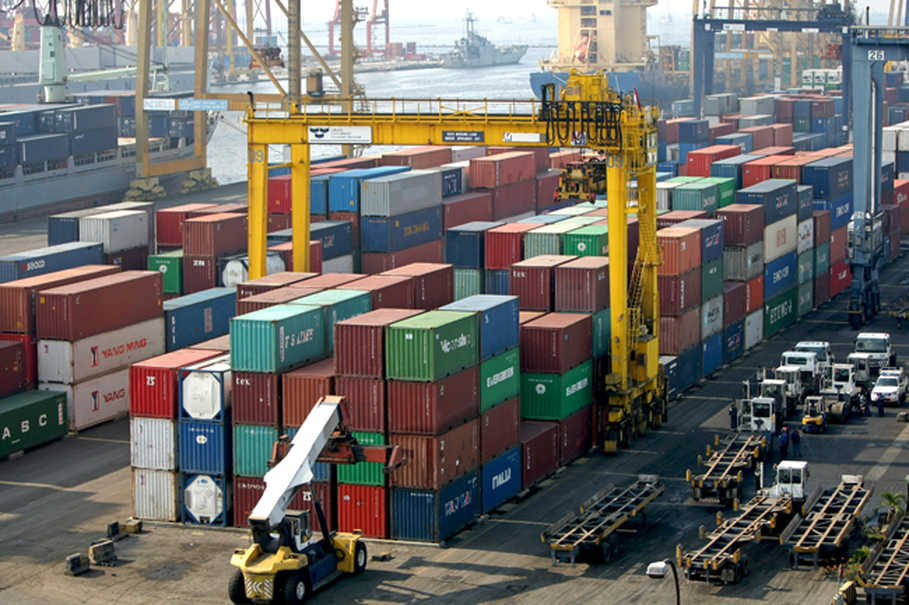
    Vietnam’s agriculture exports are taking a hit as China maintains a very strict inspections regime at northern border gates as a Covid-19 prevention measure.

    As of Friday, as many as 4,000 container trucks were stranded at the border gates in Lang Son Province, said Le Thanh Hoa, deputy head of the Department of Processing and Trade for Agro-Forestry-Fisheries products under the agriculture ministry.

    At the three border gates of Huu Nghi, Tan Thanh and Chi Ma, the current customs clearance speed has fallen by more than half to about 220 container trucks per day, Hoa said at a conference on agriculture trade held Saturday in Hanoi.

    For each truck carrying dragon fruit, jackfruit, and other fruits stuck at the Tan Thanh gate, it was taking 10-14 days on average to get customs clearance.

    At the Mong Cai border gate in Quang Ninh Province, just one truck gets cleared every week, Hoa said.

    The management board of the Mong Cai gate said Saturday morning that as many 800 trucks of frozen seafood and 300 trucks of fruits were stranded there.

    Hoa recommended that businesses carefully check agricultural products exported via border gates because China has been strengthening its Covid-19 disease control regime, resulting in careful, stringent inspections of products entering its territory.

    To cope with this situation, exporters have to carefully prepare the packaging of their goods so that they can get through the customs easily and at fast pace, he said.

    On the other hand, to avoid congestion and save costs, businesses need to arrange a reasonable clearance time and not send many trucks to the border gates at the same time, he added.

    After the fourth Covid-19 wave hit Vietnam in late April, China has been increasing inspections and disinfection of goods and means of transport and drivers from the country.

    They are also tightening the management and traceability of goods, which has contributed to lengthening the customs clearance procedure.

    In September, China had temporarily ceased the import of dragon fruit from Vietnam after detecting the novel coronavirus on its packaging. It had also reported a similar detection on Vietnamese mangosteen in early August.

    Hu Suo Jin, Economic and Commercial Counselor of the Chinese Embassy in Vietnam, said the pandemic in Vietnam was developing quite complicatedly and exporters need to disinfect the means of transport and drivers also need to increase adoption of preventive measures to avoid leaving the virus on goods.

    In addition, if possible, Vietnamese goods should be labeled with a negative test certificate on their packaging, he said.

    China is one of Vietnam’s top trading partners. The import-export turnover of agro-forestry-fishery products between the two countries had grown strongly from $8 billion in 2015 to $11 billion last year.

    China was Vietnam’s second-largest export market for agricultural, forestry and fishery products behind the U.S., posting an export turnover of $8.4 billion in the first 11 months of the year, accounting for 19.2 percent of Vietnam’s total agricultural exports.


  • Singapore and China Regulators to Boost Supervisory Cooperation

    Singapore and China Regulators to Boost Supervisory Cooperation

    The two sides reaffirmed their close ties and commitment to strengthening supervisory cooperation.

    The Monetary Authority of Singapore (MAS) and the China Banking and Insurance Regulatory Commission (CBIRC) made the commitment at their annual MAS-CBIRC Supervisory Roundtable, which was virtually on Wednesday, MAS said in a statement.

    The roundtable was chaired by MAS’ deputy managing director Ho Hern Shin and CBIRC’s vice chairman Zhou Liang.

    During the session, the two sides discussed regulatory and supervisory developments in the banking and insurance sectors in both jurisdictions and discussed opportunities for furthering collaboration in the areas of green finance, and the recovery and resolution planning for systemically important banks, MAS said.

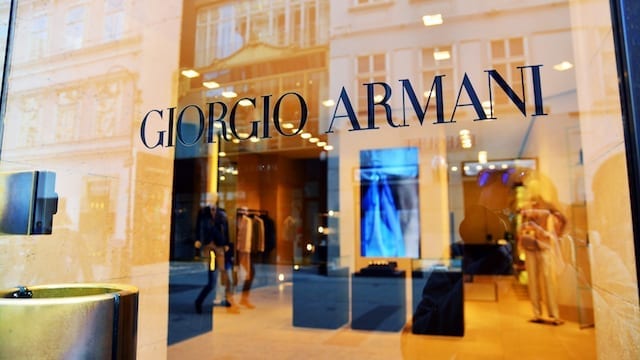
  • Armani banning angora wool from next winter season

    Armani banning angora wool from next winter season

    The Italian luxury company joins a string of brands banning the extremely soft wool removed from live rabbits, under pressure from animal rights organizations and more environmentally conscious shoppers.

    Last month, People for the Ethical Treatment of Animals (PETA) announced that luxury e-commerce platform Farfetch would stop selling angora wool by April 2022.

    The organization launched a campaign years ago to ban angora wool, which is mainly produced in China, describing the techniques used to strip the fur from rabbits as cruel.

    Armani’s move marks another step towards sustainability after the group banned animal fur in 2016 and signed in 2019 the ‘Fashion Pact’ with other major industry players to address climate change, the company said in a statement.