Tag: China

  • China Telecom’s license revoked in the US

    China Telecom’s license revoked in the US

    The US Federal Communications Commission (FCC) has voted to revoke the authorization for China Telecom’s subsidiary in the US.

    Citing national security concerns, officials ordered China Telecom Americas to discontinue its services in the US within 60 days. The subsidiary has been operating in the US for nearly two decades.

    In a statement released, the FCC said, “China Telecom Americas, a U.S. subsidiary of a Chinese state-owned enterprise, is subject to exploitation, influence, and control by the Chinese government and is highly likely to be forced to comply with Chinese government requests without sufficient legal procedures subject to independent judicial oversight.”

    China Telecom has expressed disappointment over the decision and intends to “pursue available options” in hopes of continuing serving its customers.

    During the first nine months of this year, China Telecom added 69 million 5G subscribers in China, bringing it total mobile base in China is 369 million subscribers.

  • Hermes reopens it’s Shanghai flagship

    Hermes reopens it’s Shanghai flagship

    On 29th October 2021, Hermès is delighted to open the doors of its newly renovated store in the prestigious Plaza 66 in Shanghai. Spanning over two floors and 656 m2, the vision for this store evokes the richness of the local culture and Hermès’ connection with the city of Shanghai, creating an engaging backdrop for discovering the 16 métiers of the house.

    The new design is established with the store’s powerful façade, which now features a long window carved into its impressive stone surface to allow more natural light to filter through. The transparency of the storefront below is also improved thanks to the generous addition of windows set in a deep-green tinted glass that mingles invitingly with the mineral hues of the stone tiles.

    Transformed by the Parisian architecture agency RDAI, the interiors feature a fluid, curved layout, drawn in response to the existing volumes of the space. Distinctive architectural gestures, like the sculptural lines carved into the soaring ceilings and the rounded walls, enhance the customer path from one side of the open-plan area to the other. Throughout the store, a richly evocative colour palette of deep blue-green, burgundy, and caramel, alternating between matte and lacquer surfaces with added accents of plush velvet, are employed in an impactful way to create a sense of intimacy for each métier. Three-dimensional custom designed carpets with superimposed geometric forms in vivid, saturated colour give structure and individuality to each universe.

    From the main street side entrance, guests are greeted with an animated display of women’s silk and a generous offer of fashion accessories. On the other side of the mall, there is a wider selection of women’s silk and accessories, perfume and beauty. These two entrances include mirroring features that are hallmarks of the house: the Hermès ex-libris underfoot and the iconic “Grecques” globe lighting overhead. The hand-assembled inlaid stonework reflects the house’s savoir-faire: based on the rue du Faubourg Saint-Honoré motif, the pattern disperses before merging again on the other side of the store. The surrounding terrazzo flooring is flecked with preserved pieces of stone from the existing interior façade. Intimate corner spaces and salons on the ground floor are dedicated to the jewellery and watches, as well as the perfume and beauty métiers – fitted out in saturated blue-green tones that contrast with the hand-painted walls and cherrywood cabinetry.

    A new, sweeping staircase serves as an architectural feature and an eye-catching exploration of form that undulates. Above the stairs floats a commissioned work by Chinese artist Xiaojing Yan. The delicate sculpture, almost 2m in height, is a cloud-like vision of a horse at full gallop, crafted from over 10,000 glass pearls suspended by threads. The ascent from the first to the second floor follows a gradient, hand-painted frescoed wall that carries on through to the men’s universe and home collections on the second floor. Natural light from the new window bathes the space in a lustrous warmth and a communal table encourages guests to linger for a coffee. Arriving from the mall through a third entrance here, the line of sight travels past the home and equestrian

    collections, the leather goods, enveloped in warm and glossy tones of red and deep burgundy, through to the spacious women’s universe. Elegantly clad fitting and VIP rooms, as well as numerous lounge areas furnished with deep leather sofas and armchairs, create an inviting ambience throughout the space.

    In the tradition of establishing a distinct identity for each Hermès locale, a collection of carefully selected artwork, contemporary photography, carré prints, and works from the Émile Hermès collection seamlessly blends the past and present.

    This new Hermès store offers local customers and new visitors an utterly bespoke retail experi- ence, set in an engaging and welcoming environment. It binds the culturally vibrant essence of Shanghai with the Parisian house’s contemporary creative spirit and fine craftsmanship.

    Since 1837, Hermès has remained faithful to its artisan model and its humanist values. The freedom to create, the constant search for beautiful materials, the transmission of savoir-faire of excellence, and the aesthetic of functionality all forge the singularity of Hermès, a house of objects created to last. An independent, family owned company, Hermès is dedicated to keeping the majority of its production in France through its 51 workshops and production sites and to developing its network more than 300 stores in 45 countries. The group employs almost 17,000 people worldwide, including nearly 10,600 in France, among whom more than 5,600 are craftsmen*. Axel Dumas, a sixth-generation family member, has been Hermès CEO since 2013.

    Founded in 2008, the Fondation d’entreprise Hermès supports projects in the areas of artistic creation, training and the transmission of savoir-faire, biodiversity, and the preservation of the environment.

  • Zeekr’s 001 EV Goes Into Production

    Zeekr’s 001 EV Goes Into Production

    Chinese EV startup Zeekr has announced that its new 001 sedan is now in production. Zeekr is part of the Geely Holding Group which also owns Volvo and Polestar. The first deliveries of the Zeekr 001 will start in China this weekend. Zeekr is a more luxury-focused EV brand, unlike Polestar which is more mass market.

    This launch comes on the back of the announcement of the sustainable experience architecture which is an open-source chassis base. There are more EV brands under the Geely umbrella including Lynk & Co, Geometry will still be upon the same chassis

    Zeekr intends to compete with Tesla in China. While it is part of the Geely holding group in July, Geely pulled out as a majority shareholder in the brand, though it still has control of other subsidiaries. It even features Intel Capital CATL as investors.

    There was a ceremony at Zeekr’s intelligent factory which even features a 5G network, 300 automated welding robots, and other production systems which are being continuously self optimized using AI.

    The 001 EV features 400 kW of power with 768 nm of torque with a dual-motor system. It can do 0-100 km/h in just 3.8 seconds and can halt from the same speed in 34/5 meters. The impressive bit is that Zeekr is saying its Z-Battery architecture can charge from 0-80 percent in 30 minutes and can deliver 526-712 km of NEDC range.

    It also shared its first set of over-the-air updates to further improve Zeekr assisted drive system after the first deliveries. It has an approximate cost of between $44,000-$56,500.

    10 Zeekr Spaces planned in China that will join two already opened facilities in Hangzhou and Tianjin. Zeekr is also planning on opening 360 kW charging stations across 10 Chinese cities this year.

  • Alibaba promises sustainability focus in this year’s 11.11 consumer fest

    Alibaba promises sustainability focus in this year’s 11.11 consumer fest

    “Over the last 12 years, 11.11 has showcased the tremendous consumption power of Chinese consumers and pushed boundaries for the global retail sector,” said Chris Tung, Chief Marketing Officer of Alibaba Group. “This year’s Festival marks a new chapter for 11.11. We believe we must leverage the power of 11.11 to encourage sustainable development and promote inclusiveness to consumers, merchants and partners across our ecosystem.”

    This year marks the largest Festival to date, with a record 290,000 brands participating. Tmall is offering more than 14 million deals to over 900 million consumers in China. The Festival will once again have two sales windows – the first will be from November 1 to 3, and the second will be on November 11, on the day of the main event.

    Livestreaming will be a key consumer engagement mechanism for brands and merchants to build awareness and drive sales. Starting on October 20 throughout the Festival, Taobao Live will feature 700 leading KOLs, celebrities and brand representatives in livestream sessions. In addition, Taobao will roll out a new feature for users to share their “shopping cart” items with friends and family, creating a more social shopping experience.

    “Green” Lifestyle, Eco-Friendly Consumption Top Priority This 11.11

    Tmall is taking action to promote “green” lifestyles this 11.11 by featuring a dedicated vertical to showcase energy-efficient and low-impact products, as well as issuing RMB100 million worth of “green” vouchers to incentivize shopping decisions that contribute to an environmentally friendly lifestyle.

    Alibaba’s logistics arm Cainiao Network will introduce package recycling across 10,000 Cainiao Post Stations in 20 cities to reduce the Festival’s carbon footprint beginning on November 1, the first day of the first 11.11 sales period.

    With increased use of green technology, Alibaba expects to further reduce the carbon emission per order during this year’s 11.11.

    Doing Good While Shopping

    Supporting vulnerable populations is also a key theme this year. Ahead of this year’s 11.11, the Taobao app introduced an option for “senior mode,” a new feature designed to make the user interface more accessible for senior citizens. It offers voice-assisted technology, simplified navigation, larger font size and icons. The app homepage also offers games for elderly users to unlock special discounts for groceries, making the experience more engaging for the silver generation.

    Consumers are encouraged to share their “Goods for Good” purchases with their friends and family, and Alibaba will make a RMB1 donation for every successful social media share.

    Launched in 2006, Alibaba’s “Goods for Good” program enables merchants to donate a portion of their sales to charitable organizations of their choice, while consumers can support their favorite charitable causes through their purchases. The donations from this year’s Festival will provide support to three major beneficiary groups: elderly citizens living in solitude, “left-behind children” in remote areas and low-income workers.

  • Yum China opens Digital R&D Center to craft digital strategy

    Yum China opens Digital R&D Center to craft digital strategy

    Yum China Holdings announced the opening of its Digital R&D Center with three sites in Shanghai, Nanjing, and Xi’an. The inauguration of the Digital R&D Center represents an important milestone for the Company’s strategy to build a dynamic digital ecosystem comprised of 1) the Digital R&D Center, 2) joint venturing, and 3) third party collaboration, to provide a solid foundation for Yum China to further develop its brands and businesses, accelerate expansion and capture market opportunities.

    The Digital R&D Center will consolidate and expand dedicated resources to develop new solutions and services using technologies in big data, artificial intelligence (AI), middle office and digital SaaS to drive end-to-end digitalization. The Digital R&D Center will bolster Yum China’s in-house digital capabilities across various functions, such as:

    • Consumer-facing: to improve Super Apps, mini programs and membership programs to provide higher quality service and customer experience.
    • Store operations: to upgrade systems and tools for more efficient operations and decision making, such as our digital tools for restaurant general managers, “Pocket Manager” and “Super Brain.”
    • Smart delivery: to further optimize delivery order queuing, trade zones, and rider routing.
    • Supply chain management: to enhance food safety and streamline operations from farm to fork.

    “Digitalization is one of the key enablers behind Yum China’s resiliency and long-term development as we move toward our next milestone of 20,000 stores,” said Joey Wat, CEO of Yum China. “The Digital R&D Center is an important part of our investment strategy as we apply cutting-edge technologies to digitally transform stores and drive operational excellence.”

    “Evolving consumer behavior, such as increased off-premise dining, and the Company’s accelerated development, place more demand on our R&D capabilities,” said Leila Zhang, Chief Technology Officer of Yum China. “We believe the establishment of the Digital R&D Center will significantly strengthen Yum China’s internal digital capabilities and support sustainable business growth by using advanced technology for real life applications.”

    As a pioneer of digitalization in the restaurant industry in China, Yum China launched a digital program several years ago. With the establishment of the Digital R&D Center, the Company will have more dedicated resources in its restaurant operations for building topnotch digital infrastructure. The Company will continue to cooperate with external partners such as scientific research institutions and other industry leaders to implement leading edge technology.

    Yum China has earmarked $1-1.5 billion of investment over the next five years in digital and technology. As an integral part of this initiative, the Company plans to invest approximately $100-200 million and to employ up to 500 staff in the Digital R&D Center to support the company’s growth over the next five years. The Digital R&D Center in Shanghai, Xi’an and Nanjing will be able to tap into the large talent pool at the top universities in these cities. With additional resources, the Company will further enhance our digital capabilities, as well as accelerate innovations and implementation.

    This press release contains “forward-looking statements” within the meaning of Section 27A of the Securities Act of 1933 and Section 21E of the Securities Exchange Act of 1934. We intend all forward-looking statements to be covered by the safe harbor provisions of the Private Securities Litigation Reform Act of 1995. Forward-looking statements generally can be identified by the fact that they do not relate strictly to historical or current facts and by the use of forward-looking words such as “expect,” “expectation,” “believe,” “anticipate,” “may,” “could,” “intend,” “belief,” “aim,” “plan,” “estimate,” “target,” “predict,” “project,” “likely,” “will,” “continue,” “should,” “forecast,” “outlook,” “look forward to” or similar terminology.

    These statements are based on current estimates and assumptions made by us in light of our experience and perception of historical trends, current conditions and expected future developments, as well as other factors that we believe are appropriate and reasonable under the circumstances, but there can be no assurance that such estimates and assumptions will prove to be correct. Forward-looking statements are not guarantees of performance and are inherently subject to known and unknown risks and uncertainties that are difficult to predict and could cause our actual results or events to differ materially from those indicated by those statements. We cannot assure you that any of our expectations, estimates or assumptions will be achieved.

    The forward-looking statements included in this press release are only made as of the date of this press release, and we disclaim any obligation to publicly update any forward-looking statement to reflect subsequent events or circumstances, except as required by law. All forward-looking statements should be evaluated with the understanding of their inherent uncertainty. You should consult our filings with the Securities and Exchange Commission (including the information set forth under the captions “Risk Factors” and “Management’s Discussion and Analysis of Financial Condition and Results of Operations ” in our Annual Report on Form 10-K and subsequent Quarterly Reports on Form 10-Q) for additional detail about factors that could affect our financial and other results.

  • Singapore Banks Joins China’s Wealth Management Connect

    Singapore Banks Joins China’s Wealth Management Connect

    DBS and OCBC have announced partnerships as part of the cross-border wealth management scheme between Hong Kong and China.

    DBS Bank (Hong Kong) will be working with the Postal Savings Bank of China (PSBC), while OCBC Wing Hang Bank, OCBC’s Hong Kong subsidiary has tied up with China’s Ping An Bank to provide wealth-management services in the Greater Bay Area under the Wealth Management Connect scheme.

    The link, which was announced in September, residents of special administrative regions Hong Kong and Macau will be allowed to buy investment products from the remaining nine Greater Bay Area cities, and vice-versa.

    A total of 300 billion yuan ($46.5 billion) has been set as the aggregate quota for the two-way channel – 150 billion yuan each – with a limit of 1 million yuan per individual investor.

    DBS Hong Kong is the group’s largest franchise outside Singapore, while PSBC is one of the largest state-owned banks in China, targeting agriculture, rural areas and farmers, urban and rural residents, as well as small and medium-sized enterprises.

    Greater China is the second-largest market for OCBC after Singapore, while Ping An is among the top banks in China.

    However, DBS is currently only allowed to sell products via the southbound route, while OCBC can provide two-way services under the scheme.

  • Microsoft’s LinkedIn to exit China amid censorship woes

    Microsoft’s LinkedIn to exit China amid censorship woes

    Microsoft’s professional social network, LinkedIn is exiting China by the end of the year. LinkedIn attributed its decision to harsher internet censorship imposed by the Chinese government.

    “While we’ve found success in helping Chinese members find jobs and economic opportunity, we have not found that same level of success in the more social aspects of sharing and staying informed. We’re also facing a significantly more challenging operating environment and greater compliance requirements in China,” LinkedIn released in a statement.

    LinkedIn has amassed over 54 million users in China, its second-largest market after the US. Launched in China in 2014, LinkedIn is the only major foreign social media platform operating in China. To adhere to the Chinese government’s requirements on Internet platforms, LinkedIn has a localized version in China. Previously, LinkedIn had expressed that “While we strongly support freedom of expression, we took this approach in order to create value for our members in China and around the world.”

    With the sunset of the localized version of LinkedIn, a new jobs-only China-specific site, called InJobs, will be launched.

    “Our new strategy for China is to put our focus on helping China-based professionals find jobs in China and Chinese companies find quality candidates. Later this year, we will launch InJobs, a new, standalone jobs application for China. InJobs will not include a social feed or the ability to share posts or articles. We will also continue to work with Chinese businesses to help them create economic opportunity.”

    This decision is made following a series of events. In March 2021, LinkedIn paused new member sign-ups in China to ensure that the platform was compliant with the Chinese government. In recent weeks, LinkedIn had been in the spotlight for blacklisting the accounts of three US journalists who had written content that was labelled prohibited by the Chinese government.

  • Haidilao slows rollout as Covid-19 curbs consumer appetite

    Haidilao slows rollout as Covid-19 curbs consumer appetite

    China’s biggest hot pot chain Haidilao is slowing its rollout of new restaurants and increasing diversification of its fare, tempering its rapid expansion during the coronavirus pandemic to cope with a subsequent slump in consumer spending.

    Haidilao, which became so popular in recent years that it appeased customers in hours-long queues for its soups by providing free manicures, snacks and shoe shines, is at the forefront of reckoning in China’s restaurant industry post-pandemic.

    The chain has seen falling table turnover rates and profits as consumers dine out less and new stores cannibalize business at older locations.

    “We will open stores based on market demand, and compared to before, will appropriately slow down our opening pace,” the company said in a written response’ questions about its strategy.

    China’s catering industry shrank 4.5% in August, before recovering for growth of 3.1% last month. Analysts said it will likely remain volatile for some time amid the country’s broader patchy economic recovery.

    “This year, fresh waves of the epidemic happened repeatedly, and passenger flow in commercial areas is volatile, affecting the recovery of core business indicators,” Tianfeng Securities wrote in a research note last month.

    Haidilao was initially undeterred by the pandemic, embarking on an expansion drive in early 2020 that has doubled its outlets since then to almost 1,600 currently. It did so by snapping up sites left behind by vacating weaker players, often helped by deep discounts offered by landlords.

    But that expansion pushed Haidilao’s table turnover rate down to 3.0 – or three sets of customers per day on average – in the first half of this year, from 4.8 in 2019.

    Xiabu Xiabu, another Hong Kong-listed Chinese hot pot chain, has said it plans to shut 200 of its 1,010 stores after losing 50 million yuan ($7.76 million) in the first half of 2021.

    Haidilao’s share price has fallen to around HK$30 from a record high of HK$86 in February.

    “The company will need to create demand going forward, which is more challenging than fulfilling demand,” China Renaissance analysts wrote in an August note.

    DELIVERY AND DRINKS

    To turn its fortunes around, Haidilao has opened more than 10 outlets specializing in fast food such as noodles and dumplings, moving beyond the hot pot, the signature dish of southwestern Sichuan province where the company was founded 27 years ago.

    However, with a maximum of just five stores each and an average spending per guest of 10 to 20 yuan – versus 107.3 yuan for the Haidilao restaurants – the sub-brands contributed just 0.5% to the first-half revenue.

    Haidilao last month closed a potato noodle restaurant less than a year after opening it in the central city of Zhengzhou, without publicly citing a reason.

    In other diversification attempts, the company has opened bars in three of its Beijing restaurants and is promoting its delivery service, a unit where revenue initially rose during the pandemic.

    However, delivery revenue dropped from 409.6 million yuan, or 4.2% of total revenue, in the first half of 2020 to 345.7 yuan, or 1.7% of total revenue, in the first half of 2021.

    “(Eating) hot pot has a strong social feature so people are less likely to order hot pot at home,” said Zhu Danpeng, an independent food industry analyst.

    Haidilao opened a store on Alibaba’s marketplace Tmall several months ago to sell items including lipsticks inspired by its soup bases with names such as “capsicum rouge” and “summer tomato”.

    Zhu said Haidilao’s multi-brands strategy was the right move but the company did not have a lot of room for growth: “Haidilao has reached a certain phase with its development, as a man has reached his middle age.”

  • China’s retail sales record double-digit growth

    China’s retail sales record double-digit growth

    China released economic data for July that showed slower-than-expected growth as the world’s second-largest economy battled floods and a resurgence of Covid-19.

    The slowdown was particularly apparent in individual Chinese consumer spending, despite authorities’ efforts to build up consumption as a driver of economic growth.

    The data showed consumers cut back on spending across the board, whether it was on big-ticket items like cars or lower-cost products like cosmetics that can be bought through online e-commerce platforms.

    Retail sales rose by 8.5% in July from a year ago, lower than the forecast 11.5%, according to analysts polled by Reuters. Auto-related sales, the largest component of retail sales by value, was the only category to decline in July, down 1.8% year-on-year.

    The cosmetics sector was one of the slowest-growing categories, and sales grew just 2.8% in July from a year ago, versus growth of 13.5% in June.

    Online sales of physical consumer goods rose by 4.4% in July, far below an average of about 21% for the past five years, according to CNBC calculations of official data.

    Bruce Pang, head of macro and strategy research at China Renaissance, attributed the sharp drop in online sales to massive shopping promotions in June, which were followed by logistics disruptions amid Covid-19 travel restrictions, floods and typhoons in July.

    E-commerce giants Alibaba and JD.com handled a record $136.51 billion of sales during the June 18 shopping event, known as “618.” China’s other major shopping festival of the year falls on Nov. 11.

    Outside of consumption, China’s manufacturing sector also grew more slowly than expected.

    Industrial production grew by 6.4%, also below expectations of a 7.8% year-on-year increase in July, according to the Reuters poll.

    Fixed asset investment for the first seven months of the year rose by 10.3%, below the forecast of 11.3% year-on-year growth for the January to July period, according to Reuters.

    The National Bureau of Statistics noted “the impact of multiple factors including the growing external uncertainties and the domestic COVID-19 epidemic and flooding situation,” according to a release. The bureau added that the “economic recovery is still unstable and uneven.”

    On consumption, the bureau’s spokesman Fu Linghui said during a press conference that Chinese willingness to spend is increasing since spending per capita grew faster than that of disposable income in the first half of the year — up 17.4% and 12%, respectively.

    The country added 1.24 million new urban jobs in July, on track to reach Beijing’s target of creating more than 11 million new urban jobs this year.

    However, the unemployment rate in cities ticked higher to 5.1% in July, up from 5% the prior month. The unemployment rate for those 16- to 24-years-old remained far higher, rising to 16.2% from 15.4% in June.

    Economists have cut their China GDP forecasts given the latest wave of travel restrictions and residential community lockdowns in the wake of the spread in the last two months of the highly contagious Delta variant within the country.

    Goldman Sachs expects 8.3% growth this year, down from 8.6% previously, according to an Aug. 8 note.
    Nomura predicts 8.2% GDP growth for the year, down from 8.9%, according to an Aug. 3 note.

    The official growth target is lower, at over 6%.

    Although the number of new Covid cases is low compared with other countries, the economic impact could be greater since China has taken a “zero tolerance” approach. Last week, authorities shut a terminal of the world’s third-busiest port after one worker was infected.

  • McDonald’s showcases its China headquarters flagship

    McDonald’s showcases its China headquarters flagship

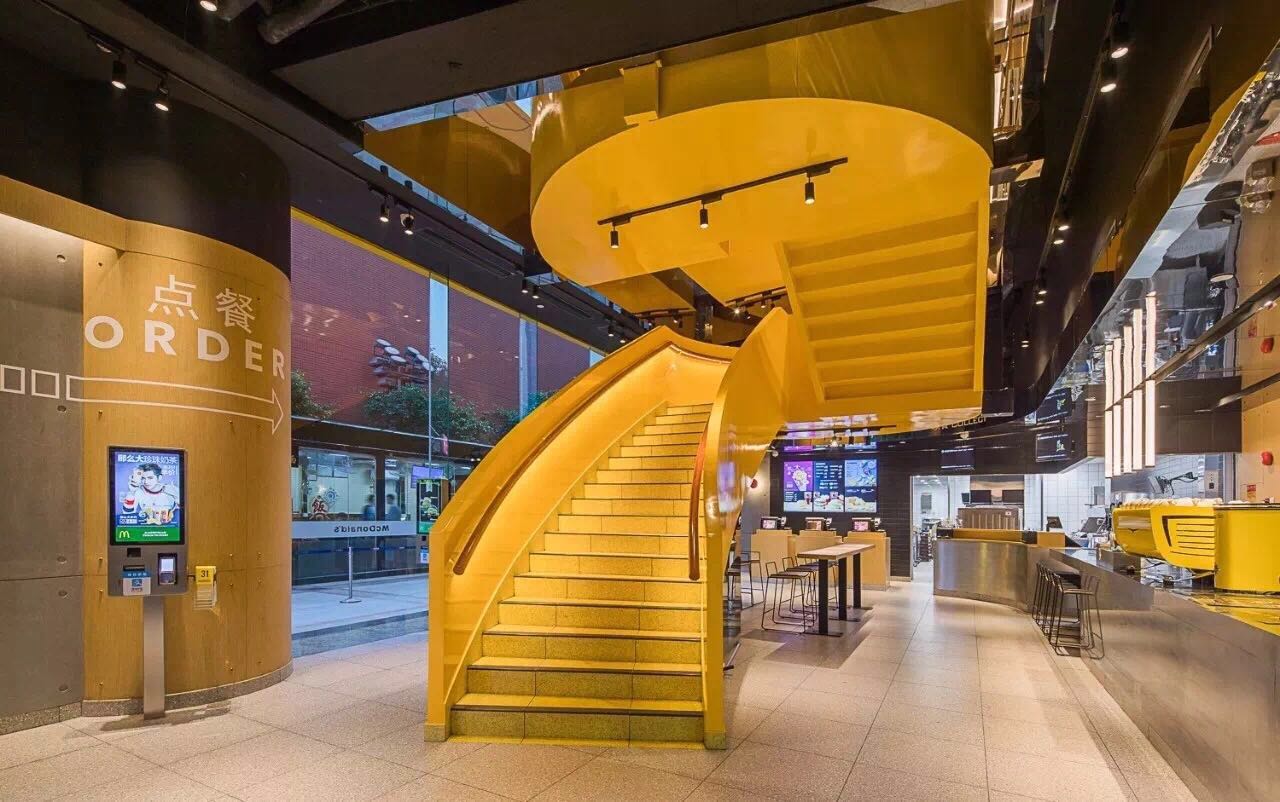
    31 years ago, McDonald’s opened its first store in China on the 8th of October. 31 years later, the fast-food industry giant announced the opening of a new China headquarters building in Shanghai’s West Bund. It will be home to the company’s over 600 HQ-based employees.

    Zhang Jiayin, McDonald’s China CEO, compares the move of the headquarters to a new journey. The cube-shaped building contains more futuristic elements of McDonald’s: an intensive-style innovation lab, the seventh Hamburger University, and the largest McDonald’s flagship store, which represent the company’s commitment to the Chinese market.

    “The Chinese market will be one of the most important markets in the world, and we will witness more here,” said Zhang Jiayin.

    The flagship store, which opened the same day as the new building was officially launched, is also the company’s first cube-style flagship restaurant in East China and McDonald’s China’s first LEED platinum-certified flagship restaurant. Another highlight is its various cross-over attempts with the CITIC Press Group, including the children’s bookstore and mini-theater.

    The third floor of the building contains McDonald’s in-house training institution, the Hamburger University, which will launch its first class next Monday.

    “The reason why we chose Shanghai is that it is a highland of talents, where you can find the best talents in the country and even the world,” noted Zhang. This year, McDonald’s China has planned over 130 university recruiting events across the country, to support the rapid development of its business. At present in McDonald’s China, employees born from 1995 account for more than 60%, and employees born from 2000 are close to 43%.

    Apart from talented people, the company chose Shanghai for its headquarters as it is a giant test field for cutting-edge concepts, be it light meals or plant-based meat. “It is a base camp radiating the entire market in China. We will continue to develop, continue to expand in scale with brand differentiation, and serve more consumers,” added Zhang.

  • China’s Fintech Crackdown Not Over Yet

    China’s Fintech Crackdown Not Over Yet

    The governor of the country’s central bank said it would be taking more steps to curb monopolistic behavior among internet platform companies and strengthen consumer privacy and data security.

    We will continue to cooperate with anti-monopoly authorities to curb monopolies and actively deal with algorithm discrimination and other new forms of anti-competition behavior, Yi Gang, governor of the People’s Bank of China, said on Thursday.

    Yi added that the country would be strengthening the regulation of the payments sector and require all financial services companies to be licensed, Yi said at a Bank for International Settlements conference.

    According to the governor, financial businesses must be licensed to operate, firewalls must be set up between different parts of the business to prevent cross-sector risks, and the direct link between non-banks and banking information services must be cut.

    China’s once-flourishing fintech industry has been hit by a wave of regulation. State authorities forced Jack Ma’s Ant Group to cancel its much-awaited initial public offering last fall, and peer-to-peer lending, once booming in in the country, is now virtually nonexistent.

    The crackdown has also extended to the wider tech industry, with tightened restrictions in numerous areas such as payment links to financial products, collection of customer data, credit scoring services and overseas listings.

    In recent months, authorities have also introduced new rules to regulate the online gaming, after-school classes, and entertainment sectors.

  • Chinese labels flock to Paris to go global in high fashion

    Chinese labels flock to Paris to go global in high fashion

    Chinese fashion labels, including Shang Xia, Icicle, and Fosun Fashion Group, are embracing Paris as a springboard for their international ambitions, opening flagship stores in the city and hiring French designers to burnish their credentials.

    Chinese shoppers are the biggest buyers of luxury goods worldwide, including those of big European players like LVMH and Gucci owner Kering. But China also has its own fashion companies that are growing fast at home and are now targeting the global market.

    Chinese-owned brands are looking to expand abroad, sparking a trend of new labels being established in the country with the goal of international growth, said Yishu Wang, co-founder of Half a World, a firm that offers marketing advice to brands seeking to expand overseas.

    “The Chinese market is very saturated and it’s just become very, very expensive to grow,” she said, noting that it was easier to find backing from investors when taking a global view.

    But in fashion’s upper echelons, Chinese companies, including ones that have purchased established European labels, have so far found it hard to take off in Western markets.

    Shang Xia, founded a decade ago by Jiang Qiong Er and French luxury group Hermes International, who both remain shareholders, started out as a lifestyle brand focused on showcasing Chinese craftsmanship and then expanded into ready-to-wear fashion.

    While the label is well-known in China, it has yet to achieve the broader commercial success that many in the industry had expected.

    “Chinese luxury brands are still quite niche,” Kathryn Parker, a luxury sector analyst with Jefferies, said.

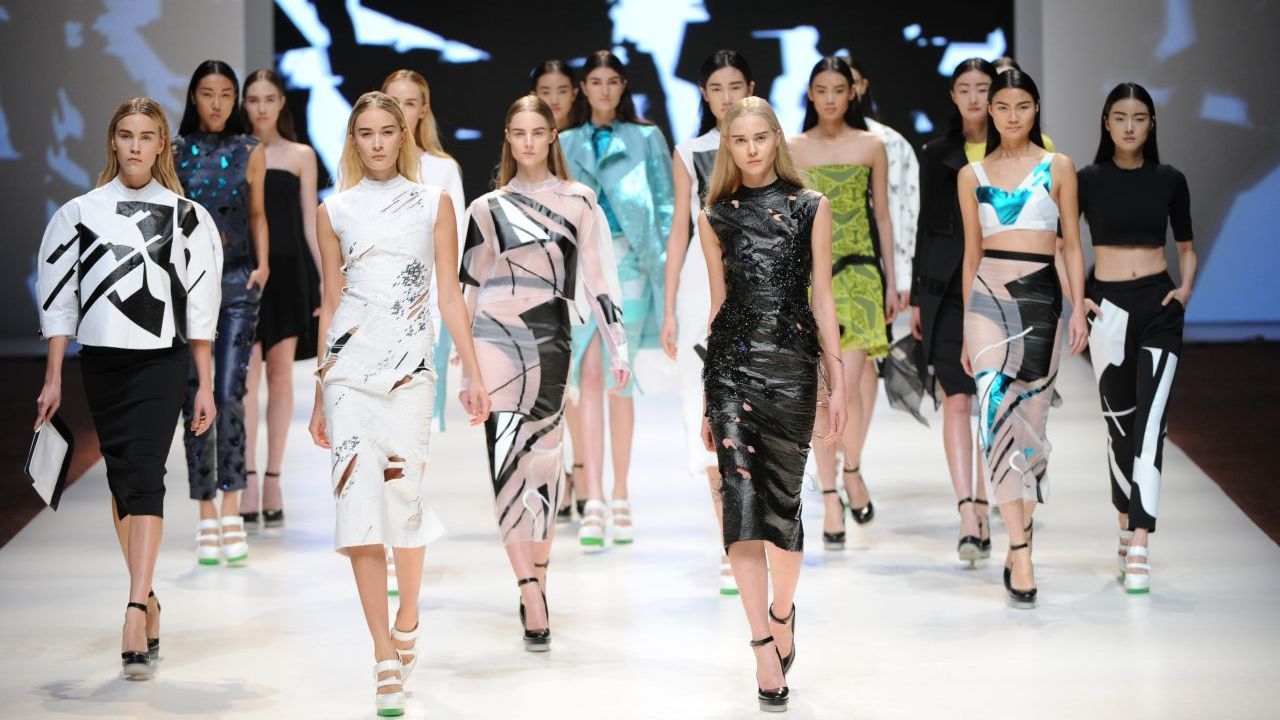
    Shang Xia showed its commitment to Paris when it held its first fashion show on Monday on the official Paris Fashion Week schedule, sending a lineup of models in polished suits in bright colors along a circular runway.

    With backing from a new majority shareholder, the Agnelli family holding company Exor, the label recently set up a design studio in Paris to complement production in Shanghai.

    “It’s a very bold move to do a show in Paris Fashion Week,” said Exor managing director Suzanne Heywood, who is also chairman of Shang Xia.

    FRENCH INFLUENCE

    “We are being watched closely,” said Isabelle Capron, international vice president at ICCF, the owner of Chinese label Icicle, noting that Chinese companies have so far had limited success in building high-end fashion businesses with an international reach.

    The French luxury executive was recruited in 2013 by Shouzeng Ye and Tao Xiaoma, founders of Icicle, which bought the historic French couture house Carven in 2018 and in July created the ICCF Group.

    Icicle, with sales of 334 million euros in 2020, up 12 percent from 2019, has 270 stores in 100 cities in China. The brand caters to urban professionals with earthy-toned overcoats and suits in high-quality materials, often made with natural dyeing techniques.

    Icicle’s founders chose Paris over London, New York and Milan for their investment, setting up design studios, and recruiting talent from French luxury labels.

    “It’s in Paris where you can find the talent to raise the level of the collections so that the label can reach an international level,” Capron said.

    LANVIN REVIVAL

    Fosun Fashion Group has been working to revive the historic French label Lanvin with younger, international consumers in mind, and hired Bruno Sialelli French designer from LVMH-owned Loewe label for the job.

    For the spring 2022 ready-to-wear runway show in Paris, the designer showed slim party dresses, worn by models in towering platform shoes with flared heels, along with an array of handbags and a new pair of futuristic sneakers – accessories are key to the label’s growth strategy.

    Supermodel Naomi Campbell closed the show, sweeping the runway with a long cape.

    Shang Xia executives said they are seeking to broaden their customer base among younger consumers, add new stores in Asia this year and push into the digital realm beyond China next year.

    “We are seeking new means to embrace digitalisation,” said Shang Xia founder Jiang Qiong Er, who flew in from Shanghai for the Paris show.

    Shang Xia’s new creative director Yang Li said he seeks to apply Asian and Eastern design principles to the products, pointing out a bag in the collection in the shape of a triangle.

    “In our culture, when we define shapes, they’re absolute and pure,” he said.

    “What I want to do here is to say that China is not just a market, but a creative force as well,” Yang Li added.

  • ZTE deepens partnership with China Telecom Global in Hong Kong

    ZTE deepens partnership with China Telecom Global in Hong Kong

    ZTE Corporation has signed a strategic cooperation agreement with China Telecom Global Limited in Hong Kong.

    According to the agreement, both parties will further deepen their strategic cooperation in cloud network services, ICT, data centers and global operation in the DICT field.

    “China Telecom and ZTE have a long-standing partnership. In the overseas markets, ZTE has become one of our major equipment suppliers since we started the project from scratch in Philippines in the second half of 2019,” said Mr. Donald Tan, CEO of CTG. “ZTE delivered the project with speed and quality, reaching a new milestone for our cooperation.”

    “As to the key strategic planning in the next few years, I believe that both CTG and ZTE will continue to strengthen the strategic cooperation and build a comprehensive, in-depth and long-term partnership to create synergies for future growth,” Mr. Tan added.

    “China Telecom has always been one of ZTE’s most important partners. Through CTG’s project in Philippines, our cooperation has started to expand in the overseas markets, which is greatly valued by ZTE,” affirmed Mr. Xiao Ming, SVP of ZTE Corporation.

    “Currently, ZTE has achieved the high-level delivery of the project in Philippines, and we believe in the future, both parties will deepen our cooperation and share more excellent experience with each other to take our cooperation to the next level.”

    Moving forward, ZTE and China Telecom Global will stay committed to the cooperation on cloud network services, ICT, data centres, digital transformation, compliance and risk control. The two parties are set to make full use of their comprehensive resource advantages and jointly expand overseas markets for a win-win future.

  • Alibaba apps start offering WeChat Pay option after government order

    Alibaba apps start offering WeChat Pay option after government order

    China’s Alibaba Group Holding Ltd has begun offering payment services from Tencent Holdings Ltd’s WeChat on a number of its apps, after the government ordered major tech firms to stop blocking each other’s services and links.

    Local tech blog 36Kr reported on Tuesday that users of Alibaba’s food delivery app Ele.me, luxury goods app Kaola and e-book app Shuqi can now purchase goods via WeChat Pay, one of China’s most popular online payment options.

    Alibaba’s used-goods marketplace app Xianyu and supermarket app Freshippo have also applied for WeChat Pay integration, the tech blog said.

    Alibaba confirmed the contents of the report to Reuters. Previously, the main way users could make payments on those apps was via Alipay, from Alibaba’s financial affiliate Ant Group.

    Earlier this month, the Ministry of Industry and Information Technology said it had asked internet companies to end a long-standing practice of blocking each other’s links and services on their sites. Such practices prevented app users from seamlessly jumping to services between rival companies.

    Days later, Tencent’s WeChat messaging app started allowing users to access links to rival platforms. Previously, it had not allowed users to click on links sent via chat to, for instance, product listings from Alibaba’s Taobao marketplace.

    The changes come as authorities continue to tighten regulation in the internet sector.

    In April, antitrust regulators fined Alibaba a record $2.75 billion for anti-competitive behavior.

  • Morgan Stanley’s China CEO Retires

    Morgan Stanley’s China CEO Retires

    Morgan Stanley’s chief executive of China will reportedly retire after nearly two decades with the American lender.

    Wei Sun Christianson will retire from her role as China CEO and APAC co-CEO – roles she held since 2006 and 2011, respectively – according to a memo from the bank.

    Christianson will remain as an advisory director at the bank while fellow APAC co-CEO Gokul Laroia will take over as the sole CEO for the region.

    Christianson first joined Morgan Stanley in 1998 and, thereafter, took on senior roles at Credit Suisse and Citi before rejoining in 2006 as China CEO. Under her leadership, Morgan Stanley expanded its footprint in China across domestic securities and bonds underwriting, commercial banking, asset management, trust services, and yuan-denominated private equity investing.