Tag: China

  • Canada Goose under fresh fire in China over no-return policies

    Canada Goose under fresh fire in China over no-return policies

    China’s top consumer protection organization has warned Canada Goose Holdings Inc against “bullying” customers in China with its return policies, just three months after the winterwear brand was fined for false advertising.

    The premium down jacket manufacturer has been a hot topic on Chinese social media in recent days over its handling of a case involving a customer who wanted a refund of her purchases amounting to 11,400 yuan (US$1,790.17) after finding quality issues.

    She said she was told by Canada Goose that all products sold at its retail stores in mainland China were strictly non-refundable, according to her account which went viral online.

    State-backed media such as the Global Times newspaper later cited Canada Goose as denying that it had a no-refund policy and that all products sold at its retail stores in mainland China were refundable in line with Chinese laws. The company did not respond to Reuters’ request for comment.

    That has not failed to quell criticism of the brand.

    “No brand has any privileges in front of consumers,” the government-backed China Consumer Association (CCA) said in an opinion piece posted on its website on Thursday morning.

    “If you don’t do what you say, regard yourself as a big brand, behave arrogantly and in a superior way, adopt discriminatory policies, be condescending and bully customers, you will for sure lose the trust of consumers and be abandoned by the market,” the CCA said.

    Representatives of the brand were summoned for talks on Wednesday by the Shanghai Consumer Council to explain its refund policy in China.

    The dressing-down of Canada Goose comes as tension between China and Western countries has fuelled patriotism and driven some shoppers to turn to home-grown labels.

    Canada Goose was also fined 450,000 yuan in September in China for “misleading” consumers in its ads.

  • Tim Hortons China to open coffee shops in Metro’s China stores

    Tim Hortons China to open coffee shops in Metro’s China stores

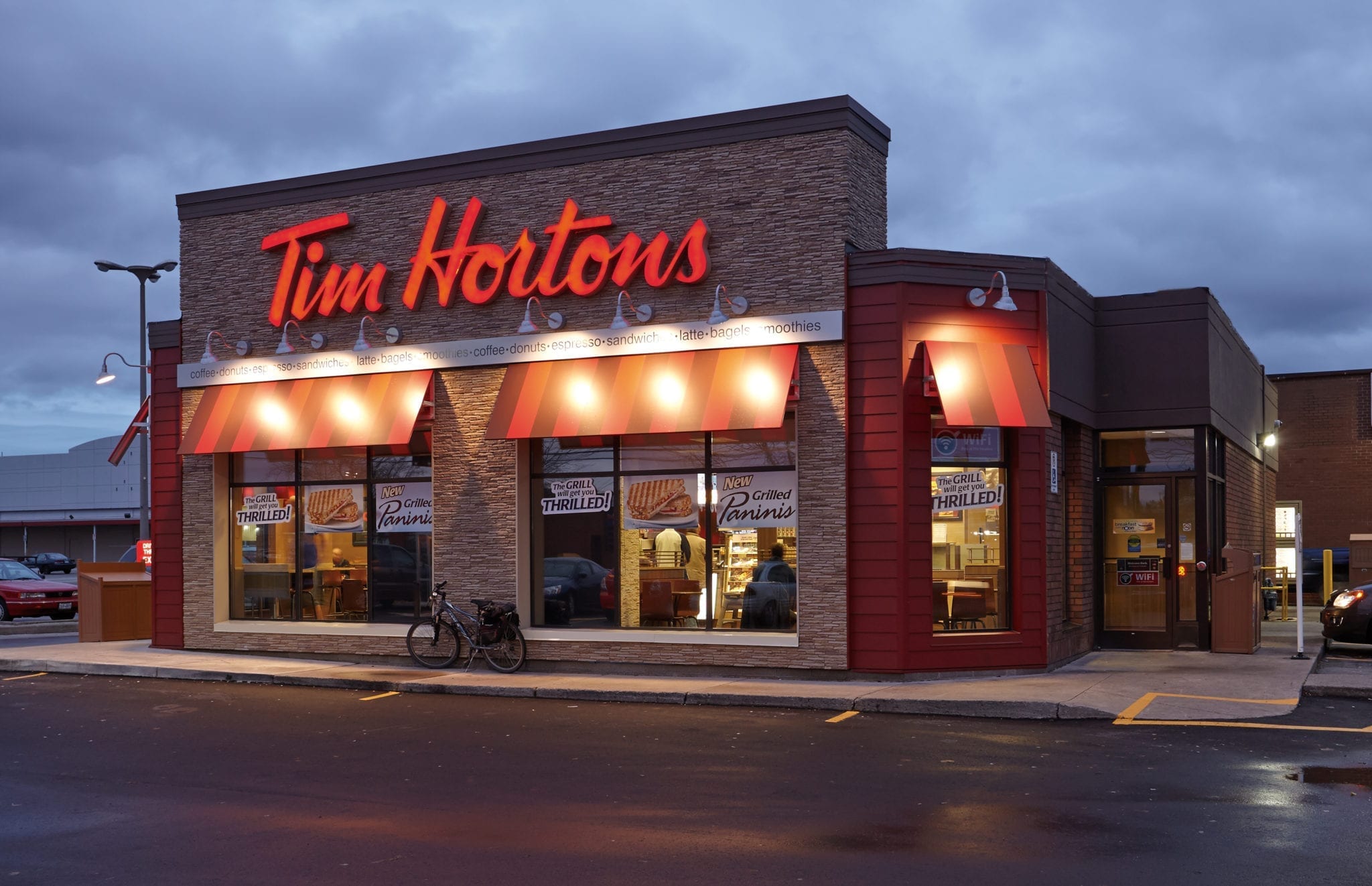
    Tim Hortons China (Tims China) is ready to further expand its presence in the Chinese market by entering a strategic partnership with Metro China, a joint venture of Wumart and Metro.

    Under the terms of the partnership, Tims China will become the exclusive coffee shop brand in Metro stores across the country.

    Tims China CEO Yongchen Lu said: “Through this agreement, we can reach millions of new customers to share our welcoming guest experience and extensive high-quality product offerings.

    “Over the next few years, we plan to strategically open Tims Go coffee shops in Metro China stores across 60 cities, growing our brand, revenue, and margins.”

    To mark the beginning of this partnership, Tims China opened seven Tims Go coffee shops across four cities using Tims China’s compact-store model.

    By next January, the partners intend to open at least nine Tims Go shops across six Chinese cities, namely Shanghai, Chengdu, Qingdao, Nanjing, Langfang, and Dalian.

    Additionally, the partnership will benefit Tims China with preferred site selection, delivery services, and complimentary marketing initiatives.

    With the new openings, Tims China will operate more than 335 stores across the country.

    Metro China deputy CEO Chen Zhiyu said: “We are delighted for Tims China to become one of our anchor tenants as we believe the brand will bring convenience and quality coffee products at great value to our members.

    “Our partnership will also create a strong link between daily shopping and coffee consumption in our stores that will greatly improve the overall shopping experience for our middle-class customers.”

    In March, Tims China secured funds in a financing round that was led by Sequoia Capital China and Tencent Holdings.

  • Apple is now the biggest smartphone brand in China

    Apple is now the biggest smartphone brand in China

    It seems that Apple has finally conquered China (again). According to new research by Counterpoint, the Cupertino brand saw the highest growth of all smartphone brands on the Chinese market, scoring 46% month-over-month growth. Apple surpassed Vivo in October 2021 to become the largest smartphone OEM in the country.

    “Apple could have gained more if it were not for the shortages, especially for the Pro versions,” commented research director Tarun Pathak. “But still, Apple is managing its supply chain better than other OEMs.”

    The iPhone 13 series is the major culprit behind the growth, as iPhone 13 sales grew 46%, while the entire Chinese smartphone market saw only a minor 2% month-to-month increase in October 2021.

    Of course, looking at the graph it’s clear to see that Huawei has lost its dominance in China since the US trade ban, and that’s another reason for Apple’s rise in the country. Apple is retaking the number 1 place in China for the first time since December 2015.

    “Due to supply issues, the normal wait time for the iPhone 13 Pro and iPhone 13 Pro Max ranges between four and five weeks in China. Some Chinese customers choose to pay premiums to get the new phones delivered immediately. Overall, the China market has been slow throughout the year and Apple’s growth is a positive sign. It indicates that Chinese smartphone users are maturing fast and are looking to buy more high-end devices, which can be a good opportunity for brands. The supply chain is also prioritizing higher-end and higher-margin devices amid the shortages,” said Counterpoint analyst Varun Mishra.

  • China Beefs Up Rights Of Workers In Ride-Hailing Industry

    China Beefs Up Rights Of Workers In Ride-Hailing Industry

    China issued guidance on Tuesday to strengthen protection of employee rights and interests in new transport sectors.

    In a statement, the transport ministry said ride-hailing companies should improve income distribution mechanisms and provide social insurance for drivers.

  • StanChart Hires Amazon Technologist

    StanChart Hires Amazon Technologist

    He relocates to Singapore from Sydney, where he spent four years as a senior manager, solution architecture, at Amazon Web Services (AWS).

    Standard Chartered has appointed technologist Brendan Royal as its global chief architect, according to a report on «eFinancialCareers.»

    Royal has over 20 years of experience in financial services across retail, wealth and corporate banking, specializing in large transformation programs with a deep focus on tech and building enduring teams, his LinkedIn profile says. Before joining Amazon in 2019, he was head of banking architecture at Nordea, divisional director for BFS Architecture at Macquarie, and worked for CBA between 1999 and 2013, latterly as head of retail and business banking architecture.

    The move follows the bank’s five-year strategic global agreement with AWS to drive its digital transformation and deliver new personalized banking services in the bank’s 60 markets worldwide, signed in November 2020.

    As banks partner up with cloud platforms like AWS, they are increasingly also hiring from these same providers, the report said, noting that StanChart hired Google’s Singapore-based cloud engineering lead, Carl Bachman Kharazmi, as managing director and global head of cloud engineering and platforms earlier this year.

  • China’s Anti-Monopoly Crackdown Hits Banking Sector

    China’s Anti-Monopoly Crackdown Hits Banking Sector

    Chinese regulators extend their antitrust crackdown to the banking sector with a fine against shareholders of a virtual lender.

    The shareholders of Chinese virtual lender AliBank – China Citic Bank (70 percent) and a Baidu unit called Fujian Baidu Bo Rui Netcom (30 percent) – have been fined 500,000 yuan ($78,280) over a violation of the country’s anti-monopoly law, according to a statement from the State Administration for Market Regulation (SAMR).

    SAMR issued a fine over the failure to report the AiBank joint venture ahead of its formation in 2015.

    The penalty was part of a broader batch of more than 40 cases with fines issued to other tech firms outside of the banking sector such as JD.com, Tencent, Baidu, ByteDance, and Alibaba.

    AiBank is an artificial intelligence-focused lender that leverages related capabilities from search engine giant Baidu.

    It is one of five licensed digital banks in China and the only one with a state-backed shareholder in Citic.

    According to research by McKinsey released in January, Chinese digital banks own roughly 5 percent of the country’s 5 trillion yuan unsecured consumer loan market and over 7 percent of the SME loan market.

  • China October smartphone shipment grows 30.6% from a year ago

    China October smartphone shipment grows 30.6% from a year ago

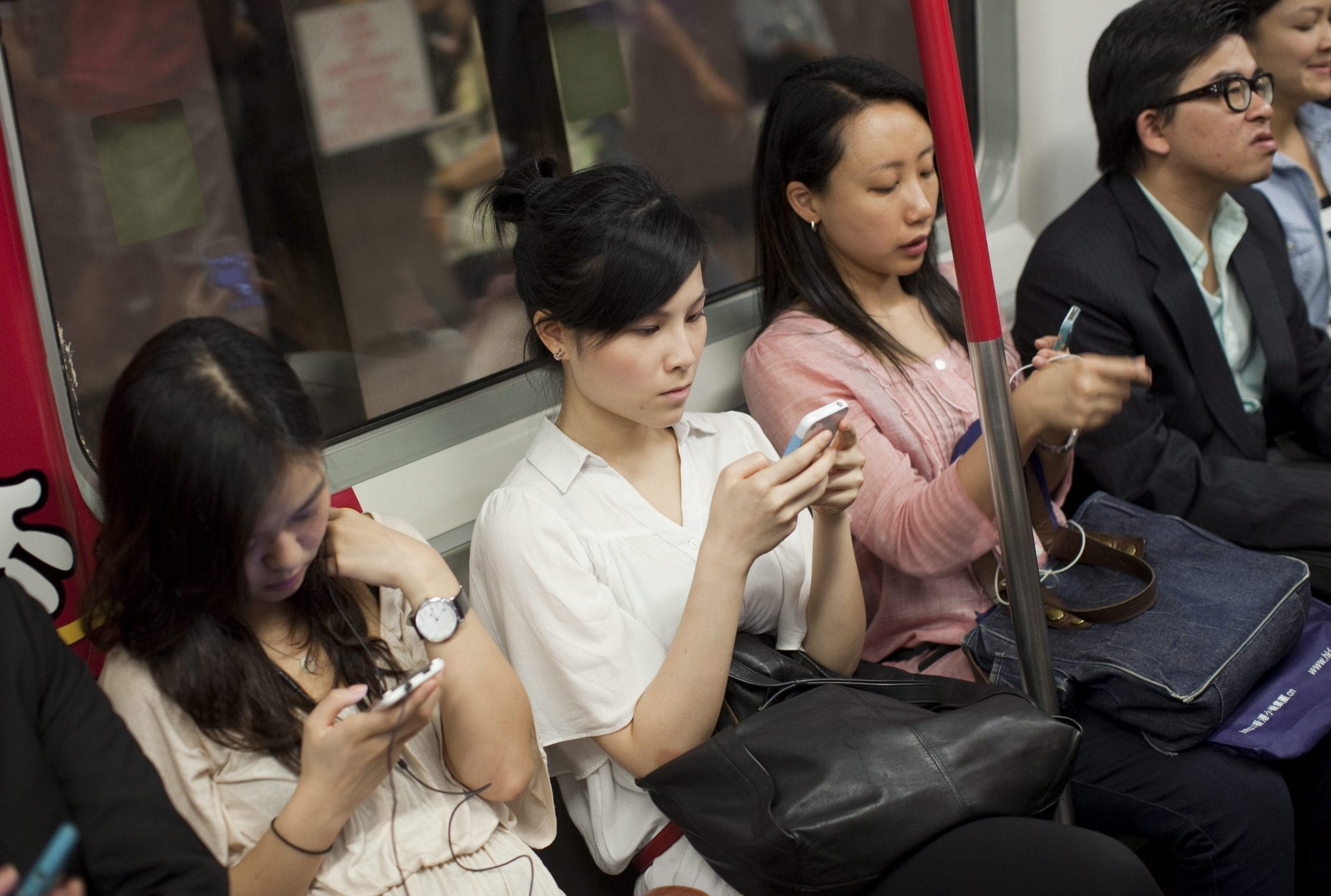
    According to the China Academy of Information and Communications (CAICT), China’s shipment of smartphones grew 30.6% year-on-year to 32.7 million handsets in October. This is a significant increase from a year ago, in October 2020, when shipments reached 25 million.

    An increase in shipment, compared to the decline experienced in the first half of the year, is largely driven by the release of the latest Apple iPhone 13 in China in September.

    When iPhone preorders were first released in September, demand was so high that Chinese retail websites reportedly went down. During the initial phase, as many as 5 million preorders were placed, signaling Apple’s continued popularity in the country.

  • China and South Korea boost Burberry sales

    China and South Korea boost Burberry sales

    Double-digit sales growth in China, South Korea, and the Americas underpinned a 37-per-cent lift in first-half sales for luxury fashion group Burberry to US$1.63 billion.

    The lift reflected a recovery in-store sales as Covid-related lockdowns and trading restrictions eased in the six months to September 25, compared with the same period a year earlier when a swathe of stores was closed across key markets.

    “We have made strong progress in the half,” said Burberry chair Gerry Murphy in a statement.

    “Full-price sales are growing at a double-digit percentage, driving margin expansion and strong free cash generation. We are seeing an acceleration in performance in countries less impacted by travel restrictions and we remain confident of achieving our medium-term goals.”

    The company reported an adjusted operating profit of $263 million, up 16.2 percent year on year.

    While the Americas, Korea, and China buoyed sales, the company said other regions continued to be impacted by reduced tourist levels.

    The company said its new store format – of which 15 are now complete with a target of 50 by the end of next March – was drawing higher-spending customers through the doors. Online sales were performing well with sales of goods at a full price almost doubling year on year.

    During the six months, Burberry announced its CEO Marco Gobbetti was to stand down early next year, to be replaced by Jonathan Akeroyd in April.

    Murphy paid tribute to Gobbetti’s “vision and leadership” during Burberry’s transformation and said the board expects Akeroyd will build on the strong foundations to accelerate growth and deliver further value for shareholders.

  • Muji launches fresh food concept store with JD

    Muji launches fresh food concept store with JD

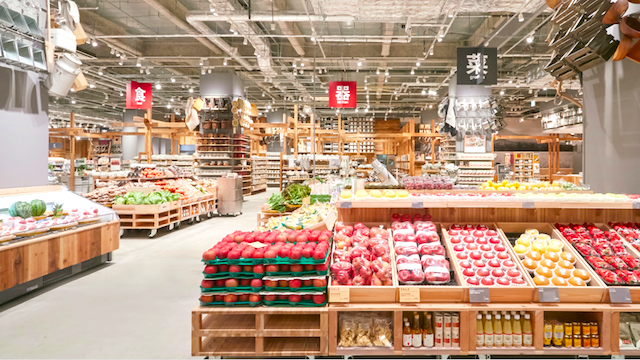
    Japanese retail giant, Muji, has forayed into the fresh food industry with the launch of a food complex in collaboration with JD’s Seven Fresh in Shanghai.

    Operated by both companies, the complex is located inside Ruihongtiandi shopping mall and spans 400sqm, housing a Muji store and fresh food supermarket, Seven Fresh, which is also the chain’s first presence in the city.

    Unlike Muji’s usual stores, the 1208sqm Muji store in the complex offers an expanded selection of food products, including ramen, oatmeal, frozen food, ice cream and pizza. Its fashion brands, Muji Labo and Muji Walker, are also available in the store.

    The Seven Fresh store features an omnichannel concept with both online and offline services, and customers can have their online orders delivered in as soon as 30 minutes.

    The store-in-store concept is not the first collaboration of the two companies: last year, Muji launched a new format MUJIcom, at JD headquarters in Beijing, providing employees selected products such as daily necessities and food, including lunch boxes featuring simple meals.

  • China Vehicle Sales Fall 9.4% In October 2021

    China Vehicle Sales Fall 9.4% In October 2021

    China’s auto sales fell in October for a sixth consecutive month, slumping 9.4% from a year earlier, industry data showed on Wednesday, as a prolonged global shortage of semiconductors disrupts production. Overall sales in the world’s biggest car market were 2.33 million vehicles in October, data from the China Association of Automobile Manufacturers (CAAM) showed. This time of year, known as “Golden September, Silver October”, is usually a high point in sales for the industry, with consumers making purchases after staying away from showrooms during the stifling summer months.

    One bright spot in the data was the strong sales of new energy vehicles (NEV), which grew 135% in October to 383,000 units, thanks to the government’s promotion of greener vehicles to cut pollution. These include battery-powered electric vehicles, plug-in petrol-electric hybrids and hydrogen fuel-cell vehicles.

    Tesla Inc sold 54,391 China-made vehicles in October, slightly less than 56,006 the previous month when it hit the highest monthly sales in China since it started production in Shanghai about two years ago, according to data of export, the China Passenger Car Association (CPCA) released on Monday.

    CAAM official Chen Shihua said chip supply is easing in the fourth quarter which is helping the country’s auto production to grow gradually.

    Chinese EV makers Nio Inc sold 3,667 cars last month and Xpeng Inc delivered 10,138 vehicles. Volkswagen AG said it sold over 12,000 ID. series EVs in China in October.

  • Fashion platform Miinto expands into China

    Fashion platform Miinto expands into China

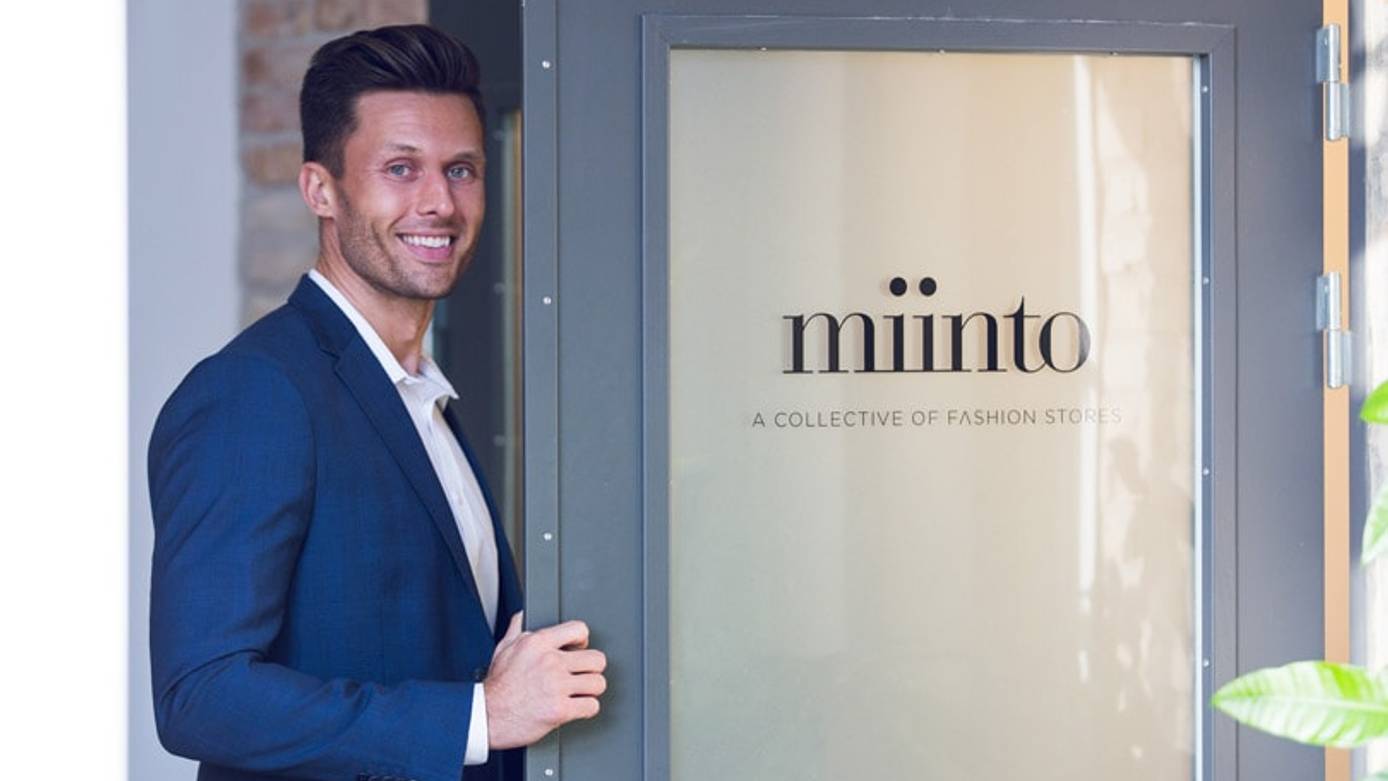
    As one of the largest and most popular fashion e-commerce platforms in Europe, MIINTO officially announced its launch in China on November 1, 2021.

    MIINTO was established in Denmark in 2009, and the online platform was officially launched in 2010. As one of Europe’s largest fashion e-commerce platforms, it has already entered 13 European countries, including Norway, Sweden, the Netherlands, Poland, Belgium, Switzerland, Germany, France, the United Kingdom, Italy, and Spain.

    MIINTO has a strong influence in the European market and continues to develop on the road of internationalization. The decision to enter the Chinese market this time also shows their determination to expand into the international market. Although China’s e-commerce industry is developing rapidly, the market for luxury brands and overseas fashion brands is still a blue ocean. From a global perspective, it has become a major trend for luxury brands and various fashion brands to accelerate their embrace of e-commerce platforms, but the scale of overseas fashion brands on domestic e-commerce platforms cannot be achieved overnight. The reasons behind this are complicated. For example, these brands have not yet considered the Chinese market, such as unable to find suitable cooperation channels and so on. Nowadays, many domestic consumers buy overseas fashion brands or luxury goods online, most of them choose overseas shopping or purchasing agents. The authenticity of the goods and the appropriate price are difficult to guarantee.

    As one of the most promising e-commerce platforms in Europe, MIINTO has redefined the traditional fashion e-commerce model and has become the first choice of many European consumers for online shopping. Based on high-quality services and strong fashion brand and boutique resources accumulated over the years, I believe MIINTO can give Chinese consumers a wonderful shopping experience and open a new chapter in the Chinese market.

  • Self Driving Startup Momenta Raises $500 Million

    Self Driving Startup Momenta Raises $500 Million

    Chinese self-driving startup Momenta has raised $500 million in a Series C funding. This round of funding comes after GM invested $300 million in the startup. This means now Momenta is valued at over $ billion.

    Momenta’s product portfolio includes advanced driver assistance systems which it sells to OEMs like GM and another tier 1 suppliers like Bosch. It also does R&D on unmanned level 4 ADAS systems. It has a high-profile constellation of investors including China’s SAIC group, GM, Toyota, Mercedes Benz and Bosch. It also has Temasek which is Singapore’s sovereign fund and Jack Ma’s Yunfeng Capital onboard as institutional investors.

    Momenta’s main point of differentiation is its relationship with automotive OEMs as many of the top ones are its investors as well. Many of its peers have taken a different path as they have developed in-house robotaxi fleets which is a more capital-intensive operation. It harvests data from its customers who are mass-producing vehicles.

    In China, it has Pony.AI and WeRide as its main rivals, and while they have raised a lot of money Momenta’s fundamentals are stronger because of its frugal operations.

    For GM, Momenta deploys a solution that is a mixture of consumer-grade millimeter-wave radars and high definition cameras which will be used in the automaker’s cars sold in China. Momenta also opened an office recently in Stuttgart in Germany probably because of its relationship with Mercedes Benz which is also based out of the same city.

  • China Records First Case of Money Laundering via CBDC

    China Records First Case of Money Laundering via CBDC

    The pioneer of central bank digital currency, China recorded its first case of money laundering via the electronic yuan.

    Officials arrested 11 members of a criminal group in the Fujian province last week for allegedly laundering money using the country’s central bank digital currency (CBDC), according to Chinese media reports.

    The group allegedly scammed an individual after making false claims of ordering an item with quality issues.

    The victim was instructed to transfer more than 200,00 yuan ($31,000) to multiple accounts provided by the suspects.

    China is widely considered a CBDC pioneer after starting research into the field as early as 2014 and recently rolling out the digital yuan for public use via pilot programs.

    Although there is still no official launch date, many onlookers expect a full introduction in February 2022 in time for the Beijing Winter Olympics.

  • Haidilao to close 300 restaurants as Covid curbs eating out

    Haidilao to close 300 restaurants as Covid curbs eating out

    China’s biggest hot pot chain Haidilao is slowing its rollout of new restaurants and increasing diversification of its fare, tempering its rapid expansion during the coronavirus pandemic to cope with a subsequent slump in consumer spending.

    Haidilao, which became so popular in recent years that it appeased customers in hours-long queues for its soups by providing free manicures, snacks and shoe shines, is at the forefront of reckoning in China’s restaurant industry post-pandemic.

    The chain has seen falling table turnover rates and profits as consumers dine out less and new stores cannibalize business at older locations.

    “We will open stores based on market demand, and compared to before, will appropriately slow down our opening pace,” the company said in a written response to Reuters’ questions about its strategy.

    China’s catering industry shrank 4.5% in August, before recovering for growth of 3.1% last month. Analysts said it will likely remain volatile for some time amid the country’s broader patchy economic recovery.

    “This year, fresh waves of the epidemic happened repeatedly, and passenger flow in commercial areas is volatile, affecting the recovery of core business indicators,” Tianfeng Securities wrote in a research note last month.

    Haidilao was initially undeterred by the pandemic, embarking on an expansion drive in early 2020 that has doubled its outlets since then to almost 1,600 currently. It did so by snapping up sites left behind by vacating weaker players, often helped by deep discounts offered by landlords.

    But that expansion pushed Haidilao’s table turnover rate down to 3.0 – or three sets of customers per day on average – in the first half of this year, from 4.8 in 2019.

    Xiabu Xiabu, another Hong Kong-listed Chinese hot pot chain, has said it plans to shut 200 of its 1,010 stores after losing 50 million yuan ($7.76 million) in the first half of 2021.

    Haidilao’s share price has fallen to around HK$30 from a record high of HK$86 in February.

    “The company will need to create demand going forward, which is more challenging than fulfilling demand,” China Renaissance analysts wrote in an August note.

    to turn its fortunes around, Haidilao has opened more than 10 outlets specialising in fast food such as noodles and dumplings, moving beyond the hot pot, the signature dish of southwestern Sichuan province where the company was founded 27 years ago.

    However, with a maximum of just five stores each and an average spending per guest of 10 to 20 yuan – versus 107.3 yuan for the Haidilao restaurants – the sub-brands contributed just 0.5% to first-half revenue.

    Haidilao last month closed a potato noodle restaurant less than a year after opening it in the central city of Zhengzhou, without publicly citing a reason.

    In other diversification attempts, the company has opened bars in three of its Beijing restaurants and is promoting its delivery service, a unit where revenue initially rose during the pandemic.

    However, delivery revenue dropped from 409.6 million yuan, or 4.2% of total revenue, in the first half of 2020 to 345.7 yuan, or 1.7% of total revenue, in the first half of 2021.

    “(Eating) hot pot has a strong social feature so people are less likely to order hot pot at home,” said Zhu Danpeng, an independent food industry analyst.

    Haidilao opened a store on Alibaba’s marketplace Tmall several months ago to sell items including lipsticks inspired by its soup bases with names such as “capsicum rouge” and “summer tomato”.

    Zhu said Haidilao’s multi-brands strategy was the right move but the company did not have a lot of room for growth: “Haidilao has reached a certain phase with its development, as a man has reached his middle age.”

  • Red China – up-and-coming wineries gain recognition

    Red China – up-and-coming wineries gain recognition

    Chinese winemaker Legacy Peak, which started producing grapes more or less by accident in 1997, symbolizes the rapid growth of an industry that now wins accolades in global markets, but it once came close to giving up.

    “We wanted to pull out all the vines and call it quits,” said Liu Hai, its second-generation owner, recalling early struggles to cultivate a barren plot received from a local government in payment for construction work.

    His family knew nothing about farming when they got the land in the arid north-central region of Ningxia on condition that it be devoted only to grapes, but they started making wine a decade ago, after wineries that used their fruit won several awards.

    Since then, Liu says the winery has won awards and found export markets in France, Germany, and Southeast Asia, despite the annual output of fewer than 100,000 bottles.

    From the rolling hills of coastal Shandong province to the desert heights of Ningxia and the deep valleys of southwestern Yunnan, Chinese vineyards and wineries are winning recognition.

    “China is an up-and-coming fine wine producer, and its best wines can compete on the world stage,” said wine educator Edward Ragg, who is a reviewer for the influential Robert Parker Wine Advocate.

    The products of wineries such as Chateau Nine Peaks in Shandong, Silver Heights and Grace Vineyard in Ningxia, and Ao Yun in Yunnan, are rated as “outstanding wine of exceptional complexity and character” by Parker’s newsletter.

    Some, such as Nine Peaks and Legacy Peak, are finding export markets in Asia and Europe.

    China’s wine market is the sixth-largest in the world, with event organizer Vinexpo saying it consumed $14.8 billion worth of wine in 2018, and forecasting sales of $18 billion by 2023.

    But domestic wineries must battle an image problem, as consumers at home can be suspicious of their quality and often put off by high prices.

    “It was always easier to sell to foreigners because they are more open-minded, but it has been a tough sell with Chinese customers,” said Liu.

    Other problems are high production costs and erratic weather that can hamper efficiency and quality, while a slowing economy and the COVID-19 pandemic have hit China’s wine consumption since 2018.

    Modern winemaking in China dates fromg the 1980s, when French firms, such as the precursor of Remy Cointreau, began investing after the door was opened to foreign businesses by then-leader Deng Xiaoping.

    While the French influence persisted in a market dominated by reds and a glut of Bordeaux imitations, quality began improving in the early 2000s.

    That was a time when vineyards focused on growing healthier grapes just as incomes grew sharply, with more people traveling abroad and drinking more wine.

    Now home-grown wineries can allay the suspicions of some consumers, such as Yang Lu, who owns a restaurant in the Chinese capital.

    “I was amazed by how the aroma was full of nice fruits and flowers,” said Yang, describing her experience last year of first sampling the Mountain Wave label produced in Ningxia.

    “It had a nice color and was smooth with a long finish.”

    Until then, Yang, who is in her 30s, educated overseas, and widely traveled, had almost always ignored domestic wines, uncorking only imports such as New Zealand wines made from pinot noir.

    Some winemakers, such as Ian Dai, 33, who is behind the Ningxia brand Xiaopu, priced in the range from 168 yuan ($26) to 300 yuan ($47), are turning away from industrial methods in the search for a Chinese signature variety.

    Dai said he was looking to more natural methods, such as fermenting without commercial yeast or leaving acidity and tannin levels unadjusted to “let grapes express themselves”.

    An independent with no vineyards or winemaking equipment of his own, Dai is in his fifth year of winemaking after dropping out of college in Sydney and spending a decade in wine sales.

    Dai hopes to find grape varieties for a wine that represents China.

    “As a winemaker I should have the ego to make the best wine in this climate with grapes grown here,” said Dai, who expected it would take two decades to produce such a wine in China.

    Chinese wineries are also experimenting with alternative grape varieties, such as marselan, aglianico and saperavi. Marselan, a cross between cabernet sauvignon and grenache embraced years ago by Legacy Peak and others, offers high yields and a fruitiness much needed by Chinese reds, experts say.

    “Marselan could one day become China’s signature wine grape, like malbec is to Argentina,” added Ragg, a holder of the Master of Wine qualification