Tag: China

  • China Tightens Offshore Listing Rules

    China Tightens Offshore Listing Rules

    Chinese companies are set to face more even more pressures when listing abroad following a statement from the country’s cabinet that signaled tighter supervision.

    China will increase supervision over Chinese firms listed offshore, according to a statement from the State Council underlining a focus on cross-border data flows and security as well as illegal activities in the securities market such as fraudulent issuances, market manipulation and insider trading.

    The rule changes will empower domestic regulators to have influence over Chinese firms seeking to go public on foreign stock exchanges.

    The decision by Chinese authorities to revise listing rules follows ride-hilling giant Didi’s $4.4 billion market debut in New York last week.

    Shortly after Didi’s IPO, the Cyberspace Administration of China (CAC) launched a probe against the firm and banned it from accepting new users during the review.

    Didi’s stock price has fallen by a around quarter to $12.49 from its post-IPO peak of $16.40.

  • Tesla Sold 33,155 China-Made Vehicles In June

    Tesla Sold 33,155 China-Made Vehicles In June

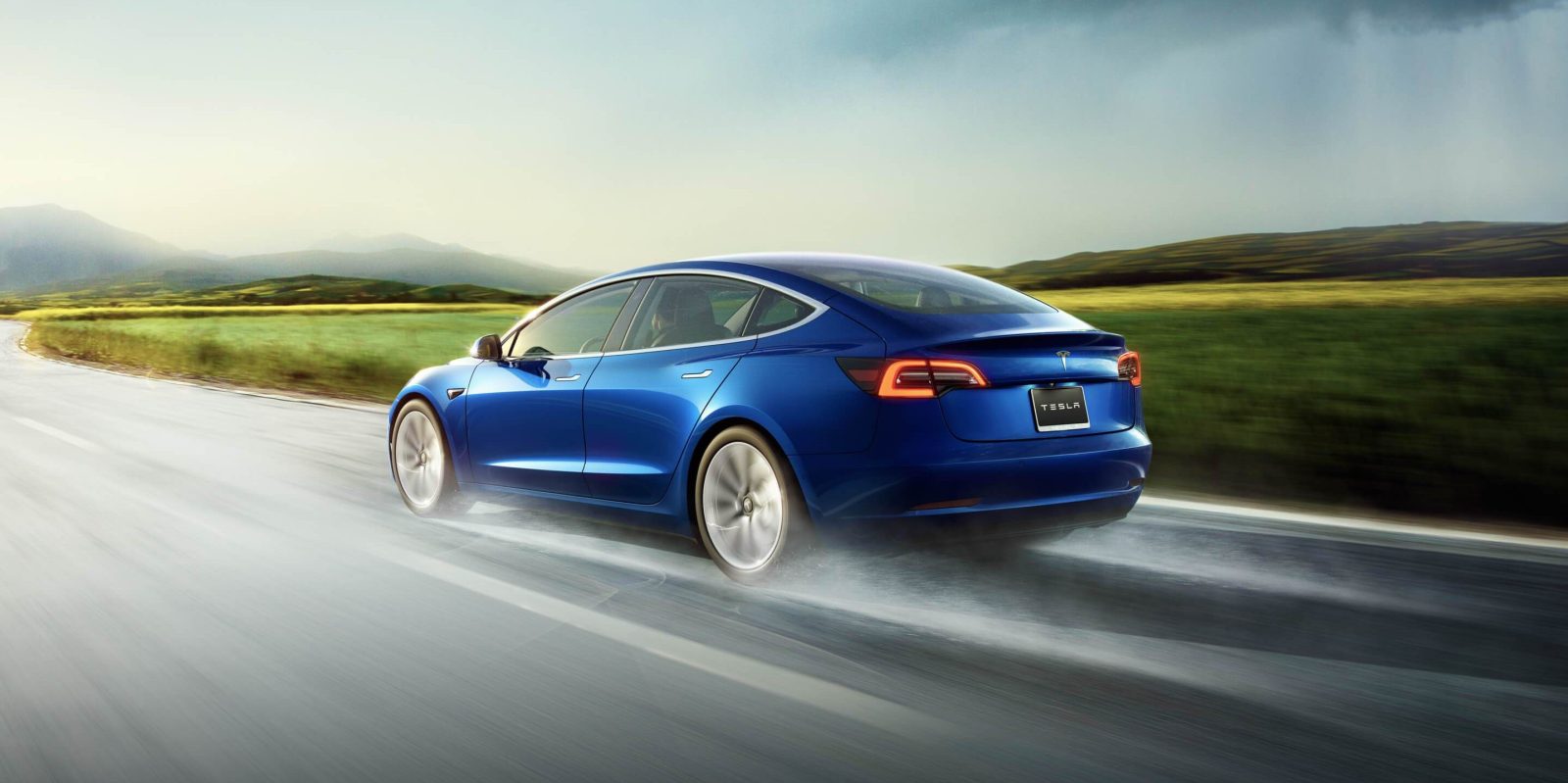
    U.S. electric vehicle maker Tesla Inc sold 33,155 China-made vehicles, including those for export, in June, China Passenger Car Association (CPCA) said on Thursday.

    Tesla, which is making Model 3 sedans and Model Y sport-utility vehicles in Shanghai, sold 28,138 China-made cars in China and exported 5,017 cars in June.

    In May, Tesla sold 33,463 China-made cars.

    On Thursday, Tesla launched Model Y cars with a standard driving range in China, lowering the starting price for the vehicle to 276,000 yuan ($42,588) in the world’s biggest auto market.

    BYD sold 40,532 so-called new energy vehicles, which include battery-electric and plug-in hybrid vehicles, last month in China. General Motors Co’s venture with SAIC Motor sold 30,479 such cars.

    CPCA also said China sold 1.6 million passenger cars in June, down 5.3% from a year earlier.

  • Paul Frank parent Futurity Brands names China CEO

    Paul Frank parent Futurity Brands names China CEO

    Futurity Brands Limited announced today the appointment of Mr. Zhu Jianshi, as Chief Executive Officer of Futurity Brands China. Stan Wan, Futurity Brands Chairman and Group CEO, said: “After a rigorous search, the Board concluded that Mr. Zhu’s expertise and considerable experience in the licensing, fashion and retail sector, along with his exemplary track record of achievements as a CEO and COO made him the outstanding candidate for the role.

    Mr. Zhu is an accomplished leader and has consistently demonstrated throughout his career the ability to innovate and introduce high-performance strategies in challenging environments yielding impressive growth and significant value creation. I look forward to his partnership in China to create a new chapter of success for the Futurity Brands Group.”

  • Li & Fung reveals first private-label brands created for JD

    Li & Fung reveals first private-label brands created for JD

    Li & Fung Limited, the world’s leading supply chain solutions partner for consumer brands and retailers, today announced that as part of a strategic investment made by JD.com in 2020, it is partnering with JD.com to provide end-to-end digital supply chain management services for JD.com’s private brand initiatives.

    Together, they are creating a multi-category collection that includes homeware under the brands “Made by JD” and “Best Home”, and developing a pet product brand called “Jingmeng” (“Cute Pet”) to capture China’s burgeoning pet care market.

    Building on JD.com’s investment and strategic digital supply chain partnership with Li & Fung, focusing on private brands, the joint venture’s newest initiative will leverage the emerging C2M (consumer-to-manufacturer) business model that is rapidly gaining momentum in Mainland China.

    C2M enables manufacturers to dramatically shorten the time from design to consumer from the industry average of 40 weeks to as little as two weeks, delivering high-quality, trend-responsive, products to the consumer. Products are tested in multiple SKUs of small quantities through e-commerce channels, providing more accurate data analysis of end-consumer preferences so that iterations can be made quickly and inventory can be adjusted in real-time.

    “JD.com can leverage Li & Fung’s 3D product design expertise and supply chain know-how to create and produce these new private label brands,” said Mr Wilson Zhu, newly-appointed head of C2M initiatives at Li & Fung.

    “By continuing to leverage the respective strengths of both companies we will deliver precisely what consumers are looking for – within their budget and at a much faster speed – through better forecasting, smarter production and maximum supply chain efficiency.”

    Mr Wang Xiaosong, Senior Vice President of JD.com and Head of JD.com’s private brands division said, “Li & Fung’s industry-leading 3D product design capabilities and wide-ranging product category expertise will greatly enhance our ability to create private-label brands that online consumers welcome and trust. The brand development process will also be informed by insights from our big data analysis”.

  • China’s Didi says app takedown may hurt revenue

    China’s Didi says app takedown may hurt revenue

    China’s biggest ride-hailing firm Didi Global said on Sunday that the removal of its “DiDi Chuxing” app from smartphone app stores in China is expected to have an adverse impact on its revenue.

    Earlier on Sunday, China’s cyberspace regulator ordered app stores to stop offering Didi’s app after finding that the company had illegally collected users’ personal data.

    “The company expects that the app takedown may have an adverse impact on its revenue in China,” the company said in a statement.

    Meanwhile, on Monday the cyberspace watchdog said it is investigating online recruiter Zhipin.com, and truck-hailing apps Huochebang and Yunmanman, ramping up its crackdown on the mainland’s tech companies amid tightened regulations on data security.

    The removal of Didi’s app, which does not affect existing users, comes days after Didi made its trading debut on the New York Stock Exchange in an initial public offering that raised US$4.4 billion.

    In a June filing, Didi reported revenue of about 42.2 billion yuan ($6.5 billion) for the three months ended March 31. Of that, 39.2 billion yuan came from its China mobility division while about 800 million yuan came from its international business.

    Didi has a dominant position in the online ride-hailing business in China and operates in 4,000 locations across 16 countries.

    Didi said it will strive to rectify any problems, and will protect users’ privacy and data security.

    Since late last year, Chinese internet regulators have cracked down more sharply on the country’s tech giants for violations of rules.

    The Global Times, a tabloid published by the ruling Communist Party’s official People’s Daily newspaper, said in a Chinese-language commentary on Monday that Didi’s apparent “big data analysis” capability could pose risks to the security of individuals’ personal information.

    “No internet giant can be allowed to become a super database of Chinese people’s personal information that contains more details than the country, and these companies cannot be allowed to use the data however they want,” Global Times said.

    Didi gathers vast amounts of real-time mobility data everyday. It uses some of the data for autonomous driving technologies and traffic analysis.

    In its IPO prospectus, Didi said “we follow strict procedures in collecting, transmitting, storing and using user data pursuant to our data security and privacy policies.”

    A senior Didi executive said on Saturday that the company stores all China user and roads data at servers in the country and it is “absolutely not possible” that it passed data to the United States.

  • H&M back to profit again, China sales hit by boycott

    H&M back to profit again, China sales hit by boycott

    Fashion retailer H&M’s global sales growth slowed in the second half of June and the Swedish company took a sales hit in China after its concerns over alleged human rights abuses in Xinjiang led to a social media-inspired boycott by shoppers.`
    The world’s second-largest fashion retailer aon Thursday reported a stronger-than-expected profit for its March-May quarter, after a loss in the same quarter last year.

    In China, sales were down 23% in local currencies when H&M was wiped off Tmall and domestic phone makers app stores in March after the retailer expressed concerns about the alleged Xinjiang human rights abuses.

    “With regards to China the situation remains complex. Beyond that we refer to what we have said before,” Chief Executive Helena Helmersson said, as H&M quantified for the first time the impact of the China boycott, which started on social media.

    H&M in late March said in a statement it was dedicated to regaining the trust of customers and partners China and that its commitment to the country remained strong.

    Helmersson said H&M was closely following the situation in Bangladesh – another main supplier – after a spike in coronavirus cases prompted the country to enforce a strict lockdown, although garment factories remain open.

    Group sales for June 1-28 were up a quarter year-on-year but 4% lower than in pre-pandemic 2019 as growth slowed from mid-June, highlighting a patchy recovery from the pandemic.

    Helmersson, speaking to analysts and reporters, attributed the easing in the second half of June to a combination of factors, including tough year-ago and 2019 comparisons, cold weather last week in some European markets, and how coronavirus restrictions were being eased.

    “We see signals of a strong recovery also in June, and that customers appreciate our collections,” she said.

    Analysts said the figures implied sales were down 9% on 2019 in the latter two weeks of June, and noted that rival Primark has also said trading was currently very volatile from week to week.

    “Recent weeks of trading highlight a mixed demand rebuild,” said Jefferies analyst James Grzinic.

    Quarterly pretax profit was 3.59 billion crowns ($419 million) against a year-earlier loss of 6.48 billion.

    “As more and more people are vaccinated and restrictions are eased, the world is gradually opening up and customers can once again visit our stores,” Helmersson said. “Online sales have continued to develop very well even as the stores have opened.”

    H&M said 95 of its 5,000 stores globally remained temporarily closed, against 1,300 at the start of March.

    Chief Financial Officer Adam Karlsson said the company was not unaffected by rising freight rates due to a global shipping backlog but it expected to mitigate them.

    H&M said prospects of paying a dividend for 2020 in the autumn were now very good after it failed to propose one at its annual general meeting in May.
  • Alibaba Co-Founders Pledge Shares for Loans

    Alibaba Co-Founders Pledge Shares for Loans

    Alibaba co-founders Jack Ma and Joseph Tsai are reportedly pledging their shares in the Chinese e-commerce giant in exchange for significant loans from global banks.

    The two tech billionaires have pledged their shares to banks including UBS, Credit Suisse, and Goldman Sachs, according to a «Financial Times» report citing company documents.

    The shares pledged were made by offshore companies controlling more than half of Ma and Tsai’s stake in Alibaba – 5.8 percent as of December valued at $35 billion – through the documents did not disclose the number of shares pledged.

    The share-backed loans mark a stark contrast with Jack Ma’s positioning just nine months ago when he was originally due to be a beneficiary of Ant’s listing before Beijing stepped on the brakes for what would have been the world’s largest IPO in history.

    Since then, regulators have ordered heavy restructuring for Ant while Alibaba saw its share prices drop one-third alongside a $2.8 billion fine in April over monopolistic practices.

    Ma and his affiliates currently do not have any loans outstanding collateralized by the company’s shares. Tsai’s outstanding share-backed loans were easily manageable with prudent loan-to-value ratios to provide a substantial cushion against a potential margin call.

  • SoftBank-backed Dingdong raises US$95.7 million in downsized US IPO

    SoftBank-backed Dingdong raises US$95.7 million in downsized US IPO

    Chinese grocery app Dingdong, backed by SoftBank Vision Fund 2, raised about $95.69 million in its US initial public offering (IPO) on Tuesday after slashing the size of the IPO to almost a fourth of its earlier target.

    Dingdong sold more than 4 million American depositary shares (ADSs) priced at $23.5 apiece, the lower end of its indicative price range.

    The company had earlier planned to raise up to $357 million in its IPO by selling 14 million ADSs priced between $23.5 and $25.5.

    Established in 2017 and also backed by Tiger Global Management and Sequoia Capital, Dingdong operates mainly in China’s first-tier cities such as Shanghai, Beijing, Shenzhen, and Hangzhou.

    Rival online grocery company Missfresh Ltd, which is backed by Tencent Holdings Ltd, slumped in its Nasdaq debut last week. It was trading almost 17 percent below its IPO price until Monday’s close.

    Morgan Stanley, BofA Securities, and Credit Suisse were the IPO’s lead underwriters.

    Dingdong’s ADSs are set to begin trading on the New York Stock Exchange later in the day under the ticker symbol “DDL”.

  • China Bond Bankers Flee HSBC

    China Bond Bankers Flee HSBC

    HSBC has reportedly lost four bankers in its debt capital markets team covering Chinese state-owned enterprises as the business faces pressure from the Huawei incident and stressed relations with the U.K.

    Managing directors John Hai and Jiang Song have left HSBC in recent weeks, according to a report citing unnamed sources, with plans to join competing firms after more than a decade with the British lender.

    Hai and Jiang led client coverage of Chinese investment-grade issuers including state-owned enterprises (SOE).

    Two other bankers on HSBC’s China investment grade team have also left.

    The Chinese investment-grade bond team has 12 employees and the overall debt capital market (DCM) unit has about 20.

    According to the sources, HSBC has been missing out on dollar bond deals from Chinese SOE clients following the U.S. probe of Huawei’s chief financial officer Meng Wanzhou.

    Dealmaking was also affected by U.K.-China tensions over political freedoms in Hong Kong.

    Despite the headwinds, HSBC continues to concentrate resources in Asia with reduction or exits from unprofitable operations in the U.S. and Europe.

    In addition to the transferal of three of HSBC’s most senior executives from London to Hong Kong, the bank has also made managing director-leveled hires in global co-head of capital financing Matthew Ginsburg and head of consumer and retail Heidi Chan.

    We continue to invest in our mainland China business – both onshore and offshore – and have seen recent strong momentum for our China DCM business, particularly in [the] public sector, FIG and high yield, said an HSBC spokesperson. As the leading foreign bank in mainland China, we are proud of our track record, and confident and optimistic about our ability to serve the financial and banking needs of our Chinese clients.

  • Chinese Automaker Geely Auto Scraps STAR Market Listing Plan

    Chinese Automaker Geely Auto Scraps STAR Market Listing Plan

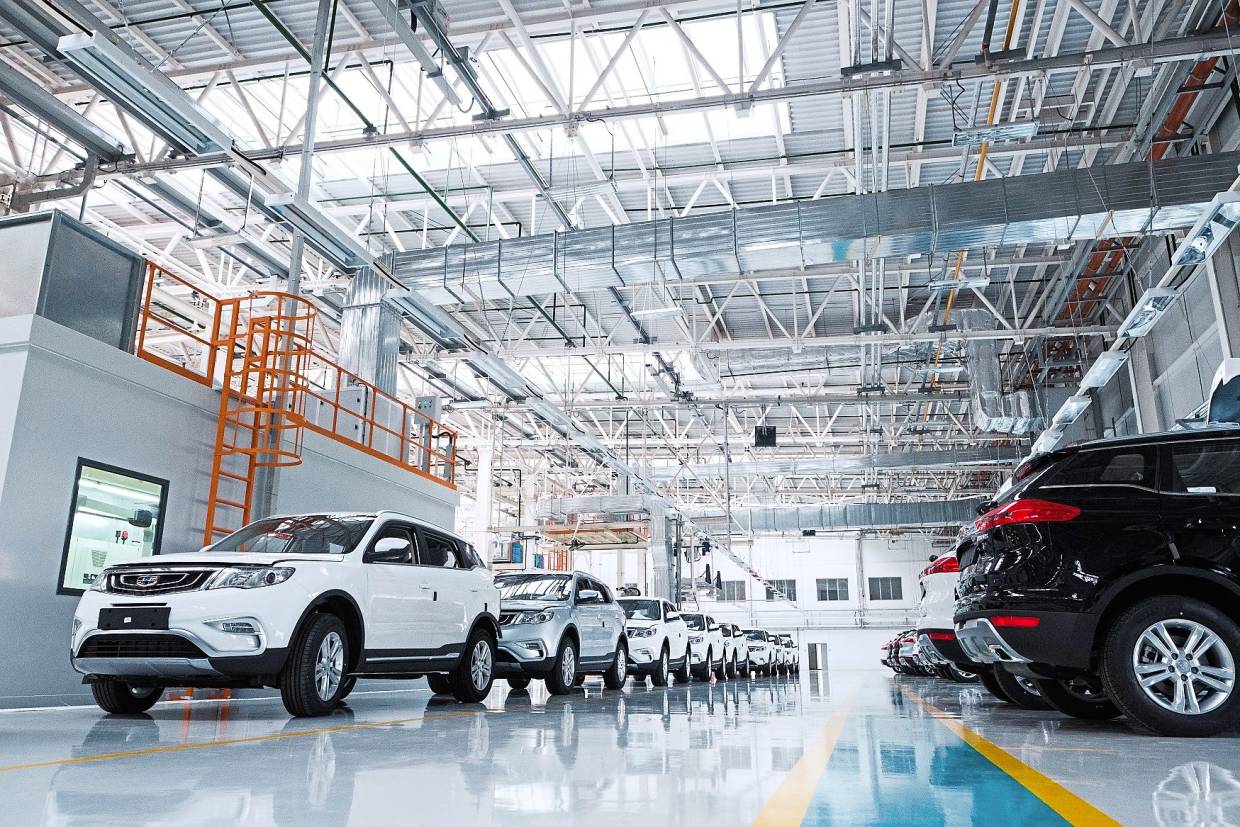
    China’s Geely Automobile Holdings Ltd said on Friday it is dropping plans to list new shares on the mainland’s Nasdaq-like STAR Market.

    Zhejiang-based Geely Auto, China’s highest-profile automaker thanks to parent Zhejiang Geely Holding Group’s investments in Daimler AG and Volvo Cars, is listed in Hong Kong with a market capitalization of HK$255 billion ($32.85 billion).

    In September, Geely Auto said in a filing that it planned to raise 20 billion yuan ($3.10 billion) from the STAR Market listing.

    Geely Auto is aiming to sell over 1.5 million vehicles this year. It also said would seek external funding for its newly-launched electric Zeekr brand.

    In February, Geely Auto said it abandoned the merger plan with sister company Volvo Cars.

  • Fonterra sells stakes in two Chinese farms

    Fonterra sells stakes in two Chinese farms

    Fonterra Co-Operative Group said today it will sell its stakes in two joint-venture farms in China’s Shandong province to Singapore-based AustAsia Investment Holdings for NZ$88 million (US$62 million).

    The sale comes amid a retreat by the world’s largest dairy exporter since 2019 from an ill-fated overseas expansion that drew sharp criticism from its 10,000-plus farmer-shareholders.

    Fonterra, which owns 51 percent of the two farms, said the sale is not subject to any regulatory approvals and is unconditional.

    AustAsia, 75 percent owned by Singaporean agri-food company Japfa, will buy the farms outright for US$115.5 million, with the difference being paid to Fonterra’s joint venture partner, the New Zealand co-operative said.

    “Greater China continues to be one of our most important strategic markets. We remain committed to our China business,” CEO Miles Hurrell said in a statement.

    The dairy giant in April sold two fully-owned farms in China to Inner Mongolia Youran Dairy for NZ$552 million.

  • Ant Group in Talks to Form Credit Scoring JV with Beijing

    Ant Group in Talks to Form Credit Scoring JV with Beijing

    Ant Group is reportedly in discussions with state-owned enterprises to create a credit scoring firm that houses data collected from its massive user base.

    The formation of the new entity could see Ant Group cede control over financial data of more than a billion users, according to a report citing unnamed users.

    Ant Group’s data sharing process with Beijing has been ongoing with reports earlier this year that the People’s Bank of China was unhappy with the progress.

    According to the report, considerations are being made to form a joint venture co-owned by Ant and state-owned enterprises (SOEs) – including an unnamed Shanghai-based financial conglomerate.

    The talks also covered the types of data collected, alignment between the credit scoring system and broader state plans as well as whether the joint venture should be controlled by Ant or SOEs.

    The entry could be established as soon as the third quarter this year though discussions are ongoing and no final decisions have been made.

  • Huawei to reportedly build its own chipsets in Wuhan starting next year

    Huawei to reportedly build its own chipsets in Wuhan starting next year

    In May 2019, the U.S., claiming security issues, placed Chinese phone manufacturer Huawei on the entity list. As a result, Huawei was no longer able to access the U.S. supply chain that it had spent over $18 billion on during the previous year, and was even banned from using software developed by Google. Exactly one year later, the U.S. Commerce Department made a change in export rules preventing foundries using American technology from shipping cutting-edge chips to Huawei without a license.

    Since the U.S. export rule change prevented Huawei’s contract foundry TSMC from shipping to the Chinese manufacturer the powerful 5nm Kirin chips that Huawei had designed itself, there had been talk about Huawei manufacturing its own chipsets. Like most major consumer electronics firms including Apple, Huawei farms out its chip designs to contract foundries like TSMC and the latter builds the actual chips using its fabs.

    Prior to the U.S. ban on chip deliveries to Huawei, the latter was TSMC’s second-largest customer behind Apple. Since being placed on the entity list, Huawei has learned to make its own software and hardware to replace parts of the supply chain it can no longer obtain such as the Google licensed version of Android (replaced by Huawei’s HarmonyOS, and Huawei Mobile Services).

    Industry sources are calling for Huawei to turn on the “start” button for its own wafer fab in Wuhan. Production is expected to start in phases beginning in 2022. Huawei’s HiSilicon unit certainly has the capability to design high-powered chips like the 5nm Kirin 9000. Wafers, made from silicon, go through several processes before getting sliced up and packaged to become individual chipsets.

  • Chinese Bitcoin Mining Exodus to U.S. Continues

    Chinese Bitcoin Mining Exodus to U.S. Continues

    More Chinese bitcoin miners are reportedly shifting operations to the U.S. after Beijing ramped up its crackdown against cryptocurrencies.

    Guangzhou-based logistics firm Fenhua International was moving bitcoin mining machines to Maryland, according to social media post, with a total weight of approximately 3,000 kilograms.

    This is estimated to be equal to a small batch of 200 mining units.

    This marks the latest mining exodus after the Chinese government ramped up its crypto crackdown with other firms, such as mining pool BTC.TOP also reportedly planning to shift operations to North America.

    Beijing’s latest move on crypto included a meeting between the central bank and various financial giants which subsequently led to a new announcement and related initiatives launched by industry players.

    Separately, the city of Ya’an had also reportedly committed to rooting out all bitcoin and ether mining operations.

    According to Compass Mining chief business officer Thomas Heller in a CoinDesk report, there are an estimated 526,000 ‘S19 machines’ – a type of crypto mining device – weighing 80,000 metric tons have been switched off in China.

  • Australia to take China to WTO over wine tariffs

    Australia to take China to WTO over wine tariffs

    Australia’s complaint to the World Trade Organisation over China’s anti-dumping duties on wine exports should enable bilateral negotiations, Foreign Minister Marise Payne said on Sunday.

    The government filed a complaint on Saturday over duties that were applied last year and nearly wiped out exports of Australian wine to the Chinese market.

    “What lodging the dispute enables us to do is begin dispute consultation settlements, which actually is a bilateral discussion with China about the issues,” Payne said in an interview on the Australian Broadcasting Corp’s (ABC) ‘Insiders’ program.

    “We’ve seen duties of over 200 percent applied to Australian wine. We don’t believe that that is consistent with China’s obligations under the WTO. So that part of the process enables us to have that direct conversation.”

    The Australian government has complained frequently that China has ignored calls to ease trade tensions.

    It is the second time in six months Australia has appealed to the WTO. In December, Canberra launched a formal appeal seeking a review of China’s decision to impose hefty tariffs on imports of Australian barley.

    Relations with China, already rocky after Australia banned Huawei from its nascent 5G broadband networking in 2018, have worsened since Canberra called for an international inquiry into the origins of the coronavirus, first reported in central China last year.

    China, Australia’s largest trading partner, responded by imposing tariffs on Australian commodities, including wine and barley and limited imports of Australian beef, coal and grapes, moves described by the United States as “economic coercion”.

    Asked about the fresh international push to find answers to the origin of the virus that causes Covid-19, Payne said it was important to maintain the momentum.

    “We are very determined to work with our partners to ensure that (…) investigation is able to access the material that it needs, including within China,” Payne said.