Tag: China

  • Beijing Probes State Backers of Ant IPO

    Beijing Probes State Backers of Ant IPO

    Beijing is reportedly investigating how Chinese entrepreneur Jack Ma quickly won approvals for the later pulled listing of Ant Group, in yet another sign that scrutiny of the fintech giant and its founder remains incomplete.

    China’s central government first kicked off the investigation early this year.

    The investigation is aimed at regulators that approved the IPO, local officials that advocated it and large state firms that stood to gain from the listing.

    Jack Ma’s relationships with these state entities will also be probed, the report added.

    Ant Group’s troubles with Beijing persists despite a series of hits to the fintech giant which included its $37 billion IPO pullout, a major overhaul of its businesses and, more recently, considerations for the potential divestment of Ma’s ownership.

    Ant Group’s business prospects have been significantly moderated and its expected valuation has plummeted from the initial $320 billion to as low as $29 billion, according to a recent forecast by Bloomberg.

  • Tesla Cars In China Are Being Stopped On The Highway

    Tesla Cars In China Are Being Stopped On The Highway

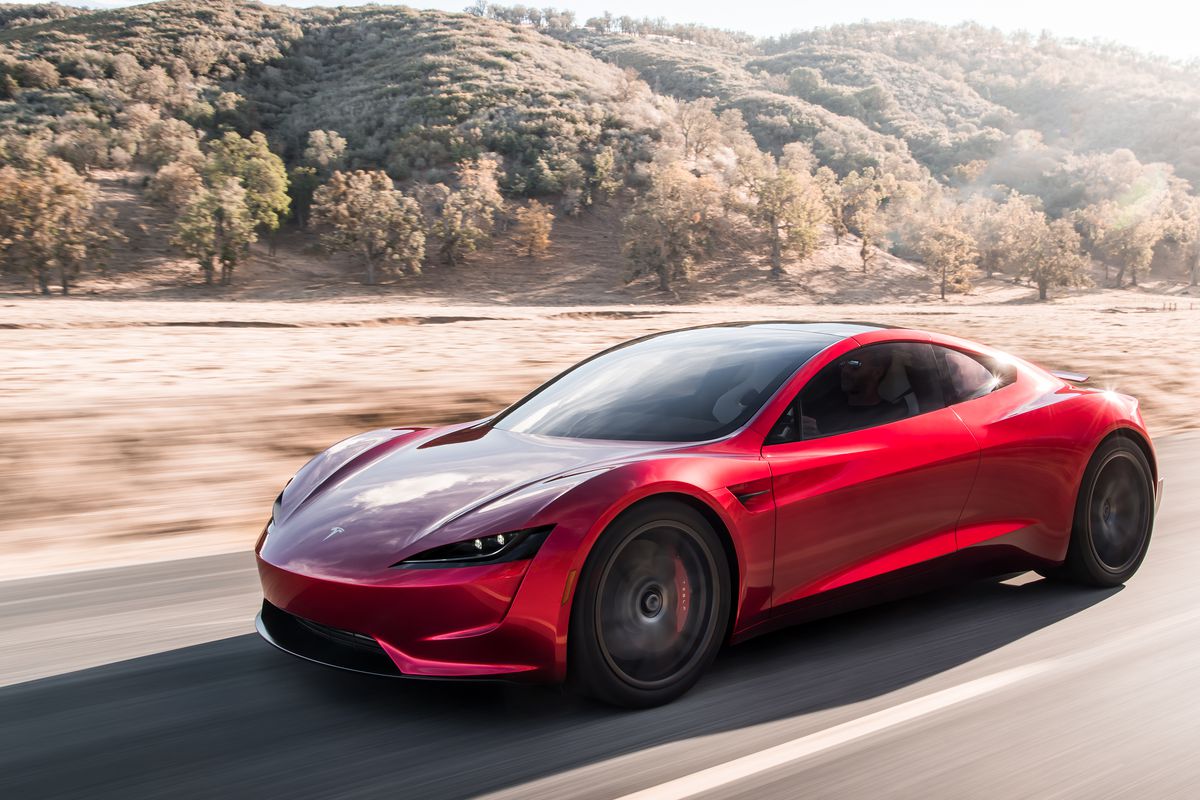
    In China, many Tesla owners have reported that they are being stopped on the highway by the police over safety concerns. This is particularly true in the Guangzhou district of China. This comes in the wake of numerous safety concerns around Tesla cars especially after the recent fatal accident of the Tesla Model S in the US state of Texas. This is also happening in the wake of a protest by a Tesla owner at the Tesla showcase during the Shanghai Motor Show which was concluded last week.

    “The traffic accident occurred in the north of Dongjiang Avenue, Zengcheng District, Guangzhou on April 13, according to a statement released by Zengcheng public security bureau on Wednesday. A car caught fire after colliding with the cement barrier on the right side of the road and another car, leading to one passenger dead, said the statement,” said reports on Chinese news portals like the Global Times.

    “This afternoon, we have proactively contacted the Zhengzhou Municipal Market Supervision Administration and reported the relevant situation. In order to protect the rights and interests of consumers, we are willing to cooperate fully and provide the raw data of the vehicle half an hour before the incident to the third-party appraisal agency or the technology designated by the government. The regulatory authority or the consumer himself,” said one Weibo user.

    There were many such instances of posts by Tesla users on Chinese social networks. However, the police have come out and said that it was just doing a general exercise around traffic. It has denied isolating just Tesla owners, however, the owners are staying that they felt targeted exclusively.

  • China launches antitrust probe into food delivery giant Meituan

    China launches antitrust probe into food delivery giant Meituan

    China launched an antitrust investigation into food delivery giant Meituan, the market regulator said on Monday, the latest target in a crackdown on the country’s sprawling internet platform economy.

    The State Administration for Market Regulation (SAMR) said in a statement that its investigation was focused on the practice whereby a company forces vendors to use their platform exclusively, known as “choose one from two”.

    Tencent-backed Meituan, which this month raised $10 billion in a stock and convertible bonds sale, said in a statement it would cooperate with the investigation and that its business was operating normally.

    This month, SAMR imposed a record $2.75 billion fine on e-commerce giant Alibaba over the same practice and summoned 34 internet firms including Meituan to tell them to learn from Alibaba’s penalty and not use banned practices.

    Meituan, which competes with Alibaba-backed Ele.me among others, had an estimated 68.2% of China’s food delivery market in the second quarter of 2020, according to Trustdata. Meituan’s businesses also include bike-sharing, community group buying, and restaurant reviews.

    China has in recent months taken measures to rein in its once loosely-regulated internet economy in a clampdown backed by President Xi Jinping that has rattled the industry.

    Zheng Wei, a partner with Beijing-based law firm Anli Partners, said regulators aimed to reduce the impact of dominant internet players on consumers, employees, and smaller firms.

    He said that “regulators aim to prevent internet platforms from using their dominant position to exert influence over governance, including legislative and judicial process.”

    SAMR was adding staff and other resources as China revamps its competition law with proposed amendments including a sharp increase in fines and expanded criteria for judging a company’s control of a market.

    In March, Meituan was among five backers or owners of community group-buying platforms fined by SAMR over “improper pricing behavior” related to subsidies.

  • China is home to world’s largest 5G network

    China is home to world’s largest 5G network

    With 260 million 5G mobile connections, China boasts the world’s largest 5G mobile network, according to Liu Liehong, vice minister of China’s Ministry of Industry and Information Technology (MIIT) in a press conference this week.

    As of the end of February, China reported having 792,000 5G base stations, with 5G SA networks covering all prefecture-level cities, while 5G terminal connections reached 260 million.

    This year, China is planning to build more than 600,000 5G base stations to broaden the country’s 5G coverage and strengthen its digital competitiveness. 5G is viewed to be critical to the advancement of tech innovations and accelerating industry digitalization to boost the nation’s industrial capacity.

    In the country’s fourth session of the 13th National People’s Congress (NPC) held in early March, China emphasized on building up tech reliance through national policies and R&D spending.

  • China is Becoming a Global Center of the Pharmaceutical Industry

    China is Becoming a Global Center of the Pharmaceutical Industry

    China’s pharmaceutical industry is in the midst of a transformation. China is one of the largest markets in the world for medicine – and it is poised to become a global hub of drug innovation/a global leader in drug development technology.

    An increasing number of international investors have turned their attention to the healthcare sector as the corona crisis rages on. Weak spots in healthcare systems across the world have been exposed by the pandemic, and it has also triggered a fundamental reset in investor mindsets. One of the winners of these recent events will probably be the healthcare industry in emerging markets – which are also becoming increasingly important as a market for medicines.

    At the center of these developments is Asia, where healthcare systems are facing the same challenges as healthcare systems in the West. Changes in lifestyles and diets associated with rising wealth are having a negative impact on people’s health. For example, the rapidly growing number of overweight people worldwide is leading to a rapid increase in the number of diagnosed diabetes cases.

    A quarter of the estimated 400 million people worldwide who have diabetes live in China and almost a fifth live in ASEAN countries such as Malaysia or Thailand. At the same time, aging populations are leading to an increase in the number of patients diagnosed with cancer, neurological or circulatory diseases. This translates into steadily rising costs for national healthcare systems as more and more citizens require access to efficient and affordable healthcare.

    Asia is forging ahead. This was once again evident as the coronavirus crisis unfolded and Asian companies led the way with their solutions. Meanwhile, a raft of positive data has been published in other areas and improved the corresponding pipeline visibility. Last but not least, the process of digitization has gained momentum, while disruptive technologies are steadily improving access to healthcare.

    China has one of the largest medicine markets in the world. Its overall spending on healthcare is still low compared to many of the industrialized countries. The country is making steady progress in expanding its domestic drug research and development capabilities and its domestic drug production, which helps the government to provide an increasing number of Chinese with access to affordable healthcare.

    The Chinese government is offering tax and other financial incentives as part of a long-term plan to develop an internationally competitive homegrown biopharmaceutical industry. Beijing’s national health policy currently prioritizes efficiency and the establishment of innovation centers, which it is promoting through financial incentives. The main pillars of the government’s approach here are three vast centers of innovation – the Zhangjiang Hi-Tech Park near Shanghai, the BioBay in Suzhou and the Shenzhen innovation hub, which is often referred to as China’s Silicon Valley for pharma companies because it is already home to global companies such as Huawei.

    Sales of innovative drugs in China are forecast to triple from 117 billion yuan this year to 375 billion yuan in 2025. Local biotech companies selected as “partners of choice” for global companies seeking to enter the Chinese market and advance the development, approval and commercialization of their drugs in China will play a critical role in achieving this growth. Innovative homegrown Chinese drugs are also creating excitement worldwide and these drugs are being in-licensed by Big Pharma in the West.

    The current situation is comparable with the situation in the U.S. at the end of the 1980s when the biotech boom began, driven by scientific breakthroughs. We believe China’s medicine market is poised to become a major growth market and is currently transitioning from a «Me-Too» drug market to a «First-in-Class» or Best-in-Class market.

    Valuations in the Asian healthcare sector are currently very inexpensive and stock prices have shown a positive trend since the global coronavirus-induced crash last year. The BB Adamant Asia Pacific Healthcare Fund has outperformed the broader indexes throughout the various market cycles.

    For example, it has delivered an excess performance of more than 50 percent relative to the MSCI Asia Pacific Index since its launch at the end of April 2017. The secular upward trend in Asian healthcare markets should continue going forward, thanks in particular to the growing innovation power of the region, where companies that stand to benefit from structural trends are already winning international acclaim.
  • Tesla Apologises After Customer Protested At Autoshow, To Share Car Data With Chinese Regulator

    Tesla Apologises After Customer Protested At Autoshow, To Share Car Data With Chinese Regulator

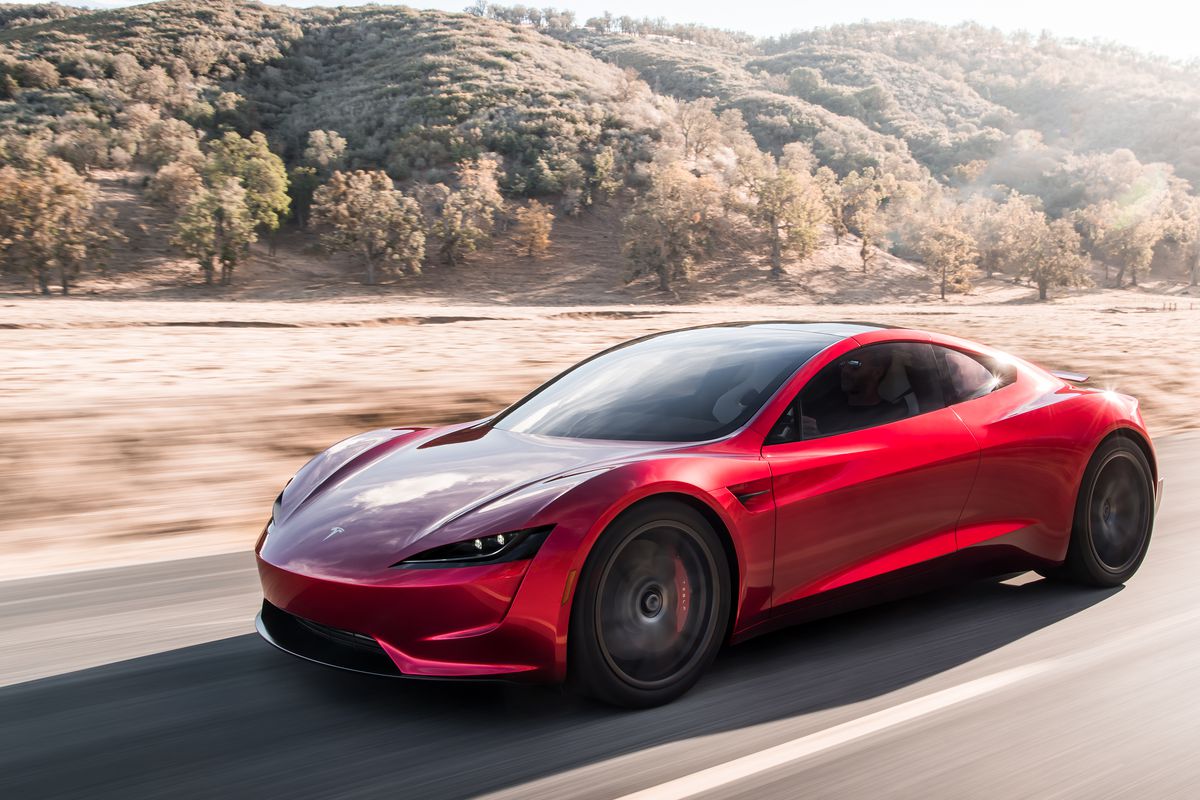
    Tesla Inc apologised to Chinese consumers for not addressing a customer’s complaints in a timely way, and said it would launch a review of its service operations in the world’s biggest auto market. The unusual public apology from Tesla followed criticism in state media, and an incident at the Shanghai auto show that got wide attention in China’s social media. An unhappy customer by clambered atop a Tesla at the auto show to protest the company’s handling of her complaints about malfunctioning brakes. Videos that went viral on Monday showed a woman wearing a T-shirt emblazoned with the words “The brakes don’t work” and shouting similar accusations while staff and security struggled to restore calm.

    The trouble for Tesla in China overlapped with new questions in the United States about the safety of the company’s Autopilot partially-automated driving systems. Police in Texas are investigating a fatal crash involving a Tesla Model S that hit a tree and burst into flames. Rescuers found victims in the passenger and rear seat, not the driver’s seat. Federal regulators are investigating the crash, and have a total of 24 probes underway of accidents involving Teslas operating on Autopilot.

    Tesla sells roughly 30% of its cars in China, made at its Shanghai factory. But it has faced occasional criticism over issues such as complaints of battery fires. Monday’s incident led state broadcaster CCTV to call for an investigation of reported brake problems on Tesla cars, while China’s anti-graft watchdog weighed in with a commentary saying such disputes should be resolved within the rule of law. “Individuals should not take extreme measures, and enterprises should not be arrogant and unreasonable,” the Central Commission for Discipline Inspection said late on Tuesday.

    On Wednesday, a representative at Tesla’s store in Zhengzhou, where the protesting customer came from, told local state media the automaker will share data related to the brake incident with local market regulators for investigation.

    Tesla said on Monday that the woman was a vehicle owner who had been involved in a collision earlier this year. It cited “speeding violations” for the crash, adding in a social media statement that it had been negotiating with her about returning the car, but the talks had stalled over a third-party inspection.

    Last month, Tesla came under scrutiny in China when the military banned its cars from entering its complexes, citing security concerns over cameras in its vehicles, sources said.

    That prompted founder Elon Musk to say that if Tesla used cameras to spy in China or anywhere, it would be shut down. Earlier this month, Tesla said cameras in its cars are not activated outside of North America.

    The woman whose protest started it all will be detained for five days, Shanghai police said on Tuesday.

    Police said the woman and a female accomplice – identified only by their surnames, Zhang and Li – “caused chaos” at the trade fair on Monday when they arrived at the Tesla display “to express their dissatisfaction due to a consumer dispute.”

    Zhang was ordered detained for “disrupting public order,” while Li received a warning, police said. Zhang and Li could not be contacted for comment.

  • Car imports from China increase sixfold

    Car imports from China increase sixfold

    Vietnam imported 3,945 completely built-up (CBU) cars from China in Q1, six times over the same period last year, according to the General Department of Vietnam Customs.

    Despite the surging number of cars imported from China, the country was the third-largest car supplier of Vietnam, after Thailand and Indonesia.

    Up to 80 percent of the completely built-up (CBU) cars imported to Vietnam in Q1 were from Thailand and Indonesia. The number of imported cars from Thailand was 19,300 units, up 56 percent year-on-year, while those from Indonesia stood at 8,950 units, down 26 percent year-on-year.

    Thailand and Indonesia have always led the list of Vietnam’s car suppliers ever since the ASEAN Trade in Goods Agreement (ATIGA) took effect in 2018, owing to the zero import tariff. Meanwhile, imported Chinese cars are dealt an import tariff of 47-70 percent.

    Vietnam imported around 35,300 CBU cars in Q1, a year-on-year increase of 31.1 percent.

    Auto sales rose by 36 percent year-on-year between January and March to 70,952 units, according to Vietnam Automobile Manufacturers Association (VAMA).

  • DBS Deepens Roots in China

    DBS Deepens Roots in China

    The bank will accelerate its expansion in the rapidly growing Greater Bay Area with a stake in Shenzhen Rural Commercial Bank.

    DBS has entered into an agreement to acquire a 13 percent stake in Shenzhen Rural Commercial Bank in a deal valued at RMB 5.286 billion ($813.2 million), as part of its strategy of investing in its core markets, the bank announced on Tuesday evening.

    The deal for 1.35 billion new shares at RMB 3.91 ($0.60) per share, representing 1.01 times the book value per share as of 31 December 2020, will make DBS the largest shareholder of SZRCB. DBS will use internal cash resources to fund the investment, which is expected to complete when the deal is approved by regulatory authorities in China.

    Established in 2005, SZRCB currently operates one of the largest bank branch network in Shenzhen, with 210 branches and over 3,600 employees servicing over 5 million active retail customers and over 170,000 active corporate customers.

    Approximately 40 percent of its loans are in the retail segment and the remaining 60 percent are in corporate segment, largely to Shenzhen-based small-and-medium-enterprises. The bank has RMB 519 billion in assets and RMB 404 billion in deposits, and generated RMB 4.8 billion in net profit as of 31 December 2020.

    We see this as a highly complementary strategic partnership that will allow us to double down on the GBA and leverage on SZRCB’s local network and know-how to deepen DBS’ GBA strategy. At the same time, we would be able to support the continued growth and digital transformation of SZRCB through our regional presence and digital capabilities, Piyush Gupta, DBS CEO, said in the announcement.

  • Citi Eyes More China Licenses

    Citi Eyes More China Licenses

    After its consumer banking exit in China, Citi will accelerate the growth of its mainland institutional business with the reported pursuit of new licenses.

    Citi plans to submit an application for a securities and futures brokerage license, according to a report citing unnamed sources, with a focus on underwriting yuan-denominated shares and client trading.

    The American bank plans to submit the application within the next two months with the aim of launching for business in 12 to 18 months.

    A chief executive for the business will soon be named and 50 staff will be initially hired before doubling in the longer term, the report added. Most hires will be external but staff from other mainland businesses will also be transferred.

    Citi is a relative latecomer in terms of expansion in China compared to its rivals which have announced ambitious goals to double or even triple headcount in the historic opening of the mainland’s $54 trillion financial market.

    The bank also recently announced its planned retail banking exit in China as part of a broader pullback across markets in Asia and EMEA.

    Currently, Citi has a bond underwriting and settlement license as well as a domestic custody license received last year.

  • Tesla To Launch Self Inspection Over Services In China

    Tesla To Launch Self Inspection Over Services In China

    U.S. electric vehicle maker Tesla Inc will launch self-inspection and address customer service issues in China, it said on Weibo late on Tuesday.

    The statement comes after an unhappy customer clambered onto a Tesla car at the Shanghai Auto Show on Monday over a dispute with the company, creating a social media stir and criticism of Tesla from state media.

  • Scandal-plagued Luckin Coffee secures US$250 million lifeline

    Scandal-plagued Luckin Coffee secures US$250 million lifeline

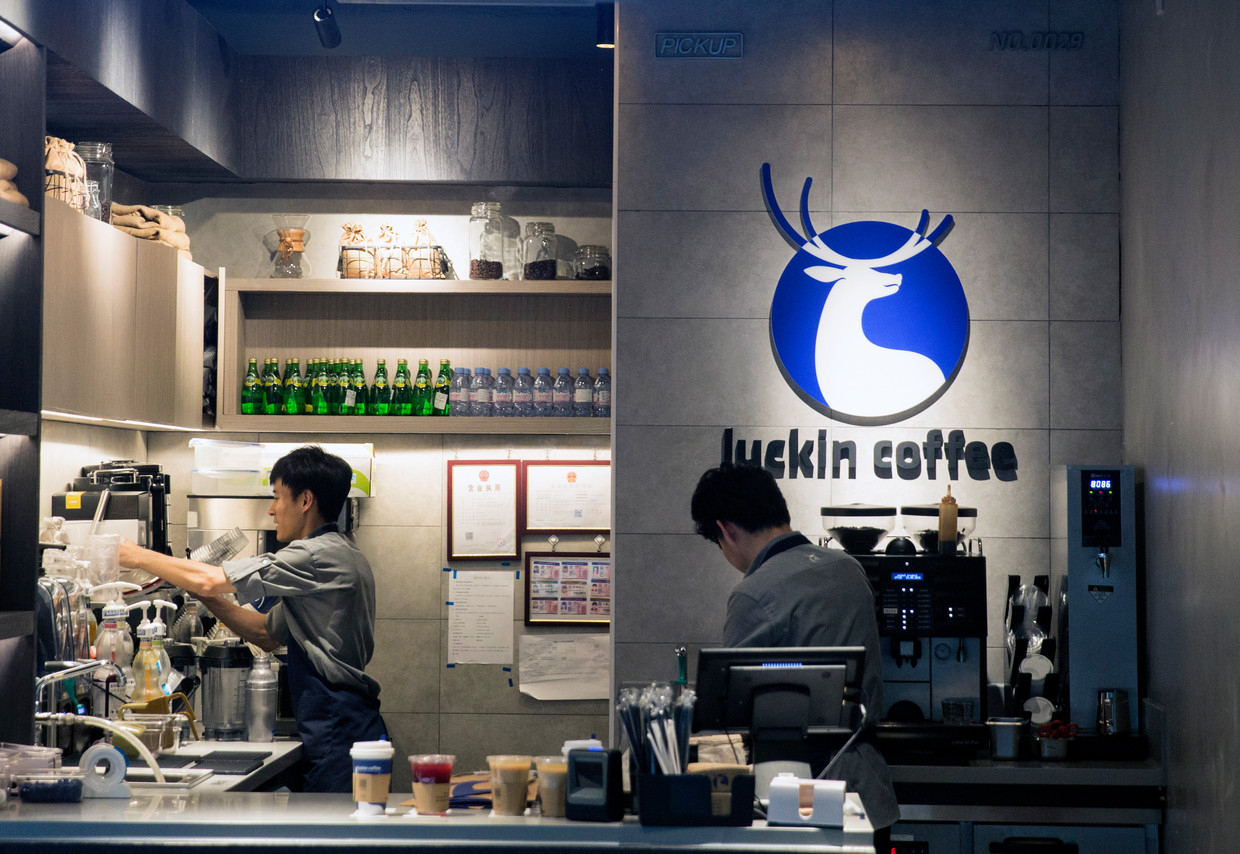
    Luckin Coffee, the scandal-plagued Chinese coffee shop chain, secured a $260 million investment from existing shareholders Centurium Capital and Joy Capital. It also replaced its independent auditor.

    This will help Luckin satisfy a $180 million settlement struck last year with the SEC, which had accused Luckin of faking retail sales figures. The company went public on the Nasdaq less than two years ago at a $4.3 billion valuation but was later delisted because of the accounting fraud.

    The investment is structured as convertible preferred stock, with an option for Centurium and Joy to invest an additional $150 million.

    The bottom line, Luckin was supposed to be China’s answer to Starbucks, but so far has been closer to China’s answer to Enron.

  • Citigroup to exit consumer banking in Vietnam

    Citigroup to exit consumer banking in Vietnam

    America’s Citigroup will exit 13 international consumer banking markets, including Vietnam, to shift its focus to four wealth centers.

    The move is part of the bank’s strategic decision to direct investments and resources to businesses with the greatest scale and growth potential, it stated, adding its main markets will include Singapore, Hong Kong, the United Arab Emirates and London.

    Apart from Vietnam, 12 other markets to be affected are Australia, Bahrain, China, India, Indonesia, South Korea, Malaysia, the Philippines, Poland, Russia, Taiwan and Thailand.

    “While the other 13 markets have excellent businesses, we don’t have the scale we need to compete. We believe our capital, investment dollars and other resources are better deployed against higher returning opportunities in wealth management and our institutional businesses in Asia.”

    The bank has not specified when it would leave Vietnam.

    Citigroup in 1994 became the first U.S. financial institution licensed to open a branch in Hanoi. It opened its second branch in Ho Chi Minh City in 1998.

  • Piaget to expand store network across China

    Piaget to expand store network across China

    Piaget, the luxury watch brand from Switzerland, will be opening more stores in 2021, especially in the Middle East and China, Chief Executive Chabi Nouri has told Reuters.

    “We’ll open more stores this year. We’ll reopen a flagship store in Beverly Hills and also have projects in the Middle East and China,” Nouri noted in an interview at the Watches and Wonders online event held last week.

    Piaget, with its array of well-known sleek and slim timepieces, has opened 130 brand-specific outlets and has a network of 300 retail partners.

    Piaget said in a January statement that high demand from China had driven sales to increase by five percent in the last quarter of 2020.

    Nouri noted that Piaget, which also creates watches encrusted with gems, diamonds, and jewelry, had bolstered its e-commerce presence while remaining focused on its own outlets, retail partnerships, and online selling to assist the distribution process.

    Nouri stated that in the wake of the coronavirus disease pandemic, Piaget was left with no choice but to reassess its strategies on connecting with its customer base and partners, though not impelling it to make adjustments to its product line.

    At the Watches and Wonders event, Piaget displayed timepieces, including the Limelight Gala Precious Rainbow gold model that is bedecked with colorful rainbow-hued sapphires and is priced at $106,922.99.

  • Chinese Banks Accelerate Branch Cuts

    Chinese Banks Accelerate Branch Cuts

    Chinese lenders are increasingly closing down branches as online and mobile banking penetration continues to rise.

    Mainland lenders have closed 430 branches in the first three months of 2021, according to data from the China Banking and Insurance Regulatory Commission’s (CBIRC) annual report.

    This marks an accelerated reduction after the industry closed 1,300 branches in 2020.

    As a major leader by digital penetration of its population, China saw strong growth for transactions not executed via physical bank locations – or «off-counter rates.

    Such transactions, which include online and mobile banking, rose 12 percent to 2,308 trillion yuan ($352.5 trillion), according to the CBIRC report.

    Mobile banking transactions alone soar 31 percent to 439.2 trillion yuan – nearly one-fifth of total off-counter transactions.

    In addition to growing digital adoption, the branch cuts are part of a broader industry move to reduce costs especially after a year of concessions where borrowers were offered cheap loans, deferred payment options, and top Beijing officials even called for a 1.5 trillion yuan sacrifice of profits.

    Mainland lenders are also rebalancing the mix of their remaining branch network with a focus on maintaining brick-and-mortar locations in counties or rural areas as part of Beijing’s goal to promote financial inclusion.

  • China warns online platform companies to halt anti-competitive practices

    China warns online platform companies to halt anti-competitive practices

    China’s market regulator, fresh from fining e-commerce giant Alibaba US$2.75 billion, said on Tuesday it warned nearly three dozen internet companies to stop using any banned practices such as forcing vendors to use their platform exclusively.

    The State Administration for Market Regulation (SAMR) said it summoned 34 companies including Tencent, ByteDance and JD.com for a meeting, where it ordered them to conduct self-inspections within one month, warning of “severe punishment” for any that still violated the rules.

    In February, China issued new anti-monopoly guidelines targeting internet platforms.

    On Saturday, SAMR hit Alibaba with a record 18.2 billion yuan fine, and on Tuesday told the other Internet firms to heed that lesson. The regulator is beefing up staff and other resources in order to strengthen antitrust enforcement, Reuters has reported.

    In the statement issued on its website, SAMR described the overall development of China’s platform economy as improving but said no time should be wasted in correcting the way companies operate to ensure they comply with the law.

    China’s cyberspace regulator and tax administration were also represented at the meeting, SAMR said.

    In addition to Tencent, JD, and ByteDance, search giant Baidu and food delivery platform Meituan were among the firms called in by SAMR. None provided immediate comment.

    “The regulators are not aimed at a single enterprise, but the whole platform economy, as it is growing more and more powerful,” said Keso Hong, an independent analyst in Beijing.

    “I believe the companies will be more prudent in the future. Meanwhile, I think it is good for the regulator to give them a reminder to prevent them from ending up like Alibaba.”

    SAMR also criticized abusive practices in community group buying, when companies offer aggressively low prices to woo users, and warned against abuse of big data and tax-related violations.

    In particular, the regulator warned against the practice of forcing vendors to operate on only one platform, a tactic known as “choose one from two”.

    “It is extremely harmful and must be corrected from the root,” the SAMR statement said.