Tag: China

  • JD.com cashes in on steady online demand, beats market expectations

    JD.com cashes in on steady online demand, beats market expectations

    JD.com Inc’s fourth-quarter revenue beat expectations on Thursday as more shoppers flocked to its website on the back of a broader shift to online shopping triggered by the COVID-19 pandemic.

    While China has largely emerged from coronavirus lockdowns with most businesses resuming production, JD.com’s domestic consumers continue to shop online for everything from daily groceries to luxury products.

    The Beijing-based company posted revenue of 745.8 billion yuan ($114.97 billion) for the year, beating analysts’ estimate of 740.81 billion yuan.

    In a pandemic-struck year, during which retail sales fell 3.9% in China, JD.com’s strategy of ramping up its in-house delivery network enabled faster deliveries.

    The company has also been working to expand into price-sensitive lower-tier cities through its shopping platform Jingxi in a bid to stave off stiff competition from rivals like Alibaba and Pinduoduo that are equally popular.

    As a result, JD.com raked in 110 million new active customer accounts during the year. Meanwhile, Jack Ma’s Alibaba added about 68 million active buyers in the same period.

    U.S.-listed shares of the company, which have been volatile as China looks to tighten scrutiny on its tech giants, were up 3% at $91.98 in early trading.

    The world’s second-largest economy has vowed to strengthen oversight of its big tech firms, which rank among the world’s largest and most valuable, citing concerns they have built market power that stifles competition, misused consumer data, and violated consumer rights.

    The long-term impact of this on JD.com’s business, though unclear, remains a threat. In late December, regulators fined the company, along with Alibaba and other e-commerce sites, 500,000 yuan for engaging in irregular pricing.

    The company’s net revenue rose 31.4% to 224.3 billion yuan in the quarter ended Dec. 31, beating analysts’ estimate of 219.73 billion yuan, according to IBES data from Refinitiv.

  • ZTE joins China Mobile in Xinfengming Group’s 5G intelligent manufacturing upgrade

    ZTE joins China Mobile in Xinfengming Group’s 5G intelligent manufacturing upgrade

    ZTE Corporation, a major international provider of telecommunications, enterprise and consumer technology solutions for the Mobile Internet, in partnership with China Mobile, has upgraded Xinfengming Group’s 5G intelligent manufacturing, following the completion of the test and verification of the “i – wireless 5G intelligent and one-stop local network” project.

    Leveraging ZTE’s NodeEngine solution, this Xinfengming 5G manufacturing platform has been upgraded to accelerate the comprehensive digital transformation. This is the first commercial deployment of NodeEngine solution by ZTE and China Mobile.

    Aiming to better serve manufacturing with 5G technologies and to offer enterprises with flexible and fast local services, ZTE, China Mobile Research Institute and the Zhejiang Branch of China Mobile have teamed up to provide industrial parks with the innovative solution, featuring functions of PRB resources reserved hard slicing, intelligent and simple local distribution, EdgeQoS service management and control, and enterprise self-service portal and more, based on the concept of i- wireless 5G intelligence and simplification. The NodeEngine solution is simple to deploy, quick to the commission, and excellent in performance and cost-effectiveness.

    In the 5G network of Xinfengming Group, most of the production equipment is dedicated to Xinfengming, such as AGV trucks, visual detection devices, and automatic assembly devices. PRB resources reserved hard slicing and local traffic offloading provide Xinfengming the 5G private network capability in a short time, enabling the access of this dedicated equipment and the local traffic offloading and clearly separating common mobile users from businesses, which ensures the access and network performance of different types of terminals. Compared with the existing solutions, this solution enables time delay improvement by 20%.

    ZTE’s NodeEngine solution also serves as an exclusive local O&M portal for enterprises, with which, the network can be dynamically adjusted to satisfy different application requirements. Meanwhile, the network performance can be viewed in real-time, thereby ensuring flexible management and control.

    In addition, ZTE’s NodeEngine solution provides sophisticated EdgeQoS management and control. With this, the QoS requirements of local services, on the one hand, can be intelligently identified and distributed through edge AI to trigger network adjustment parameters to match service requirements. On the other hand, according to the service model, the resources such as bandwidth, latency and reliability are dynamically scheduled to match and guarantee real-time requirements, thus realizing differentiated local network services.

    Through the sophisticated management and control of EdgeQoS, networks can truly be flexibly adjusted according to services, greatly improving the perception of private network services and the efficiency of network resources.

    Committed to empowering traditional industries with 5G, ZTE has made remarkable achievements in 5G industrial manufacturing. Besides the Xinfengming Group digital transformation, the Nanjing Binjiang Smart Manufacturing Base and Changsha Smart Factory, developed by ZTE also, have become the models in the industry. In addition, ZTE has built typical 5G applications together with leading manufacturers such as SANY Group and SUPCON.

    Moving forward, ZTE will be committed to helping industrial manufacturing develop towards a green ,low-carbon, digital, and intelligent future.

  • Prada bags sales boost from China rebound

    Prada bags sales boost from China rebound

    Italian fashion group Prada’s sales and profits rebounded at the end of last year from a first-half slump due to the coronavirus pandemic, boosted by a strong performance in China and elsewhere in Asia, and the positive trend has carried on into 2021.

    Luxury fashion companies have been hit hard by the impact of the crisis on tourism and travel, but an improving backdrop in China, one of the world’s biggest luxury markets, has helped some companies to bounce back.

    Milan-based Prada, famous for its luxury bags and clothes, also benefited from a surge in online sales.

    The pandemic has accelerated the luxury goods industry’s move towards digital sales. Prada’s e-commerce sales more than tripled in 2020 versus 2019 levels, the Hong Kong-listed company said.

    Last year, Prada launched e-commerce in new key markets and revamped the Prada website.

    “We are just at the beginning of our growth trajectory and there is still a huge potential to unlock,” said marketing head Lorenzo Bertelli, son of Prada’s founders Miuccia Prada and Patrizio Bertelli, who are co-CEOs.

    CEO Patrizio Bertelli said: “We have 130 stores that are still closed due to the pandemic and group’s performance in early 2021 is quite good anyway. That give us the confidence to face the upcoming rebound, as soon as the most critical phase of the pandemic will end.”

    The first months of 2021 have seen a slight growth in sales compared with the early part of 2020 and are up from 2019 levels, CFO Alessandra Cozzani said conference call after the group’s results were published on Wednesday.

    CEO Bertelli said Prada had responded quickly to market changes, strengthening the relationship with local customers whose consumption in the second half of the year almost fully offset the absence of tourists.

    “All of these initiatives led to a full recovery in the second half to pre-pandemic profitability levels,” he said in a statement.

    The recovery in retail sales, which account for around 90% of Prada’s total, was driven in the second half by mainland China (+52%), Taiwan (+61%), Korea (+22%) and also by the Americas (+4%). Japan and Europe suffered from the lack of tourists and prolonged lockdowns.

    Full-year revenues fell by 24% to 2.42 billion euros ($2.9 billion) thanks to an improvement in the second half after a 40% slump in the first six months.

    Lockdown measures to stem the spread of coronavirus led to around 18% of the group’s store network being closed on average during the year and the restrictions also hit tourism.

    Earnings before interest and taxes (EBIT) totalled 20 million euros in the full-year, following a 216 million euro EBIT in the second half, broadly in line with the same period of 2019, after a 196 million euros operating loss in the first six months.

    Analysts had expected revenues at 2.44 billion euros and an EBIT of 13.8 million, based on a Refinitiv analyst consensus.

    Analysts did not expected any dividends, but Prada’s board decide

  • Diesel Hub concept store opens in Shanghai

    Diesel Hub concept store opens in Shanghai

    Glenn Martens may still be prepping his debut collection for Diesel, but he’s already leaving his mark on the brand. The Belgian designer, who was tapped as the Italian brand’s creative director last October, has imagined a new store concept for Diesel, an immersive branding experience in itself.

    Painted floor-to-ceiling in the brand’s signature red color, the new concept is being introduced at two temporary pop-up stores in Amsterdam and on the outskirts of Washington, D.C., at the mall Tyson’s Corner Center.

    The company said it will be extended to other pop-up units and be flanked by experiential initiatives, and the concept will also appear in the first permanent unit, called Diesel Hub, that the brand will open in Shanghai later this year.

    “This new pop-up represents a first step toward elevating the design and brand experience of Diesel, starting from its iconicity and heritage,” said Massimo Piombini, Diesel’s chief executive officer. “It is a bridge to the new permanent store concept coming at the end of the year, starting from our Diesel Hub in Shanghai.”

    Paying homage to the brand’s DNA, Martens has had a giant Diesel logo and “For Successful Living” catchphrase brushed across the spaces’ elements, including displays and shelves, which customers will be able to read in their entirety upon entering the store, giving the impression of jumping into the brand’s tag.

    Both pop-ups will carry the spring 2021 and pre-fall 2021 assortments — which were not designed by Martens. Parent company OTB, controlled by Italian industrialist Renzo Rosso, recently said the first collection designed by Martens will bow for spring 2022.

    The Paris-based Martens arrived at Diesel nine months after Piombini, previously CEO of Balmain, was named CEO at Diesel, and amid brightening prospects for the flagship property of OTB.

    Rosso has had Martens on his radar for several years and tapped him in 2018 as a guest designer of its experimental capsule series Diesel Red Tag, one year after Martens bagged the prestigious ANDAM fashion prize, of which OTB is a historical sponsor and mentor.

  • SoftBank-backed Coupang raises $4.2 billion in US IPO

    SoftBank-backed Coupang raises $4.2 billion in US IPO

    Coupang LLC, South Korea’s largest e-commerce company, raised $4.2 billion in the biggest share offering in the United States this year after selling stocks in the IPO above its deal target range, people familiar with the matter said.

    The initial public offering price of $35 apiece, higher than the marketing range $32-$34 per share, gives Seoul-headquartered Coupang, which is backed by Japan’s SoftBank Group Corp, a market value of $60 billion.

    Coupang’s successful share offering comes as the U.S. IPO market is at its strongest in more than two decades and investors are flocking to buy shares in technology companies that have benefited during the COVID-19 pandemic.

    The IPO is the biggest in the United States this year, surpassing the $2.15 billion raised by dating app Bumble Inc. It also marks a jump in Coupang’s valuation, which was pegged at $9 billion in a fundraising round in 2018, according to Pitchbook.

    Analysts in South Korea said the strong response to Coupang’s offering was a result of its market-leader position in the country at a time when, like many other e-commerce firms, its sales have grown due to the COVID-19 pandemic.

    “Considering the high level of valuation inherent in the pricing, the market is giving a generous assessment of the company’s achieving the top spot in market share,” said Park Sang-joon, analyst at Kiwoom Securities.

    Coupang was the top-ranked South Korean e-commerce firm in 2020 with 19.2% market share, according to Euromonitor, compared to Naver Corp’s 13.6% and eBay Korea’s 12.8%. It was the 10th largest e-commerce firm in the world, based on retail value excluding sales tax.

    In 2020, Coupang’s net sales jumped 91% year-on-year to $11 billion. Net losses narrowed to $567.6 million from $770.2 million posted in the prior year.

    Founded in 2010 by Korean-American billionaire Bom Suk Kim, Coupang rose to prominence after launching its guaranteed same-day or next-day delivery service in the East Asian country. SoftBank’s $100 billion Vision Fund owns 35.1% of Coupang.

    Achieving a $60 billion valuation would add to good news for the Vision Fund, which is bouncing back from an annual loss in March. Last month, it announced record quarterly profit.

    The company’s shares will begin trading on the New York Stock Exchange on Thursday under the symbol “CPNG.”

    Goldman Sachs, Allen & Co, JPMorgan and Citigroup are the lead underwriters for the offering.

  • Ferragamo flags China-driven sales rise after massive loss last year

    Ferragamo flags China-driven sales rise after massive loss last year

    Italian luxury goods group Salvatore Ferragamo said on Tuesday that China and e-commerce had boosted sales in the year so far after the COVID-19 pandemic pushed the firm to its first full-year operating loss since it listed in Milan 10 years ago.

    Deputy Executive Chairman Michele Norsa, a long-time executive brought back by the Ferragamo family last year to steer the group through the pandemic and a brand revamp, told analysts in a call that he expected sales in China to keep growing by a double-digit percentage.

    The coronavirus emergency has hit Ferragamo hard because it is geared towards traveler spending, with many shops in airports. It has also compounded the challenge of rejuvenating a brand famous for shoes worn by Hollywood stars such as Audrey Hepburn.

    Overall sales fell 33% in 2020, one of the worst performances in an industry grappling with shop closures intended to curb the pandemic as well as a lack of tourists and travelers in general.

    Several sources told Reuters late last year that the majority owners had held informal talks with investors about selling a minority stake in their holding firm. The company denied at the time that the family planned to sell a stake or had met investors.

    Asia accounting for more than half of group revenues in 2020, when turnover in the region fell 25.5%.

    The Florence-based firm said the first nine weeks of 2021 had seen a positive trend in its retail network and an 86% jump in digital sales. China and Korea are both performing strongly, it said.

    Earnings before interests and taxes (EBIT) slumped to a 62 million euro ($74 million) loss in 2020, due also to impairment charges on assets and broadly in line with analysts’ expectations. In 2019, Ferragamo made a 150 million euro profit.

    Chief Executive Micaela Le Divelec’s term expires in April, and there is speculation that management may be overhauled.

    Two sources close to the matter said on Tuesday the situation was still uncertain in that respect.

    Norsa told analysts he could not comment on possible management changes, and that a “normal process” was taking place “in continuity and harmony” ahead of the annual meeting to appoint a new board of directors.

  • China Banking Regulator Appoints Vice Chairman

    China Banking Regulator Appoints Vice Chairman

    China’s banking and insurance watchdog has made an internal promotion for the appointment of a new vice-chairman.

    Xiao Yuanqi has been promoted to the new role, according to a Caixin report citing unnamed sources.

    Xiao was most recently the China Banking and Insurance Regulatory Commission’s (CBIRC) chief risk officer.

    In addition to banking supervision experience, Xiao previously worked for Bank of China and the People’s Bank of China. He authors dozens of academic articles and publications while also serving as a part-time professor at Tsinghua University.

  • Switzerland and China to Deepen Finance Ties

    Switzerland and China to Deepen Finance Ties

    Despite the increasing discord between China and the U.S., Switzerland wants to further deepen its cooperation in financial matters with the Far East nation.

    Swiss Finance Minister Ueli Maurer exchanged views with Chinese Vice Premier Liu He at a virtual ministerial meeting (yesterday) Wednesday, according to a statement from the Federal Department of Finance (FDF). The two politicians each had a high-ranking delegation at their side.

    Maurer and Liu He thus developed perspectives on deepening bilateral relations in the areas of stock market trading, sustainable financial services, asset management, and digital central bank money. The central banks of both countries are known to be working on projects for digital central bank money, although the respective approach differs greatly in terms of the user base.

    China is working on a digital version of the yuan for everyone (the «retail» version of a digital currency), while the Swiss National Bank (SNB) is evaluating a so-called «wholesale» version, for the time being, a cryptocurrency reserved for the financial market.

    The latest meeting followed similar contacts in 2017 and 2019. The governments of Switzerland and China also want to intensify financial market relations in parallel with the existing free trade agreement. In this context, the Swiss financial center envisages using the opening steps in the Chinese financial market for concrete joint projects.

  • Jack Ma no longer China’s richest man after coming under Beijing’s scrutiny

    Jack Ma no longer China’s richest man after coming under Beijing’s scrutiny

    Alibaba and Ant Group founder Jack Ma has lost the title of China’s richest man, a list published on Tuesday showed, as his peers prospered while his empire was put under heavy scrutiny by Chinese regulators.

    Ma and his family had held the top spot for China’s richest in the Hurun Global Rich List in 2020 and 2019 but now trail in fourth place behind bottled water maker Nongfu Spring’s Zhong Shanshan, Tencent Holding’s Pony Ma and e-commerce upstart Pinduoduo’s Collin Huang, the latest list showed.

    His fall out of the top three comes “after China’s regulators reined in Ant Group and Alibaba on anti-trust issues,” the Hurun report said.

    Ma’s recent woes were triggered by an October 24 speech in which he blasted China’s regulatory system, leading to the suspension of his Ant Group’s $37 billion IPO just days before the fintech giant’s public listing.

    Regulators have since tightened anti-trust scrutiny on the country’s tech sector, with Alibaba taking much of the heat; the market regulator launched an official anti-trust probe into Alibaba in December.

    Chinese regulators also began to tighten their grip on the fintech sector and have asked Ant to fold some of its businesses into a financial holding company to be regulated like traditional financial firms.

    Ma, who is not known for shying away from the limelight, then disappeared from the public eye for about three months, triggering frenzied speculation about his whereabouts. He re-emerged in January with a 50-second video appearance.

    China’s current richest man, Zhong, made his first appearance at the top spot with a fortune of 550 billion yuan (US$85 billion), largely thanks to the share price performances of Nongfu Spring and vaccine maker Beijing Wantai Biological Pharmacy Enterprise, which he also controls.

    Tencent’s Ma saw his wealth swell 70 percent over the year to 480 billion while Pinduoduo’s Huang’s fortune grew 283 percent to 450 billion yuan, the list said. In comparison, the wealth of Ma and his family grew 22 percent, to 360 billion yuan.

    Zhang Yiming, founder of TikTok owner ByteDance, broke into the top five rankings among Chinese billionaires in Hurun’s Global Rich List for the first time, with an estimated personal wealth of $54 billion.

  • Miniso plans to roll out new sub brands and concepts

    Miniso plans to roll out new sub brands and concepts

    Miniso has unveiled a new “X strategy” business plan to diversify its business and launch multiple brands this year. The Chinese discount variety store said it will focus on the toy market this year with “Art Toy” as a new strategic product category. The retailer entered the toy sector last year with its new sub-brand “TopToy”, with nine new stores.

    The brand will also ramp up its expansion plan in China and overseas with focus on digitalization. As China is in recovery post-Covid-19, Miniso said it will expand its footprint domestically, mostly in Tier 3 cities and even rural areas. As part of its digitalization strategy, Miniso will launch unmanned stores in China, with products also soon available on all online channels including its self-owned online stores, WeChat mini-programs, and flagship stores on major e-commerce platforms.

    Miniso’s international expansion plan will see the opening of stores in high-populated countries, including India, Indonesia, the US, Mexico and Spain. “Covid-19 is a catalyst that has accelerated our digital transformation and embrace of online channels,” said Robin Liu, chief marketing officer of Miniso. “We will keep broadening our online sales channels.”

  • ZTE partners China Telecom and MediaTek to complete industry’s first E2E commercial verification of FAST

    ZTE partners China Telecom and MediaTek to complete industry’s first E2E commercial verification of FAST

    ZTE Corporation, a major international provider of telecommunications, enterprise and consumer technology solutions for the Mobile Internet, announced that the Sichuan Branch of China Telecom, ZTE and MediaTek have jointly completed the industry’s first end-to-end commercial verification of FAST in Chengdu.

    Based on ZTE’s 5G-NR system and MediaTek’s UE imbedded with Dimensity chipsets, the Sichuan Branch of China Telecom has conducted the verification of FAST in commercial network of 2.1GHz and 3.5GHz. According to the verification result, FAST, compared to 3.5 GHz single carrier, increases the speed rate of uplink about 3 times for a single user at the cell edge.

    FAST, as the main solution of uplink enhancement technology, can deeply and effectively take full advantages of TDD-NR and FDD-NR to boost the 5G uplink performance. With FAST, uplink timeslot availability can be enhanced up to 100% under the condition of the dual-stream capability of UE, realizing the maximum spectrum utilization in both time domain and frequency domain.

    In 5G network commercialization and innovations, China Telecom, ZTE and MediaTek will continue to deepen their cooperation to explore new features and applications of 5G, so as to provide better services for their customers.

  • E-Red Packets Gain Traction

    E-Red Packets Gain Traction

    With physical gatherings limited, red packet gifting via digital channels on the first two days of the Lunar New Year grew considerably from the year before.

    Efforts to digitalize the longstanding custom of giving hong bao (red packets) during the Lunar New Year have been given a boost by the pandemic and limited social gatherings in Singapore, according to local banks, which reported a rise in e-hongbao adoption.

    DBS reported more than 9,000 DBS eGift transactions on Friday and Saturday – a 108 percent increase from last year – and 215 percent more at S$595,000, with some S$2 million loaded on 32,000 of the bank’s QR gift cards compared to S$660,000 on 18,000 QR gift cards in 2020. Transactions on OCBC Bank’s Pay Anyone app rose more than 140 percent compared to last year, while the volume of PayNow transactions made by UOB customers tripled on the first two days of the Lunar New Year from 2020, the banks said.

    Limitations with regard to physical interactions and gatherings, and new cashless habits adopted in the past year among consumers contributed were behind the rise in digital giving, a spokesman for Standard Chartered, which saw PayNow transactions rise 400 percent, told the paper.

    While community transmission of the Covid-19 virus in Singapore is largely contained, households in Singapore are limited to a maximum of eight visitors per day, which has put a dampener on celebrations.

    Despite the rise in digital alternatives, old habits die hard, as evidenced by the efforts of banks that have continued to produce red packets with elaborate designs.

  • Wuhan’s Chinese Language bookstore Zall opens in Singapore

    Wuhan’s Chinese Language bookstore Zall opens in Singapore

    A Chinese-language bookstore from Wuhan opened its first overseas store today in Singapore.

    The Zall Bookstore, popular in the main city of China’s Hubei province, opened its doors to bookworms at the Wheelock Place mall on Orchard Road.

    The two-story space houses a wide collection of more than 30,000 books, some of which are displayed on a revolving bookcase that leads visitors to an art gallery showcasing exhibitions by Singapore-based artists like Boo Sze Yang and Justin Lee. There is also a cafe serving pastries.

    Its titles are mostly in Chinese, covering genres such as literature and history. Given that its home has become most-associated with the origin of COVID-19, it’s worth noting there is a section about the ongoing pandemic.

    The bookstore’s four outlets in Hubei are open 24 hours, though the Singapore store is not. It was founded in 2013 by Chinese writer Yan Zhi, whose daughter is the first general manager of the Singapore store.

    The return of a bookstore to Wheelock Place comes 10 years after American books megastore Borders moved out of the mall after 14 years as its anchor tenant.

  • Clubhouse app blocked in China, added to ‘Great Firewall’, say users

    Clubhouse app blocked in China, added to ‘Great Firewall’, say users

    Access to U.S. audio app Clubhouse was blocked in China on Monday, users and an anti-censorship watchdog said, ending a brief window that allowed thousands of mainland users to join in discussions often censored in China.

    Launched in early 2020, Clubhouse’s global user numbers soared earlier this month after Tesla CEO Elon Musk and Robinhood CEO Vlad Tenev held a surprise discussion on the platform.

    Masses of new users joined from mainland China, taking part in discussions on topics that included sensitive issues such as Xinjiang detention camps, Taiwan independence and Hong Kong’s National Security Law.

    However, users of China’s Twitter-like social media app Weibo began posting that they were having issues accessing the Clubhouse app on Monday evening. Some showed screenshots of a message the app displayed when they tried to open it which said a secure connection to the server could not be made.

    Anti-censorship activist website GreatFire.org said on Twitter late on Monday that the app had been blocked for users in China at around 7 p.m. Beijing time (1100 GMT) that day.

    Many Western social media apps including Twitter, Facebook and YouTube are banned in China, where the local internet is tightly regulated and often censored of content that could undermine the country’s ruling Communist Party.

    Clubhouse did not respond to requests for comment. The Cyberspace Administration of China, the country’s top internet regulator, did not immediately respond to a faxed request for comment.

    “Clubhouse has been walled,” said one Weibo user on Monday, referring to the system China uses to regulate its internet.

    “This is just too fast,” said another.

    Many Weibo posts discussing the blocking of the app were deleted from the platform by Tuesday morning.

    The Clubhouse app is only available on iOS devices and is unavailable in the local Apple app store in China, but mainland Chinese users had been able to access the app by modifying the location of their app store.

    As first reports of the internet disruptions began on Monday, nearly 3,000 users opened a room in Clubhouse to discuss whether it had been blocked by Chinese censors, with some expressing concerns that authorities could be monitoring discussions.

    Some users urged others not to panic.

    “Let bullets fly for a while. Let’s monitor for a few days first, don’t panic yet,” one user said.

  • Chinese Regulators Call In Tesla Over Customer Complaints

    Chinese Regulators Call In Tesla Over Customer Complaints

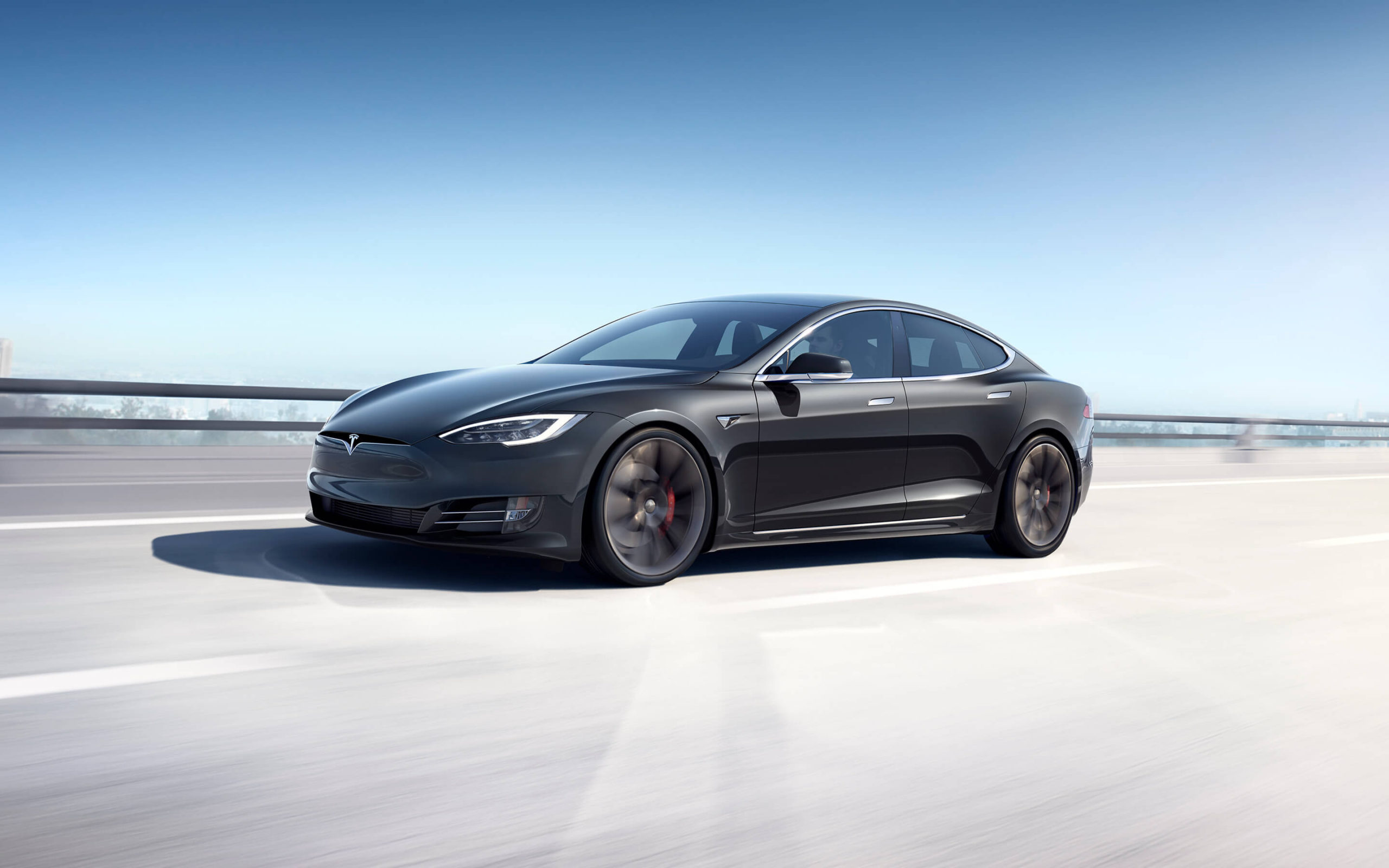
    Chinese government officials have met representatives from U.S. electric carmaker Tesla Inc over reports from consumers about battery fires, unexpected acceleration, and failures in over-the-air software updates, a regulator said on Monday. China’s State Administration for Market Regulation said in a social media post its officials, along with those from the Ministry of Industry and Information Technology, Ministry of Emergency Management, Cyberspace Administration and Ministry of Transportation had met Tesla “recently”, without giving a date.

    The officials urged Tesla to operate according to China’s laws and protect customer rights, the regulator said. In response, Tesla said it would thoroughly investigate the problems reported by consumers and step up inspections.

    “We will strictly abide by Chinese laws and regulations and always respect consumer rights,” a company representative said in a text message, adding that Tesla accepted the guidance of the Chinese government departments.

    China is pushing the industry to make more electric vehicles as it tries to reduce air pollution.

    Tesla is building Model 3 electric sedans and Model Y sport-utility vehicles at its Shanghai factory. It sold 15,484 China-made vehicles in January.

    The industry ministry in May urged Tesla to ensure consistency in its China-made vehicles after some Chinese customers complained about less advanced computer chips in their cars.

    China, the world’s biggest auto market, is pushing the industry to make more electric vehicles as it tries to reduce air pollution.

    Sales of electric, plug-in hybrid and hydrogen-powered vehicles in China are forecast to rise to 20% of all new car sales by 2025 from just 5% now, the State Council said last year.