Tag: China

  • Alibaba fined US$2.75bn for anti-monopoly violations by Chinese regulators

    Alibaba fined US$2.75bn for anti-monopoly violations by Chinese regulators

    Chinese regulators have fined Alibaba 18 billion yuan ($2.75 billion) – around 4 percent of its revenues in 2019 – for violating anti-monopoly rules and abusing its dominant market position.

    The State Administration for Market Regulation (SAMR) said that after an investigation launched in December, it had determined that Alibaba Group had been “abusing market dominance” since 2015 by preventing its merchants from using other online e-commerce platforms.

    It said the practice violates China’s anti-monopoly law by hindering the free circulation of goods and infringing on the business interests of merchants.

    The SAMR ordered Alibaba to make “thorough rectifications” to strengthen internal compliance and protect consumer rights.

    The company said in a statement posted on its official Weibo account that it “accepted” the decision and would resolutely implement SAMR’s rulings. It said it would also work to improve corporate compliance.

    The practice of preventing merchants from listing on rival platforms is a long-standing one. The market regulator spelled out in rules issued on February that it was illegal.

    Alibaba has also been under heavy scrutiny since its founder Jack Ma criticized China’s regulatory system in October.

    Ant Group, Alibaba’s fintech arm, also saw its $37 billion listing plans dramatically suspended by authorities in November.

  • Tesla Tells China Car Cameras Not Activated Outside North America

    Tesla Tells China Car Cameras Not Activated Outside North America

    Cameras in Tesla cars are not activated outside of North America, the U.S. automaker said on its Chinese social media page on Wednesday, seeking to assuage security concerns in the world’s biggest car market.

    Tesla faces scrutiny in China where the military in March banned Tesla cars from entering its complexes, citing security concerns over cameras in its vehicles, sources told Reuters.

    “Even in the United States, car owners can freely choose whether to turn on its (the camera system’s) use. Tesla is equipped with a network security system with world-leading security levels to ensure user privacy protection,” the electric carmaker wrote on Weibo, China’s Twitter-like social media site.

    At a virtual forum in Beijing in March, held not long after reports of the ban surfaced, Tesla founder Elon Musk emphasized the company’s business motivations for protecting user privacy.

    “There’s a very strong incentive for us to be very confidential with any information,” Musk said.

    “If Tesla used cars to spy in China or anywhere, we will get shut down.”

    China is a key battleground for electric vehicles. In 2020 Tesla sold 30% of its global total in the country.

  • Citi Appoints Senior China Corporate Banker

    Citi Appoints Senior China Corporate Banker

    Citi appoints a senior corporate banker for China, amid growing expansion in the mainland market.

    Luke Lu has been named head of corporates coverage for China, reporting to Citibank China CEO Christine Lam and APAC head of corporate banking Kaleem Rizvi.

    A spokesperson for the bank confirmed the new appointment.

    Lu has 20 years of banking experience and was most recently head of Citi Commercial Bank in China after rejoining the American lender in 2019. Previously, he was with MUFG Bank China where he was the head of its global corporate bank for two years.

    Lu’s appointment occurs in the midst of increasing growth at Citi’s corporate banking unit in China.

    According to the note, Citi is serving an increasing number of companies in the mainland market and last year alone, it raised over $30 billion for Chinese clients in global capital markets across debt and equity.

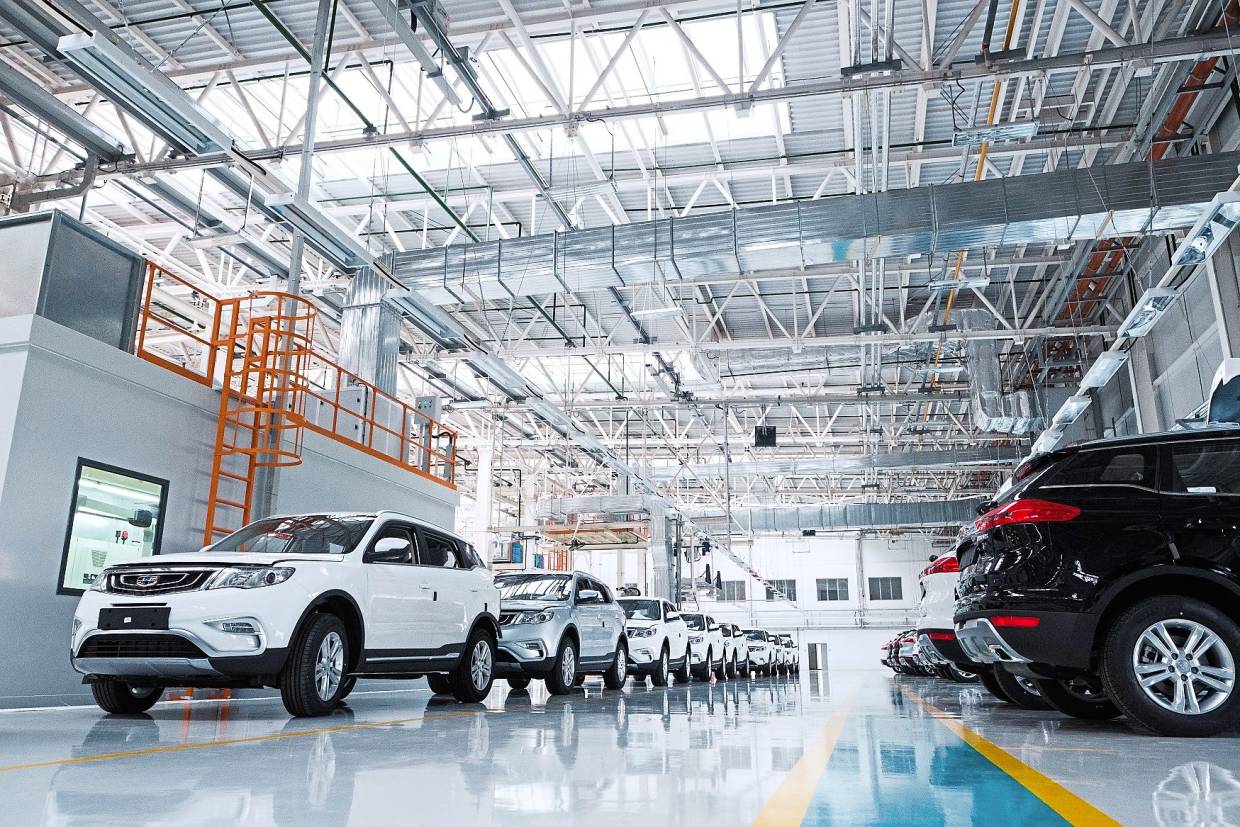
  • China’s Geely sets sights on aerospace

    China’s Geely sets sights on aerospace

    China’s Zhejiang Geely Holding Groups, a global mobility technology group has plans to set up a commercial aerospace company, as announced by the local government.

    The company will develop and advance satellite and communications technologies in Guangzhou, by building low-orbit satellites to deliver high-speed connectivity. Geely will also be partnering with other rocket companies in Guangzhou.

    Geely owns Volvo Cars and 9.7 percent of Daimler AG. Last month, Geely posted a profit of US$850 million in 2020, representing a 32 percent drop in net profit as compared to the previous year as auto sales took a hit amid the pandemic.

  • China slashes import tax to boost semiconductor sector

    China slashes import tax to boost semiconductor sector

    China announced new import cuts this week to boost the nation’s semiconductor industry. This follows after US sanctions on some Chinese companies including tech giant Huawei and chipmaker SMIC to ease the impact on the industry.

    According to China’s finance ministry, chipmakers producing high-end 65-nanometer technology or smaller chips can import raw materials and machinery tax-free through 2030.

    Totaling more than $300 billion annually, China’s processor chips and other semiconductors form the country’s largest single import. Despite the country’s strong chip industry, China still relies on Taiwan, the US and Europe for certain parts. In China’s fourth session of the 13th National People’s Congress (NPC) held in early March, the party pledged to build up self-reliance in science and technology.

  • Huawei and China Mobile support one-of-a-kind 5G smart port in China

    Huawei and China Mobile support one-of-a-kind 5G smart port in China

    Ningbo is a time-honored international port city in east China’s Zhejiang province. Its port, the Ningbo-Zhoushan Port, is the largest port in the world. Recently, the port worked with China Mobile Ningbo and Huawei to showcase the hybrid platooning of 5G smart and traditional container trucks. The platooning is a stride towards realizing the goal of becoming a world-class port. With this solution, in berth 8 of its busy Meishan container terminal, 13 5G smart container trucks run automatically and smoothly, greatly improving automation and safety in the port.

    Due to the collaboration of Zhejiang Seaport Group, China Mobile Zhejiang, Huawei, and other leading players, the Ningbo-Zhoushan Port has been transformed into a smart 5G port. To date, the port has reached a number of milestones, becoming the first in the industry to integrate 5G automated rubber-tired gantry (RTG) cranes into routine operation and implement 5G network slicing and 5G Super Uplink in port businesses.

    Smart container trucks represent a new breakthrough in the smart port transformation. Their scaled application offers an effective solution to driver shortage and fatigue while improving efficiency and reducing safety risks. They will play an important role in replacing intensive labor in the port with unmanned, automated, and intelligent operations.

    Smart container trucks require real-time 5G smart sensing, truck-road and truck-truck synergy, and video transmission. One container truck requires an uplink bandwidth of 20 to 30 Mbps and a low latency of below 20 ms. During peak hours, more than 40 container trucks will be working at the same time. This requires the network to ensure an uplink bandwidth of 1,200 Mbps.

    5G can provide better network support for these applications. Based on 3GPP Release 16, China Mobile and Huawei have developed a 5GtoB solution for port applications. Ample verification tests have been conducted, with results showing that the solution meets the requirements of smart container trucks on both network performance and stability. With CPEs deployed to support dual feeding and selective receiving solution, the network further improves the quality and latency stability of smart container trucks’ signal transmission. As such, 5G has become a preferred network solution for full-function applications of smart container trucks.

    In the Ningbo-Zhoushan Port, container trucks no longer have drivers — an important indicator of the automated logistics of 5G smart trucks in modern ports. Powered by 5G and AI, upon detecting that containers unloaded from bridge cranes are properly loaded, container trucks automatically power on to move the containers to their destinations. During this process, they automatically identify nearby objects, machinery, and lighthouses and respond intelligently, such as decelerating, braking, steering, bypassing, and parking. They can also accurately move to the RTG-specified positions along optimal routes provided by the smart dispatching system, meeting the demand for horizontal transfer in closed areas.

    Looking to the future, the Ningbo-Zhoushan Port will continue to work with China Mobile Ningbo and Huawei as well as other industrial partners to further integrate upstream and downstream resources and promote the pilot and promotion of remote device control, smart tallying, unmanned driving, online AI port monitoring, and trunking communication based on 5G networks so as to build a comprehensive benchmark of 5G smart port.

  • DBS Outlines China Strategy

    DBS Outlines China Strategy

    DBS will seek to further its expansion in mainland China with a focus on three areas: its securities joint venture, consumer finance and Greater Bay Area opportunities. DBS chief executive Piyush Gupta unveiled details about its China plan during the latest annual general meeting held virtually yesterday.

    We are convinced that China’s opening-up in the capital account is going to present tremendous opportunities, Gupta told shareholders.

    We’re already seeing some benefits of that, as institutional investors from China come out and international investors go into China. So that’s hopefully a big area of growth for us. According to Gupta, the bank’s new securities joint venture in China, announced last September, is expected to go to market in the coming few weeks.

    On consumer finance, the bank will also launch a wholly-owned business in China, in addition to its existing 15 percent ownership in a consumer finance joint venture with Postal Savings Bank of China.

    And on Greater bay Area, Gupta said DBS’ Hong Kong presence is expected to support deeper integration into the area with «good momentum» observed last year, especially from its supply chain solutions.

    Gupta also commented on DBS’ takeover of Lakshmi Vilas Bank (LVB) last November and stressed that the deal was not a forced marriage.

    People have asked whether this was a forced marriage or if we were forced to do this deal,» he said, noting that the bank long had an interest in organic and inorganic expansion. This the last thing from a forced marriage.

    DBS highlighted an opportunity through the LVB takeover to accelerated its digital push in South India with an eye on two segments with huge opportunities: retail and small-to-medium-sized enterprise clients.

    Post-acquisition, the bank has added 125,000 corporate and 2 million retail customers with the latter figure boosting its retail share of deposits from 23 percent to 48 percent. Gupta also said that he expects no more incremental cost of credit from the LVB portfolio and expects the merged entity to become profitable in the next 12 to 24 months.

  • ZTE assists in first 5G local traffic offloading pilot in China’s mining industry

    ZTE assists in first 5G local traffic offloading pilot in China’s mining industry

    ZTE Corporation, a major international provider of telecommunications, enterprise and consumer technology solutions for the Mobile Internet, together with China Unicom and Shandong Energy Beidou Tiandi, today has completed the first 5G local traffic offloading pilot in the mining industry in Shandong Province, China.

    With private network coverage as the test target, the pilot employs “5G+NodeEngine” base station-level local offloading, customized for China Unicom Shandong Branch, to bring the mining services a private network. The pilot, in bid to ensure data transmission security and nearest local access, has tested and verified two major functions of ZTE’s NodeEngine solution: local traffic offloading of base station and local inter-connection with eBridge.

    The video monitoring data is sent to the underground integrated control center directly through the intelligent offloading module, so as to reduce the latency by more than 50%. At the same time, ZTE’s NodeEngine solution, combined with the air-interface keep-alive strategy, ensures that the core production services will not be affected when the underground and ground optical fibers are disconnected. Moreover, local inter-connection with eBridge can realize control and equipment management among production devices and between the control end and remote terminals.

    By virtue of ZTE’s NodeEngine solution, ZTE’s 5G base station has been empowered with powerful computing capability to offload the local traffic. Meanwhile, the NodeEngine solution helps further strengthen the data transmission security, safeguard the production when the optical fibers are disconnected, and realize the fast and low-cost service provisioning.

    Moving forward, the three parties will be committed to the customer and demand-oriented innovation investment, expecting to accelerate the in-depth development and expansion of 5G technology in the mining industry and assist enterprises achieve fast deployment of digital application.

  • Popeyes takes aim at KFC’s hold on China

    Popeyes takes aim at KFC’s hold on China

    Popeyes has its sights set on China. On Monday, the American fried chicken chain officially announced that it would open its first China-based store right here in Shanghai sometime next year.

    But that’s just the beginning. Popeyes has big plans to become China’s most popular fried chicken joint. No easy feat considering KFC – the world’s most successful fried chicken brand – currently holds the top spot.

    “I think we can be the no.1 chicken brand here in China and all around Asia,” said Jose Cil, CEO of Restaurant Brands International (RBI).

    Popeyes aims to open 1,500 restaurants in China over the next 10 years. KFC currently has a whopping 6,300 branches in over 1,300 cities across the country.

    Popeyes is all the rage in the US right now, after its latest spicy fried chicken sandwich went viral. The sandwich proved to be so popular it sold out and was removed from the menu a few weeks later due to lack of supply.

    The good news is that the famous spicy chicken sandwich will be offered at the Shanghai branch. The bad news is you’ll just have to wait until 2020 to try it.

    Popeyes will be the last of RBI’s major brands to enter the Chinese market. Burger King and Tim Hortons have both proven to be immensely popular in China. Since 2012, Burger King has opened 1,100 stores in China and Tim Hortons has expanded to 28 stores in just one year.

    Hence, Popeyes lofty expectation to take on KFC here in China.

  • Chinese manufacturer will reportedly use Huawei’s ecosystem in case it too loses access to Google

    Chinese manufacturer will reportedly use Huawei’s ecosystem in case it too loses access to Google

    In May 2019, the U.S. placed Huawei on the Entity List. Not only did this ban Huawei from accessing its U.S. supply chain, it also banned Huawei from using Google’s Android apps on Huawei handsets. Not that this really mattered since many of these apps such as YouTube, Search, Google Maps, Drive, and others were already banned from the Chinese versions of Huawei’s phones by the government. Google’s apps were allowed on the international versions of Huawei’s phones.

    Huawei’s Entity List placement means that Google Mobile Services is not allowed on Huawei handsets and had to be replaced. Huawei developed its own ecosystem called Huawei Mobile Service (HMS). As of last December, HMS covered 500 million monthly active users in over 170 countries; the buzz around the water cooler is that a non-Huawei handset will soon be available with HMS pre-installed (more on this below).

    Huawei also had to replace the Google-licensed version of Android with the open-source version of Android and will now switch to its homegrown HarmonyOS. The company’s first 2021 flagship, the camera-centric Huawei P50 series, could be the first smartphones to run HarmonyOS. According to Huawei staff member Akiba Ziluo, Chinese smartphone manufacturer Meizu will have the first non-Huawei handset to support HMS Core through the Huawei Mobile Service. According to Huawei, “HMS Core offers a rich array of open device and cloud capabilities, which facilitate efficient development, fast growth, and flexible monetization. This enables global developers to pursue groundbreaking innovation, deliver next-level user experiences, and make premium content and services broadly accessible.”

    Each Chinese phone manufacturer has a secret fear; they worry about becoming the next Huawei and ending up in a similar predicament. That is why many of them are looking for Chinese technology that could be used in a jiff to replace American software in case they are banned from using U.S. technology like Huawei is.

  • Targeting Tesla, China’s Geely To Launch New Premium EV Brand

    Targeting Tesla, China’s Geely To Launch New Premium EV Brand

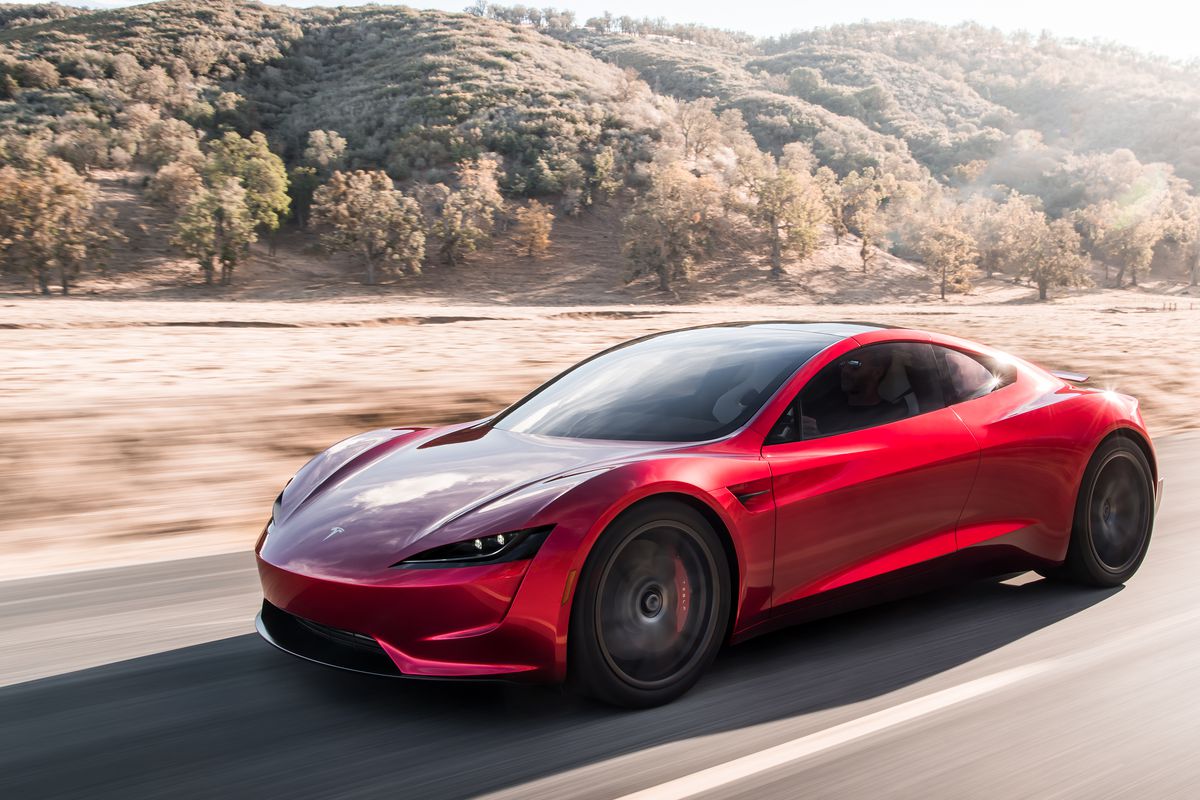
    China’s Geely plans to roll out electric vehicles under a new marque with different branding and sales strategies, people familiar with the matter said, as the Volvo owner looks to take on its main EV rival Tesla with higher-end vehicles. The brand, positioned in the premium segment and named “Zeekr”, will be housed under Geely’s to-be-launched EV entity Lingling Technologies, according to three people, who declined to be named as the plan is not yet public. Reuters reported the plans for Lingling last month.

    Geely, the owner of Volvo Cars and 9.7% of Daimler AG, will roll out models under the new marque based on its open-source EV chassis, announced in September and called Sustainable Experience Architecture (SEA), the sources said.

    It will be a new attempt to go up-market by Geely, and backs founder and Chairman Li Shufu’s long-held ambition to make premium cars “like Mercedes-Benz” in a bid to take on EV leader Tesla Inc.

    Geely will open showrooms, or “hubs”, in city centres to sell cars at a fixed price, departing from traditions to sell cars through dealerships – marketing tactics pioneered by Tesla, which last year saw sales expand quickly in China, the world’s biggest car market.

    The plan follows a flurry of tie-ups by Geely earlier this year as the automaker pursues its goal of becoming a leading EV contract manufacturer and engineering service provider.

    “Traditional gasoline cars and electric vehicles are two race tracks of business. Geely does not have a clear advantage in electric vehicles at the moment so it appears that it wants to complete its own innovation by creating a new brand,” said Alan Kang, analyst at auto consultancy LMC Automotive.

    China’s automakers largely compete with entry-level and mass-market manufacturers including Volkswagen and Toyota, but EV maker Nio Inc sells cars with higher prices and counts BMW as a rival.

    Hangzhou-based Geely also plans a broad array of sales and marketing strategies to seek deeper relationships with the EV buyers. It will open lifestyle lines for clothing and accessories and launch a car owner’s club, tactics used by Nio, sources said.

    Zeekr is also considering rolling out a share ownership plan that allows customers to become shareholders of Lingling, which management hopes will boost sales and the relationship between brand and customers.

    Geely declined to comment. Shares of its Hong Kong-listed company Geely Automobile fell 3% on Friday as Chinese equities dropped after a rise in global bond yields prompted selling in high-priced consumer and material stocks.

    Many conventional automakers have used a new brand to launch their EV units. Geely’s rivals including Great Wall, and SAIC Motor have rolled out their respective new standalone EV brands.

    China’s government has heavily promoted new energy vehicles (NEVs) – such as battery-powered, plug-in petrol-electric hybrid and hydrogen fuel cell cars – in response to chronic air pollution and a warming climate, spurring interest from technology companies and investors alike. China forecasts NEVs will make up 20% of its annual auto sales by 2025 from around 5% in 2020.
  • Alibaba has major ambitions for Vietnamese businesses

    Alibaba has major ambitions for Vietnamese businesses

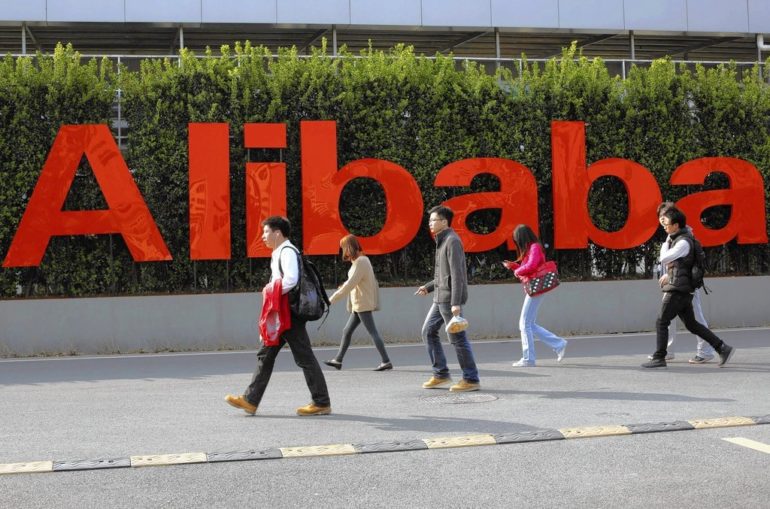
    Chinese e-commerce giant Alibaba wants to have over 10,000 Vietnamese small and medium-sized enterprises selling on its platform by 2025.

    Its government relation and business development manager, Vu The Tung, who revealed this at a ceremony to sign a memorandum of understanding with the Vietnam Trade Promotion Agency on Tuesday, said his company would help Vietnamese businesses increase their exports by promoting their products.

    The two signatories have been running a training program since August last year to enhance Vietnamese businesses’ ability to participate in global e-commerce.

    Vu Thi Minh Thuy, manager of the agency’s information technology application center, said through the training program over 300 companies have been provided consultancy in online cross-border sales.

    Fifty agriculture, aquaculture, food processing, and packaging companies became ready to sell on Alibaba’s e-commerce platform after completing training in October, she said. The two sides hope to have 1,200 Vietnamese enterprises on the platform by the end of 2021.

    Deputy Minister of Industry and Trade Do Thang Hai, who hailed Alibaba’s support, said: “The Vietnam Trade Promotion Agency and Alibaba will continue to look for enterprises to take part in the training program, and create recognition for Vietnamese brands on Alibaba’s e-commerce platform. They are also planning to create an exclusive section for Vietnamese products on the Alibaba website.”

  • China retail sales rebounds after Covid-19

    China retail sales rebounds after Covid-19

    China’s industrial output and retail sales surged in the first two months of the year, official data showed yesterday, underscoring the country’s recovery from the COVID-19 pandemic. Industrial production spiked a forecast-busting 35.1 percent on-year, the biggest bounce in decades, while retail sales also beat expectations with 33.8 percent growth.

    However, the Chinese National Bureau of Statistics said the latest surge was in part due to distortions from last year’s “low base in the same period.”

    Both indicators fell in the early months of last year after COVID-19 surfaced in central China and spread rapidly across the nation.

    However, the world’s second-largest economy became the first to bounce back globally after imposing strict lockdowns and virus control measures, clocking a full-year economic growth of 2.3 percent.

    “After removing the base effect, the growth of main indicators is stable and macro indicators are in a reasonable range,” the bureau said.

    Data for January and last month were released together to eliminate the influence of uncertainties brought about by the Lunar New Year holiday, which typically falls within this period.

    Industrial activity was likely boosted by the fact that many migrant workers were discouraged from returning to their hometowns because of COVID-19 restrictions, meaning some factories remained open through the holiday or reopened sooner.

    “We expect activity to remain strong in the near-term, as the easing of virus restrictions boosts consumption and fiscal stimulus among key trading partners should keep exports strong,” Capital Economics senior China economist Julian Evans-Pritchard said.

    Urban unemployment rose to 5.5 percent last month, up from 5.2 percent in December, data showed, but experts said the real rate might be higher owing to the high number of workers in unofficial employment.

    “Even though we do see improvement on the global economic environment, they are still very cautious,” Oversea-Chinese Banking Corp (華僑銀行) Greater China head economist Tommy Xie (謝東明) said on the issue of unemployment.

    While urban unemployment rate remains within the government’s target, the caution was likely due to another potential record number of graduates entering the job market this year, he said.

    He added that there is an “uneven recovery” ongoing as well, with smaller firms and industries, such as travel, not fully recovered from the pandemic hit.

  • Alibaba told to divest media assets

    Alibaba told to divest media assets

    Beijing has reportedly told the Chinese e-commerce conglomerate Alibaba to divest its assets in the media sector out of concern over the company’s growing public influence. Its founder, Jack Ma, the ebullient and unconventional billionaire who officially retired from Alibaba in 2019 but remains a large shareholder, has been in authorities’ crosshairs in recent months.

    In November, Chinese regulators halted a colossal $34bn stock market listing by Ant Group, an Alibaba subsidiary for online payments. The following month, regulators opened an investigation into Alibaba business practices deemed anti-competitive. Now authorities have told the tech company to drastically reduce its presence in the media sector, citing people familiar with the matter.

    Alibaba’s highest-profile media assets include Hong Kong’s leading English-language daily, the South China Morning Post, and China’s Twitter-like social media platform Weibo, and online video platform Bilibili. Officials are worried that the company has too much influence over public opinion and were reportedly appalled about the extent of its media holdings, the Journal said.

    The government did not specify whether Alibaba was requested to completely withdraw from the media or divest part of its shares.

    On Friday, the Journal reported that Alibaba risks being levied with a record fine in China for anti-competitive practices, which could exceed the $975m paid by US chipmaker Qualcomm in 2015.

    According to the article, authorities accuse Alibaba of preventing merchants who sell goods on the platform from also selling on rival websites.

  • Ant Group Issues Financial Self-Discipline Rules

    Ant Group Issues Financial Self-Discipline Rules

    The internal guidelines come amid increased scrutiny by Chinese regulators of the country’s financial technology sector.

    In a statement, Ant said it will stop issuing loans to minors on its consumer loan platforms and will prevent small business loans from flowing into stock and property markets. The group’s credit-rating service Zhima Credit will also not be available to financial institutions including microloan lenders.

    The publication of the rules on Friday comes four months after the technology giant’s scrapped $37 billion IPO. The group has since agreed with Chinese regulators to restructure itself into a financial holding company, which will make it subject to capital requirements similar to those for banks in mainland China.

    Last month, the governor of the People’s Bank of China Yi Gang suggested a listing revival was possible for Ant, saying that you just follow the standard of legal structure and you will have the result.

    However, no timeline was specified, and the restructuring is expected to take some time with the listing revival not within the scope of the high-level government agenda right now, according to a report which highlighted greater focus by Beijing on Ant’s shareholders.