Tag: China

  • Stablecoins Boost Capital Flight From China

    Stablecoins Boost Capital Flight From China

    Amid an escalating trade war with the U.S., Chinese citizens moved $50 billion worth of cryptocurrency out of the country over the past 12 months, with stablecoin Tether mainly used to facilitate the outflows.

    Over the last twelve months, with China’s economy suffering due to trade wars and devaluation of the yuan at different points, we’ve seen over $50 billion worth of cryptocurrency move from China-based addresses to overseas addresses, blockchain analysis company Chainalysis said in a report.

    In comparison, Western Europe, the next largest cryptocurrency market, saw $38 billion of outflows. We believe that at least some of this activity represents capital flight from China, the report, published Thursday, said.

    The Chinese government allows its citizens to move up to $50,000 out of the country each year. Foreign investments in real estate and other assets have allowed wealthy individuals to skirt these rules, but cryptocurrency assets may be picking up the slack amid a crackdown by authorities on these practices.

    The use of stablecoins, which are digital currencies backed by other assets like cryptocurrency, exchange-traded commodities or fiat money to reduce volatility, is particularly high in East Asia, making up 33 percent of all value transacted on-chain, due to China’s ban of direct exchanges of yuan for cryptocurrency, the report noted.

    Stablecoins are particularly useful for capital flight, as their fiat currency-pegged value means users selling off large amounts in exchange for their fiat currency of choice can rest assured that it’s unlikely to lose its value as they seek a buyer,» the report said, noting that Tether, which is pegged to the U.S. dollar, is disproportionately popular in East Asia – accounting for 93 percent of transactions – compared to other regions.

    In total, over $18 billion worth of Tether moved from East Asia addresses to those based in other regions over the last 12 month, Chainalysis said.

  • Tmall seeks to boost engagement with Chinese Gen Z luxury consumers

    Tmall seeks to boost engagement with Chinese Gen Z luxury consumers

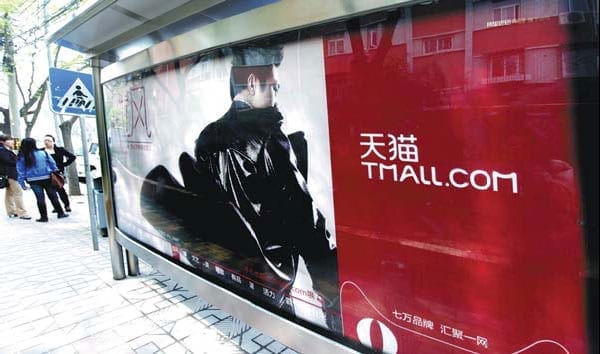
    High-end Chinese e-commerce platform Tmall Luxury has implemented new features to boost its brands’ appeal for Gen Z consumers in the region.

    The three new features include a daily live streaming service on luxury topics, a content-rich magazine channel featuring fashion news, and an upgraded membership program offering personalized services. The features are a response to the strong spending power for luxury items exhibited by consumers within the Gen Z age group, spending on average US$3600 annually on high-end goods.

    Data collected by Tmall Luxury shows that four-fifths of its user base are below the age of 35, with the number of luxury consumers aged 18–25 age group more than doubling between July 2018 and June last year. The emerging consumer dynamic has attracted top brands in the category such as Valentino and Balenciaga to collaborate with the platform.

    “By providing Tmall’s unparalleled analytics and insights on luxury consumption in China, we empower luxury brands with a deeper and more accurate understanding of local consumer preferences,” said Alibaba VP and GM of Tmall luxury, fashion, and FMCG Mike Hu. “These insights allow luxury brands to precisely tailor their communications to Chinese young audiences while staying true to their brand identities.”

    Almost 200 brands have opened flagship stores on the Tmall Luxury platform.

  • Mercedes-AMG Opens First Ever Experience Centre In China

    Mercedes-AMG Opens First Ever Experience Centre In China

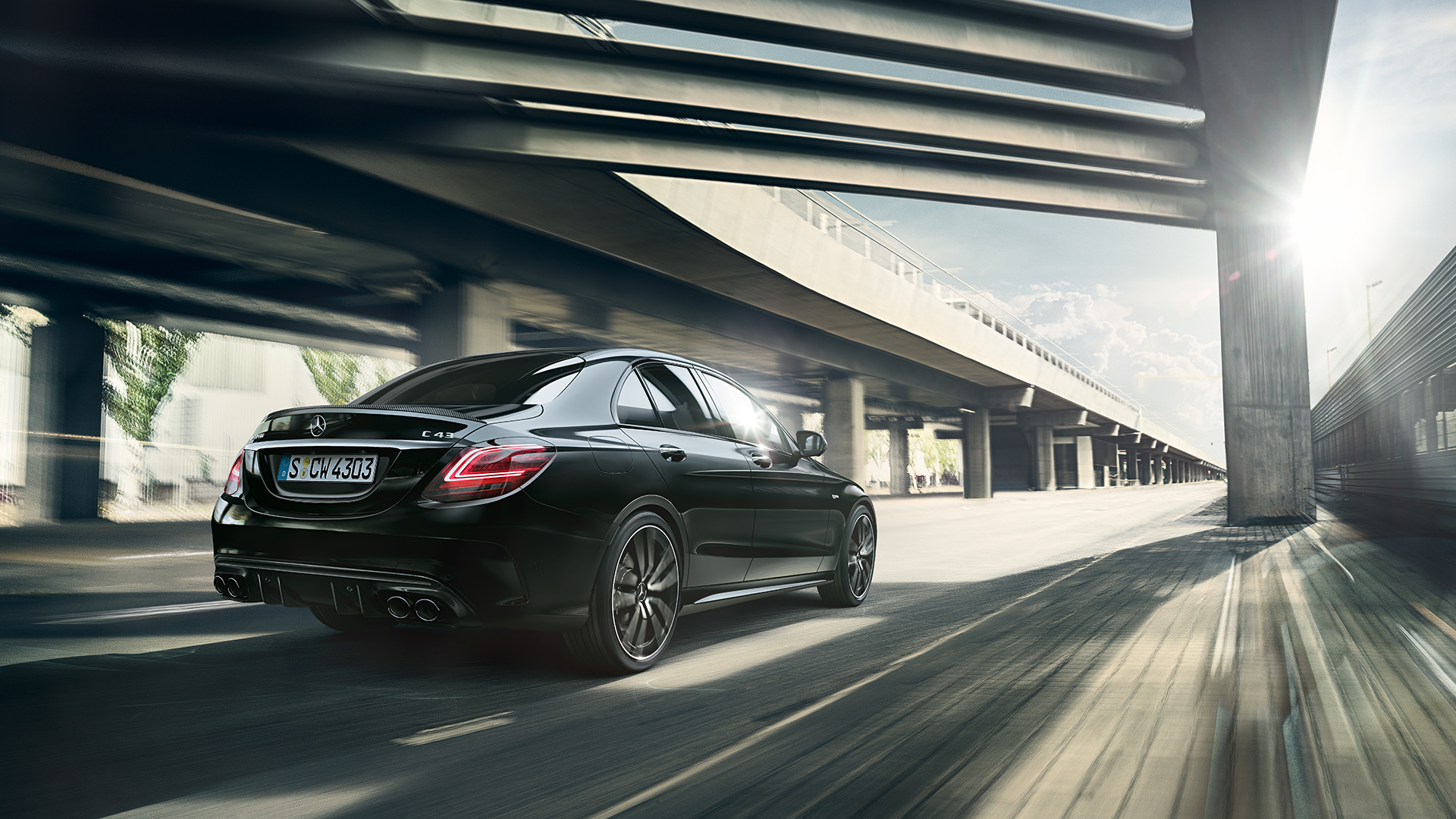
    Mercedes-AMG is opening its first Experience Centre in the world in China. Customers and fans can experience the motorsport DNA of the brand from Affalterbach in close-up – on and alongside the immediately adjacent racing circuit. The new AMG Experience Centre lies about two hours’ drive from Shanghai, occupying an area of around 1305 square meters directly adjacent to the Zhejiang International Circuit. The exclusive AMG format offers twelve functional areas and four display areas over two floors, adding up to an extremely comprehensive brand and product experience and allowing visitors to discover for themselves the many facets of Driving Performance.

    The vehicles and technologies on display can be explored in analog form as well as digitally using VR technology. Specially trained AMG experts are on hand to provide detailed information and individual guidance. If a customer expresses an interest in buying, they will be put in touch with their nearest AMG retail partner. The facilities on offer are further enhanced by the “Café63”, a lounge and an exclusive selection of high-quality lifestyle accessories available from the AMG Shop. The whole area can furthermore be used as an event location, for which it can be flexibly configured. Stairs lead up to the interactive experience zone on the first floor. Motorsport enthusiasts can experience racing simulators and AR applications here, set among the successes of the AMG Customer Racing Teams. A slot car race track controlled via brainwaves is yet another technological highlight that serves to emphasize the experience-oriented nature of the format.

    The opportunity to experience the AMG vehicle range on the race track is of course on the table. An extensive pool of vehicles which includes the GT3 and GT4 racing vehicles in which visitors can experience the true fascination of motor racing. In addition to this exclusive use of the track, the Zhejiang International Circuit offers special monthly track days, in which interested customers and fans can take part either in their own vehicles or in AMG vehicles booked from the Centre.

  • Top Chinese retailtech enterprises revealed

    Top Chinese retailtech enterprises revealed

    Notable Chinese retailtech firms are small in size, heavy on IT personnel, and largely located around the Beijing-Tianjin-Hebei and Yangtse Delta region, according to a new report.

    The study was released by international audit, tax, and advisory firm KPMG in partnership with the China Chain Store & Franchise Association to identify the top 50 high-growth retail tech enterprises in China. It recognizes firms that work to bring forward digitalization, intelligence and integration.

    The findings showed that consumer technology applications are more concentrated on front-end interaction with consumers, marketing and transactions, consumer operation, and smart technology companies.

    Most of the companies shortlisted for the report had no more than 300 employees.

    Technical personnel accounts for more than 60 percent of human resources in more than half of these firms, and about half of the companies have been operating for less than five years.

    “The association and KPMG have worked together to release the list of China’s leading 50 retailtech enterprises, after spending six months studying the founding team of candidate enterprises on a one-by-one basis over six criteria, namely: technology and business model innovation; empowering reform of the traditional retail sectors; financial health; valuation and capital market recognition; target market acceptance and potentials under market segmentation; team capabilities and corporate innovation mechanism; and business model innovation and sustainability,” said China Chain Store & Franchise Association secretary-general Kevin Peng.

    At the end, 64 representative Chinese retailtech firms were shortlisted, including 50 leading enterprises and 14 emerging enterprises.

    “We hope this list can offer some references to chain stores and retail brands so that their digital transformation journey can be smoother and more successful.”

    “The retailtech industry is treading the same path of evolution as China’s commerce, the two have formed a synergy for mutual growth,” said KPMG China partner and head of consumer retail Jessie Qian.

    “Enterprises in technological innovation and retail industries have worked hard to accumulate a wealth of technological applications and real-life cases, which can serve as a role model for enterprises building their own digital capabilities.”

    “The retail industry is innovating and reforming in the face of digitalization as consumers are changing their lifestyle,” said KPMG China partner and advisory head of consumer and retail sector, Michael Mao. “New retail technologies and the retail businesses are increasingly integrated, as new consumption needs are being explored and new operational models are emerging.

    “During the transformation, retailtech enterprises, especially start-ups, have played an indispensable role and they are upgrading themselves when engaging with their end-users. Many technological enterprises have evolved from software vendors of a single solution to business partners working with their end-users to develop solutions tailored for specific scenarios, others not only provide technical support for hardware and software but also assist retail enterprises in integrating technological transformation at the IT level with internal reform and optimization of organizational structure.”

  • Gentle Monster shows its flagship concept in Shenyang

    Gentle Monster shows its flagship concept in Shenyang

    Gentle Monster has unveiled another flagship concept in Shenyang, China after launching the “Memory” theme in Hangzhou last month.

    Themed “New Normal”, the Korean eyewear retailer’s new store in Shenyang is inspired by the idea of how AI will be “deeply embedded in human life.” The story behind the new concept, according to the company, is “the upcoming future where AI is no longer a strange concept, but a ‘New Normal’.”

    When entering the store, visitors will see a sculpted “AI shepherd”, keeping an eye over his sheep.

    “With more data collection, this AI shepherd is able to nurture the herd with more care than the past generations,” Gentle Monster explained. “The space past him exhibits the advanced technology of monitoring devices used to detect potential danger to guard the sheep.”

    Several artworks are featured on the store’s walls and floors. The Gentle Monster Shenyang store also houses a lion head sculpture in gold and dark blue-grey colors.

    “The Gentle Monster Shenyang store embodies the brand’s evolving identity, and visitors will be able to experience the future world where the ‘New Normal’ dominates the norm,” the company said.

    The store extends the technology theme of Gentle Monster’s new flagships. The Hangzhou store ‘Memory’ explores the concept of future technology restoring lost memories.

  • JD sales beat estimates as customers move online

    JD sales beat estimates as customers move online

    China’s JD beat analysts’ estimates for quarterly sales, as the firm benefited from a shift in shopping habits of domestic consumers who have largely moved to online ever since the outset of the Covid-19 pandemic.

    The results coincide with growing tensions between Beijing and Washington. Several Chinese companies are putting off plans for US listings amid tensions between the world’s top two economies, while those listed in New York are seeking to return to exchanges closer to home. In June, JD raised about $3.87 billion in its Hong Kong secondary listing.

    JD executives did not offer any comments on US-China tensions on a conference call with analysts on Monday.

    China, which has under a thousand active Covid-19 cases currently, has largely emerged out of lockdowns but demand is still picking up in many sectors.

    Retail sales in the world’s second-largest economy slipped in July, dashing expectations for a modest rise, as consumers failed to shake off wariness about the coronavirus, while the factory sector’s recovery struggled to pick up the pace.

    The company’s net product revenue, which includes online retail sales, rose 33.5 percent to $25.74 billion in the second quarter.

    Net income attributable to shareholders rose to $2.38 billion from $89.4 million a year earlier.

    The company’s total net revenue rose 33.8 percent to $28.98 billion in the quarter ended June 30.

  • China’s retail sales fall as consumers adopt caution

    China’s retail sales fall as consumers adopt caution

    China’s retail sales slipped in July, dashing expectations for a modest rise, as consumers in the world’s second-largest economy failed to shake off wariness about the coronavirus.

    Meanwhile, the recovery in the factory sector struggled to gain momentum.

    Asian markets pulled back on Friday following the disappointing set of economic indicators, which raised concerns about the fragility of China’s emergence from coronavirus.

    China’s recovery had been gathering pace after the pandemic paralyzed huge swathes of the economy as pent-up demand, government stimulus and surprisingly resilient exports propel a rebound.

    However, the data from the National Bureau of Statistics on Friday showed weaker-than-expected year-on-year industrial output growth and retail sales extending declines into a seventh straight month in July. That was slightly offset by firmer property investment, which showed a recent stimulus was supporting construction activity.

    “Looking ahead, we expect a renewed acceleration in infrastructure investment in the coming months as planned government bond issuance continues to ramp-up,” said Martin Rasmussen, China Economist at Capital Economics.

    “This should drive a further rebound in industry and construction, helping to absorb labor market slack, indirectly shore up consumption and keep the economic recovery on track.”

    Industrial output grew 4.8 percent in July from a year earlier, in line with June’s growth but less than forecasts for a 5.1-per-cent rise.

    Retail sales dropped 1.1 percent year on year, missing predictions for a 0.1-per-cent rise and following a 1.8-per-cent fall in June.

    The decline in retail sales was broad-based with garments, cosmetics, home appliances, and furniture all worsening from June.

    A key exception was auto sales, which surged 12.3 percent, turning around an 8.2-per-cent fall in June.

    China’s economy returned to growth in the second quarter after a deep slump at the start of the year, but unexpected weakness in domestic consumption weighed on momentum.

  • JD outlines aggressive expansion strategy for Mainland China

    JD outlines aggressive expansion strategy for Mainland China

    Chinese e-commerce giant JD is planning on a widespread store network expansion within five years.

    The firm will open 20 E-Space experience stores in first-tier cities, 300 home-appliance flagship stores in prefectural-level cities and 5000 stores in towns and villages by 2025, according to the firm’s senior VP Yan Xiaobing.

    Yan made the announcement at a press conference marking the completion of JD’s full acquisition of home-appliance chain 5Star, commenting that the complete store network “will create a new offline JD”.

    The E-Space stores, known for allowing consumers to try anything in store, will be 50,000–100,000sqm in size, while the home-appliance stores will be 10,000–20,000sqm each.

    5Star, to be renamed JD 5Star, is the third-largest home-appliance chain in the territory, with annual sales of more than US$2.6 billion.

    “The Covid-19 pandemic took its toll on the home appliance industry in the first of this year,” said China Household Electrical Appliances Association director Jiang Feng. “JD’s acquisition of 5Star could play a key role in driving the industry’s transformation.”

  • China’s retail sales fall as consumers adopt caution

    China’s retail sales fall as consumers adopt caution

    China’s retail sales slipped in July, dashing expectations for a modest rise, as consumers in the world’s second-largest economy failed to shake off wariness about the coronavirus.

    Meanwhile, the recovery in the factory sector struggled to gain momentum.

    Asian markets pulled back on Friday following the disappointing set of economic indicators, which raised concerns about the fragility of China’s emergence from coronavirus.

    China’s recovery had been gathering pace after the pandemic paralyzed huge swathes of the economy as pent-up demand, government stimulus and surprisingly resilient exports propel a rebound.

    However, the data from the National Bureau of Statistics on Friday showed weaker-than-expected year-on-year industrial output growth and retail sales extending declines into a seventh straight month in July. That was slightly offset by firmer property investment, which showed a recent stimulus was supporting construction activity.

    “Looking ahead, we expect a renewed acceleration in infrastructure investment in the coming months as planned government bond issuance continues to ramp-up,” said Martin Rasmussen, China Economist at Capital Economics.

    “This should drive a further rebound in industry and construction, helping to absorb labor market slack, indirectly shore up consumption and keep the economic recovery on track.”

    Industrial output grew 4.8 percent in July from a year earlier, in line with June’s growth but less than forecasts for a 5.1-per-cent rise.

    Retail sales dropped 1.1 percent year on year, missing predictions for a 0.1-per-cent rise and following a 1.8-percent fall in June.

    The decline in retail sales was broad-based with garments, cosmetics, home appliances and furniture all worsening from June.

    A key exception was auto sales, which surged 12.3 percent, turning around an 8.2-per-cent fall in June.

    China’s economy returned to growth in the second quarter after a deep slump at the start of the year, but unexpected weakness in domestic consumption weighed on momentum.

  • Tencent profit beats expectations after strong demand for games

    Tencent profit beats expectations after strong demand for games

    Chinese gaming and social media giant Tencent Holdings said second-quarter net profit rose 37 percent, beating market estimates, on higher demand for its video games as coronavirus put a dent in other entertainment options.

    Revenue from online games, which accounts for one-third of total sales, jumped 40 percent in the quarter, primarily driven by smartphone games including Peacekeeper Elite and Honour of Kings. That offset a continued decline in desktop games.

    Social networks, fintech and business services, and social advertising revenues all grew by nearly 30 percent.

    Media advertising revenues fell by 25 percent however, “as a result of weak brand advertising demand amid the challenging macro environment”, and delayed content production and releases.

    The world’s largest gaming firm by revenue booked a US$4.8 billion profit for the three months through June. Revenue rose 29 percent to $16.5 billion.

    The results come a few days after the US said it would ban WeChat-related transactions in the country.

    Tencent, which owns the Chinese messaging app, is under pressure to address concerns about the impact of the ban and outline its plans to mitigate any fallout.

    The company has also postponed a blockbuster release of “Dungeon and Fighter Mobile” game planned for August 12, citing upgrades needed to the game’s addiction prevention system.

  • China sets dates for reinstatement of tourist visas to Macau

    China sets dates for reinstatement of tourist visas to Macau

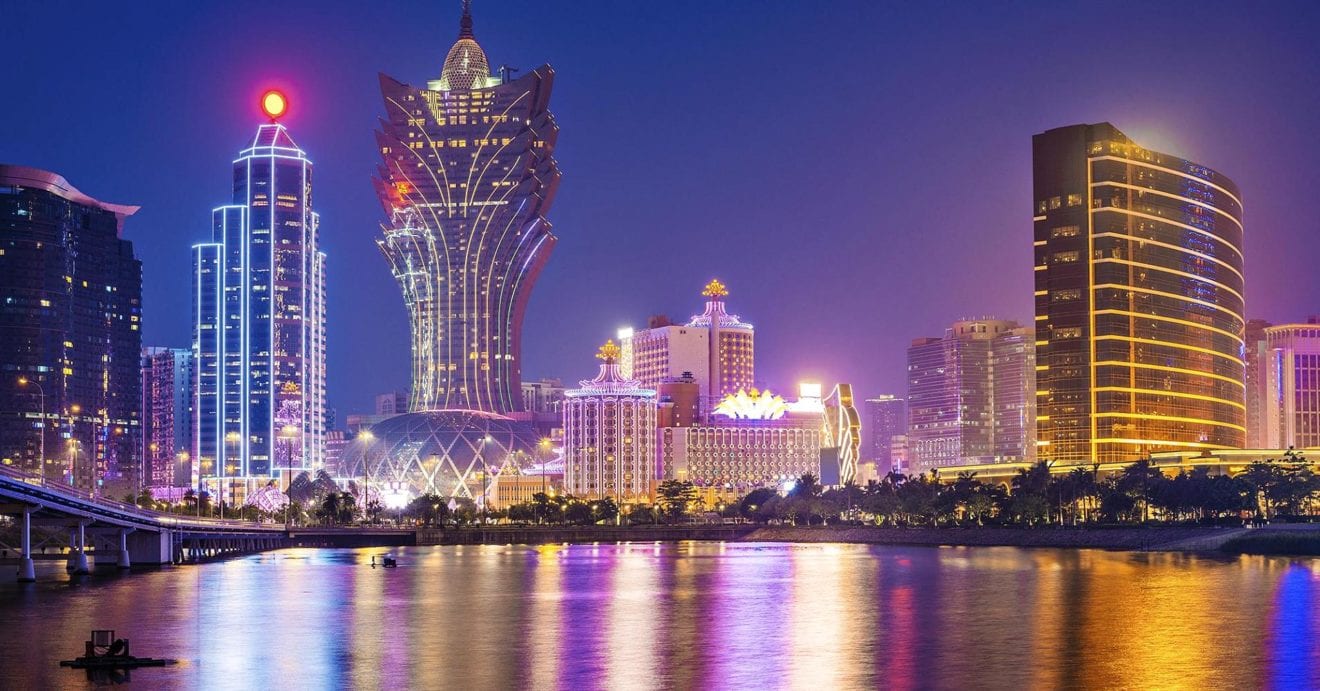
    @Macau, the world’s biggest casino hub, is set to welcome an influx of gamblers after China announced that tourist visas would be reinstated for all provinces.

    Residents from Zhuhai city across the border from Macau are permitted from tomorrow, August 12.

    Residents from the neighboring coastal province of Guangdong on the mainland will be able to apply from August 26, the National Immigration Administration said.

    Residents of other provinces will be allowed to apply for visas from September 23.

    Casino executives and investors have been eagerly awaiting the announcement as a catalyst to reviving gaming revenue, which has slumped since February due to coronavirus travel restrictions.

    China’s National Immigration Administration said, provided the domestic coronavirus situation continued to improve, residents would be able to apply for individual and group travel visas to enter the special administrative region located on the country’s southern coast.

    Visitors from greater China make up over 90 percent of tourists to the former Portuguese colony of Macau.

    Shares of Hong Kong listed casino stocks soared on Tuesday following the announcement. The announcement comes nearly a month after China loosened coronavirus-related border restrictions between Macau and Guangdong.

  • Fuelled By Volvo, China’s Geely Seeks Launchpad To Enter Auto Giant Orbit

    Fuelled By Volvo, China’s Geely Seeks Launchpad To Enter Auto Giant Orbit

    Chinese carmaker Geely plans to use a platform developed with input from Volvo to build new models in Malaysia for its partly owned Proton brand, a strategy that shows how it aims to accelerate its push to become China’s first global auto giant. The yet-to-be-finalized plans for Proton are just one strand of a Geely project to revamp factories at home and abroad using joint platforms it has been perfecting with Volvo since 2013. Geely bought the Swedish brand 10 years ago for $1.8 billion (1.4 billion pounds) – a deal that raised its international profile and sent shockwaves through the global auto trade.

    Senior Geely officials and engineers told Reuters that a project dubbed Compact Modular Architecture (CMA) will allow them to develop, design, and build different types of compact cars with similar mechanical layout faster than before – and at a lower cost.

    They said CMA, along with a platform for smaller cars known as B-segment Modular Architecture (BMA) that Geely plans to roll out for Proton, allows them to harness the Swedish automaker’s technologies and Geely’s capabilities in cost control, supply chain management, and local production.

    “CMA will be the core of Geely’s future architecture design … We learn technologies and build up talents through developing it,” said Li Li, vice president at Geely Automobile Research Institute, confirming the Proton plan during an interview in Ningbo, south of Shanghai. Li declined to disclose details of the general investment, financial targets, or a timetable for expansion plans.

    From its lowly foundation in 1986 in Taizhou on the east coast as a maker of refrigerator parts, Geely has grown into one of the biggest players in China, the world’s largest auto market accounting for nearly one in every three passenger cars sold around the planet. Geely now sells more than 2 million cars a year across all brands, ranking it not far from the world’s top 10 automakers by unit sales.

    The CMA platform in particular will allow Geely and Volvo to design vehicles more quickly and cost-effectively, Li said, providing a technological springboard towards a higher market share at a time when the auto industry must embrace a future featuring electric and autonomously driven transport.

    Like Geely – an anglicization of the Chinese word for ‘lucky’ – domestic peers Great Wall Motor and GAC have branched out with their own versions of vehicle platforms, harboring greater ambitions for selling cars in major Western markets.

    But grand plans have previously been delayed, or simply canceled, amid a lack of practical preparedness, analysts have said, against a backdrop of years of trade tensions between China and the United States that have roiled the global economy. At the same time, attention has been diverted to deal with stalling sales at home as the pace of China’s growth has slowed.

    Geely Automobile and its sister company Volvo Cars are planning to merge and list in Hong Kong and possibly Stockholm, giving Volvo access to public markets after it dropped a move to list its stock two years ago.

    In its pursuit of global automaker status, Hangzhou-based Geely is now holding talks to merge the Volvo Cars business with its Hong Kong-listed Geely Automobile – worth about $22 billion by market value, bigger then famed industry names like Fiat Chrysler Automobile and Nissan Motor.

    As well as the 49.9% stake it took in Proton three years ago, the broader Geely group – Zhejiang Geely Holding Group, led by Taizhou-born billionaire Li Shufu – now also comprises a 9.7% stake in Germany’s Daimler AG and a majority stake in British sports car brand Lotus.

    And while giants from Toyota Motor Corp to Volkswagen AG and General Motors Co have followed a similar shared platform project for their respective brands, Geely’s strategy is a first for a Chinese company.

    The automaker plans to develop all its future models for the Geely and Lynk & Co brands on CMA or other related product platforms, like BMA. It is also developing a new architecture to accelerate the launch of pure battery electric vehicles with intelligent connectivity functions, said Li, a former Ford engineer.

    In addition, Geely wants to shift the development of next generations of some popular existing models, like Borui and Emgrand sedans, to those architectures, he said. It takes around 18 months for Geely to significantly change a CMA-based car, versus 24-30 months to do so on a non-CMA-based model.

    Using CMA, plant managers can switch production of different models to maintain smooth overall capacity utilization rates at production lines, said Oskar Falk, the Volvo-trained head at Geely and Volvo’s first joint production site in Taizhou.

    The plant already exports Volvo Polestar 2 electric sedans to the United States and Europe, and is preparing to make Volvo’s first battery-powered electric vehicle, Falk said.

    Geely also plans to start exporting China-made Lynk & Co 01 SUVs to Europe this year.

  • Yum China eyes US$2 billion HK stock listing

    Yum China eyes US$2 billion HK stock listing

    Yum China – the operator of KFC, Pizza Hut, Taco Bell, and local restaurant chains – is reportedly preparing to list on the Hong Kong stock exchange as early as next month.

    The IPO, should it proceed, is likely to raise as much as US$2 billion, according to Bloomberg, which cited inside sources who asked not to be identified

    Approval for the listing will be sought from the territory’s stock exchange as early as this month.

    Yum China, controlled by its US namesake Yum! Brands, has been working with Goldman Sachs, China International Capital, Citigroup, UBS and CMB International to prepare for the listing.

    Last month, Yum China marked its 10,000-store milestone, opening a KFC in Bo’ao, Hainan province, and CEO Joey Wat said then that the Covid-19 pandemic will not impact this year’s store rollout plan.

    “With our innovation capabilities, strong digital strategy, and resilient business model, I believe we will emerge from this pandemic stronger than ever, and ready to capture the exciting long-term market opportunity in China,” she said.

    Yum China’s total sales fell 11 percent year on year to US$1.9 billion in the first quarter of this year, while net income fell 26 percent to $132 million.

    Michael Pearson, head of corporate equities at Oak Stone Limited, said the specifics of the deal such as timing and size have not yet been finalized and are likely to change in the coming weeks.

    “New York-listed Yum China is another company who join the growing wave of US-listed Chinese firms seeking a trading foothold in Hong Kong due to the deteriorating relations between the US and China,” added James Burnley, head of wealth management at Oak Stone.

    “Regulators in the US are threatening to restrict the access of Chinese companies to the American capital markets if they refuse to let authorities review their audits,” he said.

  • Adidas China sales goes flat but bright outlook

    Adidas China sales goes flat but bright outlook

    German sportswear firm Adidas says it expected a rebound in profits in the third quarter after it plunged to a big loss in the second quarter when the majority of its stores were closed due to coronavirus lockdowns.

    Adidas reported a second-quarter operating loss of US$396 million, worse than the $344 million expected by analysts on sales down 35 percent to $4.25 billion.

    The company said its sales were flat for the second quarter in China, however it saw double-digit growth in May and June.

    But CEO Kasper Rorsted said the company expects to benefit from more people exercising and dressing down with around three-quarters of companies planning to allow staff to continue to work from home.

    “The work environment will have changed forever,” he said, noting that sales of plastic slip-on Adilette bath sandals had tripled during the crisis.

    The loss included coronavirus-related charges of around $297 million, mainly due to an increase in inventory and bad-debt allowances, as well as the impairment of retail stores and the trademark of its struggling Reebok brand.

    Adidas expects a material improvement in third-quarter sales assuming there are no new major lockdowns, but still down on last year by a mid to high-single-digit rate.

    It sees an operating profit of between $712 million and $831 million in the period. The company declined to give an outlook for the full year.

    “We are now seeing the light at the end of the tunnel as the normalization in the physical business continues,” said Rorsted in a statement.

    E-commerce sales jumped 93 percent in the quarter and remained at a very high level even as stores started to reopen, with 92 percent already back in business, albeit with reduced opening hours.

    Rivals Nike and Puma also reported quarterly losses, while Nike saw a 75-per-cent rise in online sales.

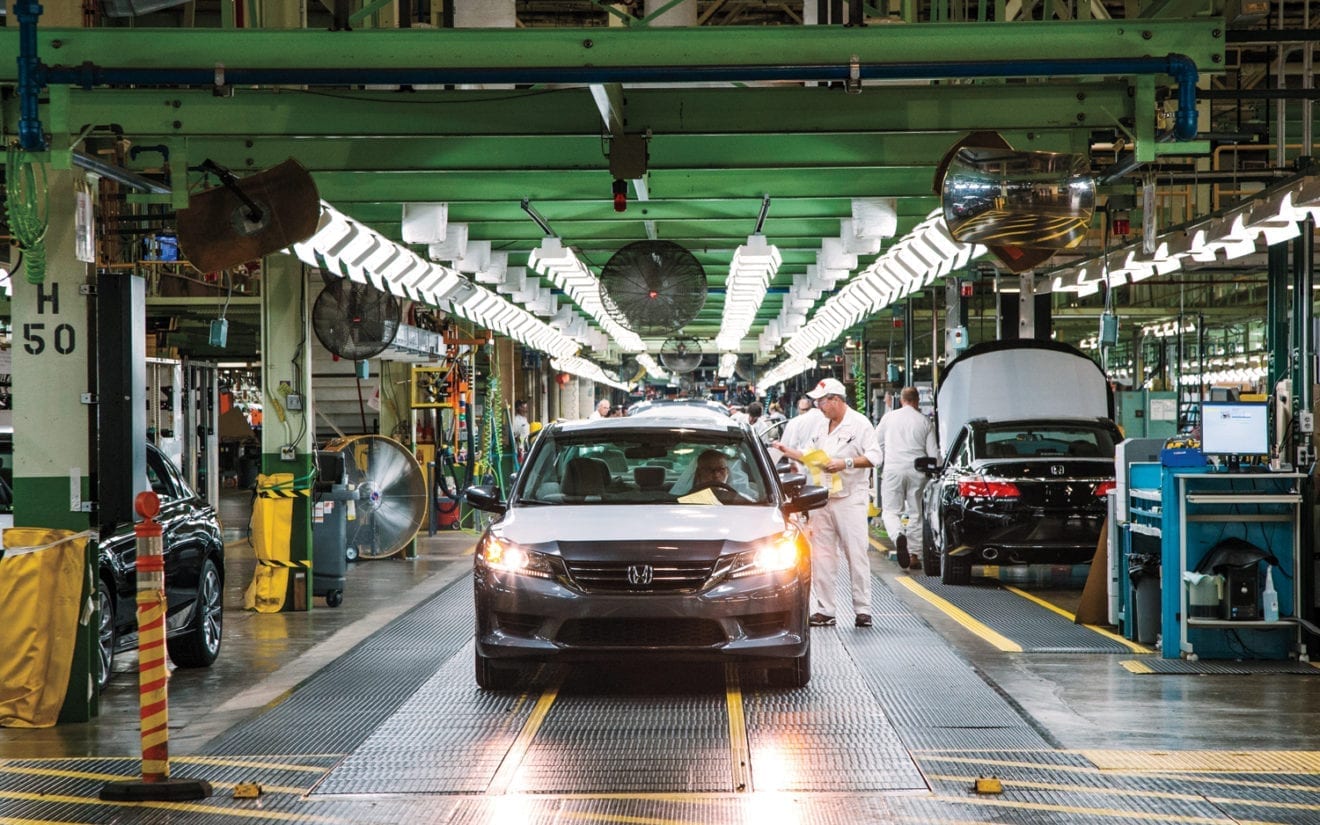
  • Honda Sees Drop In Annual Profit As Coronavirus Slams Car Sales

    Honda Sees Drop In Annual Profit As Coronavirus Slams Car Sales

    Japan’s Honda Motor Co on Wednesday forecast a 68 percent decrease in annual operating profit to a 10-year low with global demand for cars expected to slide because of the coronavirus pandemic.

    The country’s No. 3 automaker expects profit to sink to 200 billion yen ($1.89 billion) in the year to end-March 2021, its weakest since the 2010/11 year, and undershooting analyst estimates.

    Honda is bracing for a 6 percent decrease in annual vehicle sales after a 40 percent plunge in the June quarter, which resulted in a 113.7 billion yen operating loss.

    Global automakers are taking a big hit from the coronavirus outbreak, which shuttered vehicle factories this year and has kept customers out of car dealerships.

    The maker of the CR-V SUV crossover and the Fit compact hatchback expects to sell 4.5 million vehicles this year, versus 4.79 million last year. It predicts a 16 percent sales slide in North America, a key market where the United States is struggling to control a surge in virus infections.

    “If the current situation continues as is, we think the situation will not get worse (than we saw earlier this year), but it will take time for demand to recover to pre-pandemic levels,” Executive Vice President Seiji Kuraishi told a live-streamed briefing.

    Despite weaker sales in North America, Honda expects annual sales in Asia to increase by 8 percent.

    China, one of Honda’s biggest markets, has become a rare bright spot for many global automakers, as demand in the world’s biggest car market has been recovering faster than in other countries.

    Honda sank into the red for the second straight quarter and posted its worst operating loss since the March 2009 quarter.

    Despite its dire outlook, Honda is weathering the coronavirus pandemic better than rivals Nissan Motor Co, Mitsubishi Motor Corp and Mazda Motor Corp, which last week forecast record operating losses for the year.