Tag: China

  • As Chinese Digital Banks Arrive, OCBC Gets Ready

    As Chinese Digital Banks Arrive, OCBC Gets Ready

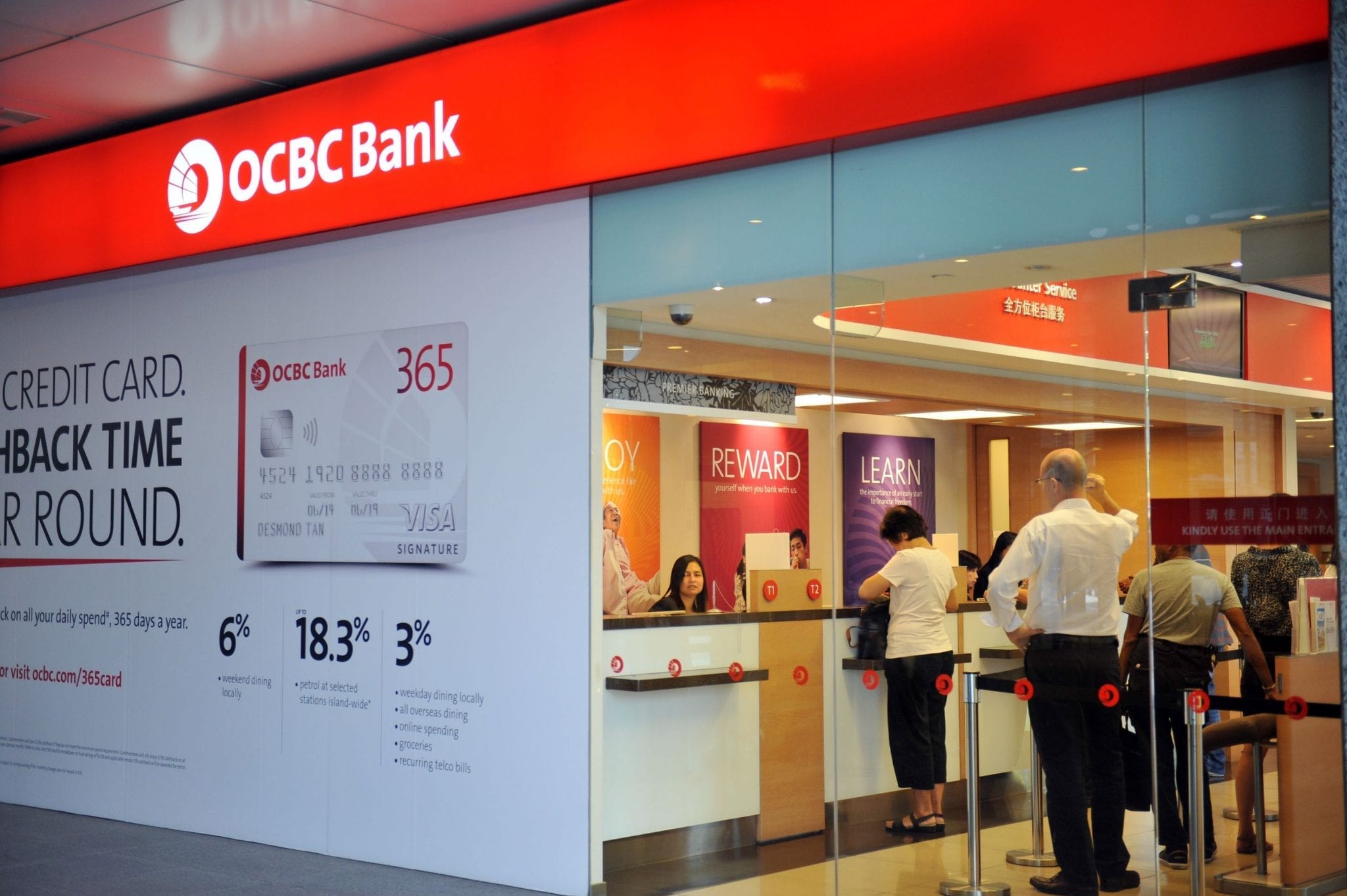
    When asked if Oversea-Chinese Banking Corp is ready to take on Chinese technology companies looking to take a piece of Singapore’s banking market, the lender’s top executive said they are well-positioned.

    Jack Ma’s Ant Financial Services Group has announced interest in Singapore’s digital banking licenses, but Oversea-Chinese Banking Corp’s (OCBC) chief executive Samuel Tsien is unfazed with the arrival of Chinese technology companies.

    This is because he views these Chinese technology companies as «extended» competition rather than new competition. Moreover, the local lender has its own digital banking plans – it has agreed in principle to join a group led by peer-to-peer lender Validus Capital and Temasek Holdings’ venture-capital arm to apply for a wholesale digital banking license before a year-end deadline, Bloomberg reported this month.

    The bank and its partners are looking to provide a platform to expand in the lucrative South-east Asian market. «We are talking to various parties but we have not made a final decision whether we would go in or not,» said Tsien.

    It’s attractive to us because it’s the way that we can test out in the new digital economy as to what we could do.

    Earlier this year, the Monetary Authority of Singapore (MAS) unveiled plans to grant as many as five virtual bank licenses to boost competition and innovation in the nation’s financial industry. China’s Ant Financial and Ping An Insurance (Group) are among companies considering applications, and Tsien said OCBC may join the race, both as a bank, and through its insurance unit.

    Another reason that OCBC is unfazed is due to high regulatory hurdles greeting new digital banks. Not only must they do proper Know your customer processes and transaction monitoring, they are also not allowed to offer unrealistic deposit rates just to gain market share, he added.

    .

  • Walmart China opening 500 more stores

    Walmart China opening 500 more stores

    US retailer Walmart is planning to launch 500 new outlets in China within five to seven years.

    The expansion will more than double the firm’s presence in the territory in time for China to emerge as the world’s biggest grocery market come 2023. The move comes in the face of an economic slowdown as China grapples with the US trade war and slow growth.

    In spite of the setback, Chinese consumers are still buying from Walmart, which experienced 6.3-per-cent year-on-year growth in the last quarter. Its global growth during the period was just 2.5 percent.

    “We will continue to collaborate with partners and policymakers in China to accelerate our expansion,” Walmart China senior VP James Ku said.

    The firm will also remodel more than 200 of its stores in China in the coming years, including installing self-service checkouts using facial recognition technology.

    Walmart China has operated for more than 20 years.

  • Toby Black chases Hello Kitty in China

    Toby Black chases Hello Kitty in China

    Hong Kong fashion brand Azona (Asia)’s cartoon character Toby Black is proving popular in Mainland China.

    Dubbed Hong Kong’s answer to Hello Kitty since 2006, the character has appeared on many of the firm’s products, and was licensed under Toby World Limited since late last year. The firm developed a partnership with multiple European brands at the Hong Kong International Licensing Show last January.

    Toby Black has more than 1.2 million fans on Tmall, sells on all major online e-commerce platforms, and has a presence at school and university events throughout the territory.

    “We have an extensive online and offline sales network and experience in product development and have sold hundreds of millions of products,” said Toby World Limited GM Florence Law in an interview with Hong Kong Means Business.

    “Licensing has taken off in the mainland market, with remarkable growth recently, and – hoping to reach out to other businesses – we established a subsidiary in December last year. We hope to use this to develop other products and roles through licensing.”

    One of the firm’s products, a phone charger shaped as a cat’s paw, reached viral popularity since being used by leading Chinese actress Yang Mi.

    “We try to cater to international tastes that respect the true spirit of design,” said Law. “Instead of simply copying the image and applying it to different products, we invest in model-making for unique products.

    “Licensing helps to extend our business blueprint; next we hope to participate in areas like franchising, wholesale, theme parks and premium gifts.”

  • AS Watson opens its 3800th Watsons store in China

    AS Watson opens its 3800th Watsons store in China

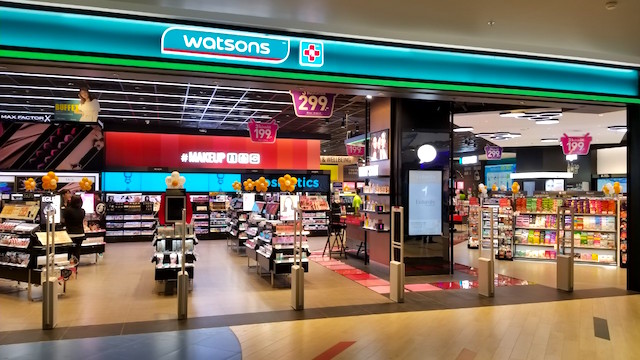
    AS Watson Group is opening its 3800th Watsons store in China.

    The new outlet is located in Kunming, the largest city in Yunnan Province, and is designed to provide one-on-one beauty services to customers supported by the fully integrated digital experience.

    “Our extensive physical store network provides unique touchpoints in over 470 cities in China, connecting us to customers through the in-store experience and digital engagement,” said AS Watson (Asia & Europe) CEO Malina Ngai. “All stores provide 30-minute ‘click-and-collect’ service and 60-minute ‘click-and-delivery’ service which are widely used and appreciated by customers. Including China, this year AS Watson Group is on plan to open 1300 new stores globally. That is, on average one new store every seven hours.”

    The new Watsons store in China, located in Living Mall of Yunnan, uses the latest retail technologies to combine online and offline (O+O) platforms. The new more than 2000sqft store is committed to providing customers with an engaging shopping experience through a wide range of Watsons offerings.

    “Building customer connectivity with our 65 million loyal members in Mainland China plays a vital role in our growth in this vibrant market,” said Watsons China CEO Kulvinder Birring. “On top of that, we have launched our Elite Card VIP program to ensure our highest-spending members enjoy the most privileged service … Going forward, Watsons China will continue to enh

  • China to Step Up Fintech Regulation

    China to Step Up Fintech Regulation

    The People’s Bank of China will introduce new standards in 17 areas, including blockchain, cloud services and artificial intelligence.

    China has plans to step up regulation in 17 areas of fintech to «guide the application of new technologies» applied across the financial industry, according to an article published by state news portal Xinhua.

    Speaking at the 2019 working conference of the National Financial Standardization Technical Committee on Wednesday, Fan Yifei, deputy governor of the People’s Bank of China, said the introduction of new standards is urgently needed to fill shortcomings in key areas, with a particular focus on data security, the publication reported.

    Fan noted that China currently has 65 national financial standards and 252 financial industry standards, which include mobile financial payment client technical specifications, voiceprint identification and more, but financial services and management standards are still weak.

    Explaining the rationale behind the regulatory push, Fan said that high-quality financial development requires high-quality financial standards.

    He also highlighted the need to expedite the internationalization of financial standards, actively carry out financial standardization research, cultivate a new generation of regulators savvy in this field, and to use fintech regulation to modernize financial governance systems and governance capabilities, the report said.

    China recently passed a new law on cryptography aimed to facilitate development concurrently with the country’s central banking efforts to launch its own digital currency, which will be effective January 1, 2020.


  • China to Step Up Fintech Regulation

    China to Step Up Fintech Regulation

    The People’s Bank of China will introduce new standards in 17 areas, including blockchain, cloud services and artificial intelligence.

    China has plans to step up regulation in 17 areas of fintech to «guide the application of new technologies» applied across the financial industry, according to an article published by state news portal Xinhua.

    Speaking at the 2019 working conference of the National Financial Standardization Technical Committee on Wednesday, Fan Yifei, deputy governor of the People’s Bank of China, said the introduction of new standards is urgently needed to fill shortcomings in key areas, with a particular focus on data security, the publication reported.

    Fan noted that China currently has 65 national financial standards and 252 financial industry standards, which include mobile financial payment client technical specifications, voiceprint identification and more, but financial services and management standards are still weak.

    Explaining the rationale behind the regulatory push, Fan said that high-quality financial development requires high-quality financial standards.

    He also highlighted the need to expedite the internationalization of financial standards, actively carry out financial standardization research, cultivate a new generation of regulators savvy in this field, and to use fintech regulation to modernize financial governance systems and governance capabilities, the report said.

    China recently passed a new law on cryptography aimed to facilitate development concurrently with the country’s central banking efforts to launch its own digital currency, which will be effective January 1, 2020.

  • China’s 3 mobile carriers kickstart commercial 5G rollout to the public

    China’s 3 mobile carriers kickstart commercial 5G rollout to the public

    Recently, China Mobile released the results of centralized procurement of Phase I NFV network equipment in 2019. This broad range of procurement involves 31 provincial companies in eight regions of China, which undoubtedly indicates that the full commercial deployment of 5G led by China Mobile has begun.

    NFV network is the only way leading to 5G era

    As we know, the 5G core network defined by 3GPP is a comprehensive cloud-based network architecture in order to meet the deployment requirements of edge diversified services in the 5G usage scenario of uRLLC (Ultra-reliable low latency communication), eMBB (enhanced mobile broadband), and network slicing. 4G will coexist with 5G in foreseeable future. The smooth evolution of 4G core network to 5G requires moving 4G EPC to the cloud, which call for a new technology: Network Function Virtualization (NFV).

    NFV is an important enabling technology in 5G core network era, which can decouple the network functions of traditional vertically integrated dedicated NEs into software and deploy them on COTS servers and switching devices, so that services can be rapidly deployed and launched. Besides, with NFV, 5G networks become more flexible, so as to better support access to different vertical business and meet differentiated service quality requirements of users in different industries.

    At present, SDN/NFV-based network cloudification and network reconstruction have become the common idea of the industry. With the issuance of 5G commercial licenses in various countries, NFV has indeed ushered in large-scale commercial deployment worldwide. China’s three mobile carriers have successively released their network reconstruction plans focusing on SDN/NFV, which include NovoNet 2020 in China Mobile, CTNet 2025 in China Telecom and CUBE-Net 2.0 in China Unicom. In February 2019, Smart Communications, Inc., the Philippines’ leading wireless provider, officially announced the successful commercial use of the world’s first NFV/SDN collaboration all-cloud core network. The US Media reported that the commercial deployment of NFV by AT&T International, Inc., an US mobile carrier, is also entering the turning point.

    The arrival of 5G will undoubtedly accelerate the network virtualization process, and NFV is the only way leading to that Era.

    5G brings huge market opportunities to NFV

    According to the disclosed information, this procurement covers PS domain NEs (vMME, vSAE GW, vPCRF, and vDNS) and IMS domain NEs (vCSCF, vVoLTE AS, vSBC, and vENUM/DNS) from 31 provincial companies in eight regions of China, which almost involves all NEs in the core network. It not only means that China Mobile NFV network project will officially enter the stage of large-scale construction, but also be regarded as the beginning of the full deployment of China Mobile’s 5GC, which will certainly further accelerate the maturity and commercialization of the domestic NFV industry chain.

    At the “China SDN/NFV/AI Conference 2019,” Wei Leping, Executive Deputy Director of Communication Technologies Commission of MIIT, said, “Now the industrial process of NFV in our country is relatively slow. The three mobile carriers should use NFV without hesitation, especially by taking advantage of the opportunity of 5G.” According to the NFV industry report released by Global Market Insights, the NFV market will exceed $70 billion by 2024. About 79% professionals in telecom industry view NFV as a key strategic focus for the next five years’ development.

    NFV becomes the “New Promising Technology”, virtualization services providers embrace bright future

    As we know, all cloud-based telecom networks must be realized the decoupling of hardware and software, which poses challenges and higher requirements for traditional telecom equipment manufacturers. According to the centralized procurement results of China Mobile, traditional equipment manufacturers such as Huawei, Ericsson, and ZTE still occupy the favorable position, providing China Mobile with virtualized NEs, virtualization layers, distributed storage, MANO, and integration services. Take ZTE for example, it is reported that ZTE will construct Virtualized Network Elements (VNF) for 12 provinces, including regional control plane NEs and provincial user plane NEs (GW-U, SBC-U). The telecom cloud resource pool that bears the NFV network is built with servers provided by Inspur and ZTE. Therefore, domestic telecom equipment manufacturers already have the capability to build large-scale NFV networks, and their NFV solutions and products have also been widely used in both global operators’ and government/enterprises’ networks. In this tender, ZTE demonstrated its comprehensive strength in providing end-to-end NFV solutions and a full range of NFV products.

    China is racing ahead in 5G with the largest 5G market. According to a report, total spending on 5G in China will account for about one-fourth in the world. This procurement from China Mobile alone can provide services for hundred millions of users. This not only reflects the technical and service strength of the bid-winning enterprises, but also indicates that virtualization service providers will embrace bright future in the NFV field of 5G era.

    With NFV, 5G can realize low-cost, open, and flexible, and 5G commercial use promotes the maturity and development of NFV industry chain. So, the common progress of 5G and NFV provides broad space for telecom equipment manufacturers.

  • Alibaba Group’s Hong Kong IPO confirmed

    Alibaba Group’s Hong Kong IPO confirmed

    Alibaba Group has launched its Hong Kong public offering of 500,000,000 new ordinary shares on the SEHK, raising up to US$13.4 billion.

    Alibaba plans to use the proceeds from the offering for the implementation of its strategies of driving user growth and engagement, empowering businesses to facilitate digital transformation, and continuing to innovate and invest for the long term.

    The listing in Hong Kong will allow more of the company’s users and stakeholders in the Alibaba digital economy across Asia to invest and participate in Alibaba’s growth. In addition to expanding the company’s overall investor base, the offering will tap into substantial new capital pools in Asia and create a nearly round-the-clock market for global investors to trade Alibaba shares.

    “Alibaba is guided by our mission to make it easy to do business anywhere with the vision to be a good company that lasts for 102 years,” said Alibaba Group chairman and CEO Daniel Zhang.

    “We aim to serve global consumers, of which more than 1 billion will be Chinese consumers, and facilitate more than RMB10 trillion of consumption on our platform within the next five years by continuing to pursue our three strategic pillars of globalisation, domestic consumption and big data powered by cloud computing. Hong Kong is one of the world’s most important financial centres and we are grateful for the opportunity to participate in the future of Hong Kong.”

    The total number of shares available under the Public Retail Offering could be adjusted up to a maximum of 50,000,000 new shares, representing 10 per cent of total shares initially available under the offering. In addition, the company expects to grant the underwriters an over-allotment option to purchase up to an additional 75,000,000 new shares.

    The offer price for the Public Retail Offering will be no more than HKD188 (US$24) per share, which will be traded in board lots of 100 shares each.

    The firm’s American depositary shares will continue to be listed and traded on the New York Stock Exchange.

  • Chinese consumers embraced voice ordering on Singles Day

    Chinese consumers embraced voice ordering on Singles Day

    More than 1 million orders were placed and processed through voice command via Alibaba’s Tmall Genie during its 11.11 Global Shopping Festival on Monday.

    The smart speaker was used to purchase items throughout the day – including 810,000 eggs, 1.4 million tons of rice and 76 tons of liquid detergent – showing that voice shopping has become an increasingly popular trend among Chinese consumers of all ages.

    According to Alibaba’s statistics, more than 40 percent of Tmall Genie users have tried voice shopping. The rise of voice shopping shows the growing popularity of smart speakers in China. Alibaba’s intelligent speech assistant, Tmall Genie, is ranked as the number one brand in terms of sales volume of smart speakers in the first three-quarters of China, according to Euromonitor International’s research conducted in October.

    “As the number one smart speaker in China, Tmall Genie has become an essential part of many families’ daily life,” said Alibaba A.I.Labs GM Miffy Chen. “As we continue to enhance the product features and increase the offering of infotainment services – from entertainment and news to children’s books, food delivery and elderly care – we hope the use of a virtual assistant will help people across age groups to embrace a digital life that is simple, fun, informed and connected.”

    Some 10.47 million Tmall Genie units were sold during the first nine months of this year, accounting for a 38-per-cent market share in China, where sales of smart speakers reached 27.56 million units in the same period, according to Euromonitor International.

    In particular, Tmall Genie recorded more than 3 million sales units in this year’s third financial quarter, making it the most popularly purchased smart speaker brand in China for three consecutive quarters.

    “Since the launch of the first smart speaker in China in July 2017, Alibaba has made Tmall Genie the top brand with the largest sales volume in China this year,” noted Euromonitor International in the research. “That is largely due to Tmall Genie’s product differentiation strategy and its expanding sales channels both online and offline,”.

    According to the research, Alibaba, Xiaomi and Baidu are the top three smart speaker brands in China, with a total market share of 93 percent in terms of sales volume in the first three quarters this year. 77 percent of smart speakers were purchased online during that period, dominated by Alibaba’s e-commerce platforms – Tmall and Taobao.

    The research also pointed out that as an important medium for human-machine interaction, smart speakers are expected to be equipped with a growing number of features tailored to consumers’ daily needs, including search and information queries. A smart speaker with a screen – which can offer both speech and visual interaction – is also believed to be a forthcoming trend among major brands, Euromonitor noted.

    Controlling smart home appliances through voice commands is still one of the most popular uses of smart speakers. Alibaba statistics show that currently, Tmall Genie has been connected to more than 235 million home appliances such as lights and air-conditioning from 900 brands in China.

    Alibaba believes that voice assistants are expected to play an increasingly important role in a wide spectrum of applications, including in-car infotainment experience, food delivery, beauty and makeup, childrens’ education and elderly nursing support.

  • Bulldog becomes first cruelty-free cosmetics brandn Mainland China

    Bulldog becomes first cruelty-free cosmetics brandn Mainland China

    London-based Bulldog has become the first-ever international skincare brand to maintain its Cruelty-Free International Leaping Bunny-approved status and be able to sell in Mainland China.

    Until now,  animal testing of cosmetics remains compulsory in China, however, Bulldog has been excluded from this, thanks to a Cruelty-Free Pilot Project, launched by animal protection and advocacy group Cruelty-Free International in cooperation with certification and regulatory compliance company Knudsen&CRC, Shanghai Fengpu Industrial Park and Oriental Beauty Valley.

    The ground-breaking collaboration allows Bulldog to manufacture in the UK, fill in the Fenxian manufacturing zone and sell in the Chinese market, free from the risk of animal testing.

    At Bulldog, we have always challenged ourselves to make ethical choices when it comes to animal welfare. Even with the temptation of the huge Chinese market, we decided that we would never compromise our stance on animal testing, says Bulldog founder Simon Duffy.

    Chinese consumers are increasingly demanding cosmetics without animal testing and this unique, ground-breaking project will enable those consumers to buy great cruelty-free products.

    Bulldog products will go on sale at Watsons stores in Shanghai later this year.

    We know there is great demand from consumers in China for cruelty-free cosmetics. This is an amazing opportunity not only for Bulldog, but for consumers in China and for the future of the whole beauty industry, says Cruelty Free International CEO Michelle Thew.

  • Green Common expands into Mainland China

    Green Common expands into Mainland China

    Hong Kong plant-based grocery shop and cafe Green Common will launch online on Tmall Global at the end of this month, during the marketplace’s Black Friday event.

    The grocer, known for its plant-based products, will be making its first appearance in Mainland China, offering a range of about 40 food items, including products from popular plant-based food-tech brands including Alpha Foods, Gardein, Daiya Foods and Califia Farms. Further brands will join the site later.

    “Our collaboration with Tmall Global is a milestone development in the China market, enabling local consumers to get a taste of the future … we are going to start a new page in leading a healthy and sustainable food consumption trend in China,” said Green Monday founder David Yeung.

    The brand’s signature product Omnipork will also be available for retail, arriving at a perfect time as the African Swine Flu influenza sweeps through China. Omnipork is a meat substitute developed by a team of Canadian food scientists compromising a proprietary blend of plant-based protein from peas, non-GMO soy, shiitake mushrooms and rice to mimic the taste and texture of pork.

    Since its launch earlier this year in April, Omnipork has received extensive coverage from international media and is available across 1000 restaurant and hotel partners across Hong Kong, Macau and Taiwan as well as in Thailand and Singapore. According to Yeung, more than 180 restaurants and hotels in Beijing and Shanghai, including Grand Hyatt Beijing and Wagas restaurant chain, will use OmniPork to create dishes for diners during the next two months.

  • Accor and Alibaba form strategic partnership

    Accor and Alibaba form strategic partnership

    International hospitality group Accor and e-commerce giant Alibaba have entered a strategic partnership to develop a series of digital applications and loyalty programs to improve the consumer and traveler experience over the next five years.

    The announcement was made at a ceremony in Beijing during this year’s China International

    Import Expo. Accor was among the delegation of French companies accompanying President Emmanuel Macron on a state visit to China.

    The strategic collaboration will leverage Alibaba’s nearly 700 million consumers across its China retail marketplaces to enable more Chinese travelers to access Accor’s consumer offerings. It will allow for seamless integration of Accor’s customer journeys within Alibaba’s ecosystem. Alibaba’s travel arm Fliggy will allow consumers to book hotels, access catering services, book entertainment and take advantage of other lifestyle services. Payments can be made using Alipay, a digital payment service operated by Alibaba affiliate Ant Financial.

    Accor will also offer Chinese consumers a hassle-free hotel experience through its “Haoke” program – geared towards Chinese travelers. Haoke, which means “Welcome” in Chinese, is a certification program that ensures Accor’s hotels are ready to welcome Chinese guests by incorporating Chinese-language, Chinese dishes on menus, Chinese-speaking staff, and other services and payment systems that meet the needs of Chinese travelers.

    The collaboration between Accor and Alibaba will be instrumental to the roll-out of Accor’s soon-to-be-launched lifestyle loyalty program, ALL – Accor Live Limitless. Alibaba will make the program’s services and benefits available to its massive consumer base, using its ecosystem, consumer insights and digital marketing capabilities, accelerating the roll-out of ALL in China and around the world.

    “We are excited to enter into this strategic global partnership with Alibaba, a leading global technology company in the world,” said Accor’s chairman & CEO Sebastien Bazin. “China’s importance to the world’s tourism industry and this key collaboration with Alibaba will symbolically strengthen economic ties between China and France, while giving Chinese travelers access to exciting events and benefits through ALL – Accor Live Limitless.”

    “Over the past 20 years, Alibaba has formed two flywheels with one focused on consumers and the other on enterprises, said Alibaba Group executive chairman and CEO Daniel Zhang. “Our consumer-facing business facilitates and stimulates consumption, of which travel consumption is an important segment. Through the Alibaba business operating system, we enable tourism industry partners such as Accor to fully digitize their business operations, from sales to marketing, brand building to member management and service Innovations.”

  • Foreigners in China Can Soon Use Wechat Pay

    Foreigners in China Can Soon Use Wechat Pay

    Alipay and WeChat Pay have announced plans to open up their platforms to foreigners visiting the mainland.

    This week, the two dominant payment apps in China announced that they will allow their platforms to be used by visitors to China, possibly boosting spending there.

    Although Alipay and WeChat Pay’s logos are visible in stores and taxis in major cities around the world, it had previously been restricted to Chinese travelers with a China bank account. This is due to regulatory concerns about money laundering and cross-border cash flows.

    Ant Financial’s Alipay laid out a system that will work around current restrictions and can be used immediately. Travelers can use a prepaid card service provided by the Bank of Shanghai, and just periodically top up that account.

    In contrast, Tencent Holdings’ WeChat Pay intends to let people more directly connect their existing cards to its app. Visa said it will essentially enable its cards to work across the world’s second-largest economy.

    Tencent, under guidelines from regulators, has been discussing cooperation with U.S. card-network operators Visa, Mastercard, American Express and Discover as well as Japan’s JCB to support the linking of overseas credit cards to Wechat Pay, according to an article from Tencent News.

    This is a great step forward, both for consumers traveling to China and the overall payments industry. This partnership means that we’ll be working towards an environment where Visa cardholders will be able to use their Visa card in China at the millions of places where WeChat Pay is accepted, instead of having to rely on cash, Visa said in a statement. No time frame was provided for the rollout.

    For overseas firms, the move has big implications, potentially helping pave the way for future adoption of both platforms abroad.

  • Alibaba’s Singles Day next week will be ‘grander than ever’ predicts analyst

    Alibaba’s Singles Day next week will be ‘grander than ever’ predicts analyst

    While eye-popping sales numbers have become routine for Alibaba’s Singles Day on 11.11, Forrester senior analyst Xiaofeng Wang expects this year’s event will be “grander than ever in terms of scale and reach innovations, and social responsibility”.

    Singles’ Day, the world’s largest online shopping event, will be held on Monday, but a huge share of sales are set up in advance. Here are four points to watch out for on Alibaba’s Singles Day this year, according to Wang:

    Bigger discounts will come with more complex promotion schemes. 

    Major players such as Alibaba, JD and Shopee rolled out preorder campaigns with varying start dates, and their promotion schemes have become increasingly complex. Consumers fall into a dilemma between deals that are too good to resist and schemes that are too many and too complex to follow.

    Alibaba will continue to push the boundaries of what to buy online. 

    Last year, Alibaba expanded its 11.11 product portfolio to new industries like automobiles and hotels. This year, it is expanding into new areas such as entertainment to offline services to real estate. Consumers in China can buy tickets to Disney Parks, car-care services, home decoration, and renovation services online. What’s more, Alibaba plans to sell 10,000 apartments on its auction platform.

    Live-streaming commerce will be the key driver of revenue growth.

    Live-streaming commerce is increasingly gaining momentum in China and quickly expanding to Southeast Asia and beyond. Lazada, Shopee, and Rakuten all launched live-streaming features. Beauty brand Whoo already created a jaw-dropping record of achieving 100 million yuan Gross Merchandise Volume in six minutes of live streaming during the preorder campaign period. Fifty-five cars were sold in just one second in another live-streaming session of Chinese automobile brand JMC. We expect to see more record-breaking live streaming sales like this emerge on 11.11 this year.

    Leading retailers and brands will differentiate with their social responsibility.

    Alibaba announced the plan of “a greener 11.11.” It is committing to set up 40,000 recycling stations across China through its Cainiao Smart Logistics Network, along with an additional 35,000 by its express-courier partners. It also encourages consumers to participate by rewarding them with “green energy” points on Ant Forest. Not exactly for Singles Day, Singapore-based online retailer Carousell recently launched a “reboxing” campaign with a similar idea of reducing waste. We expect to see more retailers and brands participate and initiate social responsibility campaigns like this.”

  • Alipay now available for tourists in China

    Alipay now available for tourists in China

    International travelers can now use mobile payments in China as Alipay has launched a new version of its payment app designed for short-term overseas visitors.

    After installing the Alipay app, international visitors can register with their overseas mobile phone number to access the “Tour Pass” mini-program through which they can use the “Prepaid Card” service provided by the Bank of Shanghai.

    The minimum top-up for each card is CNY100, with balance capped at CNY2000. The card is valid for 90 days, after which any remaining funds will be refunded automatically.

    With the new Alipay service, visitors can pay through QR code or make online purchases through the app.