Tag: China

  • China Accelerates Blockchain Growth

    China Accelerates Blockchain Growth

    China’s national parliament has passed a new law on cryptography aimed to facilitate development concurrently with the country’s central banking efforts to launch its own digital currency.

    The newly adopted law, effective as of January 1, 2020, «was necessary for regulating the utilization and management of cryptography, facilitating the development of the cryptography business and ensuring the security of cyberspace and information», the National People’s Congress Constitution and Law Committee.

    The new law distinguishes cryptography into three classifications: core, common and commercial. Core and common cryptography will be strictly managed by Chinese authorities and used to protect confidential national information.

    If cryptography is deemed as commercial, which assumes no risk to state security or the public interest, cryptography management departments and other relevant personnel are unable to ask for disclosure of «exclusive information related to the cryptography such as source codes and must keep the business secrets and privacy they get in their duties strictly confidential.

    The new law marks a further acceleration of China’s blockchain-related policy which is likely to pave the way to various initiatives including the nation’s efforts to launch its own digital currency which its central bank claims is almost ready.

    The law was also enacted one day after President Xi Jinping called for more research and investments into blockchain technology, stressing competition from other major countries and the need for China to obtain first-mover to increase «influence and rule-making power in the global arena».

  • Five new Spar China stores open

    Five new Spar China stores open

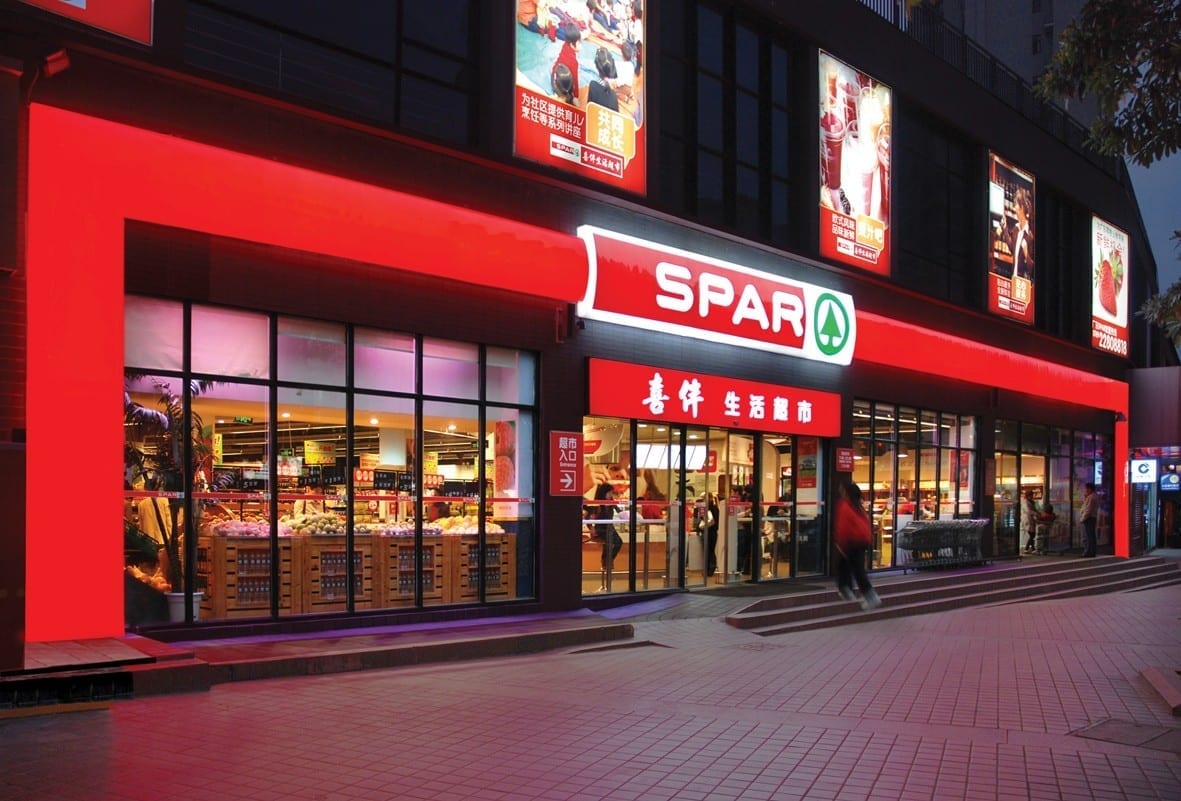
    Grocery-retailer Spar China has launched five new supermarkets.

    The Dutch-headquartered international franchise business has opened two stores in Shandong and three in Guangdong, both Chinese provinces, and bring the chain’s total footprint in the territory closer to 400 stores.

    The stores are constructed in similar but not identical formats. The Huailai County, Shandong 8000sqm outlet sells local and international produce, whereas the 10,000sqm store in the provincial capital of Jinan offers a high-end shopping experience and includes beauty products, homecare, and baby products.

    Opening in Guangdong is a 4500sqm supermarket in Foshan City and two Spar Lifestyle stores in Dongguan with a floor space of less than 200sqm.

  • Peet’s Coffee opens 60’s-inspired Shanghai pop-up store

    Peet’s Coffee opens 60’s-inspired Shanghai pop-up store

    US coffee chain Peet’s Coffee has launched a pop-up cafe in Shanghai, inspired by the design of its heritage store in California.

    The Peet’s Coffee pop up offers a wide selection of coffees and experiences, including personalized t-shirts, tote bags with distinctive patterns influenced from the 1960s period. A photo booth was installed inside the store for the customer to take photos and print out or share on social media.

    “This Peet’s Coffee pop-up experience showcases the power of experiences in transporting audiences to a different time and place, and bringing the origins of the brand to life,” said Matalie Ackerman, executive VP of design agency Jack Morton Greater China.

    Peet’s Coffee also offers live music performed by buskers outside the pop-up store to add to the retro vibe.

    To explain the message behind the brand’s legacy approach, marketing director of Peet’s Coffee China Elaine Liu said: “When Alfred Peet opened his first coffee bar in Berkeley, California in 1966, he established our long-standing commitment to roasting the highest-quality coffee and Peet’s continues to stay true to that in China.”

    Peet’s Coffee is planning to expand into other cities in China in the future.

  • UBS Reveals Client Overcharging Claims in Asia

    UBS Reveals Client Overcharging Claims in Asia

    Wealth management clients in Hong Kong and Singapore may have been overcharged, UBS said, adding that it is working with authorities and intends to reimburse affected customers.

    UBS claimed that it had identified and reported instances in which its global wealth management clients in Hong Kong and Singapore «may have been charged inappropriate spreads for bond transactions between 2008 and 2015.

    UBS intends to reimburse affected customers on a basis agreed with the relevant authorities,» the bank said in its third quarter report. UBS expects the relevant authorities will subject UBS to reprimands and fines as a result of their investigations.

    Despite the regulatory worries, Asia continues to be a primary growth driver for the bank, as evidenced by the latest figures. UBS’s global wealth management business posted net new asset of $10.9 billion in Asia, boosting the region’s total invested assets to $420 billion.

  • Chinese Fintech Investigated for Fake Government Threats

    Chinese Fintech Investigated for Fake Government Threats

    Chinese fintech firm 51 Credit Card is being investigated for threatening delinquent borrowers by pretending to be fake government officials.

    The Hong Kong-listed credit card management app allegedly hired external debt collectors acting as government officials, according to an Hangzhou police statement, and is suspected of «picking quarrels and provoking troubles».

    Complaints against the firm have been received by police since September and the firm confirmed earlier this week that an on-site investigation had been conducted by authorities.

    Our lack of training and oversight on partner companies has led to some radical behaviors in the communication with our borrowers, and it hurt certain borrowers, chairman and chief executive Sun Haitao said. «We are very sorry about that.»

    51 Credit Card noted in a statement that it was fully cooperating with the investigations and denied rumors that personal user data from the firm had leaked or been stolen. It also added that assets had not been frozen and that the firm had sufficient cash and assets to protect lenders and investors.

    51 Credit Card was founded in 2012 and the platform today boasts 83 million registered users and the management of over 138 million credit cards, according to its September interim report.

  • UBS Seeks Full Ownership of China Onshore Securities Firm by 2020

    UBS Seeks Full Ownership of China Onshore Securities Firm by 2020

    UBS continues to act as a pioneering foreign bank in mainland China taking full advantage of the accelerated timeline for foreign ownership cap removals by seeking full control of its securities joint venture by 2020.

    The accelerated removal of the ownership caps for securities companies means that UBS is expected to be permitted to increase its stake in UBS Securities China from the current level of 51 percent to 100 percent by 2020, the bank said during its quarterly result announcement this week. The exact effective date remains to be clarified.

    In July, Chinese authorities announced the removal of foreign ownership limits for securities, insurance and fund management companies next year, introduced a year earlier than planned.

    Others have also been actively taking advantage of Chinese liberalization including Citi which is reportedly setting up a wholly-owned onshore securities business.

  • Hyundai Motor May Raise Stake In China Joint Venture

    Hyundai Motor May Raise Stake In China Joint Venture

    Hyundai Motor said on Tuesday it was considering raising its stake in its underperforming truck joint venture in China, potentially joining other foreign automakers in boosting ownership in the world’s biggest car market. Sichuan Hyundai Motor is Hyundai’s only commercial car venture in China that makes cargo trucks and buses.

    Beijing relaxed rules last year on foreign firms controlling any Chinese automakers or joint venture, removing caps on those making fully electric and plug-in hybrid vehicles. Limits on commercial vehicle makers ease in 2020, and by 2022 for the wider car market.

    Hyundai is reviewing various plans to strengthen the joint venture’s competitiveness in changing market conditions in China, the firm said in an emailed statement, without elaborating. Volkswagen AG is exploring the prospect of buying a big stake in its Chinese electric vehicle joint venture partner, sources have told Reuters, while BMW has agreed to buy control of its main joint venture in China.

    Sichuan Hyundai Motor is jointly owned by Hyundai and China’s Sichuan Nanjun Automotive Group, with a stake of 50 per cent each. The Sichuan joint venture, which started operations in 2013, produced 12,228 commercial vehicles last year, down by more than half from 28,786.

    That means that their production facilities are heavily underutilised given that they have a capacity of making 160,000 trucks and 10,000 buses a year.

  • Giordano sales down across China

    Giordano sales down across China

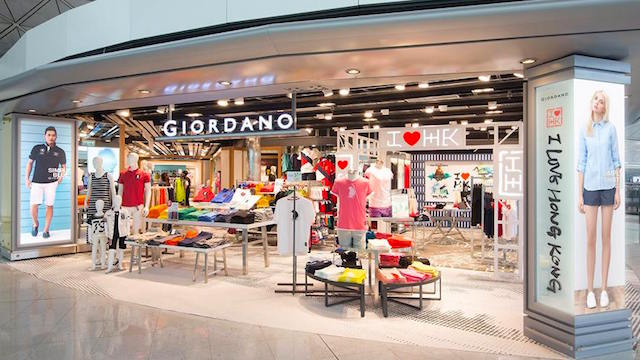
    Giordano sales slid by 8.6 percent in the three months to September, or by 7.1 percent if measured by constant exchange rates. Comparable same-store sales fell by 10.3 percent.

    The damage to Giordano sales was largely borne in Hong Kong and Mainland China, where protests have hit inbound mainland tourist numbers since June and Chinese are spending less, spooked by the ongoing Sino-US trade war.

    Giordano sales in Hong Kong and Macau fell from $226 million to $169 million and in Mainland China from $251 million to $208 million.

    However, the China decline was mitigated in part by a strong performance in Giordano’s relatively new Middle Eastern markets. Sales there rose from HK$134 million to $153 million.

    Wholesale sales were constant.

    Despite the Hong Kong sales decline, Giordano maintained a network of 75 stores in Hong Kong during the period, the same number it had a year earlier.

    Group sales for the quarter totalled $1.075 billion, down from $1.176 billion a year earlier. Year-to-date sales (for nine months) were down from $4.036 billion to $3.617 billion.

  • Samsung China’s first flagship opens, in front of Apple store

    Samsung China’s first flagship opens, in front of Apple store

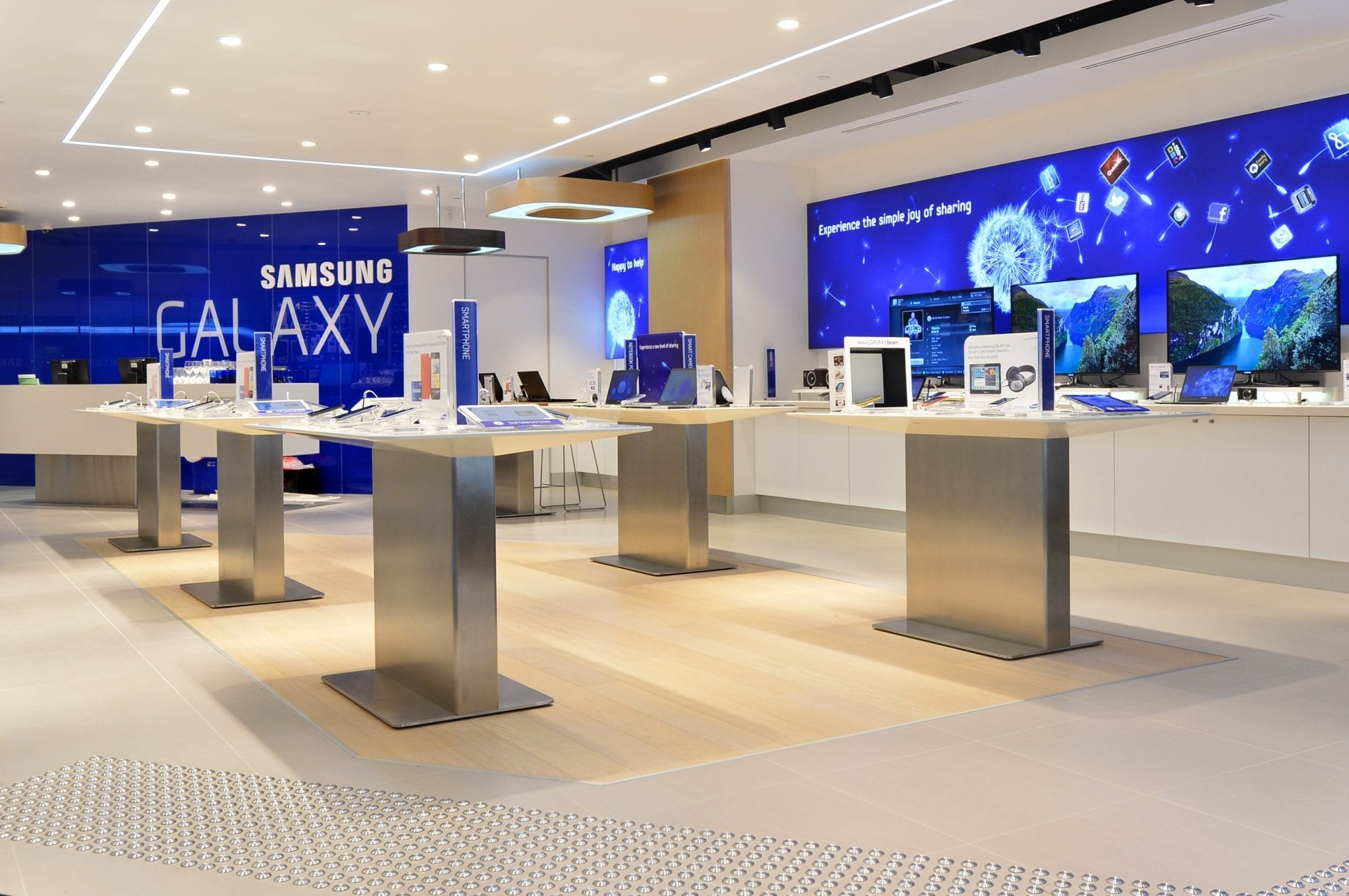
    Samsung China has opened its first flagship experience store in the market – and it is right opposite its archrival.

    The almost 1000sqm Shanghai store is the brand’s largest in Asia, and stands opposite Apple’s Nanjing East Road store. The store has two sections and stocks Samsung’s full range of mobiles as well as featuring a 5G experience zone for customers to participate in large-scale cloud games and watch HD video broadcasts.

    Samsung has recently readjusted its strategy in the territory, shifting all mobile device manufacturing to India and China. The experience store is the latest development in the new strategy.

  • China’s convenience-store market is booming business

    China’s convenience-store market is booming with rapid sales growth and rapid network expansion ahead.

    Sales through Chinese convenience stores reached US$19.78 billion last year, representing a compound annual growth rate (CAGR) of 24 percent over the past five years, according to new research from Mintel.

    Sales are predicted to grow to $22.75 billion this year and Mintel says there will be more than 117,000 convenience stores in China by 2024 – a huge increase from the 75,000 last year.

    “The convenience store sector has experienced double-digit growth, even at this challenging time for brick-and-mortar retail in China. This is due, in part, to consumers’ continuous pursuit of time efficiency, availability and instant fulfillment,” said Chih-yuan Wang, category research director, retail at Mintel Reports – China.

    She said to meet customers’ ongoing demand, convenience stores in China need to strengthen their social function and provide more types of the shopping experience, including launching themed stores and exclusive products by collaborating with different manufacturers and brands.

    The study shows that more than 61 percent of urban Chinese customers shop at convenience stores several times a week while more than 50 percent of respondents like to window-shop and eat inside convenience stores.

    Young and female consumers are more open to themed convenience stores, according to Mintel. More than half (54 percent) of urban Chinese respondents like convenience stores decorated in different themes.

    Meanwhile, 56 percent of Chinese respondents say that they like to try new products in convenience stores, skewed towards post-90s (62 percent) and female consumers (60 percent).

  • Tesla Gets Approval To Start Manufacturing In China

    Tesla Gets Approval To Start Manufacturing In China

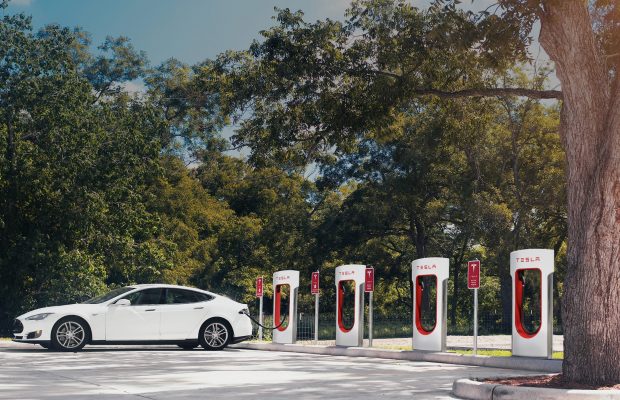
    Tesla Inc was added to a government list of approved automotive manufacturers, China’s industry ministry said on Thursday, as it granted the electric-vehicle maker a certificate it needs to start production in the country. The list was published by the Ministry of Industry and Information Technology. This means “the green light is fully given to Tesla for production in China,” said Yale Zhang, head of the Shanghai-based consultancy Automotive Foresight. Tesla can start production any time, he said. Tesla did not immediately respond to an e-mailed request for comment. The $2 billion factories it is building in the eastern Chinese city of Shanghai is its first car manufacturing site overseas.

    Reuters reported earlier this month that Tesla plans to start production at its China factory this month. It is unclear when it will meet year-end production targets because of uncertainties around orders, labor and suppliers.

    Tesla intends to produce at least 1,000 Model 3s a week from the Shanghai factory by the end of this year, as it tries to boost sales in the world’s biggest auto market and avoid higher import tariffs imposed on U.S. cars.

    The factory, China’s first fully foreign-owned car plant, also reflects Beijing’s broader shift to open up its car market.

    Shanghai authorities have offered Tesla assistance to speed up construction, and China excluded Tesla models from a 10 percent car purchase tax on August 30, 2019.

  • Jack Ma Explains the key to Alibaba’s success

    Jack Ma Explains the key to Alibaba’s success

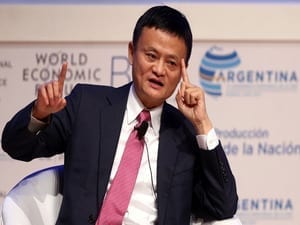
    Forbes Media has presented the Malcolm S Forbes Lifetime Achievement Award to Alibaba Group founder and partner Jack Ma, hailing his commitment to small businesses in addition to the impact that Alibaba has achieved since its launch 20 years ago.

    The annual award celebrates an individual who embodies and exemplifies the ideals of entrepreneurship championed by Forbes, the company said in a release.

    “Jack Ma not only created one of the most outstanding companies of the world but also a company that nourished the vibrant small-business community in China – and small businesses around the globe,” Forbes Media chairman and editor-in-chief Steve Forbes said. “He is indeed one of the most influential figures of our time.”

    Ma received the award at the 19th annual Forbes Global CEO Conference, held this year in Singapore, where he and Forbes talked for about an hour about Alibaba’s history, Ma’s thoughts on entrepreneurship and his philanthropy work. Forbes started by calling Ma “one of the greatest liberators in history, enabling people who wanted to … do commerce. You gave them the means to do it.”

    Ma explained how that came about: “We believed in the future and I believe the internet can empower people,” he said, speaking of Alibaba’s 17 other founders in 1999. “So, we do Alibaba because there are so many small businesses that don’t know when and how, where they can sell the products.”

    That led to the launch of B2B e-commerce platform Alibaba.com at first and later other sites, including Taobao, which has grown from a C2C marketplace to become China’s largest mobile-commerce destination. To enable payments on these platforms, Alibaba developed Alipay. The company also wanted to get products from sellerss to consumers quickly and efficiently, so Ma and his team turned their attention to logistics, eventually launching what is now Cainiao Smart Logistics Network. Alibaba also wanted to support small businesses in need of computing power, so Alibaba Cloud was born. And the company continues to build new businesses to address new demands as the market evolves.

    “So, it’s all about solving problems. I think this is what we did in the past 20 years,” Ma said. “We always think about what we can do to solve social problems instead of complaining. That’s the journey and … millions of people change their lives because [of our] efforts.”

    Ma expanded on the company’s mission to help small businesses, young people and women – those largely outside the traditional financial system – via Alipay, the largest mobile payments and lifestyle app in China. Traditional financial companies focus on the top economic levels of society, he said, not the bottom. But Alipay was always a bottom-up operation. While the wealthy elite wasn’t willing to test the technology when it was first made available, in 2004, many of China’s less wealthy consumers were.

    “They tried it, they loved it, they benefitted from it,” Ma said. “So, this is very, very inclusive.”

    “We feel that the financial system for the 21st century should be inclusive, should empower people,” he continued. All “people have the right to reach the money they need.”

    Alibaba has achieved tremendous success during its two decades, as it now serves 730 million annual active consumers in China and another 130 million overseas. Alipay parent Ant Financial, in which Alibaba holds a 33-per-cent stake, serves 900 annual active consumers in China and 1.2 billion worldwide, including active users of Alipay’s local e-wallet partners. The $456.4 billion Alibaba currently employs about 100,000 people globally, and its e-commerce platforms reach merchants and consumers in more than 200 countries and regions. This year, Alibaba will host its 11th 11.11 Global Shopping Festival, which has grown into the largest one-day shopping festival in the world.

    Ma said he would build on that success – and the money he’s made from Alibaba – to continue helping others. He has already worked through his namesake philanthropic organization, the Jack Ma Foundation, to help improve education and conservation efforts in China. But he has turned his attention to points outside of China as well. Most recently, Ma has focused his attention on supporting entrepreneurs in Africa. He has said that entrepreneurs are “the most important element to develop a society,” and therefore they will be central to Africa’s economic development in the decades ahead.

    “I have the money, I have the resources and I won’t go there, empower the entrepreneurs,” Ma told Forbes. “If we can be able to discover and help more Jack Mas, more Bill Gates or Warren Buffetts – more Steves – Africa will be different.”

    Next month, Ma will travel to Ghana to host the first Africa Netpreneur Prize competition. The $10 million initiative will award $1 million a year for the next 10 years to African entrepreneurs as a way to support the growth of the continent’s digital economy. Nearly 10,000 people from 50 of Africa’s 54 countries applied.

    The remaining 10 contestants – hailing from Egypt, Nigeria, Liberia, Rwanda and Cote D’Ivoire – will make their final pitches to Ma and a panel of judges during the Nov. 16 taping of “Africa’s Business Heroes,” a televised event scheduled to air Nov. 29 in countries across Africa.

  • Kipling releases a fresh collection with Chinese designer Angel Chen

    Kipling releases a fresh collection with Chinese designer Angel Chen

    Fashion brand Kipling has released a collaboration with contemporary Chinese designer Angel Chen.

    The embroidery designs constitute what the brand describes a fresh approach to some of Kipling’s classic bag silhouettes, presenting its Fall/Winter “Live. Light” collection to consumers.

    Angel Chen

    Chen has brought her East meets West aesthetic to the collection by borrowing the English phonemes “Do Re Mi” from the world of music and blending them with auspicious Chinese symbols. The result corresponds with the brand’s seasonal campaign of “Express Yourself with Music”.

    “Live. Light to me represents vitality, which is indispensable in life,” said Chinese designer Angel Chen. “I think it can bring hope and happiness. That is why I have chosen ‘Do Re Mi’ in bright and vivid colours for the bag’s pattern, drawing my inspiration from the music scale.”

    The collection comes in two distinct designs with different color combinations: a youthful pink-based design embroidered with crane and pine tree motifs and a denim-based design embroidered with a Chinese symbol in the form of a dragon.

  • Japan’s RMK aims for Chinese consumers with Tmall Global launch

    Japan’s RMK aims for Chinese consumers with Tmall Global launch

    Japanese cosmetics brand RMK has launched a flagship store on Chinese e-commerce platform Tmall Global.

    The move has been described as part of RMK’s broader focus to tap the lucrative Asia-Pacific beauty market and create a stable platform for beauty brands in China.

    Shagun Sachdeva, a consumer insights analyst at GlobalData, says RMK is already available in Japan, Taiwan, Hong Kong and South Korea.

    “The calculative move to tie up with Tmall Global has been made to indulge in omnichannel retailing with an aim to increase its presence in the high-value Chinese market and get access to a wider customer base,” he said.

    According to GlobalData, the Cosmetics and Toiletries market in China is growing at a steady pace and is almost double than that of in Japan last year.

    GlobalData’s 2018 fourth-quarter consumer survey revealed that 63 percent of Chinese consumers prefer online channels to buy beauty and grooming products.

    “The strategic decision to expand seems to be driven by rising popularity and growing demand of Japanese beauty products among Asia-Pacific consumers owing to perceived safety, better quality and multi-functionality,” said Sachdeva.

    “The brand has grabbed the opportunity of looking at the high intensity of J-beauty products being imported in China or bought by Chinese visitors in Japan. With the launch on Tmall Global, the company aims to target such customer base first and then include more products in its range soon.”

  • Citi Setting Up Wholly Owned Securities Unit in China

    Citi Setting Up Wholly Owned Securities Unit in China

    Citigroup, which earlier announced its decision to dissolve its investment-banking joint venture in China, is now setting up a wholly-owned securities business in the world’s second-largest economy.

    The New York-based bank may initially focus on brokerage and futures trading while expanding its custodian services in China, quoting sources familiar with the matter. This comes as China announced the removal of ownership caps for financial institutions.

    The people asked not to be identified because a final decision has yet to be made. It also plans to apply for a futures license as early as the first half of 2020.

    Earlier this year, Citigroup has agreed to sell its stake in its Citi Orient Securities joint venture to its Chinese partner, as it prepares to set up its own brokerage in the world’s second-largest capital market.

    In December, Citigroup Global Markets Asia informed Orient Securities that the bank intended to sell all of its shareholdings, the Chinese company said in an exchange filing. Orient said its board gave the green light for the acquisition of Citi’s stake, adding that the deal will be subject to approval from China’s securities regulator and state asset regulator.