Tag: DHL

  • Changi Airport Group names DHL Partner of the Year

    Changi Airport Group names DHL Partner of the Year

    Changi Airport Group (CAG) recognized its top airline partners at the Changi Airline Awards 2017, where a total of 25 awards were presented to airlines whose efforts over the past year contributed significantly to the growth and development of the Singapore air hub.

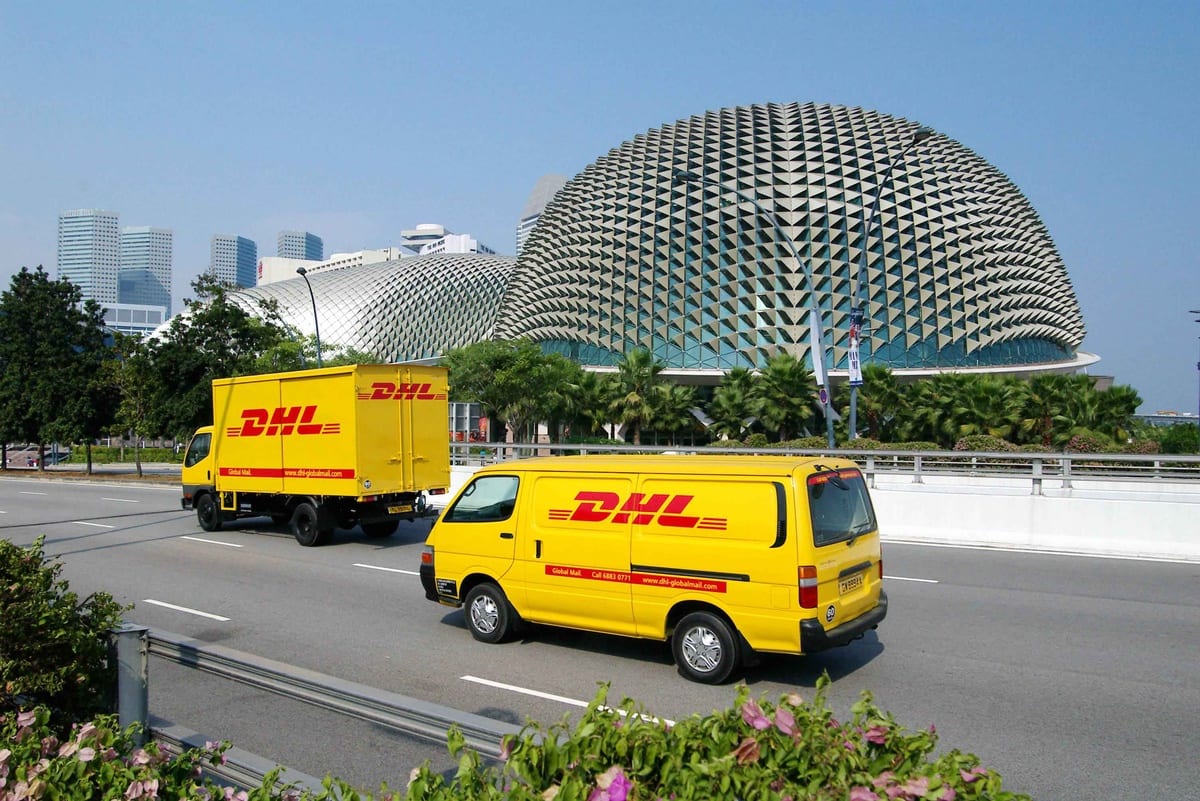
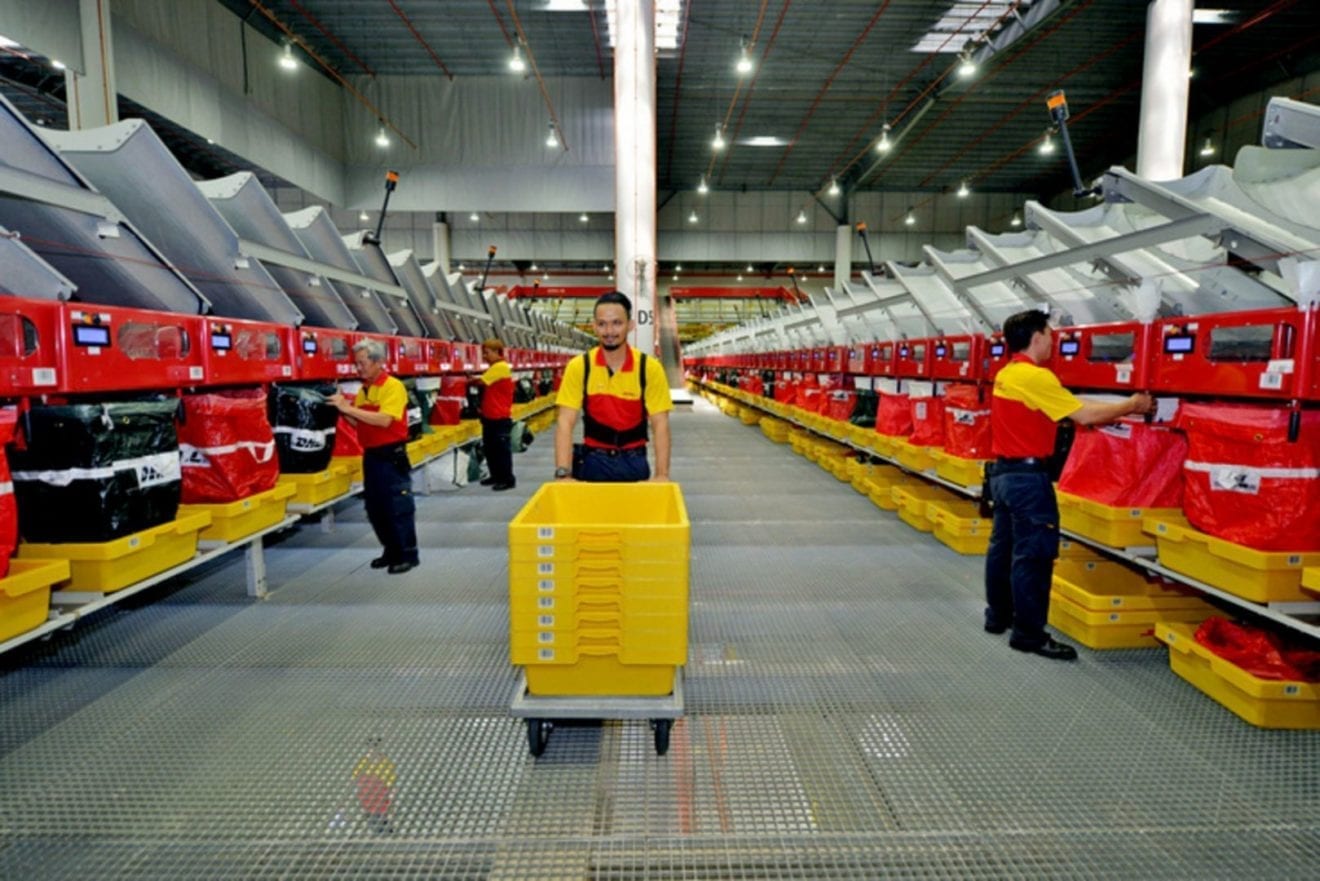
    The Partner of the Year award was presented to DHL Express, in recognition of their strong partnership with CAG to grow and strengthen Changi Airport’s air cargo hub status. DHL Express launched their fully-automated South Asia Hub at Changi Airfreight Centre in October 2016, which tripled their cargo handling capacity to 628 tonnes during the peak processing window, and increased their parcel-sorting speed by six-fold  to 24,000 shipments and documents per hour.

    DHL Express also added new flights through its joint venture (JV) airlines and other airline partners. Last year, with the expansion of the DHL Express operations, Changi Airport welcomed Neptune Air and the return of K-Mile.  As of April 2017, the company’s JV and partner freighter flights at Changi Airport totalled over 30 weekly services or about 12% of Changi’s total weekly freighter services.

    Sean Wall, Executive Vice President, Network Operations and Aviation, DHL Express Asia Pacific said, “The successful launch of our South Asia Hub last year was made possible thanks to the close collaboration we had with Changi Airport Group as well as the Singapore Government. As the heart of our DHL network in South and Southeast Asia, the South Asia Hub in Singapore has allowed us to add more network flights in and out of the country to meet our customers’ needs, and to further capitalize on the country’s prime position for regional and global trade. Singapore remains a strategic node in our global network and we are honored to be named Partner of the Year by the Changi Airport Group.”

    Speaking at the awards event, Mr Lee Seow Hiang, CEO of CAG said, “As we celebrate our successes, we will continue to transform Changi Airport, in preparation for challenges in the future. We will do so by catering supply for future growth, as well as working with our partners to grow sustainable demand for aviation services. Mr Lee mentioned the Airport Collaborative Decision Making (ACDM) initiative as an example of Changi Airport adding capacity to the existing airport eco-system. He said, “ACDM was only possible with the strong support and commitment of all our airline, ground handling and airport partners. As a result, there has been a reduction of 90 seconds in the average taxing time for departing flights during peak hours, translating into fuel savings for airlines.”

    2016 was a positive year for the aviation industry, with lower oil prices offering some respite amidst a highly competitive environment. Changi Airport saw a record-breaking 58.7 million passengers passing through its gates, a growth of 5.9% year-on-year. Changi also welcomed four new airline partners and eight new city links during the year. The airport is on track to receive 60 million passengers in 2017.
  • DHL Parcel offers Alexa interaction

    DHL Parcel offers Alexa interaction

    DHL Parcel’s customers can now use Amazon’s digital smart speaker “Alexa” for updates on their parcels’ delivery status and location.

    “We want to continually expand and improve service levels for our customers, so of course we’re going to take a close look at any new and innovative technologies available. As an innovation leader in the industry, this is the standard we set for ourselves,” said Michaela Lukas, who heads DHL Parcel’s customer service for private customers. “Voice enabled technologies, including hands-free interaction with online apps, will become more and more prevalent in the future.”

    Depending on user feedback, DHL plans to extend the new voice-controlled service later this year to include information on outlet locations, opening hours, products and prices.

    A number of other delivery companies- including DPD – have also been rolling out applications for Alexa on the Amazon Echo and Amazon Dot platforms.

  • DHL opens China Rail Competence Center

    DHL opens China Rail Competence Center

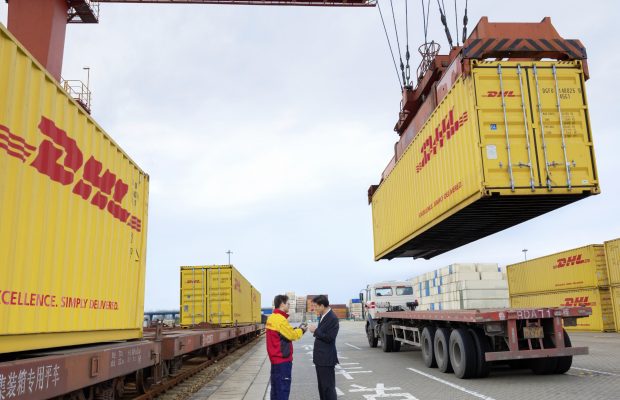
    HL Global Forwarding has opened a central China Rail Competence Center in Stuttgart to help with the coordination of freight transported between Germany and Asia by rail.

    “Rail freight volumes between Germany and Asia have increased 10-fold in just one year. In order to meet ever-increasing demand, the onus is on us to grow, optimize processes and create synergies. It is for this very reason that we decided to establish a central China Rail Competence Center,” said Volker Oesau, CEO DHL Global Forwarding Germany and Central Europe.

    In a statement issued today (8 May), DHL said that staff at the Stuttgart Rail Competence Center will develop “appropriate multi-modal transport solutions and coordinating end-to-end transport processes, from collection, export and transit formalities, and the Euro-Asian rail service, right through to customs clearance in the land of arrival and delivery by truck or combined rail transport”.

    DHL Global Forwarding current offers 15 rail connections between Germany and the Far East. The trains follow the course of the trans-Kazakh western corridor and the trans-Siberian northern corridor with a network of rail hubs in the major economic centres of China, Taiwan, Japan and South Korea.

  • DHL launches e-commerce services in Malaysia

    DHL launches e-commerce services in Malaysia

    DHL e-Commerce has launched its domestic delivery operations in Malaysia, as online shopping gets set to grow rapidly in the Asian nation.

    The investment, from the German-based division of global logistics company Deutsche Post DHL Group, includes a 48,000-square foot distribution centre in Puchong, depots in other critical urban areas such as Penang, Johor Bahru, Cheras and Puchong, and a fleet of 2-wheel and 4-wheel vehicles.

    According to a press release, DHL’s end-to-end domestic delivery solutions will offer pick-up services, track and trace, reverse logistics, cash on delivery with daily remittance and call centre capabilities for deliveries within Malaysia. DHL aims to provide timely delivery and predictive, secure delivery, it said in a statement.

    “E-commerce has become a way of life for Malaysians, with 47% already using their smartphones to shop online,” said Malcolm Monteiro, CEO, Asia Pacific, DHL e-Commerce.

    “Approximately 7 million are already shopping online every month, and with the industry expected to grow to €1bn by 2020 in Malaysia and globally to $1trn in the same year, businesses need high-quality logistics solutions to leverage this immense growth and meet the rapidly changing needs of online shoppers. This makes the need for a tailored e-commerce delivery service greater than ever before.”

    The Malaysian government has more recently been driving e-commerce growth through schemes such as the National E-commerce Strategic Roadmap and the new Digital Free Trade Zone, added Monteiro.
    “Logistics is a key component of this ecosystem, and e-commerce is a vital component of the growth agenda, so we will continue to invest in e-commerce here and worldwide,” he said.

    The Malaysia debut comes as DHL continues to expand its reach in Asia. In March, the company opened a new Fulfillment Centre in Hong Kong, adding to its global fulfillment network in U.S, Mexico, India, Europe and Australia.

    Elsewhere, in December 2016, the firm launched DHL Express Thailand, in a bid to capitalise on the nation’s growing e-commerce business.

  • DHL launches domestic delivery service with nationwide coverage in Malaysia

    DHL launches domestic delivery service with nationwide coverage in Malaysia

    HL eCommerce, a division of the world’s leading logistics company, Deutsche Post DHL Group, has launched its domestic delivery operations in Malaysia with a range of customer-centric services catered to Malaysia’s growing e-commerce market. Malaysian online retailers will also benefit from DHL’s range of cross-border shipping solutions and network of fulfillment centers globally to enable their international expansion. This will further accelerate the e-commerce market in Malaysia which is expected to grow at CAGR of 15.8% to EUR 1 bn by 2020, largely fuelled by recent initiatives such as the National E-commerce Strategic Roadmap, Digital Free Trade Zone and Economic Transformation Program.

    “E-commerce has become a way of life for Malaysians, with 47% already using their smartphones to shop online,” said Malcolm Monteiro, CEO, Asia Pacific, DHL eCommerce. “Approximately 7 million are already shopping online every month, and with the industry expected to grow to EUR 1 bn by 2020 in Malaysia and globally to US$1 trillion[4] in the same year, businesses need high-quality logistics solutions to leverage this immense growth and meet the rapidly changing needs of online shoppers. This makes the need for a tailored e-commerce delivery service greater than ever before.”

    The investment in Malaysia includes a 48,000 sq ft central distribution hub in Puchong as well as depots in Penang, Johor Bahru, Cheras and Puchong and a fleet of 2-wheel and 4-wheel vehicles. The fleet of vehicles will provide next-day delivery to all urban areas in Klang Valley, Penang and Johor Bahru, and two to four day delivery to all other locations across West Malaysia and East Malaysia.

    DHL eCommerce’s end-to-end domestic delivery solutions will offer pick-up services, track and trace, reverse logistics, cash on delivery with daily remittance and call center capabilities for deliveries within Malaysia. It aims to provide best-in-class domestic delivery with quick, predictive and secure delivery.

  • DHL to Invest $268 Million in India as National Tax Spurs Demand

    DHL to Invest $268 Million in India as National Tax Spurs Demand

    Deutsche Post DHL Group will invest 250 million euros ($268 million) in India by 2020 to expand its logistics business and tap demand as the South Asian nation introduces a national sales tax that is set to boost movement of freight.

    The goods and services tax will help create bigger distribution centers, Deutsche Post AG Chief Executive Officer Frank Appel said in an interview in Mumbai on Friday. Until now, Indian companies were setting up warehouses in all states to avoid tax burden while the new tax reform may realign the needs of local companies toward larger and fewer mother warehouses, he said.

    The goods and services tax will replace an archaic web of levies and improve ease of doing business in a country with more than 1 billion consumers. Proposed over a decade ago and then refined several times to win bipartisan support under Prime Minister Narendra Modi, the tax is scheduled to be rolled out on July 1.

    “We want to consolidate our distribution centers,” Appel said. “We follow our customers. We adapt to their needs.”

    The 250 million euros will be in addition to the 70 million euros invested in India in the last 18 months, he said. The investment would include all units of DHL Group in India and would cover airport cargo facilities in Mumbai and Delhi of unit Blue Dart Express Ltd.

    The new tax will create an opportunity to optimize the logistics network based on cost and service quality instead of arbitrage tax systems, Appel said. More manufacturers will emerge in India as they don’t have to worry about tax provisions.

    “Goods and Services Tax is a very robust step in realizing ‘Make In India,’” Appel said, citing Prime Minister Modi’s flagship program designed to lure investment in the nation’s manufacturing sector.

  • DHL to provide in-plant logistics for Jaguar Land Rover’s new factory

    DHL to provide in-plant logistics for Jaguar Land Rover’s new factory

    DHL has been appointed to manage in-plant logistics for Jaguar Land Rover’s new manufacturing plant in Itatiaia, Brazil. Under the new contract DHL Supply Chain will oversee all aspects of the supply chain, from warehousing through to sequenced track-side delivery. The scope of work also includes the delivery of sub-assembled kits to the production line, streamlining the manufacturing process.

    “We’re delighted to have secured this new contract with Jaguar Land Rover which builds on our long-standing relationship,” said DHL Supply Chain’s Director of Business Development for Brazil, Miquele Lioi. “Our proposal was built on three key pillars: unrivalled sector expertise, derived from managing more than 250 automotive logistics operations worldwide; our strong presence in the Itatiaia region and a clear focus on delivering efficiency and control.”

    Goods arriving at the warehouse will be stored in 8,500 pallet locations where DHL will sort, move and sequence parts, as well as sub-assemble kits of up to 25 components, before shipping in sequence to the assembly line.

    “In these challenging times, the automotive industry has proved that it can reinvent itself by identifying new market approaches, such as Jaguar Land Rover’s new plant in Brazil. In this case, sound logistics planning and a safe and efficient execution are critical to achieving business success,” added Lioi.

  • DHL To Double Electric Delivery Van Production

    DHL To Double Electric Delivery Van Production

    DHL  is one of the largest delivery companies in the world. When it wanted to reduce is carbon footprint by using battery-powered electric delivery vans, it approached several major manufacturers and asked them to supply it with vehicles that met its needs. Not possible, the manufacturers all said. Too expensive. Not enough volume to make it worth our while.

    So DHL designed its own. Then it set up a production line to manufacture them. Now it is doubling production and selling its StreetScooter electric delivery van to other customers. When Volkswagen first heard what DHL was doing, some of its executives grumbled that DHL should have asked VW to build its van.

    In fact, DHL did precisely that, but Volkswagen told them to go away and bother someone else. DHL says it will expand production by adding another assembly line in the North Rhine-Westphalia region. And that is how disruption happens. Eat your heart out, Volkswagen!

    At least half of this year’s annual production is planned for external prospective buyers of the vehicles. DHL sees potential customers being municipalities and other large fleet operators in Europe. In addition, it will replace more of the conventionally powered delivery vehicles in its own fleet with StreetScooter electric delivery vans this year.

    “The large demand for the StreetScooter and our own ambitious climate-protection goals have encouraged us to further expand our commitment in the area of electro-mobility and to also make our expertise available to others. As a result, we are confirming our aspiration to remain the engine of electro-mobility and to become market leader in green logistics,” says Jürgen Gerdes, who sits on the DHL board of directors.

    The StreetScooter comes in two sizes. The Work model has a capacity of 140 cubic feet and starts at €32,000 for the Work Pure model. The Work L has double that capacity — 280 cubic feet. The company is planning to introduce a Work XL version with 700 cubic feet of cargo capacity by the start of 2018. In addition to selling its vehicles, DHL also assists customers with the installation of the charging infrastructure they need to keep their StreetScooters charged up and ready to go.

    This whole electric delivery van thing started because DHL wanted to stop spewing carbon emissions into the atmosphere while it was delivering packages for people. Just a few weeks ago, it became the first logistics company to announce that it plans to reduce all logistics-related emissions from its business to zero in net terms by 2050.

  • DHL unveils new outbound cross-border distribution center in Japan

    DHL unveils new outbound cross-border distribution center in Japan

    HL eCommerce, a division of Deutsche Post DHL Group (DPDHL Group), is set to give an extra boost to Japan’s booming cross-border e-commerce industry which is growing at a CAGR of 16 percent and estimated to exceed EUR1.1 billion in 2018. The company officially launched its new outbound cross-border Distribution Center located in Narita, to enable Japan’s online merchants to sell directly to some of the hottest e-commerce destinations worldwide.

    “In Japan, SMEs and sellers on marketplaces such as Amazon and eBay are the main cross-border e-commerce players, targeting markets in Europe, Asia, and the Americas. To enable them to grow their business and reach a wider customer base internationally, they need a greater variety of international shipping solutions with high-quality services while keeping their operational costs low. Specific e-commerce services are also needed, such as IT integration from shopping cart to delivery for a seamless logistics process,” said Yoshihiko Sasaki, managing director, DHL eCommerce Japan.

  • Digital ingenuity triumphs over logistics challenges at DHL Asia Pacific Innovation Day

    Digital ingenuity triumphs over logistics challenges at DHL Asia Pacific Innovation Day

    Supply chain optimization platforms, digital payment, and robotics and unmanned aerial solutions were amongst the inventions which took center stage at the DHL Asia Pacific Innovation Day yesterday, hosted at the DHL Asia Pacific Innovation Center in Singapore. Focused on driving the future, DHL Asia Pacific Innovation Day showcased some of the latest trends and technologies shaping the logistics industry, awarding projects that have already applied these ideas to real-world challenges.

    One such project, which received the Most Innovative Customer Award, involved DHL collaborating with Schindler Lifts to develop a bespoke web-based tracking and optimization platform for their operations in Australia. Based on two years’ worth of past shipment data, the platform allows the elevator manufacturer to shave more than AU$500,000 from their annual running costs. The platform gives Schindler Lifts full visibility over the warehousing, shipping, and last-mile delivery of its elevator shipments, allowing the business to optimize end-to-end supply chain movements based on their required delivery dates.

    “The platform has enabled visibility at every stage of the process from collection to final delivery at the specified site address. Should any unexpected changes occur, both DHL and Schindler have the ability to instantly adjust with the amended delivery dates,” said George Lekkas, Strategic Procurement Manager, Schindler Lifts Australia. “Many logistics players are touting the potential of real-time tracking and data analytics to transform supply chains, but DHL has put those ideas into practice in a way that not only overcomes our unique shipment handling challenges, but can easily scale to meet ongoing growth in the Australian construction industry.”

    The Innovation Day also saw an award go to a digital payment solution developed by DHL eCommerce subsidiary Blue Dart, which enables couriers in India to collect cash-on-delivery (COD) payments through mobile Point of Sale devices and 15 different secure digital wallet options instead of physical cash. The system, which rolled out just as the Indian government took INR 500 and 1,000 notes out of circulation, enabled delivery staff to not only continue but significantly increase collection of COD payments, saving them more than 29 man-months between October 2016 and February 2017.

  • DHL Express forays into Sarawakian market

    DHL Express forays into Sarawakian market

    International express services provider, DHL Express, has set up a direct presence in East Malaysia through the establishment of a new Gateway in Kuching yesterday.

    As the only international express services company with a direct presence in Sarawak, the new and upgraded Gateway caters to the increasing demand for international trade, supporting businesses operating in and out of the state.

    The Kuching Gateway serves as a clearance point for inbound shipments entering the state, before they are sent to DHL’s four Service Centers in Miri, Bintulu, Sibu, and Kuching for deliveries.

    Strengthening DHL’s network of 23 service centers, 90 service points and 6 gateways in West Malaysia, the Kuching Gateway improves the efficiency and responsiveness to meet the increased demands of customers in Sarawak.

    Speaking at the official launch of the Kuching Gateway, Christopher Ong, Managing Director of DHL Express Malaysia & Brunei said, “Previously operated through an agent, we took over the operations in Sarawak to enhance our services and interact directly with our customers.

    “The new facility delivers top-notch productivity and operational efficiency, with improved speed, reliability and flexibility. This will enable our customers in Sarawak to have greater access to international markets.

    “To provide our customers with peace of mind when they ship with us, we have invested heavily to ensure that the facility is built to TAPA “A” certification standards, to meet our global criteria for operational efficiency, quality and security.

    “The Kuching Gateway provides direct access to our global network of more than 220 countries and territories, allowing businesses in Sarawak to trade in the global marketplace more efficiently than ever before,” he added.

    The official launch of the Kuching Gateway was witnessed by over 30 guests including officers from The Royal Malaysia Customs Department in Kuching.

    DHL offers a portfolio of logistics services ranging from national and international parcel delivery, ecommerce shipping and fulfillment solutions, international express, road, air and ocean transport to industrial supply chain management.

    With about 350,000 employees in more than 220 countries and territories worldwide, DHL connects people and businesses securely and reliably, enabling global trade flows.   it offers specialised solutions for growth markets and industries including technology, life sciences and healthcare, energy, automotive and retail.

  • DHL eCommerce expands presence in South China

    DHL eCommerce expands presence in South China

    DHL eCommerce plans to further increase its presence in South China through the introduction of its e-commerce logistics services in the Fujian province.

    The company has also announced the expansion of its Shenzhen Distribution Center and Hong Kong Distribution Center to manage a capacity of 81 million shipments a year.

    “With exports expected to make up 75% of China’s e-commerce turnover three years from now, a strong and reliable logistics framework has to be set in place to meet growing needs,” said Zhi Zheng, Managing Director, Greater China, DHL eCommerce. “Manufacturing and export hubs like Fujian will be the center stage of all future growth of e-commerce exports in China. DHL’s expertise in international shipping and fulfillment, along with our global network and strong e-commerce expertise will play a fundamental role in connecting China’s e-tailers with online markets across the world.”

    Zheng added: “We are expanding our presence in South China to better service merchants here, and provide them with the opportunity to tap on the massive cross-border opportunity. This underpins our growth strategy for South China where we will focus on growing our outbound e-commerce trade and continue to expand our offerings across Tier 2 and 3 cities.”

  • DHL eCommerce expands in Thailand’s booming e-Commerce market

    DHL eCommerce expands in Thailand’s booming e-Commerce market

    DHL eCommerce, a division of the world’s leading logistics company, Deutsche Post DHL Group (DPDHL Group), is capitalizing on the booming Thai e-commerce market expected to more than triple in size to EUR 3.6 billion between now and 2020 by enhancing its nationwide coverage with next day delivery in remote areas and extending pick-up service to small e-commerce merchants to meet its growing customer demands.

    DHL eCommerce, launched January 2016 in Thailand, offers end-to-end domestic delivery services and easy access for local businesses to expand globally through affordable B2C international cross-border shipping and scalable, pay-per-use fulfillment solutions through a global fulfillment network within Deutsche Post DHL Group.

    “The e-commerce market in Thailand is currently second largest in Southeast Asia and expected to grow 22 percent annually till 2020. Along with this remarkable growth, there are increasing demands for cost-effective and high quality logistics solutions to meet rising consumer needs. As such, we are investing now to ensure we are the provider of choice for Thai consumers,” said Kiattichai Pitpreecha, managing director, DHL eCommerce Thailand.

    “We are strengthening our delivery network across the country in order to offer second-to-none nationwide service across Thailand. This will enable merchants to reach out to the growing base of e-commerce consumers outside Bangkok in major provinces and rural areas with superior service quality. We have also extended our pick-up service to include small and large merchants. For the 2.7 million SMEs in Thailand, this means greater convenience and a quicker process to deliver to their consumers — with less time spent travelling and waiting in queues to drop off their goods, they can spend more time focusing on growing their business.”

    Over the past year, DHL eCommerce Thailand has invested significantly in people, service, facilities, vehicles and coverage. The DHL eCommerce 3,222 sqm central hub in Bangkok and its domestic delivery network across Thailand have the capacity to handle over 15 million shipments annually. For merchants, DHL eCommerce offers access to Cash on Delivery (COD) with daily remittance as well as access to a multilingual call center and easy IT integration of online orders to allow shippers to easily prepare orders for delivery into the DHL network.

    Offers cross-border service to help customers expand overseas

    DHL eCommerce also enables Thai businesses to grow internationally and tap on the massive international e-commerce market through its range of affordable international cross-border shipping products and scalable, pay-per-use fulfillment solutions. “We are incredibly positive about the Thailand economy and we are committed to its development. The Thai government’s ‘Digital Thailand’ initiative started in 2016 has brought about a wave of opportunities for businesses across different industries to digitize their operations and services, especially for SMEs to undergo digital transformation,” said Malcolm Monteiro, CEO, DHL eCommerce Asia Pacific.

    “Thailand is ranked as one of our top priority markets in Southeast Asia , and we foresee growth to be largely driven by significant numbers of SMEs extending their business models into online marketplaces. DHL eCommerce is committed to enabling Thai businesses as they fully leverage the huge e-commerce growth locally and internationally.”

    As noted in a recent DHL Express report on the e-commerce industry, the cross-border market opportunity offers growth rates (~25 percent) not found in most traditional retail markets. DHL eCommerce, along with its sister company DHL Express is helping to connect Thai e-tailers to the world through DPDHL Group’s range of cross-border delivery solutions. To cater to varying customer requirements, DHL Express offers premium and faster delivery services while DHL eCommerce provides affordable solutions. Thailand -based businesses can also leverage on DHL eCommerce’s global network of fulfillment centers in the US, Mexico, Europe, Hong Kong, Australia and India so that merchandise can get to the consumers in those regions quicker.

    “Cross-border B2C e-commerce is forecasted to grow to USD1 trillion in 2020. DHL eCommerce Thailand has witnessed tremendous growth in the past year and we are enhancing our service to meet the growing consumer demands,” said Charles Brewer, CEO, DHL eCommerce. “We are incredibly proud to be delivering the smile in the last mile and we will continue to provide more first and last mile solutions.”

  • DHL eCommerce Enables Singapore e-Commerce Retailers to Reach Out to the US Market

    DHL eCommerce Enables Singapore e-Commerce Retailers to Reach Out to the US Market

    DHL eCommerce, a division of the world’s leading logistics company Deutsche Post DHL Group, has launched a new commercial international shipping product facilitating Singapore-based e-tailers, online merchants, manufacturers, and traditional ‘brick and mortar’ retailers to ship their products to consumers in the U.S. using the reliable DHL network in a simple and cost-effective manner.

    Parcel International Direct U.S. is geared towards the burgeoning e-commerce market and seeks to respond to the growing appetite for cross-border e-commerce in the Americas region, allowing businesses to ship products up to 6.5 kg to their customers across the U.S.DHL Logo


    With 71% of retailers and 76% of manufacturers expecting the share of cross-border revenue to grow in the future[1], Parcel International Direct U.S. aims to enable Singaporean retailers to grow their business in the U.S. market with ease.

    The cross-border market is the newest blue chip of the digital retail industry and shows great promise, projected to grow at a rate of 25% annually between 2015 and 2020. This growth will bring the value of the market from USD300 Billion in 2015 to 900 billion in 2020 — almost triple in a matter of half a decade.[2]

    The product offers simple and cost-effective international shipping option with end-to-end tracking and a competitive transit time of 4-6 business days. Through IT integration, the DHL eCommerce Web Portal enables e-tailers to seamlessly integrate their orders into the DHL network by preparing orders for shipping individually or in bulk, track and generate reports all from a single portal. This product follows the company’s launch of Parcel International Direct Australia in October 2016.

    “DHL eCommerce aims to provide best-in-class e-commerce logistics for both merchants and end consumers through high quality, cost-efficient logistics solutions as well as a positive delivery experience. We want to enable local businesses to reach their international consumers with ease and allow them to fully leverage the massive potential that e-commerce brings,” said Sham Alexandra, Managing Director, DHL eCommerce Singapore. “Through Parcel International Direct U.S., we enable retailers in Singapore to expand beyond borders and reach out to the huge consumer market potential in the U.S.”

  • Cross-border e-commerce to hit $900b by 2020

    Cross-border e-commerce to hit $900b by 2020

    Cross-border e-commerce is now the fastest growing segment in the retail market, according to a report published by DHL Express.

    Cross-border sales volumes are predicted to increase at an annual average rate of 25% – from $300 billion to $900 billion – between 2015 and 2020. This is twice the pace of domestic e-commerce growth, DHL Express said.

    The study found that online retailers are boosting sales by 10-15% on average simply by extending their offering to international customers.

    By including premium service offering such as faster shipping options, retailers and manufacturers also grew 1.6 times their online stores faster on average than other players.

    “Shipping cross-border is much, much easier than many retailers believe, and we see every day the positive impact that selling to international markets can have on our customers’ business growth,” DHL Express CEO Ken Allen said.

    In Asia (Singapore, Hong Kong, and India) and Europe (Italy, Spain, France, Germany), key markets for high-value purchases are being expanded — with growth rates up to two or three times higher than the global average driven by rising consumer education and e-tailer awareness of opportunity.

    The report also noted that the $30 billion market of high-basket value transactions is evenly divided between Asia, Europe, and North America.

    Allen added that DHL Express sees that virtually every product category has the potential to upgrade to premium, both by developing higher quality luxury editions and by offering superior levels of service quality to meet the demands of less price-sensitive customers.

    “The opportunity to ‘go global’ and ‘go premium’ is there for many retailers in all markets,” he said.

    The main challenges highlighted by consumers to cross-border purchases relate to logistics, trust, price, and customer experience.