Retail News CRM

Tag: DHL

  • Embraer Selects DHL for Worldwide Bizjet Logistics

    Embraer Selects DHL for Worldwide Bizjet Logistics

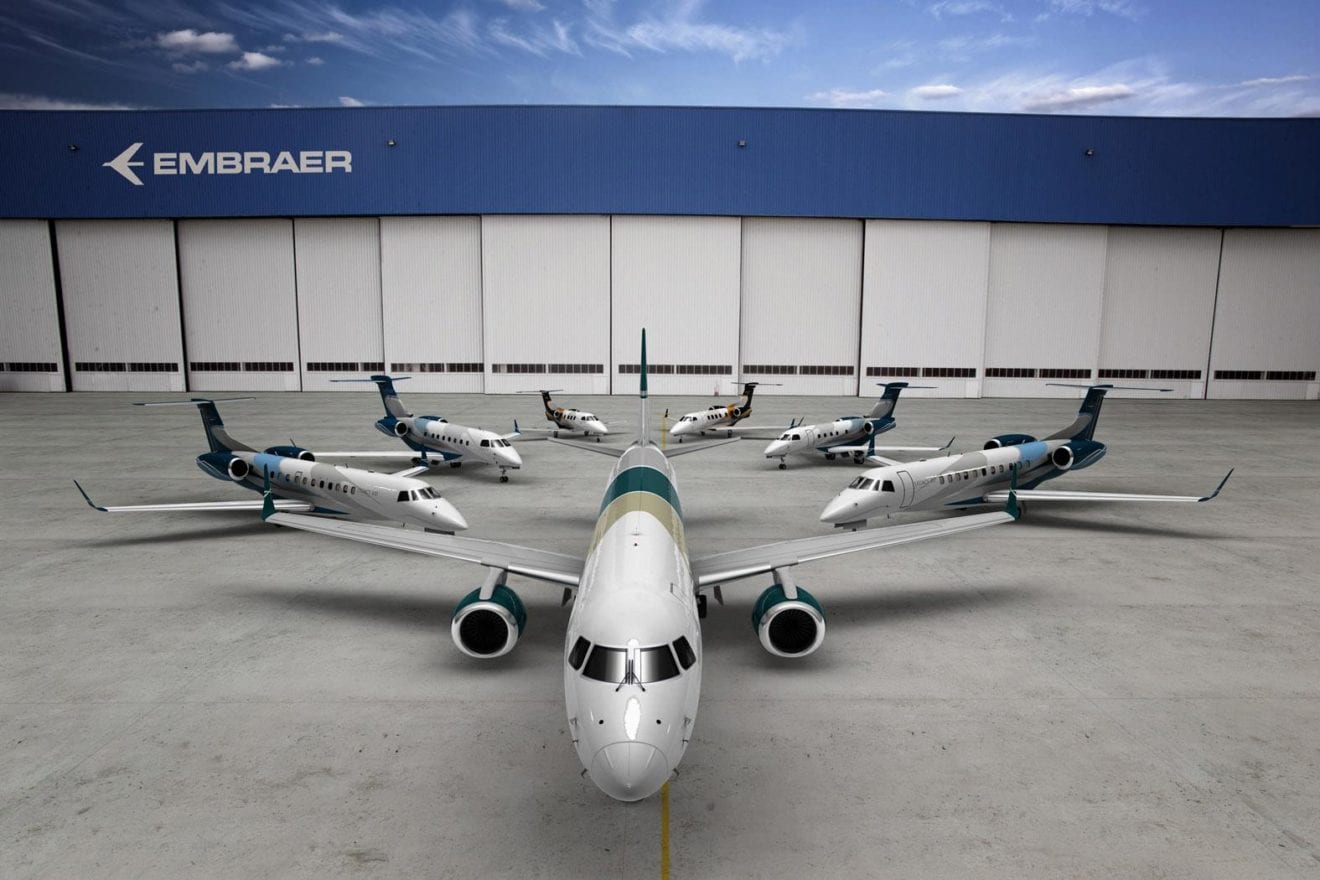
    Embraer Executive Jets and DHL have teamed up on a new global logistics model designed specifically for business aviation. With 930 executive jets (and increasing to more than 1,000 next year) flying in some 60 counties, Embraer clearly has the need for sophisticated logistics support.

    “We have been continuously improving our customers’ experience in all aspects, thanks to relevant actions taken in process quality and support infrastructure,” said Waldir Goncalves, Embraer senior vice-president of customer support and services worldwide. “I’m glad that DHL will join us for this unparalleled global logistics model for business aviation.”

    According to Peter Bonte, DHL’s vice president global business development server parts logistics, “DHL has a network of several locations around the world and we have selected the best of these locations to support Embraer’s customers. Some of the locations are Memphis, Belgium, Dubai and Singapore.” Some warehouses are multi-customer, but all warehouses are certified to distribute parts for Embraer. DHL segregates a part of the building for Embraer and Embraer has people in each location to manage the operation.

    Embraer selected DHL because of its global footprint and relevant experience in the aerospace industry. The logistics service will provide overnight deliveries even when an order comes in late in the day. An integrated ITsolution will offer real-time visibility and improved tracking.

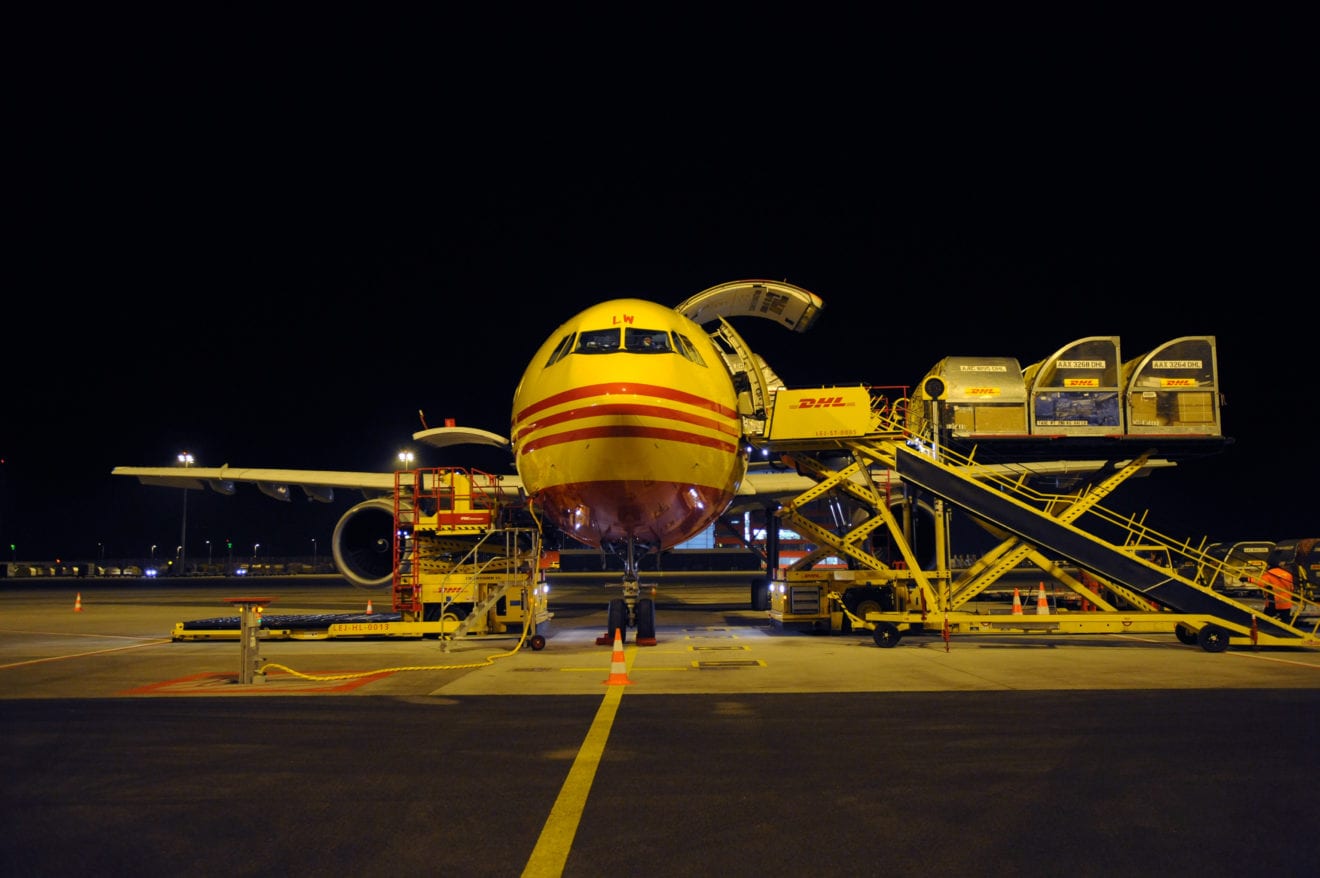
    Asked if Embraer is considering using dedicated AOG (aircraft on the ground) business jets to ferry parts and technicians, Goncalves replied, “No, because now we have hundreds of [DHL] airplanes delivering parts around the world, so if I select just one or two jets, it is not comparable. The logistic model we have selected is much more powerful–we can get parts where we need, when we need. It’s a difference in concept.”

  • DHL Express boosts Philippine presence with new Las Piñas service center

    DHL Express boosts Philippine presence with new Las Piñas service center

    DHL Express Philippines inaugurated yesterday its P80 million South Service Center in Las Piñas to complement the logistics company’s goal of widening its presence in the country.

    The facility is also expected  to cater to the growing logistics demand of businesses in Parañaque, Pasay, Cavite and nearby provinces in South Luzon.

    During the inauguration of the new facility, DHL Express country manager Nurhayati Abdullah said the company’s investment underscores their long term view on the local market.

    “DHL takes a long term view in the Phillippine market as it holds great potential for growth and trade with gross domestic product forecasted to grow at an average annual rate of 5.9 percent in 2015-2019,” Abdullah said.

    The new facility in Las Piñas marks the continued commitment of DHL Express to invest in the country following the successful opening of Clark Service Center in Northern Luzon in February. The company had invested P30 million in its facility in Clark.

    Abdullah said the proximity of the South Service Center would benefit  customers located in free trade zones in South Luzon, such as those in Gateway Business Park in Gen.  Trias, Cavite; Philippine Export Zone Authority in Rosario, Cavite; and First Cavite Industrial Estate in Dasmariñas, Cavite.

    Las Piñas is a gateway to Manila for many industries such as electronics, semiconductors and manufacturing.

    “The South Service Center will play a critical role by supporting growth of our customers across South Luzon. Our investment in Las Piñas reaffirms our commitment to upgrade our services to meet the changing demand of our customers,’’ Abdullah said.

    In particular, growth in demand for express services from the  semiconductors, technology and the life sciences industries as well as small and medium enterprises is expected to continue in the following years.

    “We do see growth in those areas…so we’re quite confident it will spur  the continued growth (in revenues and volume) in the following years,” Abdullah said.

    The Philippines is among the company’s top four countries in terms of revenues in  Southeast Asian and South Asian region.

    For next year, Abdullah said the company is looking to expand its retail footprint in Cebu and Quezon City by opening more service points where walk-in customers can drop off shipments.

    Occupying a land area of 3,000 square meters, the South Service Center will hold new vehicles and state-of-the-art material handling  equipment, IP cameras and 30 CCTV cameras capable of tracking shipments throughout the entire process within the service center.

    Currenty, DHL Express has eight service center facilities and more than 200 retail outlets in the country.

    DHL operates in more than 220 countries and territories worldwide.

  • 40% of Indian food retailers to grow by 10% or more this year

    40% of Indian food retailers to grow by 10% or more this year

    Almost four in 10 Indian food retailers are expected to grow by 10 per cent or more this year, according to research commissioned by DHL Supply Chain, the global market leader for contract logistics solutions.

    Based on interviews with more than 300 industry decision-makers in India, Indonesia, Thailand and Vietnam, the study titled, Hungry for Growth: Logistics Trends in Asia’s High-Growth Food Retail Markets, found that more than one in four food retailers in some of Asia’s fastest-growing economies expect to grow by 10 per cent or more this year, as a result of expanding populations and rising income levels.

    However, the report also found that while 86 per cent of Indian food retailers understand their supply chain costs, six in 10 are struggling to maintain adequate levels of shipment accuracy in fulfilling growing demand – potentially impacting their ability to keep shelves stocked and orders filled as demand and competitive factors grow increasingly complex.

    “Rapid increases in purchasing power, coupled with surges in demand driven by population growth, will yield obvious expansionary benefits to food retailers,” said Dean Eichorn, Vice-President – Retail, DHL Supply Chain Asia Pacific. “However, any food retailer’s success is ultimately dependent on the agility of their supply chains when faced with demand volatility, seasonal fluctuations, and other complex market factors. Asia’s food retail industry looks set to undergo significant growth in the next year, and only with greater understanding and control of their logistics processes will companies be able to take advantage of new opportunities.”


  • Asia’s food retailers forecast fast-expanding business, DHL finds

    Asia’s food retailers forecast fast-expanding business, DHL finds

    Food retailers in some of Asia’s fastest-growing economies are expecting solid growth this year as expanding populations and rising income levels drive up demand, according to research commissioned by DHL Supply Chain.

    The logistics operator surveyed more than 300 industry decision-makers in India, Indonesia, Thailand and Vietnam for its report, Hungry for Growth: Logistics Trends in Asia’s High-Growth Food Retail Markets.

    It found that a quarter of those companies polled expected to grow by 10 percent or more this year,  with 6 out of 10 predicting growth of at least 6 percent.

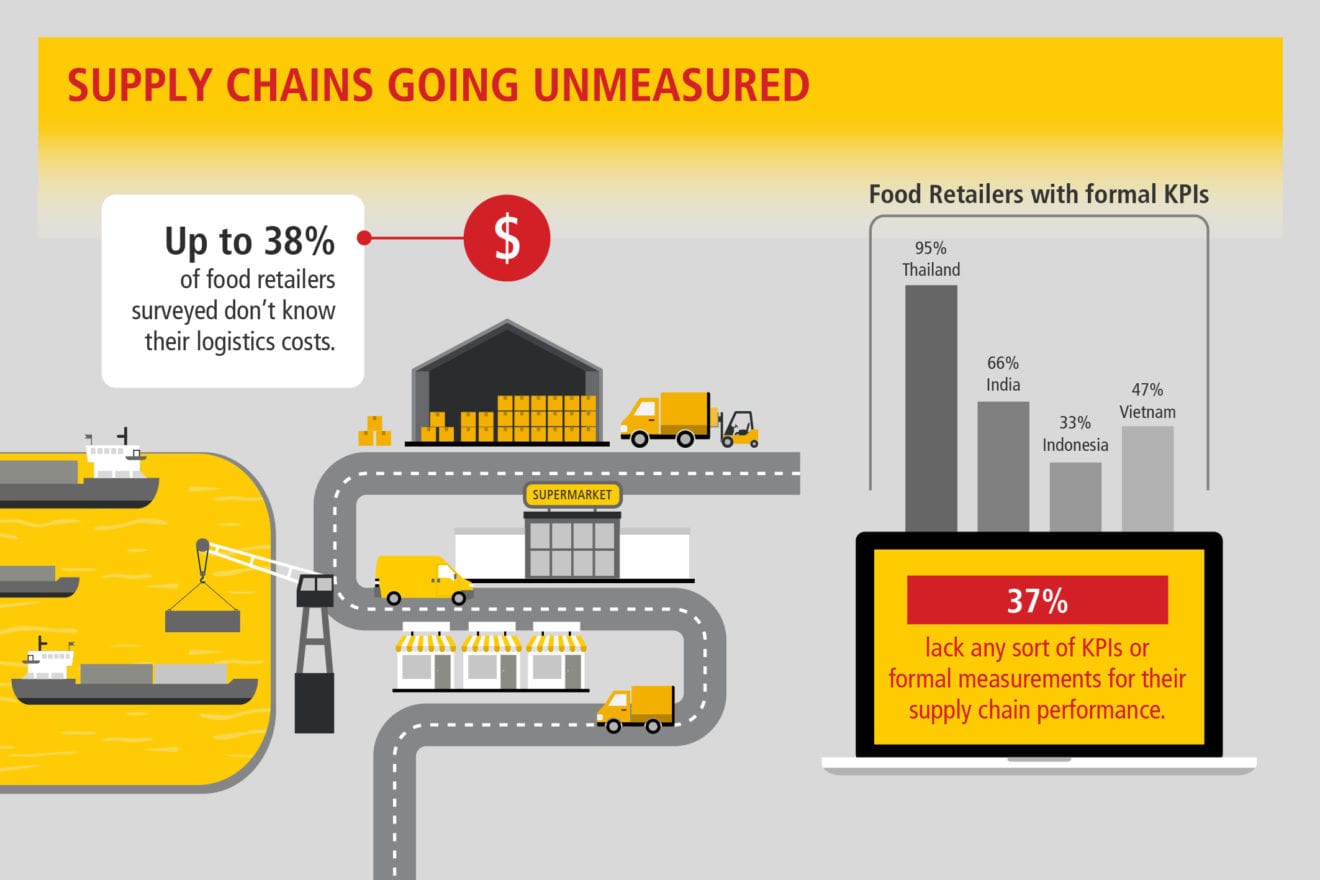
    However, the report also found that up to 38 percent of those surveyed were unaware of their total logistics costs, while 37 percent lacked any KPIs or formal measurements for their supply chain performance, potentially impacting their ability to keep shelves stocked and orders filled as demand and competitive factors grow increasingly complex.

    “Rapid increases in purchasing power, coupled with surges in demand driven by population growth, will yield obvious expansionary benefits to food retailers,” said Dean Eichorn, vice president retail for DHL Supply Chain Asia Pacific.

    “However, any food retailer’s success is ultimately dependent on the agility of their supply chains when faced with demand volatility, seasonal fluctuations, and other complex market factors. Asia’s food retail industry looks set to undergo significant growth in the next year, and only with greater understanding and control of their logistics operations will companies be able to take advantage of new opportunities.”

    The research found that food retailers are increasingly at risk from unpredictability on both demand and supply sides of their operations. In the four countries surveyed, late supplier deliveries were most commonly cited as food retailers’ top concern, while 36 percent admitted that demand volatility had a major impact on their businesses.

    Issues around supply chain performance and costs varied around the region: fuel, labor, and imbalances between supply and demand ranked amongst retailers’ top cost issues.

    “Many of these concerns are amplified because a large number of food retailers don’t have visibility of their logistics operations, let alone the resources or subject expertise to improve and optimize them,” said Eichorn.

    “Food retailers need reliable, agile supply lines if they’re to focus on their core competencies and compete. This agility only comes from being able to manage the supply chain as an end-to-end process across transport, warehousing, and value-added services in a way that’s rapidly scalable without creating extra complexity.”

    The research also found that more than 60 percent of food retailers have not outsourced any aspects of their supply chains, suggesting that retailers who actively adopt third-party logistics solutions stand to gain significant first-mover advantages over their competition. Of those surveyed, 44 percent believe inventory optimization technologies would be beneficial to their overall performance, while 38 percent see advanced transport management services, like track and trace, as helping them improve reliability in meeting demand.

    “Asia’s food retailers recognize the need to innovate and change, but the technologies and process transformations required to do so aren’t their domain of expertise, and nor should they be,” said Eichorn.

    “The key to growth and expansion in Asia’s food retail industry, and those of other developing regions where we’re seeing similar trends, will be how effectively operators can take advantage of third-party expertise and managed solutions in everything from technology to end-to-end supply chain management.”

    The DHL report said food retailers in Asia’s emerging markets are headed for a period of significant disruption, driven largely by rapidly growing competition and consolidation both within and between national markets.

    For the vast majority of those retailers, the strength and agility of their supply chains will make or break how they align customer service to the rising expectations of increasing middle-class consumers, respond to demand and cost fluctuations, and develop new ways to differentiate themselves against increasingly hungry competition, the report stated.

  • DHL launches new hub at Bangkok’s international airport

    DHL launches new hub at Bangkok’s international airport

    Global logistics giant DHL launched its 22-million-dollar hub on Monday at Bangkok`s new international airport as part of the company`s strategy to boost its growth in Southeast Asia.

    “We consider Thailand as the gateway to Indochina,” Scott Price, CEO of DHL Express for Asia and the Pacific, told a news conference at Suvarnabhumi International Airport, which opened in late September.

    DHL`s 12,000 square meter (129,000 square feet) cargo facility at Suvarnabhumi is five times larger than its former facility at the old Don Muang airport and has the capacity to handle more than 23,000 pieces per hour, the company said.

    “The facility puts us in a position for very accelerated growth both in Thailand and in the region,” Price said, adding the new DHL hub is expected to process more than six million shipments per year.

    Asia currently leads the world in the air cargo industry with the inter-Asian air cargo market expanding at a rate of almost 11 percent per year and express volume expected to grow up to twice that rate, the executive said.

    Express operations in Asia account for 15 percent of DHL`s global revenues, which were 26 billion euro (33.4 billion dollars) in 2005, and the region is expected to grow three to four times faster than the rest of the world, he said.

    Bangkok is one of DHL`s six hubs in Asia along with Hong Kong, Seoul, Singapore, Sydney and Tokyo and the company has invested more than 1.7 billion dollars in the region since 2000.

    Price said the September coup that ousted former premier Thaksin Shinawatra and the military-installed government have not affected DHL`s operations in Thailand.

    “As long as foreign direct investment continues to be sought after, supported and rewarded then import and export will continue to be a significant part of the Thai economy and we`ll benefit,” Price said.

  • DHL Express opens new quality control centre in Singapore

    DHL Express opens new quality control centre in Singapore

    DHL Express has announced the opening of a facility in Singapore that will host a new global quality control centre and serve as a centre of excellence for global service quality and business IT activities.

    “Quality is one of the main sources of differentiation in our highly competitive industry, and our Quality Control Centers are a major investment by DHL in ensuring that we continue to lead the international time definite delivery market over the long-term,” said Ken Allen, CEO, DHL Express.

    Singapore has played an important role in DHL’s global network since 1972, as one of our first international markets and a major Asian economy with a strong trade orientation. This was a key factor in the decision to base one of our four global Quality Control Centers and the centers of excellence for global service quality and business IT in Singapore.”

    DHL has been operating global quality control centres since 2007. They provide real-time tracking capabilities for individual shipments, flights and truck movements. The teams operating in the centres monitor the status of DHL’s delivery network to identify exceptional incidents and delays and take proactive action both to address them and to inform customers.  In addition, the centres allow the company’s global network operations team to identify systematic issues affecting the delivery process and take steps to resolve them, and they can also operate as a crisis centres.

    DHL’s three other global quality control centres are located in: Cincinnati, in the US; the East Midlands, in the UK; and Leipzig, in Germany.

  • DHL announces 2016 rate adjustments

    DHL announces 2016 rate adjustments

    DHL Express has announced its annual general average price increase, which will come into effect on 1 January next year.

    In Germany and in the UK, the average price increase will be 3.9%. Globally, price adjustments will vary from country to country, depending on local conditions, and will apply to all customers where contracts allow.

    The DHL Express products offered for private customers via post office branches in Germany, however, remain unaffected by the price increase.

    Ken Allen, CEO, DHL Express, said: “Our annual price increase enables us to continue investing in our international time definite network and to maintain our leading service quality.

    “Our major investment announcements in 2015 have included new hubs in Brussels, Belgium, and Singapore, and an expanded Americas hub in Cincinnati.

    “We are also continuing to invest in the Middle East and Africa, where we have unrivalled networks, and to add freighter aircraft, particularly to strengthen our intercontinental connections.”

    On 16 September, FedEx announced that it would be raising its shipping rates by an average of 4.9%.

  • DHL Philippines appoints Shaikh as new country manager

    DHL Philippines appoints Shaikh as new country manager

    Logistics firm DHL Global Forwarding (DGF) Philippines Inc has appointed Imran Shaikh as its new country manager.

    A certified Global Logistics Specialist, Imran has over 15 years of experience in international logistics, accounts management, freight forwarding and import and export operations.

    He is coming off from his previous post as managing director of DGF Pakistan, a role he performed in the last seven years where he successfully expanded their domestic operations.

    Earlier, he held the role of Import Manager at Exel DHL Global Logistics in LA, where he handled US freight management accounts, import operations for LAX branch and the control tower for North America.

    He was a member of the U21 global strategy team and was involved in the design and implementation of the west coast competency center procedures, the first in North America. Imran also had a working stint in DGF Singapore from 2006 – 2008 as Director for Strategic Accounts.

    Imran holds a Bachelor of Science degree in Business Management from the California State University.

    DGF Philippines started its logistics operations in 1976 and has 12 local offices in key airports and ports across Luzon, Visayas and Mindanao.

  • Nearly 40 percent of Asian food retailers unaware of logistics costs

    Nearly 40 percent of Asian food retailers unaware of logistics costs

    More than 1 in 4 food retailers in some of Asia’s fastest-growing economies expect to grow by 10 percent or more this year, according to research commissioned by DHL Supply Chain, the global market leader for contract logistics solutions.

    Based on interviews with more than 300 industry decision-makers in India, Indonesia, Thailand and Vietnam, Hungry for Growth: Logistics Trends in Asia’s High-Growth Food Retail Markets also found that the majority of food retailers – more than 6 in 10 – predict significant growth of 6 percent or more this year as a result of expanding populations and rising income levels.

    DHL_Supply-Chain_Micrographic_04-03

    However, the report also found that up to 38 percent of those surveyed were unaware of their total logistics costs, while 37 percent lacked any KPIs or formal measurements for their supply chain performance – potentially impacting their ability to keep shelves stocked and orders filled as demand and competitive factors grow increasingly complex.

    “Rapid increases in purchasing power, coupled with surges in demand driven by population growth, will yield obvious expansionary benefits to food retailers,” said Dean Eichorn, Vice President – Retail, DHL Supply Chain Asia Pacific. “However, any food retailer’s success is ultimately dependent on the agility of their supply chains when faced with demand volatility, seasonal fluctuations, and other complex market factors. Asia’s food retail industry looks set to undergo significant growth in the next year, and only with greater understanding and control of their logistics operations will companies be able to take advantage of new opportunities.”

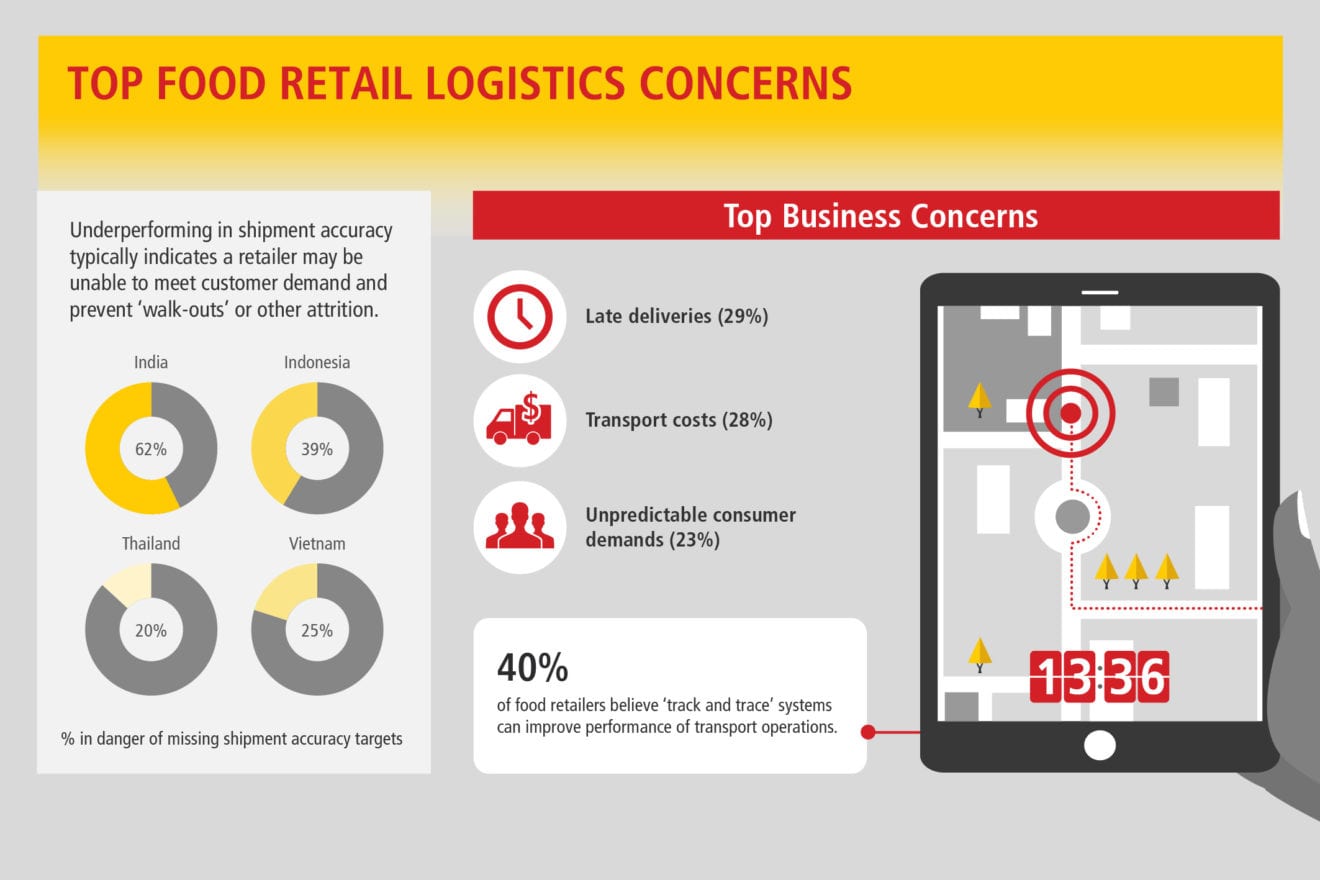
    The research found that food retailers are increasingly at risk from unpredictability on both demand and supply sides of their operations. In the four countries surveyed, late supplier deliveries were most commonly cited as food retailers’ top concern, while 36 percent admitted that demand volatility had a major impact on their businesses. Issues around supply chain performance and costs varied around the region: fuel, labor, and imbalances between supply and demand ranked amongst retailers’ top cost issues.

    “Many of these concerns are amplified because a large number of food retailers don’t have visibility of their logistics operations, let alone the resources or subject expertise to improve and optimize them,” said Eichorn. “Food retailers need reliable, agile supply lines if they’re to focus on their core competencies and compete. At DHL, we believe this agility only comes from being able to manage the supply chain as an end-to-end process across transport, warehousing, and value-added services in a way that’s rapidly scalable without creating extra complexity.”

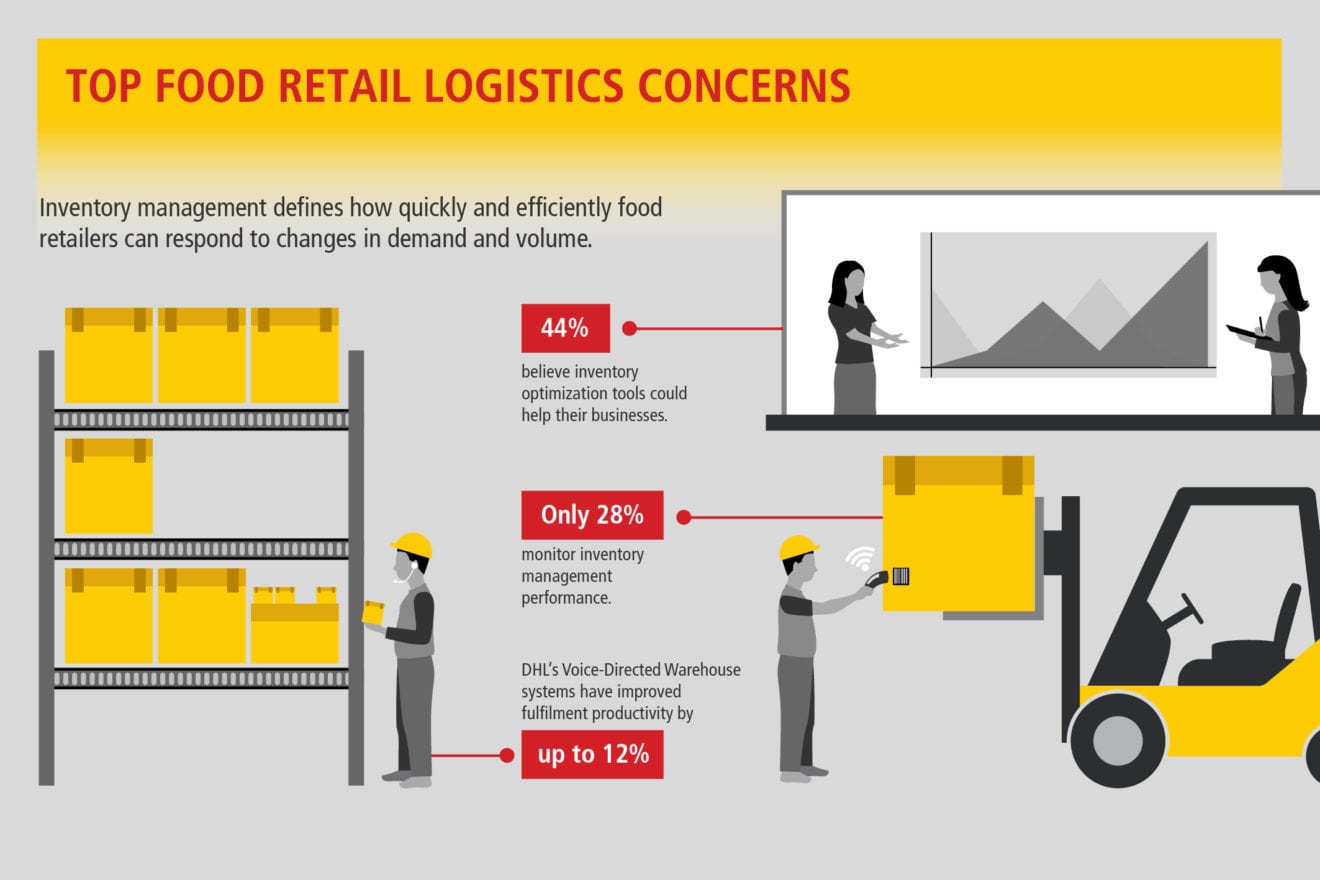
    The research also found that more than 60 percent of food retailers have not outsourced any aspects of their supply chains, suggesting that retailers who actively adopt third-party logistics solutions stand to gain significant “first-mover advantages” against their competition. Of those surveyed, 44 percent believe inventory optimization technologies would be beneficial to their overall performance, while 38 percent see advanced transport management services, like “track and trace”, as helping them improve reliability in meeting demand.

    DHL_Supply-Chain_Micrographic_04-04

    “Asia’s food retailers recognize the need to innovate and change, but the technologies and process transformations required to do so aren’t their domain of expertise – and nor should they be,” said Eichorn. “The key to growth and expansion in Asia’s food retail industry, and those of other developing regions where we’re seeing similar trends, will be how effectively operators can take advantage of third-party expertise and managed solutions in everything from technology to end-to-end supply chain management. For food retailers looking to leapfrog their competition and stay on top of growth’s complexity, the time to embrace advanced supply management principles is now.”

    About the Research:

    Commissioned by DHL Supply Chain and conducted by Redshift Research, the Hungry for Growth report draws on responses collected between December 2014 and April 2015 from more than 300 food retail professionals in India, Indonesia, Thailand and Vietnam. The report defines “food retail” as referring to retailers who sell food to consumers primarily for off-premise consumption, including (but not limited to): grocery stores, convenience stores, hypermarkets, supermarkets, and specialist stores like butcheries and bakeries.

    The full report can be downloaded from https://www.dhl.com/hungryforgrowth.

  • Food placed to defy retail downturn

    Food placed to defy retail downturn

    Rising income levels in some of Asia’s fastest growing economies are set to drive solid growth in food retailing according to a report by logistics company DHL.

    While retail sales in many categories in Hong Kong, China, Macau and other parts of Asia are suffering from decline, or at best static growth, food retailers are set for a boom according to independent research commissioned by DHL Hong Kong.

    Some 300 industry decision makers were surveyed in India, Indonesia, Thailand and Vietnam for the report, titled Hungry for Growth: Logistics Trends in Asia’s High-Growth Food Retail Markets.

    It found that one in four of the companies polled expected to grow sales by 10 per cent or more this year – and six in 10 predicted growth of at least six per cent.

    However, the report also found that up to 38 per cent of those surveyed were unaware of their total logistics costs, while 37 per cent lacked any KPIs or formal measurements for their supply chain performance, potentially impacting their ability to keep shelves stocked and orders filled as demand and competitive factors grow increasingly complex.

    “Rapid increases in purchasing power, coupled with surges in demand driven by population growth, will yield obvious expansionary benefits to food retailers,” said Dean Eichorn, VP retail for DHL Supply Chain Asia Pacific.

    “However, any food retailer’s success is ultimately dependent on the agility of their supply chains when faced with demand volatility, seasonal fluctuations, and other complex market factors. Asia’s food retail industry looks set to undergo significant growth in the next year, and only with greater understanding and control of their logistics operations will companies be able to take advantage of new opportunities.”

    The research found that food retailers are increasingly at risk from unpredictability on both demand and supply sides of their operations. In the four countries surveyed, late supplier deliveries were most commonly cited as food retailers’ top concern, while 36 per cent admitted that demand volatility had a major impact on their businesses.

    Issues around supply chain performance and costs varied around the region: fuel, labor, and imbalances between supply and demand ranked amongst retailers’ top cost issues.

    “Many of these concerns are amplified because a large number of food retailers don’t have visibility of their logistics operations, let alone the resources or subject expertise to improve and optimise them,” said Eichorn.

    “Food retailers need reliable, agile supply lines if they’re to focus on their core competencies and compete. This agility only comes from being able to manage the supply chain as an end-to-end process across transport, warehousing, and value-added services in a way that’s rapidly scalable without creating extra complexity.”

    The research also found that more than 60 per cent of food retailers have not outsourced any aspects of their supply chains, suggesting that retailers who actively adopt third-party logistics solutions stand to gain significant first-mover advantages over their competition. Of those surveyed, 44 per cent believe inventory optimisation technologies would be beneficial to their overall performance, while 38 per cent see advanced transport management services, like track and trace, as helping them improve reliability in meeting demand.

    “Asia’s food retailers recognise the need to innovate and change, but the technologies and process transformations required to do so aren’t their domain of expertise, and nor should they be,” said Eichorn.

    “The key to growth and expansion in Asia’s food retail industry, and those of other developing regions where we’re seeing similar trends, will be how effectively operators can take advantage of third-party expertise and managed solutions in everything from technology to end-to-end supply chain management.”

    The DHL report said food retailers in Asia’s emerging markets are headed for a period of significant disruption, driven largely by rapidly growing competition and consolidation both within and between national markets.

    “For the vast majority of those retailers, the strength and agility of their supply chains will make or break how they align customer service to the rising expectations of increasing middle-class consumers, respond to demand and cost fluctuations, and develop new ways to differentiate themselves against increasingly hungry competition,” the report concluded.
  • DHL providing E2E logistics for FC Bayern Munich’s online store

    DHL providing E2E logistics for FC Bayern Munich’s online store

    FC Bayern Munich is working with Alibaba’s Tmall Global and DHL eCommerce to launch an official FC Bayern Munich online flagship store for consumers in China.

    Through the new online store (https://fcb.tmall.hk), fans in China can now order a FC Bayern Munich jersey with their favourite player’s name and also purchase a variety of fan merchandise as well as “traditional German and Bavarian products”.

    Karl-Heinz Rummenigge, Executive Board Chairman of FC Bayern Munich, said: “Making our fan merchandise accessible is crucial to connect with our fans in China.”

    Jörg Wacker, Executive Board Member Internationalization and Strategy of FC Bayern Munich, added: “China continues to be our key focus market and plays an important role in our internationalization strategy. For our market entry in China, Tmall Global is the best platform since many of our fans already use the platform today. Together with our strategic partner DHL, we will ensure a fast delivery. This store is a big first step in expanding our touch points with our Chinese fan base and we will interact with our fans even more during our Audi Summer Tour China in July this year.“

    Jeff Zhang, President of China Retail Marketplaces of Alibaba Group, commented: “FC Bayern Munich, as one of the first football clubs launching their exclusive online flagship store on Tmall Global, will greatly reflect the diversity of brands and goods on the platform.”

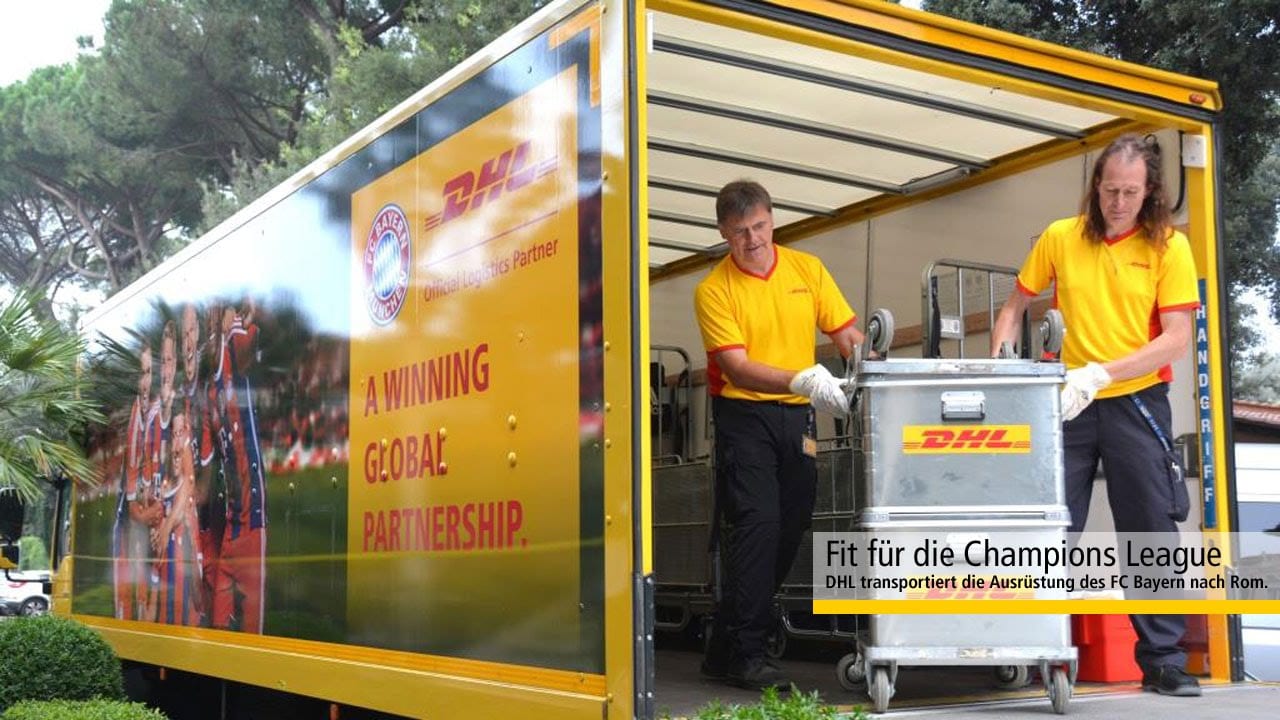
    The six-year partnership between DHL and FC Bayern Munich will see DHL acting as the club’s exclusive logistics partner and full service provider for international e-commerce starting in China in 2015 with a planned roll-out across the Asia-Pacific region. DHL eCommerce will manage many aspects of FC Bayern Munich’s merchandising in China – working with Tmall Global on product listing, order management, fulfillment of orders, local distribution and returns, local customer service and market entry support.

    Thomas Kipp, CEO of DHL eCommerce, said: “There couldn’t be a better opportunity to demonstrate our expertise in e-commerce such as fulfillment and end-to-end delivery than launching the online flagship store of the world’s biggest football club, FC Bayern Munich, on the world’s biggest marketplace in China. We also have the added bonus to work even more closely with Tmall Global, China’s leading online retail platform.”

    FC Bayern Munich are one of the world’s biggest football clubs with over 255,000 members. They are also one of the most successful, having won five Champions League Titles, three Club World Cup trophies as well as 25 national championships. FC Bayern Munich are planning to return to China for a summer tour in July, when they will play three games: in Beijing, Shanghai and Guangzhou.